



Abstract
Villages require innovative Social Investment (SI) to improve human resource competencies and social capital to promote long-term community welfare. A festival can be a potential tool for SI. A Collaborative Village Festival (CVF), despite the occurrence of problems and challenges of common festivals and the limited available literature in the area, can be a potential variant of SI programs. This research aims to analyze the implementation of CVF and its success factors and identify the benefits of CVF as a tool for SI, especially for developing Human Capital (HuCap) and Social Capital (SoCap). Based on the results of a single case study, CVF, characterized as a multi-program and multi-stakeholder, has a role in developing HuCap and activating SoCap in several aspects. CVF also serves as a tool for multi-investment, which, in this case, is an eco-sociocultural investment. Several factors should be considered in designing and executing CVF to obtain greater benefits. The multi-stakeholder collaboration created through CVF forms a unique hexa-helix pattern, leading to a new variation of the helix model. This research provides practical contributions concerning festival management to optimize the SI-related benefits, which can encourage rural development.
Plain language summary
This research aims to analyze the process and the determinant factors of a collaborative village festival (CVF) and to identify the benefits as a tool for social investment (SI). Applying a single case study by utilizing secondary data and primary data obtained from interviews, this research applied thematic and discourse network analysis. The results show that CVF, characterized as a semi-top-down multi-program and multi-stakeholder, of which the collaboration forms a unique hexa-helix pattern, has a role in developing human capital and activating social capital in several aspects. Therefore, it may become an alternative innovation of social policy programs, either as a stand-alone or a complementing one. CVF also serves as a tool for multi-investment, which, in this case, is an eco-sociocultural investment that potentially supports the “SDGs Desa” in Indonesia and, with necessary adaptation, can also be analogized to support the United Nations’ SDGs. Since CVF’s benefits depend on festival quality (FQ), created through a process consisting of three main stages: initiation, preparation and planning, and execution, several factors should be well-understood and considered in designing and executing CVF to obtain greater benefits. The factors include leadership, managerial skills and capacity, networking skills, partners’ characteristics, characteristics of the village as the festival venue, situations/conditions faced, and the existence of connecting actors. Given the limitations of this research, it is necessary to evaluate the FQ and the benefits based on each program/activity category. More case studies of similar festivals are necessary to provide generalization.
Keywords
Introduction
Social investment (SI) has become a global issue since the mid-1990s due to the weakness of the welfare state concept (Hemerijck, 2023; Midgley et al., 2017) and awareness of the importance of inclusive resilience (Giddens, 2008) to overcome vulnerability and improve welfare. SI is a set of policies responding to major and fundamental changes in the labor market, society’s demographic structure, and emerging social needs and risks (Hemerijck et al., 2019; Midgley et al., 2017). SI can be interpreted and implemented in various ways (Cantillon & Van Lancker, 2013) depending on the interests of the institution and investors (Bruyn, 2010), with an emphasis on the prepared pre-distribution (Choi et al., 2020a). SI is commonly performed through various programs in the area of education, skills development, social and economic assistance, and health support (Garritzmann et al., 2023; Hemerijck et al., 2019; Midgley et al., 2017; Perkins et al., 2004; Häusermann et al., 2022), or financial access (Fauziah et al., 2021; Hafandi & Handayati, 2021). Elaborating the selected concepts (Bouget et al., 2015; Harvie et al., 2021; Hemerijck et al., 2019; Midgley et al., 2017; Morel et al., 2011; Ogujiuba & Mngometulu, 2022; Owen, 1990; Perkins et al., 2004), SI can be defined as the allocation of social programs or activities aiming to develop human capital (HuCap) and/or social capital (SoCap) to provide long-term economic benefits.
As a developing country, Indonesia seeks to improve the welfare of its citizens by implementing SI programs. However, limited government and private budgets restrain the scope and benefits of SI programs. For this reason, Indonesia needs to innovate the implementation of SI, one of which is potentially promoted through festivals or celebrations (Rao, 2001). In the country, many festivals have been organized by the government and private sector for cultural preservation and tourism development (Elyta, 2021; Khatrunada & Alam, 2019; Ristanto et al., 2023; Septiyan, 2021). The central government has planned to implement 100 flagship events across 34 provinces in 2020 (Pambudi, 2019). The West Java Provincial Government organized 167 activities (Bappeda Jabar, 2020), and Jogjakarta organized 283 (Nugroho, 2020). These festival activities have the potential for SI development in Indonesia considering the benefits of improving rural communities’ welfare (Hjalager & Kwiatkowski, 2018; Jaeger & Mykletun, 2013; Mair & Duffy, 2018; Nguyen, 2021; Rossetti & Quinn, 2021; Zhao, 2021).
The emphasis on rural communities considers their characters as underdeveloped entities. By 2022, 64.7% of villages in Indonesia were in developing, underdeveloped, or severely underdeveloped status (Kemendesa PDTT, 2023). The poverty rate is also higher than in urban areas, reaching 12.36% (Central Bureau of Statistics, 2023). In Indonesia, attention to the welfare of village communities is highlighted in the “SDGs Desa,” based on the United Nations SDGs. Therefore, considering dynamic challenges, villages need more innovative forms of SI. One potential option is through village festivals (VF).
Various factors and elements must also be considered as they can affect the benefits of the festival (Rossetti & Quinn, 2021), including the diversity of activities and themes, type and purpose, and governance. Festivals in Indonesia were commonly organized by a special committee, which limited the community’s involvement in the festival governance. Therefore, this research offers new insight concerning the potential of festivals as a tool for SI considering its changing character to be a collaborative one, termed as Collaborative Village Festival (CVF), where each organizer holds an equal position. The character has the potential to overcome the problems of limited funds, authority, and human resources. The question is whether the CVF can bring SI-related benefits and whether the festival has been appropriately managed to create these benefits. In this case, observing the process of organizing CVF and the influencing factors in generating the expected benefits becomes necessary.
Research on SI has more concern on political and policy themes (Bonvin & Laruffa, 2022; Choi et al., 2020b; Ferrera, 2009; Garritzmann et al., 2023; Herausgegeben, 2022; Reinders Folmer et al., 2020; Smyth & Deeming, 2016), economic growth (Ahn & Kim, 2015; Makhavhu, 2009; Ogujiuba & Mngometulu, 2022) and practices in the private sector (Andion et al., 2012; Hinson & Ndhlovu, 2011a; The International Association of Investors in the Social Economy (INAISE), 2000; Schueth, 2003). Research on VF is often found in the form of cultural arts (Attanasi et al., 2013; Kyriacou-Petrou et al., 2018), customs (Rao, 2001), religion (Khan et al., 2016; Singh et al., 2020), and sports (Dolganov & Trubina, 2020; Mykletun, 2009). Several studies in Indonesia focus on collaborative implementation (Almaahi et al., 2022; Pora & Habib, 2018; Syawal & Samuda, 2017; Wawo et al., 2023). Therefore, it is indicated that available studies and literature do not view festivals as an SI model.
This research aims to analyze the implementation process of CVF and its success factors and identify the benefits of CVF as a tool for SI, especially for developing HuCap and SoCap. Through a case study of CVF implemented in a farming village in Yogyakarta, this research attempts to provide several contributions. First, it enriches the literature on alternative SI tools through CVF that benefit HuCap and SoCap development. Secondly, in practical terms, the findings of this research provide recommendations to all stakeholders regarding festival management and strategies to optimize the benefits of CVF in the context of SI to promote rural development. This paper is organized into six sections. It starts with an introduction and a literature review section explaining how SI and festival concepts are contextualized into CVF. The third section contains the research method, while the fourth section explains the research results concerning the CVF implementation model for SI. The fifth section discusses the empirical findings in implementing CVF as an SI compared to the current literature. The sixth chapter contains conclusions, including theoretical and practical implications/contributions.
Literature Review
Social Investment: Definition, Perspective, and Goals
Social Investment (SI) can be defined as allocating social activities/programs aiming to develop HuCap and/or SoCap to provide long-term economic benefits (Bouget et al., 2015; Harvie et al., 2021; Hemerijck et al., 2019; Midgley et al., 2017; Morel et al., 2011; Ogujiuba & Mngometulu, 2022; Owen, 1990; Perkins et al., 2004). SI helps face competition in a knowledge-based economy determined by a skilled, educated, and highly adaptable workforce (Perkins et al., 2004). Therefore, SI has three functions: skills creation, mobilization of existing skills, and preservation of skills and capabilities (Garritzmann et al., 2023). In addition, Owen (1990) mentions two SI’s primary goals: (a) to develop the human factor through self-governance in various economic hierarchies, and (b) to encourage industrial self-governance as a form of government’s power transfer to industry in the private sector. Considering the role of the private sector, where SI is viewed from the company perspective (Hinson & Ndhlovu, 2011; Makhavhu, 2009), similar terms occurred as private social investment (PSI) (Andion et al., 2012) and corporate social investment (CSI) (Choi et al., 2020b), for example, through corporate social responsibility (CSR).
Examining the variation of SI’s perspective, two views consider the origin of resources, the objectives, and the types of actions as part of their characteristics (Andion et al., 2012). The first perspective notices SI as a form of actors’ support, especially the government, to improve socioeconomic conditions through a particular process. In contrast, the second one views SI as a form of investment or a product created by the private sector. However, these two perspectives have the same goal: to develop HuCap and SoCap for long-term benefits. Innovation becomes crucial to provide more significant benefits. Innovation in SI can appear in two ways (Harvie et al., 2021): (a) Involvement of innovative tools and instruments; (b) Innovation provided in the services as an innovative solution. Collaborative governance between/among actors can be a potential source to create innovations to provide greater benefits.
Festival: Definition, Type, and Benefits
The term festival has various definitions (Leone & Montanari, 2022; Zou et al., 2021), but in essence, a festival is a form of social construction (Getz et al., 2010) in the form of an event, a social phenomenon (Falassi, 1987) organized through a celebration (Rao, 2001). Festivals have a variety of types that determine the purpose/motivation.
A festival can be profit-oriented or non-profit (Lee et al., 2008). Although different in its motivation, all festivals are expected to attract as many visitors as possible. According to (Vesci & Botti, 2019), festival visitors’ behavior, including their intentions, can be analyzed with the Theory of Planned Behavior (TPB) (Ajzen, 1991). This theory can be used to analyze the effect of festival quality (FQ), especially from attitude and behavioral intention, to identify visitors’ behavior toward attending or revisiting the festival in the future (Vesci & Botti, 2019).
FQ can be associated with festival satisfaction (FS) concerning psychological conditions formed from emotions created from the visitors’ expectations based on the experience in festival participation (Yoon et al., 2010). The expectations can be related to the value based on their perceptions of the benefits received or sacrifices made, both monetary and non-monetary. Therefore, the festival can have more significant opportunities to produce transformative quality (Quinn & Wilks, 2017).
Festivals can be divided into various types depending on several categories. Based on the segment of the target audience, there are three types of festivals (Rao, 2001): (a) private, if it can only be attended by family and close friends; (b) sub-castes, which are only limited to specific communities, and (c) open castes festivals, that is open to all communities. This visitor segmentation will certainly affect festival planning, primarily related to the activities at the festival, where the expectations and satisfaction of each segment of participants can be varied.
Based on the organizers, festivals can be initiated and entirely organized by the community so that they can be said to be bottom-up. Conversely, festivals can also be top-down if initiated by other parties, especially the government or organizations having or are given certain authorities. The different types of festivals will relate to festival funding sources, where a festival can obtain a budget from an entity, either from individuals and single organizations or collectively obtained from two or more sources. The amount of funding determines the festival scale. Apart from being based on the organizer/funding source, festivals can be distinguished based on their spatial aspects (Quinn & Wilks, 2017), for example, in villages or certain rural areas.
Village festivals (VF) often have the character of special events (Getz, 1989). This festival is a celebration or display of themes to which the public is invited for a limited time or is routine but less frequent, raising local potential, supporting social problem solving, religious reasons, tradition/culture, competition, attracting investment, or merely for entertainment. VF can play a role in the community through their local ecosystem by providing coherence, commitment, meaning, and sometimes through economic benefits (Hjalager & Kwiatkowski, 2018), build networks and relate to pleasurable hedonism and social and cultural cohesion (Rao, 2001). Therefore, festivals can be an economical source in the short term, mainly through tourism (Attanasi et al., 2013). This condition is often associated with regional tourism planning from the emergence of needs for accommodation and catering or the culinary sector. Tourist arrivals can provide other local business entrepreneurs with opportunities to showcase their products and gain broader market access. Festivals can also provide benefits from the emotional side, including a chain effect on the local economy in the long term through sustainable tourism (Yoon et al., 2010), thus encouraging regional development (Kyriacou-Petrou et al., 2018).
Festivals can provide interpersonal benefits to increase social interaction and influence identity, behavior, or social status through collective behavior or simply being part of a prestigious activity (Getz, 1989; Khan et al., 2016; Rao, 2001). Regarding cultural benefits, festivals can be a means of preserving and developing a local culture to form cultural capital development through a process involving internal and external elements (Rossetti & Quinn, 2021). Festivals can also encourage the development of SoCap for local communities by creating strong bonds between participants, even though these bonds are only accidental and temporary (Attanasi et al., 2013). The festival enables residents and visitors to feel part of the community, and fosters trust between people who previously did not know each other or only had low interaction. It shows that festivals can be a medium of community integration (Kyriacou-Petrou et al., 2018). Festivals can be a venue where mechanisms occur to build social networks (Rao, 2001) through actors’ interactions (Foxton & Jones, 2011), forming social cohesion as powerful emotional benefits in traditional settings (Singh et al., 2020).
Festivals may occur as a form of entertainment for the community (Mykletun, 2009), as well as delivering other benefits provided by festival organizers (Litvin, 2013), especially regarding economic benefits and community development. These benefits can be achieved only with particular conditions to meet the community’s needs, encouraging local leadership, comprehensive planning considering the economic, social, cultural, and environmental dimensions, and enabling the community to control the festival (Getz, 1989). Festivals must be managed in such a way as to attract visitors from both the local community and communities from outside the area (Yoon et al., 2010) to create more significant benefits.
The festival process can be divided into two general stages: preparation and implementation. During the preparation stage, organizers should obtain information and inspiration from potential/targeted festival visitors, local communities, partners including local authorities and other organizations cooperating in its implementation, or other festivals (Getz, 1989; Kyriacou-Petrou et al., 2018). Nevertheless, organizers may have the initiative, sufficient information, and resources to hold the festival without involving external parties. However, the success of the festival can be influenced by various factors.
Successful preparation of a festival held in a particular community can be influenced by the initial approach and coordination manifested in solid cooperation/collaboration from the committee. This initial phase is a critical point for building trust with the local community to contribute to the success and smooth running of the festival and shape the visitor experience, which is expected to be a form of SI’s function creation.
The festival’s success depends on six dimensions concerning nature, human, social, cultural, physical, and financial factors, with SoCap as the primary aspect (Mykletun, 2009). In addition, the benefits of VF for developing SoCap can be traced from social networking factors referring to the occurring relationships in the family, workplace, environment, local associations, and various informal and formal meeting places (Foxton & Jones, 2011), relating to norms, solidarity/togetherness, and trust (Putnam, 1994). The SoCap can form a community network capable of initiating and creating innovative processes in organizing festivals, including obtaining a sufficient budget. This budget determines the achievement of the festival’s goals or, in the SI context, may determine the amount of provided benefits from appropriate sources. Therefore, it is essential to ensure the correct beneficiary based on the defined purpose.
CVF as a Tool for SI: A Conceptual Framework
Festivals are often single-organized. Nevertheless, various parties can be involved and help organize the festival, depending on the interest of these parties and their capacity and resources. This condition allows a collaborative festival as a form of festival innovation. There is a collaborative decision-making process within the collaboration where all collaborators must understand the binding rules. All parties involved can influence essential decisions that could impact them (Sanaghan & Lohndorf, 2015).
Festivals, with their various types and definitions (further details in Table 1), have the potential to be one of the strategies or tools for SI, considering their characters as part of a celebration which has the potential to provide SoCap benefits (Dolganov & Trubina, 2020; Khan et al., 2016; Mykletun, 2009; Rao, 2001). Festivals, one of which occurs in the form of CVF, may have various stakeholders collaborating to organize the event, both in planning and implementation, to achieve the expected mutual benefits.
CVF Collaborator and Form of Contributions.

Note. processed by authors from the festival planning documents and interview results with the festival organizer from KSDK.
Any collaborative activity tends to be multi-stakeholders. The multi-stakeholders concept leads to the helix concept, which either occurs in the form of triple helix, quadruple helix, penta-helix, or, the one starting to emerge, the hexa-helix (Rachim et al., 2020; Zakaria et al., 2019). Adjusting the various stakeholder groups involved in collaboration is necessary due to differences in the degree of priority, such as allocating resources and authority (Mayers, 2005). The term CVF occurs from the elaboration of these concepts. In the regional context, the head of the region and their staff were the main stakeholders of their territory, characterized by three main attributes: power, interest (attention), and influence (Kismartini & Yusuf, 2015). One of the crucial points in building effective collaboration is analyzing/identifying the needs, wants, characteristics, and conditions or situations each stakeholder faces (Mayers, 2005), including the villagers (Terkenli & Georgoula, 2022).
The potential benefits of SI through CVF may include the development of HuCap (Hemerijck, 2023; Hemerijck et al., 2019; Laruffa, 2018; Midgley et al., 2017) and the actuation of SoCap (Kwon, 2020; Rao, 2001). HuCap benefits relate to knowledge, skills, behavior, and motivation/happiness (Boyatzis, 1982; Spencer & Spencer, 1993). Meanwhile, SoCap benefits relate to networks, norms, solidarity, and trust (Putnam, 1994). Nevertheless, CVF may bring other benefits. CVF can improve rural communities’ conditions, whose village becomes the venue for the surrounding communities since they commonly have low HuCap and Socap aspects.
The benefits obtained from CVF are created during its process, influenced by various factors, including the ones proposed by (Mykletun, 2009), who divides them into six dimensions: nature, human, social, cultural, physical, and financial. Other influential factors may relate to the initial objectives, local leadership, comprehensive planning, and control from the community (Getz, 1989). Considering the possible factors affecting its quality, the CVF process should be well managed to create FS, leading to excellent FQ to achieve the expected SI benefits. Overall, the conceptual framework of this research is presented in Figure 1.

SI through CVF: A conceptual framework.
Methodology
This research used a single case study research strategy from a CVF organized by the Research Centre for Social Welfare, Village, and Connectivity (KSDK) under the National Research and Innovation Agency, Indonesia (BRIN). The festival was held in Ngleri Village, a farming village in Gunungkidul Regency, Jogjakarta. A case study protocol based on (Eisenhardt, 1989) was performed to analyze the SI process and identify the influencing factors. Meanwhile, to identify the benefits of the CVF, a case study was carried out by combining the protocol from (Yin, 2003) and (Eisenhardt, 1989).
The unit of analysis of this research was the CVF event. Although the event was executed in Ngleri Village, the targeted participants were not merely from Ngleri Village but also external participants (villagers outside Ngleri Village). Therefore, the external participants were also included in the analysis. Ngleri is a village located in Gunungkidul Regency, Jogjakarta Province, with an area of 980.4 Ha, consisting of 40.6 Ha rice fields and 270 Ha farms. The rest is forest, public facilities, and settlements. Based on the Ngleri Monograph (2022), this village was populated by 2,891 people or 937 families, most working as farmers, cattlemen, traders, and farm laborers. This village had advanced development, but 37% of the population was still categorized as low-income families.
The data collected includes all related matters concerning the overall CVF stages, the obstacles/constraints during the preparation and implementation, and its benefits in improving HuCap and SoCap based on the conceptual framework (presented in subsection CVF as a Tool for SI: A Conceptual Framework). The collected data includes primary and secondary. The secondary data was sourced from reports and related documents, including the Ngleri monograph, containing information regarding the involved parties, including the sponsorships, festival planning, and related conditions of Ngleri Village and Jogjakarta region. Primary data was collected through observation during preparation and the 4-day festival to examine the behavior of actors, as well as semi-structured interviews with ten groups of informants. The observations focused mainly on the preparation and execution process and how the committee organized the festival activities. The informants were purposively selected based on (Leavy, 2017), considering knowledge sufficiency to understand the research context and the ability to provide information concerning the process and constraints/obstacles of CVF and the benefits. The overall information was expected to provide complete and comprehensive information to answer the research objectives. The ten groups of informants are shown in Figure 2.
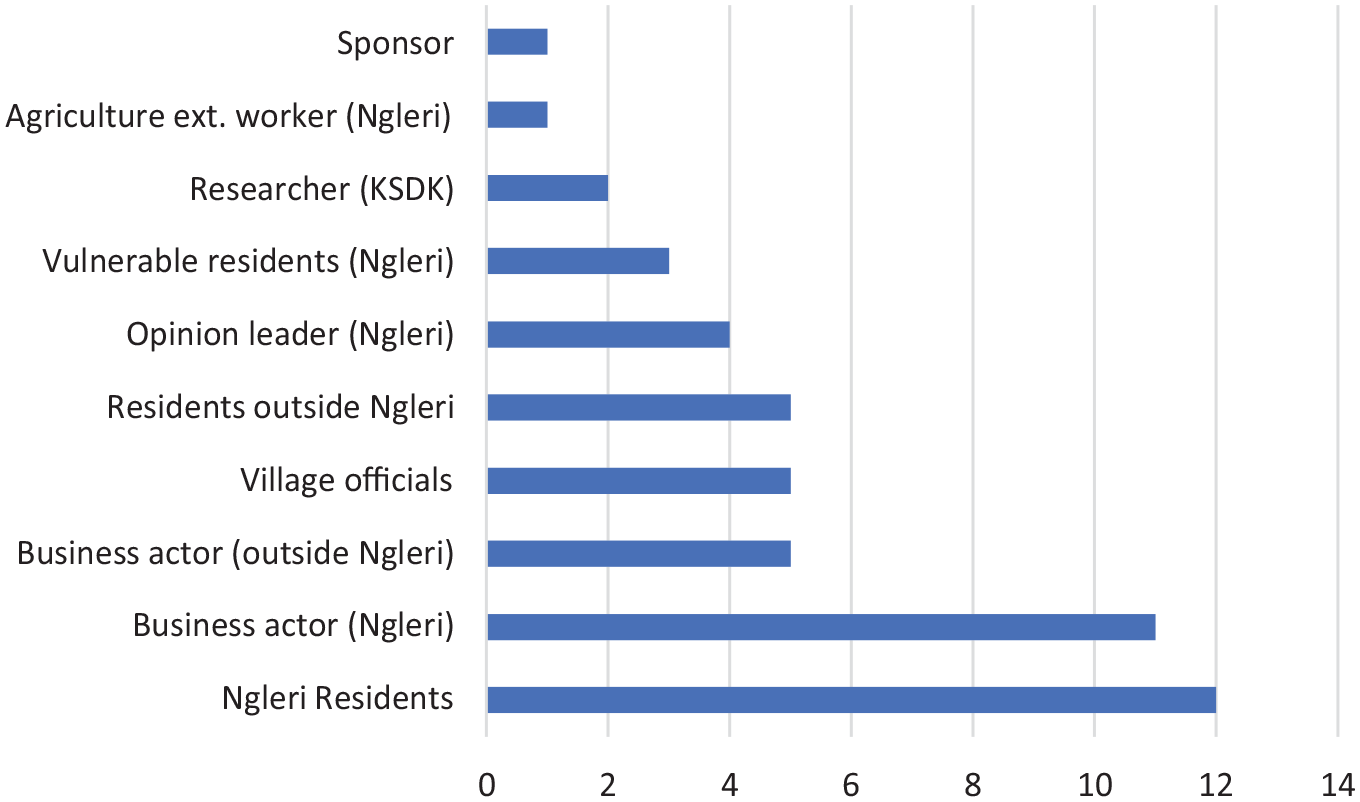
Number of informants per category.
The interviews, performed separately, once per interviewee, were conducted within one to two hours. Interviews were performed based on the interview guidelines in the Appendix. Before performing the interviews, they were informed about the purpose of the interview and asked about their voluntary participation. Their willingness to participate per participant, especially for the villagers, was only asked in an oral statement. Asking permission in a written statement potentially caused suspicions from the interviewees since it was often associated with the provision of social assistance, which became a sensitive issue among villagers and potentially brought failure to data collection activities for this research.
Some informant groups have higher totals than others to cover a proper and sufficient proportion. For example, the number of informants from Ngleri villagers and outside Ngleri was chosen because they were the main target of the CVF activities. Therefore, the understanding, knowledge, and expectations of CVF participants can be explored in broader detail from the ten groups of informants. Forty-nine informants were interviewed, with the proportions as presented in Figure 2. Most informants were Ngleri’s residents and residents from outside Ngleri Village.
Thematic analysis (Kiger & Varpio, 2020) was performed to obtain a process overview/description and identify the influencing factors and festival benefits (Boyatzis & Ratti, 2009; Claridge, 2004; Hemerijck et al., 2019; Kwon, 2020; Laruffa, 2018; Midgley et al., 2017; Mykletun, 2009; Rao, 2001; Spencer & Spencer, 1993). A discourse mapping was carried out using the Discourse Network Analyzer (DNA) and GPT Worksheet to complement and deepen the analysis. DNA can be used to create code based on particular concepts regarding actors’ statements in a specific issue and considered a new approach to be implemented in the context of SI through a festival. DNA allows for mapping actors and concepts from a research result to understand a community’s concerns based on statements issued by the actors interviewed. DNA also allows researchers to extract and visualize data in percentages and numbers from qualitative data and form a network or concept map. However, it requires more effort to determine concepts to codify the statements from the research results with particular attention to the concepts’ determination to deliver appropriate results and provide proper interpretations.
Results
Data from interviews, observations, and secondary sources coherently explain how the CVF process worked and who the actors were. The data shows how the organizers used and overcame the supporting and inhibiting factors in CVF’s implementation and what benefits the parties received from collaboratively organizing the festival as an SI tool to benefit the community. The results are shown in the following subsections.
CVF Process and the Influencing Factors
The Head of KSDK initiated the CVF in Ngleri Village under the Farmers’ Village Festival. This festival, held in February 2023, was in conjunction with the KSDK’s national work meeting event (RAKERNAS), expecting it would provide greater benefits for the village community, either from Ngleri Village or residents from the surroundings. The role of the Head of KSDK showed the dominant role of a formal leader, especially the organizer, in the initiation stage, along with the power to start the preparation.
CVF preparation has been started since November 2022 by appointing an executive committee. In January 2023, the committee agreed that RAKERNAS would complement CVF by involving the village community, central/local government, private sector, and KSDK members. The collaborative format was chosen to seek funding support and establish relationships between/among actors involving village communities, government, NGOs, media, business actors, and academics in an equal position. CVF was also expected to provide community experience and expand opportunities for researchers to perform action research and build networks with village communities.
During the preparation, the committee defined the festival theme/content, searched for alternative locations, and contacted potential collaborators for fundraising. The committee realized that KSDK did not have the budget to execute the plan. Therefore, support from various parties was greatly needed to complement the role of current actors in executing the CVF. For this reason, the committee tried to approach the head of the regency, who had the power to encourage the grassroots community to participate in CVF actively. Two approaches were carried out: (a) Utilizing existing friendships to convince potential collaborators easily, which was trust-based, and (b) Approaching institutions that have not yet had initial relationships, using the snowball technique. These conditions show the importance of networking skills from the committee, besides the skills and capacity to manage such an event. The committee’s hard work succeeded in forming collaborations with various parties with various forms of contribution (Table 1).
The collaborator’s vision also shaped the festival theme. The Ministry of Agriculture, which addressed millennial farmers, and Indonesia’s Central Bureau of Statistics, which was scheduling an agricultural census in 2023, defined the theme option concerning farmer’s villages. In addition, the collaborators also determined the event’s content, especially the village community’s aspirations. This condition could accommodate the collaborators’ interests.
In line with content planning, the committee performed a survey for site selection. It was based on the village’s agricultural potential, acceptance from the community, the intention of the village’s formal authorities, and the existence of intermediaries who bridge the gap between the KSDK and the local community. This consideration determined the event’s success.
Of the several location candidates, only Ngleri was committed to carrying out the event. The committee acknowledged that convincing the community to support the event took effort. At the initial meeting, sub-district officials asked about the stipend for involved village people in holding the festival since the farmers were entering the harvest season so that the festival would disrupt their work and used to obtain an allowance for involvement in events organized by the government. The head of KSDK could convince village officials and the community to get involved in festival activities even though they did not receive any allowance by persuading them that participating in CVF would benefit intangible benefits to build the village. Reinforced by the intermediaries’ persuasion, the Headman of Ngleri expressed a willingness to collaborate in CVF. These conditions showed that the community’s culture and behavior have a particular influence on the CVF process. However, it could be interfered with by the presence of appropriate persuasion from the organizer and the local informal “opinion leader” to create community empowerment.
Based on the observation results and information from the Festival Implementation Plan document, it can be identified that CVF participants were Ngleri residents, village officials throughout Gunung Kidul Regency, KSDK members, the community, and MSMEs in Gunungkidul, with an approximate target of around 2,000 people. The KSDK members stayed for 4 days and four nights in Ngleri. Programs in the CVF include: (a) RAKERNAS, specifically attended by KSDK members (b) Social welfare lectures attended by Gunungkidul district communities representatives; (c) Learning program for Gunungkidul district millennial farmers representatives; (d) Information dissemination of agricultural issues; (e) Drawing competition, attended by children representatives from Gunungkidul district; (f) Clothing and food bazaar; (g) Farm and livestock clinic, and MSME product exhibitions, (h) Distribution of fruit plant seeds, (i) Art events, and, (i) “Tumpengan” tradition.
According to the committee, CVF could meet Ngleri’s community’s and all collaborators’ expectations. The committee stated that from the preparation to the event’s closing, there were no complaints, protests, or objections statements from the participants or collaborators. This condition indicates that the committee perceived that the event was carried out well. Nevertheless, one of the obstacles from the committee’s point of view was the limited time, causing poor coordination between the local committee and KSDK in welcoming the incidental visitation by the sultanate. The poor coordination resulted in a low understanding from the village committee regarding the change of CVF’s event, and limited information reached other villages. Therefore, only part of the potential visitors could benefit from CVF.
Nonetheless, the FQ can still be considered high since the discourse analysis shows that most informants expected more frequent CVF in the future. The participants also thought CVF needed to be developed or rotationally held in other villages. Based on the interview results, details regarding the community’s expectations of the CVF are shown in Figure 3. Despite the expectations from the community, empirical evidence concerning the CVF benefits is provided in the following subsections.

Informants’ sentiment regarding expectations for future VCF
CVF Benefits
The results of the statements mapping from interviews with the informants, 513 statements were obtained related to sentiment toward CVF, as presented in Figure 4. In contrast, Figure 5 shows the discourse map drawn from the interviews of all informants. Table 2 shows the total statements collected from each informant and the sentiment analysis results on each statement. A detailed explanation of the benefits of CVF is delivered in the following subsections.

Themes appeared during CVF

Social discourse analysis mapping*.
Tabulation of Statements Concerning Participants’ Sentiment Toward CVF.

Source. Tabulated by authors from the interview results.
CVF Benefits for Developing HuCap
CVF benefits for HuCap (Figure 6) show that CVF was perceived as beneficial in improving HuCap through increased happiness and knowledge. In addition, only a few discourses stated that CVF improved skills and changed behavior. Results from observation and interviews with informants also show that CVF created a lively atmosphere because many guests outside the farming village came and stayed at the residents’ houses. The atmosphere of the village became alive and made the residents feel happy, different from usual, which tended to be hushed.

Informants’ sentiment regarding CVF benefits for HuCap.
CVF reconditioned the Ngleri area as if the village had a big event. The bazaar also relieved household needs during famine due to pest attacks. Some residents, especially those who operated basic food stalls, vegetables, snacks, and laundry, also received additional income. Local artists felt happy because they could channel their talents and had experience from performing.
Drawing competitions have added experience and motivation for children’s learning enthusiasm. Before joining the competition, the children practiced vigorously for 4 to 5 days. The children were happy to know other participants from different villages. The competition added confidence for the winners.
The visitors generally felt that learning about millennial farmers, consultations by farmer and livestock clinic stands, and non-formal ideas exchanged with researchers could increase their knowledge. Learning for millennial farmers was useful considering that rural youth needed to be motivated to work in the agriculture sector, given the traditional view of “mendingan glidik” creating a reluctance to become farmers. Nevertheless, only a few participants attended the event since the time coincided with work or school.
Knowledge development was only felt by some residents. Some of Ngleri’s residents and most villagers around Ngleri could not attend the festival activities due to the lack of information and the activities coincided with the harvest season. For cattlemen, the information from the village government came unexpectedly, so they could not anticipate their routines. The information was not widely known by residents surrounding Ngleri since it is intended for group representatives. Even so, some residents shared their knowledge with other community group members through discussions or brochures.
Villagers generally felt festivals did not increase their skills because no specific training program existed. They expected, for example, training in skills in banana chip production, packing food properly, planting trees, and fertilizing using liquid fertilizer. Meanwhile, some MSME business actors felt that CVF improved their managerial skills because each festival had different guest segments. Therefore, it led to different visitors’ requests and required different products to be offered. For village committees, especially those whose houses were used as “homestays” for 5 to 10 guests per homestay, CVF could build managerial skills as an experience for organizing future events. They felt that the CVF could improve their skills in organizing significant events.
If it’s just a socialization event after it’s over, the villagers will get bored. I’ve heard too many people talking (Interview with informant A) For skills, it is not, because, yes, it is only a crowd. It doesn’t improve skills (Interview with informant B) Regarding skills, I don’t think so. There’s no training (Interview with informant C)
The residents generally did not feel CVF’s effect in changing human resources’ behavior. Ngleri residents already have the character of courtesy, friendliness, mutual understanding and respect, and a sense of respect for village leaders. This behavior was not affected by CVF.
Based on Figure 6, the frequently appeared variables were related to happiness, followed by the variable of increasing knowledge, of which both tended to have a positive tone. Meanwhile, skills improvement and behavior development have yet to emerge. However, a compelling finding occurred in the skill improvement variable, whereas the informant’s statements showed insignificant differences between negative and positive tones. These conditions prove that CFV could provide benefits from HuCap’s aspect.
CVF Benefits for SoCap
The results of interviews show that CVF provides benefits related to networking, especially new networks for business actors, with fellow business actors, consumers, academics, banks, and regional/central government. Bonding occurs in relations within the family, community, and business people, increasing familiarity. Bridging occurred among business actors in collaboration with community groups from various hamlets in preparing festival consumption.
New networks between/among business actors and consumers, local/regional/central government, academia, and bank formed linking. In the long term, this network can increase collaboration and information accessibility, facilitate access to capital from banks, access programs from the central government/regional government, and learn time management to prepare large orders rapidly, which may increase business turnover. According to village officials, the festival enabled the village authorities to gain new networks with the Central/Regional Government and academic community.
CVF increased mutual cooperation, spirit, and solidarity, reflected in the festival preparation activities such as preparing consumption, cutlery, and bazaar stalls. Ngleri residents also worked together to prepare homestays for guests/researchers from BRIN. The residents already had a family spirit, respect and appreciation, and willingness to help. Everything was conducted based on “gotong royong” and voluntary principles without receiving any payment. The principles activated a new norm since they usually received no compensation.
The MSME group and village committee felt improved solidarity through exhibitions, which increased group cohesion among MSME group members to enable production in a relatively short time. Solidarity was also felt by the Ngleri residents, who were requested to send representatives to regional dance performances. Solidarity was also felt by some cattlemen when they lent animal feed to fellow cattlemen and by residents, village officials, researchers, and local government agencies and banks. These conditions increase solidarity at the meso level through bridging and the macro level through linking. The growing solidarity provided support for the smooth CVF execution.
Another CVF benefit felt by a part of the community was the enhancement in trust, felt by Ngleri Local Government, who succeeded in bringing in activities reviving the community’s economy. This benefit came from bazaars, cultural and artistic activities, and the provision of fruit seeds and liquid fertilizer. The trust detained between the community and the village government was reflected in the people’s attitude, who believed that the village headman and other persons developing the rules applied in the society could create a better life. Even so, for some other participants, CVF created suspiciousness since they did not obtain clear information, so they could not participate in and obtain the benefits of the festival. The sentiment analysis results confirmed the various benefits related to SoCap (Figure 7). The results show that the variables of SoCap generally had positive tones where the dominant benefits include increased solidarity between communities and expanding cooperation networks. The increasing public trust in the government became the least concerned issue. Thus, CVF is proven to benefit developing SoCap, especially in increasing solidarity and expanding cooperation networks.

Informants’ sentiment regarding CVF benefits for SoCap.
Other Benefits of CVF
Based on the discourse analysis, CVF elicited various responses from all participants, as described in Figure 5, with ten main keywords (Table 3). Based on the analysis, BRIN, through the KSDK, became the main focus of CVF based on the proximity of “BRIN” to other frequently appearing words, namely “tamu” (guest), “menginap” (stay), “rumah” (home), and “malam” (night). It shows that the presence of the KSDK members received much attention from the informants, especially Ngleri’s residents.
Betweenness Centrality Scores of the Top 10 Keywords in Discourse Analysis.

Note. Processed by authors from the interview results.
The participants highlighted CVF benefits, indicated by the emergence of the words “bermanfaat” (useful), “meningkatkan” (increasing), and “pengetahuan” (knowledge). This grouping concerns the activity’s variant concerning various outreach and farmer clinics. However, the emergence of the clusters is not escorted by “tani” (farming) or “pertanian” (agriculture) or other words related to the activities. Therefore, the core of CVF was out of the participants’ focus. Other identified benefits are shown by “ibuibu” (ladies), “warung” (small shop), “snack,”“usaha” (business), “berjualan” (selling), and “pembeli” (buyers). It shows that female participants benefit from trading in direct selling through participants’ shopping activities.
Other discourse analysis cluster shows residents’ interest in the bazaar, selling cheaper products than the common market. This finding is indicated by the words “senang” (happy), “sembako” (nine kinds of foodstuff), “bazar” (bazaar), “murah” (cheap), and “pangan” (food). It shows the participants’ joy/happiness when attending and buying cheap basic food bazaars. Another cluster is related to the involvement of MSMEs, indicated by the emergence of the words “UMKM” (MSME), “jejaring” (network), “jangka” (term), “omset” (sales-turnover), and “ekonomi” (economy). This cluster shows that MSMEs’ involvement relates to the opportunity to build networks and economic gain from transient sales turnover. Besides strengthening the fact that CVF may develop SoCap, these conditions show that CVF can provide temporary economic benefits. The benefit can be sustained by routinely holding similar events.
CVF can promote a village’s potential through culture, customs, and physical conditions (Figure 8). Business actors also obtained increased sales turnover to provide short-term economic welfare. Profits were obtained from those selling daily needs and whose houses were used as homestays. However, only a few visitors felt CVF could provide long-term economic benefits. The participants perceived CVF as a medium to expand access to information that could form new knowledge.

Informants’ sentiment regarding other benefits of CVF.
Discussion
CVF organized by KSDK can be categorized as a non-profit, open castes special events, showing an effort to achieve social inclusion. Considering the overall process, especially the organization of the events, CVF has top-down characteristics. The collaboration aspect of the festival appeared in the cooperation among actors in providing resources for various monetary and non-monetary activities, tangible or intangible resources. CVF presented a combination of a cultural festival with particular emphasis on local economic development through a tourism-related activity. This finding strengthens the study by (Zou et al., 2021), although in the case of CVF tended to be more “incidental.”
As a heterogeneous type of festival, CVF also occurred in combination with a cultural arts festival (Attanasi et al., 2013), a “business” festival, and a “knowledge-upgrading” festival. Therefore, CVF is unique compared to other heterogeneous festivals mentioned by (Mykletun, 2009). The uniqueness was necessary since a festival should consider local needs as a consequence from the spatial aspect, which in this case related to the needs of a village community in Ngleri, Jogjakarta.
FQ greatly influenced the benefits provided by CVF. The CVF process and the influencing factors in forming FQ, in turn, can make the festival an alternative tool for SI (Figure 9). The figure is beneficial for apprehending the detailed stages of the festival. Further, it indicates the necessity of multi-level, multi-perspective, multi and/or transdisciplinary knowledge for the main organizer, the KSDK, to provide excellent festival management, resulting in optimum benefits, especially for the village community. The knowledge regarding the process may fill the literature gap within a heterogeneous collaborative festival.
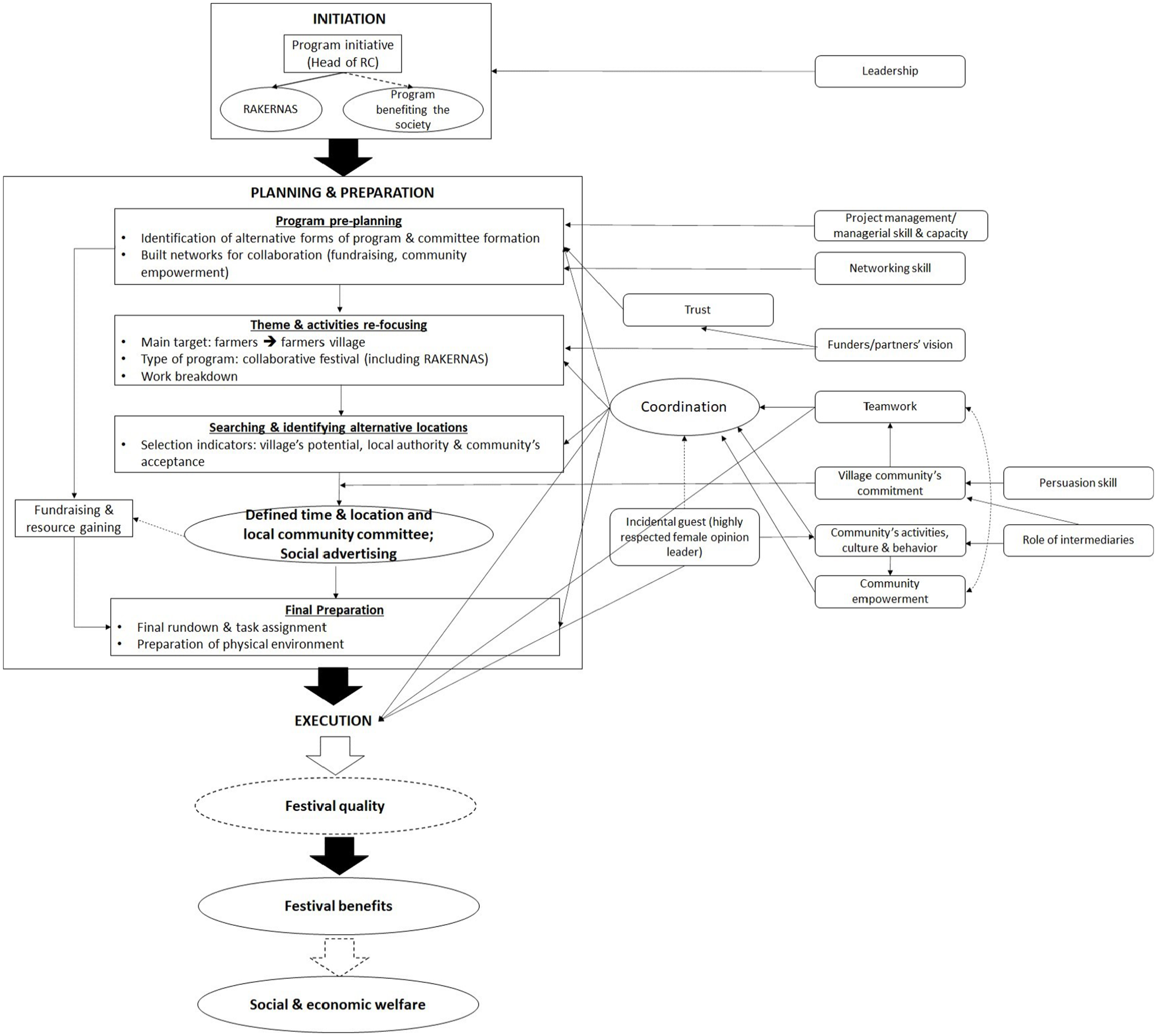
CVF process.
The CVF process consists of three main stages, namely the initiation, planning and preparation, and execution stages, resulting in a certain FQ, further creating SI-related benefits. Different factors influenced each stage of the CVF process. The leadership factor from the main organizing committee determined the initiation stage, influencing the initial goals and direction. This factor was related to the defined purpose, which related to the community’s needs, as also stated by Getz (1989). As a side effect of the leadership, additional missions lead to additional effort in planning and preparation.
The planning and preparation stage can be divided into four sub-stages, as shown in Figure 9. In the first sub-stage, KSDK tried to build the network to gather the required resources, determined by networking skills and managerial abilities. The next sub-stage was influenced by the funders’ vision concerning their expectations to achieve an agreement regarding the targeted object as a basis for determining the work breakdown. Supporting the opinion of (Sanaghan & Lohndorf, 2015), there was a communication process and collaboration related to decision-making to determine the direction of allocating resources. Availability and adequacy of information were essential to building mutual understanding, further creating effective coordination. This fact can be an essential lesson regarding future festival design, especially for the organizers.
Crucial to building effective collaboration is analyzing/identifying each stakeholder’s needs, wants, characteristics, and conditions or situations (Mayers, 2005), including the villagers (Terkenli & Georgoula, 2022). In the case of CVF, these points occurred mainly during the “program pre-planning,”“theme and activities re-focusing,” and “searching and identifying alternative location.” Nevertheless, they also presented during the execution stages since several incidental conditions needed to be encountered to ensure effective collaboration.
The location options were based on several aspects, including the village’s agricultural potential, acceptance from local authorities and the local community, and the presence of intermediaries. The location determination was based on the community’s commitment to support the festival implementation. Therefore, the commitment factor also determined the success of the festival organization. The commitment was triggered by persuasion from the Head of KSDK and the reinforcement from intermediaries to enable community empowerment, which also showed local leadership as one of the influencing factors of a festival (Getz, 1989) to provide the expected benefits. This condition was related to cultural factors and the behavior of the surrounding community, which were related to timing accuracy. Agreement regarding time and location became the starting point for additional social advertising (SA) activities utilizing digital technology through social media, email, and other communication media to gain additional resources, especially funding. This condition supports the finding from (Zou et al., 2021).
Besides advertising to potential resource providers, advertising to villagers as potential participants is also necessary. Because of the hierarchical-order culture within the community, sudden information may cause reluctance to attend. Before the festival was held, more massive outreach was needed through the proper communication channels regarding the objectives and technical details of the activity, which was potentially beneficial to attract more visitors. Moreover, since unexpected matters occurred during CVF, the agility of the main organizers and the local committee, which are also influenced by local culture concerning time selection, had an essential role in determining the festival’s success in bringing SI-related benefits. These findings fill the gap in the literature regarding factors influencing the creation of SI-related benefits through a CVF.
This research identified six categories of actors in CVF: (a) Government, which includes local authorities (village and provincial levels) and ministerial governmental organizations. The roles of the government were more related to providing intangible and non-monetary resources and fulfilling regulations regarding the event; (b) Business sectors, which include the local business community, especially the local SMEs, large enterprises outside the region, and the banking sector. Their roles were dominant in providing monetary resources; (c) Community, which relates to the local community either from the village or outside the village as the venue of the festival, either as participants or resource persons. They provided direct or indirect assistance for the festival and tangible, non-monetary resources; (d) Scientific community that includes researchers and representatives of the board of directors from public research institutes. They act as a provider of tangible and intangible, monetary and non-monetary resources, to fulfill fund lacking and other uncovered resources; (e) Communication media, primarily digital technology for accessing social media for SA; (f) Regulations and local norms which relate to the fulfillment of rules for organizing an event which usually relates to governmental bureaucracy, and sociocultural norms in the local community, either in the village or higher regional level. These findings indicate that each actor has a different role(s), supporting the finding from Sanaghan and Lohndorf (2015). Nevertheless, this research details which stage the actors have a more crucial role.
Referring to the helix concept, the involved actors formed a hexa-helix form. However, it differs slightly from the common hexa-helix concept with different contexts, as (Zakaria et al., 2019) and (Rachim et al., 2020) proposed. This research argues that in the context of SI through CVF, the helix is not directly related to formal law but was more influenced by local regulations regarding bureaucracy and sociocultural norms. KSDK became the center of relationships connecting all related elements of the hexa-helix (Figure 10). Referring to the three main attributes by Kismartini and Yusuf (2015), the main power tends to be held by local authorities and funders, even though these parties have different interests and exert different influences. The attribute of influence was attached to actors holding informal authority, especially intermediaries who provided support to the committee, especially to persuade residents to create commitment.
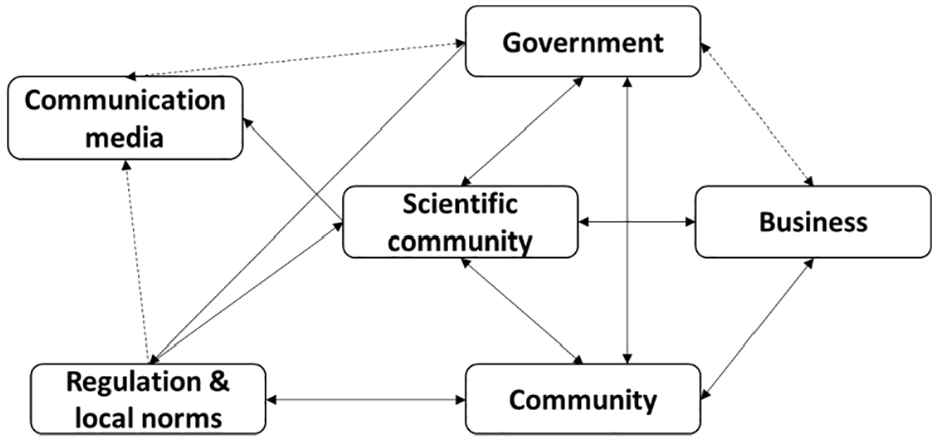
Hexa-helix model created from CVF.
CVF has proven to increase HuCap, based on the variables defined from previous research (Hemerijck et al., 2019; Laruffa, 2018; Midgley et al., 2017). Indications of the increased HuCap according to criteria from Boyatzis (1982), Spencer and Spencer (1993) were mainly shown through increased community motivation and happiness. However, increased knowledge, skills, and improved behavior also existed. CVF can also provide benefits to improve SoCap, as stated by (Kwon, 2020; Rao, 2001), through increased networking, solidarity or togetherness, and trust according to criteria from (Putnam, 1994). The CVF, as an event that can be considered a tool of SI, also has the potential as an alternative program for social policy. It is a form of SI innovation since various available programs are mostly in the form of education, health, housing, and income support programs (Bouget et al., 2015; Bruyn, 2010; European Commission, 2013; Hemerijck, 2023; Hemerijck et al., 2019; Midgley et al., 2017; Morel et al., 2011; Owen, 1990; Giddens, 1998 in Perkins et al., 2004).
Figures 3 to 6 also illustrate that CVF can be a tool for SI for village development concerning “SDGs Desa,” sourcing from various programs, with the benefits in HuCap, SoCap, and other additional benefits. CVF can provide economic benefits for village communities and align with SDGs Desa, especially in achieving Goals 1, 2, 4, 8, 9, 10, 11, 12, 16, and 17. The goals’ achievements are also potentially relatable to one another, and several CVF programs may support more than one goal. The CVF itself, throughout the overall program and entire stages, is a form of partnership for village development that aligns with Goal 17—partnership for village development. Therefore, the benefits of SI, along with the additional benefits, once in a time, can also beneficially support the achievement of the national program, with a particular direction on enhancing village development to improve the rural community’s welfare.
Activities in CVF were unique compared to common homogenous festivals. The uniqueness was adapted to the needs of Ngleri communities regarding their occupation, which further increased the motivation. This finding aligns with what (Marais, 2009) and (Maeng et al., 2016) stated. The benefits of each category of CVF activities in the HuCap and SoCap categories are shown in Table 4, where most of the benefits were sourced from multiple programs. The bazaar program even provided more than one benefit. Such a program may need to be a leading event for future CVF. The formation of trust as part of the SoCap activation indicates that the process was not instant and linear since it was built throughout the CVF process.
Festival Benefits for HuCap and SoCap.

Note. processed by authors from the interview results, document of festival planning, and observation.
In addition, the seed planting program indicates an effort to achieve environmentally-related goals, although the local community has not yet been aware of the benefits. This condition indicates the potential for the program to become an eco-investment. CVF can also provide cultural preservation, indicating its potential for cultural investment. Therefore, as a whole, CVF can form an eco-sociocultural investment. Nevertheless, even though CVF has been proven to be a tool for SI, the benefits can still be optimized, especially by eliminating the arising obstacles and seeing the stakeholders’ expectations be accommodated for future festivals. Accommodating stakeholders’ expectations can increase FQ and obtain greater SI-related benefits.
An invitation from an opinion leader triggered local villagers’ intention to attend the festival. This condition tended to be shaped by subjective and local sociocultural norms. These norms arose from perceived social pressure, which determines feelings, either excitement or reluctance to participate in the CVF. When there was no invitation from the opinion leader, the intention could be encouraged and strengthened through the opinion leader’s role in persuading, especially from religious leaders. As for the existence of perceived behavioral control, it tended to have less influence on the feeling of residents to visit CVF but was more likely to appear in the provision of accommodation concerning the instant benefits and was not directly related to total attendance. This condition indicates a modification of TPB (Ajzen, 1991) implemented in examining FS and FQ, especially in the context of a heterogeneous rural non-profit festival. FQ may determine the sustainability or strengthening of trust from funders or other resource providers. These factors must be considered for the future organization of CVF since they can also influence the creation of SI-related benefits.
Examining the overall process and mechanism that emerged during CVF, the interrelated influencing factors defining FS and FQ came from human, social, cultural, and financial. The human factor is more related to personal intention and demographical conditions. Social factors relate to community structure and wealth. Meanwhile, cultural factors relate to norms and values within the community. Financial factors concern the funding, either the source or the amount. However, CVF also utilized non-financial resources, including human resources. Therefore, concerning the categorization proposed by (Mykletun, 2009), this research argues that not all of the six dimensions of the festival’s success were having effects. Improving the categorization of factors by Mykletun (2009), this research proposes another category, complementing the financial factors by adding the non-financial resources, termed the resource factors.
Concerning the social networking factors, as stated by (Foxton & Jones, 2011), the relationships among actors occurred through formal and informal interactions and meeting places. Formal interactions occurred between public research institutes and government and business actors, especially the ones other than local SMEs. The meeting place tends to be a formal place or a virtual one. Other interactions, for example, the public research institutes with the community, occurred as the informal ones.
Conclusion
This research brings theoretical implications based on empirical evidence of CVF in Ngleri Village, Jogjakarta. CVF, characterized as a form of activity/celebration held in a village involving multi-stakeholders, can be used as an alternative tool for SI that occurs in a multi-program activity, leading to the creation of benefits related to HuCap and SoCap. CVF can improve HuCap in the form of an increase in happiness and knowledge. For SoCap, CVF can improve norms and solidarity, widen networks, and increase trust. Furthermore, while current SI programs generally occur as partial ones in the form of education, health, housing, and income support programs, CVF, with its particular characteristics, offers several programs once at a time to fulfill community needs for long-term purposes. Therefore, this kind of festival can be considered an innovative tool for SI.
CVF can also become a tool for eco-investment since it can provide benefits related to the environment and cultural investment because it can provide benefits in terms of cultural preservation. Based on the case study, although there were benefits associated with eco-investment, as the beneficiaries, local villagers have not realized them yet. This condition leads to the need to disseminate and deliver complete and detailed information regarding related programs within the festival, which should apply inter-, multi-, or trans-discipline management characteristics for the CVF, especially by combining/elaborating management, communication science, and sociology perspectives. These show another theoretical contribution of this research: CVF can become a tool for multi-investment, which, in this case, is an eco-sociocultural investment. These conditions also indicate that CVF can also support the “SDGs Desa” in Indonesia and, with necessary adaptation, can also be analogized to support the United Nations’ SDGs in complement with an innovative management approach. Particular focus is essential for the considerably successful program within CVF, for example, the bazaar event, which can provide multiple benefits. These aspects become one of the practical contributions of this research in the area of festival management and as a recommendation for alternative social policy programs, either as a stand-alone or a complementing one.
As a tool for SI, CVF’s benefits depend on the FQ, created through a dynamic process. The process consists of three main stages: initiation, preparation and planning, and execution. Different factors influence each stage. It is necessary to pay attention to these factors to achieve the expected FQ, particularly leadership, managerial skills and capacity, networking skills, characteristics of partners - mainly related to their vision, characteristics of the village as the festival venue - especially related to norms and other sociocultural aspects, situations/conditions faced - as well as the existence of connecting actors where these things will form commitment, trust, and teamwork to develop effective coordination. These factors need to be well understood, especially by the core committee. Besides forming trust in villagers, it must also be built with other stakeholders. The trust can be created through social advertising, where, in addition to obtaining funding/other supporting resources, this activity also needs to be carried out to attract more participants, especially from local villagers, without neglecting the external participants (outside Ngleri). The content must also adapt to local sociocultural conditions. These conditions become the challenges for the committee, especially in more careful and detailed design activities. The committee should also be agile in dealing with incidental situations, which should be part of comprehensive planning. These aspects also become practical contributions of this research.
Based on the empirical study, CVF involved various stakeholders with different roles and expectations. The multi-stakeholder collaboration created through CVF forms a unique hexa helix pattern. In addition, since the CVF held a top-down type of governance, resulting in less optimum benefits, this research suggests the semi-top-down approach. This approach is considered an alternative way to solve the lack of understanding of the targeted community within the CVF location from the organizer side and overcome the lack of “know-how” from the community. The semi-top-down approach, which ensures that there is still active participation and involvement from the community apart from their limitations, can bridge the debate regarding the better options between the top-down and bottom-up approach, where the top-down approach is often disregarded as a feasible option from the community program. These findings become other theoretical contributions of this article.
Given the limitations in this research, especially in the data collection process, it would be more appealing to evaluate the festival’s quality based on each program/activity category with participants/visitors who have total attendance in each of these programs/activities. This evaluation will be beneficial if the festival is recurred to determine which programs need to be prioritized to be held and need to get a more effective resource allocation. The dynamics in the resource-raising process also need to be further analyzed. More case studies of similar festivals are necessary to provide generalization.
Supplemental Material
sj-docx-1-sgo-10.1177_21582440241288740 – Supplemental material for Social Investment Through A Collaborative Village Festival: The Case of Farmers’ Village Festival in Jogjakarta
Supplemental material, sj-docx-1-sgo-10.1177_21582440241288740 for Social Investment Through A Collaborative Village Festival: The Case of Farmers’ Village Festival in Jogjakarta by Sri Najiyati, Dian Prihadyanti, Bilal As�adhanayadi, Danarti Danarti, Mardiana Mardiana, Rukmini Nugroho Dewi, Y. S. Febby Febriyandi and Muhtar Muhtar in SAGE Open
Footnotes
Appendix
Acknowledgements
The authors would like to thank the Research Centre for Social Welfare, Village, and Connectivity (KSDK) – BRIN, especially the Head of KSDK and the festival committee, who granted permission and supported the authors to perform this research. The authors also thank Ngleri’s residents, especially those who acted as our informants. Special gratitude is intended to Purnama Alamsyah for consultation/knowledge sharing regarding discourse analysis as part of the analysis in this work.
Declaration of Conflicting Interests
The author(s) declared the following potential conflicts of interest with respect to the research, authorship, and/or publication of this article: The authors declare that they have no known conflict of interest
Funding
The author(s) received no financial support for the research, authorship, and/or publication of this article.
Ethics approval statement
This research has followed the authors’ local institutional ethics
Patient consent statement
Not applicable

Data Availability Statement
The data supporting the findings of this research are available upon request to the corresponding author
Permission to Reproduce Material From Other Sources
Not required.
Supplemental Material
Supplemental material for this article is available online.
References
Supplementary Material
Please find the following supplemental material available below.
For Open Access articles published under a Creative Commons License, all supplemental material carries the same license as the article it is associated with.
For non-Open Access articles published, all supplemental material carries a non-exclusive license, and permission requests for re-use of supplemental material or any part of supplemental material shall be sent directly to the copyright owner as specified in the copyright notice associated with the article.
