




Abstract
Providing long-term career guidance is an increasingly important role of public universities. Career services have become one of the most important evaluation factors for universities. This study used a mixed-methods approach to track and measure students satisfaction with career services in a public university in China. We designed and validated a questionnaire, then distributed it to university students. The questionnaire explored factors comprising the perceived quality of career services, with 20 quality indicators (e.g., employment skills training). According to the results, the perceived usefulness of career services was statistically significantly correlated with student satisfaction. The factors affecting student satisfaction varied with students’ grades. All 20 indicators had an impact on student satisfaction. The top three indicators contributing to higher satisfaction levels were the teacher’s teaching capacity, teacher’s knowledge, and guidance on career planning. The results led us to suggest that public universities can strengthen career services by enlisting the participation of all teachers, developing student-centered programs, and offering a wide variety of enrichment activities to improve the employability of graduates.
In China, college graduates are an important segment of the country’s workforce, because they possess scientific and cultural expertise. The expansion of higher education in China began in 2001, leading to a steady increase in the volume of college graduates. By 2022, this figure exceeded 10 million, reaching 10.76 million, and projections indicate a rise to 11.87 million by 2024 (China Youth News, 2023). Employing college graduates affects societal progress and stability. The importance of this demographic is underscored by the Chinese government (People’s Daily, 2024). In December 2023, the Ministry of Education issued a document titled “Notice on Doing a Good Job in Employment and Entrepreneurship” for the 2024 National General College Graduates. This directive urges educational institutions to “promote the construction of a high-quality career service system.” It highlights the role of these services in enhancing the employability of graduates and cultivating talent in colleges and universities. Evaluating student satisfaction with career services can offer valuable insights for institutions implementing guidance service systems. Such evaluations enable a more nuanced understanding of the employment needs of college students. By improving the quality of guidance services in a targeted manner, colleges and universities can effectively enhance student employment outcomes (T. Li et al., 2022).
Literature Review
Career Services Across Countries
Career services vary from country to country with respect to their policies, content, forms, and implementation mechanisms. Governments, societies, academies, intermediary agencies, and other specialists participate in employment service systems, but their duties and operating modes differ. College career services originated in the United States in the late 19th century. Harvard University introduced the first career guidance course in 1911, integrating such services into the academic setting. Today, employment rates are pivotal in determining a university’s reputation and ranking, thereby affecting enrollment rates. Consequently, American colleges and universities establish specialized career offices and allocate approximately 5% of student tuition fees to supporting them (Min, 2018). These agencies adopt a student-centered approach, offering diverse and ongoing career services such as career planning projects, employment guidance courses, construction of an online employment search system, and vocational exchange meetings.
In contrast, Germany has adopted a more government-led approach to providing employment services to university students. This approach involves collaborative efforts from educational institutions, businesses, and intermediary organizations. Schools in Germany offer a spectrum of services, including pre-enrollment counseling, professional orientation, career planning, and courses in interview and employment skills, alongside job counseling and aptitude assessments. Businesses contribute by providing students with paid internships and investing in educational programs, as well as facilitating hands-on training that enables students to acquire comprehensive vocational skills through practical production activities (Yanb, 2001).
Following the 1997 Asian financial crisis, Korea intensified its focus on career services (Hawon et al., 2023). Korean universities now offer courses based on societal needs, establish “Career Preparation Committees.” This committee is a self-management organization that provides services such as vocational education, communication skills education, and career guidance courses. Additionally, they facilitate company visits to campuses, aiming to improve the employability of college students (Zhang, 2017).
China is one of the countries with the fastest economic development and the largest number of college students in the world, and researchers have conducted many studies on career services in China. The rapid development of career services at Chinese universities began in 1993, when the “Outline for the Reform and Development of Chinese Education” prompted significant reforms to the system of employing college graduates. The current employment model for college students in China is characterized by market-driven dynamics, government regulation, school recommendations, and mutual selection between students and employers. According to data, over 11.79 million students will graduate from Chinese colleges in 2024 (Ministry of Education, 2023). Chinese universities attach great importance to the employment of college students. They have carried out comprehensive service activities related to employment, including predicting the employment market situation, designing reasonable career development paths for students, providing psychological counseling for students in employment, strengthening the cultivation of students’ labor skills, and organizing recommendations and recruitment.
Student Satisfaction with Career Services in China
Career guidance service student satisfaction is a significant component of educational contentment in higher education and represents an application of customer satisfaction theory within higher education research. In this theoretical system, when products or services meet customers’ expectations, customers are likely to feel satisfied. The employment services department acts as an intermediary between schools and employers. Helping students prepare for work, gain work experience, and find a job is an important role of universities. Evaluating students’ satisfaction with career services enables universities to understand student’ needs, identify shortcomings in the employment process, and enhance career services. Therefore, investigating career guidance service from the perspective of student satisfaction has both theoretical and practical importance.
Chinese universities play a crucial role in guiding and assisting students in their employment process. Career offices cultivate employment awareness, implement professional skills training, create employment platforms, and help students develop employment skills(Yong, 2018). Career services include three aspects: vocational education, professional education, and employment guidance (Chen, 2017). Career service personnel include teachers, employment guidance experts, counselors, and management personnel (T. Li, 2019).
Recent research on students’ satisfaction with career services assessed the current state and challenges, and the researchers advocated strengthening career services in three areas: research on employment status, improvement of job seeking ability, and construction of employment service system. This approach aims for multi-entity participation, multi-factor synergy, and a win-win situation across multiple stakeholders (Y. Y. Li & Li, 2020). Other scholars have explored student satisfaction from angles such as guidance on career planning, service activities, and faculty, addressing the main issues and possible solutions.
Analysis of existing literature reveals that current research on career services tends to focus on the macro level or to rely predominantly on descriptive statistical analysis (Huang et al., 2023). The development of evaluation indices and discussion of countermeasures are often presented in macro, qualitative form, with limited research integrating qualitative and quantitative approaches from the micro perspective of colleges and universities (Ma et al., 2019). Additionally, there is a gap in understanding the correlation between professional development and student satisfaction, as well as between career guidance and student satisfaction. To our knowledge, very few empirical studies have yet been performed to measure how satisfied students are with long-term career coaching or counseling services within public universities. In this study, we intend to investigate and evaluate public university students’ satisfaction with career services. We hope this study will guide further research in the theory–practice nexus regarding vocational guidance in public universities.
Research Methodology
Participants
We conducted this study in the public university located in Nanjing, East China. Situated in Nanjing, Jiangsu Province, it lies in an economically developed area in Eastern China. The university comprises 15 professional colleges, offering 47 undergraduate programs across 9 disciplines: education, literature, history, economics, law, science, engineering, management, and art. It hosts over 18,000 full-time undergraduate students. The university prioritizes employment among graduates, responding to the demands of economic and social development. In recent years, it has aimed to establish three major systems—teacher education as the core, supplemented by new liberal arts and new engineering—to cultivate innovative and practical talents aligned with societal needs. The university’s employment rate ranks highly among comparable institutions. It has repeatedly received the “Grade A university in quantitative assessment of employment of college graduates” accolade and has established a provincial career education base for students. Given its geographical location, size, and focus on student employment, this university serves as a model for examining career services in undergraduate colleges in China. Analyzing student satisfaction with the university’s career service could provide insights applicable to similar research in other undergraduate colleges.
Evaluation Indicators and Measurement Methods
To evaluate students’ satisfaction with employment services in a public university, we considered the characteristics and conditions of the university, as well as the principles of objectivity, hierarchy, representativeness, and operability of the index are followed (see Table 1). Career services may include the entire process of university, we identified several indicators based on a literature review (Chen, 2017; Wang et al., 2022; Zhu et al., 2021). The indicators have been modified to better reflect the Chinese labor market and this study’s research objectives. Accordingly, we developed three dimensions of evaluation: professional skill enhancement, employment guidance, and employment security and support. These dimensions have been tested, applied, and adopted as the basis for the development of indicators of employment services.
Indicators for Evaluation.

The dimension of professional skill enhancement is divided into three parts—course instruction, teaching, and internship practice—to comprehensively evaluate the quality of teaching. On the basis of the current state of public universities, we evaluated career service from two perspectives: employment training and employment resources. To comprehensively evaluate employment service quality, we also studied the satisfaction of college students with employment service offices and resources. From the above factors, 20 tertiary indicators were ultimately formulated to comprehensively evaluate the student satisfaction with employment services (see Table 1).
The research design of this study was reviewed and approved by the ethics committee of the author’s affiliation with the approval number 2023XY2. The development of the evaluation indicators consisted of three primary steps. Initially, we developed preliminary evaluation indicators through an extensive review of literature (Wang et al., 2022). Subsequently, we engaged industry experts, alumni, current students, and other groups to gather feedback on these preliminary indicators. Some practical items, such as curricular materials, campus recruitment campaigns, and famous enterprises and teachers, were selected to ensure the long-term operability of this evaluation system. In the final step, we conducted a small-scale pilot test involving 123 participants.
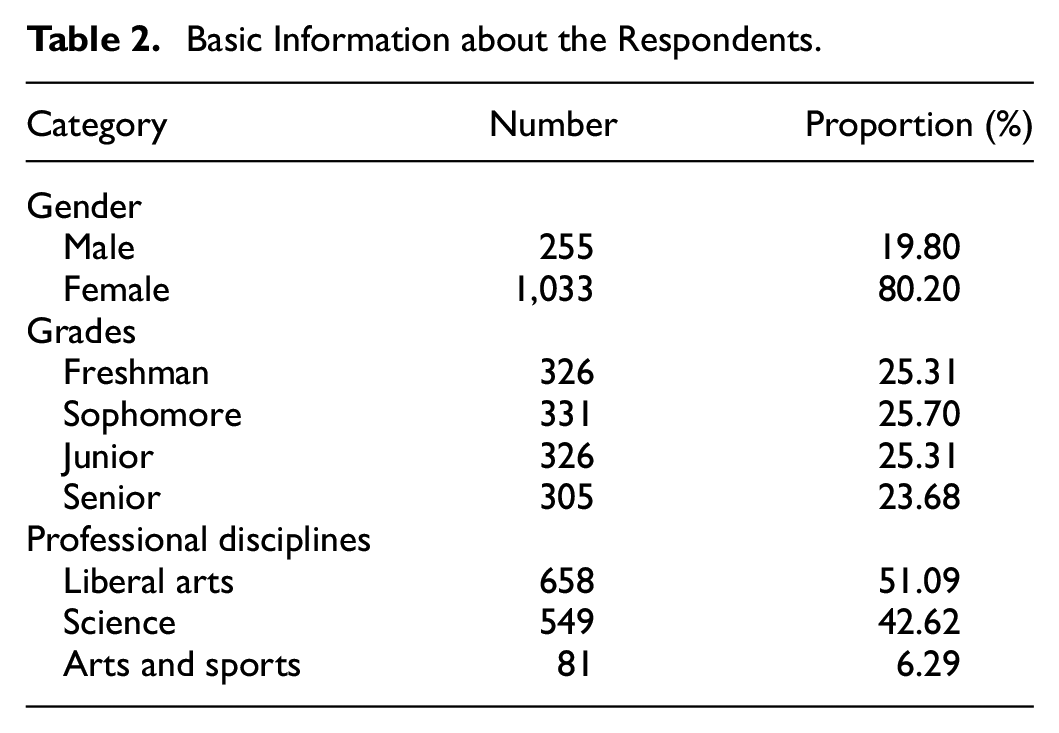
Web-based surveying is becoming widely used in social science research. Web-based questionnaires were thus adopted and distributed to assess students’ perceptions of employment services in the public university. A total of 1,328 students were randomly selected using convenience sampling. They were invited to participate via questionnaire distribution. All participants provided informed consent to participate in the study. Out of the distributed questionnaires, 1,288 were deemed valid, resulting in a validity rate of 96.98%. Of the respondents, 19.80% were male and 80.20% were female. The distribution of valid questionnaires across academic years was as follows: 25.31% from freshmen, 25.70% from sophomores, 25.31% from juniors, and 23.68% from senior. Detailed demographic information is shown in Table 2.
Basic Information about the Respondents.
Tests on the Reliability and Validity of Each of the Three Levels of Indicators
To further assess the effectiveness and reliability of the investigation, the test data were evaluated. Reliability was measured using Cronbach’s α. The formula was modified as follows:

When α ≥ .7, reliability is considered acceptable. In this study, SPSS 28.0 was used to calculate the α values; all α values exceeded .92, indicating high reliability (see Table 3).
Cronbach’s Alpha Values for Sample Indicators.

To further test the adequacy of sampling and the correlation among various indicators, we employed the Kaiser-Meyer-Olkin (KMO) measure of sampling adequacy and the Bartlett’s test of sphericity. The KMO test is commonly used to assess the ratio of simple to partial correlation coefficients among variables. A KMO value greater than 0.9 suggests sufficient sampling. Bartlett’s test of sphericity is derived from the determinant of the correlation coefficient matrix and approximately follows a chi-squared distribution. Factor analysis is typically used to ascertain the effectiveness of the structure, with various indicators evaluating the efficacy of the results.
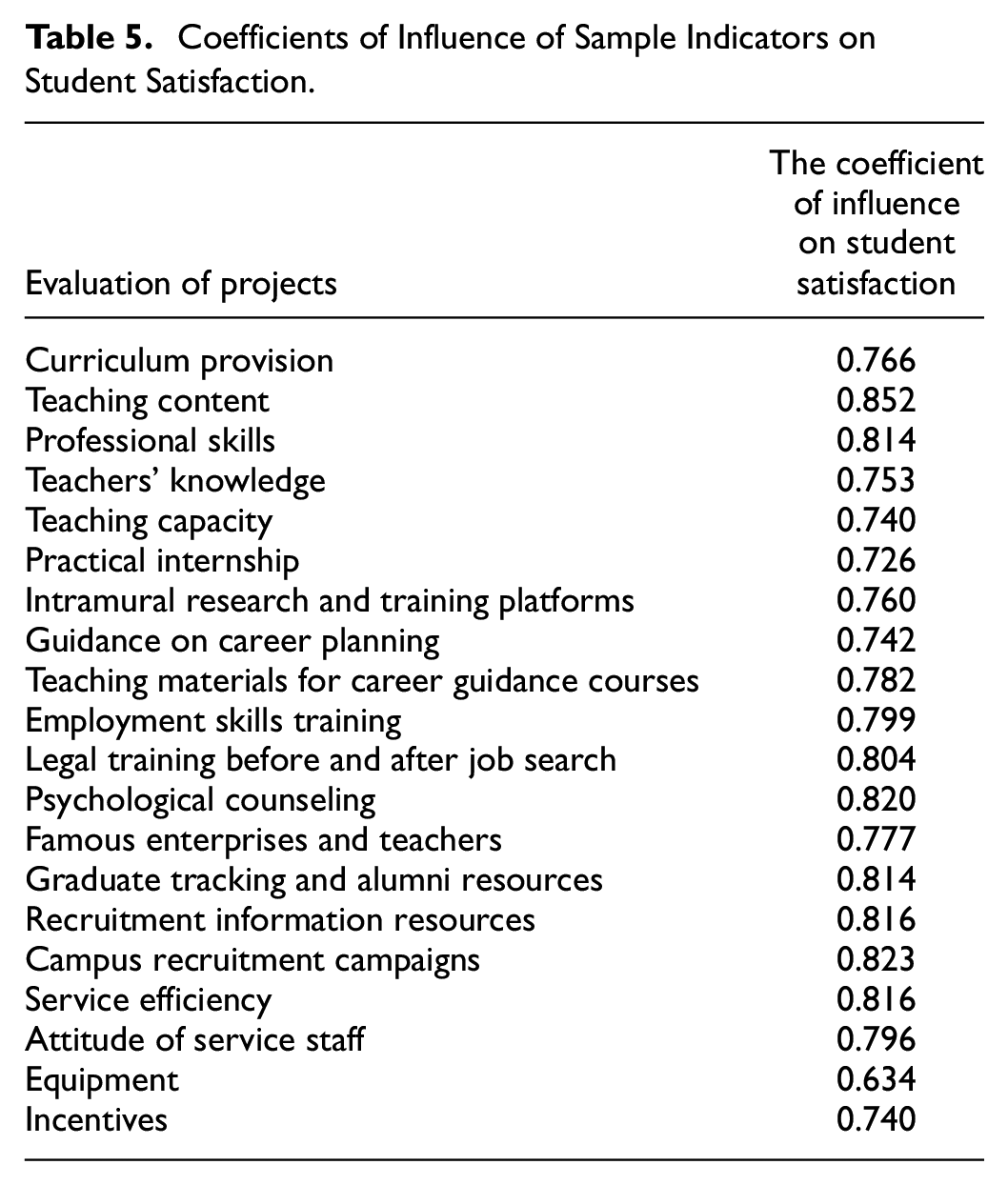
In this study, SPSS 28.0 was used to assess KMO sampling adequacy and to conduct Bartlett’s test of sphericity. The observed value was 33,123.57, with a significance level of p < .005, suggesting a substantial difference between the correlation coefficient matrix and the unit matrix. The KMO value of 0.981 indicates exceptionally high validity of the sample data (see Table 4). Exploratory factor analysis (EFA) was used to discern how the shared variance in measurement is attributable to a specific factor or latent structural variable at the initial stage of scale development. An analysis of the three-tier index in questionnaire results revealed that the impact rate of student satisfaction for each evaluation index exceeds 0.6. This suggests that each element of the three-tier indicator can effectively explain student satisfaction (see Table 5).
KMO and Bartlett Test Results.

Coefficients of Influence of Sample Indicators on Student Satisfaction.
Results
Overview
The results for the survey question, “How much do you know about employment service?” generally indicate strong awareness among students toward the employment services at this public university. The survey revealed that 16.46% of students were very familiar with these services, 33.46% had basic knowledge, and 23.45% were well informed, totaling 72.46% (see Figure 1). In the first year, the university offers career planning courses, helping students explore their interests, abilities, and values, and gain insights into their career prospects through interviews with professionals. The second year focuses on innovation and entrepreneurship education, cultivating a sense of innovation in students. In the third year, the curriculum includes employment guidance courses aimed at analyzing employment trends, resume writing, and interview skills training to improve professional competencies. Despite these efforts, 1.94% of respondents were unaware of the career services.
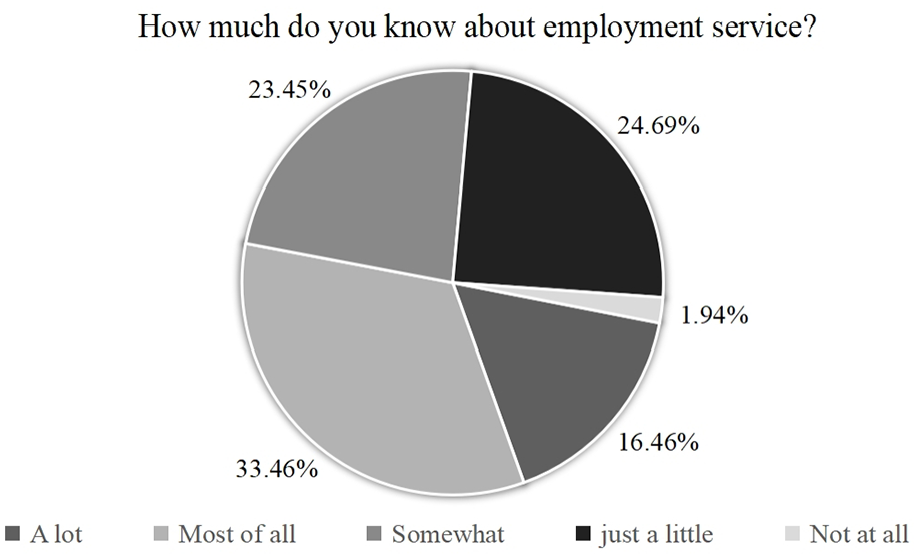
Students’ awareness of career services.
In response to a survey question asking about students’ satisfaction with career services, 24.84% and 40.61% of students reported being “very satisfied” and “satisfied” with the employment services, respectively (see Figure 2). In response to a question about the usefulness of career services, 32.38% and 50.08% of the students found these services to be “very useful” and “useful,” respectively (see Figure 3). An examination of the correlation between student satisfaction with career services and the perceived usefulness of these services revealed a correlation coefficient of .616, signifying a significant positive correlation. Career services are effective for providing employment resources, enhancing employability, and boosting student employment.

Students’ evaluation of their satisfaction with career services.

Students’ evaluation of the usefulness of career services.
To enhance understanding of the factors influencing satisfaction with career services, we selected questionnaires indicating “very satisfied” and “satisfied” responses from the survey for further analysis. Students’ scores for indicators affecting their satisfaction with the career services offered by the university are shown in Table 6. The overall scores for career service indicators were high for this public university, and there were no differences between the scores of these indicators. Table 6 shows the top 10 indicators as follows: teachers’ teaching capacity, teachers’ knowledge, guidance on career planning, intramural research and training platforms, famous enterprises and teachers, attitude of service staff, teaching content, employment skills training, professional skills, and practical internship.
Career Service Indicator Scores.

High-Quality Teaching
As shown in Table 6, the top three indicators of student satisfaction with career services are teachers’ teaching capacity (4.396), teachers’ knowledge (4.367), and guidance on career planning (4.365). It can be concluded that teachers’ quality and ability played a decisive role in students’ satisfaction with career services. One reason for this could be that the public university employs over 1,200 teachers, approximately one-third of whom have either studied or worked in a teacher training program. These teachers possess a profound understanding of pedagogical principles and student characteristics. During the recruitment process, teacher candidates are required to conduct a 30–45-min live teaching demonstration, ensuring that incoming teachers possess basic teaching skills. Upon joining the school, new teachers undergo training in educational concepts and teaching techniques. Prior to commencing formal teaching duties, each new teacher receives individualized mentoring from an experienced colleague. Each year, the school organizes a variety of open classes, demonstration classes, and other pedagogical activities, as well as competitions to continuously improve teachers’ skills. In the process of selecting outstanding teachers, evaluating year-end performances, and conducting title assessments, a teacher’s performance serves as an important reference point. Overall, this public university fosters an environment that emphasizes teaching excellence through the careful selection of teachers, cultivation of campus culture, encouragement of teacher self-improvement, and provision of incentives and support, all aimed at continuously improving the quality of teaching.
Emphasizing Practice
In our survey on student satisfaction with career services, intramural research and training platforms (4.364) and famous enterprises and teachers (4.355) ranked fourth and fifth, respectively. Professionalism is a crucial factor in employment, particularly in this age of information technology, where career advancement has become increasingly focused on specialization. This public university attaches great importance to the improvement of student employability through practical training, providing opportunities for internships and training. Deepening professional skills is an effective strategy for enhancing career prospects. These findings align with the university’s encouragement of master’s degree studies. Currently, with rapid advancements in artificial intelligence and information technology, alongside swift economic and social change, knowledge is being updated more rapidly, leading to increasingly diverse student needs. Consequently, the acceleration of university teaching reforms has become imperative. In recent years, this public university has actively revised its talent training programs. For example, over the past 3 years, it has annually modified its curriculum and teaching methods to better align with economic and social needs and students’ personal goals. The university offers numerous practical platforms, such as academic lectures, presentations, and innovation and entrepreneurship training programs. In the talent cultivation program, freshmen and sophomores are required to participate in on-campus activities, juniors undergo a 4-week enterprise apprenticeship, and seniors complete an 8-week internship, amounting to a total of 16 weeks of internship work during their studies. Practical internship was ranked 10th in overall student satisfaction (4.331).
Low-Scoring Projects
As Table 6 shows, among the 20 career services factors, the lowest ranked factors were legal training (4.306), equipment (4.308), incentives (4.313), graduate tracking and alumni resources (4.307), and campus recruitment campaigns (4.326). During the job search process, students are more concerned about how to find a job, lack legal knowledge training, and neglect the protection of personal rights. In areas such as job security, hardware provisions, and incentives, students expect improvements such as better-equipped classrooms, interview training rooms, and permanent recruitment venues. Students eagerly await more practical guidance from front-line employers. Typically, career services personnel in colleges and universities, with their solid theoretical backgrounds, transition directly from student to staff roles. However, their experience in employment guidance is often limited to personal job-seeking experiences, challenging their ability to address the diverse needs of students, such as rights protection and support in job seeking. In our survey question asking, “What kind of people do you most want to get career guidance from?,” over 40% of students chose employers and older siblings (see Figure 4). Students express a desire to learn about the work experiences of alumni in their fields, seeking targeted guidance and encouragement from those with shared academic and life experiences.

Preferred sources of help among students.
Open-Ended Questions
In response to the open-ended question, “What do you think are the most important factors affecting satisfaction with career services?,” there is a distinct difference in perspectives between underclassmen and upperclassmen. Underclassmen emphasize aspects such as “whether it is combined with reality, whether it has a sense of foresight,”“whether it has a clear goal,”“whether the teacher has experience, whether the school pays attention to it.” They also highlight the importance of comprehensiveness in career guidance: “whether the career guidance is comprehensive enough, and whether it is good for practice.” The terms most frequently mentioned include “planning,”“direction,”“experience,” and “skills.” At the initial stage of career exploration, underclassmen need to refine their interests, abilities, and values, as well as their career goals and directions. These students pay more attention to clarifying their interests and professional knowledge through self-awareness and social exploration, thereby further clarifying their personal employment direction.
When addressing the same question, Seniors primarily emphasized specific aspects of career services, such as “more job opportunities” and “explanation of career process.” Examples cited were “practicality of employment information,”“effective matching with employers,” and “the ability to meet employers effectively.” Seniors are more concerned about the usefulness of career services, including employment resources and skill enhancement. “Practicality” and “employment opportunities” were recurrent themes. Given that this survey was conducted in November, 2023, during the prime recruiting season, our finding underscores the need for more specific and practical career guidance for Seniors actively job hunting.
Differences in Satisfaction with Career Services Among Students of Different Grades
To further study the satisfaction of different groups of college students with career services, we examined the open-ended questions to analyze the differences in the satisfaction of students of different grades with respect to the seven level-2 indicators. We averaged the scores for each of these indicators for each grade, as shown in Table 7. Results show statistically significant differences among grade levels for all indicators.
ANOVA for Each Secondary Indicator of Student Satisfaction with Career Services and Total Mean Scores on Grade Level Factors.

p < .01. ***p < .001.
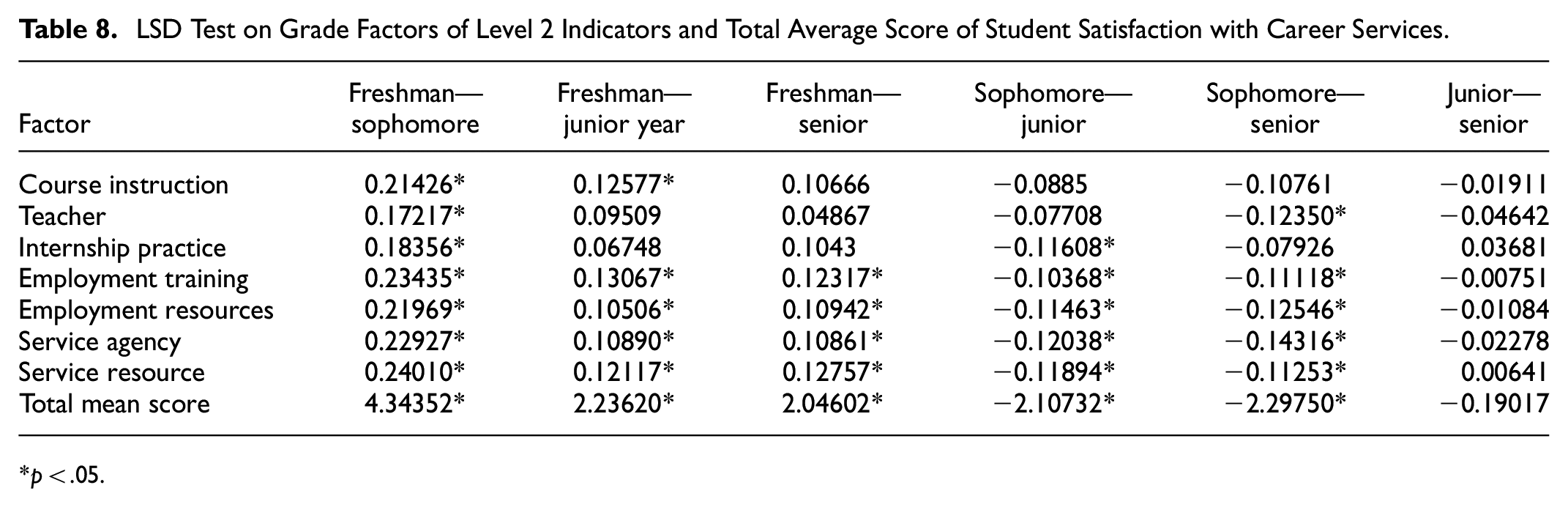
To better understand the differences among grades, Least Significant Difference (LSD) test is required (see Table 8).
LSD Test on Grade Factors of Level 2 Indicators and Total Average Score of Student Satisfaction with Career Services.
p < .05.
Table 8 shows that the satisfaction of freshmen is significantly higher than that of the other three grades. Colleges and universities often invest more resources in freshmen to help them adapt to college life as soon as possible. Satisfaction with employment training, employment resources, employment services, and security resources among junior and senior students was significantly higher than that of sophomores and lower than that of freshmen (p < .05). This finding indicates that more targeted employment services have been provided for students in their junior and senior years. In practice, the average score of junior students is significantly higher than that of sophomores, which could be because this questionnaire was launched in November, 2023, when the whole school had just completed the four-week internship teaching, and students were more satisfied with the school’s practical resources. There is no significant difference in all factors and total average scores between the junior and senior students.
Factors Affecting Student Satisfaction with Career Services
Taking student satisfaction with career services as the dependent variable, and the seven level-2 indicators as the predictive variable, we used the stepwise entry method for multiple regression analysis. The corrected decision coefficient is 0.998, which indicates a good fit of the model. In the significance test of the regression model, the F value is 829836, and the p value is <.001. Therefore, the regression model we used is statistically significant, and we can continue the significance test of the regression coefficient, as shown in Table 9.
Factors Affecting Student Satisfaction with Career Services.
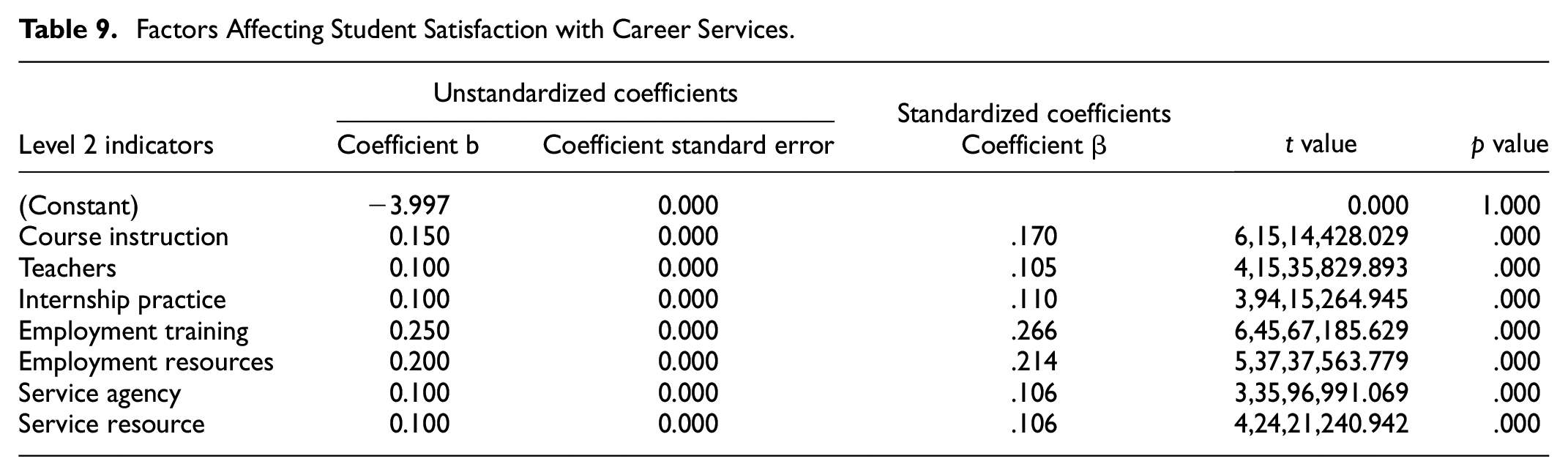
The results show that, in the significance test of the regression coefficient, the p values of the constant and of each predictive variable t test are less than 0.05, indicating that the influence of curriculum teaching, teachers, practice, employment training, employment resources, employment services, and security measures is statistically significant. The regression equation is: Y (student satisfaction with career services) = (−3.997 + 0.15) × (course teaching + 0.1) × (teacher + 0.1) × (practice + 0.25) × (employment training + 0.2) × (employment resources + 0.1) × (employment service + 0.1) × safeguard measures. The seven level-2 indicators have an impact on student satisfaction with career services.
Discussion and Conclusions
Theoretical Implications
Within colleges and universities, career services involve multiple people and multiple collaborations, and students’ satisfaction is a direct evaluation of college and university career services. Few empirical studies have revealed factors that impact and students’ satisfaction with career services. This study is significant for two main reasons.
First, the components of career services should be redefined, and the concept of career guidance should be carried through the whole process of student training. The quality of career services is defined as their success in cultivating students who can adapt to the needs of social development (Ding et al., 2022). In this sense, career services require the participation of all staff. Career services personnel not only include career center personnel, but also include teachers, alumni, business mentors, and others. Our results show that the curriculum, teaching content, teaching methods, and teacher capacity are important factors affecting student satisfaction. The concept of career services should be carried through in daily teaching, practice, research, and management of colleges and universities. This concept is of great significance to redefining the scope of career services in colleges and universities.
Second, this study implies that students aged 18–22 are in the stage of career exploration and decision-making, so they should be encouraged to carry out personalized career exploration. This focus would improve the usefulness of career services by focusing on students’ needs at different stages of their education. In providing employment resources, colleges and universities should take students as the center, according to the theory of customer satisfaction, and offer differentiated services according to different grades and student characteristics, to encourage students to carry out self-exploration, professional exploration, and career exploration. If students’ perceptions of career services outweigh their previous expectations, then they will feel satisfied. If students’ previous expectations outweigh their perceptions, they will feel dissatisfied. Career guidance should focus on usefulness. Career services offices can do this by strengthening resume training, interview skills guidance, employment psychology counseling, and other direct employment services, and by helping students develop an awareness of the labor market, improve their professionalism, and learn employment skills. Universities can also offer participatory campus activities, scientific research training, and internships.
Practical Implications
This public university performs well in curriculum education and practical training, but there is still significant for improvement in campus recruitment resources, practical employment guidance, facilities, and security. Therefore, the university’s career services need to work on the following aspects.
First, the university needs to improve the usefulness of its career services by providing front-line professional guidance that aligns with employer demands. This should include not only a macro analysis of the employment landscape and the current state of the industry, but also micro reports on relevant employment data, such as the career trajectories of industry leaders and average individuals (Yu et al., 2018). Second, it is crucial to closely align with students’ needs and implement participatory guidance services. Through practical training and face-to-face interactions with employers, students can gain an “immersive” understanding of career development, thereby boosting their motivation to seek employment. Third, in combination with students’ personalized guidance needs, the university can consistently assist them in exploring learning directions and career paths that align with their career goals. Using vocational inclination and ability tests, universities aid graduates in determining their preferences, clarifying their job search direction, and seeking employment that is compatible with their abilities. In response to the practical challenges students face during their job search, universities can provide targeted guidance, including resume creation, interview simulations, legal assistance, and psychological support. Fourth, addressing students’ demand for employment information, universities supply high-quality employment resources. By organizing offline recruitment fairs, enterprise previews, online job fairs, and school-enterprise cooperation, as well as actively engaging faculty, staff, and alumni, universities aim to provide employment channels for college students and help graduates obtain employment. Universities are expected to grasp the real needs of college students, impart employment service skills to them, and enable them to acquire more practical skills.
Furthermore, universities need to improve their employment-oriented talent training systems. First, the employment-oriented talent training program should be continuously refined. A scientific approach to designing academic activities, including experimental training, apprenticeships, internship, and other practical experiences, is essential (Ren, 2023). Second, it is essential to effectively integrate teaching with talent training programs. On the one hand, efforts should be made to foster teachers’ identification with their role in teaching and educating, enhancing their professional skills. On the other hand, emphasis should be placed on harmonizing professional education with career education. This integration should include consideration of students’ vocational interest, value orientation, and skill development within the teaching program. Such an approach encourages students to independently reflect on their professional learning and social practice, and to understand the interplay between education, teaching, and their career development. Third, our efforts in career guidance should be intensified. The security of career service offices is currently threatened by limited resources such as funding, staffing, space, and equipment. Universities should therefore enhance employment management mechanisms. This entails, on the one hand, increasing internal investment with a focus on the overall employment situation, addressing the concerns of teachers and students, and keeping pace with social development trends. Strengthening internal infrastructure is key. On the other hand, it is imperative to actively seek external resources, engage in local government, enterprise, and institutional project planning, and effectively use local policy benefits, including site advantages and information platform.
Finally, universities need to establish a phased system of employment services. In the first year, the focus is on cultivating students’ general abilities and professional interests. Through expert lectures, alumni sharing, cultural activities, and professional assessment, universities organize each class and activity to guide students in self-exploration and professional exploration. This process helps them form initial impressions of themselves and their career paths, emphasizes the importance of using alumni resources, leverages peer leadership, and sets career goals for students inspired by role models. In the sophomore stage, the emphasis is on guiding students to enhance their core professional qualities and broaden their employment horizons. Universities enhance students’ professional education through scientific research training, skills training, and other methods. These activities are designed to cultivate students’ knowledge of industry and its prospects. In the junior stage, the focus is on guiding students to improve their core vocational qualities, general competence, and professional interests. Students undergo engage in professional exploration, internship training, academic competitions, and other activities. In the senior year, the focus is on guiding students to clarify their career directions, setting rational academic goals, and mastering the systematic thinking and methodologies necessary for career development. The emphasis shifts to career guidance and enterprise exploration. Universities actively expand employment resources and conduct practical skills training, including employment skills, job-search risk prevention, and education on workplace rules. Throughout the entire cultivation system, it is necessary to closely align with students’ needs, maximize their initiative, and guide them in exploring their career goals. With the help of career services, students must determine what kind of professionals they want to become, why they should aspire to be such professionals, and how they can achieve their professional goals.
Footnotes
Acknowledgements

Declaration of Conflicting Interests
The author declared no potential conflicts of interest with respect to the research, authorship, and/or publication of this article.
Funding
The author disclosed receipt of the following financial support for the research, authorship, and/or publication of this article: The special general project of the Ministry of Education for the study of college ideological and political theory teachers in 2023 (project approval number: 23JDSZK035).
Data Availability Statement
The original contributions presented in the study are included in the article/supplementary material, further inquiries can be directed to the corresponding authors.