




Abstract
Foreign Direct Investment (FDI) spatial dimensions are witnessing paradigm shifts with the acceleration of digital transformation and adoption of disruptive technologies, emergence of Covid-19 which has triggered unexpected dynamics in the open system, erosion of brick-and-mortar paradigm in service sectors such as Financial Services and Information Technology, and blurring lines of locational advantages. Despite the intellectual continuity and diversity driving the premise of FDI-foreign location research stream, a comprehensive literature review of location attractiveness is lacking, especially in the context of the new norm. This paper systematically reviews the theoretical and empirical research on FDI location by content-analyzing 221 articles published between 1999 and 2023. Innovation, digital transformation, human capital, and knowledge-related assets are identified as the emerging trends and determinants influencing host-location attractiveness for FDI by MNEs in the new norm. This paper also provides recommendations for future research avenues aimed at enriching the body of knowledge in this research stream.
Plain language summary
Whilst traditionally the offshoring spatial dimensions have been largely predictable, the emergence of Covid-19 and technology revolution has significantly altered the playing field. The traditional factors which influenced host location attractiveness in the past may no longer be applicable. There is an impending need to identify the determinants which are relevant and applicable in the new norm. Moreover, despite the intellectual continuity and diversity driving the premise of FDI-foreign location research stream, a comprehensive literature review of location attractiveness is lacking, especially in the context of the new norm. With these in mind, this paper systematically reviews the theoretical and empirical research on FDI location by analyzing 221 articles published between 1999 and 2023, to identify the emerging trends on what makes a location attractive for FDIs by MNEs. Through rigorous content analysis, the emerging themes and trends on locational studies were first identified, and subsequently these were linked to recent global phenomenon (Industry 4.0 led digitalization and disruptive technologies and ripple effects from Covid-19 pandemic) to draw implications on the critical factors which influence host-location attractiveness in the new norm. Based on the review, five key determinants were predicted to have a dominant influence: human capital investment, absorptive capacity, knowledge creation, innovation capability, and ICT infrastructure advancement. These factors can be exploited to create or upgrade competitive advantages in order to amplify host location attractiveness. Future research avenues are also recommended based on the findings from this review.
Keywords
Introduction
A key strategic decision and highly researched question in international business and management is “where to locate,” be it in relation to Foreign Direct Investment (FDI), offshoring or outsourcing. Extant literatures have extensively explored the factors influencing firm-level decisions to (re)locate to selected geographic locations and the determinants of a country’s location attractiveness for FDI (Buckley, 2016; Buckley & Casson, 1976, 2021; Dunning, 1977, 1981, 1988; Porter, 1990). Theory of MNE (Buckley & Casson, 1976; Hymer, 1960) addressed the locational factors by applying interactions between country-specific advantages (CSAs) and firm-specific advantages (FSAs) (Rugman, 1981). These factors provide an in depth understanding of why some countries appear more attractive for investment compared to others.
However, despite such depth and breadth of past literatures, why does location research continue to draw so much scholarly attention? The simple answer is that the determinants of location attractiveness is fluid as its closely linked to the changes in global economy and shifts in FDI spatial dimensions (Bretas et al., 2022; Dunning, 1998, 2000). Theory of MNE (Buckley & Casson, 1976; Hymer, 1960) and Dunning’s seminal paper and extensions on the Eclectic Paradigm (Dunning, 1977, 1981, 1988, 1993, 1998, 2000, 2004) have led us to believe that the decision on “where” to locate is largely driven by the motives for FDI of the multinational enterprises (MNEs), and such motives are in turn influenced by the paradigm shifts in spatial dimensions and global market conditions. The world is witnessing a new normalized order as a result of the Covid-19 pandemic effects (Hitt et al., 2021; Verbeke, 2020) and based on historic trend, we believe that the determinants influencing location attractiveness may have evolved in tandem with the new norm. It is based on these premise that we undertake this systematic literature review on location studies to draw the emerging trends and identify the critical determinants of location attractiveness, which we hope adds to the body of locational knowledge and provides a blueprint to researchers and practitioners with an interest on this topic.
To provide an overview, location attractiveness remains one of the most relevant topics in FDI research over the last three decades (Blonigen, 2005; Blonigen & Piger, 2014; Bretas et al., 2022). Scholars have used various theoretical lenses, frameworks, methods, and research samples to explain the phenomenon (Hertenstein et al., 2017; Jain et al., 2016; Kim & Aguilera, 2016; Nielsen et al., 2017; Paul & Feliciano-Cestero, 2021). Traditional research focused on economic factors such as market size, cost arbitrage, economies of scale through optimization of inputs and productions, tariff, infrastructure, natural resources, labor arbitrage, and other key explanatory determinants that are used to attract FDIs (Caves, 1974; Doh, 2005; Doh et al., 2009; Dunning, 1980; Grosse & Trevino, 1996; Meyer & Nguyen, 2005). However, in later stages, scholars steered toward the abundance and quality of human capital, cultural affinity, agglomeration, ICT, and other external factors such as institution, political risk, distance, liabilities of foreignness as among the increasingly important drivers of MNEs’ spatial decisions (Bailey, 2018; Bailey & Li, 2015; Bunyaratavej et al., 2007, 2008; Goerzen et al., 2013; Mudambi et al., 2018; Sultana & Turkina, 2020).
Upon closer scrutiny, it became evident that the shifts in variables influencing location attractiveness are intricately linked to the change in global market equilibrium. The fall of Berlin Wall, transition to market-based economies of CEE countries, Industry 4.0 and emergence of technological revolution which have directly led to reduced transnational transaction costs and emergence of MNEs from developing countries, especially Asia (Dunning, 1998; McCann & Mudambi, 2004, 2007; Mudambi, 2008) are just a few examples of the global economic phenomena altering spatial decisions. Similarly, the 2008 global financial crisis which subdued the FDIs by MNEs for several years, was followed by an uptick in global FDI by 9% between 2012 and 2013 (UNCTAD, 2013, 2014, 2015). This period also marked the rise of emerging MNEs (EMNEs), which had imminent impacts on locational decisions, especially the increased focus on developing economies (X. Li et al., 2018).
The global market is again witnessing a paradigm shift caused by Covid-19 outbreak which has triggered unexpected dynamics in the open system and several ripple effects that impact FDI location attractiveness (Hitt et al., 2021; Verbeke, 2020; Verbeke & Yuan, 2021).
Traditional roles and activities that were once perceived to be restricted or dependent on physical presence and infrastructure, were proven feasible to be conducted remotely during and post pandemic. This has resulted in the introduction of new ways of working with firms across the globe moving to remote and hybrid working models (Parker & Grote, 2020; Wang et al., 2021). This phenomenon has broken the previous brick-and-mortar paradigms and opened up new opportunities for MNEs. As jobs become increasingly remote and location agnostic globally, MNEs could potentially access human capital mobility or virtual teams without engaging in traditional offshoring in the near future (Verbeke, 2020).
Digital technologies, platforms and digital transformation have accelerated significantly as a ripple effect of the pandemic. Although Industry 4.0 emerged prior to the pandemic era, changes in the global economy, business models and firm structures such as the rise of online (retail) businesses, digital banking, entrepreneurship, remote working, and virtual teams have forced the accelerated adoption of digital and disruptive technologies as adaptive or competitive strategies (Nambisan et al., 2019; Scuotto et al., 2022).
Traditional factors such as natural resources, wages, cost, or labor arbitrage have become less appealing as MNEs source for strategic assets to create longer-term efficiencies in response to the “pandemic jolt.” Fixed assets in host locations are deemed as potential liability as it impedes quick redeployment and exit strategies in a dynamic environment. The future of collocation, cluster benefits, physical presence, and infrastructure is questionable, considering the preference for intangible assets that are deemed relatively flexible (Hitt et al., 2021; Rindova & Courtney, 2020).
These changes collectively led to the blurring lines of geographic and location-specific advantages of the existing host-locations (Ahlstrom et al., 2020) and the context of a “new norm.” This scenario also suggests that the determinants of location attractiveness are evolving, resulting in the need to identify new determinants which are contextually relevant and can be exploited by host-locations in order to amplify their attractiveness for inward FDIs by MNEs (Hitt et al., 2021).
Hence, in this paper, we seek to answer to the following research questions:
(1) What are the emerging trends in locational studies led by the paradigm shifts in spatial dimensions?
(2) Which key determinants influence location attractiveness for FDIs by MNEs in the context of the new norm?
The aim of this paper is three-fold. First, we seek to explore the determinants of location attractiveness from the perspective of MNEs. Second, we aim to identify new research directions in this thematic area. Third, we intend to develop a conceptual framework that integrates the emerging determinants. We address the research questions through a systematic review of literatures related to location attractiveness between 1999 and 2023. Unlike previous literatures (Bretas et al., 2022; Jain et al., 2016; Kim & Aguilera, 2016; Nielsen et al., 2017; Paul & Feliciano-Cestero, 2021), our interest is focused on explaining and predicting the critical determinants influencing location attractiveness in the new norm. The selection of articles are specifically related to this context, published across diverse journals in multiple streams.
Through this paper, we contribute to the literature on location attractiveness and MNE-FDI, specifically addressing a contemporary issue and the dynamics of spatial dimensions. We also identify new research directions in this theme. The integral aim is to advance the locational perspective within International Business (IB) and International Management (IM) research. We complement previous reviews on this thematic area by providing insights into the factors influencing location attractiveness in the context of the new norm, which we hope could aid in designing national or sub-national policies in attracting and retaining FDI in host locations. The managerial implications of this study provide critical insights for industry practitioners, government bodies and their affiliates to develop suitable location strategies, steer strategic intents, or repurpose policies and planning in attracting inward FDIs. Insights to such levers will allow host-locations to take a proactive stance in elevating themselves in the international market amidst a dynamic global environment.
This paper is structured as follows. We begin by presenting the methodological aspects, followed by a brief overview of the theoretical underpinnings used in MNE-FDI location literatures. We then present and discuss the results, key findings, and conceptual framework developed from this analysis. We conclude by presenting the avenues for future research, main conclusions, research implications, and limitations.
Methodology
We adopted a structured systematic literature review process in highly cited articles (Kim & Aguilera, 2016; Paul & Feliciano-Cestero, 2021; Rosado-Serrano et al., 2018) by starting with a content analysis of previous review articles on FDIs by MNEs and location decisions. Similar to previous authors, we are interested in the question of “where” (Dunning, 1998; Jain et al., 2016; Kim & Aguilera, 2016; Nielsen et al., 2017). However, we differ from these reviews as our focus is on location attractiveness. We believe that the motives of FDIs by MNEs and their location choice would provide insights into the advantages sought by home-country MNEs, based on which, holistic inferences can be made on the factors making host-locations attractive for investments in the new norm.
We undertook four main procedural steps in order to synthesize the review systematically in a transparent and reproducible manner (Tranfield et al., 2003). These steps are widely used in systematic literature reviews in IB and management streams (Donnelly & Manolova, 2020; X. Li et al., 2018; Nielsen et al., 2017). To enhance the reliability of this review, following recent studies (Donnelly & Manolova, 2020; Rosado-Serrano et al., 2018; Xie et al., 2017) we incorporated Callahan’s (2010, 2014) review structure and used 6 Ws (“What, Where, Who, Why, How, and When”) in our methodology (Figure 1).
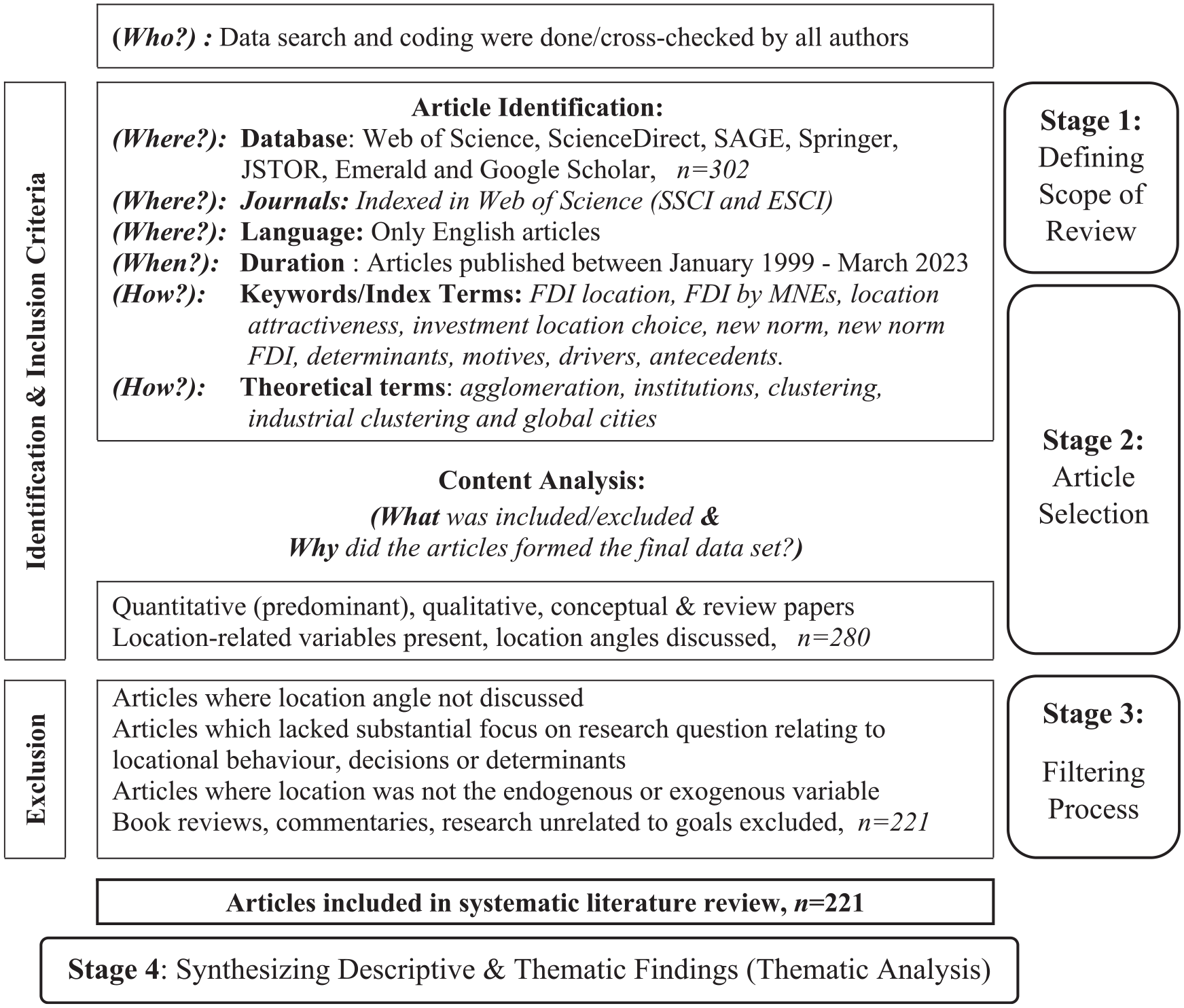
Methodology.
Step 1: Defining the Scope of Review
To identify the relevant papers, we adopted a relevance sampling strategy (Krippendorff, 2018) and used basic Boolean operators to perform a keyword search across a range of popular online databases, which included Web of Science (WoS), ScienceDirect, Scopus, Springer, SAGE Journals, JSTOR, Emerald, and Google Scholar for articles published between 1999 and 2023. Similar to the review by Zhu and Liu (2020), we also found similarities in coverage between Web of Science and Scopus, where 212 (95.9%) of the articles reviewed in our study are found across both databases.
We chose a timeframe of 25 years for the literature search, covering articles from January 1999 to March 2023 for several reasons. Firstly, the review of location choice prior to 1999 has been extensively covered by several authors (Caves, 1974; Dunning, 1993; Jain et al., 2016; Kim & Aguilera, 2016), hence this paper focuses on the period post-1999. Secondly, FDIs by MNEs showed an increased trajectory and incremental growth after the 1998 financial crisis, especially in emerging markets due to trade liberalization policies (Dunning, 1998). Finally, as stated by X. Li et al. (2018), the rise in MNEs from emerging economies (EMNEs) during this period added to the increasing dynamics of international competitive milieu due to the difference in their location behavior compared to the MNEs from developed economies (DMNEs).
Step 2: Article Selection (Keyword and Search Strings)
Key search terms were discussed and collectively agreed by all authors. As the aim was to examine determinants of MNE-FDI location attractiveness in the new norm, key search terms were carefully selected to ensure maximum coverage of relevant articles. The keywords used were FDI location, FDI by MNE, location attractiveness, investment location choice, new norm, new norm FDI, determinants, motives, drivers, and antecedents. Following Nielsen et al. (2017), we also included theoretical terms such as agglomeration, institutions, clustering, industrial clustering, and global cities because keyword search or index terms may overlook relevant studies. The full keyword search was ((“FDI location”OR“FDI by MNE,”OR“location attractiveness,”OR“investment location choice,”OR“new norm,”OR“new norm FDI”) AND (“determinants”OR“motives”OR“drivers”OR“antecedents”OR“agglomeration”OR“institutions”OR“clustering”OR“industrial clustering”OR“global cities”)).
Based on precedence (Nielsen et al., 2017), our review was largely focused on quantitative studies which directly proposed and empirically tested the determinants of FDI location, location attractiveness for FDI or location choice for FDI, where the dependent variable was any of the following: (1) choice of location for various types of FDI or entry modes (e.g., foreign subsidiary, greenfield or brownfield investments), or (2) measure of the extent of FDI occurrence in a location (e.g., FDI stock, FDI flow, investment amount or number of projects, FDI-related acquisitions, mergers, and expansions into foreign locations). The predominance of quantitative papers in this review is driven by the need to assess the causality between location advantages (or attributes) and location attractiveness in order to develop our conceptual framework. Moreover, specific location effects requires sophisticated quantitative analyses, such as (1) conditional, mixed or nested logit models for examining hierarchical location decision by MNEs (Castellani et al., 2022), (2) spatial autoregression models combined into econometrics approach to review spatial dependence or proximity (Hoang et al., 2022), or (3) two or three-squares modelling for exploring spatial heterogeneity of FDI determinants (Wei et al., 2022). As empirical studies are subjected to rigorous testing and largely replicable, we believe that it would ensure the reliability of our conceptual model proposed in this study.
However, we differ from previous authors (Nielsen et al., 2017) as we also included studies that used subset investments of the firm as unit of analysis (e.g., offshore service projects, foreign patents) to achieve a holistic review, especially considering the heterogeneity of industries which are prone to such investment types (e.g., Shared Services). Also included were two studies where location choice was the explanatory variable and highly relevant to the context of this review. Papers that were conceptual, qualitative or descriptive in terms of data analysis but contextually relevant were also included to ensure we do not miss any subjective elements which may provide additional insights, rationale or background to MNEs’ location decisions. We limited the scope of our review to peer-reviewed English language articles. Recent relevant review papers (Bretas et al., 2022; Jain et al., 2016; Kim & Aguilera, 2016; X. Li et al., 2018; Nielsen et al., 2017; Paul & Feliciano-Cestero, 2021) were also canvassed for articles that could potentially contribute to our review in addition to our database search.
Step 3: Filtering Process (Inclusion and Exclusion Criteria)
Our search process yielded 302 articles in which the chosen keywords were in the title, abstract, or keyword list. Following previous authors (Kim & Aguilera, 2016; X. Li et al., 2018; Paul & Feliciano-Cestero, 2021), we cross-checked the journals in which the articles were published and included only the journals indexed by WoS (SSCI and ESCI) as a proxy for quality. This step reduced our sample to 280 articles, which were carefully analyzed based on insights and contents related to FDI location. Articles covering FDI in the context of improved firm or country performance, mode of entry or encouraging exports of host firms but did not discuss any location angle were excluded as it did not meet the purpose of our review. Articles which did not substantially address the research question(s), or where location was not part of the endogenous or exogenous variables were excluded. Book reviews, commentaries or research unrelated to our goals were also excluded. This filtering process reduced our articles down to a relevant 221, of which 200 are from WoS collection whilst the remaining 21 articles are indexed in other databases listed in Figure 1. Moreover, 171 (80.2%) of the articles are from Q1 and Q2 ranking journals in WoS. Overview of the journal coverage and number of articles is presented in Table 1.
Journal Coverage.

Step 4: Synthesizing Descriptive and Thematic Findings (Content Analysis)
As this review intends to predict the determinants of location attractiveness for FDIs by MNEs in the new norm, it is important to look back in order to look ahead. Therefore, we content-analyzed all the articles to frame themes and sub-themes, focusing on (1) the trend in FDI determinants of location attractiveness in the old norm, (2) paradigm shifts in FDI spatial dimensions in recent years, (3) the emerging themes based on key research findings, and (4) methodological approach. We followed an elaborate coding protocol to ensure reliability of the analysis. Two authors independently coded the relevant variables and characteristics, and the third author reviewed the extent of agreement from the extracted data. Discrepancies were resolved through discussions among the authors until a consensus was reached.
This rigorous synthesis process yielded several key themes which shaped the development of this review and are elaborated in greater detail under the findings and discussion sections. We subsequently used the findings to predict the key determinants which can influence location attractiveness in the context of the new norm. We also provide an overview of the key theoretical lenses which have dominated and continue to dominate the MNE-FDI location research space over the last 25 years, as well as suggest future research agendas pertaining to location attractiveness. Supplemental Appendix 1 summarizes the organizing framework.
Findings and Discussion
The research trend over the past 25 years appears to be consistent with the shifts in spatial dimensions and market equilibrium. Figure 2 provides the temporal evolution in location research topics between 1999 and 2023, broken down into three phases of 1999–2007, 2008–2017, and 2018–2023. These phases coincides with key events in the global economy, for example, Asian and global financial crises, and pre-post pandemic era. Our findings revealed that the top three most researched topics are economic geography (covering agglomeration externalities, global cities, and network linkages), followed by institutional and macroeconomic environment. Interest in these three topics has been consistent over the last 25 years, albeit a marginal reduction between 2018 and 2023. However, this last phase only covers a period of 5+ years as opposed to the earlier phases with 9 to 10 years’ span. Therefore, it remains to be seen if interest in these topics remains consistent over the next 5 years. Another notable area of scholarly interest is MNE motives and strategy, which is understandable given the emphasis on strategic directions to meet the dynamic spatial equilibrium.

Temporal evolution of location research topics.
We found that digitalization, innovation and knowledge-assets related factors witnessed a drastic uptick in research interest between 2018 and 2023, indicating that firms are more focused on these aspects as part of their strategic asset-seeking motives. Studies on the new norm and Covid-19 impact on location are also simultaneously on the rise. The rest of the topics as indicated in Table 2 witnessed either a (marginal) decline or stagnancy in terms of academic interests. Similar to previous studies (Bretas et al., 2022; Kim & Aguilera, 2016), we found that a majority of the articles reviewed showed high cross-pollination across multiple topics and subject matters, indicating academic diversity in locational research.
Factors Affecting Location Attractiveness.

On a more granular level, Table 2 provides a summary of the factors and variables affecting location attractiveness that were addressed in the articles we reviewed. The numbers indicate the count of times these factors were quoted in the 221 articles. Prior to 1998, host-locations were deemed attractive predominantly based on traditional variables such as GDP per capita, exchange rates, taxation, market size, demand conditions, market potential and openness, labor costs (wages) and labor availability, productivity, natural resource endowments, infrastructure, distance, or proximity as well as trade tariffs, barriers, and incentives. This was largely driven by the market-seeking and resource-seeking motives of MNEs, and to a lesser extent, efficiency-seeking. This era also witnessed the dominance of intellectual capital as a wealth creating asset and subsequently the rise of the service sectors in the 1990s (Dunning, 1998). The seminal work of Dunning’s (1980, 1988) eclectic paradigm, transaction cost economic theory (Boddewyn, 1985; Hennart, 1989), new economic geographic theory (Krugman, 1991), internalization theory (Buckley & Casson, 1976; Hymer, 1960), Uppsala model (Johanson & Vahlne, 1977), product life cycle (Vernon, 1992), resource based view (Krugman, 1991), Porter’s (1990) diamond model, and Rugman and D’Cruz’s (1991) double diamond were popular amongst scholars attempting to explain and predict the fairly consistent spatial dimensions back then.
However, the dawn of the 21st century witnessed a rise in scholarly attention on institutional factors, country risk, agglomeration, clusters, global cities, and networks and linkages in host-countries as the determinants of location attractiveness. Additionally, liability of foreignness (LoF) such as prior investment and experience of home MNEs, LoF hazards, distance, and neighboring regions/countries became crucial factors of consideration for MNEs’ FDI-location decisions. FDI studies were also increasingly concentrated in developing countries or emerging economies, albeit the over-dominance of China. MNEs’ motives appeared to have shifted more toward strategic-asset-seeking, although resource-seeking, market-seeking, and efficiency-seeking motives remained relevant based on the heterogeneity of the home-country firms. We found that these shifts coincided with several key events in the global economy such as the aftermath of the 1997 to 1998 Asian Financial Crisis, 2008 Global Financial Crisis, the rise of Asia and other developing economies as key players (X. Li et al., 2018), free trade agreements across nations (Castellani et al., 2013), and the growing significance of knowledge-intensive sectors (Dunning, 1998).
To explain these phenomena, scholars began adopting a multitude of theories, including (but not limited to) knowledge-based view (Grant, 1991, 1996), dynamic capabilities theory (Teece & Pisano, 2003), institutional theory (Eisenhardt, 1988), social network theory (Moreno, 1932), agency theory (Jensen & Meckling, 1976), resource dependency theory (Pfeffer & Salancik, 2003), as well as frameworks such linkage, leverage and learning (LLL) model (Mathews, 2002) and CAGE distance framework (Ghemawat, 2001). Figure 3 provides a cursory view of the commonly used theoretical underpinnings in the 221 articles selected for this review. Authors seem to have adopted a broad theoretical canvas to examine and explain locational dimensions over the last 25 years. Despite the diversity, Dunning’s Eclectic Paradigm prevails as one of the popular choices over time, clearly depicting its applicability and relevance as an enveloping theory.

Theoretical underpinnings.
The FDI locational dimension is again witnessing a paradigm shift with the emergence of Industry 4.0, which is setting the scene for extraordinary innovation through the adoption of digital and disruptive technologies, digital transformation and automation, prompting integration across value-chains (Götz & Jankowska, 2022; Siachou et al., 2021; Scuotto et al., 2017, 2022). Industry 4.0 nudges firms to adopt newer technologies such as internet of things (IoT) and artificial intelligence (Bag et al., 2021) in pursuit of transformative business models and processes, creating flexible and inter-connected firm systems with the potential to revolutionize sectors or markets. Digital skills and knowledge are pivotal in order to exploit or intercept transformative digital technologies for (radical) innovations or competitive advantages (Scuotto et al., 2022).
The content analysis of articles between 2018 and February 2023 revealed the rising dominance of the following research sub-themes: (1) innovation, (2) digitalization, and (3) knowledge-asset related factors. The emerging themes and increased concentration on factors such as technological advancement and capabilities as locational assets (e.g., Asmussen et al., 2022; Bretas et al., 2022; Castellani et al., 2022; Ge & Liu, 2022; Scuotto et al., 2022), digital transformation and disruptive technologies as game changers in achieving technology-based FSAs, competitive advantages and adaptive strategies (e.g., Ait Soussane et al., 2022; Ardito et al., 2022; Ferreira et al., 2022; Gómez et al., 2022; Klimkeit & Reihlen, 2022; Tang & Buckley, 2022), innovation capability to achieve process, product, market, and technological innovation, as well as center of excellences and innovation zones (e.g., Alguacil et al., 2023; Du & Krusekopf, 2023; Ge & Liu, 2022; Khraishi et al., 2022); and knowledge creation/transfers, absorptive capacity, knowledge infrastructure, learning, spill over, and relational learning as location bound assets (e.g., Ambos et al., 2021; Ferreira et al., 2022; Santos et al., 2021; Siachou et al., 2021; Tang & Buckley, 2022) became key considerations for MNEs seeking strategic assets and efficiency benefits. However, although most institutional factors (regulative, normative, and country risk) and human capital experienced a marginal decline since 2018, these subject matters remains relevant and inevitable when assessing the attractiveness of location for investments. Supplemental Appendix 2 provide a cursory view of the articles reviewed and the locational factors addressed in each study. Despite the cross-pollination of sub-themes and approaches, the trend of location attractiveness factors over the last 25 years is clearly visible, providing a strong baseline for causal-predictions of the emerging themes that potentially influence host-location attractiveness in the new norm.
The New Norm
We have seen how Covid-19 pandemic triggered unexpected dynamics in the open system (Hitt et al., 2021; Verbeke, 2020), bringing a new order which has now normalized. The context of a “new normal” as described in the following paragraphs directly influences location-bound strategies in several ways.
First, fixed assets such as real estate (office, retail) spaces, which MNEs accumulated in the past to create cost-arbitrage or market-seeking advantages are fast becoming less essential or even a liability to some, as employees and customers adapt to remote platforms. Traditional roles, businesses and activities that were once perceived to be restricted or dependent on physical presence and infrastructure, have been proven feasible to be conducted remotely during or after pandemic, breaking previous brick-and-mortar paradigms and creating new opportunities for MNEs (Parker & Grote, 2020; Wang et al., 2021), thus blurring the lines of (past) geographic and location-specific advantages (Ahlstrom et al., 2020).
Second, in combating the dynamics of market environment and creating adaptive efficiencies, intangible resources which are deemed more flexible are fast gaining importance as value adding advantage for MNEs in the new normal. Technology and human resources are predicted to be the most critical resources in the redeployment and reconfiguration of MNEs’ adaptive strategies to meet the dynamics of the open systems (Hitt et al., 2021; Rindova & Courtney, 2020). High-technology-skilled resources, with knowledge sharing and exploitation capability, become fundamental as differentiators. As jobs become increasingly remote and location agnostic globally, MNEs can access human capital mobility without engaging in traditional offshoring in the near future (Verbeke, 2020). This development presents new opportunities and flexibility, although ironically, innovation and knowledge creation/transfers are often seen as location-bound competitive advantages. As the world operates in a new hybrid environment where collocation and remote environment co-exist, MNEs will be required to shape long-term adaptive strategies and locations that rise up to the challenge in meeting the complexities would appear more attractive for FDIs.
Third is digital resonance, which encompasses digital technologies, platforms, and infrastructures. Digital orientation which is derived from Industry 4.0 predates the pandemic, however, it’s evolution and novelty has been accelerated by Covid-19. Not only has it paved the way for novel and transformational innovation and entrepreneurship, but also led to disruptive business models, new hybrid working, new products and services, new customer experiences through technologies such as artificial intelligence and machine learning, and radical transformation of MNEs in the digital world (Nambisan et al., 2017, 2019; Venkatraman, 2017).
Collectively these phenomena have created the setting for a new norm, and it begs the question on which key determinants can influence location attractiveness in the new norm? Historical trend has shown us that FDI location attractiveness has changed in tandem with the evolution in the global economy, shifts in spatial dimensions, and emergence of new phenomena. Therefore, by linking the contextual characteristics of the new norm to the emerging themes of FDI location attractiveness from the articles reviewed, factors such as innovation, digital transformation and technological capabilities, knowledge assets, and human capital emerge as the most logical and effective levers that can be exploited to upgrade the competitive advantages of a host-location, thus amplifying its e attractiveness for inward FDIs. Porter (1990) coined these determinants as “factor conditions” in his diamond model, which will be discussed in greater detail in the following section.
Determinants of Location Attractiveness in the New Norm
In predicting which determinants are likely to critically influence a host location’s attractiveness in the new norm, we combine the recent global phenomena (Industry 4.0-led digital transformation and the ripple effects of Covid-19) with dominant emerging research themes and findings over the last 5 years in relation to spatial dimensions and locational studies.
Based on our extensive literature review, we predict the following determinants to be the most critical for host-locations to capitalize in order to emerge attractive, prompting inwards FDIs by MNEs.
Human Capital Investment and Location Attractiveness
Human capital in simple terms refers to the “skills, abilities and knowledge” of an employee (Becker, 1964). Our analysis revealed that the human capital factor is prolific and has been covered in 30 studies over the last 5 years. Human capital is deemed critical in fueling innovation, knowledge creation/transfers, and technological adaptability for gaining and sustaining competitive advantage in the new norm (Bramucci et al., 2021; Ferreira et al., 2022; Hitt et al., 2021). As cost-related labor arbitrage erodes in the long run, firms tend to move up the value proposition toward high-value activities and as a result, shift from labor to knowledge arbitrage (Bunyaratavej et al., 2007; Cleeve et al., 2015). This phenomenon coincides with the technological changes driving the shift from labor-intensive to knowledge and skills-intensive activities (Marino et al., 2020; Reurink & Garcia-Bernardo, 2021). Such rapid technological changes are often accompanied by changes in job profiles and requirements, necessitating continuous human capital investment (HCI) to train, upskill and develop internal talents (Kottaridi et al., 2019).
A “virtuous cycle” is also formed (Asmussen et al., 2022) when there are continuous FDI inflows into host countries as abundance human capital attracts global MNEs. Consequently, continuous investments and human capital upgrading take place across pre-existing MNEs and domestic enterprises as a result of the FDI inflows. On the flip side, a “Pareto inferior equilibrium” can occur when inadequate human capital supply discourages FDI, and in turn, a lack of FDI discourages the demand for skills. Therefore, how HCI is used as a lever to attract inward investments into host locations becomes critical in the new norm. The continuing trend to offshore increasingly complex and higher value-adding activities is driving the need to access and acquire highly skilled and qualified subject matter experts (Bramucci et al., 2021; Lewin and Peeters, 2006). Therefore, offshore locations must become a dynamic competitive space and evolve specialized clusters of talents (physical or remote) with the right skillsets. As such, we find that human capital investment in host locations is a critical factor to attract inward FDIs in the new norm.
Absorptive Capacity and Location Attractiveness
Knowledge is an invaluable strategic asset, especially amidst the growth of the knowledge economy. The various processes of knowledge management fall under two dominant capabilities known as knowledge creation and absorptive capacity (Khraishi et al., 2022; Santos et al., 2021). Both capabilities can be capitalized to create sustainable competitive advantage in host locations (Ge & Liu, 2022; Sultana & Turkina, 2020). Our findings revealed that the presence of knowledge-asset-related factors such as absorptive capacity and knowledge creation/transfer in locational studies have almost doubled in the last 5 years. We will first look at absorptive capacity (AC).
Recent studies have proven the significance of AC in the context of the digital and virtual era (Ardito et al., 2022; Siachou et al., 2021; Scuotto et al., 2022). AC refers to the ability of the firm “to recognize the value of new, external knowledge, assimilate it and apply it to commercial ends” (Cohen & Levinthal, 1990). Knowledge absorption capacity is regarded as a strategic asset that helps to increase the efficient utilization of internal and external knowledge, which extends host locations’ capacity to create competitive advantage and in turn increases host-location attractiveness.
Previous studies have shown that knowledge clusters and technological spill-over are location advantages that encourages inward FDIs (Alcácer et al., 2016; P. Li & Bathelt, 2018). However, given the paradigm shift in the new norm, MNEs can potentially discard the brick-and-mortar model by choosing to access global talents virtually without physically relocating to a host-location (Hitt et al., 2021). In such a scenario, agglomeration, clusters, and spill-overs are preceded by virtual capability and digitalization, making AC a powerful competitive advantage for host locations in competing to be the preferred choice for virtual offshoring. Heterogeneity in AC determines the extent of beneficial outcomes yielded by the host locations. These are not only confined to new investments but also include massive growth and expansion opportunities to the existing processes and scope of work in present foreign locations. With the right lever, FDI exits can also be potentially minimized given the AC available in the host location making it attractive for sustained investments. Therefore, we predict AC to be a critical determinant to influence the attractiveness of host locations in the new norm.
Knowledge Creation and Location Attractiveness
Knowledge creation (KC) is defined as a “firm’s ability to create new knowledge by itself and is the internal source of new knowledge” (Smith et al., 2005). It encompasses a spiral process of socialization, externalization, combination, and internalization (SECI) developed by Nonaka and Takeuchi (1995). In explaining the spatial dimensions of MNEs, access to localized knowledge has been cited as one of the critical factors in choosing host locations (Alcácer et al., 2016). Whilst AC enables the host location to effectively internalize, adopt and integrate the knowledge disseminated by the home country MNE during offshoring, high KC explicitly enables the host location to adopt the SECI process to transfer that knowledge within the firm through the creation of procedures, process flows and formal training, as well as transform old knowledge into new knowledge to produce process, service, or product improvements which create FSAs and CSAs for MNEs (Ferreira et al., 2022; Puig et al., 2019). This is especially relevant to industries whose business models rely on capitalizing internalization advantages through the transformation and efficient use of their strategic business units (SBUs) in a global network (e.g., Shared Services). Therefore, MNEs are attracted to host locations that allow access to heterogeneous knowledge sources which can produce novel opportunities through KC (Castellani et al., 2022; Ge & Liu, 2022; Marino et al., 2020). On this basis, we predict knowledge creation to be a critical determinant of location attractiveness in the new norm.
Innovation Capability
The unique role of innovation capability can be viewed from several perspectives. Our analysis revealed that the focus on innovation-related variables has more than doubled with 38 counts of presence in the articles reviewed between 2018 and 2023. Drawing on Porter’s (1990) argument that innovation facilitates the creation or upgrading of advanced factor conditions to create competitive advantages, we examine the role of innovation capability (IC) in increasing location attractiveness. We also review the possible linkages between innovation capability and the determinants identified earlier (human capital investment, absorptive capacity, and knowledge creation) in influencing location attractiveness.
The degree of innovation through which new ideas and approaches are applied to the process, along with the ability of the host location to focus on industry innovativeness directly influence FDI considerations (Cano-Kollmann et al., 2016; Doh et al., 2009; Mi et al., 2020). Innovation capability also increases location attractiveness through creation of knowledge and technological clusters (Alcácer et al., 2016; Chung & Yeaple, 2008; Du & Krusekopf, 2023; P. Li & Bathelt, 2018). IB scholars have vastly explored how concepts of industrial agglomeration and spatial clusters influence innovation outcomes and in turn drive decision of where to locate (Mudambi et al., 2018; Turkina & Van Assche, 2018). Strategic asset-seeking MNEs expand to foreign locations to gain access to technology, skills or knowledge base which can be used to create competitive advantages. The existence of these clusters leads to technological and knowledge spill-over, resulting in the creation of global innovation hubs (Ambos et al., 2021; Andersson et al., 2016) that attract firms pursuing these advantages. As level of innovative activities differ between countries, the higher the innovative activities or capabilities, the more attractive a location becomes.
That said, there are several antecedents to creating and improving innovation capability. Highly skilled human capital, for one, is capable of exploiting digital revolution and disruptive technologies for innovation purposes (Castellani et al., 2022; Scuotto et al., 2022). MNEs that have offshored processes to host locations are dependent on such highly skilled local resources to exploit the innovation system and disseminate (disruptive) technologies. Therefore, human capital investment is pivotal for innovation capability, which ultimately results in location attractiveness (Alguacil et al., 2023; Götz & Jankowska, 2022; Kottaridi et al., 2019).
Similarly, MNEs seeking to disseminate knowledge to the selected host locations as part of the FDI process require relatively high absorptive capacity. However, the expectations on the host-locations do not end with transfer of work or knowledge. To realize the benefits of FDIs, MNEs often turn to innovation to increase efficiency and return on investment. As such, host locations are expected to convert tacit knowledge into explicit knowledge through the transformation and exploitation of knowledge leading to innovative outputs. Therefore, the AC-IC linkage is a key value-add and differentiator in amplifying locations attractiveness (Ardito et al., 2022, Scuotto et al., 2022). As the capacity to absorb attendant knowledge and technology is closely associated with the presence of innovation-related assets in the host locations, it becomes central to the locational decisions made by MNEs (Liu et al., 2019; Nambisan et al., 2019; Sultana & Turkina, 2020).
In addition, MNEs seeking to leverage on knowledge exchange between home and host entities expect to capitalize on internalization advantages and efficiencies delivered through innovation, as a result of the knowledge creation capabilities in the host locations (Richter & Brühl, 2017, 2020; Teece, 2014). Literature suggests that KC is capable of creating national competitive advantage through the production of innovative knowledge (Ge & Liu, 2022). The creation of new knowledge, leading to creativity and new processes, products, concepts, methods or ideas, inimitable knowledge stock, and technological bottlenecks breakthrough, is central for innovation, which attracts inward investments by MNEs. It enables host location to create competitive advantages and differentiate itself as an attractive location for offshoring investment, especially given the dynamic FSAs and CSAs sought by the home MNEs in the new norm (Ahlstrom et al., 2020; Hitt et al., 2021; Verbeke, 2020).
As such, we find that innovation capability plays a pivotal role in directly influencing location attractiveness in the new norm. Our discussion also laid out the antecedents which can create and sustain innovation capability, which in turn increases location attractiveness.
Technological Transformation
The rise of Industry 4.0 means that it is pertinent to consider the role of technological infrastructure in influencing location attractiveness. Prior to the Covid-19 outbreak, global markets had witnessed increasing trajectories of technological changes and digital resonance, albeit at a steady pace. The pandemic has accelerated “all things technology.” The disruption brought by the pandemic has significantly altered these trajectories leading to unprecedented dynamics on the global landscape (Hitt et al., 2021; Verbeke, 2020). Our analysis also revealed an incremental trend of technology-related variables in locational studies, especially since 2018.
Aside from fueling innovation and entrepreneurship, digital platforms have become integral for online businesses, global supply chain functions, new work structures, hybrid workforce management, and global virtual teams, besides prompting the development of new business models, products, and services that extend beyond traditional boundaries (Nambisan et al., 2019; Venkatraman, 2017). Digitalization also supports ecosystems, communities, and regional/global networks in the new norm by redefining industry and sectoral boundaries (Malone, 2018). Social media, mobile and cloud computing, and other similar infrastructures are key to redefining data and internet security as well as enhancing employee skills, training and development, investment promotions, entrepreneurial financing, and securities (Bruton et al., 2015; Nambisan et al., 2019), resulting in increased host locations’ attractiveness.
The recent emergence of disruptive technologies has radically reshaped the structure and landscape of many industries. The intangible flow of data, adoption of data analytics, access to greater technologies, and global access to knowledge and expertise have heightened the prominence of digital infrastructure (Asmussen et al., 2022; Nambisan et al., 2019; Sultana & Turkina, 2020). Disruptive technologies are capable of revolutionizing a sector, industry, or market through the digital revolution of firms, and MNEs are increasingly seeking local capabilities in host locations in order to exploit innovation systems and disseminate disruptive technologies (Romero-Martínez et al., 2021; Scuotto et al., 2022; Siachou et al., 2021). Hence, innovation systems in offshore locations that rapidly evolve their infrastructure continue to attract increasing foreign investments due to the capability to innovate, especially when the interactions between actors in a knowledge-intensive location and foreign-knowledge hotspots are believed to yield great benefits (Ahlstrom et al., 2020; Götz & Jankowska, 2022; Turkina & Van Assche, 2018). This cyclical process indicates the pivotal role of ICT interaction in the interplay between innovation capability and location attractiveness. Our findings revealed that ICT availability and adoption in the host location has passed the stage of merely being the factor encouraging FDIs. In fact, ICT as a key enabler of innovation and technological/digital transformation is now the game-changer.
We draw from the aforementioned findings and discussion to develop the following conceptual framework (Figure 4).

Paradigm shifts and conceptual framework.
Future Research Avenues
Our review showed that literatures on locational dimensions witnessed a steady increase in scholarly interests in the research area, especially since FDI is seen as an essential means for economies seeking quick recovery from global crises. The determinants of location attractiveness have also evolved in tandem with global phenomena and emerging trends, prompting scholars to keep up with the changes and shifts in spatial paradigms. The findings also suggest that some sub-themes such as political, governance, geographical proximity and corruption have become less relevant, whereas factors relating to market conditions, resource, institution and agglomeration are prolific. Factors relating to innovation, knowledge, digital transformation and disruptive technologies, and effects of the Covid-19 pandemic are gaining significant momentum as emerging fields, offering rich contexts for future research to explore (Ahlstrom et al., 2020; Asmussen et al., 2022; Götz & Jankowska, 2022; Hitt et al., 2021; Mudambi et al., 2018; Nambisan et al., 2019; Scuotto et al., 2022; Sultana & Turkina, 2020; Turkina & Van Assche, 2018; Verbeke, 2020).
As the spatial dynamics continue to evolve, we have identified some under-examined research areas and salient questions in location literature. First, the extent of the Covid-19 pandemic’s effects on agglomeration and clusters deserves investigation, especially given the paradox of hybrid/remote working and erosion of the brick-and-mortar paradigm prevalent in some industries (Hitt et al., 2021; Verbeke, 2020; Wang et al., 2021). Future research should seek to determine whether agglomeration and cluster benefits will still be relevant in the near future if MNEs have the option to adopt globally virtual talent.
Under the economic-geography bandwagon, we have also identified neighboring countries as one of the factors influencing FDI location attractiveness (Ascani et al., 2020; Hoang et al., 2022; Lemi et al., 2021). Whilst it is not prolific, there is empirical evidence that some neighboring countries have worked in favor of the host location receiving the FDI. This begs an important question for future researchers. How does the trade and geopolitical tensions across various countries affect the attractiveness of a particular host location, especially one which neighbors a de-coupled or affected country? It certainly warrants future research attention, especially when linked to the possibility of de-globalization and whether a regionally based global economy will prevail as the longer-term consequence of post-pandemic adaptive strategies by MNEs (Hitt et al., 2021; Moradlou et al., 2021).
We also found relative paucity in studies focusing on Shared Services within the IB research stream (Richter & Brühl, 2017, 2020). Shared Services is “a form of offshoring strategy where an enterprise decides to concentrate a subset of existing business into new, semi-autonomous business units in a foreign location in order to gain cost efficiency, scale, new competencies and value generation” (Bergeron, 2002). Unlike outsourcing where the parent firm contracts with a third party to perform specific functions, offshoring is an internalization strategy which involves relocation of business processes from one location to another, in pursuit of ownership and internalization advantages (Dunning, 1977, 1981, 1988). Setting up Shared Services in foreign locations is a seasoned form of vertical FDI actively adopted by MNEs through international offshoring. Intriguingly, there is limited literature linking these two strands of research, quite possibly due to the dichotomy that exists between IB, IM and economics literatures. The Shared Services sector has witnessed massive growth trajectory over the last three decades (Borman & Janssen, 2013; Klimkeit & Reihlen, 2022; Knol et al., 2014; Maatman & Meijerink, 2017) and a key aspect of the global economy. Future research is encouraged to contribute to IB and IM literature by establishing the link between Shared Services offshoring, and international business and management theories.
From a methodological perspective, our findings revealed a potential coverage bias whereby the geographical focus of locational studies was swayed toward large economies such as the US, China, India, and Russia. Although in general, developing economies and emerging markets have gained significant focus since the global financial crisis in 2008, studies on locations such as Malaysia, Taiwan, Vietnam, Philippines, and Africa, to name just a few, appear to be lacking and present great scope and opportunities for future research.
In terms of the types of analysis adopted (Figure 5), we found logistic/logit regressions to be highly popular (38%), followed by mixed-combination analysis (22%), multivariate/multiple regression (10%), and Ordinary Least Square (OLS) regression (7%). The rest of the methods were at 4% or below. Interestingly, the three major categories of regressions could be broken down further into 36 different types of analysis and 25 mixed-combos adopted in the literature. The detailed breakdown is shown in Supplemental Appendix 3.
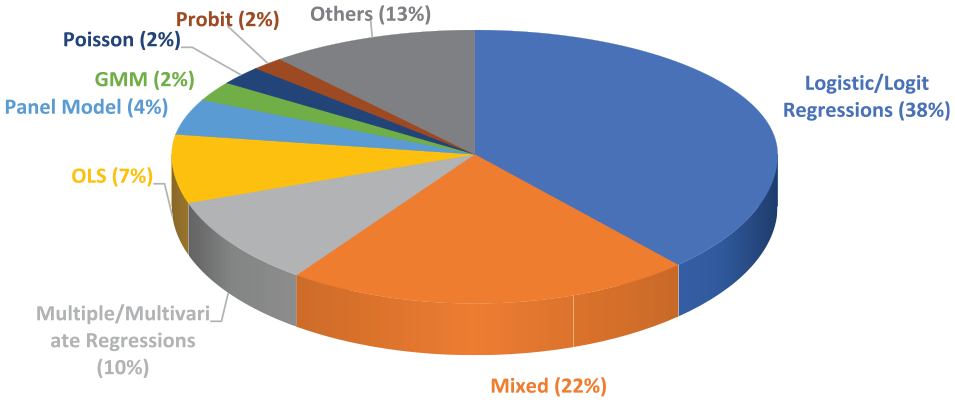
Types of analysis.
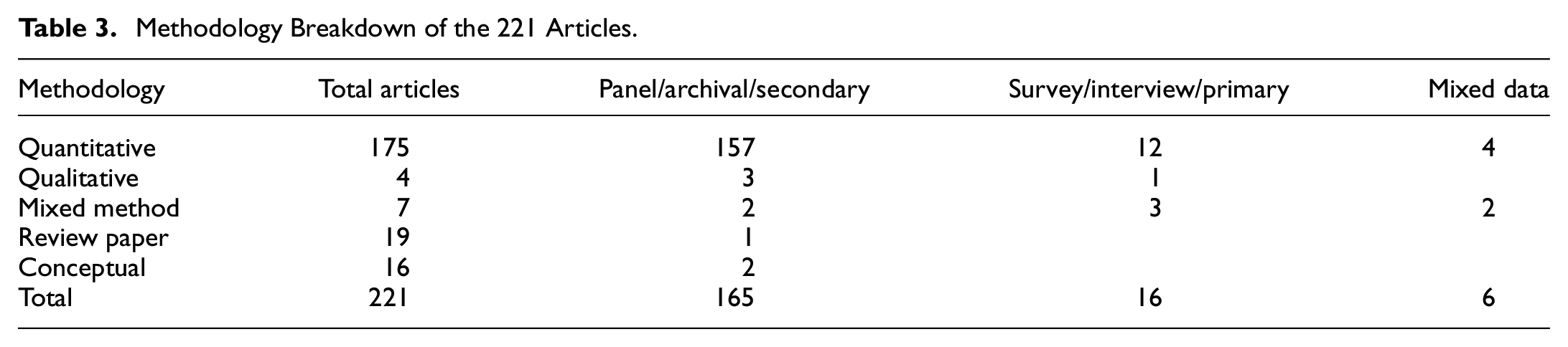
Our review also revealed low adoption of primary data collection techniques (e.g., survey, interviews) and a high tendency to use econometrics (Table 3). Although archival/panel data are more robust, relatively easier in facilitating both cross-sectional and longitudinal analyses as well as studies spanning across multiple countries, aggregate data such as FDI stock or flow does not necessarily capture MNE-level activities which are an integral part of the overall FDI investment or divestment. The loss of such data may impede the reliability of the findings. Thus, future research is encouraged to directly survey the MNEs for first hand perspectives and robust empirical analyses with diversified spatial units.
Methodology Breakdown of the 221 Articles.
Conclusion
The previous sections have rigorously reviewed past and present literature relating to locational determinants. Although the literature is relatively substantial, it is also heterogeneous in nature. We attempted to provide a systematic review of the articles relating to location attractiveness over the past 25 years and in doing so, complement the existing body of knowledge on this topic, especially by identifying the emerging trends pre- and post-Covid-19 pandemic. We also laid out an overview of the key theoretical lenses which have historically dominated and continue to dominate the MNE-FDI location research space. Our review revealed a few interesting findings leading to four conclusions, keeping in mind the methodology/data limitations.
Firstly, location research has received continued scholarly interest, both multidisciplinary and eclectic in approach. The high degree of cross-pollination of topics shows integration and complexity. However, the dynamics of the global economy and uncertainties resulting from technological, socio-political, and institutional changes in a continuously evolving world (Ahlstrom et al., 2020) requires deeper integration across disciplines to better understand the nuances and impact. For instance, trade and geo-political tensions in the global market, populism, nationalistic policies (Hitt et al., 2021; Westney, 2021), and the tendency to move into a regionally based global economy in response to the post-pandemic recovery require the lens of a new age. In addition, the existing dichotomy between IB and Shared Services offshoring provides opportunities for further integration across multi-research streams. And hence our suggestion for scholars to examine locational determinants by adopting sub-national and firm-specific unit of analyses to gain deeper understanding and integration on how heterogeneity of firm-specific attributes such as internalization or ownership advantage interrelate with location attributes given a dynamic new normal. We also urge the integration of IB theories in examining MNE-FDI locational determinants and specific forms of offshoring, such as Shared Services, for deeper context in enriching extant literatures.
Next, we conclude that the determinants influencing location attractiveness evolve in parallel with the paradigm shifts in the spatial dimensions and global economy, which makes them fairly predictable. As Table 2 shows, traditional factors such as wages and natural resources saw a decreasing trend in scholarly attention over the last 25 years, whereas emerging markets and institutional factors witnessed an uptick post-2008, which coincided with the aftermath of the global financial crisis 2008 and the rise of emerging economies. Similarly, the new norm that emerged as a result of Industry 4.0 and Covid-19 served as a base for the development our conceptual framework that explores and predicts the critical determinants that can be exploited in order to increase host location attractiveness. Based on our analysis, we identified five key determinants which can influence host location attractiveness in the new norm: human capital investment, absorptive capacity, knowledge creation, innovation capability, and (digital) technology advancement.
These factors can be exploited to create or upgrade competitive advantages in order to amplify host location attractiveness in the new norm. We recommend industry practitioners in host locations in partnership with local government affiliates to (1) leverage in continuous human capital investment (talent acquisition, training, development, and upskilling), (2) repurpose policies and procedures across firm, sub-national and national levels to embrace technological integration, digital platforms and digital transformation to support the dynamics of global market and MNEs’ asset-seeking motives, and (3) steer strategic intents towards creation of new knowledge to harness creativity and innovative outputs. We also suggest foreign-location government institutions to (1) administer structured training programs and governance based on the human capital needs of the industry to churn out skilled talents and prevent brain drain, (2) deploy digital catalytic programs and digitally friendly policies to support a robust digital ecosystem by creating in-country advanced cognitive capabilities to develop and deploy Artificial Intelligent or Machine Learning solutions, and (3) host exchange (digital) platforms or industry conferences which fosters best practice sharing and learning to serve as knowledge clusters and promote location attractiveness.
We consider this conceptual contribution to be a novelty of this study as the combination of variables in the conceptual framework, to the best of our knowledge, have not been tested together in previous locational studies. We also heed to the call by IB scholars in examining the effects and shifts in paradigm in the post-Covid-19 era relating to foreign locations and MNEs decisions (Paul & Feliciano-Cestero, 2021).
Third, some location bound topics are worthy of heightened attention in the new norm. Whilst agglomerations, clusters, network linkages and geo-political risk have consistently been popular research themes over the least 25 years, the context of these factors in the current global dynamics warrants deeper investigation. As fixed assets becomes less essential in favor of intangible resources due to flexibility, with collocation and remote environment concepts co-existing and competing for FDIs, traditional offshoring could become more dispersed/fragmented with the availability of remote human capital globally. Moreover, the potential impact of geo-political risks and de-coupling of neighboring countries indicate that these are unchartered territories with high uncertainties. These could fundamentally impact or alter MNEs’ strategic intents and therefore, future locational determinants. With an aim to advance the body of knowledge, we have suggested future research avenues covering these thematic areas.
Finally, there are opportunities to enrich and diversify the data source by directly surveying the MNEs and/or adopting more primary data. We have provided context on why firm level analysis would be fruitful to practitioners and scholars in providing deeper insights of locational determinants and shared some methodological recommendations for future research in order to close the existing gaps.
Limitations
Our paper is not without limitations. Firstly, we excluded articles which were not published in the journals indexed by Social Sciences Citation Index (SSCI) and Emerging Sources Citation Index (ESCI). Book chapters or commentaries were also excluded as we followed preceding practices which restricted samples to journals articles as they undergo a rigorous peer-review process (Bailey, 2018; Donnelly & Manolova, 2020). Hence, there might be possible exclusions of some articles on FDI location attractiveness or findings that may not have been reported in this study. Nevertheless, we made an attempt to ensure the maximum coverage of relevant articles. Secondly, our conceptual framework is contextual in nature, and therefore focuses on the determinants deemed to be most critical with respect to contemporary dynamics in the new norm. There could be other uncertainties such as geopolitical risks, trade tensions, and nationalistic policies which may impact spatial considerations. However, these were not in the scope of our predictive model as we focused on known certainties and longer-term phenomena where a trend was clearly visible from the articles reviewed. We have assumed that the rest of the national and sub-national level traditional factors remain constant, ceteris paribus. Our future research will test the proposed conceptual model empirically. The descoped uncertainties have been included in our future research avenues section.
Supplemental Material
sj-docx-1-sgo-10.1177_21582440241281036 – Supplemental material for Location Attractiveness in the New Norm: A Systematic Review
Supplemental material, sj-docx-1-sgo-10.1177_21582440241281036 for Location Attractiveness in the New Norm: A Systematic Review by Anbalagi Andy, Aida Idris and Rajenthyran Ayavoo in SAGE Open
Supplemental Material
sj-docx-2-sgo-10.1177_21582440241281036 – Supplemental material for Location Attractiveness in the New Norm: A Systematic Review
Supplemental material, sj-docx-2-sgo-10.1177_21582440241281036 for Location Attractiveness in the New Norm: A Systematic Review by Anbalagi Andy, Aida Idris and Rajenthyran Ayavoo in SAGE Open
Supplemental Material
sj-docx-3-sgo-10.1177_21582440241281036 – Supplemental material for Location Attractiveness in the New Norm: A Systematic Review
Supplemental material, sj-docx-3-sgo-10.1177_21582440241281036 for Location Attractiveness in the New Norm: A Systematic Review by Anbalagi Andy, Aida Idris and Rajenthyran Ayavoo in SAGE Open
Supplemental Material
sj-docx-4-sgo-10.1177_21582440241281036 – Supplemental material for Location Attractiveness in the New Norm: A Systematic Review
Supplemental material, sj-docx-4-sgo-10.1177_21582440241281036 for Location Attractiveness in the New Norm: A Systematic Review by Anbalagi Andy, Aida Idris and Rajenthyran Ayavoo in SAGE Open
Footnotes
Declaration of Conflicting Interests
The author(s) declared no potential conflicts of interest with respect to the research, authorship, and/or publication of this article.
Funding
The author(s) received no financial support for the research, authorship, and/or publication of this article.

Data Availability Statement
Data sharing not applicable to this article as no datasets were generated or analyzed during the current study.
Supplemental Material
Supplemental material for this article is available online.
References
Supplementary Material
Please find the following supplemental material available below.
For Open Access articles published under a Creative Commons License, all supplemental material carries the same license as the article it is associated with.
For non-Open Access articles published, all supplemental material carries a non-exclusive license, and permission requests for re-use of supplemental material or any part of supplemental material shall be sent directly to the copyright owner as specified in the copyright notice associated with the article.
