




Abstract
This study contributes to the growing literature on the 17 Sustainable Development Goals by examining how innovation and the Human Development Index influence Foreign Direct Investment in Vietnam. We utilize the Dynamic System Generalized Method of Moments to examine an unbalanced panel of 63 provinces and cities in Vietnam from 2016 to 2023. We apply the Two-Stage Least Squares method to ensure robustness and analyze a subsample of 58 provinces after excluding five centrally governed cities. We further examine whether the main findings remain robust during the COVID-19 pandemic. The results show that the Human Development Index and innovation play a significant role in attracting FDI, which is consistent with the eclectic paradigm and in contrast to the race-to-the-bottom hypothesis. Notably, the results indicate an inverted U-shaped relationship between innovation and FDI, with an optimal level at 22.74. This finding implies that innovation initially fosters FDI inflows, but excessive technological investment may diminish foreign investment beyond an optimal threshold. These findings align with the eclectic paradigm, race-to-the-bottom, and product life cycle theories. The study provides practical implications for governments and policymakers in emerging economies seeking to attract FDI and promote sustainable development.
Plain Language Summary
This study contributes to the growing literature on the 17 Sustainable Development Goals by examining how innovation and the Human Development Index influence Foreign Direct Investment in Vietnam. We utilize the Dynamic System Generalized Method of Moments to examine an unbalanced panel of 63 provinces and cities in Vietnam from 2016 to 2023. We apply the Two-Stage Least Squares method to ensure robustness and analyze a subsample of 58 provinces after excluding five centrally governed cities. We further examine whether the main findings remain robust during the COVID-19 pandemic. The results show that the Human Development Index and innovation play a significant role in attracting FDI, which is consistent with the eclectic paradigm and in contrast to the race-to-the-bottom hypothesis. Notably, the results indicate an inverted U-shaped relationship between innovation and FDI, with an optimal level at 22.74. This finding implies that innovation initially fosters FDI inflows, but excessive technological investment may diminish foreign investment beyond an optimal threshold. These findings align with the eclectic paradigm, race-to-the-bottom, and product life cycle theories. The study provides practical implications for governments and policymakers in emerging economies seeking to attract FDI and promote sustainable development
Keywords
Introduction
Foreign direct investment (FDI) is a form of international investment in which a company or individual from one country invests in another country by acquiring or establishing a business in that country, aiming to control or partially own assets and business operations (Ashine, 2024). In the context of Vietnam, FDI plays an important role in promoting economic growth, modernizing infrastructure, and improving the quality of human resources. FDI brings capital and technology transfer, creating jobs and developing strategic industries (Nguyễn & Phan, 2025). According to the Ministry of Planning and Investment of Vietnam, foreign investors’ total newly registered capital, adjusted capital, and capital contribution reached nearly 38.23 billion USD, down 3% compared to the same period in 2023. In 2024, it is estimated that foreign investment projects have disbursed about 25.35 billion USD, up 9.4% compared to 2023 (Bao Linh, 2025). For that reason, attracting FDI has become one of the important goals of governments, especially in emerging economies. Previous studies reveal that the Human Development Index (HDI) is important in influencing FDI investment decisions in Vietnam (Vi Dũng et al., 2018). In addition, previous studies have also shown that a country’s technological capabilities can enhance FDI inflows (Kayalvizhi & Thenmozhi, 2018). However, this topic has not received sufficient attention due to data limitations in Vietnam. Therefore, this study aims to examine the impact of innovation and the Human Development Index on FDI flows in Vietnam, especially at the provincial level.
We have several motivations for conducting this research in Vietnam. Previous studies have mainly focused on developed countries (Aziz & Mishra, 2016; Gauselmann et al., 2011; Seetanah & Rojid, 2011; Zhang et al., 2024), which makes their findings difficult to generalize to developing economies such as Vietnam, where economic structures, levels of technological development, and patterns of FDI receptivity are fundamentally different. In addition, our study emphasizes the relationship between the Human Development Index, innovation, and FDI at the sub-national level in Vietnam. Analyzing with detailed data from all 63 provinces and cities is particularly important, as it helps capture the unique characteristics of each locality and prevents overlooking potential regional imbalances (T.-N. Le & Dang, 2024). This approach allows us to derive more tailored and practical policy implications. Furthermore, the analysis also explores whether major cities in Vietnam exert a spillover influence on FDI decisions in surrounding provinces, thereby shaping the overall investment landscape.
We collect data from 63 provinces and cities in Vietnam from 2016 to 2023, with 447 annual observations, to examine the impact of innovation and Human Development Index on FDI in Vietnamese provinces. The primary estimation method is the Dynamic System Generalized Method of Moments (Dynamic System GMM). For the robustness test, we applied Two-Stage Least Squares (TSLS; Duan et al., 2024), a subsample analysis of 58 provinces after removing five centrally governed cities (Nawaz, 2020), and using dummy COVID variables (Badmus et al., 2022).
This study generates the following striking findings. The results reveal a positive relationship between the Human Development Index and FDI, suggesting that increases in labor quality can lead to higher FDI inflows in Vietnam, which is consistent with previous studies (Aziz & Mishra, 2016; Islam & Beloucif, 2024; Seetanah & Rojid, 2011; Vi Dũng et al., 2018; Yavan, 2010). Additionally, innovation has a positive impact on FDI, suggesting that improvements in innovation correspond to increased FDI inflows to Vietnamese provinces. This finding is consistent with Kayalvizhi and Thenmozhi (2018), Li et al. (2012), and Liu et al. (2014). These findings support eclectic paradigm theory, rejecting race to the bottom. Finally, the results indicate an inverted U-shaped relationship between innovation and FDI, with an optimal level of 22.74. This finding indicates that innovation initially promotes FDI attraction and supports product life cycle theory, eclectic paradigm theory, and race to the bottom theory. However, when technological investment exceeds the optimal level of 22.74, FDI inflows may even be reduced. The robustness tests using the Two-Stage Least Squares method and a subsample analysis of 58 provinces confirm our reliable findings. Finally, the pandemic led to a decline in FDI inflows.
Our study contributes to the growing literature in several ways as follows. Firstly, the study extends and clarifies the literature on FDI in the context of developing economies, especially at the provincial level in Vietnam, a frontier market in Asia. The city-province perspective avoids the biases of aggregation and national marginalization that studies of FDI flows to emerging economies have focused on (Colen et al., 2012). Moreover, the study provides fresh evidence on how subnational institutional heterogeneity and local policy environments influence FDI attraction by situating the analysis within a frontier-market context characterized by evolving institutional frameworks and transitional governance structures. This provincial focus enriches understanding of spatial and institutional determinants of FDI in transitional economies. It offers actionable insights for policymakers seeking to enhance competitiveness and investment appeal in similar frontier-market settings.
Secondly, the results indicate that provincial factors such as Human Development Index and Innovation play an important role in attracting FDI, and provide further evidence of the non-linear relationship between Innovation and FDI. Constructing the non-linear model helps identify turning points, which can be converted into policy recommendations suitable for a specific group of provinces and cities. As a result, the findings define provinces and cities in three economic regions, including the Northern Midlands and Mountains, North Central Coast, and Central Highlands, which should focus on technology development to attract foreign investments. In comparison, provinces and cities in the four key economic regions of the North, Central, South, and Mekong Delta should allocate the innovation investment efficiently to attract FDI projects sustainably.
The structure of the paper is represented by the following. Section 2 presents the literature review and research hypotheses. Section 3 illustrates the data collection and methodology. Section 4 reports the findings. Section 5 discusses the findings. Finally, section 6 is the conclusion and implications.
Literature Review
Background Theories
The eclectic paradigm theory emphasizes that human capital and technological capability are key determinants of FDI inflows (Dunning, 1988, 2001). This theory provides a comprehensive approach by integrating traditional trade theories with internalization theory. According to this model, three crucial factors shape the decision to undertake Foreign Direct Investment (FDI): Ownership advantages (O), Internationalization advantages (I), and Location advantages (L) (Dunning, 1988, 2001). Ownership advantages refer to firm-specific resources or assets that companies possess exclusively. These income-generating assets allow firms from one country to gain a competitive advantage over firms from other countries when providing goods or services in the same market. Location advantages are location-bound characteristics of the host economy, encompassing geographical and national factors influencing the decision to establish production activities abroad rather than in the home country. Finally, internationalization advantages explain why firms prefer to internalize the creation and utilization of resources and capabilities through FDI instead of selling or acquiring them via open market transactions, such as licensing or other non-equity arrangements. Highly educated labor can absorb foreign firms’ technology, managerial skills, and complex production processes, increasing productivity and profitability (Islam & Beloucif, 2024; Lin, 2011). Moreover, government initiatives in developing digital infrastructure, investing in scientific expenditure, and fostering technological innovation play a vital role in enhancing city-level attractiveness to foreign investors, as these efforts significantly contribute to creating an FDI-friendly environment (Zhang et al., 2024). Furthermore, beyond ensuring profitability, the advanced technological capabilities of host countries invested by FDI can also help address environmental pollution challenges (Sheng Yin & Hussain, 2021). Hence, these factors collectively enhance the ability to attract greater FDI inflows.
Conversely, the race to the bottom theory argues that countries face downward pressure in various policy domains under the pressures of global market forces and competitive investment environments fostered by globalization (Olney, 2013). As a result, some nations may lower specific standards, such as labor costs typically associated with FDI seeking low-skilled, low-wage labor, which in turn reduces social services, taxation, or environmental regulations, in order to attract cost-optimizing FDI (Hecock & Jepsen, 2013; Van Tran et al., 2025).
According to Vernon (1992), the Product Life Cycle theory explains the relationship between technology development and foreign investment through three stages. In the initial stage, new products are typically developed and manufactured in advanced economies, benefiting from advantages in cutting-edge technology, supportive infrastructure, and a highly skilled labor force. As products gradually become standardized and international demand expands, firms export to other advanced countries. However, companies consider establishing production facilities abroad through FDI in these developed markets to safeguard their market share against provincial competitors and respond to increasing political and economic pressures. The objectives of FDI at this stage include: (i) avoiding market loss due to domestic competition, (ii) addressing political pressures such as trade balance and employment concerns, and (iii) reducing transportation costs while enhancing responsiveness to provincial customers. In the final stage, products are fully standardized and face intense price competition. Consequently, multinational firms often relocate production to developing countries, where labor costs are low and technological requirements are less demanding. FDI is primarily motivated by cost advantages rather than technological innovation. Therefore, while technology initially serves as a key driver in attracting FDI, in the long run, the high costs associated with advanced technologies may reduce the attractiveness of FDI.
The Nexus Between Human Development Index and FDI
Seetanah and Rojid (2011) and Aziz and Mishra (2016) argue that high labor quality plays a crucial role in attracting FDI, as a better-educated workforce can learn and adopt new technologies more rapidly, thereby enhancing productivity and reducing the risks associated with low-skilled labor. Moreover, higher human capital serves as a key indicator of the availability of skilled workers, which significantly boosts the locational advantage of a country in the eyes of foreign investors (Bogliaccini & Egan, 2017). Islam and Beloucif (2024) find that high human capital corresponds to the availability of a skilled workforce, an important factor influencing FDI inflows, as skilled workers are considered more productive and able to learn and adopt new technologies more quickly (T. T. T. Tran et al., 2025). Similarly, in Turkey, the quality of education and a highly skilled labor force are significant determinants in attracting FDI (Yavan, 2010). Foreign investors are drawn to areas with a highly skilled and educated workforce, underscoring human capital’s vital role in their location decisions for FDI. In Vietnam, a high level of labor skills attracts FDI for several reasons. First, beyond traditional considerations such as market size and infrastructure, foreign investors increasingly prioritize labor quality over mere quantity or cost (Radosevic & Ciampi Stancova, 2018; Vi Dũng et al., 2018). Second, as Vietnam reaches middle-income status and domestic demand for more complex products and services grows, market-seeking investors focus more on hiring skilled workers to meet these higher standards (Ibarra-Olivo et al., 2024; Vi Dũng et al., 2018). Finally, a skilled workforce is vital for resource-seeking and export-oriented investors, motivating them to offer better compensation to attract and retain qualified employees (Vi Dũng et al., 2018).
However, unskilled labor provides a cost advantage, as it tends to have lower wage requirements than skilled labor. This cost advantage is appealing to foreign investors seeking competitive production costs. Previous studies have shown that FDI in certain regions, such as sub-Saharan Africa, tends to rely more on less-skilled workers than highly skilled labor (Coniglio et al., 2015). In China, foreign investors prioritize factors like low labor costs and market size over the educational qualifications of the labor force when making location decisions (Boermans et al., 2011). Tegegne (2024) indicates that FDI favors low-cost labor because it helps reduce overall production and operational costs, including wages, thereby increasing the profitability of foreign investments. In addition, cheap labor provides a significant locational advantage, making the host country more competitive than other locations. Low labor costs also attract resource-seeking and export-oriented FDI, enabling investors to access necessary resources and achieve greater economies of scale and scope in production.
Despite offering valuable insights, prior studies exhibit certain limitations. Much of the existing literature has concentrated on individual countries or regions, such as Sub-Saharan Africa (Coniglio et al., 2015), Mauritius (Seetanah & Rojid, 2011), or Turkey (Yavan, 2010), which may not adequately capture the dynamics of Vietnam, an emerging economy increasingly positioned at the forefront of international investment flows. Our study addresses this gap by explicitly focusing on Vietnam and advances the empirical discussion by applying the Dynamic System GMM approach, which mitigates endogeneity concerns (H. T. P. Le et al., 2024; T. T. T. Tran et al., 2025). In addition, subsample analyses are conducted to assess whether large metropolitan areas disproportionately influence the overall results, reinforcing the robustness of our findings.
Based on the previous studies (Aziz & Mishra, 2016; Boermans et al., 2011; Bogliaccini & Egan, 2017; Coniglio et al., 2015; Islam & Beloucif, 2024; Radosevic & Ciampi Stancova, 2018; Seetanah & Rojid, 2011; Tegegne, 2024; V. H. Tran et al., 2023; Van Tran et al., 2025; Vi Dũng et al., 2018; Yavan, 2010), eclectic paradigm theory, and race to the bottom theory, we propose the following hypothesis.
The Nexus Between Innovation and FDI
Li et al. (2012) suggest that a host country’s advantage in industry-specific technology increases the likelihood of investment from Chinese firms. High- and low-tech manufacturing industries can benefit from access to advanced technology (Aldieri & Vinci, 2018). Countries with well-developed national innovation systems, particularly in the public and private science sectors, will likely appeal to those seeking localized knowledge and technology (Gauselmann et al., 2011). Tu (2024) also reveals that innovation attracts FDI in developing countries for several reasons. First, it provides new resources and a technologically competitive environment, enabling MNCs to meet production requirements and maintain a competitive edge (Meyer et al., 2018). Innovation drives the adoption of advanced manufacturing processes and enhances operational efficiency, allowing MNCs to optimize inputs and reduce production costs, thereby increasing investment profitability. Moreover, government policies and collaboration with MNCs often support innovation, creating the conditions to attract high-quality FDI. Zhang et al. (2024) found that government expenditure on science and technology creates an FDI-friendly environment. Government initiatives in digital infrastructure development, including funding for digital facilities and innovation-related projects, establish location advantages that enhance the attractiveness of host countries to foreign investors (Ma et al., 2024).
On the contrary, innovation may discourage FDI inflows due to the high costs associated with innovative activities. At the same time, FDI may sometimes prioritize low-cost countries to gain a competitive advantage (Rozen-Bakher, 2017). Host countries with low wage costs tend to attract investors who prioritize optimizing production costs (Gauselmann et al., 2011). Al-kasasbeh et al. (2022) found that the common objective of FDI with vertical motivation in emerging countries is to fragment the production process and shift cost- or labor-intensive activities to countries with lower production costs. Moreover, research on Asia has demonstrated that foreign direct investment tends to concentrate in countries with less developed technological sectors, underscoring the importance of technology disparity in attracting FDI (Petri, 2012).
Gauselmann et al. (2011) concentrated on a group of Central and Eastern European countries—namely the Czech Republic, Hungary, Poland, Romania, and Slovakia—thereby restricting the generalizability of their findings. Likewise, Petri (2012) did not extend the analysis to a broader set of countries, while Zhang et al. (2024) focused solely on China. Although these studies provide valuable insights, they do not fully capture the dynamics of an emerging economy such as Vietnam. In contrast, the present study distinguishes itself by employing rigorous robustness tests and incorporating subsample analyses to ensure the stability of results. In addition, by examining the role of individual provinces, this study highlights how distinct provinces’ characteristics shape the relationship between innovation and FDI inflows.
Based on the previous studies (Aldieri & Vinci, 2018; Al-kasasbeh et al., 2022; Gauselmann et al., 2011; Li et al., 2012; Ma et al., 2024; Meyer et al., 2018; Petri, 2012; Rozen-Bakher, 2017; Tu, 2024; Zhang et al., 2024), eclectic paradigm theory, and race to the bottom theory, we propose the following hypothesis:
Non-linear Relationship Between Innovation and FDI
Soussane et al. (2023) conducted a study exploring the non-linear relationship between technology capability and FDI. The research findings indicate that sub-Saharan African countries with moderate technological capabilities do not experience a significant increase or decrease in inward FDI. On one end of the spectrum, when a country’s technological capability score is relatively low, it tends to appeal to market-seeking FDI. This trend can be explained by MNEs needing more comprehensive knowledge about foreign markets, so they establish provincial affiliates to understand domestic consumers better rather than solely relying on exports. With improvements in the host country’s digital infrastructure, multinational enterprises can better detect provincial consumer demands without setting up subsidiaries and may prefer exports instead of FDI. Conversely, a nation with a relatively high technological competence score tends to appeal to FDI interested in efficiency and technology. MNEs look for host nations that are productive and have strong digital infrastructure.
Additionally, MNEs may be drawn to countries with high technological achievements to acquire knowledge and imitate technologies. Therefore, MNEs pay more attention to the technological development of host countries beyond a certain threshold, but the technological capabilities may be insignificant in their investment decisions below that level. Kim and Choi (2020) indicate a U-shaped relationship between the host nation’s technological capacity and inward foreign direct investments. Kim and Choi (2020) report that FDI is particularly high in nations with either extremely high or extremely low technological aptitude, and it also verifies that the host country’s level of technological capability can significantly impact FDI influx. The “liability of foreignness” refers to the inherent difficulties that foreign enterprises confront and the necessity of comparative advantage over provincial firms in order for them to continue in business. These businesses deploy resources to nations with greater technological capacities since their investment goal is to access technological capabilities. In addition, this trend should be considered while evaluating the type of FDI. Investors tend to favor nations that specialize in technology imports and production for resource-seeking FDI and efficiency-seeking FDI, respectively. On the other hand, investment firms seeking knowledge-seeking FDI to create novel technologies through capital investment choose technologically advanced nations that focus on exporting technology. These justifications emphasize the potency of the recipient nation’s internalization advantages, which are among the factors that influence foreign direct investment.
Based on the research of Soussane et al. (2023), Kim and Choi (2020), eclectic paradigm theory, race to the bottom theory, and product life cycle theory, we propose the hypothesis as follows:
Data and Methodology
Data
To examine the impact of factors such as Human Development Index and Innovation on FDI at the provincial level, we collected data from the National Statistics Office and the Provincial Competitiveness Index conducted by the Vietnam Federation of Commerce and Industry (VCCI) from 63 provinces and cities in Vietnam from 2016 to 2023. The sampling period started in 2016 because the National Statistics Office in Vietnam published the Human Development Index for the first time in 2016. We applied a winsorization technique at the 5% and 95% levels, following the approach used by T. T. T. Tran et al. (2025). For missing data, we excluded observations that did not have enough information to calculate the variables, as described in the study by A. N. N. Le et al. (2023 and H. T. P. Le et al. 2024). Our final dataset is an unbalanced panel with 447 annual observations from 63 provinces and cities in Vietnam.
Figure 1 shows that from 2016 to 2023, Ha Noi, Ba Ria-Vung Tau, and Quang Ninh have always been the leading provinces in attracting FDI. These cities and provinces are always attractive to foreign investors because of their favorable geographical location and stable economic growth rate. Especially during this period, Ha Noi has actively promoted improvements in transport infrastructure, traffic connecting ports, airports, and roads, helping transport goods and raw materials more conveniently. In addition, Ha Noi has introduced outstanding incentive mechanisms to attract large projects, especially in the processing, manufacturing, and high-tech industries. Ba Ria-Vung Tau has also actively approached many large foreign economic groups, such as Austal (Australia), Marubeni (Japan), Samsung (Korea), to promote large projects in the fields of processing and manufacturing, petrochemicals, and seaport-logistics. For example, Hyosung’s Polypropylene (PP) factory and LPG warehouse in Phu My Town. FDI projects attracted to Quang Ninh province are also increasingly of high quality. Especially in the fourth quarter of 2023, the province attracted two FDI projects with an investment capital of over 500 million USD, namely the Jinko Solar Hai Ha Vietnam Photovoltaic Cell Technology Complex project with a registered capital of over 1.5 billion USD and the Lite-on Quang Ninh Factory project (690 million USD). On the other hand, Binh Dinh attracted the least FDI in 2019. The Ninh Thuan and Quang Nam provinces attracted the lowest FDI inflows in 2020.
Foreign Direct Investment of 63 Provinces and cities in Vietnam from 2016 to 2023.
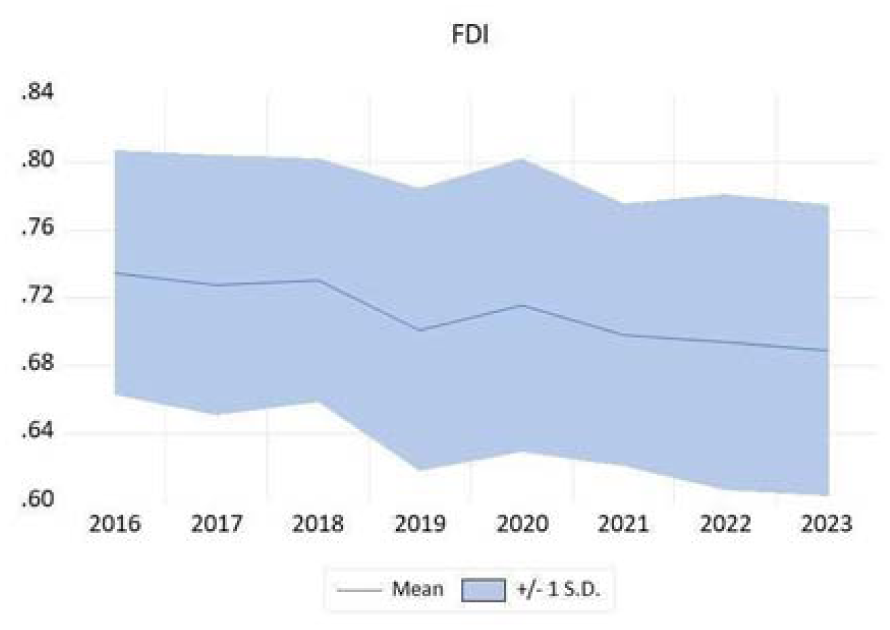
Figure 2 demonstrates that the average level of Human Development Index between provinces in our study is 0.6876, and the standard deviation is 0.0474. Based on the line chart of the Human Development Index, it is evident that Ha Noi is the province with the highest Human Development Index from 2016 to 2020. In recent years, Ha Noi has made continuous efforts to better care for the material and spiritual lives of its residents, with a focus on meeting their increasing essential needs for food, clothing, housing, physical fitness, and entertainment. As a result, the Human Development Index in Ha Noi has experienced remarkable growth. In addition, Ho Chi Minh City and Ba Ria-Vung Tau also achieved the highest Human Development Index in the country, second only to Ha Noi.

Human Development Index of 63 Provinces and cities in Vietnam from 2016 to 2023.
On the other hand, Lai Chau has the lowest Human Development Index in 2016, 2019, and 2020. Similarly, Ha Giang has the lowest Human Development Index in 2017, 2018, 2021, and 2023. Thai Nguyen province has the lowest Human Development Index in 2022.
Figure 3 suggests that the average level of innovation between provinces in our study is 22.6949, and the standard deviation is 2.2546. Ho Chi Minh City led in technological capacity from 2016 to 2020, but its position gradually shifted to Hau Giang in 2021, 2022, and 2023. Ho Chi Minh City has maintained its leading position in Vietnam in attracting FDI capital from 2016 to 2022 due to its advantages in infrastructure, high-quality human resources, and technological capacity concentrated in many high-tech parks, export processing zones, and innovation centers. However, this position has shifted to Hau Giang province from 2021 to 2023, when the province proactively implemented many new initiatives, such as the establishment and development of industrial parks, expanded new IPs/industrial parks, and plans to build seven new industrial parks by 2030, increasing the industrial land fund. These efforts have helped Hau Giang quickly improve its technological capacity, becoming a new bright spot in sustainable development and the digital economy. On the other hand, Quang Ngai has always been the province with the lowest innovation from 2016 to 2020. However, Binh Phuoc became the province with the lowest innovation in 2021 and 2022. Most recently, An Giang province held the lowest position in 2023.
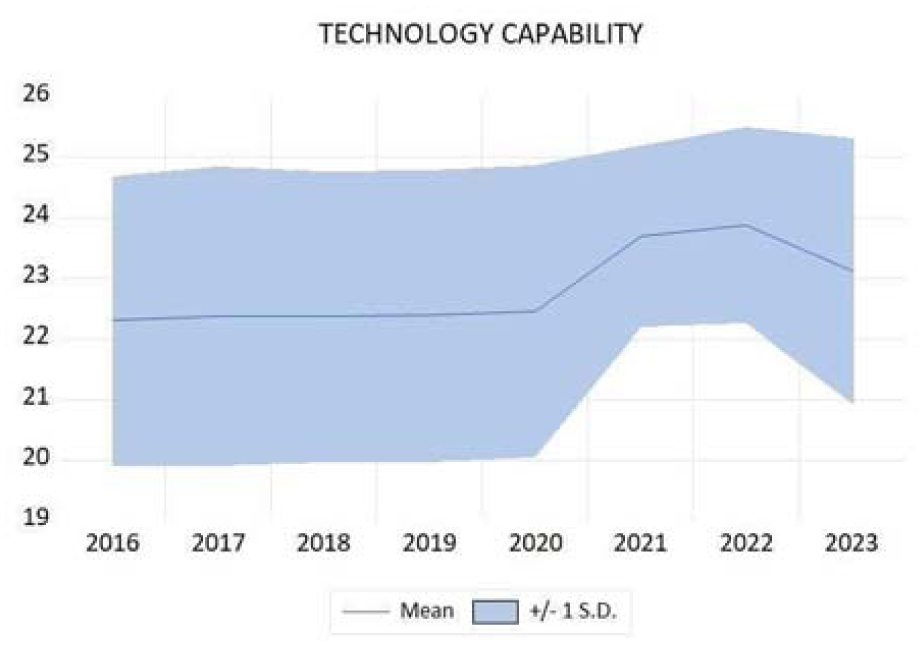
Innovation of 63 Provinces and cities in Vietnam from 2016 to 2020.
Table 1 presents descriptive statistics of the main variables. The average value of FDI is 0.7122, with a standard deviation of 0.0802. This result is similar to the study of (Viet Hong Anh & Thi Kim Oanh, 2023), which indicates that the average of FDI is 0.5053. However, the standard deviation of our study is lower than that of Viet Hong Anh and Thi Kim Oanh (2023), which is 2.4073. Similarly, the average value and standard deviation of innovation are 22.6949 and 2.2546, higher than those of Viet Hong Anh and Thi Kim Oanh (2023), about 0.4216 and 0.0855, respectively. Finally, our study also reveals that the average value of the Human Development Index is 0.6876 with a standard deviation of 0.0474, which is lower than the study of Nguyen et al. (2024), indicating the results are 9.271 and 1.304, respectively.
Descriptive Statistics.

Note. This table reports the descriptive statistics of all key variables used in the study, including the mean, median, maximum, minimum, standard deviation (St. Dev.), and the number of observations. All variable definitions are provided in Appendix 1. The dataset comprises 447 annual observations spanning the period from 2016 to 2023.
Table 2 shows the Pearson correlations between independent variables. We also apply the VIF to examine the multicollinearity between the variables. Our results indicate that VIF is less than 5, so our study has no multicollinearity issue (A. N. N. Le et al., 2023; H. T. P. Le et al., 2024; Nguyen et al., 2024).
Pearson Correlation Matrix.

Note. This table presents the correlation coefficients for the independent variables, including Human Development Index and Technology Capability, and control variables, including GDP Per Capita, Provincial Competitiveness Index, Poverty Rate, Time Cost, Average income per worker, and Market Entry. All variable definitions are provided in Appendix 1. The symbols ***, **, and * indicate significance levels at 1%, 5%, and 10%, respectively. p-values are reported in parentheses.
Variable Definitions
Foreign Direct Investment (FDI), according to A. N. N. Le et al. (2023) and Nguyen et al. (2024), is calculated as FDI inflow divided by GDP. Using FDI relative to GDP rather than in absolute terms offers several advantages, such as allowing meaningful comparisons across provinces and cities of different economic sizes, mitigating the influence of disparities in provinces and cities’ economic scale, and providing a standardized measure of the contribution of FDI to regional economic activity. Furthermore, this specification enables a more precise examination of how the Human Development Index and Innovation influence FDI inflows and the economic mechanisms through which these factors facilitate investment attraction (Duong et al., 2023). Incorporating FDI per GDP into the model allows us to assess more accurately the extent to which provinces and cities’ human capital, infrastructure, and innovative capacity enhance the absorption of foreign capital, rather than merely reflecting the absolute volume of investment, which could be biased by provincial economic size. To indicate low and high FDI inflow in a country, the value of FDI ranges from 0% to 100%. This data is collected from 2016 to 2023 from the National Statistics Office of Vietnam.
The Human Development Index (HDI) is a composite index introduced by the United Nations Development Programme (UNDP) in its Human Development Reports. It is designed to measure and compare the average achievements in three basic dimensions of human development: health, education, and standard of living (Klugman et al., 2011). The health dimension is proxied by life expectancy at birth, the education dimension combines average years of schooling for adults and expected years for children, and the standard of living dimension is measured by GNI per capita adjusted for purchasing power parity. The Human Development Index is calculated as the geometric mean of these three normalized indices, resulting in a value between 0 and 1. For this study, Human Development Index data for Vietnamese provinces and cities from 2016 to 2023 were collected from the National Statistics Office of Vietnam, providing a consistent and comparable measure of human development across all provinces and cities.
The Technological Capability (TC) variable captures the innovation capacity of each province through expenditures on scientific research and technological development (Pham et al., 2025). These expenditures include development investments, funding for scientific research and technological development tasks, and other related expenses. Funding comes from multiple sources, including the state budget, which encompasses central, provincial, and city allocations, non-state sources such as contributions from enterprises and higher education institutions, and foreign sources. Provinces and cities with higher values indicate higher innovation capability and vice versa, while lower values reflect more limited technological capabilities. The data for this variable were collected from 2016 to 2023 by the National Statistics Office of Vietnam, providing a comprehensive and standardized measure of provincial-level innovation capacity.
Estimation Methods
In this study, firstly, we utilized various panel regression techniques, including Panel Least Squares (OLS), Fixed Effects Model (FEM), and Random Effects Model (REM). OLS was employed to find the best-fitting line by minimizing the squared differences between predicted and actual values of the dependent variable. FEM controlled for time-invariant unit-specific effects, while REM assumed these effects to be random. To determine the most appropriate estimation method, we conducted the Hausman test and Lagrange Multiplier tests to determine the most appropriate estimation method among OLS, FEM, and REM, following the approach proposed by Pham et al. (2025), Van Tran et al. (2025), H. T. P. Le et al. (2024), and A. N. N. Le et al. (2023). The results of these tests indicated that FEM is the most suitable estimation method for our dataset. The Wooldridge and Wald tests are used to test for autocorrelation in the residuals of the regression analysis based on the observation data of the independent and dependent variables and to check their heteroscedasticity. We also perform the Durbin-Wu-Hausman endogeneity test to detect unobserved endogeneity problems. Suppose the results showed that the FEM violated the assumption of heteroscedasticity and endogeneity. In that case, we follow Van Tran et al. (2025) and H. T. P. Le et al. (2024) to utilize the Dynamic System GMM estimations to mitigate these issues. Furthermore, we reported AR(2) and Hansen tests to confirm the noise structure and validity of the instrument set in the Dynamic System GMM estimation (H. T. P. Le et al., 2024; Rahman et al., 2019; Van Tran et al., 2025). Finally, we conducted a robustness test using the Two-stage least squares method, using a subsample of 58 provinces and cities after removing five centrally governed cities, using a dummy COVID-19 variable to enhance the confidence and reliability of the main findings.
Model Construction
The relationship between the Human Development Index (HDI) and FDI is theoretically mixed. Empirical studies such as Seetanah and Rojid (2011), Islam and Beloucif (2024), Yavan (2010), and Vi Dũng et al. (2018) observe a positive correlation between the Human Development Index and FDI. In contrast, Boermans et al. (2011), Coniglio et al. (2015), and Tegegne (2024) have reported a negative relationship between these two variables. Therefore, we followed H. T. P. Le et al. (2024) to construct the following regression specification based on

Empirically, Tu (2024), Gauselmann et al. (2011), Li et al. (2012), Liu et al. (2014), and Zhang et al. (2024) have discovered a positive association between Innovation and FDI. Conversely, Petri (2012) and Al-kasasbeh et al. (2022) have found that higher levels of technology can lead to a decrease in FDI because of the high investment costs. Based on

We further integrate measures of the Human Development Index and innovation. The purpose is to examine the impact of innovation and Human Development Index on FDI; therefore, following H. T. P. Le et al. (2024), we proposed model 3 as follows:

Finally, to evaluate the non-linear relationship between FDI and innovation, we followed (T. T. T. Tran et al., 2025) and based on the research of Soussane et al. (2023), Kim and Choi (2020), eclectic paradigm theory, race to the bottom theory, product life cycle theory, we present model 4 to test the relationship between the two variables as follows:

Where FDI represents Foreign Direct Investment, Human Development Index refers to the Human Development Index, and TC stands for Technology capabilities, representing provinces and cities’ innovation. The control variables include average income per worker, GDP per capita, market entry, Provincial Competitiveness Index, poverty rate, and time cost. Additionally, αi represents the cross-section fixed effect, αt represents the year fixed effect, and μ represents the residual value. The definitions of all variables are in Appendix 1.
Empirical Results
We followed the approach proposed by Pham et al. (2025), Van Tran et al. (2025), H. T. P. Le et al. (2024), and A. N. N. Le et al. (2023), who conducted the Hausman and Lagrange Multiplier tests to determine the most appropriate estimation method among OLS, FEM, and REM. The results of these tests indicated that FEM is the most suitable estimation method for our dataset. We reported the FEM estimations in Table 3 for further analysis. Furthermore, the R-squared value of .7793 indicated that the model explains approximately 77.93% of the variation in the dependent variable. The F-statistic value of 9.8160 and a probability smaller than .001 suggested that all independent variables jointly affect the FDI inflows in Vietnamese provinces and cities
FEM Regression Results.

Note. This table displays the regression outcomes obtained through the FEM method. The dependent variable is FDI. The independent variables include the Human Development Index and the Technology Capability. Control variables include GDP Per Capita, Time Cost, Market Entry, Provincial Competitiveness Index, Average income per worker, and Poverty Rate. The sample consists of 447 annual observations from 2016 to 2023. The variable definitions are in Appendix 1. The symbols ***, **, and * indicate significance levels at 1%, 5%, and 10%, respectively. The p-values are in parentheses.
However, the Wooldridge test, Durbin-Wu-Hausman test, and Wald test indicate that the FEM model violates the assumptions of autocorrelation and heteroskedasticity. For brevity, the results of the Wooldridge test, Hausman test, and Wald test are not reported in this study. However, they are available upon request. Table 4 also indicates that there are endogeneity issues in this study. Consequently, we employ Dynamic System GMM to resolve the problems associated with unobserved endogeneity, autocorrelation, and heteroskedasticity. The estimation results are reported in Table 5.
Durbin–Wu–Hausman Test.

Note. This table reports the Durbin–Wu–Hausman test results. The results indicate that the residual terms for the variables Average Income, Market Entry, Provincial Competitiveness Index, and Poverty Rate are statistically significant. At the same time, Human Development Index, Technology Capability, GDP Per Capita, and Time Cost are found to be statistically insignificant. These findings suggest the presence of endogeneity in the dataset. The symbols ***, **, and * indicate significance levels at 1%, 5%, and 10%, respectively.
Regression Results Employing the Dynamic System GMM.

Note. Table reports the statistical results of the Dynamic System GMM method. The dependent variable is FDI. The independent variables include Human Development Index and Technology Capability, with the U-shaped variable being Technology Capability × Technology Capability. Control variables include GDP Per Capita, Time Cost, Market Entry, Provincial Competitiveness Index, Average Income, and Poverty Rate. The sample consists of 447 observations from 2016 to 2023. Definitions of all variables are provided in Appendix 1. The symbols ***, **, and * denote statistical significance at the 1%, 5%, and 10% levels, respectively. p-values are reported in parentheses.
Robustness Tests by Employing Alternative Estimation Methods
In this section, we perform several robustness tests to ensure that the main findings are generalized. In the first test, we implement the Two-Stage Least Squares to check the robustness of our results. Unlike Dynamic System GMM, which relies on complex moment conditions and weight matrices, TSLS handles endogeneity through a straightforward two-step process, including first predicting endogenous variables using instrumental variables and then using these predicted values in the regression (Duan et al., 2024). This simplicity makes the method intuitive and easy to interpret, and at the same time, it provides an independent check on the results. The TSLS estimations are reported in Table 6.
The Robustness Test by Applying the Two-Stage Least Squares (TSLS) Method.
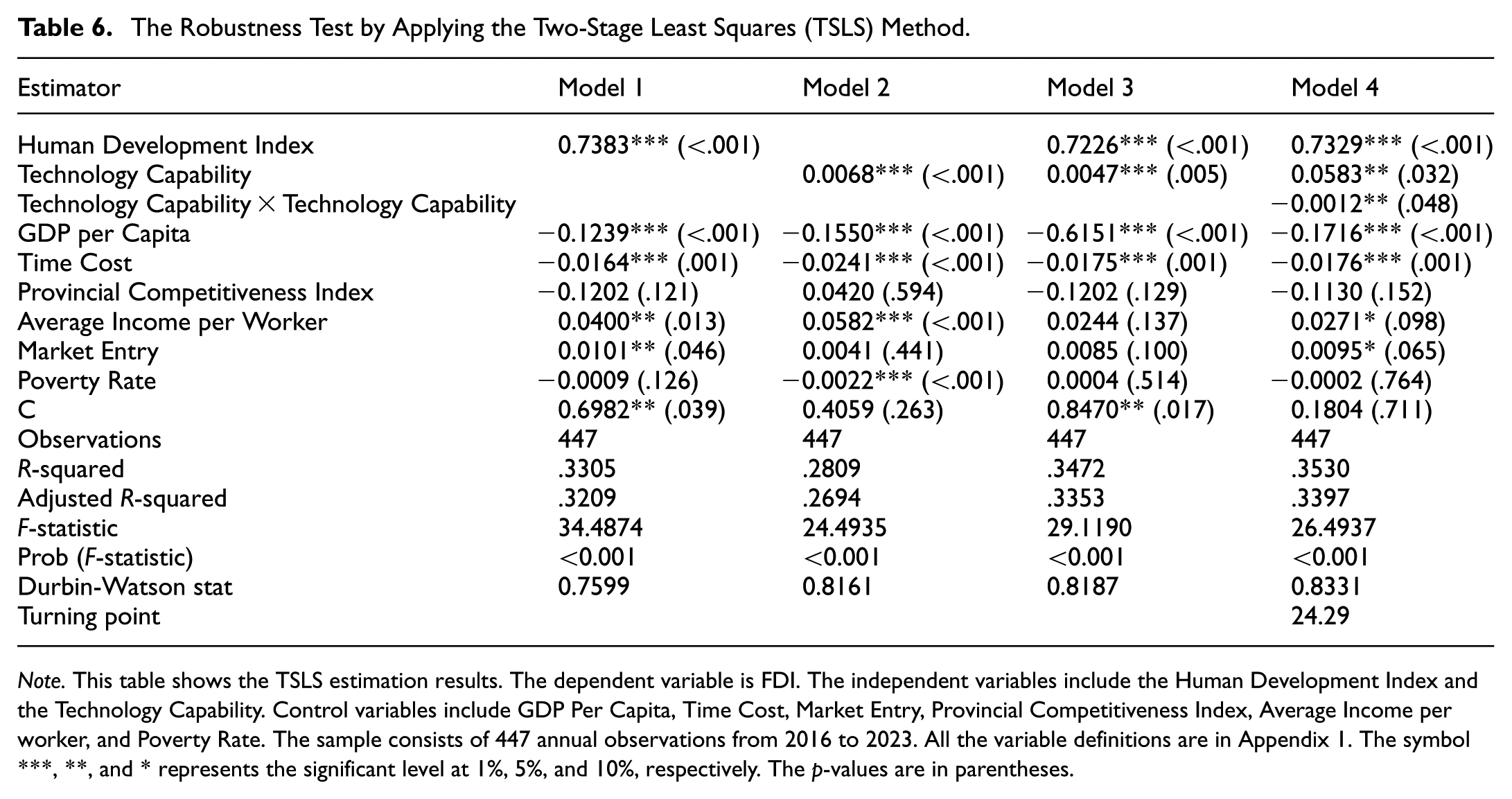
Note. This table shows the TSLS estimation results. The dependent variable is FDI. The independent variables include the Human Development Index and the Technology Capability. Control variables include GDP Per Capita, Time Cost, Market Entry, Provincial Competitiveness Index, Average Income per worker, and Poverty Rate. The sample consists of 447 annual observations from 2016 to 2023. All the variable definitions are in Appendix 1. The symbol ***, **, and * represents the significant level at 1%, 5%, and 10%, respectively. The p-values are in parentheses.
In the second test, we examine the results in a subsample of 58 provinces, after excluding five centrally governed cities. Nawaz (2020) argues that, given the characteristics of Vietnam, the Human Development Index and innovation resources, especially technological capabilities, tend to be concentrated in large cities. These major cities tend to have a high Human Development Index, significant FDI, and developed infrastructure, which can influence the regression results. Therefore, excluding major cities allows us to test whether the main findings are robust in the remaining provinces (Nawaz, 2020).
The last robustness test determines whether the main findings are affected by the COVID-19 pandemic. The COVID-19 pandemic is considered a significant shock, changing the economic environment and international investment activities, which may affect the relationship between the three variables. We rely on the study of Badmus et al. (2022) to create the dummy variable with the value zero for the period 2016 to 2019 (before the pandemic) and the value one for the period 2020 to 2022 (during the pandemic) to allow us to isolate the impact of the pandemic, thereby checking whether the estimation results remain consistent after considering the pandemic effects.
Discussion
Table 5 reports a positive nexus between the Human Development Index and FDI in the Vietnamese provinces and cities. When the Human Development Index increases by one percentage point, foreign investment inflows increase by 0.6640%. While our result supports
In the context of Vietnam, a rising Human Development Index signals to foreign investors that the country has a growing market and a labor force with increasing quality. This trend is particularly crucial as Vietnam transitions into a middle-income economy: market-seeking investors require skilled labor to meet the demand for more sophisticated products and services (Ibarra-Olivo et al., 2024). Moreover, for resource-seeking and export-oriented investors, a higher HDI ensures the availability of qualified employees, motivating them to offer competitive compensation packages to attract and retain talent (Vi Dũng et al., 2018).
Table 5 reports that innovation positively impacts FDI inflows in Vietnamese provinces and cities. When technology capabilities increase by 1%, foreign investment increases by 0.1410%. The results align with Li et al. (2012), Gauselmann et al. (2011), Tu (2024), and Zhang et al. (2024). Technology plays a central role in attracting FDI to Vietnam because it signals the availability of advanced resources and a supportive innovation environment. Li et al. (2012) and Aldieri and Vinci (2018) highlight that industry-specific technological advantages and access to advanced technology benefit both high- and low-tech manufacturing industries by improving production capabilities. For Vietnam, improvements in national innovation systems, including universities, research institutes, and private sector R&D, increase its appeal to foreign investors seeking localized knowledge and technological capacity (Gauselmann et al., 2011; Tu, 2024). Innovation creates new resources and enhances efficiency by adopting advanced manufacturing processes, thereby reducing production costs and improving profitability for multinational corporations (Meyer et al., 2018). In addition, strong government support, such as spending on science and technology (Zhang et al., 2024) and investment in digital infrastructure (Ma et al., 2024), creates favorable conditions for innovation-driven growth. These initiatives reinforce Vietnam’s locational advantages by ensuring foreign investors can operate in a technologically competitive and policy-supported environment. The findings also support
Interestingly, Table 5 reports that innovation has an inverted U-shaped relationship with FDI inflows in Vietnamese provinces and cities. The finding is consistent with Soussane et al. (2023) and Kim and Choi (2020). When innovation and technological development are relatively low, Vietnam attracts substantial FDI primarily through low labor costs and market size. Al-kasasbeh et al. (2022) note that vertically motivated FDI often relocates labor-intensive or cost-intensive stages of production to countries with cheaper production factors, while Petri (2012) finds that foreign investors tend to concentrate in economies with less advanced technological sectors. In addition, market-seeking investors frequently establish provincial and city affiliates to overcome the “liability of foreignness” and better understand domestic consumers rather than relying solely on exports (Soussane et al., 2023). As innovation capacity rises to a moderate level, FDI remains attractive because technological upgrading enhances productivity, streamlines production processes, and improves efficiency, allowing multinational enterprises to maintain competitiveness. Li et al. (2012) and Tu (2024) emphasize that industry-specific technological advantages, supported by national innovation systems and digital infrastructure, increase the likelihood of attracting higher-quality investment. However, once innovation and technological capacity pass a certain threshold, FDI inflows may decline. Advanced technological development often brings higher costs in wages for skilled labor, R&D, and innovation maintenance, eroding the cost advantage that previously appealed to efficiency-seeking investors (Gauselmann et al., 2011). At the same time, more sophisticated digital infrastructure allows multinational firms to identify consumer needs remotely and rely on exports instead of establishing affiliates, further reducing incentives for FDI (Soussane et al., 2023). Therefore, the finding supports
The robustness test results in Tables 6 and 7 suggest that the main findings are robust after employing TSLS estimation and a subsample of 58 provinces. The findings consistently indicate that higher levels of human development increase FDI inflows, while technological capability enhances FDI attraction. Moreover, technological capability demonstrates a U-shaped relationship with FDI. These results remain robust across different estimation method and are consistent with previous studies (Kim & Choi, 2020; Soussane et al., 2023), and further support the theoretical framework of eclectic paradigm theory (Dunning, 1988, 2001), race to the bottom theory (Hecock & Jepsen, 2013; Olney, 2013), and product life cycle (Vernon, 1992).
The Robustness Test in 58 Vietnamese Provinces.

Note. Table reports the robustness of using a subsample of 58 provinces, after excluding five centrally governed cities, with the Dynamic System GMM method. The dependent variable is FDI. The independent variables include the Human Development Index and the Technology Capability. The U-shaped variable is Technology Capability × Technology Capability. Control variables include GDP Per Capita, Time Cost, Market Entry, Provincial Competitiveness Index, Average Income per worker, and Poverty Rate. The sample consists of 412 observations from 2016 to 2023. Definitions of all variables are provided in Appendix 1. The symbols ***, **, and * denote statistical significance at the 1%, 5%, and 10% levels, respectively. p-values are reported in parentheses.
Table 8 reports the impact of the Human Development Index (HDI) and innovation on FDI during the COVID-19 pandemic. The result indicates that FDI inflow significantly fell by 92% during the pandemic compared to the pre-pandemic period. Moreover, the relationship with FDI continues to exhibit an inverted U-shape, with the turning point increasing from 22.74 in the pre-COVID period to 24.88 during the pandemic. This result suggests that during the pandemic, provinces required a higher level of technological investment to encourage FDI investments, reflecting the greater importance of digital transformation and innovation in sustaining production under crisis conditions. This non-linear relationship supports the eclectic paradigm, race-to-the-bottom, and product life cycle theories. In contrast, the Human Development Index positively affected FDI during the pandemic. Local provinces with higher HDI levels, characterized by stronger healthcare systems, better living conditions, and a more resilient labor force, were perceived by foreign investors as safer and more reliable locations to sustain operations. In contrast, in regular times, these advantages were less decisive. This evidence supports the eclectic paradigm theory while rejecting the race-to-the-bottom hypothesis.
The Robustness Test by Examining the Impact of the COVID-19 Pandemic.
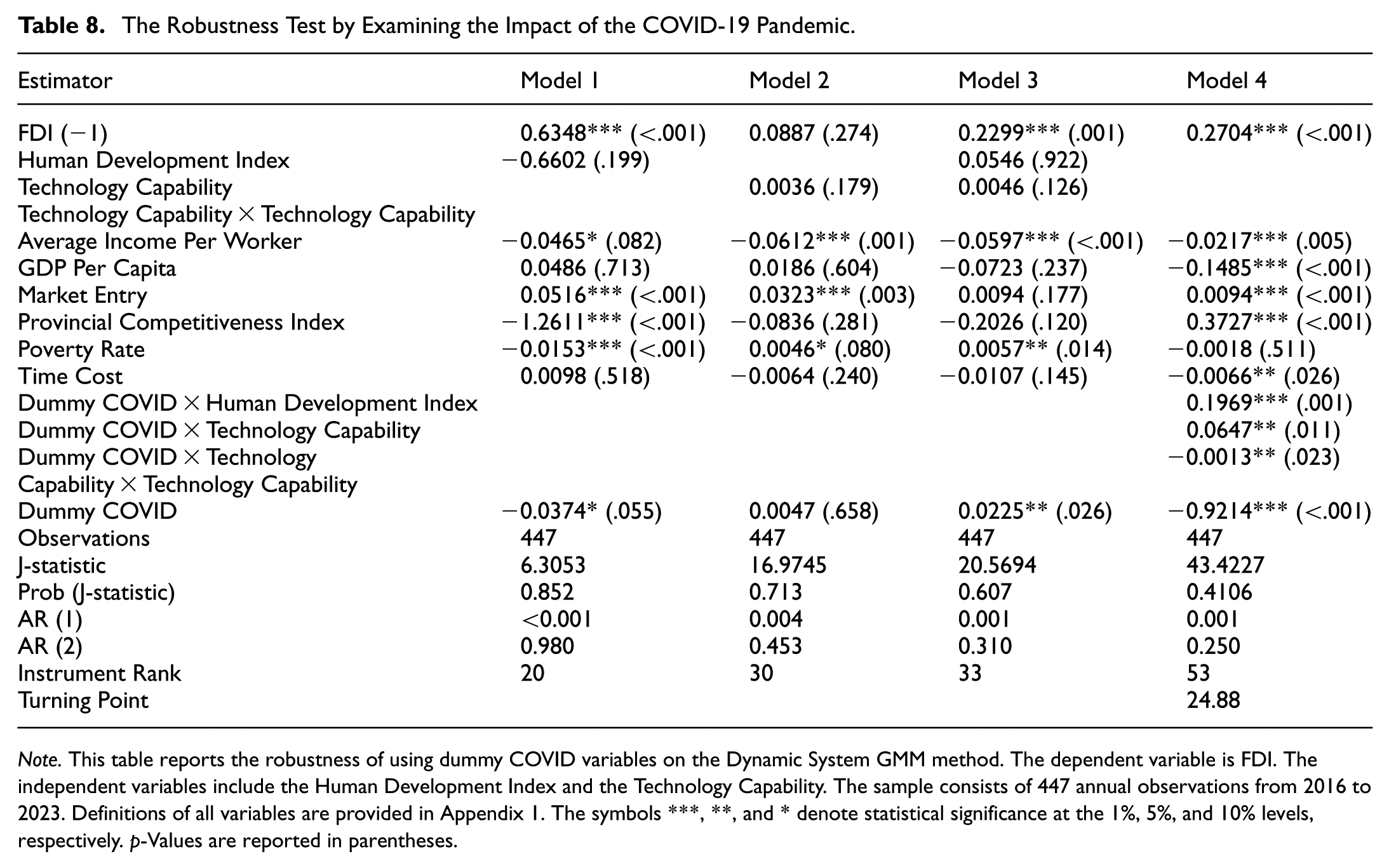
Note. This table reports the robustness of using dummy COVID variables on the Dynamic System GMM method. The dependent variable is FDI. The independent variables include the Human Development Index and the Technology Capability. The sample consists of 447 annual observations from 2016 to 2023. Definitions of all variables are provided in Appendix 1. The symbols ***, **, and * denote statistical significance at the 1%, 5%, and 10% levels, respectively. p-Values are reported in parentheses.
Conclusion
This study investigates the role of innovation and the Human Development Index in attracting FDI in Vietnam. Using an unbalanced panel of 63 provinces and cities from 2016 to 2023 with 447 annual observations, we apply the Dynamic System GMM estimator to address potential heteroscedasticity, endogeneity, and autocorrelation issues. The results indicate that the Human Development Index and innovation significantly promote FDI inflows. These findings are consistent with the eclectic paradigm theory and contradict the race-to-the-bottom hypothesis. Moreover, innovation demonstrates an inverted U-shaped effect on FDI, with an optimal level at 22.74. This non-linear pattern aligns with the eclectic paradigm, race-to-the-bottom, and product life cycle theories. Finally, robustness tests confirm the reliability of the main results.
The empirical results support policymakers in Vietnam and other developing nations in attracting foreign investments sustainably at the local level. The study confirms that the Human Development Index is a key factor in attracting FDI, implying that promoting human development can become a strategic tool to enhance foreign investment attractiveness. To improve the quality of the labor force, the government should invest more heavily in education at all levels, focusing on higher education and vocational training in science, technology, engineering, and mathematics. Programs should also emphasize foreign language proficiency, digital literacy, and soft skills such as teamwork and problem-solving, which multinational enterprises highly value. Second, governments may foster collaboration between universities, vocational institutions, and FDI enterprises to ensure training programs are aligned with industry needs, including internships, joint research, and curriculum co-design. Third, improving healthcare services and preventive health programs is necessary to enhance labor productivity and life expectancy, contributing to a healthier and more resilient workforce. Moreover, the government should integrate Human Development Index indicators into evaluating provincial governance and FDI attraction strategies, and prioritize policies that reduce regional disparities in education, healthcare, and human capital development.
The results also suggest that innovation and technological capability play a critical role in attracting FDI in Vietnamese provinces and cities, with an inverse U-shaped relationship and an optimal level of 22.74, to make the following policy recommendations. For provinces with lower technological capability than the optimal level, such as Bac Lieu, Ben Tre, Dong Thap, Dak Lak, Kon Tum, Lai Chau, and Thai Nguyen, it is important to continue prioritizing investment in Research and Development (R&D), human resource development, and the establishment of specialized innovation centers, laboratories, and modern technology equipment. In addition, these provinces should actively promote international technology transfer through start-up incubation programs, public–private partnerships, and targeted tax incentives for FDI projects that engage in local R&D. Policy should also focus on developing technology parks and industrial clusters with adequate digital and physical infrastructure, strengthening university–industry linkages to improve skills and applied research, and enhancing intellectual property protection to facilitate commercialization. In the longer term, workforce training in science, technology, engineering, and mathematics and vocational programs aligned with FDI firms’ needs, together with green and sustainable technology incentives, will help these provinces deepen their technological capacity, increase their attractiveness to quality FDI, and ensure alignment with broader regional development strategies.
For provinces and cities with technological capability levels already above the optimal level, such as Ho Chi Minh City, Ha Noi, Bac Ninh, Da Nang, Hai Phong, Quang Ninh, Dong Nai, and Kien Giang, policy orientation should focus on allocating resources more strategically. Besides large-scale investment in basic technological infrastructure, these localities should strengthen complementary factors such as efficient logistics and transport systems and business environment reforms that reduce investor transaction costs. In addition, promoting supporting industries and local supply chains can lower production expenses and enhance linkages with foreign enterprises. Upgrading logistics infrastructure and enhancing international connectivity through modern ports, airports, and cross-border transport corridors can improve integration with global production networks. Moreover, local governments should allocate resources toward fostering advanced R&D, supporting innovation-driven start-ups, and promoting technology commercialization. Greater emphasis on sustainable technologies, institutional reforms, and intellectual property protection can further strengthen investor confidence. Moreover, facilitating partnerships between local enterprises and multinational corporations will reinforce value-chain linkages and sustain long-term competitiveness in attracting FDI.
This study has several limitations. Using data from Vietnam restricts the analysis to a single country context and does not capture broader international dynamics. Moreover, while system GMM estimation helps address endogeneity, it cannot distinguish between short-run and long-run effects, suggesting that methods such as the Autoregressive Distributed Lag model could be more appropriate. Therefore, future research should incorporate larger and more diverse datasets to enhance generalizability and robustness.
Footnotes
Appendix
Variable Definition.

| Variables | Notation | Definition | Reference |
|---|---|---|---|
| Dependent variables | |||
| FDI | Foreign Direct Investment | The FDI inflows in Vietnamese provinces and cities are compared to provincial GDP in a specific year. | H. T. P. Le et al. (2024), Nguyen et al. (2024), Pham et al. (2025), V. H. Tran et al. (2023) |
| Independent variables | |||
| Human Development Index | Human Development Index | It is designed to measure and compare the average achievements in three basic dimensions of human development: health, education, and standard of living. | Islam and Beloucif (2024), Vi Dũng et al. (2018) |
| Technology capability | Innovation | The technological balance of payments for modern machinery and equipment over the total GDP of each province at a specific time. The higher ratio indicates higher innovation capability. | Liu et al. (2014), Petri (2012) |
| Control variables | |||
| Average income per worker | Average income per worker | Average income per worker represents the mean income earned by one person. | Hong Vo et al. (2021), Josifidis et al. (2020) |
| GDP per capita | Gross domestic product per capita | GDP per capita is gross domestic product divided by midyear population. | Nolan et al. (2019), Sabir et al. (2019) |
| Market entry | Market entry | This index compares the differences in market entry costs for new businesses across provinces. | Pellegrino (2018) |
| Provincial Competitiveness Index | Provincial Competitiveness Index | Evaluates provincial governance and business environment in Vietnam, based on enterprise surveys, and comprises 10 sub-indices reflecting key aspects affecting private sector development. | Nguyen-Huu and Hoang (2025) |
| Poverty rate | Poverty rate | The percentage of the population living below the poverty line reflects the share of people who cannot meet basic needs. | Anetor et al. (2020), Gnangnon (2022) |
| Time cost | Time cost | Measures the amount of time it takes businesses to complete administrative procedures and the frequency and duration of business suspensions for inspections and audits by provincial and municipal government agencies. | Ha et al. (2024) |
Acknowledgements
We thank the handling editor and anonymous reviewers for constructive comments, which helped us develop our manuscript effectively.

Ethical Considerations
Ethical approval is not applicable because this article does not contain any studies with human or animal subjects.
Consent to Participate
Informed consent is not applicable because this article does not contain any studies with human or animal subjects.
Author Contributions
Suu Duy Nguyen (
Funding
The authors disclosed receipt of the following financial support for the research, authorship, and/or publication of this article: This study is supported by Ton Duc Thang University. The authors received no specific grant number for this study.
Declaration of Conflicting Interests
The authors declared no potential conflicts of interest with respect to the research, authorship, and/or publication of this article.
Data Availability Statement
The data that support the findings of this study are available from the corresponding author upon reasonable request.*