




Abstract
In the context of the digital era, e-learning has become an innovative and indispensable component of the educational sector. With the continuous advancement of technology and the widespread adoption of the internet, e-learning has demonstrated its key role in maintaining educational continuity and supporting remote teaching. However, despite the extensive applications and significant advantages of e-learning, the willingness of college students to continue using e-learning platforms is not always high, presenting a challenge for educators and technology developers. Based on the Expectation Confirmation Model, this study examines the influence of perceived educational and emotional support on the continuance intention of e-learning among college students. The researchers conducted a survey using a structured questionnaire randomly among 379 university students from three universities in Henan Province to measure their self-reported responses on six constructs: perceived educational support, perceived emotional support, perceived usefulness, confirmation, satisfaction, and continuance intention. The study uses the Structural Equation Modeling—Artificial Neural Network (SEM-ANN) method to elucidate the non-compensatory and non-linear relationships between predictive factors and e-learning continuance intention. Except for the direct effects of perceived educational support and perceived emotional support on perceived usefulness, which were not significant, all other hypotheses were confirmed. Moreover, according to the normalized importance obtained from the multilayer perceptron, satisfaction (100%) was found to be the most critical predictive factor, followed by confirmation (29.8%), perceived usefulness (28.2%), perceived educational support (22.7%), and perceived emotional support (21.8%). All constructs together accounted for 62.0% of the total variance in college students’ e-learning continuance intention. This study’s adoption of a two-stage analysis approach improved the depth and accuracy of data processing and expanded the methodological scope of educational technology research. It provides direction for future in-depth studies in various environments and cultural contexts.
Plain language summary
Aims and purpose of the research: In conclusion, this study aims to achieve two objectives: (1) In the first phase, to reveal through SEM how perceived educational support(PEdS) and perceived emotional support(PEmS) influence university students’ CI to engage in e-learning, mediated by PU, CON, and SAT; (2) In the second phase, to construct a high-performance predictive model of university students’ CI to engage in e-learning, based on ANN. These findings will provide theoretical and methodological support for interventions in university students’ e-learning and foster the continuity and academic achievement of online learning. Background of the research: In the context of the digital era, e-learning has become an innovative and indispensable component of the educational sector. With the continuous advancement of technology and the widespread adoption of the internet, e-learning has demonstrated its key role in maintaining educational continuity and supporting remote teaching. However, despite the extensive applications and significant advantages of e-learning, the willingness of college students to continue using e-learning platforms is not always high, presenting a challenge for educators and technology developers.Methods and research design: The sample consisted of individuals with more than six months of e-learning experience, and a random sampling method was employed to ensure the representativeness of the sample to the greatest extent. This study investigated their use of e-learning. It was conducted through an online questionnaire platform (https://www.wjx.cn/) for distribution and data collection. The survey link, along with information about the research objectives, data collection methods, and the consent form, was distributed to teachers at the respective schools, who then forwarded all materials to the college students. Additionally, the survey was conducted from April to August 2023, collecting a total of 379 valid questionnaires.
Keywords
Introduction
The rapid advancement of Internet technology has significantly reinforced the role of Information and Communication Technology (ICT) in the educational sector, upending the traditional modes of teaching and learning (Zubaydi et al., 2023). In today’s information era, teachers and students are increasingly reliant on electronic resources to enhance the efficiency of the learning process (Wang, 2023). E-learning has emerged against this backdrop, referring to the method of providing educational content and supporting the learning process outside the traditional classroom environment through digital technology and the Internet (Wang, 2023). However, research indicates that despite the widespread adoption of e-learning systems, students’ enthusiasm for their continued use remains insufficient (Bao, 2020). This phenomenon, where users abandon e-learning systems shortly after initial adoption, known as the “adoption-discontinuation” pattern, suggests that the success of e-learning depends not only on the initial acceptance by users but also on their motivation to continue using it (Mailizar et al., 2021). A thorough analysis of the motives behind students’ continued use of e-learning systems is crucial for educational developers, as it can provide a strategic advantage in global market competition and aid educators and providers in devising more effective educational and market strategies, thereby increasing the actual usage frequency of e-learning systems (X. Wu & Wang, 2018).
Currently, the research domain associated with e-learning systems is concentrated on aspects such as system adoption (Almaiah et al., 2020; Al-Rahmi et al., 2019; Salloum et al., 2019), e-learning policies (Pan et al., 2022; Rajabalee & Santally, 2021), training (Apriani et al., 2021; Siagian et al., 2020; V. Butova et al., 2019), and evaluation (Al-Fraihat et al., 2020; Mastan et al., 2022; Szopiński & Bachnik, 2022). Higher education institutions have gradually recognized and adopted E-learning as a core learning tool (Niu & Wu, 2022; Shen et al., 2022). However, compared to traditional classroom instruction, a major challenge in the e-learning environment is the lack of direct face-to-face interaction, which may lead to isolation, lack of motivation, and even emotional detachment among learners. Consequently, the significance of emotional support and social interaction is increasingly brought to the agenda and has become an issue that cannot be ignored.
Moreover, by providing an encouraging and inclusive learning environment, emotional support can concretely enhance students’ self-confidence and boost their motivation and persistence in learning (Pedrosa et al., 2020). For instance, when students encounter challenges or difficulties during e-learning, timely emotional feedback and encouragement can help them overcome feelings of frustration and maintain a positive learning attitude (He et al., 2023). Research has also shown that through regular online interaction and feedback, students can develop a stronger sense of community belonging, heightening their course satisfaction (SAT) and improving learning outcomes and completion rates (Hernández-Sellés et al., 2019). Furthermore, providing emotional support can also reduce feelings of isolation and alienation in online learning environments, directly influencing students’ course loyalty and engagement (Qi et al., 2019). These details can offer practical strategies for educators and e-learning platform developers to enhance the appeal of e-learning and maintain long-term learner engagement.
In summary, existing literature provides a multidimensional perspective for understanding university students’ continuance intention (CI) in e-learning environments. Yet, there are still some gaps observed in the literature. Firstly, from a theoretical standpoint, previous studies on the CI of e-learning often overlooked the emotional support for students. Compared to traditional classrooms, e-learning environments may induce isolation, lack of motivation, and emotional detachment due to the absence of face-to-face interaction. Therefore, while continually optimizing teaching content and technology, the importance of providing emotional support and promoting social interaction for learners has become increasingly evident. Secondly, from a methodological viewpoint, Structural Equation Modeling (SEM) has been widely used for exploring relationships (X. Wu & Tian, 2021), but empirical evidence suggests that SEM can only identify linear relationships. This is unsuitable for non-linear and non-compensatory relationships between exogenous and endogenous variables. On this basis, Artificial Neural Network (ANN) algorithms have become the ideal choice for analysis and prediction due to their excellent data adaptability, ability to analyze complex non-linear relationships, and high accuracy and robustness in multivariate contexts.
In information system research, the ECM is widely applied to predict users’ CI toward a system, especially demonstrating its effectiveness in exploring the relationship between users’ expectations before and after using the system and their confirmation of those expectations. ECM emphasizes that when considering whether to continue using an information system, users compare their pre- and post-usage expectations and experiences, thereby evaluating their satisfaction (SAT) and influencing their CI. This study chose ECM to explore the factors affecting online learning CI because it considers key factors such as confirmation (CON), attitude (ATT), perceived usefulness (PU), and SAT, all of which are crucial for understanding and promoting college students’ CI toward online learning. By integrating these factors, ECM provides an effective framework for analyzing and explaining the determinants of college students’ CI.
In conclusion, this study aims to achieve two objectives: (1) In the first phase, to reveal through SEM how perceived educational support (PEdS) and perceived emotional support (PEmS) influence university students’ CI to engage in e-learning, mediated by PU, CON, and SAT; (2) In the second phase, to construct a high-performance predictive model of university students’ CI to engage in e-learning, based on ANN. These findings will provide theoretical and methodological support for interventions in university students’ e-learning and foster the continuity and academic achievement of online learning. Based on this, the research questions of the study are as follows:
(1) What factors influence the CI of university students to engage in e-learning?
(2) To what extent do these factors explain the variance in university students’ CI to engage in e-learning?
(3) What is the normalized importance of the factors influencing the CI of university students to engage in e-learning?
Compared to existing studies, this research contributes in three significant ways: Firstly, it uncovers the influence of PEmS on the CI of university students to engage in e-learning, an aspect overlooked in the literature, thereby filling a gap in current research. This discovery emphasizes the importance of emotional support in the e-learning environment, urging educators and platform designers to value the emotional dimension of the learning environment. Secondly, the study employs the SEM-ANN approach to capture linear-nonlinear and non-compensatory relationships between exogenous and endogenous variables. This method better explains the complexity of university students’ CI for e-learning. The application of this method offers a new perspective and tool for analyzing and understanding the motivational behaviors within e-learning environments, showcasing advanced techniques for the analysis of complex data relationships. Lastly, by integrating PEmS with PEdS, the Expectation Confirmation Model(ECM) is expanded, offering a better understanding of the underlying mechanisms that affect the CI of university students in e-learning. This expansion not only enriches the application scope of the Expectation Confirmation Model but also provides a more comprehensive theoretical framework for the field of e-learning, guiding future educational practices and research.
The remainder of this paper is organized as follows: Section two provides a literature review; section three introduces the theoretical model of this study and the hypothesized relationships among the variables; section four describes the methodology employed in this study and the results thereof; section five discusses the implications of the results; and finally, we discuss the limitations of the study and directions for future research, concluding with the study’s conclusions.
Literature Review
E-Learning
E-learning, as an educational form that has risen rapidly in the 21st century (Siddiquei & Khalid, 2022), saw a significant increase in demand for online learning, especially during the COVID-19 period. The annual growth rate of the online education market is expected to reach 16.4% from 2016 to 2023 (Shahzad et al., 2021). E-learning has become a core component of the modern education system, with an increasing number of learners preferring online education. It stimulates students’ interest and willingness to learn (Şahin et al., 2022), and deepens their learning experience. With the development of information technology, the role of e-learning in university education is increasingly prominent, showing great potential (Zheng et al., 2023)
Educational researchers are paying more attention to the effectiveness and continuous application of e-learning, especially the CI of college students toward e-learning (Al Amin et al., 2024). Studies have shown that the CI of college students toward e-learning is a key factor in their acceptance of e-learning (X. Li et al., 2022), making it crucial to explore the CI of college students toward e-learning. In recent years, numerous studies based on various theoretical models such as ECM (Persada et al., 2022), TPB (Wang et al., 2020), ISSM (Al-Adwan et al., 2021), TAM (Al-Adwan et al., 2023), Flow Theory (Tseng et al., 2022), and UTAUT (Samed Al-Adwan et al., 2022) have explored various factors affecting the continuance use of e-learning by college students. For instance, Al-Adwan et al. (2021) combined the Information System Success Model (ISSM) and the Technology Acceptance Model (TAM) to construct an extended model to study the factors influencing the CI of 537 college students toward e-learning. The results show that teacher support, technical system characteristics, and the overall quality of the system are decisive factors for students’ continued use of e-learning platforms. Furthermore, these studies have comprehensively examined multiple factors affecting the CI of e-learning: on one hand, analyzing students’ internal perceptions of e-learning performance, including their evaluations of system’s PU, PEoU, SAT, CON, ATT, and technological fit, etc.; on the other hand, they also explored the quality factors of e-learning, such as system quality, information quality, service quality, course content quality, and self-directed learning ability (Al-Adwan et al., 2021; Samed Al-Adwan et al., 2022) . In addition, the research has also focused on students’ external perceptions of educational support, which includes PEdS, behavioral support, academic support, and PEmS, among other aspects (Al-Adwan et al., 2022; Ma et al., 2023; Sun & Shi, 2022). However, despite the extensive focus on the aforementioned factors by existing studies, they often independently consider students’ perceptions of the functionality of e-learning, the quality factors of e-learning, and the perception of educator support, rarely analyzing these factors comprehensively. Al-Adwan et al. (2021) pointed out that educational support is an important factor affecting students’ CI toward e-learning. This indicates that to more comprehensively understand the CI toward e-learning, it is necessary to consider both students’ functional perceptions of e-learning and their perceptions of the support provided by educators.
ECM
ECM is built upon the Expectation-Confirmation Theory and the Technology Acceptance Model (Bhattacherjee, 2001). This model includes four key constructs: PU, SAT, CON, and CI (Bhattacherjee, 2001). PU describes the user’s cognition of the system’s utility in enhancing work or learning efficiency (Bhattacherjee, 2001); SAT refers to the user’s subjective evaluation of their overall experience after using a product or service (Bhattacherjee, 2001); CON is the user’s perception of the extent to which the expected performance of an information system matches its actual performance (Bhattacherjee, 2001); CI indicates the user’s tendency to continue using the system (Bhattacherjee, 2001). In past research, the ECM has been applied in multiple domains, such as e-learning systems (Cheng, 2021; Xu et al., 2024), e-government (Hidayat-ur-Rehman et al., 2020; Veeramootoo et al., 2018), and mobile applications (Hsu & Lin, 2016; Tam et al., 2020), and it has been expanded with additional external constructs and integrated with other theoretical frameworks to further predict CI (Table 1).
Application Research of ECM.

Table 1 indicates that numerous scholars have conducted extensive research based on the ECM in the educational learning domain. Firstly, the existing research contexts include online learning (L. Li et al., 2022; Meng & Li, 2024), online learning systems (Alam et al., 2022; X. Li et al., 2022), blended learning (H. Yang et al., 2023; H. Yang et al., 2023), learning management systems (Ashrafi et al., 2022), and MOOCs (Dai et al., 2020). Secondly, the external variables related to ECM include CUR and ATT (Dai et al., 2020), SN (L. Li et al., 2022), PE (Ashrafi et al., 2022), EM and IM (Meng & Li, 2024), and AS (H. Yang et al., 2023). Lastly, scholars have also attempted to integrate ECM with other models such as TAM (Ashrafi et al., 2022), TPB (L. Li et al., 2022), ISSM (H. Yang et al., 2023), SDT (Meng & Li, 2024), and ISC (H. Yang et al., 2023), forming new models aimed at more deeply explaining the factors affecting CI. Based on these research findings, this paper adopts the ECM to explore the factors influencing university students’ CI to engage in e-learning.
PEdS
PEdS has increasingly become a core issue in the field of education. This support implies providing students with necessary learning resources, strategies, and feedback through specific academic assistance (Federici & Skaalvik, 2014). Previous studies have pointed out various benefits brought by educational support in e-learning (Raspopovic et al., 2017; X. Wu & Wang, 2020). These advantages include but are not limited to, accommodating learners’ differences(Huang & Chiu, 2015), emphasizing students’ autonomous learning (Joshua et al., 2016), reducing the limitations of traditional face-to-face instruction (Chang, 2016), and increasing student-expert interaction (Salehudin, 2021). Indeed, due to the rapid advancement of modern educational technologies, various educational support methods can now be implemented more conveniently.
On the other hand, based on the Multimodal Learning Analytics Model (Di Mitri et al., 2018), integrating different learning modes is central to the perception of educational success. This theory posits that multisensory input can enhance learning effectiveness (Chango et al., 2021). Given this backdrop, the benefits of multisensory learning methods for university students in the digital age appear particularly significant. Therefore, scholars have assessed the effectiveness of different e-learning systems in providing learning support, established standards for implementing e-learning, and constructed and optimized e-learning models suitable for application at all levels of education (Aslam et al., 2021; Chang, 2016; Mastan et al., 2022). Overall, PEdS has become a compelling direction in educational research, with profound implications for promoting students’ learning outcomes.
PEmS
PEmS has gradually gained widespread attention in the fields of mental health and education. This support can be understood as offering compassion, friendliness, encouragement, respect, care, and other non-academic assistance (Federici & Skaalvik, 2014). Furthermore, emotional support plays a vital role in learning (Meyer & Turner, 2002), as it can encourage and comfort learners and enhance their well-being when facing negative emotions.
In recent years, researchers increasingly focus on PEmS (Brown & Shenker, 2021; S. Liu et al., 2021; Romano et al., 2021). On one hand, numerous scholars have revealed the significance of emotional support in students’ e-learning. According to the theory of emotional regulation, the core components of PEmS include emotional cognition, self-awareness, and social support, among others Martinez (2001). For example, the study by G. Yang et al. (2022) explored the impact of PEmS on college students’ SAT with English online learning. The results showed that the more PEmS provided by teachers, the higher the students’ CON for online learning, significantly enhancing their learning SAT. Similarly, combining the SCT and the TAM, a survey conducted by He et al. (2023) on 512 college students revealed that perceived PEmS significantly influenced their perceptions of the usefulness and ease of use of e-learning, which further affected their ATT and CI to use it. On the other hand, researchers have also delved into the relationship between emotional support and educators. Indeed, with increasing societal pressures and heightened awareness of mental health, emotional support and management have become particularly crucial in key areas such as education and career development. During this time, positive and negative emotions could significantly impact the transformation of educational workers (Naylor & Nyanjom, 2021). Furthermore, students can receive PEmS from teachers, parents, and friends during the online learning process. Such support has a significant impact on their emotional state, engagement in learning, and CI (Ma et al., 2023). In summary, PEmS has become an indispensable area of research and application in mental health and education.
Hypothesis
PEdS, PU, and CON
PEdS refers to students’ belief that educators (such as teachers or tutors) provide them with resources and assistance conducive to academic success (Federici & Skaalvik, 2014). When students PEdS (e.g., teachers explaining problems), they tend to engage more actively in learning and develop skills that enhance the perceived educational value. Consequently, multiple studies have proven that PEdS can positively influence PU (Federici & Skaalvik, 2014; He et al., 2023). For example, based on the TAM and Social Cognitive Theory, He et al. (2023) found in their exploration of the factors affecting the CI of college students’ online learning that PEdS significantly positively influences PU. Federici and Skaalvik (2014) examined the relationship between substantial support from mathematics teachers and student effort, finding that when students feel supported educationally, they are likely to engage more actively in learning, thereby enhancing PU.
Furthermore, researchers have found that PEdS can positively impact students’ CON of e-learning (W. Liu et al., 2019; Maheshwari & Kha, 2022). For instance, Maheshwari and Kha (2022) investigated the relationship between educational support and entrepreneurial intentions among Vietnamese university students, discovering that when students feel educationally supported, they have a higher degree of CON regarding their entrepreneurial intentions. Based on Organizational Support Theory, W. Liu et al. (2019) explored how PEdS affects user interaction and co-creation of value, and subsequently continuous engagement, finding that users’ PEdS positively influences their degree of CON. Therefore, based on existing research, this study proposes the following hypotheses:
H1: In using e-learning, PEdS by university students significantly positively affects PU.
H2: In using e-learning, PEdS by university students significantly positively affects CON.
PEmS, PU, and CON
PEmS is the extent to which students feel that their emotional needs are understood, cared for, and respected (Federici & Skaalvik, 2014). This support is for directly addressing issues related to course learning and alleviating stress and other adverse experiences during the e-learning process. Adequate emotional support can reduce the psychological burden required to cope with negative emotions and lessen the challenges of adapting to e-learning, thereby improving learning efficiency and outcomes and strengthening its PU (C. Li et al., 2022; Mireles-Rios et al., 2020). For instance, C. Li et al. (2022) explored the factors influencing users’ CI in online health communities from a social support perspective, finding that users’ PEmS significantly positively affected PU. Mireles-Rios et al. (2020) investigated the impact of perceived discrimination and emotional support on the academic performance of Latino male and female students, showing that teachers’ emotional support helped mitigate the negative impact of discrimination on Latino male academic performance, thereby enhancing PU.
Furthermore, researchers have found that PEmS can significantly positively affect students’ level of CON (J. Liu & Wang, 2021; Mittal et al., 2007). For example, based on the Expectation confirmation theory (ECT), J. Liu and Wang (2021) studied the factors affecting the CI to use online mental health communities. They found that when users felt emotionally supported, they had a higher degree of CON of the community platform. Mittal et al. (2007) examined the internet usage rates and influencing factors of adolescents with personality disorders, indicating that adolescents’ PEmS positively affected their level of CON. Based on existing research, this study proposes the following hypotheses:
H3: In using e-learning, PEmS by university students significantly positively affects PU.
H4: In using e-learning, PEmS by university students significantly positively affects CON.
CON, PU, and SAT
After using e-learning tools and resources, if university students find that these tools and resources meet their learning needs and expectations, they are more likely to PU in e-learning (R. Li, 2021; Zhang et al., 2020). R. Li (2021) used an extended ECM to investigate the factors affecting the CI of Chinese English learners using an Automated Writing Evaluation (AWE) tool, finding that CON directly affects learners’ PU of AWE. Zhang et al. (2020) added the variables of time distortion and focused attention on the ECM to explore Chinese university students’ SAT and CI regarding virtual and remote laboratories, discovering that the higher the students’ level of CON, the higher their PU.
Moreover, when the expectations of university students are CON in e-learning, they are more likely to be SAT with this mode of learning and willing to continue using it. Thus, CON can also significantly positively affect students’ SAT with e-learning (Sasono et al., 2023; Suzianti & Paramadini, 2021). Sasono et al. (2023) examined the CI of users after the gamification in e-learning, finding that if gamified users have increased CON in e-learning, their SAT with e-learning also increases. Based on the Information System Expectation-Confirmation Model (IS-ECM) and the Information System Success Model, Suzianti and Paramadini (2021) added the factor of teachers’ self-efficacy to explore the factors influencing teachers’ continuance use of e-learning post-pandemic determining that CON has a positive effect on teachers’ SAT with using e-learning. Based on existing research, this study proposes the following hypotheses:
H5: In using e-learning, CON by university students significantly positively affects PU.
H6: In using e-learning, CON by university students significantly positively affects SAT.
PU, SAT, and CI
Numerous studies have shown that PU is an important predictor of student SAT with e-learning systems (Al-Hamad et al., 2021; Nartanti et al., 2020). Al-Hamad et al. (2021) combined the ECM with the TAM to explore the impact of fear during the COVID-19 pandemic on the technology adoption of teachers and students. The results indicated that the higher the students’ PU, the more SAT they were with the mobile learning platform. Nartanti et al. (2020) investigated the factors related to graduate students’ CI to learn and found that PU of e-learning positively influenced their SAT.
When university students perceive that e-learning tools and resources can help them achieve their learning goals more effectively, they are more inclined to continue using them. Therefore, PU can significantly influence students’ CI to use e-learning systems (Sasono et al., 2023; Widjaja & Widjaja, 2022). Based on ECM, Sasono et al. (2023) investigated the impact of gamification in e-learning on users’ CI, finding that the higher the users’ PU, the more likely they were to continue using the e-learning system. Using a modified version of the UTAUT model, Widjaja and Widjaja (2022) examined the factors influencing graduate students’ intention to use digital libraries, and the results showed that the students’ PU of the system was an important predictor of their CI. Based on existing research, this study proposes the following hypotheses:
H7: In using e-learning, PU by university students significantly positively affects SAT.
H8: In using e-learning, PU by university students significantly positively affects CI.
SAT and CI
When university students are highly SAT after using e-learning tools and resources, they are more likely to exhibit a CI toward e-learning. Several scholars have proven that there is a positive relationship between students’ SAT with e-learning and their CI (Puriwat & Tripopsakul, 2021; Sasono et al., 2023). Specifically, Puriwat and Tripopsakul (2021) investigated the impact of e-learning quality on SAT and CI among higher education students in Thailand. The results indicated that the students’ SAT significantly affected their intention to continue using the e-learning platform. Sasono et al. (2023) explored the impact of gamification in e-learning on users’ CI based on ECM, finding that SAT directly influenced users’ CI to use e-learning. In this study, the higher the university students’ SAT with e-learning, the stronger their CI. Based on existing research, this study proposes the following hypothesis:
H9: In using e-learning, SAT by university students significantly positively affects CI.
The model and hypotheses involved in this study are illustrated in Figure 1.

Research model.
Methodology
Sample and Data Collection
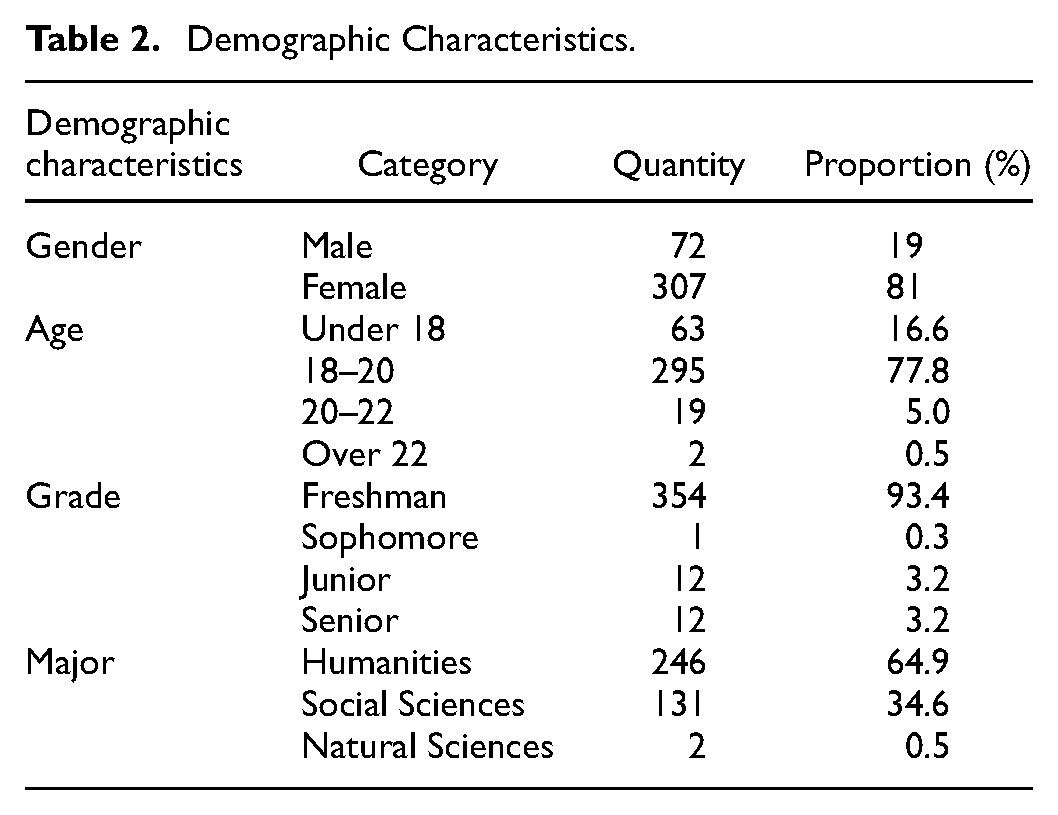
College students from Xinyang Normal University, Zhengzhou Normal University, and Huanghuai University in Henan Province, China, were participants in this study. The sample consisted of individuals with more than 6 months of e-learning experience, and a random sampling method was employed to ensure the representativeness of the sample to the greatest extent. This study investigated their use of e-learning. It was conducted through an online questionnaire platform (https://www.wjx.cn/) for distribution and data collection. The survey link, along with information about the research objectives, data collection methods, and the consent form, was distributed to teachers at the respective schools, who then forwarded all materials to the college students. Additionally, the survey was conducted from April to August 2023, collecting a total of 379 valid questionnaires. Among the 379 respondents, there were 72 males (19%) and 307 females (81%), with the majority aged 18 to 20 years old (77.8%). There were 354 first-year students (93.4%), one second-year student (0.3%), and 12 third-year students (3.2%). The time taken by participants to complete the questionnaire ranged from 5 to 20 minutes. Table 2 displays the complete data of the participants.
Demographic Characteristics.
According to Barclay et al. (1995), when conducting research using PLS-SEM, the minimum sample size should be ten times the number of arrows pointing at latent variables in the PLS path model. In this study, the maximum number of arrows pointing at a latent variable was 3. This means that the minimum required sample size for this study was 30, while the actual sample size was 379. Therefore, the sample size of this study meets the requirements for the research.
Measurement Instruments
The questionnaire survey was divided into two parts: the first part collected demographic information of the participants, and the second part involved the constructs of the study. The variables in this study were assessed using established scales that were appropriately modified to fit the context and objectives of the research. In addition to factors related to demographics, each construct was measured using a Likert five-point scale, ranging from (1) “Strongly Disagree” to (5) “Strongly Agree.”Appendix 1 provides a detailed list of the scales adopted in this study.
Data Analysis
A two-stage approach was applied to validate hypotheses and establish a predictive model for the following reasons: First, According to Sarstedt et al. (2021), Smart-PLS exhibits significant advantages in handling small sample sizes, non-normally distributed data, and complex models. Furthermore, compared to Smart-PLS, AMOS requires the testing of data normality (J. R. Hair et al., 2021) . Based on the above, this study employs Smart-PLS for data analysis, eliminating the need for testing data normality. SEM is a theory-driven approach that can only detect linear relationships between exogenous and endogenous variables through a compensatory model, in which a decrease in one variable could be compensated by an increase in another (Fu et al., 2022; Leong et al., 2018; Niu et al., 2022). However, the relationships between PEdS, PEmS, PU, CON, and SAT with the CI of university students’ e-learning are not merely linear or compensatory. Compared to SEM, ANN can capture both linear and non-linear relationships using non-compensatory models(A. Sharma et al., 2021), leading to higher prediction accuracy. Moreover, due to its “black box” nature, ANN is more suitable for prediction than hypothesis testing. Finally, ANN analysis can further validate the results obtained from SEM. Therefore, this study combines the strengths of both methods, integrating a hybrid approach for hypothesis testing and prediction.
Specifically, in the first phase, SEM was used to reveal the impacts of perceived educational support, perceived emotional support, perceived usefulness, confirmation, and satisfaction on the CI of university students’ e-learning and to identify significant predictors. Then, in the second phase, the significant variables were taken as input neurons in ANN to predict the CI of university students in e-learning, ultimately obtaining the accuracy of the prediction and the ranking of key variables. This two-phase approach allows for a robust examination of the constructs and their predictive power, offering a comprehensive analysis that leverages the strengths of both SEM and ANN methodologies.
Results
Measurement Model
The evaluation of the measurement model requires testing the reliability and validity of the questionnaire. For assessing reliability, this can be done by examining the factor loadings of each construct. According to Byrne (2010), factor loading above 0.70 indicate high reliability. Based on the results in Table 3, which show that the factor loadings for each item exceed 0.70, it is indicated that the constructs have high reliability.
Reliability and Validity of the Model.
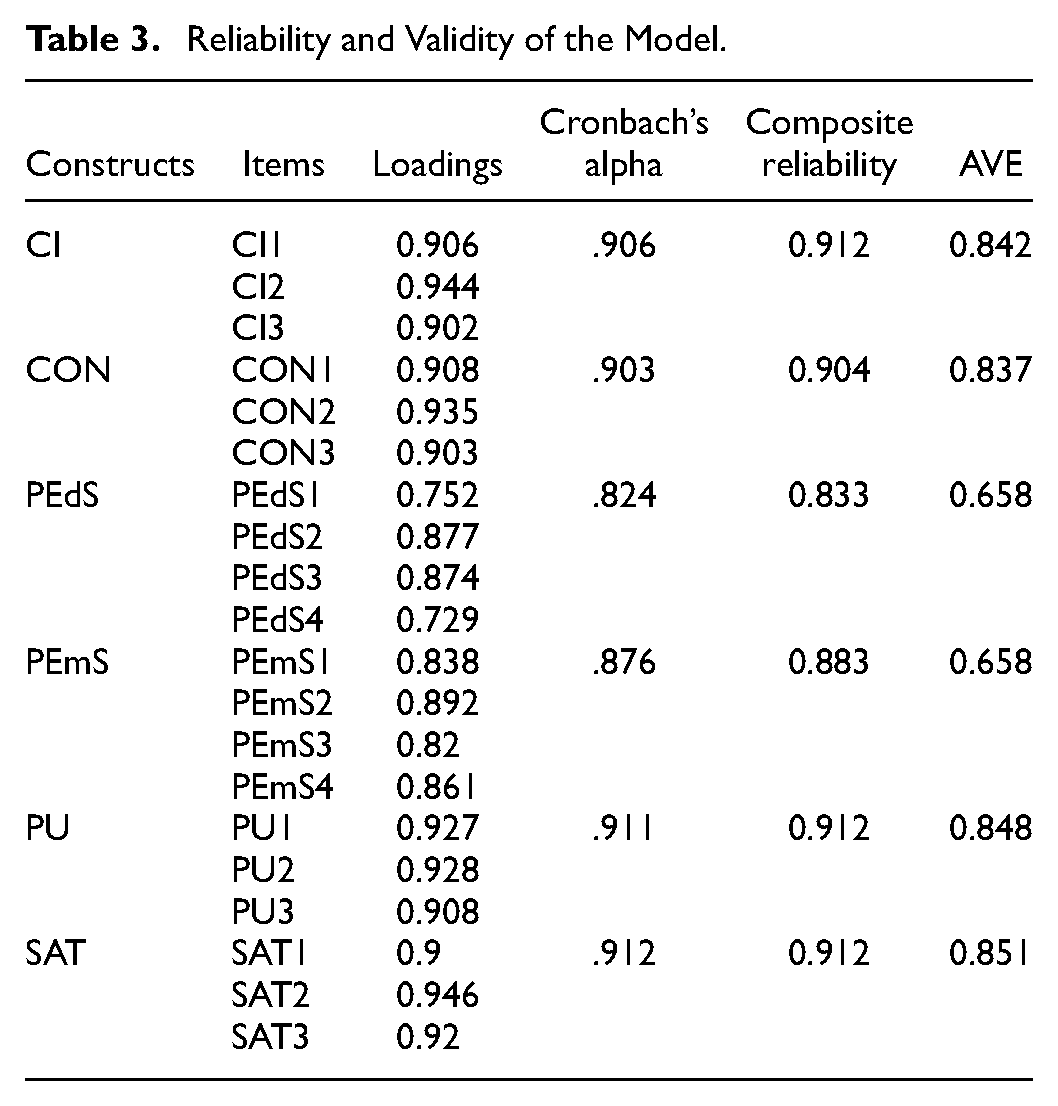
Internal consistency reliability can be assessed through composite reliability and Cronbach’s alpha coefficient. In this study, Cronbach’s alpha coefficients range from .824 to .912, which meets the acceptable standards (0.7 is considered an acceptable threshold). Moreover, according to J. F. Hair et al. (2021), composite reliability between 0.60 and 0.70 are considered acceptable, while values between 0.70 and 0.90 are typically considered satisfactory. In this study, the composite reliability values for all items range from 0.833 to 0.912, which conforms to the standards mentioned above.
Convergent validity is assessed by the Average Variance Extracted (AVE). In this study, the AVE values range between 0.658 and 0.851, exceeding the threshold of 0.5. According to Henseler et al. (2015), this is within an acceptable range, indicating that the results have passed the test for convergent validity.
Discriminant validity refers to the extent to which a construct is truly distinct from other constructs by empirical standards (Zaiţ & Bertea, 2011). The Fornell-Larcker criterion is a method used to test discriminant validity (Fornell & Larcker, 1981). According to this criterion, a construct has discriminant validity if the square root of the AVE for each construct is greater than the correlations of that construct with all other constructs (Henseler et al., 2015). Based on the results shown in Table 4, the square root of the AVE for each construct is greater than its highest correlation with any other construct. Therefore, the results meet the requirements for discriminant validity.
Fornell-Larcker Criterion.

Note. The bold values on the diagonal are the square roots of the AVE. ***p < 0.001.
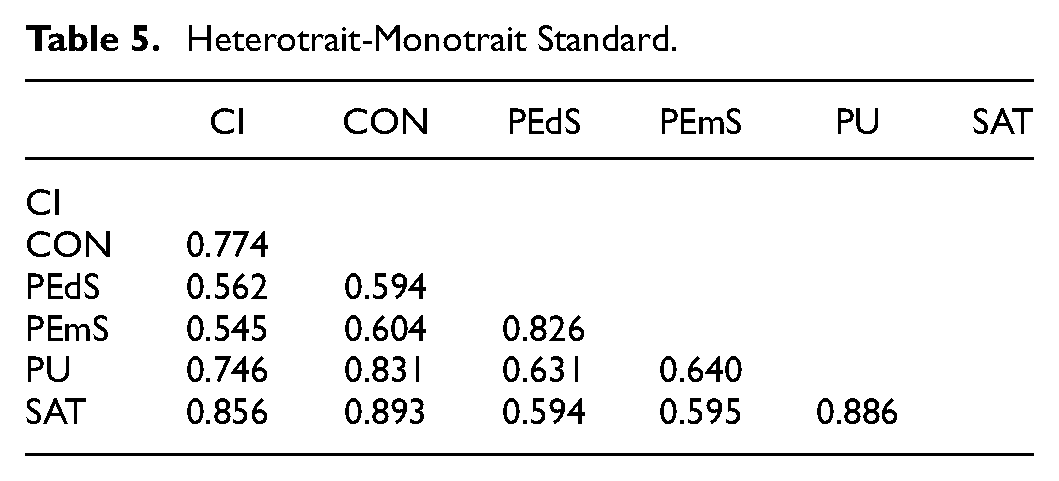
The Heterotrait-Monotrait Ratio (HTMT) is the second criterion for assessing discriminant validity, introduced by Gold et al. (2001). According to the research by T. S. H. Teo et al. (2008), the HTMT value between two constructs should not exceed 0.90. Table 5 demonstrates that when using the HTMT criterion to evaluate the discriminant validity of the measurement model, all values are below the critical threshold of 0.90. Therefore, the results meet the requirements for discriminant validity.
Heterotrait-Monotrait Standard.
According to the standard of cross-loading, an indicator’s outer loading on the associated construct should be greater than any of its cross-loadings (i.e., its correlation) on other constructs (J. F. Hair et al., 2021). Table 6 shows that the outer loadings of all facets are greater than the correlation coefficients of the indicators with other facets. Therefore, all constructs of this study demonstrate discriminant validity.
Discriminant Validity—Cross Loadings.

Note. The bold values are the outer loadings of the construct. ***p < 0.001.
Structural Model
For the structural model analysis of this study, multiple indicators can be utilized, including tests for multicollinearity, significance tests of path coefficient estimates, and the coefficient of determination (R2), among others. These indicators assist in assessing the reliability and explanatory power of the model.
Collinearity Test
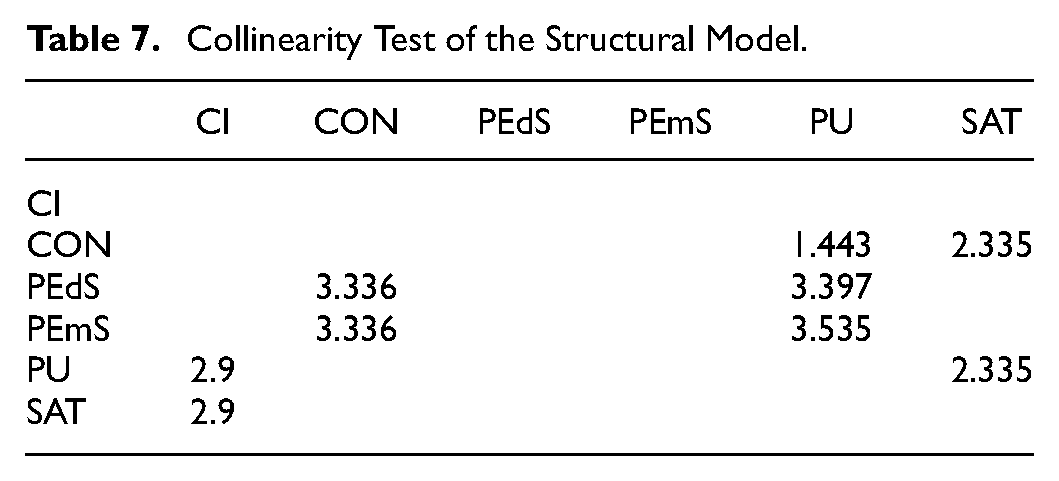
In line with J. R. Hair et al. (2021) recommendations, a collinearity test can be conducted to determine the presence of multicollinearity issues within the model. By empirical rule of thumb, VIF is less than 3.3, which shows an excellent value (Diamantopoulos & Siguaw, 2006). VIF is less than five, so no collinearity is commonly accepted (J. F. Hair et al., 2021). Table 7 shows that the VIF values for all variables range from 1.443 to 3.535, suggesting that multicollinearity is not an issue in this study.
Collinearity Test of the Structural Model.
Path Hypothesis
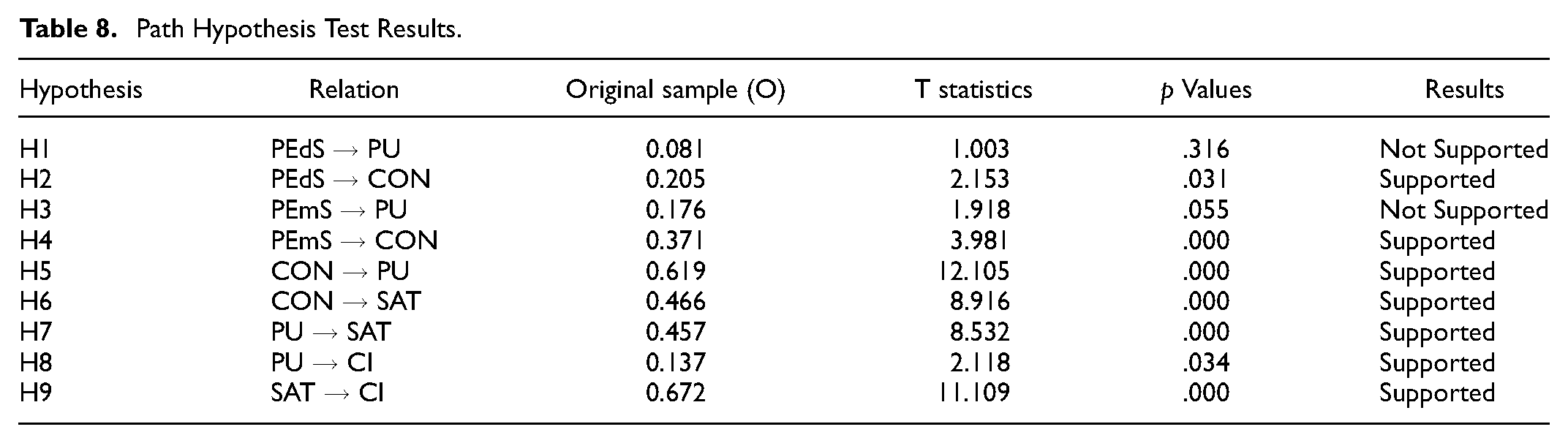
In the structural model, significance testing aims to determine the impact of exogenous variables on endogenous variables. Table 8 indicates that PEdS (β = .205; t = 2.153; p = .031) and PEmS (β = .371; t = 3.981; p = .000) have a significant positive influence on CON, thus hypotheses H2 and H4 are supported. CON (β = .619; t = 12.105; p = .000) significantly positively influences PU. Hence, H5 is supported. Both CON (β = .466; t = 8.916; p = .000) and PU (β = .457; t = 8.532; p = .000) are significant predictors of SAT, validating hypotheses H6 and H7. PU (β = .137; t = 2.118; p = .034) and SAT (β = .672; t = 11.109; p = .000) significantly positively influence CI, supporting hypotheses H8 and H9. However, PEdS (β = .081; t = 1.003; p = .316) and PEmS (β = .176; t = 1.918; p = .055) do not have a significant positive correlation with PU, thus hypotheses H1 and H3 are not supported.
Path Hypothesis Test Results.
R2
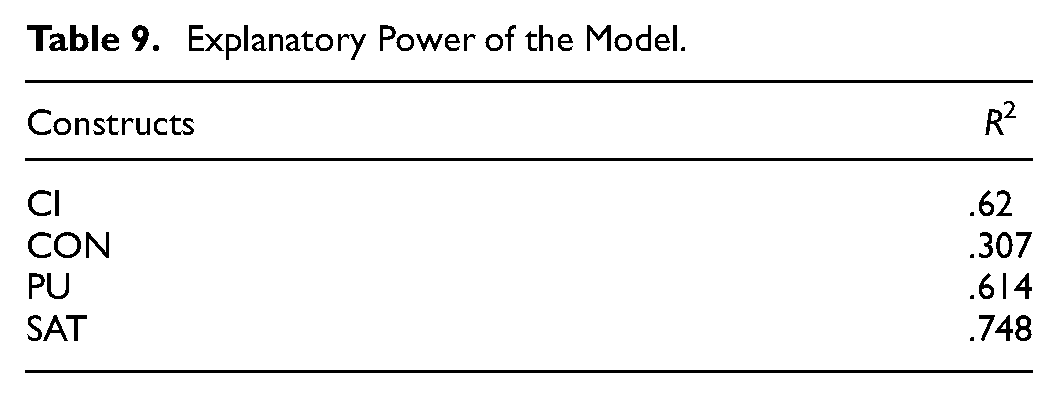
R 2 is used to measure the extent of the variance in the dependent variable that is predictable from the independent variables. According to the standards set by Chin (1998), R2 values can be interpreted as strong (.67), moderate (.33), and weak (.19). Table 9 shows that the R2 for the CI to use e-learning is .62, which is between moderate to high level, indicating that 62% of the variance in this endogenous latent variable can be explained.
Explanatory Power of the Model.
Common Method Bias (CMB)
CMB refers to a type of non-causal association among sample data in research due to the use of the same method, timing, survey tools, or the subjective judgment of researchers. This association can interfere with the accuracy of research findings, making the observed associations possibly spurious (MacKenzie & Podsakoff, 2012). The assessment of CMB is conducted through two approaches. First, Harman’s single-factor test indicates that no single factor accounts for most of the variance (Podsakoff et al., 2003). The results show that the largest single factor explains 25.187% of the variance, significantly below the critical threshold of 50% (Podsakoff et al., 2003). Secondly, the marker variable technique involves adding a theoretically unrelated marker variable to the study model to test for common method bias (Lindell & Whitney, 2001). The highest shared variance estimate with other factors is 0.0155 (1.55%), which is considerably low (Johnson et al., 2011). Therefore, based on these two tests, it can be inferred that no significant common method bias is present.
Artificial Neural Network Analysis
In the next phase, following the research by Liébana-Cabanillas et al. (2017), this study will use the significant factors from the Partial Least Squares Structural Equation Modeling (PLS-SEM) path analysis as input neurons for an ANN model (see Figure 2). The application of ANN is justified due to the non-normal distribution of data, non-linear relationships between exogenous and endogenous variables, and ANN’s robustness to noise, outliers, and smaller sample sizes. Moreover, ANN is adaptable to non-compensatory models, where a decrease in one factor doesn’t need to offset an increase in another. The ANN analysis was implemented using IBM’s SPSS neural network module. The ANN algorithm is capable of capturing both linear and non-linear relationships without the need for a normal distribution (A.-C. Teo et al., 2015). It learns through training, using a feedforward-backpropagation (FFBP) algorithm for predictive analysis (Taneja & Arora, 2019). Multilayer perceptrons and sigmoid activation functions were employed for the input and hidden layers (S. K. Sharma et al., 2019). Through multiple rounds of the learning process, errors can be minimized to further improve prediction accuracy (El Idrissi et al., 2019). Like Leong et al. (2018), this study used 70% of the sample for the training process and the remainder for the testing process. To avoid the potential of over-fitting, a 10-fold cross-validation procedure was conducted, yielding Root Mean Square Error (RMSE) results (Ooi & Tan, 2016). Table 10 indicates that the average RMSE values for the training and testing processes are 0.0820 and 0.0830, respectively, confirming that the model fits very well.
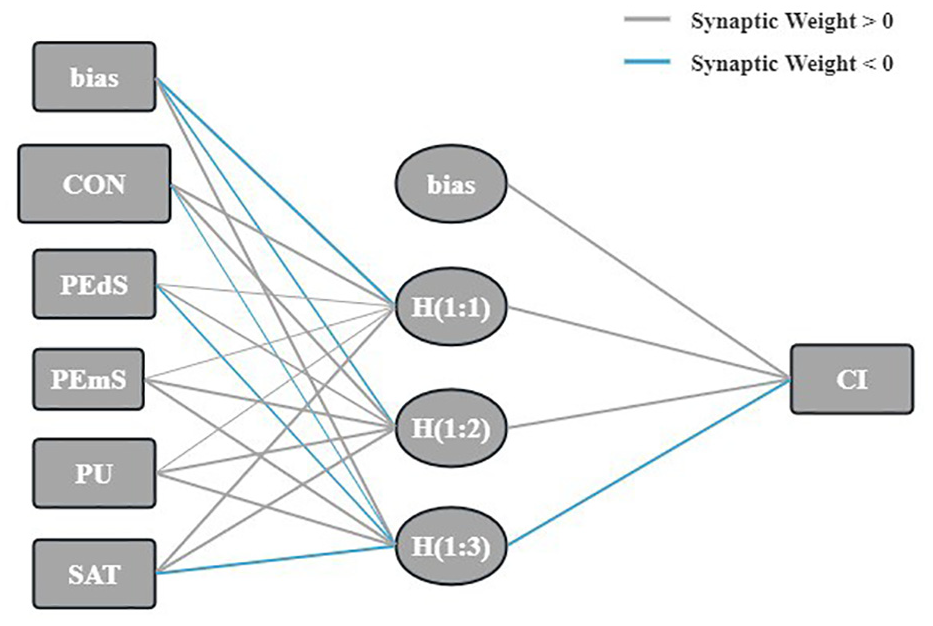
ANN diagram.
Root Mean Square of Error Values.
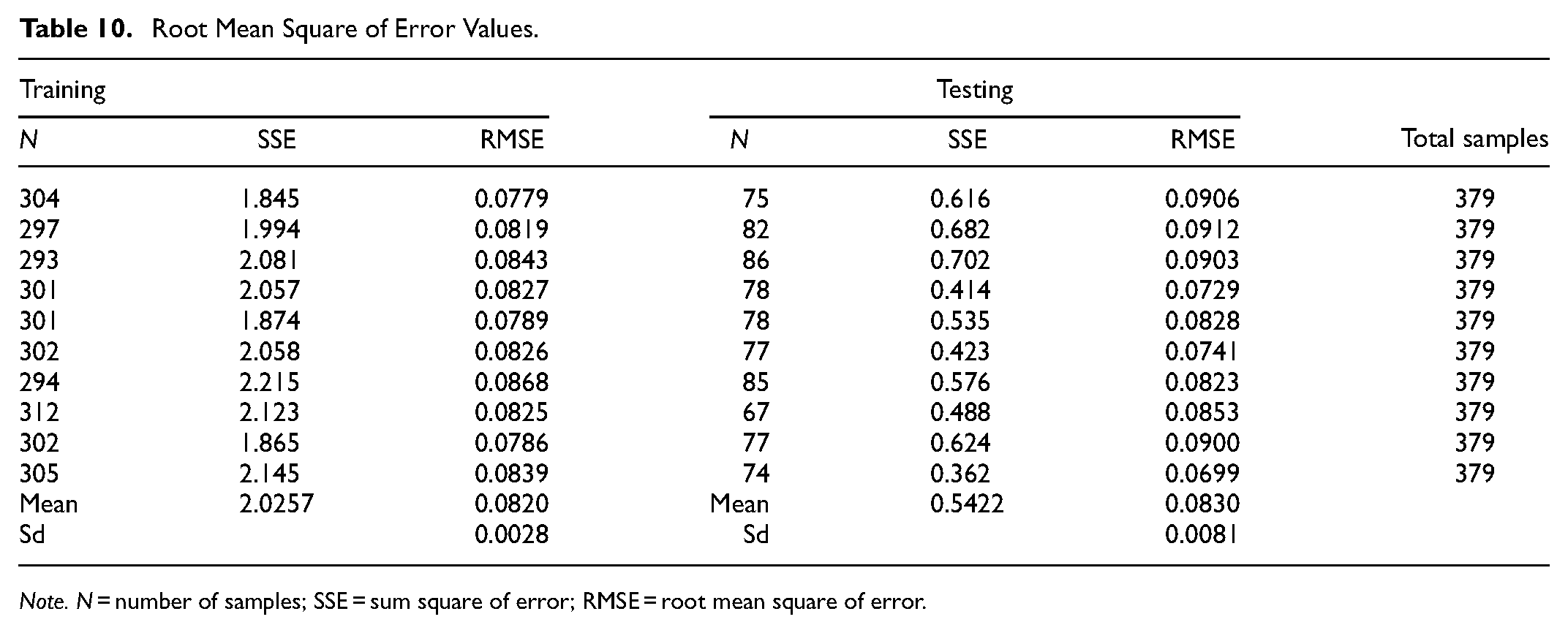
Note. N = number of samples; SSE = sum square of error; RMSE = root mean square of error.
To measure the predictive power of each input neuron, a sensitivity analysis was conducted (as shown in Table 11), where the relative importance of these neurons was obtained by dividing their importance by the maximum importance, resulting in normalized importance, which is presented in percentage form (Karaca et al., 2019). The results indicate that SAT is the most critical predictive factor, with a normalized importance of 100%. CON follows this with a normalized importance of 29.8%, PU at 28.2%, PEdS at 22.7%, and PEmS at 21.8%.
Sensitivity Analysis.

Note. CON = confirmation; PEdS = perceived educational support; PEmS = perceived emotional support; PU = perceived usefulness; SAT = satisfaction.
Discussion
This study explores the impact of PEdS and PEmS on university students’ CI to use e-learning. A systematic review of the existing literature posited that factors such as PEdS, PEmS, PU, CON, and SAT significantly influence university students’ CI to engage with e-learning. The proposed research framework was assessed using Smart-PLS. Most of the research hypotheses were validated, collectively explaining 62.0% of the variance in university students’ CI to use e-learning. In subsequent chapters, a detailed discussion of the results related to the initially proposed research questions will be conducted.
In e-learning, PEdS does not substantially enhance the students’ PU. This finding is inconsistent with the results of He et al. (2023), who found that PEdS has a significant positive effect on PU among Norwegian high school students. This discrepancy may be due to significant differences in learning methods and styles among university students. Therefore, despite educational support, university students may still choose the most suitable learning method based on individual preferences and needs. Furthermore, with the widespread dissemination of e-learning resources and tools, university students have gradually developed strong autonomous learning abilities. When assessing the effectiveness of learning tools or resources, they tend to rely more on their experience and judgment than external educational support.
The data suggests that PEdS in e-learning significantly correlates with increased students’ CON. This conclusion aligns with the findings of W. Liu et al. (2019). In this study, on the one hand, modern university students, born in the age of information technology, have developed a stronger dependency and identification with electronic learning tools due to their daily interactions with technology. The e-learning environment, with its immediate feedback, personalized learning paths, and rich resources, makes it easier for university students to CON the value and effectiveness of their learning. On the other hand, many e-learning platforms incorporate social features, allowing students to communicate online and collaborate with peers or teachers. This interactive educational support enhances the students’ deep understanding and CON of the learning content.
PEmS during e-learning is not observed to markedly improve the students’ PU of the platforms. This finding is contrary to Mireles-Rios et al. (2020), who suggested that emotional support from teachers helps mitigate the negative impact of discrimination on the academic performance of Hispanic males, thereby enhancing PU. This inconsistency may be because modern universities exhibit strong adaptability to electronic technologies. This adaptability leads students to quickly accept and integrate new technologies, making emotional support less of a primary factor in their learning. Additionally, with the increasing diversity of e-learning resources, university students have greater autonomy in choice. Therefore, when e-learning resources lack emotional support, students are more likely to seek and switch to other resources that better suit their needs, which diminishes their importance on PEmS.
It is evident from the findings that PEmS significantly elevates the level of CON perceived by students engaging with e-learning systems. This outcome has been validated by J. Liu and Wang (2021), who argue that users of online mental health communities experience a higher level of CON with the platform when they feel emotionally supported. In this study, on the one hand, when university students feel that e-learning tools provide emotional support, they often more actively engage emotionally with the learning content, leading to greater CON and affirmation of what is learned and the methods used. On the other hand, the need for emotional support may be sparked by the psychological response of university students when faced with learning challenges and difficulties (Mittal et al., 2007). Suppose students feel that the emotional support within e-learning tools helps them cope more effectively with learning challenges. In that case, this positive perception is likely to deepen their acceptance of the tool. Therefore, the higher the emotional support perceived by university students, the stronger their CON of the e-learning tools.
University students perceive a significant positive impact of CON on PU when using e-learning, a finding also corroborated by Zhang et al. (2020). They found that the higher the degree of CON Chinese university students have toward virtual and remote laboratories, the higher their PU of these facilities. E-learning typically features real-time feedback mechanisms. When students receive immediate feedback that CONs their learning outcomes, it directly enhances the PU of the tools they are using. Furthermore, when e-learning tools meet or exceed students’ expectations, their level of CON increases, which naturally strengthens their PU of these tools. This enables students to focus more on academic content rather than the technical barriers of the learning tools. Therefore, if university students have a higher degree of CON of e-learning tools, their PU of these tools for academic purposes is correspondingly enhanced.
There is a noticeable correlation between CON and the SAT levels reported by university students in e-learning. This conclusion is consistent with the findings of Suzianti and Paramadini (2021), who noted a positive influence of CON on teachers’ SAT with e-learning. In the current study, on the one hand, when university students find that the functionalities of the e-learning platforms meet their learning needs and help them study effectively, the CON of such functionalities increases, thereby enhancing their SAT. Additionally, e-learning, through its interactive elements and instant access to resources, provides a vivid and convenient learning experience. University students can adjust their learning paths and pace more freely. The CON of this autonomy further strengthens their SAT.
The research indicates a noteworthy positive correlation between the PU of e-learning and the SAT it brings to university students. This agrees with the conclusions drawn by R. Li (2021), who posited that perceived usefulness directly affects the satisfaction of Chinese English learners with e-learning platforms. E-learning platforms offer many practical features and tools, such as video playback, interactive quizzes, and forum discussions. When university students perceive these functionalities as substantially helpful to their learning process, they tend to be more satisfied with this learning mode. Moreover, e-learning platforms often provide courses and case studies related to real-world applications, enabling students to better integrate what they learn with practical applications. Perceiving such usefulness enhances the students’ satisfaction.
The PU of e-learning is significantly linked to the students’ CI to utilize these digital learning environments. This finding aligns with the research results of Widjaja and Widjaja (2022), who discovered that graduate students’ PU of digital libraries significantly predicts their CI to use them. In this study, when university students PU of e-learning tools, they are more likely to engage with and adapt to the technology actively, which further motivates their long-term use of e-learning tools to support their academic progress. Furthermore, university students’ perceptions of the practicality of e-learning tools may be influenced by their emphasis on autonomous learning and flexibility. If they believe the tool allows them to plan their learning process more autonomously and flexibly, this positive view could motivate them to use it more extensively. Hence, the stronger the PU of e-learning among university students, the stronger their motivation to continue using it.
Student SAT with e-learning plays a critical role in fostering their CI to engage with such educational technologies. This finding is supported by the study of Puriwat and Tripopsakul (2021), who argued that the SAT of Thai higher education students significantly positively affects their CI to use e-learning platforms. On the one hand, university students’ SAT increases due to the time saved by the convenience of e-learning platforms, which enhances learning efficiency. This improvement in efficiency further strengthens their CI using such platforms. Additionally, e-learning platforms enable students to instantly understand their learning progress and outcomes. This real-time feedback ignites their enthusiasm for learning; their SAT also increases when they feel their own growth and progress. Such positive experiences deepen their trust and reliance on the platform, creating a sustained and positive feedback loop.
Implications
Theoretical Implications
Firstly, this study enhances the comprehensive understanding of the factors influencing the CI to use e-learning among college students. Specifically, while most research on e-learning emphasizes that educational functionality is the central factor driving its use, this study proposes that the e-learning environment should also satisfy students’ psychological needs. Therefore, this research introduced PEdS and PEmS, investigating their impacts on the CI to use e-learning. The results indicate that although both forms of support significantly positively affect students’ CON, their influence on enhancing PU is not apparent.
Secondly, this study employs the SEM-ANN approach to capture the linear-nonlinear and non-compensatory relationships between exogenous and endogenous variables, offering a new methodological perspective for e-learning research. The combination of these methods enhances the depth and accuracy of data processing and expands the methodological scope of educational technology research. This integrated approach has improved understanding of e-learning behavioral patterns, providing a better explanation of the complexity of college students’ CI to use e-learning and offering more comprehensive insights for future educational practice and policy-making.
Practical Implications
The main purpose of this study is to explore the factors that influence college students’ CI to use e-learning. Based on the results of this study, the practical implications are as follows:
Firstly, for educational institutions and educators, a thorough exploration of how educational and emotional support affects students’ CI to use e-learning allows for a deeper understanding of student’s actual needs and preferences in an e-learning environment. This can lead to the provision of a richer and more personalized learning experience. The study’s findings point to the significant impact of educational and emotional support on the student e-learning experience, suggesting that educational institutions and educators must prioritize professional development and teacher training. This involves improving teachers’ skills in using e-learning tools and, more importantly, fostering their empathy, communication abilities, and student guidance skills. Additionally, providing relevant resources and training is crucial to enable teachers to more effectively recognize and address students’ emotional and educational needs, thereby creating a more supportive and encouraging learning environment.
Secondly, the findings of this study offer important guidance for developers of e-learning platforms regarding the design of their platforms and allocation of resources. To enhance the effectiveness of e-learning and learner SAT, institutions must consider balancing the investment in technological resources with the need to enhance educational and emotional support. This may involve strategic adjustments in budget planning, course design, selection of learning platforms, and teacher training. For instance, in addition to investing in advanced learning management systems, there should also be a consideration for building supportive learning communities, offering personalized learning paths, and providing psychological counseling services.
Finally, for decision-makers and educational policymakers, understanding the core drivers and influencing factors in online learning is crucial. Education is not just the transmission of knowledge; it is also about creating a supportive and caring learning environment during this process. According to the results of this study, providing support solely from a technological or content richness perspective is insufficient. Truly effective education requires a comprehensive consideration of both PEdS and PEmS dimensions, ensuring that students receive all-around support throughout their learning process, thereby enhancing their enthusiasm and SAT with learning. This study provides strong guidance for policy formulation, resource allocation, and determining educational priorities, enabling a more purposeful advancement of educational innovation and resource distribution.
Limitations and Future Research
This study provides valuable insights into the factors influencing college students’ PEdS and PEmS on the CI to use e-learning. However, several limitations in its implementation need to be addressed and improved in future research. Firstly, this study primarily targets college students as its research subjects, which may not fully represent the experiences and viewpoints of all e-learning users. The sample of this study is concentrated on freshmen, with a higher number of female participants compared to male participants, limiting the generality of the sample and presenting a limitation. Future research should expand the sample scope to include users from different regions, cultural backgrounds, educational levels, and professional backgrounds to enhance the universality of the research findings. Second, the cross-sectional data collected in this study did not capture the changing trends over time in college students’ CI to use e-learning. Therefore, future research should incorporate longitudinal methods to reveal how college students’ CI toward e-learning evolved and their long-term effects. Lastly, the study is somewhat limited in its choice of explanatory variables, focusing primarily on PEdS and PEmS. However, the factors influencing the CI to use e-learning are likely multifaceted, and other variables such as social support, policy support, and motivational support may also significantly impact the CI to use e-learning. Future research should include other potential influencing factors and use a more comprehensive and integrated model to further explore and predict the CI to use e-learning.
Conclusion
This research, grounded in the ECM, utilizes both SEM and ANN methods to investigate the impact of PEdS and PEmS on college students’ CI to use e-learning, offering a more in-depth research perspective on the field of education. On this basis, it clarifies how PEdS and PEmS indirectly influence students’ CI through constructs such as PU, CON, and SAT. The findings indicate that among the various factors affecting college students’ CI to use e-learning, SAT is the most critical predictor, followed by CON, PU, PEdS, and PEmS. Employing a two-stage analysis approach, the study improves the depth and accuracy of data handling and expands the methodological domain of educational technology research. These findings are significant for educators, as they provide valuable guidance for better responding to and meeting students’ actual needs, enhancing students’ learning experience, and implementing targeted interventions and optimizations in the design of educational strategies. Moreover, the limitations of the study include the representativeness of the sample and the research design. It is recommended that future research expands the scope of the sample, employs longitudinal study methods, and explores more factors that may affect the CI of e-learning.
Footnotes
Appendix
Scales of All Constructs.

| Construct | Items | Source |
|---|---|---|
| PEdS | When I use e-learning, my peers provide information, suggestions, and guidance. | Federici and Skaalvik (2014) and Weng et al. (2015) |
| When I use e-learning, my teacher provides information and helps me improve efficiency. | ||
| When I have questions or doubts about e-learning, my teacher assists me. | ||
| When I encounter difficulties in e-learning, I can always seek help from my peers. | ||
| PEmS | When I use e-learning, my peers encourage and praise me. | Malecki and Demaray (2003), Tan et al. (2019), and Weng et al. (2015) |
| When I face challenges in e-learning, my teacher is willing to listen and provide the emotional support I need. | ||
| My good friend kindly tells me the truth about how I perform. | ||
| My teacher kindly informed me about my genuine performance. | ||
| PU | I believe that using e-learning can improve my academic performance. | Kim et al. (2010), B. Wu and Chen (2017), and B. Wu and Zhang (2014) |
| I think that using e-learning can enhance my study efficiency. | ||
| I feel that using e-learning makes it easy to transform learning materials into concrete knowledge. | ||
| CON | My experience with e-learning exceeded my expectations. | Rajeh et al. (2021) and Rohan et al. (2021) |
| The services provided by e-learning exceeded my expectations. | ||
| Most of my expectations for e-learning have been confirmed. | ||
| SAT | I would recommend e-learning to others. | Jung and Shin (2021) and Sumi and Kabir (2021) |
| My decision to choose e-learning was right. | ||
| I am very satisfied with the use of the electronic learning system. | ||
| CI | I will use e-learning regularly in the future. | B. Wu and Chen (2017) and B. Wu and Zhang (2014) |
| I will use e-learning frequently in the future. | ||
| I will use e-learning more and more in the future. |
Authors’ contribution
Conceptualization: Min Guo; Methodology: Min Guo; Formal analysis and investigation: Min Guo; Writing—original draft preparation: Min Guo; Writing—review and editing: Min Guo; Supervision: Min Guo. All the authors have read and agreed to the published version of the manuscript.
Declaration of Conflicting Interests
The author declared no potential conflicts of interest with respect to the research, authorship, and/or publication of this article.
Funding
The author(s) disclosed receipt of the following financial support for the research, authorship, and/or publication of this article: This paper was supported by the Innovation Talent Support Program of Social Science of Henan Province(2024-CXRC-28). University Key Teacher Training Program of Henan Province (No.2019GGJS160).
Ethics Approval
The researchers confirms that all research was performed in accordance with relevant guidelines/regulations applicable when human participants are involved (e.g., Declaration of Helsinki or similar). This paper was supported by the Innovation Talent Support Program of Social Science of Henan Province(2024-CXRC-28). University Key Teacher Training Program of Henan Province (No.2019GGJS160).
Informed Consent Statement
Informed consent was obtained from all participants involved in the study.

Data Availability Statement
The data that support the findings of this study are available on request from the corresponding author.