




Abstract
Rising demand for fresh produce is driving the growth of the perishable food cold chain logistics (PFCCL) market. However, unsustainable practices threaten its expansion. This study addresses this gap by conducting a systematic literature review using a PRISMA framework. By analyzing 80 articles from the Web of Science (2010–2023), this study identifies key challenges to PFCCL sustainability, including infrastructure limitations, high energy use, and workforce skill shortages. Besides, this research highlights a focus on decision-making tools for sustainability and the potential of smart technologies. This study calls for further investigation into social sustainability, theoretical frameworks, empirical studies on sustainable strategies, advanced decision-making techniques, and real-world applications of smart technologies. The study is significant because it clarifies some of the major issues that PFCCL faces, including environmental effects, infrastructure deficiencies, and perishability problems. It educates stakeholders and policymakers about the critical need for sustainable practices (i.e., mitigation strategies, decision-making optimization approaches, and smart technology solutions) in the PFCCL by revealing these insights.
Keywords
Introduction
The global food supply chain is an intricate network of interconnected processes that play an important role in facilitating food delivery from production to consumption. Perishable food items, including vegetables, meat, and vaccinations, necessitate specific handling procedures due to their vulnerability to quality deterioration and spoilage (Q. Chen et al., 2022). As a result, specialized supply chain systems called cold chain logistics (CCL) have been developed to ensure the preservation of perishable items during transportation and storage (Fang et al., 2018). Due to the growing globalization of trade and the expansion of cross-border CCL, the transportation of perishable foods across the globe has become a regular occurrence (Fang et al., 2018). Nevertheless, despite its crucial role in maintaining food quality, CCL frequently encounters severe obstacles that lead to huge losses of perishable goods (Shashi et al., 2021). Studies show that almost 30% of the world’s food is lost or wasted every year, emphasizing the immediate requirement for sustainable CCL methods to decrease food loss and waste (Onwude et al., 2020).
Numerous studies on perishable food cold chain logistics (PFCCL) have been undertaken. For example, A. Kumar et al. (2020) and Mangla et al. (2019) analyzed the key threats and challenges in PFCCL. Sha et al. (2022) and Onwude et al. (2020) discussed sustainable materials and technologies for CCL. Nguyen et al. (2022) and Y. Zhang et al. (2022) explored the selection approach of sustainable CCL service providers. Meanwhile, many scholars studied the optimization of CCL’s location, inventory, and path (K. Li et al., 2022; C. Wang et al., 2022). While these prior studies have emphasized the necessity of achieving sustainable CCL, there has been a paucity of systematic research on future mitigation strategies, decision-making techniques, and smart technologies to reduce threats that are specific to PFCCL sustainability.
Despite the recent literature reviews published on CCL, systematic review studies on the sustainability of PFCCL are largely scarce. Existing reviews often focus on broader areas like sustainable freight transportation (Vrat et al., 2018), decision-making techniques (Awad et al., 2021; Chaudhuri et al., 2018), digital technologies (Shashi et al., 2024), performance measurements (Akram et al., 2023; Shashi et al., 2018), and time-temperature management (Mercier et al., 2017), neglecting a thematic discussion on PFCCL sustainability. This study aims to bridge this gap by systematically reviewing sustainable PFCCL literature published between 2010 and July 2023. While Table 1 illustrates existing review studies on CCL, our study distinguishes itself by focusing on the literature regarding PFCCL sustainability. Thus, our study aims to identify emerging themes from sustainable PFCCL literature to gain insights into future sustainable mitigation strategies, decision-making techniques, and technology applications to reduce threats relevant to PFCCL sustainability by addressing the following research questions (RQs):
An Overview of Previous Similar Review Studies.

Source. Table by authors.
RQ1: What is PFCCL sustainability from a triple bottom line perspective?
RQ2: What are the threats to PFCCL sustainability and what future mitigation strategies are applied to reduce them?
RQ3: What are future decision-making techniques for PFCCL sustainability?
RQ4: What are future smart technologies for PFCCL sustainability?
The study’s research questions are important for filling significant gaps in the existing literature and solving major difficulties in the PFCCL area. With around 30% of food lost or discarded each year, sustainable practices in PFCCL are critical for mitigating these difficulties and promoting more efficient and ecologically friendly food supply chains. However, there is a conspicuous gap in research on PFCCL sustainability, with a lack of systematic study of the threats, decision-making approaches, and smart technologies relevant to PFCCL sustainability. By filling this research gap, this work contributes to a more complete understanding of PFCCL’s sustainability, thereby improving food security, diminishing environmental impacts, and promoting economic efficiency by lowering costs associated with food loss, waste, and inefficient logistics operations.
This paper begins by analyzing the features of PFCCL, followed by a systematic literature review methodology for selecting the target articles. Afterward, based on the descriptive analysis, the previous research on sustainable PFCCL is categorized, and future research trends are discussed.
An Overview of Perishable Food Cold Chain Logistics
Perishable Food Supply Chain
The food supply chain encompasses a network of various processes that delineate the conversion of raw food resources into a form suitable for consumption (Onwude et al., 2020). As a frequent product, perishable food is a category of products susceptible to quality loss during processing, storage, transportation, or handling, like bakery items, fruits, dairy products, vegetables, and meats (Farahani et al., 2012). They are exceptionally prone to deterioration during production, packing, transit, and handling (A. Kumar et al., 2020). As Aung and Chang (2014) stated, temperature significantly affects the preparation, storage, distribution, and shelf life of fresh goods. Thus, perishable foods should be maintained under specific temperatures and environmental conditions to ensure quality, reduce waste, and obtain profitability (Aung & Chang, 2014; Onwude et al., 2020). That means an established perishable food supply chain should provide effective and high-quality customer service, adhere to safety laws, and cut costs over all stages.
Perishable Food Cold Chain Logistics
The cold chain differs from traditional supply chains due to its handling of perishable items, cyclical production, specialized facilities, restricted inventory, and precise traceability (Lau et al., 2021). The ‘cold supply chain’ refers to the process of maintaining strict temperature control at every level, starting with the storage of raw materials to the delivery of the end product (A. U. Khan & Ali, 2021). Strict temperature regulation is crucial for protecting perishable commodities, requiring the implementation of thermal and refrigeration methods to maintain optimal conditions (Awad et al., 2021; N. Kumar et al., 2022).
In addition to basic CCL tasks such as storage and transportation, pre-cooling is essential for maintaining the quality of perishable goods. It prevents the accumulation of heat after harvest and inhibits the growth of microorganisms at the beginning of the cold chain (Han et al., 2021; Turan & Ozturkoglu, 2022; Xiao et al., 2018). Refrigeration facilities are essential for maintaining specific temperatures during storage, handling, and transit along the cold chain. However, they consume a significant amount of power (Fan et al., 2021; Han et al., 2021; Xiao et al., 2018).
The transportation of perishable goods and pharmaceuticals is mostly carried out through CCL networks, emphasizing the crucial role of CCL in maintaining the integrity and safety of these products (Shashi et al., 2021). Although there have been improvements, disruptions continue to be a fundamental obstacle to PFCCL, requiring a thorough investigation into its sustainability (Shashi et al., 2021). Therefore, it is crucial to do rigorous research on the sustainability of PFCCL, considering its substantial impact on food security, waste reduction, and economic efficiency.
Perishable Food Cold Chain Logistics Sustainability
Sustainability refers to ‘the long-term capability of well-being by encompassing the responsible management of all resources, which results in meeting the needs of the present without compromising the ability of future generations to meet their own needs’ (Ahi & Searcy, 2015). PFCCL sustainability is critical to guaranteeing the integrity, efficiency, and environmental responsibility of perishable food supply chains. At its core, PFCCL sustainability is dependent on the effective management of temperature-controlled logistics in a complex web of interconnected aspects (Mercier et al., 2017), which includes storage, transit, and distribution systems designed to protect the quality and safety of perishable items. Furthermore, sustainability in PFCCL requires minimizing resource usage, eliminating food loss and waste, and mitigating the environmental effects of CCL (Ahi & Searcy, 2015). Achieving sustainability in PFCCL necessitates a comprehensive approach that incorporates technological breakthroughs, regulatory frameworks, and supply chain management methods in order to maximize resource utilization, increase resilience to disturbances, and promote long-term profitability. Through collaborative efforts to solve these multiple difficulties, stakeholders may create a more sustainable and resilient perishable food cold chain environment (Ogunmola & Kumar, 2023).
Sustainable PFCCL consists of numerous critical components required to ensure the integrity, efficiency, and environmental responsibility of perishable food supply chains (Akram et al., 2023). First, in accordance with strict food safety and quality standards and regulations, modern refrigeration and real-time monitoring technologies like Internet of Things (IoT) sensors and radio frequency identification (RFID) tags ensure accurate temperature control and transparent monitoring during perishable product storage, transportation, and distribution (Mostaccio et al., 2023). Second, to reduce resource consumption and carbon emissions, sustainable PFCCL promotes energy-efficient refrigeration systems, alternative fuels, renewable energy sources, and eco-friendly packaging (Chaabane et al., 2022; Tsang et al., 2018). Besides, supply chain optimization improves efficiency and sustainability by streamlining logistics operations, reducing transportation distances, and using advanced supply chain management methods like route optimization algorithms and inventory management systems (C. Wang et al., 2022). Finally, waste reduction and circular economy practices like redistributing surplus food and reverse logistics for packaging materials reduce PFCCL’s environmental footprint and improve resource efficiency (Shaharudin & Fernando, 2024). Sustainable PFCCL helps stakeholders improve efficiency, resilience, and environmental responsibility in perishable food supply chains.
Research Methodology
The study used bibliometric-systematic literature review analysis based on the Preferred Reporting Items for Systematic Reviews and Meta-Analyses (PRISMA) procedure presented by Moher et al. (2010). The main purpose of PRISMA is to provide more likely reliable and unbiased analytical results and to provide scholars and academics with a well-developed literature review from a wide range of sources (Liberati et al., 2009). Following the PRISMA technique, the study ensured a systematic and transparent selection of the literature and allowed for the extraction of information that a single study could not provide by using a variety of statistical methods to investigate the diversity of current published papers (Budgen & Brereton, 2006). Many published articles utilized PRISMA in order to conduct a comprehensive literature review in a particular area (Andespa et al., 2024; Herjanto et al., 2023; Mardani et al., 2020). Therefore, to conduct the PRISMA statement in the present study, we have done four main stages: identification, screening, eligibility, and inclusion. Figure 1 illustrates the steps in the PRISMA procedure for this study to help with understanding the research process.

Flowchart of inclusion and exclusion of the study.
Identification Stage
A well-defined research question decreases bias and enhances efficiency by reducing the time and cost required to obtain relevant studies (Tranfield et al., 2003). Building upon the research questions stated above, iterative attempts, and previous literature analysis (Tian et al., 2023), keywords such as cold chain logistics, temperature-controlled logistics, low-temperature logistics, cold chain logistics enterprises, sustainable development, and sustainability were identified. Following in the footsteps of Tian et al. (2023) and Shashi et al. (2024), the authors utilized the Web of Science (WoS), notably its Core Collection, as the main search engine to identify relevant literature. The decision to use this database was driven by multiple factors: its widespread utilization in prior cold chain studies, its comprehensive coverage of academic literature encompassing journals, books, and conference proceedings, its capacity to provide impact factor and citation data, its global academic influence surpassing that of Google Scholar and Scopus, and its exclusive use to mitigate bias arising from different databases. The study scrutinized publications released between January 1, 2010, and July 31, 2023. The search records for August 4, 2023, are as follows: CCL and sustainable development (46 records), temperature-controlled logistics and sustainable development (1 record), low temperature logistics and sustainable development (19 records), cold supply chain and sustainable development (60 records), CCL enterprises and sustainable development (12 records), CCL and sustainability (57 records), temperature-controlled logistics and sustainability (6 records), low temperature logistics and sustainability (19 records), cold supply chain and sustainability (117 records), CCL enterprises and sustainability (1 record), cold chain and green logistics (73 records), low temperature and green logistics (51 records), temperature-controlled and green logistics (5 records), CCL and environmental issues (21 records), environmental and CCL (118 records), environmental and CCL enterprises (22 records). This process yielded a total of 628 relevant papers.
Screening Stage
The screening stage entails examining duplication records, article types, titles, and abstracts to eliminate duplicates and determine article relevancy. Initially, duplicate records led to the removal of 256 articles. After that, we filtered the articles based on their type, title, and abstract. According to Kim et al. (2022) and Quoquab and Mohammad (2020), conference papers, book chapters, editorial articles, non-English publications, and articles with literature reviews were eliminated. Also, further sifting was carried out based on abstract and title evaluations, given the study’s focus on the sustainability of PFCCL, as opposed to elements such as post-harvest loss, food quality variations, and the medical cold chain. 109 articles remained after the removal of irrelevant records.
Eligibility Stage
During the eligibility step, the chosen articles were content analyzed to make sure that only articles discussing the sustainability of PFCCL were included, maintaining the study’s focus and relevance (Bhatia et al., 2021). Therefore, we thoroughly examined the full-text articles for eligibility. Subsequently, 32 records were eliminated because these records had less significance for PFCCL or ignored sustainability. In addition, three papers about the food supply chain that were quite relevant to PFCCL sustainability were identified. Ultimately, 80 papers were deemed suitable for content analysis.
Inclusion Stage
In the inclusion stage, 80 publications meeting the eligibility criteria were selected for thorough content analysis, forming the basis for investigating patterns and insights related to PFCCL and sustainability. The research synthesis was conducted by grouping the articles according to previously identified research questions concerning PFCCL sustainability. Table 2 presents the findings of a PRISMA-based systematic review of the included articles. It was observed that threats were key factors driving the adoption of mitigation strategies in PFCCL, thereby contributing to research and application in decision-making optimization techniques and intelligent technologies.
Articles by the Topic Area.

Source. Table by authors.
Findings
The 80 included papers were descriptively analyzed according to the year of publication, journal sources, journal subject areas, authors’ nationality, theories, methodologies, citations, and main topic areas.
Distribution of Articles in the Year of Publication
Figure 2 displays the tendency of the total number of published articles on sustainable PFCCL from 2010 to 2023. Between 2010 and 2016, the field received relatively less attention, with only 2 published articles. However, since 2017, there has been a noticeable increase in academic interest in PFCCL, showing a general growth trend. Especially in 2022, the number reached a maximum of 21. Overall, recent years have witnessed a lot of scholarly interest in sustainable PFCCL.

Distribution of articles in the year of publication.
Distribution of Journal Sources
Table 3 presents the distribution of included articles across 43 different journals. Journals with two or more articles include: Sustainability (26.25%), Journal of Cleaner Production (6.25%), Energy (3.75%), Environment, Development and Sustainability (3.75%), Transportation Research Part D: Transportation and the Environment (3.75%), Food Control (2.50%), Business Strategy and the Environment (2.50%), International Journal of Production Economics (2.50%), International Journal of Production Research (2.50%), PLoS One (2.50%), Computers & Industrial Engineering (2.50%), Environmental Science and Pollution Research (2.50%).
Distribution of Journal Sources.

Source. Table by authors.
Distribution of Journal Subject Areas
Following Shashi et al. (2018)’s methodology using the SCImago platform, Table 4 presents the distribution of subject areas across the 43 identified journals. The top 5 subject areas, based on the number of corresponding journals, are: ‘Business, Management and Accounting’ (15), ‘Computer Science’ (14), ‘Engineering’ (13), ‘Decision Sciences’ (11), and ‘Environmental Science’ (11). This confirms Han et al.’s (2021) statement that PFCCL is comprehensive and interdisciplinary, including knowledge from disciplines such as business management, engineering, energy, the environment, and computers. Similar to Shashi et al. (2018), we also found that journals on the subject of ‘business, management, and accounting’ may be more focused on the field.
Distribution of Journal Subject Areas.

Source. Table by authors.
Distribution of Authors’ Nationality
After classifying the nationalities of all the authors (263), China was found to be the most prominent country with 149 scholars involved in the field, 130 more than the second-ranking Italy, as shown in Figure 3. Meanwhile, the proportion of scholars from England, the Netherlands, the USA, India, South Korea, Iran, and the UAE is also relatively high. As for the continent distribution, Asia is the most prominent continent with 71.58%, followed by Europe (20.14%), Americas (5.76%), Oceania (2.16%), and Africa (0.36%).
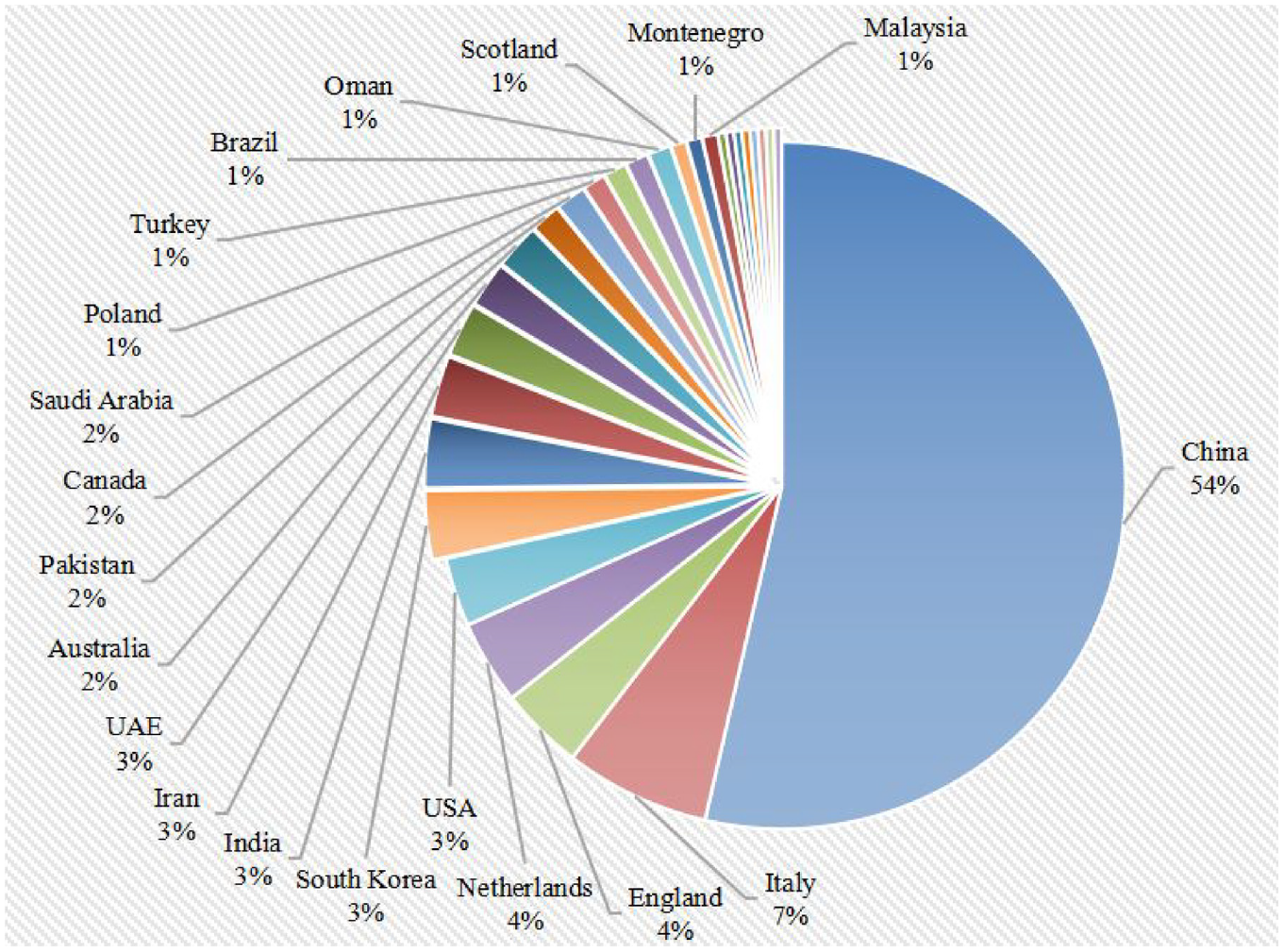
Distribution of authors’ nationality.
Distribution of Theories
In the included articles, only four involve theories, including sustainable development theory (Y. Zhang et al., 2022), technological adoption theory (Shaharudin & Fernando, 2024), the combination of institutional theory, stakeholder theory, and the triple bottom line (Su et al., 2023), and the assembling of contingency theory, innovation diffusion theory, and resource advantage theory (Su et al., 2022). Consistent with Shashi et al. (2024), current research on PFCCL does not have much theoretical support.
Distribution of Methodologies
Apart from mixed methods (9 records, 11.25%) and qualitative methodologies (12 records, 15%), quantitative methodologies dominated the included articles (59 records, 73.75%), which mainly incorporate the optimization model (46), simulation model (6), empirical study (2), experimental study (2), prediction model (1), evaluation model (1), and statistical model (1). Whereas qualitative methodologies are mostly case studies (5).
Frequency of Articles by Citations
Ranking these articles’ citations in the WoS core database, it was found that the average citation times of the 80 articles reach 19. The most cited one reached 98 times, from Hariga et al. (2017), early scholars focusing on the balance between economic and environmental issues in CCL under carbon tax regulation. Notably, ranking second (84 citations) and third (78 citations), two articles from Meneghetti and Monti (2015) and S. Wang et al. (2018), respectively, are also decision-making optimization models.
Articles Distribution Based on Topic Areas
The included articles in this study were classified based on previously identified research questions related to PFCCL sustainability. We carefully evaluated each article’s investigation goals and specific focus to determine their alignment with one of three defined issue areas: threats, decision-making techniques, or technology application. The results of the categorization are shown in Table 2, with 16 articles in Threats, 55 in Decision-Making Techniques, and 9 in Technology Applications. Notably, decision-making techniques have been extensively studied (Awad et al., 2021; Chaudhuri et al., 2018), and priority was given to studies that addressed a range of PFCCL threats, including stakeholder pressure, excessive energy use, poor infrastructure, and perishable food management (Q. Chen et al., 2022; Ghadge et al., 2021; Su et al., 2023).
Threats
By reviewing the articles related to the first topic area, it was found that there are numerous threats to the sustainability of PFCCL (Table 5), such as the perishability and complexity of the foods, lack of suitable facilities and equipment, high energy consumption of electricity and fuel, manipulated irregularities, low level of informatization, specialization, and modernization, high initial capital investment, shortage of labor or lack of professionally skilled personnel, insufficient management support or poor decision-making, untimely deliveries, interruptions in electricity and water supply, poor standardization, lack of supply chain collaboration, pressure from stakeholders, lack of supervision and support from relevant government departments, high fluctuations in demand or low consumer awareness of CCL, and the influence of unexpected events.
Threats Identified in the Included Articles.

Source. Table by authors.
Note. Papers with * cover more than one topic area.
Decision-Making Techniques
Scholars have favored the second topic area. Based on the themes of decision-making optimization analysis, we classified the reviewed literature into four types: the routing optimization model, location (inventory) optimization model, integrated optimization model, and other models.
Type 1: Routing optimization model. The routing optimization model totaled 20 articles, accounting for the majority (36.36%) of articles in the decision-making analysis category. Most academics have only examined PFCCL’s economic and environmental sustainability (Table 6), while a few have focused on the three dimensions to reduce transportation costs, cut down GHG emissions, and improve customer satisfaction (Z. Ma et al., 2023; Z. Wang & Wen, 2020; Wu et al., 2023; Xu et al., 2023; Zhou et al., 2022). Here, the economic dimension mainly refers to vehicle-related costs, damage costs and time window penalty costs, the environmental dimension primarily concerns carbon emission costs, and the social dimension mostly focuses on customer satisfaction. Models considering time window constraints typically adopt soft time windows (J. Chen et al., 2021; Liu et al., 2020; Z. Ma et al., 2023). Meanwhile, scenarios such as multiple distribution centers (Liu et al., 2020; Z. Wang & Wen, 2020; Xu et al., 2023), different vehicle types (Habibur Rahman et al., 2023; Z. Wang & Wen, 2020; S. Zhang et al., 2023), dynamic vehicle speeds (J. Chen et al., 2021; Meneghetti & Ceschia, 2020; Wu et al., 2023), multiple product types (J. Chen et al., 2021; A. S. Khan et al., 2020), and dynamic customer demand (Habibur Rahman et al., 2023; Stellingwerf et al., 2018) are taken into account when performing path optimization analysis. Moreover, the algorithms applied to solve the path optimization model are diverse, such as the improved ant colony algorithm (Z. Ma et al., 2023), the hybrid particle swarm algorithm (Zhou et al., 2022), the hybrid simulated annealing and tempering algorithm (J. Chen et al., 2021), etc.
Previous Research on Routing, Location and Inventory Optimization.

Source. Table by authors.
Note. Parameters that are not discussed in articles, the corresponding values are empty in the table. EC = economic; EN = environmental; SO = social; S = single; M = multiple; C = constant; D = dynamic.
Type 2: Location (inventory) optimization model. Only four of the included articles dealt with the location (inventory) optimization model (Table 6). Compared to inventory management models (Marchi et al., 2020), logistics (distribution) center location models have received major attention (Golestani et al., 2021; X. Li & Zhou, 2021; H. Wang et al., 2022). The optimization objectives concentrate on three main aspects: economic costs, carbon emissions, and customer service quality. Except for Golestani et al. (2021), other scholars have not prioritized multiple product types. Additionally, they have not considered scenarios such as varying vehicle models, vehicle speeds, and customer demand.
Type 3: Integrated optimization model. The integrated optimization model mainly involves the location-routing optimization model, inventory (storage)-transportation optimization model, and location-routing-inventory optimization model, with a total of 19 articles, ranking second in the decision-making analysis category (34.55%). Most of the location-route optimization models focused on the three dimensions of sustainability, while conversely, the inventory (storage)-transportation optimization models focused on the economic and environmental dimensions (Table 6). Meanwhile, the former considered multiple distribution centers due to location issues involved. There are still not many cases that take into account multiple different vehicle models (Babagolzadeh et al., 2020; Hariga et al., 2017; Qiu et al., 2020) and dynamic vehicle speeds (Hariga et al., 2017; Leng, Zhang, Zhang, et al., 2020). The algorithms used for solving the models are more complex, such as the multi-objective evolutionary algorithm (Leng, Zhang, Zhao, Wang, et al., 2020; Qiu et al., 2020), the multi-objective hyperheuristic algorithm (Leng, Zhang, Zhang, et al., 2020; Z. Wang et al., 2020), etc. Moreover, some studies have been conducted on the problems of vehicle scheduling (Shi et al., 2022), profit maximization (Xiao et al., 2018), and cold chain network design (Fang et al., 2018; Gallo et al., 2017).
Type 4: Other models. Others refer primarily to simulation models, supplier selection models, and so on. First, researchers use simulation models to model various scenarios of the perishable food supply chain, including ocean shipping of bananas (Fan et al., 2021), the Belt and Road supply chain railroad system (Abbas et al., 2022), and transshipment between different distribution centers (Vu & Ko, 2023), in order to simulate the actual operating conditions. Based on the simulation results, the impacts on economic, environmental, and social sustainability were analyzed (Abbas et al., 2023; Hu et al., 2021) to guide the optimization of the CCL system. Second, supplier selection models differ due to different evaluation indicators and selection methods. Evaluation indicators relate to economic, environmental, and social aspects (Chaabane et al., 2022; A. U. Khan & Ali, 2021; Nguyen et al., 2022), service level (Nguyen et al., 2022; Y. Zhang et al., 2022), quality and safety, and informatization and standardization (Y. Zhang et al., 2022). The selection methods involve the fuzzy VIKOR-MCDM technique (A. U. Khan & Ali, 2021), the hesitant fuzzy method (Y. Zhang et al., 2022), a combination of the gray analytic hierarchy process and the gray complex proportional assessment method (G-COPRAS; Nguyen et al., 2022), and so on. In addition, the impact of the PFCCL development level (Y. Zhang et al., 2022), carbon trading mechanisms (X. Ma et al., 2020), and the design of warehousing systems (Meneghetti & Monti, 2015) on the sustainability of the cold chain has also been revealed.
Technology Application
The third topic area explored the technology application in sustainable PFCCL, including RFID, sensors and wireless sensor networks (WSN), IoT, intelligent packaging, real-time monitoring, food traceability system, blockchain, imaging systems, autonomous equipment, big data and predictive analytics, data visualization, digital twins, and others. Table 7 presents these technologies and their corresponding descriptions in detail. Shaharudin and Fernando (2024) highlighted that proper technology design and selection can be effective in improving the sustainability of PFCCL. For example, after detecting and sensing environmental data including temperature, relative humidity, and gases within the CCL by sensors, the WSN can transmit the data to managers through a wireless network in real-time (Onwude et al., 2020; Tsang et al., 2018; Xiao et al., 2017; Zhu et al., 2022). Also, IoT-based cold chain transportation monitoring and notification system can decease food spoiling and enhance consumer satisfaction and operational efficiency, helping PFCCL to achieve economic and environmental sustainability (Afreen & Bajwa, 2021; Mejjaouli, 2022; Tsang et al., 2018). Additionally, studies have revealed the impact of the PFCCL development level (Y. Zhang et al., 2022), carbon trading mechanisms (X. Ma et al., 2020), and warehousing system design (Meneghetti & Monti, 2015) on the sustainability of the cold chain.
Technologies Identified in the Included Articles.
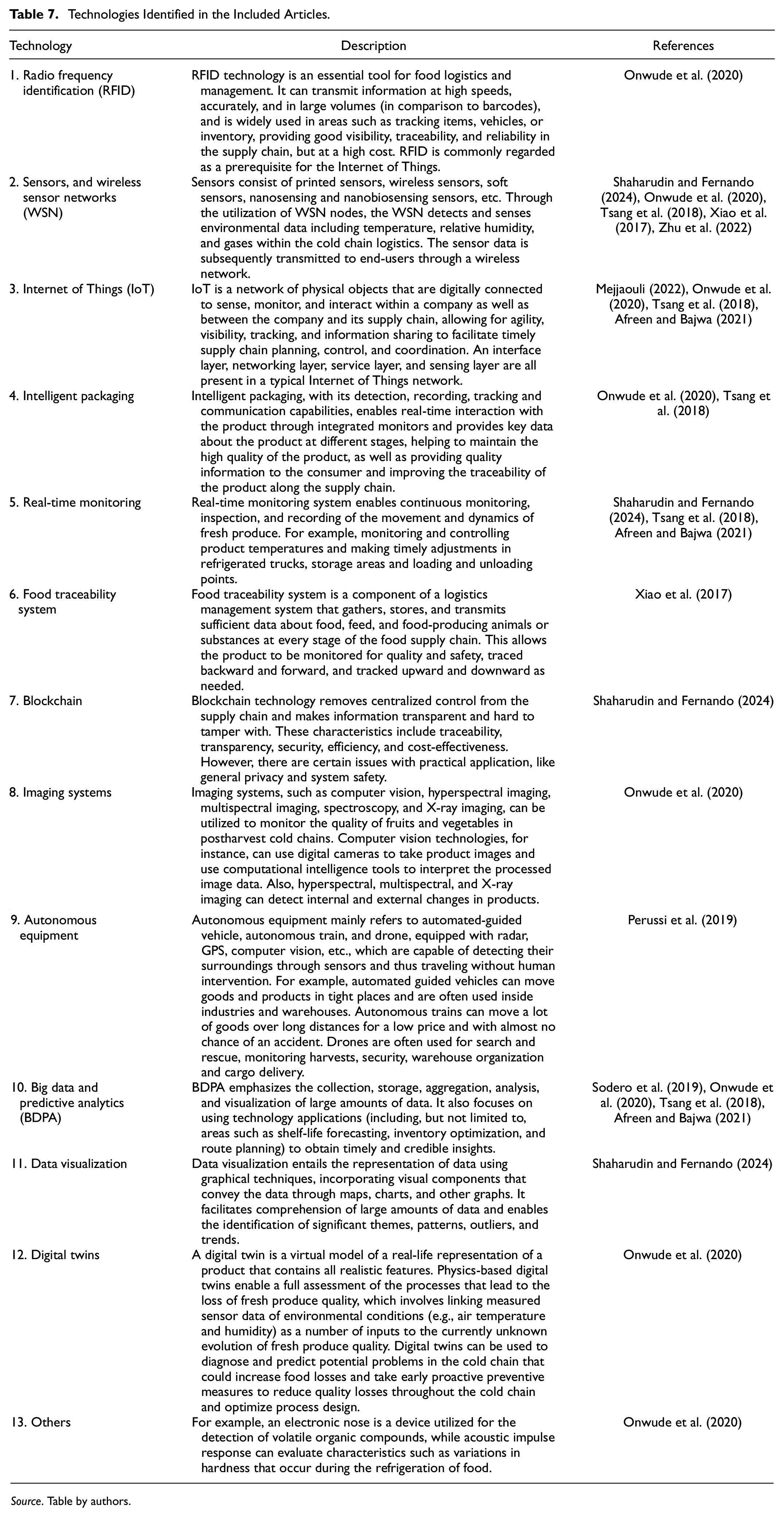
Source. Table by authors.
Discussion and Implication
According to the descriptive analysis, the sustainability of PFCCL has received much attention from various angles in the past few years. With China, India, and other populous and agricultural countries’ economic rise, plenty of scholars begin to join the research team of PFCCL. Due to the long chain of PFCCL involving many enterprises and many disciplines, its sustainability deserves more comprehensive and interdisciplinary research. The findings highlight substantial threats in the domain of PFCCL, specifically concerning issues such as food perishability, inadequate infrastructure, and excessive energy usage. These findings are consistent with previous research (Q. Chen et al., 2022; Ghadge et al., 2021; Gurrala & Hariga, 2022; A. Kumar et al., 2020; Mangla et al., 2019; Shashi et al., 2021; Su et al., 2023), which highlight the ongoing difficulties encountered by the business and underscore the need for efficient mitigation strategies. Furthermore, our examination of decision-making techniques highlights that efficient optimization models are required to enhance supply chain operations, aligning with existing research on supply chain management (Awad et al., 2021; Chaudhuri et al., 2018). Our study enhances comprehension of decision-making processes in this field by examining ways for optimizing routes, managing inventories, and ensuring quality (J. Chen et al., 2019, 2021). Furthermore, the investigation of technological applications emphasizes the critical role of emerging technologies such as IoT sensors and blockchain-based traceability systems in improving PFCCL’s efficiency and environmental sustainability. This aligns with previous research on technological advancements in logistics and supply chain management (Afreen & Bajwa, 2021; Haji et al., 2020; Mostaccio et al., 2023). Prior research in the field (X. Ma et al., 2020; Sha et al., 2022) has indicated that incorporating these improvements into existing systems can enhance temperature regulation, surveillance, and overall supply chain efficiency. In summary, our findings offer a significant understanding of the complex aspects of PFCCL sustainability. Since the thematic discussion on PFCCL sustainability is scarce (Vrat et al., 2018), the nature of PFCCL sustainability was further elaborated from the triple bottom line perspective, followed by future sustainable mitigation strategies, decision-making techniques, and smart technologies.
PFCCL Sustainability Based on a Triple Bottom Line Perspective
PFCCL has the burden of achieving the Sustainable Development Goals (SDGs) (Marchi et al., 2022), while sustainability is also key to PFCCL (Leng, Zhang, Zhao, Wang, et al., 2020). According to Gurrala and Hariga (2022), sustainability represents the capacity to steer clear of behaviors violating environmental, social, and economic responsibilities, and sustainable practices can help supply chains gain a competitive advantage. Hence, following the triple bottom line (Elkington, 1998), we contend that PFCCL sustainability refers to economic, environmental, and social sustainability in PFCCL.
PFCCL prioritizes economic sustainability due to its high operating costs and low profitability (Liao et al., 2023). Under the protection of CCL, perishable food loss and waste are greatly decreased, improving the economic sustainability of other stakeholders. Large investments are required at the initial development stage to equip and operate cold storage and refrigerated vehicles. In addition, the tightening emissions reduction efforts and carbon regulations are driving up the cost of carbon emissions. Hence, with stakeholders’ support, CCL enterprises should actively scale up their businesses and strengthen their operations to generate sustainable profits.
Regarding the environmental dimension, first, the waste and loss of perishable foods caused by the lack of a cold chain are striking every year, which is a major source of greenhouse gas emissions (Q. Chen et al., 2022; Vu & Ko, 2023); second, the operation of cold storage and refrigerated trucks consumes considerable electricity and fuel energy, which generates greenhouse emissions and damage to natural resources (Marchi et al., 2020, 2022). Furthermore, refrigerant leakage contributes to the increase in greenhouse gases (Awad et al., 2021; Han et al., 2021). Therefore, CCL enterprises should place emphasis on energy consumption and refrigerant leakage.
In the social dimension, PFCCL can effectively ensure food safety and reduce food loss (N. Kumar et al., 2022), thus safeguarding human health and also eliminating hunger (Shashi et al., 2021). Meanwhile, it improves customer satisfaction by delivering fresh foods (Han et al., 2021). Moreover, the development of PFCCL will also have a positive effect on employment absorption and the protection of employee health and safety (Turan & Ozturkoglu, 2022). Therefore, stakeholders would favor CCL enterprises that prioritize social sustainability.
Indeed, PFCCL sustainability in emerging countries is currently still unbalanced across the three dimensions due to possible conflicts of interest in PFCCL (Fan et al., 2021; Su et al., 2023). Positive progress has been made in the current research on economic and environmental sustainability (Q. Chen et al., 2022; N. Kumar et al., 2023; Xiao et al., 2018) except social sustainability, which is consistent with Liao et al. (2023). Thus, more research is required in the area of social responsibility or social sustainability and the linkage with the remaining two dimensions. Also, mitigation strategies, decision-making techniques, and technology solutions for sustainable PFCCL should be studied.
Future Mitigation Strategies for Sustainable PFCCL
To mitigate the threats and achieve sustainability in PFCCL, technological innovation (Q. Chen et al., 2022), resilience strategies (A. U. Khan & Ali, 2023), and collaboration with stakeholders (Castelein et al., 2019) have received academic attention, but there is a dearth of theoretical supports and empirical studies verifying their relationships.
The assessment of PFCCL’s low-carbon, digital, visual, and intelligent development, which encompasses technological innovations like passive refrigeration technology and clean energy-driven refrigeration technology, as well as resilience strategies, aligns with the findings of A. U. Khan and Ali (2023). The study highlights the significance of improving resilience and quality in the cold supply chain, especially when dealing with disruptions like those triggered by the COVID-19 pandemic. Furthermore, the focus on meeting the expectations of stakeholders and the importance of communicating and working together with supply chain partners, consumers, and the government is consistent with the conclusions drawn by Elkington (1998) regarding the importance of partnerships and the triple bottom line approach in contemporary business practices. Moreover, recognizing the interdisciplinary aspect of PFCCL and suggesting the enhancement of infrastructure development and talent training to enhance organizational and management abilities aligns with the integrated approach put forth by Su et al. (2023). This approach identifies key factors for achieving sustainable development in the agri-food cold chain.
Hence, the suggested approaches for the advancement of PFCCL sustainability, as delineated in the text, are assessed in conjunction with previous investigations conducted by A. U. Khan and Ali (2023), Elkington (1998), and Su et al. (2023). These studies offer a valuable understanding of the significance of innovation, resilience, stakeholder engagement, and interdisciplinary methods in attaining sustainable development goals in PFCCL.
Future Decision-Making Techniques for Sustainable PFCCL
Decision-making techniques are one of the main tools to address the threats of sustainable PFCCL, and there is still much room for future research with the rapid advancement of intelligent algorithms and arithmetic power (Awad et al., 2021).
Specifically, the goal of the decision-making optimization models should be to balance the economic, environmental, and social sustainability (A. U. Khan & Ali, 2021; Nguyen et al., 2022). For example, the social dimension incorporates employees and society satisfaction. Also, inventory management entails consideration of inventory shortages in distribution centers, which calls for resource allocation studies involving a multilevel supply chain. Furthermore, with the development of multi-modal transport mode, path optimization research for two or more modes of transportation are essential.
Transportation scenarios should take into account local traffic management systems, current weather conditions, road congestion, and the availability of new energy cars and charging station locations. Also, on inter-continental and inter-provincial cold chain transport, outdoor temperature fluctuations impact the efficiency and expenses of refrigeration. Rapid client demand is essential because of customized orders. These criteria should be assessed in conjunction with the existing body of literature, including studies conducted by Abbas et al. (2022, 2023), Afreen and Bajwa (2021), and Aung and Chang (2014), among others.
Future Smart Technology Solutions for Sustainable PFCCL
The induction of smart technologies can significantly improve PFCCL sustainability, as well as effectively safeguard food quality and reduce food losses. Previous research has provided strong guidance for the development of PFCCL, and the convergence of technologies will continue to drive the evolution of Cold Chain 4.0 in the future (Shashi et al., 2024). For example, the metaverse has the potential to realize sustainability of PFCCL by enabling simulation of manufacturing and storage, improved logistics transparency, just-in-time tracking and traceability, etc. (Dwivedi et al., 2022). Notably, there are financial, regulatory, and safety barriers to the large-scale application of these technologies, which requires further exploration by scholars and practitioners.
At this stage, the research on the integration application of multiple smart technologies in different scenarios of PFCCL can be intensified based on existing technologies. For example, the smart CCL system has the ability to predict and analyze historical data in order to identify changes in demand and take appropriate action (Abbas et al., 2022). WSN, RFID, and IoT technologies have the capability to monitor environmental conditions in cold chain storage in real time (Afreen & Bajwa, 2021; Mostaccio et al., 2023). Also, intelligent transportation systems and routing planning can effectively decrease the number of trips and transit times by integrating various product categories, delivery schedules, and up-to-date road conditions (Aung & Chang, 2014; Awad et al., 2021).
Practical and Managerial Implication
This study has important management and practical consequences for parties involved in PFCCL. To begin, the findings emphasize the significance of applying sustainable practices within PFCCL in order to reduce environmental impacts, resource consumption, and overall efficiency. Managers and practitioners can utilize this data to prioritize investments in energy-efficient technologies, execute waste reduction techniques, and optimize supply chain processes in order to improve sustainability performance (Awad et al., 2021; Babagolzadeh et al., 2020). The study emphasizes the importance of technology in improving the sustainability of PFCCL. Managers may improve temperature monitoring, quality control, and compliance with food safety requirements throughout the supply chain by utilizing IoT sensors, RFID tags, and blockchain-based traceability systems (Afreen & Bajwa, 2021; Ben-Daya et al., 2019). Additionally, the use of renewable energy sources and eco-friendly packaging options can improve the environmental sustainability of PFCCL operations.
Furthermore, the study emphasizes the significance of teamwork and stakeholder engagement in promoting sustainable practices at PFCCL. Managers can form alliances with suppliers, distributors, and regulatory bodies to create common sustainability goals, share best practices, and tackle common obstacles together (Castelein et al., 2019; Chaabane et al., 2022). Managers may create long-term value for their organizations while also contributing to larger environmental and societal goals by creating a sustainable culture throughout the supply chain. Through a number of initiatives, PFCCL has the potential to make a significant contribution to the circular economy (Shashi et al., 2021). For example, reducing waste by recycling and reusing perishable food products (Shaharudin & Fernando, 2024) and redistributing excess food to those in need rather than throwing it away can to some extent, also help to address food insecurity. In addition, adopting circular packaging solutions can reduce packaging waste and encourage sustainable supply chain practices by using reused containers or biodegradable materials.
Limitations of the Study
The study recognizes certain limitations that require careful examination. Firstly, the extensive range of perishable food cold chain logistics (PFCCL) and the dependence on particular databases for peer-reviewed journal articles may result in publishing bias and disregard developing trends or research published in alternative formats. The inclusion of non-English studies is further limited by language restrictions. Although attempts have been made to classify papers according to predetermined themes, there is a possibility of research gaps or studies that have been overlooked. The ever-changing nature of the PFCCL ecosystem presents issues that necessitate ongoing revisions to keep up with industry advancements. The study’s exclusive dependence on existing literature, without collecting original data, may restrict the extent of analysis, and disregard the subtle details that can be collected by primary research methods. These limitations emphasize the necessity for future research to tackle these restrictions and improve the thoroughness and strength of investigations on PFCCL sustainability.
Scope of Future Research
Future research on PFCCL sustainability might focus on several crucial aspects. It is essential to examine the efficacy of developing technologies such as artificial intelligence (AI) and machine learning (ML) in improving temperature control, inventory management, and decision-making processes in PFCCL. Furthermore, it is crucial to examine the socio-economic consequences of sustainable practices in PFCCL, namely their impact on local communities and economic growth. Moreover, it is crucial to investigate novel business models and foster collaborative collaborations in order to improve PFCCL network sustainability. An analysis of the impact of governmental interventions and regulatory frameworks on the promotion of sustainable practices in PFCCL is also deserving of consideration. Longitudinal studies that monitor the long-term efficacy of sustainability measures in PFCCL across several locations and market segments can offer significant insights into their overall impact and scalability. Exploring these research areas can enhance our comprehension of PFCCL sustainability and provide insights for enhancing tactics.
Conclusion
This study systematically analyzed 80 articles of PFCCL extracted from the period of January 2010 to July 2013 utilizing the WoS core database. The descriptive analysis was conducted based on key criteria such as year of publication, journal source, journal field, author’s nationality, citations, methodology, theory, and main topic area, and summarized the research progress on the threats, decision-making techniques, and technology application of sustainable PFCCL, and findings on the PFCCL sustainability. On this basis, the connotation of PFCCL sustainability was elaborated following the triple bottom line, and a future research agenda was proposed.
As the existing literature generally lacks theoretical support, future research on the correlation between cooperation with stakeholders, technological innovation, resilience, and sustainability performance can be pursued with the help of stakeholder theory, sustainable development theory, etc. Meanwhile, the social sustainability of PFCCL and the relationship with the two dimensions, economic and environmental, can be explored. Also, decision-making analysis aiming at achieving sustainable PFCCL needs to take into account more realistic and complex scenarios, combining multi-level supply chains, multiple products, multiple vehicle models, multiple modes of transportation, varying inventory capacities, vehicle speeds, and market demand, as well as government policies. In addition, the development of smart technologies has increased the possibility of realizing PFCCL sustainability, but there are still certain application bottlenecks based on factors such as cost, regulations, and safety. Hence, the large-scale application of these technologies still requires the government to accelerate the implementation of standards, laws and regulations. In this sense, the present research on achieving the sustainability of PFCCL drives investment in smart technologies.
Footnotes
Acknowledgements
The authors would like to express their sincerest gratitude for the excellent advice from the editor and anonymous reviewers.
Author Contributions
All authors contributed to the study conception and design. Material preparation, data collection and analysis were performed by [Baohua Zhang and Jihad Mohammad], Drafting the article and critical revision of the article [Baohua Zhang and Jihad Mohammad]. Final approval of the version to be published [Baohua Zhang and Jihad Mohammad]. All authors read and approved the final manuscript.
Declaration of Conflicting Interests
The author(s) declared no potential conflicts of interest with respect to the research, authorship, and/or publication of this article.
Funding
The author(s) disclosed receipt of the following financial support for the research, authorship, and/or publication of this article: This work was supported by the Henan Soft Science Research Program Project in 2023 (Project Number: 232400411078) the Henan Soft Science Research Program Project in 2024 (Project Number: 242400411184), and the General Project of Henan Higher Education Teaching Reform Research and Practice in 2024 (Project Number: 2024SJGLX0819).
Ethics Statements
The authors declared that this study does not involve animals and humans.

Data Availability Statement
No data was used for the research described in the article. Other information are available from the corresponding author via email upon reasonable request.