




Abstract
There is a major outcry among Destination Management Organizations (DMOs) in emerging tourism destinations regarding the low participation or engagement of key stakeholders, mainly local residents, in sustainable tourism. Although several initiatives have been taken by DMOs to ensure that local residents participate in inclusive tourism development, major progress has not been achieved so far. Past studies indicate that even though local residents are engaged and involved in tourism development, they have not been able to fully exercise power and control over tourism, hence they participate as passive beneficiaries rather than active beneficiaries. Thus, this study is an attempt to investigate the role of destination promotion videos and tourism knowledge as drivers of residents’ empowerment in emerging tourism destinations. The study used convenience sampling to determine a sample of 417 local residents in the Dodoma region, from whom data were collected. The data analysis, using structural equation modeling, suggests that tourism knowledge is an important driver of residents’ empowerment among local residents. Additionally, tourism knowledge can be cultivated through the use of destination promotion videos as important sources of information about tourism destinations. This study recommends that DMOs should utilize various public awareness campaigns, such as short destination videos, to empower individuals with knowledge. This knowledge could instill confidence and encourage their participation in inclusive tourism development.
Plain language summary
There has been a significant outcry from organizations managing tourism destinations in emerging regions. These organizations are concerned that local residents are not sufficiently participating in sustainable tourism efforts. Despite multiple initiatives to involve local residents in tourism development, substantial progress has not been achieved. Previous research shows that although local residents are engaged in tourism development, they often do not have full control or power in the process. As a result, they tend to be passive participants rather than active contributors. This study aims to explore how destination promotion videos and tourism knowledge can empower local residents in emerging tourism destinations. Specifically, it looks at whether these tools can help local residents become more active and influential in tourism development. The study was conducted in the Dodoma region, using a sample of 417 local residents. The researchers used a method called convenience sampling to select participants. Data was then analyzed using a statistical technique known as structural equation modeling. The analysis revealed that having knowledge about tourism significantly empowers local residents. This knowledge helps them feel more confident and capable of participating in tourism development. Also, destination promotion videos were found to be effective in providing important information about tourism destinations. These videos can serve as valuable tools for educating and informing local residents about tourism. Based on these findings, the study recommends that Destination Management Organizations (DMOs) should use public awareness campaigns, including short destination videos, to spread tourism knowledge among local residents. By doing so, residents can gain the confidence and information needed to become more actively involved in tourism development.
Introduction
The agenda for achieving sustainable tourism development through an inclusive approach has drawn the attention of scholars and practitioners in the tourism sector (Castro et al., 2023; Han et al., 2023; Zouganeli et al., 2012). A sustainable tourism development ecosystem encompasses various practices and actions that require the engagement and involvement of key stakeholders, including local residents (Hudson et al., 2017; Huo et al., 2023). Sustainable tourism development through an inclusive approach is achieved when Destination Management Organizations (DMOs) adopt a bottom-up approach, allowing local residents to participate as active beneficiaries of the tourism sector (McCunn & Gifford, 2021; Rebelo et al., 2020). Existing studies have examined various drivers that can facilitate a bottom-up approach, including place attachment (Styvén et al., 2020), local residents’ engagement (Amani & Chao, 2021a, 2023; Chao, 2024), power and public trust (Wassler et al., 2021), destination identification (Zenker et al., 2017), etc. The core principle of a bottom-up approach in sustainable tourism development is that local residents should be at the center, not the periphery, of tourism development (Casais & Monteiro, 2019; G. Kim et al., 2023). DMOs are under pressure to adopt a management approach that demonstrates ownership, authority, and power over the tourism sector (Chao, 2024). A management approach focused on a bottom-up strategy requires empowerment initiatives that can enhance local residents’ capabilities and abilities to assume roles and responsibilities as active beneficiaries in sustainable tourism development (Neuts et al., 2021). This approach has also been promoted by global tourism agencies and organizations advocating for DMOs to adopt sustainable development strategies aimed at empowering local residents to actively assume roles and responsibilities in inclusive tourism development (Amani, 2023a; Bowen & Sotomayor, 2022). The United Nations World Tourism Organization (UNWTO) assumes a leading role in advocating various measures for DMOs to create conducive environments, enabling local residents to participate in inclusive tourism development including measures that focus on empowerment programs (Bowen & Sotomayor, 2022; Chao, 2024; Piehler et al., 2020).
Despite being vital in a bottom-up approach, empowerment has not been given adequate attention as a crucial component of tourism management (Aleshinloye et al., 2022; Amani, 2024b; Chao, 2024). As a result, there is ongoing outcry among both scholars and practitioners that local residents’ participation is not satisfactory (Amani, 2023a; Chao, 2024; Leal et al., 2022; Wassler et al., 2021; Zhang & Xu, 2019). Residents’ empowerment involves community members actively driving change by identifying solutions, making decisions, implementing actions, and evaluating their effectiveness (Boley & McGehee, 2014; Chao, 2024; Li et al., 2023). It consists of initiatives that enable local residents to take control and authority over various tourism activities in inclusive tourism development (Aleshinloye et al., 2022; Hu et al., 2022; Li et al., 2022). Seminal work in sustainable tourism indicates that the initiative of empowerment, aimed at helping local residents take control and authority over the tourism economy, has not received adequate attention in the literature (Bowen & Sotomayor, 2022; Wang & Han, 2022). This lack of attention is because past studies concentrated more on ensuring the tourism sector becomes an engine for poverty reduction by integrating underprivileged groups into mainstream tourism (Bowen & Sotomayor, 2022; Chao, 2024). In this view, local residents were perceived as hosts and passive beneficiaries without the authority and power to control the tourism sector’s economy (Wassler et al., 2021; Zhang & Xu, 2019). The tourism development model centered on empowerment, involving a transfer of control, ownership, and management to local residents, holds greater relevance in achieving inclusive tourism development (Bowen & Sotomayor, 2022; Chao, 2024; Leal et al., 2022).
Nevertheless, the methods for achieving or promoting residents’ empowerment are not comprehensively documented within the sustainable tourism domain (Chao, 2024). Given the importance of local residents’ power and authority in shaping the future of the tourism sector within their destinations (Sinclair-Maragh & Gursoy, 2016), it is believed that knowledge should be integrated as a driving factor for empowerment (Chao, 2024). Wijayanto et al. (2023) and Ramzy and Morsi (2020) provide a fair argument about the attributes of a bottom-up approach to managing a tourism destination, emphasizing the importance of knowledge in promoting sustainable tourism development. Limited evidence in the sustainable tourism field has highlighted the significance of tourism knowledge as a source of residents’ empowerment (Joo et al., 2020; Stylidis & Quintero, 2022). Tourism knowledge embodies the capacity of local residents to create memorable experiences linked to tourism, thereby fostering their inclination to participate in tourism development (Joo et al., 2020). According to Bowen & Sotomayor (2022), the absence of tourism knowledge content aimed at empowering local residents impedes their confidence and ability to fully engage in inclusive tourism development. While knowledge about tourism can be acquired from diverse sources, contemporary literature in sustainable tourism suggests that short videos can serve as a significant source of tourism knowledge among local residents (Amani, 2023b). Destination promotional videos represent a technology-driven marketing strategy that amalgamates visual and auditory elements to showcase a tourism destination favorably, aiming to evoke cognitive, emotional, and behavioral responses among target audiences (Leung et al., 2017; Wang & Han, 2022). The theory of appraisal proposes that familiarity is an important criterion influencing individuals to respond based on evaluations or estimations of events, leading to various reactions. However, while most empirical studies on destination promotion videos have focused on tourists, few have addressed the effects of these videos on the attitudes of local residents (Wang & Han, 2022).
Several attempts have been made in the literature to examine the drivers of residents’ empowerment in the domain of sustainable tourism development. Some of these drivers include involvement in tourism and economic benefits from tourism (Aleshinloye et al., 2021). participative leadership (Ahn & Bessiere, 2022), perception of women’s work and women entrepreneurship (Abou-Shouk et al., 2021), destination social responsibility (Su et al., 2023), intermediary organization social support (emotional support, instrumental support, informational support, and appraisal support (Lee & Joo, 2023), and residents’ connection to nature (Strzelecka et al., 2023). Interestingly, existing literature does not extensively address education-based drivers (Chao, 2024), despite the acknowledgment within extant literature of the importance of knowledge in boosting the confidence of local residents to assume roles and responsibilities as active beneficiaries in inclusive tourism development (Aleshinloye et al., 2021). Empowerment based on knowledge is vital in ensuring sustainable tourism development, thereby transforming local residents from being passive beneficiaries or mere hosts of the tourism sector into active beneficiaries (Chao, 2024). Tourism knowledge plays a pivotal role in enhancing local residents’ confidence to fully engage in inclusive tourism development as active beneficiaries who wield power, authority, and control over the tourism sector. Several authoritative works in the sustainable tourism domain indicate that tourism knowledge is a crucial component in empowering local residents to be responsible and accountable toward sustainable tourism development. Therefore, this study aims to underscore the strategic role of destination promotion videos and tourism knowledge in contributing to residents’ empowerment.
Research Hypothesis and Model Development
Destination Promotion Videos
Studies investigating the promotion of destination brands through videos highlight the array of media resources possessed by DMOs to present a favorable image of their destinations to their target audience (Leung et al., 2017; Wang & Han, 2022; Zuo et al., 2023). Specifically, among these resources, destination promotion videos wield significant influence in communicating messages to audiences, eliciting supportive responses for tourism development from various stakeholders, including tourists and local residents (Wu & Lai, 2023). These videos represent a technologically enhanced marketing approach that employs visual and auditory elements to showcase destinations positively, aiming to elicit cognitive, emotional, and behavioral reactions (Moin et al., 2020). Destination promotion videos encompass diverse formats, from short films to documentaries, designed to raise awareness about a tourism destination and its attractions. These videos also encompass shorter clips focusing on specific facets, such as scenery, cultural experiences, adventure activities, landmarks, local hospitality, lifestyle, entertainment, accommodations, amenities, testimonials, and reviews (Alegro & Turnšek, 2020; Moin et al., 2020). By blending compelling visuals with engaging storytelling and a persuasive narrative, these videos seek to evoke emotions and stimulate curiosity about the tourism destination (Shani et al., 2010). Applying the appraisal theory in media use suggests that emotions and memorable experiences linked to the tourism sector are prompted by how local residents perceive the content of destination promotion, considering their concerns.
Past studies indicate that creating destination promotion videos closely mirrors the tactics used in television commercials, emphasizing specific themes, frames, and scenes. The selection of these components helps identify relevant personas capable of effectively conveying and embodying the underlying images a destination intends to communicate to its audience (Amani, 2023b; Wang & Han, 2022). Destination promotion videos, blending images, films, and presentations, have long been acknowledged for their ability to encapsulate the essence of a destination, particularly for individuals who have not had firsthand experiences due to the intangible nature of tourism (Leung et al., 2017). The rise of technology-based media, particularly social platforms, has considerably broadened the scope of these videos, turning them into potent instruments for showcasing the identities of various destinations to a wider audience (Amani & Chao, 2021b). In contrast to traditional tourism TV advertisements, these videos can be disseminated through multiple channels, including television and media-sharing platforms. Furthermore, unlike passive television viewing, audiences can actively seek and watch destination promotional videos at their convenience on media-sharing sites (Wang & Han, 2022). Visual media is extensively utilized in promotional content to underscore a destination’s authenticity and present an enticing image to tourists, given its effectiveness in sparking interest and captivating viewers’ attention. Additionally, beyond merely capturing audience attention, destination promotional videos are argued to play a pivotal role in engaging stakeholders in the development of tourism (Alegro & Turnšek, 2020; Moin et al., 2020; Zuo et al., 2023).
Tourism Knowledge
There is an increasing interest in literature regarding the role of tourism knowledge in fostering local residents’ participation in inclusive tourism development (Stylidis & Quintero, 2022). It is widely acknowledged in this literature that local residents should possess awareness about tourism to ensure their active engagement in inclusive tourism development (Amani, 2023a; Joo et al., 2020). Tourism knowledge comprises the level of understanding, information, and expertise concerning various facets of the tourism sector among local residents. It encompasses an individual’s capacity to create memorable experiences related to tourism, consequently encouraging their inclination to engage in tourism development (Joo et al., 2020; Stylidis & Quintero, 2022). Drawing from the appraisal theory as applied in media use, emotions, including memorable experiences about the tourism sector, are elicited by local residents’ assessment of destination promotion content concerning their concerns. Tourism knowledge boosts the confidence levels of local residents to assume roles and responsibilities in inclusive tourism development (Stylidis & Quintero, 2022). Local residents equipped with suitable expertise, pertinent information, and a comprehensive understanding of the tourism sector are more likely to actively participate in inclusive tourism development (Rachmawatia et al., 2021). Although the importance of tourism knowledge in promoting inclusive tourism development has been widely accepted (Joo et al., 2020; Stylidis & Quintero, 2022), little has been documented in literature about the drivers of tourism knowledge. Recently, destination promotion videos have been regarded as the most prominent source of tourism knowledge, influencing the behavior and attitudes of various stakeholders in tourism, including tourists (Amani, 2023b; Wang & Han, 2022). However, little has been documented in the literature about the role of destination promotion in shaping the attitudes and behavior of local residents (Wang & Han, 2022). Interestingly, literature emphasizes that destination promotion videos could be the most effective source of knowledge or awareness influencing the attitudes and behavior of local residents in inclusive tourism development (Arianto et al., 2022). Visual media, such as television and media-sharing platforms, play a pivotal role in creating awareness and understanding of the tourism sector among target audiences (Wang & Han, 2022). In recent times, visual media have been recognized as powerful tools for building and maintaining positive memories in the minds of target audiences. This study proposes that destination promotional videos are instrumental in creating awareness and understanding of the tourism sector among local residents. Therefore, considering the aforementioned literature, this study hypothesizes that:
Hypothesis1: Destination promotion videos have a significantly positive influence on tourism knowledge.
Residents’ Empowerment
The extensive body of literature on sustainable tourism development highlights the pivotal role of empowerment in shaping the support or opposition of local residents toward tourism growth (Boley & McGehee, 2014). Various research streams emphasize that involving local residents in tourism development without empowering them leads to unsuccessful sustainable tourism outcomes. Empowerment goes beyond mere involvement in planning; it encompasses granting control over the process and its execution, signifying an advanced level of local resident participation (Boley & McGehee, 2014; Wassler et al., 2021). This process equips residents with the means to take charge of their own affairs (Joo et al., 2020), resulting in a state where individuals possess control over their lives, destinies, and surroundings (Boley & McGehee, 2014). In the context of tourism, empowerment emerges from a progression wherein local residents gain confidence and assert their authority over tourism development. The literature indicates that tourism development can impact local residents by either empowering or disempowering them socially, psychologically, and politically (Boley & McGehee, 2014). Consequently, within the sphere of tourism, empowerment has been theoretically and conceptually categorized into psychological, social, and political dimensions (Boley & McGehee, 2014; Strzelecka et al., 2017).
Psychological Empowerment
Past studies in sustainable tourism have emphasized the development of a sense of psychological empowerment to prepare local residents mentally and psychologically, enabling them to confidently assume roles and responsibilities in inclusive tourism development (Li et al., 2023; Wassler et al., 2021). Existing literature underscores that components such as self-esteem and pride, integral to psychological empowerment, represent non-economic benefits crucial in sustainable tourism (Scheyvens & van der Watt, 2021). Local residents need proper psychological well-being and mental preparedness to engage in critical and sensitive roles as active participants in inclusive tourism development (Joo et al., 2020; Wang & Han, 2022). Psychological empowerment can be fostered when local residents are familiar with the tourism sector, leading to a sense of pride and self-esteem in relation to the industry (Aleshinloye et al., 2022; Boley & McGehee, 2014). According to appraisal theory, familiarity plays a crucial role in encouraging individuals to respond based on evaluations or estimations of events, influencing various reactions. Recent literature in tourism suggests that familiarity is promoted by enabling individuals to access tourism information through diverse sources, including digital platforms such as media sources (Wang & Han, 2022). It is widely acknowledged that local residents feel empowered when outsiders recognize their exceptional values, community’s culture, natural resources, and traditional knowledge, thereby boosting their pride and self-esteem. Strzelecka et al. (2017) suggests that tourism possesses the power to shape local cultural landscapes and identities. This study recommends that psychological empowerment can be cultivated by acquiring knowledge about tourism from various sources, including destination promotion videos. Based on the reviewed literature, the development of the hypothesis is as follows:
Hypothesis2: Tourism knowledge has a significantly positive influence on psychological empowerment.
Hypothesis5-1: Tourism knowledge mediates the relationship between destination promotion videos and psychological empowerment.
Social Empowerment
Among other perspectives, residents’ empowerment in tourism involves the ability of local residents to collaborate with other members of the community in determining inclusive tourism development (Ahn & Bessiere, 2022; Boley & McGehee, 2014). Empowered local residents are expected to demonstrate the ability to collaborate by sharing responsibility toward inclusive tourism development (Strzelecka et al., 2017). In terms of social empowerment, local residents are expected to foster community cohesion, promoting the sharing of benefits and values among community members (Adebayo & Butcher, 2023). Previous studies indicate that community cohesion can be cultivated when local residents are aware of the importance of shared responsibility in addressing common problems or challenges encountered in inclusive tourism development (Joo et al., 2020). Appraisal theory, as applied in media studies, suggests that individuals react and evaluate differently when they become familiar with a certain issue after exposure to it through the media. These reactions are based on evaluations made once a person has comprehensive knowledge about a particular phenomenon or event. Boley & McGehee (2014) argue that residents can achieve social empowerment when each perceives that tourism has enhanced their connection with the community. Additionally, social empowerment contributes to social capital, where local residents feel empowered through the establishment of networks and organized resource mobilization among community members, fostering cohesion rather than separation within the community (Adebayo & Butcher, 2023; Hu et al., 2022; Li et al., 2022). This study theorizes that tourism knowledge acquired through destination promotion videos plays a crucial role in enhancing social empowerment. Therefore, based on the aforementioned literature, this study develops the hypothesis:
Hypothesis3: Tourism knowledge has a significantly positive influence on social empowerment.
Hypothesis5-2: Tourism knowledge mediates the relationship between destination promotion videos and social empowerment.
Political Empowerment
Political empowerment is one of the most extensively researched concepts in residents’ empowerment within tourism (Neuts et al., 2021; Wassler et al., 2021). It refers to the ability of local residents to demonstrate confidence in making decisions that impact their affairs or issues (Joo et al., 2020). Inclusive tourism development aims to foster the participation of key stakeholders as active decision-makers in matters affecting the tourism sector (Amani, 2023a). Local residents experience political empowerment when they exert power and authority as active participants, possessing both rights and responsibilities in inclusive tourism development (Aleshinloye et al., 2022; Strzelecka et al., 2017). The goal of political empowerment is to ensure that local residents are not misrepresented in tourism merely as hosts or passive beneficiaries, but instead, they assume leading roles as active beneficiaries with a stake in inclusive tourism development (Adebayo & Butcher, 2023; Wassler et al., 2021). Previous studies in sustainable tourism development concur that, for local residents to assume these leading roles, they need to be well-informed about the tourism sector. Boley & McGehee (2014) assert that local residents can attain empowerment when they have control over deciding the direction of tourism development, exercising a political voice in determining and addressing concerns related to tourism within their community (Aleshinloye et al., 2021). Additionally, Neuts et al. (2021) argue that residents can strongly engage in the tourism decision-making process if the industry provides them with political power. Earlier research also suggests that political empowerment enhances the confidence of local residents to participate in programs aimed at promoting sustainable tourism (Su et al., 2023). This study suggests that local residents achieve political empowerment when they acquire relevant tourism knowledge from destination promotion videos. Therefore, drawing from the aforementioned literature, this study develops the hypothesis:
Hypothesis4: Tourism knowledge has a significantly positive influence on political empowerment.
Hypothesis5-3: Tourism knowledge mediates the relationship between destination promotion videos and political empowerment.
Theoretical Underpinning and Research Model
This study employed the appraisal theory postulated by Lazarus (1991), commonly used in studies related to media usage, including destination promotion videos. Appraisal theory has been extensively employed in studies examining the impact of destination promotion videos on various outcomes such as word-of-mouth promotion (Wang & Han, 2022).The theory suggests that when a person is exposed to a particular source of emotions, they develop familiarity, which acts as the basis for evaluating (appraising or estimating) events, ultimately leading to specific reactions. The appraisal theory in psychology posits that emotions are derived from our evaluations (appraisals or estimates) of events, causing specific reactions in different individuals. This study develops a theoretical framework using appraisal theory, which proposes that when local residents are exposed to destination promotion videos, they gain knowledge about tourism, thereby enhancing their abilities from various perspectives. This theoretical framework suggests that destination promotion videos expose local residents to environments that help them develop a state of estimating or appraising the content of the videos based on the information obtained. This information creates knowledge, which forms the basis for appraising or estimating the content as proposed by appraisal theory. Furthermore, the study proposes that empowerment emerges as a reaction to appraising or estimating the content of the destination promotion videos. This theoretical framework is developed based on various studies in destination marketing in the era of digital evolution. Utilizing appraisal theory, this study develops a research model, as presented in Figure 1, aimed at testing the interplay between destination promotion videos and tourism knowledge as determinants of resident empowerment from three perspectives: psychological, social, and political.
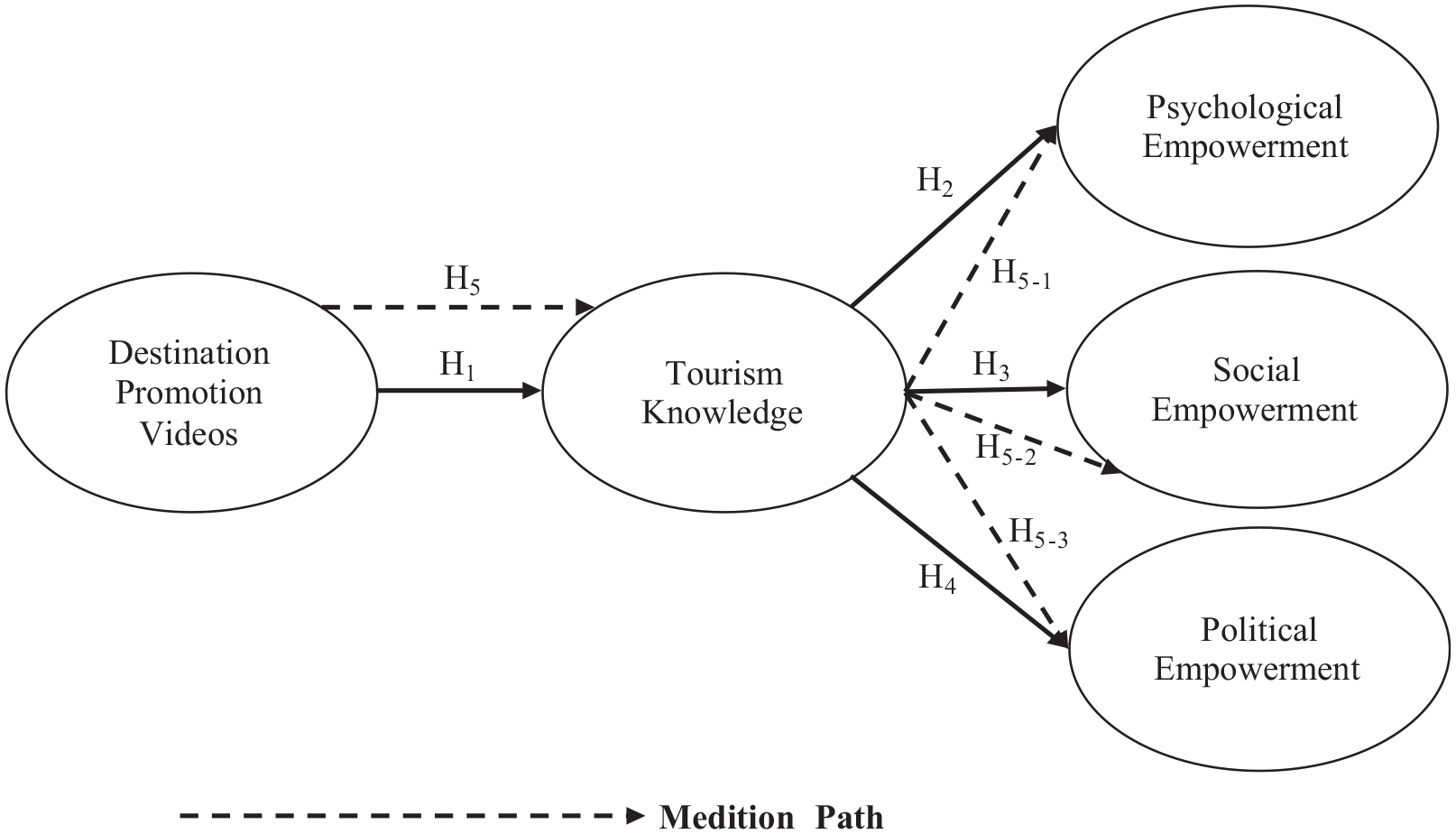
Research model.
Methodology
Study Settings
The proposed research model was tested by adopting a quantitative cross-sectional survey approach, aiming to collect data within a specific period of time and place and empirically tested using inferential statistical techniques (Cummings, 2014). The study utilized a self-administered survey questionnaire to gather data from local residents in the Dodoma region. The selection of this area was based on several reasons. Firstly, Dodoma region possesses a population structure that is relatively representative of the entire population of Tanzania (Amani, 2023a). As the capital city of Tanzania, Dodoma attracts an influx of citizens from all other regions across the country. Stratton (2021) argues that the selection of the study area should consider the entire population structure to ensure the robustness and generalizability of the findings. Secondly, Dodoma region boasts several potential areas for tourism development in the country. Notably, the region hosts the Kondoa Rock-Art Sites, a national UNESCO World Heritage site situated in the Kondoa District (Bwasiri & Smith, 2015; Tryon et al., 2018). Moreover, the region is blessed with the Mkungunero Game Reserve, an integral component of the Tarangire-Manyara Ecosystem, crucial for biodiversity conservation and the protection of the Tarangire River (Foley & Foley, 2022; John et al., 2020). Furthermore, the Dodoma region is among the most prominent and strategic areas for current efforts and initiatives by the Government of Tanzania to promote medical and meeting tourism (United Republic of Tanzania [URT], 2019). Being the capital city of the country, Dodoma is undergoing major infrastructure development, enabling the diversification of the tourism sector into medical and meeting tourism (Amani, 2023a). This strategic move to establish Dodoma as the hub for a diversified tourism sector can mature through deliberate measures focused on empowering local residents to actively participate in supporting inclusive tourism development.
Sampling and Data Collection Procedures
The study sample was determined using convenience sampling techniques to collect data from a readily available pool of respondents. This method proves highly effective when establishing a sample from a population that is not easily determined or established. Despite its advantages, convenience sampling techniques face challenges, notably concerning bias, as highlighted by Jawad Golzar (2022). According to Skowronek & Duerr (2009), bias in convenience sampling techniques can be mitigated by: (1) Ensuring the intercepting of respondents considers the representativeness of demographic characteristics. (2) Intercepting respondents at various hours, days, and locations within the specified data collection period to allow for sample variations. (3) Maintaining a reasonably larger sample size to ensure diversity within the sample. In determining the sample, the researcher strictly adhered to all the aforementioned recommendations. The sample selection criteria required that respondents had lived in the city for at least 5 years. Additionally, respondents had to be over 18 years old, an age considered representative of maturity and the ability to provide insights relevant to the subject under investigation. Moreover, the questionnaire included screening questions designed to ascertain whether respondents had viewed various short promotional videos aimed at promoting the tourism destination. These screening questions ensured that respondents were familiar with the promotional videos, enabling them to provide more confident and reliable responses when rating measurement items. Consequently, this study used structural equation modeling to analyze the data. Structural equation modeling (SEM) is a comprehensive statistical approach that encompasses a family of multivariate data analysis techniques (Hair et al., 2010). It is particularly powerful for modeling and testing hypotheses about causal relationships between variables (Hair Jr, Babin, et al., 2017). SEM allows researchers to examine both direct and indirect effects among observed (measured) variables and latent (unobserved) variables (Hair et al., 2020). This method integrates factor analysis and multiple regression analysis, providing a flexible framework to assess complex relationships and account for measurement error. The sample size for the study comprised 417 respondents, exceeding the recommended 250 for multivariate data analysis techniques such as structural equation modeling (SEM) (Hair et al., 2010; Kline, 2015). Throughout the data collection process, respondents were asked for their consent before completing the questionnaire. The data collection exercise took place from May 2023 to July 2023.
Development of Instrument and Measures
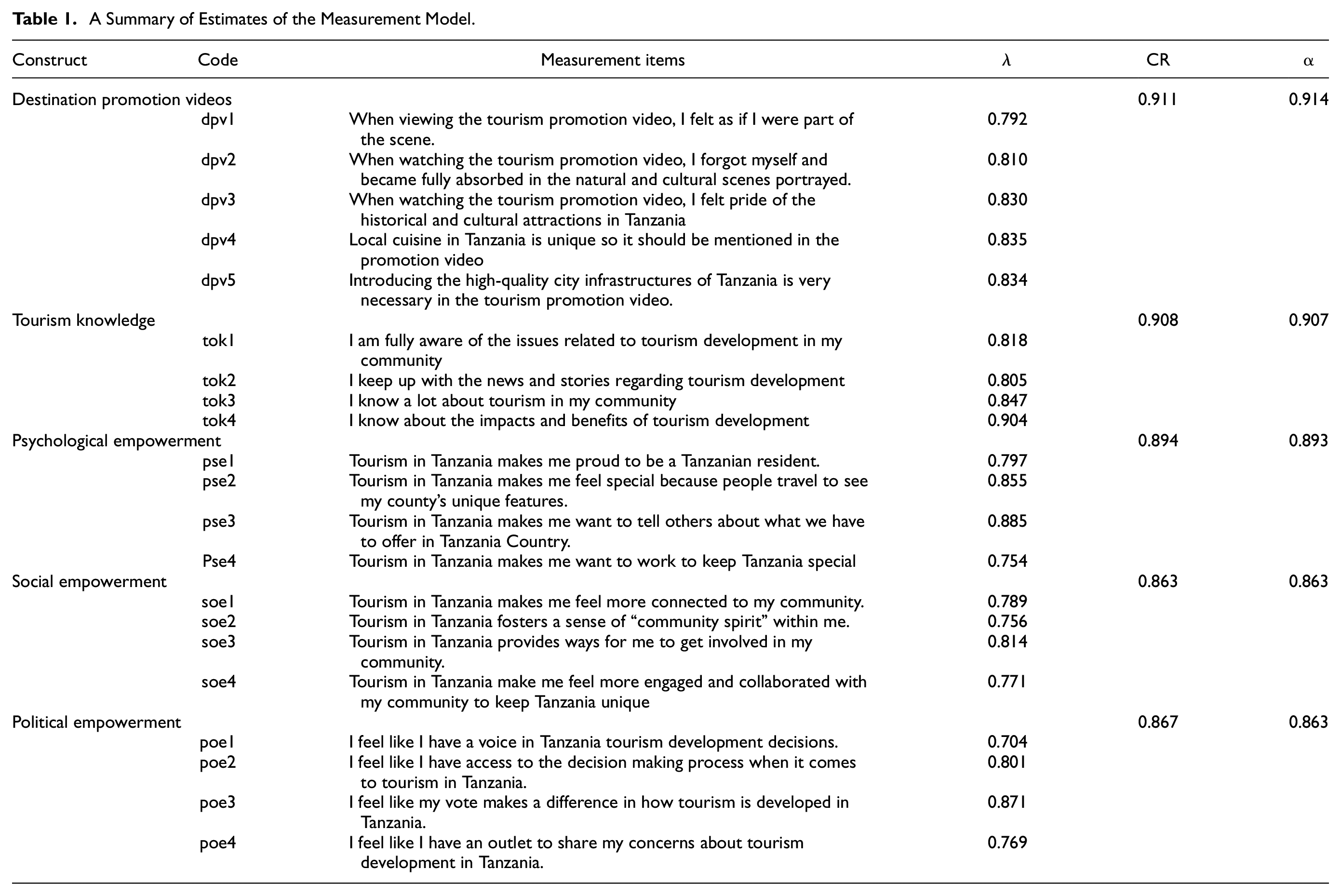
The data collection instrument was developed following a comprehensive review of various previous seminal works on destination promotion videos, tourism knowledge, and residents’ empowerment. Prior studies suggest that a thorough literature review ensures several key aspects: (1) Relevance of the study within the specific domain of knowledge. (2) Establishment of the study’s solid grounding in the domain of knowledge. (3) Assurance of the reliability and validity of the data collection instrument or measurement items used to assess the constructs. Furthermore, the study employed multiple scales to minimize measurement errors and guarantee the comprehensive capture of all pertinent attributes related to each construct during the data collection process (Churchill Jr, 1979). Semantic differential scales, employed in this study, gauge the connotative meaning of constructs. These scales are universally applicable, capturing both the affective and cognitive components of respondents’ perceptions of selected constructs on a multidimensional level. Respondents were instructed to rate each measurement item, as presented in Table 1, using a semantic differential rating scale ranging from 1 (strongly disagree) to 5 (strongly agree) (Dawes, 2008). Moreover, as indicated in Table 1, destination promotion videos were evaluated using 5 items adopted from Wang & Han (2022), while tourism knowledge was assessed using 4 items adapted from Stylidis & Quintero (2022). Lastly, residents’ empowerment was measured by adopting the Resident Empowerment through Tourism Scale (RETS) proposed by (Boley & McGehee (2014).
A Summary of Estimates of the Measurement Model.
Data Analysis and Presentation of Findings
Common Method Bias
Common method bias occurs when there is an overestimation of the relationship between one construct and another (Fuller et al., 2016). The survey methodology literature outlines two primary approaches to address common method bias issues: procedural remedies and statistical techniques (Fuller et al., 2015). In this study, several procedural remedies were implemented during the design of instruments and data collection procedures. For instance, efforts were made to ensure the questions were clear, concise, and adapted to suit the specific context of the study. Moreover, during data collection, respondents were guaranteed anonymity, and it was explained that there were no right or wrong answers. This approach aimed to reduce respondents’ hesitance in evaluation and minimize the likelihood of socially desirable responses that remain consistent across questions. In terms of statistical measures, the study utilized Harman’s single-factor test. This involved subjecting all scale items to an exploratory factor analysis to examine the unrotated factor solution (Podasakoff et al., 2003). The aim was to identify the number of components with eigenvalues greater than 1 that explain the combined variance. The assumption was that if common method bias existed, only a single factor would account for more than 50% of the covariance between the items and the criterion constructs. However, the findings indicated that no single factor accounted for more than 50% of the covariance between the items and the criterion constructs, indicating that common method bias was not a concern in the data.
Estimates of The Measurement Model
The measurement model underwent analysis to estimate the reliability and validity of the measurement items or instruments using confirmatory factor analysis (CFA). The results in Table 1 indicate that the psychometric properties of the measurement model were deemed acceptable. Reliability was confirmed to be satisfactory as the Cronbach’s alpha coefficients (α) for all constructs ranged from 0.863 to 0.914, exceeding the recommended value of 0.7 (Ursachi et al., 2015). Additionally, the composite reliability coefficients (CR) for all constructs ranged from 0.863 to 0.911, which is notably higher than the acceptable limit of 0.7 (Valentini et al., 2016). Moreover, the findings in Table 1 demonstrate good convergent validity, given that all items loaded above 0.7 onto their respective constructs (Hair Jr, Matthews, et al., 2017). Furthermore, as presented in Table 2, the results suggest acceptable convergent validity, with the average variance extracted (AVE) of all constructs exceeding 0.5 (Said et al., 2011). Discriminant validity was evaluated using the Fornell-Larcker Criterion, which stipulates that the square root of the AVE by a construct should surpass the correlation between that construct and any other constructs (Fornell & Larcker, 1981). The results in Table 2 indicate that this criterion was met, confirming the acceptance of discriminant validity. Additionally, the measurement model underwent assessment against various goodness-of-fit statistics to determine its compatibility with the data. The statistical results suggest an excellent fit to the data, with χ2 = 411.244; df = 178; χ2/df = 2.310, falling below the threshold of 3 (Hooper et al., 2008). Moreover, goodness-of-fit indices such as the goodness-of-fit index (GFI) = 0.913, comparative fit index (CFI) = 0.958, adjusted goodness-of-fit index (AGFI) = 0.9, normed fit index (NFI) = 0.929, incremental fit index (IFI) = 0.958, and Tucker Lewis Index (TLI) = 0.951, all surpassing the threshold of 0.9 (McDonald & Ho, 2002). Furthermore, the root mean square error of approximation (RMSEA) = 0.056, indicating a value lower than the threshold of 0.08 (Hooper et al., 2008).
Discriminant Validity Using Fornell-Larcker Criterion.

Bolded values represent the square root of the average variance extracted.
Parameter Estimates for the Structural Model
The study utilized structural equation modeling in AMOS 21 to estimate the parameters of the proposed structural model using standardized coefficients, t-statistics, and p-values, as depicted in Table 3. However, the structural model was initially assessed against various goodness-of-fit statistics to determine its compatibility with the data. The results of these statistics suggest a perfect fit to the data, with χ2 = 467.882; df = 184; χ2/df = 2.543, which is below the threshold of 3 (Hooper et al., 2008). Additionally, GFI = 0.902, CFI = 0.949, AGFI = 0.9, NFI = 0.919, IFI = 0.949, and TLI = 0.942, all surpassing the threshold of 0.9 (McDonald & Ho, 2002). Furthermore, RMSEA = 0.061, which is relatively less than 0.08 (Hooper et al., 2008). The parameter estimates presented in Table 3 indicate that destination promotion videos have an impact on tourism knowledge (β = 0.463, t-statistics > 1.96, p-value < 0.001), supporting hypothesis1. Moreover, the parameter estimates in Table 3 reveal that tourism knowledge significantly influences psychological empowerment (β = 0.433, t-statistics > 1.96, p-value < 0.001), supporting hypothesis2. Additionally, hypothesis3, which posits that tourism knowledge influences social empowerment, was supported with (β = 0.523, t-statistics > 1.96, p-value < 0.001). Finally, hypothesis4, which hypothesized that tourism knowledge influences political empowerment, was supported with (β = 0.573, t-statistics > 1.96, p-value < 0.001).
Standardized Parameter Estimates.

p-value < .001.
Parameter Estimates for the Mediation Paths
The study utilized the Process macro to derive parameter estimates for the mediation paths illustrated in Figure 1, encompassing Hypothesis5-1, Hypothesis5-2, and Hypothesis5-3. These estimates, derived from bias-corrected confidence intervals generated from 5,000 bootstrapped samples, were interpreted according to the rule of thumb, requiring the absence of zero values between the lower and upper level confidence intervals (Hayes et al., 2017). According to the results presented in Table 4, Hypothesis5-1: DPV→TOK→PSE was supported with (β = 0.110; CI [0.058, 0.177]). Additionally, Hypothesis5-2: DPV→TOK→SOE was supported with (β = 0.143; CI [0.090, 0.204]), as depicted in Table 4. Finally, the outcomes in Table 4 supported Hypothesis5-3: DPV→TOK→POE with (β = 0.148; CI [0.088, 0.218]).
Standardized Parameter Estimates-Mediation Testing.

Discussion
The findings of this study reveal that for consistent, efficient, and effective participation of local residents in sustainable development, they must be knowledgeable about the tourism sector (Bowen & Sotomayor 2022; S. Kim et al., 2021). The study extends the insights of Bowen & Sotomayor (2022), who posited that consistent participation of local residents in inclusive tourism development requires empowerment through both knowledge and involvement. These findings suggest that although local residents are currently involved in inclusive tourism development using a bottom-up approach, such involvement can be mediocre if they are not aware of what transpires in the tourism sector. Local residents could more effectively assume responsibility and accountability for tourism development by exercising control, power, and authority over the sector when they are knowledgeable about it (Ngo & Pham, 2023). This argument, based on the findings, is supported by Amani (2023a), who emphasize the importance of knowledge as a mechanism to ensure local residents play productive roles in inclusive tourism development. This knowledge motivates local residents to demonstrate their capability to participate in inclusive tourism development (Bowen & Sotomayor, 2022), which has been promoted as a key resource to ensure they participate with confidence and authority. These findings also corroborate with Adebayo & Butcher (2023); Amani (2023a); Hu et al. (2022); Tichaawa et al. (2023), who argue that tourism knowledge boosts local residents’ confidence to affiliate with their respective tourism destinations and attractions. Moreover, it fosters aspirations among local residents to seek employment within the tourism sector or at their respective tourism destinations (Amani, 2023a). These conclusions align with the perspective of Bowen & Sotomayor (2022), who advocate for initiatives that ensure a fairer and more equitable distribution of power or control over tourism resources in destination areas to promote the full participation of local residents in inclusive tourism development. Additionally, the study revealed that destination promotion videos, containing both entertaining and educational content, serve as vital sources of tourism knowledge. This argument is supported by Amani (2023b);Amani & Chao (2021b); Shani et al. (2010); Wang & Han (2022) who state that media enhances knowledge about tourism destinations, thereby assisting various stakeholders, including tourists, in making informed decisions.
Furthermore, the findings indicate that tourism knowledge is vital in promoting social empowerment among local residents. This is supported by empirical works Hu et al. (2022); Lee & Joo (2023), which emphasize the importance of sustainable tourism and acknowledge that every local resident in potential tourism development areas should be empowered to establish connections with other community members. The study revealed that a sense of community, as an element of empowerment, cannot materialize unless local residents are exposed to public awareness campaigns informing them about the tourism sector and its associated benefits or impacts. As argued by Joo et al. (2020); Lee & Joo (2023); Tichaawa et al. (2023), tourism knowledge equips local residents with insights into the significance of tourism and encourages collaboration to ensure inclusive tourism development. These findings are further supported by (Amani, 2024a), who emphasizes that a sense of community is crucial in promoting the tourism sector as a potential driver of social and economic development. This aligns with Joo et al. (2020), who suggest that perceived knowledge influences social empowerment. Additionally, the findings highlight that tourism knowledge plays a critical role in cultivating political empowerment among local residents. Political empowerment means that empowered local residents can demonstrate authority and power in making decisions regarding various strategic issues pertaining to the tourism sector (Adebayo & Butcher, 2023; Amani, 2023a; Li et al., 2022; Strzelecka et al., 2017). However, for local residents to exert power and authority over tourism resources, they must possess knowledge about the tourism sector (Tichaawa et al., 2023). In contrast to literature focusing on pro-poor tourism, the literature on residents’ empowerment encourages local residents to participate in the tourism sector as active participants or value co-creators rather than passive beneficiaries (Bowen & Sotomayor, 2022). The findings indicate that for local residents to gain the confidence to participate in the tourism sector as decision-makers and implementers, they must be well-informed about the sector. Tourism knowledge serves as the catalyst for enhancing local residents’ self-confidence in making decisions. Previous studies indicate that tourism knowledge can foster local residents’ self-reliance, enabling them to be responsible and accountable toward the tourism sector (Scheyvens & van der Watt, 2021; Tichaawa et al., 2023).
Theoretical Contribution
This study addresses scholarly calls for further investigation into the drivers of residents’ empowerment within the tourism sector. It provides insights into how the current shift in control, ownership, and management of tourism destinations impacts residents’ empowerment. Although existing literature acknowledges the importance of local residents in inclusive tourism development (Amani, 2023a), there remains a scarcity of research on empowering local residents to fully participate in this process (Boley & McGehee, 2014; Wang & Han, 2022). Notably, there is limited evidence on knowledge-based empowerment as a means to ensure that local residents are sufficiently empowered to confidently undertake roles and responsibilities as active beneficiaries in inclusive tourism development. Few empirical studies recognize the significant role of destination promotion videos and tourism knowledge in motivating local residents who are crucial actors in inclusive tourism development to participate in sustainable tourism development (Wang & Han, 2022). Therefore, this study extends knowledge on the relationship between destination promotion videos and tourism knowledge as engines for residents’ empowerment, particularly in developing countries. By utilizing appraisal theory, this study advances theoretical understanding by asserting that when local residents are exposed to destination promotion videos, they become more familiar with the tourism sector. This familiarity equips them with decision-making capabilities, knowledge, and resources, ultimately instilling the confidence needed to assume roles and responsibilities.
Managerial Recommendations
This study provides insights for managers in DMOs and other authorities in tourism destinations regarding strategies that can empower local residents to actively participate in inclusive tourism development. It recommends using digital marketing content as a source of knowledge for key stakeholders, including local residents, about the tourism sector. DMOs should seize the opportunity of digital transformation to undertake educational programs or public awareness campaigns aimed at enhancing local residents’ knowledge about tourism. The study suggests that DMOs should develop more engaging digital platforms that allow key stakeholders, including local residents, to access various digital content, such as promotional videos about the destination. These digital platforms should be active and responsive, enabling local residents to leave comments and share their sentiments about the tourism sector and the destination as a whole. The content of destination promotion videos should be both entertaining and educational, highlighting the uniqueness of the tourism destination and its distinctive attractions. Additionally, the study recommends that destination promotion videos should inspire local residents to take accountability and responsibility for tourism development. It suggests incorporating storytelling elements into these videos to encourage and persuade local residents to assume active roles in supporting inclusive tourism development. The storytelling content should feature experiences from various local residents who have actively participated in inclusive tourism development, aiming to inspire confidence and willingness among other residents to take control over tourism development and contribute to sustainable tourism practices.
Limitation and Future Studies
Several limitations should be acknowledged from this study, as they represent potential areas for further research aiming to advance knowledge on sustainable tourism development. The study was conducted in the Dodoma region, the capital city of Tanzania, which serves as the hub for all administrative works of the central government in the country. While the region’s population structure is relatively representative of respondents across the country, allowing for potential generalization of the findings, further studies could extend the list of regions to enhance the depth of investigation into the topic. Moreover, future research could explore the role of media in tourism development and residents’ empowerment by examining how different types of media campaigns (e.g., social media, traditional media, and digital platforms) influence residents’ perceptions and engagement with tourism. Comparative studies across various regions could provide a more nuanced understanding of these dynamics. Furthermore, expanding this study by conducting a comparative analysis to establish significant differences in empowerment between females and males in the development of tourism destinations is a plausible direction. These recommendations hold significance considering past studies, particularly in developing countries, which emphasize the importance of considering gender differences in issues related to empowerment. This study employed a cross-sectional research design, which does not offer opportunities to track changes resulting from various interventions aimed at promoting empowerment. Therefore, it is recommended that future studies adopt a longitudinal approach, facilitating investigations or experimental studies to trace the impact of interventions contributing to residents’ empowerment over time. This approach would allow researchers to identify trends and causality more effectively.
The model in this study tested the influence of destination promotion videos and tourism knowledge on residents’ empowerment. Empowerment can manifest in various forms and levels among residents in different countries; thus, the study’s model can be replicated and tested across countries with different socio-cultural settings from Tanzania to ascertain the robustness of the findings. While this model has laid the groundwork for advancing knowledge in the subject matter, future studies could modify the model to include additional variables that provide further insights into the investigated topic from various perspectives. For instance, introducing new variables such as inclusive or collaborative destination governance, facilitating stakeholder coordination and collaboration, could be included as a moderator in the model. Advanced analyses could then be conducted to test its impact on the relationship between destination videos and residents’ empowerment. Additionally, investigating the effectiveness of different media strategies in empowering residents and promoting sustainable tourism development could provide practical insights for policymakers and stakeholders. Studies could explore how media literacy among residents affects their empowerment and involvement in tourism development, thereby identifying educational needs and opportunities for capacity-building initiatives.
Footnotes
Acknowledgements
Not applicable.
Declaration of Conflicting Interests
The author(s) declared no potential conflicts of interest with respect to the research, authorship, and/or publication of this article.
Funding
The author(s) received no financial support for the research, authorship, and/or publication of this article.
Ethics Approval
Not applicable.

Data Availability Statement
Data will be available upon request.