



Abstract
This research study aims to examine the mediating effect of perceived impact of sport tourism (PIST), and support for sport tourism (SSTD), and the moderating effect of tourism dependency. Data was collected from 467 local residents using a paper-based survey. Partial least squares structural equation modeling was employed to test the research model and hypotheses. The findings indicate that both place image and PIST positively influence SSTD. PIST fully mediates the relationship between knowledge about tourism and SSTD, and partially mediates the relationship between place image and SSTD. Additionally, tourism dependency moderates the relationship between place image and SSTD, as well as between PIST and SSTD. These findings highlight the significance of place image and PIST for SSTD among residents and suggest that residents with and without tourism-related businesses may perceive sport tourism development differently. The study’s findings offer valuable insights for local tourism planning and policymaking.
Plain language summary
This study explores how local residents perceive the impacts of sports tourism and how these perceptions influence their support for sports tourism development. It also examines whether reliance on tourism income affects these relationships. Using survey responses from 467 residents, the study found that a positive image of the local area and perceptions of sports tourism benefits encourage support for its development. Residents with more knowledge about tourism rely on their perceptions of its impacts to decide whether to support it. Additionally, those who depend on tourism income are more likely to support sports tourism, even if they recognize some negative effects. These findings provide practical insights for local residents, local authorities, and government ministries to enhance sports tourism planning by addressing community needs and promoting sustainable development. Engaging residents through community meetings and workshops fosters involvement and addresses concerns. Strategies should highlight benefits like job creation for tourism-dependent residents or improved public amenities for others. Local authorities can educate residents on the advantages of sport tourism and build partnerships to align projects with community needs. Ministries, such as Tourism and Youth & Sports, can provide funding, policy support, and guidance to ensure sustainable growth.
Keywords
Introduction
Sports tourism has emerged as a significant global social trend within the tourism sector (Hu & Cole, 2016). It is defined as “leisure-based travel that takes individuals temporarily outside of their home communities to play, watch physical activities or venerate attractions associated with these activities” (Gibson, 1998, p. 10). It combines both sport and tourism and has contributed to society, economy, and politics (Heidary et al., 2011; Higham, 1999; Weed & Bull, 2004). This emerging tourism trend has gained considerable attention due to its significant impact on local economies. For instance, the PGA Tour Championship held in the United States generated $25 million (approximately RM103 million) for the local economy, particularly in souvenirs, entertainment, and food (Mapjabil et al., 2015). The 2023 Asian Games in Hangzhou, China boosted dine-in restaurant orders by 443% as compared to the same period in 2019 (Global Times, 2023). Countries worldwide compete for the chance to host major professional and amateur sporting events, aiming to draw sports tourists and stimulate economic growth (Hu & Cole, 2016).
Sports tourism is one of the fastest-growing segments within the tourism industry, its growth projection is reported at USD 890.90 billion between 2021 and 2025 (Technavio, 2021). However, this rapid growth has raised critical questions about its sustainability, particularly for host countries of major sporting events (Wanyonyi et al., 2022). While such events often lead to economic gains, they also introduce significant challenges, including environmental degradation, socio-cultural disruption, and over-reliance on tourism revenue (Doxey, 1975; Tehseen et al., 2024). These negative impacts could reduce the support of local residents as they erode their quality of life, and threaten the long-term viability of sports tourism. Active participation from local communities is crucial for sustainable development. Without their support, the benefits of sports tourism may remain unrealized, and resistance to such activities could grow. The importance of local community engagement cannot be overstated. Erul et al. (2020) emphasized that involving residents is essential for promoting and sustaining tourism development (Herbold et al., 2020). A lack of community support has been identified as a major obstacle to the growth of sports tourism. Empirical studies have shown that factors like community participation (Boonsiritomachai & Phonthanukitithaworn, 2019), perceived impacts of sports tourism (PIST), quality of life (Duan et al., 2021), place image (Schnitzer et al., 2021), and perceived benefits and costs (Bakhsh et al., 2018) are strongly linked to residents’ support for sports tourism development (SSTD).
Despite extensive research on the topic, there has been a lack of comprehensive analysis on the interconnections among SSTD, knowledge about sport tourism, PIST, tourism dependency and place image. Hence, the focus of this study is two-fold. First, we aim to examine the mediating mechanism of PIST, including its four dimensions, on the relationship between knowledge and SSTD, as well as between place image and SSTD. The PIST is crucial for gaining local residents’ support. This research aims to contribute to the field by testing the mediating effect of PIST (Uesugi & Kudo, 2020). As sustainability is a major global focus, countries’ leaders aim to protect the planet by focusing on global goals (United Nations Development Programme, 2021). This is also important to achieve sustainable development in sports tourism (Ganji et al., 2021). Prior study indicates that both knowledge about tourism and place image are pertinent to obtain SSTD (Stylidis et al., 2014). We further argue that local residents who have adequate knowledge about sports tourism and perceive their place image favorably would perceive a stronger positive impact of sports tourism, which subsequently provides active support for sports tourism development. However, research on these two concepts, particularly in the context of local residents, remains limited (Hsu et al., 2020; Schnitzer et al., 2021). Therefore, this study aims to enrich the field of sports tourism by exploring local residents’ perceptions.
The second focus of current study is to explore the moderating effect of tourism dependency. Despite earlier findings indicating that tourism dependency moderates the relationship between place image and SSTD, as well as between knowledge and SSTD, the current literature has scarcely examined the moderating effect of tourism dependency in sport tourism context among residents. This has resulted in an area that remains unattended in sport tourism literature. Thus, we sought to test how tourism dependency moderates the mediating paths, to provide insights into the mechanism that explains the differences between residents who highly rely on tourism and those who do not. Thus, residents with a strong dependence on tourism are inclined to promote the development of sports tourism.
The theoretical foundation of this study is rooted in Social Exchange Theory (SET), which offers a valuable framework for understanding the dynamics of local residents’ support for sports tourism. SET posits that individuals engage in reciprocal exchanges, supporting actions that provide greater benefits than costs (Cropanzano & Mitchell, 2005). In the context of sports tourism, residents are more inclined to endorse development efforts when they perceive significant positive impacts – such as financial gains, improved socioeconomic status, and enhanced local tourism – while adverse effects, such as traffic congestion and pollution, are minimized (Kanwal et al., 2020). By applying SET, this study seeks to examine the role of perceived impacts in influencing residents’ support for sports tourism development (SSTD). Specifically, SET explains that SSTD is contingent on residents’ evaluations of whether the benefits outweigh the costs. For example, a positive place image enhances residents’ perceptions of their community’s value, which, in turn, shapes their perceived impacts of sports tourism (PIST) and encourages active support for SSTD. Similarly, residents with greater knowledge about tourism are better positioned to evaluate PIST, fostering stronger support if they perceive the impacts to be favorable. Tourism dependency further moderates these relationships, as residents who rely heavily on tourism for their livelihood are more likely to prioritize its benefits and use their knowledge to advocate for SSTD. This study explores these dynamics by investigating how PIST mediates the relationship between knowledge, place image, and SSTD, and how tourism dependency moderates these pathways, offering valuable insights into fostering sustainable sports tourism.
This study is anticipated to offer a substantial contribution to the current body of sport tourism literature. We aim to examine the mediating effect of PIST, including its four dimensions, along with the moderating mechanism of tourism dependency. This provides valuable insights for sport tourism stakeholders, including governments, local communities, policymakers, and researchers on how to obtain active support from residents for the development of sport tourism. The subsequent parts of this paper are organized as follows: First, the literature review explains the major concepts and pathways of the variables in the research framework. Second, the research methodology describes the sample collection process and the development of the questionnaire. Third, the data analysis and results are presented. Finally, the paper discusses the implications and concludes the study.
Literature Review
Recent Development of Sport Tourism
In recent years, research on sport tourism has grown significantly. As climate change and global warming become increasingly urgent issues, many studies have started to concentrate on promoting sustainability in sport tourism (Hallmann & Zehrer, 2024; Ito & Higham, 2025). Researchers have increasingly examined strategies to minimize the environmental footprint of sporting events while maximizing their socio-economic benefits (Grofelnik et al., 2023; Lohana et al., 2023). For instance, recent studies highlight the integration of green practices and renewable energy solutions into event management as key approaches to reducing environmental degradation (Ganji et al., 2021).
Another prominent theme in contemporary research is the importance of community engagement in sustainable sport tourism development. Several scholars emphasize that the active participation and support of local communities are pivotal to the success of sport tourism initiatives (Boonsiritomachai & Phonthanukitithaworn, 2019; Chang et al., 2020; Duan et al., 2021). Studies by Boonsiritomachai and Phonthanukitithaworn (2019) and Duan et al. (2021) have demonstrated that factors such as PIST, community participation, and quality of life are crucial determinants of residents’ SSTD. These findings have spurred further exploration into how local perceptions and involvement can be enhanced to foster long-term sustainability.
Social Exchange Theory
Social exchange theory (SET) served as a foundational framework to support the proposed research model. SET is widely used in various social science areas, including education (Choong & Ng, 2023), tourism (Kanwal et al., 2020), environmental behavior (Zientara & Zamojska, 2018), and hospitality (Meira & Hancer, 2021). SET is a type of exchange relationship that goes beyond the employment contract, whereby two or more parties engage in a reciprocal exchange action (Blau, 1964; Cropanzano & Mitchell, 2005; Emerson, 1976). In the sport tourism perspective, SET focuses on the exchange between local residents and local government, where local residents would support local government for sport tourism development provided that the positive impact substantially outweighs the negative impact of sport tourism. For instance, if sport events lead to traffic congestion, an increase in crime rate, vandalism, and various forms of pollution, local residents may not support sport tourism development. In order to obtain support from local residents, the local government needs to ensure that sport events can provide financial gain, improve the socioeconomic status of residents, and promote local tourism.
SET explains how PIST mediates the relationship between place image, knowledge, and SSTD. Residents assess the benefits and costs of sports tourism based on their perceptions. When the perceived benefits outweigh the costs, a positive place image enhances their support for SSTD (Krishnaswamy et al., 2018). Similarly, SET suggests that residents with sufficient knowledge about tourism can critically evaluate the impacts of sports tourism. This knowledge allows them to identify more nuanced benefits and costs. Through the mediating role of PIST, informed residents are more likely to support sports tourism if their evaluations align with positive outcomes (Gutiérrez-Tano et al., 2019). For the moderating effect of tourism dependency, SET highlights that residents who rely heavily on tourism for their livelihoods are more inclined to accept negative impacts, such as overcrowding or environmental degradation. Their dependency makes them prioritize the perceived benefits, such as income and employment, over potential drawbacks (Chang et al., 2020).
Support for Sport Tourism Development
Residents’ SSTD reflects an individual belief that large-scale tourism projects contribute greater benefits than the cost involved. This perception of potential impacts is contingent upon the evaluative framework through which individuals assess the nature of their engagement in the exchange (Gursoy & Kendall, 2006). Boonsiritomachai and Phonthanukitithaworn (2019) emphasize the significance of engaging stakeholders, including local residents in the development of sport tourism-related projects. Local authorities provide regular feedback can increase residents’ support and promote sustainable tourism. SSTD can be in various forms of resident involvement and endorsement. Local residents may express their support not only through financial means but also in other forms, such as advocating for local government funding to facilitate sports tourism events, supporting the development of infrastructure and attractions for sports events, willingly serving the needs of tourists, and participating in maintaining their sport tourism destination. Additionally, residents may engage in informational support by assisting in disseminating news about upcoming sports tourism events. However, if local residents perceive or experience an unbearable expense for supporting sport tourism events or development, they may be unwilling to provide support for the sport tourism development.
Place Image and Support for Sport Tourism Development
Generally, place image is described as “a set of views, thoughts, and impressions towards a place, destination, or city” (Echtner & Ritchie, 2003). Although the term “destination image” or “city image” is also used in literature, the term “place image” is more appropriate in this study as it measures the perception of place image from the standpoint of residents (Schnitzer et al., 2021). Place image focuses on the unique characteristics of a place and how they evolve over time (Tasci & Gartner, 2007). Place image is a salient construct used to understand how residents react to their place. It represents a mental construct formed by residents’ impressions derived from a flood of information pertaining to their surroundings (Echtner & Ritchie, 2003) which can be measured using multiple dimensions (Krishnaswamy et al., 2018), including community service, physical appearance, social service, and entertainment environment.
Despite a substantial body of research has demonstrated a positive relationship between place image and SSTD, as seen in general contexts (Krishnaswamy et al., 2018; Tournois & Djeric, 2019), this relationship has rarely been tested within the realm of sport tourism. Residents who hold a favorable perception of their locality’s social environment, physical appearance, entertainment offerings, and community service are more inclined to endorse the development of sport tourism within their area. Examples of a favorable place image include appealing scenery and a pleasant atmosphere surrounding the sport venues (physical appearance), efficient public services (community service), a variety of entertainment options (entertainment service), and a safe place for relaxation and recreation (social environment). All of these factors can increase the support from local residents for sport tourism development.
H1: Place image is positively related to SSTD.
Knowledge About Tourism and Support for Sport Tourism Development
Knowledge about tourism is defined as the level of understanding possessed by the local residents regarding issues concerning tourism development (Nunkoo & So, 2016). Knowledge about tourism has been extensively employed as a measure of residents’ attitudes in across diverse tourism contexts, including broader tourism settings (Nunkoo & So, 2016), environmental tourism (Andereck et al., 2005), rural tourism (Hwang et al., 2012), and heritage tourism (Rasoolimanesh et al., 2017). Nonetheless, research exploring the relationship between knowledge and tourism development within the context of sport tourism is limited.
The likelihood of local residents supporting sport tourism development increases when they have access to detailed information and receive thorough briefings regarding the development plans (Abdullah et al., 2015). When local residents are aware of how a major sports event is organized and how it can positively and negatively impact them, they tend to offer their support for the event and the development of the surrounding residential areas. Furthermore, local residents are essential in providing support and creating a better tourist experience for those who visit their area for sport tourism purposes (Hsu et al., 2020). Accurate information related to sports tourism should be disseminated to residents to help them deliver the information and knowledge to other residents and promote sports events to potential tourists. At the same time, residents can promote their tourism products and services, such as attracting tourists to stay at their homestays, promoting their unique fusion cuisine, and so on.
H2: Knowledge about tourism is positively related to SSTD.
Place Image and Perceived Impact of Sports Tourism
Research has shown a connection between place image and PIST. Studies by Krishnaswamy et al. (2018) and Homsud and Promsaard (2015) found that when residents hold a positive image of their community, they tend to view sports tourism impacts more favorably. A positive place image leads to a better perception of tourism development, including its socio-cultural, economic, and environmental benefits.
The strength of the relationship between place image and PSTI can vary depending on the context and the specific impact. For example, Rahayu (2018) found that in Gunungkidul, a negative place image, due to poor transportation and lack of amenities, led to stronger concerns about environmental impacts. In contrast, Dyer et al. (2007) observed that environmental impacts were less significant in the early stages of tourism development. They found place image had a stronger influence on financial and socio-cultural impacts. This study aims to explore the direct relationship between place image and perceived sports tourism impacts.
H3: Place image is positively related to PIST.
Knowledge About Tourism and Perceived Impact of Sport Tourism
Residents with greater knowledge tend to increase awareness of tourism’s advantages and disadvantages (Abdullah et al., 2015; Meimand et al., 2017). This increased understanding enables them to assess tourism’s financial, socio-cultural, and environmental impacts more comprehensively. Well-informed communities are better equipped to identify tourism benefits, such as enhancing the place image and contributing to community development (Andereck et al., 2005).
However, different levels of understanding can lead to varying perceptions of tourism impacts. Smith and Eadington (1992) observed that knowledgeable individuals in mass tourism destinations may hold negative views on socio-cultural effects. Conversely, Meimand et al. (2017) noted that in community-based tourism, preserving cultural values fosters positive socio-cultural perceptions among knowledgeable residents. Some studies, like Gutierrez-Tano et al. (2019), even found that greater knowledge reduces the perceived benefits of tourism. While most findings suggest that knowledge enhances awareness of both positive and negative impacts, studies such as Latkova and Vogt (2012) report no significant relationship between KAT and PSTI. This study aims to further examine the direct relationship between KAT and PSTI in the context of sports tourism.
H4: Knowledge about tourism is positively related to PIST.
Perceived Impact of Sport Tourism and Support for Sport Tourism Development
Prior research has consistently highlighted a significant relationship between PSTI and SSTD. Tourism is a multidimensional phenomenon where it produces economic, social, cultural, and environmental impacts that can be both positive and negative (Lorde et al., 2011; Yoon et al., 2001). Several past studies reveal that residents with positive perceptions of tourism impacts are more likely to support tourism development (Masa’deh et al., 2017; Zhou & Ap, 2009). Conversely, those who view tourism as harmful are less likely to offer their support. For instance, perceived economic benefits often drive stronger support for tourism, while environmental concerns can reduce residents’ enthusiasm (Krishnaswamy et al., 2018; Tosun, 2002).
Perceived socio-cultural benefits also significantly influence RSTD. Residents who see tourism as a platform for cultural exchange and social enrichment are more inclined to support it (Krishnaswamy et al., 2018; Sinclair-Margh & Gursoy, 2016). However, perceived negative impacts can demotivate support for tourism development. Studies suggest that fostering positive perceptions among residents is critical to creating a welcoming environment, mitigating negative views, and enhancing participation in tourism activities (Gursoy et al., 2017; Rocha et al., 2017). This study seeks to further explore the direct relationship between PSTI and RSTD, contributing to a deeper understanding of how these perceptions shape community support for tourism.
H5: PIST is positively related to SSTD.
Perceived Impact of Sport Tourism as Mediator
The PIST is a multidimensional construct that commonly comprises three dimensions, including impact of socio-cultural, economic, and environmental (Boonsiritomachai & Phonthanukitithaworn, 2019; Malchrowicz-Mośko & Poczta, 2018; Ritchie et al., 2009). Choong et al. (2024) note that globalization trends have compelled leaders of countries around the world to compete with each other in various sectors, including the tourism industry. Thus, the continued growth of international tourism has imposed several challenges in terms of economic, cultural and social change (Malchrowicz-Mośko & Poczta, 2018). For instance, scholars have affirmed that sports tourism could provide positive impacts on local communities, such as leading to superior infrastructure development, increased employment opportunities, increased tax revenue, and attracting private enterprise investment (Daniels, 2007). On the other hand, the socio-cultural impacts refer to how the sports activities or events influence the lifestyle of local communities, such as security issues, traffic congestion, and vandalism issues. Regarding environmental impacts, Lin and Lu (2016) contend that environmental issues represent a fundamental concern across all sectors of the tourism sectors, which might cause various types of pollution. Malchrowicz-Mośko and Poczta (2018) add that sports tourism could elicit more negative consequences than positive consequences.
We contend that the perceived influence of tourism could be a pivotal mediator in the relationship between place image (PI) and support for sport tourism development (SSTD). Several studies have testified to the mediating relationship in different tourism contexts, including historical tourism (Stylidis et al., 2014, 2016) and heritage tourism (Krishnaswamy et al., 2018), but this area is often overlooked in the domain of sport tourism. From a theoretical perspective, PIST serves as a mediator in relationships involving PI and SSTD. Scholars assert that individuals’ perceptions of their local environment significantly shape their attitudes and behaviors (Stylidis et al., 2016). Residents with a favorable perception of their place image generally tend to regard tourism as having greater positive impacts than negative ones, encouraging greater community support for sport tourism initiatives. This mediating relationship has been evidenced in other tourism domains, such as historical (Stylidis et al., 2014, 2016) and heritage tourism (Krishnaswamy et al., 2018), but remains underexplored in sport tourism.
Similarly, the relationship between knowledge and SSTD could be mediated by PIST. Past studies have demonstrated this mediating relationship in the domain of homestay programs (Meimand et al., 2017), heritage tourism (Rasoolimanesh et al., 2017), and ecotourism (Gutiérrez-Tano et al., 2019). Knowledge about tourism has been shown to influence SSTD through PIST, as demonstrated in these studies. Meimand et al. (2017) found that PIST mediates the relationship between knowledge about tourism and SSTD. They realized that knowledgeable respondents who react positively to socio-cultural benefits in their area of living would be more supportive of tourism development. Furthermore, communities with greater knowledge tend to be more sensitive to the costs and benefits of tourism, establishing a relationship between tourism knowledge and SSTD (Gutiérrez-Tano et al., 2019). Knowledgeable residents, who are more attuned to the socio-cultural and economic benefits of tourism, often exhibit higher levels of support, even while being mindful of potential environmental costs. Therefore, this study proposes PIST as a key mediator, aiming to extend the understanding of its role in sport tourism contexts.
Given the constant tourism development in a specific destination, numerous negative impacts on environmental, socio-cultural, and economic aspects could arise, which may discourage residents from supporting any sport tourism activities. Therefore, we propose the following hypothesis:
H6: The relationship between place image and SSTD is significantly mediated by PIST.
H7: The relationship between knowledge about tourism and SSTD is significantly mediated by PIST.
Tourism Dependency as Moderator
The concept of “tourism dependency” or “economic dependency” pertains to the extent to which the income or employment of local residents relies on activities related to tourism (Hung & Wu, 2017). Prior study has employed tourism dependency as a moderating factor when exploring residents’ endorsement of gaming development (Yoo et al., 2014). In contrast, additional studies have examined residents’ attitudes toward tourism in relation to their economic status, as demonstrated by Harrill (2004). Harrill (2004) found that individuals dependent on tourism-related income generally hold more favorable attitudes toward tourism development. Individuals who benefit directly from tourism, such as through employment, business opportunities, or increased local spending, tend to support tourism development (Krishnaswamy et al., 2018). Communities relying heavily on tourism for economic well-being are also more likely to collaborate in tourism initiatives (Chen & Chen, 2010). Conversely, residents with minimal ties to the industry may view tourism less favorably due to a lack of direct benefits or concerns about negative impacts like overcrowding and environmental degradation (Chang et al., 2020). Economic dependence on tourism significantly influences residents’ attitudes and support for development (Šegota et al., 2024).
Thus, we argue that local residents with a positive perception of place image, adequate knowledge about tourism, and the belief that sport tourism brings more benefits than drawbacks are more likely to support sport tourism initiatives by local authorities. Thus, the following hypotheses are proposed:
H8: The relationship between place image and SSTD is significantly moderated by tourism dependency, such that the relationship is stronger when tourism dependency is high.
H9: The relationship between knowledge about tourism and SSTD is significantly moderated by tourism dependency, such that the relationship is stronger when tourism dependency is high.
H10: The relationship between PIST and SSTD is significantly moderated by tourism dependency, such that the relationship is stronger when tourism dependency is high.
Proposed Research Framework
The proposed research framework, depicted in Figure 1, is grounded in social exchange theory. It hypothesizes that place image, knowledge about tourism, and PIST are significantly and positively related to SSTD. Additionally, place image and knowledge about tourism are posited to have a significant and positive relationship with PIST. The framework further identifies PIST as a mediator in the relationships between place image and SSTD, as well as between knowledge about tourism and SSTD. Lastly, tourism dependency is introduced as a moderator, influencing the relationships between place image and SSTD, knowledge about tourism and SSTD, and PIST and SSTD.

Research model.
Research Methodology
A cross-sectional study was performed using a quantitative approach. We used paper-based questionnaire method for data collection. The target respondents were local residents who stay near the areas of sport tourism events. Fieldwork was conducted in those areas that are actively hosted major sports events in Malaysia including (1) Langkawi, Kedah, (2) Sepang, Selangor, (3) Bukit Jalil, Kuala Lumpur, and (4) Tioman Island, Pahang. These areas are popular destinations for sports tourism. They have hosted events such as cycling, car racing, the PETRONAS Grand Prix of Malaysia, football matches, Formula 1, kayak racing, sandcastle competitions, fishing tournaments, and treasure hunts.
The target respondents were local residents living near these event areas. Their perceptions of these events shaped the basis for studying support for sport tourism development. These perceptions reflect how residents view the economic, socio-cultural, and environmental impacts of sports tourism. A quota sampling technique was used to ensure balanced participation from each location. Quotas were established to collect a minimum of 100 samples from each selected location. This approach ensured that no single location was overrepresented in the dataset and that the sample reflected a diverse range of perspectives. During data collection, research assistants closely monitored the number of completed responses from each location to meet the predetermined quotas. This method allowed the study to capture the unique experiences and views of residents across different regions actively involved in sports tourism.
Data collection for this study was conducted over 2 months, from September 2022 to October 2022, with the assistance of three trained research assistants. Participation in the study was entirely voluntary. Residents who expressed interest in participating were initially screened based on two selection criteria: (1) they must be local residents in any of the selected locations, and (2) they must be at least 18 years old. Eligible participants were then briefed on the study’s objectives and procedures to provide them with a clear understanding of their role. To encourage participation, a small token of appreciation was offered to respondents. Only those who provided informed consent were invited to complete the survey. A total of 500 questionnaires were distributed to potential respondents, and 488 completed questionnaires were successfully collected by the research assistants, yielding a response rate of 97.6%.
Out of 488 sets of questionnaires, there were 21 incomplete questionnaires discarded from the data set. This further yielded a response rate of 94%. This sample consisted of 194 male residents and 273 female residents. The details of the respondents’ profiles can be referred to Table 1. The majority of local residents fall within the age group of 26 to 35 years, are married, hold a diploma qualification, have lived in the location for over 25 years, and earn a monthly income of more than USD 1,800.
Summary of Respondents’ Characteristics.

Research Instrument
The self-administered questionnaire consists of two sections and a cover page was attached. The first section comprised of items for the key variables of this study: place image, knowledge about tourism, PIST and SSTD. These adapted items were drawn from past studies which measured with seven-point scale. A pre-test was conducted prior to the full-scale survey distribution to ensure the suitability, validity, and reliability of the adapted items. This step allowed the researchers to identify and address any issues with the questionnaire, ensuring that it was clear and appropriate for the target respondents. There were seven items concerning respondent characteristics included in the second section.
Place image consists of four first-order constructs with a total of 14 items which is based on the definition by Stylidis (2016). Two of the dimensions (entertainment services and physical appearance) consist of three items each, while other dimensions (social environment and community service) are measured with four items each. Sample items are “Sport tourism area offers appealing scenery inside the sport venues” for “physical appearance,”“Sport tourism area offers quality accommodations” for “community service,”“Sport tourism area offers appealing food services” for “entertainment service,” and “Sport tourism area offers a place for relaxation and recreation” for “social environment.” The Cronbach alpha score was .953 which is considered very good.
Knowledge about tourism was assessed using five-item scale constructed by Jamal & Dredge (2014). Sample item includes “I have knowledge of sports tourism development in my area.” The Cronbach alpha score was .888.
Perceived impact of sport tourism comprised of four lower-order constructs or dimensions: economic impacts, cultural impacts, social impacts, and environmental impacts. A total of 22 items were used to measure these four dimensions. A six-item scale for “economic impacts,” developed by Boonsiritomachai and Pitchayadejanant (2018); a five-item scale for “social impacts,” based on the work of Akis et al. (1996), Howard and Lankford (1994), and Renda et al. (2014); a five-item scale for “environmental impacts,” derived from the research of Boonsiritomachai and Pitchayadejanant (2018); and a six-item scale for “cultural impacts,” as proposed by Üngüren et al. (2015). Sample items are “Sport tourism has created more job opportunities for local residents” for economic impacts, “Sport tourism has caused an increase in the crime rate in this area” for social impacts, “Sports tourism development has resulted in a better quality of the natural environment” for environmental impacts, and “Sport tourism has promoted sport culture among local residents” for cultural impacts. The Cronbach alpha score was .958.
For SSTD, it was measured with a five-item scale developed by Boonsiritomachai and Pitchayadejanant (2018). Sample item includes “I encourage the local government to fund the promotion of future sports tourism development.” The inter-item consistency score was 0.959.
Data Analysis
A PLS-SEM technique was pursued to examine the research framework and hypotheses. Two software: Statistical Package of Social Science (SPSS V25) and Smart PLS version 4 were employed to run the data. In the data analysis, we employed SPSS for conducting descriptive analysis and a common method bias test. Additionally, both the measurement model and structural model were examined by Smart PLS software. PLS-SEM has gained increasing popularity among social science researchers (J. Hair & Alamer, 2022). Unlike covariance-based structural equation modeling (CB-SEM), PLS-SEM is not constrained by the assumption of data normality, is more robust in handling skewed data, and prioritizes the model’s predictive performance (J. Hair & Alamer, 2022). In addition to its capability to accommodate both large and small sample sizes, PLS-SEM is well-suited for complex models involving multiple indicators, latent variables, and intricate structural relationships, offering greater flexibility for researchers (Dash & Paul, 2021; J. F. Hair et al., 2019). The data analysis process was divided into four main stages, namely: descriptive analysis, preliminary analysis, measurement model analysis, and structural model analysis, including the examination of direct effects, mediating effects, and moderating effects within the path analysis.
Descriptive Analysis
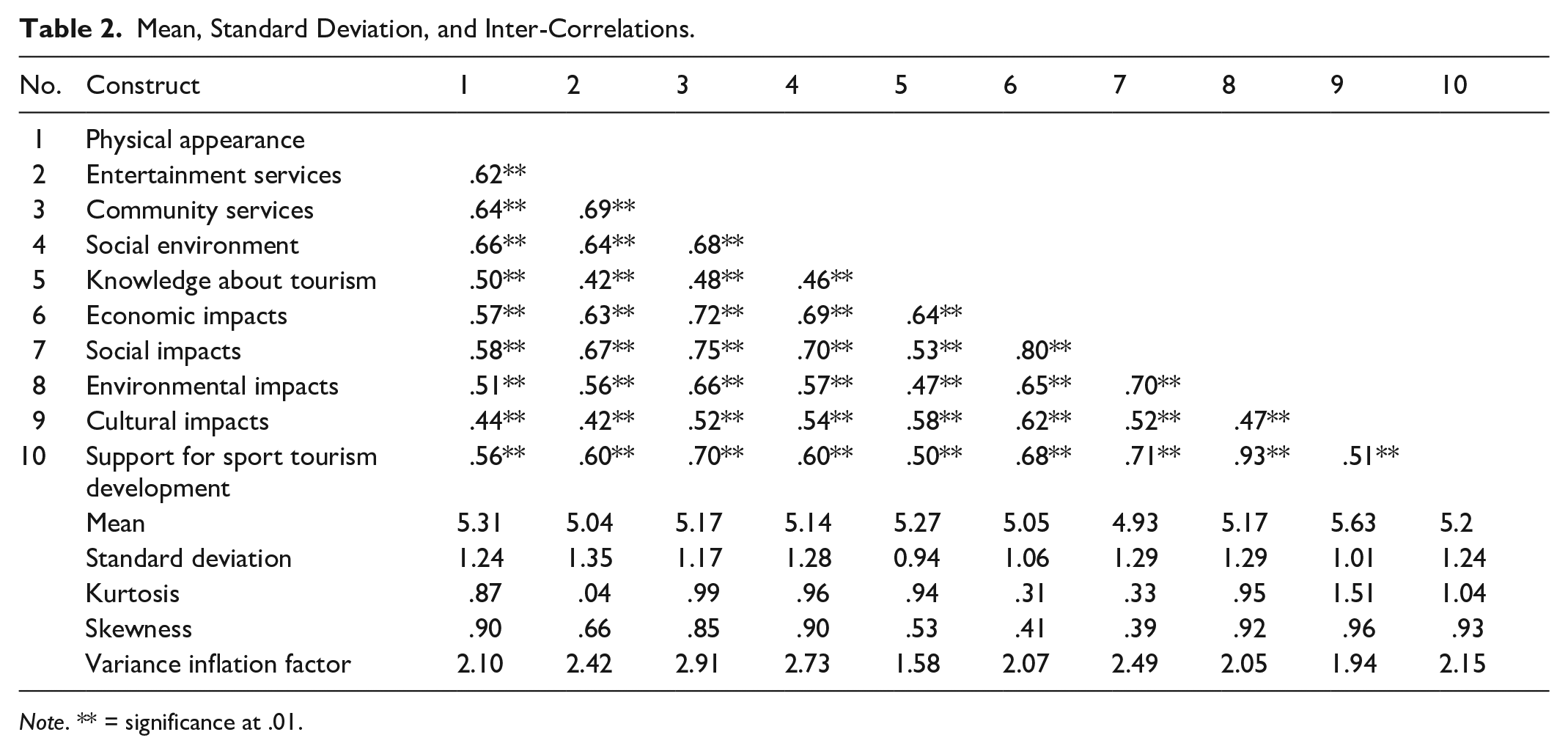
Table 2 reveals the mean, standard deviation (SD), and inter-correlation score. The mean scores for constructs ranged from 4.93 (social impacts) to 5.63 (cultural impacts) which surpassed the mid-point of 4.0. Whereas the SD value for constructs ranged from 0.94 (economic impacts) to 1.29 (social impacts and environmental impacts). We can conclude that the data points are closer to the mean (Cohen, 1988). For inter-correlations, we found that most of the constructs were correlated with each other. For the normality test, all constructs were found to be normally distributed, with skewness values falling within the range of +1 to −1 and kurtosis values within the range of +2 to −2 (J. F. Hair et al., 2022).
Mean, Standard Deviation, and Inter-Correlations.
Note. ** = significance at .01.
Preliminary Analysis
Common method bias (CMB) is a systematic error or bias that can arise in research studies where data is collected using a single source or method, such as self-report surveys (Podsakoff et al., 2003). To address potential CMB in our study, we conducted a Harman’s single-factor test using SPSS software. Employing an exploratory factor analysis with the principal component analysis method, we found that the first factor explained less than 50% of the total variance. Additionally, we conducted a full-collinearity test, and the values ranged from 1.58 to 2.91, all of which are below the threshold value of 3.3 (Kock, 2015; see Table 2). Consequently, we can affirm that CMB does not pose a significant threat to the validity of our study.
PLS-SEM focuses on maximizing the explained variance of dependent variables, rather than adhering to covariance-based assumptions, which makes traditional model fit indices (such as CFI, TLI, RMSEA) less relevant. However, we still assessed model fit indices in our analysis (J. F. Hair et al., 2022). The Standardized Root Mean Square Residual (SRMR = 0.091) slightly exceeds the threshold of 0.08, indicating a less than ideal fit. On the other hand, the Exact Fit Criterion (d_ULS) score of 29.733 falls within the acceptable range.
Measurement Model Analysis
A PLS algorithm technique was pursued to confirm construct validity. Table 3 shows the indicators’ factor loadings, average variance extracted (AVE), and composite reliability. Most of the indicator factor loadings exceeded the threshold value of 0.708 (J. F. Hair et al., 2019), except for one item from knowledge about tourism and one item from economic impacts. The AVE scores exceeded the threshold of 0.500, as recommended by J. F. Hair et al. (2019). For composite reliability, all constructs’ scores surpassed the recommended value of .708 (J. F. Hair et al., 2019). Thus, it can be concluded that the measurement model exhibits convergent validity, as it has been appropriately validated.
Convergent and Discriminant Validity Result.

Table 4 also presents the Heterotrait-Monotrait (HTMT) ratio of correlation scores. All of the HTMT correlation ratio scores were found to be below the conservative rule of thumb (HTMT < 0.85) as suggested by Henseler et al. (2015), indicating good discriminant validity between the measured constructs.
Heterotrait-Monotrait Criterion.

Structural Model Analysis
A bootstrapping with 5,000 resamples was conducted to assess the structural model. Table 5 depicts the beta scores, standard error, t-statistics, significance of the hypothesis and bootstrapping confidence interval. Results reveal that place image (β = .69, t = 25.52, p < .001), and knowledge about tourism (β = .27, t = 7.71, p < .001) are positively related to PIST, thereby supporting hypothesis 3 and 4. We also found that place image (β = .21, t = 2.76, p < .05), and PIST (β = .65, t = 8.39, p < .001) positively influence SSTD, but not knowledge about tourism. Thus, hypotheses 1 and 5 are well supported by the data, whereas hypothesis 2 is not statistically supported. In terms of effect size, only the relationship between place image and PIST reached a substantial level, exceeding the threshold of 0.35 (Cohen, 1988). The relationships between knowledge about tourism and PIST, as well as between PIST and SSTD, demonstrated medium effect sizes (>0.15). Meanwhile, the relationships between place image and SSTD and between knowledge about tourism and SSTD showed small effect sizes, falling between 0.02 and 0.15 (see Table 5).
Structural Model Results.

Note. ** = significance at .01 and * = significance at .05.
For mediating path analysis, it indicates that the relationship between place image and SSTD (β = .45, t = 7.69, p < .001) as well as the relationship between knowledge about tourism and SSTD (β = .18, t = 5.90, p < .001) are significantly mediated by PIST. Thus, hypotheses 6 and 7 are well supported by the data. Based on Zhao et al. (2010), when both the indirect and direct effects are significant, it is considered partial mediation. Conversely, if only the indirect effect is significant while the direct effect is not, it is classified as full mediation. Consequently, our analysis indicates that the relationship between place image and SSTD is partially mediated by PIST, whereas there is full mediation in the relationship between knowledge about tourism and SSTD.
For the moderation path analysis, tourism dependence significantly moderates the relationship between PIST and SSTD (β = .32, t = 2.49, p < .01). Thereby supporting hypotheses 9. Interestingly that although Hypothesis 8 is statistically significant (β = −.27, t = 2.33, p < .01), the direction of the relationship between place image and SSTD for high and low tourism dependency contradicts the predicted hypothesis. Therefore, the hypothesis 8 is not supported by the data. However, the relationship between knowledge about tourism and SSTD is not significantly moderated by tourism dependence. Thereby not supporting hypotheses 10.
Figure 2 demonstrates the moderation graph for the relationship between PIST and SSTD. It clearly shows that the strength of the relationship between the two variables is stronger for those residents with businesses related to sport tourism (with tourism dependency). In contrast, the relationship is weaker for those whose businesses are not related to sport tourism (without tourism dependency). Figure 3 highlights the moderation graph for the relationship between place image and SSTD. The graph reveals a positive relationship between place image and SSTD for those residents with businesses related to sport tourism. Conversely, place image has a negative influence on SSTD among the residents whose businesses are not related to sports tourism.

Moderation graph for the relationship between perceived impact of sport tourism and support for sport tourism development.

Moderation graph for the relationship between place image and support for sport tourism development.
For predictive model assessment, we use PLSpredict to assess the model predictive power. The results indicate that most indicators in the PLS-SEM analysis have lower RMS and MAE values compared to the naïve LM benchmark. Furthermore, the Q¹ values for the indicators in the PLS model are above zero. These findings suggest that the model demonstrates moderate predictive power and provides a reasonable representation of reality (Shmueli et al., 2019).
Discussion
This paper divides the discussion section into four key parts. First, our research shows both place image and knowledge about tourism have a positive influence on PIST among local residents. These findings align with previous empirical studies (Krishnaswamy et al., 2018; Meimand et al., 2017; Stylidis et al., 2014). Krishnaswamy et al. (2018) asserted that large crowds, noise, and disruptions to daily life create negative images, thus causing the local residents to perceive sports tourism as bringing about negative impacts. On the contrary, for a well-organized and respectful event that brings economic benefits and community pride, residents are more prone to perceive the impact as positive. Analogously, if local residents have a good understanding of how tourism can enrich their community, they are inclined to view the impact of sports tourism in a positive light. Conversely, in cases where their knowledge about tourism is limited, they may be more skeptical about the potential benefits of sports tourism and perceive the impact as negative or negligible (Meimand et al., 2017).
Secondly, we also affirmed that place image and PIST have a positive influence on SSTD among local residents. These findings align closely with Tournois and Djeric’s (2019) research findings. A positive place image, which includes the physical, social, and cultural aspects of a destination, can lead to a more favorable attitude toward sport tourism development among local residents. Likewise, a negative place image, characterized by a lack of infrastructure, security concerns, or environmental issues, can result in resistance or opposition to sport tourism development (Tournois & Djeric, 2019). In a similar manner, a positive PIST can lead to increased SSTD as residents are more inclined to recognize the advantages of such development for their community. These benefits may include increased economic activity, job opportunities, and improvements in infrastructure and amenities. Surprisingly, knowledge about tourism is not significantly related to SSTD. One possible reason is that residents with tourism knowledge may support the development of sport tourism, as it also highly depends on other factors, such as tourism dependency. Residents with knowledge about tourism tend to support sport tourism activities as long as these activities provide them with tangible benefits (Rasoolimanesh et al., 2017). However, those who perceive the overwhelming impact of sport tourism may become frustrated and reluctant to support local authorities or organizers (Chang et al., 2020).
Thirdly, our findings confirm that PIST significantly mediate two key relationships: between place image and SSTD, and between knowledge about tourism and SSTD. These results align with prior studies, including those by Chang et al. (2022), Krishnaswamy et al. (2018), Meimand et al. (2017), Rasoolimanesh et al. (2017), and Stylidis et al. (2014, 2016). As Stylidis et al. (2016) highlighted, residents who perceive positive impacts of sports tourism are more likely to develop a favorable image of their community, increasing their support for sports tourism. Conversely, negative perceptions of sports tourism can lead to a poor community image and reduced SSTD (Krishnaswamy et al., 2018). Thus, PIST acts as a bridge linking place image and SSTD. Similarly, PIST mediates the relationship between knowledge about tourism and SSTD. When residents have a clear understanding of the benefits and drawbacks of sports tourism, they tend to form positive perceptions of its impact on their community (Rasoolimanesh et al., 2017). This positive perception strengthens their support for sports tourism (Meimand et al., 2017). However, if residents perceive negative impacts, such as environmental damage, their support for sports tourism may decline despite their knowledge. Therefore, PIST plays a crucial role in shaping the connection between knowledge about tourism and SSTD.
Lastly, the statistical results evidenced that tourism dependency significantly moderate the relationship between PIST and SSTD. This finding is congruent with our speculation in this study. Residents with a significant dependency on tourism may tend to view the impact of sport tourism more favorably, consequently offering greater support for its development (Chang et al., 2020). Whereas residents who have low levels of tourism dependency may not perceive the impact of sports tourism as significant and, thus, may not be as supportive of its development. Interestingly, the results indicate a significant moderating effect of tourism dependency on the relationship between place image and SSTD. However, the relationship between place image and SSTD is stronger for residents without tourism dependency, reflecting a more positive association. In contrast, for residents with tourism dependency, the relationship is negative. Thus, the hypothesis is not supported by the data. This suggests that residents with high tourism dependency may base their perceptions of place image more heavily on the perceived advantages and disadvantages of tourism development, which, in turn, influences their level of support for sport tourism. A positive place image might also be associated with tourism-driven economic volatility (Li & Cao, 2024). For instance, if tourism demand is seasonal, businesses might struggle during off-peak periods despite the area’s attractive image, leading to dissatisfaction and reduced support for further tourism development (Contu et al., 2024; Page & Connell, 2020). On the other hand, residents without tourism dependency do not have a direct economic stake in tourism. As such, they are more likely to perceive sport tourism as a community asset that enhances the area’s reputation without posing a personal risk to their livelihood (Ud Din et al., 2024). This broader perception of benefits explains their stronger support for sport tourism development in areas with a positive place image.
It is surprising that tourism dependency does not significantly moderate the relationship between knowledge about tourism and SSTD. This may be because, regardless of whether residents are directly involved in tourism-related businesses or not, those with adequate knowledge and a positive perception of tourism are likely to support sports tourism development initiatives. In other words, residents with greater knowledge about tourism tend to offer their support, independent of their reliance on tourism for their livelihood (Holland et al., 2022). Additionally, in some contexts, tourism dependency may not be seen as a key factor influencing residents’ support for tourism activities. Instead, cultural, economic, or social considerations might hold greater importance in shaping their attitudes and support (Chang et al., 2020).
Theoretical Implications
Firstly, the results of our study suggest that the PIST can be a complementary factor in the relationship between place image and SSTD. This aligns with social exchange theory, which posits that individuals assess the costs and benefits of tourism development before offering their support (Wang et al., 2024). Residents with sufficient tourism-related knowledge are more likely to endorse sport tourism when they perceive its impacts as favorable, reinforcing the importance of knowledge dissemination and impact management in tourism planning (Park et al., 2015).
Secondly, our study also revealed that the relationship between place image and SSTD is significantly moderated by tourism dependency. Interestingly, we found that local residents with high tourism dependency may not necessarily base their support for sport tourism solely on their perceptions of the place image, as they may consider other factors such as environmental sustainability or community well-being (Holland et al., 2022). The findings extend dependency theory by illustrating that dependency does not automatically equate to unconditional support but instead introduces a more nuanced evaluation of tourism impacts. In contrast, the relationship between place image and SSTD is stronger among local residents with low tourism dependency. This suggests that these residents are more influenced by broader community perceptions and aesthetic or reputational factors, as they are not directly tied to the economic outcomes of tourism. From a theoretical perspective, this indicates the need to differentiate the motivations driving support for tourism between dependent and non-dependent community groups.
Thirdly, we further found that local residents with high tourism dependency are more likely to offer strong SSTD if they perceive a positive impact from it. Residents with high tourism dependency are more likely to exhibit strong SSTD if they perceive a positive impact (Liu et al., 2022). This aligns with the concept of instrumental rationality, where individuals prioritize direct economic benefits. On the other hand, residents with low levels of tourism dependency might exhibit greater caution regarding the potential impacts of sport tourism on their community’s natural or cultural resources, which could limit their SSTD. This finding shows the importance of integrating environmental and cultural considerations into the development of sport tourism to address concerns from non-dependent residents (Lohana et al., 2023).
Managerial Implications
This study provides several practical implications for enhancing SSTD by addressing the roles and contributions of three key referent groups: local residents, local authorities, and the Ministry and Government.
For local residents, engaging the community is essential to building residents’ SSTD. One effective approach is to promote the community’s natural beauty, unique cultural heritage, and distinct features to foster pride and attract tourists. Engaging residents in the planning and development phases of sport tourism can further strengthen their sense of ownership and attachment to the project. This can be achieved through community meetings, surveys, and workshops to gather feedback and ideas. Collaborating with local businesses and organizations ensures the alignment of sport tourism projects with the community’s needs and aspirations. It is also crucial to address the varying levels of economic dependency among residents. For individuals heavily reliant on tourism, tangible benefits such as increased revenue and job opportunities are key motivators. Conversely, for those less economically dependent on tourism, emphasizing enhancements in public amenities, recreational facilities, and overall quality of life can encourage support.
For local authorities, they play a pivotal role in fostering residents’ understanding and support for sport tourism. Communication and education initiatives can help inform residents about the favorable outcomes of sport tourism, including improved revenue, employment prospects, and quality of life. Public information campaigns, workshops, and seminars can effectively disseminate this information. In addition, local authorities can facilitate the promotion of the community’s positive image by encouraging partnerships with local stakeholders. Providing platforms for residents to participate in planning and decision-making processes can enhance their engagement and address potential concerns early in the development stages.
The Ministry of Tourism, Arts and Culture and the Ministry of Youth and Sports Malaysia play a strategic role in advancing SSTD. These entities can support local authorities by developing nationwide campaigns that highlight the benefits of sport tourism. This includes improved infrastructure, better sports facilities, and enhanced quality of life for communities. The ministries can also provide funding and policy support to encourage sustainable sport tourism projects, ensuring alignment with national goals. By working with local governments and communities, they can facilitate the integration of sport tourism into broader development plans, enhancing its overall impact.
Limitations and Future Research Recommendations
While this study has revealed several interesting findings, we acknowledge the limitations of the current research, and we offer some suggestions for future research. To begin with, given that this study employed a cross-sectional design, establishing causality may pose a challenge. Thus, making it difficult to determine the sequence of events. Without knowing whether the cause preceded the effect, establishing a causal relationship is not possible. Therefore, for future investigations, adopting a longitudinal or time-lagged design to track a cohort of individuals over an extended period can offer a more comprehensive insight into the development and changes of the variables being studied.
Secondly, this study focused only on local residents from four regions: (1) Langkawi, Kedah, (2) Sepang, Selangor, (3) Bukit Jalil, Kuala Lumpur, and (4) Tioman Island, Pahang. As a result, the findings may not apply to international or local sports tourists or residents from other areas. Future research should include both groups to capture diverse perspectives on support for sports tourism development (SSTD). Expanding the sample in this way could provide a more complete understanding of the factors influencing SSTD. Additionally, similar studies in other regions or involving a larger number of regions could help produce more generalized findings.
Thirdly, self-report bias is a potential limitation of this study. It is a common issue in social science research that relies on paper-based surveys. Respondents’ answers may not accurately represent their true thoughts, feelings, behaviors, or experiences. To address this limitation, future studies could adopt a mixed-methods approach. Combining quantitative and qualitative data collection methods can provide a more comprehensive and meaningful analysis, as the two data sets can complement and validate each other.
Footnotes

Ethical Considerations
The questionnaire and methodology for this study were approved by the Human Research Ethics committee with reference number U/SERC/190/2023.
Consent to Participate
All participants were informed verbally about the nature and purpose of the study, and their consent was obtained prior to participation in the fieldwork.
Author Contributions
Yuen-Onn Choong – Idea contribution, Introduction, and Supervision. Lee-Peng Ng – Research Method and Data Analysis. Thiam-Yong Kuek – Implications and Conclusion. Bobby Boon-Hui Chai, Lok Sin Kuar – Data collection, cleaning, and editing the entire work. Sok-Yee Teoh – Literature Review. Chee-Wee Tee – Result Reporting and Discussion.
Funding
The author(s) received no financial support for the research, authorship, and/or publication of this article.
Declaration of Conflicting Interests
The author(s) declared no potential conflicts of interest with respect to the research, authorship, and/or publication of this article.
Data Availability Statement
The datasets generated during and/or analyzed during the current study are not publicly available due the data is required to be kept confidentially which requested by third party but are available from the corresponding author on reasonable request.