




Abstract
The closed-loop supply chain (CLSC) focusing on product recycling is getting more and more attention. The question of how to motivate CLSC participants to implement product recycling effectively has come into focus. We study the optimal strategy of a two-echelon CLSC under different incentive mechanisms, characterize the return rate in the form of a state equation for its dynamic behavior and construct a closed-loop supply chain dynamic model. Subsequently, we discuss two incentives—the cooperative promotion incentive and wholesale price discount incentive—based on the no-incentive game and investigate the optimal strategy, steady-state return rate, and revenue of each CLSC player in the three scenarios. Then, the choice of incentives by manufacturers and retailers under different scenarios is determined by comparative analysis. The results indicate that retailers always favor the cooperative promotion incentive. For manufacturers, the wholesale price discount incentive is more advantageous only when the recycling efforts outperform retailers’ promotion efforts in unit cost. In most other cases, the cooperative promotional incentive is more popular since it will generate more revenue for each participant and the entire supply chain. Moreover, there is a Profit-Pareto-improvement region when the CLSC implements the cooperative promotion incentive.
Plain language summary
This research studies a closed-loop supply chain (CLSC) consisting of a manufacturer and a retailer, in which the manufacturer is responsible for product recycling. We characterize the return rate in the form of a state equation and construct the dynamic model of the CLSC, fully considering the dynamic peculiarities of recycling. Then three models based on the no-incentive game, the cooperative promotion incentive and the wholesale price discount incentive are conducted. We also conduct a comparative analysis of the optimal strategy and revenue in three scenarios to further study whether the implementation of these incentives will benefit all CLSC members in terms of increased incomes, improved environmental performance (improved return rates) and enhanced social performance (increased sales). The results show that the cooperative promotion incentive is beneficial to retailers and CLSCs. It can realize the Profit-Pareto improvement and enhance the economic, environmental and social performance of CLSCs.
Keywords
Introduction
The stock of waste products is increasing due to the shortened product renewal cycle, which results in significant environmental pollution and energy loss. The Sustainable Development Goals (SDGs), proposed by the United Nations in 2015, are the guidelines for achieving sustainable business development (Chauhan et al., 2022). Multiple actors, including corporations and non-governmental organizations, must work together to accomplish the SDGs (Delabre et al., 2020). Closed-loop supply chain (CLSC) is a unique system that integrates forward sales processes, backward activities (such as product acquisition, reverse logistics, refurbishment, recycling, and reusing) and remarketing and reselling (Ma & Hu, 2020). Recycling and remanufacturing are a supplement and improvement to the traditional supply chain. At present, remanufactured products have been proved to be a feasible and practical method to deal with recycled products (Sitcharangsie et al., 2019). The quality and properties of remanufacturing are often no less than those of the original products, while the cost is lower than that of the latter (Z. Zhang & Yu, 2022). Recycling and remanufacturing can also significantly improve the profitability and marketing ability of manufacturing firms (Heydari et al., 2017). It makes the CLSC show far more advantages than the traditional supply chain (De Giovanni et al., 2016) and align with the SDGs of “economic growth” (SDGs 8) and “responsible consumption and production” (SDGs 12). Consequently, Remanufacturing and CLSC management are becoming research hotspots in academia.
Due to the change in consumers’ environmental awareness, the ageing of reverse logistics facilities, and the increase of competitors’ investment in recycling advertising, the return rate will decline over time. In fact, the retail price, wholesale price, demand quantity and recycling efforts are always changing with time. Therefore, we should establish a dynamic CLSC model, which not only considers the long-term profits of participators in CLSCs but also is more consistent with the actual situation. One of the dynamic models that is particularly useful for studying real-time decision-making systems is the differential game, in which differential equations are typically employed to describe the dynamics (Raoufinia et al., 2019). Based on differential game theory, this research constructs a differential equation with return rate as a state variable and manufacturers’ recycling efforts and retailers’ promotion efforts as control variables. It accurately captures the dynamics and the determining elements of the return rate. Thus, the research on the dynamics of return rate in CLSCs is supplemented and developed.
In China, manufacturing businesses often make up most of the Chinese recycling industry for used and end-of-life products. For instance, the Chinese government has clearly stated that it is the duty of electric car producers to recycle used power batteries (Chai et al., 2021). However, manufacturing companies’ recycling practices by themselves are unable to reach optimal results. It requires the joint participation of other enterprises in the supply chain. Retail enterprises, as the partners who directly contact with consumers, can adopt innovation activities, such as “trade old for new” (TON) and “trade old for remanufactured” (TOR) (Wei, 2024), points for trade-in (F. Cheng et al., 2023), vouchers and discounts (Khorshidvand et al., 2023), to encourage customers to return used products and buy new or remanufactured ones. Therefore, manufacturers should take incentives to motivate retailers to get involved in the recycling project.
Given this, this research develops two schemes—the wholesale price discount incentive and the cooperative promotion incentive—to raise revenues and cut expenses for retailers, in accordance with the structure and model of the CLSC. The former is the most straightforward method for completing a transaction in a supply chain, which establishes a fixed selling price for each item between the buyer and seller (H. Huang et al., 2020). Due to its ease of use and inexpensive transaction costs, the wholesale price contract has been implemented extensively in practice (Bai et al., 2022). Additionally, it may raise the retailer’s marginal revenue. Cooperative promotion incentive is a kind of cooperative and collaboration strategy among the members of the supply chain. It seeks to raise total profit and assist retailers in sharing the promotion cost. Decision makers can find useful guidance in this research as it compares and analyses the impact of the two incentive schemes on the optimal decision made by CLSC members.
Based on the above situation, this paper will examine the optimal control strategy of each player in the manufacturer-led recycling CLSC system and study the influence of different incentive mechanisms in a dynamic environment. We consider a two-level CLSC composed of manufacturers and retailers. Among them, the manufacturer is the producer of not only the original product but also the recycling and remanufacturing of used products. In the forward channel, manufacturers sell new and remanufactured products through retailers, while in the reverse channel, manufacturers recycle waste products and remanufacture them. To better describe the dynamics of the recycling process, we establish a differential equation with the return rate as the state variable. On behalf of encouraging retailers to promote commodities actively, we design two incentives for manufacturers on the benchmark scenario (no-incentive game)—cooperative promotion incentive (Scenario C) and wholesale price discount incentive (Scenario D)—and conduct a comparative study on the impact of the two incentives on manufacturers and retailers. Based on this, the paper mainly solves the following problems:
(1) How do the cooperative promotion incentive and the wholesale price discount incentive affect the optimal strategies and benefits of manufacturers and retailers respectively?
(2) What are the effects of the cooperative promotion incentive and wholesale price discount incentive on the return rate and overall profit of the CLSC?
(3) Does the profit-Pareto-improving region and Triple Bottom Line region of the CLSC exist?
(4) Which incentive should manufacturers take to maximize the interests of manufacturers and retailers, to maximize economic, social, and environmental benefits in different operating conditions?
By providing answers to these concerns, this study will demonstrate the dynamic effects of the cooperative promotion incentive and wholesale price discount incentive on the optimal pricing, return strategy and revenues of the CLSC members and CLSC’s profit. It not only offers a theoretical framework for firms’ behavioral decisions but also makes a useful supplement and expansion of the existing research in the field of CLSC decisions. Practically speaking, it gives suggestions for CLSC participants to choose and create incentive strategies and offers ideas for manufacturing corporates to carry out recycling practices of used/end-of-life products and increase consumers’ participation in recycling activities. It also contributes to better implementations of SDG 8 (economic growth) and SDG 12 (responsible consumption and production).
The contribution of this paper can be summarized as the following:
(1) Considering that reality is always changing with time, we characterize return rate, retail price, wholesale price, demand quantity, recycling efforts, and promotion efforts as the time function, and construct a CLSC dynamic model. While the existing research on CLSCs is mostly static models in time.
(2) We establish the dynamic model of return rate on manufacturers’ recycling efforts and retailers’ promotion efforts, characterizing the dynamic peculiarities of the return rate directly. However, only the dynamic impact of goodwill was considered and the goodwill dynamic model was conducted in previous studies. They seldom take the dynamic of the return rate into account directly.
(3) From the whole CLSC, we not only compare the profits of the two incentive mechanisms, but also find the Profit-Pareto-improvement conditions and the Triple Bottom Line area of the CLSC. The incentive mechanism was seldom studied in the view of the whole supply chain and the economic, social, and environmental perspectives simultaneously.
The rest of the paper is structured as follows. Section “Literature Review” reviews the literature and proposes a research gap. Section “Methodology and Model Construction” describes the research method and establishes the models. Section “Equilibria and Steady States” presents the Stackelberg equilibrium results in three scenarios and Section “Comparison Between Scenarios” makes a comparative analysis of optimal strategies. Section “Theoretical and Managerial Implications” puts forward the theoretical and managerial implications. Finally, the conclusions are given in Section “Conclusions” and limitations and recommendations are shown in Section “Limitations and Recommendations.” The proof process is detailed in the Supplemental Appendix.
Literature Review
In this section, we mainly discuss the literature that research on CLSC decision-making, CLSC recycling, and CLSC incentive mechanisms. Then the comparison is made between the literature to find the research gap.
Decision of CLSCs
The decision-making of CLSCs has always been a hot research topic. At present, a lot of research currently focuses on the decisions of CLSCs in the aspects of pricing and recycling strategy in the static state. For example, He (2015) discussed the optimal decisions on CLSCs’ production and acquisition pricing in both deterministic and random demand scenarios and found that different recycling channels brought different optimal recycling prices. Feng et al. (2022) explored CLSCs’ recycling strategies and profits and discovered that increasing recycling prices and service levels might effectively promote recycling amounts. X. Wan et al. (2023) investigated the impact of a federated learning platform on the optimal decisions and revenues of CLSCs. A limited number of scholars have also examined CLSCs’ dynamic equilibrium decision-making from a dynamic angle, among them, evolutionary games are a commonly used method. For instance, Bera and Giri (2023) examined the complex interaction between each participant in determining the old product recycling strategy and explored the impact of parameters on their long-term strategies by a tripartite evolutionary game. Y. Wan and Yang (2024) analyzed the long-term recycling behavior and evolving stable recycling strategies of manufacturers and retailers under government intervention. At present, another way to study dynamic CLSCs is through differential games. For example, Yu and Hou (2022) explored the optimal equilibrium strategy and evolution characteristics of the subsidy mechanism in CLSCs based on the differential game. Z. Zhang and Yu (2023) considered the dynamic features of product goodwill and return rate and discussed the pricing, investment and recovery decisions of CLSC members under various rights structures by constructing a differential game model. This research falls within the topic of the CLSC decision problem, so we decided to build a differential game.
Recycling of CLSCs
Studies on the recycling of used products mostly concentrate on the selection of recycling channels. Pan and Lin (2021) studied the pricing of the two-stage CLSC considering cross-channel recycling and channel preferences and demonstrated that different channel preferences led to different pricing strategies and choices among manufacturers and retailers. Matsui (2022) examined a dual recycling channel consisting of recycling companies, online channels and traditional third parties and concluded that recycling channels have first-mover advantages. Ma et al. (2023) explored how blockchain technology affected manufacturers’ selection of recycling channels in CLSCs. There are two distinct research directions in existing literature two according to the dynamic change of return rate. Some scholars believe that the return rate is static. For instance, Xu et al. (2023) built a Stackelberg game model with the return rate of utilized power batteries as a parameter and discussed the influence of static return rate on CLSC decision. Hao et al. (2024) investigated the effect of government incentives on CLSC participants’ pricing decisions when customers’ return rate of used products was a fixed parameter. Some other academics consider that the return rate is dynamic, which is characterized by differential equations. For example, De Giovanni (2017), Xiang and Xu (2019), and Z. Zhang and Yu (2023) constructed a link between return rate and product goodwill to characterize its dynamic indirectly. Xiao and Huang (2019), Z. Huang (2020), and Xiang and Xu (2020) constructed a differential equation of the return rate based on the recycling efforts to describe the dynamic of the return rate directly. The dynamic properties of the return rate over time are also considered in this study. Based on the recycling efforts of manufacturers and the promotion efforts of retailers, the dynamic model of return rate is constructed directly.
Incentive Mechanisms of CLSCs
Since incentive strategies are crucial in reverse logistics, the incentive mechanism design of CLSCs has recently drawn the attention of numerous academics (F. Cheng et al., 2023; Ruiz-Torres et al., 2019). A large body of research highlights the fact that centralized supply chains always outperform decentralized supply chains (W. Cheng et al., 2022). However, a decentralized CLSC can perform as well economically and environmentally as a centralized CLSC with appropriate contracts and incentives (Zhao et al., 2022). The wholesale price contract can achieve that and realize the coordination of supply chains. Zheng et al. (2021) studied the implementation of a simple price scheme consisting of the wholesale price and transfer price by manufacturers, which ultimately improved the recycling efficiency of waste products and realized the coordination of dual-channel CLSCs. Zhao et al. (2022) introduced wholesale price contracts and quality cost-sharing contracts to achieve supply chain coordination in a loss-averse CLSC consisting of manufacturers and retailers. As one of the collaboration strategies in CLSCs, the cooperative promotion contract has gradually attracted the attention of scholars in recent years. Kuchesfehani et al. (2023) described and contrasted the strategies and outcomes in two scenarios where the cost of green activities (advertising and publicity related to recycling) is borne by the manufacturer alone and shared between the retailer and the manufacturer. Zhou et al. (2023) developed a differential game model under government intervention and found that Pareto improvements could be achieved whether manufacturers decided to work with suppliers or retailers. B. Zhang and Qu (2023) proposed a coordination mechanism of cost-sharing (manufacturers and retailers share advertising investment costs) and revenue-sharing contracts. In this study, the cooperative promotion incentive and the wholesale price discount incentive are compared and analyzed to provide a reference for manufacturers, so that the CLSC’s economy, environment and society performance can be enhanced.
Research Gap
The distinctions between the proposed model in this study and existing models in the literature are summarized in Table 1. By contrast, this research considers the dynamic of the return rate over time and directly constructs its differential equation to describe its dynamic changes, whereas the existing literature mainly focuses on indirectly characterizing its dynamic through the goodwill of products. Moreover, the research on how retailers’ promotions affect the dynamics of the return rate has not been thoroughly considered. The previous studies on CLSC incentive strategies mostly focused on conventional incentive schemes and few compared the wholesale price discount and cooperative promotion contracts in a single setting. In summary, the research gaps are as follows.
The Comparison Between the Contents of the Research and Related Literature.

(1) The above models in the CLSC literature are mostly static in time. However, the reality is always changing with time. For instance, the price and recycling efforts are all functions of time. The static CLSC model does not consider the long-term profits of the participators and the optimal solution is not the global optimal solution. Therefore, it is necessary to use a dynamic model to analyze the CLSC system.
(2) A few articles in the CLSC literature consider the dynamic variation of the return rate. Most of them construct the relationship between return rate and product goodwill to characterize the dynamic return rate indirectly through the dynamic goodwill model. Little of literature can model the dynamic property of the return rate in time directly.
Methodology and Model Construction
In this section, we first describe the methods and background of the model, and then define the relevant parameters and variables involved in the model. Finally, we establish three models based on the no-incentive game, the cooperative promotion incentive and the wholesale price discount incentive.
Research Method
The Stackelberg model emphasizes strategy selections in the master-slave game when the positions of participants are inconsistent (Xu et al., 2023). In the study, the manufacturer and the retailer are two different-sized corporates operating in an oligopolistic market. The former acts as the leader and the latter is a follower. The decision-making process is a sequential game in which the decision is made first by the leader, followed by the followers’ observation and subsequent decision-making (Sayadian & Honarvar, 2022). Thus, this study belongs to the Stackelberg model, which is usually solved by backward induction.
The differential game is a special, continuous dynamic game to describe the dynamics of a system with differential equations. The advantage is that players can predict the strategies of their competitors in continuous time using differential games (Raoufinia et al., 2019). Optimal control methods are typically used to solve it (Chan et al., 2018). This study considers the dynamic features of return rate, that is, the return rate will eventually decrease due to the ageing reverse logistics facilities and the increase of competitors’ recycling advertising investment. Therefore, this study constructs a differential equation with the return rate as the state variable and discusses the strategies of each participant to maximize their aims through continuous games in a time-continuous system. As a result, the Stackelberg model serves as the foundation for the differential game in this study. This model is solved using MATLAB software in conjunction with the Hamilton-Jacobi-Bellman (HJB) equation, which is the conventional way of solving differential game problems in optimal control theory (Friesz, 2010). The differential game can dynamically depict the evolution process of strategies adopted by supply chain members. It is an extension and supplement to the study of supply chain incentives.
Background of the Model
This study investigates a two-echelon CLSC consisting of an upstream manufacturer (remanufacturer), denoted by M, and a downstream retailer, denoted by R, in an oligopolistic market. The CLSC is made up of a forward flow of new items and a reverse flow of recycled products (see Figure 1). Within the forward supply chain, M uses raw materials to produce new products and sells them to R at a unit wholesale price

Structure of the two-echelon CLSC with two incentives.
In the CLSC, M is generally a sizable manufacturing enterprise with significant clout in the supply chain (such as Gree, Midea, etc., in the home appliance industry), so M acts as a leader and R acts as a follower in the supply chain. We assume that all commodities sold by R originate from M and that the CLSC is a make-to-order (MTO) system in which the number of orders from R equals the amounts produced by M (Lee, 2020). As a result, CLSC members are exempt from having to consider the inventory cost of unsold goods resulting from shifts in demand. It is assumed that M has an infinite capacity for manufacturing and can meet the market demand. This work does not account for any stochastic supply chain features.
Parameters and Variable Definitions
All relevant parameters and their symbolic expressions are in the Supplemental Appendix. We use the return rate

Where
The rationality behind equation (1) reflects in the enterprise’s awareness of environmental protection and the promotion of consumers to recycle used products. They can use media resources such as sustainable reports, green advertising, and green trademarks to achieve this (De Giovanni, 2014; Yusof et al., 2012). Enterprises can have an inexhaustible motive force to promote the reverse recycling of products because the cost of using recycled products for remanufacturing is lower than that of using new materials to manufacture new products. Therefore, M can obtain more operating benefits through remanufacturing, which is the key point for corporations to implement the CLSC.
Similar to many scholars (Buratto et al., 2019; Ma et al., 2023; Z. Zhang & Yu, 2022), it is assumed that the investment cost of recycling efforts and promotion efforts are convex functions of


Among them,
With the enhancement of consumer environmental awareness, on one hand, consumers participate in waste product recycling activities positively. On the other hand, consumers show a higher willingness to buy green remanufactured products (De Giovanni, 2016, 2018). To characterize this repurchase intention, referring to De Giovanni (2017, 2018), Xiang and Xu (2019), and Z. Zhang and Yu (2022), we assume that the demand is the function of the retail price and return rates described as the following equation:

where
Equation (4) is an extension of the demand function form
Establishment of the Model
To get more used products into the recycling flow, M has created incentives for R to join its efforts. According to the CLSC structure and the product flow, there are two ways for M to encourage R: first, M can lower R’s costs by cooperating with R and jointly promote sales and share part of R’s promotion costs; second, M can raise R’s income by offering R a discount on the wholesale price. The former is called the cooperative promotion incentive, whereas the latter is known as the wholesale price discount incentive. To fully understand the effects of the two incentive mechanisms, the non-incentive scenario is first introduced as a standard model to facilitate the subsequent comparison and analysis of the two incentive models.
We first introduce the no-incentive model. In this scenario, M does not provide any incentives for R, which is also called the benchmark game (Scenario B). The game evolves according to the following steps: M announces the wholesale price


Then we explore the cooperative promotion incentive (Scenario C), where M announces that he will share part of R’s total promotion costs. Chutani and Sethi (2012) found that manufacturers sharing a certain proportion of advertising costs for retailers who promote their brands can effectively stimulate the enthusiasm of retailers, and this method is adopted by many industries based on the research of vertical cooperative advertising at home and abroad. Therefore, assuming that M relies on its strength to dominate the dialogue with R and is willing to take the initiative to assume part or all of the promotion costs for R in this CLSC, this share ratio is expressed in
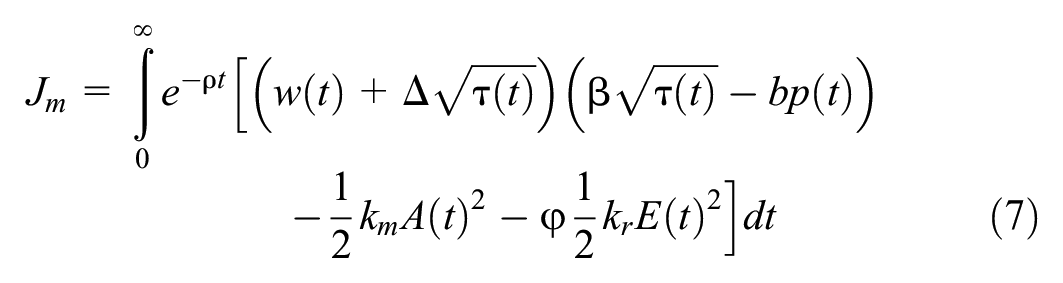

Objective functions (7) and (8) maximize players’ profits through sales and remanufacturing activities. The initial two parts of the equation (7) are the same as Scenario B, whereas the third term means that M shares
Next, we discuss the wholesale price discount incentive. In this scenario, M gives the retailer a discount based on the original wholesale price and expects to ease the burden of R through this incentive and stimulate his sales enthusiasm. This approach was frequently applied among suppliers and achieved the expected results (Buratto et al., 2019; Sacco & De Giovanni, 2019). Hence, it is assumed that M occupies a dominant position relying on its strong strength when negotiating with R in this CLSC, and he is willing to give R a certain wholesale price discount. The discount coefficient is expressed by
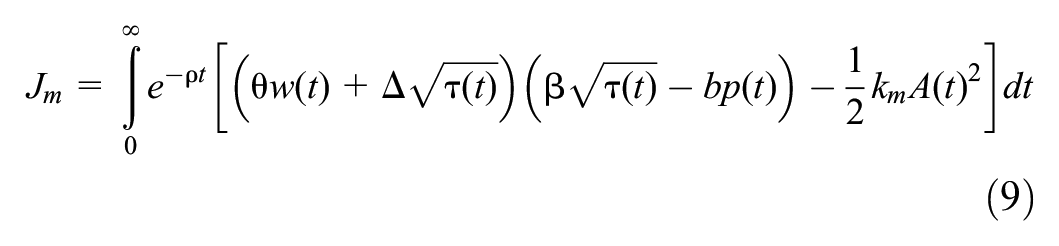
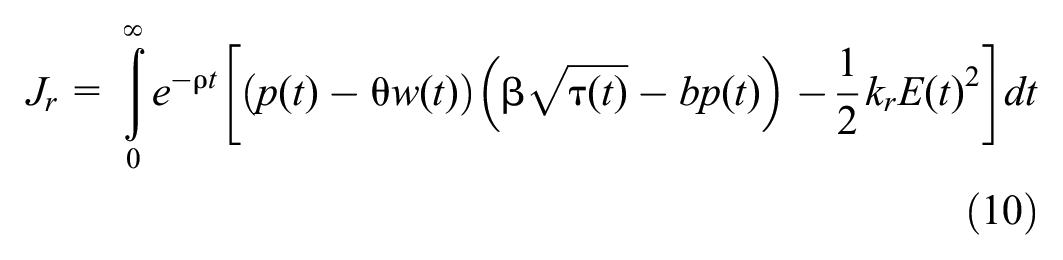
This incentive has a similar effect to the cooperative promotion incentive. M can adjust R’s profit through wholesale price discount, but it is a weakening to M’s marginal profit. Objective functions (9) and (10) maximize each player’s profits through sales and remanufacturing activities. Different from Scenario B, the first term of the equation (9) represents the total profits when M gives R a wholesale price discount, and the first term of the equation (10) refers to the sales profits when R accepts M’s wholesale price discount.
Equilibria and Steady States
In this section, we try to deduce the optimal strategies and the steady state in equilibrium in Scenarios B, C, and D. The three models are all differential games based on the Stackelberg model, so the problem can be solved using backward induction and the HJB equation. Since M is the CLSC leader, R’s optimal decisions are sought out first according to backward induction. Firstly, R’s Value Function
Before going into details, we need to consider the condition
Benchmark Scenario (B): No-Incentive Game
We start by analyzing the no-incentive game, in which M does not provide any incentive for R. This situation is set as the Benchmark scenario to compare interests and cooperation strategies. According to the solution process, we get the optimal equilibrium strategy in this model shown in the following theorem.


where the value functions for the two players are given by


The optimal time evolution trajectory of the return rate in Scenario B is calculated as follows:

in which

namely,

In the Benchmark Scenario, all strategies are state-dependent, and all players will consider the cumulative return rate
Since
Since
Scenario C: Cooperative Promotion Incentive
In this section, we establish a cooperative promotion game in which M announces that he will share part of R’s total promotion cost. The purpose of the cooperative promotion plan is to make the two players have higher incomes by coordinating the supply chain. The following theorem describes the optimal equilibrium strategy in this model.




where the value functions for the two players are given by


The optimal time evolution trajectory of the return rate in Scenario C is calculated as follows:

in which

The optimal equilibrium strategies of both manufacturers and retailers are positive in this scenario based on the above assumptions. The findings in Scenario C are consistent with those in the benchmark scenario, that is, both players expect a higher return rate, which will increase their incomes. Hence, their participation in the improvement of the return rate will also increase. To protect the interests, M can also support part of R’s promotion efforts, thereby having control over R’s strategies and the entire channel. Due to
Scenario D: Wholesale Price Discount Incentive
In this section, we construct an incentive for wholesale price discounts. It is assumed that M gives a certain discount to R on the original wholesale price, and the discount coefficient is




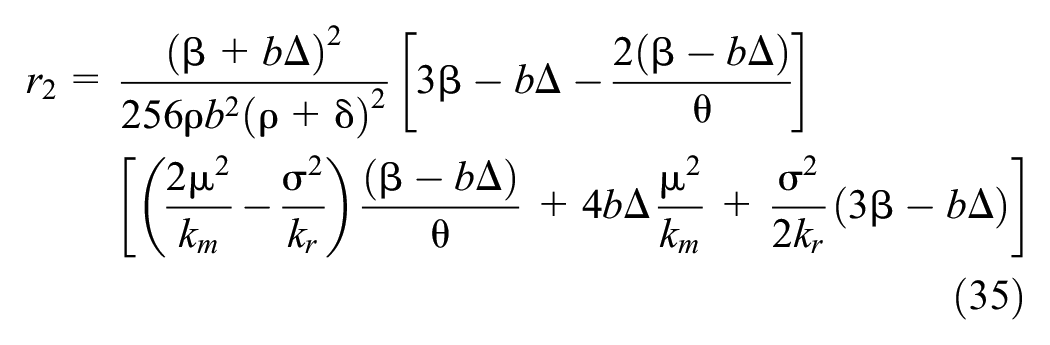
where the value functions for the two players are given by


and parameters



The optimal time evolution trajectory of the return rate in Scenario D is calculated as follows:

in which

In this scenario, the interests of M and R are so closely related to the return rate that they all expect to have a higher return rate. Since
Comparison Between Scenarios
In this section, we compare the optimal strategies, such as the return rate, pricing, recycling efforts, and promotion efforts, and the profits of manufacturers, retailers, and the whole CLSC in Scenario B, C, and D.
Comparison of the Optimal Strategies
In the Benchmark Scenario, M seeks performance in both promotions and operations and keeps all benefits by closing the loop, namely increasing sales and the return rate. In Scenario B, M’s recycling efforts have nothing to do with the cost-sharing proportion, so it continues to keep the original recycling efforts level. In Scenario C, M’s recycling efforts level will be higher than in Scenario B, since he transfers part of his unit product revenue to R. For the sake of maintaining or increasing the original revenue, M can only make greater efforts to recycle the product to increase the return rate.
Compared with the no-incentive scenario, the cooperative promotion contract can motivate R to carry out the promotion better and achieve the purpose of the incentive ultimately. The reason is that M shares part of the advertising cost for R and it stimulates R’s positivity for product promotion so that R has more capital to carry out marketing. On the contrary, the wholesale price discount contract lowers R’s motivation for sales. The explanation is that R’s unit revenue has increased, and so has his income, thus laziness gradually comes out in product promotion. Thereby, the wholesale price discount mechanism is not conducive to stimulating the enthusiasm of retailers.
The return rate of CLSCs is higher in Scenario C than in the no-incentive scenario. The reason for that is part of R’s promotion cost is transferred to M and its enthusiasm for marketing increases. It raises consumers’ purchase of new products. Moreover, R’s positive publicity heightens consumers’ environmental protection awareness and encourages consumers to return more used products. In this sense, the cooperative promotion incentive makes CLSC sales increase and become more environmentally friendly.
In Scenario D, since the promotion motivation of R is inhibited, it is scarcely possible for consumers to strengthen their environmental awareness through R, and the return rate will be greatly affected. At this point, the increase in the return rate can only be achieved through the recycling efforts of M owing to the stimulation of M’s recycling enthusiasm, which makes the two players counterbalanced. In consequence, only when M’s recycling efforts of the unit cost have a greater impact on the return rate than R’s promotion efforts on the unit cost can the return rate in Scenario D be higher than that in Scenario B. Compared with the cooperative promotion incentive, only when the discount coefficient
Cooperative promotion incentives can always make the retail price increase. When M’s recycling efforts are more effective than R’s promotion efforts in the unit cost (i.e.,
The smaller the discount coefficient
Comparison of the Economic Value
In this section, we show a complete dynamic analysis of the value functions of manufacturers, retailers, and the whole CLSC. Interestingly, the company’s decisions are significantly affected by the variations of all parameters. Therefore, we set the basic parameters based on previous studies on market and operation management (Buratto et al., 2019; De Giovanni, 2018). To fully study the strategies and benefits with different parameters, we set two cases of dynamic parameters according to the research results in Section “Comparison of the optimal strategies.” Each parameter setting is as follows.
Demand parameters:
Reverse logistics parameters:
Dynamic parameter: Case I: when
As shown in Figures 2 and 3, regardless of the magnitude of

Comparison of retailers’ value functions in Scenario B, C, and D when

Comparison of retailers’ value functions in Scenario B, C, and D when
(i) When
(ii) When
When

Comparison of manufacturers’ value functions in Scenario B, C, and D when
When

Comparison of manufacturers’ value functions in Scenario B, C, and D when

The value area of
Here we set that the overall profit of the CLSC is the sum of M’s and R’s profits, namely,

Comparison of value functions of the whole CLSC in Scenario B, C, and D when

Comparison of value functions of the whole CLSC in Scenario B, C, and D when
Profit-Pareto-Improving Conditions
Based on the above research results and propositions, we now seek to determine the conditions for coordination, which means determining a profit-Pareto-improvement region.
According to Proposition 5, R can always have better returns under the cooperative promotion incentive. On the grounds of Proposition 6, both when
Triple Bottom Line Region
Based on the above research results (Proposition 3–6), we analyze the following two situations:
(i) When
(ii) When
Theoretical and Managerial Implications
Theoretical Implications
In this study, the impact of CLSC members on the return rate is precisely described by the differential equation of the return rate, which is explicitly constructed considering its dynamic characteristics and the efforts of all the supply chain participants. It is the supplement and expansion to the body of knowledge already available on the return rate. Furthermore, a differential game model is built to characterize CLSCs dynamically to achieve the long-term equilibrium decisions of each participant, which serves as a theoretical guide for the effective application of differential games in CLSC decisions. In addition, this study fills an important gap in the literature on CLSC incentives by examining the effects of the wholesale price discount and cooperative promotion incentives on CLSC pricing, recycling and advertising decisions. The findings have important direction significance to increase the recycling rate of waste products, the profitability and the economic, environmental and social performances of supply chains. The research has also promoted the effective implementation of the SDGs.
Managerial Implications
For manufacturers, it is recommended that remanufacturing enterprises select the cooperative promotion incentive in the early stage of investment in recycling outlets, equipment, and channels. Because investment in recycling is frequently ineffective at first. Relatively speaking, the retailer’s product promotion channel is better established and easier to invest in profitably. However, the manufacturer needs to give a considerable concession to the retailer to fully encourage him to promote actively, which will increase the sales and the return rate of the product.
For retailers, the cooperative promotion incentive is always their favorite option, because it can always bring more profits to them in any case, while the wholesale price discount incentive has the opposite effect. The manufacturer is further encouraged to select the cooperative promotion incentive as a result.
From the whole CLSC, the cooperative promotion incentive is also the best option. The cooperative promotion incentive consistently results in greater advantages for the entire supply chain regardless of the circumstances. From a social and environmental point, it helps achieve the Triple Bottom Line under appropriate conditions, which not only considers social responsibility but also contributes to the sustainable development of the environment.
Conclusions
In this study, we investigate whether the implementation of a cooperative promotion incentive (Scenario C) or wholesale price discount incentive (Scenario D) can result in higher profitability for a two-echelon CLSC composed of manufacturers and retailers. We characterize the return rate in the form of a state equation and construct the dynamic model of the CLSC, fully considering the dynamic peculiarities of recycling. On this basis, we study the optimal strategy of the wholesale price, retail price, recycling efforts, and promotion efforts with dynamic yield under the two incentive mechanisms, and the steady-state variation of product return rate. We also conduct a comparative analysis of the optimal strategy and revenue in three scenarios to further study whether the implementation of these incentives will benefit all CLSC members in terms of increased incomes, improved environmental performance (improved return rates) and enhanced social performance (increased sales). The conclusions are as follows.
(1) Compared with no incentive, manufacturers and retailers prefer the cooperative promotion incentive. In Scenario C, manufacturers do not need to increase their investment in recycling, whereas it can also improve the return rate and environmental performance of the CLSC. Although this incentive will bring dual marginal effects, sales are still increasing as the improved environmental performance will eventually translate into greater market potential.
(2) Compared with no incentive, the manufacturer’s attitude to the wholesale price discount incentive is more complex, while the retailer’s attitude is negative. Only when manufacturers’ recycling efforts outperform retailers’ promotion efforts in the unit cost (Case II) can the CLSC’s environmental performance be improved. At this point, it will also have a dual marginal effect, but sales continue to increase, which means that the incentive still creates greater social benefits. Therefore, the revenue of manufacturers has gone up. In any case, retailers invest less in promotions, which results in a weaker enthusiasm for promotions and a lower final income than in the no-incentive scenario. In consequence, retailers are unwilling to select the wholesale price discount incentive.
(3) In most cases, the cooperative promotion incentive typically outperforms the alternative for both manufacturers and retailers. In the wholesale price discount incentive, manufacturers need to invest more in product recycling, and the CLSC’s environmental performance will only improve when Case II appears and the discount is substantial. In addition to these two situations (Case II with a high discount coefficient and Case I), the cooperative promotion incentive performs well in terms of the manufacturer’s recycling investment, income, CLSC’s environmental performance, and overall revenue. In fact, the requirement that wholesale price discount is particularly big is rare in practice. As a result, manufacturers will favor the cooperative promotion incentive in most situations. For retailers, the cooperative promotion incentive will always bring more profits.
(4) For the entire CLSC, when the cooperative promotion incentive is adopted, a Profit-Pareto-improvement region exists in the parameter region with greater income of the manufacturer. Meanwhile, the CLSC can benefit in three aspects of economic, environmental, and social performance in the corresponding parameter region, namely, the CLSC achieves the Triple Bottom Line.
Limitations and Recommendations
We describe some limitations of this study and potential directions for future research. First, we limit our analysis to two incentive mechanisms. However, we can study many other types of incentive mechanisms, such as joint incentive mechanisms, RRSC (Reverse Revenue Sharing Contract) coordination mechanisms and a token incentive mechanism. Secondly, the supply chain structure studied in this paper is relatively simple, without considering the impact of competition. In future research, the competition between the upstream and/or downstream of the supply chain can be considered. In other words, what are the optimal decisions for the CLSC when multiple manufacturers or retailers are involved? Finally, with the development of information technology, artificial intelligence (AI) and machine learning (ML) are gradually playing a role. The influence of AI and ML on recycling channels and decisions in the CLSC can be explored in the future.
Supplemental Material
sj-docx-1-sgo-10.1177_21582440241264378 – Supplemental material for Cooperative Promotion and Wholesale Price Discount Incentives in a Closed-Loop Supply Chain with Dynamic Returns
Supplemental material, sj-docx-1-sgo-10.1177_21582440241264378 for Cooperative Promotion and Wholesale Price Discount Incentives in a Closed-Loop Supply Chain with Dynamic Returns by Wen Cheng, Qian Li, Qunqi Wu, Yahong Jiang and Fei Ye in SAGE Open
Footnotes
Acknowledgements
We are grateful to the National Social Science Foundation and those who helped with the paper on the writing process. We are also thankful to the editor and anonymous reviewers for valuable comments and suggestions on an earlier draft of this paper.
Declaration of Conflicting Interests
The author(s) declared no potential conflicts of interest with respect to the research, authorship, and/or publication of this article.
Funding
The author(s) disclosed receipt of the following financial support for the research, authorship, and/or publication of this article: This research was supported by National Social Science Foundation of China (Grant number 19CGL004), Zhejiang Provincial Education Science Planning Project (Grant number 2023SCG308) and Teaching Research Project of the National Logistics Vocational Education Teaching Steering Committee (Grant number JZW2023359).
Ethical Approval
It is not applicable.

Supplemental Material
Supplemental material for this article is available online.
Data Availability Statement
Data sharing not applicable to this article as no datasets were generated or analyzed during the current study.
References
Supplementary Material
Please find the following supplemental material available below.
For Open Access articles published under a Creative Commons License, all supplemental material carries the same license as the article it is associated with.
For non-Open Access articles published, all supplemental material carries a non-exclusive license, and permission requests for re-use of supplemental material or any part of supplemental material shall be sent directly to the copyright owner as specified in the copyright notice associated with the article.
