




Abstract
This study examines the triggering mechanism of hotel guests’ engagement in word-of-mouth (WOM) by integrating guest experience, well-being perception, one-to-one WOM intention, one-to-many WOM intention and many-to-many WOM intention. A survey was conducted with 306 experienced guests of the resort hotel sector in China. Partial least squares structural equation modeling (PLS-SEM) was employed to estimate relationships between guest experience, well-being perception and WOM intentions. The findings of this study indicated a significantly direct effect of esthetic experience on well-being perception, followed by escapism experience, education experience and entertainment experience. The findings also revealed well-being perception was a salient predictor of WOM intentions (i.e., one-to-one, one-to-many and many-to-many), aided to tourism and hospitality literature by providing empirical evidences to demonstrate how different WOM intentions were triggered by various experiences via psychological reaction of well-being perception. The theoretical and managerial implications for the tourism marketers were discussed.
Introduction
Extensive attention has been paid to WOM research in the field of marketing. WOM information, especially generated through consumer-to-consumer communication, is evaluated as an accessible and credible source for potential guests to decide with their hotel choices (Bae et al., 2017; Jeong & Jang, 2011). Due to the intangible and experiential nature of hotel attributes, guests cannot evaluate products, services or experiences before actual consumption, whereas WOM information helps to enhance the understanding of tangible factors, reduce uncertainties and risks in terms of intangible factors and ultimately make concrete decisions (Jeong & Jang, 2011; Oliveira et al., 2020; Phillips et al., 2017). To this end, WOM is widely accepted as a marketing tool to influence potential guests’ aspirational hotel consumption.
Given the great importance of WOM, it’s salient for resort hotel practitioners and researchers make deliberate considerations to encourage guests’ voluntary engagement in WOM. However, the context of resort hotel hasn’t been paid too much attention even through it has been acknowledged as an important segment market for tourism and hospitality industry. It’s not surprising scholars have called for more studies with regard to this interesting context (Ali & Amin, 2014; Ali, Amin & Cobanoglu, 2016). Commonly, the choices of resort hotel by guests are driven by the anticipations on improvement of quality of life (Ahn et al., 2019; Huang et al., 2019; Sirgy, 2019). While resort hotel experiences have distinguished potentialities to satisfy guests’ needs of physical, mental and spiritual well-being (Ahn et al., 2019; Ali & Amin, 2014; Han et al., 2019), the mechanism of resort hotel guests’ WOM behavior remains unknown due to limited investigations on guest experience and well-being.
Furthermore, to encourage guests’ active participation in WOM communication, it’s necessary to understand why and how people engage in WOM. Scholars have argued that previous typology of traditional WOM and electronic WOM neglects the nature of personal and virtual interaction of WOM (Chen & Dwyer, 2018; Šegota et al., 2021). Specifically, the typology of WOM should be expanded based on the thoughts of why and how people share information via WOM. In other words, due to the dynamics of human being, people engage in WOM with different ways and purposes, and thus, the triggers can be varied from the nature and contexts of communication to people’s psychological mechanisms (Chen et al., 2015; Šegota et al., 2021). Taken account into these arguments, WOM has been classified into a new typology based on the “different natures of how and why WOM is created and communicated”: one-to-one WOM, one-to-many WOM and many-to-many WOM (Šegota et al., 2021). Despite extensive tourism and hospitality literature has explored WOM or eWOM (e.g., Cheng et al., 2020; Oliveira et al., 2020; Phillips et al., 2017), relatively little studies have explored the new typology of WOM from a marketing perspective, with some exceptions which examined human-place relationships (Chen & Dwyer, 2018; Chen et al., 2015; Šegota et al., 2021; Yang et al., 2022). In addition, extant literature on the Theory of Planned Behavior has demonstrated that behavioral intention is an immediate but significant predictor of an actual behavior (Ajzen, 1985; Gansser & Reich, 2023; Lam & Hsu, 2006). In this vein, given the new typology of WOM, behavioral intention (i.e., one-to-one WOM intention, one-to-many WOM intention, many-to-many WOM intention) is expected to be a suitable predictor of WOM behavior in this study.
Taken together, this study aims to address two aforementioned knowledge gaps. Firstly, by staging the experience economy in the resort hotel context, this study establishes a comprehensive framework to uncover the relationships between guest experience, well-being perception and WOM intention. Secondly, this study articulates the triggering mechanism of different WOM intentions from the marketing perspective through investigations on resort hotel guests. Current literature of experience economy, well-being perception and WOM intention is reviewed, followed by a conceptual framework which depicts associations between guest experience (i.e., entertainment experience, education experience, esthetic experience and escapism experience), well-being perception and WOM intentions (i.e., one-to-one WOM intention, one-to-many WOM intention, many-to-many WOM intention). Findings of this study are likely to offer an advanced understanding on the triggering mechanism of WOM intention. Accordingly, strategies for resort hotel practitioners to encourage guests’ voluntary engagement in different kinds of WOM communication are provided as well.
Literature Review
WOM Intentions
WOM is defined as “the communication between consumers about a product, service, or a company in which the sources are considered independent of commercial influence” (Litvin et al., 2008, p. 459), which focuses on the perspective of consumer-generated content through WOM communication. Due to the advancement of technologies in communication, various channels are available for consumers to participate in WOM, such as email and blogs, product review and hate sites, chatrooms and virtual communities (Chen et al., 2014, 2015). As an independent individual, consumers may have different choices to participate or not participate in diversified WOM communications, therefore, a new typology of WOM is conceptualized based on the possible linkages among motivations, channels and individual preferences (Chen et al., 2014; Šegota et al., 2021).
Based on Šegota et al.’s (2021) classifications on WOM, this study conceptualizes one-to-one WOM intention as behavioral intention of “WOM generated by one person and communicated to another person in private” (Šegota et al., 2021, p. 802), for instance, private conversations with family or friends via instant messaging, face-to-face communication. One-to-many WOM intention refers to behavioral intention of “WOM generated by one individual to share with others without identifying the audience” (Šegota et al., 2021, p. 802), such as individuals’ WOM information sharing in public blogs or social media. Many-to-many WOM intention is defined as behavioral intention of “WOM behaviors in open group discussions or themed online communities, where conversations occur with almost no focus on participants’ identities” (Šegota et al., 2021, p. 802). Provided the assumption that behavioral intention has been greatly utilized as an immediate determinant of an behavior (e.g., Gansser & Reich, 2023; Konuk, 2019; Mahardika et al., 2020; Rasoolimanesh et al., 2022), these three WOM intentions are applied in this study to explore the triggering mechanism of WOM communication among resort hotel guests in post-experience stage.
Well-Being Perception
The concept of well-being perception, as an interchangeable term of quality of life, has received considerable concerns in tourism and hospitality literature (Filep & Laing, 2019; Hwang & Lyu, 2015; Sirgy et al., 2006). Well-being perception refers to “consumers’ perception of the extent to which a brand positively contributes to a quality of life enhancement” (Hwang & Lee, 2019, p. 315). Providing memorable experiences which satisfying travelers’ needs of good quality of life has been acknowledged as a key mission of the tourism and hospitality industry (Sirgy, 2019). In this regard, well-being perception has been underscored as a desired experiential outcome in tourism and hospitality research (Hwang & Lee, 2019; Hwang & Lyu, 2015).
The attractiveness of destination attributes (e.g., luxury physical surroundings, nature-based environment) is an important pull factor that urge travelers to visit a destination (Aggarwal et al., 2023; Alén et al., 2017; Ward, 2014). The resort hotel possesses hedonic and eudaimonic characteristics (Voigt et al., 2010), which provides prominent outdoor and indoor environment (e.g., nature-based environment, luxury ambience), as well as distinguishable activities and facilities (e.g., themed skiing, boating, spa experience) (Ahn et al., 2019; Ali & Amin, 2014; Han et al., 2019). Therefore, resort hotel can advance guests’ quality of life through satisfactions of guests’ needs and desires for fun, happiness, relaxation, peace, refreshment (Ahn et al., 2019; Han et al., 2019; Huang et al., 2019; Sirgy, 2019). Attracted by experiences in resort hotel, guests may anticipate well-being needs to be satisfied and their quality of life to be improved. Hence, well-being perception is assessed as an experiential outcome of guest experience in this study.
Guest Experience and Well-Being Perception
An experience is evoked when firms stage or deliver themed goods, services, activities or events or other elements as external stimuli, and engage individuals on an “emotional, physical, intellectual or even spiritual level” (Sundbo & Sørensen, 2013). The experience owned by an individual is unique and can not be copied to another one. Hence, experience can distinguish a firm from other competitors in the same industry, to gain profits and business competitive advantages (Pine & Gilmore, 1998; Sundbo & Sørensen, 2013). Based on the level of involvement (i.e., passive and active participation) and connection with environmental relationship, including physical environment and particular events or performances (i.e., absorption and immersion), Pine and Gilmore (1998) propose four domains of an experience economy, including entertainment experience, education experience, esthetic experience, and escapism experience. The experience economy model has showed convergent validity, discriminant validity and internal consistency in previous studies (Hosany & Witham, 2010; Oh et al., 2007), and has been adapted to various contexts, especially in the field of tourism and hospitality, such as B&B accommodation (Oh et al., 2007), resort hotel (Ali, Hussain & Omar, 2016), cruise trip (Hosany & Witham, 2010; Hwang & Han, 2018), golf tournament (Hwang & Lyu, 2015), to name a few.
The resort hotel is an experiential destination in nature for those who plan for a trip or vacation (Ahn et al., 2019; Ali et al., 2017). The resort hotel is characterized with two distinct features: unique location with climate, scenery and/or recreational attractions; and leisure activities or events with sufficient amenities and facilities (Ali, Hussain & Omar, 2016; Ali et al., 2014; Gee, 1981). The combination of scenery and activities offers opportunities to create memorable and pleasant experience among resort hotel guests (Ahn et al., 2019; Ali, Amin & Cobanoglu, 2016). The experience economy model has been verified as adaptable in resort hotel contexts in prior studies (e.g., Ali, Hussain & Omar, 2016; Ali et al., 2014). The distinctive attributes of resort hotel provide guests with entertainment experience, education experience, esthetic experience and escapism experience in the lens of experience economy.
Entertainment experience refers to amusement or entertainment but indicates a passive attitude of participation (Hosany & Witham, 2010; Pine & Gilmore, 1998). As resort hotels offer a full-service lodging facility, which including outdoor and indoor amenities and recreation facilities, guests can enjoy the sufficient entertainments (e.g., spa, boating, or skiing activities) to enjoy their leisure time during the staying (Ali, Hussain & Omar, 2016; Ali et al., 2014). In essence, entertainment remains a traditional part of resort hotel products (Hosany & Witham, 2010). Entertainment is also an integral motivation of travelers to visit resort hotels, which has been viewed as a kind of good life distinguished from everyday routine (Sirgy, 2019).
Education experience is related to events or activities that engage guests to learn new knowledge or skills, or connect with something novel or unfamiliar (Pine & Gilmore, 1998). With an active attitude to participate, guests positively acquire and enhance skills or knowledge through learning and practicing (Ali et al., 2014; Loureiro, 2014). To some extent, traveling is a desire of true-self seeking and self-education, so travelers are found to achieve a greater level of satisfaction when inner desires are met through education experience (Hosany & Witham, 2010; Lyu et al., 2021). Resort hotels typically provide recreational activities, such as swimming, skiing or surfing etc., guests can play an important role in these activities or events to co-create their education experience, which increases subjective happiness with a positive learning outcome (Ali, Hussain & Omar, 2016; Ali et al., 2014; Oh et al., 2007).
Esthetic experience indicates guests’ interpretation of physical environment (e.g., enjoy exotic surroundings of a resort hotel) (Hosany & Witham, 2010; Pine & Gilmore, 1998). Guests are able to immerse themselves into the environment or events, but cannot change the environment or events (i.e., passive participation). Align with various leisure activities, the unique location is a key attractive character of resort hotel with beautiful scenery, suitable climate, and/or entertainment attractions (Ali & Amin, 2014; Ali et al., 2017). Resort hotel offer opportunities to facilitate guests to immerse themselves into the nature-based outdoor surroundings and luxury indoor ambience, and thus contributes to a better life.
Escapism experience refers to those external environment or events or activities actively engage guests (Hwang & Lee, 2019; Oh et al., 2007; Pine & Gilmore, 1998). The escapism experience occurs when guests absolutely engage in the interaction with external surroundings, events, activities as well as inner self, contributing a well-being state of escaping from the real life (Ali et al., 2014; Hosany & Witham, 2010; S. Kim et al., 2019). In this case, guests play a role of the actual occurrences or performances in the environment or events, where guests can relax mentally and physically. To some extent, staying at a resort hotel for a period of time allows guests to embrace a novel world and perceive good quality of life (Cohen, 2010; Yu et al., 2019).
Prior studies have proposed theoretical models to connect experiences with well-being perception (Hwang & Han, 2014; Hwang & Lee, 2019; Hwang & Lyu, 2015; H.-C. Kim et al., 2016). Accordingly, in a resort hotel setting, the four dimensions of an experience economy are likely to affect guests’ well-being perception differently. Guest experience conceptualized as entertainment, education, esthetic and escapism may enable guests feel enjoyed, happy, relax, refreshed, or peaceful and improve guests’ quality of life. Therefore, it is logic to hypothesize that:
H1: Entertainment experience has a positive effect on well-being perception.
H2: Education experience has a positive effect on well-being perception.
H3: Esthetic experience has a positive effect on well-being perception.
H4: Escapism experience has a positive effect on well-being perception.
Well-Being Perception and WOM Intentions
Commonly, positive experiences and feelings increase travelers’ WOM communication propensity (Oliveira et al., 2020; Vada et al., 2019). While well-being perception represents an positive psychological response to experience, it is also expected to predict desired behaviors (Hwang & Han, 2014; H.-C. Kim et al., 2016). Empirical evidences reveal the important role of well-being perception in explicating behavioral consequences (Hwang & Han, 2018; Hwang & Lyu, 2015; H. Kim et al., 2015; H.-C. Kim et al., 2016). For instance, from H.-C. Kim et al.’s (2016) study, well-being perception is positively associated with satisfaction and word-of-mouth communication. Hwang and Han (2014) find well-being perception is formed through brand prestige, which in turn leads to cruise loyalty. Hwang and Lyu (2015) verify that well-being perception positively affects revisit intentions. Results from Han et al. (2019) suggest well-being perception significantly impacts guest retention.
Given the fact that well-being perception is not only a vital outcome drawn from experience, but also a key antecedent of behaviors, as this study examines different WOM intentions as behavioral outcomes in relation to guest experience and well-being perception, the following hypotheses are proposed and a theoretical model is established (see Figure 1):
H5: Well-being perception has a positive effect on different WOM intentions.
H5-a: Well-being perception has a positive effect on one-to-one WOM intention.
H5-b: Well-being perception has a positive effect on one-to-many WOM intention.
H5-c: Well-being perception has a positive effect on many-to-many WOM intention.
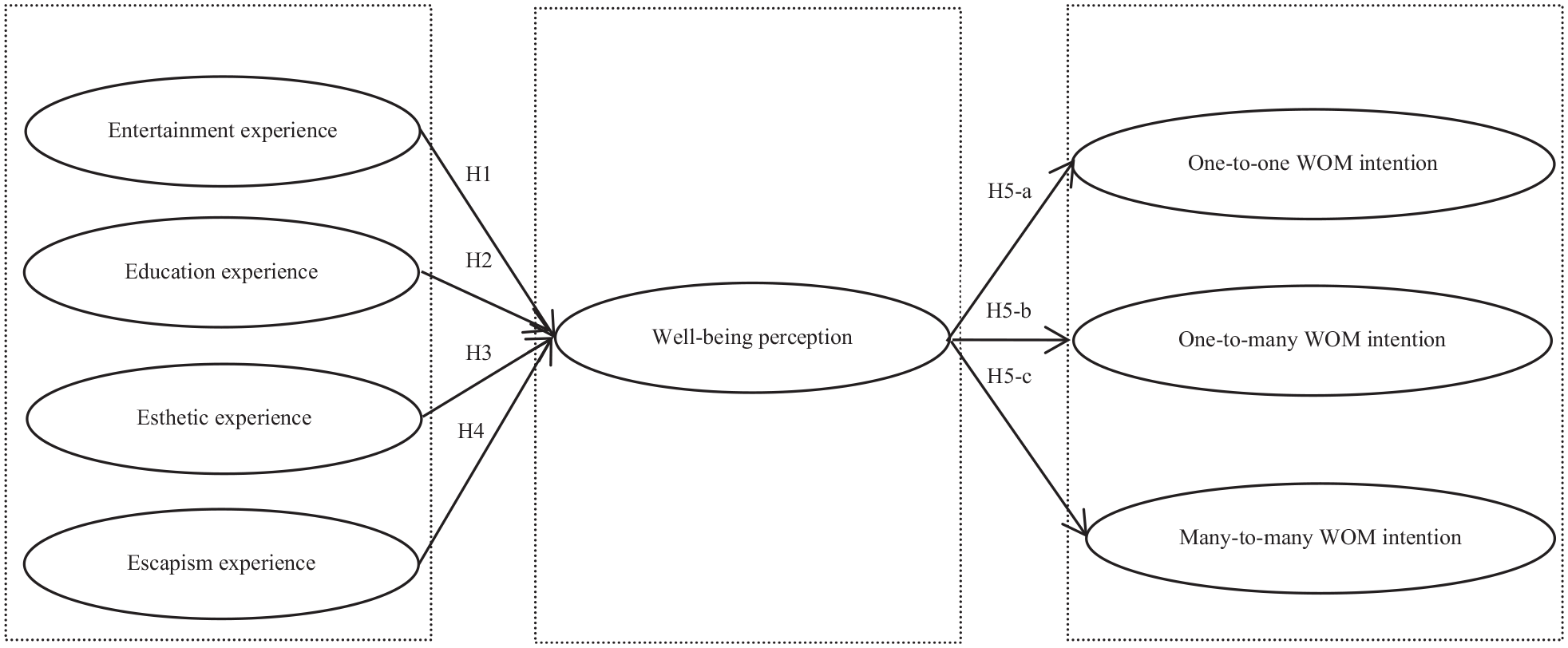
Conceptual framework and hypotheses.
Research Method
Data Collection
To achieve the research objectives, data from Chinese guests who have experience of living in China’s resort hotels was collected online. The questionnaire was designed and formatted through Wenjuan Xing platform (www.sojump.com). Subsequently, the main investigator disseminated the questionnaire via WeChat platform. This cost - effective practice can reach a sufficient number of potential respondents at a short time and has previously been employed to obtain data in marketing and tourism research (e.g., Ahmad et al., 2021; Zhang, et al., 2020).
This paper applied nonprobability purposive sampling technique. The main researcher briefly described the study purpose and ethical concerns related in the beginning of the questionnaire to ensure that all participants were voluntary in partaking in this research. Respondents have the right to withdraw from the survey any time without penalty. Additionally, it normally takes around 15 min to be completed. The respondents’ anonymity and confidentiality were respected. To assess the sample eligibility, three questions were used as screening questions: (1) How many times have you ever stayed at China’s resort hotels in the past year? (2) What’s the name of the resort hotel that you ever stayed at? (3) How long have you been staying at that resort hotels last time? Only respondents who provided affirmative answers to these questions were regarded as qualified sample in this study. Therefore, total sample was 421 guests of the resort hotel sector in China. However, 115 cases were eliminated due to unqualified or suspicious responses, 306 survey forms were remained for data analysis. Methodological scholars and tourism scholars stressed that the sample size for the multivariate analysis should remain between 200 and 500 (Hair et al., 2009; Yang et al., 2021).
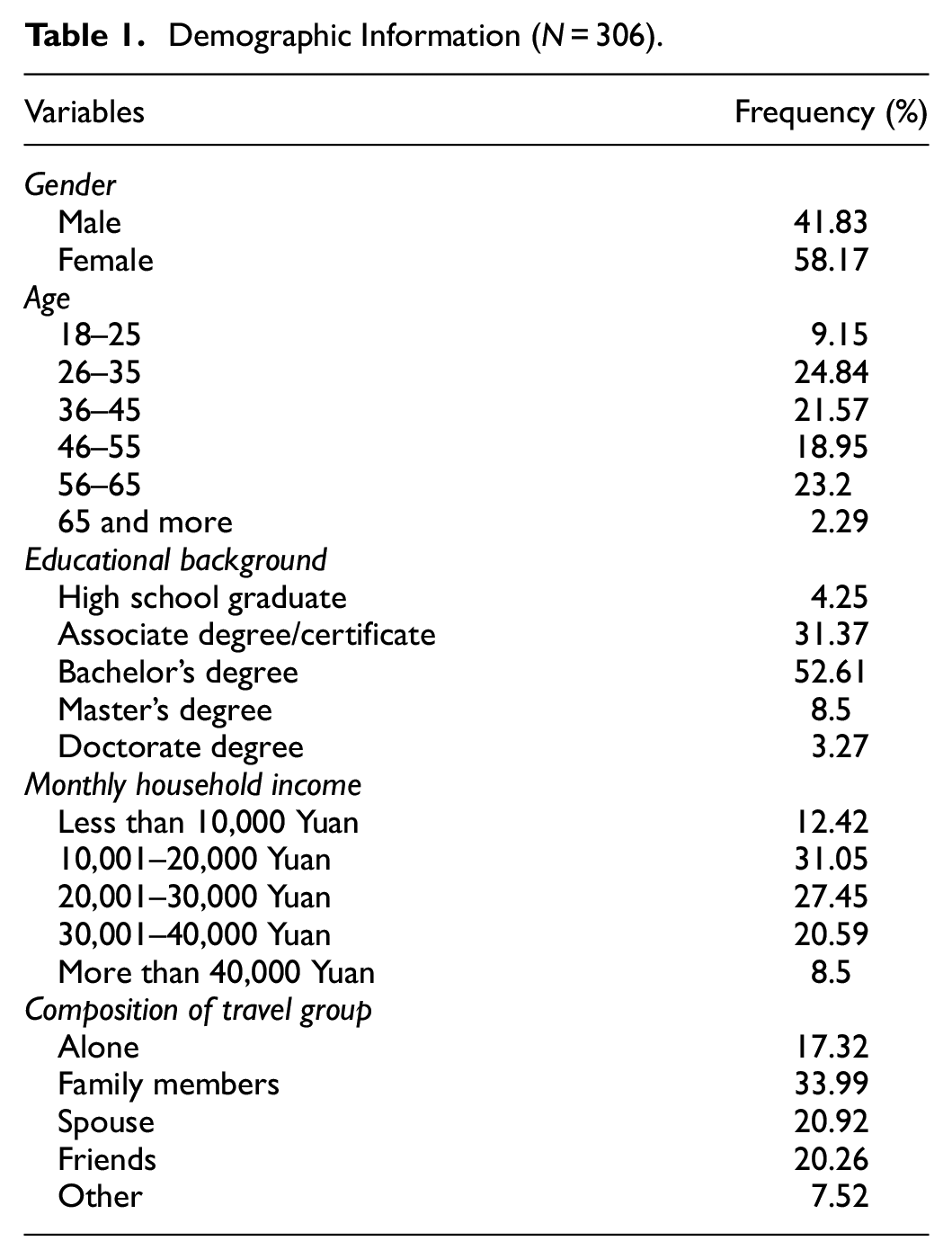
In this paper, the sample was comprised of 128 males and 178 females. In terms of age group, more than half of the respondents were ranged from 26 to 55. Regarding the educational background, approximately more than half of the respondents gained bachelor’s degree and 31.37% gained associate degree. Moreover, their latest resort hotel experience has been asked while 17.32% of them were accompanied with family members, 20.92% with their spouse, 20.62% with friends, 17.32% were alone. More detailed respondents profile is exhibited in Table 1.
Demographic Information (N = 306).
Construct Measurement
To operate the measurement of construct interest, we modified relevant items from well-established and validated scales in various hospitality and tourism papers. The final version included resort hotel guest experience, well-being perception and WOM intentions. All measurement of constructs in nature are the reflective form expect for the well-being perception. To measure guest experiences of resort hotel, this study adopted 16 items from Hwang and Han (2018) to capture the experience economy which covered four sub-dimensions: entertainment experience, education experience, esthetic experience, and escapism experience. Well-being perception was measured by five items from Han et al. (2019) in resort hotel context. However, the measurement of well-being perception is a complicated task as it is characterized by a multiplicity of angles or dimensions. The complex nature of this construct is required to have the alternative measurement. Previous literature has conceptualized the wellbeing perception a formative measurement. The findings of their work have successfully validated the specification of formative scale (Khatri & Gupta, 2019). Therefore, we adopt well-being as formative scale in current study
WOM intentions were measured by 11 items adapted from Šegota et al.’s (2021) study. Moreover, in this paper, all items were answered on a 7-point Likert scale (anchored at 1 = “Strongly disagree,” and 7 = “Strongly agree”). All the measurements items were summarized in Appendix A. The target samples in this study were all Chinese, thus the survey form was translated from English to Chinese with the technique of back translation. Furthermore, to test the reliability of each scale, a pilot study was applied which involves 30 Chinese guests. Based on the initial analysis, the value of Cronbach’s alpha was above .7, indicating no issue with scale reliability (Hair et al., 2009).
Results and Analysis
Statistical Analysis
To examine the conceptual model in this paper, the employment of partial least squares-structural equation modelling (PLS-SEM) through SmartPLS 3.2.9 was most appropriated. Compared to the covariance-based SEM, PLS-SEM had more advantages in terms of theory development. PLS-SEM focused on predictive statement concerning target constructs and maximized the variance explanation (Hair et al., 2017). In tourism literature, it’s emphasized that no existing theories had fully defined this novel concept. Hence, a theoretical framework to explicate the constructs of interest was required (So et al., 2018). The main objective of this study was to test hypotheses and therefore adopted a two-stage approach, whereby the evaluation of the measurement model before path analysis (Hair et al., 2019).
Common Method Variance
The present study used standardized self-reported survey to conduct fieldwork for both exogenous and endogenous variables from the same group of guests (Podsakoff et al., 2003). There were some common method variance (CMV) that might pose dangers to the result interpretation. To mitigate this bias, this paper employed procedural and statistical measures. First, to confirm validity and truthfulness of the responses, respondents were informed that their anonymity and confidentiality are respected. It was thus expected they would offer genuine perspectives. Further, for the convenience of response interpretation, all items used a rating with Likert or numeric scale (MacKenzie & Podsakoff, 2012). Next, despite Harman’s single factor has been widely applied to check the result of CMV, several scholars have questioned about this approach (Tehseen et al., 2017). Tourism literature suggested the correlation matrix procedure which was appropriated to identify the result of data bias especially for the value of correlations between constructs should be less than .9 to illustrate a lack of CMV (Rasoolimanesh et al., 2021; Yang et al., 2022). Therefore, on the basis of the correlation matrix procedure, the correlations among constructs were .733 to .857, indicating the model free of CMV.
Measurement Model
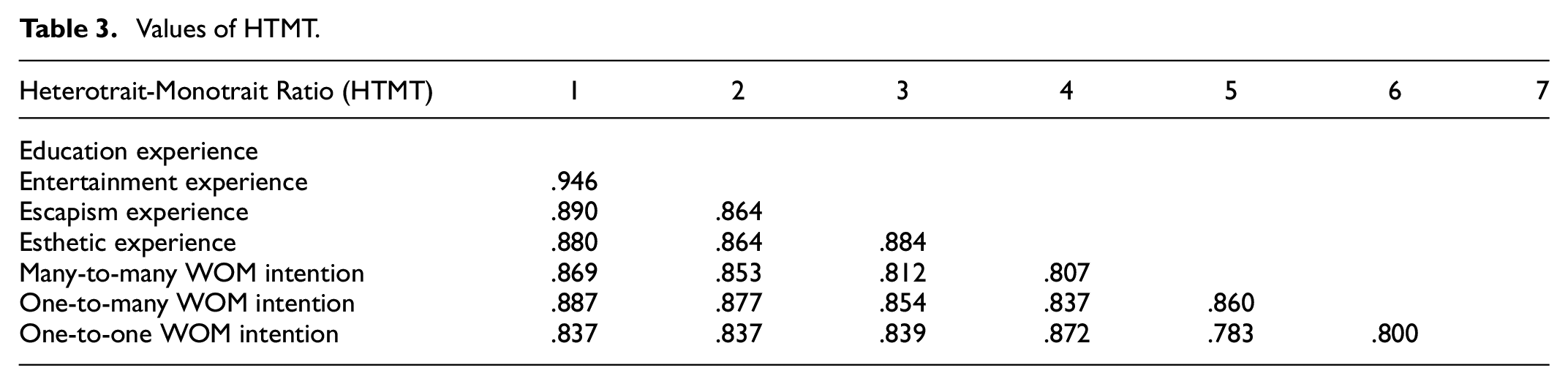
To choose a proper measurement model, the validity and reliability of each construct was examined. Based on handbook by Hair et al. (2017), reliability, convergent and discriminant validity for all reflective constructs (i.e., entertainment experience, education experience, esthetic experience, escapism experience, one-to-one WOM intention, one-to-many WOM intention and many-to-many WOM intention) must be cheeked. Table 2 indicated that the value of each loading was greater than 0.5 and the values of composite reliability (CR) for all reflective constructs exceeded the recommended threshold level of 0.7, indicating good internal reliability (Hair et al., 2019). The values of average variance extracted (AVE) in each reflective construct were higher than 0.5. Moreover, to evaluate discriminant validity, Heterotrait-Monotrait (HTMT) criterion was selected (Henseler et al., 2015). As Kline (2011) stated that discriminant validity was only acceptable when values are no more than 0.9. Hence, item (ESP2) was eliminated due to its values of over 0.9. However, in the current model, the construct of entertainment experience and education experience displayed a value of HTMT which was slightly greater than 0.9. According to Henseler et al. (2015), the researcher needed to check the confidence interval through bootstrapping technique implemented by PLS. Only when the 95% confidence interval in empirical studies do not contain the value 1, the value of HTMT greater than 0.9 can be acceptable. In this study, the 95% confidence interval reached at a maximum of 0.973, therefore the discriminant validity of measurement model was confirmed.
Measurement Model.

Note. N/A = not applicable.
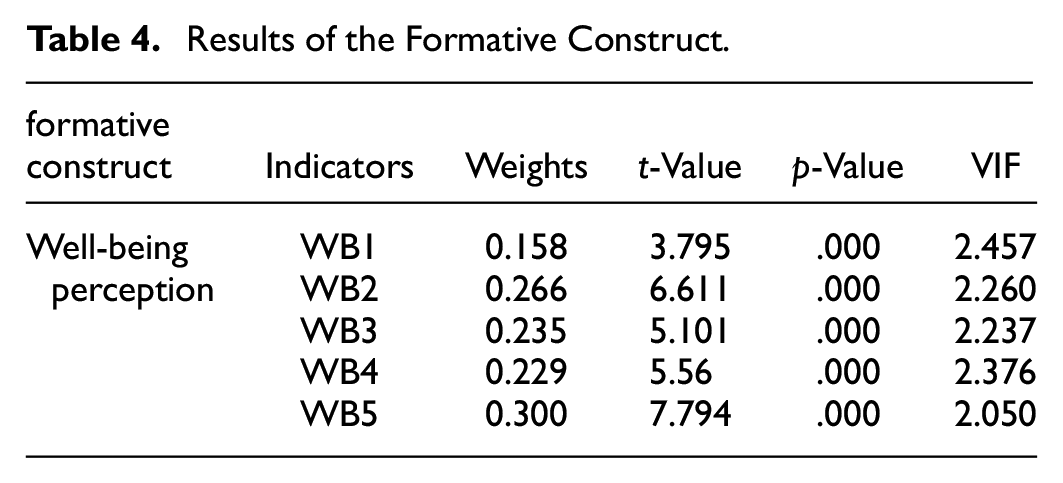
Referring to previous literature, both conceptualizations of well-being are the reflective measurement and formative measurement (i.e., Jones et al., 2018; Khatri & Gupta, 2019). Inspired by previous evidence, well-being perception in this paper was conceptualized as a formative measurement in this model (Table 3). A formative measurement was not supposed to covariate given its conceptual characteristics. It was impossible to check the reliability and validity of the construct including a formative measurement (Bollen & Lennox, 1991). In this regard, indicators for the formative measurement must not be correlated highly with each other. This can be examined by assessing the value of VIF (Hair et al., 2017). Table 2 showed that values of VIFs were all below the common cutoff threshold of 5 (Hair et al., 2017), which suggested the existence of multicollinearity. After that, outweighs was checked to test its significance (Hair et al., 2011). Table 4 also revealed that the values of all weights were significant, which meant indicators for well-being perception were mandatory.
Values of HTMT.
Results of the Formative Construct.
Structural Model
Before evaluating the structural model, the collinearity issue must be considered to eliminate the bias in the regression result. As inner values of all predictor’s variables ranged between 1.0 and 3.9, which was less than the threshold of 5.0 (Hair et al, 2017). Hence, we could conclude that collinearity is not a concern in present model. For the examination of the path coefficient, we applied bootstrapping technique with 5,000 sub-samples. Table 5 indicated that guests’ well-being perception was positively correlated with their entertainment experience (H1: β = .162, p < .05), education experience (H2: β = .164, p < .05), esthetic experience (H3: β = .456, p < .01) and escapism experience (H4: β = .202, p < .01). Above these four types of experience explained 80.7% variance of well-being perception. Moreover, Table 5 also illustrated that guests’ well-being perception had a positive effect on one-to-one WOM intention (H5: β = .800, p < .01), one-to-many WOM intention (H6: β = .796, p < .01) and many-to-many WOM intention (H7: β = .776, p < .01). The variable well-being perception explained 63.8% variance to one-to-one WOM intention, 63.2% variance to one-to-many WOM intention and 60% variance to many-to-many WOM intention. Finally, to assess the predictive relevance of the model, we adopted the blindfolding procedure with a pre-specified distance of 7. The values of Q2 for all endogenous constructs were greater than 0 (Ranging: .505 to .561) for three types of WOM intention. Hence, in the current model, predictive relevance was well-established. Overall, all of the hypotheses were supported with empirical evidences, and Table 5 showed the results of modeling testing.
Results of Structural Model.

Conclusion
Discussion
To encourage guests’ voluntarily participation in WOM, the first and foremost thing is to understand how and why people unconditionally share their experiences, opinions and comments. Overall, this study establishes a theoretical framework which helps to investigate the triggering mechanism of different WOM intentions by guest experience and well-being perception in a resort hotel setting in China. More specifically, guest experience consisting of entertainment, education, esthetic and escapism contributes to the formation of well-being perception which further induces one-to-one, one-to-many and many-to-many WOM intention as behavioral outcomes.
The empirical findings of this study provide support for the great importance and relevance of well-being perception in relation to tourism and hospitality marketing. While prior literature highlights positive emotions, values, or place-related factors associated with consumer behavior (Ali, Hussain & Omar, 2016; Hosany & Witham, 2010), this study demonstrates well-being perception, as a positive psychological reaction to experience, could also exerts an influential effect on guests’ behavior. In addition, the association between well-being perception and one-to-one WOM intention is stronger than the association between well-being perception and one-to-many WOM intention, many-to-many WOM intention. In other words, resort hotel guests prefer to share their experience through private communications (e.g., face-to-face).
With respect to the antecedents of well-being perception, esthetic experience, escapism experience, education experience and entertainment experience can be distinguished from each other by resort hotel guests, which substantially contribute to improvement of their quality of life. However, differences exist in their relative importance in terms of forming guests’ well-being perception. Notably, while Hwang and Lyu’s (2015) study reports that esthetic experience has no impact on well-being perception, this study finds the contrary outcome that resort hotel guests perceive well-being mostly from esthetic experience, followed by escapism experience, education experience, and entertainment experience. Due to the unique location and indoor physical environment of resort hotel, esthetic experience remains an integral part of guest experience (Ali, Hussain & Omar, 2016). The findings offer strong support on statement that the external environment, including ambience, layout, design, etc., are interrelated and influences consumer emotional state or behavior holistically (Hashmi et al., 2020; Lin & Liang, 2011).
Escaping from normal life is viewed as a motivation of traveling (Cohen, 2010; Oh et al., 2007), this study expands the existing argument and finds escapism experience assists to enhance quality of life. Compared with prior studies, this study validates the role of escapism experience by empirically supporting its effect on well-being perception in resort hotel context while some found escapism experience was insignificantly related to outcomes such as satisfaction (Oh et al., 2007), memory (Hosany & Witham, 2010). Besides, education experience is the third important element during the formation process of well-being perception. Once resort hotel guests acquire new skills or knowledge through themed activities or events, they gain a sense of enjoyment, happiness, relaxation, refreshment, and peace, enhance their quality of life. In addition, Ali, Hussain and Omar’s (2016) study has found entertainment experience is the most significant factor of outcome variables in resort hotel context, however, it only explains least variance to well-being perception in this study when compared to others. It could be interpreted that resort hotel guests in China may pay more attention on esthetic environment rather than entertainment facilities with regard to the enhancement of their quality of life. Indeed, the theoretical relationships between guest experience, well-being perception and WOM intentions have been established and verified with positive results.
Theoretical Implication
The aforementioned findings indicate several theoretical contributions of this study. First, this study echoes prior scholars’ call (e.g., Ali, Amin & Cobanoglu, 2016; Ali et al., 2014) for more concerns on resort hotel context by investigating resort hotel guests in China. The experience economy model is found to be applicable in resort hotel setting, and results show that entertainment, education, esthetic and escapism experience differentiates from each other.
Second, this study offers novel insights on the experience economy model by verifying the associations between guest experience and well-being perception. This study further aids in literature by empirically supporting the significant effect of esthetic, education, esthetic and escapism experience on well-being perception. That is, when guests of resort hotels are exposed to pleasant environment and attractive activities, they perceive various experiences which satisfy their needs of well-being. From this point of view, this study deepens the understanding on benefits of traveling in an experiencescape such as resort hotel.
Third, this study enriches consumer behavior literature by investigating a new typology of WOM. To be specific, by clarifying the new typology of WOM intention (i.e., one-to-one WOM intention, one-to-many WOM intention, many-to-many WOM intention), this study illustrates the psychological mechanism that different types of WOM intention can be triggered by guest experience via psychological gains of well-being. Align with a prior study of H.-C. Kim et al. (2016), our findings strengthen the theoretical relationship between well-being perception and WOM intentions, which imply the significance of well-being perception in stimulating guests’ voluntary involvement in WOM with multiple purposes and through distinctive communication channels. In other words, once guests perceive their quality of life is enhanced through experiences in resort hotels, they are more willing to take active participation in WOM activities via personal conversations and/or public communications. In particular, derived by improvement of quality of life, resort hotel guests prefer to engage in one-to-one WOM communication more when compared to one-to-many WOM and many-to-many WOM. It could be interpreted that guests tend to communication their positive experiences or psychological states with their family or friends in private, which in line with the view that one-to-one WOM remains a key channel of information source in terms of destination choices (Chen et al., 2014).
Managerial Implication
With regard to practical implications, results of this study help resort hotel managers and marketers to better understand the salience of guest experience, whereby boosts guests’ perception of well-being, which in turn, leads to active WOM intentions. Voluntary participation in WOM communications among resort hotel guests contributes to hotel brand image, potential and frequent visits, as well as promotion costs saving (Litvin et al., 2008; Phillips et al., 2017). Since well-being perception elicits various WOM intentions, resort hotel managers need to integrate, coordinate and allocate resources properly and focus more on esthetic, escapism, education and entertainment experiences in order to advance their guests’ quality of life. For example, esthetics should be deliberated designed and staged which results in the improvement of higher level of well-being perception. Themed activities, events or facilities should be projected which emphasize escapism aspects so that resort hotel guests could enjoy the unique experience distinguished from their normal life with a sense of escapism. Additionally, events or activities should be advocated with educational gains, so that resort hotel guests could acquire new skills or knowledge during their staying. Moreover, entertainment facilities should be available for resort hotel guests to generate fun, enjoyment and fantasy. By doing so, resort hotels can maximize guests’ perception of well-being by offering high-quality aesthetics, amenities, facilities, events or activities. Consequently, guests would feel their quality of life enhanced through satisfaction of physical, psychological and spiritual well-being during resort hotel stays.
Based on our findings, resort hotel businesses also need to understand the differences derived from experiences whereas strategies of positioning, segmentation should be differentiated based on experiences (Hosany & Witham, 2010). For instance, results of this study support the strongest effect of esthetic experience on well-being formation, therefore, resort hotels could select esthetic experience as their most valuable segment and further develop a relative marketing mix and product positioning strategy for it. On the other hand, marketers could prioritize guests’ well-being associated with esthetic experience in their marketing promotions to attract more guests. With these measures, resort hotels would be able to maximize the effectiveness of marketing. Furthermore, different WOM channels (i.e., one-to-one, one-to-many, many-to-many) should be maintained and promoted among resort hotel guests to encourage their voluntary sharing, including public website, online community, social media.
Limitations and Future Study
Despite the meaning insights provided by this study, several limitations should be considered for better research in future. First, the survey was delivered through online platform such as WeChat, while no particular resort hotels was aimed as research sites in China. Thus, the generalization of the findings should be done with cautious attention. Future study could select specific resort hotels in terms of size, locations, characteristics which may include multi-segments of guests of investigation. Second, the measurement issue of well-being should be carefully considered in future studies. While well-being perception is measured as a uni-dimensional construct adapted from Han et al.’s (2019) study, scholars have argued that well-being could be evaluated with multi-dimensional scales. Hence, in future studies, a comprehensive and unified measurement of well-being is needed to better capture guests’ well-being in tourism and hospitality research. At last, our knowledge regarding the determinants of different types of WOM intention is still limited since possible moderators (such as involvement, motivational factors) is insufficiently included in this study. It’s recommend that further studies should extensively evaluate the relationships between experience, well-being and WOM in depth, to grasp resort hotel guests’ psychological or behavioral responses more precisely.
Footnotes
Appendix

| Construct and scale items | |
|---|---|
| Entertainment experience | Item 1: The activities at the resort hotel kept me amused. |
| Item 2: The activities at the resort hotel were really captivating. | |
| Item 3: The activities at the resort hotel were entertaining. | |
| Item 4: The activities at the resort hotel were fun. | |
| Education experience | Item 1: I learned a lot during this resort hotel staying. |
| Item 2: The resort hotel staying made me more knowledgeable. | |
| Item 3: The resort hotel staying was a real learning experience. | |
| Item 4: The resort hotel staying stimulated my curiosity to learn new things. | |
| Esthetic experience | Item 1: The resort hotel was an attractive setting for my vacation. |
| Item 2: The environment of the resort showed close attention to design details. | |
| Item 3: It was pleasant just being during the resort hotel staying. | |
| Item 4: I felt a real sense of harmony during the resort hotel staying. | |
| Escapism experience | Item 1: I felt like I was living the role of someone different from myself in my daily life while I was in the resort hotel. |
| Item 2: The resort hotel staying let me imagine being someone else. | |
| Item 3: I completely escaped from my daily routine during the resort hotel staying. | |
| Item 4: I felt like I was in a different time or place during the resort hotel staying. | |
| Well-being perception | Item 1: I felt healthy and happy when staying at this resort hotel. |
| Item 2: I felt emotional well-being while staying at this resort hotel. | |
| Item 3: This resort hotel played an important role in making me feel relaxed. | |
| Item 4: Thanking about this resort hotel made me feel calm and peaceful. | |
| Item 5: This resort hotel played an important role in making me feel refreshed. | |
| One-to-one WOM intention | Item 1: I will bring up the resort hotel as a tourism destination in a positive way in conversations I have with my friends and acquaintances. |
| Item 2: In social situations, I will speak favorably about the resort hotel as a tourism destination. | |
| Item 3: I will talk up positively about the resort hotel as a tourism destination to people I know. | |
| One-to-many WOM intention | Item 1: I will provide online reviews about the resort hotel as a tourism destination on social networking sites. |
| Item 2: I will post or share images of the resort hotel on my social networking sites that were taken by others. | |
| Item 3: I will share information about the resort hotel on social network sites. | |
| Item 4: I will post or share images of the resort hotel on social networking sites that I have taken myself. | |
Declaration of Conflicting Interests
The author(s) declared no potential conflicts of interest with respect to the research, authorship, and/or publication of this article.
Funding
The author(s) disclosed receipt of the following financial support for the research, authorship, and/or publication of this article: This work was supported by the Ministry of Education of the People’s Republic of China Humanities and Social Sciences Youth Foundation (Grant No: 21YJCZH252); the National Social Science Fund of China (Grant No: 21BGL226) and the Doctoral Fund (Grant No: DT2200002144).

Data Availability Statement
Data sharing not applicable to this article as no datasets were generated or analyzed during the current study.