




Abstract
This study aims to identify the factors affecting employer branding and validate a structural model based on methodology combined with an exploratory approach. The present research was a mixed-methods study in terms of its data type. The statistical population included academic experts majoring in human resource management and the expert managers of the human resource branches of Mellat Bank in the qualitative phase and all heads and deputies of Mellat Bank branches in various provinces of Iran in the quantitative phase. Data collection instruments included semi-structured interviews with experts in the first and a 45-item questionnaire distributed among 340 people in the second phases. Qualitative data were analyzed by the content analysis method, while confirmatory factor analysis and structural equations modeling, run in the Amos 26 software, were used for quantitative data analysis. The results of the qualitative phase showed that the factors affecting employer branding included three behavioral, structural, and environmental factors, each of which had sub-factors. Also, the results of the confirmatory factor analysis indicated that the measurement model of each of the three mentioned factors was highly fit. Finally, the results of structural equations modeling clarified that the behavioral factor (with a regression coefficient of (0.601) had the most and the structural factor (with a regression coefficient of (.355) had the least impact on employer branding in Mellat Bank. There is no comprehensive classification of the factors affecting the branding of employers, especially in the banking industry. Therefore, in this approach, it is necessary to identify the factors affecting employer branding and measure the effect of each of these factors in the mentioned industry, which is the main aim of this study.
Keywords
Introduction
With the advent of the knowledge-based economy, human capital has emerged as the main source of sustainable competitive advantage. In recent decades, the existence of intangible assets (such as knowledgeable and multi-skilled manpower in relation to tangible assets) has become an undeniable necessity for achieving organizational goals and long-term profitability (Sharma et al., 2019). As a result, organizations increasingly need scientists to survive and gain a significant share of the competitive market (Mishra & Kumar, 2019). In this situation, the problem that organizations face is differentiating the workplace compared to other competitors in order to attract or retain specialized personnel, especially knowledge workers (Tkalac Verčič & SinčićĆorić, 2018), since competitors have spared no effort to attract top employees of other organizations and used very attractive motivators to this end (Banerjee et al., 2020). In such circumstances, the traditional hiring process is not enough and should be based on new approaches to attract and retain skilled and specialized staff in the organization (Mishra & Kumar, 2019). In this regard, in recent years, the concept of brand management has entered the human resource management field, in which organizations use the employer brand as a tool to manage human capital and attract and retain skilled employees (Maurya & Agarwal, 2018).
In fact, the category of branding was initially used just for differentiating tangible products, but over time, it was also used to differentiate between people, places and organizations (Alshathry et al., 2017). In fact, just as an organization builds a brand for its product or service, it must create a credible brand for its entirety as an employer because employees are considered the internal customers of the organization, and it is necessary for the organization to become a well-known brand to attract or retain them (Minchington & Morris, 2015). Employer branding is an emerging field used for attracting potential employees and is rooted in a Resource-Based View that focuses on developing the image of the organization for potential employees (Parmar, 2014). From the resource-based perspective, the reputation of the organization can be considered as a valuable and intangible resource that can help a lot in achieving a sustainable competitive advantage for the organization (Backhaus, 2016). Hence, employer branding is a new tool that, by providing a favorable image of the work environment that reflects the culture and values of the company, directs the mental framework of job seekers to one way. Thus, by comparing different employers with their values, ideas, and expectations, they choose the employer with whom they are best suited (Biswas & Suar, 2016). In fact, the purpose of creating an employer brand is to form a positive image of the employer that helps maintain employee loyalty and job involvement and supports the brand’s interests (Xie et al., 2015).
In a situation where more than 70% of the value of an organization is due to its intangible assets, and the lack of manpower with expertise and knowledge has changed into a major problem in today’s organizations, being known as an attractive employer is a competitive advantage for the organization and helps to attract and retain human capital (Viktoria Rampel & Kenning, 2014). As a result, organizations that face stiff competition can make the process of attracting skilled and talented people easier by increasing their attractiveness (Aslam, 2015). Since the selection and recruitment of qualified and specialized manpower is the key to the success of organizations in the future, the managers of successful organizations do not spare any effort to become attractive employers (Collings et al., 2018).
The banking industry is one of the most sensitive economic sectors in the country, and proper management in this sector has a significant impact on other economic sectors. The banking system, which rests on providing appropriate services based on effective relationships with customers, significantly revolves around capable and professional employees and helps them satisfy customers and encourage them to receive frequent services from the bank. Therefore, the existence of knowledgeable and expert human capital in this industry has a significant role in providing desirable services to customers and promoting their satisfaction with the received services. However, in recent years, with the establishment of private banks and financial and credit institutions, the competitive environment in this industry has expanded increasingly, and bank managers are trying to attract and retain skilled employees to increase customer satisfaction with the received banking services and increase its position among other competitors. Hence, large and experienced banks in this industry, such as Mellat Bank (one of the main banks in Iran), face the challenge of withdrawing their talented forces to other banks and financial and credit institutions.
Bank Mellat is the largest private bank in Iran and operates according to the banking regulations framework of this country. In 2007, ten private banks were amalgamated in Bank Mellat. This bank owns 1,404 branches inside and six outside Iran and includes 19,399 full-time employees.
As a result, the existing conditions have compelled the managers of the bank to make their employer brand attractive among other competitors in order to prevent the departure of their professional employees and also to attract new knowledge forces. Therefore, considering the existing problem and research gap in this field in the country’s banking industry, the present study attempted to identify the factors affecting employer branding in Iran’s banking industry (Bank Mellat). According to the above, the main question of the research is: What are the effective factors in employer branding and what are the relationships between these factors? By answering this question, the direction of the research will be determined and we will reach the desired results.
Theoretical Foundations and Research Backgrounds
Human capital plays a vital role in achieving sustainable development. This strategic element is a determining factor in achieving sustainable competitive advantage and the most important source for achieving organizational goals (Tanwar & Prasad, 2016a). In fact, knowledgeable workers are the source of innovation in organizations, and this innovation ultimately leads to competitive advantage (Mishra & Kumar, 2019). Therefore, it is quite obvious that in these conditions of environmental uncertainty, maintaining human capital and talented, experienced, and specialized staff should become the main and key priorities of any organization because these are the people who, in the current competitive environment, take the main burden of work in the organization and lead organizations in the path of competition and excellence (Maurya & Agarwal, 2018).
However, in recent years, the unfavorable organizational climate and job conditions in organizations have caused the job motivation of employees to decrease day by day and ultimately led to layoffs or underemployment of employees (especially talented people) in the organization. These conditions waste the costs associated with selecting, hiring, and training employees, threaten the quality of goods and services, and ultimately reduce the overall performance of the organization (Tumasjan et al., 2020). In this regard, studies show that the financial cost of leaving the service is calculated as at least about 150% to 200% of the annual salary of employees. In addition to the direct costs of leaving the service for employees, indirect costs such as reduced work conscience, weakened organizational culture, double work pressure on remaining employees, additional learning costs, and loss of social capital are imposed on organizations and, ultimately, will ruin the conditions of competitive advantage (Tanwar & Prasad, 2016a). All of the above issues show that employee retaining is very important, and an effective approach to retaining employees is to pay attention to Employer Brand in and organization (Viktoria Rampel & Kenning, 2014).
Ambler and Barrow (1996) first introduced the employer brand at the London School of Business and stated that the employer brand was a set of functional, economic, and psychological benefits provided by employment and presented by an employer. The employer brand plays an important role in developing the competitive advantage and sustainability of companies. This concept defends the ideas and motivations of individuals in the organization and provides them with conditions to develop their talents in the workplace perfectly (Banerjee et al., 2020). Sharma et al. (2019) also stated that the employer brand reflected the strategic nature of the organization to the current and desired employees, as well as other stakeholders who somehow communicate with people within the company. Backhaus (2016) also points out that the employer brand has created an identity for the organization as an employer that includes the value system, policies, and guidelines of the organization and plays a role in attracting, motivating, and retaining potential and actual employees. Adler and Ghiselli (2015) believe that employer branding is an attractive image for an organization and is specifically related to employer appealing. Manchington and Morris (2015) also stated that the employer brand presents an image of the organization as the best place to work and leads to the differentiation of the organization from other organizations.
Research shows that the employer brand increases employee loyalty and reduces the desire to leave the organization. If the employer branding process is implemented thoroughly, it brings about a competitive advantage with positive and tangible effects on human resource management, including employee satisfaction and retention (Sharma et al., 2019; Tanwar & Prasad, 2016a). So, the issue of employer branding has been considered by many organizations in various industries recently (Manchington & Morris, 2015). Just as the customer brand tries to attract customers to the organization’s products, the employer brand tries to compete in the labor market and attract potential applicants to the organization and then take steps to maintain these people (Tkalac Verčič & SinčićĆorić, 2018).
It can be concluded that the concept of employer branding pursues the goal of recognizing employers as brands in a way that two important consequences are achieved: (1) Strengthening the brand so that the current specialized and capable forces are committed to their organization and do not intend to enter other organizations (retain current employees), (2) Potential workers, who want to enter the organization and be hired, should be attracted to the brand of the organization so that they feel proud of being in that organization (attracting potential employees in the future; Tkalac Verčič & SinčićĆorić, 2018). Therefore, it is necessary to pay special attention to employer branding in organizations and strengthen the organization’s employer brand to properly retain capable and talented employees (Xie et al., 2015).
The banking industry in Iran is one of the most important economic sectors and banks can be considered as one of the most important financial market institutions. Banks play an intermediary role lenders and borrowers, and providing financing to other industries, facilitating production they do the importance of the banking system is determined when the lack of financial stability in it can lead to a instability and economic crisis at the level of the country or even the world. A stable banking system and efficient to reduce the problem of asymmetric information through the production of information and monitoring of investments, Risk distribution, equipping and allocating capital resources and facilitating exchanges helps and in this way it can increase economic growth. On the other hand, an unstable and inefficient banking system the one who cannot perform the above duties properly, with the arrival of a financial crisis, will leave very adverse consequences on economic stability.
So far, studies have been conducted in the field of employer branding inside and outside the country, and researchers have pointed out some effective factors in employer branding. Table 1 presents some of these studies.
Factors Affecting Employer Branding (Researchers Collection).
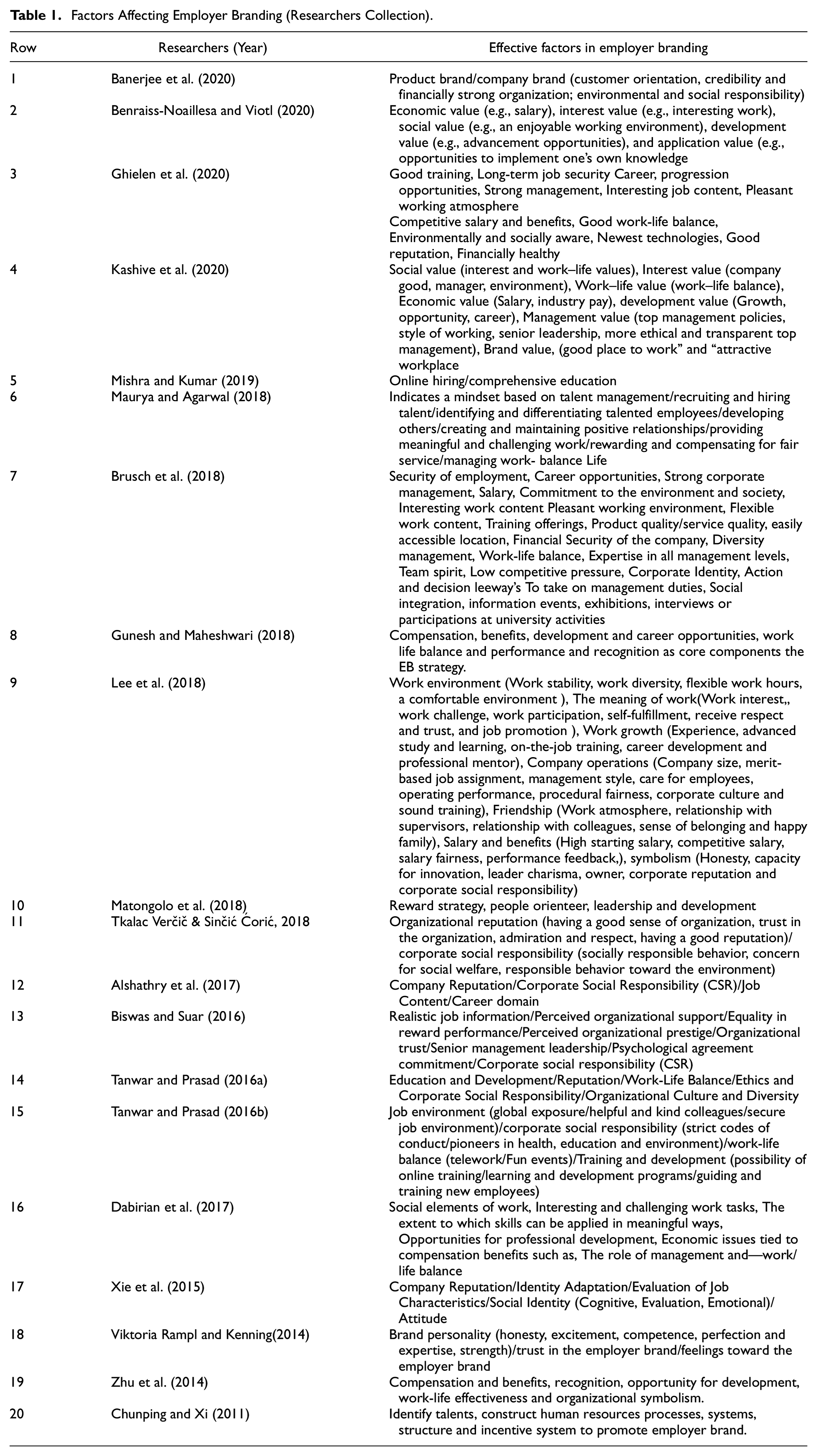
The research on effective factors in employer branding, mentioned in previous studies, shows that every researcher, based on a specific point of view, has identified these factors on a case-by-case basis. For example, some researchers have considered behavioral and content factors (such as developmental, social, economic, functional, educational, and entrepreneurial values, the reputation and attractiveness of the workplace, etc.) effective in employer branding. Other researchers have regarded structural factors and frameworks (such as brand communication and workplace rules and guidelines) as influential in employer branding. Finally, the other group has emphasized external and environmental factors (such as social responsibility, brand relations with the environment, market environment conditions, etc.). However, there is no comprehensive classification of the factors affecting employer branding, especially in the banking industry.
Moreover, another originality of this research, neglected in previous studies, is tied to distributing effective employer branding factors into behavioral, structural, and environmental factors. Besides, the methodology of this paper is mixed (quantitative and qualitative) with respect to its data collection approach, while the majority of previous studies employed quantitative methodology exclusively.
Therefore, in this approach, it is necessary to identify the factors affecting employer branding and measure the effect of each of these factors on this construct in the mentioned industry. For this purpose, the methodology used in this research will be discussed.
Methodology
The present study is applied in terms of its purpose and exploratory concerning its methodology. The data are collected by library and field studies through semi-structured interviews and a questionnaire, making the research be classified into mixed (qualitative-quantitative) research. This study is cross-sectional in both qualitative and quantitative phases given its data collection time, and the researcher’s intervention in the research process is minimal due to its non-experimental nature. At the same time, the theoretical-philosophical paradigm on which this research is based is a kind of interpretive-positivist mix.
The statistical population of the research in the qualitative phase included a number of pundits and academic experts in the human resource management field and the expert managers of the human resources unit of Bank Mellat. For this purpose, managers have been used who have at least 5 years of work experience related to banking management and related education in this field. The minimum degree of these managers is master’s degree and they have experience in branding. Qualitative-section sampling was performed with a purposeful judgmental approach till the theoretical data saturation, and 17 experts (12 university professors and 5 active managers in the human resources department of Bank Mellat) were identified and involved in the interview process. Also, the statistical population for the quantitative phase, including all heads and deputies of Bank Mellat branches in the provinces of the country, was 2,960 people. Bank Mellat owns 1,404 branches across Iran, and all these branches were considered in the sampling process.
The sample size was calculated based on Cochran’s formula in a limited population of 340 people, and questionnaires were distributed among them by simple random sampling.
Data Gathering
This research was implemented in two phases. The first (qualitative) phase employed semi-structured interviews to identify factors affecting employer branding in the banking industry. The second (quantitative) phase applied a questionnaire to evaluate the measurement model presented for each of the identified factors and validated in the first stage of the research.
Credibility and confirmability criteria were used for ensuring the validity of the interview results and content analysis. The review methods were used by the participants in interviews for increasing confirmability. Also, for Credibility in the final stage, the obtained results were returned to three initial participants for review and approval, and the suggested points were applied. The test-retest method was employed for calculating the reliability of the interview. In this regard, three interviews were selected from the interviews, and each of them was coded twice by the researchers in a period of 15 days. The reliability of the test-re-test method was calculated at 89.28%, indicating that the coding of the interview phrases was similar (>0.89%) in two different periods.
The components and indicators related to the factors affecting employer branding in the banking industry were extracted based on the content analysis method (qualitative stage), and the visible and latent variables of the measurement model were explained. Then, according to the identified visible variables (indicators), the research questionnaire was designed for the examination of the measurement model.
In this regard, the research questionnaire, consisting of 45 measurement indicators (based on Table 2), was formed, and its validity was confirmed by the content method. For this purpose, the items measuring the measurement model of every factor affecting employer branding were provided to a number of experts and academics in human resource management, and the capacity of the questions in measuring the variables and their components was confirmed by experts in terms of their content. Also, the reliability of the questionnaire was calculated by the Cronbach alpha method (.897), which confirmed the reliability of the data collection instrument.
Conceptual Categories of Factors Affecting Employer Branding in the Banking Industry.

Finally, we analyzed the qualitative data resulting from the interviews based on the content analysis (theme analysis) of Braun & Clarke (2006) and the quantitative data using the Amos 26 software to validate the measurement model of each factor affecting employer branding by confirmatory factor analysis. In addition, we employed the structural equation modeling method to test the research hypotheses.
Hence, the measurement model of each factor affecting employer branding was designed in the Amos 26 software. Moreover, based on the confirmatory factor analysis method, the validity of the measurement models was tested for the determination of whether the components and indicators presented in the model supported the variable thoroughly. Also, in the next section, the structural model of the research, explaining the relationship between each of the identified factors with the criterion variable (employer branding), was drawn in the software, and, based on the structural equation method, hypotheses were tested, and the regression coefficients were determined. In the following, the research findings are analyzed.
Research Findings
Qualitative Findings
As stated in the research process, this study analyzed the qualitative data obtained from the interviews using the theme analysis method), which included a six-step process of Clarck and Brun’s (2006) theme analysis. To identify the components and indicators of the factors affecting employer branding, the researcher first summarized the expressions of the interviewees during the interview process. In the first step, after several stages of studying and immersing in the data, ‘Researcher’ acquired relative familiarity with them. (First stage; familiarity with data).
In the second stage, 100 phrases were extracted from the expressions of the interviewees and coded. In the third stage, 45 basic themes (selective concepts) were counted from the expressions of the interviewees. In the fourth stage, 12 sub-categories (organizer themes) were formed through a review of the selective codes. In the fifth stage, the researcher categorized the themes into three main categories by reiterating among the sub-themes. It should be noted that in order to name the comprehensive themes in this study, the researcher attempted to follow an inclusive model embracing the three basic themes, organizer themes, and comprehensive themes, which, itself, included behavioral (content), structural, and contextual (environmental) factors. The final stage of the content analysis involved the presentation of the final report. Table 2 represents the final results of the content analysis (theme).
The results of content analysis in Table 2 show that the factors affecting the branding of the employer consist of three measurement models behavioral factors, structural factors, and environmental factors, 12 organizer themes, and 45 basic themes. Then, in order to validate the measurement model of each of the identified factors, the researchers analyzed the quantitative data collected from the second phase of the research using the confirmatory factor analysis test in the Amos 26 software. Also, in the final section, based on the structural equation method, hypotheses were tested, and the regression coefficients were determined in the structural model of the research referred to in the next section.
Validation of Measurement Models by Confirmatory Factor Analysis
This study evaluated and measured the validity of the measurement models calculated from the qualitative stage (content analysis), presented in the previous section, using the confirmatory factor analysis method run in the Amos 26 software. In this regard, after identifying the latent and observable variables of the measurement factors affecting employer branding, presented in Table 2, the researchers validated and tested these models based on the data collected from the questionnaire in the second phase of research. For this purpose, a model for measuring the aforementioned factors in the Amos 26 software was designed, and a confirmatory factor analysis test was run. This process is described in the following section.
The final output of confirmatory factor analysis related to factor measurement models affecting the employer branding is shown in Figures 1 to 3 and indicates the high factor coefficients of each of the observable and latent constructs related to the variables. In other words, the results of factor analysis show that each of the identified factors has well supported its measurement model (due to each component’s factor loading of >.3) and is a proper component for the latent variable. Also, the results of factor analysis related to each of the measurement models show that the measurement indices provided for each (due to each index’s factor loading of >.3) are properly support their component and are, in fact, a good instrument for measuring their latent variable.

Confirmatory factor analysis of the behavioral factor measurement model.

Confirmatory factor analysis of structural factor measurement model.
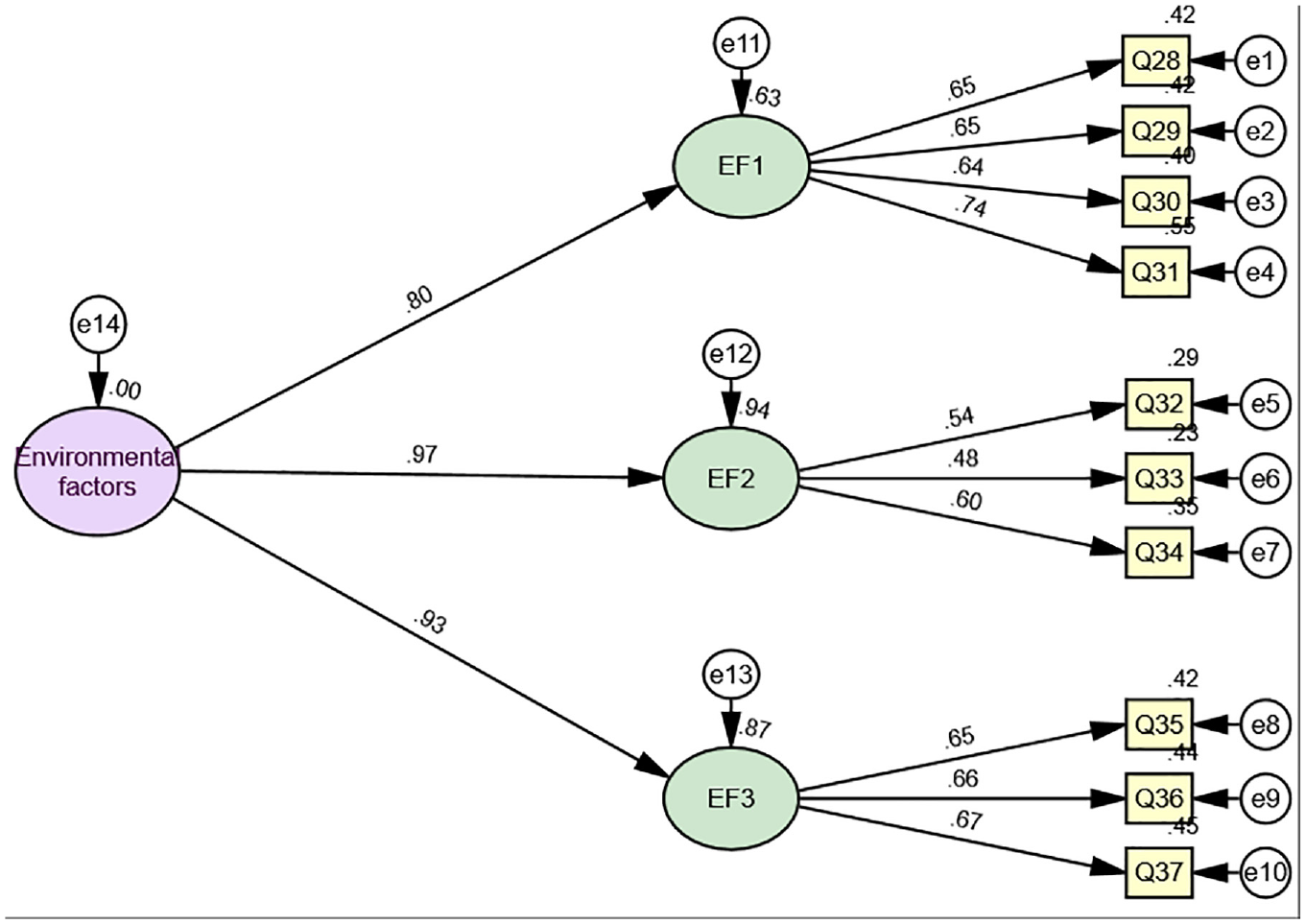
Confirmatory factor analysis of the measurement in contextual model (environmental) factors.
Once the model is properly identified, and the data are entered correctly, the fit of the data should be evaluated to the hypothetical model. We used a number of indicators used for assessing the extent to which the model describes the observed relationships between measurable variables. These indicators, the most important of which are absolute and comparative indicators, are named in different groups. Absolute indices are the ones devoted solely to the calculation of X2, X2/df, and the detection coefficient of the model. The most important of these are the X2 and X2/df indices, which assess the suitability of the model. The other two absolute fit indices are the standardized Mean Square Root (RMR), which is the average of the differences between the observed and expected correlations between the estimates of all parameters, and the Square Root mean Approximation Error (RMSEA), which modulates the simplicity of the model. Other model fit indices are comparative indices that compare the absolute fit index of the model with the absolute fit index of the base model. In this type of indices, it is assumed that there is a completely free model without any relation, called the zero or base model, and it has its own absolute fit indices. Based on these indicators, the absolute fit indices of the hypothetical model with the base model can be compared; thus, the greater the difference between these indicators become, the higher is the validity of the hypothetical model created. The most famous comparative indicators are CFI and GFI.
The acceptable values for each of the absolute and comparative indicators based on Hair’s (1998) calculations are given in Table 3. The general indicators of the fit of the measurement model (confirmatory factor analysis), related to the measurement models of the factors affecting employer branding, are also presented in Table 3, indicating that the measurement models have a good fit. In other words, the indices confirm that the components support the pattern well.
General Indicators of Fit in Research Measurement Patterns.

Also, the results of Table 4 show that considering that the level of significance in all directions of the model is <.05, and the critical value is >1.96, so the factor loads in all directions are significant. And the correlation of the relationships is confirmed in the measurement models.
Coefficients, Critical Ratios, and Significance Level of Research Measurement Models.
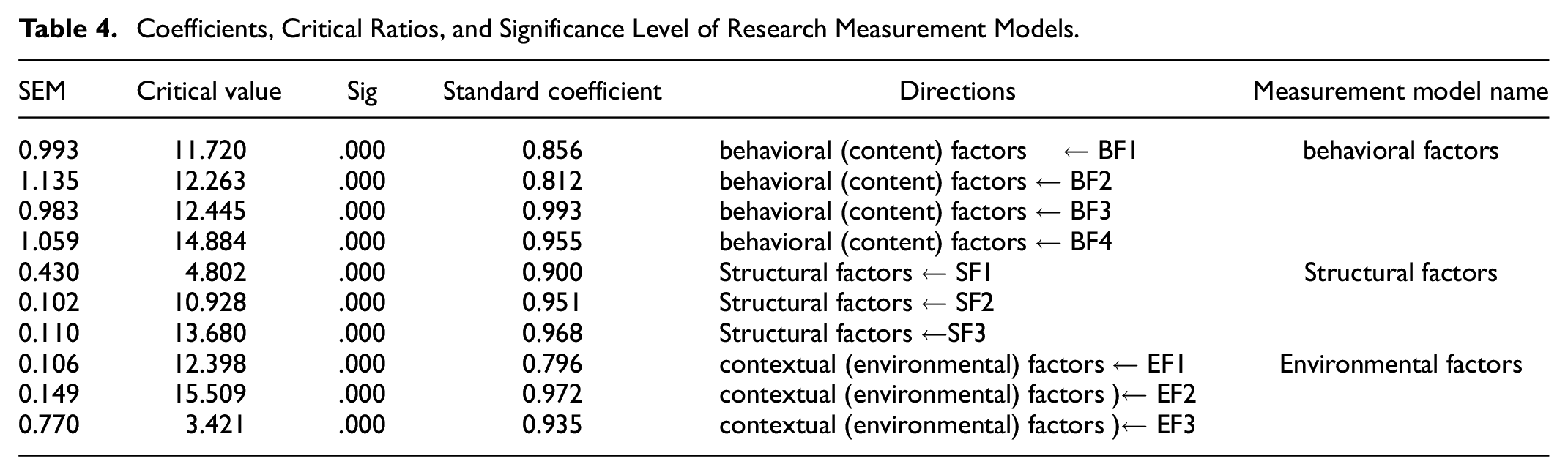
On the other hand, the results of factor analysis show that among the structural components of behavioral (content) factors, component BF3 (developmental factors) with a factor load of .993 and component BF2 (motivational-economic factor) with a factor load of .812 maximally and minimally support the behavioral (content) factors of the measurement model. Among the structural components of the structural factors, the SF3 component (employer brand communication) with a factor load of .968 and the SF1 component (organizational structure and communication) with a factor load of .990 provides the maximum and minimum support for the structural factors of the measurement model. Finally, among the structural components of the contextual (environmental) factors, the EF2 component (employer brand strength) with the highest factor load of .972 and the EF1 component (employer-brand maker uncertainty conditions) with the highest factor load of .796 minimally support the model, which had contextual (environmental) factors.
Testing Hypotheses by Structural Equation Method
This study validate the structural model of the research and tested the hypotheses enumerated from the model using the structural equation modeling method with the maximum likelihood approach. For this purpose, after developing a structural model related to the relationships between research variables, the researchers tested 26 designed models using the Amos software. The research hypotheses are as follows:
Behavioral (content) factors have significant effects on employer branding in Bank Mellat.
Structural factors have significant effects on employer branding in Bank Mellat.
Contextual (environmental) factors have significant effects on employer branding in Bank Mellat.
The final structural equations model related to the research hypotheses is shown in Figure 4, which depicts the direct impact coefficient between the research variables. Also, the factor loads related to each of the components of the tested variables are shown in Figure 4.

Diagram of standard coefficients obtained from structural equation modeling.
Also, the general indicators obtained from the structural equation model of the research are presented in Table 5, all revealing suitable fits.
Fits of Structural Research Equation Model.

The results of Table 5 show that the general indicators of the fit structural model of the research are at an acceptable level, implying the high validity of the model for measuring the relationships between variables. In the following, considering that the structural model of the research has been approved, the hypotheses are examined by the regression coefficients, critical values, and significance level in Table 6.
Review of Research Hypotheses.

Based on the findings in Table 6 and according to the research hypotheses, it can be stated that each of the three factors presented in the model had a significant effect on employer branding in Bank Mellat (with a significance level of <.05 and a high significance value of 96/1). Among them, the behavioral factor (with a regression coefficient of .601) and the structural factor (with a regression coefficient of .355) had the maximum and minimum impacts on employer branding in Bank Mellat, respectively.
Conclusions and Implications
This study aimed to explain factors affecting employer branding in the banking industry by pursuing a mixed-method approach. The results of the qualitative phase of the research with the content analysis approach led to identifying the factors affecting employer branding in the banking industry, consisting of three behavioral, structural, and environmental factors and comprising 12 main components. In the quantitative phase, the researchers attempted to validate and test the measurement models by distributing a questionnaire and using the confirmatory factor analysis method. The results of this section indicated that, according to the factor loads calculated in this test, all three measurement models well supported their latent variables. Also, testing the research hypotheses in the structural equations section showed that each of the three behavioral, structural, and environmental factors had a significant positive effect on employer branding in the banking industry.
Theoretical Implications
Findings showed that one of the main factors affecting the branding of the employer in Bank Mellat is behavioral (content) factors. Behavioral factors affecting the branding of the employer include psychological factors, motivational-economic factors, developmental factors and functional factors that have a significant effect on the criterion variable. The findings of this study are consistent with the results of some which is in line with the results of some research.
Findings of this study related to “psychological behavioral factors” are consistent with the results of the following research: Kashive et al. (2020) in work-life balance management, Biswas and Suar (2016) in the acceptance of contractual features and employee services, Xie et al. (2015) in job fit and personality programs, Tkalac Verči and SinčićĆorić (2018) in indicators of trust in the organization, and Ghielen et al. (2020) in the sense of job security. As Lee et al. (2018) mentioned, economic benefits such as initial salary above the industry average, compensation for performance-based services, and Matongolo et al. (2018) referred to the reward strategy (fair reward payment) in their research. These are in line with the findings of this study on the behavioral factor of “motivational-economic indicators.”
The result on the “developmental behavioral factor” is consistent with the results of the following research: Gunesh and Maheshwari (2018) in creating job and professional growth opportunities, Zhu et al. (2014), Tanwar and Prasad (2016b) in learning and development programs and staff empowerment, and Lee et al. (2018) in emphasizing the role of coaching and training while working. In Addition, Dabirian et al. (2017) emphasized meaningful, challenging, and diverse work. Benraïss-Noailles and Viot (2021) highlighted the creation of opportunities to apply what you have learned and then teach them to others. Tkalac Verči and SinčićĆorić (2018) pointed to the creation of a meritocracy system (identification, employment, retention, and differentiation of talented employees) which all are consistent with the results on the behavioral factor of “functional indicators.” This study showed that structural factors also affect the employer’s branding, including organizational structure and communication, workplace characteristics, and employer brand communication. In this regard, Chunping and Xi (2011) focused on designing organizational systems and providing an appropriate structure in employer branding. To explain the position and role of employees in organizational communications as essential indicators of employer branding, Biswas and Suar (2016) noted the realistic job descriptions, and Alshathry et al. (2017) also pointed determination and description of job’s content and context.
To promote employer’s brand, also in other research, Tanwar and Prasad (2016b) mentioned safe and healthy work environment, Dabirian et al. (2017) noted team approach to problem-solving Lee et al. (2018) showed flexible working hours and appropriate leadership style. Brusch et al. (2018) also mentioned the employer’s brand communication as holding “joint exhibitions and conferences with the university and communicating with professors” to create a better attitude as a structural value that plays a role in the employer’s branding process. The findings of this study in structural factors affecting the employer’s branding are consistent with the results of these researchers.
Another finding of this study is the environmental factors that affect the employer’s branding, including employer branding uncertainty conditions, the strength of the employer brand, and social values. The findings of this section are consistent with studies conducted by other researchers. In this regard, Banerjee et al. (2020) mentioned the product brand strength and the company brand, and Tkalac Verči and SinčićĆorić (2018) noted avoiding brand uncertainty. Xie et al. (2015) pointed to having a mental image of the brand as an adequate environmental condition in the employer’s branding. Also, Alshathry et al. (2017) and Tanwar and Prasad (2016b) emphasized Corporate Reputation and Corporate Social Responsibility (CSR), and Viktoria Rampl and Kenning (2014) specified brand personality. Brusch et al. (2018) have mentioned environmental responsibilities and commitment to social values as critical contextual factors in the employer branding process.
Managerial Implications
Bank Mellat is one of the most important and large banks in the banking industry. This bank represents many features of the banking industry of Iran. Therefore, according to the identified factors and confirm their effect on employer’s branding in the banking industry, the following suggestions are given:
Based on the qualitative findings and approval of the first hypothesis, behavioral factors are the main variables affecting the employer’s branding in three dimensions, namely psychological factor, motivational-economic factor, developmental factor, and functional factor. The suggestions are:
Bank managers strive to develop “psychological” factors, such as life-work balance, flexible working hours, remote working conditions, address family issues, and service employees’ families and to Increase the feeling of job security in the long run, promoting acceptance and psychological contracts of employees. In addition, managers consider employees’ personality traits to allocate a job to each employee that best suits their personalities, and by using psychological tests at the time of employment and periodically during work, assign tasks and jobs to employees based on their competencies and characteristics. These policies will continuously strengthen the connection between employees and the bank and the employer’s branding. It is also necessary to develop the “economic-motivational” factors of employees to promote the employer’s brand in the bank. It is suggested to motivate the employees, especially the skilled and specialized employees in the bank with salaries higher than the industry’s average, and reward them with economic, medical, and insurance benefits more than other banks. In evaluating employees, bank managers should seriously pursue competency-based promotion. For this purpose, the performance evaluation process should be designed in a comprehensive and sufficiently transparent way. It is also essential that the bank’s presidents, based on justice, adjust the reward system’s structure to the level of employee needs.
The “developmental” factors affecting the employer’s brand in the bank should be deliberated. So, it is recommended that bank managers fully understand the career growth needs of employees because employees, specifically knowledge employees, will leave the bank and join other organizations if the opportunity for personal promotion and career growth is not provided for them. Also, investing in training and human resource development activities is another influential factor in employer’s branding. Therefore, it is recommended that bank managers by educational needs-assessment extract and compile the training courses needed to develop professional skills for individual and group development of employees and implement knowledge management to create, share and use the knowledge of employees in the bank to gain a competitive advantage and develop human resources. By involving employees in the organization’s decision-making processes and cultivating ideas and techniques of problem-solving and learning through experience, strive for their continuous improvement.
Another behavioral factor affecting the employer’s branding in the bank is functional factors. In order to gain a competitive advantage and maintain and promote their brand, banks seek to attract and keep skilled applicants and top talent in their organizations. Therefore, it is suggested that bank managers provide self-actualization opportunities for employees, especially knowledge employees, by providing challenging and diverse tasks for employees and creating opportunities to apply what they have learned. Besides, through coordinating the employer’s branding strategy with the human resources strategy to manage the measures related to attracting and keeping talents and succession planning them in the bank.
Based on the qualitative findings and approval of the second hypothesis, the structural factor is another significant variable affecting the employer’s branding. It is suggested:
Bank managers need to design agile and flexible organizational structures to grow employees’ creativity and innovation and create an engaging and dynamic environment for employees by providing appropriate leadership styles (participatory and interactive leadership and transformational leadership). In addition, to increase the clarity of the employees’ role, it is recommended that managers create appropriate and standard job descriptions and increase the transparency of banking laws and regulations and determine policies and procedures following banking laws.
Another very effective strategy in branding is communication mechanisms. Therefore, developing employees’ communication skills through training, team building, and networking inside and outside the organization is recommended. A robust and trust-based relationship is established between colleagues and managers. Regarding the banking system processes, bank managers hold joint conferences with the university to solve the banking system’s problems and hold specialized meetings and panels in the banking industry to reach a common understanding of the market situation. It is also recommended to consider the desirability and quality of the work environment for employees to create a safe and healthy work environment and take measures to preserve and protect the body and soul of the organization’s employees, including creating a suitable physical environment in the bank, hygiene, and safety of the environment, emphasis on beautifying places, and increasing welfare facilities.
Based on the findings of the qualitative section and the approval of the third hypothesis, the environmental factor is another significant variable affecting the employer’s branding. It is suggested:
The managers of the studied bank create social values, such as promoting the bank’s brand reputation and social acceptance. Therefore, it is recommended to create a positive mental image of the bank among current employees and other volunteers who want to work with the bank by launching a staff communication system, such as a customer relationship management system. The existence of this system and the positive and negative feedback provided will improve the position of the bank’s brand. Also, one of the best ways to develop the employer’s brand and promote its position is to use the word-of-mouth method and employees’ verbal advertising about the bank, which will significantly affect the bank’s social acceptance. Emphasis on the bank’s social responsibility and its promotion as a value and adherence to environmental responsibilities are other environmental factors affecting the employer’s branding in banks. In formulating strategic planning and allocating resources, banks should pay attention to various dimensions and aspects of social responsibility and environmental responsibilities and spread valuable news about their social responsibility activities through the media in order to create a positive mental image of the brand among customers.
Limitations
One limitation of this research is the lack of generalizability of some factors studied for banks in the public sector because state banks have special conditions and regulations based on government rules.
Future Research Directions
Due to research limitations, it is suggested that the factors affecting the employer’s branding in public sector banks will also be examined in future research. Also, to identify the differences and similarities of the factors affecting the branding of the employer between private and public banks, a comparative study should be conducted.
Supplemental Material
sj-docx-1-sgo-10.1177_21582440241257658 – Supplemental material for Identifying and Assessing Factors Affecting Employer Branding in the Banking Industry
Supplemental material, sj-docx-1-sgo-10.1177_21582440241257658 for Identifying and Assessing Factors Affecting Employer Branding in the Banking Industry by Parvaneh Gelard in SAGE Open
Footnotes
Acknowledgements
We appreciate the cooperation of Bank Mellat, which made it possible for the authors to collect information; also, the authors are grateful to the anonymous referees of the journal for their beneficial suggestions to improve the quality of the article.
Declaration of Conflicting Interests
The author(s) declared no potential conflicts of interest with respect to the research, authorship, and/or publication of this article.
Funding
The author(s) received no financial support for the research, authorship, and/or publication of this article.

Data Availability Statement
The quantitative phase applied a questionnaire to evaluate the measurement model presented for each of the identified factors and validated in the first stage of the research.
Supplemental Material
Supplemental material for this article is available online.
References
Supplementary Material
Please find the following supplemental material available below.
For Open Access articles published under a Creative Commons License, all supplemental material carries the same license as the article it is associated with.
For non-Open Access articles published, all supplemental material carries a non-exclusive license, and permission requests for re-use of supplemental material or any part of supplemental material shall be sent directly to the copyright owner as specified in the copyright notice associated with the article.
