




Abstract
Poverty has become the main focus of development in almost every country. Several related studies have discussed poverty alleviation recently, especially concerning the world’s pandemic phenomenon. This article aims to analyze the literature relating to programs, opportunities, and challenges in poverty alleviation in the world. PRISMA (Preferred Reporting Items for Systematic reviews and Meta-Analyses) was used as a procedure for this systematic review. Twenty-two articles were selected as primary data collected from the Scopus and WoS database. Using thematic analysis, this study found that poverty alleviation programs are implemented in urban and rural areas and through women's empowerment. In addition, social, economic, and environmental benefits are determinant factors of the implications of poverty alleviation programs. One of the opportunities for poverty alleviation is to increase household income and create community welfare through empowering women. Meanwhile, the incompatibility of program targets, lack of funding, program synergy, gender gaps, and the environment are challenges for stakeholders that must be considered in the future. Recommendations and study implications of this study are also highlighted.
Introduction
Poverty has become a major global challenge in recent decades. Thus, the poverty alleviation program is one of the 17 points in the Sustainable Development Goals (SDGs) (Nugroho et al., 2021; United Nations, 2016). Poverty alleviation has become the primary plan to achieve a better and sustainable future. There have been many poverty alleviation efforts with various programs implemented in all countries. However, poverty remains a significant issue that continues to be studied extensively (Cooney & Williams Shanks, 2015; Leng et al., 2021). Most developing and underdeveloped countries still face high poverty as a significant problem (Appiah-Kubi, 2021).
Developing and underdeveloped countries have adopted various poverty alleviation strategies from other countries that have been successful in their implementation. However, the problem of poverty continues (Appiah-Kubi, 2021). This is due to many factors that cause poverty, such as the state financial crisis, the loss of women’s roles, lack of access to education, and others (Appiah-Kubi, 2021; Nugroho et al., 2021; Sa’diyah & Ruja, 2021). Poverty alleviation efforts must continue to be carried out and become the primary goal because it is closely related to the economic growth of a country and ultimately has an impact on the welfare of society at large and an effect on the ability of individuals to fulfill their daily needs (Leng et al., 2021).
Since poverty is a global problem and poverty alleviation attracts worldwide attention, especially in developing countries, many scholars associate it with economic growth and diversification of poverty alleviation measures such as government spending and transfers, infrastructure development, and agricultural technology upgrading (Leng et al., 2021). The challenges of poverty reduction are increasing as the pace of poverty reduction has slowed in recent years (Nugroho et al., 2021). However, the COVID-19 pandemic came, and most countries faced the first economic recession in more than 20 years (Leng et al., 2021; Nugroho et al., 2021; Qiu et al., 2020). The pandemic is causing social dislocation, where millions of people may fall into poverty—those living in poverty experience a chronic and uncontrollable increase in life circumstances. Everyday stressors include job insecurity, food insecurity, stigma, victimization, criminalization, and illness. The impact of stress associated with poverty can have poor physical and psychological health, such as feelings of helplessness, shame, humiliation, and isolation (Molen et al., 2020). In addition, budget allocations for poverty alleviation programs have increased progressively, but poverty reduction has slowed in recent years (Nugroho et al., 2021). Therefore, existing poverty alleviation programs must be evaluated to keep pace with the increasing challenges.
The significant issue of poverty alleviation and poverty alleviation efforts worldwide causes an abundance of related empirical literature. However, the pandemic that has hit the world has caused the economy of almost all countries to experience a slump, and poverty programs do not work as expected and are not even implemented. Therefore, conducting a study of this phenomenon becomes essential and urgent as an overview and portrait of how poverty alleviation programs worldwide are carried out during the pandemic.
Systematic Literature Review (SLR) was used in this study to provide a comprehensive review of poverty alleviation. One main reason is that SLR can provide transparency in the article search process. It must be guided by a procedure so that each step is carried out systematically and clearly. In addition, research bias can be controlled because each process must be by the provisions, resulting in more meaningful research objectives (Shaffril et al., 2021).
This study is directed to answer research questions such as what poverty alleviation programs are implemented worldwide and how they are implemented during the pandemic outbreak. These questions can cover programs, opportunities, and challenges in alleviating poverty in the world. These two questions are also generators for the main data of this study in formulating research strings which are tools for harvesting data from database sources (Scopus and web of science). This study is crucial because it can contribute to poverty alleviation efforts and programs worldwide. Therefore, this study aims to identify poverty alleviation programs worldwide and analyze the opportunities and challenges of poverty alleviation in the world since the pandemic outbreak, especially from 2020 to 2022.
Methods
This study used a qualitative approach with a Systematic Literature Review (SLR). PRISMA (Preferred Reporting Items for Systematic reviews and Meta-Analyses) was used as the determined procedure. The reasons for this are the advantages offered, such as systematic and explicit research questions, inclusion and exclusion criteria, and the possibility of examining large scientific databases simultaneously (Shaffril et al., 2019). The database for primary data was taken from Scopus and Web of Science (WoS). Several stages were carried out to complete this study, including determining strings for searching primary data, picking inclusion and exclusion criteria, eligibility, quality appraisal, and data abstraction and analysis processes.
Qualitative data analysis techniques in this study were used as thematic data analysis. The aim is to construct the themes of research articles related to poverty alleviation. The theme construction process begins with repeatedly reading articles related to poverty alleviation and then coding the data (Clarke & Braun, 2013). Thematic data analysis is based on the advantages offered, such as the freedom for researchers to interact with the data to get the context and represent the data that has been analyzed.
Resources
Scopus and web of science were selected as database sources. The reason is that Scopus publishes more than 22,800 journals from multiple publishers in the world. While the Web of Science is a resource that contains more than 33,000 journals with various disciplines. In addition, these databases have articles published 100 years back (Shaffril et al., 2018). Another reason is the convenience of the article search process, such as intelligent tools that make it easier for researchers to find determined research documents or articles (Shaffril et al., 2018, 2021).
Eligibility, Inclusion, and Exclusion Criteria
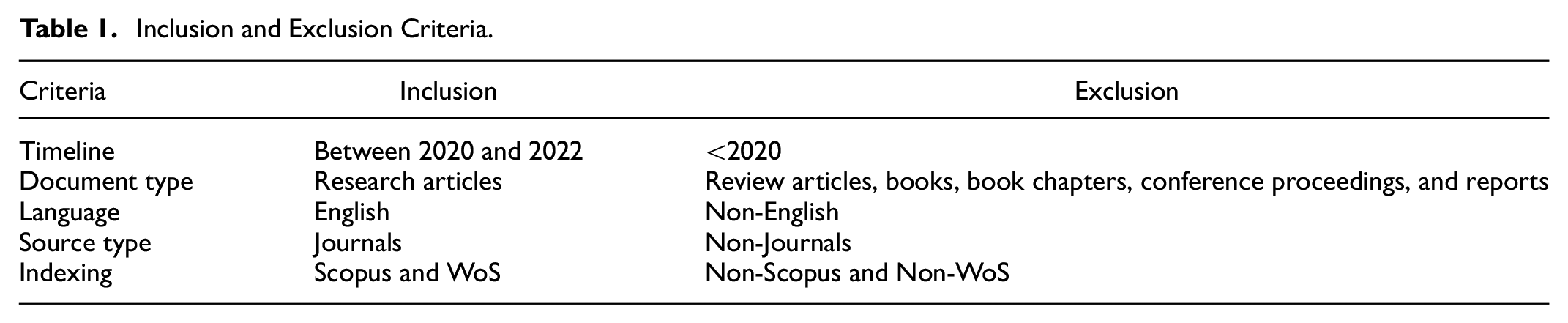
This study’s inclusion and exclusion criteria can be categorized based on time, document type, and language. This study focuses on literature published between 2020 and 2022, other than those not selected and excluded. Meanwhile, the document used must be research articles, which means that documents such as review articles, books, book chapters, conference proceedings, and reports are excluded. Moreover, the pieces used in this study must be in English. This is intended to obtain quality research articles and can cover phenomena around the world. Finally, only Scopus and WoS indexed articles were selected to ensure quality. Otherwise, they were excluded (Table 1).
Inclusion and Exclusion Criteria.
Systematic Review Process
There are four stages in this systematic review process. The first is the identification stage. This is done by specifying keywords to search for data. Keywords were determined based on dictionaries, thesaurus, and keywords from previous studies (Table 2). At this stage, a total of 136 documents were obtained, with one duplicate document so that it was deleted. The screening stage is the second stage. One hundred thirty-five documents were filtered, and as many as 62 documents were deleted for reasons such as not being a research article document type, not being indexed by Scopus or WoS, and not being in English. The third stage is eligibility. In this process, a careful examination of the appropriateness of the articles was applied, resulting in 52 papers being excluded because they were outside the scope of the discussion. Finally, the included stage found 22 research articles ready for systematic reviews (see Figure 1).
The Search Strings Used in Collecting Data Process.

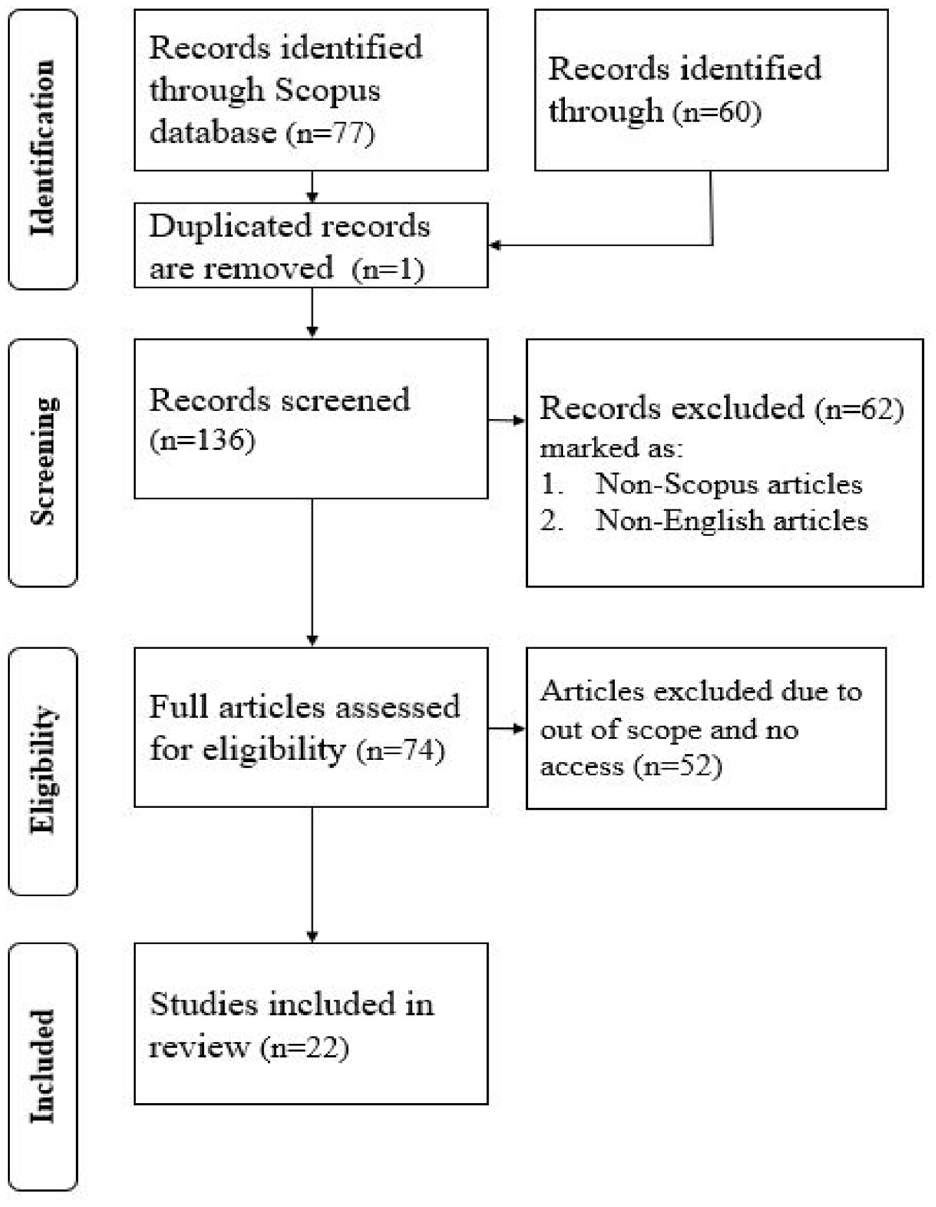
Flowchart of primary studies selection.
Quality Appraisal, Abstraction, and Analysis
The study used MMAT (Mix Method Appraisal Tools) for the quality assessment stage. Its advantages are due to its flexibility that it can be used in various research approaches, including qualitative, quantitative, and mixed methods. In this section, the article was evaluated by answering a list of questions that have been determined and given an assessment weight (Hong et al., 2018). The score was determined using 1 for “Yes,” 0.5 for “I don’t know,” and 0 for “No.” The scoring category is based on four categories very good for a value of 10≤ 22, good for 7≤ 9, sufficient for 4≤ 6, and failed for 0≤ 3. The result is “Good,” which means the article can be used in a systematic review.
The selected articles were then abstracted and extracted by reading the abstracts and the entire article in-depth to find themes and sub-themes. Furthermore, the results of the abstraction were analyzed based on the themes.
Results and Discussion
Selected Primary Studies
This section describes several characteristics, including authors, years of publication, journals, journal acronyms, publishers, study countries, quartiles, and indexes. Table 3 shows that Scopus and WoS have indexed all selected research articles. Furthermore, for the year of publication, 10 research articles were published in 2020, and 12 papers were published in 2021 (Figure 2). Regarding the research approach used, the selected research articles consisted of qualitative research (10 articles) and quantitative research (11 articles), and only one article used mixed methods.
Selected Primary Studies.


Number of selected studies over the years.
Themes Distribution
The next step is to analyze the selected research articles. A total of 22 research chosen articles contain themes and sub-themes that represent research data. The results found a total of two main themes and six sub-themes related to poverty alleviation in the world. The two themes are the poverty alleviation program which includes four sub-themes and opportunities and challenges, which consist of two sub-themes (Table 4). Poverty alleviation programs consist of poverty alleviation in urban areas, poverty alleviation programs in rural areas, women's empowerment, and determinants of implementation of poverty alleviation programs. Meanwhile, the opportunities and challenges include poverty alleviation opportunities and poverty alleviation challenges.
Main Topics of the Primary Studies.

Poverty Alleviation Programs
This section focuses on discussing poverty alleviation programs such as poverty alleviation programs in urban areas and rural areas. This also describes and analyzes the poverty alleviation programs through women’s empowerment and the determinants of the implications of poverty alleviation programs.
Poverty Alleviation in Urban Areas
A total of 9 articles from 22 selected research articles focus on discussions on poverty alleviation in urban areas. Based on the results of research that has been carried out related to this theme, it is found that several poverty alleviation programs in urban areas have been carried out in various countries. One of the programs widely used to alleviate poverty in urban areas in the short term is the provision of cash assistance (Appiah-Kubi, 2021; Sungkar, 2020). As a developing country, Indonesia is one of the countries implementing this program. The Indonesian government implements a poverty alleviation program called Program Keluarga Harapan (PKH), which is cash assistance for households that meet several criteria. The criteria for households receiving PKH are households with pregnant women, newborns/toddlers, school-age children aged 3 to 18 years, or elderly families. The cash assistance is expected to be used more to access health or education. This program was implemented from 2007 until 2018; there were 10 million households that became beneficiaries (Nugroho et al., 2021). Meanwhile, in Colombia, the government implemented a Conditional Cash Transfer (CCT) program under the Families in Action (FA) program. This program targets two main components, education with the criteria that recipient households have school-age children between the ages of 7 and 17 years.
Meanwhile, the other component is Health, requiring that the recipient household has children under six and the family is confirmed to be in extreme poverty. In addition, the Colombian government has adopted an exciting strategy for implementing this FA program by holding Caregiving Meetings with recipients in certain municipalities. It aims to control and listen to the aspirations of the beneficiaries to prosper in their families (García & Cuartas, 2021).
In Ghana, precisely in Ashaiman, the government implements a poverty alleviation program called The Livelihood Empowerment Against Poverty (LEAP), which is cash assistance for beneficiary households to meet several conditions. The conditions that must be met are households in extreme poverty, family members aged 65 years and over who need to be cared for, people with severe disabilities who need to be cared for, or have orphans or vulnerable children, or pregnant women or mothers with babies. This program aims to help beneficiary households meet their basic needs. Seventy homes in Ashaiman are beneficiaries, with every 2 months receiving assistance of 48 to 90 Ghanaian Cedis (Appiah-Kubi, 2021). Interesting findings related to the cash or fund assistance program were found in Indonesia. To eliminate the education gap, the Indonesian government ran a program called Program Indonesia Pintar (PIP). The main objective is to help school-age children (6–12 years) complete 12 years of compulsory education. Funds from the PIP program may only be used for educational purposes (Nugroho et al., 2021).
In Ghana, loan assistance is vital, especially microcredit assistance. This is because micro-entrepreneurs are the occupations that contribute the most to the workforce. On this basis, the Government of Ghana established the Microfinance and Small Loans Center (MASLOC) as the top agency responsible for microcredit. The purpose of establishing MASLOC is to increase micro-entrepreneurship, resulting in many job creations that affect poverty reduction (Afriyie et al., 2020). The same was found in Ulanqab, China, and Ashaiman, Ghana; microcredit is crucial in poverty alleviation efforts. This is because the community, especially women, can borrow money from banks or NGOs to fulfill their needs and make handicrafts to improve the economy. Therefore, in Ashaiman, Ghana, a savings group was formed. Meanwhile, in Ulanqab, China, the Women's Group Micro-credit (WGMC) was included. It aims to increase public access, especially for women, to get credit to improve their income (Appiah-Kubi, 2021; Gu & Nie, 2021).
An interesting finding is that in Denver and New York, United States, the government implemented a Housing First policy to offer the homeless permanent housing and support services as quickly as possible to provide a stable life. Specifically, in the case of Denver, the United States introduced a program based on the Housing First policy, the Social Impact Bond Initiative. This program is a little different because the funds for the homeless are obtained from loans from banks, socially conscious investors, and non-profit foundations. The method of borrowing is that the previously mentioned lenders provide loans in advance, and the homeless borrowers who live in permanent housing will only repay if they have achieved the goal of this program, stability of life. This program is undoubtedly beneficial in alleviating poverty because the homeless will have a stable life and avoid possible criminal justice costs if they are still on the streets (Baker et al., 2020). A different case was found in Hong Kong, where the government introduced the Child Development Fund (CDF) program, which aims to alleviate poverty by supporting the long-term development of children with poor backgrounds for 3 years. One component of this program is targeted savings, where children are accustomed to saving by creating savings accounts for children and saving money from corporate donors and the government. A total of 200 Hong Kong Dollars must be deposited in the history of a total donor of 4,800 from the government and companies. The savings are used to realize the child's future personal development plan (Ling Chan et al., 2021).
The next poverty alleviation program widely applied in urban areas is the energy assistance program (Cunha et al., 2021; Nugroho et al., 2021). In Indonesia, the energy subsidy program is integral to poverty alleviation efforts. The energy subsidized by the Indonesian government, especially for poor households, includes electricity, fuel oil, and LPG (Liquefied Petroleum Gas). The hope is that low-income families can meet their needs (Nugroho et al., 2021). A different issue was found in Juazeiro, Brazil, the government through the Brazilian National Energy Agency (ANEEL), together with Caixa Econômica Federal (CAIXA public bank) in collaboration with Brazil Solair (a private company), implemented an energy generation program to distribute electrical energy and at the same time alleviate poverty. A total of 9,156 photovoltaic (PV) panels with a power of 230 W were installed on the roofs of residents’ houses. In addition, six 5kWp micro wind turbines were installed in the area, resulting in a total of 2.1 MWp of electrical energy being generated and distributed (Cunha et al., 2021).
Another effort in poverty alleviation is the provision of skills assistance programs. In Ghana, the government, through NGOs, provides skills training for women, such as catering, sewing, hairdressing, product making, and both food and crafts. In addition, they are also facilitated by providing a sales market. NGOs also link producers to buyers (Appiah-Kubi, 2021). The same thing happened in Ulanqab, China, where the government provided training to women, especially in agriculture. It is hoped that this will increase household income. In addition, a women’s association was formed to improve women’s skills further and provide support, which offers training in agriculture, management, and marketing (Gu & Nie, 2021).
The recipients of Bantuan Iuran-Jaminan Kesehatan Nasional (National Health Insurance-Contribution Beneficiary Program--PBI-JKN), assistance from the government for poor households to minimize spending on health by low-income families is another program in alleviating poverty in Indonesia. This assistance is part of the BPJS Health membership. In addition, other programs are Beras Sejahtera (Prosperous Rice--Rastra) and Bantuan Pangan Non-Tunai (Non-Cash Food Assistance--BPNT) programs, as a continuation of Beras Miskin (the Rice for the Poor--Raskin) program, where the government aids in the form of goods to poor households. The BPNT program provides a transfer of Rp 110,000 per month, which can only be used to buy rice and eggs. This transfer of funds replaces the Rastra program, which provides 10 kg of rice every month. However, in practice, the two programs have not yet been converted and are still distributed (Nugroho et al., 2021).
Poverty Alleviation in Rural Areas
A total of 11 out of 22 selected research articles discussed poverty alleviation in rural areas. In China, several rural poverty alleviation programs are being carried out. One is the Targeted Poverty Alleviation (TPA) program. The government implements poverty alleviation measures to target poor households through direct cash transfers, health care, education funds, and minimum income guarantees. The reason for implementing this program is due to the Chinese government's findings which state that the causes of poverty are burdensome health costs, inadequate education, and the failure of rural communities as productive economic agents. The TPA program is implemented with a top-down hierarchical system; the central government submits the implementation to the units below it (Cheng et al., 2021; Peng, 2021; Tang et al., 2021). Another program in China is the Poverty Alleviation Relocation (PAR) program to relocate poor people in rural areas with poor environmental conditions to more suitable areas or with good environmental conditions. In its implementation, the government divides the population to be relocated into two destinations, namely urban and nearby rural areas. In urban relocation, the poor will be given housing and access to education and health. Meanwhile, in relocating to the nearest rural area, the poor will be provided housing and farming opportunities to increase their income (Leng et al., 2021; Qiu et al., 2020).
The Photovoltaic Poverty Alleviation (PVPA) program is another program implemented in China. PVPA is a renewable energy assistance program targeted at rural communities using photovoltaic (solar energy) power plants. This program aims to create renewable energy and provide more electricity in rural areas. This program aims to reduce the use of coal and kerosene, reducing carbon gas emissions (Huang et al., 2021). Another Chinese government program is the withdrawal of the elderly in urban areas to live or vacation in villages. The elderly are a group that is in dire need of care. Therefore, the Chinese government encourages the elderly to participate in this program. The goal is that with the arrival of many older adults to the village to stay or vacation, tourism in the town will increase and increase village income. In addition, the withdrawal of the elderly also aims to improve health facilities in rural areas due to their care needs so that rural communities can also experience adequate health facilities (Pan et al., 2021). Another program is in the Yunnan area, China, where the site consists of hillsides suitable for fruit farming. The Chinese government finally issued a policy to help promote and develop fruit farming and ecological tourism. As a result, people can increase their income (Zou et al., 2021).
Another rural poverty alleviation program is found in northern Ghana. This program is called The Savannah Accelerated Development Authority (SADA)-Northern Ghana Millennium Village Project (MVP), or SADA-MVP. This program is a collaboration between the Government of Ghana, the United Nations (UN), and Columbia University, with funding for program implementation from the UK Department for International Development (DFID). This program aims to achieve the Millennium Development Goals (MDGs) at the village level by providing services and assistance in various fields such as agriculture, health, infrastructure, and education (Masset & García-Hombrados, 2021). Vietnam also found several poverty alleviation programs in rural areas, especially areas in Vietnam that are in the highlands and consist of ethnic minorities. The first program is Program 135 (P135), which the Vietnamese government launched with the Committee for Ethnic Minority Affairs (CEMA) in charge.
The program aims to increase socio-economic development for poor communities in the highlands and local ethnic communities. The socio-economic development includes production, infrastructure, education, training of officials, and quality of life standards. The second program is the 30A Program, managed by the Ministry of Labor, War Invalids, and Social Affairs (MOLISA), which targets poor households in the 61 poorest districts in Vietnam. The program aims to reduce poverty rapidly through investment in infrastructures, such as irrigation and transportation. The third program, the New Rural Development Program (NRD), is managed by the Ministry of Agriculture and Rural Development (MARD) which targets poor communities in all districts in Vietnam. This program aims to reduce socio-economic disparities in rural areas by building new villages related to poverty, education, transportation, health, irrigation, water supply, production, markets, livelihoods, culture, energy, environmental issues, security, and communication (Lam, 2020).
In Kenya, precisely in the coastal areas, there are great opportunities for developing marine aquaculture as a source of income or livelihood. Therefore, the Kenyan government, non-governmental organizations, and the Food and Agriculture Organization of the United Nations (FAO) support the development of marine aquaculture on the coast of Kenya. Some commodities cultivated are milkfish, mullet, mud crab, seaweed, oysters, and shrimp. This program aims to tackle widespread poverty and facilitate the livelihood needs of coastal communities in Kenya. Hopefully, this marine cultivation program will improve the community’s economy and alleviate poverty (Odhiambo et al., 2020).
Poverty Reduction Through Women Empowerment
A total of 3 articles out of a total of 22 articles on the theme of poverty alleviation programs focus on poverty alleviation programs through women’s empowerment. Several studies have shown that women's empowerment affects poverty alleviation. In Ghana, precisely in Ashaiman, the government collaborates with local NGOs to empower women by providing vocational training programs such as catering, sewing, and hairdressing. The women are trained to improve their skills according to their potential, and at the end of the program, they are given a certificate that can be used to register in an established company or start their own business. In addition, they also held small-scale training in a shorter time, such as making Gari, soap, and beads. Another program is market creation. Realizing that the high number of poor households causes low demand for goods, the government and NGOs are trying to connect producers with buyers from inside or outside Ghana (Appiah-Kubi, 2021). Another poverty alleviation program through women's empowerment in Ghana is the microcredit program. The Government of Ghana established the Microfinance and Small Loans Center (MASLOC) as the highest body in charge of implementing the microcredit program. MASLOC provides business consulting, training, and capacity-building services for MSMEs. These programs in Ghana aim to increase household income, especially for women, so that poverty can be reduced (Afriyie et al., 2020).
Meanwhile, in China, specifically in Ulanqab, the government carries out poverty alleviation programs in a sustainable and gender-just manner. The program is The Inner Mongolia Autonomous Region Rural Advancement Program (IMARRAP), a poverty alleviation program that empowers women in agriculture. The International Fund for Agricultural Development (IFAD) funded the program with several programs, including providing agriculture training, establishing a Women's Group Micro-credit (WGMC), and forming a women’s association. The program aims to improve women’s economy, increase women’s opportunities in the family economy, and improve women’s skills (Gu & Nie, 2021).
Determinant Factors in the Implementation of Poverty Alleviation Programs
Of the 22 articles, 19 discuss the determinants of implementing poverty alleviation programs. Based on the research findings, it was found that the determinant factors consist of social, economic, and environmental benefits. All of these aspects improve the quality of life of the targeted poor households (Cheng et al., 2021; Leng et al., 2021; Qiu et al., 2020). First of all, social benefits related to education and health. Education becomes an essential factor in the development of personal knowledge and skills. However, in poor households, this becomes a problem because they cannot pay for the need to access education services (Afriyie et al., 2020; Gamboa et al., 2020; Nugroho et al., 2021). Health is another critical factor in implementing poverty alleviation programs because it is one of the basic needs of every individual. The main problem is the inability of poor households to access health services (Leng et al., 2021; Peng, 2021).
For this reason, many poverty alleviation programs are implemented to provide social benefits to poor households, particularly education and health. It is hoped that low-income families can reduce spending on education and health services and, at the same time, increase their access to education and health services. With the capital of these two aspects, they can develop themselves and escape poverty in the future (García & Cuartas, 2021; Lam, 2020; Masset & García-Hombrados, 2021; Nugroho et al., 2021; Peng, 2021; Tang et al., 2021).
The second factor in implementing poverty alleviation programs is economic benefits, fulfillment of basic needs, and job opportunities. Basic needs such as food and shelter are essential for poor households. Often, they cannot meet their basic needs due to economic factors. Many poverty alleviation programs assist needy families in meeting their basic needs (Afriyie et al., 2020; Appiah-Kubi, 2021; Baker et al., 2020; Gamboa et al., 2020; Lam, 2020; Nugroho et al., 2021; Peng, 2021). In addition, employment opportunities are also a determining factor in the implementation of poverty alleviation programs. Poor households need money, and job opportunities are an obligation to be able to meet their basic needs. On this basis, the poverty alleviation program assists in the form of skills improvement to increase the income of poor households (Cheng et al., 2021; Gu & Nie, 2021; Leng et al., 2021; Qiu et al., 2020; Tang et al., 2021; Zou et al., 2021).
The environment is another determinant factor that can encourage the successful implementation of poverty alleviation programs such as a more decent living environment and renewable energy. The climate in which poor households live is often in uninhabitable conditions such as lack of water to drought. Therefore, several poverty alleviation programs offer low-income families a more environmentally friendly living environment (Cheng et al., 2021; Gamboa et al., 2020; Leng et al., 2021; Qiu et al., 2020; Tang et al., 2021). Another determinant of environmental benefits is the availability of renewable energy. Renewable energy is one of the solutions for providing power for poor households while providing ecological benefits. Therefore, the poverty alleviation program provides renewable energy subsidies to low-income families (Cunha et al., 2021; Huang et al., 2021; Nugroho et al., 2021). In addition, interesting results were found in Hong Kong, where the Child Development Fund (CDF) program, which aims to realize children's future personal development plans, can also be a determining factor for the implications of poverty alleviation programs (Ling Chan et al., 2021).
Challenges and Opportunities in Poverty Reduction
This section focuses on discussing the challenges and opportunities for poverty alleviation. Several challenges were found in the research findings, such as mistargeted programs, lack of program monitoring and evaluation, lack of funding, lack of a comprehensive approach, lack of direct bureaucratic or government intervention, gender gaps, environmental damage, and short-term programs. Meanwhile, opportunities in poverty alleviation programs at least consist of increasing household income, achieving the SGDs and MDGs’ goals, and empowering women.
Challenges in Poverty Alleviation
Many studies discuss the challenges in poverty alleviation. At least there are as many as 16 articles that discuss it. One of the challenges is that the program is not on target. The alleviation program is, of course, specifically targeted at poor households. However, there are many inaccurate targeting that some low-income families cannot benefit from; for example, in several poverty alleviation programs in Indonesia, such as PKH, PIP, Rastra, and BPNT, which show that there are still many non-poor households receiving benefits from these programs (Nugroho et al., 2021). Another program is the TPA program in China; many people have not felt the program. It was found that the program was easier to obtain by elite households, village cadres’ families, or village cadres’ relatives (Cheng et al., 2021; Peng, 2021; Tang et al., 2021).
The next challenge is the lack of monitoring and evaluation of programs such as renewable energy subsidies. The PVA program in China, for example, this program uses photovoltaic panels and requires monitoring and inspection. However, this is the same as the renewable energy program in Brazil; there is no monitoring of its implementation, resulting in many compliances with the provisions (Cunha et al., 2021; Huang et al., 2021). Other evidence regarding the importance of monitoring and evaluation in poverty alleviation programs is seen in the mariculture program in Kenya, where shrimp and seaweed farming has failed (Odhiambo et al., 2020). The lack of program monitoring and evaluation results from a lack of public awareness. The energy subsidy program in China and Brazil found that the public lacked information regarding program policies and photovoltaic panel system maintenance. As a result, the program could be said to have failed to meet the target (Cunha et al., 2021; Huang et al., 2021). Regarding public awareness and knowledge, in Indonesia’s PIP program, the distribution of program benefits is a complicated issue; some areas of the supply of educational facilities are inadequate (Nugroho et al., 2021).
Lack of funding is also often another potential challenge. The implementation of a poverty alleviation program requires operational costs. The findings in Ghana show that the LEAP program is experiencing difficulties in expanding its benefits due to a lack of funding from stakeholders (Appiah-Kubi, 2021; Odhiambo et al., 2020). In addition, there is a lack of complementarity between one poverty alleviation program and another. For example, in Indonesia, it was found that some recipients of the PKH program who should have been able to receive assistance from other programs such as Rastra/BPNT, PBI-JKN, and PIP did not benefit from other programs (Nugroho et al., 2021). A further challenge is the lack of a comprehensive poverty alleviation approach focusing solely on benefits. The LEAP program in Ghana is equated with a lack of income, although there are other influencing elements. The program in Ghana, namely MVP, has proven to be less concerned with the complexities of poverty in Africa and only prioritizes the benefits that can be provided, so some experts consider this program a classic expression of “philanthrocapitalism” (Appiah-Kubi, 2021; Odhiambo et al., 2020).
Another challenge is bureaucratic or government intervention. In China, in the TPA program, the government’s participation makes people dependent on the government. Another example is the phenomenon of “centralization-decentralization” in Vietnam even causes inconsistency in poverty alleviation programs because the types of operations are different (Lam, 2020). Meanwhile, Ghana's LEAP program is experiencing challenges due to a lengthy bureaucratic process, so people cannot get benefits quickly (Appiah-Kubi, 2021). Next is the challenge due to the gender gap. It was found that there are differences in poverty alleviation programs between genders, especially for women who do not have access to participate in efforts to increase household income (Afriyie et al., 2020; Appiah-Kubi, 2021; Gu & Nie, 2021). Another challenge relates to environmental damage. The energy subsidy poverty alleviation program, although reducing the use of fuel oil that causes pollution, also threatens the environment when dismantling solar PV (Cunha et al., 2021; Huang et al., 2021). In addition, programs such as village land use, even though they have a positive impact and achieve several SDG indicators, also cause a negative trade-off—the loss of several indicators (Dolley et al., 2020). Another challenge is that many poverty alleviation programs, primarily direct cash transfers, only address short-term and no future development (Baker et al., 2020; García & Cuartas, 2021). The last and most recent challenge facing poverty alleviation is the Covid-19 pandemic. This pandemic creates new problems in poverty, such as increasing poverty rates, and hinders the implementation of poverty alleviation programs (Pan et al., 2021).
Opportunities in Poverty Reduction
There are many opportunities in poverty alleviation programs. One is increasing household income or improving the household economy (Nugroho et al., 2021; Odhiambo et al., 2020; Zou et al., 2021). In China, programs such as TPA have been shown to increase the incomes of poor households with guaranteed minimum income (Tang et al., 2021). Other programs, such as PAR, have also been offered to improve the income/economy of poor households (Leng et al., 2021; Qiu et al., 2020). Another opportunity for poverty alleviation is the fulfillment of basic needs such as access to health, education, and food (García & Cuartas, 2021). The PIP program in Indonesia has an excellent opportunity to close the education gap in Indonesia, especially between the rich and poor. In addition, the PBI-JKN program in Indonesia has the opportunity to increase public access to health facilities (Nugroho et al., 2021). Other programs in China and Guatemala provide opportunities to meet basic needs in the form of food. As a result, this poverty alleviation program has also improved poor households’ food quality and nutrition (Gamboa et al., 2020; Qiu et al., 2020).
In addition, poverty alleviation programs can be aimed at achieving the Millennium Development Goals (MDGs) or Sustainable Development Goals (SDGs) targets, which are the result of an agreement from UN member countries to overcome development challenges and create prosperity for the world community. Evidence of the achievement of these development goals can be seen in the SADA-MVP program in Ghana, which shows that several indicators have been achieved. Other results also show that SADA-MVP significantly impacts the Multidimensional Poverty Index (MPI), which measures poverty based on three dimensions: education, health, and quality of life. Other evidence is found in Wuhan, China, where village land use programs achieve several SDGs indicators despite trade-offs (Dolley et al., 2020; Masset & García-Hombrados, 2021). The poverty alleviation program also has the opportunity for environmentally sound development through the renewable energy subsidy program. Evidence of this opportunity can be found in China's PVPA programs and energy generators in Brazil that are building photovoltaic (PV) panel power plants for distribution to poor households (Cunha et al., 2021; Huang et al., 2021).
Other findings also show some exciting opportunities provided by poverty alleviation programs, one related to women. The MASLOC program in Ghana and the IMARRAP in China targeted women in their implementation. Women are given various skills training, so these programs create opportunities for women to be more empowered in the household and help the economy, especially for low-income families (Afriyie et al., 2020; Appiah-Kubi, 2021; Gu & Nie, 2021). Another opportunity arises in the CDF program in Hong Kong, which can not only increase income, a program that aims to develop children’s future, but also can create psychological improvements for children, improve children's health, and improve children’s academic results (Ling Chan et al., 2021). Meanwhile, in America, especially in Denver, there is a Social Impact Bond Initiative program, where the government offers the homeless permanent housing and support services as soon as possible. Funds for this program are obtained from bank borrowers. Socially aware investors and non-profit foundations will be paid back when the goals are achieved. This is where the opportunity for poverty alleviation programs emerges, where borrowers will benefit from returning loan funds. This phenomenon is also called invested poverty (Baker et al., 2020). An exciting finding was found in the United States, where there are opportunities for poverty alleviation related to religion. As a result, people who explore religious problem-solving styles are likely to be better prepared to face the challenges of poverty (Molen et al., 2020).
One of the programs widely used to alleviate poverty in the short term is the provision of cash assistance (Afriyie et al., 2020; Appiah-Kubi, 2021), health care (García & Cuartas, 2021; Nugroho et al., 2021), and energy assistance (Cunha et al., 2021; Nugroho et al., 2021). Many of these programs are only directed at helping families with crises expected to increase their purchasing power. However, these programs do not have a significant impact on reducing poverty because, like other instant programs, this program does not provide opportunities for people to be empowered and motivated to improve their quality of life, environment, and standard of living (Baker et al., 2020; Leng et al., 2021; Masset & García-Hombrados, 2021). They tend to be more passive and just wait, there is no high motivation to get welfare work opportunities. Meanwhile, programs aimed at long-term programs, such as those implemented in Hongkong (Ling Chan et al., 2021), Indonesia (Nugroho et al., 2021), and Ghana (Appiah-Kubi, 2021), are more promising. The government launched a funding program for underprivileged young children and allocated substantial funds for their educational preparations. This program is intended for the long term with the aim of alleviating poverty through education. In addition, assistance skills as a means of strengthening and empowering women can also be an alternative solution for potential poverty alleviation.
Conclusion
This systematic review study has identified themes related to poverty alleviation, such as poverty alleviation programs, determinants, and opportunities and challenges. It was found that poverty alleviation programs in urban areas were mainly in the form of direct assistance and poverty alleviation programs in rural areas were more in the form of programs providing socio-economic benefits. Meanwhile, poverty alleviation programs through women’s empowerment provide more skills for women. The determinant factors for implementing the poverty alleviation program are more focused on the socio-economic benefits that the program can provide.
The challenges in poverty alleviation include mistargeted programs, lack of program monitoring and evaluation, lack of funding, lack of a comprehensive approach, lack of direct bureaucratic or government intervention, gender gaps, environmental damage, and short-term programs. Meanwhile, opportunities could be found in increasing household income, achieving the SGDs and MDGs' goals, and empowering women. Future research is expected to be more directed to explore more deeply related to poverty alleviation in the world, such as differences in living standards, social capital as a social setting, or even cultural capital as a social setting.
Footnotes
Declaration of Conflicting Interests
The author(s) declared no potential conflicts of interest with respect to the research, authorship, and/or publication of this article.
Funding
The author(s) disclosed receipt of the following financial support for the research, authorship, and/or publication of this article: This research was funded by Universitas Negeri Malang, Ministry of Education and Culture by research grand number 18.5.60/UN32/KP/2022.

Data Availability Statement
Data sharing not applicable to this article as no datasets were generated or analyzed during the current study.