




Abstract
The dichotomy of the Necessity and Opportunity motivation (Push-Pull model) has been frequently used to explain Women Entrepreneurial Motivation (WEM) unvaryingly in most situations. The literature indicates a need for clarity and precision in the context-specific conceptualization of this construct. Understanding the disparities between WEM in developed and developing nations will further clear the ambiguity. The current article addresses this gap in three stages. Systematically analyzing 103 articles published in WEM research, an exhaustive list of all WEM factors is built and categorized as necessity and opportunity motivation using Computer-Aided Qualitative Data Analysis Software (CAQDAS) assisted Thematic Content Analysis (TCA). Subsequently, necessity and opportunity motivation themes are generated and the related sub-themes and their constituents are identified. Finally, the contextual differences in WEM tendencies are highlighted in the light of women entrepreneurship in developed and developing nations. The main contribution of this review, apart from the comprehensive consolidation of WEM factors, is the revelation of the clear contextual difference in the usage and connotation of certain WEM factors in developed and developing countries. These contextual insights of WEM may provide future research scholars as well as policymakers with an improved understanding of necessity and opportunity motivation factors.
Keywords
Introduction
Economic activities and its consequences play out differently when it comes to gender. Change in social norms, technology, access to better education, market opportunities, and fertility options has enabled today’s women to move beyond traditional roles contributing significantly to the regional and global economy. Entrepreneurship is seen as an important medium for economic growth in which women worldwide are taking part and are contributing substantially. According to the Global Entrepreneurship Monitor (GEM) 2018-19 report, the Total Entrepreneurial Activity (TEA) rate for women is 10.2% and the global average for intentions to start a business within the next 3 years is 17.6%, nearly as much as their male counterparts. It is indeed encouraging to note that the highest rates of women’s entrepreneurial intentions were found among low-income countries (37.8%) and middle-income countries (21.3%). Nevertheless, issues faced by women in developing and developed nations can be quite different, and therefore, the same experiences cannot be applied conclusively to both instances (Eshwaran, 2014).
Entrepreneurial motivation is considered as one of the decisive factors of human agency that influences success, growth, innovation, and other business strengthening initiatives (Laguir & Den Besten, 2016). Women may decide to be self-employed for a variety of reasons. At one end of the continuum, they may be “pulled” into entrepreneurship and willingly choose to be entrepreneurs while on the other extremity, self-employment might be an option that circumstances may “push” them into. The Push-Pull model has been frequently been used to explain the factors that motivate entrepreneurship (Uhlaner & Thurik, 2007; Verheul et al., 2006). In recent years, the terms Necessity (Push) and Opportunity (Pull) entrepreneurs as classified by GEM have gained consensus in usage especially in the context of Women Entrepreneurial Motivation (WEM). Most researchers, in various contexts, agree that entrepreneurial motivation is usually a combination of multiple factors rather than a single factor alone (Alexandre et al., 2019; Caliendo & Kritikos, 2010; Dawson & Henley, 2012; Giacomin et al., 2011; Kirkwood, 2009; Mehtap et al., 2019; Orhan & Scott, 2001; Pascher et al., 2015; Williams & Round, 2009).
Necessity and opportunity entrepreneurs were found to differ in their socioeconomic attributes, the nature of the opportunities taken up, and their corresponding determinants of success. Especially, when studying women’s entrepreneurship in emerging economies, behavioral economists usually place greater emphasis on the context in which decisions are made (Yadav et al., 2022). Specific factors like the national economy, available employment opportunities or lack thereof, social and cultural pressures may influence the motives of the female entrepreneur. Opportunity motive-based ventures with growth intention rather than necessity entrepreneurship are thought to contribute to national wealth and economy (Valliere & Peterson, 2009). Previous studies tend to subscribe to the notion that necessity factors are the primary motives for successful business ventures in developing countries (Frese & de Kruif, 2000). The disparity between necessity and opportunity factors is increasingly becoming pertinent in research on entrepreneurship primarily because of its practical impact as policy initiatives implicitly differentiate between the two (Block & Wagner, 2010). Despite growing research in the area of WEM, existing studies have not fully explored the emerging nation’s context (Minniti & Naudé, 2010). This study makes an attempt to gain a systematic and comprehensive understanding of the necessity and opportunity motivation factors and aims to uncover motivational differences, if any, between developed and developing nations.
Though widely used to explain the motivational differences in the context of WEM, necessity and opportunity factors are prone to the ambiguity of interpretation and therefore require further conceptual refinement (Dawson & Henley, 2012). Additionally, it is important to develop further insights into what “necessity” and “opportunity” actually signify, particularly in the context of developing/developed countries. Therefore, the purpose and contribution of this review paper are to offer a clearer picture by analyzing publications in the area of women entrepreneurial motivation through a systematic review of research on women entrepreneurial motivation, examining 103 articles published in 48 leading journals from 1993 to 2019. Firstly, an exhaustive list of all WEM factors reported in the selected papers is prepared and categorized as necessity and opportunity motivations. Secondly, relationships and interconnections within the identified factors are explored based on which themes are generated within the context of necessity and opportunity motivation. Finally, observed similarities and differences in WEM factors between developed and developing nations, if present, are brought forward in an attempt to understand WEM tendencies contextually. The main contribution of this paper is a systematic and exhaustive consolidation of all the necessity and opportunity motives which, as per our knowledge, have rarely been attempted so far.
Women Entrepreneurial Motivation (WEM)—Necessity and Opportunity Factors
The study of entrepreneurship assumes paramount importance for many reasons. As noted by Schumpeter, it drives innovation and hence brings about economic growth. Entrepreneurial action is not only responsible for converting knowledge into products and services but also equilibrates the supply and demand in the market (Shane & Venkataraman, 2000). Though there are numerous driving factors, the entrepreneurial process essentially involves human agency. After controlling for external environmental influence such as political factors, market forces, and resource availability, motivation is a key influencing factor of the entrepreneurial process (Shane et al., 2003). Business ventures born out of push/necessity reflect a situation when there are “no better choices for work” while pull/opportunity entrepreneurs “take advantage of a business opportunity” (Reynolds et al., 2005). So essentially, necessity motivation factors are those which prompt an individual to take up entrepreneurship reluctantly or unwillingly, for example, due to the absence of other employment choices, family pressures, etc., where the person views self-employment far less positively. Opportunity motivation factors are those which prompt an individual to be self-employed out of “willingness” and are positively driven by perceptions of self-efficacy, self-fulfillment, external market opportunity, wealth creation, etc.
The economic effects of entrepreneurship driven by necessity and opportunity are believed to vary considerably. Necessity entrepreneurs are often tagged as inherently less efficient and therefore not as much attractive, from a financial standpoint, when compared to their opportunity counterparts (Acs et al., 2005). Generally, opportunity entrepreneurs are known to have more profitable ventures compared to necessity-driven entrepreneurs and have stronger long-term growth intentions and impact (Cervelló-Royo et al., 2020). Past studies also suggest that the former have higher measures of cognitive as well as non-cognitive skills and manage their businesses better than necessity-driven entrepreneurs (Calderon et al., 2017). However, it cannot be concluded categorically that necessity entrepreneurship is always less successful, as the very definition of success may vary contextually (Acs et al., 2005). In fact, even in the context of informal entrepreneurship, women were found to exhibit both necessity and opportunity motivations (Franck, 2012). Deductions on the nature of WEM have important policy repercussions particularly in the case of developing countries where the success parameters are not the same.
A majority of women entrepreneurs function as single owner-managers and are sole decision-makers of their businesses. A myriad of reasons shapes the complex structure of interacting motives that reinforce certain effects due to the combined and simultaneous influence of multiple factors (Orhan & Scott, 2001). Researchers have warned against the “one size fits all” approach as actions beneficial to necessity entrepreneurs might be damaging to opportunity entrepreneurs (Borozan & Pfeifer, 2014). At times, flexibility, freedom, or independence are used as unqualified proxy indicators of opportunity-driven entrepreneurship (Foley et al., 2018). A consolidated list addressing the intricacies of various possible WEM factors may resolve these issues to a large extent.
The country where the entrepreneurial activity takes place is an important contextual factor as WEM is thought to be influenced by the prevalent social and cultural forces which may either restrict or extend the manner in which women perceive opportunities and engage in entrepreneurial activity (Carsrud & Brännback, 2011; Gabrielsson & Politis, 2011; Hessels et al., 2008). Since the espousing conditions are unique in each context, a nuanced understanding of WEM is beneficial to policymakers, especially in the context of emerging economies where women empowerment is much more than economic. In order for the policies on women entrepreneurship to be effective, the motives need to be thoroughly understood. Therefore, programs and policies aimed at women entrepreneurs need to systematically understand the start-up motives, especially the distinction between necessity and opportunity motivation. Though there is a gradual shift from the necessity to opportunity, “some things change but some things stay the same for women” (Walker & Webster, 2007). This study attempts to understand the nuances of the two types of motivation by narrowing down to the intricacies of its constitution through a systematic literature review using qualitative thematic analysis. Further, observations related to differences in the motives of women entrepreneurs in advanced and emerging economies are discussed.
Data and Research Methods
We used the Systematic Literature Review (SLR) method to analyze the literature on Women Entrepreneurial Motivation. Though commonly used in medicine and healthcare, SLR has also proven to be indispensable in literature reviews related to management research since it follows an evidence-based approach that is scientific, transparent, and replicable (Pittaway & Cope, 2007; Tranfield et al., 2003). The SLR method, therefore, not only minimizes bias but also provides an evidence-based trail to the researcher’s decisions through the review process.
It is encouraging to note that SLR is gaining popularity as a review method in the field of entrepreneurship as well. Some of the most notable SLR publications of the decade have addressed various topics such as International entrepreneurship (Kiss et al., 2012; Terjesen et al., 2016), Opportunity recognition (Mary George et al., 2016), Entrepreneurial Intention (Liñán & Fayolle, 2015), Social entrepreneurship (Phillips et al., 2015) to name a few. There also have been a small number of SLRs focusing on women entrepreneurship (Henry et al., 2016; Poggesi et al., 2016; Sullivan & Meek, 2012), sometimes narrowing it down further to emerging economies (De Vita et al., 2013). In this SLR, we address the infrequently reviewed area of women entrepreneurial motivation, from the perspective of necessity and opportunity motives.
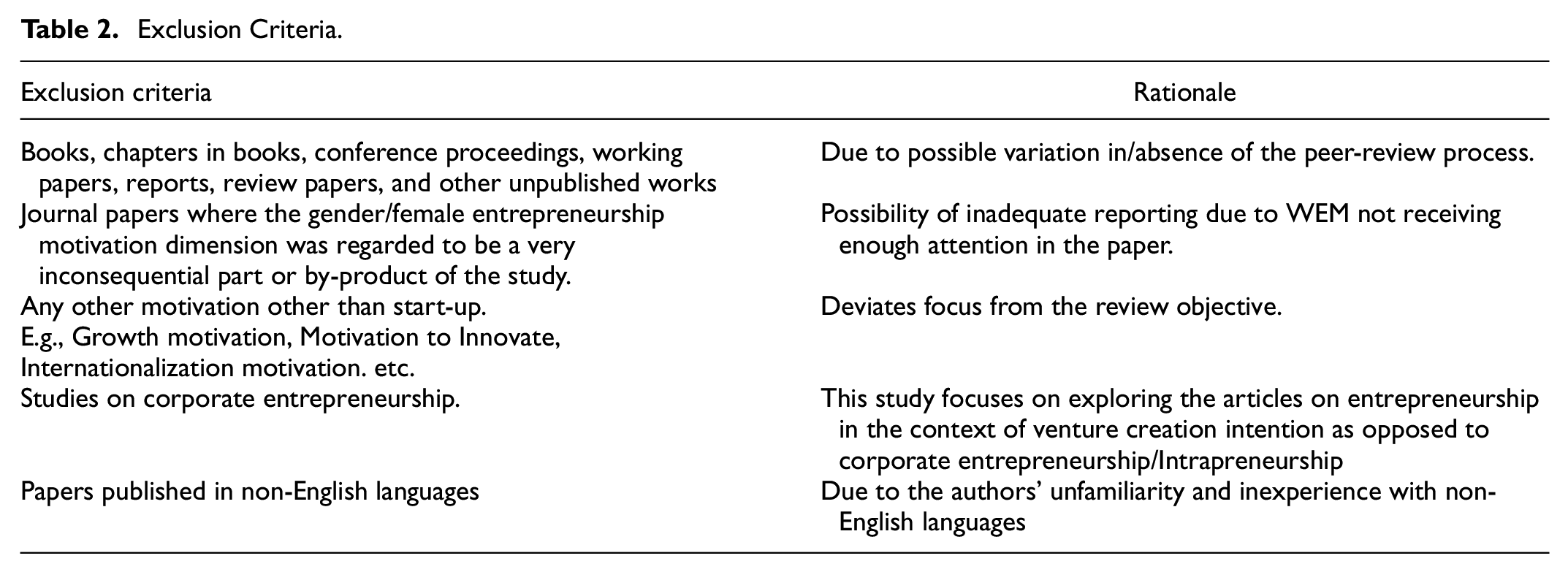
The data for this SLR was retrieved from the Elsevier’s Scopus database for 3 days starting from December 16th 2019 for the time period 1993 to 2019. A 26 years’ time frame was considered adequate to reveal the beginnings of early research on WEM and could also offer valuable insights into the way this area has evolved. The Scopus database was chosen as it is the largest citation and abstract database of peer-reviewed only journal papers and has the most inclusive coverage of published research including articles from EBSCO, Thompson Reuters Web of Knowledge, ABI/Inform, and other similar collections (Manatos et al., 2017; Omorede, 2014; van Laar et al., 2017). We have considered only full-length journal articles in our SLR as they are regarded as scientifically validated knowledge (Podsakoff et al., 2005). Due to inconsistency in the peer review process, conference proceedings, books, book chapters, and editorials have been excluded. Formally, we regard emerging economies to include all countries not categorized as advanced as per World Bank’s list of economies (2020). This definition thus includes countries that may also be classified as low-income, lower-middle-income, and upper-middle-income countries. We acknowledge that this includes a varied span of nations in terms of the level of development, but for the purpose of this paper, this classification stands satisfactory and convincing. The inclusion and exclusion criteria as well as the rationale for the same are shown in Tables 1 and 2 respectively.
Inclusion Criteria.

Exclusion Criteria.
The following search string was used to search in the SCOPUS database so as to capture various keywords related to WEM.
TITLE-ABS-KEY ( ( female OR woman OR women OR gender ) AND ( motiv* OR necessity OR opportunity OR push OR pull ) AND ( entrepreneur* OR firm* OR ventur* OR business* OR enterpris* OR corporat* OR start* ) ) AND DOCTYPE ( ar ) AND PUBYEAR ≥ 1991 AND PUBYEAR < 2020 AND ( LIMIT-TO ( SRCTYPE, “j” ) ) AND ( LIMIT-TO ( SUBJAREA, “BUSI” ) ) AND ( LIMIT-TO ( LANGUAGE, “English” ) )
The initial search yielded a total of 1,501 journal papers. To start with, each of the abstracts was quickly scanned through by one of the authors to confirm that the paper indeed focused on women entrepreneurial motivation in the context of entrepreneurship. This filtering resulted in 699 papers. Among the 699 papers, articles belonging to either Quartile 1 or Quartile 2 (as per Elsevier’s Scopus) were retained, resulting in 131 papers. The general characteristics related to each of the articles were first recorded in an MS Excel workbook. These 131 journal papers were speed-read, and a further 28 papers were not included as they were not relevant for this study owing to the exclusion criteria. Reasons for leaving out these publications include gender indiscrimination, very limited focus on motivation, extremely low representation of gender (n < 2), editorial only narratives, research notes, etc. The analysis hereinafter includes the remaining 103 papers. Though the complete list of articles selected is not listed here due to space constraints, it can be made available by the authors upon request.
This study adopts “Thematic Content Analysis (TCA)” for analyzing the qualitative data. The abstract, methodology, results, discussion and conclusion parts of the selected 103 articles were fully read based on which open codes and document groups were created in the of Computer-Aided Qualitative Data Analysis Software (CAQDAS) Atlas.ti version 8. In order to organize these codes, code groups were created to allow easy access to a particular code. Later, the themes are identified semantically which implies anything beyond what is written in the article, for perceptible reasons, is not taken into consideration.
The following section details the analysis of the data in two parts; descriptive analysis and thematic analysis as used by Crossan and Apaydin (2010).
Descriptive Analysis
In this section, we present an analysis of some of the general characteristics of the included papers relevant to the research questions. We examined the selected studies on the basis of publication trend and distribution of the studies by top publishing journals, research methods adopted, country of authors, country of research, classification of economy, and motivation theories used, if any. Firstly, we submit the distribution of publications per year from 1993 to 2019 (Figure 1). It was found that there is an increasing interest among researchers on WEM over the past decade which is evident in the higher publication numbers from 2009 onward.

Number of articles published on WEM from 1993 to 2019.
Shown in Figure 2 are the top 10 journals (out of the 48 identified) publishing research in the area of WEM which account for 57 out of the total 103 studies selected (∼59%). Among these journals, it is noteworthy that while most of them have been published in journals dedicated to small businesses (SBE, IJESB, JSBE, JSBED ∼26%) and gender-specific entrepreneurship/management (IJGE, GiM WiMR ∼21%), a relatively smaller fraction (∼18%) are published in general entrepreneurship related journals (IJEBR, JEEE, IEMJ).

Top 10 publishing journals on WEM.
Among the studies considered, the majority of them adopted quantitative methods (57%), while qualitative and mixed methods represented 36% and 7% respectively (Figure 3). The majority of the qualitative studies were based on In-depth interviews followed by Thematic content analysis (∼83%), while a few adopted Focus group discussions (FGDs) and narratives. In quantitative studies, we observed that the techniques adopted were broad. Regression techniques (∼38%) and statistical tests such as T-tests, ANOVA and MANOVA (∼37%) along with descriptive analysis were mostly used. Structural Equation Modeling, econometric and probit models, Multinominal logit models and Cox proportional hazard model were employed in the rest of the papers. Mixed methods generally adopted a combination of questionnaire surveys with either in-depth interviews or FGDs.

Distribution of studies by research methods.
The selected studies were further classified according to the author/s’ country (Figure 4) in addition to the country of origin of the research study (Figure 5). It is encouraging to note that 28 out of the 103 articles published involved collaborative research teams across countries indicating international attention and sharing of knowledge on WEM among researchers of different countries. Among the rest, the majority of the publications originated from developed countries like the USA, UK, Australia, and other European nations.

Distribution of studies by Author/s country.

Distribution of studies by country of research.
Much of the studies were multi country (15), some of them were comparative analysis across nations, while a few tried to consolidate and analyze different aspects of WEM from same continents/broader regions. Among the countries investigated, the USA (9), Australia (8), India (6), Spain (6), UK (6) and UAE (4) has at least four papers related to WEM published from 1993 to 2019. Based on World Bank’s country classification scheme, economy-wise distribution of published papers was analyzed. It is encouraging to note that both advanced and emerging economies were equally represented by the selected articles (Figure 6)
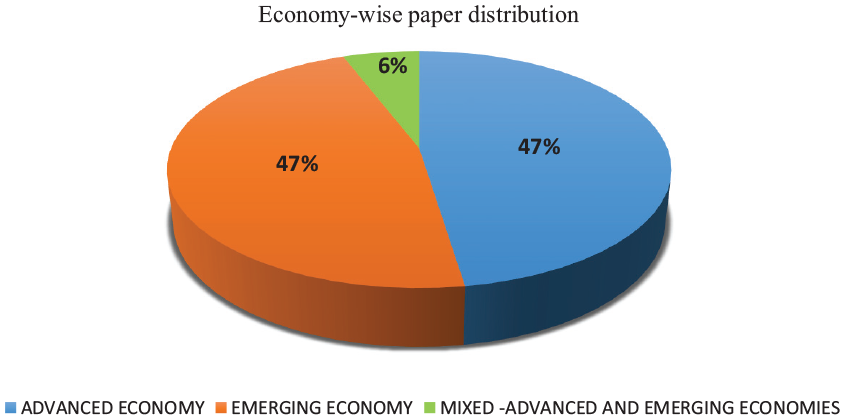
Distribution of studies by the economy of the country.
Though the papers discussed women entrepreneurial motivation, it is interesting to note that 56% of them did not employ any specific motivation model or theory. The main driving theory was based on Necessity (Push)/Opportunity (Pull) motivation. The complete list of motivation theories employed by the researchers is as given in Table 3. Theoretical frameworks on National culture, cultural, social and cultural embeddedness, Glass-ceiling effects, Patriarchy and Gender, and modernization and structural perspectives were used in qualitative studies.
Distribution of Papers by Theories of Motivation Used.
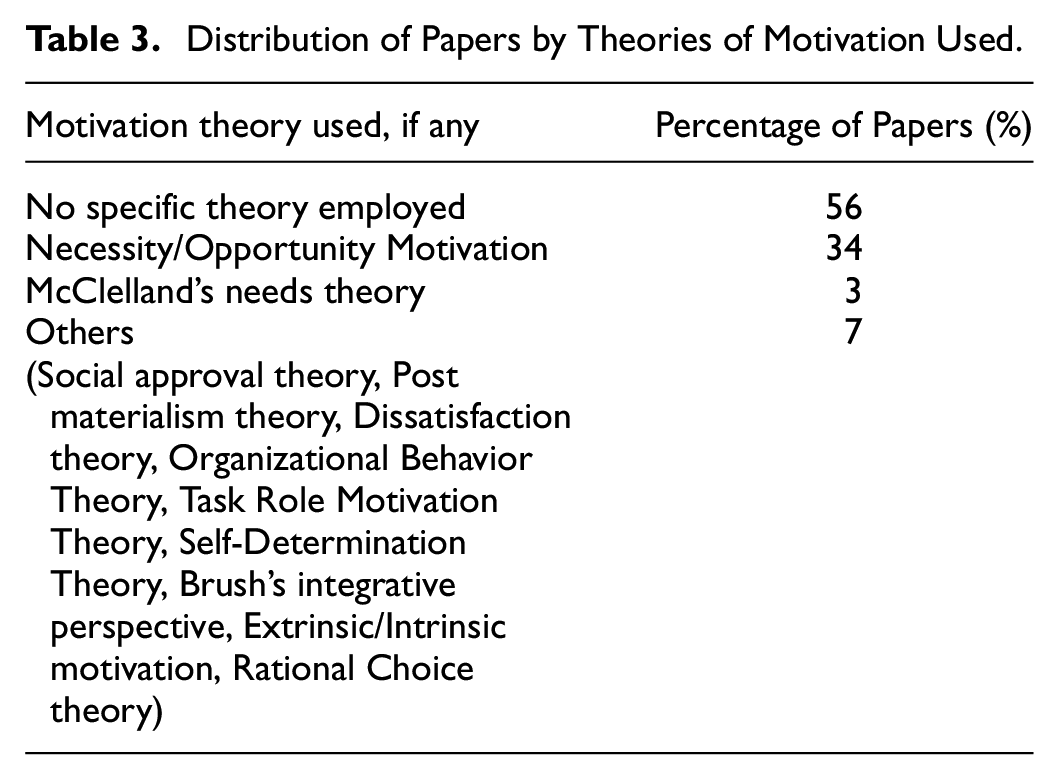
The reason why WEM has focussed on these two theories, especially the needs theory is that a high need for achievement is generally associated with entrepreneurship, whether male or female. One can attribute the choice of Necessity—opportunity as the primary theory in WEM studies because of the flexibility it provides the researcher in accommodating the wide amount and range of motivation factors. The adoption of theory in WEM is generally based on the outcome studied and since there is no agreement on which combination of motivation factors typify the start-up motives of a women entrepreneur, it is justifiable if the choice of theories is left to the discretion of the researcher based on the topic in focus and the context. However, we feel that the use of other theories of motivation such as ERG theory of motivation, Goal setting theory, etc. in conjunction with Necessity and Opportunity theory could provide insightful understanding into the workings of WEM, in emerging and advanced nations alike.
One way of sensing the content of the identified publications is by analyzing all the keywords used in the 103 papers. A word cloud was generated using the CAQDAS Atlas.ti (Version 8) to comprehend the overall research focus given to various issues and topics (Image 1). The importance of each word is represented through font size and proximity to the center of the word cloud. Words such as SME, culture, challenges, necessity, personality, economy, informal, development, psychology, work-life, social, motherhood, etc. appear to be key interests. It is promising to note the diversity of the keywords reported, indicating the variety of contexts of WEM research.
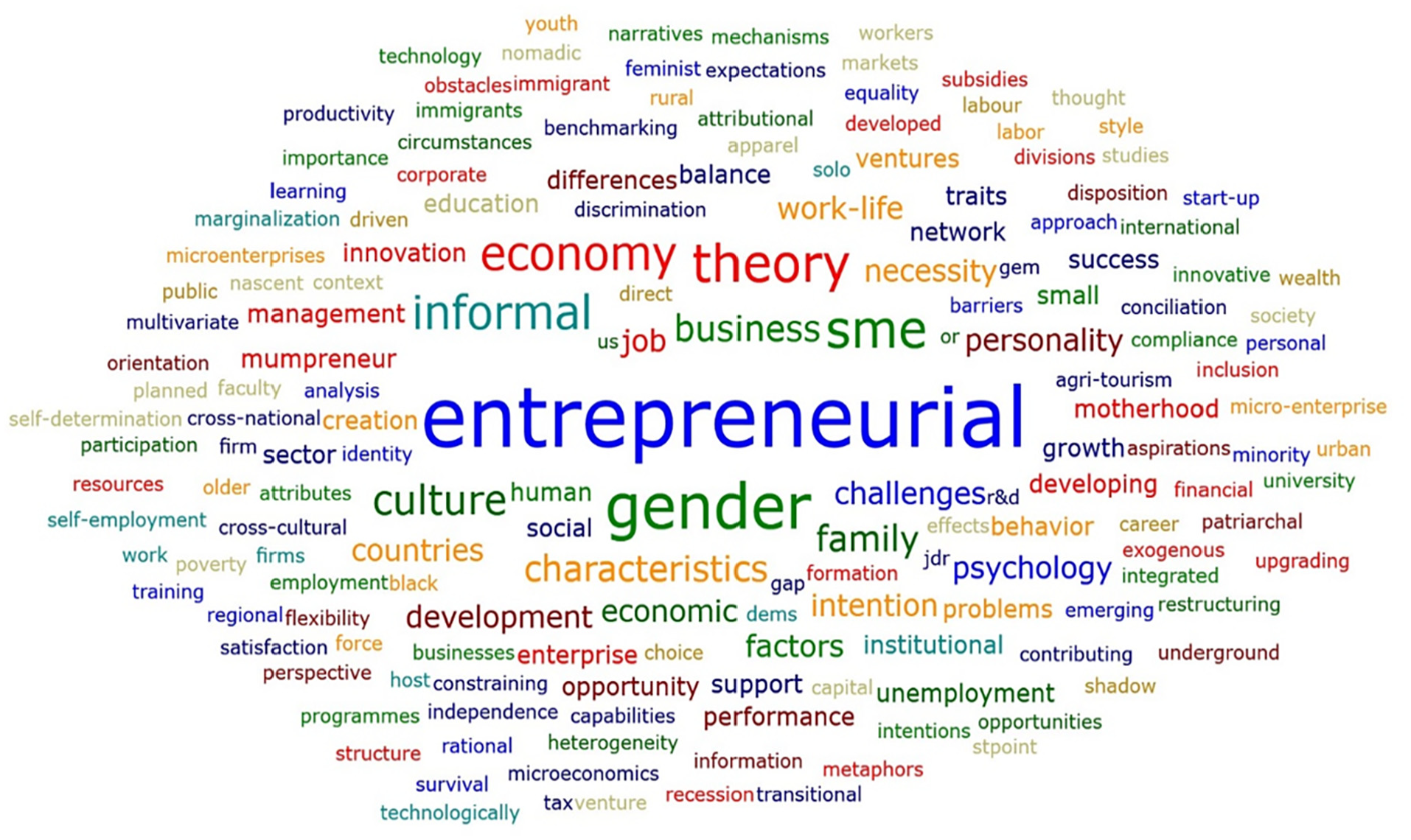
Word cloud of all the keywords listed.
Thematic Analysis
Braun and Clarke (2006) define thematic content analysis as a method to identify, analyze and report themes within the data. It minimally organizes and labels the selected qualitative data set in rich detail. Established within a constructivist approach, this review adopts “bottom-up” approach, and employs inductive analysis indicating no specific pre-existing coding frame was used. TCA is seldom a linear process and the role of the researcher is pivotal in leading the analysis. Keeping in mind the recursive nature of the process, the strength of CAQDAS was leveraged to manage the information of 103 selected papers in one place and to take advantage of the data analysis capabilities of the software, thereby, avoiding some manual duties. Brown and Clarke list the following seven (if CAQDAS is used, else six) phases of conducting TCA. Shown below, is the outline of phases of TCA as exercised in our analysis.
Phase 1: Becoming Familiar With the Data
The 103 selected papers were fully read by the authors individually, but in mutual consultation, with particular attention to the abstract, introduction, research methodology, results, and conclusion sections of the paper for familiarization of the data. The in-depth studying facilitated indications of overall contexts and patterns resulting in some preliminary ideas for codes and document groups.
Phases 2 and 3: Generating Initial Codes and Building a Coding Frame
Initial codes were generated inductively using “open coding” techniques with an intention to label all the motivation reasons exhaustively as mentioned in the selected papers. This initial coding process generated 89 codes (57 Necessity (NEC), 32 Opportunity (OPP)). How frequently the code was used is indicated by the “groundedness” of the code. After adding all the documents to the created Atlas.ti project, document groups were created based on divisions of emerging and advanced countries to aid organization and future analysis.
Phase 3. Development of a Structured Code System
In this step we validate the coded segments, organizing the codes to form meaningful code groups with an intention to build the final structured code system. Observing the code frequency, codes are merged, split, renamed, and are grouped into code groups based on similarity. For example, codes “Flexible schedule” and “Work hour flexibility” were merged due to likeness, and codes having low frequency like “Motivated by profit” were merged into “Financial motivation (OPP).” After the deletion of duplicates within the same document, the end of the recursive process yielded 82 codes in total (51 NEC codes and 31 OPP codes) emerging from 341 quotations. A screenshot of the software with code manager tab is shown in Image 2.
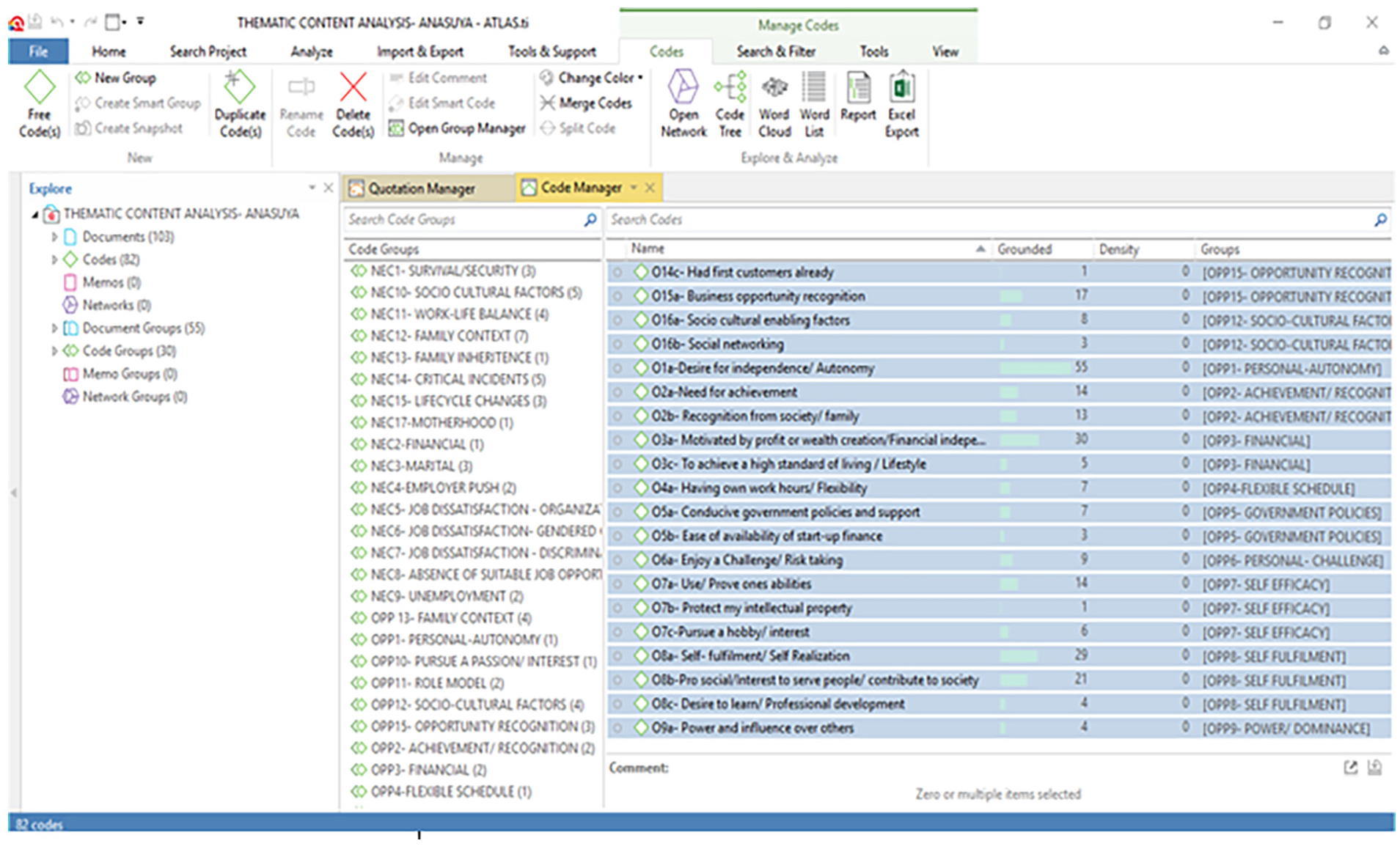
Screenshot of the code manager tab, Atlas.ti 8.
Phase 4. Searching for Themes
After developing the coding structure, the next phase was to group codes meaningfully in accordance with the research question. A total of 30 code groups were created; 16 code groups were created from the NEC codes and 14 code groups from OPP codes. The creation of code groups was carried out by the authors by carefully deliberating on meaningful links and relationships among the codes. The groups thus formed were given names and formed a code group. For instance, codes Sidestepping Glass ceiling (N6a), Gender discrimination—pregnancy (N6c), and Gender discriminatory organization practices (N6d) were pulled together to form the code group “Job dissatisfaction—Gendered organization (NEC6).” In the same manner, all the 30 code groups were created which formed the basis of the generation of themes.
Phase 5. Reviewing Themes
Code groups have overarching content similarities, for example, Employer push (NEC4), Job dissatisfaction—Organization climate (NEC5), Job dissatisfaction—Gendered organization (NEC6), and Job dissatisfaction—Discrimination (NEC7) is combined to form the theme “Current employment issues.” As we describe and form each theme individually, we constantly question if and how codes, code groups, and themes related to each other. In order to facilitate this, we generated networks in Atlas.ti to explore visually how codes and code groups relate to making up a theme. Accordingly, as needed, codes are moved between code groups, and themes were collapsed or expanded on. Figure 7 illustrates one such example, as we explore the relationship between the code and code groups related to the theme “Current employment issues.”
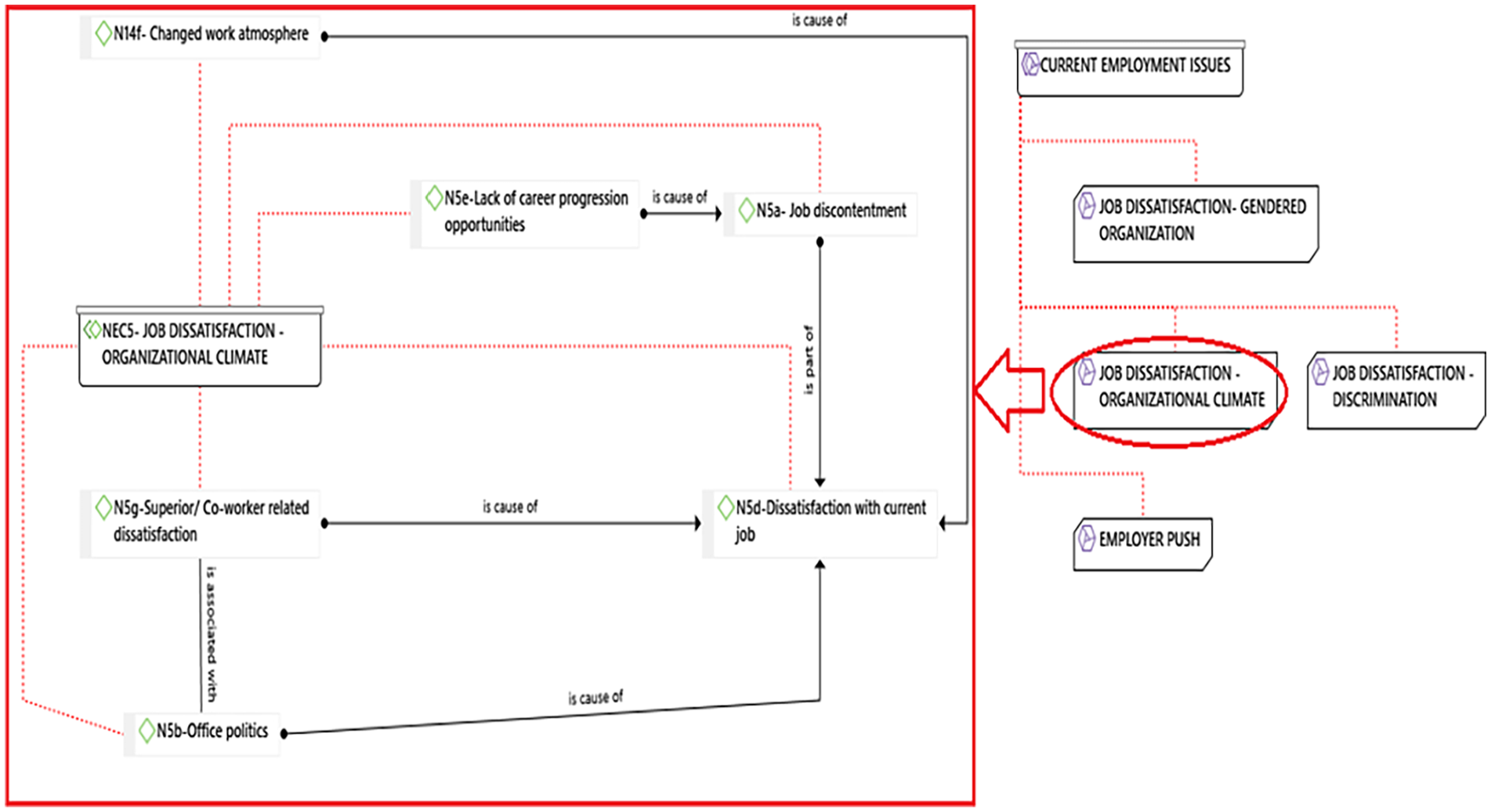
Developing the code group for OPP factor-“Job dissatisfaction—Organizational Climate” by visualization through network diagram in Atlas.ti 8.
Code co-occurrence analysis was not taken into consideration since the selected documents used for analysis here are reported from the researcher’s standpoint rather than from the perspective of the respondent like an interview or focus group discussion might do.
Phase 6. Defining and Naming Themes
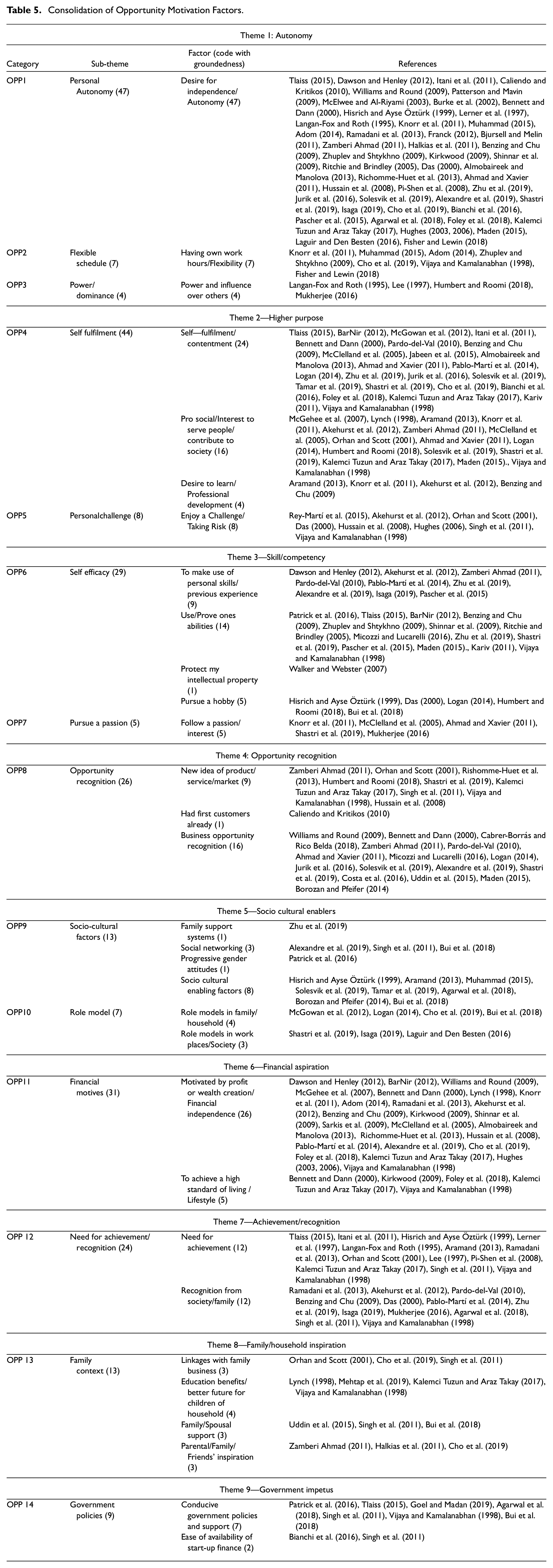
After subjecting all the code groups to this amenable yet purposeful process, six themes of Necessity motivation and nine themes of Opportunity motivation were formed. Themes were formed on the basis of key elements present in the code groups and the core message expressed by them. The list of all the 15 themes, 30 code groups, and the comprising codes is shown in Tables 4 and 5. We identified the following themes with respect to Necessity factors: Subsistence, Current Employment Issues, Family/Household, Life incidents, Skilled unemployment, Socio-Cultural coercion. In the context of Opportunity motivation, we labeled the themes as Autonomy, Higher purpose, Skill/competency, Opportunity recognition, Socio-cultural enablers, Financial aspiration, Achievement/Recognition, Family/Household inspiration, and Government impetus. The Necessity theme “Life incidents” holds issues related to critical personal life happenings captured by the code groups Critical incidents (NEC 11) and Lifecycle changes (NEC 12) comprising of eight codes and 15 quotations. Similarly, an Opportunity theme “Skill/Competency” is a combination of code groups, Pursue a passion (OPP 6) and Self efficacy (OPP 7) with five codes tagged with 34 quotations.
Consolidation of Necessity Motivation Factors.

Consolidation of Opportunity Motivation Factors.
Phase 7: Reporting
The list of codes, code groups, and the identified themes are as shown in Tables 4 and 5. The quotation reports, network diagrams, code document tables were extracted from Atlas. ti 8 are available with the authors and can be provided upon request. The following section details the results of the thematic analysis and brings out differences in WEM in the context of advanced and emerging countries if observed. The Code document table (Appendix A) depicts the differential count in codes (motives) between advanced and emerging economies.
Results of the Review, and Discussion
Necessity Motivation Factor Theme1: Subsistence
(Comprising of Survival/Security, Financial Need and Unemployment)
Women are pushed to take up entrepreneurship as sometimes, it is the only means to make a living (Isaga, 2019; Williams & Round, 2009). The necessity to generate an income mainly due to low family earnings and motherhood responsibilities, discontinuation of unemployment support, and inability to find alternative employment were some motives observed (Adom, 2014; Caliendo & Kritikos, 2010; Laure Humbert & Drew, 2010; Richomme-Huet et al., 2013; Walker & Webster, 2007; Zhu et al., 2019).
Reasons of survival and financial necessity were especially observed in the emerging countries context, whereas unemployment was cited as a reason irrespective of the development status of the entrepreneur’s country. In advanced economies, however, the loss of unemployment benefits paid by the state was an influencing factor not detected in the case of women in emerging economies (Caliendo & Kritikos, 2010).
Necessity Motivation Factor Theme2: Current Employment Issues
(Comprising of Employer Push, Job Dissatisfaction –Organizational Climate, Gendered Organization, Discrimination)
Due to restructuring and other pertinent reasons, the employer may push or nudge women to start their own business often without any material assistance (Hughes, 2003; Kirkwood, 2009). Apart from employer-led “contracting out,” current job-related dissatisfaction is often cited as one of the main push motives. Job dissatisfaction stemming from a variety of unpleasant experiences ranging from office politics to discriminatory organizational culture was the cause of entrepreneurial venturing. Deliberate progression hindrances due to gender-related discrimination, inconsiderate bosses, hostilities experienced during pregnancy, and temporal inflexibility to accommodate maternity and caregiving roles prompted women to sidestep the glass ceiling by establishing businesses of their own (Foley et al., 2018; Jurik et al., 2016; McGowan et al., 2012; Pascher et al., 2015)
Though not a prominently reported motive, employer nudge was seen only in advanced countries. The gendered organization was equally observed in both advanced and emerging nations, indicating the universal prevalence of male favoring organizational structures and work practices. On the other hand, an unconducive organizational climate resulting in stagnant work roles was a point of contention mostly in developed nations where discriminatory practices were also excessively reported possibly implying the tolerance/acceptance of such ways in emerging countries.
Necessity Motivation Factor Theme3: Family/Household Issues
(Comprising of Marital, Family Context, Work-Life Balance, Motherhood, Inheritance)
Necessity motives related to marital issues were mostly noted in the case of emerging economies where spousal irresponsibility due to addiction or unemployment pushed women to start business ventures (Das, 2000; Jurik et al., 2016; Mukherjee, 2016). Motherhood, domestic obligations, and meso and macro-environments (socioeconomic and cultural factors) not only affected women entrepreneurs’ access to finance, management, and markets, but also shaped their business development actions (Ogundana et al., 2021). Similar reasons for spousal profligacy were started by women of developed nations as well (Foley et al., 2018). Meeting the needs and demands of the family such as building a business in order to provide future employment to family members was also stated as a motive (Benzing & Chu, 2009). Obligatory family inheritance either through parents or in-laws compelled women to get into family business arrangements (Bianchi et al., 2016; Franck, 2012).
Being a mother, particularly having young children, pushed women into self-employment (Patrick et al., 2016). Reasons ranged from being available to the emotional necessities of children, inability to find salaried employment after maternity breaks to perceived moral obligations of motherhood (Foley et al., 2018; Kirkwood, 2009; Pardo-del-Val, 2010). Interestingly, most of the reasons were cited by women of developed nations. In the context of emerging nations, especially in collectivist cultures, extended family often lends help in child care which may minimize the need to take up entrepreneurship mainly due to children. However, it is prudent to consider that motherhood as a reason may be transformed and stated as a work-life balance motive instead.
Work-life balance is often among the top necessity reasons given by women for becoming an entrepreneur. Though quoted in the context of both advanced and emerging economies, there is a striking dissimilarity. In developed countries, women mentioned the need to maintain a balance between domestic and business spheres in order to relieve stress related to temporally inflexible salaried jobs (Knorr et al., 2011; McGowan et al., 2012; Richomme-Huet et al., 2013). In emerging nations, work-life balance often takes the form of home-based, informal entrepreneurship to meet the demands of work and family (Franck, 2012; Mehtap et al., 2019). Sometimes, societal normative expectations prompt them to engage in entrepreneurial activities internalizing primarily their roles as caregivers (Bui et al., 2018). In fact, some of the single women deliberately choose entrepreneurship keeping in mind their future traditional obligations (Tlaiss, 2015).
Necessity Motivation Factor Theme4: Life Incidents
(Comprising of Critical Incidents, Lifecycle Changes)
Life-changing situations such as family bereavement, empty nest, self or spousal ill health, divorce/widowhood were deciding factors that pushed women into entrepreneurship and most of these factors were reported in advanced nations. The only instance such a motive was mentioned in a developing nation was out of the desire to be busy and occupied in old age (Franck, 2012). Emerging economies, many of which are collectivist societies may have a close-knit family system and intricate social support networks that may prevent women from getting into entrepreneurship due to life incidents or life cycle changes. This may be expected to change in the future due to a gradual shift owing to the amalgamation of global cultures.
Necessity Motivation Factor Theme5: Skilled Unemployment
(Comprising of Absence of Suitable Job Opportunities)
Mostly cited by women in advanced economies, lack of suitable job opportunities either because of unavailability of salaried jobs in their field of expertise or retrenchment/redundancy push women into business venturing (Daulerio, 2016; Humbert & Roomi, 2018; Pardo-del-Val, 2010). The only instance such a motive was mentioned in the context of a developing nation was when immigrant women start ventures as activities similar to those they were engaged in their parent countries is unavailable in the wage work sector (Alexandre et al., 2019).
Necessity Motivation Factor Theme6: Socio-Cultural Coercion
(Comprising of Socio-Cultural Factors)
While gender segregation in the labor market, racial oppression, ethnic/minority discrimination was common to both advanced and emerging nations, influences of patriarchal culture diminishing the role of “female boss,” pushed women in emerging economies to develop ways of generating their own income through business venturing (Muhammad, 2015).
Opportunity Motivation Factor Theme1: Autonomy
(Comprising of Personal-Autonomy, Flexible Schedule, Dominance/Power)
Personal autonomy is one of the most compelling opportunity motivations. The desire to be independent gives the entrepreneurs a prospect to execute their own ideas with more control over their working environment. (Foley et al., 2018; Maden, 2015; Shinnar et al., 2009). The desire for independence may also be associated with a need to take up a leadership position in the organization thereby having the power to influence others (Mukherjee, 2016). Women entrepreneurs from both advanced and emerging nations consider being independent as a primary motive rejecting being a part of a formal organization that curtailed free time and a restrictive schedule (Muhammad, 2015; Fisher & Lewin, 2018).
Opportunity Motivation Factor Theme2: Higher Purpose
(Comprising of Self-Fulfillment, Personal- Challenge)
Business venturing is often seen as a self-realization opportunity by the women entrepreneurs, an altruistic desire to contribute something meaningful to oneself, to the community, or to the society at large (BarNir, 2012; McClelland et al., 2005). This conscious purpose may arise due to reaching a pinnacle in their current job which manifests itself as an innate wish to go beyond a self-centered motive to pursue a broader inclusive vision. (Zamberi Ahmad, 2011; Logan, 2014; Pablo-Martí et al., 2014; Solesvik et al., 2019; Zhu et al., 2019).
We found that women entrepreneurs from both advanced and emerging nations chose entrepreneurship as an instrument to add meaning to their life’s purpose by creating opportunities for people around them and to be a part of pro-social/environmental motives, thereby consciously realizing their need of self-fulfillment.
Opportunity Motivation Factor Theme3: Skill/Competency
(Comprising of Self-Efficacy, Pursue a Passion/Interest)
Another reason self-employed women state for business venturing was to put to use the competencies/skills they had acquired in their previous employment (Dawson & Henley, 2012; Patrick et al., 2016; Shinnar et al., 2009). The employment breadth, educational qualification, and acquisition of skills gave them the confidence to believe in their ability to run their own businesses (BarNir, 2012; Pascher et al., 2015)
Providing women entrepreneurs with the environment and skills they need to succeed is critical to increasing their economic prospects (Goyal & Yadav, 2014). Female entrepreneurs from both developed and developing countries indicated this pull motive. However, among the latter, interest in a particular craft/hobby was often stated along with skills acquired from prior training or experience while the former’s decision to be entrepreneurs predominantly followed from their choice of occupation (Ahmad & Xavier, 2011; Zhu et al., 2019). This gives ample scope for policymakers to focus training initiatives to up-skill women in order to enhance their creative and innovative capabilities so that it can possibly serve as a pull motive as indicated by recent studies (Shastri et al., 2019).
Opportunity Motivation Factor Theme4: Opportunity recognition
(Comprising of Opportunity Recognition)
Business opportunity recognition as an opportunity motive was observed in the context of women entrepreneurs from advanced and emerging economies alike. Recognizing and exploiting prospects in the business environment or perception and creation of new market opportunities clearly motivated women to be self-employed (Alexandre et al., 2019; Jurik et al., 2016; Logan, 2014; Williams & Round, 2009). Often, these new ideas or spotting of opportunities are due to past experiences or previous employment (Pardo-del-Val, 2010; Richomme-Huet et al., 2013; Zamberi Ahmad, 2011; Ahmad & Xavier, 2011; Micozzi & Lucarelli, 2016), Sometimes spotted as an unfulfilled social need, this motive was even claimed by women who were constrained by their socio-cultural and economic condition (Shastri et al., 2019; Solesvik et al., 2019).
Opportunity Motivation Factor Theme5: Socio-Cultural Enablers
(Comprising of Socio-Cultural Factors, Role Model Influence)
Like financial reasons, socio-cultural factors act as both necessity and opportunity motives for self-employment. Perception of egalitarian values positively motivated women into entrepreneurship (Borozan & Pfeifer, 2014). It was also found that in the case of married women, progressive gender attitudes played an important role (Patrick et al., 2016). It is interesting to note that, socio-cultural factors, both as enablers and deterrents, greatly affected women from emerging nations in their decision to be entrepreneurs. For instance, as enabling pull factors, Asian culture of collectivism, Kazakhstan’s regional normative systems, or Mongolian nomadic culture of adventurism enabled entrepreneurial motivation and cognitive qualities alike (Alexandre et al., 2019; Aramand, 2013; Bui et al., 2018).
Also, women from both advanced and emerging economies were found to be motivated by both family and other people in the community as role models; either by wanting to follow the example of someone in their entourage or were inspired by their parents’ business success (Cho et al., 2019; Laguir & Den Besten, 2016; McGowan et al., 2012).
Opportunity Motivation Factor Theme6: Financial Aspiration
(Comprising of Financial Incentive)
The potential of individual wealth creation is one of the prominently stated opportunity motives as business creation is seen as a possibility to enhance the entrepreneur’s financial status both in the context of advanced and emerging nations (Adom, 2014; Akehurst et al., 2012; Almobaireek & Manolova, 2013; Knorr et al., 2011). Financial motive as an opportunity factor was notably observed in the context of advanced nations while the same as a necessity motive was seen in emerging economies, plausibly due to the prevailing economic circumstances.
Opportunity Motivation Factor Theme7: Achievement/Recognition
(Comprising of Achievement Recognition)
The desire for Achievement is observed to be a primary pull motivator along with obtaining recognition from family/society (Isaga, 2019; Itani et al., 2011; Pablo-Martí et al., 2014; Ramadani et al., 2013; Tlaiss, 2015). Gaining social recognition was found to be one of the primary pull reasons among women from advanced economies. Though the desire for recognition via entrepreneurial achievement was a popular motive among women in developing countries, the expounding reasons were found to be distinct. While some women stated that they wanted to use entrepreneurship to demonstrate that they are capable of doing well in business, some others wanted to prove that they are on par with their male counterparts (Zhu et al., 2019). Entrepreneurship provided means to gain the desired recognition since their traditional roles, no matter how well they accomplished them, often went unnoticed (Das, 2000; Singh et al., 2011).
Opportunity Motivation Factor Theme8: Family/Household inspiration
(Comprising of Family Context)
Some participants indicated that family background in business, emotional and financial support extended by the family/household were the primary sources of inspiration to be self-employed (Lynch, 1998), Halkias et al., 2011), Bui et al., 2018; Uddin et al., 2015). As per our review, this pull factor seems to influence women from developing countries more than their developed country counterparts.
Opportunity Motivation Factor Theme9: Government Impetus
(Comprising of Government)
Another pull factor that motivated women, especially from developing countries is the encouragement and support given by the government through various entrepreneurship schemes, regulative mechanisms, access to finance and deregulation policies (Bui et al., 2018; Goel & Madan, 2019; Singh et al., 2011; Tlaiss, 2015). In fact, government impetus acted as a catalyst for women to embark on their entrepreneurship journey in highly productive sectors rather than restricting themselves to small enterprises (Agarwal et al., 2018). It was found that women without the benefit of subsidized loans reported much higher start-up time especially unmarried women for whom local business climate had a greater influence (Bianchi et al., 2016).
Conclusion
Based on our literature review and synthesis of the WEM literature, we have developed an in-depth overview of the motives behind women choosing to embark on the entrepreneurial journey. We used the Systematic Literature Review (SLR) Method and consequently Thematic Content Analysis (TCA) using CAQDAS Atlas.ti 8 to analyze the selected 103 publications on WEM for a time period, 1993 to 2019.
It is encouraging to note that both advanced and emerging economies were equally represented by the selected articles and a good amount of WEM research is multiregional/multinational. Despite of the area of focus being WEM, it is intriguing to note that 56% did not employ any specific motivation model or theory. Among the rest, the main driving theory was based on Necessity (Push) /Opportunity (Pull) motivation. The contribution of this SLR is the synthesis of themes of necessity and opportunity motivation factors generated from the exhaustive list of motivational factors (Figures 4 and 5) and highlighting of observed motivational differences between advanced and emerging economies when observed. The review process yielded 82 codes in total (51 necessity and 31 opportunity codes) which were synthesized into 30 groups (16 necessity and 14 opportunity code groups). We identified the following six themes with respect to Necessity factors: Subsistence, Current Employment Issues, Family/Household, Life incidents, Skilled unemployment, Socio-Cultural coercion, and nine themes of opportunity motivation as Autonomy, Higher purpose, Skill/competency, Opportunity recognition, Socio-cultural enablers, Financial incentive, Achievement/Recognition, Family/Household inspiration, and Government impetus.
When coding the papers, we made sure that codes did not repeat themselves, so that an approximate impression about the frequency of the codes can be drawn. However, caution needs to be exercised while concluding on the same with the awareness and acknowledgment that sometimes it is the researcher who selects the WEM factor for study. Nevertheless, the code-document table indicates that Work-life balance and financial compulsions were the most commonly observed necessity motivation sub-theme while in the case of opportunity Autonomy/Independence was the most mentioned followed by Self-fulfilment and Financial aspirations.
Issues faced by women in developing and developed nations can be quite different, and therefore, the same experiences cannot be applied conclusively in both instances (Eshwaran, 2014). We observe these differences in the context of necessity and opportunity motivation as well. Yet again, the authors would like to alert the readers that the analysis is based on apparent differences and not on statistical significance due to previously mentioned reasons. In the context of both Necessity and Opportunity motivation, noticeable differences were observed in the case of some sub-themes. Among necessity motives, Survival/Security, Financial and Marital factors played an exceedingly important role for women from emerging economies while Critical life incidents, being unemployed, Life-cycle changes, Employer push, Current job dissatisfaction influenced women from advanced economies. As far as Opportunity motives were concerned, fewer differences were detected. While Family context, Socio-cultural factors, and Need for achievement and recognition encouraged women from developing nations to take up entrepreneurship out of positive self-will, the factors that mattered more to their counterparts in developed nations were Financial aspirations and the Need for power/Dominance. Factors (NEC and OPP) that apparently mattered more or less the same were Desire for autonomy, Self-efficacy, Opportunity recognition, Need for challenge, and Role model influence.
As concluded by earlier researchers, there could be multiple motivational factors, possibly a combination of both NEC and OPP in varying extents, that influence start-up WE. However, it is important to note that we did not observe any overlap between necessity and opportunity motivation factors primarily due to the distinct difference between the two. Nevertheless, caution needs to be exercised while reporting the factors as there are a few factors whose nomenclature be misconstrued as either NEC or OPP. For example: While having a flexible schedule in the case of OPP motivation is associated with having control over the work schedule, in case of NEC motivation, the factor “flexible schedule” is associated with the option of being available for other obligations, which may not be possible in paid work outside. Similarly, factors like “Family context” and “Financial motives” may be cited differently by the WE depending on whether it stems from NEC or OPP.
Limitations of the Study
SLRs, by their very nature, operate within the set of boundaries fixed by the researcher/s. Limitations on timeframe used, criteria for the selection of content for review, analysis methods adopted, restrict the scope of the study. Specific inclusion/exclusion criteria and their rationale is shown in Tables 1 and 2. Also, keeping the focus on the proposed research objectives, the authors have not delved into the underlying reasons for the observed findings. For instance, rationalization of the similarities/differences in motivation between the advanced and emerging economies is intentionally not addressed as it is beyond the scope of this paper. Though we have attempted to point out any salient indication of the sample wherever we thought it would add value, we have considered women entrepreneurs as the group and have not attempted to segregate the findings based on the differences in nature of ventures (For e.g., formal/informal, married/unmarried, nature of business, type of study, etc.). The authors do not claim that the themes, sub-themes, and codes are absolute final lists to represent WEM. We recognize the drawback that owing to the restriction of the selected 103 papers, a small number of factors might have missed the list. However, what is presented in this review is, as per our knowledge, the comprehensive list of WEM factors so far. We also acknowledge that WEM factors might have undergone a shift over time and some factors such as social, cultural, policy-related influences might have shifted to some degree. All these limitations open up immense possibilities for further research which is discussed in the following segment.
Future Research Directions
Future studies can focus on the themes and sub-themes that emerged from this review as a starting point for further research. The scope for future studies can include qualitative/case-study-based or mixed methods research to understand why necessity and opportunity factors affect the decisions among women in developed/developing nations differently. Scholars can also examine if WEM has shifted over a period of time. Differences in motivation belonging to the same groups of national development or having cultural similarities may provide valuable and clearer insights on how motivation affects entrepreneurial start-up decisions. Prospective studies may explore WEM in relation to the wider social, cultural, economic circumstances self-employed women operate in, taking into consideration a segment of the wide range of complex and dynamic web of underlying influences and experiences. While compiling the initial descriptive data for the SLR, we have observed that sub-themes observed in both NEC and OPP motivation were studied in the context of different outcomes such as Business Performance, Business Survival, Work-life balance satisfaction, Networking behaviors, to name a few. Future studies that investigate if there are differences in how sub-themes identified could act as antecedents/outcomes will enrich research on WEM.
Recent research publications shed light on the gender equality lacuna and call for sex-disaggregated studies addressing the macro and micro factors affecting women entrepreneurship in developing nations (Yadav et al., 2022). Despite the fact that institutionalized gender bias in emerging economies tends to limit entrepreneurial activity, it is found that women led enterprises can be a valuable source of innovation. Research suggests that women empowerment in emerging markets is stronger when they work together and collectively share and leverage their resources for innovation (Madison et al., 2022). Future work could therefore examine female networking and collaboration as a contributor to opportunity motivation. Broadening the area, as suggested by Poggesi et al. (2020), future studies could also focus on the dichotomies of opportunity and necessity factors in Science, Technology, Engineering, and Mathematics (STEM) driven women enterprises.
WEM in developing nations is often a mosaic of numerous interconnected and overlapping factors. As proposed by Yadav and Unni (2016), upcoming studies can also be extended to include contextual comparisons among income levels, sectors (upper, middle and lower), business sector (manufacturing, services and trading) and regions (urban and rural, to name a few. Jennings and Brush (2013) refer to an important yet relatively unexplored area for further studies in WEM. Rather than pitching necessity and opportunity motivation factors against one other, studies based on individualistic standpoints will provide a comprehensive understanding of the behavioral and cognitive traits of each of the categories. An inclusive SLR on the entrepreneurial motivation of both men and women entrepreneurs, especially the differences in selection of motivation factors affecting the agency, distinctions in theories adopted, divergences present in the context of national development, will contribute consequential insights to the literature on WEM.
The findings of this review provide a useful basis for research on the necessity and opportunity WEM which can be used by both researchers and policymakers. A nuanced understanding of WEM, as put forward in this review, may benefit policymakers, especially in the context of emerging economies, where women’s empowerment through entrepreneurship is much more than economic alone.
Supplemental Material
sj-docx-1-sgo-10.1177_21582440231159294 – Supplemental material for Synthesis of Necessity and Opportunity Motivation Factors in Women Entrepreneurship: A Systematic Literature Review
Supplemental material, sj-docx-1-sgo-10.1177_21582440231159294 for Synthesis of Necessity and Opportunity Motivation Factors in Women Entrepreneurship: A Systematic Literature Review by Anasuya K. Lingappa and Lewlyn L.R. Rodrigues in SAGE Open
Footnotes
Acknowledgements
The authors are grateful to Transdisciplinary Centre for Qualitative Methods (TCQM) and Prasanna School of Public Health (PSPH), Manipal Academy of Higher Education (MAHE), India, for allowing access to Atlas.ti 8 software. We would also like to thank Dr. Ajay Bailey and Mr. Nikhil P N for their support throughout the process.
Declaration of Conflicting Interests
The author(s) declared no potential conflicts of interest with respect to the research, authorship, and/or publication of this article.
Funding
The author(s) received no financial support for the research, authorship, and/or publication of this article.

Supplemental Material
Supplemental material for this article is available online.
References
Supplementary Material
Please find the following supplemental material available below.
For Open Access articles published under a Creative Commons License, all supplemental material carries the same license as the article it is associated with.
For non-Open Access articles published, all supplemental material carries a non-exclusive license, and permission requests for re-use of supplemental material or any part of supplemental material shall be sent directly to the copyright owner as specified in the copyright notice associated with the article.
