




Abstract
This paper examines multilateral cooperation in Northeast Asia (NEA) through the Greater Tumen Initiative (GTI) as a case of micro-regional cooperation. Drawing on functionalism and micro-regionalism, it explores how cooperation spillover from nonpolitical to political spheres can be facilitated by considering participant diversity, agenda comprehensiveness, and the complexity of cooperation. There is an overall positive trajectory of change as the GTI actively fosters cooperation spillover by expanding its committees and partnerships. However, in terms of committee activities, although its agendas demonstrate increasing comprehensiveness, participant diversity and collaboration complexity remain low in general. The partnerships are in their nascent stages of cooperation, exhibiting limited spillover, except for the NEA Local Cooperation Committee. Moreover, the challenge in evaluating accomplishments within the framework of the GTI arises from the apparent scarcity of discernible achievements. To revitalize multilateral cooperation, the GTI should enhance actor diversity, emphasizing private sector participation; broaden discussion agendas rather than exclusively focus on specific projects until institutional stability is established in cooperation; and enhance governance mechanisms and foster cooperation among internal organizations, currently vulnerable to disruptions, to ensure progressive and sustained collaborative efforts. Through these enhancements, it is anticipated that tangible outcomes will be uncovered and, ultimately, foster micro-regional multilateral cooperation that can significantly contribute to peace and prosperity in the Northeast Asia region.
Keywords
Introduction
A functionalist perspective and regionalist discourse suggest that multilevel and multilateral cooperation within a region can promote regional integration and contribute to regional peace and prosperity (Breslin & Hook, 2002; Y. W. Kim, 2004). In the Northeast Asia (NEA) region, various measures for multilateral cooperation have been explored to pursue regional peace and prosperity. The early 1990s witnessed favorable conditions for such cooperation, including the normalization of relations between South Korea and the Soviet Union (1991), simultaneous membership of South Korea and North Korea in the United Nations (1991), diplomatic negotiations between Japan and North Korea (1991), and the normalization of diplomatic relations between South Korea and China (1992) (Yoon, 2009).
The Pyongyang Conference, held in 1991 under the leadership of the United Nations Development Programme (UNDP), resulted in an agreement among representatives of relevant countries, including South Korea, China, Russia, Mongolia, North Korea, and Japan. This agreement led to the establishment of the Tumen River Area Development Plan (TRADP), which served as a flexible form of multilateral cooperation and later expanded into the Greater Tumen Initiative (GTI) (Jeon, 2006). The GTI has served as a multilateral cooperation platform for regional development and is currently the only intergovernmental organization in Northeast Asia. The study aims to explore micro-regional cooperation by examining the specific cooperation cases within the GTI.
The TRADP, officially launched in 1992, focused on developing the lower Tumen River region, located at the border of China, North Korea, and Russia. The three host countries, China, North Korea, and Russia, actively participated in the TRADP, jointly investing in development funds and establishing a corporation to facilitate the direct and rapid development of the Tumen River basin (Park, 2015). The conceptual underpinning of TRADP hinges upon the notion that it can potentially function as a microregional focal point, leveraging territorial contiguities and economic complementarities among neighboring states, with the overarching goal of catalyzing broader regional integration. Rather, the outcome has culminated in TRADP emerging as a prospective microregion that has similarly succumbed to embodying the political conflicts prevalent within the regional context (Hughes, 2002). Additionally, due to challenges and external factors, such as the 1997 Asian financial crisis, direct development methods faced obstacles, leading to a shift in focus toward long-term cooperation and improving the investment environment (Park, 2015).
In 2005, the TRADP was renamed to the GTI, and its scope expanded to include the Greater Tumen area, encompassing territories from South Korea and Mongolia, in addition to the existing area from three host countries. Despite North Korea’s withdrawal in 2009, the existing stakeholders in the GTI, namely China, Russia, South Korea, and Mongolia, placed a particular emphasis on specific local areas situated near the borders of member countries (Park, 2015). The changes can be translated as reflecting a shift in focus from an international organization, UNDP to the countries within the region, establishing a framework of multilateral cooperation. Since then, the GTI has been actively engaged in various activities aimed at improving the investment environment in the Greater Tumen region. The anticipated economic gains resulting from extended collaboration within this region are expected to be substantial (for detailed statistics, refer to Moon, 2016), so the member countries have engaged in discussions regarding the internationalization of the GTI to achieve the benefits for nearly two decades. Nevertheless, the GTI has yet to transform into an international organization. The internationalization of the GTI was expected to enhance intra-regional cooperation, but significant progress in this regard has been limited.
This study explores why the GTI has yet to reach a mature institutionalization stage and has failed to promote the activation of micro-regional cooperation. It adopts a micro-regionalism approach based on functionalism frameworks, assuming that under the GTI, cooperation can be institutionalized and triggered through the complex interconnections of various actors and issues. It examines the spread of micro-regional cooperation under the GTI and its ability to address multilayered issues. The paper begins with an introduction that outlines the research’s background and questions. Section “Literature Review” discusses the study’s uniqueness upon analyzing previous research on multilateral cooperation in Northeast Asia, particularly focusing on the GTI. The section also proposes an analytical framework based on functionalist and micro-regionalist discussions. Sections “Analysis of GTI Committees’ Activities” and “Analysis of GTI Partnerships’ Activities” delve into the expansion of cooperation, specifically examining the GTI committees and partnerships. The conclusion in Section “Conclusion” summarizes the contents of the research and describes its limitations.
Literature Review
Literature on Greater Tumen Initiative (GTI)
Northeast Asia has a long history of conflict and reconciliation, and currently, there are various bilateral conflicts in inter-Korean relations, China-Japan relations, and Japan-Korea relations. As a result, researchers have shown a longstanding interest in exploring multilateral cooperation measures to resolve intra-regional conflicts. Studies on multilateral cooperation in Northeast Asia typically examine cases of cooperation among regional countries or analyze examples of cooperation from other regions to draw implications for multilateral cooperation in Northeast Asia. Examples of studies focusing on intra-regional cooperation include B.-S. Shin (2013), C.-H. Lee and Kang (2017). B.-S. Shin (2013) analyzes cooperation among North Korea, China, and Russia in their adjacent border areas, with a particular focus on South Korea’s potential participation. Using a network approach, he explains that the power network structure of the Northeast Asian region can be understood in terms of social capital and structural gaps. He proposes that South Korea can drive micro-regional cooperation through the coordination of relational power. C.-H. Lee and Kang (2017) conceptualize Northeast Asian multilateral cooperation as the institutionalization of regional network space and examine it in detail. They reason that due to the enduring legacy of the Cold War, there are various limitations to intergovernmental cooperation between the regional countries. Therefore, activating cooperation at the local government or city levels, rather than relying solely on direct cooperation between central governments, can contribute to regional peace and prosperity. Additionally, Hook (2002), in a study focused on economic cooperation within East Asia, albeit not specifically within the Northeast Asian context, observed that economic collaboration driven by local governments in the Yellow Sea Economic Zone exhibited highly favorable dynamics in fostering the expansion of subregional cooperation. Although above studies provide policy implications, these rarely delve into the examination of specific instances of cooperation involving actors operating at various levels and with diverse agendas within the overarching institutional framework of cooperation.
On the other hand, several papers have chosen the GTI as a case study to enhance the specificity of analyzing multilateral cooperation in Northeast Asia. Examples include Marsden (2010), Y. Shin (2014), and S. Lee et al. (2019). According to Marsden (2010), China should seek desirable environmental impact assessment methods in areas around its borders. He recommends using a regional agreement through local deliberative bodies as a reasonable approach to conducting environmental impact assessments that reflect the context of border regions. This example demonstrates how the GTI can contribute to intra-regional cooperation in various forms. Y. Shin (2014) selects the tourism sector, which has received less attention despite its high potential for development, as an area to explore the direction of developing tourism in the Tumen River region. He suggests policy recommendations such as strengthening the functions of the Greater Tumen Tourism Cooperation Center, improving the visa system, and establishing tourism statistics. S. Lee et al. (2019) highlight the potential for greater benefits by sharing benefits via international river cooperation in the Tumen River basin, compared to a riparian state’s unilateral water resource development. Based on this logical validation, they contend that river cooperation has the potential to expand into other forms of cooperation, ultimately promoting tension reduction in East Asia and socioeconomic development in the Tumen River basin. These studies focus on specific areas within the GTI and provide concrete and substantive policy implications. However, they do not extensively review all aspects of cooperation within the GTI, thus limiting a complete understanding of it.
There have been several studies that offer a comprehensive perspective on the GTI. Park (2015), Youn et al. (2015), Yi and Woo (2016), S. R. Kim (2018), and Y. Kim (2016) have examined the operational structure of the GTI from various angles and analyzed its potential for expansion. Park (2015) evaluates the GTI’s role in improving environmental cooperation in the region. However, she argues that generating micro-regional cooperation in the region is challenging without achieving institutionalization at a functionally mature level, particularly as an international organization. Youn et al. (2015) also emphasize the need to fulfill prerequisites such as expanding cooperation experiences, establishing institutional foundations, and promoting shared awareness to activate micro-regional cooperation centered around the GTI. In a similar study, Yi and Woo (2016) apply prospect theory to present ways to enhance micro-regional cooperation by expanding the Tumen River cooperation into environmental cooperation. They advocate vitalizing and expanding the GTI through micro-regional cooperation. Given that decision-making varies among countries based on their perceptions of the situation, it is crucial to transform Northeast Asia’s conflict structure into a multilateral cooperation framework. From this perspective, they consider invigorating the GTI to be highly important. S. R. Kim (2018) employs the concept of relative gains to determine the characteristics of the GTI member countries. He claims the complex interrelationships of relative gains among countries such as South Korea, China, Russia, and Mongolia hinder cooperation or integration. He finds expanding the GTI will be difficult even when using specific projects if a balance of interests cannot be found. The aforementioned studies by Park (2015), Youn et al. (2015), Yi and Woo (2016), and S. R. Kim (2018) acknowledge the limitations and challenges in expanding the GTI while also entertaining its potential to spur micro-regional cooperation.
In contrast, Y. Kim (2016) illustrates that the GTI has positively generated regional cooperation. She emphasizes that the multilateral institutional framework of the GTI has become entrenched through the interaction of various actors’ institutional behavior and that this process has partially alleviated structural constraints. She assesses the GTI’s current state as a mature stage of institutionalization for micro-regional cooperation. It is positioned in an upward institutionalization process where neighboring actors lead central actors and form institutional path dependence. The analysis by Tochkov (2015) also confirms that the GTI has positively impacted multilateral cooperation in the region. According to him, the average integration across borders has been increasing by 0.15% annually since 2005, and the cross-border convergence rate has reached 40% of the domestic convergence rate after 2005 (Tochkov, 2015).
It is positive that the above studies on the GTI analyze micro-regional cooperation in Northeast Asia based on specific cases and thereby make an effort to ensure the specificity and relevance of the research. However, Youn et al. (2015), Yi and Woo (2016), and S. R. Kim (2018) merely introduce the GTI as a subject and still focus on assessing the interest structure centered on national actors, indicating limitations in their actual research. On the other hand, Park (2015), who investigates the internal components of the GTI in detail, presents some cooperative cases but fails to explain the changes occurring during the cooperation process. In contrast, Y. Kim (2016) examines the changes and characteristics of the GTI as a framework for micro-regional cooperation in Northeast Asia, providing a concrete and structural understanding of the GTI. Thus, like Y. Kim, this paper analyzes the changes in cooperation within the GTI. However, it differs in two aspects. Firstly, Y. Kim’s analysis reflects the period up to 2015, when the GTI was the most active. However, this study takes into account the subsequent years when the GTI operation did not proceed smoothly, thus adding an analysis of additional ensuing changes. Secondly, Y. Kim (2016) conceptualizes the GTI’s development process as an upward institutionalization process. However, this research aims to verify the insufficient diffusion of cooperation under the GTI by examining cases of horizontal cooperation within the GTI. Insufficiently diffused cooperation hampers upward institutionalization; thus, this paper presents a viewpoint contrasting with the discussion by Y. Kim. In summary, it enhances the factuality of the research by reflecting on the current situation and enables an integrated understanding of the changes in micro-regional cooperation based on concrete case analysis, providing a comparative advantage.
Literature on Functionalism and Micro-Regionalism
This paper explores the micro-regional approach based on the functionalist frameworks which posit that collaborative efforts among diverse actors can foster the expansion and integration of regional cooperation. More specifically, functionalism asserts that cooperation in nonpolitical spheres has the potential to eventually stimulate multiparty collaboration and regional integration within the political domain. In addition, micro-regionalism is centered on the collaboration and integration of state subunits (Sasuga, 2004). It underscores the significance of non-state actors in the realm of pragmatic issue resolution, peaceful integration, and addressing functional challenges (Breslin & Hook, 2002). This concept forms a foundational framework for applying functionalism within the sphere of regional multilevel cooperation. Consequently, these are appropriate to formulate an analytical framework to assess the feasibility of augmenting the GTI, initially instituted for economic development in the Tumen River basin, into a multiparty cooperative endeavor that contributes to regional peace and prosperity.
Functionalism assert that cooperation in nonpolitical realms can have spillover effects, eventually promoting collaboration in the political sphere. This perspective presupposes that the real world operates on a pluralistic basis, wherein interactions among diverse groups concerning economic issues engender political processes, and the outcomes of such interactions materialize as policies implemented by individual governments (Choi, 2004). Particularly, it might occur at the regional level in the context of micro-regionalism (Breslin & Hook, 2002). When the objectives of each group aim to achieve economic benefits through the activation of multiparty cooperation in the local level, cooperation in a specific domain becomes more readily diffused across various domains. This diffusion could facilitate a form of collaboration that propels interactions among state actors within the political arena. The expansion of the European Coal and Steel Community, a cooperative economic framework, into the regional integration body known as the European Union exemplifies a noteworthy case that can be elucidated (Haas, 1958; Mitrany, 1966). Pivotal actors in the European integration context were characterized as diverse groups that actualized their interests through the integration process, and the European Recovery Plan (2021–2027) can be discerned within a similar context (Guo, 2021). On the other hand, it is necessary to examine, from various angles, the notion put forth by functionalism at the micro-regional level that emphasizes the diffusion of cooperation. Not all cooperation in nonpolitical spheres automatically translates into cooperation in the political domain. Certain conditions must be met for cooperation in nonpolitical realms to transition into political cooperation. First, for the diffusion of cooperation, a diverse range of actors must be involved in the cooperative efforts. As previously mentioned, functionalism in the micro-regional context argue that cooperation in nonpolitical areas can transform into political cooperation by incorporating the demands of diverse actors into policies (Breslin & Hook, 2002; Sasuga, 2004). Therefore, the extent to which various actors are involved in the cooperation is crucial. In particular, the participation of nongovernmental actors such as NGOs or private enterprises that benefit from cooperation is essential. Unlike governmental actors, nongovernmental actors are relatively less influenced by the interests of individual countries, allowing them to propagate cooperation more freely. They may actively persuade passive governments to expand cooperation based on their own needs (G. Lee, 2012). Furthermore, non-governmental actors often seek to broaden the scope of cooperation to further their own interests. Consequently, when these actors assume a leading role in cooperation, the spillover effects of integration become more pronounced (Choi, 2004).
Second, diverse actor cooperation should involve various issues, particularly when discussing agendas necessitating multiparty cooperation. In other words, it is essential to develop a shared agenda among multiple actors to ease the diffusion effect of cooperation. For example, in the case of European integration, the discussion of joint management of coal and steel arose due to the post-World War II need for supranational management. At the time, all nations recognized the need for access to coal and steel, but individual countries encountered difficulties implementing these functions within their border regions effectively. Thus, it was incumbent to establish a cooperative organization to overcome this challenge (Milward, 1992). Third, the expansion of cooperation is best achieved by uncovering issues that multiple actors can share rather than relying on unidirectional support from one actor to another. Ultimately, the complex interdependencies resulting from such cooperation are vital for sustaining or deepening the diffusion effect. Functionalism recognizes that cooperation by itself is not the end goal but that unintended consequences arise from the intertwined cooperative activities pursued by actors seeking individual interests, thereby leading to the spread of cooperation and progress in integration (Choi, 2004). The complex and intertwined nature of unintended outcomes can contribute to the diffusion of cooperation in terms of its persistence and deepening, making it difficult to halt.
In this paper, the primary focus lies in investigating the spillover effects of cooperation within the context of the GTI, with a specific emphasis on functionalism and micro-regionalism. The study aims to explore the extent to which cooperation under the GTI extends beyond its initial boundaries. To this, a comprehensive analytical framework consisting of the following three core questions is employed. Firstly, does cooperation within the GTI exhibit spillover effects by involving a diverse range of actors? Secondly, does cooperation under the GTI manifest spillover effects by addressing various issues, particularly those of a global nature? Lastly, does cooperation under the GTI generate spillover effects by fostering complex interdependencies among sectors or actors? The subsequent sections undertake an in-depth analysis of the spillover of cooperation by closely examining the GTI committees and the GTI partnerships to provide insightful answers to the three abovementioned questions.
Building upon the preceding theoretical discourse and considering the specific characteristics of the GTI, the following analytical criteria are proposed. Firstly, the diversity of participants in each GTI committee or partnership is assessed as follows. If the majority of collaboration primarily involves state-based actors, the committee or partnership is categorized as having low diversity. In contrast, if private companies and nongovernmental organizations are actively engaged in the majority of cooperative efforts, it is rated as having high diversity. A moderate rating is assigned when private companies or nongovernmental organizations participate sporadically. This evaluation aligns with the micro-regionalism discourse that underscores the significance of private sector involvement in expanding cooperation. Secondly, the comprehensiveness of a GTI committee or partnership agenda is evaluated as follows. A low rating is assigned when the agenda addresses the objectives of three or fewer committees and partnerships, including its own objectives. Conversely, a high rating is given when the agenda encompasses the objectives of seven or more committees and partnerships. This assessment takes into account a total of ten committees and partnerships existing within the GTI, each dedicated to distinct operational objectives. Lastly, the complexity of cooperation is determined based on the number of committees and partnerships involved within the GTI. Collaboration with three or fewer committees or partnerships results in a low complexity score, whereas collaboration with seven or more committees or partnerships earns a high complexity score. Indeed, given the significance of the GTI’s achievements in generating spillover effects and its endeavors to promote cooperation, its performance is examined in terms of the presence or absence of outputs linked to the attainment of objectives outlined by each committee and partnership.
Analysis of GTI Committees’ Activities
This section delves into the micro-regional cooperation in Northeast Asia through a comprehensive analysis of the activities carried out by the main sectoral committees within the GTI framework. As of March 2023, the GTI prioritizes six key areas of cooperation: Transportation, tourism, trade and investment, energy, agriculture, and environment. Sectoral cooperation is facilitated through the relevant committees (or boards) established under the GTI. The Tourism Board was the first to be established in 2008, followed by the Energy Board in 2009, the Transport Board in 2010, the Trade and Investment Committee and the Environment Board in 2011, and the Agriculture Committee in 2016. In essence, the GTI has demonstrated a comprehensive interest in fostering a solid foundation for diverse actors involved in cooperation and developing a macro-level agenda for discussions. The GTI Secretariat publishes most of the committees’ official activities on the GTI website. This section uses this information and meticulously traces the evolution of the committees’ activities from their inception to the present, evaluating the diversification of participants within each committee, the expansion of the cooperation agenda to incorporate transnational categories, and the growing intricacy of collaborative efforts. Furthermore, the extent of collaboration is assessed by examining the achievements of committee activities.
Firstly, the Tourism Board was founded in 2008 and has convened 13 meetings until 2022, averaging 0.87 meetings per year (GTI, n.d.-h). Meetings have been held in all years except for two, indicating a sustained board of cooperation. Concerning the diversity of participating actors, the Tourism Board underscores the active engagement of local governments and regionally-based tour operators, contributing significantly to the dissemination of cooperative endeavors. Prominent contributors to discussions regarding the development of tourism programs include Inner Mongolia, Jilin, Liaoning, and Heilongjiang provinces in China, Vladivostok province in Russia, Gangwon province in South Korea, and the city of Arshan in Mongolia. Furthermore, various public institutions related to tourism, such as the Korea Tourism Organization, Yanbian Development Corporation, and Heilongjiang Provincial Tourism Bureau, along with travel agencies and private institutions, have displayed a keen interest and have been actively involved (GTI, 2018d). The highest degree of participant diversity was observed around 2015, while the most recent meeting was conducted online, featuring only representatives from each member country (GTI, 2020). Nonetheless, private sector participation in recent meetings has been limited. Regarding the agenda, during the early 2010s, the Tourism Board primarily focused on reviewing tourism programs that connected destinations within the region and deliberating on strategies to promote such programs. In 2013, the Multi-Destination Tourism Project took shape, culminating in the establishment of a tourism center in Jilin, which initiated discussions on its utilization (GTI, 2013b). Generally, the agenda has predominantly revolved around the Tourism Board’s objectives, including boosting cross-border tourist arrivals within the GTR, enhancing tourism infrastructure and services in key locations, promoting the GTR as an appealing global tourist destination, streamlining border procedures (including tourist visa processes), and establishing joint visa agreements among member states (GTI, n.d.-k). Recent discussions have indicated a shift toward a more macro-level agenda, encompassing tourism marketing, as the multifaceted cooperation has yet to yield significant economic outcomes (GTI, 2017c, 2018c). Identifying direct instances of the Tourism Board engaging in cooperative activities with other committees or partnerships within the GTI is challenging. However, there is evidence of indirect cooperation at the secretariat level, where liaison efforts with the NEA EXIM Banks Association and the NEA Local Cooperation Committee ensure the inclusion of tourism-related issues in their agendas (GTI, 2019a). Substantial achievements related to the attainment of objectives by the Tourism Board are challenging to pinpoint, with the exception being the production of promotional materials for tourist destinations
Secondly, created in 2009, the Energy Board was scheduled to meet ten times until 2022, averaging 0.77 annual meetings (GTI, n.d.-h). While the frequency of the Energy Board’s annual meetings is a shortcoming, the continuous nature of these meetings can be viewed positively in terms of expanding cooperation. Concerning the diversity of actors engaged in cooperation, the majority of its activities have been carried out in collaboration with international organizations. For instance, the second Energy Board meeting was held concurrently with the Asia-Pacific Energy Forum (GTI, 2013c), and the eighth Energy Board meeting coincided with the International Renewable Energy Congress (IREC) (GTI, 2019c). By leveraging existing platforms, GTI Energy Board meetings have successfully attracted the participation of ministries responsible for energy, specialized researchers, and financial institutions, although private sector involvement has been limited. Initially, the Energy Board’s agenda was relatively narrow, focusing on collaborative efforts to identify cooperative projects within the energy sector. Nevertheless, the scope of energy-related topics within the agenda is comparatively comprehensive when contrasted with other GTI committees. The most recent agenda seeks to explore cooperation measures in environmentally friendly energy, encompassing areas such as clean energy, carbon neutrality, and the hydrogen economy. This evolution reflects a comprehensive agenda aligned with global discussions (GTI, 2021b). The agenda aligns with the objectives of the Transport Board, Trade and Investment Committee, and Environment Board. Conversely, no instances of collaboration with other GTI committees or partnerships are highlighted. In fact, the Energy Board’s primary objectives include strengthening energy policy coordination and cooperation, reducing non-physical barriers to energy trade and investment within the GTR, and facilitating the exchange of energy information among member states (GTI, n.d.-b). However, as of the present, no documented results have been achieved.
Thirdly, the Transport Board was inaugurated in 2010 and has held 11 meetings as of 2022, averaging 0.85 yearly meetings (GTI, n.d.-d). While the Transport Board did not convene annually, the consistent occurrence of meetings is a positive step toward expanding cooperation. It actively engages in various endeavors to enhance the physical infrastructure of transportation and logistics in the GTR. Regarding the diversity of participating actors in this cooperation, the Transport Board recognizes the pivotal role played by specialized research institutions focused on transportation infrastructure development. Notable institutions in this regard include the Mongolian Academy of Sciences, the Far Eastern Federal University, and the Northeast Asian Economic Research Institute (GTI, 2018e, 2019d, 2021a, 2023). Additionally, entities such as the Korea Railroad Corporation, Korea Expressway Corporation, and the Export-Import Bank of Korea, though temporarily engaged in the mid-2010s, have also attended these meetings. This suggests a relatively diverse array of actors participating in the cooperation. However, akin to the Energy Board, it appears that the Transport Board has not actively involved private sector entities, with the majority of participants representing state-funded institutions. The core of the Transport Board’s agenda predominantly revolves around the development of transport infrastructure within specific regions. While enhanced regional connectivity holds potential benefits for diverse groups over the medium to long term, the agenda has been somewhat limited in inclusivity, as discussions often prioritize projects in specific regions, implying short-term benefits for select member states (GTI, 2013a). These discussions have often been intricate, requiring consensus among member states, leading to a dearth of tangible project outcomes (GTI, 2016b). Consequently, recent agenda shifts have gravitated toward research and education in the realm of transportation systems, signaling a more comprehensive approach. Regrettably, no instances of direct collaboration with other GTI committees or partnerships in the Transport Board’s activities have been discerned. However, it can be presumed that some of the projects deliberated by the Transport Board were discussed during the selection process for the NEA EXIM Banks Association’s financing pilot projects, with the Secretariat sharing information provided by the Transport Board in this context (GTI, 2019a). The objectives of the Transport Board encompass various facets, including the streamlining of cross-border transport procedures, the reduction of non-physical barriers, the development of efficient, safe, and sustainable transport and logistics services, and the enhancement of smooth and uninterrupted cross-border and transit movements of passengers and cargo (GTI, n.d.-m). Nonetheless, identifying substantial achievements with respect to the realization of these objectives by the Transport Board presents a significant challenge, except for the notable exception of publications related to transport infrastructures
Fourthly, introduced in 2011, the Trade Facilitation Committee conducted four meetings until 2015, after which it underwent reorganization and was renamed the Trade and Investment Committee (GTI, n.d.-h). Since then, the Trade and Investment Committee has held three meetings. In addition to these regular meetings, the GTI has facilitated various activities to improve the region’s trade environment. These efforts include organizing trade facilitation workshops and trade and investment fairs. A pattern mirroring that of the other GTI committees emerges when considering the diversity of actors engaged in collaboration, with limited private sector involvement. Collaboration primarily centers around the participation of experts from member states, although recent trends suggest an increase in participant numbers. In 2016, a name change broadened the Trade and Investment Committee’s purview, extending its scope beyond trade to encompass investment within the GTR. Additionally, the Trade and Investment Committee established a sub-committee, the Customs Sub-Committee, to facilitate specialized activities. This name change marks a significant step toward enhancing the comprehensiveness of its agenda. Notably, the three most recent meeting agendas of the Trade and Investment Committee have placed substantial emphasis on generating and disseminating information to enhance the trade and investment system in alignment with shared understandings among relevant countries (GTI, 2017e, 2018f). The activities of the Trade and Investment Committee have further expanded with the inclusion of the Customs Sub-Committee. Moreover, cooperation complexity intensifies through discussions with GTI’s partners, specifically the NEA EXIM Banks Association, the NEA Business Association, and the NEA Local Cooperation Committee (GTI, 2016c). The objectives of the GTI’s Trade and Investment Committee encompass enhancing the policy environment for cross-border trade and investment, promoting the harmonization and simplification of trade and investment procedures, eliminating trade and industrial development impediments, nurturing foreign direct investment through robust government-private sector partnerships, and reinforcing institutional frameworks to ensure the availability of requisite financial support for development promotion and business activities in the GTR (GTI, n.d.-l). However, as of the current date, no formal pronouncements or tangible outcomes have been reported in response to these issues. Next, the Environment Board was established in 2011 and has been convoked eight times up to 2022 for an average of 0.67 annual gatherings (GTI, n.d.-h). Given the sporadic character of these meetings, it is challenging to discern a consistent expansion of cooperation overall. With respect to the diversity of actors involved in cooperation, the Environment Board has consistently convened the heads of environment ministries from GTI member countries since its inception. Furthermore, representatives from international organizations, including the United Nations Development Programme (UNDP), the United Nations Economic and Social Commission for Asia and the Pacific (UNESCAP), the Northwest Pacific Action Plan-United Nations Environment Programme (NOWPAP-UNEP), and the United Nations Asian and Pacific Centre for Agricultural Engineering and Machinery (UNAPCAEM), have actively participated in discussions related to regional environmental cooperation. The extent of actor diversity is notable, with both member states and relevant international organizations actively engaged in cooperative efforts. However, private sector participation remains limited. Regarding the agenda content, the Environment Board is actively involved in a range of activities aimed at addressing environmental challenges stemming from the GTI’s priority sectors, which encompass transport, trade and investment, energy, and tourism. Its objectives encompass the incorporation of climate change, ecotourism, clean energy, industrial technology, and other environmental concerns into development projects within these priority sectors (GTI, n.d.-c). These objectives are interconnected with the Energy Board, the Transport Board, the Tourism Board, and the Trade and Investment Committee. As a result, a moderate rating is attributed to the comprehensiveness of agenda categories within the Environment Board. Furthermore, the Environment Board has been intensifying its collaboration with the other GTI committees, notably the Trade and Investment Committee, as it addresses environmental issues arising from cross-sectoral development cooperation (GTI, 2016a, 2021c). This collaborative effort involves engaging various actors in discussions on topics such as corporate social responsibility and the promotion of environmental awareness within the private sector (GTI, 2017d). Consequently, a degree of complexity in cooperation exists in this regard, albeit at a relatively moderate level. In terms of achievements, the Environment Board has placed particular emphasis on capacity-building programs for member states to strengthen environmental cooperation within the GTI framework. This includes the evaluation of regional environmental programs promoted by international organizations (GTI, 2011). Therefore, while the scope of accomplishments may appear limited, they are commendable and warrant recognition.
Finally, started in 2016, the Agriculture Committee has continued to expand cooperation in the sector, assembling annually until 2022 (GTI, n.d.-h). The participants engaged in cooperation with the Agriculture Committee are primarily limited to experts from the relevant ministries of member countries, with no discernible private sector involvement. The central focus of the Agriculture Committee’s discussions revolves around the expansion of agricultural capacity-building networks within the region, and the discussion agenda maintains a relatively self-contained focus. Notably, the second Agriculture Committee meeting delved into the realm of private-sector cooperation and joint research concerning potential collaborations in veterinary and agricultural fields (GTI, 2017b). Subsequent meetings, specifically the third and fourth, concentrated their efforts on cultivating partnerships with various stakeholders to foster agricultural cooperation in the region (GTI, 2018b, 2019b). Topics addressed also include the establishment of digital infrastructure in agriculture, the integration of production and sales, and the revitalization of agriculture through e-commerce. Furthermore, identifying instances of collaboration with other GTI committees or partnerships within the Agriculture Committee’s activities presents a formidable challenge. The overarching objectives of the Agriculture Committee encompass supporting regional economic prosperity through policy coordination, co-investment, and financing in the agriculture sector, along with facilitating trade in agricultural products. Furthermore, it aspires to promote sustainable agricultural and food production management practices through information exchange, technology transfer, and innovation support, ultimately contributing to regional food security, with a specific emphasis on the sustainable production of staple crops (GTI, n.d.-a). Nevertheless, as of the current date, no official declarations or tangible outcomes have been documented in response to these objectives (Table 1).
Analysis of GTI Committee Activities in Focused Sectors.

Source. Author.
Note. As of March 2023.
In summary, it is evident that there has been an improvement in the comprehensiveness of agendas in most of the GTI committees, although collaboration spillover remains limited. Notably, the shift from prioritizing micro-projects relevant to specific member states toward a more inclusive approach, addressing issues that concern all member states, committees, and partnerships or have a global dimension, is a positive development in terms of agenda comprehensiveness. However, actor diversity remains low or moderate, and the complexity of cooperation is generally low. The involvement of nongovernmental actors in cooperation primarily consists of international organizations, and the lack of participation from the private sector, particularly companies, represents a significant drawback for the diffusion of cooperation. The absence of private sector involvement, which typically operates independently from governmental actors, renders the diffusion of cooperation highly vulnerable, as governmental decisions can arbitrarily suspend it. Moreover, there is a lack of substantial collaborative relationships between each committee and the other GTI committees and partnerships. This low complexity of collaboration reduces the cost of disruption, making it relatively easy to undermine cooperation. Therefore, it can be concluded that while there has been some progress in agenda comprehensiveness, the limited actor diversity and low complexity of cooperation pose vulnerabilities to the sustainability and effectiveness of the collaboration among actors under the GTI. Furthermore, the challenge is compounded by the limited number of tangible accomplishments that have materialized in response to the committees’ objectives.
Analysis of GTI Partnerships’ Activities
The GTI recognizes the significance of cultivating diverse partnerships to foster successful collaboration in key areas. This recognition stems from the understanding that while sector-specific projects may be planned or identified, their actual implementation requires the cooperation of various actors across different domains (GTI, n.d.-i). Therefore, the GTI has established partnerships with several entities, namely the NEA Local Cooperation Committee (2011), the NEA EXIM Banks Association (2014), the Research Institutions Network (2016), and the NEA Business Association (2018). Additionally, the GTI acknowledges the importance of cooperation with other international organizations and NGOs. In this section, we will analyze the expansion of cooperation within the GTI by examining the activities of the four partnerships mentioned earlier. However, it is important to note that although the analysis involves the most recent available information on the GTI website, the website offers limited information on these partnership activities compared to those of the major sectoral committees. Thus, this section will focus on the period from 2016 to 2019, predating the COVID-19 pandemic. The analysis draws insights from the progress reports published by the GTI Secretariat to gain a comprehensive understanding. Specifically, the analysis will consider the diversity of actors involved in the cooperation, the comprehensiveness of the agenda, and the complexity of the cooperation, as outlined in Section “Analysis of GTI Committees’ Activities.” Furthermore, the extent of collaboration is evaluated by examining the achievements resulting from partnership activities.
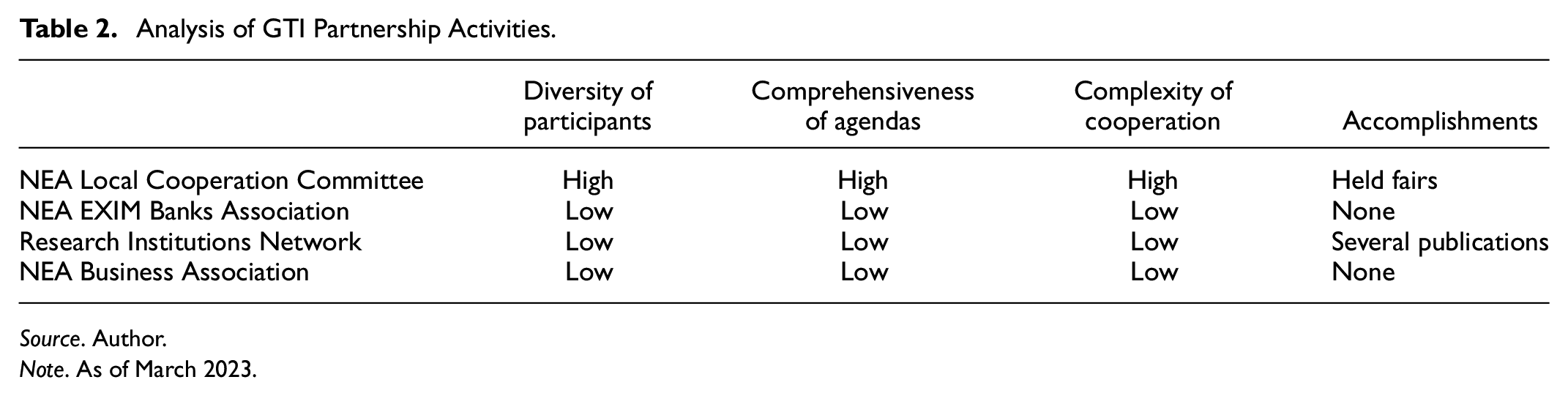
Firstly, the NEA Local Cooperation Committee was established in 2011 with the objective of providing diverse platforms to foster development and prosperity among local governments in Northeast Asia (GTI, n.d.-g). As of 2022, nine meetings have been conducted, and the recent operational developments are characterized as follows. The NEA Local Cooperation Committee is considered to have a relatively high level of participant diversity, with potential for further expansion. Alongside local governments from South Korea, China, Russia, and Mongolia, it now includes local governments from Japan, and the participation of local governments continues to grow. For instance, in 2016, the Tottori Prefecture, Japan, participated in the Sokcho meeting (GTI, 2017a). In 2017, the NEA Local Cooperation Council approved the membership of Selenge Aimak, Mongolia (GTI, 2018a). Additionally, the major meetings of the NEA Local Cooperation Council have witnessed the involvement of a diverse range of organizations, including international organizations, research institutes, and companies such as GIZ (Germany), ERINA Co. Inc. (Japan), and Swift Transport International Logistics (Suifenhe) Co. Ltd. (China) (GTI, 2019a). However, as highlighted in the report, there is a limitation regarding the extent of private sector participation, except for a few companies in China (GTI, 2017a). Despite ongoing discussions to promote private sector participation in all meetings, the actual involvement from the sector remains minimal. Regarding agendas, in 2016, the NEA Local Cooperation Committee identified investment, trade, and tourism as key areas of cooperation. In 2017, the GTI elaborated and proposed related projects to the Transport Board, including a paved road project from Habirga to Arkhashat on the Sino-Mongolian border and a paved road project from Choibalsan to Kalghol/Som in Dornod Aymak, and also submitted a proposal to the NEA EXIM Banks Association for financing (GTI, 2018a). In 2018, the Community-Based Tourism Initiative discussed and presented its findings to the Tourism Board on tourism in border areas, which would entail easing the short-term visa regime and offering package tourism products (GTI, 2019a). The overall comprehensiveness of the agenda is relatively high, as it covers not only a wide range of areas but also committees dealt with by local governments. The complexity of the cooperation is also relatively high due to participant diversity and agenda comprehensiveness, which means there are many different types of connections between them. This partnership certainly aims to enhance the capacity of the NEA local governments, facilitate policy coordination between local and central authorities, implement joint cooperation programs and projects, mobilize international support for regional cooperation initiatives, and promote information exchange and knowledge sharing among the Northeast Asian countries. As an accomplishment related to its objectives, the GTI reports activities such as organizing the NEA Local Government Fair and so on.
Secondly, the NEA EXIM Banks Association was created in 2014 to primarily provide financing for large-scale development projects approved by the member countries (GTI, n.d.-f). It consists of the Export-Import Bank of China, the Mongolian Development Bank, the Export-Import Bank of Korea, and the Russian Development Bank. It has convened 13 times up until 2022. The recent operations indicate that government entities and related ministries from each country are the predominant participants in the cooperation, denoting a lack of diversity. Particularly noteworthy is the absence of participation from the private sector, which is crucial for implementing projects. The only instance of private sector involvement occurred during the review phase of the pilot project at the Port of Zarubino in Russia when the Russian Summa Group participated in a site visit in September 2015 and provided relevant information to the meeting (GTI, 2017a). However, there has yet to be any further private-sector participation. The NEA EXIM Banks Association’s discussion agenda focuses predominantly on consultation between member organizations regarding cooperation. Consequently, the discussion agenda is highly specific and sensitive, often linked to the interests of particular member organizations or countries. Therefore, cooperation spillover is anticipated to be severely limited. For example, the NEA EXIM Banks Association has been striving to refine the operational mechanisms for implementing projects. On approval of the Framework Agreement in 2014, the Export-Import Bank of Korea proposed an amendment to the Framework Agreement on the Establishment and Operation of the Association in 2016. The amendment passed with some modifications in wording, representing the initial step in the process. However, following the selection of the Zarubino Port construction project in Russia as a pilot project, elaborating on the Association’s operating mechanism for financing was halted. As a result, the cooperation scope has been limited to signing memorandums of understanding with business units (GTI, 2018a). Furthermore, concerning pilot project financing, the Export-Import Bank of Korea and the China Export-Import Bank emphasize that the involvement of local companies in engineering, procurement, and construction (EPC) contracts is a prerequisite for financial participation under their respective laws and regulations. This suggests a passive attitude toward financing instead of focusing on deepening project implementation (GTI, 2019a). Regarding the complexity of cooperation, the NEA EXIM Banks Association has mainly engaged directly and indirectly with the GTI Secretariat, not with the other committees or partnerships (GTI, 2017a). Meanwhile, there has been no advancement in securing funding for large-scale development projects.
Next, the Research Institutions Network was established in 2016 as a platform for academic collaboration aimed at contributing to the region’s shared prosperity through research activities and project identification. An examination of the Research Institutions Network’s progress is possible based on the five meetings to date indicated on the GTI website. Regarding participant diversity, research institutions engaged in professional collaboration are the Research Institutions Network’s primary collaborators. Therefore, it is hard to anticipate participation from the private sector, international organizations, non-member research institutions, or private research institutions outside the GTI internal organizations (GTI, 2017a, 2018a, 2019a). Concerning the comprehensiveness of the Research Institutions Network’s discussion agenda, the research topics addressed to the present have been relatively broad in nature and are linked to institutional improvements. However, the consideration of national policies holds significant importance, given that the research organizations are national institutes belonging to specific member states. Consequently, it is evident that emphasis is placed on conducting limited, conservative policy research rather than proactive policy proposals for the member states or committees and partnerships. For instance, in 2018, the first joint research titled “Study on regional value chain (RVC) in GTR” was proposed by the Korean member organization KIEP. The proposal included a study on free trade agreements at the subnational level in the region, which other member organizations rejected due to potential conflicts with their respective government initiatives (GTI, 2019a). Regarding the complexity of cooperation, no collaborations with the other GTI committees or partnerships have been initiated thus far. Efforts are underway to introduce an internal cooperation system and promote joint research projects. Only indirect cooperation through the Secretariat is sporadically expected. The primary discussion topics from the first to the fifth Research Institutions Network meetings centered around sharing opinions among member organizations to identify joint research topics and consulting with the Secretariat to secure financial resources for joint research purposes (GTI, 2019a). The Research Institutions Network aims to function as the brain trust of the GTI and provides policy proposals and consulting advice to strengthen cooperation in the Northeast Asian region. It is tasked with conducting in-depth research on regional economies, formulating strategies for related development projects, and building regional institutional capacity (GTI, n.d.-j). However, it has released only a limited number of pertinent research reports so far, and discerning additional achievements proves to be a challenging task.
Lastly, in 2007, the GTI launched the NEA Business Advisory Council (BAC), which held significant importance as the only privately-led organization within the GTI framework. The BAC’s main purpose was to provide recommendations for enhancing the business environment and facilitating economic activities in the region. It also aimed to inform potential investors about business opportunities and promote the development of new partner organizations and innovative investment financing mechanisms (GTI, n.d.-e). However, the BAC officially ceased its activities after 2010 (GTI, 2017a). Subsequently, in 2013, the GTI members recognized the importance of strengthening the involvement of the member countries’ chambers of commerce to promote private sector participation. As a result, the NEA Business Association was newly inaugurated in 2015 (GTI, 2018a). However, at that time, it only included chambers of commerce from South Korea, China, and Mongolia, excluding Russia. During the 18th GTI Advisory Council meeting held in Ulaanbaatar, Mongolia, on June 22, 2018, the member countries reiterated the need for business cooperation within the GTI framework. Finally, each member country confirmed their participating organizations. In 2018, the four founding member organizations—the China Council for the Promotion of International Trade (CCPIT), the Mongolian National Chamber of Commerce and Industry (MNCCI), the Korea Chamber of Commerce and Industry (KCCI), and the Russian Federation of Industrialists and Entrepreneurs (RSPP)—agreed to newly establish the NEA Business Association (GTI, 2019a). Based on the progress of the NEA Business Association’s activities until 2019, it has primarily focused on setting up the Association itself. As a result, the diversity of actors involved remains relatively low, and the agenda has primarily revolved around discussions regarding its establishment. Consequently, the level of agenda specificity is limited. Furthermore, the complexity of cooperation within the NEA Business Association is difficult to discern based on the available information. In addition, as of the current date, no concrete outcomes have arisen in response to its objectives (Table 2).
Analysis of GTI Partnership Activities.
Source. Author.
Note. As of March 2023.
In summary, the spillover of collaboration within the GTI partnerships varies among the individual partnerships. The NEA Local Cooperation Committee demonstrates the highest level of diffusion, characterized by a range of actors, a comprehensive agenda, and a high level of complexity in addressing multiple actors and diverse topics. Conversely, the NEA EXIM Banks Association, the Research Institutions Network, and the NEA Business Association are still instituting their councils, focusing on operational discussions. Consequently, the number of actors involved is limited, the agenda is not comprehensive, and the complexity of cooperation is in its early stages. Indeed, it is exceptionally challenging to attain tangible outcomes within the framework of such collaboration. This limited degree of cooperation implies that the cost associated with disrupting collaboration is relatively minimal. Furthermore, the collaborative structure in this context is characterized by a degree of fragility, rendering it susceptible to disruption.
Conclusion
This paper conducts an examination of multilateral cooperation in Northeast Asia, with a particular focus on the GTI as a case study in micro-regional cooperation. Drawing upon the theoretical perspectives of functionalism and micro-regionalism, it explores the spillover of cooperation from nonpolitical to political realms can be facilitated by taking into account factors such as participant diversity, agenda comprehensiveness, and the complexity of cooperation dynamics. The analysis reveals an overall positive trajectory of change within the GTI, as it actively promotes cooperation spillover by expanding its committees and forging partnerships. However, when scrutinizing committee activities, it becomes evident that while the agendas have become more comprehensive over time, participant diversity and the complexity of collaboration remain relatively low, except the Trade and Investment Committee. As for partnerships, they are still in their early stages of cooperation, displaying limited spillover effects, except for the NEA Local Cooperation Committee, which exhibits a broader spectrum of actors, comprehensive agenda discussions, and intricate cooperation linkages. Furthermore, the challenge of assessing achievements within the GTI framework arises from the apparent scarcity of discernible accomplishments. To reinvigorate micro-regional multilateral cooperation, the GTI should consider the following recommendations: Enhance actor diversity by actively involving the private sector; broaden the scope of discussion agendas beyond specific projects, especially until institutional stability in cooperation is established; and strengthen governance mechanisms while fostering collaboration among internal organizations, which are currently susceptible to disruptions. These measures are anticipated to lead to the identification of tangible outcomes and, ultimately, the promotion of micro-regional multilateral cooperation that can significantly contribute to peace and prosperity in the Northeast Asia region.
This analysis contends that the GTI, serving as a platform for micro-regional multilateral cooperation, has not yet achieved a mature stage of institutionalization, thus falling short in its endeavors to revitalize cooperation. This deficiency can be attributed to its limited engagement in complex cooperation, a lack of comprehensive agendas, and a failure to involve a diverse spectrum of actors. Certainly, in light of recent geopolitical developments in Northeast Asia, optimism for subregional cooperation of this nature may be diminishing. In February of this year, Russia opened the significant port of Vladivostok for Chinese access, a development poised to augment the transportation of domestic goods (Fong, 2023), independently of the GTI framework, even though it has been discussed under the GTI platform for several decades. Nonetheless, it is valuable to underscore the central argument of this thesis, which emphasizes that micro-regional cooperation, characterized by intricate interconnections and founded upon a comprehensive agenda involving various stakeholders, possesses the potential to establish a foundation for advancing peace and prosperity within the region. This study provides valuable insights into the cooperation practices within the GTI and offers a foundation for future research. Unlike previous studies focusing on inter-country dynamics in Northeast Asia, this research enhances policy implications by examining detailed cooperation cases at the actor level. However, it should be noted that the study’s analysis was based on publicly available data from websites and meeting materials, resulting in limitations regarding the accessibility of certain data. Although the best use of available resources has been made, not all the GTI events could be analyzed, highlighting a limitation of the study.
Footnotes
Acknowledgements
Not applicable
Declaration of Conflicting Interests
The author(s) declared no potential conflicts of interest with respect to the research, authorship, and/or publication of this article.
Funding
The author(s) received no financial support for the research, authorship, and/or publication of this article.
Ethical Approval
Not applicable

Data Availability Statement
Data sharing not applicable to this article as no datasets were generated or analyzed during the current study.