




Abstract
In the context of literary studies undergoing development, the works of Eileen Chang, a seminal Chinese-American writer, have garnered significant scholarly attention, reflecting her profound impact on modern Chinese literature. The study analyzed publication trends, high-frequency keywords, and the scholarly network, providing insights into the research status of Eileen Chang’s works. The analysis revealed a disparity between Chinese and overseas research focuses, with Chinese scholars predominantly exploring themes such as Eileen Chang’s works, feminist consciousness, and literary figures related to her. Overseas scholars, on the other hand, exhibit a broader research scope encompassing topics like translation, modern Chinese literature, and cultural aspects. The analysis highlighted the prominent scholars in the field and their publication patterns, indicating the emergence of new scholars in recent years. Based on the findings, this study proposed suggestions for future researchers, emphasizing the importance of interdisciplinary approaches, international collaboration, comparative studies, utilization of digital humanities, and exploration of underrepresented topics.
Plain Language Summary
This research was all about exploring how much attention Eileen Chang, a key figure in Chinese-American literature, has received in the academic world. We wanted to see what topics about her work are being studied the most and how different scholars from China and other countries approach her writings. We used a tool called CiteSpace to look at lots of different research papers about Eileen Chang. This helped us see the big picture of the main topics researchers focus on and how these topics have changed over time. We looked at things like how often certain words showed up and how connected different research papers were. Our study found that researchers in China often focus on Eileen Chang’s stories, her ideas about women’s roles, and people in literature connected to her. In contrast, scholars from other countries look at a wider range of issues, including how her writings are translated and how they fit into Chinese culture as a whole. We also noticed that there are some new faces in the research community getting involved in studying Eileen Chang’s work. Based on what we found, we think future studies could benefit from mixing different research areas, working together across countries, and using technology to dig deeper into less-explored topics about Eileen Chang. This way, we can get a fuller understanding of her impact on literature. However, our study wasn’t perfect. One issue was that we were looking at research that used different languages, and some meanings can get lost in translation. Also, comparing studies from different places was tough because researchers have different backgrounds and might focus on different aspects of Eileen Chang’s work.
Introduction
Eileen Chang (1920–1995) was a Chinese-born American essayist, novelist, and screenwriter. She was a well-known feminist woman writer of Chinese literature, known for portraying life in 1940s Shanghai and Hong Kong (Hsia, 1999; Yu, 2008). Her works remain popular in both Chinese and English, and her unique and experimental style has made her one of the most important figures in Chinese literature (R. Zhang & Gao, 2020). Chang’s work is highly respected and has had a lasting impact on the literary landscape in China. Hu and Zhu (2022) believe that her work is “intensely introspective” and “filled with a sense of the fragility of life.” Her works are renowned for their powerful insights and innovative use of language. Chang’s novels and short stories focus on the lives of women of the first half century in China and explore themes of love, identity, and human relationships (Ren, 2020).
Nevertheless, some academics have reservations about Chang’s work because of its unconventional style and intricate take on numerous societal topics. L. Zhang (2021) notes that Chang’s English works have not attained the same level of acclaim in the West as they have in China. Ruiying Zhang claims that Chang has continuously been captivated with and worried about the lives and destinies of women. Louie (2012, p. 15) believes that Eileen Chang’s works illustrate an alternate perspective of Chinese life before 1949. The negative opinion she held about the situation of people in China also had a potential political impact, whether intentional or not. Zidong Xu’s research on Chang’s writing is highly extensive and informative, encompassing the narrative technique used throughout the works.
In recent years, the comprehension of Eileen Chang and her works has been enhanced due to the advancements in social theory and some feminist theories. Although there are still some issues with Eileen Chang and her writings, new study findings in this area keep showing up. This study examines the variations in the outcomes of the different databases inside and outside China. The associated objectives of the study are to (1) identify the characteristics of the current frontier of Eileen Chang; (2) provide detailed annotations on the existing research scope of Eileen Chang; (3) examine the emergence of new trends and transformations of Eileen Chang over time.
Building on these objectives, the study seeks to answer three key questions:
(1) How has the thematic focus of Eileen Chang’s scholarship evolved within and between Chinese and international academic circles?
(2) What are the differences and similarities existing between Chinese and international academic circles?
(3) What factors have influenced the trace of evolvement and differences?
Literature Review
This article provides a concise overview of the research conducted on Eileen Chang, focusing on three key areas: her life and influences, the analysis of her literary works, and the reception and critical assessment of Chang’s contributions.
Life and Influences
The era from the end of the 19th to the beginning of the 20th century was a complicated time in China, falling at the end of the long 18th century in China and being characterized by the Civil War and World War 1. Because of Shanghai’s proximity to the sea, it was directly influenced by the happenings of the war. Many prominent writers and political figures did not see Chang and her novels as a true exponent of the era. In 2000, Wen Rumin presented the paper “Chang’s Reception History in the Mainland in the past 20 years”. In this article, the author points out that Eileen Chang was rediscovered on the mainland in the late 1970s. During this period, the specificity, image, symbol, psychoanalysis and other aspects of Chang’s novel techniques are common angles of entry and begin to touch on the analysis of the human nature connotation and modernity characteristics of the novel. in the 1990s, in addition to continuing the research momentum of the late 1980s, had a variety of interpretations of Chang’s text from image structure, psychological description, cultural model, feminism and so on. It was not until the publication of A History of Modern Chinese Fiction (2005) by Hsia who pointed out the significance of Chang that triggered a trend of studying Chang among scholars.
Literature Analysis
Chang’s major works include the novella Lust, Caution, the novel Little Reunions, and the short story collection Love in a Fallen City. These works are known for their exploration of the lives and relationships of women in the tumultuous period of China’s history between the 1920s and 1940s. Gu (2013) quoted that Chang’s writing often deals with themes of love, desire, and the complexities of human relationships, often set against the backdrop of a rapidly changing society. Chang’s writing style is characterized by its attention to detail, precise descriptions, and subtle psychological insights. According to a graduate thesis by Yang (2022), Chang is also known for her use of symbolism and recurring motifs such as the use of food and clothing to represent the characters’ emotions and social status. In her literature, Chang often explores the themes of love and desire, depicting complex and nuanced relationships between men and women (Dong, 2019). Her characters are often torn between their desire for love and their duty to their families and society. Chang’s literature also often explores the theme of how the individual is affected by the larger historical and social changes taking place in China at the time.
Reception and Criticism
The comparative study between Chang and Western writers is also a research focus. Maugham has always been an important research object. Wu Xiaoyu compares Chang and Maugham’s family background, personalities, and time background, and points out that due to their different cultural backgrounds, the two writers have different manifestations of human weakness. Yu Qing believes that Qiqiao Cao’s psychological abnormality in The Golden Cangue, Roger’s sexual depression in Incense Fragments—The Second Incense, and Xiao Han’s abnormal love for her father in The Heart Sutra are all portrayals of Chang’s observation of life from a Maugham-like perspective. In the study of the relationship between Chang and foreign literature, besides Maugham, the main writers involved include Lawrence (Qin 2013, Fu, 2005), Charlotte Bronte (Y. Wang & Wang, 2009), Austin (Fan, 2010; Yan, 2010), Woolf (Du, 2010; Wei, 2022), etc.
Research Methods
Theories and Terms
Map of Scientific Knowledge
Knowledge mapping represents a contemporary advancement in the domain of science metrology and stands as an interdisciplinary field encompassing applied mathematics, information science, and computer science. To effectively conduct knowledge discovery, the extraction and graphical reorganization of information from a vast corpus of previously published scientific research materials (C. Chen & Morris, 2003) becomes imperative. By employing such techniques, a comprehension of the subject is attained, fostering comprehensive insights and facilitating further development in the field.
Research Frontier
“Research frontier” was originally introduced by Price (1965) to capture the dynamic and ideological nature of a particular field of study. Typically, a research frontier encompasses a limited number of newly published papers, usually ranging from 40 to 50. Analyzing the evolution of this compact literature network can offer valuable insights into the trajectory of a small yet significant body of scholarly work. C. Chen (2006) further asserts that the forefront of research reflects the emergence of novel theoretical orientations and emerging topics, thus indicating the evolving landscape of the field.
Intellectual Base
From a bibliometric standpoint, citations represent the research frontier, and the cited sources represent the knowledge base, claims Persson (1994). According to C. Chen (2006), the intellectual foundation is made up of the co-citation network that the referenced classical literature creates.
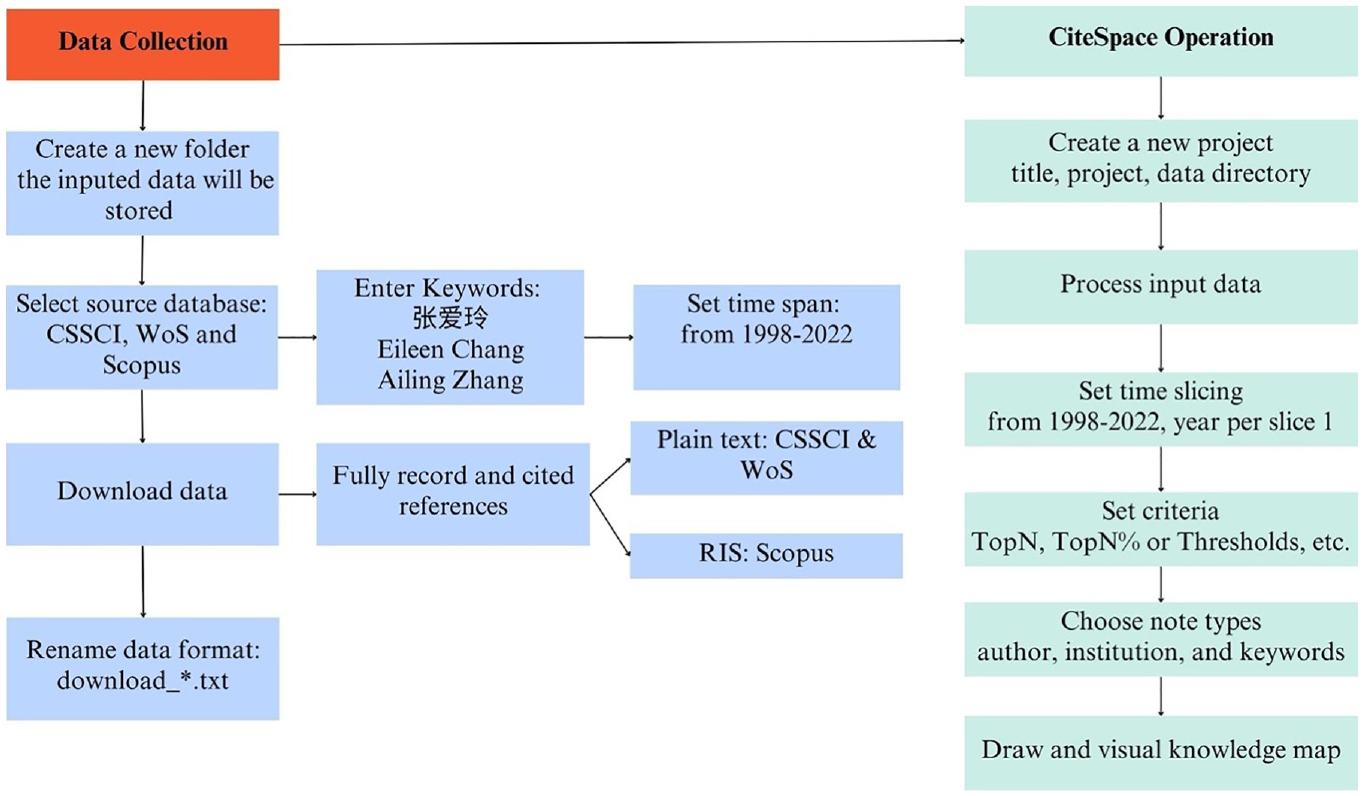
Figure 1 shows the workflow of CiteSpace.
Workflow of CiteSpace.
Data Collection
CSSCI has established the gold standard for research discovery and analysis as a result of its rigorous compilation of the Chinese most significant literature index. This has enabled it to link publications and researchers to databases covering a wide range of fields by citing and managing indexes. You may utilize reference searches to trace back prior research and keep up with more recent advancements in the subject matter over the 100 years that are indexed in their entirety. In addition to being based on the CSSCI data download format (C. Chen & Song, 2019), the data format that is processed by the CiteSpace program is then converted to the WoS format. The CSSCI database is chosen as the primary source of data for this investigation because it contains references, indexes, and researcher linkages that are more comprehensive regarding the Chinese author Eileen Chang.
When collecting documents, it is important to consider the recall rate and accuracy rate. Opting for a simpler retrieval strategy can improve the recall rate but may reduce the precision rate. Conversely, a more stringent retrieval strategy can lower the recall rate but significantly enhance the precision rate. CiteSpace focuses on analyzing the evolution of a topic, while CSSCI offers various combinations of search techniques. Consequently, CiteSpace yields better results for retrieving specific topics. Relevant topic terms can be found in CSSCI’s titles, abstracts, keywords, and full texts, which are then converted to WoS format. Increasing the publication span helps gather a comprehensive body of scholarly literature, as papers are more common than conference proceedings. The primary component of the CSSCI database, which is known as the Chinese Social Sciences Citation Index, was utilized as the study’s data source (CSSCI). Using the search technique of “Topic = ‘张爱玲’ + Document type = Paper,” we were able to collect a total of 839 papers on December 27, 2022. We also utilized WoS and Scopus data sources as supplements to this study. Using the search technique of “Topic = ‘Eileen Chang’ or ‘Ailing Zhang’ or / ‘Ai-ling Zhang’ + Document type = Paper,” we gathered 122 papers on each database. The researchers conducting the study went over each paper’s title and abstract on their own before concluding that the data obtained was accurate and satisfied all of the standards. After that, the data from the paper were saved in the “Plain text” format as a “Full Record and Cite References” file in CSSCI and WoS databases. Information on Scopus was derived in RIS format. This was done so that it could be analyzed later. Even though just a small quantity of data was collected for this study, it is sufficient to fulfill the standards for a CiteSpace investigation (C. Chen, 2017).
Research Tool
The present study utilized CiteSpace, a bibliometric tool devised by Professor Chaomei Chen, to perform bibliometric analysis on the published research. This instrument facilitated the graphical representation of the findings, enhancing the visual comprehension and interpretation of the results.
CiteSpace, a citation visual analysis program, has emerged as a valuable tool that draws upon scientometrics and knowledge visualization domains. Its core objective revolves around uncovering latent knowledge embedded within scientific literature. By employing this program, researchers are empowered to grasp the foundational information about a given topic, identify seminal works within the field, discover novel research areas, and gain insights into the historical progression of research development (C. Chen et al., 2018).
CiteSpace possesses the capability to convert research domain concepts into mapping functions that establish connections between research frontiers and intellectual foundations. Within this mapping function framework, three key concepts have been formulated, each addressing distinct challenges: (a) determining the nature of the research frontier, (b) annotating the research field, and (c) identifying emerging trends and shifts over time. The widespread adoption of CiteSpace is evident, with users spanning over 100 countries and an impressive publication count of over fifteen thousand scholarly outputs resulting from the utilization of the CiteSpace application.
Research Methods
In this study, a bibliometric approach was employed to analyze scientific research cooperation based on the collected documents. This analysis encompassed various aspects, including collaboration among authors, institutions, and at national and regional levels. Additionally, a thorough examination was conducted through literature and keyword cluster analysis, as well as an assessment of co-citations among publications, co-citations among authors, and co-citations among journals.
Cluster Analysis
Clustering entails the partitioning of a collection of tangible or intangible items into distinct groups, known as clusters, each comprising a set of items. These clusters are characterized by a significant degree of similarity among their constituent elements while exhibiting greater dissimilarity across different clusters. In CiteSpace, the clustering label is derived from the citation document and can be sourced from the title, index, or summary of the respective file.
Cooperative Analysis
In contemporary scientific inquiry, the research group has taken precedence over the individual as the fundamental organizational unit, while scientific collaboration has supplanted competition as the primary approach to scientific investigation. The exploration of collaborative networks, particularly in the field of scientific metrology research, predominantly focuses on analyzing co-authorship patterns among researchers and their scientific and technological achievements, encompassing institutions and countries.
Research Results
Research Yield
The temporal distribution of scholarly publications on Eileen Chang, as revealed by the CSSCI database, offers valuable insights into the evolving scholarly interest in her literary works. As shown in Figure 2, the surge in publications following the initial discovery of Chang’s writings in 1998 indicates a growing recognition of her literary significance, likely amplified by the establishment of the CSSCI database in 1999, which facilitated the systematic cataloging and accessibility of scholarly publications related to Chang’s works. Notably, a conspicuous surge in publications centered on Chang occurred in 2008, with a total of 81 articles, followed by a comparable figure of 78 in 2009. The subsequent decline in publication numbers in 2010 (63) and 2011 (63) suggests a temporary ebb in scholarly focus on Chang, followed by a swift decrease to 32 in 2012. The slight resurgence in publications in 2014 (48) reflects a sustained interest in Chang’s literary contributions. However, the gradual decline in publication numbers from 2014 to 2020 suggests a possible saturation of available research angles or a shift in scholarly attention toward other literary figures. The forthcoming analysis and interpretation of these publication trends were presented and discussed in the Discussion.

The number of published papers on Eileen Chang (1998–2022).
Co-author Network
The co-author network serves as a valuable tool for examining collaborative research within a specific research field (Katz & Martin, 1997). Figure 3 illustrates the results of the CiteSpace analysis, revealing 509 nodes. Surprisingly, despite the large number of nodes, the collaboration rate among highly productive authors is remarkably low. However, there exists a cohesive collaboration cluster centered around Xiaodong Wu, involving 14 authors. It is worth noting that, aside from Wu, the other authors in this cluster exhibit relatively lower productivity. Furthermore, two additional teams are observed, each consisting of two authors. In the figure, larger nodes indicate a higher number of published publications, while thicker connecting lines signify closer and stronger collaborations. Regarding the number of papers published, Xiaohong Tao and Fengjie Liu emerge as the most prolific authors, each having nine published papers. Notably, the figure displays no collaborations between these two authors and others.

The visualization of the author’s co-citation network.
Researcher citation mutations can indicate a significant increase in the number of papers published by a researcher in the field over a period of time. Using CiteSpace’s citation mutation statistics for Eileen Chang researchers, the citation mutation for Eileen Chang researcher Tao Xiaohong appears from 2008 to 2011 with a mutation value of 4.11, as shown in Figure 4, indicating a significant increase in the number of papers published by Tao Xiaohong from 1998 to 2022. The second burst is Fengjie Liu appeared from 1998 to 2005 with a strength of 2.57. The third burst is Xiaohu Jiang with a strength of 2.39 from 2019 to 2022. The top two writers are from the CSSCI database, and the third writer is from the WoS or Scopus database. This indicates that the newest study on Eileen Chang was published outside China.

Top 3 authors with the strongest citation bursts.
Co-institute Network
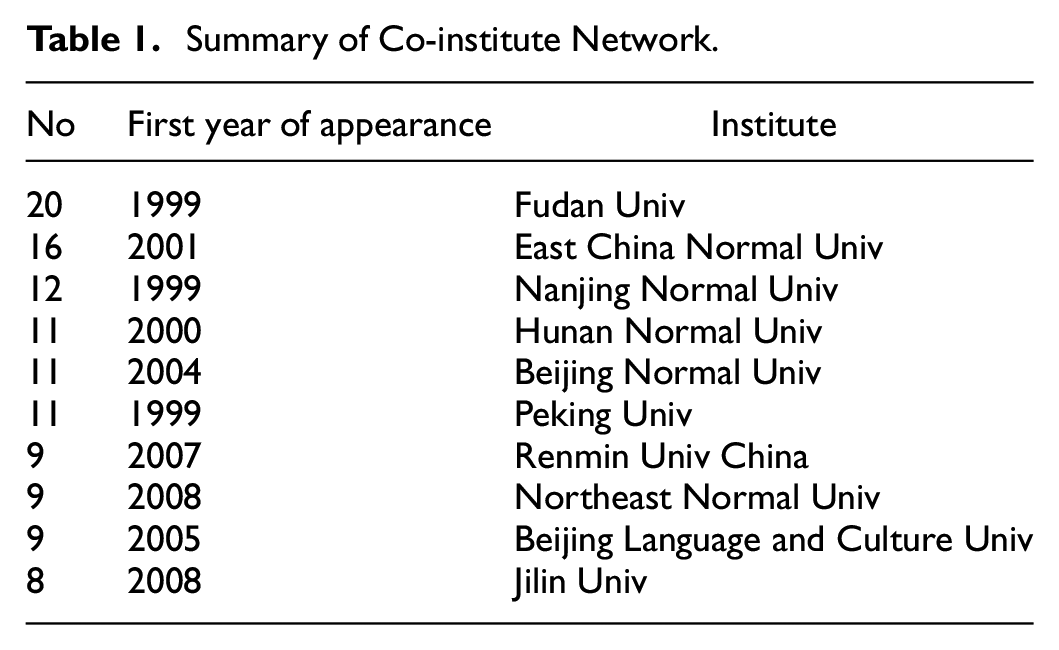
According to the CiteSpace study, the co-institute network consists of 50 collaboration linkages and 400 research institutes. The majority of the nodes in Figure 5 are isolated points, which suggests that a single author has finished practically all of the study outcomes. The level of collaboration is quite low and has only been experienced by a small number of organizations. This can be attributed to the lack of funding. The absence of funding can restrict the scope of the study and limit the involvement of additional researchers, hence resulting in a single author being responsible for most of the study outcomes. East China Normal University, Fudan University, Hunan Normal University, Nanjing Normal University, and Beijing Normal University are the top five universities in terms of publications. According to an earlier study, data must occur on the network more often than twice per second (Chen, 2015). However, the maximum number of publications for this study is 20: The fact that one institute only produced a tiny number of papers shows that the depth of the institutes analysis of Eileen Chang is lacking (Table 1).

Visualization of the co-institute network.
Summary of Co-institute Network.
Keyword Co-occurrence
The keywords of a research topic can reflect the direction and dynamics of the topic and reveal the main themes and hotspots of the research field, so it is necessary to visualize and analyse the keywords in Eileen Chang’s research paper. To visualize the keywords, the parameter node type is reset to Keyword, the threshold and the size of the keywords in the view are adjusted appropriately, and the visualization process is carried out to produce a visual view of the keywords (Figures 6 and 7). Each node displayed in the view represents a keyword, with the larger the circle, the more frequently the keyword appears (C. Chen 2012, p. 435). The nodes are made up of chronological rings, each of which corresponds to the time of its occurrence, from inside to outside, and to the time of the word’s occurrence, from near to far. The size of the chronological wheel represents the frequency of the keyword. The presence of a line between nodes indicates a co-occurrence relationship between the keywords. The more obvious the link between nodes, the closer the co-occurrence.
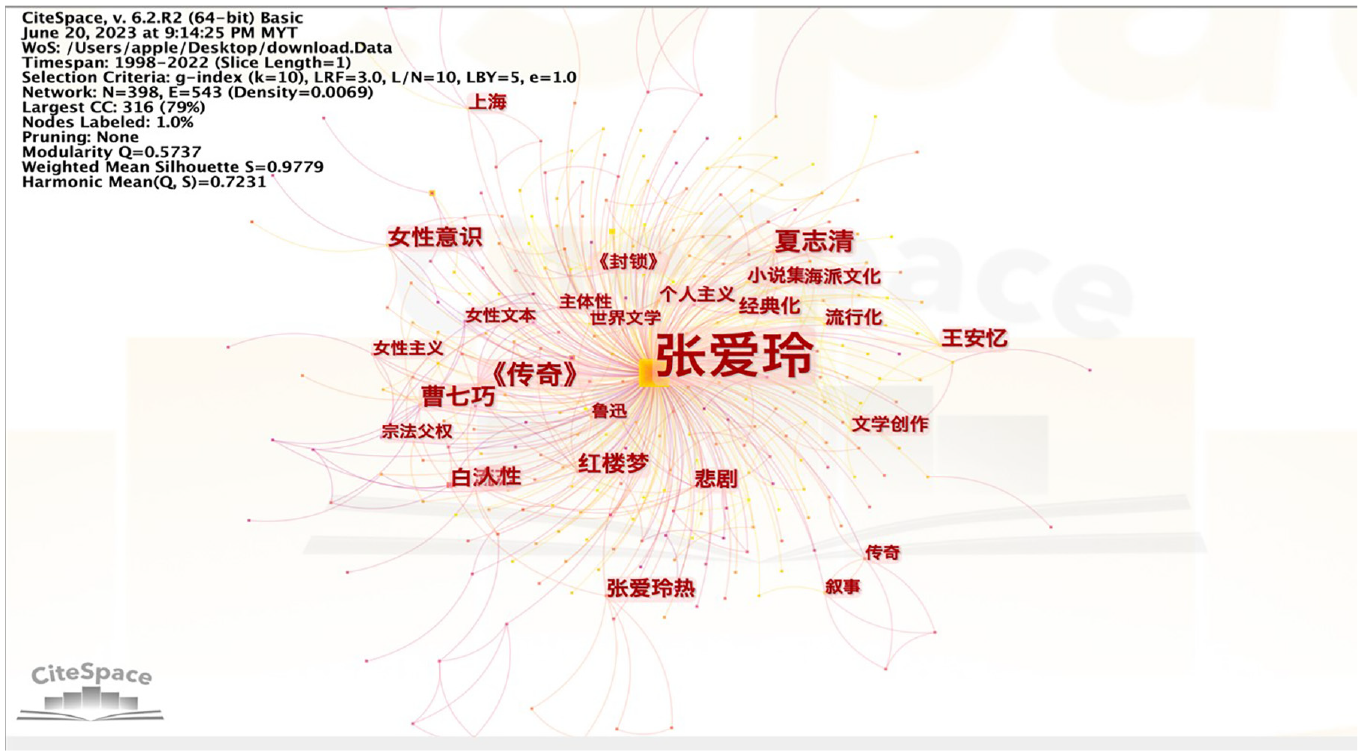
Visualization of keywords in the CSSCI database.

Visualization of keywords in WoS and Scopus database.
The structure of scientific knowledge may be effectively elucidated using a method known as keyword co-occurrence analysis. This method can also be used to investigate research hotspots and uncover patterns in the study. Figures 5 and 6 display the keyword maps generated by the study conducted on Eileen Chang in CSSCI and WoS/Scopus respectively.
In Figure 6, there are a total of 398 high-frequency terms and 543 connection lines provided in this paper. And in Figure 7, there are 142 high-frequency terms and 345 connections. The structures are acceptable, and modularity Q was achieved at 0.5737 more than 0.3 (Newman, 2004). The outcome is acceptable given that both silhouette scores reached 0.9779 and were more than 0.4 (Rousseeuw & Kaufman, 1990). In general, the more the frequency with which a term is cited, the bigger the impact, and the keywords with a centrality value that is greater than 0.1 have more influence (Fang et al., 2017). In the co-occurrence analysis, the nodes that have a high frequency and a high centrality are typically regarded to be key nodes since this indicates that they have a significant amount of impact on the whole network. By investigating these important nodes, one may mine the wealth of information that is hidden behind the nodes. Previous studies, such as the one on female consciousness (Dai, 2006; L. Wang, 2015; R. Zhang & Gao, 2020), have demonstrated that the examination of the key node can be relied upon to provide accurate results.
To gain a comprehensive understanding of the research landscape on Eileen Chang, we conducted a thorough analysis by categorizing high-frequency keywords into three aspects: themes, books, and characters. However, during this period, only one keyword, “Eileen Chang,” occurred with significant high frequency and large centrality in both databases. As a result, for the subsequent classification and analysis, we have intentionally excluded the keyword “Eileen Chang” to avoid redundancy and repetition.
Table 2 presents the high-frequency topics in the study of Eileen Chang as found in the CSSCI and WoS/Scopus databases. The table provides valuable insights into the research landscape and the emphasis given to certain themes over time in these two databases. In the CSSCI database, the year 1998 stands out with a high frequency of 52 occurrences related to the theme of feminism. Additionally, the year 2003 witnessed a notable presence of the topic of “narrative” and “image,” indicating a focus on analyzing the narrative techniques employed by Chang in her writings. In the WoS/Scopus database, the year 2021 recorded six occurrences of the topic of film, suggesting an emerging interest in studying the cinematic adaptations or influences in Eileen Chang’s works such as Lust, Caution adopted by Ang Lee (Hsiao-yen & Dilley, 2014). This indicates a specific interest in exploring the intersection between literature and film, and the impact of Chang’s writings on the cinematic medium.
High-frequency Topic in the study of Eileen Chang in CSSCI (Left) and WoS/Scopus (Right) Databases.

Furthermore, the keywords “translator” (Li, 2006) and “world literature” indicate a growing recognition of the importance of translation and the global reception of Chang’s literature in recent years, reflecting interdisciplinary perspectives. For example, it was confirmed that Chang was the first person to translate Ernest Hemingway’s The Old Man and the Sea in mainland China, Taiwan, and Hong Kong (Z. S. Chen, 2021).
Table 3 presents the high-frequency books in the study of Eileen Chang, as observed in the CSSCI and WoS/Scopus databases. In the CSSCI database, the year 1998 stands out with a high frequency of 28 occurrences related to the book “Legend,” which is a collection of Chang’s novels including her most famous ones such as The Golden Cangue and Love in a Fallen City. As a compilation of her works, Legend offers a comprehensive representation of Chang’s literary prowess and showcases her distinctive writing style and thematic explorations. The high frequency of “Legend” in the CSSCI database suggests that researchers have recognized the significance of studying Chang’s collective body of work as a whole.
High-frequency Books in the Study of Eileen Chang in CSSCI (Left) and WoS/Scopus (Right) Databases.

Notably, the book The Story of the Stone, also known as The Dream of the Red Chamber, holds a significant presence in both databases. This classic novel of manners in Chinese literature was originally written by Cao Xueqin during the Ming Dynasty and is revered for its intricate plotlines, multifaceted characters, and astute social commentary. Eileen Chang’s study of The Story of the Stone during her time in America and her extensive textual research on this classic work further highlights her scholarly engagement and deep understanding of Chinese literature. This adds another layer of significance to her contributions as a writer and scholar, showcasing her appreciation for and dedication to the exploration of literary traditions.
In the WoS/Scopus database, the year 2018 recorded a high frequency of six occurrences of the book Lust, Caution, which is notable as it was adapted into a critically acclaimed film. This suggests that researchers in this database have focused on examining the book’s literary qualities, its adaptation into film, and the broader cultural implications associated with it. Additionally, the keywords Red Rose, White Rose, and Love in a Fallen City highlight other noteworthy novels by Eileen Chang that have garnered scholarly attention.
Table 4 presents the high-frequency characters in the study of Eileen Chang. In the CSSCI database, “Chil-tsing Hsia” emerges as the most frequent character mentioned. Chil-tsing Hsia, a literary critic, holds significance as the individual who introduced Eileen Chang to the literary canon, highlighting their influential role in shaping Chang’s reception and scholarly discourse surrounding her works. The presence of “Cao Qiqiao” and “Bai Liusu” in the CSSCI database suggests that researchers have paid attention to these characters, who are heroines in Chang’s novels. This also coincides with the frequent topic “narrative” and “image.”
High-frequency Characters in the Study of Eileen Chang in CSSCI (Left) and WoS/Scopus (Right) Databases.

In the WoS/Scopus database, “Lu Xun” stands out as a high-frequency character. Lu Xun is a prominent Chinese writer, literary critic, and contemporary of Eileen Chang. The inclusion of Lu Xun in the research indicates the potential for comparative analyses, intertextual connections, and broader discussions on the literary landscape of the time. “Chen Kaige,” a film editor known for adapting Chang’s novels into films, and “Wang Anyi,” a notable female Chinese novelist, signify the interdisciplinary nature of the research surrounding Eileen Chang. These characters bridge the gap between literature and visual media, inviting inquiries into the adaptation, interpretation, and reception of Chang’s works across different artistic mediums.
The mention of “Su Manshu,” a Chinese writer, poet, painter, and revolutionist, and “Raja Rao,” an Indian-American writer, expands the scope of the research beyond Chang’s immediate cultural and geographical context. The presence of these characters suggests cross-cultural dialogs, comparative analyses, or explorations of literary influences and exchanges between Chang and other notable writers.
The analysis of high-frequency keywords in the CSSCI and WoS/Scopus databases provides valuable insights into the research landscape surrounding Eileen Chang. It indicates the diverse aspects of Chang’s works that researchers have explored, ranging from her overall contributions to specific works and their adaptations. These keywords shed light on the thematic areas and topics of interest within Eileen Chang’s literary legacy, contributing to a deeper understanding of her significance in the field of literature and cultural studies. However, there is an obvious difference in academic focus on Eileen Chang in the database inside and outside China. Further discussion was presented in the next section.
Discussion
Research Yield Analysis
The small peak of publication on Eileen Chang in the CSSCI database from 1998 to 1999 can be attributed to the establishment of the database itself in 1998. The notable peak in publications in 2008 and 2009 signifies a critical juncture in Chang’s scholarly reception. The output of research on Eileen Chang remained relatively stable until 2008 when a notable surge in scholarly interest occurred. This spike can be attributed to the imminent publication of her last posthumous work, Little Reunions, scheduled for release the following year. Little Reunions holds significant importance as a semi-autobiographical novel authored by Eileen Chang. However, the publication of Little Reunions encountered challenges related to copyright disputes, which delayed its official release until 2009. The protracted legal dispute surrounding the novel’s copyright heightened anticipation among scholars and readers, further fueling the surge in research output on Eileen Chang during the preceding years.
The impending publication of Little Reunions in 2009 thus catalyzed heightened scholarly attention toward Eileen Chang’s life and works. Researchers eagerly sought to examine the novel’s autobiographical elements, explore the intricate connections between the characters and real-life individuals, and delve into the broader thematic and narrative significance of the work. This event not only propelled a surge in publications during 2008 and 2009 but also contributed to an ongoing reevaluation of Chang’s literary legacy in subsequent years.
A notable decline occurred in the figures for Eileen Chang-related publications in 2021 and 2022, dropping to a mere 19. One potential reason for this decline could be attributed to a perceived lack of innovation in the research topics explored during this period. Over time, as the body of scholarly work on Eileen Chang grows, major research avenues and themes may have been thoroughly explored, leaving fewer uncharted areas for investigation. Incorporating new research methods could be a potential solution to regain focus and stimulate renewed interest in studying Eileen Chang. This could include digital humanities techniques, because digital humanities represents a transformative shift in how humanistic scholarship is conducted, combining the traditional methodologies of humanities with the possibilities offered by digital technologies (Gold, 2012). Expanding the scope of research topics beyond the well-explored areas can reignite interest in studying Eileen Chang.
Co-author Analysis
Supplemental Table 1 and Figure 1 provide information on the top 10 high-productive scholars on Eileen Chang, including their first year of appearance and frequency of publications. High productivity among Eileen Chang scholars, with the majority of them publishing in the CSSCI database and one scholar (Xiaohu Jiang) publishing in WoS/Scopus, suggests an interesting pattern that can be analyzed. The predominance of Chinese CSSCI database publications among high-productive Eileen Chang scholars indicates a strong focus on domestic research and a vibrant academic community within China. This could be attributed to factors such as Eileen Chang’s Chinese background, her significant impact on Chinese literature, and the availability of primary sources and research materials in the Chinese language. It suggests that the study of Eileen Chang’s works resonates strongly within the Chinese academic context and is a subject of considerable scholarly attention.
On the other hand, the presence of Xiaohu Jiang as a high-productive scholar publishing in WoS or Scopus indicates recognition and engagement with international scholarly platforms. Jiang’s publication in these databases suggests an interest in reaching a broader international audience and contributing to the global discourse on Eileen Chang’s works. This could reflect an aspiration to connect with scholars from diverse backgrounds, participate in transnational conversations, and enhance the visibility and impact of their research.
The disparity in the publication timing between Xiaohu Jiang and the other high-productive scholars could suggest different trajectories in their academic careers. Jiang’s more recent appearance in the research landscape may indicate a rising prominence and emerging expertise in the field of Eileen Chang’s studies overseas. It could also signify a growing interest in engaging with international scholarship and leveraging global platforms for dissemination.
Another notable observation is the varied years of appearance among these scholars. This suggests that the study of Eileen Chang’s works has attracted scholars over an extended period, spanning from the late 1990s to the present day. The presence of scholars who have been publishing on Eileen Chang for over two decades (such as Fengjie Liu and Zidong Xu) indicates a sustained interest in her works and a long-standing scholarly engagement. The frequency of publications among these scholars further demonstrates their dedication to researching and writing about Eileen Chang. Scholars like Xiaohong Tao and Fengjie Liu have a higher number of publications, indicating their consistent and prolific contributions to the field. This may be a reflection of their deep expertise, extensive research, and active involvement in academic discourse related to Eileen Chang.
Nevertheless, the findings indicate a lower presence of high-yield authors and a relatively diminished output from these individuals. Several key factors contribute to this phenomenon. First, the field of literary criticism encompasses a wide variety of literary criticism and methodologies; hence, different academics analyzed Chang and her works from a variety of vantage points. This can be empirically demonstrated by the co-occurrence analysis of keywords. Second, literary study is a complex and interdisciplinary field that encompasses various branches of knowledge, including language, culture, history, and philosophy. Besides, in the field of literary study, the emphasis lies on the quality of research rather than the quantity of output. Researchers are encouraged to focus on producing in-depth, thought-provoking works that contribute to the field, rather than churning out numerous papers or books. The nature of the field demands a high level of literary attainments, which can limit the number of high-production researchers.
A possible solution to improve the network among scholars could be encouraging collaboration between scholars from different disciplines who have a common interest in Chang’s works. Facilitate interdisciplinary dialog and encourage scholars from literature, cultural studies, history, linguistics, philosophy, and other relevant fields to come together to explore various perspectives and methodologies. This interdisciplinary approach can lead to rich and multifaceted analyses of Chang’s writings.
Collaboration Network Analysis
The analysis conducted using CiteSpace reveals that a greater number of institutions are engaged in studying Chang. However, the level of collaboration among these institutions is not notably strong. In terms of the network of institutional contributions, normal institutions account for a larger proportion of the total. This is because normal institutions have a higher number of scholars specializing in literary studies, and universities typically provide financial support. Nanjing Normal University, Peking University, East China Normal University, Hunan Normal University and Fudan University occupy a larger proportion, and East China Normal has the most nodes in the relevant studies, indicating the institution’s outstanding achievements. Each of these five institutions has developed obvious collaborative relationships with other institutions, but, notably, there are no collaborative relationships between these five most productive institutions. The possible reasons for this situation could be that (1) the themes of Chang’s research are diffuse, the institutes with more research production on Chang focus on a specific area of study; (2) literary research requires fewer collaborations than other fields (such as biology, medical science and computing) or that the researchers prefer to work independently. So it can be concluded that the collaboration between the institutes is judged to be a personal network.
There are potential drawbacks without enough collaboration. Institutions operating in silos may conduct research independently without a cohesive approach. This can lead to duplication of efforts, limited sharing of insights and findings, and missed opportunities for synergistic collaborations. Lack of collaboration can result in limited visibility and impact on the institutions and their research on Chang. Collaborative projects and initiatives tend to garner more attention and attract a larger audience. Without collaboration, institutions may struggle to reach broader audiences and may have a limited influence on the field of Chang studies.
Keywords Co-occurrence Analysis
The fact that the research interest in Chang has persisted for a long period within the CSSCI database implies a sustained recognition of her literary contributions and enduring relevance. This indicates that the Chinese academic community has been actively engaged in studying and appreciating Chang’s works over time, leading to a substantial body of literature in the database. The observation that before 2010, there were no research hotspots in databases outside China highlights an interesting shift in the global recognition of Chang’s significance. It suggests that the overseas scholarly community may have discovered or recognized the value of Chang’s works and their cultural significance relatively later compared to the Chinese academic community.
The emergence of research interest in Eileen Chang in the WoS/Scopus database in more recent years could be attributed to several factors. It could be a result of increased international scholarly exchanges, the translation and publication of Chang’s works in different languages, and the growing recognition of her literary achievements outside of China (Lee, 2012). This suggests that Chang’s influence and literary value have extended beyond national borders and garnered attention from researchers worldwide. The delayed recognition of Chang’s value by the overseas research community may be indicative of broader trends in the dissemination and reception of literary works across different cultural contexts. It emphasizes the significance of cross-cultural exchanges and the evolving dynamics of global literary scholarship.
Firstly, the keyword “canon” appears exclusively in the studies from the WoS/Scopus databases, suggesting a specific research focus on the literary canon and the inclusion of Eileen Chang’s works within it. This indicates a scholarly interest in positioning Chang as a significant and influential figure in the literary landscape, recognized and studied beyond the confines of the Chinese academic community. The absence of this keyword in the CSSCI database may indicate a divergence in research priorities, with a greater emphasis on other aspects of Chang’s works in the Chinese academic context.
Secondly, the presence of keywords such as “American orientalism,”“diaspora,” and “cultural Cold War” in the studies from the WoS/Scopus databases reflects a broader interdisciplinary approach and engagement with global perspectives. as demonstrated in So’s study (2013). These keywords highlight a focus on the socio-cultural, historical, and geopolitical dimensions of Chang’s writings, connecting her works to broader themes and contexts. In contrast, the CSSCI database appears to have a more concentrated emphasis on Chang’s works within the Chinese literary tradition and domestic research interests. It also indicates that researchers outside of China are exploring the cross-cultural influences, diasporic experiences, and geopolitical dynamics surrounding Chang’s writings.
Conclusion
While bibliometric analysis is prevalent in various disciplines, it remains relatively underutilized in literary studies. This research focuses on the research of a prominent Chinese-American writer Eileen Chang. Through conceiving a macro perspective on the evolvement within the scholarly realm, this investigation aims to offer helpful insights to scholars in the field.
This article makes use of the scientometric software CiteSpace to systematically sort through the key research literature on Eileen Chang at CSSCI, WoS and Scopus. It then draws a scientific knowledge map of Eileen Chang’s research from 1998 to 2022. Thereby, it presents the current status and development pulse of Eileen Chang’s research comprehensively. This article separates the key phrases, core publishing institutions, and authors of Eileen Chang’s research, and it also identifies developing hotspots for research based on the interpretation of the mapping and the analysis of the literature. The limitation is that the reliance on databases like CSSCI, WoS, and Scopus might introduce bias toward published academic research and overlook non-academic sources, such as unpublished works, interviews, or personal correspondence. This limitation could result in a partial representation of the scholarly discourse surrounding Eileen Chang’s writings.
According to the findings of the study, (1) the number of publications reached its highest point between 2008 and 2011, and then it began a sharp fall since 2015; (2) the analysis reveals a significant disparity between Chinese and overseas scholars in terms of research productivity and publication platforms in the study of Eileen Chang, indicating a stronger local presence and a need for greater international engagement; (3) it has been discovered that there is less horizontal cooperation between research institutions on the topic of Eileen Chang, even though the majority of the study on Eileen Chang is conducted in normal universities and colleges; (4) there is a distinct divergence in research focus between Chinese and overseas scholars studying Eileen Chang, with Chinese researchers primarily emphasizing her works and literary aspects, while overseas scholars exhibit a wider range of interests encompassing cultural and historical contexts.
The disparity between Chinese and overseas research focus on Eileen Chang indicates the influence of cultural, linguistic, and academic factors. However, it also presents an opportunity for cross-cultural and interdisciplinary collaborations, where scholars from both Chinese and overseas contexts can exchange insights and contribute to a more comprehensive understanding of Eileen Chang’s literary legacy. The information presented here can serve as useful references for making decisions about the issues to investigate further and for stimulating in-depth thought about those topics when planning future studies in this area.
Limitation and Future Work
While this study offers certain insights, it also encounters specific limitations. Firstly, despite the rich literary tapestry presented in Eileen Chang’s works, analyzing translations—some of which she translated herself—inevitably introduces certain discrepancies from the original texts, potentially affecting interpretative authenticity. Secondly, the comparative aspect of this research, which critically examines viewpoints between Chinese and international academic circles, inherently adds complexity. This is due to the distinct academic paradigms and cultural biases within each scholarly community, creating challenges in forming a cohesive analysis and drawing uniform conclusions.
Given the notable differences in research focuses between Chinese and overseas scholars, future researchers should actively engage in comparative studies that examine the reception, interpretation, and influence of Chang’s works within different cultural and literary contexts. This approach can shed light on the global significance of her writings. Besides, leveraging digital tools and methodologies, such as text mining, network analysis, and data visualization, can offer new avenues for understanding patterns, trends, and connections within the body of research on Eileen Chang. This can lead to more nuanced insights and facilitate innovative research approaches.
Supplemental Material
sj-docx-1-sgo-10.1177_21582440241254892 – Supplemental material for A Bibliometric Analysis of Study on Eileen Chang Using CiteSpace
Supplemental material, sj-docx-1-sgo-10.1177_21582440241254892 for A Bibliometric Analysis of Study on Eileen Chang Using CiteSpace by Ruikai Yuan, Ravichandran Vengadasamy and Yu Zheng in SAGE Open
Footnotes
Acknowledgements
We extend our sincere gratitude to the editors and reviewers for their insightful feedback and guidance, which were invaluable in refining this manuscript.
Declaration of Conflicting Interests
The author(s) declared no potential conflicts of interest with respect to the research, authorship, and/or publication of this article.
Funding
The author(s) disclosed receipt of the following financial support for the research, authorship, and/or publication of this article: Self-funded.
Ethics Statement
No human or animal subjects were involved in this research study.

Supplemental Material
Supplemental material for this article is available online.
Data Availability Statement
The data are available from the corresponding author on reasonable request.