



Abstract
Drawing on an exhaustive analysis of 112 scholarly articles dedicated to the field of Knowledge Management in Family Businesses (KMFB), this study systematically examines the prevailing research frontiers, investigates the intricate dynamics of knowledge management processes, explores the multifaceted outcomes within family business contexts, and provides an array of theoretical perspectives to underpin the empirical investigations. A pivotal focal point that emerges from this comprehensive investigation is the significance of the succession process, which serves as a pivotal link between knowledge processes and the effectiveness in harnessing innovation, entrepreneurial orientation, sustainability, and internationalization outcomes. Notably, a discernible pattern surfaces from the analysis, with a substantial proportion of the KMFB literature grounded in three prominent theoretical lenses: the knowledge-based view, resource-based view, and dynamic capabilities. These theoretical frameworks provide robust foundations for explicating the underlying mechanisms and dynamics that drive knowledge management and its impact on family business performance. Furthermore, this systematic literature review uncovers a rich landscape of opportunities for future research endeavors. It illuminates potential avenues for novel research designs, innovative investigations into knowledge processes, exploration of diverse outcomes, and the application of alternative theoretical perspectives within KMFB research. These prospects hold immense promise in advancing scholarly knowledge, refining existing theories, and providing fresh insights into the intricate interplay between knowledge management and family business performance.
Plain language summary
Drawing on an exhaustive analysis of 112 scholarly articles dedicated to the field of Knowledge Management in Family Businesses (KMFB), this study systematically examines the prevailing research frontiers, investigates the intricate dynamics of knowledge management processes, explores the multifaceted outcomes within family business contexts, and provides an array of theoretical perspectives to underpin the empirical investigations. Despite its relatively modest representation and dispersion across disciplinary boundaries, KMFB research has made commendable advancements, attaining notable recognition in academia and engendering fertile prospects for future inquiry. A pivotal focal point that emerges from this comprehensive investigation is the significance of the succession process, which serves as a pivotal link between knowledge processes and the effectiveness in harnessing innovation, entrepreneurial orientation, sustainability, and internationalization outcomes. This critical junction underscores the importance of understanding how knowledge flows and is managed within family business settings, thereby shaping these enterprises’ trajectory and ultimate success. Notably, a discernible pattern surfaces from the analysis, with a substantial proportion of the KMFB literature grounded in three prominent theoretical lenses: the knowledge-based view, resource-based view, and dynamic capabilities. These theoretical frameworks provide robust foundations for explicating the underlying mechanisms and dynamics that drive knowledge management and its impact on family business performance. Furthermore, this systematic literature review uncovers a rich landscape of opportunities for future research endeavours. It illuminates potential avenues for novel research designs, innovative investigations into knowledge processes, exploration of diverse outcomes, and the application of alternative theoretical perspectives within KMFB research. These prospects hold immense promise in advancing scholarly knowledge, refining existing theories, and providing fresh insights into the intricate interplay between knowledge management and family business performance.
Keywords
Introduction
Knowledge management in family businesses (KMFB) has gained growing attention recently. While knowledge management (KM) allows firms to maximize their organizational and inter-organizational capabilities, meet strategic challenges, and attain competitive advantage), a lack of knowledge is among the major causes of business dissolution (Del Giudice & Maggioni, 2014; Jaufenthaler, 2023). Family businesses (FBs) are no exception, though they are unique and often characterized by a strong sense of tradition and a long-term perspective. However, they are also known to face challenges other businesses may not encounter, such as succession planning, family conflicts, and balancing family and business interests. Knowledge is considered pivotal to the survival, continuity, and competitiveness of FB, which are among the most frequently embraced business models, contributing over 70% of global GDP and offering 50% to 80% of jobs in most countries (Family Firm Institute, 2017). Thus, considerable research has been devoted to the KMFB field since the start of the new millennium, focusing on the role of knowledge processes in driving knowledge outcomes in the FB context. A structured review of this literature has become indispensable to understand the current state of the art, consolidate scatter scholarship and recent research development, and identify avenues for more impactful research on this promising topic. As such, this review was driven by the following key research questions:
What are the current state and recent developments in the research on KMFB?
What are the emergent thematic areas in this intersected research topic?
What are the opportunities for more impactful research on KMFB?
This paper is one of the earliest attempts to provide a structured review of existing research on Knowledge Management in Family Businesses (KMFB). While there have been a couple of previous reviews on this topic, they had limitations in terms of coverage and methodology. This review aims to contribute to the literature in several ways. First, it recognizes various knowledge processes in KMFB, including the succession process, knowledge transfer, creation, sharing, integration, sourcing, and acquisition. These processes are crucial in understanding how knowledge flows within family businesses and affects their effectiveness.
Second, the review explores the organizational outcomes in KMFB research, such as innovation, entrepreneurial orientation, sustainability, and internationalization. It highlights the importance of market knowledge in driving innovation and the need for a clearer understanding of sustainability in the context of family businesses.
Third, the paper emphasizes the role of knowledge- and resource-based views as theoretical lenses in KMFB research, helping to explain how knowledge impacts the performance of family businesses.
Fourth, it identifies research gaps that can guide managerial practices and future research in the field, with the ultimate goal of developing more effective strategies for family businesses.
Overall, this study seeks to enhance our understanding of KMFB by examining knowledge processes, organizational outcomes, theoretical perspectives, and research opportunities in this context.
The rest of the paper is organized as follows: Section “Methods” delineates the review method. Section “The Current State and Recent Developments in KMFB Research” bestows a detailed description of the state and developments in KMFB Research. Section “Emergent Themes Within KMFB Research” examines the emergent thematic areas. Section “Opportunities for More Impactful Research on KMFB” draws relevant opportunities for more impactful research on KMFB. Finally, the research conclusion and policy recommendations are presented.
Methods
This review employs the “structured literature review” (SLR) approach, previously successful in FB and KM research. SLR, as discussed by Massaro et al. (2016) and M. G. Aboelmaged (2010), contributes to research trends and provides a strong foundation for emerging scholars. It aids in exploring new research directions by analyzing a substantial volume of scholarly work, ensuring transparency, reducing bias, and enhancing credibility. The SLR method prevents the omission of important studies, enabling a better understanding of the knowledge landscape and identification of research gaps. Additionally, it is commonly used to support evidence-based decision-making in various domains, such as policy development and business strategies. To conduct a transparent, replicable, and systematic SLR, five recommended steps are outlined by Secundo et al. (2019):
Defining Research Questions
Research questions offer an imaginative guide that directs an analysis to offer new insights. They should address the literature’s development, focus, and implication (Hart, 1998). Accordingly, three research questions were developed and presented in the section “Introduction.”
Delineating the Review Protocol and Search Database
The review protocol in the second step is essential for defining the source of information and methods for searching and outlining the literature. We selected the Scopus database as the primary source of literature to be included. This choice was consistent with prior research that reveres the Scopus database over other well-known databases due to its vast exposure to peer-reviewed and recent studies in numerous disciplines (Secundo et al., 2019). A comprehensive list of keywords was obtained to ensure that relevant sources were identified, following a thorough evaluation of various pertained abstracts in the fields of “family,”“business,” and “knowledge” using Google Scholar. This list was used in the next search rounds in the Scopus database. The irrelevant sources identified were scrutinized further using the funnel approach (De Moya & Pallud, 2017).
Running the Literature Search
The literature search step consisted of three funneled queries. The first query focused on family business documents that included the terms: “family firm(s),”“family business(es),”“family SME(s),”“family enterprise(es),”“family-owned,”“family entrepreneurship,” or “family entrepreneur(s)” in the Title, Keywords, or Abstract sections. This query resulted in 8,398 documents. The second search query searched within these documents to narrow the first query down to those that were related to KM using search terms such as “knowledge management,”“knowledge resources,”“knowledge sharing,”“knowledge-based,”“knowledge creation,”“knowledge implementation,”“knowledge utilisation,”“knowledge exploitation,”“knowledge exploration,”“knowledge capabilities,”“knowledge capacity,”“knowledge application,”“knowledge codification,”“knowledge storage,”“knowledge integration,”“knowledge combination,”“knowledge construction,”“knowledge internalisation,”“knowledge transfer,”“knowledge acquisition,”“knowledge accumulation,”“knowledge flow,” or “knowledge process(es)” in the Title, Keywords, or Abstract sections. This query yielded 147 documents. The documents in the third round were further filtered based on the language used (English) and the document type (Journal article). Hence, notes, erratum, letters, books, editorials, book chapters, surveys, conferences, and non-English language documents were removed. The last search query returned 114 journal articles reserved for further qualitative securitization. Consequently, two irrelevant articles were excluded, retaining 112 articles for the review panel. Next, the coding framework was developed, which aligned with similar coding frameworks in previous SLR research.
Developing a Coding Framework
Following the selection of the KMFB articles, an expedient coding framework to group them was advanced. The framework categorized the selected articles along with coding genres involving article baseline (e.g., year, journal, authors, collaboration, and citations), geographic location, research design (e.g., conceptual, qualitative, and quantitative design), research method and analysis (e.g., case study, survey, structural equation modeling, regression analysis), and relevant thematic areas.
Analyzing and Presenting the Results
The results were analyzed and discussed to generate appropriate insights and implications for future KMFB research in the following sections.
The Current State and Recent Developments in KMFB Research
This section depicts the review findings that answered the first research question. Figure 1 illustrates that scholars’ interest in KMFB research has evolved over the past two decades. While KMFB research can be traced back to the 1990s, indexed KMFB research was not properly addressed before 2001. From 2001 to 2023, there has been a growing trend in KMFB articles. However, KMFB research has also witnessed some setback waves, notably between 2012 and 2019. Scholars published 18 KMFB articles over the first 12 years, from 2001 to 2012. Contrarily, a drastic increase in articles appeared in 2013 and 2015, which advocates that KMFB research has reached a recognition stage and requires profound investigation.

Distribution of KMFB research by year of publication.
Figure 2 shows that European countries are leading KMFB research with 82 articles, followed by North American countries with 28 articles. The top three countries in terms are Spain (23 articles), the UK (22 articles) and the USA (20 articles). Regarding authorship, 12 authors have been considered the most prolific, with three or more indexed articles in the KMFB research. Chirico, F. is leading with five articles, then De Massis A. and Duh, M. with four articles each. Concerning cited work, Figure 3 shows that the seminal paper titled “the Succession process from a resource- and knowledge-based view of the family firm,” co-authored by K. Cabrera-Suárez et al. (2001), ranked first with 611 citations. This is followed by the paper by Chirico and Salvato (2008) titled “Knowledge integration and dynamic organizational adaptation in family firms” with 235 citations and the paper by Zahra et al. (2007) titled “Knowledge sharing and technological capabilities.”

Top countries in KMFB research (≥5 articles).
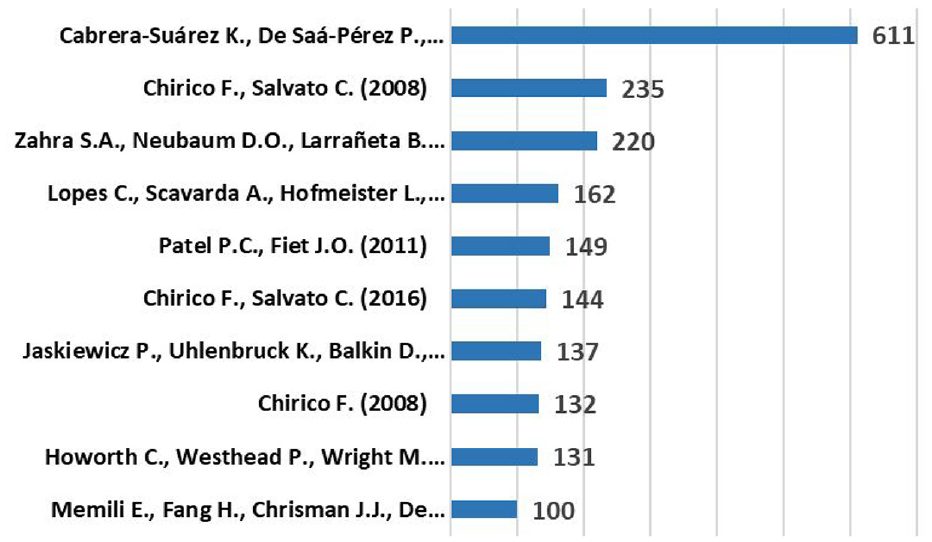
Top cited articles in KMFB research (≥100 citations).
Concerning research design, the analysis revealed that the majority of KMFB literature employed quantitative design (49 articles, 44%), mainly using structural equation modeling (23 articles) and regression analysis (16 articles). Qualitative design counts for 38 articles (34%), wherein case study analysis is predominant in 34 articles (see Figure 4). While conceptual research appeared the least prevalent with 25 articles (22%), citation analysis demonstrated that conceptual design is the most acclaimed, attracting the highest citations (838 citations) than other designs.

Distribution of KMFB research by research designs.
Moreover, a significant diversion in scholars’ attention concerning research design was evident in 2016, with an abrupt surge in quantitative analysis articles. A plausible interpretation is the domination of business and economics research and the relatively high prospect of publication in most indexed journals. Examples of quantitative design in KMFB research involve a leadership view of knowledge sharing (Cunningham et al., 2016) and the role of external knowledge in innovation adoption (Akram et al., 2021). Loccioni company (Casprini et al., 2017) and Hawkshead Relish company (Alonso et al., 2019) are examples of qualitative KMFB case studies.
Emergent Themes Within KMFB Research
This section answers the second research question concerning the focus of KMFB research on main themes that may emerge from the reviewed literature. An initial analysis through word cloud and density visualization of keywords (≥2 occurrences) using the VOSviewer software network (see Figures 5 and 6) revealed the main keywords in KMFB research, which can be categorized into three significant thematic areas: (a) knowledge processes, (b) organizational outcomes, and (c) theoretical lenses. Consequently, further structured analysis of the 112 articles based on these three themes is performed and shown in Table 1. The following is an elaboration of the emergent themes

Word cloud of KMFB.

Density visualization of keywords (≥2 occurrences).
List of KMFB Reviewed Articles by Various Codes and Themes.

Note. AC = absorptive capacity; AT = agency theory; BT = behavioral theory; CHAT = cultural historical activity theory; CON = conceptual paper; CSLT = corporate sustainability learning theory; CT = contingency theory; DC = dynamic capabilities; KAM = knowledge accumulation model; KBV = knowledge-based view; KCT = knowledge aeration theory; NA = not applicable, theoretical lens; OL = organizational learning perspective; PGT = path–goal theory; QLI-case = qualitative design using case study analysis; QN-RA = quantitative design using regression analysis; QN-SEM = quantitative design using structural equation modeling; RBV = resource-based view; RDT = resource dependence theory; SCGT = social cognitive theory; SCT = social capital theory; SET = social exchange theory; SHT = stakeholder theory; SIT = social identity theory; SMT = super-modularity theory; ST = stewardship theory; TMS = transactive memory system theory; UET = upper echelons theory; UM = uppsala model; ZKET = zender and Kogut’s evolutionary theory; ACAP = absorptive capacity; SIT = symbolic interaction theory; IT = institutional theory; RC = relational capital; SECI = socialization, externalization, combination, and internalization; SMT = stage model theory.
Thematic Area 1: Knowledge Processes
The first thematic area stood out by delivering a comprehensive view of the role of knowledge processes in FBs. Six themes involving succession, knowledge transfer, creation, sharing, integration, and acquisition emerged within this area and are elaborated below:
Knowledge Transfer
Knowledge transfer has emerged as a prominent knowledge process within FB research, with 34 dedicated articles highlighting its importance. It originated from K. Cabrera-Suárez et al.’s 2001 work, which explored the transfer of knowledge between generations at different managerial levels, emphasizing the role of predecessor knowledge. Subsequent research has shown that knowledge transfer positively impacts various FB aspects, including entrepreneurial orientation, social capital, and innovation. Successful transfer of tacit/explicit and technical/organizational knowledge is facilitated by factors like mutual trust, relational competence, and family closeness, particularly during the early engagement with the succeeding generation (LeCounte, 2022; Sambrook, 2005; Sandoval-Arzaga et al., 2022).
External trust-based relationships and partnerships play a crucial role in facilitating knowledge transfer among business partners in the food production sector (FB) setting. Trust-based relationships with external partners can address information asymmetry challenges during buy-in and buyout operations within FBs. A recent study by Yew (2023) conducted in Malaysia, focusing on Chinese FBs, highlights the intricate relationship between innovation and tacit knowledge in sustaining food production operations. Yew’s findings emphasize that this multifaceted process involves knowledge creation, evolution, transfer, and application, underscoring its importance for the long-term success of FBs in the food production sector in Malaysia. Overall, trust-based relationships and the dynamic process of innovation are key factors in improving strategic management practices within FBs, especially concerning buy-in, buyout operations, and sustainable knowledge utilization in the Malaysian food production industry.
Knowledge Creation
Knowledge creation has emerged as a significant focal point in the literature on FBs, as evidenced by a substantial number of articles (22) dedicated to this subject. This concept pertains to forming novel concepts, notions, and thoughts within the FB context. Basly’s influential work in 2007 highlighted the importance of decisional independence during FB internationalization. FBs often hesitate to involve external entities in their investments, leading to a static strategic approach that hampers knowledge creation. It is suggested that involving external partners can be crucial in fostering knowledge creation during FB internationalization, ultimately improving their vision and competitiveness.
Recent research has highlighted the significance of relational capital among family members in family businesses (FBs) for knowledge creation and reshaping across generations. This contributes to work efficiency and new product development (Bouncken et al., 2020; Debicki et al., 2020). Belkhodja’s qualitative study in 2022 emphasized the importance of knowledge management and absorptive capacity for FB success. The effectiveness of knowledge management varies based on FB characteristics and approaches (Hoon et al., 2019). Pipatanantakurn and Ractham (2022) stressed the crucial role of knowledge creation and transfer strategies in intergenerational succession in Thai FBs, highlighting their impact on succession effectiveness.
Knowledge Sharing
Since 2007, 18 articles have delved into the knowledge-sharing process in the field of Knowledge Management in Family Businesses (KMFB), ranking it as the third most investigated area. Among these, the influential work by Zahra et al. (2007) gained significant attention with 156 citations. Zahra and colleagues highlighted the importance of both formal and informal knowledge-sharing methods in improving the technological capabilities of family businesses. They emphasized the value of formal communication channels like meetings and memos, as well as informal avenues such as social gatherings. These practices were found to be essential in enhancing technological capabilities. However, scholars have pointed out that knowledge sharing in family businesses encounters challenges, including the reluctance of some family members to share knowledge, leading to its retention within a select group, even hindering future generations’ access to it. This reluctance to share knowledge is often associated with a lack of interest in continuous learning and a deep-seated belief that knowledge is a source of power that should be safeguarded. Lin (2016) uncovered that FBs managers prefer central knowledge-sharing linkages supported by a transactional leadership approach, often lacking emotional connectedness. Furthermore, rewards and incentives for knowledge sharing between different divisions were found to receive lower priority from FBs’ managers.
Botero et al. (2022) emphasized the significance of family characteristics, culture, trust, relationships, and sanctions in influencing knowledge sharing within FB context. These factors play a crucial role in shaping how knowledge is shared within FBs, with trust, strong relationships, and the presence of sanctions having a positive impact on knowledge sharing. However, challenges exist, including resistance from conservative family members and a preference for centralized knowledge-sharing structures. To promote open knowledge sharing within FBs, future research should focus on developing strategies and interventions addressing these challenges.
Knowledge Integration
Knowledge integration is a critical process that merges diverse forms of knowledge into a unified knowledge representation (Maaninen-Olsson et al., 2006). While reviewing relevant literature, the investigation unearthed 12 articles (13%) focused on the assimilation and integration of knowledge. Among these articles, the works of Chirico (2008) and Chirico and Salvato (2008) exerted the most significant influence, garnering an impressive 238 citations. Chirico (2008), drawing on comprehensive case studies conducted in Italy and Switzerland, provided insightful reflections on the role of knowledge integration as a catalyst for the long-term survival of FBs, whereby the transmission of value from one generation to the next is facilitated. Within this context, knowledge integration emerged as a dynamic capability through which FB members synergistically combine and validate their collective experiences, ideas, and perspectives to guide their organizational adaptation, enabling them to outperform their competitors (Chirico & Salvato, 2008). In this regard, it becomes apparent that members of an FB possess the ability to assimilate precious knowledge that is intrinsically tied to a specific set of strategic options, forming an intangible capability that is challenging to replicate in non-family firms (FFs), as it is deeply embedded within the relationships among family members and transmitted across generations. A similar viewpoint is echoed by Barros et al. (2016), who contemplated that knowledge integration enables FBs to identify and exploit environmental opportunities, with accumulated knowledge giving rise to novel schemes that can transform existing strategies and uncover the strengths and weaknesses inherent within a firm’s strategic approach. Operational activities facilitating knowledge integration within FBs may include experiential learning, exposure to diverse environmental contexts, emotionally-driven leadership, the accumulation of knowledge reserves, and strategic orientation (Patel & Fiet, 2011).
Moreover, the recent work of Barros-Contreras, Basco, et al. (2022) delved into the origins of maintaining a competitive advantage within FBs, elucidating that integrating personal and professional knowledge imparts a distinctive edge. In light of their findings, they introduced a novel conceptualization, “familiness learning,” to capture this phenomenon. The concept of familiness learning underscores the significance of synergizing personal and professional knowledge within FBs to enhance their competitiveness and ensure sustained success in a dynamic business environment. By seamlessly blending personal experiences and expertise with the collective knowledge of the family enterprise, FBs can forge a unique path forward, distinct from other types of organizations.
Knowledge Sourcing and Acquisition
This thematic focus centers on the intricate knowledge extraction process from internal and external sources and their subsequent organization and storage. Despite its significance, this area has received relatively limited attention, with nine articles published since its inception in 2008. Notably, a gap of 9 years separates the first and second articles on knowledge sourcing and acquisition, indicating a recent surge in recognition regarding this topic. Over the past 4 years, however, the field has experienced a noteworthy upswing, as evidenced by the publication of eight articles. A seminal work by Duh and Belak (2008) pointed out the pivotal role of external knowledge sources, such as education programs, publications, and counseling services, for FBs. These sources, while often overlooked in former socialist countries, are indispensable for FBs seeking to enhance their knowledge base.
Similarly, Casprini et al. (2017) highlighted the Loccioni company in Italy as a successful example of open innovation, emphasizing the importance of knowledge acquisition from both internal and external sources. They suggested that imprinting and fraternization capabilities are crucial for family businesses (FBs) to overcome knowledge acquisition barriers. Managers were advised to empower non-family members and explore unconventional knowledge sources. Furthermore, Singapurowoko and Hartono (2020) argued that collaborating with external knowledge sources, such as suppliers and customers, enhances innovation and productivity in FBs. They stressed the importance of the breadth and depth of knowledge sourcing. Akram et al. (2021) supported the idea that scanning external sources for relevant knowledge leads to learning opportunities and improved knowledge acquisition for FBs, emphasizing the need to diversify knowledge channels.
Succession
The succession theme stood out as one of the extensively deliberated themes among KMFB scholars. The review unveiled 31 articles published between 2001 and 2023, where the majority had been published over the past 5 years, concerning the role of the succession process in stimulating KM aspects in FBs. The succession process acts as a superglue linking various aspects of knowledge management, determining the degree of the process’s effectiveness. The succession process was also qualified to tie knowledge elements together with several outcomes such as innovation (Abdulmuhsin & Tarhini, 2020; Magrellil et al., 2022; Zybura et al., 2021), sustainability (Gupta & Bhattacharya, 2016), market orientation (M. K. Cabrera-Suárez et al., 2011), and entrepreneurial orientation (Woodfield et al., 2017). This was quite logical since succession has frequently been recognized in the literature as “… a process that can be put in place to enhance the capture of knowledge” (Pritchard & Becker, 2009).
One view of the succession process acknowledges its capacity as a knowledge-creation mechanism providing the dynamic engagement of the successor in business functions, particularly during the early stages, where socialization is still sprouting (Duh, 2014). Thus, fresh knowledge can be realized in new thoughts, ideas, visions, and trends, which activates a novel knowledge spiral. Alternatively, scholars ponder succession as a tent for transferring tacit and explicit knowledge more effectively to successors (Kusuma & Indarti, 2017). This view is supported by the evident link between knowledge transfer and the succession process in 18 KMFB articles (57%). Ge and Campopiano (2022) asserted that interactions between incumbent and successor and across family boundaries are dynamic realms for knowledge transfer while setting the rules stage of the succession process. Moreover, the cognitive readiness of potential successors to discover new knowledge has been deemed a cornerstone for a successful succession process as they may hinder or enable the exploitation of new information in formal or informal interactive contexts. This view has been supported by scholars maintaining that successor’s cognition and motivation is a significant prerequisite for fruitful knowledge transfer from founders to successors, particularly when transferring tacit leadership and decision-making skills over the long term (Bell & Pham, 2021).
Similarly, Pipatanantakurn and Ratchan (2022) conducted 60 interviews in 30 firms in Thailand to assess the role of knowledge creation and knowledge transfer in succession planning. They reported 16 distinct knowledge approaches adopted by the successors. These approaches vary according to the stages of succession planning.
Although scholars have acknowledged passing on tacit knowledge across generations to secure post-succession continuity in FBs (Matser et al., 2011). However, this action appears ineffective in enhancing the successor’s performance and innovativeness, as the successor’s knowledge should have been enriched in early childhood through learning and collaborative links with external parties (Letonja & Duh, 2016). In this vein, Boyd et al. (2015) argued that while personal knowledge (e.g., rules and training) was most relevant in the earlier stages of a FB life cycle, networking knowledge was more important in the later stages of FBs. Thus, succeeding generations can capture fresh perspectives from the firm’s existing knowledge base.
Remarkably, the significance of socio-emotional wealth (SEW) as a fundamental intangible asset assumes paramount importance during the intergenerational transitions within FBs. This concept emphasizes the non-financial rewards, such as personal relationship networks, trust, and collaborations, which are intrinsically linked to the overall well-being of family members (Kammerlander, 2022; Swab et al., 2020). The underlying theoretical foundation of SEW is rooted in the behavioral agency perspective, which posits that our choices are shaped by our available resources and endowments (Miller & le Breton-Miller, 2014). Scholars have contended that different dimensions of SEW significantly influence the succession process, contingent upon the environment in which the FB operates. For instance, in a stable market environment, a risk-averse attitude and the retention of family control to safeguard the succession process may prove advantageous (Makó et al., 2018). Swab et al. (2020) undertook a comprehensive examination of the multidimensionality of the SEW concept by employing the FIBER framework, which encompasses family control, identity, binding of social ties, emotional attachment, and renewal of family bonds. Their empirical investigation revealed that although FBs may uphold SEW by maintaining control and perpetuating renewal through dynastic succession, these dimensions alone are insufficient for the existence of SEW. At least one of the additional dimensions encompassing members’ emotional needs, binding kinship and social ties, or identification with the firm is also imperative for the actualization of SEW in conjunction with family control and renewal (Swab et al., 2020). Consequently, the strategic recruitment and cultivation of SEW dimensions, taking into account these conditional inferences, may effectively elucidate the complex issues pertaining to knowledge processes within socio-economic contexts.
Thematic Area 2: Knowledge Outcomes
The second thematic area reflected a range of knowledge outcomes in FBs linked to KM processes. These outcomes involved innovation, entrepreneurial orientation, sustainability, and internationalization. The following section provides further elaboration on these outcomes.
Innovation
Eighteen scholarly articles recognized the significance of incorporating innovation as a fundamental focal point within KMFB research. This comprehensive review demonstrates that the contemporary comprehension of the correlation between knowledge and innovation traces back to 2013, as elucidated by the seminal works of Alberti and Pizzurno (2013) and Pittino et al. (2013). These authors endorsed the role of external market knowledge and emphasized the importance of establishing networks with business partners to facilitate the exploration of innovation initiatives. Researchers contend that the breadth and depth of external knowledge are derived from the dynamic nature of the market and collaborative ties with suppliers and technical institutions, which serve as catalysts for successful innovation outputs in FBs (Akram et al., 2021; Audretsch et al., 2023; Del Vecchio et al., 2020). Subsequently, drawing from the resource-based view of the firm, internal knowledge has been acknowledged as a pivotal source of innovations within FBs due to the prevailing traditions, success stories, and learning mechanisms unique to this context (De Massis et al., 2016; Woodfield & Husted, 2019). However, empirical findings have confirmed that transgenerational knowledge transfer, while essential, is insufficient for successfully adopting innovation in FBs (Huang et al., 2023; Letonja & Duh, 2016). Moreover, Casprini et al. (2017) asserted that two critical capabilities, namely knowledge search value (imprinting) and long-term trust (fraternization), are crucial in overcoming barriers to knowledge transfer and fostering innovation within FBs.
Entrepreneurial Orientation
Entrepreneurial orientation is a multifaceted concept that originated in the 1980s, largely due to Miller’s (1983) seminal work on entrepreneurship. It encompasses a firm’s commitment to actively pursue business initiatives to outperform its competitors by leveraging entrepreneurial characteristics such as proactivity, risk attitude, innovativeness, aggressiveness, and autonomy (Lumpkin & Dess, 1996). Our comprehensive review of the literature reveals that the theme of entrepreneurial orientation has garnered substantial attention in KMFB research, with a noteworthy presence of 12 articles published over a relatively short span of 8 years (2013–2019). The findings of these studies consistently indicate that FBs are motivated by their entrepreneurial orientation, demonstrating a long-term focus on knowledge processes that contribute to their sustained success and longevity.
In the context of FBs, knowledge transfer emerges as a key driver of entrepreneurial orientation across generations, thereby positively impacting organizational performance (Martínez et al., 2013). However, the relationship between knowledge transfer and entrepreneurial orientation is contingent upon various factors. For instance, risk aversion, market and business environment perceptions, generational level, ownership type and level of concertation, willingness to control, and long-term focus in FBs can either facilitate or impede the effectiveness of knowledge transfer in fostering entrepreneurial initiatives (Martínez et al., 2016). Scholarly investigations by Sciascia et al. (2013) have shed light on the nuanced nature of generational involvement in FBs, particularly concerning top managerial positions. Their research indicates that the relationship between generations follows a curvilinear trajectory, wherein the contributions of successive generations improve knowledge transfer and facilitate the identification of entrepreneurial opportunities up to a certain point. However, excessive involvement beyond this threshold can hinder entrepreneurial initiatives.
Furthermore, the literature highlights the crucial role of knowledge sharing among generations in mediating the relationship between psychological ownership and entrepreneurial orientation in FBs. Specifically, the exchange and validation of thoughts, learnings, values, ideas, and experiences significantly shape proactiveness and innovativeness behaviors while encompassing cognitive and emotional aspects of organizational identification and business attachment (Pittino et al., 2018). Mostafiz et al. (2022) have recently contributed to this body of knowledge by establishing a positive effect of knowledge management strategy and entrepreneurial orientation on the success of FBs. Their research findings reinforce the notion that effectively managing knowledge resources and fostering an entrepreneurial orientation can substantially contribute to the long-term prosperity of FBs.
Sustainability
Research linking knowledge management to sustainability issues in FBs is a relatively new and emerging field, with a limited number of studies providing clear insights. In the context of the Indian brassware sector, Gupta and Bhattacharya (2016) conducted a qualitative case study, highlighting that KM processes, facilitated through family relationships and social capital, serve as pivotal determinants of sustainability practices in FBs. Moreover, additional research has demonstrated that the correlation between knowledge processes and business sustainability is influenced by factors such as job orientation, educational level, and the implementation of environmental management systems (Kuruppuge et al., 2018).
Despite the potential for the sustainability theme in KMFB to yield valuable insights, existing research suffers from a significant degree of fragmentation concerning the definition of sustainability, theoretical perspectives, and interrelationships. Notably, different research studies have attributed varying meanings to the concept of sustainability, including ecological orientation (Biscotti et al., 2018), business longevity (Kuruppuge et al., 2018), and resilience (Gupta and Bhattacharya, 2016). These distinct perspectives reflect the long-term orientation of FBs toward achieving sustainability goals (Lopes et al., 2017). However, this fragmentation is a common characteristic of nascent research areas that undergo initial growth and garner attention.
Internationalization
In recent years, scholars have increasingly recognized the international expansion of FBs as a subject worthy of examination, drawing from both international and entrepreneurial perspectives. The internationalization process in FBs has been conceptualized as a dynamic and knowledge-oriented endeavor, relying on operational, institutional, and international knowledge (Eriksson et al., 2000). Although this research topic has garnered the attention of five scholarly articles, it is worth noting that it has achieved the second-highest number of citations, with a total of 111 citations, accounting for 5.5% of the total citations in the field. Among the influential works in this domain, Basly’s seminal study in 2007 stands out, focusing on the determinants and consequences of internationalization knowledge development in FBs by analyzing data from 118 small and medium-sized enterprises (SMEs) in France. Basly’s findings shed light on the crucial role of international market knowledge as a significant prerequisite for successful internationalization in FBs. However, this type of knowledge is challenging to acquire and replicate internally. Nevertheless, factors such as conservatism, decisional orientation, resource independence, and social networking play a fundamental role in nurturing and preserving internationalization knowledge within FBs (Basly, 2007).
Another noteworthy work in this research stream is the study by Fang et al. (2018), which builds upon a longitudinal analysis of nearly 5,000 observations over 7 years involving 1,500 firms. The authors argue that differences between generational cohorts and their respective knowledge resources tend to influence internationalization initiatives in FBs. Specifically, the founding owners of FBs often possess substantial knowledge resources that they can leverage to facilitate internationalization efforts. In contrast, subsequent generations within FBs tend to exhibit greater motivations and positive attitudes toward internationalization (Fang et al., 2018). Aligning with this line of inquiry, Stieg et al. (2018) suggest that disparities in the configurations of international collaborations, networks, and alliances, as well as variations in global business experiences between family and non-family firms, can account for disparities in the effectiveness of internationalization endeavors. Their findings highlight the significance of understanding the impact of familial dynamics and related factors in achieving successful internationalization outcomes (Stieg et al., 2018).
Thematic Area 3: Theoretical Perspectives
The review revealed 25 theoretical perspectives and frameworks guiding KMFB research (see Table 1). Three perspectives have guided nearly half (49%) of KMFB research involving the “knowledge-based view” (KBV), “resource-based view” (RBV), and “dynamic capability” (DC). While the KBV contemplates that knowledge types are valuable resources that provide substantial advantages to FBs, the RBV represents a generic framework that bestows various tangible and intangible resources to attain strategic goals (Fang et al., 2018).
Moreover, the DC view reflects the ability of FBs to confront robust changes in the external environment by integrating, developing, and aligning internal and external competencies (Daspit et al., 2019). These lenses offer distinct yet complementary approaches to dwell on the FB context, implying that thoughtful organization of FB-specific VRIN (i.e., valuable, rare, imperfectly imitable, and non-substitutable) resources enable the business to outperform the competitors (Kammerlander & Holt, 2018). The KBV in KMFB research has mainly been associated with the succession process (e.g., Gupta & Bhattacharya, 2016), knowledge transfer (e.g., Wasim et al., 2020), and knowledge sharing (e.g., Woodfield & Husted, 2019). The KBV could also be useful in examining crucial operations or knowledge processes in FBs during challenging market circumstances (Duarte Alonso & Kok, 2021). Furthermore, the RBV view has been linked to tacit knowledge as a key resource during power transition in FBs (Boyd & Royer, 2012) and open innovation as a strategic source influenced by knowledge flow and entrepreneurial attitude (Del Vecchio et al., 2020). Researchers have also adopted the DC view to investigate adaptations to environmental change and adversity in FBs (Alonso et al., 2019). Examples of DC in KMFB research include knowledge process (Bamel & Bamel, 2018), families (M. K. Cabrera-Suárez et al., 2018), and knowledge integration (Chirico & Salvato, 2008). These DC enable FBs to expand, adapt, or make VRIN resources through entrepreneurial orientation and knowledge assimilation to maintain competitive advantage (M. K. Cabrera-Suárez et al., 2018). However, paternalism appears to incite family inertia and impede the progress of DC in FBs (Chirico & Nordqvist, 2010).
Figure 7 presents a generic framework that links the three emergent clusters in KMFB research. The theoretical perspectives cluster, consisting of the knowledge-based view (KBV), resource-based view (RBV), and dynamic capability (DC), serves as a theoretical foundation for driving effective Knowledge Processes. KBV highlights the strategic value of knowledge as a competitive asset, shaping how organizations approach knowledge transfer, creation, sharing, integration, sourcing, acquisition, and succession. RBV emphasizes the significance of unique organizational resources and capabilities, influencing resource allocation and utilization within Knowledge Processes. DC fosters adaptability and agility, guiding organizations in transforming knowledge into innovative outcomes.
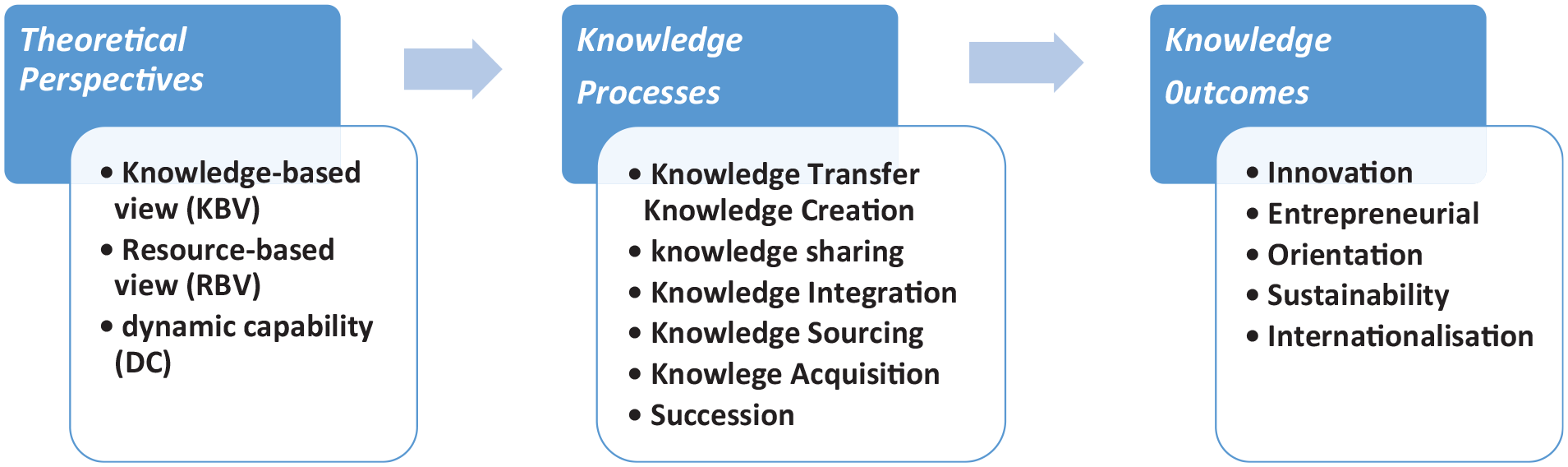
Emergent clusters in KMFB research.
The knowledge processes cluster encompasses various activities involved in managing organizational knowledge. Knowledge transfer facilitates the flow of knowledge within FBs, enhancing learning and contributing to positive knowledge outcomes. Knowledge creation fuels FBs by generating new knowledge by combining existing knowledge and exploring new ideas. Knowledge sharing cultivates a culture of FBs, enabling collective problem-solving and the exchange of ideas. Knowledge integration enhances business capabilities by assimilating diverse knowledge into existing routines and practices. Knowledge sourcing leverages external knowledge sources to enrich FB’s knowledge base. Knowledge acquisition attracts and develops individuals with the relevant knowledge and skills required for innovation. Succession planning ensures knowledge continuity and stability within the FBs.
The culmination of these processes leads to favorable knowledge outcomes. Entrepreneurial orientation cultivates a culture of risk-taking, proactiveness, and innovation. Sustainability integrates environmental, social, and economic considerations into innovation practices, fostering long-term viability and corporate social responsibility. Internationalization expands organizational activities across borders, leveraging innovation for successful internationalization outcomes. Overall, this comprehensive framework provides valuable insights for researchers and practitioners seeking to enhance their understanding of the dynamics underlying the interplay between knowledge processes and their outcomes in the FB context. The framework also offers a valuable tool for optimizing this relationship and staying ahead in today’s dynamic and competitive business environment.
Opportunities for More Impactful Research on KMFB
The core objective of this review was to explore the intellectual structure of literature, recent trends and themes that trigger research opportunities on KM and FBs. In doing so, numerous theoretical and practical implications are presented in the following section.
Opportunities for KMFB Research Designs
Research on KMFB is still emerging, with research gaps and limited publications before 2013. Contributions come from 160 authors, 59 journals, and 33 publishers, with most articles focusing on developed contexts. Future studies could explore KMFB in developing regions and conduct comparative studies across emerging economies. There’s also a need for varied research design approaches, including qualitative and mixed-method designs. Innovative methods like “fuzzy neural network” and inductive approaches like grounded theory could provide deeper insights into KMFB, offering unique perspectives on its complexities.
Opportunities for Knowledge Processes in KMFB Research
KMFB literature recognizes the benefits of knowledge processes but lacks insight into how these processes vary across generations and family/non-family members. Future research should investigate the relationship between these dynamics and firm outcomes. Additionally, studies should specify their target level (individual, group, or organization) and investigate how KM influences these levels.
Additionally, researchers should investigate how various types of knowledge are identified and utilized within family businesses and the effect of cultural contexts on these processes. Furthermore, it is necessary to investigate the relationship between KM processes and Socioemotional Wealth (SEW) in family enterprises, as family members’ access to knowledge may affect their socioemotional abilities (Stasa & Machek, 2023).
Regarding KM processes, research has yet to examine the unique aspects of family involvement in governance, ownership, control, and management. Identifying these gaps will provide invaluable insights and answers to fundamental concerns regarding KMFB.
Opportunities for Knowledge Outcomes in KMFB Research
KMFB research acknowledges knowledge transfer benefits, but a gap exists regarding the role of tacit knowledge in influencing outcomes like innovation, entrepreneurial orientation, sustainability, or internationalization in family businesses. Further research is needed on how knowledge evolves over the lifespan of these outcomes.
The assumption that “one size of knowledge fits all family businesses” is another issue, as the literature does not provide frameworks for knowledge alignment, often presenting KM as a universal solution. This overlooks variances in business size, age, structure, and strategy, leading to potential survivorship bias. Economic performance is also underexplored in KMFB research, stressing the need for further investigation. Invisible members’ contributions to knowledge resources in family businesses also deserve attention. The unique “ability-intention paradox” concerning innovation adoption in family businesses calls for further KM analysis. Lastly, the role of KM in enhancing sustainable practices remains fragmented, opening opportunities for research using established theories to examine KM’s link to the pillars of sustainable development.
Opportunities for Theoretical Lenses in KMFB Research
Most KMFB research focuses on traditional knowledge-resource lenses, revealing a gap in integrating other theoretical insights like social capital and stakeholder theory. The latter, for example, can facilitate a relational perspective of FBs, assisting in understanding the non-economic outcomes of knowledge processes.
The role of social context in KMFB is also crucial. Theories of social capital, social cognition, social exchange, and social identity can push the theoretical frontiers of KMFB research. For example, social capital theory can illuminate the interaction between a firm and a family’s social capital and its effect on knowledge creation and transfer.
The review also indicates the underuse of certain knowledge domain theories, such as sense-making and knowledge flow theory. For instance, the sense-making theory could be used to examine how family members’ attitudes change over time.
Finally, the organizational learning (OL) perspective is significant to KMFB. It provides a means for strategic renewal and promotes knowledge transfer within FBs. OL also enhances understanding of FBs’ internationalization due to the family’s role in influencing the learning process. Thus, OL is a strategic source of competitive advantage and a way FBs learn to convey knowledge from individuals to the organization.
Conclusion and Policy Recommendations
This paper comprehensively analyses 112 articles focused on KMFB research, covering two decades from 2001 to 2023. The paper’s contribution lies in three key areas: (a) the examination of the evolution of KMFB research, (b) the identification of emergent knowledge processes, outcomes, and theoretical perspectives in KMFB research, and (c) the identification of impactful opportunities for future research in the KMFB domain. These opportunities are designed to enhance scholarly research within the emerging insights and themes of KMFB.
Initially, KMFB research was relatively small within the broader FB landscape and was dispersed across various disciplines. However, it has made significant progress and gained recognition, indicating a wide range of research prospects for conducting inductive, mixed-method, and comparative studies in less-explored contexts.
One notable finding is the emergence of the succession process as a crucial factor linking knowledge processes and determining their effectiveness. This process also serves as a leverage point that allows knowledge elements to generate multiple outcomes, such as innovation, entrepreneurial orientation, and sustainability, in the FB literature. Furthermore, the multidimensional nature of the socio-emotional wealth (SEW) relationship provides new insights into the connection between succession and knowledge processes, thereby raising important research questions.
Another prominent outcome that has gained recognition in extant KMFB research is innovation. Recent papers support this finding and propose future directions for exploring the intersection of innovation and KMFB within the digital economy era (e.g., Soluk et al., 2021; Zapata-Cantu et al., 2023).
Moreover, the review sheds light on several significant theoretical lenses employed in KMFB research. It reveals that three related theoretical perspectives, namely Knowledge-Based View (KBV), Resource-Based View (RBV), and Dynamic Capabilities (DC), have guided a significant portion of the studies. However, other plausible theoretical perspectives in KMFB research have received limited attention. The review also emphasizes the importance of organizational learning as an institutionalized mechanism integrated into knowledge processes in Family Businesses.
Although this paper aimed to conduct a comprehensive SLR approach, it is crucial to exercise caution when interpreting the findings, considering specific limitations. To ensure a comprehensive and high-quality research compilation, the esteemed Scopus database was chosen as the primary source of literature. Nonetheless, KMFB documents interconnected with the topic may exist in alternative repositories or databases. Moreover, during the screening process, the authors excluded certain document formats, such as books and chapters. Therefore, future researchers can broaden the scope of this review by utilizing different databases or considering diverse document formats, including articles and conferences, in their subsequent investigations.
Furthermore, the selection of KMFB literature in our review was confined to specific keywords and entries. At the same time, diligent efforts were made to avoid overlooking essential studies and ensure the inclusion of all relevant documents. Finally, it is essential to exercise caution when interpreting documents published or accepted before the final stage of this review, as referencing and citation data may differ.
Based on the review findings, several opportunities for future research in the field of KMEB can be identified:
Future research can explore inductive, mixed-method, and comparative designs in less-examined contexts to deepen our understanding of knowledge management practices in diverse family business settings.
The emergence of the succession process as a critical factor linking knowledge processes and determining their effectiveness presents an opportunity for further investigation. Also, investigating how knowledge is created, transferred, stored, and utilized in different stages of the family business life cycle is deemed important.
Studying the role of social networks, communities of practice, and knowledge-sharing platforms in facilitating effective knowledge processes in family businesses can provide valuable insights.
The multidimensional nature of the SEW relationship offers a fresh perspective on the link between succession and knowledge processes. Future research can explore this relationship and shed light on how succession influences KMFB.
The analysis highlights the significance of innovation as a recognized outcome driving KMFB research. Future studies can further explore the intersection of innovation and KMFB in the context of the digital economy era.
While innovation is recognized as a prominent outcome in KMFB research, there is room for exploring other important outcomes. Future research can investigate how knowledge management influences other outcomes such as firm performance and competitive advantage.
The significance of organizational learning as an institutionalized mechanism integrated into knowledge processes in family businesses opens avenues for further investigation.
While the analysis indicates that three theoretical perspectives (KBV, RBV, DC) have guided a substantial portion of KMFB research, there is potential to explore other theoretical lenses such as social capital theory, dynamic capabilities theory, or absorptive capacity theory to offer different insights and perspectives on KMFB
By addressing these additional research opportunities, scholars can deepen their understanding of KMFB, expand the theoretical foundations, and generate practical implications for family business owners and managers seeking to enhance their knowledge of management practices.
The review also offers policy recommendations for effectively managing knowledge in family businesses (FBs). These recommendations include:
Cultivate a Culture of Knowledge Sharing: Encourage an open culture of knowledge sharing among family members and employees through formal mechanisms, recognition programs, and addressing barriers.
Facilitate Knowledge Transfer and Succession: Support smooth knowledge transfer during generational transitions with training and mentorship programs, early involvement of successors, and consideration of socio-emotional wealth (SEW).
Promote External Knowledge Acquisition: Encourage FBs to seek knowledge from external sources, including partnerships with academic institutions and industry experts, fostering collaboration with external stakeholders, and empowering non-family members.
Develop Knowledge Management Capabilities: Promote the development of knowledge management systems, emphasize knowledge codification and accessibility, and enhance employees’ knowledge management skills.
Create Supportive Networks and Platforms: Facilitate the establishment of networks, industry associations, and knowledge-sharing platforms for FBs to exchange experiences and best practices.
Foster a Long-Term Orientation: Encourage FBs to adopt a long-term perspective in knowledge management, emphasizing the preservation of historical knowledge.
Support Research and Knowledge Exchange: Allocate resources for research initiatives on knowledge management in FBs, promote collaboration between academia and industry, and incentivize research and knowledge-sharing efforts.
Footnotes
Declaration of Conflicting Interests
The author(s) declared no potential conflicts of interest with respect to the research, authorship, and/or publication of this article.
Funding
The author(s) received no financial support for the research, authorship, and/or publication of this article.

Data Availability Statement
Data sharing not applicable to this article as no datasets were generated or analyzed during the current study.