




Abstract
Malaysia is a multilingual and multiethnic country with a substantial population of ethnic Chinese, who use standardized languages such as Malay, English, and Mandarin, as well as various Chinese dialects in their daily lives within and beyond Chinese communities. Cantonese is a community language that significantly impacts the lives of local Chinese in the city of Ipoh, Malaysia. This study aims to examine the vitality of Cantonese in Ipoh using the language vitality and endangerment (LVE) tool developed by UNESCO. Nine LVE-proposed factors reflecting the degree of endangerment were investigated. Using a survey method, 377 participants from various groups were randomly selected from the Chinese community in Ipoh, Malaysia during January 6 to February 5, 2022. The result shows that Cantonese in Ipoh is rated as “Unsafe,” indicating that measures should be taken to prevent its further decline. The result suggests that further research is needed to gain a clearer understanding of the factors affecting language shift and maintenance, as well as the potential and challenges of linguistic and cultural diversity in the contemporary world.
Plain Language Summary
The purpose of the study was to assess the vitality and challenges facing the Cantonese language in Ipoh, Malaysia, a community where Cantonese has been traditionally spoken. The study used a variety of factors to assess the vitality of Cantonese, including language transmission, the number and proportion of speakers, domains of language use, government support, and community attitudes. The study found that while Cantonese has strong adaptability to new media and high-quality documentation, the lack of intergenerational transmission, decreasing proportion of speakers, and limited government support have made the language unsafe and endangered. The implications of the study are that immediate action is needed to protect the Cantonese language and promote its importance to younger generations. Encouraging intergenerational language transmission, increasing the proportion of speakers, and providing more government support for the language are essential to preserve its vitality. The study’s limitations include a small sample size and self-reported fluency levels, which may have resulted in variability in scores on language tests. The study also did not investigate the impact of digital media and technology on Cantonese use and learning. Further research is needed to provide a more nuanced understanding of the vitality and challenges of Cantonese in Ipoh and beyond, and to develop innovative approaches to language revitalization.
Keywords
Introduction
Immigrant families often face the dilemma of language selection due to their sense of duty to pass on their ancestors’ language and the practical requirements of daily life. The term “heritage language” was coined by the Ontario Heritage Languages Programs launched in Canada in 1977 to refer to the language spoken by immigrants and their children, which was distinct from the dominant languages in the United States and Canada. Language is an integral part of family and cultural heritage, and the home language is also referred to as the heritage language, given that the family is the primary source of intergenerational language transmission. The term “community language” is often used interchangeably with heritage language as it emphasizes the importance of language in the community and the role of the community in the maintenance and revitalization of the language. The term “community language” also reflects the fact that heritage languages are not only the property of the individual, but also of the community in which they are spoken and transmitted across generations.
Cantonese is one of the Chinese dialects widely spoken by ethnic Chinese in Malaysia, for instance in Ipoh, a multiethnic city with a large Chinese population. The use of Cantonese is declining, particularly among younger generations, due to the coexistence and competition of other languages such as Mandarin, Malay, English, Indian languages, and several Bumiputera languages. Ipoh has a rich history and cultural heritage, and Cantonese is an important part in shaping the identity and cultural practices of the Chinese community in the city. However, the decline in the use of Cantonese in Ipoh, especially among the younger generation, is becoming increasingly obvious, which raises concerns about the potential loss of cultural heritage and identity associated with the language. Additionally, the use of Cantonese in specific domains, such as family and religious settings, is also decreasing, and this further exacerbates the decline of the language. Therefore, this study has chosen Ipoh as a research site in order to investigate the current status of Cantonese use in the city and to identify the factors that contribute to the decline in Cantonese maintenance. The findings of this study can help inform efforts to promote the use and vitality of Cantonese in Ipoh, and potentially in other parts of Malaysia as well.
To obtain a theoretical reference frame for the development of strategies for the protection, legacy, and use of Cantonese, this study analyzes nine reflective factors using UNESCO’s language vitality and endangerment (LVE) assessment tool and makes suggestions for enhancing the vitality of Cantonese and reversing its decline in Ipoh. The study aims to answer the following research question: What is the overall level to Cantonese in Ipoh, reflecting the language’s vitality, according to the LVE?
To enhance Cantonese vitality, steps based on LVE factors should be taken and implemented through a coordinated effort involving various stakeholders, such as policymakers, educators, community leaders, and language speakers. These actions have the potential to increase the use and development of Cantonese in Ipoh, or at least slow its decline.
Literature Review
Studies on Community Language
The factors that influence language shift and community language maintenance have been the focus of the academia. The sociopolitical status of a language, its presence in education, and the extent of public use all affect speakers’ attitudes and beliefs, which in turn influence language practices and use patterns (Montrul, 2012). Family plays a critical role in the natural acquisition of the community language, and the intergenerational transmission of community languages is in decline. Reducing contact with the community language and increasing opportunities to learn standard languages in early elementary school increases the likelihood that children will lose their community language, resulting in less communication and weakened family ties (Wong, 2000). However, it has been claimed that if parents use positive and engaging methods to maintain and develop the community language, encouraging their children to use it, they can help their children achieve a rudimentary level of competence (Guardado, 2002; Guo & Li, 2016; Lao, 2004). Ethnic organizations in the immigrant community, such as heritage communities, venues for religious activities, and clan associations, can compensate for the lack of community language education and encourage the younger generation to learn it (Cho, 2000; Hinton, 1999; Pak, 2003). In some cases, after a period of shifting from the community language to the majority language, some in-group members recognize that the community language is dwindling and attempt to promote its use, leading to a tendency to reverse the process (Appel & Muysken, 2005). Although such efforts may not restore the original language’s functions, they frequently succeed in slowing its decline (Fishman, 1991).
Language Vitality
The preservation of community languages has been a topic of great interest to scholars, with many studies focused on why speakers cease transmitting their language (Kruse, 2021). When developing strategies for reversing language shift, the vitality of the community language is typically considered the most critical initial step (Dwyer, 2011, p.11). Language vitality is defined as a languages ability to thrive and survive in its sociolinguistic context, with a high level of vitality allowing an ethnolinguistic group to behave as a distinct and active collective entity in intergroup situations, maintaining or even expanding the use of its community language, while a low or no vitality often results in the group choosing a more dominant language or a more prestigious vernacular (Giles et al., 1977).
Various aspects contribute to language vitality, such as the number of speakers, their age distribution, the domains of language use, the status of the language in society, and attitudes toward the language (Grenoble & Whaley, 2006). Recent research on language vitality has examined several themes, including language policy and planning (Crawford & Muntigl, 2021), language contact and change (Wei & Zhao, 2021), language revitalization and revitalization movements (Heugh & Skutnabb-Kangas, 2021), multilingualism and language diversity (Gorter et al., 2021), language and identity (Kasstan, 2021), and the role of technology in language vitality (Lepora et al., 2022). Some studies have also demonstrated a connection between language vitality and social justice, human rights, and sustainable development, arguing that promoting language vitality can foster linguistic and cultural diversity, empower marginalized communities, and enhance their well-being (Hinton et al., 2022; May et al., 2021; Smith-Christmas, 2021).
Overall, the literature on language vitality provides insights into the complex and multifaceted nature of language use and change, highlighting the need for interdisciplinary and community-based approaches to address the challenges and opportunities facing languages and their speakers in the 21st century.
Tools for Determining Language Vitality
Language vitality assessment tools have been developed to help immigrant communities assess the level of threat to their community languages. Among the five commonly used tools, the “three-variable” ethnolinguistic vitality model (Giles et al., 1977) is a primitive one that is challenging to use due to a lack of specific descriptions and assessment methods for some factors, and it does not provide an overall vitality score. The Language Endangerment Index (LEI; Lee & Van Way, 2016) and the Graded Intergenerational Disruption Scale (GIDS; Fishman, 1991), and its extension, the Extended Graded Intergenerational Disruption Scale (EGIDS; Lewis & Simons, 2010), overlook significant factors such as the quantity and quality of documentation and the proportion of language speakers. Though GIDS (1991) and EGIDS (2010) provide an overall vitality score, the “five key questions” are often believed too simple to evaluate language vitality. Conversely, UNESCO’s (2003) language vitality and endangerment (LVE) tool evaluates the vitality of a language by examining nine factors that include intergenerational language transmission, absolute number of speakers, proportion of speakers within the total population, shifts in domains of language use, response to new domains and media, availability of materials for language teaching and literacy, governmental and institutional language attitudes and policies, community members’ attitudes toward their own language, and quantity and quality of documentation. It provides a comprehensive assessment of language vitality and endangerment by taking into account multiple factors, a standardized framework for assessing language vitality that allows for comparisons between different languages and communities, and continuous updates based on new research and user feedback (UNESCO, 2011).
Methodology
The survey, aimed at investigating the vitality of Cantonese among the Chinese community in Ipoh, was conducted using a typical survey method from January 6 to February 5, 2022. Participants were all ethnic Chinese who were randomly recruited from various groups, including school students, vendors, customers from Chinese markets, and housewives residing in the city center of Ipoh. The age of the respondents ranged from teenagers with good reading comprehension skills to elderly individuals. To ensure the validity and reliability of the questionnaire items, they were pre-tested before the actual survey. The questionnaire was designed based on LVE’s nine factors, with each factor exploring different aspects related to Cantonese usage, transmission, and attitudes toward the language. For instance, factor 1 (Language Transfer) examined respondents’ age and proficiency in Cantonese to observe the changes in language fluency with age. Factors 2 and 3 explored the status quo and the future development of the Chinese population in Ipoh, by inquiring about the number of children born to the respondents’ parents and the absolute number of speakers, respectively. The study examined the language use patterns of the respondents with colleagues/classmates, friends, and family members for factor 4, while factor 8 explored attitudes toward Cantonese based on the participants’ opinions of the language. Factors 5, 6, 7, and 9 were evaluated by combining official data with relevant literature.
Prior to participating in the study, all participants were informed about the research and provided written informed consent. After collecting the questionnaires, the responses were entered into a Microsoft Excel spreadsheet, and the frequency of each option’s selection was calculated. In total, 377 valid questionnaires were collated, with 87 in the Below 25 group, 83 in the 25 to 34 group, 89 in the 35 to 44 group, 75 in the 45 to 60 group, and 43 in the over 60 group. Descriptive and inferential statistical analyses were conducted to answer the research question and achieve the research objectives.
Results
Factor 1: Language Transmission
In Ipoh, not all ethnic Chinese are Cantonese descendants, with many being from other language groups such as Hakka, Hokkien, and Teochew. Cantonese is often taught and transmitted as a community language, along with other Chinese dialects. The study aimed to determine self-reported fluency in Cantonese without administering a proficiency test due to the variability of scores on language tests. Table 1 shows the results of self-reported fluent Cantonese speakers.
The Proportion of Self-Reported Fluent Cantonese Speakers.

The results in Table 1 show that respondents generally claimed to be fluent in Cantonese, with older age groups reporting higher levels of proficiency. However, the study notes that younger respondents self-reported a relatively limited repertoire, and some Malay Chinese (Peranakans) were excellent listeners but poor speakers of Cantonese. Based on UNESCO’s LVE interpretation of factor 1, the situation in Ipoh can be classified as Grade 4 “Unsafe,” where “most but not all children or families of a particular community speak the language as their first language, but it may be restricted to specific social domains.” These findings suggest the need for continued efforts to promote the use of Cantonese in Ipoh and support language revitalization efforts for minority language groups.
Factors 2&3: Number and Percentage of Cantonese Speakers
Small speech communities face a greater risk of decimation due to their vulnerability to disease, warfare, natural disasters, and other such calamities (UNESCO, 2003). In the most extreme case, a small language group may lose its language and culture by merging with a neighboring group. While the LVE framework does not evaluate the absolute number of speakers (factor 2) due to the difficulty in establishing a hard and fast rule for interpreting absolute numbers, population size can be useful for preserving a community’s language if it is large enough to maintain the distinctive characteristics of its ethnic group. From both theoretical and practical standpoints, the Chinese community in Ipoh appears to have succeeded in preserving its ethnic identity in several respects, as evidenced by the fact that ethnic Chinese constitute 44.11% of the city’s population of 657,892, according to the 2010 data from the Malay Department of Statistics. Additionally, Cantonese is widely regarded as the lingua franca of ethnic Chinese in the central region of the Malay Peninsula, and almost all ethnic Chinese in Ipoh, along with some Bumiputera and Indian residents, speak Cantonese to some degree, suggesting that Cantonese is a critical component of the Chinese community’s cultural identity in Ipoh.
To investigate not only the current status and also the future trends of community language transmission within the Chinese community Ipoh, a survey was conducted in which respondents were asked about the number of children their parents had. Table 2 presents the distribution of responses across different age groups.
How Many Children Have Your Parents Given Birth To?
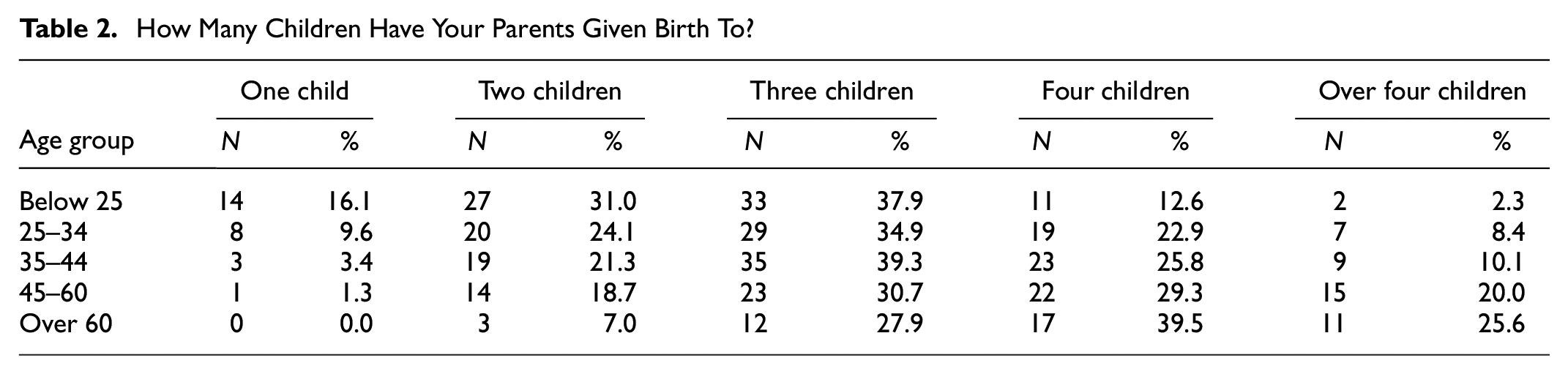
Table 2 presents the distribution of responses across different age groups. The data shows that while some families have one or two children, a significant proportion of Chinese families in Ipoh have three or more children. However, the overall trend suggests a decline in fertility, which could have significant implications for the future population of ethnic Chinese in Ipoh. It is important to note that the survey only included respondents who came from families with at least one child. This means that the fertility rate among the Chinese population in Ipoh is likely to be even lower, indicating a further decline in the population. The situation is even more worrying for Cantonese speakers, as they are categorized as “definitively endangered” according to UNESCO’s criterion that “the majority speak the language.”
Overall, the data presented in Table 2 highlights the need for further research into the factors influencing the fertility rate of the Chinese population in Ipoh. In particular, urgent attention should be given to the endangered status of Cantonese, as this has important implications for the preservation of cultural and linguistic diversity in the city.
Factor 4: Changes in Domains of Language Use
This section provides an analysis of the use of Cantonese in three domains of ethnic Chinese population in Ipoh, as presented in Table 3. The three domains were designed according to the different levels of intimacy that exist in social contexts. The family domain represents the most intimate context, where individuals use their native language more frequently and comfortably. The friendship domain represents a slightly less intimate context where individuals may not use their native language as frequently. Finally, the work/education domain represents the least intimate but rather formal context where individuals may not have the same level of language proficiency as in other domains. The analysis of the use of Cantonese in these three domains in the ethnic Chinese population in Ipoh is presented in Table 3.
Use of Cantonese with Subjects of Three Types.

The results show that Cantonese is most frequently used with family members across all age groups. This is consistent with the findings of previous studies on language use among the Chinese Malaysian community, which found that Mandarin and English were more commonly used in communication with friends, colleagues, or strangers within the community (Hong & Liu, 2012).
Despite a decline in the use of Cantonese, it remains an important domestic language in the community. The description of each grade for Factor 4 by UNESCO (2003) indicates that Cantonese speakers in Ipoh meet the criteria for Grade 3 “Multilingual parity,” which suggests that the dominant language(s) are primarily used in most official domains within the community, while the minority language(s) are used in informal and domestic contexts. The non-dominant language(s) is still important in some public domains, particularly in traditional religious institutions, stores, and places where community members interact. This creates a diglossic situation, where speakers use each language for a different function. However, given the low birth rate as stated in the above chapter among the ethnic Chinese population in Ipoh, the future of Cantonese in the community is in jeopardy. It is important to recognize the significance of Cantonese as an integral part of the ethnic Chinese culture in Ipoh and take steps to preserve and promote its use, particularly among the younger generation. This may involve initiatives such as language education programs, cultural events, and the promotion of Cantonese media.
Factor 5: Response to New Domains and Media
The influence of media on language preservation in a community is significant. In Ipoh, popular literature in the community language is available through media and has been found to promote the inheritance of the language and generate interest in learning the language, especially among young people (Ang & Ng, 2019). In addition, accessible radio and television programs on heritage culture are currently Mandarin-Cantonese bilingual, making Cantonese accessible through various platforms, including television channels, Facebook, and YouTube. Cantonese is the official spoken form of Chinese in Hong Kong, whose popular culture, especially drama series and popular music, greatly impact Chinese communities in Southeast Asia (Sim, 2012).
Apart from media, the Cantonese language is also present in other domains in the community. For example, Cantonese is commonly used in traditional religious institutions, stores, and places where community members interact. Cantonese is also used in informal and domestic contexts, while Mandarin is used in official and public contexts (UNESCO, 2003). Furthermore, in the education system, Cantonese is the medium of instruction in some Chinese independent high schools, while Mandarin is the medium of instruction in government-funded schools. In terms of print media, while newspapers such as Nanyang Siang Pau, Sin Chew Daily, and China Press are available in Ipoh, they are only in standard Chinese.
In conclusion, the preservation of Cantonese in Ipoh is due to its presence in various domains, including media and traditional institutions. The media’s promotion of Cantonese through popular culture and the use of Cantonese in different media platforms has also contributed to the language’s preservation, despite the growing use of Mandarin. The language’s continued presence in the education system, albeit in specific institutions, also helps to promote its inheritance. Overall, the media’s response to new domains and the robust use of Cantonese in various media platforms in Ipoh is consistent with UNESCO’s Grade 4, “Robust/Active,” where the language is used in most new domains (UNESCO, 2003).
Factor 6: Availability of Materials for Language Education and Literacy
According to a report by the United Nations Educational, Scientific and Cultural Organization (UNESCO), the development of written materials in a language is crucial for language education and literacy. Written materials enable students to learn and practice reading and writing, thereby improving their literacy skills. In addition, language education needs to cater to the linguistic needs of different groups within the community to promote inclusivity and preserve cultural heritage.
Malaysia’s Chinese education system has been established as a means of preserving the Chinese language and culture in the country. However, the availability of materials for language education and literacy in Chinese may be inadequate in some areas, such as Ipoh. While standard Chinese is the medium of instruction in Chinese schools, written Cantonese materials are limited to specific contexts such as entertainment magazines, social media, and advertisements. Additionally, literacy education in the Cantonese language is not included in the school curriculum, and this can lead to a lack of proficiency in written Cantonese among students. According to the grade descriptions for Factor 6, the situation in Ipoh corresponds to Grade 2: “written materials exist, but they may only be useful for some members of the community; for others, they may have a symbolic significance. Literacy education in the language is not a part of the school curriculum” (UNESCO, 2003).
To improve language education and literacy in Cantonese, it is essential to provide more written materials in Cantonese and introduce literacy education in the school curriculum. One way to promote written Cantonese is through the publication of books, newspapers, and other printed materials. Additionally, digital platforms such as websites and mobile applications can also provide access to written Cantonese materials, making them more accessible to the community.
Factor 7: Governmental and Institutional Language Attitudes and Policies
Language preservation and language shift are significantly impacted by the attitudes and policies of the government and institutions. As stated by Fishman (1991), the government’s language policy and support is instrumental in the preservation or decline of a language. In Malaysia, the government’s language policy has prioritized the development of Malay as the official language, which creates difficulties for ethnic Chinese in retaining their community language. The government’s lack of distinction between standard Chinese and Chinese dialects also contributes to the challenge of preserving the Chinese language. The certification of both standard Chinese and Chinese dialects as heritage languages undermines the importance of dialects to the Chinese community, leading to a lack of support and resources for language preservation (Lau, 2009).
Additionally, government funding for Chinese schools is inadequate, leading to a reliance on donations from the ethnic Chinese community. This insufficient funding further reinforces the devaluation of Chinese education and undermines the importance of the Chinese language, contributing to the language shift toward Malay. The lack of support from the government in preserving the Chinese language has resulted in the “passive assimilation” of Chinese Malaysians, where the dominant group does not care if its members speak the community language (UNESCO, 2003).
To address these challenges, the Malaysian government needs to adopt a more inclusive language policy that values the preservation of not only the official language but also minority languages such as Chinese. The government should also provide adequate funding and support for Chinese language education to ensure that the language can be preserved and promoted in the community. Furthermore, it is essential for the government to recognize the importance of dialects to the Chinese community and provide resources for their preservation (Lau, 2009).
Factor 8: Community Members’ Attitudes Toward Their Own Language
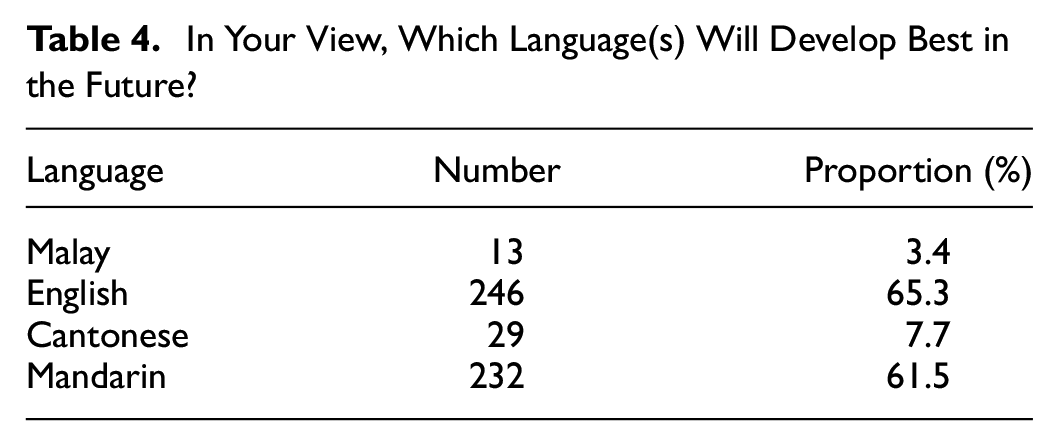
The present study examines attitudes toward Cantonese through two questions: “In your view, which language(s) will develop best in the future?” and “What language(s) do you prefer your children to speak?” These questions provide an introspective method for determining the status of Cantonese in respondents’ perceptions.
The results in Table 4 show that Cantonese is far behind English and Mandarin, with only 7.7% of respondents believing that it will develop best in the future.
In Your View, Which Language(s) Will Develop Best in the Future?
However, Table 5 shows that 52.5% of respondents want their children to learn Cantonese, which significantly outnumbers those who are optimistic about its future. Moreover, most respondents expect their children to learn multiple languages, reflecting the practical requirement of the multilingual environment in Ipoh.
Which Language(s) Do You Prefer Your Children to Learn?
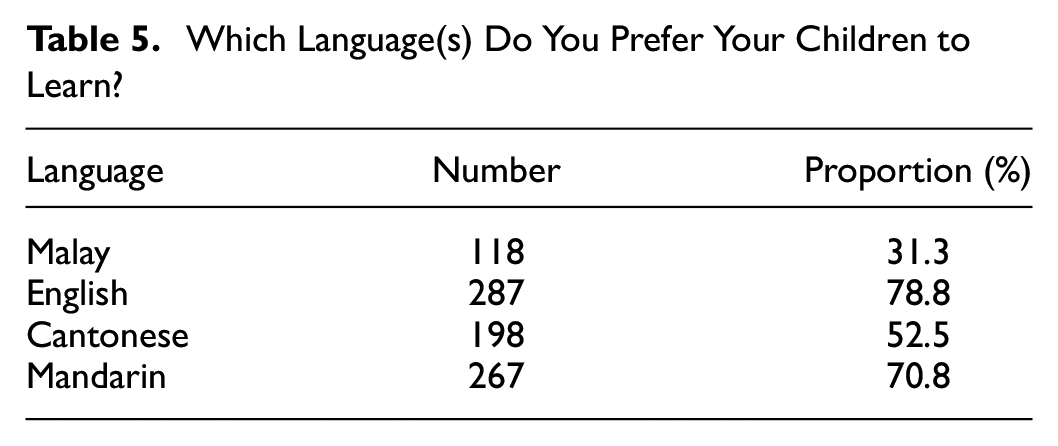
It is important to note that attitudes toward Cantonese cannot be fully captured by the two questions asked in this study. While Cantonese is perceived to have a low status compared to English and Mandarin, it is held in high esteem in a few religious sites and regional clans. Additionally, several non-governmental organizations have advocated for the preservation of Cantonese (UNESCO, 2003). These nuances in attitudes toward Cantonese suggest that the situation in Ipoh meets the criteria for grade 4 in factor 8 of language vitality, which states that “most members support language maintenance” (UNESCO, 2003).
To further understand the attitudes toward Cantonese and its status in Ipoh, future studies could consider exploring the attitudes of Cantonese speakers toward the language beyond the two questions used in this study. In addition, research could investigate the reasons behind the practical requirement of learning multiple languages in the multilingual environment of Ipoh and how this affects language attitudes and use. Such studies can provide a more comprehensive understanding of the vitality and status of Cantonese in Ipoh.
Factor 9: Quantity and Quality of Documentation
The quantity and quality of language materials, particularly written texts and annotated audio-visual recordings, play a crucial part in determining the urgency of language documentation. These materials not only support the language community in developing specific tasks but also assist linguists in designing research projects. In the case of the Chinese community of Ipoh, there is an abundant and diverse collection of high-quality language documentation available, both within and outside the community.
The availability of comprehensive grammars and dictionaries, extensive texts, and a constant flow of language materials, including annotated high-quality audio and video recordings, meets the UNESCO’s Grade 5 “Superlative” criteria for Factor 9. This highlights the ample resources available to the community for language documentation and preservation.
To further expand on the discussion, it is important to note that while the quantity and quality of documentation is necessary for language documentation, it is not sufficient. The community’s involvement in language documentation efforts is essential for successful preservation. Documentation that involves community members’ active participation can lead to the development of a broader range of language materials that better represent the language in use. In addition, community members’ active involvement can also lead to the development of a stronger sense of ownership and agency over language preservation efforts (Hale et al., 1992). Therefore, while the Chinese community in Ipoh has a wealth of language documentation, continued community involvement is crucial for long-term language preservation.
Discussion
The vitality of Cantonese in Ipoh was analyzed according to LVE in Table 6.
Summary of the Vitality of Cantonese in Ipoh.

Factors 2 and 3, which contribute to the preservation of Cantonese, are deteriorating, likely contributing to the language’s gradual decline. However, factors 4 and 6, which are largely dependent on the language ecology and the nature of Cantonese, are difficult to alter. Therefore, the changeable factors are probably 1, 6, and 7, due to changes in the attention paid to the preservation of the Cantonese of ethnic Chinese by community leaders, the host government, and the government of the country of origin, China, considering the importance of Cantonese as part of the world’s linguistic diversity. The overall vitality of Cantonese in Ipoh is roughly estimated to be 3.6, which is closer to Unsafe. The lack of intergenerational language transmission, a decreasing proportion of speakers in the population, and limited government support have resulted in the high degree of endangerment faced by Cantonese. However, the language’s adaptability to new domains and media and the availability of high-quality documentation provides some hope for the language’s future.
It is important to note that ethnic groups with strong economies, large populations, and historical cultures have more advantages in terms of language competition, while those without these advantages tend to voluntarily or involuntarily adopt the language of ethnic groups with the mentioned advantages. Ethnic Chinese in Ipoh are a preferred ethnic group considering their economic, demographic, and cultural performance. However, the decline of Cantonese and its functional atrophy has become a fact, even though it has long been used as a community language. Therefore, immediate action is required to prevent the further deterioration of this community language.
Cantonese is not a political or social priority in Ipoh, and its usage domains are shrinking, resulting in morpho-syntactic and lexical vulnerability. It is only through conscious maintenance, transmission, and use of the ethnic language that its dangerous state can be reversed. Teachers, parents, and students must recognize the misconceptions about multilingualism and its negative consequences at home and school.
In order to protect Cantonese, it is crucial to address the issues highlighted in Table 6. This includes encouraging intergenerational language transmission, increasing the proportion of speakers in the population, and providing more government support for the language. It is also essential to promote the value and importance of Cantonese and its role in cultural identity, particularly among younger generations. By taking these steps, Cantonese can be preserved and continue to play a vital part in the linguistic diversity of the world.
In conclusion, the analysis of Cantonese’s vitality in Ipoh provides insights into the current situation and potential future of the language. Immediate action is required to prevent the further deterioration of this community language. Through conscious efforts to promote the language, it is possible to preserve and promote the value and importance of Cantonese.
Conclusion
In conclusion, the present study has provided a comprehensive analysis of the vitality and challenges of Cantonese in Ipoh, Malaysia. However, there are still several aspects that require further investigation and exploration. Firstly, more detailed and nuanced data on language use, attitudes, and proficiency among the ethnic Chinese in Ipoh would provide a clearer picture of the factors that affect language shift and maintenance. Secondly, the impact of digital media and technology on Cantonese use and learning in Ipoh deserves attention, as it may offer new opportunities and challenges for language revitalization. Thirdly, comparative studies of Cantonese vitality and revitalization in other Chinese diaspora communities, both within and outside Malaysia, could provide valuable insights into the shared and distinctive factors that influence language maintenance and change.
These research areas could be explored through surveys, interviews, ethnographic studies, and comparative analyses. It is important to involve a diverse range of Cantonese speakers, including young and old, urban and rural, and different social and educational backgrounds, to capture a comprehensive and nuanced understanding of the vitality and challenges of Cantonese in Ipoh and beyond. Collaboration with researchers and practitioners in other linguistic and cultural contexts can also facilitate the sharing of best practices and innovative approaches to language revitalization.
In conclusion, further research on the vitality and revitalization of Cantonese in Ipoh and beyond could contribute to a deeper understanding of the complex and dynamic processes of language shift and maintenance, as well as the potential and challenges of linguistic and cultural diversity in the contemporary world. It is crucial to recognize the value of linguistic and cultural diversity and to support efforts to preserve and revitalize unsafe languages like Cantonese.
Footnotes
Appendix
Acknowledgements
The authors would like to thank the reviewers and editors whose insightful comments and suggestions have contributed to the enhancement of the quality of this article.
Declaration of Conflicting Interests
The author(s) declared no potential conflicts of interest with respect to the research, authorship, and/or publication of this article.
Funding
The author(s) disclosed receipt of the following financial support for the research, authorship, and/or publication of this article: This work was supported by the Fujian Provincial Social Science Fund [Grant Number FJ2023X012].

Data Availability Statement
The data that support the findings of this study are available from the corresponding author, W. Zhou, upon reasonable request. Please contact