




Abstract
Gamification, which involves incorporating game-like elements in non-game contexts, has quickly become one of the most popular persuasive technologies. Its goal is to encourage users to change their behavior for the better. However, it still has empirical and theoretical challenges to overcome to show the benefits of its use and solidify the guiding principles for effective gamification designs. The goal of the current study is to synthesize and intellectualize, through a systematic literature review (SLR), the current state of gamification knowledge in human resource management, providing a road map for future research recommendations for both academician and practitioners The review examines the most influential writing on the application of gamification to association settings, portrays the fundamental concepts of gamification, and develops based on an effective writing survey of insightful articles available in the Scopus and Web of Science information bases. The study uses a systematic quantitative approach to review the evidence for the use of gamification in Human Resources management, focusing on the pertinent literature on gamification in organizations. The authors examined 244 papers published between 2013 and 2022 using the Preferred Reporting Items for Systematic Review and Meta-Analyses (PRISMA) technique. One of the major goals of the study’s findings is to illustrate the value of gamification in the human resources field in relation to the analysis of employee performance, employee engagement, and training and development. These results suggest that there is more opportunity for research into the elements of gamification, which may be relate to knowledge retention, learning outcomes, learning motivation, employee efficacy, and employee productivity.
Plain Language Summary
Purpose- The present study’s goal is to amalgamate and intellectualize, through a systematic literature review (SLR), the modern state of gamification knowledge in Human Resource Management Management, providing a roadmap for future research recommendations for service research and practice. Methods- The research is based on a systematic literature review. It implements a systematic quantitative approach to review existing evidence on gamification usage in employee management, focusing on relevant literature on gamification in organizations. The authors analyzed 108 papers published between 2013 and 2022. Conclusion- The study’s findings is to illustrate the value of gamification in the human resources field in the analysis of employee performance, employee engagement, and training and development. These results suggest that there is more opportunity for research into gamification elements, which may relate to knowledge retention, learning outcomes, learning motivation, employee efficacy, and employee productivity. Limitations of study- several pilot searches in the Web of Science (WoS) and Scopus databases were conducted before obtaining the final dataset. Besides Science Direct, PubMed, Academia, and Google Scholars could have used other databases for this research. Since it is the most widely used product, uses rigorous inclusion and exclusion criteria that are transparent and consistent, is publisher independent, and is a multidisciplinary global citation database, the author built the dataset from WoS and Scopus. Because of the limitations of using only two databases, we could not include in our dataset any high-caliber relevant works that weren’t indexed by WoS and Scopus.
Introduction
Gabe Zichermann once stated, “Gamification is 75% psychology and 25% technology.” Games are particularly well known for their capacity to interest and excite, and when playing them, individuals commonly see mastery, competence, enjoyment, immersion, or flow. This is the essence of gameplay that gamification technology aims to capture, harness, and execute in situations that often have a more utilitarian purpose (Hamari & Koivisto, 2015).
The gamification literature is rapidly expanding and spreading in many directions. To regulate and capitalize on this progress, coordinated efforts are required to put the literature and current expertise into productive use. A broader examination of the phenomena should serve in mapping its evolution and advancement, as well as in driving future publications and goals.
As stated by Hamari and Koivisto, (2015) Gamification combines the core elements of gameplay, engagement, transparency, design, competitiveness, and addiction to a variety of procedures that take place in the real world. Gamification in the workplace transitioned from a few isolated pilots to an alternative approach to engaging and acknowledging high-performing employees in 2015. Gaming concepts have seeped into essential HR operations in two ways: as an actual game like recruiting new job candidates or as cloud-based gamification engines like Badgeville, BunchBall, and Axonify.
In terms of the future of Gamification, Gallup discovered millennials are the least engaged generation, with only 28.9%. In comparison, Gen X and Boomers had 32.9 and 32.9%, respectively. Gallup findings by generation show that millennials are less involved, citing a lack of opportunities to present their finest work or contribute thoughts and comments. Using gamification to solve this issue not only improves engagement but also assists businesses in retaining productive employees.
Gamified human resource management solutions increase employee engagement and job satisfaction. Gamification has been found to have significant positive benefits on employee satisfaction and engagement. Moreover, the gamified HRM system affects employee behavior and motivation. Significant theoretical and practical implications have been established to aid HRM managers in improving employee motivation, job satisfaction, and engagement (Silic et al., 2020).
From the standpoint of human resource management, gamification is not about having an immersive experience, but rather about utilizing gamification components and methods to assist an organization in achieving employee involvement and other organizational goals. It has been established that the use of gamification in human resources procedures is a creative, innovative, and cost-effective method for evaluating personnel, particularly during the recruitment process. A number of theories for business design, trust, and flow, such as behavioral economics, human psychology, learning and development, motivation, entertainment, performance, communication, teamwork, problem solving, risk taking, and decision making, inform gamification and are related to it. Well-designed gamification of authentic goals can link with latent player potential to increase performance and enable employees to participate in ways that can result in exponential returns. This aspect of gamification is considered successful because it benefits both employees and businesses (Vardarlier, 2021).
Since it emphasizes common goals, gamification is a vital component of the development strategies of the world’s largest organizations. The organization engages employees in work-related tales using an engaging and appealing gamification methodology. All gamification exercises add to the team’s overall performance by inspiring weaker members and developing employee relationships. Gamification in the workplace promotes involvement in training and teamwork, resulting in more successful conduct. By employing the game’s concepts, the employer is able to identify the player’s excellent qualities as an employee and facilitate his progress within the organization (Miciuła & Miluniec, 2019). This article offers a review of guidelines for researchers with an interest in the subject matter.
Background of the Study
The idea of gamification is one that can work hand in hand with the 4.0 Industrial Revolution. The implementation of innovative technology has an impact on the mentalities of persons as well as the processes involved in HRM (Piwowar-Sulej, 2018). e-HRM and HRM 4.0 are two examples of HRM practices that are designed to align with the requirements of the Fourth Industrial Revolution. According to (Ruël et al., 2007), definition, E-human resource management (EHRM) is “the process of executing HR strategies, policies, and practices in organizations through the intentional and directed use of web-technology-based channels.” The incorporation of the number “4.0” into the acronym HRM denotes the complete digitization of all HR processes. The term “gamification” can be used to refer to the most up-to-date and cutting-edge HRM technology, and it can also be used to promote the idea of “gamified HRM.” The use of gamification is not limited to the provision of amusement and games in the workplace. This strategy assists HR in completing a number of fundamental responsibilities, such as fostering a culture of continuous learning, seamlessly integrating learning and development efforts, effective onboarding, socializing and integrating new hires into the culture of the company, enhancing recruitment processes, and generating a positive buzz in the talent market. Leaderboards, incentive systems, online games, challenges, quizzes, and hackathons are typical components of gamification programs designed for human resource management (Blštáková & Piwowar-Sulej, 2019) The managers of human resources will adjust these strategies based on the circumstances and goals at hand.
The use of game design concepts to human resource management (HRM) approaches and technologies has been investigated. Thus, a number of modern scholars are investigating the effects of game design elements on employee behavior and the adoption of gamification in HRM (Araújo & Pestana, 2017; Kumar & Raghavendran, 2015). The purpose of this article is to advance the study of gamification in human resource management by providing a summary of the current state of the field. This includes a discussion of the methods for creating effective gamification designs as well as the risks associated with gamifying HRM practices and tools. The author posed research questions across a wide range of topics, from the genesis of gamification to the most up-to-date discoveries in the field of Human Resource Management, in an effort to shed light on these concerns. This research does a comprehensive literature evaluation to provide answers to these questions. Researchers can perform a critical assessment of gamification in HRM by analyzing and synthesizing current research findings, methodology, and possible applications of the use of game design elements in HRM.
According to a study (Murawski, 2020), HR scientists are just beginning to investigate the phenomenon of gamification. There is currently widespread consensus that gamification may enhance HR procedures and technologies. Researchers should continue to apply and investigate the effects of individual game design components and gamification systems on employee behavior in as many application areas as feasible. On the basis of this extensive variety of cause-and-effect interactions, more general assertions regarding “how” and “when” gamification adds value to HRM can be derived. Thus, additional literature reviews similar to the current one will assist in summarizing the results, enabling researchers to integrate their work into the existing study landscape. Similarly, Bina et al. (2021) analyze the current state of research on Game-based approaches (GBA) in the context of human resource management, with an emphasis on recruitment and selection, and develop a research agenda to help future research in this domain. They examined 35 articles on the application of GBA to HR recruiting and selection. This innovative method of attracting and choosing personnel has benefits for practice.
In the recent decade, gamification in the context of learning has garnered significant attention and interest due to its theorized motivational and educational effects. Yet, other scholars challenge the transferability of gaming effects to non-game circumstances (Klabbers, 2018). Sailer and Homner, 2019 state in their study “Gamification of learning: A meta-analysis” that gamification of learning is effective since they discovered significant beneficial impacts of gamification on cognitive, motivational, and behavioral learning outcomes. The favorable effect of gamification on cognitive learning outcomes can be viewed as stable, however the results for motivational and behavioral learning outcomes are less steady. Nevertheless, the large degree of heterogeneity discovered in the subsamples could not be explained by the moderating factors explored in this study, leaving the question of which characteristics contribute to successful gamification in part unanswered. Additional theory-guided empirical research is necessary to develop a comprehensive theoretical framework with well-defined components that specifies the precise mechanisms through which gamification can influence particular learning processes and results (Sailer & Homner, 2019). Analyzing the background of the study, the author has planned some basic research questions (RQ), to further investigate Gamification application in Human resources.
RQ1. What is gamification and the History of gamification?
RQ2. What are the theories mainly used for Gamification?
RQ3. How gamification is playing a vital role in business?
RQ4. What is the most effective strategy to integrate gamification into human resources and access its effects?
RQ5. What are the common gamification elements used in human resources?
RQ6. How to Measure the effectiveness of gamification in human resources?
RQ7. What is the publishing trend of gamification-related publications?
RQ8. Which countries have contributed to gamification research?
RQ9. What are the common gamification elements and HR elements used in the Articles?
RQ10. What is the significance of research article in terms of gamification research in human resource?
Research Methodology
A systematic review was conducted following the predefined reporting components for systematic reviews and meta-analyses (PRISMA). Data was collected in January 2022, with no chronological filter, using the Scopus and Web of Science databases. The search terms were Gamification and Human resources. The goal was to collect as many papers as possible on the subject and sub-areas of management while ensuring that the articles chosen addressed the issue as thoroughly as workable. It sequentially filtered the outputs until only peer-reviewed papers remained. In terms of the topics covered by the databases, Review Paper, books, conference proceedings, and non-scholarly papers were omitted. The current study focuses on gamification in the keyword used as Gamification and Human Resource, where it resulted in 144 data from Scopus and 100 from Web of Science. The two databases’ results were then cross-referenced, and 22 duplicates were removed, yielding 222 articles. It then established the following criteria for inclusion and exclusion which are represented in Table 1. After applying inclusion and exclusion criteria and reviewing abstracts, 21 legitimate publications on the application of gamification in human resource management and 168 in others like social sciences, psychology, and Arts and Humanities. Figure 1 depicts the gained results (Table 2).
Inclusion and Exclusion Criteria.

Source. Author.

PRISMA flow: The review articles from the year 2013 to 2022.
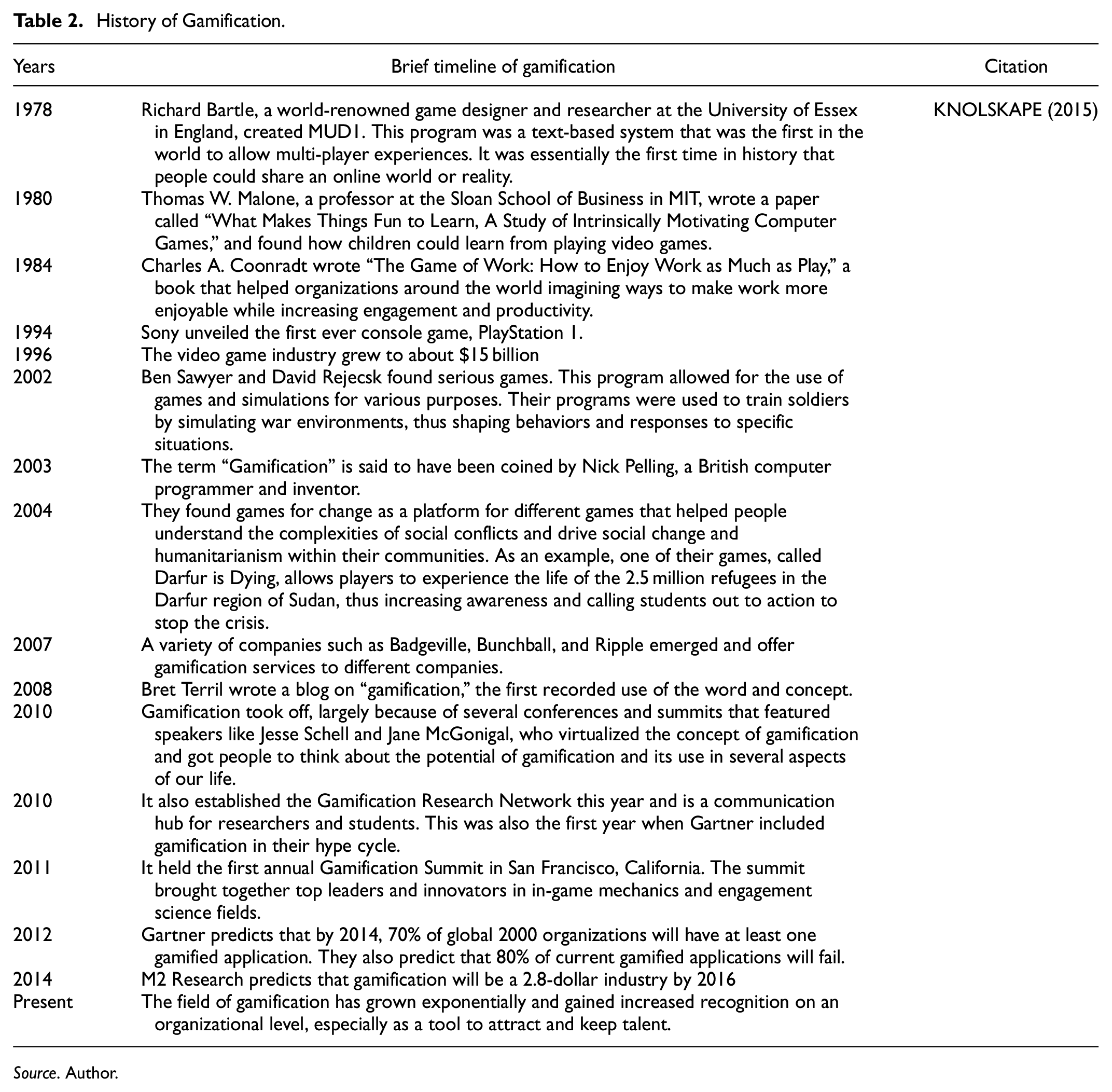
History of Gamification.
Source. Author.
Results and Discussions
In this section, the author provides and discuss the findings found during the systematic literature review in the following points, which includes the number of publications per year, the number of publication by country, common gamification elements used, gamification used in HR elements, theories, and methods used. To address all the point author has answered the research question which has been discussed earlier in this study.
RQ1. What Is Gamification and the History of Gamification?
Gamification
The purpose of gamification is to inspire and motivate users to finish a task by engaging them in activities and cultivating their interest in a topic that may help them learn more efficiently. As a result, that game-based learning is only about playing is restrictive; learning should be a motivating and engaging experience. Several experts think gamification improves a target audience since games enable users to make errors and try again, allowing them to approach learning without fear and become more involved in the learning process.
The term “gamification” was first introduced by Nick Pelling in 2002 (Marczewski, 2013). Gamification is the mixture of game elements that, in contrast to games, give consumers an experience and let them interact with their environment. Game elements include things like participation points, badges, levels, and leaderboards (Deterding et al., 2011).
The terms “game” and “gamification” are distinct and do not mean the same thing. A game is a discipline that adds game dynamics, mechanics, and components to a real-life activity. Gabe Zichermann characterized gamification in the 21st century as connecting with players to address problems using game mechanics and in the game’s context. While motivation makes persuasion easier, in-game incentive features should be developed conferring to behavior.
Although the word has had a brief and successful history, using games to “make work entertaining” has been around for quite some time. There have been several occurrences in recent history that have contributed to the thriving field that is Gamification.
The gamification sector took off in late 2010, with its origins in the concept of employing game features and game designs in non-game situations to achieve various goals while improving user engagement and motivation. Hence, various theories have been associated with gamification to strengthen the relationship between user motivation and engagement. While reviewing it was found that articles have used mainly Self Determination Theory and Flow Theory in Employee Gamification research.
RQ2. What Are the Theories Mainly Used for Gamification?
Self-Determination Theory
Self-determination theory (SDT), which focuses on what qualities allow a person to decide without being affected by others, was primarily developed by Deci and Ryan. Autonomy, competence, and relatedness have been recognized as critical concepts for intrinsic motivation. How effectively these three psychological needs are addressed determines self-motivation and mental wellness (Brühlmann, 2018). SDT has been used in the gamification literature. Where Treiblmaier et al., (2018) posed questions such as, “How much autonomy should learners be allowed to improve their intrinsic motivation while adopting gamification?” Gamification can help learners become more connected. And, to challenge the learners, how can the individual degree of (game) competence be determined?
Self-determination Flow addresses several aspects of motivation more thoroughly than theory. In SDT, for example, the task or aim content appears to be more prominent. The significance of personality qualities for a desire for flow, or even the ability to feel the flow, does not appear to be clear. SDT predicts both, and it even extends flow by the idea of extrinsic motivation and—especially crucial for gamification—the effects of incentives. The significance of emotion in SDT and flow is an often-overlooked aspect. Although emotion is an important aspect of system interaction, the role of emotional processes influencing motivation is unclear in this situation (Norman, 2002). With a thorough understanding of gamification’s definition, history, and ideas, the author opted to further explore its use in a business setting (Brühlmann, 2018).
Flow Theory
Flow theory, often known as optimum experience theory, is one of the most important theories linked with engagement and gamification (Guo et al., 2016). Csikszentmihalyi and Csikszentmihalyi (1992) conducted a study to better understand how performers devote significant energy and time to their activities. His study developed the phrase flow experience, which describes the simultaneous sense of focus, interest, and enjoyment (Csikszentmihalyi and Csikszentmihalyi, 1992). The idea says that there are three learning channels: boredom, flow, and frustration (Sharek & Wiebe, 2011). If the task complexity increases to match the emerging skills, a learner’s flow state is likely to be maintained as they progress through a task. If the difficulty does not grow as the learner’s skills and abilities expand, the “boredom zone” will emerge (Brühlmann, 2018). The individual in the boredom channel is uninterested in the work and soon disengages from it. Alternatively, an individual may experience dissatisfaction if their skill/ability level does not meet the task’s intrinsic complexity. The tasks in the frustration channel may interest her or him, but they become so difficult that they lose the drive to do them. The idea is for the activity to fall between these channels, maintaining interest and challenge over time (Csikszentmihalyi and Csikszentmihalyi, 1992).
Self-Determination Theory and Flow Theory
Flow is like intrinsic motivation in self-determination because it emphasizes the enjoyment of the work itself (e.g., Deci & Ryan, 2004). Flow happens more frequently when work is genuinely driven, conferring to Kowal and Fortier (1999). The presence of flow in activities that are not entirely intrinsically driven may imply that it connected this notion to usability or, more likely, that the flow idea depends on usability.
Self-determination Flow addresses several aspects of motivation more thoroughly than theory. In SDT, for example, the task or aim content appears to be more prominent. The significance of personality qualities for a desire for flow, or even the ability to feel the flow, does not appear to be clear. SDT predicts both, and it even extends flow by the idea of extrinsic motivation and—especially crucial for gamification—the effects of incentives. The significance of emotion in SDT and flow is an often overlooked aspect. Although emotion is an important aspect of system interaction, the role of emotional processes influencing motivation is unclear in this situation (Norman, 2002). With a thorough understanding of gamification’s definition, history, and ideas, the author opted to further explore its use in a business setting (Brühlmann, 2018).
RQ3. How Gamification Is Playing a Vital Role in Business?
Gamification Applications in Business
Bunchball was among the first to provide gamification services. Conferring to the blog site gamification.com, Bunchball established the gamification business in 2007. Many sectors quickly recognized the benefits, and potential across industries is being explored. Gamification may benefit any firm, not just social media platforms. Any process or problem that involves human motivation can benefit from gamification. Gamification may be used in human resources for everything from recruiting to training to performance assessment and welfare activities. They may use it in marketing to increase product or service recognition, attract return visits/customers, get market feedback, perform marketing research, or simply make sales (Herzig et al., 2014).
In recent years, the word Gamification has received a great deal of interest from both academic researchers and corporate interpreters. It described gamification as the application of game design fundamentals in non-game contexts. This investigation intends to investigate the role of Gamification in improving hand productivity and challenging posture. To understand what Gamification is, it conducted thorough literature research first. It has also investigated to how gamification might boost worker engagement and provocation. Later in the study, the author explores how to leverage Gamification tools and how to create high-performance mortal resources.
Analyzing the business perspective, the training programs are critical to their success. Every business approaches the issue differently: some push required courses or programs; they may be ineffective owing to a lack of desire, which might jeopardize learning and retention. Other businesses choose to use voluntary courses or programs, however, enrollment and completion are affected by a variety of circumstances, including the number of time individuals can devote to training without jeopardizing their primary responsibilities; management instructions; and individual motivation. Another approach to corporate training is to use gamification to increase engagement. As explained by the author, mainly gamification has been applied in the Human resource domain of the Industry, from the above literature the author digs into the application of gamification in Human resources and the use of gamification in Hr (Herzig et al., 2014).
RQ4. What Is the Most Effective Strategy to Integrate Gamification Into Human Resources and Access Its Effects?
Gamification Application in Human Resource
Gamification in HR is becoming more popular and extensively used than ever in the digital world. It all boils down to using gaming ideas and strategies in non-game situations. Gamification in HR is a new paradigm that sees individuals as inherently driven and gives several opportunities to address that intrinsic motivation.
In human resources, gamification techniques are often used to improve business operations practically. While many people are still trying to grasp the notion, it may have a significant impact on daily work and have an enormous ability to influence employee behavior. Gamification in HR has gained popularity to engage employees in HR-related activities (Benitez et al., 2022).
Utilization of game approach to adapt game thinking and game mechanisms in non-game scenarios, such as in corporate environments and processes, particularly in: Talent management, Recruitment, Learning and development, Employee engagement, motivation, and retention, as well as many other HR procedures.
Gamification in human resources engages employees in a variety of ways. It includes systems for an acknowledgment (which encourages growth), feedback, pleasure, and cooperation. Implementing gamification in the workplace will also help grow your corporate culture and keep key staff. Keeping employees engaged and feeling like an important member of the team is the greatest way to keep them and minimize costly turnover. Employees that are rewarded for cooperating with different departments help build a healthy business culture while also improving products and services (Murawski, 2020, pp. 337–355).
Gamification is becoming more popular, and it is increasingly being used in HR projects to make the everyday boredom of HR more interesting and efficient. HR Gamification is the use of game-based behavior-motivation approaches to non-game settings. With an increasing number of tech-savvy millennials and Gen Zers in the workforce and more competition than ever for great applicants, gamifying HR processes may provide organizations with the engagement advantage they want. Gamification is an important instrument for bringing about transformative change. Author have presented three real organizational exhibits in Table 3 for a better understanding of how gamification application has been implemented in the organization.
Exhibits.

Note. Following the authors’ analysis of the exhibits, additional research was conducted addressing the various applications of gamification in human resource, which is documented and explained below.
Engagement
Engagement is defined as a willingness to take part in and finish learning activities (Skinner & Belmont, 1993). There might be a variety of reasons some employees cannot focus or are uninterested in the training. Innovations such as games, incentive systems, and social media can represent common interests in assuring this generation’s involvement in retraining. Mukhtar, a game created by Yemeksepeti, attempts to generate district-based opinion leaders. The person who accumulates the most points in each district during the week earns the “Mukhtar” badge, which is represented in his/her profile. Within the game, there are over 100 activities, such as ordering from unknown places, experiencing different cuisines, and paying with a credit card.
Gamification is altering the way employees engage and may be accomplished in previously unseen ways. Games build emotional involvement for the player in this approach. By appealing to an understanding of these principles in an organizational setting, these notions can promote employee engagement. It is claimed that gamification approaches used in the workplace, like games made for amusement, attempt to increase engagement. It primarily favored the gamification approach for the aim of producing. One example is the usage of LinkedIn’s profile completion tool, a gamification-like tool aimed at increasing employee involvement (Alsawaier, 2018, pp. 56–79).
Retention
Gamification can aid in employee retention by motivating users to take part in the activity at least once a week. Burke (2014) states that the key to long-term gamification is to replace external rewards with essential internal rewards. When a user takes part in a game, a platform, or a program that uses gamification dynamics, it provided the user with a means of understanding how meaningful internal incentives are for employees who play, as opposed to the more standardized traditional external rewards. If, when gamifying the process, the employee tries to focus on internal driving factors in the long term, this does not show that external driving forces are unnecessary. Using gamification principles might be a significant long-term aim for some employees, which may relate to their development and happiness (Fernandes et al., 2022, pp. 14–27).
Motivation
Employee motivation management in businesses is the desire of employees to use tools such as aspects in a balanced manner to cover internal and external incentives. As a result, some argue performance management in today’s enterprises takes the form of “reach the target.” As a result, gamification is a very efficient approach for human resources to achieve long-term success and success. Continue to build new game techniques to preserve a game-like mindset in existing apps and procedures. In this approach, they will help to make the application more appealing to users (Alsawaier, 2018, pp. 56–79).
Gamification application installation is difficult. Recognize end users and encourage them to take part actively in these communities (Smiderle et al., 2020). It is not only about leveraging the gamification dynamic, but a mechanism that assists the organization in achieving its aims and objectives. A human resource strategy that incorporates new ideas and methods may provide value to operations. By being business-oriented, gamification may assist both candidates and organizations accomplish their goals.
Performance
Employee performance is a measure of work output at the individual level. It may describe broadly job performance as “all the behaviors that people take part in while at work” (Thomas and Jex, 2002). Performance is about what employees do rather than what they create or the results of their labor.
Job performance, agreeing to Campbell et al. (1990), is a means of accomplishing the desired outcome or set of objectives inside a job, role, or organization, but not the actual results of the actions made while working there. Work performance is a “complex activity” as opposed to a single action, according to Campbell et al. (1990). Job performance differs from a job’s results, which are connected to success and productivity (Benitez et al., 2022).
One of the finest methods to use gamification in the workplace is to introduce it to improve or upgrade employee performance. Salesforce is one such fantastic example, having introduced the “Big Game Hunter”—a program to promote the utilization of its complicated CRM system and employee engagement among its sales representatives—to improve their workers’ performance. Employees began as learners but quickly advanced to higher statuses as they became experts in their new CRM tools. This initiative was an enormous success, with consumer compliance increasing by over 40% (Fernandes et al., 2022, pp. 14–27).
Learning and Development
The application of game concepts to learning and development shifts our focus from the outmoded notions of knowledge accumulation to the notions of pushing the limits of employees’ capacities for learning. Gamification of education and training can support a worker on their path to mastery. When carefully thought out, gamification can assist an employee in building their competence and permit failure and risk-taking in a secure environment. Examples of education and training that are already leveraging gamification concepts successfully include health and training in safety and leadership (e.g. Deloitte Leadership Academy) (Armstrong & Landers, 2018, pp. 162–169).
Following the literature on the use of gamification in human resources, the author emphasizes the importance of having an awareness of the various gamification components and their uses.
RQ5. What Are the Common Gamification Elements Used in Human Resources?
Recognition
Referred to as awards, badges, medals, trophies, and achievements. It is a form of extrinsic feedback that recognizes the players’ specific set of actions, such as solving a certain number of problems to earn a “Solver” badge, completing a task within a set amount of time to win a “Flash” trophy, interacting with other students to earn a “Socialiser” achievement, and contributing to the game to earn a “Contributor” badge. One of the most common components in gamified applications is an acknowledgment (Klock et al., 2018; Koivisto & Hamari, 2019; Toda et al., 2019).
Level
Referred to as a character’s level, skill level, and so on. This is connected to an extrinsic hierarchical layer that offers the user new benefits as they advance in the environment, for example, the students gain a level every time they finish a specific number of tasks, and when they advance their level, they have access to more difficult tasks (Wang et al., 2022).
Progression
Progress bars, steps, and maps are other names for progression. It gives users external direction for their movement in the environment, enabling users to find themselves (Wang et al., 2022).
Points
Referred to as a score, an experience point, a skill point, and so on. It is an easy way to give users external feedback on their actions. The most fundamental idea in almost all gamified applications is called a point (Dichev & Dicheva, 2017).
Competition
Conflict, leaderboards, scoreboards, player-versus-player, and so on, are other terms for competition. It is a fundamental idea that is connected to a challenge in which one user competes against another to accomplish a shared aim, such as using scoreboards based on the number of points, badges, levels, and so on.
Reputation: It is another word for classification and status. It relates to titles that the student might gain and compile in their environment (intrinsic). Titles, as opposed to levels, are more indicative of social standing and do not reflect the abilities of the learners. Articles typically use these titles within communities to establish a hierarchy (Wang et al., 2022).
Objectives
The term “objectives” also refers to missions, side quests, achievements, and so on. It linked this fundamental idea to objectives; it gives the player a reason or an end in mind for carrying out the tasks. Examples of how to use aim can be more general (getting accepted into the course) or more precise (getting a specific score on a task) (Toda et al., 2019).
Puzzle
Puzzle is another word for difficulties, mental exercises, genuine puzzles, and so on. Since the goal is to give the learner a cognitive challenge, it connected this intrinsic concept to the activities that are implemented in the environment. These activities can be linked to or taken into consideration as learning activities. Through tests or challenges, this idea is implicitly present in every educational setting (Wang et al., 2022).
After elaborating on the gamification features, the author now takes the lead in determining how successful they are for human resources.
RQ6. How to Measure the Effectiveness of Gamification in Human Resources?
Effectiveness of Gamification
The three categories of motivation that Scientific American suggests are autonomy, value, and competence. Individuals are more motivated when they feel in control, are engaged in a task they enjoy, and are confident in their ability to achieve their objectives. Gamification gives the user a sense of control or autonomy; instead of being a passive observer, the user may shape their own experience. The possibility of a reward contributes to a sense of worth in the activity; levels and points legitimize users and make them feel both challenged and capable. Author may see these methods in regular games and gamified marketing initiatives. You may keep your audience motivated, excited, and engaged with your content by employing gaming methods such as points, badges, levels, and leaderboards.
When examining the most often referenced research in the literature, Dominguez et al. (2013) discovered examples of early motivation growth, but also bad performance, as well as an increase in interest showed by users of a marketing game, or the varied consequences of employing game-based resources. Other studies have found demographic differences in the benefits and efficacy of gamification. Bagley (2012) discovered that users’ interest in such resources grows with age and game familiarity. However, McDaniel and Fanfarelli (2016) claim that there is no gender variance in the impact of gamification.
RQ7. What Is the Publishing Trend of Gamification-Related Publications?
The dataset for this study comprises information from 21 articles, 12 conference papers, and 2 review papers, as was previously mentioned (Reference Figure 1). According to Table 4 and Figure 2, articles make up most human resource publications, accounting for 60% of all publications, followed by conference papers (34%), and review papers, accounting for only 6% of all publications.
Number of Publications.

Source. Author.
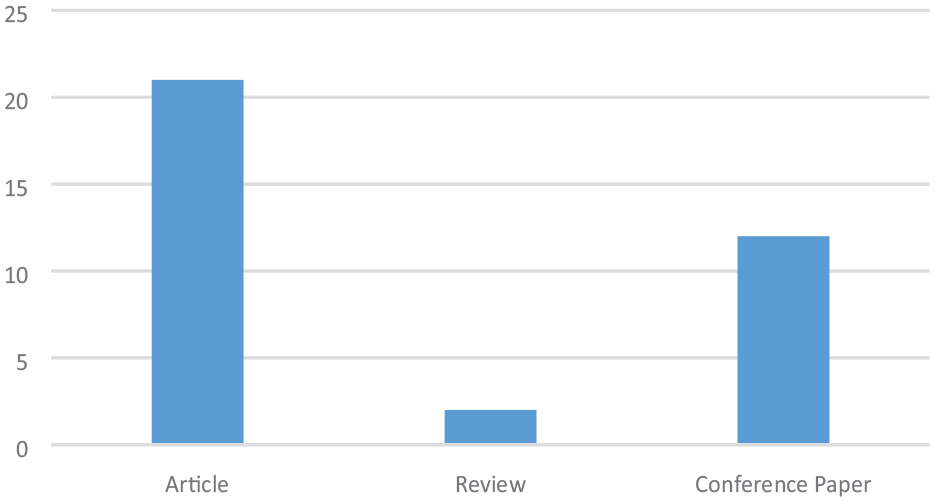
Number of publications.
It showed the annual number of publications in Table 5 and Figure 3, with 2022 having the highest number of publications (31%), followed by 2021 with 26%, and the lowest number of publications (3%), from 2013, 2017 and 2018. In contrast, the article with the most citations—135—was published in 2017 and was titled gamification in the Workplace: The Central Role of the Aesthetic Experience by Suh, A., Cheung, C.M.K., Ahuja, M., and Wagner, C. (Figure 4).
Number of Publications Per Year.

Source. Author.
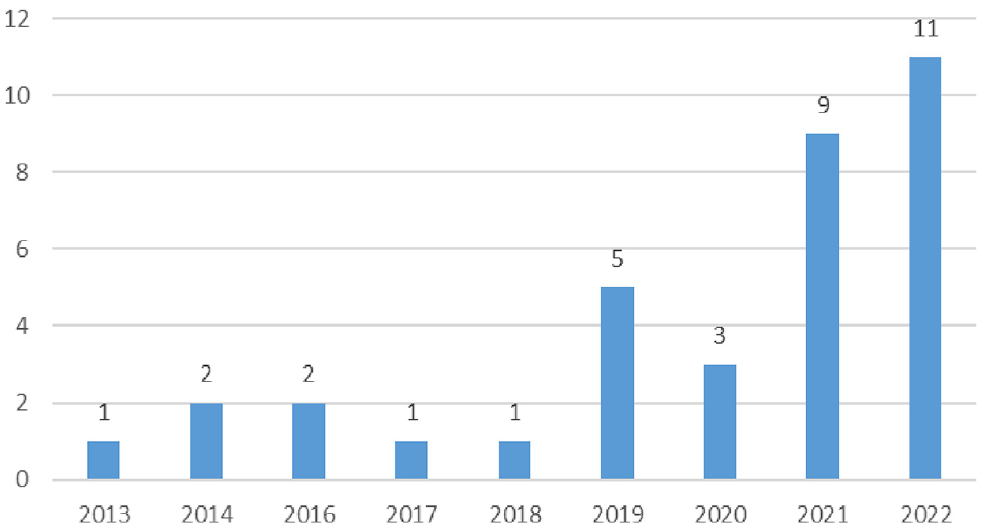
Number of publications per year.

Top 10 cited articles.
RQ8. Which Countries Have Contributed to Gamification Research?
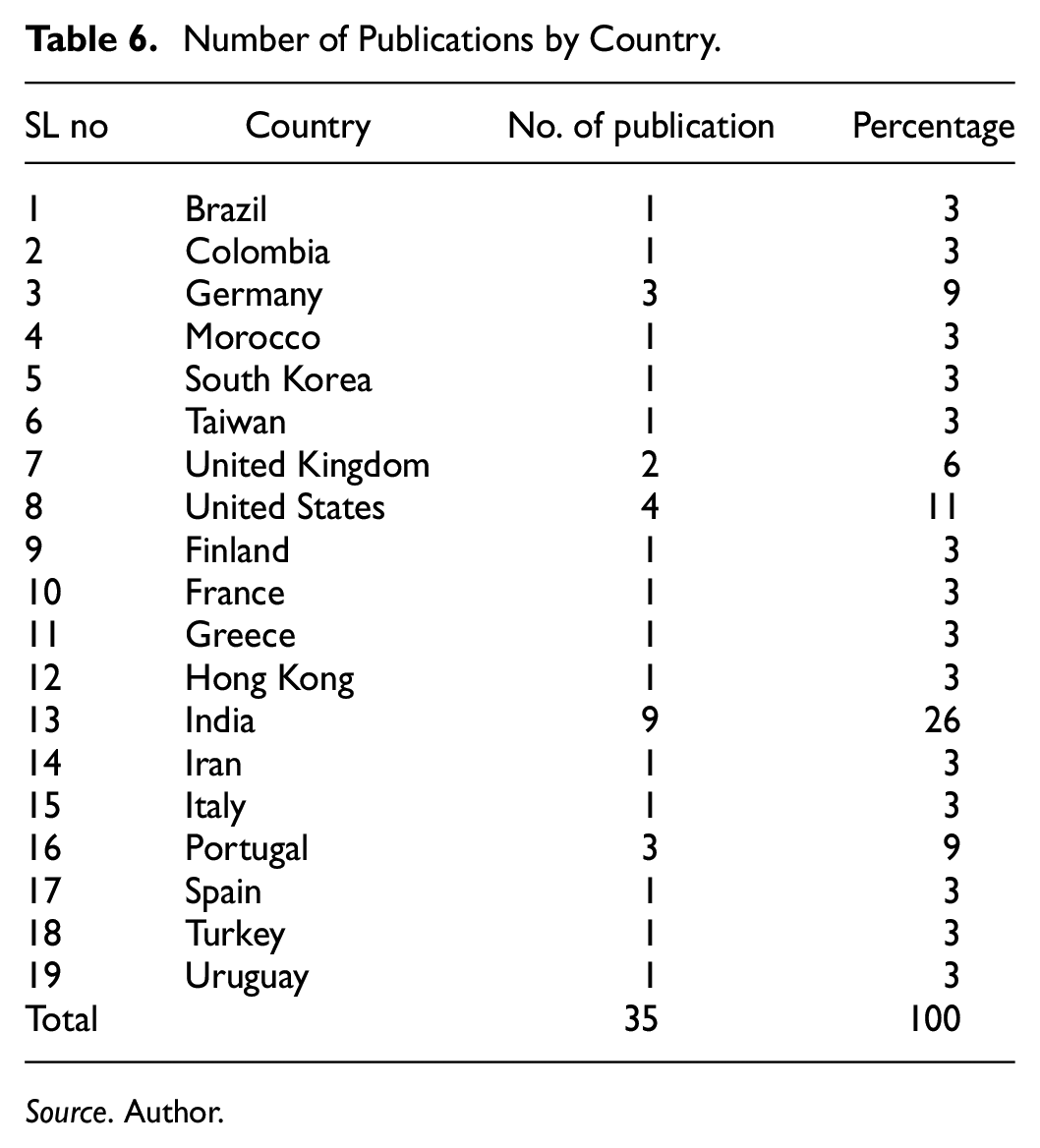
The top 19 countries contributing to the field of gamification research are shown in Table 6 and Figure 5, with India having the highest rate of productivity (26%), followed by the United States (11%), Germany (9%), and Portugal (9%). Rendering to the results above, India is making a greater contribution to gamification research. We may not conclude that the most productive countries are also the most influential ones if we consider the number of citations received by their publications, as shown in Figure 6 where Hong Kong, the United States, and the United Kingdom have more citations than any other country.
Number of Publications by Country.
Source. Author.

Number of publications by country.
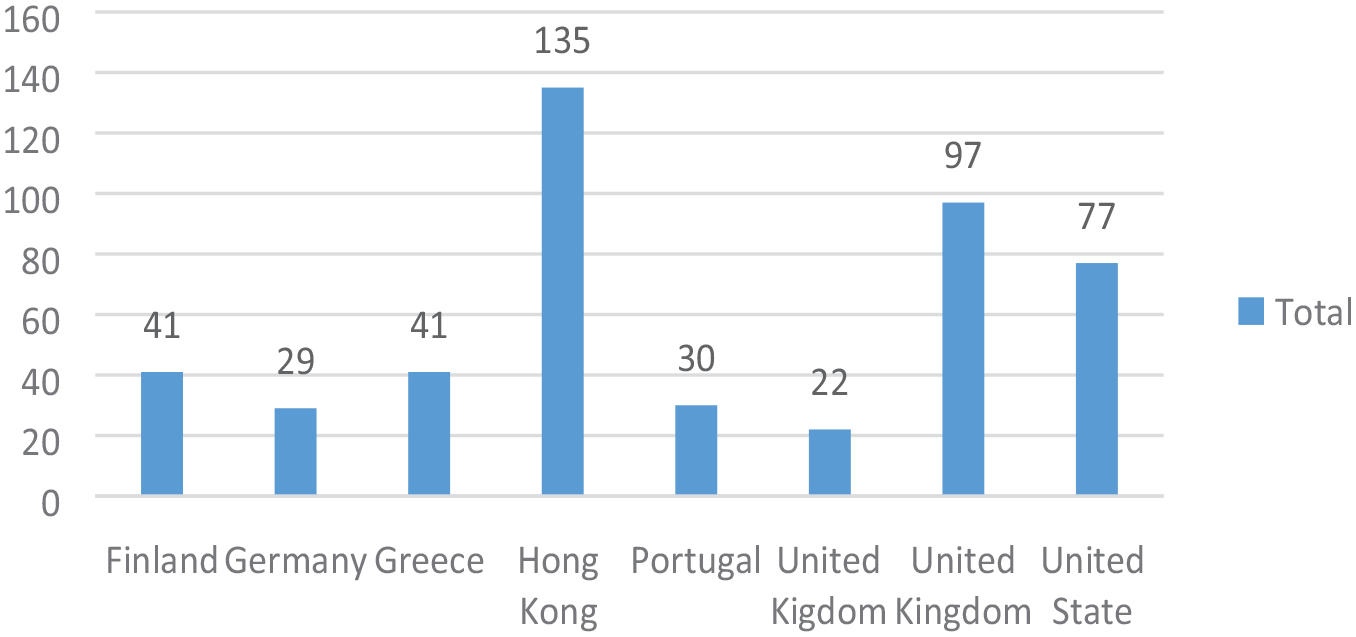
Country-wise citation.
RQ9. What Are the Common Gamification Elements and HR Elements Used in the Articles?
Rendering to the study’s background, the author examined the use of gamification elements in 21 articles. The results are shown in Table 7 and Figure 7, where most articles used leader boards at a rate of 18%, followed by rewards and badges at 15% each, levels and scores at 12% each. Therefore, it is clear from the aforementioned data that Leader Board, Reward, Badges, Level, and Score are more frequently used elements in human resources.
Common Gamification Elements.

Source. Author.

Common gamification elements.
Besides gamification elements, the author identified some HR elements that are commonly used in the gamification field in the data set of 21, as shown in Table 8 and Figure 8, most articles used employee engagement at a rate of 32%, followed by employee performance and employee behavior at 21% each, employee motivation at 16%, and training and development at 11%.
Gamification Used in HR Elements.
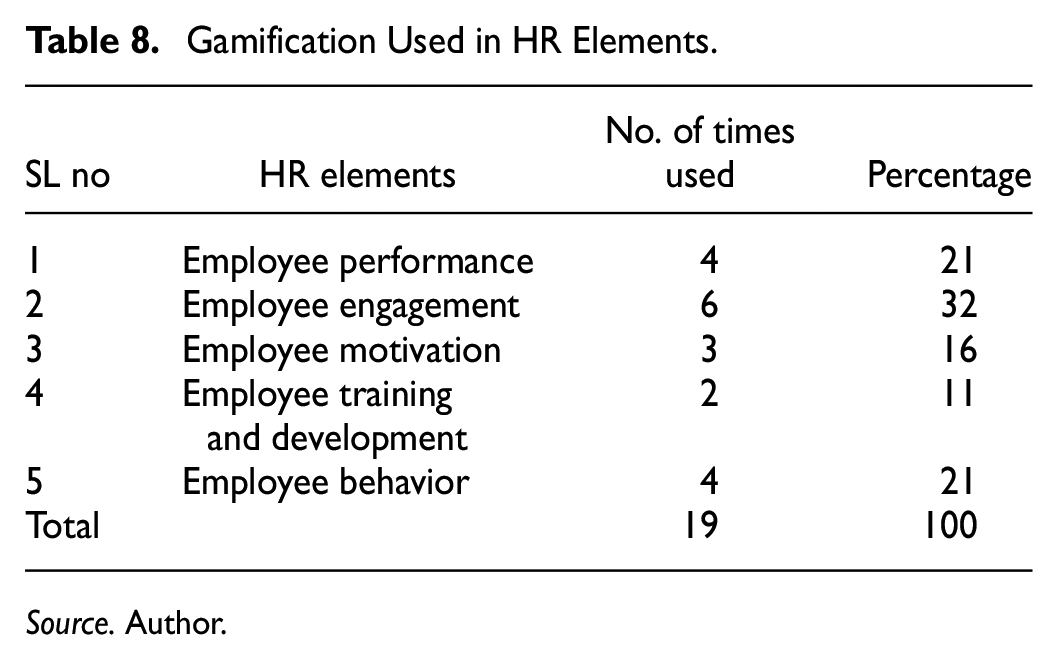
Source. Author.
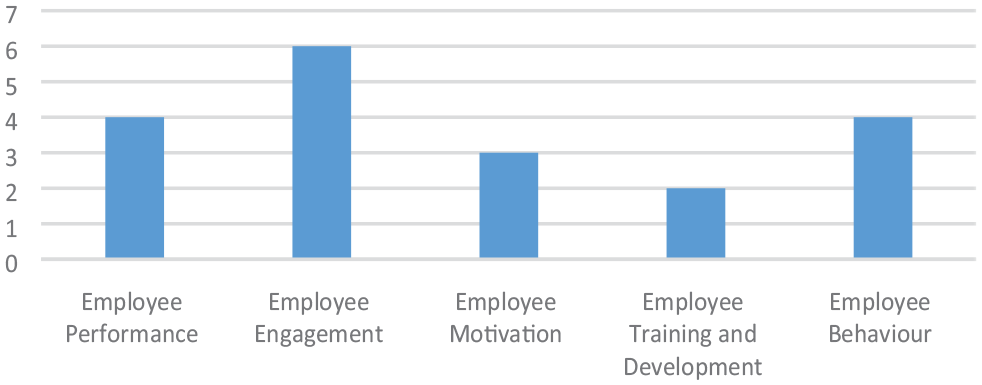
Gamification used in HR Elements.
RQ10. What Is the Significance of Research Article in Terms of Gamification Research in Human Resource?
Concerning the significance, the author identified 21 eligible articles, where N = 21 is represented in Table 9, and in the preview, the author specifically identified the components that need to be focused on, such as Theories used, Methods used Top 5 Cited Articles, and Top 5 Cited Article Findings.
Systematic Literature Review.

Source. Author.
Theory Used
Rendering to Table 10 and Figure 9, the author has examined the number of theories used in the articles and their relative importance. As a result, most theories used are the self-determination theory (33%), followed by the flow theory (15%). For this reason, the author has placed a lot of emphasis on self-determination and the flow theory in the study’s background. According to the review, gamified learning theory, at 7%, and motivational theory, at 11%, are both equally significant theories.
Theories Used.

Source. Author.

Theories used.
Methods Used
The author has examined the number of methods used in the articles, as shown in Table 11 and Figure 10. Because of this, the two most common methods used are quantitative and qualitative, each with a rate of 48%, and mixed methods, which have a rate of 5%.
Methods Used.

Source. Author.

Methods used.
Top Five cited Articles and Its Findings
The author has considered the top five cited publications during the literature evaluation process, which are, Gamification in the Workplace: The Central Role of the Aesthetic Experience, which was published in the year 2017, and received 135 citations, was followed by Millennials and Gamification: Guerrilla Tactics for Making Learning Fun, which was published in the year 2019, which received 52 citations, Leveling Up Organizational Learning Through Gamification, published in the year 2022, which received 46 citations, Gamification of Employee Training and Development, published in the year 2018, which received 44 citations, and Gamification in employee selection: The development of a gamified assessment published in 2019, which received 41 citations.
The reviewed articles have recommended that future research be done on additional gamification components in relation to employee knowledge retention, learning outcomes, learning motivation, employee efficacy, and employee productivity in sectors like the service sector and manufacturing sectors. This is in line with what was found in Table 9 of the articles we looked at.
Conclusion
This study aimed to gather, arrange, and examine information regarding the application of gamification in human resources. The new study contributes to the body of knowledge in human resources, which could advance subsequent research. It has also led to a thorough systematization of earlier research, identifying the most pertinent authors who have addressed the issue and remain reliable sources of knowledge in the field. The reader is informed in the current article about significant articles that are accessible in important academic databases and about the author’s contributions to the field of gamification in human resource management. Rendering to the data gathered from WoS and Scopus, the author of this paper suggests using PRISMA methods to visualize and analyze the structure and evolution of gamification research from 2013 to 2022. The author performed a performance analysis using quantitative techniques and co-citation analysis to pinpoint the influence of writers, gamification components, theories, HR components, nations, and journals, as well as the connections between them. This study shows that starting with a few publications in 2013, the number of gamification works quickly increased until reaching its highest values in the final year of the studied period. Journal articles account for more than half of the research output, with conference papers coming in second. The most productive nations are India, the USA, and the UK, while Hong Kong, the UK, and the USA have produced the most significant research. Additional research also helps locate the areas where gamification of human resources has not yet been applied. It presented the major finding and conclusions of this study in Table 12.
Major Findings.

Source. Author.
Theoretical and Practical Implication
The insights of the systematic literature review provide an interpretive framework for the use of gamification, as well as the following theoretical and practical implications. First, in terms of theoretical application, the findings suggest that, compared to the review by Murawski (2020), flow theory offers a good opportunity to transform organizational objectives and goals and enhance engagement and retention in the learning environment. Nevertheless, according to the current research evaluation, SDT is similarly important for the same organizational opportunity, and gamification has been primarily associated with the self-determination theory, which has the potential to shed light on the motivational effects underlying both successful and unsuccessful gamification as well as the resulting behavioral outcomes. Second, when considering the impact of gamification elements on HR elements, common gamification techniques used in HR practices include leaderboards, reward systems, online games, challenges, quizzes, and hackathons, which HR professionals can modify and apply in contexts other than training and development, like used by the Deloitte Built Leadership Training. In addition to the implications that have already been discussed Instructional design with comprehensive controls for prior knowledge and learning outcomes in conjunction with the interaction of gamification aspects can improve the quality of gamification research.
Since gamification is still a young technology, it is sense that additional study on the subject would be beneficial to both industry and academics. As a result, this SLR is important for human resource managers. This proposal highlights a gamification framework for HRM that has been developed across numerous academic disciplines. When used, it can increase a company’s efficiency in managing its human resources. Every new idea is swiftly put into practice without giving the idea’s possible game applications more thought. At this time, more research on gamification’s effects on HR practices is required.
Limitations of the Study and Future Research
In the preceding sections, we described the methodology and conclusions of a thorough literature review study designed to explain how gamification in human resources is organized and how it has changed. We describe the restrictions on our study in this section. First, several pilot searches in the Web of Science (WoS) and Scopus databases were conducted before obtaining the final dataset. Besides Science Direct, PubMed, Academia, and Google Scholar, it could have used other databases for this research. Since it is the most widely used product, uses rigorous inclusion and exclusion criteria that are transparent and consistent, is publisher-independent, and is a multidisciplinary global citation database, the author built the dataset from WoS and Scopus. Because of the limitations of using only two databases, we could not include in our dataset any high-caliber relevant works that weren’t indexed by WoS and Scopus. Even though it is not expected that many pertinent papers will miss, doing so could undermine our ability to generalize our findings. Replicating this study using datasets created from searches on such databases can overcome this limitation, and the author plans to do so in future works. The author’s investigation of gamification was restricted to human resource management; however, it is advised that additional research be done in the fields of marketing management, finance management, and supply chain management. In terms of theory advancement, current theories must be assessed and, if possible, improved to explain the true impact of gamification on Human resources. Thus, longitudinal studies are encouraged to find out the medium- and long-term consequences of gamification, enabling researchers to make more trustworthy judgments regarding the validity of the study, while also expanding current gamification theories and, finally, creating new ones that offer a more comprehensive explanation of the phenomena. The accuracy of the data retrieved and the fact that it updated continuously WoS and Scopus represent the dataset’s final limitations. As a result, the outcomes of the same search strategy applied on various dates might differ slightly. The number of papers retrieved as well as the number of citations a paper received varied depending on the date the search was conducted, according to our experience with our search strategy. Although there isn’t a lot of variation in the results, the author needs to make a note of it.
Besides the aforementioned future research, the authors have developed some key questions for further investigation in human resource management, where a gamification is an essential tool.
Q1. What business sectors have used gamification?
Q2. What conclusions did the research in those areas reach?
Q3. What sample size is used for research in that field?
Q4. What modern theories have applied to gamification?
Q5. What new gamification components have been used?
Footnotes
Declaration of Conflicting Interests
The author(s) declared no potential conflicts of interest with respect to the research, authorship, and/or publication of this article.
Funding
The author(s) received no financial support for the research, authorship, and/or publication of this article.

Data Availability Statement
The data for this study’s conclusions were acquired from databases in the public domain of Scopus and Web of Science core collection, and the key terms “Gamification” and “Human resource” can be used in data extraction searches.