




Abstract
Education 4.0 emphasizes the use of hybrid approaches in the learning process. The use of peeragogy, heutagogy, and cybergogy may engage students in the learning processes in which active learning plays a key role. This study aimed to examine the effect of the implementation of the Merdeka Curriculum on active learning practices and their relationships with hybrid activities based on hybrid learning approaches, and active learning counterparts of (1) self-regulated learning: (2) self-directed learning, and (3) self-determined learning. These relationships will be examined in Indonesian curriculum implementation in which student-centered principles are emphasized. A cross-sectional survey was conducted by collecting responses of vocational high school students on survey. The digital questionnaire was sent to 600 Indonesian students, of whom 555 completed it. The relationships among the constructs were examined using a structural equation modeling. The results showed that a curriculum emphasizing student-centered principles was fully mediated by active learning and hybrid activities to promote student self-regulated learning (SRL), self-determined learning (SDET), and self-directed learning (SDL). Active learning and hybrid activities directly affect students’ SRL, SDET, and SDL, Three counterparts of active learning that form important parts of long-life learning. This model indicates that Indonesian curriculum implementation may encourage active learning and indirectly increase learner engagement, autonomy, and metacognitive development.
Keywords
Introduction
Education 4.0 is a new concept that has various definitions. Education 4.0, based on Industry 4.0, demands on some technology-related competencies (Fidalgo-Blanco et al., 2022; González-Pérez & Ramírez-Montoya, 2022; Katyeudo & de Souza, 2022). Education 4.0 encourages educational innovation to meet new challenges.
Some innovations may include designing and developing new educational practices (Winks et al., 2020). One innovation is the use of emerging technology to improve educational output and promote the use of a combination of peeragogical, heutagogical, and cybergogical approaches in the learning process (Miranda, Navarrete et al., 2021). The combination and assimilation of these approaches provide the best results in educational settings (Hanafi, 2021). Peeragogical, heutagogical, and cybergogical approaches may engage students’ in the learning process (Bizami et al., 2023). However, the use of heutagogical activities is more suitable for vocational students because it aims not only at learning but also at capability development (Hase & Kenyon, 2001).
Any method of instructing students in the learning process can be considered as active learning (Prince, 2004). Active learners as agents in active learning are defined as those who take responsibility for and manage their learning (Mou, 2021). Under this definition, active learning techniques are associated with self-regulated learning (SRL).
Learners are considered active participants in the SRL process (Pintrich, 2004). In active learning environments, students may enhance their self-regulation of learning (Manganello et al., 2019). Self-determined learning is also related to active learning by motivating students to become active in the learning process (Jeno, 2015). Both SRL and self-determined learning require active learning (Loyens et al., 2008). Self-directed learning is another concept closely aligned with active learning. Self-directed learning emphasizes learners’ ability to take responsibility for their own learning experiences, make informed decisions, and manage their learning processes independently (Geng et al., 2019; Knowles, 1977; Long, 1994). Active learning methods have been discovered to be closely aligned with the fundamental principles of self-directed learning through the facilitation of learner autonomy and initiative. (Nasri, 2017; O’Shea, 2003).
Active and student-centered learning as the main aims of the Indonesian Merdeka Curriculum may also be related with self-regulated, self-determined, and self-directed learning. There has been research on the effect of active learning on self-regulated(Bell & Kozlowski, 2008; Sletten, 2017; Wolters et al., 2023), self-determined (Chiu, 2022; Khayat et al., 2021), and self-directed learning (Y. Choi et al., 2017; Khayat et al., 2021; Li et al., 2021; Topale, 2016).However, few studies have investigated the specific impact of active learning on self-regulated, self-determined, and self-directed learning. . Understanding how active learning strategies contribute to the development of learners’ self-regulation skills, autonomy, and motivation is crucial for effective educational practice in the context of Education 4.0.
In the investigation of the relationships, hybrid activities will be included as moderator variable and Indonesian curriculum implementation will be evaluated. The Indonesian curriculum has promoted the student-centered learning through Curriculum 2013 (Prihantoro, 2014) and the active student learning methods curriculum (Riyan Rizaldi & Fatimah, 2022; Wahyuni, 2016) . After the adoption of Curriculum 2013, the Indonesian curriculum was revised twice, the Prototype curriculum in 2019 (Firman et al., 2022; Rosmana et al., 2022) and the Merdeka Curriculum in 2020 (Nurdyansyah et al., 2022; Pertiwi et al., 2022). These newer curricula still encourage student-centered learning similar to their predecessor. The pandemic has promoted the use of the innovative pedagogies of heutagogy and cybergogy which have emerged as popular approaches (Stukalo & Simakhova, 2020). In the post-pandemic era, the Indonesian school curriculum is based on these approaches. Hence, understanding the effects of curriculum implementation and the hybrid approach on active learning and student-centered learning will provide new insights into curriculum development. The primary objective of this study is to investigate the relationship between active learning and its impact on self-regulated learning, self-determined learning, and self-directed learning. Additionally, the research aims to explore the mediating role of the peeragogy-cybergogy-heutagogy approach in this relationship. Furthermore, this study examines the effect of the implementation of the Merdeka Curriculum on active learning practices. In doing so, this study aims to contribute to a deeper understanding of effective instructional practices and curriculum development efforts that enhance learner engagement, autonomy, and metacognitive development in the Indonesian educational context.
In a student-centered learning environment, students are active agents at the center of the educational processes (De Waard, 2017). Learning processes that take students as their focus and makes them active agents have emerged as self-regulated, self-directed, and self-determined learning (Agonács et al., 2020). Self-directed skills may be encouraged in someone entering adulthood (Knowles, 1977), the life phase of people aged 18 to 25 years (Arnett, 2000). This definition thus considers vocational high school students, especially those in their last year of high school, emerging adult. Vocational high school students also fit the curriculum implemented in elementary and secondary schools.
Literature Review
Implementation of the Merdeka Curriculum and Active Learning
The Indonesian Ministry of Education and Culture responded to the Covid-19 pandemic by restructuring the Indonesian curriculum, since the pandemic has made offline classes distance classes. The emergency curriculum was developed in August 2020 by simplifying the curriculum content to focus on the basic skills and knowledge students need. The emergency curriculum was then improved into the Merdeka Curriculum (engaging curriculum), which focuses on the simplicity and flexibility of the curriculum (Badan Standar Kurikulum dan Asesemen Pendidikan, 2021).
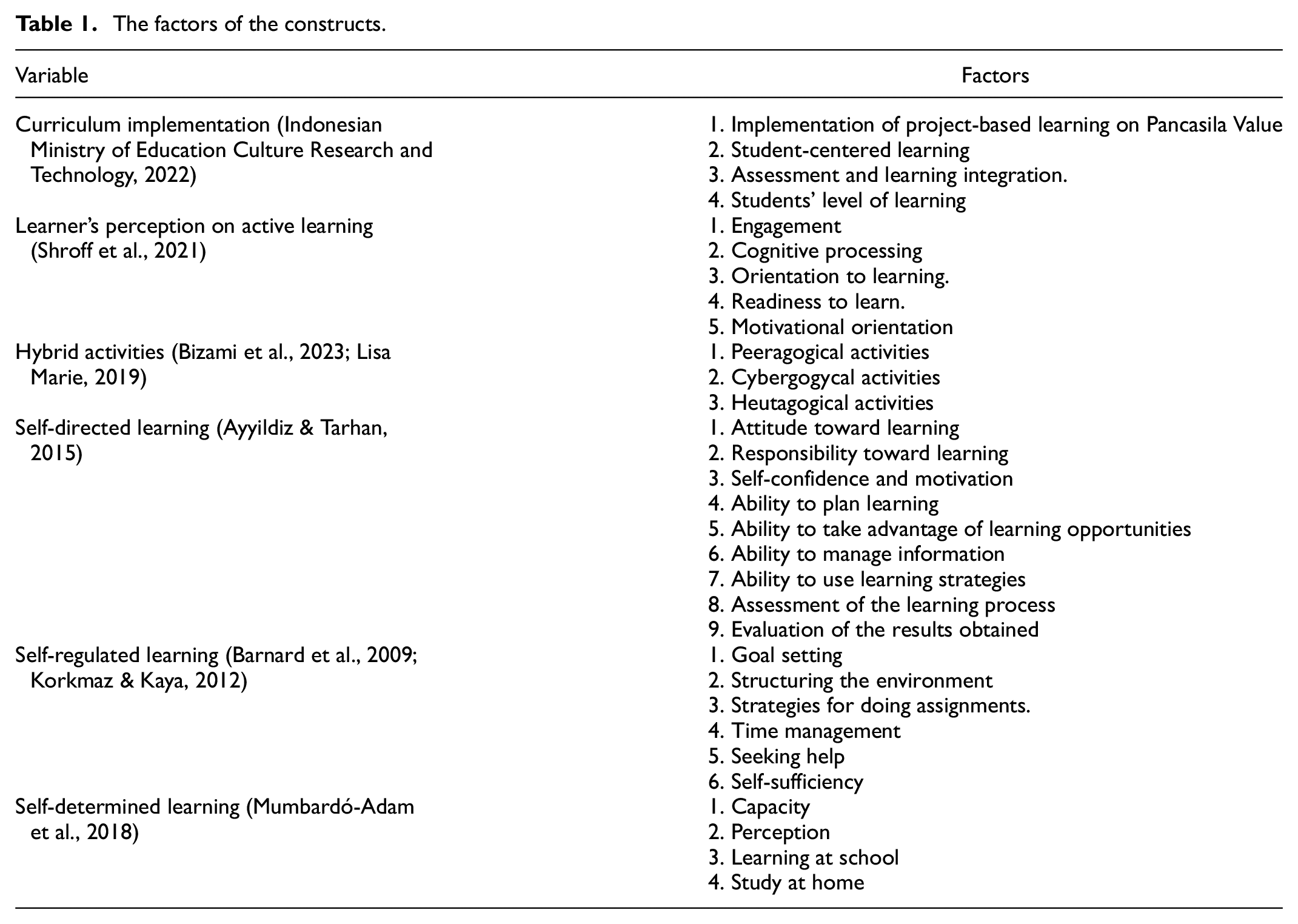
The Merdeka curriculum was evaluated by investigating (1) school management and planning, and (2) learning processes. The learning process evaluation includes (1) implementation of project-based learning on Pancasila value, (2) student-centered learning, (3) assessment and learning integration, and (4) students’ level of learning (Indonesian Ministry of Education Culture Research and Technology, 2022).
The student-centered learning applied in the Merdeka Curriculum may be connected to active learning. Active learning is defined as any instructional methods used to engage students in a learning process (Prince, 2004; Shroff et al., 2021). One way to engage students is to shift from teacher-centered to student-centered learning (Freeman et al., 2014; A. M. Kim et al., 2019). Project-based learning, as part of the Merdeka Curriculum, is also an active form of student-centered learning (Isa & Azid, 2021). Project-Based Learning (PBL) places students’ individual interests and needs at the focal point of the learning process, prioritizing student autonomy (J. Choi et al., 2019; Morgan, 1983; Thomas, 2000). We accordingly propose the following hypothesis:
H1: Merdeka Curriculum implementation significantly encourages active learning in the classroom.
H2: Merdeka Curriculum implementation positively affects hybrid activities in the classroom.
H3: Merdeka Curriculum implementation positively affects student self-determined learning.
H4: Merdeka Curriculum implementation positively affects student self-directed learning.
H5: Merdeka curriculum implementation positively affects student self-regulated learning.
Active Learning and Hybrid Activities
Throughout history, active learning has been recognized as a potent teaching technique and an efficient instructional approach that boosts student learning and motivation (DeWinstanley & Bjork, 2002; Michael, 2006). Active learning is rooted in equipping learners with the essential skills and strategies required to become self-directed learners (van Hout-Wolters et al., 2000). In an active learning environment, learners are encouraged to participate in the learning process by utilizing various learning strategies and engaging in self-directed learning. Consequently, they can personalize their learning experience by connecting with their learning environment and peers (Fritz, 2002; Pintrich, 1999).
Hybrid activities were developed using peeragogical, heutagogical, and cybergogical approaches. These three approaches can interact to improve student engagement (Hanafi, 2021) and constitute the foundations of learning process in Education 4.0 (Miranda, Ramírez-Montoya, & Molina, 2021; Miranda, Navarrete et al., 2021).
Heutagogy takes a comprehensive approach to fostering learner competencies, viewing learning as an active and proactive process in which learners play a crucial role as primary agents. Learning occurs through personal experiences (L. M. Blaschke, 2012; Hase & Kenyon, 2007). There are four principles of heutagogy: (1) the human as an agent of learning, (2) capability, (3) self-reflection and double-loop learning, and (4) non-linear learning (L. M. Blaschke, 2012).
The first is the human as an agent of learning. This principle pertains to the students’ desire to learn something of their own volition through their preferred learning approach (Bandura, 2001; L. M. Blaschke, 2021). As the driving force behind their learning journey, students have the autonomy to make choices regarding the methods and topics they wish to learn (Bizami et al., 2023). Second is capability. This principle emphasizes the students’ ability to apply the knowledge and skills they have acquired in a new or unfamiliar contexts (L. M. Blaschke & Hase, 2016). This can be accomplished by incorporating a curriculum that encourages students to interact with real-world situations (Stoten, 2020).
The third principle involved self-reflection and double-loop learning. These two capabilities are interrelated (Bizami et al., 2023). Students must reflect on their learning processes to develop metacognitive and self-regulatory skills, students need to be reflective in their learning process (Gregory et al., 2018) . This can be achieved through active thinking during the learning process (Canning & Callan, 2010). The fourth is non-linear learning. The traditional method of teaching and learning involves instructors having complete control over how knowledge is imparted. However, in the context of modern education, students are empowered to take charge of their learning by exploring diverse learning avenues and adapting adaptable and dynamic approaches (Gregory et al., 2018; Hase, 2016).Peeragogy highlights the roles of peers and groups in maintaining knowledge. Paragogues are individuals who learn from their peers using shared spaces for learning, networks spread over various locations, and virtual communities to acquire knowledge (Mulholland, 2019). Peeragogy has five basic principles: (1) decentered center context, (2) meta-learning serves as a source of knowledge, (3) feedback that is not typically available is provided by peers, (4) learning is distributed and not linear, and (5) if possible, one should seek to achieve one’s aspirations, but be prepared to wake up and face reality (Corneli & Danoff, 2011b).
The first is the decentered center context. In the peeragogically context, we acknowledge that we are not just educators or students, instead, we collaboratively construct an entire learning environment. Second, meta-learning serves as a source of knowledge. Peeragogy focus is on both attempting to “learn how to learn” and on acquiring the skills to aid others in their learning endeavors (Smith, 1983). Third, peers provide feedback that is not typically available. Learners should not only seek affirmation of their existing knowledge, but also engage with and comprehend different perspectives as a fundamental aspect of the learning process (Corneli & Danoff, 2011).
Fourth, the learning is distributed and non-linear. In peeragogy, the learning process is non-linear which means students participate in the collaborative construction of the learning environment (Corneli & Danoff, 2011; Fischer & Granott, 1995). The fifth principle is to realize one’s dream and wake up. Paragogues clearly defined their learning goals as the achievement of their objectives. They also critically evaluate their learning objectives which may have lead to modifications. This critical evaluation process makes the learning process predominantly active (Ericsson et al., 1993).
Cybergogy is an educational approach that concentrates on involving students in an online setting to enhance their cognitive, emotional, and social learning (Wang & Kang, 2006). Cybergogy comprises three principles. The first is the cognitive factor. The term “cognitive factor” refers to the various components that can impact a student’s ability to comprehend knowledge in a cybergogy-based classroom. These components include the students’ previous knowledge, learning objectives, type of learning activity, and cognitive/learning style (Muresan, 2014; Tran & Van Nguyen, 2020; Wang & Kang, 2006).
Second is the emotive factor. This principle highlights the importance of students’ psychological well-being and the dynamics among members of their learning communities. Consequently, students’ self-efficacy, self-confidence, and self-competence are integrated throughout the learning process (Wang & Kang, 2006).
Third is the social factor. This pertains to the social background of students’ identity and their sense of community, which can be developed through collaborative activities (Wang & Kang, 2006). These activities usually occur online and are led by instructors to facilitate student engagement (Qismullah & Yusuf, 2018).
Peeragogical and heutagogical principles and technological capabilities (cybergogy) are crucial for creating engaging immersive learning environments that facilitate effective learning (L. Blaschke, 2018). This aligns with Kaufman’s (2019) recommendation that a redesign of transformative instructional blended learning should encompass both pedagogical components and technological tools to foster active learning experiences and student-centered approaches. Accordingly, we hypothesize:
H6: Active learning may affect the use of hybrid activities.
Active Learning, SRL, SDET, and SDL
Active and self-regulated learning share several common elements. In both learning scenarios, the learner is actively engaged, thinking critically, and reflecting on their learning experiences, while the teacher plays a role in supporting and motivating the learners (Virtanen et al., 2017). Active learning encompasses not only physical activity but also mental engagement (Mirriahi et al., 2021). To mentally engaged with the content, students need to regulate their learning (Panadero, Jonsson, & Botella, 2017).
In the constructivist framework, active learning should include self-directed learning and active mental engagement (Y. Choi et al., 2017). In active learning, self-determined learning includes a process that increase student participation (Knight & Wood, 2005). To encourage students to explore their own interests and become active participants in their learning, certain active learning approaches encourage them to develop their own hypotheses, create experimental designs, and tackle open-ended problems (DebBurman, 2002; Gehring & Eastman, 2008).
Active learning is associated with self-directed learning. Self-directed learners are motivated by their intrinsic desire to learn and readily embrace learning challenges, which enables them to be actively involved and actively participate in the learning process (Navaitienė & Stasiūnaitienė, 2021). Active learning and self-directed learning align with each other with respect to learners’ engagement in various activities, whether they are small-scale activities like discussions, writing, presentations, or problem-solving, or larger activities that involve reflection (Navaitienė & Stasiūnaitienė, 2021). The combination of active and self-directed learning has created new concept of deep active learning (Matsushita, 2018). Accordingly, we hypothesize:
H7: Active learning positively affects student self-determined learning.
H8: Active learning positively affects student self-directed learning.
H9: Active learning positively affects student self-regulated learning.
Hybrid Activities, SRL, SDET, and SDL
Hybrid activities are derived from the hybrid of cybergogy, peeragogy, and heutagogy. In the context of cybergogy, the traditional role of teachers as the sole providers of information is no longer prevalent. Instead, cybergogy empowers learners to have direct control over their acquisition of knowledge. This aspect of cybergogy is particularly advantageous for self-directed learners (Norsamsinar et al., 2022). The cognitive factor of cybergogy is also related to students’ self-regulated learning, a type of cognitive engagement (Wang & Kang, 2006).
Heutagogy, as a part of the hybrid approach, promotes learning as a self-determined process in which learners have the freedom and agency to direct their own learning journeys (Chan et al., 2019; Hase, 2014). It encourages individuals to take ownership of their learning, set their own goals, and actively engage in the learning process based on their interests and needs. The peeragogical principle of meta-learning is associated with student metacognition (Bizami et al., 2023). Students in peeragogical classroom are aware of their own learning processes. This awareness involves actively monitoring and reflecting on how they learn, identifying their strengths and areas for improvement, and making intentional choices to enhance their learning experience (Corneli & Danoff, 2011). Accordingly, we hypothesize:
H10: Hybrid activities positively affects student self-determined learning.
H11: Hybrid activities positively affects self-directed learning.
H12: Hybrid activities positively affects student self-regulated learning. The stated hypothesis in this study is displayed in Figure 1.

Framework of the relationship between variables.
Methods
The present empirical study is a quantitative no experimental study. A cross-sectional survey was sent to the vocational school students in two provinces in Indonesia, South and West Sulawesi. The survey was given to the students through their teacher’s concern and help. The survey was conducted after obtaining institutional ethics approval from our university. The survey consisted of 85 items related to the variables used in the study.
The data gathered from the students was analyzed using a structural equation model with partial least square parameter estimation (PLS-SEM). PLS-SEM is powerful than CB-SEM, can be applied on non-normal data and a relatively small sample size (Hair et al., 2012). PLS-SEM is also recommended over CB-SEM when the model is complex and aims to test the theoretical framework (Hair et al., 2019). Both types of SEM also have potential bias. However, PLS-SEM tend to have more power to minimize the biases (Reinartz et al., 2009; Sarstedt et al., 2016).
Procedures and Participants
The participants in this study were vocational high school students in South and West Sulawesi, two provinces of Indonesia. Students participated voluntarily and provided informed consent in the first part of the survey. The digital questionnaire was sent to 600 Indonesian students, of whom 555 completed it. This can be considered as sufficient sample for PLS-SEM which requires sample of 5 to 10 times the number of items in the survey (Hair et al., 2021). Informed consent also gave researchers permission to use the data from for analysis. Of the respondents included in the study, 67% were male, and 33% female.
Instruments
Active learning used in this study focuses on the instruction paradigm. This means that the instrument contains teachers’ classroom instruction to encourage students’ active learning. Curriculum implementation was measured using documents provided by Indonesian Ministry of Education and Culture. This document provided the indicators that instructors are required to achieve to ensure the best implementation of the curriculum. However, we focused on learning-related indicators that could be observed by students. Active learning was measured using brief version Shroff et al. (2021) learner’s perception on active learning
Hybrid activity instruments were developed using the principles of peeragogy, heutagogy, and cybergogy. Self-directed, self-regulated, and self-determined learning were also measured using brief versions of existing instruments. The items were selected based on their fit within the Indonesian context. All item responses were in the form of 10-point semantic differential responses ranging from 1 (=totally disagree) to 10 (=totally agree). Table 1 displays all items used in the research questionnaire.
The factors of the constructs.
Result
The PLS-SEM analysis consist of two steps: a measurement model and a structural model (Hanafiah, 2020; Lee et al., 2011). The measurement model was used conducted to check the reliability and validity of items and latent variables (Lin et al., 2020) whereas the structural model investigated the relationships between latent variables (Hair et al., 2021).
Measurement Model
Assessing the measurement model using PLS-SEM involves four steps: (1) examining item loadings, (2) assessing internal consistency, (3) examining convergent validity, and (4) checking discriminant validity (Hair et al., 2019).
The factor loadings of the items should be a minimum of 0.708 which indicates that the latent variable explains a minimum of 50% of the items variance (Hair et al., 2021). However, loadings ranging between 0.4 and 0.7 should be excluded only if excluding the item increases the reliability of its construct to the suggested threshold (Hair et al., 2011). Items marked “out” in Table 2 have loadings that did not exceed the 0.4 threshold, so they are excluded from the model.
Factor Loadings, Composite Reliability, and AVE of Items and Constructs.

The internal consistency of the constructs was measured using composite reliability. PLS-SEM has three types of construct reliability: (1) Cronbach’s alpha, (2) rho A, and (3) composite reliability. Among these reliability measurements, composite reliability has been recommended over other measures. Composite reliability considers the differential weights of items (Henseler et al., 2015), whereas Cronbach’s alpha treats the indicator’s equally (Hair et al., 2017). The composite reliability of the constructs should exceed a threshold of 0.7 to be deemed a reliable construct (Hair et al., 2021). All constructs had a composite reliability score higher than 0.7. In other words, the model constructs were reliable.
Average variance extracted (AVE) is a metrics that summarizes the variance extracted from all item loadings onto their respective constructs (Hair et al., 2017). The rule of thumbs criterion for the AVE is 0.5 (Sarstedt et al., 2022). The results of the measurement model showed that all constructs had an AVE > 0.5.
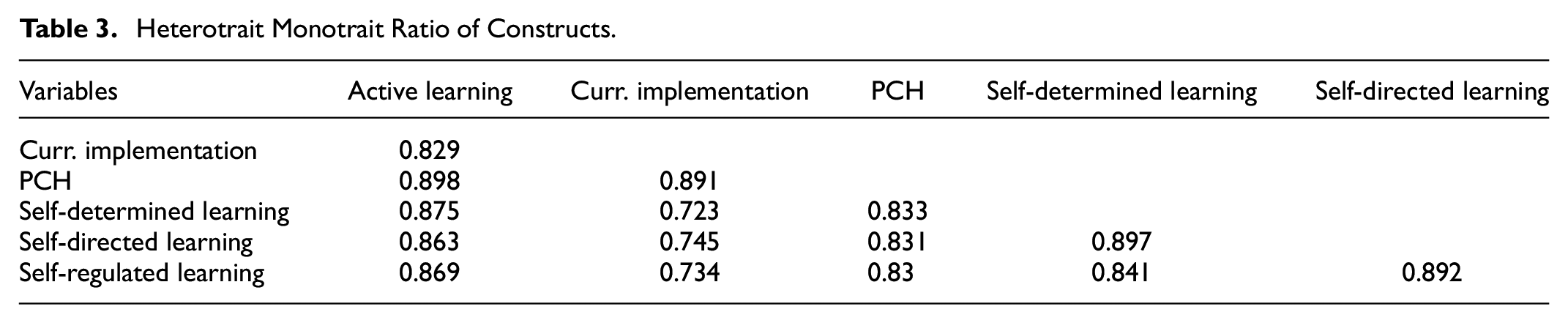
The last metrics evaluated in the measurement model was discriminant validity. This type of validity investigates how different the constructs of the model are. Discriminant validity can be evaluated using the following metrics: (1) the Fornell-Larcker criterion, (2) cross-loadings, and (3) the Heterotrait monotrait ratio (HTMT) (Lin et al., 2020). Of these, however, HTMT is the preferred metrics for discriminant validity (Henseler et al., 2015). HTMT contrasts the correlation between items measuring different constructs with those measuring the same construct, whereby two constructs with an HTMT ratio closer to 1 will be regarded as more similar constructs (Sarstedt et al., 2023). Table 3 indicates that all constructs had an HTMT below 0.9, indicating that they have appropriate discriminant validity (Sarstedt et al., 2023; Voorhees et al., 2016).
Heterotrait Monotrait Ratio of Constructs.
Structural Model
The measurement model indicated that all constructs and their respective items were valid and reliable. Thus, the constructs can be used to investigate the relationships among variables in the framework. To obtain relationships through hypothesis testing, a structural model can be constructed using the bootstrap method with 10,000 replications (Sarstedt et al., 2023; Streukens & Leroi-Werelds, 2016).
The bootstrap results in Table 4 showed that curriculum implementation significantly affected active learning
Bootstrap Results on Total Effect of the Constructs.

Fully mediated variable is one that shows no direct effect on a specific variable has a significant indirect effect it (J. Kim et al., 2018). Curriculum implementation has an insignificant effect on self-determined learning
Bootstrap Results for the Direct Effect of Constructs.

Student perceptions of active learning had a significant effect on hybrid activities
Students’ hybrid activities showed significant effect on self-determined learning
Discussion
This present study sought to investigate the relationship between active learning and its effects on self-regulated, self-determined, and self-directed learning within the context of the Indonesian Curriculum (Merdeka Curriculum). Our findings contribute to research by providing a comprehensive examination of these interconnected constructs within the context of education.
This study investigated the impact of the implementation of the Merdeka Curriculum on active learning and its counterparts. The findings indicate that the Merdeka Curriculum, which emphasizes student-centered learning and individualized instruction, aligns well with the principles of active learning. The curriculum’s focus on students’ needs, capabilities, and interests provides an environment conducive to the implementation of active learning strategies (Pertiwi et al., 2022; Riyan Rizaldi & Fatimah, 2022). Curriculum implementation had a positive relationship with hybrid activities. The Covid-19 pandemic prompted technology-mediated learning process which is also included in Merdeka Curriculum (Maipita et al., 2021). The technology-mediated learning process is also called cybergogy (Bizami et al., 2023) which is an innovative pedagogy, along with heutagogy and peeragogy.
The results also show that curriculum implementation has an insignificant direct effect on self-regulated, self-determined, and self-directed learning. This results is supported by the fact that the Merdeka Curriculum does not explicitly encourages this active learning counterparts (Indonesian Ministry of Education Culture Research and Technology, 2022). However, curriculum implementation focusing on online student-centered learning (Ahid & Sufirmansyah, 2022; Paramitha et al., 2021) may positively affect students’ self-regulated, self-determined, and self-directed learning by encouraging active learning and hybrid activities, as student centered learning is a form of active learning in the classroom (Michael, 2006).
The results also indicates that active learning is significantly related to hybrid activities consisting of peeragogical, cybergogical, and heutagogical activities. To promote active learning, instruction should involve pedagogical and technological approaches (Kaufman, 2019). This pedagogical approach can be reflected in heutagogical activities that are student-centric and in which students independently determine their learning (L. M. Blaschke & Hase, 2019; Kapasi & Grekova, 2018). The student-centric nature of hybrid activities may explain why curriculum implementation positively affects these activities.
Active learning has also been shown to have positively affect self-regulated, self-determined, and self-directed learning. Active and self-regulated learning are guided by shared principle. Both requires active student engagement (Virtanen et al., 2017), particularly mental engagement (Panadero, 2017). Students who actively engage in the learning process, both physically and mentally, may also regulate their learning. In more active learning, learners are empowered to take control of their own time management, select their own learning objectives and preferred activities, assess their own progress, strive independently to comprehend and master materials, and engage in self-reflection regarding both their failures and achievements (van Hout-Wolters et al., 2000). Student engagement in the classroom may foster different types of motivation in students that relate active learning with self-determined learning (Chiu, 2022). The motivations are origin motivation, autonomous motivation, and academic efficacy and the results also indicate that hybrid activities have a positive relationship with students’ self-regulated, self-determined, and self-directed learning. Hybrid activities are based on innovative pedagogies of heutagogy, cybergogy, and peeragogy. Hybrid activities may affect self-directed learning because the learning process using a heutagogical approach tends to be more active and self-directed (L. M. Blaschke, 2019). Student engagement, produced through active learning and hybrid activities, is a complex concept that can differ depending on the specific learning environment. One such dimension is self-regulated learning (Bangert-Drowns & Pyke, 2002).
Heutagogical activities may also berelated to the central concept of self-determined learning (Hase, 2016). Heutagogical activities push students toward teamworking, continuous improvement, solving problems, and thinking critically. Additionally, the principle of heutagogical activities central to self-determined learning is learning how to learn (Hase, 2016). Heutagogy also includes self-regulated learning, but it differs from the traditional method of learning led by instructors (Agonács & Matos, 2019). Another part of hybrid activities, peeragogical activities, may have affected students’ self-determined learning. Paragogues students should also learn how to learn (Smith, 1983). The critical evaluation of students’ learning objectives is also related to self-determined learning in which students critically evaluate their own learning (Hmelo & Lin, 2000; Schmidt, 1983).
Conclusion
The Merdeka Curriculum is an innovative response to a pandemic that has disrupted education systems worldwide. Teachers must adopt new and creative teaching methods to ensure that students continue to learn and grow in the face of unprecedented challenges. The Merdeka Curriculum has enabled teachers to facilitate active learning in classrooms by utilizing a range of student-centered approaches, including hybrid activities that combine online and offline learning.
A key feature of the Merdeka Curriculum is its emphasis on student-centered learning, which encourages students to take responsibility for their learning path. This approach promotes the development of essential skills and qualities such as peeragogical, heutagogical, and cybergogical activities, which involve collaboration, self-direction, and the use of technology, respectively. By fostering these skills, the curriculum helps students become more self-regulated, self-directed, and self-determined, which are essential traits for lifelong learning.
The findings of this study hold several implications for educational practice and future research. Firstly, the positive relationship between active and self-regulated learning suggests that incorporating active learning strategies into instructional design can foster students’ metacognitive skills and self-regulation abilities. Educators and curriculum developers can utilize these findings to enhance their pedagogical practices and create learning environments that promote self-regulated learning. Secondly, the study’s results highlight the importance of considering the role of self-determined learning in the context of active learning. By emphasizing learner autonomy, choice, and motivation, educators can design activities and provide opportunities to empower students to take ownership of their learning processes. This can contribute to increased engagement and satisfaction and ultimately, improved learning outcomes.
Furthermore, examination of the peeragogy-cybergogy-heutagogy approach as a mediating variable in the relationship between active learning and the examined constructs offers insights into the potential mechanisms through which these approaches interact. Future research should investigate the specific ways in which these pedagogical frameworks influence the effectiveness of active learning strategies and student learning experiences. Finally, this investigation of the impact of the Merdeka Curriculum implementation on active learning practices provides valuable information for educational policymakers and practitioners. Understanding how this curriculum promotes student-centered learning, active engagement, and self-directedness can inform ongoing curriculum development efforts and shape instructional practices that align with the demands of Education 4.0.
In conclusion, the implications of this research suggest that integrating active learning strategies, fostering self-regulated and self-determined learning, and considering the role of pedagogical approaches such as peeragogy, cybergogy, and heutagogy can help enhance educational practices and the design of learner-centered curricula. These findings provide a foundation for the further exploration and refinement of instructional approaches that promote active engagement, autonomy, and self-directedness in educational contexts.
Future Research and Limitations
While this research article provides valuable insights into the implementation of project-based learning in the Indonesian curriculum and its impact on students’ perception of active learning, it has some limitations.
Firstly, it relied on self-reported data from students, which may be subject to bias or inaccuracies. Future research could use additional methods, such as observation or interviews with teachers, to supplement these findings. Second, this was a cross-sectional study, which may bias the relationships between variables. Future research should explore this issue using longitudinal study. Finally, the respondents were chosen purposively which may constitute a source of bias. Random probability sampling is the best sampling technique for this study and should be applied in future research. Future research could also develop specific activities using innovative pedagogies.
Footnotes
Acknowledgements
The researchers wish to express their gratitude to the Directorate General of Research, Technology and Community Development (DRTPM) of the Ministry of Education and Culture of the Republic of Indonesia as a donor of Excellence Higher Education Institution Research (PTUPT).
Declaration of Conflicting Interests
The author(s) declared no potential conflicts of interest with respect to the research, authorship, and/or publication of this article.
Funding
The author(s) disclosed receiving financial support for the research, authorship, and/or publication of this article: The entire process of the current research and its publication is supported by DIPA Universitas Negeri Makassar, with grant number SP DIPA - 023.17.2.677523/2023. This support is in accordance with the official decree from the Rector of Universitas Negeri Makassar, under reference number 504/UN36/HK/2023 dated June 5, 2023.
Ethic Statement
This study was conducted in accordance with the ethical standards of Research Ethic Committee of Technological Education Faculty of Universitas Negeri Makassar No. 518/UN36.2/KP/2023. All participants provided written informed consent before participating in the study. The study protocol was reviewed and approved by Research Ethic Committee of Technological Education Faculty of Universitas Negeri Makassar and all procedures were conducted in compliance with relevant regulations and guidelines. Participant confidentiality was maintained throughout the study, and all data were analyzed and reported in aggregate form to protect participant anonymity.
