




Abstract
This study aimed to determine non-native speakers of English academics’ knowledge and awareness of conventions and norms of academic writing (AW), to develop an online professional development model addressing all disciplines, and to evaluate the effect of this model on their AW performances with their views on the model. The study was based on the mixed methods evaluation design. The participants were nine academics in educational and social sciences at a state university in Turkey. An online professional development model encompassing eight themes related to AW was developed. Data were collected through pre- and post-tutorial semi-structured interviews and writing tasks. Textual and content analyses were used for the qualitative data, and the Wilcoxon Signed Rank Test was performed for quantitative analysis. The results showed that before the tutoring, the participants acknowledged various difficulties regarding AW conventions and norms. The data after the online asynchronous tutoring showed that explicit instruction increased the participants’ knowledge and awareness, and the proposed model contributed to their writing performances, and promoted their AW skills. However, participants’ hedging use was found limited to modal verbs use. Paraphrasing tasks also showed significant differences between before and after tutoring writing tasks. Participants highlighted the importance of long-term implementational writing instruction.
Introduction
Correct and appropriate language in disseminating scientific knowledge is of considerable importance in academia since professional achievement and promotion are often dependent on quality academic writing; however, structural knowledge and vocabulary of English are insufficient to write an English text ignoring academic norms and conventions. Therefore, publishing English medium papers is seen as a common barrier in academics’ careers particularly for non-native speakers of English, who have not received undergraduate or graduate education in Anglophone countries, and particularly for those who have not received academic writing instruction.
Producing an acceptable English-medium paper without instruction is difficult and demanding due to the increasing costs for language correction, editing, and revision services offered by national and international companies. Research on the publication problems faced by academics in various countries has shown that scientific studies are often rejected because of the inappropriate use of language as well as the methodological design. Thus, no matter how valuable ideas researchers may have, as long as the language they use is not in line with academic conventions, it will not be of any use to the discipline they belong to Hinkel (2004). In the literature, there has been a growing interest in the studies that seek to explore the academic writing process of L2 writers from various perspectives in different settings (e.g., Buckingham, 2008; Cotterall, 2011; Doyle et al., 2018; Ho, 2017; Lan, 2015; Langum & Sullivan, 2017; Ma, 2020; Martín et al., 2014; McKenna & Kyser, 2021; Odena & Burgess, 2017; Ravichandran et al., 2017; Yağız & Yiğiter, 2012; Yeoh & Terry, 2013). Though there are several studies investigating the challenges and needs of the academic writers in diverse disciplines and many printed and online sources and academic websites, implementational research studies aiming at minimizing these writers’ impediments and strengthening their knowledge and awareness are strongly needed. Given that writing at an academic level is a complex and developmental process, providing an effective supporting program by experts facilitates acquisition of the writing conventions and norms, mainly through practice. The lack of graduate English academic writing courses or writing centers, and the lack of instructors trained in this field, contribute to the failure of researchers to write in English and negatively affect their publication route. However, through explicit instruction, educationalists facilitate the acquisition of the academic writing conventions and norms by creating effective support for scholars who are yet fluent in L2 writing. This study, therefore, attempts not only to minimize the weaknesses of academics in this field but also to increase their knowledge and awareness.
Literature Review
Research on English for publication has increased in recent years since it is pivotal for academics, and there has been steadily increasing pressure on scholars to disseminate their research in English (Duszak & Lewkowicz, 2008; Flowerdew, 1999; Gea-Valor et al., 2014; Tardy, 2004). Thus, researchers have focused on exploring the difficulties L2 writers face and the reasons that motivate them when they are engaged in the process of disseminating research in English (e.g., Bardi, 2015; Chien, 2019; Huang, 2010; Ho, 2017; Li, 2006; Moreno et al., 2012; Phothongsunan, 2016; Pineteh, 2014). Although preceding studies have primarily focused on the general academic writing process from various dimensions, researchers have investigated the academic language features separately.
For example, some authors have examined accuracy in writing (e.g., Butler, 2006; Ma, 2020; Macaro & Masterman, 2006). L2 writers were found to allocate more time and effort to construct accurate papers than their L1 counterparts. In Ma’s (2020) study, participants reported their problems with grammar or choosing the appropriate words. Thus, writing in English is more challenging since they are required to adhere to the grammatical rules in academic prose. In another study, Butler (2006) found that the most common grammatical errors of the participants in a tertiary academic context included the errors such as subject-verb agreement, article use, and use of passive voices.
There have also been studies devoted to the economy of expressions (e.g., Demir, 2019) and formality issue (Hyland & Jiang, 2017; Liardét et al., 2019). For example, the question of whether academic writing is becoming more informal was examined in a specific study carried out by Hyland and Jiang (2017). The study encompassed three corpora from four disciplines to see the overall changes over 50 years. The corpus was chosen from various disciplines, including applied linguistics, sociology, electrical engineering, and biology as soft applied sciences and hard sciences. As a result, no considerable shift from formal to informal style was revealed. Likewise, Liardét et al. (2019) conducted a study dealing with formality. This study highlighted that the participants benefitted from the instruction and avoided the employment of certain informal expressions; however, more pedagogical interventions were required to equip them to achieve their academic goals.
Another problematic issue is constructing connectedness in academic prose, specifically in terms of cohesion and coherence (e.g., Al-Jarf, 2001; Chiang, 2003; Liu & Braine, 2005). Various studies have investigated the employment of cohesive devices in non-native students’ texts. For example, Liu and Braine (2005), studying on non-English major Chinese graduate students, have concluded that teaching is needed to increase students’ awareness of cohesion in writing. The significance of the study stems from its implication of offering instruction. In line with this notion, Al-Jarf (2001) attempted to study the challenges EFL college students in Saudi Arabia experience in processing different cohesion types including reference, conjunction, substitution, and ellipsis. The results showed that substitution was the most challenging cohesive device to employ in texts while conjunctions were the easiest. Al-Jarf (2001) attributed these problems to the inadequate linguistic competence of L2 writers. In line with the growing demand in this problematic issue, experimental studies concerning the use of cohesive devices may provide valuable implications for EAP writing teachers.
Conceptual awareness and the employment of hedges seem to lack among L2 academic writers too. Hedges are commonly used in academic discourse to convey epistemic modality since writers tend to be cautious while acknowledging the limits of the conclusion to be drawn from their data; therefore, proper hedging use in an article constitutes an important criterion for the selection and review process (Yang, 2013). Researchers have also studied hedges, commonly by focusing on comparative studies that include research between native and non-native speakers of English (Hu & Cao, 2011; Takimoto, 2015; Vassileva, 2001; Vold, 2006; Yang, 2013; Yüksel & Kavanoz, 2015) and other languages such as Spanish and English (Martín-Martín, 2008; Mur-Dueñas, 2021) and have analyzed the use of hedging devices in various sections of articles and across disciplines (Varttala, 2001). Hedging research into disciplinary and cultural differences should be given more attention particularly for pedagogical purposes. Among the few studies Yang (2013), analyzed three different corpora, an English scientific writing corpus, English articles by Chinese scholars, and Chinese scientific article corpus. She concluded that Chinese authors were more prone to be assertive in scientific writing and used fewer hedging devices in their texts compared to native English speakers. The author attributed these differences to the linguistic and sociocultural differences between native and non-native speakers of English. Unlike the aforementioned studies that have attempted to unveil diverse dimensions of hedging uses, Firoozjahantigh et al. (2021) conducted an interventional study to examine the effect of process-based writing on metadiscourse markers with a specific focus on hedging and boosting. As a result, they reported the significant contribution of instruction on students’ writing achievement. These studies imply the need for conceptual and practical learning of hedges for better scholarly writing. The diverse findings of the preceding results signify the lack of conceptual knowledge about hedging and a strong need for the teaching of this phenomenon.
Using other researchers’ views, arguments and research findings is a must. Yet, writers, meanwhile, are required to avoid plagiarism and preserve the flow in their texts. However, lack of knowledge and awareness of accurate paraphrasing may lead writers to legal and ethical constraints. Some researchers have conducted studies into the paraphrasing practices of undergraduates (e.g., Hirvela & Du, 2013; Keck, 2006; Thompson et al., 2013; Yağız, 2019), graduates (Çeşme, 2015), and instructors (Li & Casanave, 2012; Shi, 2012). Keck’s (2006) pivotal study comprehensively examined paraphrasing and developed a taxonomy to classify paraphrasing. The finding that L2 writers significantly relied on near copy while L1 writers more commonly used minimal, moderate, and substantial revision (Keck, 2006) may be seen another issue for academic writers who need instructional support. Keck attributed this difference to the L2 writers’ lack of linguistic competence. Likewise, Shi’s (2004) study dealing with the comparison of L1 and L2 writers showed consistency with Keck’s findings. However, since paraphrasing is a developmental process (Cumming et al., 2018; Gu & Brooks, 2008; Li & Casanave, 2012; Neumann et al., 2019; Pecorari, 2003; Wette, 2017); therefore, L2 writers should undergo this developmental stage with the help of explicit support. Besides, in the relevant studies, to our best knowledge, only a few researchers have adopted an interventional or qualitative perspective to deeply understand the paraphrasing performance of L2 writers (e.g., Fazilatfar et al. 2018; Smedley et al., 2015; Storch, 2012).
Eliminating wordiness and redundancy is among the essentials of improving academic writing style. Filling the texts with wordy phrases, however, leads to comprehension challenges. Concise use of language enables writers to meet the expectations of a scientific journal. To assist writers, Langley and Wallace (2010) suggest a list of wordy phrases and alternatives to replace them. Despite the ample theoretical knowledge, examples, and recommendations from several sources, university writing center websites on wordiness and redundancy, the actual practices of these features in academic prose and writers’ cognitions have not been studied adequately. Likewise, the written expressions are expected to convey the meaning without any confusion. Furthermore, when researchers are engaged in the process of publishing their papers, the lack of clarity in their texts can even result in rejection. Wallwork (2016, p. 97) notes that “a sentence or phrase is ambiguous or vague when it has more than one interpretation or its interpretation is not obvious.” For this reason, the issue of clarity deserves to be one of the themes of an instruction, and despite being an important criterion of acceptance, it is often ignored in the field. Among the few studies, Storch and Tapper (2009) have attempted to assess the effect of EAP courses on students’ writing and found that students’ writing was improved regarding text structure and rhetorical structure as well as accuracy and academic vocabulary use. However, the examined themes were limited to accuracy, fluency, vocabulary selection, and connectedness. Investigation of the further norms of the scholarly writing components may considerably contribute to novice L2 writers. Likewise, Mandell et al. (2015) also justified the effectiveness of academic writing courses through the participants’ self-report data. Yuan et al. (2022) have highlighted affective and social aspects of academic publication in L2 and offered some practical implications toward the demanding nature of scholarly writing. Further evidence of effective outcomes of explicit instruction has been displayed by various researchers (e.g., Jeyaraj et al., 2022; Mckenna & Kyser 2021; Rakedzon & Baram-Tsabari, 2017; Wang et al., 2021). These implications seem to serve the methodology of the current study in terms of the practical feature of the model and the obtained themes (e.g., accuracy, formality, paraphrasing, and cohesion) for the tutorial.
Given the literature, this study investigates the effectiveness of a newly developed model of English academic writing conventions and norms and addresses the following research questions:
What are the English L2 academics’ knowledge and actual performances regarding AW conventions and norms in English before the tutoring?
What are the English L2 academics’ views about the proposed online professional development model on AW conventions and norms after the tutoring?
Does this proposed model affect writers’ AW performances regarding the determined conventions and norms?
Method
This study adopted “Mixed Methods Evaluation Design” (Creswell & Plano Clark, 2018) to develop an instructional model and evaluate the effectiveness of this proposed model employing qualitative and quantitative data tools. Qualitative and quantitative data collection processes are carried out simultaneously and/or sequentially in multi-stage mixed-pattern studies for a specific research question set (e.g., program evaluation, approach or application development or testing) (Creswell & Plano Clark, 2018). Thanks to the different data collection stages, the research team has also the opportunity to examine new interrelated questions (Davidov et al., 2020). Figure 1 shows the process of research.
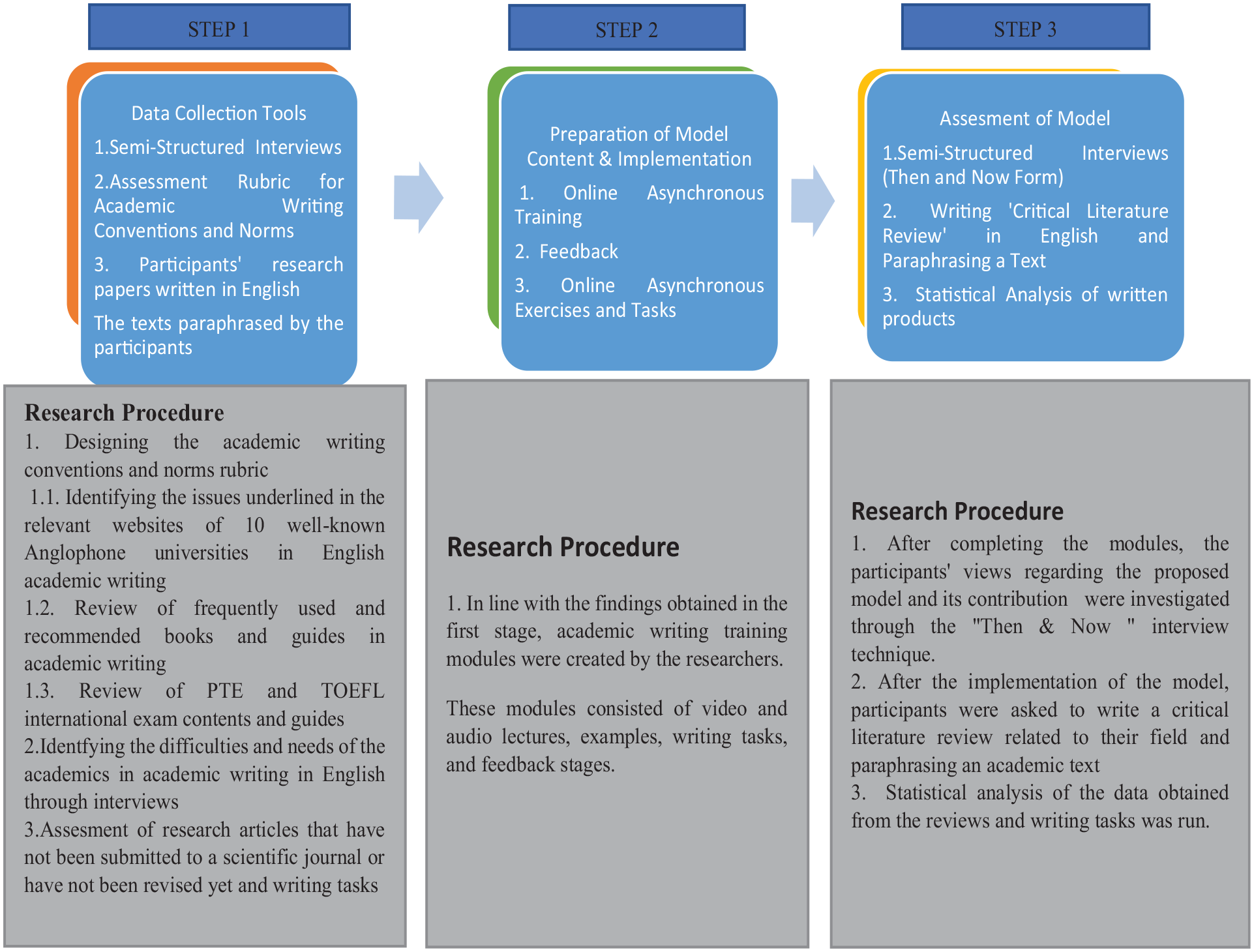
Research process of the study.
Participants of the Study
Nine academics from a state university in Turkey participated in the study. For the research, non-probability purposive sampling technique was adopted. The rationale for the use of purposive sampling is that participants were required to publish in English as a part of the institutional policy. Eight out of nine participants had Ph.D. degrees in their fields, while one participant was a Ph.D. candidate, and all participants had experience of publishing (Table 1).
Demographic Information of Participants.

Data Collection Tools
The data collection tools consisted of semi-structured interviews (Then-and-Now interviews) and the participants’ written documents as the pre- and post-tutoring data.
Semi-Structured Interviews
Semi-structured interviews were employed in the study to gain in-depth understanding of participants’ knowledge and experiences with academic writing before the tutoring as well as the participants’ views regarding the effectiveness of the developed model. At the first stage, interviews before the tutorial were conducted to determine participants’ approaches, difficulties, and needs in English academic writing. At the end of the tutoring, post-interviews were conducted with the rationale of “then-and-now interviews.” These interviews were employed to investigate participants’ views on tutoring and the contribution of the model to their academic writing skills. The interviews were conducted in Turkish to make participants easily voice their feelings, ideas, and experiences for nearly 20–35 minutes. Sessions were recorded and then transcribed.
Writing Tasks
Participants were asked to write before, during, and after the tutoring. In the first phase, two writing tasks were sought; they were requested to share one of their unsubmitted manuscripts to be analyzed, and to paraphrase an academic 200-word text. In the second phase, during the tutoring, writing exercises regarding each theme were assigned. In the third phase, participants underwent a post-tutoring writing stage encompassing writing a critical review and paraphrasing of an academic text.
Procedure
The research process consisted of three stages. At the first stage, the themes regarding the conventions and norms were determined. At the second stage, the contents were constructed. At the third stage, the model was implemented. For 8 weeks, the researchers asynchronously taught the modules, consisting of examples, assignments, and feedback sessions. (For detailed information about the procedures, please see Figure 1). Figure 2 shows the content of the tutorial modules.
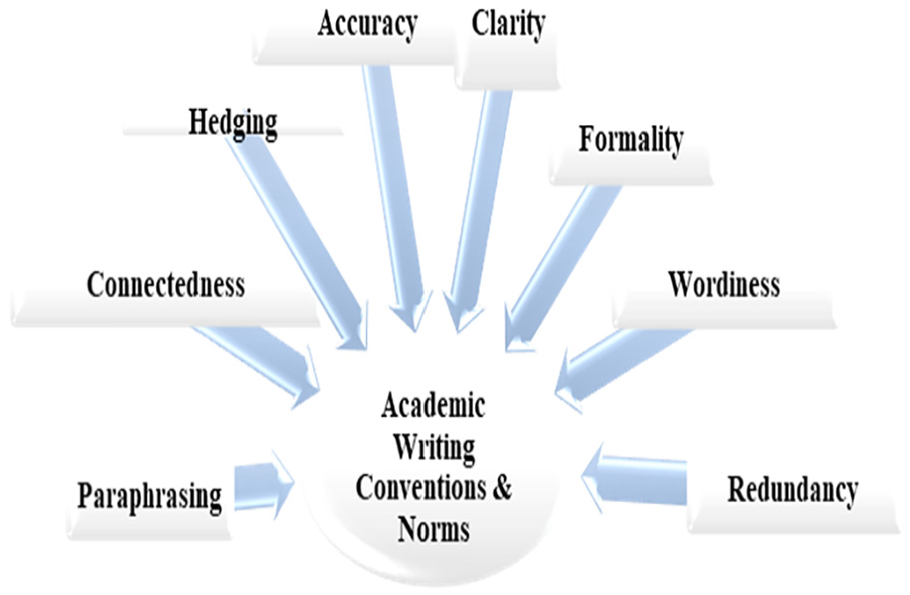
Contents of the tutorial module.
Data Analysis
The qualitative and quantitative data were sequentially analyzed. Content analysis was used to analyze the qualitative data (please see the Supplemental Material). First, the researchers formed codes based on the participants’ responses. Then, the categories and themes were obtained. To establish the coding reliability, the researchers studied with an invited coder who had experience in content analysis. In case of any disagreement, discussion sessions were held and entire agreement was reached. The data obtained from the writing tasks were analyzed through textual analysis. First, a rubric was formed to analyze the research manuscripts and critical reviews. The analyses have been conducted based on particularly erroneous, poor, and unconventional language use. It should be noted that spelling errors were not seen as a lack of knowledge, and this topic was not included in the model. Regarding paraphrasing analysis, Keck’s (2006) taxonomy was used. The taxonomy included four categories: near copy (50% or more words contained within unique links), minimal revision (20–49% of words contained within unique links), moderate revision (1–19% words contained within unique links), and substantial revision (no unique links). Keck (2006) explains unique links as “individual lexical words (i.e., nouns, verbs, adjectives, or adverbs), or exactly copied strings of words used in the paraphrase that (a) also occurred in the original excerpt but, (b) occurred in no other place in the original text” (p. 266). Keck (2006) also defines general links “as lexical words used in the paraphrase that occurred in the original excerpt, but that also occurred elsewhere in the original text” (p. 266). The textual analysis of the participants’ papers was done according to the themes shown in Figure 3.

Identified themes for the textual analysis.
To find whether there were any statistically significant differences between pre- and post-test scores, the obtained data were transferred to SPSS 20.0, and Wilcoxon Signed Rank Test was performed.
Results
RQ1. What are the English L2 Academics’ Knowledge and Actual Performances Regarding the AW Conventions and Norms Before the Tutoring?
Interviews regarding participants’ knowledge
The interviews before tutoring showed that participants had limited and surface knowledge regarding the AW conventions and norms in English before tutoring; however, they attached particular attention to grammar, connectedness, lexis, and formality. Writers paid considerable attention to grammatical issues ranging from syntax to more specific elements such as tense use and voice (active/passive). Moreover, the data showed that most participants considered grammar essential in constructing their papers. For example, one of the participants stated that: I write in a standard way. I pay attention to the rules, I try to write in accordance with word order-subject-verb-and-object. (Interviewee 3)
Regarding the knowledge about the conventions and norms, most participants referred to the similar issues. However, only one of the participants focused on a different issue: paraphrasing. She reflected her views on the paraphrasing as follows: I am reading from English sources while writing. After reading in English, I need to express the idea of the original text in a different way. Of course, it is not possible to write in the same way as it is in the original text. I try to express it in a different way. (Interviewee 4)
The relevant data also revealed that participants display variations regarding their needs in line with their L2 proficiency and previous writing experiences. In addition, more than half of the participants stated that choosing the correct word for their scientific papers among many alternatives leads to difficulties. One of the participants referring to this issue said: Vocabulary use, that is, most of the time, I may be confused about the meaning of words. Indeed, there are problems in deciding whether the word is appropriate or not. (Interviewee 2)
One of the most striking findings was that when writing in English, translation was a very commonly used strategy, and some of the participants said that they did not attempt to directly write in English, and therefore, relying on translation took more time and effort. As an example: When I send my studies to foreign journals, they do not understand the contents that I translate. We think in Turkish. For example, they say that “you translate thinking in Turkish.” (Interviewee 3)
Interviews before the tutoring revealed that the issues highlighted and the difficulties and challenges they encounter in academic writing are considerably similar.
Textual analysis regarding actual performances
The results obtained from the textual analysis of pre-tutoring outcomes also supported the views of participants. In terms of accuracy, the common problems were found in the use of determiners, prepositions, subject-verb agreement, passive use, unconventional vocabulary use, sentence fragments, syntax, pronouns, and auxiliary verbs. The following extracts illustrate the pre-tutoring outcomes for accuracy: … listen … program which ( … the sample size should ( *The correct components of the instances are given in parenthesis.
Another theme was about the clarity of the expressions and it was seen that there were problems regarding the use of demonstrative pronouns. However, the norm of clarity was violated less than the accuracy. The following examples referring to clarity were taken from the participants’ manuscripts: …may suggest researchers to investigate … the students are supported that
Informal words, contractions, the inclusion of phrasal verbs, and run-on expressions were other patterns found to be unconventional. The following extracts exemplify the informality: The fifth section … sport
Wordy and redundant expressions were among the prominent pre-tutorial examples of unconventional use. The following extracts exemplify the redundant and wordy phrases in the participants’ texts: for …data
Hedging was the other themes included in the modules. The participants’ hedging use was limited to modal verbs and their texts include somewhat assertive language. The following extracts illustrate this strong voice of writing: This Their efforts
The textual analysis findings showed that L2 academic writers did not have considerable constraints in terms of connectedness. The following example is a rare connectedness problem in the participants’ manuscripts: Notwithstanding his pragmatism, … (pre-test, participant 4)
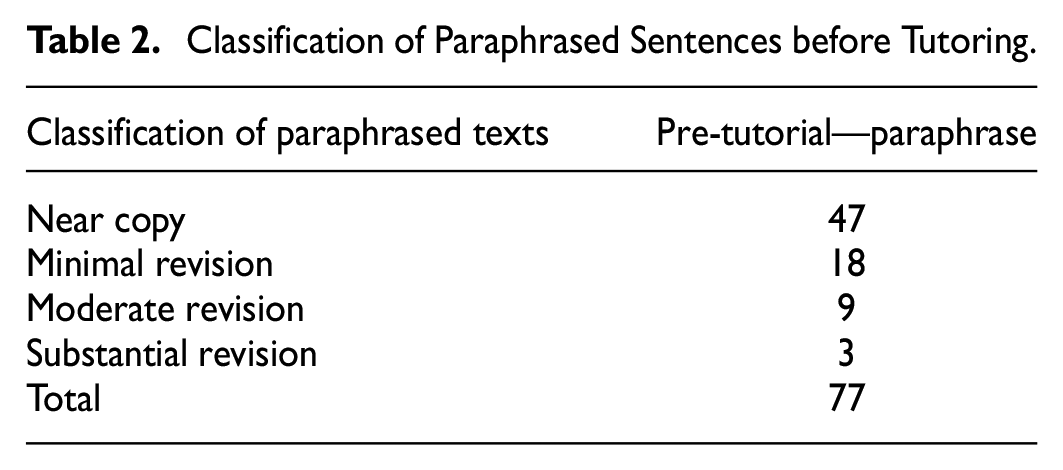
Following Keck’s taxonomy, the participants’ paraphrasing performances were analyzed. Table 2 shows that most of the writers were able to paraphrase the original source with minimal change. This level of restatement was seen as unacceptable.
Classification of Paraphrased Sentences before Tutoring.
RQ2: What are the English L2 Academics’ Views about the Proposed Online Professional Development Model on AW Conventions and Norms After the Tutoring?
Following the tutoring, “then-and-now interviews” were conducted to obtain participants’ views on the effectiveness of the online academic writing tutoring. Given the motivation of joining this tutoring, they regarded the AW instruction as an opportunity to be proficient in their academic lives. In addition to the fact that publishing in English was mandatory, this meanwhile was a source of anxiety. One of the participants expressed her thoughts: I need to learn writing to have international studies, and for this reason I participated in this course. (Interviewee 1)
The second theme was related to the accuracy in academic writing. The data showed that before the tutoring, some participants made structural errors merely by employing their background knowledge apart from the common grammatical rules of English. However, since they had no conventional knowledge of structure (e.g., the common use of the word “research” as an uncountable noun) they were seen to use unconventional preferences. The tutoring seemed to create an awareness of accuracy. One of the participants shared her thoughts: In other words, in terms of grammar, this is what I believe, you know that after giving all the grammar rules in a course like this, yes, you cannot say that you are a super writer. This is something that requires a process. Thus, the important thing here is actually awareness. (Interviewee 7)
Though clarity is somewhat abstract to achieve, the tutoring made the participants more aware of how important it is to understand correctly. As for the economy of expressions, it was seen that all participants have benefited from the tutoring, including the modules of “wordiness and redundancy.” Participants have minimized their misconceptions about ornamental writing, which they regarded as a symbol of quality before the tutoring emphasizing the necessity of being concise, one of the participants stated: It was one of the things that we had as a misconception. That is, we assumed that writing with ornamental or uncommon words would be better. My awareness has strengthened in this sense. (Interviewee 8).
Another major concern of academic writing is the use formal language which exhibits the most dramatic stylistic shift from informal to formal use. The results showed that some of the participants have already had awareness of formality to some extent; however, their awareness level and knowledge on formal versus informal distinction showed considerable variations. After tutoring, they agreed upon the contribution of the instruction in increasing their awareness of formality with concrete examples and exercises. One of participants commented: I have already paid attention to formality. In other words, I was very careful about using formal expressions. This study helped with the issue of being sure. I’m sure of what I do… In this sense, of course, the course was supportive. (Interviewee 5)
The participants also evaluated the connectedness theme. Indeed, some participants were aware of the importance of providing the flow between and within their sentences and paragraphs, while others highlighted that the fundamental contribution of the tutoring is the enhanced awareness of text flow. One of the participants shared the contribution of the tutoring as follows: For example, prior to this intervention, I was unaware of such a thing, so when I translated the Turkish into English, I assumed everything perfect. But that is not the case, so it is necessary to think about it from that perspective and look at it again. The instruction had such an effect. (Interviewee 7)
Another theme is the concept of cautious language use. The data on the employment of hedging devices in academic writing revealed that tutoring contributed to increasing awareness and learning to use a less strong tone. For example, regarding the difference in awareness and knowledge on hedging use in English, one of the participants stated that she did not know how to use hedging devices in English. At the end of the tutoring, she has eliminated this problem and learned a variety of techniques. She put her feelings into the following phrases: In general, while writing in Turkish, I know how to use cautious language to some extent, but I didn’t know how to use it in English. (Interviewee 2)
The participants were also asked to express their experiences and views on paraphrasing skills before and after the tutoring. The participants’ common strategy to paraphrase was limited to partial lexical changes. Thanks to this tutoring, they have learned the appropriate ways and strategies for using source texts such as “changing verb form,”“combining sentences,”“dividing sentences,”“using synonyms,” and “changing word form” while integrating source texts into their papers. Referring to her personal experiences, one of the participants shared that: …after this instruction, I realized that I need to express what I understand with my own words instead of some lexical changes. But now, I read the sentences that I need to use, and then I write with my own sentences. (Interviewee 1)
The participants agreed upon the contribution of writing tasks and feedback provided during the tutoring. For example, regarding the writing exercises and feedback sessions, participants made the following remarks: These exercises were extremely beneficial in reinforcing the trainings. (Interviewee 5) The feedback has been helpful. It was fine. I mean, it was directly related to the subject… (Interviewee 3)
In addition to this, they also evaluated the most challenging and easiest themes offered through the model.
Figure 4 shows the themes that participants perceived most challenging during the academic writing course. As can be seen, nearly half of the participants stated paraphrasing as the most challenging theme. On the other hand, as Figure 5 shows, participants perceived accuracy, hedging, connectedness as the easiest themes included in the professional development model.

The most challenging themes.

The easiest themes.
RQ3: Does this Proposed Model Affect Writers’ Performances regarding the Determined Conventions and Norms?
The participants’ manuscripts before the tutoring and their critical reviews subsequent to the tutoring were manually investigated for accuracy theme; however, for other themes the “unconventional language uses” were the focus of the analyses. In other words, this study is not based on error analysis. The data obtained from paraphrasing tasks were analyzed according to the four categories of Keck’s taxonomy. Table 3 shows the number of sentences found for each category.
Classification of Paraphrased Sentences.
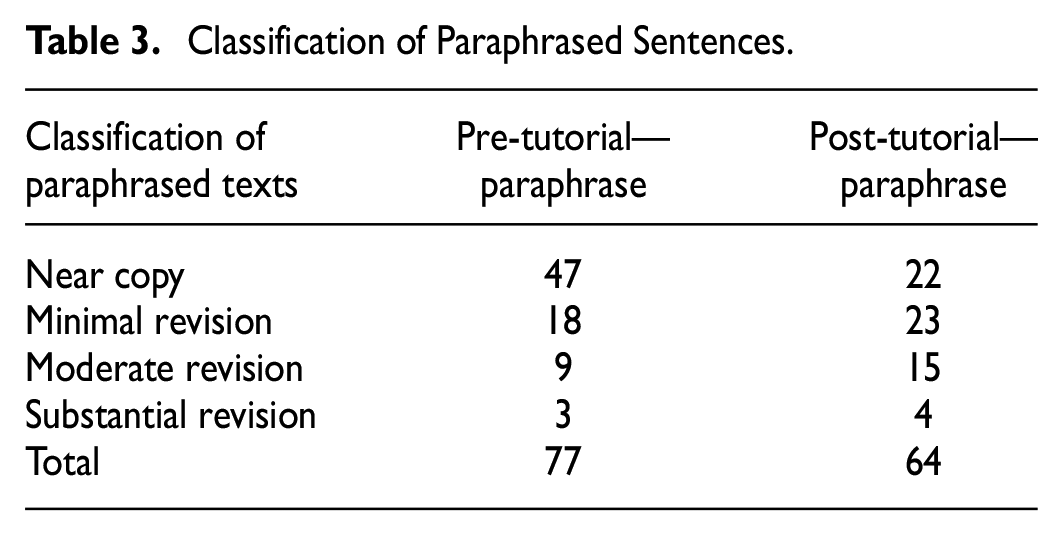
According to Table 3, the number of sentences defined as near copy fell by half in post-tutorial paraphrase task compared to the pre-tutoring products. Thus, decrease in the near copy sentences is noticeable after the tutoring. The number of the sentences categorized as minimal revision and moderate revision increased after the tutoring though no dramatic increase occured. The number of the sentences categorized under substantial revision is lower than the other categories analyzed. (For further examples, see Supplemental Materials).
Figure 6 shows the frequencies of pre- and post-tutoring for accuracy, clarity, formality, wordiness, redundancy, hedging, and connectedness themes. The frequency of the errors for accuracy theme for pre- and post-test is given in Figure 6. As the figure shows, participants’ pre- and post-tests products include errors; however, the errors found in the pre-test also have decreased in the post-test. Textual analysis showed that participants’ erroneous language use encompasses errors ranging from determiners, prepositions, subject-verb agreement, passive voices to sentence fragments for post-tutoring outcomes. The following extracts illustrate errors related to accuracy for post- test results:

Frequency of outcomes of pre and post- tutoring for themes in the module.
… which effect ( …. hypothesis and it assume ( *The correct components of the instances are given in parenthesis.
Writing clearly and eliminating or minimizing the ambiguity in academic texts is among the prerequisite steps for scholarly writing. The frequencies of pre- and post-tutoring outcomes for clarity theme are given in Figure 6. As the figure shows, the frequency of problems in the context of clarity is higher for the pre-test. The frequency of clarity-related problems, on the other hand, is lower for post-test.
The following examples were taken from the participants’ manuscripts: …. their expectation from their teachers and their parents is that Variables affecting the social status … .
The frequency of formality-related problems for pre- and post-test products is given in Figure 6. As can be seen, there is a decrease in the number of informal uses for post-test. In addition to this, textual analysis displayed that in pre and post-test products, participants used informal features such as informal words, phrasal verbs, run-on expressions, and contractions. However, the number of these informal features showed a significant decrease in post-test products. The instance was taken from participants’ papers: ….learning and
Eliminating wordiness is one of the conventions of academic writing. The frequencies of the outcomes obtained from the analysis of pre- and post-tutoring are given in Figure 6. All the participants’ texts included wordy phrases in pre and post-tests to some extent. However, the number of the wordy phrases has decreased in post-test. The following extract illustrates the wordy phrases found in the post-test products.
… the main purpose of homework is to teach… (post-test, participant 6) (For further examples, see Supplemental Material)
In academic writing, authors’ primary purposes are to convey their messages clearly and directly eliminating redundant expressions. The frequencies of redundant phrases in participants’ texts are given in Figure 6. The figure shows that in post-test products, participants wrote fewer redundant expressions, and they attempted to eliminate redundancy focusing on the principle of economy of expression. The following extract exemplifies the redundant phrases in participants’ post-tests products: ….take responsibility for their
Hedging devices constitute an essential part of academic writing. Figure 6 shows the frequency of pre- and post-tutoring outcomes related to cautious language use. This figure displays that some participants tended to use words with a strong tone, particularly in the pre-test. However, as shown in the figure, the strong tone of the writing was minimized in the post-test. The following extract illustrates the use of a strong tone: … a concession that
The analyses also displayed that participants’ texts showed a lack of variability concerning the use of hedging devices such as adjective and adverb hedges, quantifier hedges, and possibility hedges before the tutoring.
The last theme given in Figure 6 is connectedness. Connectedness refers to the link and flow in a text within and between sentences. In this study, connectedness is used in terms of meaningful and accurate employment of cohesive devices such as conjunctions, transitions, and pronouns. As Figure 6 shows, participants’ problems related to connectedness were not at high levels in the pre-tests, and a decrease can be seen in the post-test products.
The results of the quantitative analysis also support the textual analysis and interview findings. In this study, the Wilcoxon Signed Rank Test was performed to determine whether any statistically significant difference exists between pre- and post-tutoring outcomes. The following tables display Wilcoxon Signed Ranks Test results for accuracy, clarity, formality, wordiness, redundancy, hedging, connectedness, and paraphrasing themes.
Table 4 shows the quantitative assessment of the developed model regarding accuracy, clarity, formality, wordiness, redundancy, hedging, and connectedness themes comparing the scores before and after the tutoring. As the table shows, as a result of Wilcoxon Signed Rank Test, there is a statistically significant difference between pre- and post-test outcomes for accuracy, clarity, and redundancy themes. A statistically significant difference is not seen regarding formality, wordiness, hedging, and connectedness themes.
Wilcoxon Test Results for Tutorial Themes Obtained From Pre-Post-Test.
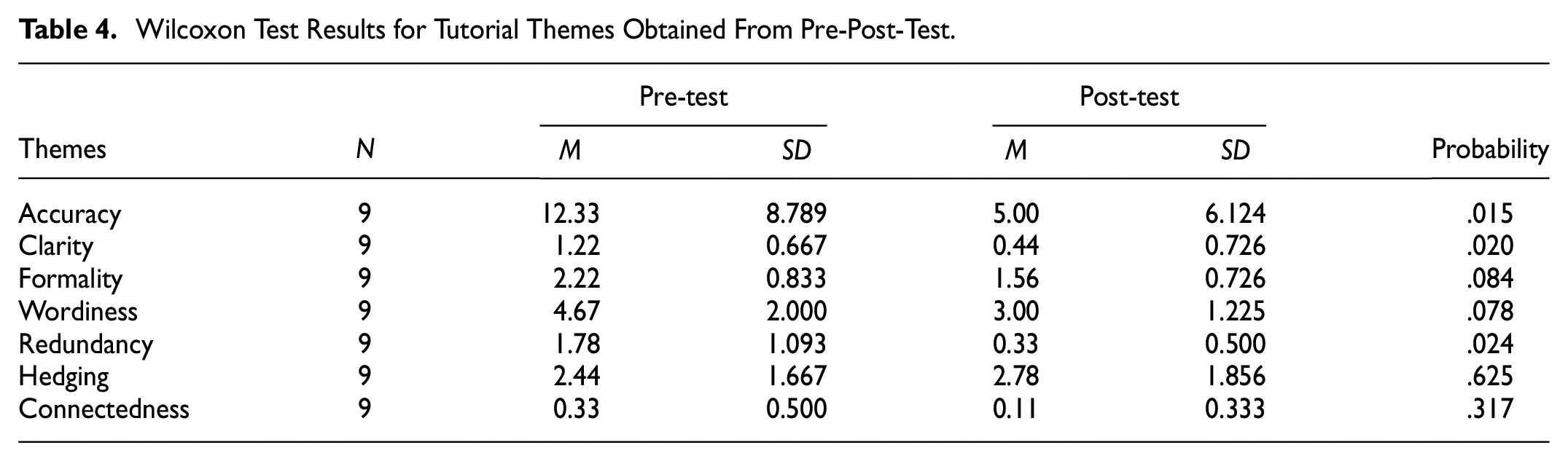
Table 5 displays participants’ pre- and post-tutorial paraphrase attempts and their identified categories.
Wilcoxon Signed Rank Test Results for Paraphrasing Tutorial Obtained from Pre- and-Post-test.

The results of Table 5 showed that only in the near copy category, a statistical difference was found between the participants’ performances before and after the tutoring. Thus, for the near copy category, the positive effect of tutoring can be seen. In a comparison of the pre- and post-paraphrasing tasks for minimal revision, moderate revision, and substantial revision categories, a statistical difference was not noted.
Discussion
This study has sought to identify non-native English academics’ knowledge, awareness, and practices of the conventions and norms of academic writing and to develop an online professional development model identifying fundamental writing conventions and norms following certain procedures. Subsequent to the development of these conventions and norms, we aimed to evaluate the effectiveness of this model on the participants’ academic writing performances. This study attempted to highlight the vitality of conducting interventional studies going beyond document analyses or descriptive findings to enhance academic writing skills that require the theoretical knowledge to be practiced in actual cases.
The data drawn from the interviews before the tutoring have provided a general framework regarding the participants’ knowledge, proficiency, and the challenges in English academic writing. The results showed that, before the tutoring, the participants were aware of some elements of academic writing at a basic level. They were found to rely on translation from their native language into English as a scholarly writing strategy. This conclusion obtained from the interviews is aligned with the previous studies (Jeyaraj, 2020; Ma, 2020). This implies that L2 academic writers might think in Turkish and construct their texts in English, which affects the quality of writing. Some participants’ limited knowledge of grammar, lexis, and exposure to English, even in instructional settings, may be seen as a fundamental reason for these difficulties, and this may lead to the use of translation as a strategy. The ability to notice, understand, and apply the scholarly writing conventions and norms may be harmed by translating from the first language to English. Even if these academic writers translate their studies from their native language into English, they should develop a revision habit rather than a surface level of editing to minimize unusual language use.
As for the determined conventions and norms, explicit instruction, in particular, plays a facilitating role to minimize the accuracy problems. This conclusion is in line with the existing literature that corroborates the effectiveness of the explicit instruction on grammar skills (Hinkel, 2004). However, it is very hard to acquire this linguistic competence in a short time; therefore, inaccurate and unconventional uses in participants’ texts should be monitored within a certain time frame. The structurally unconventional employment in a text may reveal the participants’ misconceptions toward scholarly writing. As this study attempted to minimize these misconceptions under the eight themes, it seems to fill a gap for conceptual domain of writing.
Increased awareness was also mentioned for the theme of clarity. Participants’ views revealed that their available attention was enhanced by means of tutoring. As the quantitative results and textual analyses indicated, participants’ clarity-related problems were fewer in pre- and post-test products. This result may also be attributed to the participants’ previous writing experiences since they have already written in both languages.
According to the textual analysis results, the norm of avoiding wordiness and redundancy showed a dramatic change before and after the tutoring.
The perception that using ornamental, complex, or long expressions makes the text sophisticated may have influenced academics’ writing style and encouraged the employment of redundant and wordy expressions. As to the norm of the formal language, theoretically well-known but practically one of the most challenging themes, participants tended to employ informal words and they were somewhat unsure about what is acknowledged as formal versus informal. They tended to justify their informal use with any coincidence of a few informal expressions, due to any reason, in a published text. This de facto even reminds the importance of explicit instruction with corrective feedback.
This online professional development model is also concerned with connectedness in academic writing. Strikingly, the textual analyses revealed that the participants’ academic texts did not contain problematic features regarding connectedness. The reason for this somewhat high awareness may be the required language exams that Turkish scholars have to pass. To survive in academia, non-native English speakers generally spend considerable time on proficiency exams that assess their knowledge in their fields, including the appropriate use of conjunctions, transitions, and pronouns. To support this, in Al-Jarf’s (2001) study, the employment of conjunctions was found to be the easiest topic among the non-native English users too.
The study also focused on the use of hedging devices in academic texts and the developed model contributed to participants’ knowledge. However, what deserves particular attention is that participants’ hedging use was limited to modal auxiliaries. Their texts showed no variations in terms of hedges, while hedging devices can be in different forms such as adverbs, adjectives, modals, and mental/emotive verbs (Hinkel, 2004), which are widely used in academic texts. Due to the lack of conceptual background and practical experiences, even if they are at the tertiary level, academics often fail to understand where and how to use cautious language in their studies. Thus, many researchers support the contribution of explicit instruction on the use of hedging devices (e.g., Firoozjahantigh et al., 2021; Hyland, 1994, 2000, 2004) too.
Paraphrasing seems to be one of the considerably attended issues of scholarly writing in several university writing centers’ websites and printed sources. This theme was placed in the proposed model. Participants were anxious about paraphrasing, with many misconceptions of the norms of accurate paraphrasing, such as adding their comments, changing vocabulary, and changing structure in terms of range and appropriateness. L2 writers’ concern about performing correct paraphrasing, as understood in Hirvela and Du’s (2013) study, needs to be seen from two perspectives: one is plagiarism awareness, and the other is knowledge transformation, which is probably the most important expectation to achieve among the researchers. That is, researchers are expected to be evaluative when they use other researchers’ arguments, views, or findings in their own study with unity and appropriateness. Correct paraphrasing is most probably the sole way to achieve this purpose. Despite increased awareness, the participants in the study still experienced the challenging nature of paraphrasing and acknowledged paraphrasing as the most difficult tutorial theme. The quantitative results supported the above-mentioned finding that participants expanded their knowledge of paraphrasing to some extent; however, they mostly relied on source text, though the number of near copy sentences decreased in post-tutorial outcomes. We assume that in cases where L2 writers may not be aware of the conventions of source text use in the Anglophone discourse community, they can unintentionally commit the act of plagiarism. The instructions, therefore, should cover over a long period since learning to incorporate sources into one’s writing demands more than a few weeks or months (Li & Casanave, 2012). It should be borne in mind that some participants’ texts can be categorized as patchwriting since paraphrasing skill is a developmental process, and it would be too assertive to expect writers to achieve appropriate paraphrasing immediately. The research in the literature supporting this assumption revealed that correct and appropriate paraphrasing needs time (Cumming et al., 2018; Wette, 2017; Yağız, 2019), and instructional sustainability and practical experiences with corrective feedback should be insisted on . Regarding the effectiveness of the developed model, participants’ reports showing the contribution of the explicit instruction on incorporating sources is an essential finding of the current research, and this finding aligns with the previous studies (Choi, 2012; Hirvela, 2017; Storch, 2012; Wette, 2017; Yağız, 2019).
The participants were asked to assess the themes from the easiest to the most difficult. They reported accuracy, hedging, and connectedness as the easiest themes and paraphrasing as the most difficult theme they handled. In terms of ranking the most useful theme, formality was frequently reported as the most useful among the themes instructed. These rankings can be influenced by Turkish researchers’ English proficiency test preparation styles. From the graduate period on, novice researchers begin to take the required scores from the multiple choice questions. Test takers generally concentrate on structural, lexical, and paragraph comprehension and cohesion related questions. This tendency may both contribute to their knowledge of grammatical rules and conjunction selection and positively affect writers’ performance of certain conventions and norms, such as accurate paraphrasing and avoiding wordiness, to some extent. However, explicit knowledge and awareness-enhancing courses, seminars, and activities can be more beneficial for L2 language users at the tertiary level than taking the required exams.
Conclusion
The knowledge of English vocabulary and grammar or the ability use English effectively in daily oral communication does not guarantee the production of scientific products in academia. Academics who are aware of scholarly writing conventions and norms can more easily have their manuscripts published. This study provided an explicit tutorial equipped with widely acknowledged principles, and this tutorial considerably increased the participants’ knowledge and awareness. The themes of the model seem clear enough to be part of EAP instructional materials and courses for teachers and students. They may easily be taught, tested, and enlarged rather than being abstract components of writing. Except for the accuracy-related errors, this study has focused on the widely acknowledged conventions and norms of scholarly writing, which can be applied to all disciplines.
The findings revealed the model’s efficacy in improving scholars’ academic writing skills, particularly in raising their awareness and emphasizing the role of explicit instruction. The study emphasized that acquiring academic writing skills is a developmental process and entails actual practices. Thus, the findings of the study confirmed the urgent need for compulsory academic writing courses because there seems to be a lack of explicit instruction regarding academic writing in English, and particularly novice writers experience considerable challenges due to a lack of explicit instruction and experience. On the other hand, the study was conducted with a limited number of participants, and further studies can be conducted with more participants including scholars studying in other disciplines. To reach some generalizations, these conventions and norms may be evaluated with more participants. Moreover, researchers can also investigate the scholars’ emotions and feelings that have the potential to impact their writing performance during the intervention.
Supplemental Material
sj-docx-1-sgo-10.1177_21582440231212786 – Supplemental material for Developing and Evaluating an Online Professional Development Model on Academic Writing Conventions and Norms in English
Supplemental material, sj-docx-1-sgo-10.1177_21582440231212786 for Developing and Evaluating an Online Professional Development Model on Academic Writing Conventions and Norms in English by Fatma Kaya and Oktay Yağız in SAGE Open
Footnotes
Authors’ Note
This study was based on the doctoral dissertation of the first author.
Declaration of Conflicting Interests
The author(s) declared no potential conflicts of interest with respect to the research, authorship, and/or publication of this article.
Funding
The author(s) disclosed receipt of the following financial support for the research, authorship, and/or publication of this article: This study was funded by Research Fund of the Atatürk University, Project Number: 9597.

Supplemental Material
Supplemental material for this article is available online.
References
Supplementary Material
Please find the following supplemental material available below.
For Open Access articles published under a Creative Commons License, all supplemental material carries the same license as the article it is associated with.
For non-Open Access articles published, all supplemental material carries a non-exclusive license, and permission requests for re-use of supplemental material or any part of supplemental material shall be sent directly to the copyright owner as specified in the copyright notice associated with the article.
