



Abstract
This study examined the affordances of an online learning platform used in a Chinese university for online teaching and learning during the pandemic period. A usefulness theoretical perspective was adopted to examine three types of affordances of the platform, namely, educational affordances, social affordances, and technological affordances. Both quantitative and qualitative data were collected and analyzed, including survey questionnaires, observation, and semi-structured interviews. A range of educational affordances emerged from the results, including Representation, Resource sharing, Community-building, Promoting interaction, and Administration. However, despite the respondents’ perceived ease of use of the platform, results indicate that the platform played a limited role in increasing learners’ social presence. A framework for examining usefulness has been developed based on the results. Pedagogical implications are proposed and suggestions for future research are provided.
Introduction
The advance of educational technology has triggered an ever-growing enrollment in distance education (Andel et al., 2020). The use of various online learning systems in higher education is increasing considerably due to their unique advantages over conventional classroom settings (Ansong-Gyimah, 2020). As such, online education has been considered a potential alternative to traditional classroom-based teaching and learning (Liu et al., 2010). The outbreak of the COVID-19 pandemic has severely affected the normal educational activities on campus in colleges and universities across the world. Alternatively, distance learning has become a solution to responding to such a global educational situation. As a result, various online education platforms have been selected and used for online teaching and learning. Thus far, however, few empirical studies have been conducted to examine the affordances of these online learning platforms. Particularly, there is a dearth of a theoretical framework for the analysis of the affordances of an online learning system (Tang & Hew, 2019).
To this end, the present study aimed to explore the affordances of an online learning platform, taking a usefulness theoretical perspective. Both the usability and utility of the platform were examined. Specifically, three research questions were addressed:
RQ1: What are the educational affordances of the platform for teaching and learning?
RQ2: What are the social affordances of the platform for teaching and learning?
RQ3: What are the technological affordances of the platform for teaching and learning?
This study is of significance in several aspects. To begin with, it would contribute to the existing literature on the affordances of online learning systems by providing a fresh theoretical perspective to analyze the findings. Besides, the study would make a contribution to pedagogical practice with its implications for teachers to select apt platforms and design appropriate activities while conducting online teaching and learning. Moreover, the results of this study may also offer insights for improving the design and development of online learning platforms to enhance learners’ online learning experience.
Literature Review
Previous Studies on the Affordances of Online Learning Platforms
The term ‘affordance’ was first introduced in the field of ecological psychology by psychologist Gibson (1979) to indicate the relationships between the environment and the animal. Norman (1988) defines affordances as “the perceived and actual properties of the thing, primarily those fundamental properties that determine just how the thing could possibly be used” (p. 9). Despite the burgeoning research on the affordances of various educational technologies, however, no consent has been reached on the definition of the concept. Xue and Churchill (2019) propose that education affordances can be defined as opportunities for an educational activity that are determined and supported by perceived and actual features of an object or an environment.
A large body of empirical research has been conducted to examine the affordances of different online learning systems. The foci of the researchers were around the prominent online platforms utilized by educational institutions such as Moodle (Ma et al., 2020; Mpungose & Khoza, 2020), Edmodo (Cao & Liu, 2019; Ryane & El faddouli, 2020; Nami, 2022; Wahyuni et al., 2019), Google Classroom (Ansong-Gyimah, 2020; Francom et al., 2020; Hallal et al., 2020; Wassef & Elkhamisy, 2020), and Zoom (Halpin & Lockwood, 2019; Singhal, 2020).
Learners’ perceptions and attitudes toward the use of these platforms were the most researched topic. Findings suggested that students were positive about using these platforms for learning as they were connected with peers, content, teachers, and other learning resources (Ma et al., 2020; Mpungose & Khoza, 2020; Nami, 2022; Singhal, 2020).
A range of affordances of these online learning platforms attributed to learners’ positive attitudes and their increased satisfaction, such as ease of use and access (Albashtawi & Al Bataineh, 2020; Kumar et al., 2020), quick delivery and accessibility of learning resources (Hallal et al., 2020; Shaharanee et al., 2016), promoted interaction and engagement (Francom et al., 2020; Wassef & Elkhamisy, 2020), assessment and feedback (Cao & Liu, 2019; Dash, 2019; Shaharanee et al., 2016), improved quality of work (Ansong-Gyimah, 2020; Francom et al., 2020), collaboration (Gupta & Pathania, 2021), and notification (Kumar et al., 2020).
For example, Wassef and Elkhamisy (2020) examined the effectiveness of Google Classroom in assessing students’ learning outcomes in a medical course. It was proved that the platform was effective in performing formative assessments and providing ongoing timely feedback, which motivated learners and promoted their engagement, and thus their learning outcomes improved. Besides, studies found that online educational platforms could be used for blended learning, in which learners’ critical thinking skills were enhanced as more opportunities were provided for communication, particularly for those shy students (Cao & Liu, 2019; Ryane & El faddouli, 2020).
Moreover, the combined use of online learning platforms with other tools has also been investigated. For instance, Halpin & Lockwood (2019) discovered that the integrated use of Twitter with Zoom not only promoted collaborative learning but also resulted in the active participation of students who were too shy to participate in face-to-face sessions. Other researchers also affirmed that the multi-functionalities of online learning platforms combined with social media applications provided students with rich learning sources and guaranteed their learning outcomes. This improved students’ engagement and facilitated assessment, by which students applied their knowledge to resolve problems (Mpungose, 2019; Xiao et al., 2020).
However, research findings also revealed challenges in terms of using these online learning platforms for teaching and learning, such as the accessibility of the Internet and devices, along with the availability of technical expertise (Hallal et al., 2020), and the defectiveness in supporting group discussions (Mpungose, 2019). Meanwhile, studies identified that as novice users of the platform, students reported their concerns regarding using these platforms, including privacy issues, peer interaction, and interface design (Kumar et al., 2020); they also reflected their preferences for classroom learning to online learning (Roy et al., 2020).
Research Gaps
A careful review of the literature reveals several research gaps. First, most of the existing studies were designed to explore the attitudes and perceptions of learners and teachers toward using an online learning system in a quantitative way (Albashtawi & Al Bataineh, 2020). Few studies have been conducted to examine the affordances of an educational platform in a detailed and comprehensive way, using both quantitative and qualitative research methods. Second, the extant models that assess educational platforms focus either on the technological aspect of use or on the learning outcomes related to pedagogical objectives (Esnaola-Arribillaga & Bezanilla, 2020). Little research has provided a theoretical perspective to evaluate the affordances of a learning system. Third, little is known about users’ social science perceptions while learning with an educational platform (Andel et al., 2020). However, learner social presence is essential for the establishment of an optimal learning experience (Weidlich & Bastiaens, 2019), which is also a crucial factor that affects learners’ sustained engagement in an online learning environment (Brown, 2020). Thus, there is a need for analyzing the usefulness of a learning system from a theoretical perspective, which includes not only pedagogical affordances but also social affordances. To this end, the present study, based on a mixed research design, aims to fill these gaps and provide a contribution by taking a usefulness theoretical perspective to explore in detail the affordances of an online educational platform.
Usefulness Theoretical Perspective
According to Kirschner (2002), educational affordances can be defined as “those characteristics of an artifact that determine if and how a particular learning behavior could possibly be enacted within a given context (p. 14). Later, a framework was developed by Kirschner et al. (2004) to further illustrate how to examine the usefulness of an educational system. According to the framework, the evaluation of the usefulness of an educational system should include two dimensions: usability and utility. Specifically, usability deals with the extent to which a system allows users to understand and manipulate it easily to complete a learning task efficiently whereas utility refers to whether the system could afford users with functionalities needed for the accomplishment of the task (Kirschner et al., 2004). In the framework proposed by Kirschner et al. (2004), the concept of utility relates to educational affordances and social affordances, and usability associates with technological affordances. As Kirschner et al. (2004) point out, “education is always a unique combination of technology, social, and educational contexts and affordances” (p. 50).
The present study aims to examine these three affordances (educational, social, and technological) of an online learning platform, based on the theoretical framework of usefulness proposed by Kirschner et al. (2004). Since the original framework does not articulate the specific contents of each type of affordance, different constructs that emerge from the relevant literature are included in the framework to measure the affordances, as presented in Figure 1.

Usefulness theoretical framework and constructs used in this study.
Educational affordances explicate the possibility of an educational activity that is facilitated by features of a technology tool (Aagaard, 2018; Xue & Churchill, 2019). For instance, due to the multi-modality and cross-platform accessibility features of mobile social media, it can be used for teachers to combine their instructional materials with multiple information sources produced and available through different platforms for resource accessing and sharing (Xue & Churchill, 2022). It is essential for teachers to understand the educational affordances of a technology tool before they can efficiently integrate it into teaching practice (Tang & Hew, 2019). Following Xue and Churchill (2019), we define educational affordances as the teaching and learning activities that are supported by the online learning platform in this study.
Social affordances mean the features of a technology tool that facilitate social interactions among its users (Kirschner et al., 2004; Weidlich & Bastiaens, 2019). As Gaver (1996) argues, affordances “exist not just for individual action, but for social interaction as well” (p. 114). Social interaction is deemed an important element in interactive learning processes and one of the affecting factors of social interaction is social presence (Kreijns & Kirschner, 2001, 2018). According to Garrison et al. (1999), social presence refers to the capability of participants in a learning community to “project themselves socially and emotionally, as real people, through the medium of communication being used” (p. 94). The participants’ social presence can be assessed from a range of dimensions, such as affective, interactive, and cohesive (Arbaugh et al., 2008), and has been identified to impact their satisfaction, perceived learning, online social interaction, and learning outcomes (Kreijns & Kirschner, 2018; Richardson et al., 2017; Weidlich & Bastiaens, 2019). In this study, social affordances refer to the potential of the platform that enhances the participants’ social presence (Arbaugh et al., 2008).
Technological affordances refer to the design features of a technology tool that allow for the completion of a learning task in an easy way that satisfies the user (Kirschner et al., 2004). In other words, a usable design contains information specifying affordances that enable users to accomplish learning activities without technological challenges. This view echoes Davis’s (1989) argument concerning the ease of use of technology, defined as “the degree to which a person believes that using a particular system would be free of effort” (p. 320). Hence, technological affordances in this study denote the ease of use perceived by the students during their use of the platform.
Methodology
Given the nature of the research questions of this study, a mixed research design was adopted to address the research questions and to achieve triangulation (Creswell, 2012). Survey questionnaires were used for the collection of quantitative data. The qualitative data included semi-structured interviews and online observation. Ethical issues have been addressed prior to the conduct of the research.
Research Context
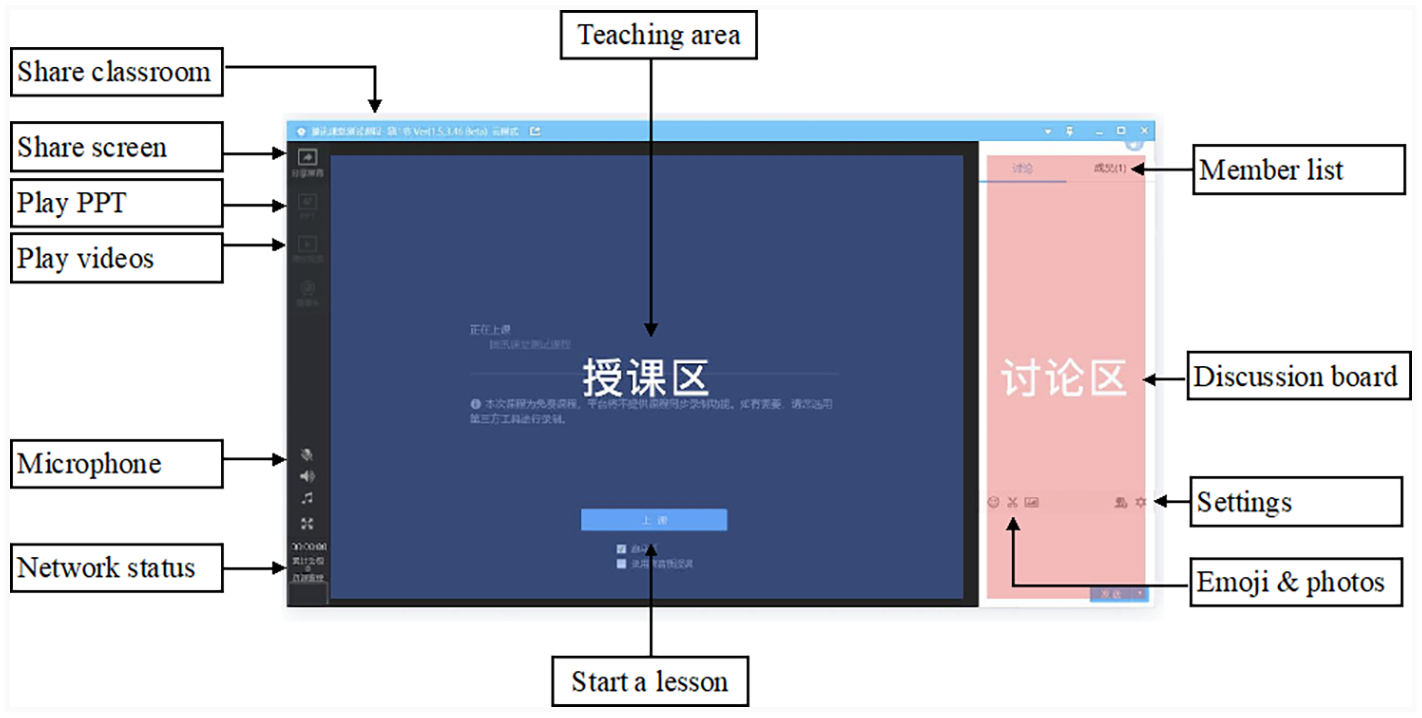
Since the outbreak of the COVID-19 pandemic, over 1,000 Chinese colleges and universities have adopted online education, and 950,000 teachers and 1.18 billion students have participated in online teaching and learning by early April 2020 (Ministry of Education of the People’s Republic of China, 2020). The platform used in this study is Tencent Classroom, a professional online educational platform developed by Tencent in 2014. According to the official report of Tencent, the number of annual courses enrolled by users of Tencent Classroom reached 34.3 million in 2020 (Tencent, 2020). The platform can serve the teachers as a channel of course delivery, through which interactions, such as Q&A and discussion between the teacher and learners can also be realized. The main functions of the platform displayed in the user interface are presented in Figure 2.
User interface of Tencent Classroom.
Participants
One Chinese university teacher conducting online instruction through the platform was selected by convenience sampling (Creswell, 2012). Thirty-two students (22 females and 10 males) who enrolled in the course that the teacher was teaching participated in the investigation. The course entitled Financial Management was a compulsory course for students majoring in Accounting. Both the teacher and students used the platform for the first time when they participated in the study. Consent was reached by all the participants, who participated in the investigation voluntarily.
Data Collection
Data were collected through multiple sources, including online observation, online surveys, and semi-structured interviews. To identify the educational affordances of the platform, the first researcher attended the course through the platform regularly to observe the teaching and learning activities that were performed through the platform. A non-participation observer approach (Merriam, 1998) was adopted, which means the researcher enrolled in the course as a student but did not participate in any activities. Field notes were made and screenshots of various teaching and learning activities were created for data analysis. Two sessions were delivered through the platform each week, and each session lasted 45 minutes. In total, 10 sessions were observed that were equal to 450-minute online observation.
To address the research questions about the social and technological affordances of the platform, an online survey containing thirteen 5-point Likert scales was conducted. The first nine questions regarding social presence were adapted from Arbaugh et al. (2008), to understand students’ perceptions of online interaction through the platform. The other four questions pertinent to technological affordances were adapted from Davis (1989) to investigate students’ perceived difficulty in using the platform. The reliability of the instrument was verified. Cronbach’s Alpha yielded internal consistencies equal to .91 for social presence and .86 for technological affordances. The survey was sent to the students when they had used the platform to learn for 2 months, and the valid response rate was 90%.
To valid the quantitative findings and further understand students’ thinking about learning with the platform, semi-structured interviews were conducted online with seven students who were selected through convenience sampling (Creswell, 2012). Each interview lasted about 40 minutes and was audio-recorded for data analysis. The interview questions focused mainly on students’ ease with operating the platform, their perceptions about teaching and learning activities performed on the platform, and their feelings about interacting with the teacher and peers through the platform.
Data Analysis
Descriptive statistics were performed with SPSS 28.0 to analyze the quantitative data collected through the survey. Qualitative data collected through field notes and interviews were analyzed with content analysis (Cho & Lee, 2014). The data were transcribed verbatim first before sending to the participants for member check (Merriam, 1998). To begin with, the first author scrutinized the texts line by line to highlight units of analysis based on the research question for open coding. Next, preliminary codes related to educational activities and students’ perceptions of using the platform that emerged from the texts were formulated on the completion of open coding. Similar codes were placed into categories, which were revised and refined until they were mutually exclusive of each other. After that, the texts were coded in a deductive way to test whether these categories could adequately represent the data, during which necessary modifications were made. The two researchers coded and analyzed the data independently. An agreement of 92% was yielded and discrepancies were resolved through discussion until consent was achieved.
To further identify the educational affordances of the platform, steps for the content analysis of visual data (Ball & Smith, 1992) were adapted to analyze the screenshots collected. All the images were sorted into categories based on the research question first. Then pure descriptions of the contents represented in the images were conducted without interpretation. Next, codes that emerged from the text data were utilized to code the descriptions, in terms of teaching and learning activities. The final categories were constructed after constant comparison (Glaser, 1978).
To examine the social affordances of the platform, descriptive statistical analysis was performed based on the data collected through the first nine items of the survey questionnaire, triangulated by content analysis with the interview data. Furthermore, to investigate the technological affordances of the platform, descriptive statistical analysis was conducted first with the data collected through the last four survey items. The findings were then validated through content analysis with the interview data.
Results
Educational Affordances
Based on the observation, a range of teaching and learning activities were performed on the platform. Five categories of educational affordances emerged from the data analysis, which are listed in Table 1.
Educational Affordances Emerging From the Online Observation.

To start with, the platform was used by the teacher as a presentational tool during the instruction. According to observation, the teacher could not only present his courseware through the platform that included multi-media files but also could make notes directly on a blank file displayed on the platform to demonstrate his thinking (see Figure 3). In this way, the platform served as a whiteboard for representation.

The platform used as a representational tool.
Next, the platform could be integrated with other platforms to build a community for learning. Based on observation, the teacher could connect the use of the platform with another mobile learning application for students to share ideas more conveniently. Students could type directly on their mobile devices and the texts they sent would be presented on the platform in the form of a “word cloud” (see Figure 4). Such a combination enabled the establishment of a mobile learning community, where synchronous communication was facilitated, and the exchange of ideas was promoted.

Community built on the platform for sharing ideas.
Moreover, various teaching and learning materials, such as course-related videos, could be shared through the platform with students. As observed, the teacher included the links to the learning resources such as videos selected from China University MOOC in his courseware and played the videos on the platform to supplement his teaching and extend students’ learning (see Figure 5).

Course-related video shared through the platform.
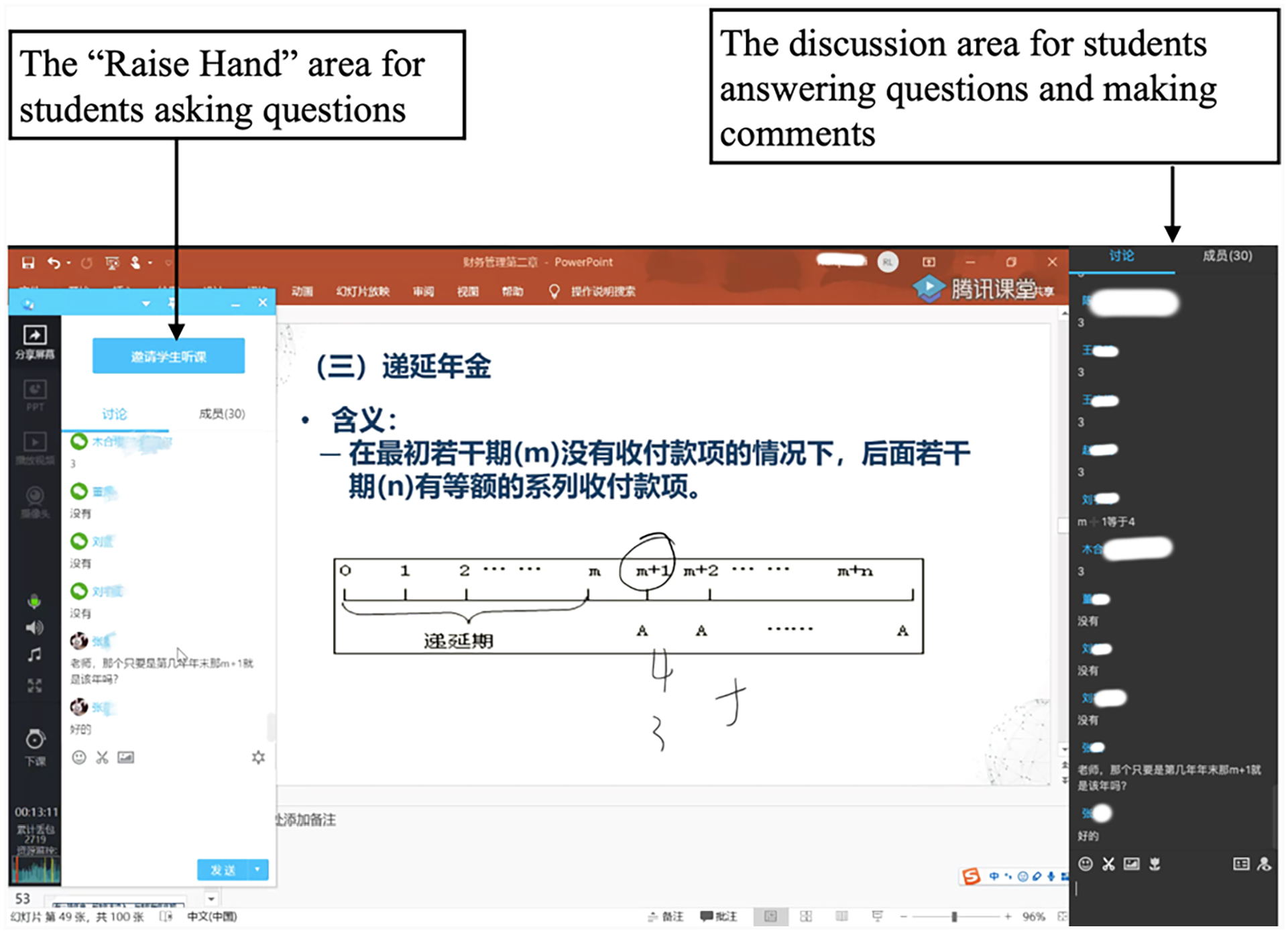
Furthermore, a virtual classroom was created on the platform where interaction between the teacher and students was promoted. Observation data provided evidence that different forms of interaction were facilitated with the use of the platform. For instance, students could answer questions and make comments during the instruction in the discussion area. At the same time, they could also raise questions through the “Raise Hand” functionality of the platform. An example of online classroom interaction is presented in Figure 6.
Interactions facilitated with the platform.
In addition, the platform could be used for managing teaching and learning activities such as registering students’ attendance. It was observed that the teacher integrated the platform with another mobile learning-management application to register students’ online attendance. The teacher sent the instruction through the platform and then students could sign in on their mobile devices in multiple ways such as GPS location (see Figure 7). The results would be registered and delivered to the teacher through the platform for assessment.

Students signing in with GPS location through the platform.
Social Affordances
Findings about the participants’ perceived social affordances are presented in Table 2. Based on the data, no more than one-third (31%) of the students contended that the platform was an excellent medium for social interaction. Only 34.5% of them felt comfortable interacting with other classmates on the platform and only 41.4% of the respondents felt comfortable participating in course discussions on the platform. While over half (55.2%) of the students felt their ideas were acknowledged, fewer people (41.4%) perceived that the platform developed their sense of collaboration.
Perceived social affordances.

Note. SA = strongly agree; A = agree; N = neutral; D = disagree; SD = strongly disagree.
To further understand the participants’ perceptions about the social affordances of the platform, interview data were analyzed. According to the interview data, while students acknowledged that the platform supported their learning, they also pointed out the drawbacks of the platform in terms of interaction. Particularly, they felt that the platform played a limited role in facilitating group discussion. As one participant stated:
Personally, I prefer face-to-face discussion in the classroom, where we can exchange ideas and critical thinking is encouraged. Online discussion may not achieve this as we are unable to conduct deep group discussions through the platform. I think group discussion such as case analysis is important for learning. Unfortunately, we can hardly do this with the platform (LY).
Meanwhile, interview data provided evidence that some students were more used to the traditional classroom learning that involves face-to-face interaction, such that they might not be used to interacting with the teacher online. Particularly, the traditional Chinese culture about “face” impacted their interaction when learning online, such as raising questions might make some students feel like losing face. As one participant informed:
I like interacting with the teacher and peers in texts. Because I feel shy when speaking with a microphone. In particular, if I put forward a “stupid” (simple) question, I am afraid they may laugh at me. I know many students have the same feelings. Even though the teacher encourages us to raise questions, we may still feel unwilling to do so. While I know I may not articulate my question clearly in texts and it takes time to type, I still don’t want to speak unless it is an urgent question (DX).
Such cultural issues were also reflected in other ways when students interacted on the platform. For example, they tended not to interrupt the teacher during the instruction out of respect for the teacher even if they had questions. As one student reported:
I would rather look for answers by searching online after the class but not ask the teacher during the class. Because I don’t want to interrupt the teacher’s instruction. Particularly, when there is nobody asking questions during the class, it may make me seem stupid if I raise a question. I don’t want to leave a bad impression on the teacher. However, if the question is an urgent one, I can ask my classmates after the class (MSH).
Next, while some participants reflected their fondness for texting on the discussion board for interaction, others also reflected concerns about discussing questions on the platform. These concerns derived mainly from the limitations of sending texts when discussing a question. Here are the statements made by the participant:
Sometimes I find I cannot explain myself clearly by texting. Others may not really figure out what you mean only through the texts you send such that misunderstanding may be generated. I think it is really hard to make yourself acknowledged by others through interacting on the platform. Also, when an answer involves equations, it is really hard to edit and type (ZYJ).
As shown in the data, a range of factors affected the participants’ perceptions of the social affordances of the platform. In particular, their perceived social presence might decrease when interacting through the platform online. This led to their preference for traditional ways of interaction in the classroom. As one participant reflected:
If allowed, I would like to communicate with my classmates face to face. When you are communicating with them online, actually you are communicating with your computer screen. However, when you are communicating with them in person, you are facing a real man. Such “distance” affects my feeling and my sense of reality in particular. Chatting in texts only brings me less sense of reality. Sometimes, I even can not feel my sense of presence when interacting online as what I sent may be neglected. By contrast, I may receive the least respect such as eye contact when interacting face to face (MSH).
Technological Affordances
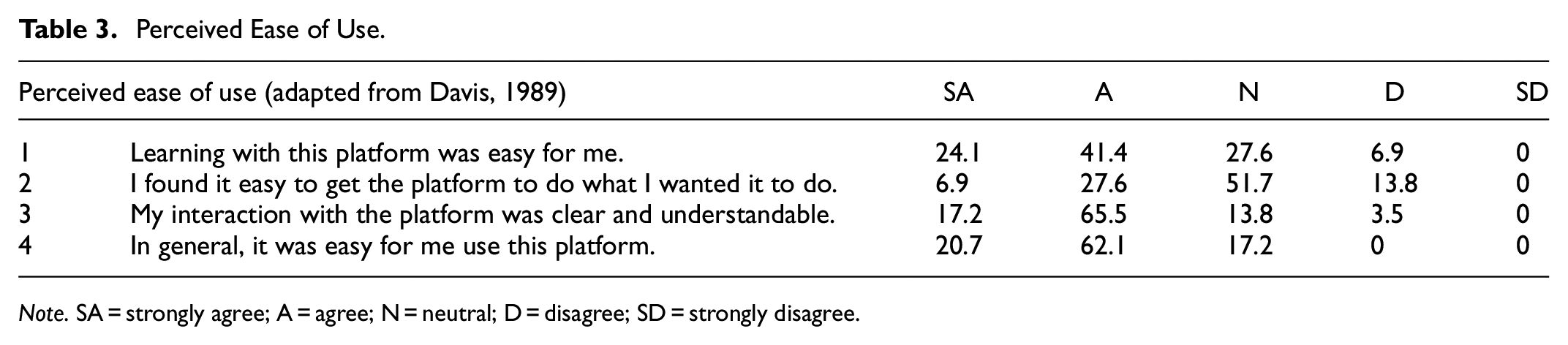
Findings about the participants’ perceived ease with using the platform have been presented in Table 3. As indicated by the data, 82.8% of the participants agreed that operating the platform was easy and 82.7% of them perceived that it was easy to interact with the platform. However, one-third of the respondents did not hold positive attitudes towards learning with the platform. Particularly, over half of them found that it was not easy to achieve what they expected with the platform.
Perceived Ease of Use.
Note. SA = strongly agree; A = agree; N = neutral; D = disagree; SD = strongly disagree.
These findings were further examined with data collected through interviews. According to the interview data, although all the participants contended that it was easy to use the platform, they also identified problems in terms of the operation of the platform. For example, the compatibility issue was put forward by the participants during the interview:
I think maybe it should enhance its compatibility with different devices or operating systems. Sometimes, I could not see the instructions given by the teacher due to the devices I am using. Specifically, I am using the iOS system and I find I cannot fully screen display the interface even when I maximize the screen. Besides, each time I use the function of “Raise Hand”, the screen freezes (CZX).
In terms of what students intended to achieve with the platform, several participants reported that the platform failed to fulfill their learning demands such as raising questions and conducting group discussions. Thus, it might be hard to get the platform to accomplish their expectations. These results generated from the interview data corresponded with the findings of the survey. As the student related:
One drawback of the platform is the “Raise Hand” functionality. You need to gain the teacher’s permission first if you want to answer a question vocally. Sometimes you need to wait in the queue as only one student is allowed to speak at one time (MHTE).
At the same time, the participants also reflected on other issues related to learning with the platform in the interview. These issues might also cause difficulties for the students to use the platform for learning. Here are the statements made by one participant:
The platform needs to be further developed to include functions such as Assignment Submission. We have to use another platform to submit assignments, which causes inconvenience as you need to shift between different platforms (JJF).
Discussion
Educational Affordances
In this study, educational affordances are defined as the teaching and learning activities that are supported by the platform used. A range of affordances emerged from the data collected through observation that facilitated online teaching and learning. To begin with, the data indicate that the platform can be used as a channel for teachers to deliver teaching content and supplementary learning materials, which can be easily accessed by students. This finding responds to the literature (Hallal et al., 2020; Ma et al., 2020; Mpungose & Khoza, 2020; Shaharanee et al., 2016), which suggests that online learning platforms can be used to enrich learning content and learning experience through resources accessing and sharing. This is particularly significant during the lockdown period caused by the pandemic when learners are unable to access other learning venues and thereby online learning platforms become their major channel to acquire knowledge. Meanwhile, the representation affordance of the platform can not only present the teaching contents designed by the teacher but also other learning materials such as videos available via the integration with other platforms.
Also, the results are consistent with the prior research (Francom et al., 2020; Wassef & Elkhamisy, 2020; Xiao et al., 2020) in confirming that learner engagement and the interaction between the teacher and students can be enhanced with the use of online learning platform. It is challenging for students to sustain their consistent engagement with a platform while learning online (Kim et al., 2020). Thus, how to maintain students’ engagement in the process of online teaching and learning is crucial. As indicated by the data, the course instructor in this study promoted students’ engagement not only through various learning tasks but also via playing course-related videos. As Kim et al. (2020) affirm, watching video lectures is associated with self-regulated learning techniques in online learning contexts and engages students with course content. At the same time, data provided evidence that the discussion board of the platform has effectively promoted the interaction between the teacher and students, which has been acknowledged as a useful strategy for supporting intellectual interactions (Light & Pierson, 2014).
Besides, the results of this study further verify that online learning platforms can be deployed to establish online learning communities which promote communication and the construction of knowledge (Ellahi, 2018; Xue & Churchill, 2019). In such a shared environment, learners are likely to seek opportunities for connecting what they have learned with the knowledge gained from the learning community and thus better conceptualize their knowledge (Nami, 2022). In this way, their learning outcomes can be strengthened. In particular, such online communities provide those shy students who are unwilling to express their ideas in conventional classrooms with opportunities to communicate and thus facilitate their learning (Halpin & Lockwood, 2019; Ryane & El faddouli, 2020).
Moreover, administration affordance emerged from the results, which indicates that the platform can be used to manage teaching and learning. This affordance is important for online education when the teacher and students are unable to meet in person. Teachers can employ online learning platforms to register students’ regular performance such as their attendance and make these records part of the final assessment. Thus, an online learning management system can be constructed through the platform.
Social Affordances
Based on the results, students’ perceptions about the social affordances of the platform were not high, which means that the platform has not achieved their societal needs when learning with the platform. The reasons attributing to this, as indicated by the data, were multifaceted. To begin with, the inherent drawbacks of the platform such as its limited role in supporting group discussion affected the interaction between learners. This finding is in line with previous studies (Kumar et al., 2020; Mpungose, 2019), which identify that online learning platforms are unable to fulfill learners’ societal need to effectively communicate with each other. Also, as indicated in the data, the text-based way of communication affects the quality of the discussion. Specifically, it may be difficult for students to conduct deep discussions especially when they have to keep scrolling to acquire information from the previous posts (Kumar et al., 2020). However, communication between peers such as group discussion is deemed important for deepening the understanding of the learning content and thus should be promoted. As Kumar et al. (2020) point out, it is vital to foster peer-to-peer connections that can be facilitated by technology due to the decline in face-to-face contact in online learning.
Another reason is that some students were more used to traditional classroom learning such that they had difficulty in accepting online learning mode. This finding agrees with the study of Roy et al. (2020), who claim that students prefer conventional learning approaches compared to learning supported by online platforms. This phenomenon particularly manifests itself in traditional Asian cultures such as China, where respect for teachers is highly valued and students are too shy to discuss questions with the teacher openly. As shown in the data, some students might feel reluctant to raise questions during online instruction for fear of interrupting the teacher and losing face. This finding echoes the prior research (Kumar et al., 2020; Zhao et al, 2020), which suggests that cultural factor influences students’ learning behaviors in the Asian context, and there is a lack of openness in communicating with teachers in non-formal learning contexts. Similarly, Teo and Huang (2019) also point out that cultures cultivate and reinforce people’s beliefs and values, and influence how they see things. As such, culture-related factors tend to affect students’ attitudes toward technology use and determine their behavioral norms regarding technology adoption.
Technological Affordances
The results of this study reveal that the platform was easy to use for the respondents despite its limitations such as low compatibility with some operating systems and devices. Ease of use plays a critical role in determining learners’ perceptions (Kumar et al., 2020), their satisfaction (Albashtawi & Al Bataineh, 2020; Ansong-Gyimah, 2020), and their adoption of a learning system (Francom et al., 2020). According to the data, the platform offered the learners technological affordances in terms of operation. However, it failed to achieve the learners’ expectations such as raising questions, group discussion, and submitting assignments. This may affect their learning experience with the platform. Assessment, and formative assessment in particular, is vital in a technology-mediated learning environment as it can motivate learning and help promote learner engagement (Wassef & Elkhamisy, 2020). Thus, it is essential to include these functionalities in online learning platforms to enhance learning outcomes.
A Modified Framework for Examining the Usefulness
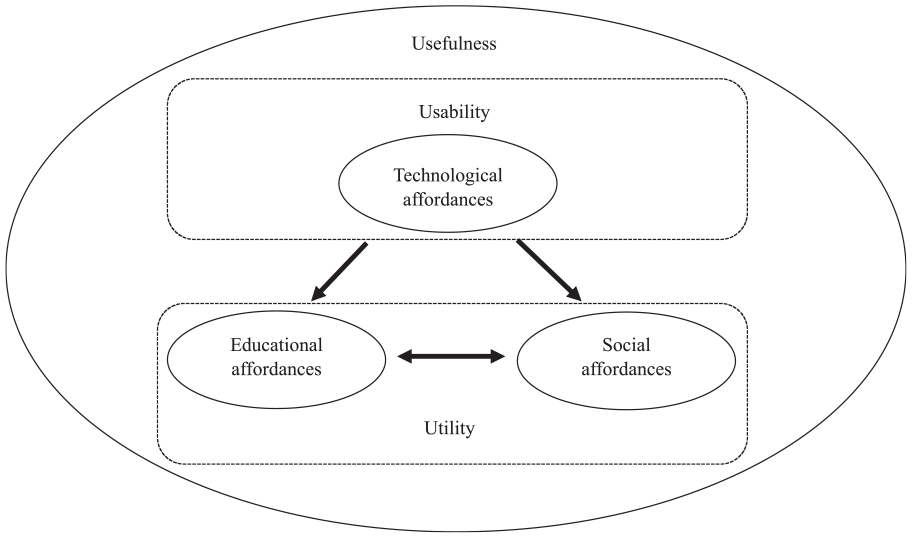
Based on the results of this study, a modified framework for examining the usefulness of online learning platforms has been developed (see Figure 8). As indicated in the figure, both educational affordances and social affordances (utility) need the support of technological affordances (usability). This has been justified by the evidence collected in this study. The performance of various educational activities relies on the internal functionalities supported by the technological features of the platform. Likewise, the achievement of social interaction also depends on the design of the platform at the technological level. As Davis (1989) points out, the usability of a system affects its utility. Specifically, the perceived ease of use with a learning platform determines how useful it may be during the learning process, in terms of both supporting learning activities and fulfilling learners’ societal needs. As found in this study, the platform facilitates both the teachers and learners in the completion of various possible teaching and learning activities (educational affordances) due to its easiness of operation (technological affordances). However, to some extent, it failed to fulfill students’ societal needs such as peer interaction (social affordances) owing to its inherent limitations in design, which, according to Norman (1988), determines how the platform could be actually used to meet the needs of its users. Thus, to enhance learners’ social presence as well as the possibility for more teaching and learning activities, the technological affordances of an online learning platform should be improved first. This is of particular significance in distance education where interaction is accomplished using high-technology devices that serve as the interface, which means the point or means of interaction, between the learner and his or her content, instructor, and fellow learners (Hillman et al., 1994).
A modified framework for examining the usefulness.
Furthermore, the educational affordances and social affordances of an online learning system play equal roles during the learning process and interrelate with each other. As shown in the results, the platform promoted the interaction between the teacher and students through various activities, which could not only increase learners’ engagement but also their social presence. However, interacting with the course instructor only is not adequate to meet the student’s needs for social presence. Peer interactions such as group discussion and collaboration have been reported in this study as a crucial factor influencing learners’ social presence perceptions and their learning experiences. Therefore, while importance is attached to the educational affordances of an online learning platform, equal attention should also be paid to its social affordances as learners’ societal needs play a vital role in their learning process (Mpungose & Khoza, 2020). Particularly, learners’ engagement may diminish with ongoing online learning (Kim et al., 2020). Hence, increasing their social presence in the process of online learning may help improve their overall learning experience and learning performance and thereby enhance learning outcomes (Weidlich & Bastiaens, 2019).
Implications and Future Directions
Several implications can be drawn from the results of this study. First, teachers should be aware of learners’ requirements during online teaching and learning and select the apt platform accordingly. At the same time, they should fully exploit the affordances of the platform selected to meet learners’ needs. Only when students are convinced that the use of a platform meets their study demands and is relevant to their learning process, can they utilize the platform in their study. In other words, learner satisfaction occurs when learners’ expectations are accomplished (Abuhassna et al., 2020).
Moreover, apart from the text-based discussion, more interactive activities should be designed for online teaching and learning to improve learner engagement and satisfaction. Particularly, more interactions between students should be allowed. According to Shaharanee et al. (2016), teachers should pay more attention to interactions to ensure active online learning. Besides, these interactions can also increase learners’ social presence perceptions. As Khoza (2015) suggests, the use of any educational technology should take social experience into account and address social needs to avoid static learning. One possible approach to increasing interactions and connections between the teacher and learners as well as between learners is to combine the use of online learning platforms with social media. Such a combination can maximize the potential of mobile technology for information sharing in informal learning contexts and better address learners’ societal needs through social experiences (Mpungose & Khoza, 2020). As Kim et al. (2020) affirm, “social tools can make students feel connected with other people and this psychological easiness increases their emotional engagement with online communities” (p. 10). More importantly, it has been identified that the integration of social media can motivate those shy students to communicate with more opportunities provided (Xue & Churchill, 2019).
Furthermore, online learning platforms should be updated in terms of compatibility and include more functionalities such as assignment submission and peer interaction. The issue of compatibility has been identified as an influencing factor in students’ learning experience with the platform in this study. Given the diversity of operating systems and devices used by learners, online learning platforms should be updated to be compatible with more possible systems to ensure a smooth operation by users. Meanwhile, improvements should also be made to encompass more functionalities such as assignment submission to fulfill students’ needs and reduce the inconvenience caused by shifting between different platforms. More importantly, designers and developers of online learning platforms should take students’ societal needs into account while developing the platforms to allow for more peer interactions. Particular attention should be paid to the characteristics of different learners to provide those introverted students with more opportunities to express themselves so as to enhance their social presence. This is of great significance during online learning during the lockdown period when social activities through face-to-face meetings are constrained (Kumar et al., 2020).
Due to the limitations of this study in terms of sample size and methodology utilized, the results may not be generalized to other contexts. However, future research could involve more participants in different educational settings to further explore the affordances of different learning systems using the theoretical framework in this study. Particular attention could be paid to the improvement of social affordances of an online learning platform as learners’ societal needs during online learning are important (Mpungose & Khoza, 2020). Besides, more empirical studies could be conducted to investigate how online platforms could be used to support deep discussion, in which learners’ higher-order thinking could be developed. Moreover, future research could also examine the affordances of an online learning system from the perspective of course instructors. Additionally, cultural factors in the context of online learning could also be investigated to understand the impacts of different cultures on learner behaviors.
Footnotes
Declaration of Conflicting Interests
The author(s) declared no potential conflicts of interest with respect to the research, authorship, and/or publication of this article.
Funding
The author(s) disclosed receipt of the following financial support for the research, authorship, and/or publication of this article: This study was supported by Chongqing Social Sciences Foundation, China (Grant No. 2022NDYB131) and Fundamental Research Funds for the Central Universities (Grant No. SWU2209516)
