



Abstract
Although the debate over the into-A and into-B interpreting has never stopped, the focal point was mostly set on simultaneous interpreting and sign language interpreting. Directionality in consecutive interpreting (CI) has not been studied fully so far. The present systematic literature review was designed to examine the relationship between directionality and performance in CI across a wide range of settings and empirical methods based on PRISMA (Preferred Reporting Items for Systematic Reviews and Meta-Analyses) and search for articles in English in Scopus and Web of Science. Three problems were investigated in the current research: (i) How does directionality impact performance among professional and student interpreters in CI? (ii) What factors contribute to the effect of directionality on performance? (iii) Does directionality preference impact the interpreter’s performance? The findings include: (i) directionality proves to influence the performance of interpreters whose A- and B-languages are not equally proficient, whereas balanced bilinguals are not affected by directionality; (ii) both internal and external factors contribute to the interpreters’ performance; (iii) only descriptive studies about interpreters’ directionality preference were identified in the prior literature, and a further study with more focus on the interactive power of directionality preference on interpreters’ performance is required.
Keywords
Introduction
Consecutive interpreting (CI) is a type of interpreting classified by the working mode. It is often used in opposition to simultaneous interpreting (SI) and refers to “the oral transposing of sense of an orally delivered message in one language (source language “SL”) into another (target language “TL”), with or without the help of note-taking, by a person proficient in both languages and cultures after the speaker has delivered a part of his speech” (Al-Rubai’i’, 2009, p. 329). Although directionality, which means the direction of interpreting, is a heated topic in the interpreting field from time to time, it is a scarcely researched area in CI (Chen, 2020b).
There are two directions in interpreting: into-A direction that refers to interpreting from L2 (B language) to L1 (A language) and into-B direction that means interpreting from L1(A language) to L2 (B language). The two opposite standpoints in interpreting are related to the debate over into-A or into-B direction as a preferred option for interpreters. On the one hand, into-A was considered by Seleskovitch as the default direction for interpreters in simultaneous interpreting due to the low quality in into-B interpreting caused by native language interference (Seleskovitch, 1978a, as cited in Bartłomiejczyk, 2015) or by the “higher cognitive load and excessive stress” (Seleskovitch & Lederer 1989, as cited in Bartłomiejczyk, 2015). As the head of the Paris School, Seleskovitch’s opinion took the dominant position because of the widespread international impact of the Paris School. On the other hand, retour interpreting or into-B interpreting was supported by Denissenko (1989) thanks to the better listening comprehension ability in one’s native tongue and quick decision-making in the L2 direction when interpreters had fewer choices to make.
In consecutive interpreting, directionality has not gotten much attention owing to the fact that the interpreter needs to work in two directions in most cases for the “inherently bilateral nature of the interaction” (Bartłomiejczyk, 2015, p. 109). However, it makes sense to investigate how directionality influences interpreters for the sake of training purposes. There did exist some empirical studies as to the directionality in CI. As fluency is a salient feature in interpreting that is easier to be evaluated, it is an initially explored topic in the study of CI and directionality. For example, the interactive function of directionality on fluency was found among novice and professional interpreters (Mead, 2005, as cited in Chen, 2020b) and between unfilled pauses and rater-generated fluency ratings (Han & An, 2021). Recent studies about directionality in CI also revealed that interpreters performed better in into-B direction in terms of information completeness and accuracy (Chanprapun, 2020). Nonetheless, there is still no consensus regarding the impact of directionality upon interpreters’ performance and the variables interacting with directionality to influence interpreters’ performance.
Directionality preference is related to interpreters’ motivation and confidence. It also serves as an element in influencing interpreters’ performance. Although into-A interpreting is regarded as the default option for translators and interpreters, several studies showed that under certain circumstances interpreters prefer to work into-B language (Al-Salman & Al-Khanji, 2002; Pinhas, 1972 as cited in Gile, 2005). In spite of this, into-A preference took the lead among most interpreters (Gile, 2005). On the whole, interpreters’ individual preferences have always been neglected in the field of interpreting studies.
This systematic literature review aims at providing comprehensive information across a wide range of settings and empirical methods, trying to identify gaps that may exist in the previous studies about directionality and performance. As there are several factors contributing to the performance in CI, the present study aims to figure out how these factors interact with directionality in influencing performance in CI between different language pairs by interpreters. Therefore, the following questions can serve as the basis for analyzing the past literature on directionality and performance in CI.
How does directionality impact performance among professional and student interpreters in CI?
What factors contribute to the effect of directionality on performance?
Does directionality preference impact the interpreter’s performance?
Methods
This systematic literature review was based on the guidelines of Xiao and Watson’s (2019) eight-step process and PRISMA (Moher et al., 2009).
The eight steps in Xiao and Watson’s (2019) research include “(1) formulating the research problem; (2) developing and validating the review protocol; (3) searching the literature; (4) screening for inclusion; (5) assessing quality; (6) extracting data; (7) analyzing and synthesizing data; and (8) reporting the findings” (p. 10), as shown in Figure 1.
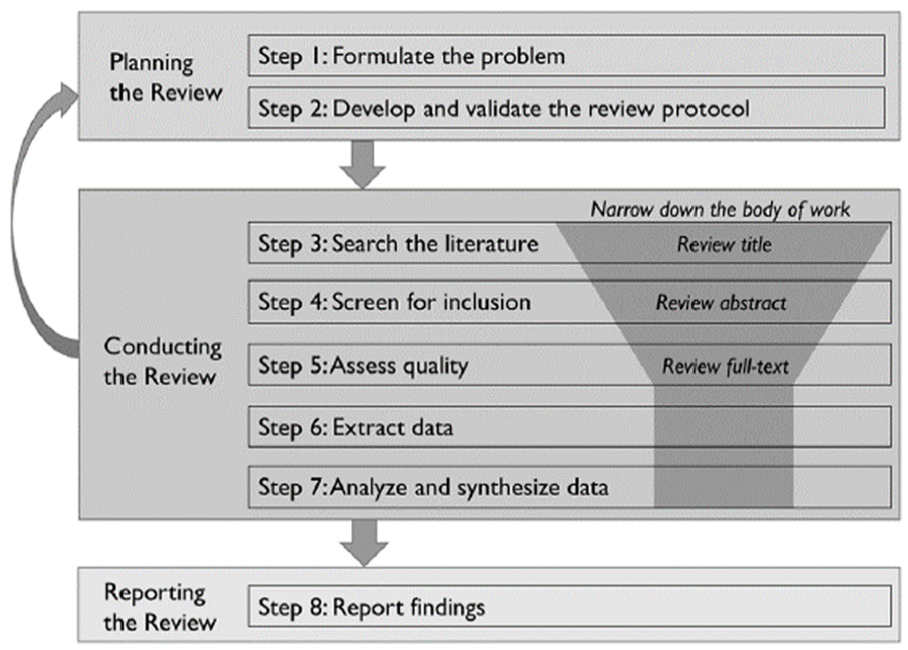
Process of systematic literature review (Xiao & Watson, 2019, p. 11).
PRISMA refers to Preferred Reporting Items for Systematic Reviews and Meta-Analyses. As a commonly adopted method for literature review, PRISMA Statement contains a 27-item checklist and a four-phase flow diagram (Moher et al., 2009, p. 2). The 27-item checklist is a very detailed list to guide authors to collect information about the literature, ranging from the title and structured summary to conclusions and funding. The four-phase flow diagram consists of phase 1—identification, phase 2—screening, phase 3—eligibility, and phase 4—included. PRISMA is more useful in organizing the literature, and the eight-step process provides a step-by-step guideline in the pre-, while- and post-searching stages. The following section explains in detail the eight steps in conducting this literature review, combined with PRISMA Statement.
Formulating the Research Problem
For every research, the first and foremost process is finding the appropriate research problem since “literature reviews are research inquiries, and all research inquiries should be guided by research problems” (Xiao & Watson, 2019, pp. 10–11). All the research questions arise from literature reading. After reading initially searched literature on the topic of directionality and consecutive interpreting, the authors conducted a pre-review mapping procedure to identify the subtopics and time frame of the study. Among all the factors contributing to the performance of interpreters, the variables chosen for the current study include directionality and directionality preference. Therefore, the following research questions were formulated based on the aforementioned three variables in the study.
How does directionality impact performance among professional and student interpreters in CI?
What factors contribute to the effect of directionality on performance?
Does directionality preference impact the interpreter’s performance?
Developing and Validating the Review Protocol
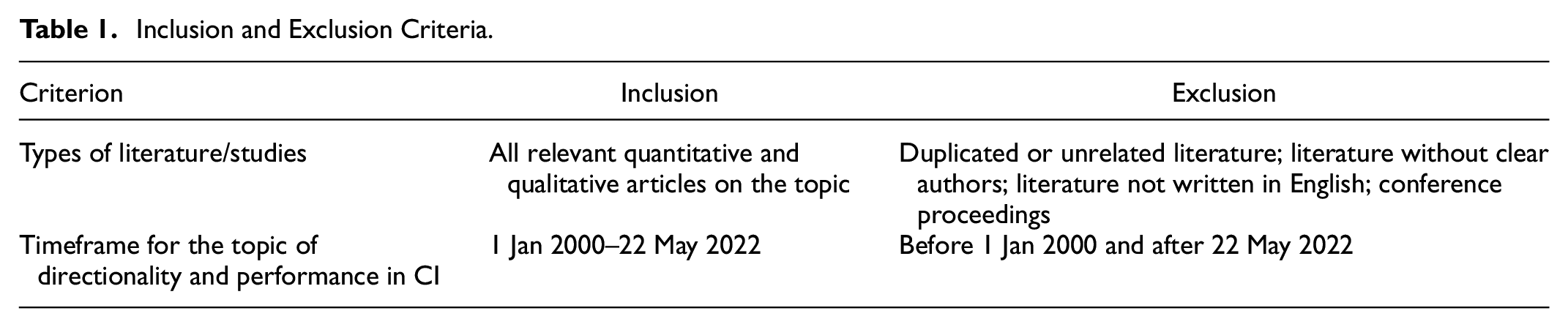
The review protocol is “a pre-set plan that specifies the methods utilized in conducting the review” (Xiao & Watson, 2019, p. 11). It is a crucial stage in a literature review for its bias-free and high quality. With guidance from the supervisors, the first author of this article developed and validated the review protocol of the current research. The elements like the purpose of the study, exclusion and inclusion criteria (see Table 1), screening procedures, and extracting strategies were clearly defined before embarking on the searching process. The exclusion criteria help guarantee the quality of papers included in the review article (Metruk, 2022).
Inclusion and Exclusion Criteria.
Searching the Literature
With the review protocol as the guideline, the literature search was carried out. We searched two frequently used databases in the field of social sciences for this systematic literature review—Scopus, and Web of Science (WOS).
In Scopus and Web of Science, we first searched by using all the variables in the current study: “direction*” AND “consecutive interpret*” AND “performance,” only to find six results in Scopus and nine results in Web of Science. Therefore, we refined the search terms by dividing the search terms into five separate groups: “direction*” AND “consecutive interpret*,”“performance” AND “consecutive interpret*,” and “direction* preference” AND “interpret*,” and limit the range of time to 2000 to 2022. In other words, this systematic literature review covers literature of the past 22 years. The search term “direction* preference” OR “motivation” OR “confidence” OR “lik*” AND “consecutive interpret*” created only 18 results in Scopus. However, on the Web of Science, this search term produced 3,361 results, even after refining the search to the Language and Linguistics category. Thus, this search term was excluded from WOS searching. With the above-mentioned separate search terms, we got 176 results in two databases (93 in Scopus and 83 on Web of Science respectively). Since there were duplicate files, we used Microsoft Excel tools to delete the duplicate articles and came up with 77 and 64 articles in Scopus and WOS respectively for merging management. After merging the search results in two databases, 41 duplicate articles were identified and thereby deleted, with 100 potential studies for further research. The last search in Scopus and Web of Science was run on 11 May 2022.
From basic searches in two databases, we found the top four journals for publication of articles on the current research topic: Interpreting, Interpreter and Translator Trainer, Meta and International Journal of Bilingualism, as shown in Table 2.
Count of Top Journals in the Databases.

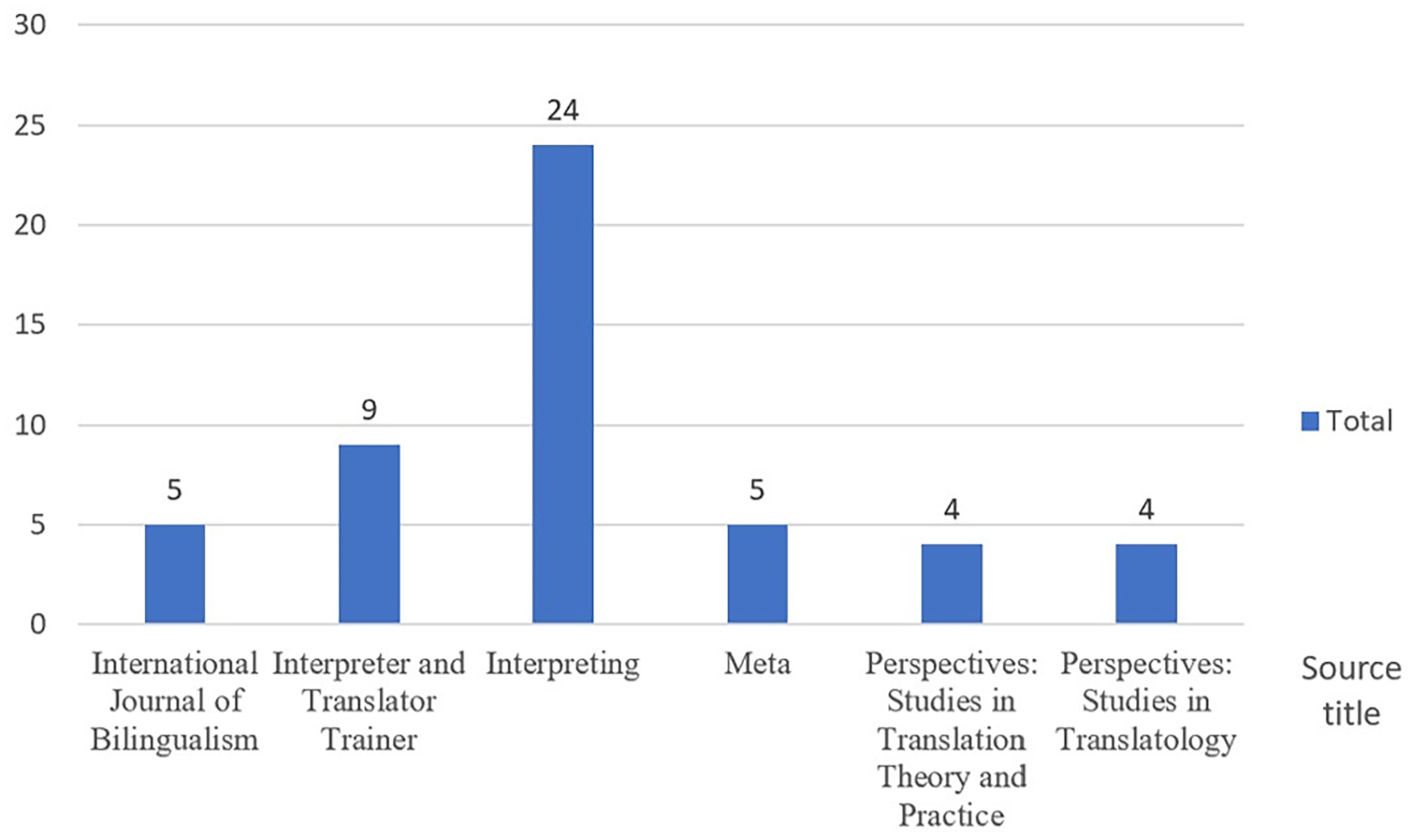
Table 2 shows the number of top journals in the databases. As most journals in Scopus and WOS search results include only one article regarding the present research topic, Table 2 presents the journals with more than four search results in the databases. It can be seen from the data in Table 2 that six journals published more than four articles on the topic of directionality and performance in CI. The number of articles published in the top four journals on the current research topic was 24 (Interpreting), 9 (Interpreter and Translator Trainer), and 5 (Meta, International Journal of Bilingualism) respectively. Therefore, we did some manual searches in the aforementioned four journals to get more data for a systematic literature review. The journal Interpreting belongs to John Benjamins Publishing Company, a family-owned academic publisher which is devoted to the publication of works related to Language and Linguistics. On John Benjamins e-platform, the search term “direction* and performance in consecutive interpreting” came out with two articles from Interpreting, and one of the articles was already in the database searching result. To produce more results, the search term was divided into “direction* in consecutive interpret*” (eight results), “performance” AND “consecutive interpret*” (25 results), “directionality preference in interpreting” (one result). Among 36 results obtained from John Benjamins e-platform, 16 articles were duplicates with the search results of the databases or the current searching, 18 were articles or books not from the journal Interpreting, and two articles were not concerned with the current research topic. As a result, the search in Interpreting produced no results for further analysis. The last search for articles in Interpreting was done on 11 May 2022.
Since the search term “directionality and performance in consecutive interpreting” in the journal The Interpreter and Translator Trainer on the Taylor & Francis Online came out with only 14 results, the search terms in The Interpreter and Translator Trainer were divided into “direction* in consecutive interpreting,”“performance in consecutive interpreting,” and “directionality preference in interpreting” to get more results, coming out with 46, 90, and 27 results respectively, among which 76 articles were duplicates in the searching results and eight articles were identical with the search results of the databases. Therefore, 93 articles from the journal The Interpreter and Translator Trainer were left for further screening.
Meta is an academic journal published by the University of Montréal and is available on Érudit. With the same search terms as in the journal Interpreting, 107 results were produced. After excluding 41 duplicates in the Meta search results and 5 articles already included in database searching, 61 files were created out of Meta journal.
A search in International Journal of Bilingualism produced 166 results. After removing 42 duplicate files in the search results and two identical articles with database searching, 122 articles came out of the journal.
The last search in the above-mentioned four journals was done on 12 May 2022. The search term in two databases and four journals were listed in Table 3 below.
Search Terms in Databases and Journals.

Apart from the database searching and manual searches in the aforementioned journals, the secondary searching was conducted to have an exhaustive search of the data. Altogether, six articles came out from the references of the highly relevant articles. The last search in the references of the database and manual searched articles was carried out on 22 May 2022.
Screening for Inclusion
After an initial screening of titles, we first deleted the articles that had nothing to do with interpreting, and 98 articles were left in two databases. Then we reviewed the titles and abstracts again to narrow down the literature scope by removing studies devoted to simultaneous interpreting, sight interpreting, note-taking, technology, and memory in consecutive interpreting. If we could not decide whether to include an article by just reading the abstract, we would read the conclusion sections for the final decision. Finally, we had 75 articles from the database searching for detailed reading to screen further and decide the relevance to the current topic of directionality and performance in consecutive interpreting. Nonetheless, four relevant articles were not accessible for downloading. As a result, 71 studies were accessed with full texts for further quality assessment.
As regards the articles searched manually in the aforementioned four journals, we did the screening first by titles as well. In The Interpreter and Translator Trainer, about 40 searched results covered translation rather than interpreting, and 25 articles focused on interpreting curriculum design, simultaneous interpreting, court interpreting, or sight translation. Resultantly, 28 articles from the journal The Interpreter and Translator Trainer remained for further analysis. Forty-one search results from Meta were also excluded for their irrelevance to the research topic judging from the titles and abstracts, leaving 20 articles for the full-text screening procedure. Most articles in International Journal of Bilingualism were about language contact among bilinguals and multilinguals, and only three searched results from this journal were related to interpreting. Therefore, 51 articles from journal searching were included for eligibility assessment in the next step.
Assessing Quality
On the basis of data screening, 71 articles from WOS and Scopus were obtained as full texts for quality assessment. Although assessing quality is not an essential step for some kinds of descriptive and critical reviews (Xiao & Watson, 2019, p. 107), it is important to appraise the quality of articles to understand each study well enough to compare and integrate findings (Ludvigsen et al., 2016 as cited in Xiao & Watson, 2019). The present study adopted the criterion of “internal quality” proposed by Petticrew and Roberts (2006, as cited in Xiao & Watson, 2019, p. 107) to avoid any possible methodological biases. The researchers in the current study evaluated the studies based on a checklist agreed upon by the reviewers and analyzed the logic of the literature from many aspects, ranging from research focus, data collection method, and data analysis method to results and conclusions.
Among 71 full-text articles accessed from the database screening, most studies coped with issues in CI. However, many of them did not focus on directionality and performance in CI and were excluded accordingly. For example, six journal articles concentrated on assessment in CI, either about rating scales and rubrics in CI (J. Lee, 2009), variables to judge fluency and automatic assessment (W. Yu & van Heuven, 2021), factors influencing assessing performance (Khorami & Modarresi, 2019), aptitude assessment (Pöchhacker, 2011), assessment and note-taking (Orlando, 2010) or interpreter trainers’ assessment (S.-B. Lee, 2019). Others investigated different factors and interactions in CI training, like memory training (Al-Rubai’i’, 2009), adaptation in consecutive interpreting (Gengshen, 2006), using a consecutive bilingual approach to promote EFL learners’ language use (Kim, 2021), interpreter training courses curriculum (Dabaghi et al., 2015), achieving coherence in CI from Rhetorical Structure Theory (RST) perspective (Peng, 2009), interpreting students’ skill training (Hui, 2019), undergraduate trainee interpreters’ self-efficacy (S.-B. Lee, 2014), norms in CI (B. Wang, 2012), technology in conference interpreting (Moreno, 2019), and better communication in medical interpreting (Li, 2013). Few devoted to the comparison between professionals and students on explication patterns (Tang & Li, 2016), self-repair models (Shen & Liang, 2021), or between the interpreters in SI and CI and foreign language teachers and non-linguistic experts on prose call (Hiltunen & Vik, 2017). As a result, 52 articles were left in database searching.
The manual searches from the journals resulted in 51 full-text articles, 28 coming from The Interpreter and Translator Trainer, 3 from International Journal of Bilingualism and 20 from Meta. These articles either focused on student interpreter education or coped with problems in CI. In the current quality assessing stage, the researchers read the whole texts of literature to decide whether or not they conform to the inclusion criteria of the current study. Only one out of three articles from International Journal of Bilingualism dealt with the performance of interpreters (Chmiel, 2018), and the other two articles were excluded at this stage, for they either focused on working memory assessment (Köpke & Signorelli, 2012) or interpreters’ cognition and language use (Obler, 2012). Albeit all the studies from The Interpreter and Translator Trainer concerned the issues in CI, most of them did not focus on the constructs of the current study, mainly because the scope of The Interpreter and Translator Trainer is teaching and training in translation and interpreting. In consequence, 14 articles from The Interpreter and Translator Trainer and 12 articles from Meta were included for further data extraction.
Further quality assessment of 79 articles from database and journal searching resulted in the exclusion of 59 articles, for they either coped with performance in SI or did not focus on directionality and performance in CI. Resultantly, 20 articles from databases and journal searches were included for detailed analysis in this systematic literature review. In the process of assessing the quality of the papers obtained from databases and hand searches, some more relevant articles came out from the references of the full-text papers. After secondary literature searching and careful reading of the literature, six articles were subsequently included for further analysis.
Consequently, 26 articles were produced from database searching, manual searching, and secondary literature searching. They all met the inclusion criteria and almost all the included articles were from reputational journals. The whole screening process is shown in Figure 2.

Flowchart for the systematic review of directionality and performance in CI.
Extracting Data
Data extraction involves the coding of literature and plays an essential role in the further analysis of data in the literature review. This systematic literature review adopted the thematic analysis method to analyze the data. A code refers to “a word or short phrase that symbolically assigns a summative, salient, essence-capturing, and/or evocative attribute for a portion of language-based or visual data” (Saldaña, 2016, p. 4). Coding can assign the researcher’s interpreted meaning to the data for further categorization and analysis (Saldaña, 2016).
In the current study, data coding was based on the topics and subtopics of the current research, including performance in CI, directionality in CI, and directionality preference in interpreting. These codes were created and organized using NVivo, a qualitative data analysis software. At the initial stage, the auto-coding function in NVivo was employed to identify themes and codes on a sentence basis. Six themes were identified based on the auto-coding of sentences in 26 included articles (see Table 4). Then the emerging themes from auto-coding were reorganized manually to extract data for a deeper exploration of data based on the three research questions.
Auto-coded Themes in Included Articles.

Analyzing and Synthesizing Data
When all the documents were coded based on the thematic analysis, the next step of a systematic literature review is to analyze and synthesize the data collected in the previous stages. This process often involves the descriptive analysis of data by organizing them in the form of tables and figures so that the themes would be presented straightforwardly and clearly. Following that, the descriptive themes were “distilled into analytic themes” (Xiao & Watson, 2019, p. 15) and synthesized into an organic whole.
Reporting the Findings
Once the data were analyzed and synthesized, the final step in a systematic literature review was to report what the current research had found on the topics and subtopics. Following Shaffril et al. (2020), the current literature review adopted an integrative review that “allowed diverse research designs (quantitative, qualitative, mixed-method)” (p. 6). The emerging themes and the novel findings were to be emphasized in the findings reports. Furthermore, implications for future research would be stated briefly.
Results
There are 376 results from the database and journal searches after deleting the duplicate files. On the whole, the number of articles on directionality and performance in CI saw an increasing trend over the past 22 years (see Table 5). The peak periods came in 2002 (14), 2005 (13), 2009 (21), 2013 (23), 2019 (43), and 2021 (35). The year 2019 witnessed the climax of directionality and interpreting studies, with 43 articles produced in a single year.
Publication Years of All Searched Articles From Databases and Four Journals.


The current review finally produced 26 articles for inclusion based on database searching, manual journal searching and secondary literature searching for literature from 2000 to 2022. The databases included Web of Science and Scopus. From the search results of the databases emerged four frequently published journals on the current topic: Interpreting, Interpreter and Translator Trainer, International Journal of Bilingualism and Meta. The secondary literature came from the references of the articles already accessed from the databases and manual searches.
Profile of Included Articles
Among 26 included articles, 11 articles were published in the recent years of 2020, 2021, and 2022. The demographics of the literature included in the review were presented in Table 6 in descending order of the publication year.
Profile of Included Articles.

From Table 6, we can see that aside from the two theory-related articles (Gile, 2005; Moser-Mercer, 2008) and one article involving the Danish-Spanish language combination (Dam, 2004), almost all the language pairs in the included articles involved English, which bore testimony to the dominant position of the English language in the world. As the most widely spoken language around the globe, Chinese also predominated the research concerning directionality and consecutive interpreting. Among 26 included articles, about 10 articles concentrated on the Chinese-English language pair. The primary language pairs in Europe included Spanish, Polish, Croatia, Hungarian, and Danish, while in Asia, the most frequently studied language pair was English-Chinese, English-Korean and English-Thai.
Most of the authors attending to directionality and interpreting issues came from China, as many as 11, including three articles written by Taiwanese authors. This testified to the fast economic growth and the national comprehensive strength of China in the world arena in recent decades because more interpreting studies meant more interpreting activities happening in the society, particularly in the economic field.
As regards the directionality in interpreting, as many as 15 articles concerned bidirectional interpreting and compared the two directions in interpreting. Four articles were about into-B interpreting only, among which two authors came from Taiwan (Chiang & Villarreal, 2014; Wu & Liao, 2018). Two articles talked about into-A interpreting with language pairs being English-Spanish (Ivars et al., 2014) and English-Korean (S.-B. Lee, 2018).
As for the research methods adopted in the study, most literature employed quantitative methodology, either using descriptive or inferential statistical methods to analyze data or designing a questionnaire survey to collect data. The relationship between directionality and performance was explored by correlational analysis under most circumstances. Mixed methods in three out of four articles included in the current study invariably involved interviews in a qualitative approach (Chang & Schallert, 2007; Chanprapun, 2020; J. Wang & Napier, 2016).
Since the current study set out to answer the following research questions formed on the basis of pre-review literature mapping, the themes that emerged from the literature evolved around the following three questions.
How does directionality impact performance among professional and student interpreters in CI?
What factors contribute to the effect of directionality on performance?
Does directionality preference impact the interpreter’s performance?
Directionality and Interpreters’ Performance in CI
As one of the issues that have been causing debate in interpreting and translation, directionality also confounded the authors of included articles in the current study. Two opposite views came out of the findings of research in the included articles. Most researchers found that directionality influenced the performance of interpreters, either among professionals or students.
On the part of professional interpreters, an earlier study about professional interpreters with different dominance in their first languages displayed that the interpreters with Chinese as the dominant language produced a lower percentage of propositions in into-B interpreting, while interpreters with English as their dominant language were not affected by directionality in SI (Chang & Schallert, 2007). This finding was echoed in J. Wang and Napier’s (2016) studies about sign language interpreting, which indicated that balanced bilingual interpreters were not affected by the direction of interpreting. They behaved equally well in into-A and into-B sign language simultaneous interpreting. That is to say, if interpreters’ L2 proficiency level is high enough, they would not be influenced by directionality. Nevertheless, some professional interpreters’ performance was reported to be impacted by directionality in both phases of CI. They suffered from more cognitive load in into-A interpreting so much so that they used more language notes rather than symbol notes in phase I of CI (comprehension phase), whereas, in phase II of CI (speech production phase), into-B interpreting caused more cognitive load among professional interpreters and resulted in less fluent target speech in this direction (Chen, 2020b). Another emotion-related study on the impact of directionality using the skin conductance method to evaluate emotional responding revealed that directionality did not influence the amount of emotional responding when interpreting a negatively-valenced sentence (Korpal & Jankowiak, 2021). Despite this, professional interpreters in Korpal and Jankowiak’s (2021) research displayed more emotional responses in into-A direction than into-B direction.
Directionality influence on performance seems to have a different landscape among student interpreters in that student interpreters perform differently in two directions in most research cases included in the current study. A mixed-method study of directionality influence on into-B CI interpreting quality between English (B language) and Thai (A language) suggested that student interpreters performed better in Thai-English direction when interpreting quantity numbers, although the effect of directionality was not conclusive (Chanprapun, 2020). The language-pair specific differences between A and B languages contributed to the directionality effect on interpreting quality (Chanprapun, 2020). Chou et al.’s (2021) study of trainee interpreters between English (B) and Chinese (A) suggested that they were more fluent in into-A direction with a higher quality of language, but the level of information completeness was higher in into-B direction. The statement by Chou et al. (2021) that into-B interpreting was cognitively more demanding for trainee interpreters was proved by optical mapping of students’ brain activity based on functional near-infrared spectroscopy (fNIRS) technology (He et al., 2021). Cortical brain data and normalized interpreting-related neuroimaging data in He et al.’s (2021) research revealed that into-B interpreting “produced more pronounced brain activity, when normalized for reading” (p. 1), indicating that into-B interpreting is more cognitively demanding.
Directionality was also found to interact with the differences between the professionals and students. Chen’s (2022) comparison of the differences between professional and student interpreters in the process and product of note-taking and consecutive interpreting between two directions showed that professional interpreters took notes with a higher speed and lower pen-tip pressure than student interpreters during the note-taking process. The disparity of directionality was found in the product of written notes. Professionals were found to take more notes than students in into-A (English to Chinese) direction, although the two groups’ note quantities were similar in into-B (Chinese to English) direction. Based on the analytic and propositional ratings, professional interpreters and student interpreters did not show much difference in the fluency of speech production in into-A (English to Chinse) direction. However, professionals were more fluent than students in into-B (Chinese to English) direction. As for the accuracy of speech product, a bigger difference was found between the two groups in into-A (English-Chinese) direction. With regard to these differences, Chen (2022) called for differentiated focuses in interpreter training, from size and layout management in note-taking in phase I to reading and coordination facilitating in phase II.
In addition to the interactive effect of directionality on the differences between professionals and students, directionality also influences “the predictive validity of aptitude tests” (Liu & Zhang, 2022, p. 18). In their exploration of the validity of interpreting aptitude tests, Liu and Zhang (2022) found that the SynCloze test had stronger predictive power for into-B (Chinese to English) CI than for into-A (English to Chinese) CI. Negative affectivity only played a predictive role in into-A (English to Chinese) CI and did not have any significant predictive power in into-B (Chinese to English) CI (Liu & Zhang, 2022).
To sum up, studies show that balanced bilingual professional interpreters are not influenced by directionality in CI, whereas unbalanced bilingual student interpreters generally perform better in into-B direction in terms of interpreting content, but they tend to interpret more fluently in into-A direction. Directionality not only interacts with the differences between the professional interpreters and student interpreters (Chen, 2022) but plays a role in the predictive power of the SynCloze test and the Negative Affectivity Scale aptitude test for interpreters (Liu & Zhang, 2022).
Factors Contributing to Directionality and Performance in CI
Directionality is only one of the variables that lead to varying interpreting performance, and several other factors contribute to directionality and performance in CI. For instance, in Z. Yu and Dong’s (2022) longitudinal experiment with beginner interpreting students, two capacities (language competence and memory capacity) and as many as seven variables (L2 proficiency, summary writing for SL, SL listening comprehension, C-E word translation recognition BIS, English listening span, English speaking span and Chinese speaking span) were recognized and found to correlate with student interpreters’ performance at early and later stages of training. At stage 1 (second month of training), only L2 proficiency was found to be related to interpreters’ performance in into-B (Chinese to English) direction while in into-A (English to Chinese) direction, “4 variables of language competence (i.e., L2 proficiency, summary writing for SL, SL listening comprehension, C-E word translation recognition BIS) and 3 WM spans (English listening span, English speaking span and Chinese speaking span)”(Z. Yu & Dong, 2022, p. 274) were all found to influence students’ performance. During the later stage of training (stage 2), more variables seemed to interact with both into-B CI performance (three variables: summary writing for SL, SL listening comprehension and English listening span) and into-A CI performance (all the variables except C-E word translation recognition BIS). However, the all-inclusive complexity of Z. Yu and Dong’s (2022) study makes it difficult to reach a clear conclusion. More training seemed to make interpreting more complicated in their research.
Among all the factors impacting the performance of interpreters, L2 proficiency is the most frequently studied variable. Among student interpreters “L2 proficiency is a confounding variable” (Chou et al., 2021, p. 2) that modulates the effect of directionality on performance in that the activated brain regions of students with higher L2 proficiency “included the right Broca’s area and the left premotor and supplementary motor cortex” (He et al., 2021, p. 1). This coincides with the findings about professional interpreters in SI by Chang and Schallert (2007), and J. Wang and Napier (2016) that balanced professional interpreters are not influenced by directionality at all in sign language interpreting.
The expertise of interpreters is another factor that mediates the impact of directionality on performance. Novice interpreters with five or fewer years of professional interpreting experience performed better in into-A direction in sign language interpreting, while expert interpreters with 10 or more years of full-time working experience displayed no difference in the two directions (Nicodemus & Emmorey, 2015).
Apart from interpreters’ interpreting expertise, their emotional aspect like self-efficacy also affects their performance. In a study for exploration of the relationship between interpreters’ self-efficacy (ISE) and performance, a strong positive correlation was found between the two variables in into-A (English to Korean) direction among undergraduate students (S.-B. Lee, 2018). The more student interpreters felt confident in their capabilities to conduct interpreting tasks, the better they would behave in actual performance (S.-B. Lee, 2018). Nevertheless, self-efficacy was found to be related to interpreting trainees’ performance when their linguistic competence was high enough, and the trainees with low linguistic competence were not influenced by the level of ISE (Ivars et al., 2014). Although Ivars et al. (2014) and S.-B. Lee (2018) all explored the relationship between ISE and performance in into-A direction among student interpreters, the findings were not consistent with one another. In other words, the subjects in both studies were similar, with the same interpreting direction. However, Ivars et al.’s (2014) examination of the English-Spanish language pair showed that the relationship between ISE and performance was determined by student interpreters’ linguistic competence, while S.-B. Lee’s (2018) research findings exhibited a high correlation between ISE and performance, and the correlation between the two variables was mediated by the level of ISE.
Note-taking also plays a role in affecting the impact of directionality on performance. Chen’s (2020a) empirical study about the process of note-taking showed that the quantity of note-taking in B language was negatively correlated with performance in both into-A and into-B directions. However, in different directions, the influence was different: in into-A CI, shorter ear-pen span, more symbol notes, and fewer language notes would result in better performance; in into-B CI, a higher percentage of notes produced better performance. However, the findings of this empirical study were contradictory to the same author’s earlier study in 2017 when the professional interpreters’ performance was found to be affected by neither the quality nor the quantity of notes (Chen, 2017).
In conclusion, several factors contribute to the different performance in two directions in CI, like L2 proficiency and working memory (WM) (Z. Yu & Dong, 2022), language-pair specific differences (Chanprapun, 2020; Gile, 2005), self-efficacy (Ivars et al., 2014; S.-B. Lee, 2018), learning strategies (Chiang & Villarreal, 2014), and note-taking (Chen, 2017, 2020a). L2 proficiency serves as a very important factor influencing the effect of directionality on interpreting performance in CI. Not many studies devote to language-pair-specific factors in CI, but the evidence does show that differences between language pairs compound with a directionality effect on CI quality (Chanprapun, 2020).
Directionality Preference in Interpreting
Directionality preference is somewhat related to the mental aspect and feelings of interpreters. Interpreting is such a highly demanding and complicated task that it involves many confounding variables. What interpreters prefer and feel more comfortable working with has an impact on their interpreting performance. Cognition and psychological factors of interpreters help us understand the working mechanism of the brain in interpreting and offer us “rich insights into how people acquire skills and how they best continue to improve their performance through deliberate practice” (Moser-Mercer, 2008, p. 16). However, only two of the included articles by the same authors (Nicodemus & Emmorey, 2013, 2015) in the current literature review investigated the interaction between directionality preference and interpreting performance. The authors found that in sign language interpreting, novice bimodal interpreters had a stronger preference for into-B direction than expert bimodal interpreters (Nicodemus & Emmorey, 2013), and “novice ASL-English interpreters preferred working into their L2” (Nicodemus & Emmorey, 2015, p. 157), even though they performed less well in this direction. Therefore, they assumed a “disconnect between preference and performance by novice signed language interpreters” (Nicodemus & Emmorey, 2015, p. 157). Their inference about the disconnected relationship between directionality preference was more based on the authors’ own subjective assumptions than on students’ feedback.
However, earlier research involving 199 full-time or part-time translators and interpreters presented only one-third of into-B preference (Pavlović, 2007). In other words, most translators and interpreters preferred working into their A-languages, which is an intuition-based directionality preference. Regarding the reasons for the respondents’ into-B translating or interpreting preference, the questionnaire data indicated that they assumed into-B direction easier than into-A and they would be better paid in this profession direction (Pavlović, 2007).
Most studies so far focused on the choice of language in note-taking for directionality preference. Both professional interpreters (Chen, 2017, 2020b) and student interpreters (Szabo, 2006) preferred to use B language in their note-taking, irrespective of the interpreting direction. Contrary to their findings, Dam (2004, 2021) found that A language predominated interpreters’ language choice in note-taking, either among student interpreters in into-B CI (Dam, 2004) or among both professionals and students across seven language combinations (Dam, 2021).
To sum up directionality preference in interpreting, we can see that not many studies concentrated on the interpreters’ feelings and motivation, particularly in CI. The existing literature on directionality preference only touched the surface of the interpreters’ preference description and did not go deeper into its direct or moderating effect on performance.
Discussion
The current literature review set out to answer three questions concerning the relationship between directionality and performance in CI. Twenty articles were produced from two commonly used databases and the top four journals in the database search results, and six articles came out of the references of the related articles in the search results. Three themes emerged from the NVivo auto-coding and thematic analysis of the articles included, based on the three research problems. The first theme concerns the correlation between directionality and performance in CI. The second research question focuses on the factors contributing to the relationship between directionality and performance. Finally, directionality preference in interpreting was explored.
Directionality proves to influence the performance of interpreters whose A and B languages are not equally proficient, whereas balanced bilinguals are not affected by directionality. Among unbalanced student interpreters, they generally perform better in into-B direction in terms of information content, but seem to be more fluent in into-A interpreting in most cases. Although professional interpreters also produced more fluent target speeches in into-A interpreting, the accuracy of the target speech in this direction was lower than in the other direction (Chen, 2020b). This contradicted the findings of J. Wang and Napier (2016) that balanced bilingual interpreters were “free from the rule of directionality” (p. 537).
The sample size is an important factor influencing the result of research, even by the same author. For instance, Chen (2017) sampled six professionals to explore the relationship between note-taking and performance, and found that interpreters’ performance was “not directly related to either the quantity or the quality of notes; it is a function of both” (p. 4). Bigger samples of 26 professional interpreters in Chen’s (2020a) exploration of note-taking in CI showed a positive correlation between the quality of notes and interpreters’ performance. The results were contradictory possibly due to the size of the sample.
One important point worthy of noting in language pair in interpreting is that almost under all circumstances the B language or the target language is English. It attests to the position of English as a lingua franca, to some extent. As House (2013) has pointed out, translation and globalization boost each other and “translation thrives alongside the worldwide use of ELF (English as a lingua franca)” (p. 294). English as a lingua franca may help easier communication across different cultures and languages. However, the increasing use of English for interpreting may also “reduce the number of working languages” (Fernández, 2005, p. 109) and lead to the “elimination of other languages from the international scene” (Deä jean Le Feal, 1998, p. 45, as cited in Fernández, 2005, p. 109). Besides, the Chinese-English language pair is mostly bidirectional, except the ones conducted in Taiwan (into-B), while language pairs within other languages are unidirectional. It gives incidental proof of the dominating position and frequent communication of the top two most spoken languages in the world.
Several factors influence the performance of interpreters, from interpreters’ L2 proficiency and working memory (WM) (Z. Yu & Dong, 2022), ISE level (Ivars et al., 2014; S.-B. Lee, 2018), learning strategies (Chiang & Villarreal, 2014), gender (Verdini, 2019) and note-taking skills (Chen, 2017, 2020a), to external contributors like language-pair specific differences (Chanprapun, 2020; Gile, 2005), material difficulty level (Yuan, 2022), target audience (Kurz, 2002; Warchał et al., 2012), English varieties (Huh, 2017), and interpreting mode (Bae & Jeong, 2021; Doherty et al., 2022; Hale et al., 2022; J. Wang & Fang, 2019). Nonetheless, prior studies focused only on the correlation between these factors and overall performance in one direction. How the aforementioned factors interact with directionality to affect interpreters’ performance remains underexplored.
Language combination was not a covariate among English-Arabic, English-Chinese, and English-Spanish language pairs (Doherty et al., 2022). However, in Chanprapun’s (2020) opinion, different language pairs may play a part in influencing the relationship between directionality and performance. Since Ivars et al. (2014) and S.-B. Lee (2018) had similar subjects and the same interpreting direction in their investigation of the relationship between ISE and performance, the differences between language pairs (English-Spanish and English-Korean) might be a potential reason for the variance in their research findings.
Directionality preference is another variable that may affect the relationship between directionality and performance. Most studies about directionality preference only described interpreters’ preference for one direction over another (Nicodemus & Emmorey, 2013, 2015; Pavlović, 2007). It is yet to be explored whether interpreters’ preference has a mediating effect on the impact of directionality on their performance. As Gile (2005) has confirmed about the significance of the effect of interpreters’ attitudes, “its importance is widely taken for granted in interpreting circles” (p. 22). Hence, a further study with more focus on the interactive power of directionality preference on interpreters’ performance is required.
Another significant and prospective trend in directionality and performance in interpreting is its integration with interdisciplinary research. For instance, the recent studies concerning directionality in interpreting intertwine with other neuroscience fields, such as the use of fNIRS technology (He et al., 2021) in brain monitoring, and the skin conductance (SC) method (Korpal & Jankowiak, 2021) in emotion processing. These interdisciplinary studies are expected to shed light on the more subtle aspects of cognition and mental mechanisms of the brain during the process of interpreting.
Recommendations for Future Research
The findings of the current systematic literature review concerning the relationship between directionality and performance in CI suggested several recommendations for future research.
In the literature review, most studies involve English as the B language (or the target language). It is interesting to carry out studies regarding other language pairs to determine if directionality plays a role in the interpreting process of other language pairs.
With reference to the research methods employed in the articles of the current review, there is an imbalance between qualitative (3), quantitative (19), and mixed methods (4). The majority of articles in the current literature review used quantitative method to examine the issues of directionality and performance in CI. In view of the fact that the issues can be examined in depth and in detail in qualitative research, it is recommended that more qualitative studies be conducted regarding the directionality-performance relationship in CI. Moreover, a mixed methods approach can also be adopted to get more information from converging or triangulating results than from one method alone.
To develop a full picture of the relationship between directionality and performance, it might be possible to explore how the many-faceted factors, including working memory, ISE level, learning strategies, note-taking skills, language-pair specific differences, material difficulty level, target audience, English varieties, interpreting mode, and directionality preference, interact with directionality to affect interpreters’ performance in interpreting.
Additionally, it is important to have interdisciplinary research on the more subtle aspects of cognition and mental mechanisms of the brain in interpreting to help us understand how interpreters work. In this way, there is a high chance that we can create more advanced technologies to assist the interpreters’ work and improve the accuracy of interpreting.
Conclusion
The present systematic literature review was designed to examine the relationship between directionality and performance across a wide range of settings and empirical methods. The search was carried out in two reputed databases—Scopus and Web of Science. Hand searches were conducted in the top four journals of the database search results, and six articles came out of the references of the related articles in the search results. Resultantly, 26 articles were included in the final stage of thematic analysis, out of which emerged three themes on the basis of the three research problems: (i) How does directionality impact performance among professional and student interpreters in CI? (ii) What factors contribute to the effect of directionality on performance? (iii) Does directionality preference have an impact on the interpreter’s performance?
The research has shown that the relationship between directionality and performance is determined mostly by the balance of A- and B- languages among the interpreters. If interpreters, particularly professional interpreters, are balanced bilinguals, their interpreting performance will not be affected by directionality in most cases. In other words, balanced bilingual professional interpreters can do equally well in both directions of CI. By contrast, directionality plays a greater role in impacting the unbalanced interpreters, especially unbalanced student interpreters, who generally perform better in into-B direction in terms of information completeness and accuracy, but can interpret more fluently in into-A direction in CI. Although few studies presented uncertainty in directionality-performance relation (Chanprapun, 2020; J. Wang & Napier, 2016), these results were based on sign language interpreting and quantity number interpreting without linguistic context. It is yet to be explored whether the same result would appear in the spoken language.
The second major finding was that both internal and external factors contribute to the interpreters’ performance. The internal factors include interpreters’ interpreters’ L2 proficiency and memory capacity (Z. Yu & Dong, 2022), ISE level (Ivars et al., 2014; S.-B. Lee, 2018), learning strategies (Chiang & Villarreal, 2014), and note-taking (Chen, 2017, 2020a), and gender (Verdini, 2019). The external factors involve language-pair specific differences (Chanprapun, 2020; Gile, 2005), material difficulty level (Yuan, 2022), target audience (Kurz, 2002; Warchał et al., 2012), English varieties (Huh, 2017), and interpreting mode (Bae & Jeong, 2021; Doherty et al., 2022; Hale et al., 2022; J. Wang & Fang, 2019). However, how these external and internal factors interact with directionality to influence interpreters’ performance remains to be explored.
Regarding the third research question, directionality preference is supposed to have an impact on the interpreters’ performance as the importance of interpreters’ feelings is already acknowledged and “taken for granted in interpreting circles” (Gile, 2005, p. 22). Despite this, only descriptive studies about interpreters’ directionality preference were identified in the prior literature, and a further study with more focus on the interactive power of directionality preference on interpreters’ performance is required.
There are several limitations in the current study. First, it only searched for literature written in the English language, disregarding the findings of literature written in other languages. A more comprehensive literature review concerning other literature in languages other than English is required. Second, there may be more factors influencing interpreters’ performance apart from the external and internal factors stated in the current review. Future research in other variables is, therefore, strongly recommended to make a more comprehensive review of factors in influencing the impact of directionality on performance. Third, not all the articles included in the current literature review focused on CI, owing to the limited literature available on the current research topic. Two included articles were related to directionality in SI (Chang & Schallert, 2007; Lim, 2005), and three articles focused on directionality in sign language interpreting (Nicodemus & Emmorey, 2013, 2015; J. Wang & Napier, 2016). With the emergence of more articles on the topic of directionality and performance in CI, the exclusion of articles devoted to other interpreting modes can be achieved.
Notwithstanding these limitations, this literature review certainly offers some insight into the relationship between directionality and performance. Since it is usually considered common practice to interpret in both directions in CI, it is important to probe into the possible influence of directionality on performance so that more appropriate training strategies in into-A and into-B directions can be worked out in interpreter education and training. No matter what influence directionality may have on interpreting, it is more important to work out the appropriate training strategies for trainers and teachers to employ so that the interpreting quality may be improved.
Footnotes
Acknowledgements
Sincere thanks go to Dr. Che An Abdul Ghani, a former senior lecturer at Universiti Putra Malaysia who gave much guidance and support in carrying out this research before her retirement.
Declaration of Conflicting Interests
The author(s) declared no potential conflicts of interest with respect to the research, authorship, and/or publication of this article.
Funding
The author(s) disclosed receipt of the following financial support for the research, authorship, and/or publication of this article: This study is part of the School-level Scientific Research Project of Tianshui Normal University (Research No. CXJ2021-13).
Ethics Statement
This article is a literature review and not involved with any human or animal studies. Therefore, there is no ethical clearance to be made.
