




Abstract
Vietnam’s economy will be the fastest-growing in 2023 and 2024 compared to ASEAN-5 countries. Since the country is following a development pathway, it is in a position to bet on a Circular Economy (CE), which is a widespread phenomenon for Sustainable Development. This study identifies major environmental challenges and remarks on the evolution of regulations and notable actions in the CE direction. For instance, emphasizes the approximately 4,000 Recycling Craft Villages that poorly implement a CE, focusing on Da Hoi. Finally, this article aims to identify challenges and opportunities, provide recommendations, and portray the future of circularity. Both desk and field research was conducted, including interviews and event attendance. Three principal conclusions are depicted; the limitations in the waste value chain of Recycling Craft Villages, the necessity to minimize air pollution through circularity, and budgetary restrictions are noted as continual hurdles to moving toward circularity. This article will interest policymakers, Vietnamese and international businesses, and academics.
Introduction
According to the World Bank’s most recent Taking Stock report (The World Bank, 2023), Vietnam’s economic growth is predicted to slow to 6.3% in 2023 from a strong 8% last year as services development moderates and increasing prices and interest rates put a strain on investors and individuals. Due to strengthening the economies of Vietnam’s key export destinations, growth is anticipated to accelerate to 6.5% in 2024. On the other hand, the OECD compared Vietnam’s real GDP Growth (Organisation for Economic Cooperation and Development [OECD], 2023) with ASEAN-5 countries (Indonesia, Malaysia, Philippines, Thailand, and Vietnam); it was forecasted that Vietnam would be the top performer in 2023 with 6.3% (followed by the Philippines with a 5.7%), and in 2024 with a 6.6% (followed by the Philippines with a 6.1%).
Vehicles are responsible for up to 70% of urban environmental pollution emissions (T. H. Nguyen & Phan, 2019), a significant source of inhabitants’ unhappiness with the government (Kim et al., 2020). On the other hand, Vietnam was ranked as the fourth most polluting country in the oceans in 2019. However, for its economic development, the country strongly relies on plastic. Moreover, clean water in rural areas is a major concern as local people are exposed to health risks due to high levels of pollutants (Chu, 2018) and the species’ habitats (Hoi, 2020).
Acceleration in industrial development generates numerous environmental issues such as air pollution (Voice of America, 2019). This relationship between economic growth and air pollution occurred in other neighboring Asian regions from China (Li et al., 2019) or the Republic of Korea (Cho & Choi, 2014). However, in November 2019 in the capital (Hanoi), the critical situation of air pollution made the Environment Administration of Vietnam advise the citizens to stay indoors, and in case of going out, masks should be used (VietnamNet, 2019). In terms of air quality index (AQI) values, 100 is considered harmful causing heart and respiratory diseases; in January 2019, Hanoi’s AQI reached 161, meaning “unhealthy” level (between 200 and 300 means risk of severe effects on health) (Thai PBS World, 2023). With all this, the Ministry of Environment and Natural Resources depicted that Hanoi had its highest fine dust since 2015 (Bloomberg, 2019).
Aside from air quality (Linh & Chuc, 2019), officials at the Ministry of Natural Resources and Environment, the main environmental issues the country is facing are related to water (such as surface/groundwater pollution, flood management, or over-extraction), Climate Change, solid waste management (poor performance reusing/recycling/recovering, the mixture of hazardous wastes with regular ones, lack of infrastructures for adequate treatment, and issues in imported scrap waste), and rapid increase of plastic waste, which consequently causes ocean ecosystem degradation and surface water pollution.
The generation of solid waste (Huynh, 2010) is approximately 28 million tons annually. That figure excludes rural agricultural waste measured at about 65 million tons per year. By 2025, 91 million tons of waste should be generated, with 51.7 million tons of domestic waste and 27.7 million tons of industrial waste. The growth rate of solid residues is an average of 0.7 to 1.0 kg/person/day, up to 10% to 16% per year. It has been a significant challenge over time to handle solid waste.
Although CE has been widely studied in-depth by numerous scholars, it will be summarized next.
To provide an accurate, up-to-date definition of CE, according to Kirchherr et al.(2017) that analyzed 114 definitions, defined CE as an economic system that replaces the “end-of-life” idea of minimizing, reusing, recycling, and recovering materials in the manufacturing, distribution, and consumption of goods and services to achieve environmental development. These benefits are for the present and future generations by concurrently improving environmental quality, economic success, and social equality, all of which are possible through innovative business models and responsible customers. Moreover, CE acts on three different levels: micro (products, corporations, customers), meso (eco-industrial parks), and macro (cities, regions, countries, and even further). With all, it is “enabled by novel business models and responsible consumers.” However, for the case of Vietnam, this definition does not include the factor of the social inequities existing in the country, which will be considered in the overall article. Figure 1 illustrates a modern approach toward CE considering leakages (Velenturf et al., 2019).

Modern CE approach (Velenturf et al., 2019).
A traditional linear economy, so-called “take-make-dispose,” entails an irrational waste of resources (due to only raw materials being in the value chain) and unnecessary energy use, causing the erosion of ecosystems, generating pollution, and threatening the stability of economies. Although CE originated in the EU, it recently became more prominent at the uppermost levels of EU policymaking (McDowall et al., 2017). The purpose of a CE is to optimize the use of natural sources and, where possible and desirable, reduce pollution and waste at every step (Sauvé et al., 2016).
A CE provides a restorative and regenerative system on purpose (Fan & Fang, 2020) and design to preserve and increase the natural capital, foster effectiveness, and enhance resource yields to tackle linear economy issues. In a resource-constrained world, the need to modify the way we create, consume, and live is a legitimate argument (Köseoğlu, 2022). The concept’s strength resides in its promise to decouple economic growth from the rising consumption of virgin resources by closing material loops (Åkerman et al., 2020). In other words, a CE introduces a state-of-the-art system including a business model of restoration and circularity—in contrast with the end-of-life concept, promoting renewables, eradicating the use of poisonous substances, and reducing the waste with innovative eco-design of environmentally-friendly products (Ghisellini et al., 2016; Michelini et al., 2017; Ness, 2010; The Ellen MacArthur Foundation, 2013a, 2013b). Although CE originates from Europe, it became recently prominent at the uppermost levels of European policymaking. For instance, in January 2018, the European Commission adopted new measures with the “2018 CE Package”—updating the previous package presented in December 2015. One of the most relevant EU policies related to this work was adopted in May 2018: ambitious new rules in waste management and the recycling of municipal waste, with ratios of 55% by 2025, 60% by 2030, and 65% by 2035.
Furthermore, the stream set new recycling targets and how hazardous household waste will be collected separately by 2022, bio-waste by 2023, and textiles by 2025. With all, CE has become an academic topic and has created an optimistic wave of actions in government, business, and society (Velenturf et al., 2019), while it offers the structure for natural capital management and incentives for the effective use of natural resources, including soil, land, mineral assets, fossil fuels, water and biodiversity as an asset (Breure et al., 2018). Moreover, an update of the EU Circular Economic Action Plan was released in March 2020, aimed at leading the transition internationally, with a more emphasis on sustainable goods, including new guidelines for emerging markets such as tackling an “emerging electromobility battery value chain,” and “secured that the EU will not export its waste problems to third countries”.
To address this situation, the Vietnamese government took steps to revise its environmental protection laws. Next, policies have been selected due to their relevance to a CE. Moreover, since the country is following a development pathway, it is in a position to bet on a CE, since it has become a widespread phenomenon for Sustainable Development.
In Vietnam, with the Constitution of 2013 (International Institute for Democratic and Electoral Assistance [IDEA], 2013), it was stated in article 43 that “everyone has the right to live in a fresh environment and must protect the environment.” To date, the Vietnamese government commenced considering more seriously implementing CE policies. To name an example, Deputy Minister of Natural Resources and Environment Vu Tuan Nhan depicted in November 2019 that “transforming the current economic model to the Circular Economy is a suitable action that Vietnam is striving to achieve sustainable development goals” (Vietnamplus, 2019b). International Cooperation is vital to accelerate the transition toward circularity, in this sense, in the Forum between Vietnam and Korea on October 24, 2019, in which the Vietnam Association for Conservation of Nature and Environment (VACNE) and Korea Environmental Industry Association (KEIA), was stated that it is crucial the international support for the implementation of CE by using modern Korean environmental technology. However, another example of international cooperation toward CE took place in Hanoi, during a work session with the Dutch Ambassador to Vietnam in October 2019, in which the Dutch side was asked to hold training courses on CE for Vietnamese officials in departments and districts to meet the needs of capital management, and socio-economic development in the future (Vietnamplus, 2019a). This work’s main objective is to present an up-to-date overview of the CE scheme in Vietnam by remaking challenges, opportunities, policies, initiatives, and recommendations toward circularity, with a remarked emphasis on the unique Recycling Craft Villages phenomenon; even when these contribute to the environment across all the sectors (plastics, metals, etc.) and have considerably boosted the national economy (T. T. Q. Nguyen & Nguyen, 2020), it is equally noticeable the lack of technology and advanced recycling approaches to maximize such benefits, creating, in return additional waste.
The Recycling Craft Villages are around 4,000 relatively improvised settlements usually in rural areas that collect and process with poor techniques all types of waste to be recycled. Even when their contribution to the environment in positive it is also for improving the economic situation of the numerous families involved. Nevertheless, even when the benefits for the environment are indisputable, the room for improvements (technology, policy, safety, etc.) is tremendously elevated.
The Communist Party of Vietnam (CPV) took a sustainable development guiding position into the State’s policies. The government adopted in August 2004 the “Agenda 21 Vietnam” for the period of 2004 to2015, set by the ninth CPV National Congress Resolution, to meet the country’s international commitments (Socialist Republic of Vietnam, 2012). It was first ever identified as priorities sustainable economic growth, green industry, and sustainable development (T. P. Nguyen, 2019), following the 10th and 11th CPV Congresses in 2006 and 2011. Several Ministries, 27 out of 63 provinces and cities, implemented their own respective Agenda 21. However, Vietnam urged to continue implementing additional sustainable development policies effectively (Tapchicongsan, 2017).
As part of the previous Vietnam Agenda 21, it adopted 3Rs (reduce, reuse, recycle) (Japanese International Cooperation Agency [JICA], 2009). An adequate 3R approach in Vietnam will tackle Climate Change (Huynh & Nguyen, 2010). In this direction, it was launched in 2007 the noteworthy “3R-HN” project in certain areas of Hanoi and Ho Chi Minh, managed by the Urban Environment Company (URENCO), in cooperation with the JICA (Japanese International Cooperation Agency) and associated agencies, to build a recycling community. As a result, URENCO claimed that it implemented a “sound material-cycle society” similar to Japan, with a 30% reduction of organic waste by 2020 compared to 2003. The project followed an approach of source separation of organic/inorganic/recyclable waste, education activities, usage of reusable and ecofriendly eco-bags, publicity of the 3Rs, and recycling of organic waste into compost, amongst other activities.
Aside from the collaboration with Japan, diverse good practices with projects were promoted the 3R with “Vietnam Cleaner Production Center” (VNCPC), with Switzerland, or the “Vietnam - Canada Environment Project (VCEP)” (Ministry of Environment of Japan [MOJ], 2018). A sense of concern over the eventual loss of land use in landfills tends to be the main incentive to promote 3R projects in urban areas (Sakai et al., 2011). With all, Vietnam appears to be setting overly optimistic 3R recycling goals (from 8% to 10% in 2015 to 85% by 2020), as the lack of evidence-based policymaking information on waste management is critical (Hotta & Liu, 2019). In Asia, the fourth Regional 3R Forum took place in Hanoi in March 2013 to demonstrate the commitment to achieve the 3Rs for the decade between 2013 and 2023, consisting of the declaration with a set of 33 goals (MOJ, 2013). The latest appointment with the ninth edition of the Forum took place in Bangkok (Thailand) in March 2019, intending to promote CE toward a sustainable economy, a Leadership Programme for Senior Policy Makers on CE, as well as the support of technology as a driver for clean energy and green industry (MOJ, 2019).
Despite the government’s and authorities’ recent efforts to improve DSW (Domestic Solid Waste) management, the implementation still has several flaws, principally in the complete collecting, classification, and treatment of DSW, including a lack of guidelines, policies, and regulations in the direction of CE (T. T. Q. Nguyen & Nguyen, 2020). In addition, in the efforts to promote circularity across the country, it is ideal for developing joint projects to receive support from countries with a higher grade of development, preferably Taiwan or Korea, due to their proximity (H. N. Nguyen & Nguyen, 2019), or even Sweden and the Netherlands—the world leaders in the food and bioenergy industries—Vietnam needs to identify critical sectors to expand. In this direction, the recycling targets of Vietnam’s National Waste Management Strategy must be met by 2025 (Schneider et al., 2017) or even by France (T. V. H. Nguyen et al., 2019). Lastly, there are additional initiatives of cooperation, such as the United Nations Development Programme (UNDP) helping to build a CE Hub and Boot Camp (Vietnamplus, 2020).
This work aims to bring up two concerns to the general public and policymakers: (1) remark the potential of CE to tackle the existing environmental issues in Vietnam and (2) how the Recycling Craft Villages provide an incomplete CE solution that requires to be revamped; as main implications, this work expects to enhance worldwide the awareness of this relatively unknown, massive and unique phenomenon of Vietnam.
Further analysis with Field Research across various Recycling Craft Villages should be required for understanding their existing needs and CE shortcomings since there might be different levels depending on the regions, size, sanitation conditions, level of development, and industrialization among various types of waste.
Methodology
This paper aims to bring up the relatively unknown phenomenon of the approximately 4,000 Recycling Craft Villages in Vietnam, emphasizing the Da Hoi steel-recycling village’s poor recycling process lacking basic CE practices. This work did a study design (Figure 2) combining the most common methods for qualitative research (e.g., interviews and case studies) collecting data to be analyzed. As a result, it identified a set of significant environmental challenges, the evolution of regulations, and notable actions in the CE direction, but also the opportunities and recommendations to portray the future of circularity in the country and across the Recycling Craft Villages. The study design (Figure 2) consists of threephases (1) identifying evidence, (2) developing the methodological study design, and (3) evaluating and refining it; this last stage is the one that contributes to answering the underlying question.

Summary of the methodology
Data were collected following four approaches. Due to limited data availability, such methods suitably complement each other, containing the most up-to-date CE information.
First, scholars from National Economic University initially recommended sources. Then, interviews were conducted, attending various conferences, performed desk research, and visited the Da Hai Steel Recycling village. Finally, the data collected was synthesized into three categories.
(1) Face-to-face semi-structured interviews aim to understand the current level of CE knowledge by the public and private actors and gather data about the actions and future direction toward circularity. Interviews took place in Hanoi (Vietnam) from January to August 2018. The audio was recorded with the interviewees’ permission (although the contents of the questionnaires were confidential), and transcriptions were translated (when required) from the Vietnamese language into English by two natives. Interviews followed a semi-structured approach with open questions, lasting between2 and 3 hr each. The leading individuals interviewed were initially selected with Environmental Scientists at the National Economics University (NEU) of Vietnam, from the Faculty of Environment, Climate Change, and Urban Studies. Further on, the interviewees suggested various experts (facilitating to connect with them) that should be contacted. Next, the list of the two foremost experts interviewed (chronologically): One high-level individual from the Institute of Strategy, Policy on Natural Resources and Environment (ISPONRE), Department of Natural resources and Environment, under the Ministry of Natural Resources and Environment (MONRE). The ISPONRE is the primary Public Agency proposing strategies toward a CE. One high-level individual from the Vietnam Chamber of Commerce and Industry (VCCI), and another high-level person from the Vietnam Business Council for Sustainable Development (VBCSD), since private entities are closely working in promoting CE.
(2) Factory visits to the Da Hoi Recycling Craft Village (detailed in section 1.1), with the same high-level person interviewed from the ISPONRE, who was previously in touch with this community, it was possible to interview the anonymous leaders of the community and various factory workers that willingly cooperated. This particular rural area was selected because of its proximity to Hanoi and its remarkable capacity to process steel (up to 80 tons of steel per day). It was necessary to evaluate two different facilities in situ, requiring additional improvised questions apart from the prepared semi-structured ones. Authorization was given to take pictures of the whole cycle of the steel recycling process.
(3) Desk research, comprising a systematic literature review as a synthesis of the existing studies related to CE and Vietnamese data linked to CE policies and initiatives (translated into English by 2 Vietnamese natives when required). Due to the lack of resources on CE in Vietnam, literature and webs were occasionally selected with the interviewees’ aid. The articles—preferably from SCOPUS journals ranked between quartile Q1 and Q2—were selected keyword-based (i.e.,“Circular Economy,”“Vietnam”), predominantly found in the “Science Direct” web portal, choosing the most recent articles (when possible, from 2019). Moreover, standard Google searches were performed to include up-to-date (from both Vietnamese and International) press notes related as far as possible to CE.
(4) Gathering data by attending conferences and presentations from live (and past) events, with the audio of the whole events recorded, transcripted, and translated into English by the previous 2 Vietnamese natives when required. When necessary, the provided materials (e.g., printed presentations or web-references) were translated into English by the 2 Vietnamese natives. In addition, pictures of the events were taken, especially from the presentations exhibited when the archives were not provided.
Networking activities with small talks exchanging business cards took place during the breaks and as far as possible, at the beginning and end of the events, to extend the contract portfolio for finding potential experts for future interviews, following the previous methodology. The conferences were directly or indirectly linked to CE, often related to Sustainable Development or Environmental protection. The events were selected by (1) performing online searches in the schedule section of exhibition halls’ websites, (2) by regular online searches, and (3) following the recommendations from the previous interviewees and the same Environmental Scientists at the NEU. Data gathered in each event will be mentioned appropriately when addressed throughout this article. List of events attended (in order, chronologically):
Vision After 2020
Agenda 21 and 3Rs established a starting point concerning the need to progress on additional environmental policy, including amendments to the previous legislation. Provided by environmental policy experts from the ISPONRE, Table 2 compiles the highlights of the environmental policies that are the utmost related policy (to date) toward circularity in Vietnam beyond 2020.
Compilation of Data Gathered Attending Events.

Evolution of Legislation Toward a CE, With Future Vision After 2020.

The law on Environmental Protection No. 72/2020/QH14 (2020) (Congbao, 2020) is the most recent regulation that first-ever had a direct mention of CE (in article 142). As remarks of this section:
Ministries, ministerial-level agencies, and provincial-level People’s Committees shall integrate CE from formulation development strategies, master plans, plans, programs and projects, waste management, reuse, and recycling.
Production, business, and service establishments are responsible for establishing a management system and taking measures to reduce resource exploitation, reduce waste, and raise the level of waste reuse and recycling immediately, from production to distribution.
The government shall prescribe criteria, roadmap, and mechanisms to encourage the implementation of the CE following the country’s socio-economic conditions.
This Act goes into effect on January 1, 2022, although its Preliminary Assessment of Environmental Impacts went already into force on February 1, 2021.
Drivers are entities and initiatives leading the fundamental provision for Vietnam’s CE scheme; these were initially selected with the aid of NEU scholars, and in later stages, with the help of the ISPONRE, conducting interviews to find out which entities and initiatives were noteworthily involved in CE.
Established in 2006 under the MONRE, the ISPONRE researches socio-economic policies on natural resources and proposes environmental management strategies. To date, this entity is responsible for the recommendation of future CE to be considered and approved by the MONRE. One of the policies recently suggested to the MONRE is related to food waste management; since food waste causes can generate vast amounts of greenhouse gas emissions (Baig et al., 2019), not to mention for wildlife and humans (Newsome & van Eeden, 2017; Salemdeeb et al., 2017).
Food waste management is one of the utmost urgent issues in Vietnam. For instance, in Ho Chi Minh City, up to 76% of food waste ends up buried in landfills that pollute the surrounding air, water, and soil (City Pass Guide [CPG], 2018). In this direction, the ISPONRE recommended policies, considering the Korean (Herrador et al., 2020) scheme on food waste (Seoul Solution [SS], 2018) toward a “zero food waste society” (Oh & Lee, 2017); unique, affordable bio-degradable bags are mandatory to store food waste separated from any other type, being disposed in specific containers and processed for animal feeds and/or compost, using the collected funds for making sustainable this model, and for further projects.
The mentioned VCCI and VBCSD are non-Governmental, non-profit organizations that operate with financial autonomy. The interaction between the VBCSD and the VCCI is undoubtedly transparent since officials from the VBCSD belong to the VCCI (and vice versa), even sharing the same building. In January 2018, took place in Hanoi the “MOU Signing Ceremony for Cooperation in Vietnam for Advancing CE” with the commitment of the VCCI, VBCSD, Unilever, Dow Chemical, and Coca-Cola, to collaborate more closely and to promote the development of new initiatives or possible future new alliances (Vietnam Business Council for Sustainable Development [VBCSD], 2018). Further on, it established the “Center of Circular Economy” (CCE); Unilever was responsible for the Execution, Coca-Cola for PR/ Media, and Dow Chemical to advocate for the government. The goals of the CCE are (1) to address plastic waste issues, (2) to build a roadmap to promote sustainable business models, and (3) policy recommendations and a circular-oriented value chain for facilitating the transition toward a CE in Vietnam (VBCSD, 2019).
Another remarkable initiative was the “Vietnam Material Marketplace,” which was one of the 11 grant holders of the Green Growth and the Global Goals 2030s (P4G) 2018, following an international competition in 450 applications from 80 countries (The Leader, 2018). This initiative participated in the VCCI, VBCSD, US BCSD (United States Business Council for Sustainable Development), and “Pathway21,” a US producer of re-useable products for industry based on cloud services. This platform’s main goal was to define, analyze, and map apparent gaps in the Vietnam waste and recycling ecosystems to advise Vietnam Materials Marketplace’s development and configuration (Partnering for Green Growth and the Global Goals 2030, 2019).
Less involved, although still relevant, drivers are (1) the Vietnam Environment Administration (VEA) (subsidiary under the MONRE) which has the function to advise and aid the Minister of MONRE. The VEA often discusses with the ISPONRE about the drafts with general orientations that will serve future environmental legislation before being submitted to the MONRE, and (2) the Ministry of Planning and Investment (MPI), which participated in developing an Eco-Industrial Park (UN, 2014). Next, will be highlighted noteworthy initiatives by foreign Companies and then by Vietnamese. Next, it is illustrated various examples of companies’ initiatives addressing CE.
Although there is a lack of domestic small and medium enterprises and companies moving toward circularity, several organizations have started to care about the convenience of technology to use recycled materials to reduce production prices and decrease pollution levels. This pioneering case of “Green Environment Biogas” switched from building biogas tanks out of composite to creating recycled plastic. The upcycling benefits include availability, lower costs, cleanliness, ease of installation, and lower transportation costs.
To name two remarkable examples, “Eco Shop Vietnam” sells eco-friendly products made of bamboo waste, such as toothbrushes and bags. They receive customers mainly from middle-income individuals and university students, and the number of followers is increasing within their sales. Another example comes from “Vietnam Recycles,” as the first free e-waste recycling system in Vietnam. It is being developed and introduced for electronic manufacturers (with HP Technology Vietnam Company Ltd. and Apple Vietnam LLC), demonstrating their responsibility for the environment and the public. The project aims to minimize e-disposal, increase public awareness of the harmful effects of hazardous e-disposal and ensure the disposal and eco-friendly reuse of all electronic products at the end of life. Currently, the project will provide pick-up services in Hanoi and Ho Chi Minh areas at different collection points. Furthermore, it is possible to request via the web a pick-up of electronics at no cost. Companies that join this project will comply with the Prime Minister’s Decision No. 16/2015/QD-TTg dated May 2015 on the Regulations on the collection and disposal of discarded products to reduce the amount of electronic waste (Vietnam Recycles [VR], 2019).
Moreover, it is promising the Decision No. 687/QD-TTg dated June 7, 2022, authorizing the program for the development of the CE in Vietnam, aiming to be a driving force for innovation and improve labor productivity, to contribute to promoting green growth associated with restructuring the economy, renewing the growth model based on increasing efficiency, circular cohesion between businesses and economic sectors, improving competitiveness and resilience of enterprises and supply chains to external shocks, and so on, to contribute to being economically prosperous, environmentally sustainable (Luatvietnam, 2022).
Further action is imperative to be taken, at least by the aforementioned main actors, to tackle the challenges and address a CE in Vietnam opportunities, summarized next.
Challenges and Opportunities Linked to Recycling Craft Villages
In terms of national waste circulation (Partnering for Green Growth and the Global Goals 2030, 2019), Vietnam may benefit from meeting environmental standards by catalyzing its challenges into business opportunities with incentive needs.
Recycling Craft Villages as a Potential Unexploited Catalyst Toward CE
The so-called “Recycling Craft Villages” is a unique phenomenon—commencing in the 80s/90s—consisting of undeveloped and rudimentary facilities established in rural areas that do business by recycling steel, paper, or plastics. This unique business model is solely receiving the community leaders’ support, and it is estimated that over 4,000 of these villages are distributed in the country.
Far from being a means to bare subsistence, it is a profitable business for whole families with monthly incomes of up to1,000 US dollars, which can be up to three times the public servant’s salary. Recycling Craft Villages are particularly crucial to the local economy because whole families depend on this recycling business model. If these villages can effectively control waste recycling, they can become a bright factor in developing CE in VN.
Next, it will be detailed the case study of the Da Hoi village visited.
Da Hoi Case Study
This village is well-known for collecting steel waste from Hanoi, nearby cities, and even throughout the country. The waste collected is recycled to become building material for domestic use and export to China and Laos. The village can process up to 80 tons of steel per day. Various scrap metals are collected, mainly from industrial complexes, and then transported in trucks to an initial industrial facility for classification in different qualities. However, this classification is made by eye, and a total absence of modern technology for the accurate separation of metals is the rule. In addition, the workplace compromises employees’ safety (i.e., bacterial tetanus infections) due to the lack of protection items and sanitation conditions (Figure 3).

Collection of scrap steel in trucks.
To prepare the steel to be processed, a press compresses the steel packages, creating blocks with the shape of reduced squares that are transported using a crane to the next stage (Figure 4).
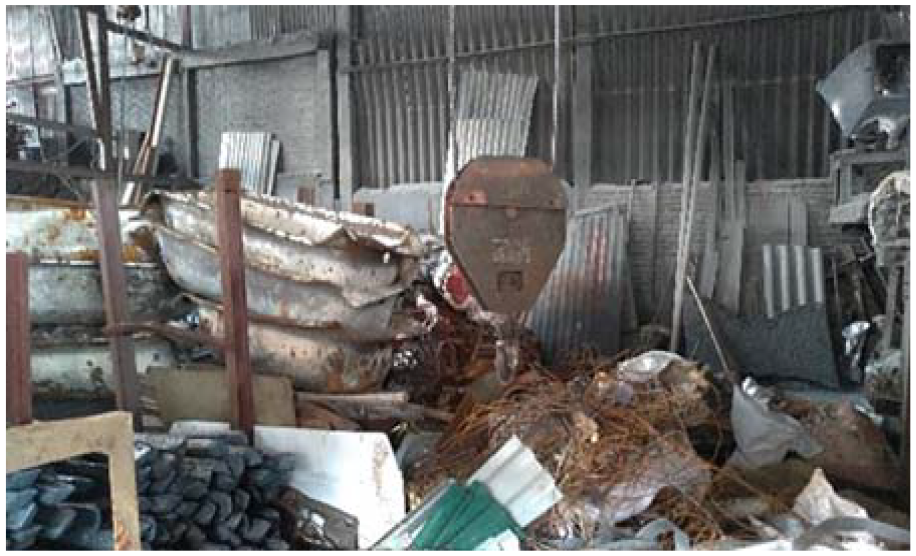
Press and crane used.
An industrial oven is heated up; then, materials are melted in a mold creating steel ingots by using a great deal of water to cool them down until they reach a solid-state (Figure 5).

Industrial oven used.
Ingots are transported to a different processing plant that gives ingots various shapes and thicknesses as bars for the construction industry as a final product is ready to be sold (Figure 6).

Ingots and steel bars to be sold.
It is important to note the grade of industrialization and organization of this village is above the overall compared with other Recycling Craft Villages. The leader within the community members is in charge of making the decisions that govern the facilities. In our opinion, the adaptation with upgrades to modern machinery and circular processes would be relatively straightforward. Da Hoi leader is in contact with the ISPONRE representatives to be informed on national programmes and policy requirements, although not at the international level.
Discussion
The world is headed for a CE, and Vietnam is not an exception; from the perspective of the industry, the first movers of concrete initiatives (e.g., the mentioned “Center of Circular Economy” or the “Vietnam Material Marketplace”) are principally widely-known multinationals such as Unilever, Coca-Cola or Nestlé. Although they receive support from the government, the VCCI, and the VBCSD are more actively helping the companies to develop their projects effectively. However, there is an evident lack of concern about the importance of applying CE business models for Vietnamese companies. Therefore, the number of entities and the impact of their initiatives is undoubtedly narrow.
Who is responsible for leading the change toward circularity? It is going to seem that the primary duty to promote CE comes from the government. First, however, Companies have to start understanding that circularity brings more advantages than headaches. In this direction, close collaboration between public and private actors is needed, especially considering domestic and overseas companies tend to work more effectively with the VCCI and the VBCSD than with the Governmental Agencies. Therefore, to implement actual initiatives with more flexible, agile, and permissive controls from the legislation.
Why did the past 3R policies fail? Part of the 3R initiative has been a failure because most citizens from urban areas did not learn and did not follow any waste classification, being especially difficult to change older generations’ behavior. Furthermore, it was demonstrated that the waste collection policy of charging a fixed, affordable fee per year/household was ineffective. Therefore, the current direction to change this behavior will follow the Korean scheme; for example, hints point at the food waste management system by using mandatory pre-paid biodegradable bags toward zero food waste (World Economic Forum [WEF], 2019). Moreover, education on best practices (e.g., classification) concerning CE and environmental protection should be mandatory at the school or courses.
In January 2020, Vietnam’s 2020 ASEAN Chairmanship was launched, including the ambitious goal of promoting business models of circularity (Vietnam News, 2020), consequently adding more pressure on the neighbor SEA countries to move toward CE. Notorious and numerous difficulties will arise with (1) the policy, occasionally too generic with duplicities and not providing concrete, measurable initiatives, (2) with the limited CE awareness of the rest of stakeholders at all levels, and (3) with the restrictions on the available public budget for investments. On the other hand, there is optimism and perceivable commitment due to the country has relatively unexploited the environmental business scheme of CE; excellent opportunities (i.e., for Recycling Craft Villages) are yet to come, (1) reinforced by the constant economic development, (2) pushed by the citizens increasingly demanding solutions (e.g., for improving air quality), and (3) backed by international trends and multinationals that took the train of circularity.
Vietnam is still a developing country; this essentially means that most of its citizens struggle with more crucial issues than (for instance) correctly sorting waste or purchasing eco-friendly goods (often pricier). This reason is a constant across the country. However, there is a more profound concern when health is affected by extreme air pollution or the contamination in rivers; for both cases, there is a growing interest in collaborating toward a cleaner environment by any means, including CE. In this direction, Vietnam has various Agendas indeed in mind to move toward circularity. However, those concerns should be prioritized since they affect most citizens before moving to more advanced CE approaches. This roadmap must be then established within an ambitious plan to make the Recycling Craft Villages less pollutant. If the country gives such steps, it will follow the right direction to progress with more advanced initiatives. Nevertheless, as the acquisitive power is accompanied by economic growth, it is expected that citizens from big cities will be more and more concerned about circularity, unlike the ones from rural areas, also due to the defies and interest in environmental education. Lastly, even when Foreign Investments (FDI) are crucial to progress on CE, it is an indicator of dependency from abroad, meaning that the country is still not self-sufficient to address its environmental issues; reaching a lower FDI will mean there is progress.
The most remarkable example across the ASEAN region is Cambodia, where recyclable waste is largely collected informally with around 2,000 informal waste pickers in Phnom Penh and over 400 recycling centers throughout the country (United Nations Development Programme [UNDP], 2019). Initiatives such as the Recycling Plastic village in Tapuong village export pellets to Thailand (Global Green Growth Institute [GGGI], 2020), although in general there is little involvement of villages recycling solid waste.
Imperative Defies of the Recycling Craft Villages Business Model
For a country with over 4,000 Recycling Craft Villages, waste-to-resource business models may improve the waste management infrastructure. The most apparent solution starts with public investments in modern facilities to optimize the recycling process, if possible, re-grouping several Recycling Craft Villages into the same facility. Nevertheless, recent CE approaches such as the “9R” and waste hierarchy (Van Ewijk & Stegemann, 2016), emphasize the process of design, being more appropriate to refuse, rethink, reduce, reuse, repair, refurbish, remanufacture, repurpose, than recycling or recovering. Recycling is even considered part of a linear economy. Such an innovative 9R method should be progressively encouraged, without discrimination, by the Recycling Craft Villages, which currently have a massive contribution to environmental protection.
Although undoubtedly, the economic and environmental value of the Recycling Craft Villages in Vietnam was positive, this singular approach to sustainability lacks most of the formal principles, technology, policies, and organization to be considered reliable toward environmental protection.
No need to say, businesses and workers have no level of knowledge of CE practices. For instance, the resulting waste generated in the recycling process could be manifestly better treated, becoming a severe pollutant and recycled products, missing any quality controls, not to mention eco-design, use of renewables more advanced approaches. Therefore, improvisation and technological inadequacy is the rule, generating a subsequent contamination issue that needs to be tackled. Since the Recycling Craft Villages are in rural areas, education is undoubtedly limited, making workers reluctant to learn advanced approaches or technologies that improve the pollutant recycling process into CE; in this aspect, the government must set up a clear roadmap.
The promising Decision No. 687/QD-TTg dated June 7, 2022, has a special interest in Recycling Craft Villages since it is foreseen (1) to conduct research and put solutions in place to increase recycling and reuse of agricultural byproducts and waste, (2) train and develop professionals for agricultural by-product and scrap processing technology research and implementation, research investment, and scientific, and (3) engineering transfer in agricultural scrap processing.
Air Pollution is Still the Top Issue That Needs to be Addressed
The link between CE and air pollution is related to using clean energies as renewables (one of CE’s pillars), and implementing electric vehicles (e.g., refurbishing fuel-based ones), amongst others. The authorities recently depicted that vehicles’ emissions were, apart from the smoke of 1,000 large factories and the dust from various construction sites, one of the three most important causes of air contamination (VNExpress, 2019). It is even feasible for an emergency plan with effective measures as Korea developed (Ministry of Environment of Korea [MEK], 2018). For instance, when the existing policy on air quality is compared with the Korean scheme (MEK, 2015), there is a noticeable absence of initiatives to reduce air impurity. In this direction, the first metro was deployed in Hanoi in November 2021 (Global Construction Review [GCR], 2021).
Vietnam planned by 2030 to raise the coal-fired output to 51.6% of the country’s total capacity of 146,800 MW (VUFO-NGO, 2019). Despite the complaints from diverse regions (Mekongeye, 2019), in contrast to the 19 existing, 50 coal-fired power plants are in the works, which could mean “premature deaths to 25,000 per year” (VBCSD, 2019). At the same time, Vietnam is pushing for renewable energy in Southeast Asia (Consumer News and Business Channel [CNBC], 2019). Since Vietnam is a developing country, coal-based power is still convenient in terms of affordability. The question here is to which extent will become a countermeasure to renewables as a cap for air pollution. With all, Vietnam positively moved when it approved the development of the National Emissions Trading Scheme (ETS) by 2020, establishing the ETS on six GHGs, including carbon dioxide, methane, nitrous oxide, hydrofluorocarbon, perfluorocarbon, and sulfur hexafluoride (Triple Pundit [TP], 2012). Nevertheless, another significant comes consequence of air pollution is the elevated use of fuel-based motorbikes. Vietnam commenced selling its first-ever national brand (Vietnam Investment Review [VIR], 2018). To promote electric vehicles, the country needs a package of measures to progress from the current scheme (Pastoor, 2018), for instance, with the lately released initiative by the Ministry of Finance, consisting of giving tax incentives for auto manufacturers and electric car imports (VBCSD, 2019).
Budget Constraints in Running CE Projects
In 2018, the MOE had a budget (4,187,241 billion VND, Vietnam Dong) over ten times lower than the Ministry of Traffic and Transportation (43,602,904 billion VND), which receives the highest funds. The limitation when formulating funding mechanisms will often rely on overseas cooperation programs with foreign agencies. Moreover, the projects launched are in execution as long as the funding is planned for. Therefore, at the deadline of the project, it might be discontinued.
As for the linkage of Recycling Craft Villages with new CE initiatives receiving funding from investors, the main constraint falls in how shareholders (e.g., banks or foreign investors) do not see clearly how to proceed to see the magnitude of the issue with around 4,000 settlements. In this direction, it would be highly valuable for public-private collaboration to develop at least a limited number of Use Cases (e.g., one per waste sector) to improve the technology and techniques toward CE, serving as a blueprint for additional Recycling Craft Villages willing to progress in this direction.
As an evident recommendation, the Vietnamese government should consider incrementing the MOE’s yearly budget to support additional initiatives effectively.
List of Priorities by the Government
According to officials from the MONRE and the ISPONRE, it has been prioritized toward circularity through a new orientation to amend the environmental protection policies. Such directions will follow the experience and regulations adopted by Korea and by the EU. Hence, the current Environmental legislation is being discussed, including a set offivedrafts to be debated in the National Assembly Committees for review before 25/02/2020 (Linh & Chuc, 2019).
The MONRE is concerned about the challenges from (1) lack of environmental monitoring/inventory data, (2) nonexistence of CE business models, (3) outdate industrial technologies, (4) limitation of public-private partnership (PPP) on solid waste management, therefore, such shortcomings are a catalyst for business opportunities on industrial cooperation that need to be addressed. Next, there is a list of priorities the government will address in such meetings, most remarkable:
As was depicted in the “Memorandum of understanding (MOU) Signing Ceremony for Cooperation in Vietnam Program for Advancing Circular Economy,” in Hanoi, in January 2018, one of the critical barriers encountered by companies looking to implement environmental projects toward a CE is the current legislation (fundamentally the 38th Decree [Vanbanphapluat, 2015]). It often requires tedious proceedings due to the need for numerous environmental permits, leading to suspending or even aborting projects. To tackle this issue, the MONRE expressed its intention to implement an “integrated environmental permits” instrument (OECD, 2015) to accelerate its reform efforts.
Solid waste management for improving the definition of categories, identification, and classification stages. Moreover, it will be encouraged to develop recycling and waste treatment projects, enhancing the 3R with a shift to 4R (recover). It will be—the first-ever, explicit mention—of the need to develop CE business models.
In July 2016, Vietnam implemented the Extended Produced Responsibility (EPR), established in Korea 16 years before, in 2000 (Korea Environmental Policy Bulletin [KEPB], 2010), consists of a strategy for the protection of the environment that accounts for the producer’s life cycle, and particularly his product recovery, recycling, and final disposal (Johnson & McCarthy, 2014). Due to its recent implementation, the EPR faces defies, for instance, in the e-waste treatment infrastructures or the lack of support in the legislation (D. Q. Nguyen et al., 2017). To address this issue, the MONRE will implement measures and provisions for a revised EPR.
Application of best available technology (BAT), the definition of types of pollutants by activities, and regulatory provisions. Promotion of eco-friendly and green-label products.
Establish financial mechanisms with preferential policies related to eco-friendly goods, depletion of natural resources, energy efficiency, and CE.
Conclusion
Firstly, although the main drivers are committed to accelerating the CE, it remains unclear how private-driven entities such as the VCCI collaborate in an ecosystem with public-based ones such as the ISPONRE, appearing different initiatives developed unilaterally. Therefore, it is needed to build a public-private ecosystem easing their collaboration and equality-sharing contributions.
Secondly, although beneficial changes will not be committed immediately (in part due to the tedious and time-consuming legislation system), Vietnam may have a prominent CE position among the ASEAN countries. Nevertheless, more advanced approaches to CE than just waste management such as eco-design seem yet far from the planned agendas, being needed to reformulate more up-to-date policies, taking as example pioneer initiatives from the EU. Moreover, the current COVID-19 crisis may slow down the transition toward circularity; likewise, it is happening worldwide due to the well-known and complex constraints the companies and citizens face to articulate regular business operations. Nevertheless, it is expected that the “Law on Environmental Protection No. 72/2020/QH14” (Luatvietnam, 2020), taking effect on January 01, 2022, explicitly mentioning CE, will aid the country to lead the transition toward circularity in the ASEAN region.
Lastly, the reason why a CE will benefit the country comes to the need to (1) address the tremendously elevated pollution generated with rudimentary recycling technologies in Craft villages, (2) a poorly developed waste value chain toward new CE business opportunities are hindered by adding-up tedious and time-consuming bureaucracy to comply with complex legislation schemes, (3) the overall public health caused by air pollution and contamination (e.g., in rivers and streets, causing as well impacts in the fundamental sector of tourism) needs a proper CE scheme such as the successful implementation of food waste treatment in South Korea (needing bilateral agreements to facilitate such collaboration), (4) foreign investments are still needed (although this scenario is not ideal) to tackle waste generation and recycling issues, needing modern machinery (highlighting the case of Craft Villages), and (5) although it was recently formulated the first-ever legislation with an explicit CE mention, it remains too broad and vague, being further amendments and legislations needed to provide specific details on the contributions, obligations and benefits expected.
This work pointed out how Recycling Craft Villages need in-depth policy measures to alert policy-makers for taking action. It is expected that the development of such initiatives will improve the recycling processes, consequently, reducing pollution, as well as multiplying the new business opportunities liked to CE. In this direction, the extended responsibility policy of producers (EPR) policy enforcement is an inevitable trend that is being slowly implemented yet with the commitment to be imposed, also in the Recycling Craft Villages (Vietnam Law, 2021).
Nonetheless, the country is expressing one of the strongest commitments across the ASEAN region toward a CE with initiatives such as the “Consultation on Circular Economy Policies and the Viet Nam Circular Economy Hub– ways toward a low-carbon and circular” in October 2021. The event had more than 200 representatives, including CE drivers such as the ISPONRE, the United Nations Development Programme (UNDP), and the Norwegian and Dutch embassies (UNDP, 2021).
As for the limitations and future direction of this work, a more in-depth analysis is required to be done in association with the ISPONRE to further understand the environmental, social, and economic issues existing in Recycling Craft Villages. The authors strongly recommend allocating public funding to conduct a nation-wide survey across several Recycling Craft Villages to address all the sectors in the waste value chain. Lastly, it is highly recommended that the ISPONRE should propose a white paper to the MOE plotting a specific CE package meant exclusively for Recycling Craft Villages since the peculiarities of this phenomenon make it complicated to apply the yet-immature CE policies on the works.
Footnotes
Acknowledgements
The authors gratefully would like to acknowledge the two Vietnamese natives, Ms. Huyen Nguyen and Ms. Ha Phuong, last year’s graduate students at the NEU, which immensely helped conduct this field research with their translations’ valuable support. Thanks to Professor Nguyen Thi Thu Huong (Hung Vuong University) for the support received.
Author’s Note
The interviewees voluntarily accepted to participate in this research and where fully informed about the aims of it. The authors will respect the right of the interviewees to keep their information confidential.
Declaration of Conflicting Interests
The author(s) declared no potential conflicts of interest with respect to the research, authorship, and/or publication of this article.
Funding
The author(s) disclosed receipt of the following financial support for the research, authorship, and/or publication of this article: This article was funded by the European Commission, Erasmus Mundus program, “IMPAKT Asia” project, which was dedicated to developing relations between Europe and Asia through mobility between the two regions at the National Economics University (NEU) of Hanoi.
