




Abstract
IoT device market has grown rapidly in recent years, with many researches have been done to investigate the IoT devices’ adoption factors. However, it is crucial to understand how to maintain the users’ continuance intention. This study, based on the post-acceptance model of the Expectation Confirmation Model (ECM), investigates the impact of early-stage users’ personal traits (personal innovativeness), social influence (normative and informational), and familiarity, on the social diffusion of IoT devices (in particular, smart speakers) measured by the continuation intention of smart speakers. We tested the research model and hypotheses using data from 364 smart speaker users, analyzed with partial least square technique using Smart-PLS. The data analysis results revealed that satisfaction has a very strong and positive impact on continuance intention. Perceived usefulness, confirmation, and personal innovativeness are positively associated with continuance intention via satisfaction. Social influence, represented by normative and informational social influence, showed a significant positive impact on continuance intention, a high degree of familiarity weakens the influence of normative social influence on continuance intention; however, familiarity has no impact on the relationship between informational social influence and continuance intention.
Introduction
The Internet of Things (IoT) is a technology paradigm envisioned as a global network of machines and devices capable of interacting with each other (I. Lee & Lee, 2015). With the advent of smart homes, smart cities, and “smart everything,” IoT has emerged as an area exhibiting incredible impact, potential, and growth (Khan & Salah, 2018). Hasan (2022) reported that there were 12.2 billion connected IoT devices around the world in 2021, with the number expecting to rise to 27 billion in 2025. Meanwhile, the global spending enterprise’s IoT technology grew 21.5% to USD 201 billion in 2022, expecting to reach approximately USD 344 billion by 2025 (Wegner, 2023). The IoT enables objects to connect and form a vast network, offering users the enhanced convenience in accessing and communicating with the network for various purposes of authentication, data sharing, obtaining information, monitoring their surroundings, tracking personal health status, and conducting transactions and payments. As the utilization of IoT products and services expands with growing user network, the perceived value of using these devices will increase and result in network externalities (Hsu & Lin, 2016).
However, despite the growing need to understand in depth the reasons behind the continuance intention toward using IoT devices, research on users’ post-adoption behavior in the context of IoT devices remains scarce. Our review of prior studies reveals that, many researches on IoT focused on its acceptance, but few studies examined IoT devices or services from a post-adoption perspective (Koohang et al., 2022; E. Park et al., 2017). Moreover, IoT continuance was found to have a greater impact on an IoT long-term viability (Nascimento et al., 2018). In order to fill the gap, the current study aims to explore the factors that influence the continuance intention of IoT devices.
Among the different IoT devices, a smart speaker is considered to be one of the most representative because of its voice interaction function and the control terminal role that it plays in an IoT network. Moreover, the global smart speaker market was valued at USD 15.6 billion in 2020 and is expected to grow rapidly to over USD 35.5 billion by 2025 (Laricchia, 2022). A smart speaker can be a key control unit of other smart home devices. The sales of the smart speakers may also enhance the sales of smart home devices (Ling et al., 2021). Therefore, our study focused on smart speakers. The current study considers user experience of smart speaker, and investigates users’ satisfaction by introducing a comprehensive user continue intention model expectation confirmation model (ECM, Bhattacherjee, 2001a). ECM has been widely used to study individuals’ attitude toward information systems (IS) in a post-adoption scenario; the contexts studied include digital textbooks (Joo et al., 2014), mobile social commerce (Hew et al., 2016), and social network sites (Mouakket, 2015).Therefore, the current study considers to extend the ECM to empirically examine the influence of personal innovativeness and social influence on users’ post-adoption intention toward smart speaker. In addition, we investigated the role of familiarity as a moderator between social influence and continuance intention. The model was tested and verified using Structural Equation Modeling (SEM).
Theoretical Background
Internet of Things(IoT) and Smart Speaker
IoT is a network of smart objects connected through the Internet, allowing objects using sensors and embedded components to communicate autonomously (Gubbi et al., 2013). It consists of three layers: device, connection, and application. The device layer includes data acquisition through radio-frequency identification (RFID), near field communication (NFC), wireless sensor networks (WSN), and embedded intelligence. The connection layer includes gateways and the IoT core/backbone network, which provides a uniform interface and cloud computing platforms. The application layer is closest to the end user and provides a range of services, including those for the home, transport, and community. IoT services are identified as application layer functions, that allow direct user interaction with hardware, self-aware things, and smart environments to improve life quality and work productivity (Bandyopadhyay et al., 2013).
The smart home sector is considered a promising area for IoT applications, as companies with core wireless network technologies can provide smart home platform solutions. IoT technologies in smart homes can provide economic benefits and improved living, by integrating with a smart grid system and allowing easy accessibility to wireless networks (E. Park et al., 2017). A smart speaker is a type of IoT device that is designed to interact with users through voice commands. These speakers are equipped with advanced artificial intelligence and speech recognition technology, which allows them to understand natural language and respond to user requests (Ling et al., 2021). Smart speakers can perform a wide range of functions, including playing music, setting reminders, answering questions, controlling smart home devices, and much more (Ling et al., 2021). Some popular examples of smart speakers include Amazon Echo, Google Home, and Apple HomePod. These speakers are typically connected to the Internet, allowing them to access a vast amount of information and perform various tasks in real-time. They can also be integrated with other devices and services, such as music streaming services, smart home systems, and virtual assistants, to offer a greater range of capabilities. Overall, smart speakers provide a convenient and user-friendly way to interact with technology, making it easier for people to access information and control their devices without physically coming in contact with them. Thus, to ensure the successful widespread continue intention of smart speakers, it is crucial to gain a comprehensive understanding of their users. This study proposes a comprehensive research model, that incorporates various motivations and obstacles identified through users’ expectation and satisfaction.
Issues related to IoT have been widely discussed in both practical and academic fields. However, previous research has mainly focused on the first adoption of IoT-related devices or services (Alanazi & Soh, 2019; Kao et al., 2019; Klobas et al., 2019). This study examines the factors affecting smart speaker post-adoption behavior in terms of continuance intention or repurchase intention. Meanwhile, prior studies have examined various IoT devices including smartwatches (Choi & Kim, 2016), smart home devices (Klobas et al., 2019), voice assistants (Pal et al., 2020), and IoT-based healthcare (Ben Arfi et al., 2021). Moreover, prior research on the acceptance of IoT has primarily adopted the technology acceptance model (TAM), theory of planned behavior (TPB), unified theory of acceptance and use of technology (UTAUT), and value-based adoption model (VAM) to explain IoT adoption; Choi and Kim (2016) incorporated perceived enjoyment, perceived self-expressiveness, vanity, and the need for uniqueness to create an extended TAM for examining smartwatch use. The findings indicated that the attribute of smartwatches as a fashion product significantly explains the intention to use a smartwatch, particularly the individual’s desire for uniqueness. Ben Arfi et al. (2021) extended the UTAUT model by including perceived risk and financial cost variables, with age and gender as moderators. Their findings reveal that the cost of using IoT in e-Healthcare is the key barrier to IoT adoption. Moreover, age is a significant moderator of customer intention to use IoT in e-Healthcare. Notably, Pal et al. (2020) conducted a study comparing the application of TAM, TPB, UTAUT, and VAM in the context of voice-based smart IoT products; their results showed that VAM has the greatest predictive capability to explain behavioral intention to use voice assistants. The success of a product does not lie solely in users’ initial adoption, but rather in their ongoing and sustained use over time, which is crucial for its long-term survival and success. Thus, unlike the aforementioned studies, our research focuses on post-adoption of IoT devices, applying the ECM model to measure continuance or repurchase intention of smart speaker.
Expectation-Confirmation Model
The Expectation-Confirmation Theory (ECT, Oliver, 1980) explains consumers’ repurchase intention through satisfaction. The theory posits that consumers form expectations about a product or service based on existing knowledge, past experiences, and interactions with communication channels (mass-media, one-to-one marketing, user feedback, and peer discussions) (Oliver, 1980). The extent of expectations can vary among customers for the same product. Traditional ECT has limitations in explaining the formation of IS expectations (Nascimento et al., 2018). Consumers may purchase a product without strong expectations, and the novelty of an IS can lead to varying user expectations. ECT focuses on beliefs and attitudes toward a product’s attributes or performance, but does not address its quality factors (Nascimento et al., 2018). To address these limitations, IS researchers have adapted ECT; its most widely used adaptation being the Expectation-Confirmation Model (ECM) proposed by Bhattacherjee (2001b). The ECM is based on the IS continuance theory, which states the high likelihood of satisfied IT users’ continued usage of the technology (Bhattacherjee, 2001b). Unlike the traditional ECT and previous models, the ECM focuses on post-acceptance variables including perceived usefulness, rather than pre-usage expectations. The ECM postulates that, “the effects of any pre-acceptance variables are already captured within the confirmation and satisfaction constructs (Bhattacherjee, 2001b).” Unlike ECT’s pre-usage perceived usefulness, the ECM’s perceived usefulness refers to a post-usage one, that results from accumulated perceptions of usefulness. The ECM replaces the ECT’s expectation with post-usage perceived usefulness, and its repurchase intention with continued usage intention. Additionally, the ECM assumes that, perceived performance’s influence is explained by the congruence between expectation and actual performance (known as confirmation), thereby eliminating the performance construct from the ECT.
There are four variables in ECM: expectation-confirmation, perceived usefulness, satisfaction, and continuance intention toward an IS. Perceived usefulness and expectations are instrumental for purchase satisfaction, which subsequently leads to repurchase intention (Oghuma et al., 2016). In other words, the level at which users’ expectations meet the perceived performance of a product will determine level of satisfaction. Satisfied customers develop repurchase intention, while dissatisfied customers discontinue subsequent use. Since its emergence, ECM has been employed and extended by researchers to explain the continuance behavior of various technologies, previous research has not only looked into the post-adoption of smart (mobile) devices and services using the ECM, but they have also included the antecedents and consequences of post-adoption confirmation to expand the understanding of post-adoption behaviors related to IoT services and devices. Similarly, our study intends to extend the ECM by including an independent variable, personal innovativeness, which is linked to users’ readiness for technology, as well as social influence variables, normative social influence and informative social influence, which are deemed relevant in the context of smart speaker adoption. Furthermore, we also propose to incorporate familiarity as a moderating variable, due to its potential impact on shaping post-adoption behaviors.
Personal Innovativeness
The literature on technology adoption and continue adoption has highlighted the significance of personal traits in the adoption, continuance, and diffusion of technology (Agarwal & Prasad, 1998; Mahatanankoon, 2007). Research indicates that, the technology’s as well as the adopter’s characteristics both play a role in the adoption and diffusion of technology (Lu et al., 2005). Personal innovativeness has been selected from the various personal traits studied till date, as it has been found to either promote or impede innovations’ continued adoption and diffusion (Leung & Chen, 2019; Oliveira et al., 2016). Our focus is to examine the impact of using technology, on the intention to continue the usage. Hence, we have chosen personal innovativeness as a relevant trait. Agarwal and Prasad (1998) conceptualized personal innovativeness in the domain of information as an individual trait reflecting a willingness to try out any new technology. Individuals who have an innate propensity to be more innovative with new technology are likely to be more predisposed to experience new technology or products (Agarwal & Prasad, 1998). Bartels and Reinders (2011) indicated that individuals’ psychological need for uniqueness and social identification plays an important role in innovativeness. The ECM mainly studies the consumer’s continue to use the product from the consumer’s expectation confirmation and satisfaction. This does not take into account the impact of the consumer’s personal characteristics influence on usages satisfaction. Therefore, we consider introducing personal innovativeness to expand the ECM model.
Normative and Informational Social Influence
Social influence is defined as the extent to which users believe that “important others” would approve or disapprove of their performance (Ajzen, 1991). Deutsch and Gerard (1955) distinguished between two types of social influence: Informational social influence is the tendency to accept other people’s information and consider that information to be true, while normative social influence is the tendency to follow other people’s expectations. Normative social influence is a social process by which other people convey the socially expected behavior within a situation, thereby influencing the way an individual behaves; informational social influence is a cognitive process that involves accepting the information provided by others, which is taken as evidence about reality (Cohen & Golden, 1972). Consumer behavior cannot be fully understood without accounting for the effects of interpersonal influence on the development of attitudes, norms, values, aspirations, and purchase behavior (Bearden et al., 1989). Thus, we consider introducing social influence as social perspective to expand the ECM model.
Familiarity
Familiarity is defined as the degree to which a user feels familiar with some products or services (Gefen, 2000) and has been widely examined in the broader marketing literature Studies have shown that familiarity influences consumers’ decision-making processes in different contexts. For instance, Gefen (2000) developed a model with familiarity, trust, and other variables, seeking to determine which variable most affects users’ choice of an e-commerce vendor. The findings indicate that increased degrees of familiarity with an e-commerce vendor and its procedures will increase people’s willingness to purchase products on the vendor’s website. Further, a high level of pre-purchase familiarity was found to be associated with more extreme post-purchase responses in terms of repurchase intention, compared to a low level of pre-purchase familiarity (Söderlund, 2002). Y. Lee and Kwon (2011) found that familiarity has a positive impact on continuance intention toward web-based services. Moreover, familiarity was found to enhance trust in production and indirectly promote social shopping intention (Li, 2019). Thus, we introduce familiarity as an important construct of our model. Table 1 summarized the previous ECM-based studies.
Previous ECM-Based Studies.

Note. BL = brand loyalty; CA = causal attributions; CI = continuance intention; COMP = compatibility; CON = confirmation; CSMIP = information access, errors, collection; ENJ = perceived enjoyment; EOU = perceived ease of use; EV = emotional value; FAM = familiarity; FRE = free alternatives to paid apps; FSQ = offline channel service quality; HAB = habits; HMOT = hedonic motivation; IN = intimacy; IREC = intention to recommend; OSQ = perceived online channel service quality; PB = prior behavior; PEV = performance value; PI = personal innovativeness; PIREC = price value; PQ = service quality; PS = perceived sacrifices; PSEC = perceived security; PU = perceived usefulness; PV = perceived value; REA = relative benefits of the online channel; RAT = app rating; SEC = perceived security; SN = subjective norm; STA = satisfaction; SV = social value; TA = technology anxiety; UI = user interface; USAB = perceived usability; USE = perceived usability contains usefulness; VV = value for money.
Research Model and Hypotheses
Research Model
The research model (Figure 1) was developed to analyze the factors that affect the continuance intention toward smart speakers in terms of seven independent variables, including perceived usefulness, confirmation, satisfaction, personal innovativeness, social influence (normative and informational), and familiarity. Perceived usefulness, confirmation, personal innovativeness are the key factors influence satisfaction. Satisfaction is assumed to mediate the relationship between three independent variable continuance intention. Familiarity, social influence (normative and informational) are also identified as key factors influencing continuance intention. Familiarity is posited to moderate the relationship between social influence and continuance intention.
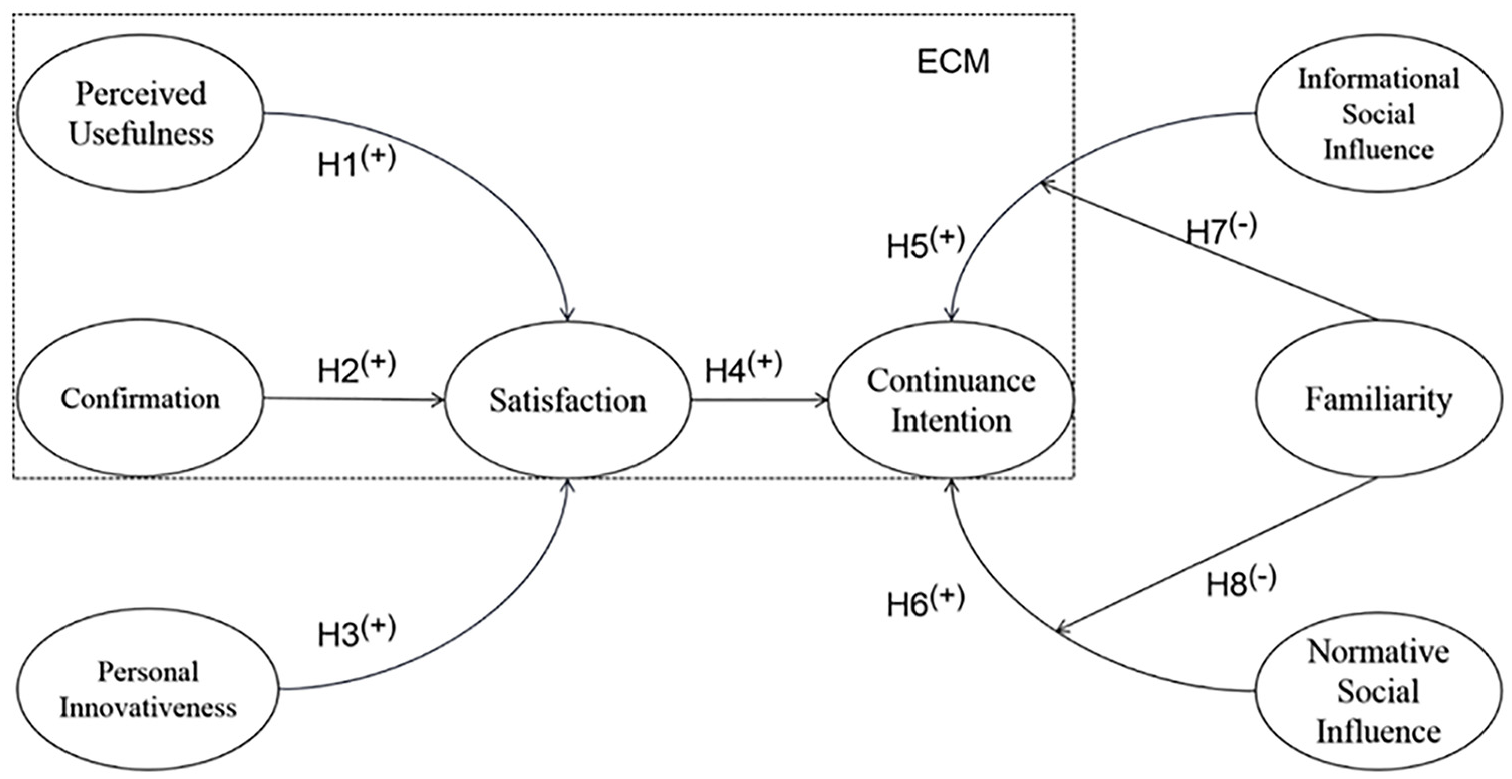
Research model.
Hypotheses Development
ECM consists of four constructs: confirmation, perceived usefulness, satisfaction, and continuance intention (Bhattacherjee, 2001b). Confirmation refers to a user’s perception of the congruence between the expectation of IS use and its actual performance (Bhattacherjee, 2001b) Perceived usefulness and performance expectancy are often interchangeable (Huang, 2019), which refers to a user’s perception of the expected benefits of IS use (Davis, 1989). Satisfaction refers to an evaluation of the user’s initial trial experience with the service, which is captured as a positive feeling, (satisfaction), indifference, or negative feeling (dissatisfaction) (Bhattacherjee, 2001b). Continuance intention refers to the degree to which a person is willing to continue using an information system (Bhattacherjee, 2001b). Many prior studies have applied ECM to study different contexts. Hsu and Lin (2015) found that both perceived usefulness and confirmation influence user satisfaction, and user satisfaction has a strong positive impact on the continuance intention toward paid mobile apps. Mouakket (2015) integrated ECM with habit, enjoyment, and subjective norms to investigate continuance intention toward SNS, revealing that users’ perceived usefulness, satisfaction, enjoyment, and subjective norms significantly influence the continuance intention toward SNS on Facebook. Hew et al. (2016) reported that perceived usefulness and satisfaction affect the continued usage of mobile social commerce. Joo et al. (2014) applied ECM to investigate digital textbook users’ continuance intention and found that both satisfaction and perceived usefulness influence continuance intention toward digital textbooks. Thus, we propose the following hypotheses:
H1: The perceived usefulness of smart speaker usage positively affects the satisfaction of using a smart speaker.
H2: Confirmation of smart speaker usage positively affects the satisfaction from using a smart speaker.
H4: Satisfaction positively affects smart speaker continuance intention.
Meanwhile, many previous studies have demonstrated that personal innovativeness has a certain influence on customers’ behavioral intention. Lu et al. (2005) developed a model to examine the extent to which personal innovativeness and social influence would affect the adoption of wireless Internet services via mobile technology, and found that personal innovativeness played an important role in the adoption of those services. Joo et al. (2014) illustrated a similar result in their research that personal innovativeness has a significant impact on the satisfaction of mobile learning in cyber universities via perceived usefulness. Moreover, J.-C. Hong et al. (2017) found that customers’ innovativeness has a positive impact on their intention to continue using smartwatches via perceived value. To provide a better understanding of the role of personal innovativeness on users’ continuance intention toward smart speakers, we posit that users will be satisfied by using a smart speaker, partly as a result of their willingness to try out any new technology. Thus, we propose the following hypothesis:
H3: Personal innovativeness positively affects the satisfaction of using a smart speaker.
Shen et al. (2010) introduced normative and informational social influence into their model to identify its relationship with virtual community loyalty. Interestingly, both types exhibited different effects on loyalty: normative social influence was positively related to loyalty, while informational social influence did not lead to loyalty as expected. Fu et al. (2020) examined the mediating effects of normative and informational social influence on the relationship between perceived member familiarity and social shopping intention, revealing that both types enhanced social shopping intention as hypothesized. However, M. K. O. Lee et al. (2011) reported that social influence serves a supplementary function: The potential user may or may not follow what was suggested. Social influence serves only to modify existing attitudes by moderating the impact of beliefs on the formation of attitudes. Thus, social influence would have a moderating impact on innovation adoption decisions.
The two social influence constructs have been applied across studies from many perspectives; likewise, the results vary based on the different roles they played in the model as well as the different contexts they focused on. In our study, we seek to investigate whether and to what extent the two constructs of social influence would affect continuance intention. We anticipate that normative and informative social influence will have a positive impact on smart speaker continuance intention. Thus, we propose the following hypotheses:
H5: Informational social influence positively affects smart speaker continuance intention.
H6: Normative social influence positively affects smart speaker continuance intention
The moderating effect of familiarity has been addressed in the marketing field. Machleit and Wilson (1988) demonstrated that brand familiarity moderates the relationship between customers’ attitudes toward the advertisement and brand attitude after advertisement exposure. J.-Y. Park et al. (2019) showed that brand familiarity moderates the relationship between substantive servicescape and positive affect, with participants with low brand familiarity showing higher positive affect than those with high brand familiarity. Based on these arguments, we anticipate that familiarity with smart speakers would moderate the influence of social influence on customers’ continuance intention toward smart speakers. Thus, we propose the following hypotheses:
H7: A higher level of familiarity with smart speakers weakens the influence of informational social influence on smart speaker continuance intention.
H8: A higher level of familiarity with smart speakers weakens the influence of normative social influence on smart speaker continuance intention.
Research Methodology
Data Collection
A pretest survey was conducted among 40 volunteers before the main survey to determine reliability and validity. The items that indicated low reliability and low validity were removed. Meanwhile, the responses to the questions were used to refine the instructions and questions in the survey. The main questionnaire was created online (Wenjuanxing) and administered through SNS (WeChat, Facebook, Kakao Talk). The survey was conducted for a month from October 5 to November 5, 2020. A total of 459 questionnaires were collected; however, we eliminated several questionnaires that were deemed to be dishonest (having the same answers to all questions) and excluded respondents who were not smart speaker users. The remaining 364 questionnaires were included in our analysis.
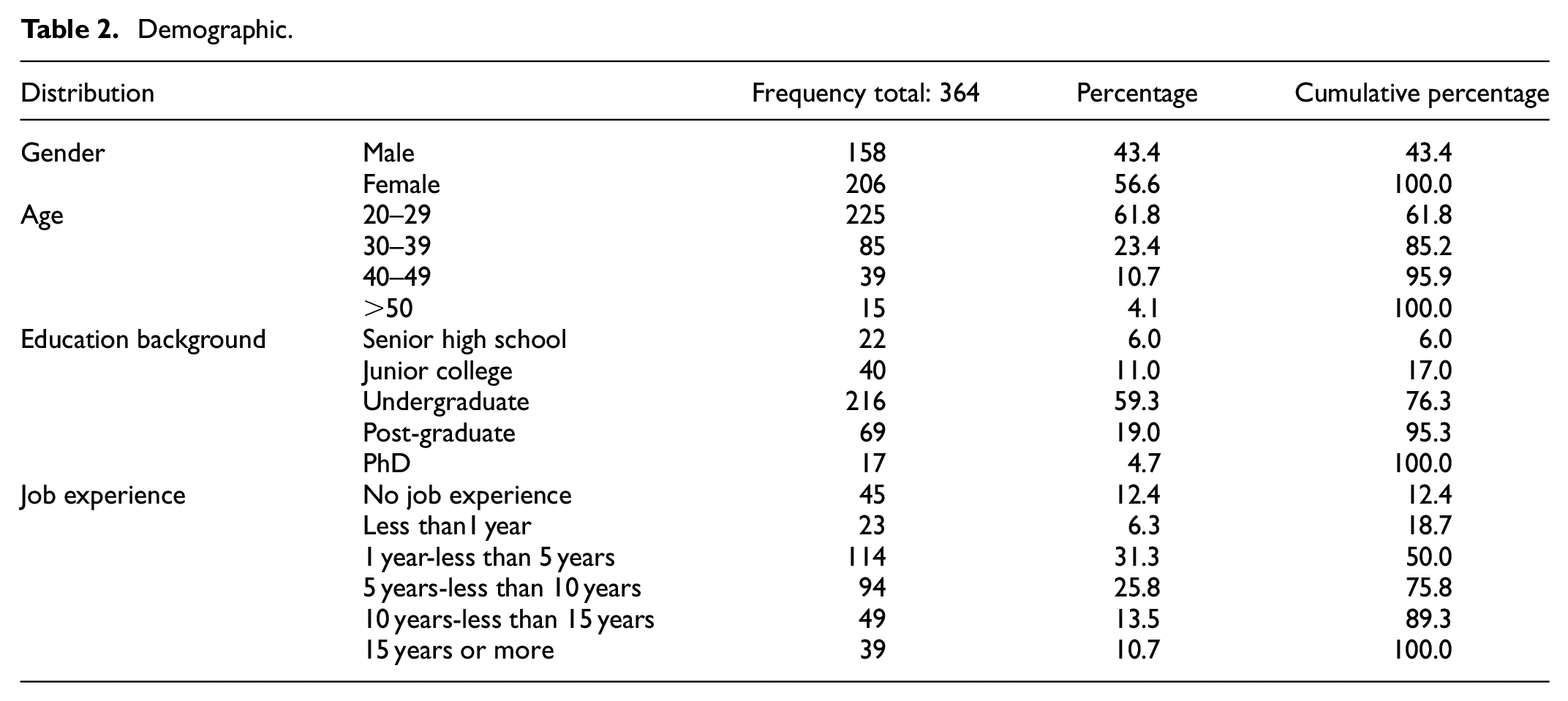
Table 2 shows the distribution of survey participants. While 43.4% of the participants were male, 56.5% were female. The largest proportion of smart speaker users in this survey were aged 20 to 29 years (n = 225; 61.8%), followed by the age group of 30 to 39 years (n = 85; 23.3%). A total of 197 (59.7%) participants had an undergraduate degree, followed by those with post-graduate (19.5%), junior college (10.7%), and other educational backgrounds. There were 45 respondents who did not have any job experience, accounting for 12.4% of the sample; meanwhile, 6.4% of the participants had less than a year of job experience, constituting the smallest group. However, most of the respondents had 1 to 10 years of job experience, accounting for about 57% of the sample. This was followed by 13.5% and 10.7% of the respondents who had a job experience of between 10 and 15 years and more than 15 years, respectively.
Demographic.
Instruments
The questionnaire consisted of two parts. The first part obtained data on the participants’ demographic information, such as grade and gender. The second part measured variables in the proposed model. The instruments of seven constructs are all adopted for previous studies. Specifically, perceived usefulness is measured by five items adopted from Hsu and Lin (2015), confirmation is measured by four items adopted from Bhattacherjee (2001b) and Hsu and Lin (2015), satisfaction is measured by four items adopted from Bhattacherjee (2001b), personal innovativeness is measured by three items adopted from Wu et al. (2017), normative social influence is measured by five items informational social influence is measured by four items and both are adopted from Bearden et al. (1989) and Fu et al. (2020), familiarity is measured by three items adopted Y. Lee and Kwon (2011) and Gefen et al. (2003), and continuance intention is measured by three items adopted from Bhattacherjee (2001b) and Kim (2010). All items used seven-point Likert scales, where 1 indicates “strongly disagree” and 7 indicates “strongly agree.” We slightly modified the wording of these items to fit the smart speaker context. Appendix B presents the final measurement items for each construct.
Data Analysis and Results
Testing the Common Method Bias
As Bagozzi and Yi (1991) noted, a common method bias is one of the main sources of systematic measurement error. The exclusive reliance on self-reported survey data may be indicative of common method bias, which we tested using partial least squares. Kock (2015) pointed out that, a VIF value greater than 3.3 was considered as an indication of pathological collinearity, while the model might be influenced by common method bias. Therefore, if all VIFs from a complete collinearity test are equal to or below 3.3, the model can be considered free of common method bias. In this study, the value of inner model VIFs range from 1.301 to 2.369. This suggests that, our model is free from common method bias.
Measurement Model
The research model (Figure 1) was analyzed using the partial least squares structural equation modeling (PLS-SEM) method in Smart-PLS 3.0. PLS-SEM was used to explore the relationships proposed in the research model; it can be used to examine causal relations by using a combination of quantitative data and qualitative causal hypotheses (Huang, 2019).
This study evaluates the model in terms of factor loading, reliability, convergent validity, and discriminant validity. The three indices of reliability examined in this study were Cronbach’s alpha (α), composite reliability (CR), and average variance extracted (AVE). Nunnally and Bernstein (1994) recommend a Cronbach’s α value of .70 to indicate an adequate level of reliability. CR values of .70 or above indicate good reliability for the construct (Hair et al., 2014). Fornell and Larcker (1981) recommended that the acceptable level of AVE is 0.5 or higher. According to Anderson and Gerbing (1988), convergent validity exists when factor loading values are above 0.5, and all t-values are above 1.96. Discriminant validity exists when the positive square roots of AVE values are greater than the coefficient of correlations between constructs (Chin, 1998; Fornell & Larcker, 1981). In addition, discriminant validity could also be established if the loadings of each indicator on its construct are higher than the cross loadings on other constructs (Hair et al., 2014).Tables 3 and 4 and Appendix C indicate that the model testing results are significant and acceptable as all values meet the required standards.
Reliability and Convergent Validity Test.

Note. CR = composite reliability; AVE = average variance extracted.
Discriminant Validity Analysis Results.

Note. Diagonal and bold values indicate positive square roots of AVE, and all values are greater than the correlation coefficients between constructs. C = confirmation; CI = continuance intention; FAM = familiarity; IN = personal innovativeness; ISI = informational social influence; NSI = nominal social influence; PU = perceived usefulness; SF = satisfaction.
Hypotheses Testing
In terms of the structural model, R2 values were used to determine the level of significance of the path coefficients. The explanatory power of the model is relatively high; the R2 values of the dependent variable are .734 and .581 for satisfaction and continuance intention, respectively. The significance of the path coefficients was assessed using a bootstrapping procedure (Hair et al., 2022) with5,000 iterations of resampling (Chin, 1998). Most coefficients are significant at the 99% level, as shown in Figure 2. The path coefficients for personal innovativeness→satisfaction and normative social influence→continuance intention are significant at the 95% level.

Path analysis results.
The model explained 73.4% of the variation in satisfaction. All variables were statistically significant: perceived usefulness (β = .282; p < .001), confirmation (β = .573; p < .001), and personal innovativeness (β = .094; p < .05). In other words, perceived usefulness, confirmation, and personal innovativeness have significant effects on satisfaction. Therefore, hypotheses H1, H2, and H3 were accepted.
The model explained 46.0% of the variation in continuance intention, and all variables were statistically significant: satisfaction (β = .246; p < .001), normative social influence (β = .109; p < .05), and informational social influence (β = .299; p < .001). In other words, satisfaction and normative and informational social influence also demonstrated significant effects on purchase intention. Thus, H4, H5, and H6 were supported.
The moderating effect of familiarity on the relationship between the two social influence variables and continuance intention was examined. Familiarity does not moderate the relationship between informative social influence and continuance intention. However, a significant negative moderating effect of familiarity on the relationship between normative social influence and continuance intention was identified (β = −.119, p < .05). Thus, while these results do not support H7, H8 is supported. Table 5 summarizes the results of hypotheses testing.
Hypotheses Testing Results.

Discussion
Overall Results
This study proposes an extended ECM model for the smart speaker context and empirically confirms the causal relationships in the proposed model. Fundamentally, all paths (H1, H2, H3) in the base line of ECM have been reconfirmed: Satisfaction of using smart speakers demonstrated a very strong and positive impact on continuance intention. Both perceived usefulness and confirmation exert a significant positive effect on satisfaction. These results are expected and consistent with those of Bhattacherjee (2001b). Personal innovativeness is positively associated with continuance intention via satisfaction. Normative social influence and informational social influence had a significant positive impact on continuance intention. Moreover, in terms of the moderating effects of familiarity, a high degree of familiarity weakens the influence of normative social influence on continuance intention; however, familiarity seems to have no impact on the relationship between informational social influence and continuance intention.
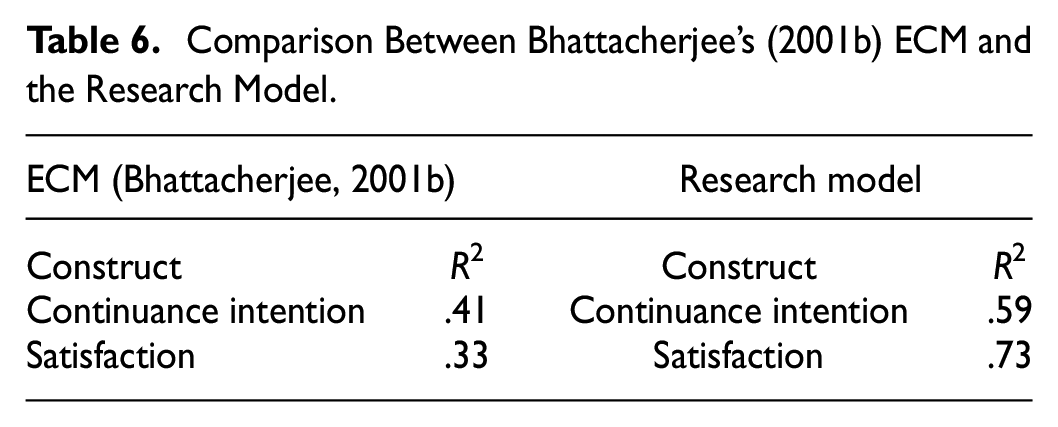
This study’s results suggest that, the ECM model can better explain the continuance intention for smart speakers, by incorporating personal innovativeness, social influence, and familiarity (Table 6). According to Bhattacherjee (2001b), perceived usefulness, confirmation, and satisfaction, explain 41% of the ECM’s variation in continuance intention. However, by including personal innovativeness, social influence, and familiarity, the explained variance increased by 17%, leading to a stronger explanatory power. This modification of the ECM, specifically for the context of smart speakers and its extension to other IoT devices, is a significant contribution to the field. Additionally, the survey instrument has been verified for its validity and reliability, making it a useful tool for future research in other countries.
Comparison Between Bhattacherjee’s (2001b) ECM and the Research Model.
The Role of Personal Innovativeness
Many studies (S.-J. Hong & Tam, 2006; J.-C. Hong et al., 2017) have suggested that personal innovativeness plays a very important role in the adoption of novel technology products or services, and personal innovativeness is seen as an important individual trait in the attitude toward the novel technology service or product. Similarly, in our study, personal innovativeness shows a significant positive indirect influence on continuance intention via satisfaction, implying that users will be satisfied by using a smart speaker partly as a result of their willingness to explore any new technology. Moreover, the satisfied users are more likely to continue using a smart speaker. This result is consistent with that of prior research (J.-C. Hong et al., 2017).
Compared with perceived usefulness and confirmation, personal innovativeness seemed to have a weaker impact on satisfaction. However, we believe that the power of personal innovativeness is probably not fully shown in our analysis. The focus of our research—the smart speaker—was chosen as a representative of IoT devices and is quite easy to use, without any complicated procedures; in other words, using a smart speaker may not be enough to give users the feeling that they are unique and able to use new products or services. This might explain the weaker relationship between personal innovativeness and satisfaction. Therefore, we posit that if the research contexts constitute other IoT devices that require reviewing and learning for access, then personal innovativeness is expected to have a stronger link with satisfaction. Thus, there is an urgent need to consider innovativeness beyond the user’s satisfaction and thus, identifying an individual’s innovativeness that directly affects satisfaction may be a critical way of stimulating consumers’ continuance intention.
The Role of Social Influence
Our results suggest that both normative social influence and informational social influence have a significant positive impact on continuance intention. Users continue using a smart speaker not only because their expectations are confirmed, but also because they are influenced by the social environment. These results are consistent with those reported by Fu et al. (2020). Informational social influence is a very important determinant of an individual’s continuance intention toward a smart speaker, followed by normative social influence. However, normative social influence was found to have a greater impact on the initial adoption of online social shopping (Fu et al., 2020). We speculate that this inconsistency is caused by the different dependent variables included in our analysis. Normative social influence appears to have a greater effect than informational social influence with regard to initial adoption; in contrast, informational social influence seems to have a greater impact than normative social influence on post-adoption behavior. Burnkrant and Cousineau (1975) suggested that informational social influence is highly related to internalization, while normative social influence is highly correlated with compliance and identification. Kelman (1961) argued that internalization represents a deeper degree of influence than compliance and identification, which means that more time and information are needed for cognitive processes. Accordingly, in our study, compared with normative social influence, informational social influence has more influence on continuance intention; this is because users would generally get much more time and information from their smart speaker usage experience for internalization than non-users. Therefore, managers should recognize this difference between users and non-users when devising appropriate marketing strategies to influence IoT device post-adoption behavior.
The Role of Familiarity as a Moderator
The moderating effect of familiarity was examined. The results suggest that a higher level of familiarity with a smart speaker weakens the effect of normative social influence on smart speaker continuance intention (Figure 3), while familiarity does not show any impact on the relationship between informational social influence and continuance intention (Figure 4). Burnkrant and Cousineau (1975) suggested that normative social influence is highly correlated with compliance and identification. Zhao et al. (2018) indicated that normative influence occurs when individuals comply with what the influencing agent wants them to do as a way of achieving the desired response from the agent. It is usually seen as a shallow acceptance of the norm (Hastie, 2007). In this situation, individuals may decide to continue using a smart speaker because they think that they need to do so to comply with others’ behavior, they may experience pressure from others, or they may simply accept messages transmitted from various media. They may overlook their voluntary attitude toward choosing and using a smart speaker according to their needs and motivations. Familiarity leads to more elaborate cognitive evaluations or perceptions (Mitchell & Dacin, 1996; J.-Y. Park et al., 2019 and provides customers with a different frame of reference for evaluations compared to a low level of familiarity. In other words, once someone is familiar with a smart speaker, they are more likely to consider their own demands comprehensively. Thus, we believe that a high degree of familiarity with a smart speaker will weaken the situation of shallow acceptance of a smart speaker. This finding implies that the marketing strategy that enhances the initial adoption of a smart speaker may not have the same effect on enhancing the continuance intention toward a smart speaker, especially for those who choose to possess a smart speaker only as a result of their shallow acceptance.

Familiarity’s moderation effect between informational social influence and continuance intention.

Familiarity’s moderation effect between normative social influence and continuance intention.
Informational social influence is considered a cognitive process, whereby greater knowledge leads to changes in internalized attitudes (Hastie, 2007) In other words, informational social influence can be treated as a characteristic trait that could push an individual to communicate and accept information that is only taken as evidence about reality. Thus, no matter how familiar users are with smart speakers, they will use their cognitive abilities for decision-making. When the evidence about reality arises from their cognitive processes, it helps users determine whether to continue using a smart speaker. Thus, familiarity does not moderate the relationship between informational social influence and continuance intention. Combined with the normative social influence aspect, to enhance continuance intention, managers should focus more on informational social influence by disseminating abundant information.
The Role of a Smart Speaker
In this study, we chose the smart speaker as a representative IoT device and identified the factors that influence continuance intention toward smart speakers. We recognized that IoT device continuance intention is similarly influenced by these factors as well. Moreover, because of the specialty features of the smart speaker, we speculate that the smart speakers themselves might also have a positive effect on the use of other IoT devices as well. A smart speaker can is not only be a speaker, probably, but a smart speaker can also be a remote control terminal of other IoT devices. Moreover, recent studies (H. Lee & Cho, 2020; Smith, 2020) are conduced to have tested the effectiveness of smart speaker-based advertisements, indicating that advertisements through smart speakers are workable. Therefore, we believe that if someone purchased a smart speaker only for the purpose of use as a speaker, then they are more likely to purchase other IoT devices to build a network. However, further studies are needed to confirm this.
Implications
IoT devices are expected to have a large market scale. Given the adoption of the smart home scenario, which has fundamentally changed the quality of living owing to its usefulness and convenience, IoT devices tend to be increasingly popular in other fields as well. Thus, managers need a framework to build a suitable strategy for their companies so as to capture a greater market share. However, most of the previous IoT-related research focuses on initial adoption; it is very important to maintain customers’ continuance intention as well. We sought to figure out the determinants of continuance intention toward IoT devices based on the ECM model, which is a new and useful model for managers. We extended the ECM model by introducing personal innovativeness, familiarity, and two types of social influence, which add novel perspectives within ECM. The effects of perceived usefulness, confirmation, and satisfaction on continuance intention, which are within the original ECM model, are verified, implying that the more the expectations are confirmed, the more might be the degree of user satisfaction; further, a high degree of satisfaction leads to continuance usage intention. Meanwhile, when considering personal innovativeness, our research provides a new perspective of consumer satisfaction: If consumers display greater innovativeness, they may be more likely to be satisfied by use of smart speaker.
Our research outcomes have practical significance for the primary target groups of smart speaker marketers, developers, and users. The significant association between personal innovativeness and satisfaction implies that, it is vital to focus on early adopters of smart speakers with an innovative personality and a willingness to experiment with new technology. Therefore, it is crucial to establish online as well as offline environments, which can help spread the recommendations from these tech-savvy users, thereby attracting more users to adopt smart speaker technology.
Moreover, this research examines the relationship between the two social influence constructs, familiarity and continuance intention toward IoT devices. We identified the different effects of social influence in the initial adoption and post-adoption contexts. Informational social influence has a greater impact on continuance intention than normative social influence does. However, Fu et al. (2020) suggested that normative social influence has a stronger impact on the initial adoption of online social shopping. This finding is an important reminder for managers that informational social influence is a crucial variable, compared to normative social influence, when devising marketing strategies to enhance continuance intention toward IoT devices. Moreover, unlike other studies, we focused on examining the effect of familiarity on the relationship between social influence and continued intention. A high degree of familiarity would weaken the relationship between normative social influence and continuance intention, while it would not have an impact on the relationship between informational social influence and continuance intention. These findings suggest that strategies based on individuals’ superficial acceptance (normative social influence) will not have a positive effect on enhancing continuance intention. This is because increasing familiarity after first adoption reduces its effect. On the contrary, internalized acceptance (informational social influence) was not influenced by increasing familiarity. Therefore, marketing strategies aimed at providing abundant informative and instructive knowledge might be a good way to enhance continuance intention toward smart speaker.
Another implication from our findings, is the significant impact of confirmation on current users’ satisfaction with smart speakers. To target smart speaker marketers and developers, it is important to account for potential users’ initial expectations from newly launched devices, and provide ways to confirm these expectations for satisfying customers and encouraging positive word of mouth. One way to do this is by focusing on responsiveness to current users’ requests and releasing services, that are interoperable with different generations of smart speakers. This will help maintain or improve user confirmation, which is crucial for user satisfaction and device continuance.
Limitations and Future Research
Our study had several limitations. First, we consider personal innovativeness as a variable, in this study, the relationship (β = .094; p < .05) between personal innovativeness and satisfaction was statistically supported by the empirical data, however, the path coefficient β = .094 is less than .2, which seems to be too small to support the existence of the relationship between personal innovativeness and satisfaction. However, based on other research (E. Park et al., 2017), we believe that a relationship exists between personal innovativeness and satisfaction, and we need to make some modifications to our measurement when pursuing different research objectives. Moreover, adopted from Agarwal and Prasad (1998), the prominent personal trait of personal innovativeness was identified, which is capable of impacting the post-adoption satisfaction of IT users, by affecting their cognitive processes. However, this is not claimed as the only significant dimension of personal traits, that can influence the continuance intention. In addition, since PI has been commonly used as a direct factor in determining user satisfaction, it can also be considered a dependent variable for confirmation and continuance intention. PI has direct relationships with confirmation, continuance intention, and recommendation intention (K. Y. Lee et al., 2021), suggesting that future research should examine the direct impact of PI on continuance or confirmation, or explore the significance of other personal traits in enhancing the ECM model.
Second, the aspect of familiarity was introduced in our model as a moderator of the relationship between social influence and continuance. However, this aspect may not be sufficiently developed yet, and hence needs further future research in this area.
Third, a smart speaker is a specific type of IoT device, which may not represent all other IoT devices. This type of speakers may be used in a household, office environment, or other specific scenarios, and therefore, the factors that influence the device’s continuance intention may differ in different scenarios. The functions of a smart speaker may differ greatly from other IoT devices; thus leading to the probable variation amongst the factors influencing the device’s continuance intention. Therefore, to obtain a more comprehensive and accurate result, it is advisable to study different types of IoT devices to broaden the scope of the research.
Finally, the current study investigated users’ continuance intention of smart speakers, by confirming user expectations, satisfaction, personality traits, social influence, and familiarity, but it failed to consider certain features of the smart speakers. Especially with advancing artificial intelligence, smart speakers are gaining intelligence, and more powerful natural language models can better handle the information interaction tasks between smart speakers and humans. There are several variables that need to be considered, including perceived interaction quality. Future research should enrich the ECM model from these aspects.
Conclusions
Given the rapid growth of the IoT market, it is worthwhile to elucidate the factors influencing continuance intention toward IoT devices. The empirical results showed that customers’ continuance intentions toward smart speakers are directly and meaningfully influenced by their satisfaction, normative social influence, and informational social influence. In turn, customers’ confirmation of pre and post-adoption expectations, perceived usefulness, and personal innovativeness influence satisfaction with smart speakers. Finally, a high degree of familiarity weakens the relationship between normative social influence and continuance intention, while familiarity does not moderate the relationship between informational social influence and continuance intention.
Footnotes
Appendix
Loadings and Cross Loadings of Measurement Items.

| PU | C | IN | SF | ISI | NSI | FAM | CI | |
|---|---|---|---|---|---|---|---|---|
| PU1 |
|
0.566 | 0.393 | 0.587 | 0.419 | 0.326 | 0.384 | 0.495 |
| PU2 |
|
0.594 | 0.437 | 0.579 | 0.418 | 0.339 | 0.420 | 0.538 |
| PU3 |
|
0.523 | 0.379 | 0.593 | 0.516 | 0.397 | 0.333 | 0.533 |
| PU4 |
|
0.582 | 0.453 | 0.561 | 0.460 | 0.381 | 0.384 | 0.512 |
| PU5 |
|
0.589 | 0.418 | 0.635 | 0.516 | 0.380 | 0.397 | 0.564 |
| C1 | 0.586 |
|
0.499 | 0.691 | 0.455 | 0.396 | 0.475 | 0.498 |
| C2 | 0.636 |
|
0.507 | 0.694 | 0.437 | 0.446 | 0.519 | 0.530 |
| C3 | 0.619 |
|
0.582 | 0.724 | 0.458 | 0.443 | 0.545 | 0.552 |
| C4 | 0.539 |
|
0.492 | 0.676 | 0.450 | 0.464 | 0.459 | 0.497 |
| IN1 | 0.454 | 0.478 |
|
0.518 | 0.483 | 0.419 | 0.419 | 0.488 |
| IN2 | 0.429 | 0.519 |
|
0.482 | 0.395 | 0.502 | 0.578 | 0.496 |
| IN3 | 0.372 | 0.500 |
|
0.445 | 0.352 | 0.361 | 0.472 | 0.517 |
| SF1 | 0.640 | 0.752 | 0.540 |
|
0.543 | 0.464 | 0.551 | 0.574 |
| SF2 | 0.636 | 0.746 | 0.543 |
|
0.471 | 0.468 | 0.525 | 0.543 |
| SF3 | 0.646 | 0.706 | 0.499 |
|
0.492 | 0.430 | 0.527 | 0.531 |
| SF4 | 0.657 | 0.701 | 0.511 |
|
0.536 | 0.452 | 0.523 | 0.595 |
| ISI1 | 0.452 | 0.430 | 0.434 | 0.432 |
|
0.416 | 0.360 | 0.496 |
| ISI2 | 0.431 | 0.376 | 0.351 | 0.453 |
|
0.380 | 0.253 | 0.478 |
| ISI3 | 0.419 | 0.402 | 0.401 | 0.452 |
|
0.427 | 0.380 | 0.439 |
| ISI4 | 0.500 | 0.458 | 0.431 | 0.481 |
|
0.402 | 0.436 | 0.516 |
| NSI1 | 0.274 | 0.345 | 0.291 | 0.305 | 0.342 |
|
0.220 | 0.299 |
| NSI2 | 0.274 | 0.400 | 0.465 | 0.355 | 0.366 |
|
0.442 | 0.417 |
| NSI3 | 0.356 | 0.388 | 0.399 | 0.395 | 0.485 |
|
0.322 | 0.399 |
| NSI4 | 0.368 | 0.352 | 0.431 | 0.419 | 0.481 |
|
0.308 | 0.478 |
| NSI5 | 0.407 | 0.463 | 0.497 | 0.446 | 0.500 |
|
0.504 | 0.469 |
| FAM1 | 0.394 | 0.527 | 0.513 | 0.550 | 0.398 | 0.397 |
|
0.532 |
| FAM2 | 0.462 | 0.558 | 0.562 | 0.573 | 0.432 | 0.467 |
|
0.587 |
| FAM3 | 0.445 | 0.542 | 0.558 | 0.536 | 0.425 | 0.470 |
|
0.569 |
| CI1 | 0.601 | 0.563 | 0.544 | 0.580 | 0.533 | 0.479 | 0.562 |
|
| CI2 | 0.590 | 0.533 | 0.516 | 0.567 | 0.587 | 0.506 | 0.528 |
|
| CI3 | 0.585 | 0.576 | 0.607 | 0.583 | 0.557 | 0.525 | 0.582 |
|
Note. C = confirmation; CI = continuance intention; FAM = familiarity; IN = personal innovativeness; ISI = informational social influence; NSI = nominal social influence; PU = perceived usefulness; SF = satisfaction.
Acknowledgements
The author wishes to acknowledge the help of Professor Kim kisu for providing with a great research environment and with support in data collection. Also, the author wishes to acknowledge the help of Professor Kim Jeoung Kun for providing a good research environment and for providing valuable revision comments to the first draft several times.
Declaration of Conflicting Interests
The author(s) declared no potential conflicts of interest with respect to the research, authorship, and/or publication of this article.
Funding
The author(s) received no financial support for the research, authorship, and/or publication of this article.
Ethics Statement
All procedures performed in studies involving human participants were in accordance with the ethical standards of the institutional and/or national research committee and with the 1964 Helsinki declaration and its later amendments or comparable ethical standards. This article does not contain any studies with animals performed by any of the authors. Informed consent was obtained from all individual participants included in the study.
