




Abstract
An effective and accurate poverty-alleviation system is necessary for eradicating poverty and promoting regional economic and social growth. Performance evaluation plays a key role in developing a precise poverty-alleviation policy. However, systematic performance evaluation of precise poverty-alleviation efforts has been largely ignored in the literature. This study sorts the poverty-alleviation performance of 10 major urban areas in Shaanxi Province using the count and analysis method. The empirical findings show that among poverty indexes, the yield of agricultural products has the greatest impact on poverty alleviation. Furthermore, the poverty-alleviation performance of Xianyang, Weinan, and Ankang is relatively high. The efforts of Xi’an and Baoji are at the middle level, and those of Tongchuan and Yan’an are at a relatively low level. This paper identifies the poverty alleviation performance status for each area at the indicator level and then offers a corresponding analysis and proposes countermeasures.
Introduction
Poverty alleviation has become one of the most serious problems faced by developed and developing countries. The significance of the problem can be best seen in the inclusion of poverty alleviation in the United Nations sustainable development goals (SDGs). Poverty in all its forms everywhere is the top priority of United Nations SDGs (Baloch, Danish, Khan, & Ulucak, 2020; Baloch, Danish, Khan, Ulucak, & Ahmad, 2020). Poverty brings with it serious social and economic problems in general and for developing countries in particular. Poverty afflicts developing and under-developed countries in various ways. It is seen in income inequality, lack of productive assets, chronic hunger and malnutrition, shortage of clean water, homelessness, high unemployment, low life expectancy, lack of education, and ongoing social injustice.
Among developing nations, China has made reasonable efforts to reduce and alleviate poverty. The 19th National Congress of the Communist Party of China emphasized poverty alleviation efforts and the need to define reasonable poverty-alleviation goals and strengthen the evaluation and supervision of poverty alleviation efforts (Wang, 2018). In particular, the Shaanxi Province, which had 1.69 million impoverished people in 2017 (about 570,000 fewer than in 2016), is an example of poverty alleviation efforts having achieved remarkable results (Yan et al., 2018).
Despite efforts made to alleviate poverty achieving some results, there are still many practical challenges that need to be addressed. For example, there has yet to be an identification of the object of poverty-alleviation efforts that provides a dynamic and accurate identification and targeting mechanism. Moreover, the use of poverty-alleviation funds has lacked a comprehensive and clearly separated input-supervision mechanism (He, 2019). In addition, there is no effective way of screening poverty-alleviation projects (Z. Zhao, 2020). A mechanism that can effectively coordinate poverty-alleviation efforts has yet to be developed (Y. Zhang, 2020). Each of the regions in China faces its own problems and situations. There is thus a need for a comprehensive evaluation indicator for poverty alleviation that offers an accurate picture of the situation. This paper proposes a multidimensional poverty-alleviation indicator taking Shaanxi Province as an example to provide a scientific and accurate theoretical basis for poverty-alleviation work.
Studies in the 1990s began measuring poverty by utilizing unidimensional indicators such as income levels. Later studies show that measuring poverty through these unidimensional indicators might limit attempts to understand more complex features of poverty. As a result, research has gradually begun to shift from unidimensional to multiple assessments. For example, the multidimensional poverty index (MPI) ranks 10 indicators, including education, health, and living standards, to comprehensively measure dimensions of poverty (Chakravarty, 1997). An advantage of using the MPI is that it includes key factors relevant to the less-privileged, thereby effectively enabling an analysis of the dilemmas of the poor. Moreover, the MPI can be used to horizontally compare the characteristics of poverty in different regions and can also show the vertical incidence of poverty. At the same time, the MPI reflects how much individuals or families have been usurped.
Two groups of scholars address precision poverty alleviation. One group reviews and analyzes poverty alleviation policies, the limitations of the departments concerned (Fu, 2017; Liao, 2016), and the lack of autonomy of the working group (Huang, 2018). The second group of authors focuses on special cases of poverty alleviation in selected areas. These authors consider the experience of poverty alleviation efforts in Yanchi County and Ningxia, highlighting the significance of poverty alleviation work in the country (Li & Song, 2017; H. Liu, 2016). Many studies point to the practical dilemmas faced in poverty alleviation and development and how strategies might be optimized (J. Chen & Gong, 2017; Shi et al., 2017). Fan and Zhou (2017) analyze the fragmentation dilemma in precision poverty alleviation and propose an “anti-fragmentation” approach. From the perspective of policy ecology, Y. Liu (2020) constructs an optimal holistic path for poverty alleviation.
Recently, various studies have focused on performance evaluation of the agricultural, industrial, and livestock sectors ( see, e.g., Elahi, Abid, Zhang, Cui, & Ul Hasson, 2018; Elahi, Abid, Zhang, Ul Haq, & Murtaza Sahito, 2018; Elahi et al., 2020; Elahi, Khalid, et al., 2021; Elahi, Weijun, Jha, & Zhang, 2019; Elahi, Weijun, Zhang, & Abid, 2019; Elahi, Weijun, Zhang, & Nazeer, 2019; Elahi, Zhang, et al., 2021; Peng et al., 2019; X. Zhao et al., 2020). However, the literature has largely ignored the performance-evaluation index to assess precision poverty alleviation. Therefore, it is of utmost importance to establish an appropriate indicator to analyze performance in respect of poverty alleviation that can fulfill domestic purposes but also address the needs of the international community. This study fills this gap and proposes a multidimensional poverty index utilizing pluralistic and diverse characteristics of poverty.
This study is different from previous studies in the following ways. First, in establishing model screening indicators, previous studies focus only on the structure of the model, its inclusion dimensions, and the selection of measurement indicators, ignoring the weights of particular indicators. In the practice of precision poverty alleviation, many indicators can reflect the poverty level of a certain area or region, and having different weight settings for indicators will greatly impact the evaluation results. This study thus takes into account the weight setting of the multidimensional poverty evaluation index to accurately and objectively evaluate the degree of poverty and the main causes for its “stickiness.”
Second, most of the existing multidimensional poverty research is based on qualitative analysis. There is limited data to comprehensively describe specific poverty problems. Therefore, this study intends to use scientific and rigorous methods to study the weight-setting problem in the multidimensional poverty evaluation index by taking into account the geographical characteristics of different poverty-stricken areas in the selection of evaluation indicators; this will allow a more comprehensive and objective assessment of the aspects of poverty.
The remainder of the study proceeds as follows. Section 2 covers the related literature and research status, Section 3 introduces the material and methods, Section 4 presents the results and analysis, Section 5 presents the discussion of results, and, finally, Section 6 concludes and offers policy recommendations.
Materials and Methods
Data and Variable Description
This paper collects data on 15 poverty-alleviation indicators for the 10 major cities in Shaanxi Province from 2016 to 2017. Shaanxi Province is one of the provinces with the highest rate and deepest level of poverty in China and, therefore, the most significant poverty-alleviation task ahead. This paper uses the province’s poverty-alleviation work as an example and evaluates the performance of these efforts through investigation and analysis of the statistical data. The study uses entropy weight and fuzzy analysis methods to ensure the sustainability of poverty-alleviation work in the future.
There are various methods to determine index weights, such as the index value, frequency analysis, and expert scoring methods. In particular, the entropy weight and fuzzy analysis methods quantify subjective and objective weightings to study multidimensional poverty. This approach allows a choice of practical evaluation indicators and extensive poverty-related statistical data support. Moreover, the use of the entropy weight method helps us determine the weight of the multidimensional indicators or complicated structures when there is a lack of availability of important data; this method is therefore widely applied in the theory of fuzzy mathematics (T. Chen et al., 2014).
Most of the current research on multidimensional poverty focuses on the identification and measurement of poverty, and that attention to the weighting of multidimensional poverty indicators is relatively simplistic. This paper selects five dimensions: economic, developmental, social, ecological, and life. These dimensions allow an assessment of poverty, and the selected indicators have a certain representativeness in the classified level. The combination of dimensional factors and indicators allows us to establish a poverty-alleviation performance-evaluation index system using Shaanxi Province location characteristics. We also utilize the fuzzy evaluation method to evaluate the overall poverty-alleviation performance of different cities in Shaanxi Province. To do so, we use a combination of the decision-making trial and evaluation laboratory (DEMATEL) and the technique for order preference by similarity to ideal solution (TOPSIS) methods.
Following the establishment of a relevant poverty-alleviation performance-evaluation index, the actual situation of poverty alleviation in Shaanxi Province is determined using data on the five dimensions: economic level, development level, social level, ecological level, and life. The indicators are selected after fully considering the availability of data and ensuring the representativeness and authenticity of the selected data.
(i) Economic level. This dimension includes as indicators the disposable income of farmers, investment in fixed assets, and average wages of employed people. The per capita disposable income of farmers reflects the social and economic development of rural areas and the living conditions of farmers. It is the main basis for measures to reduce poverty. The average wage index of employed persons is selected as a measure of employment-based poverty alleviation. Combined with fixed asset investment indicators and farmers’ income, employment is key in current poverty alleviation work, affecting the transfer of rural surplus labor and thus farmers’ income-increasing channels.
(ii) Development level. The indicators for this dimension include the incidence of poverty and the urbanization rate. The incidence of poverty directly reflects the extent of poverty in a certain region. The general incidence of poverty in Shaanxi Province is less than 3%. A rapid increase in urbanization has driven China’s overall economic development and the continuous improvement of the living standards of urban and rural residents. Urbanization has a role in poverty reduction; the rural poverty rate decreases as the level of urbanization increases.
(iii) Social level. The indicators of the social level include the number of health institutions, the number of students in ordinary secondary schools, the total growth rate of post and telecommunications business, and the per capita road area. The indicators selected for health institutions relate to medical poverty alleviation and include increasing the number of health institutions and strengthening the construction of health care and public health systems in poverty-stricken areas. This plays a fundamental role in the implementation of projects to alleviate health-related poverty.
The number of students in ordinary middle schools is a representative indicator selected from education-related poverty alleviation. Education plays a fundamental role in sustainable and precise poverty alleviation. Education-related poverty alleviation promotes the balanced development of compulsory education and targets improved levels of education for the poor. At the same time as providing cultural knowledge, education enhances the skills of labor and can also improve the productive capacity of poor people and their ability to work and start businesses.
The total volume of post and telecommunications business is representative of the status of regional industrial structures. Disordered post and telecommunications restrict the inclusive growth of the economy. The growth of postal and telecommunications services allows the communication needs of poor areas to be met. The per capita road area of road infrastructure and the total growth rate of post and telecommunications business together reflect the effectiveness of infrastructure construction for poverty alleviation.
(iv) Ecological level. The ecological indicators include the output of agricultural products, the total power of agricultural machinery, and the forestation of previously barren hills and wasteland. Both the output of agricultural products and the total power of agricultural machinery are measures of industrial poverty alleviation; they have potential poverty alleviating effects due to their natural attributes. The forestation of barren hills and wasteland reflects the effectiveness of efforts to improve the local ecosystem. The efforts at this level are mainly aimed at the rural economic structure and improving the income of farmers to alleviate poverty.
(v) Life level. The indicators for this dimension include cable TV coverage, growth in the rate of Internet broadband use, and energy consumption savings per unit of GDP. The first two indicators are related to poverty alleviation through cultural undertakings. Poverty alleviation at this level can enhance the well-being of the poor. The indicator of energy consumption savings per unit of GDP is part of energy-related poverty alleviation, the reduction of energy consumption per unit of GDP, improvement of energy efficiency, and promotion of green development. There is a brief description of each indicator in Table 1.
Selection of Indicators.

The Application of Evaluation Methods
Entropy Weight Method
The objective assignment method is used to determine the weight of the attribute. This paper employs the entropy weight method to calculate the weight of each attribute (H. Zhang & Yu, 2012) using Excel software. The specific method is as follows:
a. There are m items to be evaluated and n evaluation indicators, forming the original data matrix R = (rij)m*n:

Where rij is the evaluation value of the ith item under the jth index. In this paper, j represents the 15 evaluation indicators selected from the five dimensions, and i represents the 10 main cities in Shaanxi Province. The process of finding the weight value of each indicator follows.
b. Calculate the proportion rij of the indicator value of the ith item under the jth indicator:

c. Calculate the entropy value ej of the jth indicator:

d. Calculate the entropy weight wj of the jth indicator:

If the entropy value ej of an index is larger, the smaller the variation of the index value; that is, the smaller the amount of information provided, the smaller the influence of the index on the comprehensive evaluation. Therefore, the indicator should be given a small weight. In the actual analysis, based on the range of variation of the index value, the weight of each index is defined by the entropy weight method, and finally, a reasonable and effective result is obtained. The following is the calculation process. First, the above 15 indicators are selected to evaluate the overall poverty alleviation performance of 10 major cities in Shaanxi Province. The specific data are shown in Table 2.
Sample Data.

Source. 2016, 2017 Shaanxi Statistical Yearbook.
In the second step, we undertake a nondimensionalization process. This step in the entropy weight method is taken to maintain the original variability of the data and, at the same time, remove the dimensionality. In the standardization of the data, the dimension value is divided by the maximum value of the same index to eliminate the dimension; using formula (5), standardized data are obtained and shown in Table 3.

Standardized Data.

In the third step, we calculate the weight matrix of the data and then use formula (3) to obtain the entropy values of each index, as shown in Table 4.
Multidimensional Indicator Entropy Value ej.

The information reflected in Table 4 to obtain the entropy weight of each index, as shown in Table 5.
Multidimensional Indicator Entropy Weight wj.

Finally, the comprehensive weights of the five levels are obtained and shown in Table 6.
The Average Level of Weights at Five Levels.

Analysis of the Results
If the values of all items in index j are consistent (the degree of variation is negligible), the entropy value of this index is one, and the entropy weight is zero. This indicates that the metric does not provide valid information, and it can be removed. For specific indicators, from Tables 4 and 5, the TV population coverage (a3) entropy weight is 0; that is, it has little effect on poverty alleviation, and this indicator can also be ignored. The output of agricultural products (a2), investment in fixed assets (a5), and the growth rate of the total post and telecommunications business (a9) account for the largest proportion of all indicators; that is, these factors have the most significant impact on poverty alleviation. This may be because credit initiatives aimed at poverty alleviation focus on agricultural infrastructure, science and technology, scientific and technological content of agricultural products, and the total output of agricultural products. That is, the output of agricultural products has a clear impact on poverty alleviation, and without outside investment, it may be more difficult to eliminate poverty. Therefore, it is important to direct efforts to areas with low levels of investment.
In poverty-alleviation work, fixed asset investment has a greater impact on poverty-alleviation performance than other forms of investment. Correspondingly, the per capita disposable income growth rate of farmers (a1) and the rate of increase in energy consumption per unit of GDP (a11) have no significant effect on the effect of poverty alleviation. From Table 6, among the five dimensions of evaluation index analysis, the ecological layer has the greatest impact on poverty-alleviation performance, followed by the social level, and the least affected is the life level.
Fuzzy DEMATEL Evaluation Method
Decision Making Trial and Evaluation Laboratory is a method of using system theory and matrix tools to analyze system factors. Through the logical relationship between various factors in the system and the direct influence matrix, the degree of mutual influence between various factors is measured and then identified out of the overall key factors (Altuntas & Dereli, 2015).
In order to enhance the timeliness of the research, we selected first-line experts from relevant industries to score 15 poverty-alleviation indicators in 10 cities (districts) of Shaanxi Province. We used MATLAB R2017 software to assess the importance of various factors affecting poverty-alleviation performance and the importance of criteria. The language variables are shown in Table 7.
Language Variables for Assessing Relevance Criteria.

Figure 1 is a membership function of the IT2FSs language terminology.

IT2FSs.
We combine the interval II-type fuzzy set (IT2FS) theory and the fuzzy DEMATEL method to study the complex relationship between different standards and identify the main factors affecting the success of poverty-alleviation efforts. We integrate the expert evaluations and normalize the results to obtain the initial direct correlation matrix. Using Defuzzification: The initial direct correlation matrix is defuzzified using formula (6), and the results are shown in Table 8.
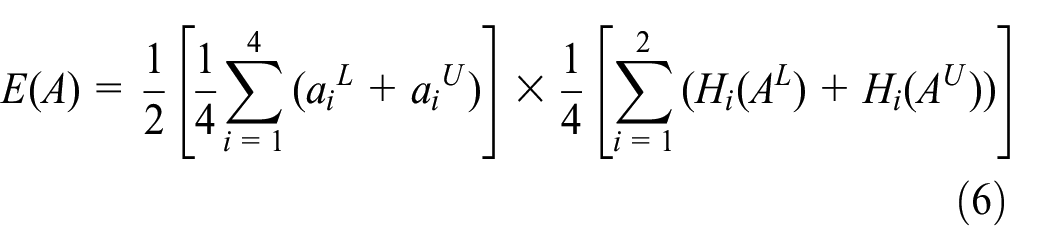
Deblurring Indicators.

As for calculating the weight of poverty-alleviation indicators, the evaluation of expert indicators is defuzzified, and the calculation process and results are shown in Table 9.
Expert Evaluation to Defuzzify Weights.

TOPSIS Method
The TOPSIS method (Si & Sun, 2011) normalizes the original data. The method neglects the interaction between the indicators to measure the difference accurately and objectively and thereby reflect the essential situation.
Assume that there are m items (limited items), n conditions, the expert evaluates the jth attribute of the ith target as xij, and obtains the initial judgment matrix V as:
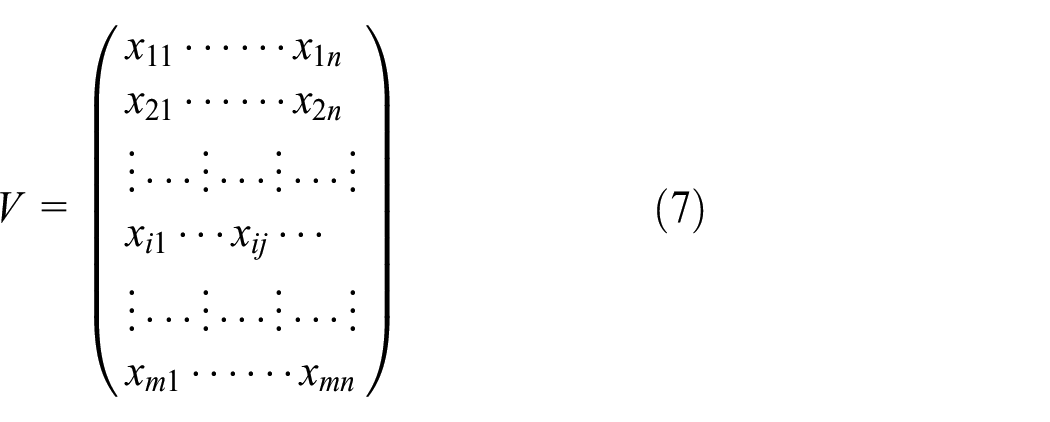
Data normalization:
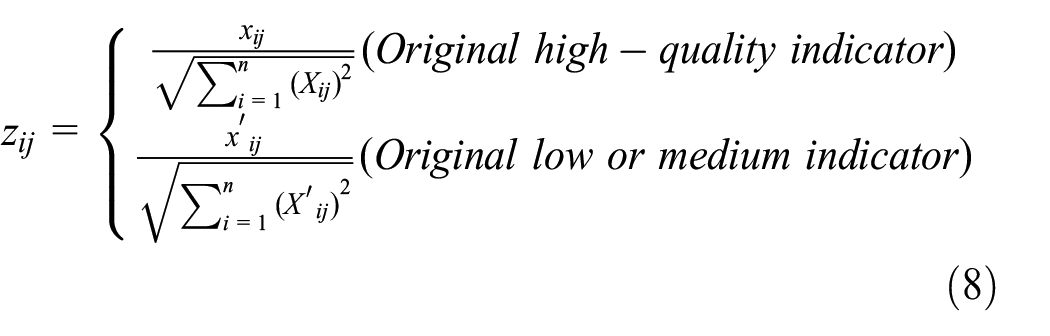
In formula (8), “original” refers to the value of the original indicator that has not been normalized; the high-quality indicator is that the larger the value of a certain indicator. The lower-quality indicator is the smaller the value of a certain indicator. Six indicators are located between the high and low values. These are normalized to obtain matrix Z:

This matrix is used to identify the most and least effective practices
The optimal solution consists of the maximum value of the above-defined schemes, and the worst scheme consists of the minimum values. These values denoted as Z+ and Z−, and Z+ and Z− form a new vector, expressed as follows:

We then calculate the Euclidean distance Di+ and Di− of each evaluation object and Z+ and Z−:

The proximity of each evaluation object to the optimal solution Ci is calculated as follows.

The closer Ci is to 1, the better the evaluation object is. These are sorted according to the degree of proximity of Ci to form a decision basis. The calculation process using the TOPSIS method for the decision matrix (Table 9) is as follows. First, we combine the normalized decision matrix (Table 9) with the formulas (8) and (9) to obtain the matrix Z (Table 10).
Normalized Decision Matrix.

Second, we determine Z+ and Z− according to formula (10), as shown in Table 11.
Z+ and Z−.

Third, following formula (11), we obtain Di+ and Di− as shown in Table 12.
Di+ and Di−.

Fourth, by substituting values into formula (12), we calculate Ci and sort the results as shown in Table 13. The final result from the combined fuzzy DEMATEL and TOPSIS methods is that the higher the Ci value calculated, the higher the poverty-alleviation performance of the city, and vice versa.
Ci Values and Sequences.

Fifth, we grade poverty-alleviation performance for Shaanxi Province by employing the Kapetanios, Shin, and Shell (KSS) test using SPSS20.0 software. The estimated value falls within the 95% confidence interval (subject to a normal distribution), and it has a standard deviation (σ) of .07 and a mean (μ) of .49. According to the definition of the normal distribution, the performance ratio for poverty alleviation in urban areas of Shaanxi Province (μ − .44σ) is set to a low-performance level, and the ratio of (μ + 0.44σ) is set to a high-performance level, which is located between the high and low levels. Defined as a medium-performance level, as shown in Table 14.
Classification of Poverty-Alleviation Comprehensive Performance Levels.

Finally, the results of the performance evaluation for the various cities’ poverty-alleviation efforts are shown in Table 15.
Results of Poverty-Alleviation Performance Evaluation.

Discussion
In this section, we discuss the poverty-alleviation performance-evaluation index developed using the TOPSIS method and the DEMATEL model to assess the poverty-alleviation performance of 10 cities (districts) in Shaanxi Province. The evaluation shows variation in the indicators and comprehensive performance of different urban areas. We can see that only three urban areas are achieving a relatively high level of poverty-alleviation performance, and the overall poverty-alleviation performance of Shaanxi Province needs to be improved. Even under the same conditions of poverty, the effects of poverty alleviation may differ. These efforts are greatly affected by factors such as being at different levels of economic development and having different social conditions. Generally speaking, the poverty-alleviation effect is better for economically developed regions than for underdeveloped regions. The poverty-alleviation efforts in Shaanxi Province needs to be further improved and optimized. According to the principle of normal distribution, the performance of poverty-alleviation efforts in Shaanxi Province is divided into three levels: low, medium, and high. Xianyang City, Weinan City, and Ankang City have the highest level of performance, Xi’an City and Baoji City are at a medium level, and Tongchuan City and Yan’an City are at a relatively love level. At the same time, the 2017 assessment of GDP growth in various urban areas in Shaanxi Province (2017 Shaanxi GDP rankings 2018) showed that the growth rate of GDP of Tongchuan City and Yan’an City was 7.6%, which was the lowest level in the province. This also confirmed that the poverty-alleviation performance of the two cities is not good.
The list of poverty-stricken counties in Shaanxi Province in 2017 (Table 16) is used for a comprehensive analysis of the specific situation of poverty alleviation in Shaanxi Province.
Shaanxi Provincial Poverty Counties.

From Table 16, we see that Hanzhong, Yulin, and Ankang are the three most impoverished counties in the provinces, but these three cities have better poverty- alleviation performance, namely middle and high. In 2017, Hanzhong City proposed “eight batches” of preferential poverty-alleviation policies and implemented its preferential poverty-alleviation approach that targeted the protection of the poorest. The policies focused on relocation, education and poverty alleviation, industry, entrepreneur-based employment, poverty-stricken housing renovation, ecological compensation, and health.
As shown in Table 16, the greatest number of poverty-stricken provincial counties are in Ankang City, but a combination of planning and research has led to the performance of poverty alleviation in Ankang City being at a high level. In 2017, the GDP growth rate for Ankang City was the highest in the province, up 10.5% year-on-year (2017 Shaanxi GDP rankings, 2018). In 2017 Ankang promoted the scientific quality, production skills, and industrial development of poor farmers by introducing new methods of farming, the latest technologies, and new models. In addition, substantial efforts were made concerning the endogenous motivation of the poor, hematopoietic functions, and boosting self-confidence. The ability to develop and help the poor by accelerating the pace of poverty alleviation has contributed to the fight against poverty in Ankang City.
The fuzzy evaluation reveals that the poverty-alleviation performance of Yan’an and Tongchuan is relatively poor. The Ci value of Yan’an City in these two cities is 0.34, which is much lower than the low-performance level of 0.4592 in the evaluation index constructed in this paper. A detailed analysis of poverty alleviation in Yan’an City is carried out next. The first part of the entropy method generates the weight of each indicator and its overall contribution to poverty alleviation. The five dimensions of poverty alleviation are ranked in order as follows: ecological level, social level, developmental level, economic level, and the level of life. A specific analysis is made of the proportion of indicators in each dimension.
At the ecological level, the output level of agricultural products in Yan’an City is the lowest among the 10 urban districts selected, accounting for only 9.29% of the highest output in Hanzhong City in Shaanxi Province, and with negative growth from 2016 to 2017 of −0.02. The total power level of agricultural machinery in the same dimension is also low. The levels of total postal and telecommunications services and the number of students in ordinary secondary schools are relatively low. Therefore, it is recommended that Yan’an City should increase its investment in fixed assets. The government should coordinate and promote poverty-alleviation work when allocating fixed assets across departments. At the same time, at the living level, the number of Internet broadband users should be increased.
In 2016, Shaanxi Province included a “Special Plan for Poverty Alleviation and Broadband in Rural Areas” as a key part of poverty-alleviation projects in the province. A special fund was allocated for poverty alleviation in the provinces and municipalities, and poor households are able to purchase basic cable TV services and WIFI hotspots. By 2017, Internet broadband users in Yan’an City accounted for 4.16% of the province’s users, and the city accounted for 7.62% of the province’s growth. Yan’an City should still increase investment in this area.
Conclusions and Policy Recommendations
This paper comprehensively evaluates the performance of precision poverty alleviation in Shaanxi Province with the multidimensional poverty evaluation index system. Based on the statistical yearbook data of Shaanxi Province from 2016 to 2017, the multidimensional poverty indicators and their weights are studied by using the entropy weight and fuzzy evaluation methods. We have drawn the following insights in the evaluation of precision poverty alleviation.
First, the multidimensional measurement of poverty-alleviation performance is a scientific, effective, and comprehensive method of evaluation, which can be applied to measure poverty at the macro- and micro-level. Second, we conclude that it is important to rely on more than a single indicator or dimension of poverty to identify poverty-stricken households; a household’s poverty status should be assessed according to the five aspects of economy, development, society, ecology, and living ability. It is for this reason that, in the multidimensional survey of poverty alleviation in Shaanxi Province, we found that the impact of different indicators in the same dimension on poverty- alleviation performance is also very different. Therefore, a single indicator may overestimate or underestimate the impact of the dimension on poverty alleviation. Finally, the dynamic analysis should be selected to timely adjust the file establishment database to avoid waste of resources and give full play to the maximum benefits of poverty-alleviation funds.
Based on the above results, we make the following policy recommendations for poverty alleviation. First, to strengthen investment in poverty alleviation and development, it is important to support the coordination of the province’s strengths and poverty-alleviation investment by setting up an industrial development fund. For example, on May 3, 2018, the “International Agricultural Development Fund Loan Shaanxi Rural Characteristic Industry Development Project” declared by Shaanxi Province was approved by the UN IFAD Board of Directors and received a loan of US$72 million from the United Nations International Fund for Agricultural Development (Shaanxi, 2018). The project focused on the development of technology linkages in various economic sectors of the poverty-alleviation industry, the allocation and optimization of basic shared facilities, the control and support of related projects, and impetus and support for precise poverty alleviation in Shaanxi Province.
Second, superior industries and a mechanism of interest linkages should be developed by focusing on improving the economic base of targeted areas, relying on key projects, and giving priority to the development of featured industries. Moreover, we encourage leading enterprises to cooperate with poverty-stricken areas to create new products, brands, and production bases. For example, in October 2017, Weinan City built 428 agricultural enterprises and 1,646 family farms at the municipal level and above. In addition, Wei Nan City actively promoted the policy of regional public branding, and the emergence of the fruit industry accelerated the development of the regional economy.
Third, to enhance the welfare of urban and rural residents, it is necessary to closely integrate urban and rural development, promote integrated construction, optimize levels of infrastructure service, strengthen population agglomeration capabilities, improve traffic conditions, and broaden employment paths. For example, Ankang City has established a health insurance network, focusing on telemedicine, contracting services, and other measures to reduce the number of people suffering from poverty due to illness. Similarly, Xianyang City took the initiative to help the poor, allocated funding for deserving students, and reduce the school-dropout rate because of poverty.
Finally, the concept of “green development, ecology, and enriching the people” should be implemented in Shaanxi Province, which was the hardest-hit area for soil erosion in China. Shaanxi Province has already made great efforts to improve the situation. Ecology-based poverty alleviation in Shaanxi Province should be pursued by focusing on increasing green resources, improving ecological carrying capacity, identifying the right direction for the development of a green industry as a pillar industry, coordinating the development of a poverty-alleviation mechanism, and achieving a win-win situation for poverty alleviation and ecological civilization construction.
Footnotes
Declaration of Conflicting Interests
The author(s) declared no potential conflicts of interest with respect to the research, authorship, and/or publication of this article.
Funding
The author(s) disclosed receipt of the following financial support for the research, authorship, and/or publication of this article: The study is supported by the Projects of the National Social Science Foundation of China (No: 15XJL006).
