




Abstract
Supply chain management processes and systems in different industries include multiple variables. This study examines the adoption of blockchain technology in supply chain in Malaysia. Data were collected through questionnaire designed as open ended question through 300 respondents while only 256 is used according to completed surveys, statistical analysis of the data obtained in this study was carried out by one sample t-test using the statistical software package (SPSS). we find that, perceived ease, Inter-Organizational Trust, Perceived Usefulness, Data transparency and confidentiality have significant impact on adoption Blockchain in supply chain, while Blockchain technology simplifies inventory financing. The paper use open ended questions so in future can use different kind of scale and different variables which can affect the adoption decisions.
Introduction
There has been rapid technological advancement over the last years. Some of the most notable technologies in the 20th and 21st centuries include the Internet of Things, blockchain, and 3D printing. These technologies have rapidly changed how people do business across various industries (Pfohl & Gomm, 2009). Ideally, enterprises are looking for innovative ways to increase their financial benefits by adopting modern technologies and tools to improve their performance models. Nowadays, business competition has shifted to models. Also, supply chain management systems are vital in delivering information to industries to carry out their planning activities. Sharing this information to stakeholders because helps businesses make important changes in response to market fluctuations. However, this information is distorted because of the multiple stages involved, which interrupt planning and reduce the effectiveness and efficiency of supply chain management (Carter et al., 2015). Also, data speed, validity, and security of various activities in an organization are some of the challenges facing supply chain finance (Klapper, 2006).
Therefore, the implementation of technology can be used to solve some of these problems. Such problems can be resolved by adopting blockchain technologies in supply chain management. In finance, a blockchain is a distributed and centralized database used to manage a growing list of records in a business. Blockchain technology achieves this through shared data infrastructure renewing itself in real-time. Further, blockchain can complete multiple transactions within minutes through the application of computer algorithms (Hofmann & Belin, 2011). This is possible because this technology does not require third-party transaction verification. However, the overall benefit of blockchain is the improvement of transactions across multiple domains in an organization, including the supply chain.
Blockchain technology applies distributed ledgers as unique capabilities and innovations to ensure transparency, security, traceability, speed, automatic data verification, and validity of all the business processes (Bryant & Camerinelli, 2013). However, one of the main questions in the implementation of blockchain technology is whether the benefits involved in installing these technologies outweigh the costs (Pfohl & Gomm, 2009). The combination of the strengths of blockchain and the Internet of Things (IoT) in presenting information in real-time on the visibility of products in the supply chain has the potential to provide solutions such as inventory financing, connections to the financial institutions, and inventory records (Hofmann & Zumsteg, 2015). In general, one of the main advantages of blockchain technology is distributed ledger and the encryption of the transactions stored across all the members in the network (Kouvelis & Zhao, 2016).
With growth and developing of information system and networks during last decades, supply chains become involves in this developing. It has become multilinear network between different levels and stages of producers and consumers even between producers’ itself (Alrawashdeh et al., 2022; Fu & Zhu, 2019; Vafadarnikjoo et al., 2021) measuring supply chain operations performance not limited to net profit of enterprise only but moved toward measuring all institutions that have relevant throughout the supply chain. Information and communication technology became more involvement in the economic and industries evolutions, and then supply chain as a part of this evolutions need at got more attention. Information and communication technology provide new solutions for supply chain management, these solutions provide high services quality effectively and efficiently, not only but also reducing the institutions expenses (Shahzad et al., 2020, 2022) Blockchain technology is a solution tools used to modify supply chain operations management (Banerjee, 2018; Kshetri, 2018). Were the new technologies such as Blockchain technology in supplychain enhance competitions, reducing complexityand cost, and support upper management (Wong et al., 2020).
Adopting blockchain technology in institutions supply chain operations can do encourages collaboration and helps to reducs trust issues (Aslam et al., 2021; Lim et al., 2021). The main objectives of any supply chain operations is to focus on quality,cost, flexibility, speed, and risk reduction (Kshetri, 2018). As a benefit discussion of adopting technology in supply chain management ex (time saving, accurate), managers should have more portability to adopting blockchain technology in achieving high performance.
According to the Verified Market Research (2022) report, the Blockchain technology adopted In the Supply Chain Financial Market size was estimated at $245.41 million in the year of 2020 and estimated to reach $6,853 million in the year 2028, which means that the growing rate us about 51.62% from 2021 to 2028 (Figure 1).

Blockchain in supply chain finance market size and forecast (Verified Market Research (2022) report.
In term of such poor implication yet of blockchain and adoption it in the organizations specially in supplychain operations. Furthermore, despite the new technologies are rendered to be useless without adopted by users. The aims of this paper is to inspect the adoption of blockchain technologies in supply chain traceability. Considering Technology Acceptance Model (TAM) as aguide framework for technology acceptance. A limited empirical studies have been conducted to determine the extent of blockchain technologies adoption in the supply chain finance. However, this study contributes to the extant literature on the adoption of blockchain technologies in supply chain. Currently, most studies on blockchain technologies have focused on cryptocurrency applications (Alsmadi et al., 2022). In Malaysia, areas such as private blockchains and smart contracts have hardly been studied. This study seeks to create a platform on which future studies will be based.
The rest of this paper as follows. Section 2 presents a review of literature and theoretical framework on blockchain technology. Section 3 provide the proposed research methodology. Followed by Section 4 data analysis tecnigue. Discussion which is discussed in Section 5. Section 6 Conclusions, Section 7 explores Implications and Future Research Recommendations.
Literature Review and Theoretical Framework
Technology Acceptance Model (TAM)
One of the most commonly used models in adopting technology is the technology acceptance model (TAM). The main aim of this model is to provide general determinants of technology acceptance based on customers’ behaviors or the beliefs of the end-users about the technology in question. This model is based on perceived usefulness and the perceived ease of use. The perceived ease of use is based on the extent to which technology’s ease of use has the potential to fulfil the goals (Davis, 1989). According to Venkatesh & David, ease of use is one has a direct impact on behavioral intentions. Therefore, perceived usefulness is one of the most important factors determining individuals’ perceptions of the usefulness of new technological innovations in their lives (Jain et al., 2020). This factor is important in analyzing individuals’ acceptance of new technology. In addition, a positive correlation exists between the intention to use new technology and behavioral intention (Al-Omoush, et al., 2020; Yaseen & El Qirem, 2018).
Further, Venkatesh and Davis (2000) proposed an additional technology acceptance model by adding two process sets to the previous model. These processes include the instrumental cognitive process and social influence process. To start with, social influence is represented by an image and the subjective norm. On the other hand, the instrumental cognitive process is represented by output quality, proven results, and job relevance. Further, volunteerism and user experience are added as moderating factors (Singh et al., 2019). The results of the new model reveal that technology and the mental judgment of the users have a positive correlation with the congruence between the consequences of doing the work using certain technology and goals at work.
Hypothesis 1: Perceived ease of use of Blockchain technology solves the supply chain finance automation problem.
Inter-Organizational Trust (IO) and Rational Governance
In this case, trust is viewed as confidence in the capability, potency, truth, or character of something or someone (Moberg et al., 2003). Lack of trust has been one of the primary reasons why the adoption of blockchain has not been successful in supply chain finance. Optimum sharing of information and support is needed to achieve organizational trust for the success of supply chain finance (Yadav & Sharma, 2015). All the supply chain finance stakeholders seek power and try to rise above any suspicious environment through information sharing. Further, trust and supply chain are maintained through relational governance in supply chain finance (Wang et al., 2019).
Hypothesis 2: Trust heavily influences the adoption of Blockchain technology in supply chain
Perceived Usefulness
Blockchain technology creates a ledger that is gradually disseminated to network participants and contains a record of encrypted transactions. Each data block contains a record of a single transaction, and utilizing encryption and hashing operations, each block is connected to the one before it. fingerprint and digital data keys using encryption and hashing. Consensus governance and automation methods are used for data management and verification (Chen et al., 2017).
Hypothesis 3: Perceived Usefulness of blockchain technology resolves the issue of transaction and trust validity in the supply chain process.
Simplification of Inventory Financing
Traditionally, inventory financing is carried out by third parties such as banks that provide financing during the storage and the transportation process. Such financing activities play an important role in optimizing the organization’s trade payables and accounts receivables in moving the products, so they don’t have to keep their assets on their balance sheet. After the sales of the finished goods have been completed, loans from the bank are dully paid. However, the bank can sell the assets listed as collateral and recover the funds if the assets are not sold. When the inventory financing is based on blockchain technology, inventory financing activities create an asset ownership system that issues tokens as digital ownership certificates of the assets financed by the banks (Rijanto, 2021). In these cases, the bank, as the financier, can make a claim showing the tokens in case of non-repayment. In addition to that, the bank can conduct asset sales activities.
All these activities are recorded in the blockchain system, and the exchange is legally acceptable. A study by Rijanto (2021) found that even though blockchain technologies have numerous benefits in inventory financing, implementation is still relatively low. This is because inventory financing is one of the financing instruments with higher intrinsic value, and investors are involved in the early stages of transactions in the supply chain process. In addition, the risk factor is represented by the higher durability of the products in the inventory as guaranteed from time to time. Ideally, blockchain technology has the potential to provide solutions that minimize the risks involved in the process of inventory financing. This is because blockchain technology can record all the inventory and production activities of buyers, sellers, and producers. All the production processes that employ blockchain technology provide an opportunity to connect with various users from multiple networks and to maintain the integrity of receipt data and warehouse status. This plays an important role in avoiding the problems of double item expenditure or data forgery.
Hypothesis 4: Blockchain technology simplifies inventory financing
Data Transparency
One of the factors that can facilitate the adoption of blockchain technology in supply chain finance is data transparency. Ideally, all the participants can see the published data in blockchain technology (Galvez et al., 2018). The use of distributed ledger provides free access to records, which releases confidential data to a business competitor, which means transparency is maintained. However, high levels of transparency in the supply chain are resisted to protect sensitive information and privacy. Therefore, the balance between confidentiality and transparency of data in the blockchain to gain maximum profit for the business remains a challenge (Lo et al., 2018) (Figure 2).
Hypothesis 5: Data transparency and confidentiality in blockchain implementation in supply chain provide conflicting priorities, thereby hindering extensive applications such as at global scales.

Research model.
Research Method
This study employed a mixed research design. The mixed research design was important in ensuring that the researcher comprehensively addressed the hypothesis. Based on the literature review in the previous chapter, this study noted that blockchain technology in supply chain technology had not been fully embraced. The primary focus of this study was on adopting blockchain technologies in supply chain financing. Therefore, this study is inclined towards studying supply chain and logistics companies in Malaysia. The assumption is that supply chain finance companies are versed with the current applications of blockchain technologies in the supply chain finance processes. In addition, the population would be versed in various challenges facing supply chain finance. Also, this study assumes that firms in this space would be able to point out the type of blockchain technologies being adopted in supply chain finance. Overall, the population would be able to note some of the challenges facing the adoption of blockchain technologies in supply chain finance.
Cochran’s formula usually used to determine the sample size. Cochran’s formula is considered appropriate in case for large populations. According to Cochran’s formula, the sample size calculated as follows;
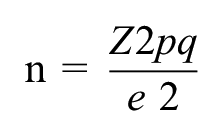
Where
e: the desired level of precision
P : the estimated proportion of the population that has adopted the blockchain technology
Q : the estimated proportion that has not adopted the blockchain technology
Z : the abscissa of the normal curve that cuts off an area α at the tails
The study assumes that 40% of the population has adopted or is considering adopting blockchain technology in the supply chain finance, and the remaining 60% have not adopted or are not considering adopting blockchain technologies in supply chain finance. The required confidence level is 92.5%. A sample of around 300 participants is recommended using this method and the assumptions. Further, targeting 300 participants, the study employed a simple random sampling method to reach as many supplies chain finance managers as possible of different companies across Malaysia.
The study targeted about 70% to 80% response rate from the sample of 300 participants. To achieve this sample size, the study used survey websites to collect data from the participants. In this case, google sheets were used to collect data. The participants were notified to participate in the survey. The sampling criteria of this study primarily focused on managers in supply chain finance. Terms of participation included familiarity to blockchain technology in supply chain finance. Malaysia Institute for Supply Chain Innovation (MISCI) was contacted to access this population. This enabled the study to collect accurate data from people in contact with the day-to-day activities of the Malaysia Institute for Supply Chain Innovation (MISCI).
Data Collection Methods
The study collected responses from 269 managers from different industries (see Appendix). Study industries included retail, financial technology, fashion, agriculture, construction, advertising, and farming. Thirteen of the respondents were disqualified from the study because they did not answer all the questions, resulting in a total of 256 participants considered viable for the study. They were required to answer the questions motivated by this study’s hypotheses and aims.
The study limited the responses to closed-ended questions to avoid bias in interpreting results. The reason behind adopte Closed ended survey questions method to not allow multi ranges of answers. for that this type of questions not allows to respondent to provide unanticipated answer. The closed ended questions used usually according to easier to answer, help in obtaining measurable and quantitative data, Better understanding through answer options, more likely to respondent, Comparable answers and Can be customized easily.
Findings and Discussion
The One Samplet-test using the statistical software package, SPSS is used to determine whether a sample comes from population with a specific mean. The following assumptions were considered in two aspects:
H0: target variables means, is not appropriate
H1: target variables means, is appropriate
study used the t-test: One Sample for Means in SPSS
The study used the t-test: one sample Sample for Means in SPSS to analyze responses. The scores were used to test the hypotheses. The study accepted hypotheses 1, 3, and 5 and rejected hypothesis 4, while hypothesis 2 could neither be rejected nor accepted. Using the mean results of the questions for each hypothesis, the study accepted hypotheses 1, 2, 3, and 5 and rejected hypothesis 4 (Table 1).
Hypothesis 1: Perceived ease of use of blockchain technology solves the supply chain finance automation problem
One-Sample Statistics.

Technology acceptance is dependent on the perceived fulfillment of users’ problems and the attainment of their goals. Blockchain technology applications in supply chain systems prioritize improving accuracy, reducing time and resource consumption, and enhancing transparency (Zhu & Kouhizadeh, 2019). However, these values do not appeal to stakeholders, such as companies dealing in sensitive products and services, which would require confidentiality (Wan et al., 2020).
Besides, other companies and finance managers cite tasks such as calculations due to additional information such as real-time reports and inventory tracking (Gao et al., 2018). Therefore, the study found that only 62% of the respondents perceived blockchain as a solution to supply chain problems. Tan et al. (2020) argue that the discrepancies in blockchain utility are due to its perceived additional work. For instance, the requirement for managers to actively review and confirm the real-time financial and inventory reports enhances accuracy at the expense of extra resource utilization such as human capital. Therefore, the study accepts hypothesis one with the argument that managers and companies only implement blockchain technology when the benefits outweigh the investments and challenges. The perceived ease of use, which is basically associated to the faith in the degree to which the ease of using technology the the prospective to satisfy its goals. This is vonsistance with the study of Venkatesh and Davis (2000) who confirmed the finding that both perceived ease of use and perceived usefulness have a straight effect on behavioral purposes, thus reducing the need to build thoughts in Davis’ previous model in 1989. Additionally, this study is smilar to the previous study which stated that, the positive relationship between perceived usefulness and behavioral objective to use technology (Davis, 1989; Singh et al., 2019; Venkatesh & Davis, 1996).
Hypothesis 2: Trust heavily influences the adoption of blockchain technology
Inter-organizational and process trust issues have continuously challenged organizations to adopt innovative solutions to mitigate problems with ascertaining results, such as authenticity and integrity of the process or raw material. Blockchain supply chains provide parties with accurate information, given the multiple parties and processes involved in typical products such as smartphone manufacturing. Fu and Zhu (2019) argue that various supply chain parties, including companies and finance managers, autonomously access and add information to the process, thereby validating factors such as product pricing, which may be affected by exposure to adverse weather conditions as more than is required shipping schedules. The participants support this argument since 60% believe that blockchain simplifies their financial management, 67% believe that the decentralized system increases transparency, and 72% believe that the enhanced transparency from blockchains improves finances such as profitability. Banerjee (2018) posits that such additional functions or benefits as improved access to process data allow companies insight into global price trends, thereby protecting themselves from resources and maximizing their profits. The findings accepts the hypothesis by citing different scenarios of trust and its application to supply chains.
Therefore, this study supports the previous study in the since that, blockchain technology is the right way for the trustworthiness, transparency and the validity of production provides transparency and validity of consistent data which would help speed up the process (Venkatesh & Davis, 1996). Transparency, validity and security is that it permits financing systems based on purchase orders and inventory to be done automatically (Jain et al., 2020). Additionally, Blockchain technology would be a helpful to solve the accounting problems and the standard of auditing which is quite complex related to supply chain when joined with artifitial intelegence technology (Bonson & Bednarova, 2019).
Hypothesis 3: Perceived Usefulness of blockchain technology resolves the issue of transaction and trust validity in the supply chain process.
The study found that 51% reported ease of using blockchain technology. This is significant considering that more than 60% of the respondents also believed blockchain technology had significant applications in supply chain management and finance. Challenges in user familiarity with the technology include fears about making mistakes due to its perceived permanence, enhanced reliability, and introduction of multiple variables, including different accounting protocols due to collaboration with multiple stakeholders (Khanfar et al., 2021). This supports hypothesis three by establishing that finance managers’ adoption and integration of blockchain technology reflect their skills and familiarity with regional or international standards. Despite the low user adaption of blockchain technology in supply chain management, these finance managers recognize the potential of the technology in improving reporting accuracy and collaboration with other departments and partners (Karuppiah et al., 2021). For example, poor understanding of privacy issues with either private or public blockchain technology and related organizational terms affects finance managers’ impressions of the ease of use. Such concerns as double-spending dominate their decisions, which contradicts the intention of blockchain technology to avoid double-spending through transparent and validated transactions (Kawaguchi, 2019). Thus, the ease-of-use barrier is not founded on logical arguments but fear.
The above interpretation about usefulness of blockchain technology is consistence with the previous study, that is, the increase in spending shows the rapid adoption of blockchain technology, particularly in term of perceived usefulness (Davis, 1989). Perceived usefulness as the user’s subjective belief that the use of a particular technology is beneficial to achieve the main goal of the firms (Davis, 1989). Therefore, they find a positive relationship between perceived usefulness and the use of technology (Davis, 1989; Lahkani et al., 2020).
Hypothesis 4: Blockchain technology simplifies inventory financing
Accuracy in financial reporting is heavily dependent on standardized and familiar reporting styles. Blockchain supply chains imply introducing accounting processes and parties to new standards, thereby challenging the validity of results due to limited familiarity with the concepts. Integration of blockchain technology, like in finance, is supposed to ease reporting through faster and more accurate payment reporting and balancing logistics (Abideen et al., 2021). However, introducing new standards implies complex results, undermining the implied simplified and enhanced financial services such as seamless connections among banks and other businesses. Analysis of participant results established that 61% of the participants found value in blockchain technology in their work. However, a 39% unsatisfied population is significant, considering the costs and compromises required in investing. Ali et al. (2021) argue that the challenges with the perceived utility of blockchain in supply chain management are due to standardization issues. The introduction of the technology to the finance and logistics market implies an introduction of experts to new cultures and standards, which contradict local policies. Effectively, the viable solutions are reducing the application of the technology to include fewer data resulting in simplified supply chain systems or familiarizing the stakeholders with the different policies and standards (Kouhizadeh & Sarkis, 2018). These compromises undermine the perceived value of blockchain in simplifying financing, instead resulting in complex learning processes or lower quality supply chain systems.
Previous study found that, the process is very challenging to apply due to lack of trust and struggle in validating data related to inventory data and financial flows between interrelated parties (Ganne, 2018).
Hypothesis 5: Data transparency and confidentiality in blockchain implementation in the supply chain provide conflicting priorities, thereby hindering extensive applications such as at global scales
Supply chains are complex and often extensive processes involving global partners and processes, thereby requiring intricate details to validate the authenticity of products and services. However, these processes and requirements often undermine blockchain technology’s implied significance and application. Information and process confidentiality and transparency are the primary factors resulting in conflicting priorities among various parties involved in supply chains (Xu et al., 2021). The study found that 28% of respondents did not see the value of the increased transparency from blockchain technology in supply chains. This is supported by a 53% population, who believe that the current information standards in blockchain applications in supply chain systems are sufficient. The conflicting results indicate agreeableness issues on the level of information to be revealed or hidden to the public or some stakeholders (Hellani et al., 2021). Regression analysis results in insignificant p-values, establishing that the explanatory variables are statistically insignificant. The insignificance of the variables demonstrates the conflicting results, thereby rejecting preference or rejection of blockchain technology. The results accept the hypothesis that confidentiality and transparency continuously result in conflicting priorities and outcomes, thereby inhibiting largescale applications such as global supply chains.
Related to the transaction invoice to be Confidentiality maintained and will not be noticeable to the rest of the network due to the hash is just exclusive set of types as a key to unlock the encoded record. So, if any other banks that enter the same statement into the dispersed ledger, it will produce the same vakue of “hash” or one that is no longer exclusive. The system of the transaction will remind other bank that the statement is in the general ledger and has been used to apply for receivables financing. Therefore, this system helps to guarantee and confirm that the same notice or receivable will not be financed more than one time (Kample et al., 2020).
The study accepted hypothesis 1, establishing that managers’ fears and limited understanding of the blockchain technology inhibit its application in supply chain management. However, using illogical arguments such as fear of double-spending to avoid blockchain technology when its purpose is to resolve such issues demonstrates the pervasive impact of ease of use, including familiarity with the technology’s foundation theories. Finance managers’ limited understanding of the significance of decentralized computing and validation processes results in fears for privacy and process protection from disruptions through breaches (Karuppiah et al., 2021). Considering that changes in the data processed through blockchain require several parties to validate, the arguments critiquing its validity demonstrate the need for more education among managers about the technology and its development concepts and rules. The invalidation of hypothesis four supports hypothesis one by arguing that contrary to the implied significance of blockchain technology in supply chain finance and inventory, the additional work and changes in the system do not add the required value. This is interesting, considering that 61% reported value in blockchain technology by simplifying their work. However, 39% is also significant since it addresses complex blockchain issues, such as oversimplifying conventional supply chain systems to accommodate multiple stakeholders, policies, and processes (Ali et al., 2021). The results support the high distrust in blockchain supply chain finances at 42%. These would be due to the finance managers experiencing issues validating some of the calculations and findings due to problems with understanding some of the terms and results or oversimplified systems, thereby invalidating their application.
A regression analysis of data results establishes that blockchain applications in supply chains remain contentious. Differences in the impression of the significance, application, and sensitivity to information and process confidentiality and transparency dominate discussions about whether to adopt blockchain technology (Khan et al., 2022). By accept hypothesis 5, the study establishes that the Malaysian supply chains will retain the traditional centralized processes. While some progressive businesses have adopted the technology, their initiatives are extensively limited for application given that reliability of results requires participation among the stakeholders involved in the different processes, thereby invalidating these initiatives’ application. Wong et al. (2020) argue that inter-organizational distrust will continuously motivate companies to adopt blockchain technology. However, only 67% of managers see the value in the technology’s decentralized system’s ability to increase transparency compared to 53% who believe that currently available information is sufficient. The results support the hypothesis that perceived value motivates the adoption of blockchain technology. However, the influence and motivation are limited to individual organizations in line with the accepted hypothesis two. The hypothesis posits that motivation to embrace blockchain technology must outweigh the challenges and costs associated with its adoption, such as capital investments and increased human capital. A regression analysis of the results establishes that the conflicting support and rejection of the technology are reflective of dissenting values and priorities. These priorities are primarily limited to transparency and confidentiality, which conflict. For instance, managers concerned with confidentiality issues incite other managers to prioritize transparency.
Conclusions
Blockchain technology has extensive applications in supply chain management. While there is limited research into its applications, current studies illustrate significant potential in combating transparency, integrity, and trust issues relating to complex regional and global supply chains. These applications address sensitive topics such as product quality like perishable food products. However, these applications do not always outweigh the costs and compromises of adopting the technology, especially on a large scale. This study’s analysis of finance managers from different industries’ supply chains argues that confidentiality and transparency priorities either motivate or devalue the adoption of blockchain in their systems. While the participants also cited other factors such as inter-organizational trust as significant factors affecting their motivation, the perceived value varied significantly. Therefore, the study could not definitively establish the future of thetechnology’s application. Fluctuating priorities based on inter-organizational trust or perceived value based on confidence in a transaction fundamentally challenges the technology’s implied reliability to global supply chains despite its proven significance. For instance, the requirement for simplified supply chains undermines the implied transparency argument since some processes are omitted to accommodate international stakeholders.
Accordingly, the benefits of blockchain in solving problems in supply chain are able to answer the perceived usefulness, the perceived ease of use and trust. Moreover, the blockchain analysis in supply chain can be accomplished that usefulness determine the adoption of blockchain technology as it can explain main problems, that is, accounting and settlement and also provides preceived ease to use with transaction computerization features. Moreover, transparency and confidentiality are very important issue in blockchain for the supply chain management in order to have full confidence and trust as a user. However, the study recognized the need for more qualitative data in explaining the results, which would be limited to the discussion section.
Implications and Future Research Recommendations
Challenges in implementing the technology result from capital costs, human capital, fluctuating priorities, situational perceived significance, and extensive impacts on conventional supply chain systems. Such perceived values as increased inter-organizational trust motivate companies to adopt the technology. However, the cost benefits do not always reflect, such as in cases where real-time inventory tracking requires more human capital. Thus, while this study establishes the conflicting results, it does not specify other dominant factors. There is a need for further investigations into the continuous use of the systems among companies and finance managers based on variable factors such as trust and perceived value.
Footnotes
Appendix
Questions and Participant Responses Table.

| Question | Response | |
|---|---|---|
| Yes | No | |
| Hypothesis 1 | ||
| How easy is it to use blockchain technology and its resources? | 147 | 109 |
| How relevant do you think blockchain technology is to your work in the present? | 139 | 117 |
| Do you think that technology has more significant potential in the future? | 165 | 91 |
| Do you see the benefits of blockchain technology in supply chain finance? | 183 | 73 |
| Are the benefits significant enough to enhance your work, such as increasing efficiency and accuracy? | 111 | 145 |
| Mean total | 149 | 107 |
| Hypothesis 2 | ||
| Do you think blockchain enhances your confidence in other parties in the supply chain? | 159 | 97 |
| Do you trust blockchain technology results in the supply chain? | 149 | 107 |
| Based on your success experience with blockchain technology, do you think the results applied to the task? | 165 | 91 |
| Do you believe that the supply chain transactions are reflective of actual transactions? | 155 | 101 |
| Are you comfortable sharing your work information with the partners using blockchain technology? | 145 | 111 |
| Mean total | 154.6 | 101.4 |
| Hypothesis 3 | ||
| Is integrating blockchain technology into your typical routine in supply chain finance easy? | 131 | 125 |
| Do you think that blockchain applications increase transparency in supply chains? | 172 | 84 |
| Are you satisfied with the current privacy policies and encryption processes? | 137 | 119 |
| Do you think the consensus approach to data verification is viable in resolving distrust? | 123 | 133 |
| Are you comfortable and confident relying on the data stored or available through the blockchain? | 178 | 78 |
| Mean total | 148.2 | 107.8 |
| Hypothesis 4 | ||
| Do you feel that blockchain simplifies your work in supply chain finance? | 154 | 102 |
| Does blockchain technology improve the accuracy of data recording and computation? | 186 | 70 |
| Is the reduced data recording a viable replacement to conventional inventory financing provided by banks? | 156 | 100 |
| Does the token asset ownership through bitcoin reduce operations costs such as avoiding funds transfer? | 128 | 128 |
| Would you consider implementing this technology on a large scale? | 136 | 120 |
| Do you feel that extensive blockchain technology maintains process integrity? | 176 | 80 |
| Mean total | 156.4 | 99.6 |
| Hypothesis 5 | ||
| Do you support the increased data available online? | 177 | 79 |
| Do you feel there is a need for more data availability and access even with blockchain applications in the supply chain? | 120 | 136 |
| Do you feel increased transparency with blockchain applications improves supply chain finance? | 185 | 71 |
| Mean total | 160.667 | 95.3333 |
Declaration of Conflicting Interests
The author(s) declared the following potential conflicts of interest with respect to the research, authorship, and/or publication of this article: We hereby declare that we are not financially bound to or dependent on, any organization or any party having a direct financial contribution to the object of the study or materials tested in a given study (e.g., by employment, consultancy, holding of shares, and fees), except for those mentioned in the attachment. We understand that every subsidy for studies or the project has to be listed in a footnote of the first page of the paper.
Funding
The author(s) received no financial support for the research, authorship, and/or publication of this article.
