




Abstract
Hotel companies have tried to sell rooms through their direct online reservation channels, but consumers still purchase a substantial number of rooms through indirect channels operated by online travel agencies (OTAs). This study explores when and under what circumstances consumers choose either a hotel channel or an OTA channel drawing on the theoretical frameworks of tourist information search strategy. Results reveal that travelers who book the hotels for business purposes, who have visited the destination before, and who are more familiar with the destinations and hotels seem to be more likely to choose hotels’ direct online reservation channels. These findings provide novel perspectives on understanding why hotel customers prefer one channel to another. Hotel managers could use the findings of this study to increase reservations through direct channels.
Introduction
Hotel companies have responded to the opportunities offered by the increased consumer base available on the Internet by promoting room sales through multiple online distribution channels (Stangl et al., 2016). These online channels include direct channels owned and operated directly by the hotels and indirect channels offered by online travel agents (OTAs). Unlike hotel channels that serve only those particular hotels, OTA channels enable consumers to conveniently compare more alternatives by offering them various hotels with useful information such as comparable prices and experienced travelers’ reviews. Through cooperation with OTAs, hotels gain many customers and improve their occupancy rates (Guo et al., 2014; Kracht & Wang, 2010).
However, OTAs’ popularity has made hotels depend heavily on OTAs in selling rooms (Park et al., 2007; Stangl et al., 2016). Overdependence on OTAs could harm hotels’ profits and businesses. Toh et al. (2011) revealed that commissions paid to OTAs reduce hotel companies’ profits, and this negative effect is especially significant in small hotels. Moreover, due to OTAs’ lowest rate guarantee, hotels should offer the same or a lower price, affecting their profit margin (Myung et al., 2009). A continuous price reduction could negatively impact hotels’ reputations. Viglia et al. (2016) revealed that the more frequent and longer hotel room rates are reduced, the more likely the discounted rate will become the reference price. The harder it will be for hotels to recover their values in consumers’ minds. Marriott, one of the largest global hotel companies, acknowledges that OTAs could negatively impact hotels’ business by undercutting the published rates and shifting customers’ and hotel owners’ loyalty from hotel brands to OTA brands (Marriott, 2018).
To limit these negative impacts, hotels have made various efforts to boost room sales through their own channels. The financial advantages or benefits, such as discounts, incentives, or best-rate guarantees, offered on hotel websites only, have been a common way to attract customers to their direct online booking channels (Toh et al., 2011). Moreover, many hotels advertise on search engines or “pay by click” websites and pay outside consultants to optimize their keywords to show up high on searches (Bodenlos et al., 2010; Toh et al., 2011).
Despite these efforts of hotels, the utilization rate of hotel direct online channels is still unsatisfactory. Stangl et al. (2016) reported that although approximately 50% of Swiss hotels use their own booking engines on their websites, the bookings generated through this channel represent only 6% of the total. Hotels still find it challenging to direct customers to their brand websites (Toh et al., 2011).
Therefore, it is necessary to understand why consumers prefer one channel instead of another. However, most studies focused on a single, particular type of booking channel only. They confirmed the effects of website quality (Li et al., 2017; L. Wang et al., 2015), perceived ease of use and perceived usefulness (Agag & El-Masry, 2016; Fong et al., 2017), and perceived value (Ozturk et al., 2016; H. Y. Wang & Wang, 2010), on customers’ usage intention of a specific reservation channel. However, it remains unclear why customers select either the indirect channel or the direct channel.
A few studies extended previous works by comparing customers’ preferences in a multi-channel context. Findings revealed the association of channel attributes (Chang et al., 2019; Liu & Zhang, 2014; Morosan & Jeong, 2008) and travel characteristics (Masiero & Law, 2016) with customers’ channel preferences. However, they focused mostly on the intentions, attitudes, or perceptions toward different distribution channels rather than actual choice. Furthermore, these studies lacked the use of theoretical frameworks.
The current study fills these gaps by achieving three objectives. First, customers’ choices between direct and indirect reservation channels are directly compared. Second, we draw on the ideas of theoretical frameworks in tourist information search strategy and explore the factors that influence customers’ channel selection from the perspective of contingencies (i.e., travel purposes, previous visits, destination familiarity, and hotel familiarity). Third, customers’ behavior and the actual choice of a reservation channel, rather than their attitudes or intentions, are analyzed.
Theoretical Background and Hypothesis Development
Factors Affecting Customers’ Selection of Online Hotel Reservation Channels
A few studies compared consumers’ channel preferences in a multiple-channel context. These studies have generally focused on the channel itself and primarily considered the effect of channel attributes. For instance, Morosan and Jeong (2008) found that although both perceived usefulness and ease of use are positively related to customers’ intention to use OTAs and hotel websites, the ease of use is a more powerful predictor of OTA websites’ usage intention. In contrast, perceived usefulness is a more powerful predictor of hotel websites’ usage intention. Liu and Zhang (2014) found that price and user feedback are more important reasons customers select an OTA channel. Accurate and in-depth hotel information are more important reasons for choosing a hotel website. Chang et al. (2019) found that OTAs attract customers by website quality, whereas hotel websites attract customers through emotional, social, and monetary values.
On the other hand, Law (2009) examined the role of travelers’ characteristics on their attitudes toward different channels and found that travelers who often book hotels online hold a less positive attitude toward travel agents’ service. They questioned travel agent’s ability to provide professional advice and did not think seeking travel agents’ advice is convenient. Masiero and Law (2016) found that customers who stayed longer in the destination were more likely to book hotel rooms through hotel websites. Meanwhile, customers who have more travel companions were more likely to make their reservations through OTA websites.
Considering the process that customers go through to book a hotel online, we may get some implications from studies on tourists’ information search behaviors. As one of the information search outcomes, the channel customers choose for purchase may be related to their information search behaviors. Once a channel is selected for information search, it has a higher chance this channel will be selected for purchase (Joo & Park, 2008). Consumers who perceived a certain channel as more useful for information search will search for product information more frequently through that channel and subsequently purchase products more frequently via that channel (Kim & Lee, 2008). Jun et al. (2007) found that the online search of accommodation has the highest correlation with the online purchase, indicating that tourists who use online channels to search for accommodation are most likely to purchase through the same channels. Accordingly, we may gain some insights from the research related to tourists’ information search.
Tourist Information Search Behavior
Information search refers to how consumers acquire appropriate information to make reasonable decisions. It occurs when consumers identify problems and need information to solve them (Solomon, 2013). Tourists are known to begin information search with an internal search. When needing information to assist decision-making, tourists first scan what is stored in their memories (Vogt & Fesenmaier, 1998). If the internal information is sufficient, an external search may not occur (Fodness & Murray, 1998). When internal information is insufficient to make decisions, tourists seek information from external environments (Gursoy & McCleary, 2004b).
Whether to conduct an external search, the degree of search, the amount and type of sources they use to collect information constitute tourists’ information search strategy. The contingency model proposed by Fodness and Murray (1999) is one of the most influential theoretical frameworks that provide a comprehensive understanding of tourists’ information search strategy. The theory suggests that the tourist information search strategy is a dynamic process where tourists use different combinations of information sources to respond to various contingencies in travel planning. Contingencies refer to factors that may occur during the travel plan-making process and affect tourists’ information search strategy choices, which are different from tourists’ characteristics (Fodness & Murray, 1999). Fodness and Murray (1999) defined two types of these contingencies: travel characteristics such as trip purpose and situational influences such as the nature of decision-making.
Effects of Trip Purpose
Tourists with different trip purposes have significant differences in information search behavior. For instance, business travelers generally prefer official or formal information channels, such as airlines, national government tourist offices (Cai et al., 2004), and corporate travel departments (Chen, 2000). They consider these sources more relevant and helpful, and their decisions are more influenced by information from these sources (Lo et al., 2002). Leisure travelers rely more on interpersonal information sources, such as friends and relatives, and word-of-mouth (Cai et al., 2001; Chen, 2000). They believed that the opinions of their friends and relatives are more informative, reliable, and able to fit their trip purposes (Lo et al., 2002).
Whether travelers use OTAs or hotel websites may be affected by their trip purposes due to the above differences. For example, leisure travelers who rely more on interpersonal information may prefer OTA channels, which provide more experiencers’ reviews. Business travelers, who prefer official information sources, may prefer hotels’ direct channels to book rooms.
Furthermore, business travelers pay more attention to specific and in-depth information such as sleep quality, bedding quality, soundproofing, and room temperature than other travelers when booking hotels (Rhee & Yang, 2015). Although OTAs provide general hotel information, such in-depth information is generally provided only on hotel websites (Liu & Zhang, 2014; Salem & Čavlek, 2016), which may lead to business travelers’ preference for hotel websites. Compared to business travelers, leisure travelers have a stronger tendency to seek various options when booking hotels (Lehto et al., 2015). As a result, they may prefer OTAs that provide more alternatives to meet their needs of variety-seeking. Therefore, we hypothesized as follows.
H1: The online channel travelers choose to book a hotel room is associated with their trip purposes.
Nature of Decision-Making
Tourists could make a decision through different approaches, from highly routine to very extensive (Moutinho, 1987). Routine decisions and extensive decisions are like two extremes of a continuum, and the involvement of a decision-maker ranges from low to high on this continuum (Crotts, 1999). Fodness and Murray (1999) divided the travelers’ vacation decision-making process into three types (i.e., an extended, limited, and routine process) and investigated the information search strategies for each type. In the case of a routine decision, such as a periodic visitation of the same destination, travelers could go through the decision-making process quickly without much additional information. Their information search strategy is very limited and without much effort. The limited decision occurs when travelers’ plans differ from regular travel behavior, such as engaging in a new activity at a familiar destination. In such a case, using a single information source may not be sufficient for decision-making. Travelers search for external information and incorporate a single decisive source and a few additional contributory sources to make a decision. Although the authors suggested that an extended decision would be associated with a heavy emphasis on external sources to reduce the perceived risk of an unfamiliar trip, the result did not support this proposition. Instead of using many external information sources, findings revealed that travelers undertaking extended decisions relied highly on their own experiences.
Such a result might be due to the deficiencies in their research design that considered only the pre-trip planning period when operationalizing the nature of decision-making, which may not sufficiently represent the characteristics of routine, limited, and extended decision-making. Especially, their sample included a significant proportion of repeat visitors who regularly visit Florida for their vacations. However, they did not consider the possible impact of travelers’ past travel experiences when operationalizing the nature of decision-making. Bargeman and van der Poel (2006) extended Fodness and Murray’s (1999) work by considering past travel experiences when investigating travelers’ decision-making nature. They found that routine decision-makers totally relied on their own experiences and did not use any external information to decide on their vacations. Limited decision-makers only collected commercial information to choose hotels. In comparison, extended decision-makers showed the greatest enthusiasm for external information search and collected many external sources to make decisions.
An implication could be obtained that, to a certain extent, different nature of decision-making reflects the different levels of travelers’ prior knowledge. In the case of routine decision-making, due to their sufficient knowledge accumulated from past experiences, travelers could make decisions rapidly with minimal effort on information search. In the case of limited decision-making, their finite knowledge is not enough to make a decision; travelers need to conduct appropriate external information searches. When facing an extended decision, due to the lack of knowledge, travelers would have to make a lot of effort on external information search. In sum, such differences in tourists’ information search behavior across different decision-making processes may be due to their different prior knowledge levels.
Prior Knowledge and Information Search Behavior
Prior knowledge is the product-related information stored in consumers’ long-term memories (Ratchford, 2001). Generally, the ability to learn new information increases with increased product knowledge, making consumers process product-related information efficiently and facilitate their decision-making (Brucks, 1985; Johnson & Russo, 1984). Consumers could obtain such knowledge directly from their own past experiences or indirectly from the passive contact with product information (Alba & Hutchinson, 1987; Vogt & Fesenmaier, 1998). The direct experiences and indirectly acquired product-related experiences, defined as familiarity in most studies (Alba & Hutchinson, 1987; Gursoy, 2003; Gursoy et al., 2018; Gursoy & McCleary, 2004a, 2004b; Kerstetter & Cho, 2004), constitute the basic two dimensions of prior knowledge.
Effects of Familiarity
Alba and Hutchinson (1987) defined product familiarity as “the number of product-related experiences accumulated by the consumer.” Such experiences could accumulate through passive contact with visual, verbal, and sensory stimuli about product information that comes from advertisements, TV programs, newspapers, and magazines. As product familiarity increases, consumers make decisions based more on what they know; as a result, the degree of external information search decreases (Dodd, 1998; Dodd et al., 2005; Gursoy & McCleary, 2004a; Kerstetter & Cho, 2004).
Due to the stored knowledge, familiar travelers know better about the existence of certain destination attributes and therefore prefer the functional destination-specific information sources that can provide detailed information about specific attributes and amenities available at the destination (Gursoy, 2003; Gursoy et al., 2018; Gursoy & McCleary, 2004a). By contrast, unfamiliar travelers tend to pay more attention to the nonfunctional information such as brand name or price and value the generic information sources such as media (Gursoy et al., 2018). In addition, due to their limited ability to process the destination-related information, unfamiliar travelers are more likely to rely on others’ opinions and are more likely to use interpersonal information sources such as review websites, friends, and relatives (Gursoy, 2003; Gursoy et al., 2018; Gursoy & McCleary, 2004a).
Accordingly, when booking a hotel online, travelers familiar with the hotel could perform the task adroitly without much additional information. They may pay more attention to the in-depth and specific information, such as hotel facilities, room details, and various benefits offered by hotels. Compared to the number of information, they may care more about the accuracy and quality of information. On the other hand, unfamiliar customers perhaps need to collect much more external information to assist in making reservation decisions. They may pay more attention to superficial information such as hotel brand and price and rely more on personal information. As a result, travelers familiar with the hotels may prefer the direct booking channel which provides more detailed and accurate hotel information while travelers unfamiliar with the hotels may prefer the OTAs which provide more alternatives and word-of-mouth information. Accordingly, we hypothesized the following.
H2: The online channel travelers choose to book a hotel is associated with how familiar they are with the hotels.
Similarly, when booking hotels located in their familiar destinations, travelers may skillfully perform the booking tasks based on their stored knowledge about the destinations. Unlike unfamiliar travelers who need to collect a large amount of information to find a satisfactory hotel, familiar travelers may have more clear ideas about their desired hotels without a lot of additional information. The booking channel they choose to use may differ due to these differences. Accordingly, we hypothesized as follow.
H3: The online channel travelers choose to book a hotel is associated with how familiar they are with the destinations.
Effects of Prior Visit
Similar differences have been found between first-time travelers and repeat travelers. First-time travelers spent more time on information search, use more sources to collect information (Lehto et al., 2006; Lo et al., 2004), and search for more information categories (Kang et al., 2021). They prefer face-to-face channels much better (Grønflaten, 2009), and emphasize the information provided by family, relatives, and travel agents (Chen & Gursoy, 2000; Draper, 2016; Jacobsen & Munar, 2012; Lehto et al., 2006). By contrast, due to the prior visit experiences, repeat travelers are more familiar with the destination. They rely more on their past experiences and involve less in information search, which is reflected by the lower degree of search and fewer information contents they search for (Dodd, 1998; Jacobsen & Munar, 2012; Lehto et al., 2006; Figure 1).

Research model.
Similarly, when booking hotels located in the destinations they have visited before, repeat travelers may prefer different booking channels from the first-time travelers due to the differences in their levels of familiarity with destinations and preferences for information, Accordingly, we hypothesize the following.
H4: The online channel travelers choose to book a hotel is associated with their prior visits to the destinations.
Methodology
Sample and Data Collection
We conducted an online survey using convenience sampling among Chinese customers who have had online hotel reservation experiences within the past 12 months, given that the most appropriate time for recalling one’s memories is 12 months (Law & Hsu, 2006). The questionnaire was generated and distributed via Wenjuanxing (https://www.wjx.cn/), which is a professional online survey service company with the largest database of more than 6.2 million panel members covering almost all ages, occupations, and regions in mainland China.
Moreover, since the target population is internet users who could be reached through the online platform, the most popular social media in mainland China, including Weibo, WeChat, and QQ, were used for distributing the questionnaires as well. Participants who opened the survey link and completed the questionnaire through these social media were able to win an online lucky draw and could be randomly awarded 0.2 to 2 CNY as a prize.
A total of 1,000 questionnaires were distributed from March 20 to April 10, 2018, and 370 responses were returned (210 were recruited through the survey company and 160 were recruited through social media), representing a response rate of 37.0%. About 28 cases that have never booked hotel rooms online within the past 12 months and 11 cases that did not respond to the four consecutive questions were removed. Finally, 327 valid observations were included in the sample and used for analysis.
The questionnaire outlined the purpose of the study and stated that the data would not be used for non-research purposes as well as that participants’ information would be kept confidential. Informed consent was implied by the completion and submission of the questionnaire. One screening question was included, asking to identify whether the respondents had reserved hotels via online channels in the past 12 months, and only those who give a definite answer have been further investigated.
Before the formal survey, the questionnaire draft was subjected to a pre-test to test for clarity of questions. During the pre-test, respondents were asked to identify items deemed ambiguous and need to be re-phrased. The questionnaire was then modified for better readability and clarity.
Measurements
The dependent variable “purchased channel” was measured by a four-level, categorical variable concerning “What online channel did you use to book your hotel rooms last time?” The booking channels that constituted the dependent variable have four categories: (1) OTA websites/mobile apps/microblogs (or WeChat), (2) price comparison websites/mobile apps/microblogs (or WeChat), (3) hotel websites/mobile apps/microblogs (or WeChat), and (4) other online reservation channels. All the hotel websites, official microblogs (or WeChat), and self-operated mobile apps were defined as “direct online reservation channels.” All third-party operated channels, including OTAs, price comparison channels, and other online channels that hotels do not operate, were defined as “indirect online reservation channels.”
The independent variable “trip purpose” contains two values: business purpose and leisure purpose. Respondents who visit the destination for business or conference were classified as business travelers. Those who visit the destination for vacation, travel, visiting relatives and friends, and other non-business purposes were classified as leisure travelers. Hotel familiarity was defined as one’s past experiences related to the hotel they reserved last time, which was based on the definition of product familiarity suggested by Alba and Hutchinson (1987). Four simple questions were applied to measure it, including whether they had prior stay experience of the hotel they booked, whether they were a member of the hotel group’s reward club, whether they followed the social media of the hotel, and whether they registered the email list of the hotel group. The aggregate score for these four questions (yes = 1 and no = 0) of each response was calculated to use in the final analysis. Prior visit was measured by a simple question asking whether they visited the destination before (yes = 1 and no = 0). Destination familiarity was measured through a 4-item scale that was adopted from Carneiro and Crompton (2010) and Kerstetter and Cho (2004). A 7-point Likert scale ranging from 1 (strongly disagree) to 7 (strongly agree) was used to measure these four items. The respondents were asked to indicate their degree of agreement with the four statements focusing on their perceived familiarity with the destination they visited.
Data Analysis
The Statistical Package for Social Science 22.0 (SPSS 22.0) was used for data analysis. Firstly, descriptive statistics were conducted for capturing the sample profile. Secondly, principal component analysis (PCA) and reliability analysis were run to assess the validity and internal consistency of the measurement tool. Finally, binary logistic regression analysis was conducted to test the hypothesis.
Results
Profile of Survey Participants
Table 1 illustrates the demographic characteristics of respondents. Of the 327 respondents, 35.2% were men and 64.8% were women. Most participants are young people (89.9% are below the age of 40 years), well educated (87.1% are degree holders), and engaging in a job with stable income (74.6% are office workers and government employees). About 78.9% of respondents used indirect channels for their booking and 21.1% used direct channels such as hotel websites.
Sample Descriptive Statistics.

Note. N = 327.
Validity and Reliability of Measurement
PCA and reliability tests were conducted to assess the validity and reliability of the measurement items used in the survey. We run a PCA for four items corresponding to destination familiarity. As shown in Table 2, the results indicate the validity of the destination familiarity. Cronbach’s alpha was calculated to test the internal consistency of the construct. The reliability coefficient was .938. The minimum value for accepting the reliability test is .50; hence, this result is considered reliable.
Results of PCA and Internal Reliability Test.

Tests of Model Fit and Hypotheses
Trip purpose, hotel familiarity, destination familiarity, and previous visits were input as independent variables. Whether customers used the hotel’s direct booking channels or the indirect channels was the dependent variable. Since the dependent variable is a nominal variable with two values, the binary logistic regression analysis was conducted to test the hypothesis.
Table 3 shows the results of the model fit tests. The likelihood ratio chi-square (111.269, df = 4, p < .5), which is obtained by comparing the log-likelihood of the estimated model with the log-likelihood of the restricted (i.e., intercept only) model, indicates that the estimated model does significantly better than the restricted model in producing the observed data. The Cox-Snell R2 and Nagelkerke R2, which are logit model evaluation measures similar to R2 in ordinary least squares regression, also suggest the acceptability of the estimated model.
Model Fit.

As shown in Table 4, four independent variables are significantly correlated with respondents’ choice of online hotel reservation channels, supporting all the hypotheses we proposed earlier. Specifically, the odds ratio for a business trip is 2.468, meaning that the odds of using hotels’ direct online booking channels is higher for business travel than leisure travel—indicating that in the case of our study, business travelers are more likely to use direct online channels than leisure travelers. As mentioned earlier, this result may be explained by business travelers’ information search patterns. Their preference for official channels (Cai et al., 2004; Chen, 2000; Lo et al., 2002) and pursuit of in-depth hotel information (Rhee & Yang, 2015) may lead them to choose the direct channels for eventual purchase. Furthermore, this result may also be explained by linking with another hypothesis of our study, that is, by the fact that business travelers may be more familiar with the hotels. Unlike leisure travelers, business travelers are highly influenced by switching costs and have lower intentions to change hotels (Lehto et al., 2015). They are perhaps more loyal and may repeatedly use the same hotel brand, leading them to be more familiar with the hotel brand and skillfully use the hotel website for information search and reservations.
Logistic Regression Results.

The dependent variable is “use of direct channel.”
The reference group is “leisure purpose.”
The odds ratio of hotel familiarity is 1.661, meaning that the increase in the experiences with a particular hotel leads to an increase in the odds of selecting the direct channel for booking hotel. That is, our data support a positive relationship between hotel familiarity and direct channel selection. It is possible to conclude that when travelers are more familiar with a particular hotel, they might be more likely to purchase rooms through direct online booking channels instead of indirect ones.
The odds ratio of destination familiarity is 3.316, meaning that an increase in the perceived familiarity with a particular destination leads to a rise in the odds of selecting the direct channel for booking hotel located in that destination. That is, our data suggested a possibility that when travelers feel more familiar with a specific destination, they might be more likely to book hotels located in that destination through direct online channels.
The odds ratio of previous visit is 4.045, meaning that the possibility of choosing direct channels is higher for repeat visitors than first-time visitors. It is possible to conclude that travelers who have prior visit experiences of a specific destination might be more likely to purchase hotel rooms in that destination via direct channels than those without.
In conclusion, selecting a direct online booking channel may be associated with a higher level of prior knowledge. As mentioned earlier, familiar travelers pay more attention to specific product attributes and prefer the functional product-specific information sources providing detailed information (Gursoy, 2003; Gursoy et al., 2018; Gursoy & McCleary, 2004a), leading to a higher chance for them to choose the direct booking channels. By contrast, due to their limited ability to process the product-related information, travelers with lower knowledge levels pay more attention to the superficial information and show higher reliance on others’ opinions, leading them to value interpersonal information sources (Gursoy, 2003; Gursoy et al., 2018; Gursoy & McCleary, 2004a). This may lead to their preference for OTAs and decrease the possibility of choosing hotel websites. Furthermore, a higher level of hotel familiarity implies a possibly higher level of hotel loyalty. Considering the majority of loyal customers are registered members of hotel reward programs (Tanford & Malek, 2015), those loyal customers may be more familiar with hotel websites, which may be a reason for their selection of direct online channels since consumers tend to purchase through the distribution channel they feel familiar (Gefen, 2000).
The Effect of Socio-Demographic Variables
Fodness and Murray’s (1999) contingency model also proposed the effects of socio-demographic factors. Although only income was significantly related to tourists’ information search strategy, many studies have confirmed the impact of other socio-demographic variables such as gender (Dodd, 1998; Jacobsen & Munar, 2012; Verma et al., 2012) and age (Grønflaten, 2009; Weber & Roehl, 1999). Thus, the current study also examined a comparative model that added demographic variables, including gender, age, and income (Table 5).
Model Fit of Comparative Model.
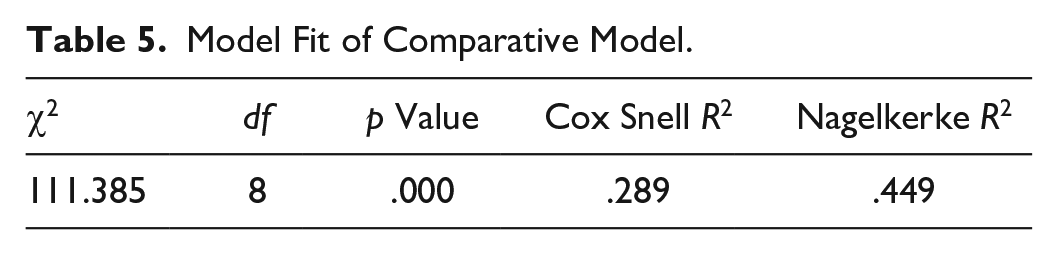
Table 6 shows the results of logistic regression analysis of the comparative model, including three socio-demographic factors. Inconsistent with previous studies, none of the additional predictors significantly influence channel selection, implying that our data do not support the association of gender, age, and income with hotel customers’ channel selections. Meanwhile, compared with the research model, the Cox-Snell R2 and Nagelkerke R2 of the comparative model do not change much, indicating that the model adding demographic factors is not superior to the research model that includes only contingencies in explaining hotel customers’ channel selections.
Logistic Regression Results of Comparative Model.

The dependent variable is “use of direct channel.”
The reference group is “leisure purpose.”
The reference group is “older than 40.”
The reference group is “less than 100,000.”
There are several possible reasons for this result. First, the general logic of the association between income and tourists’ information search behavior is that travelers with lower income have a weaker ability to bear risks. They are more cautious and need more information to reduce the risks (Dodd, 1998; Fodness & Murray, 1999). Unlike the current study, these results were obtained in the context of general travel decision-making. Compared with making the whole travel plan, it seems less risky to book a hotel, and the differences in risk perception across different income levels may be too small to be significant. Hotels are oriented to different market segments and priced according to their positioning. Tourists of all income levels can choose suitable hotels according to their affordability.
In terms of age, prior findings mainly focused on differences in age groups’ preferences for online versus offline channels. For example, younger travelers were more likely to use online channels for information search, while elderly travelers prefer the combination of travel agents and face-to-face (Grønflaten, 2009; Weber & Roehl, 1999). The current study focuses on the choice in the online context, which may be the reason for the none significant differences across age groups.
Discussion
Theoretical Contributions
The current study investigated the effect of contingencies on Chinese customers’ selection of direct or indirect online hotel booking channels based on their actual booking experiences. Results revealed positive relationships between business trip purpose, hotel familiarity, destination familiarity, and prior visit with the choice of direct online channels, providing novel perspectives into explaining the possible reasons that customers prefer one channel rather than another.
First, results revealed that travelers who book hotels for business purposes are more likely to use the hotel’s direct online reservation channels for their bookings. Although the impact of trip purposes has been frequently discussed in the research on tourists’ preference for information sources (Chen, 2000; Lo et al., 2004; Luo et al., 2004; Verma et al., 2012), when considering the selection of purchase channels, existing research has mainly focused on the influences of the channel itself (Chang et al., 2019; Liu & Zhang, 2014; Morosan & Jeong, 2008), ignoring the trip purpose which plays an important role in the early information search stage. Our findings extended the understanding of the trip purpose by confirming the significant role of travel purpose on travelers’ purchase channel choice. Moreover, as two representative tourism market segments, business travelers and leisure travelers have been compared in many aspects such as travel patterns (Cai et al., 2001; Chu & Choi, 2000; S. T. Wang & Lee, 2011) and value perceptions (Kashyap & Bojanic, 2000). This study provides a novel perspective that these two types of travelers may also differ in their choice of online hotel booking channels.
Second, results also revealed that travelers who are more familiar with the hotels and destinations, and who have previously visited the destinations are more likely to use the hotel’s direct online reservation channels for booking. These findings enhanced the understanding of tourists’ prior knowledge by offering unique findings not yet discussed and explored in the extant literature. Travelers’ prior knowledge was frequently discussed but has not yet been analyzed concerning tourists’ behavioral responses toward different sales channels. It was mostly connected with travelers’ information search behaviors such as search degree (Gursoy, 2003; Gursoy & McCleary, 2004a; Lehto et al., 2006), usage of different information sources (Chen & Gursoy, 2000; Gursoy, 2003; Gursoy et al., 2018; Gursoy & McCleary, 2004a, 2004b; Jacobsen & Munar, 2012), and preference for different information categories (Kang et al., 2021). The current findings add to the literature by providing empirical evidence supporting the association between travelers’ prior knowledge and their choice of different online hotel reservation channels.
Third, the model and findings of this study enhance Fodness and Murray’s (1999) contingency model in several ways. The contingency model was proposed before the big development in tourism information technology and therefore considered only the traditional offline information sources. Information sources and the way tourists purchase travel products have experienced considerable changes since the model was first published due to information technology development. Our work provides new insights for applying the contingency model by examining the role of contingencies in the context of purchasing travel products online. Moreover, Fodness and Murray’s (1999) target population was limited to leisure travelers. Only two submarkets of leisure travelers (i.e., vacationers and VFRs) were considered when examining the impact of travel purposes. This study compared the differences in purchase channel choice between the two representative tourism market segments (i.e., business travelers vs. leisure travelers). Furthermore, Fodness and Murray (1999) did not consider the potential effect of travelers’ past travel experiences when considering the nature of decision-making. Our work solved this problem by using travelers’ prior knowledge levels to reflect the nature of different decision-making processes.
Finally, we examined the role of socio-demographic factors and discussed the possible reasons for the inconsistencies with previous findings. A possible conclusion could be drawn that socio-demographic factors may not be superior to contingency factors in explaining hotel customers’ booking channel selection.
Managerial Implications
The findings of this study suggest several courses of action for hoteliers to promote customers’ usage of direct online distribution channels.
First, hoteliers can benefit from understanding the relationship between trip purpose and channel selection. It seems that business travelers are more likely to use direct online booking channels; thus, attracting more business customers could help promote the usage of direct online channels. Hoteliers should exert effort to sign a deal with more companies and establish a long-term relationship with them. For instance, they could take advantage of the hotel location, mainly focus on the companies located in the surrounding areas and cities, and provide them with a better rate and more professional service, such as one-to-one service, to attract them to establish a long-term relationship with the hotel.
Second, hoteliers should recognize the importance of hotel familiarity in attracting customers to direct online distribution channels. Results show that experienced customers, registered members of the hotel reward club, and hotel social media followers tend to book hotel rooms through direct online channels. These findings suggest that hoteliers may tackle the issue through the following three aspects. First, customized services tailored to the requirements of individual customers must be provided to enhance their satisfaction, thereby cultivating more loyal customers. Second, improving the frequent-guest program (i.e., reward program) through various means is useful to attract more customers to register as members. For instance, hotels could improve the value of the points, the core benefits of the reward program, by allowing the group members to accumulate points for food and beverage charges not just by staying at the hotel or increase the availability of the points by allowing the program members to combine cash and points to redeem a free night’s stay. Furthermore, low-tier members are more price-sensitive, and higher-tier members are more likely to develop an emotional bond with the brand (Tanford et al., 2011); therefore, hotels could emphasize intangible benefits such as status and privilege to high-tier members. Moreover, they could emphasize the monetary benefits to the low-tier members. Third, they should make effective use of TikTok, micro-blog, WeChat official account, and other popular social media platforms to build brand image and promote awareness of their websites to the targeted segment. Even though customers never stayed before, they would be familiar with the hotel through the information provided on these official social media platforms.
Finally, the significant relationship between destination-related experiences and channel selection implies that hotels could build and better use the customer database to appeal to tourists who are likely to use direct online reservation channels. For example, hotels in the same region could cooperate to establish a comprehensive visitor database with the assistance of Destination Marketing Organizations (DMOs) and local governments. Moreover, they could target these visitors to promote the direct online reservation channels with benefits acquired through the direct online channel only (e.g., discounts or vouchers) to attract them to book hotels through the direct channel the next time they visit the same destination.
Limitations and Future Research
This study has some limitations. First, the data for this research were collected by an online survey from hotel customers in mainland China, which may limit the generalizability of the findings. The competition between the hotel direct booking channels and the OTAs exists not only in the Chinese market but also in the global hotel reservation market. The results of this study should be validated by more diverse samples in future research.
Second, this study investigates only the impact of contingency factors and personal characteristics. Future research is warranted to examine the effects of channel attributes along with these factors.
Third, this study considered the differences in channel choice between business travelers and leisure travelers. However, travelers visiting friends and relatives (VFR travelers) account for a considerable portion of the overall travel market, and many of them stay in commercial accommodations such as hotels (Backer, 2012). It would be meaningful to investigate how VFR travelers differ from business and leisure travelers in selecting hotel reservation channels.
Footnotes
Data Availability Statement
The data that support the findings of this study are available from the first author upon reasonable request.
Declaration of Conflicting Interests
The author(s) declared no potential conflicts of interest with respect to the research, authorship, and/or publication of this article.
Funding
The author(s) received no financial support for the research, authorship, and/or publication of this article.
