




Abstract
Lesbian and gay-themed advertising hold great potential for marketers and brands, yet an understanding of how these advertisements influence heterosexual consumers is still a question of debate. This study examined the developmental factors and traditional culture of consumers, which are critical in understanding tolerance of homosexuality. It further examined the impact of tolerance of homosexuality on attitudes toward lesbian and gay-themed advertisements and brands. Primary data were collected through an electronic self-administered questionnaire, and 690 responses from heterosexual consumers were recorded. The data were analyzed using the Partial Least Squares Structural Equation Modeling (PLS-SEM). The findings indicate that heterosexual consumers with a high tolerance toward homosexuality have more positive attitudes toward lesbian and gay-themed adverts and brands. In addition, advertisement themes (gay vs. lesbian) had no significant effect on consumer attitudes toward the advertisement as well as toward the brand. These findings provide guidelines for future research and implications for advertisers who intend to address consumers of various sexual orientations.
Keywords
Background of the Study
Growing support for the Lesbian, Gay, Bisexual, and Transgender (LGBT) community, coupled with this group’s significant buying power, has generated growing interest from brands and marketers in the LGBT consumer market (Eisend & Hermann, 2019). Globally, the LGBT purchasing power is estimated to be $3.9 trillion as of 2019 (LGBT-Capital, 2020). While the LGBT buying power in South Africa was estimated to be R152 billion in 2017 (Madinga et al., 2020; Morris, 2017). In addition, 10% of the South African population is part of the LGBT community (Profile, 2012). Hence, the South African LGBT market is coined the “Dream Market” (Bagnall, 2011). According to Um (2014), same-sex household income is substantially higher than their heterosexual counterparts. As such, 79% of lesbian and gay individuals in South Africa earn R10,000 per month and above, with 85% holding a tertiary qualification (Profile, 2012). South Africa has one of the most liberal constitutions in the world and was the first country in Africa to integrate sexual orientation in its Bill of Rights in 1996 (Francis & Msibi, 2011). Section 9 (sexual orientation) of the South African constitution states that the state may not unfairly discriminate directly or indirectly against anyone on one or more grounds, including race, gender, sex, pregnancy, marital status, ethnic or social origin, color, sexual orientation, age, disability, religion, conscience, belief, culture, language, and birth. As a result, homosexuality in South Africa has become more acceptable (Munyuki & Vincent, 2017) and LGBT consumers are considered to be an attractive market (Oakenfull, 2018).
The LGBT consumers have been acknowledged as a key consumer segment due to their substantial spending power (Angelini & Bradley, 2010; Um, 2016) and have been identified as a sector that holds potential for brands’ revenue and market share growth (Um, 2014). As a result, there has been a slow shift from general appeals in the advertising sector, with a new focus on advertising targeted at specific niche consumers that utilized explicit and implicit appeals (Descubes et al., 2018). Many brands in South Africa currently make use of advertisements featuring homosexual imagery (e.g., Vodacom, Telkom, Chicken-Licken, and DStv). Advertisements that feature homosexual imagery are advertisements that feature lesbian, gay, bisexual, or transgender endorsers (Eisend & Hermann, 2019). It has been argued that lesbian and gay-themed advertisements were initially intended to appeal to the homosexual consumers (Descubes et al., 2018). However, Åkestam et al. (2017) and Read et al. (2018), argue that lesbian and gay-themed advertisements are starting to appear in mainstream media, therefore reaching both homosexual and heterosexual consumers. Despite the rise in lesbian and gay-themed advertisements in mainstream media, much is still unknown about the response of heterosexual consumers. Numerous studies indicate that lesbian and gay-themed advertisements might alienate heterosexual consumers (Oakenfull, 2018; Um, 2016; Um & Kim, 2019). Likewise, lesbian and gay-themed advertisements are not always received positively by heterosexual consumers (Braun et al., 2015), particularly those with a lower tolerance toward homosexuality.
The representation of homosexuality in mainstream media has profound effects on heterosexual consumers. However, there are inconsistencies regarding this matter. On the one hand, it has been shown that lesbian and gay-themed advertising will produce negative traditional marketing effects, such as poor brand perception (Um & Kim, 2019). On the other hand, some research implies that homosexual representation can elicit more positive attitudes than heterosexual representation and deliver extended, non-targeted marketing effects such as social connectedness and empathy (Åkestam et al., 2017). Eisend and Hermann (2019) state that homosexual representation does not hamper the persuasive effects of advertising and is a tool that can be used to attract both homosexual and heterosexual consumers.
There has been a general transition toward the acceptance of homosexuality pioneered by Western society (Ayoub & Garretson, 2017; Smith et al., 2014). However, this is not necessarily representative of everyone since attitudes toward homosexuality vary across different countries and cultures (Chitando & Mateveke, 2017). Many African countries hold relatively hostile attitudes toward homosexual individuals compared to other countries around the world (Bongmba, 2016). This could perhaps be attributed to Africa’s lower levels of development and/or stronger ties to traditional values (Alozie et al., 2017). There is little research regarding intrinsic factors that influence consumer attitudes toward homosexuality in an African context (Venter, 2014). Therefore, this study aimed to investigate the impact of developmental factors and traditional culture on South African heterosexual consumer attitudes toward lesbian and gay-themed advertisements.
It was proposed that the level of development in a society is a prominent predictor of attitudes toward homosexuality (Smith et al., 2014). This means that developmental factors would be able to influence tolerance of homosexuality (Gerhards, 2010; Schwartz, 2010). However, this does not account for the complete formulation of a society’s attitude toward homosexuality (Xie & Peng, 2018). Thus, a society’s intrinsic traditional values were also suggested to have an influence on tolerance of homosexuality (Chitando & Mateveke, 2017; Hu & Li, 2019; Yeganeh, 2017). There is an indication that these traditional societal values may be empirically tested across cultures using measurements stemming from other, non-Western literature (Hu & Li, 2019; Vaisey & Miles, 2014). Since these factors influence tolerance of homosexuality, they should also influence consumer attitudes toward lesbian and gay-themed advertisements as well as attitudes toward the brand (Um & Kim, 2019).
The main contribution of this study was to provide insights into how heterosexual South Africans respond to lesbian and gay-themed advertisements and which factors would influence their attitudes. It hoped to answer the call for further investigation in identifying more detailed intrinsic differences between consumers and their attitudes toward lesbian and gay-themed advertising (Venter, 2014). It will allow marketers and brands to effectively implement appropriate targeting and positioning strategies that align with consumer needs and desires (Pinki, 2014), as well as provide researchers with a greater understanding of South African attitudes toward lesbian and gay-themed advertisements. It also critically assessed whether individual developmental factors and elements of traditional culture can determine South African consumers’ tolerance of homosexuality and whether there was a difference between heterosexual attitudes toward lesbian-themed and gay-themed advertisements.
This study first analyzed the relevant literature regarding attitudes toward lesbian and gay-themed advertisements, lesbian and gay-themed advertising in South Africa, tolerance of homosexuality and the influence of developmental factors and traditional culture on tolerance of homosexuality. Each of these sections led to the formation of this study’s hypotheses. This section was then followed by a summary of the methodology used, and an analysis of the study’s statistical results was then described. Conclusions were drawn and recommendations were made based on the results. The possible research limitations were then highlighted, which led to a discussion of the future research that could potentially stem from this study.
Literature Review
Attitudes Toward Lesbian and Gay-Themed Advertisements
Homosexual representation in advertising is an effective way for marketers to appeal to LGBT consumers, since their inclusion in media roles and advertising can elicit feelings of pride (Nölke, 2018). These consumers are referred to as the “dream-market,” due to their relatively high income, progressive outlook on consumption and profound loyalty to brands who support their community (Åkestam et al., 2017; Madinga et al., 2020). Brands have realized that diversity can be a key competitive advantage and will gain loyalty from homosexual consumers through their inclusion in marketing communication media (Nölke, 2018). Much like attitudes, there has been a shift in the way homosexual individuals have been portrayed in advertising; from the hypersexualization and ridicule of their character to a more nuanced, diverse, and multidimensional depiction (Nölke, 2018). Marketers intending to use homosexual imagery in their advertising need to consider the effects it will have on their broader target population.
Lesbian and Gay-Themed Advertising in South Africa
South Africa’s Constitution (Equity Clause [9(3)]), prohibits the discrimination of anybody on the basis of sexual orientation, making South Africa the first country in Africa to include a sexual orientation clause into its Bill of Rights (Francis & Msibi, 2011). However, this progressive constitution does not depict a complete picture of acceptance or tolerance of homosexuality by all South Africans (Venter, 2014). In spite of this, some South African brands have followed the international trend of incorporating homosexual imagery in their advertisements. Like many other countries around the world, South Africa is prone to the exposure of advertisements from global companies through internet media, who are increasingly incorporating homosexual imagery in their advertisements (Um, 2016; Xie & Peng, 2018). There are also some notable South African brands, such as Vodacom, Telkom, Chicken-Licken, and DStv, who have used homosexual imagery in their advertising and the response from consumers has been overwhelmingly positive (IOL, 2020).
Tolerance of Homosexuality and Attitudes Toward the Advert and Brand
There has been a general shift toward the acceptance of homosexuality due to a younger and more socially liberal cohort entering higher positions of power within society (Ayoub & Garretson, 2017; Smith et al., 2014). However, this shift does not imply that there is universal acceptance of homosexuality, even in countries that are perceived to be more liberal and tolerant (Smith et al., 2014). There is a global divide in the acceptance of homosexuality in Africa, the Middle East, and a few other Asian countries forming the extreme anti-homosexual side (Alozie et al., 2017). This is accompanied by the widespread notion that homosexuality is “un-African” since the term was conceptualized in Western society and poses a threat to an authentic African culture and identity (Chitando & Mateveke, 2017). Although this view is popular in many African communities (Francis & Msibi, 2011), it is unrealistic as it suggests a single African culture, which is a dangerous sociocultural assumption to make (Chitando & Mateveke, 2017). Nevertheless, this notion has set heterosexuality as the norm, resulting in the stigmatizing and isolation of homosexuals in Africa (Francis & Msibi, 2011). Homophobia and heterosexism plays a significant role in the rejection of homosexuality (Um, 2014). According to Bernat et al. (2001), homophobia is defined as an attitude of hostility toward homosexual individuals. This definition tends to individualize the process of discrimination and rejection of homosexual individuals (Fraïssé & Barrientos, 2016). Heterosexism is defined as a belief that every individual in the community is (or should be) heterosexual (Chamberland & Lebreton, 2012). Deliberately (and not deliberately), society tends to privilege heterosexuality, while discriminating against homosexual individuals in the process (Francis & Msibi, 2011).
Same-sex relations may have existed in traditional societies throughout Africa before colonial times and it is suggested that colonization may have produced the systems and regulations of suppression causing the discrimination of homosexuality in Africa (Chitando & Mateveke, 2017). It should be noted that an individual’s tolerance of homosexuality mediates the relationship between their attitudes toward gay and lesbian-themed advertisements and their attitudes toward the brand (Åkestam et al., 2017; Nölke, 2018; Venter, 2014). Thus, the following hypotheses were derived:
It was proposed that the level of development in a society is a prominent predictor of attitudes toward homosexuality (Smith et al., 2014). In addition, a society’s intrinsic traditional values were also suggested to influence tolerance of homosexuality (Yeganeh, 2017). The following section discusses developmental factors and traditional values as antecedents of tolerance toward homosexuality.
Developmental Factors
Level of development is suggested to be one of the best predictors for acceptance of homosexuality and is a key factor in determining attitudes (Smith et al., 2014). This relates to social and economic development of a society (Inglehart & Welzel, 2010). It is suggested that Africa’s development has been hindered by the developmental policies and strategies procured in foreign societies and implemented without contextualization. Socioeconomic development creates consistent patterns of values, beliefs, and behaviors, which leads to the formation of more socially-accepting attitudes (Smith et al., 2014; Yeganeh, 2017). It is suggested that developing societies have a greater demand for both education and better media communication technologies (Goorha, 2010). Education is said to promote tolerance of homosexuality by increasing cognitive sophistication and encourages support for non-conformity—allowing individuals to be open to new ideas (Yu et al., 2011). Education also increases the likelihood of individuals to question traditional concepts and possibly reject them without automatic adherence (Gerhards, 2010). Media has been suggested to increase interaction with non-normative content and can act as a platform for introducing and diffusing new concepts and social norms, such as the acceptance of homosexuality (Ayoub & Garretson, 2017). Exposure to lesbian and gay-themed content, especially in online media spaces, is exacerbated by improved media communication as societies become more developed (Goorha, 2010; Xie & Peng, 2018). It is therefore suggested that developmental factors are influential toward tolerance of homosexuality. From this information, the following hypothesis was proposed:
Traditional Culture
As societies develop, they tend to transition from being more traditional, religious, collectivist, and survivalist to more secular, rational, individualistic, and self-expressive (Yeganeh, 2017). It should be noted that the sole use of developmental factors to predict attitudes toward homosexuality has been under scrutiny as it neglects how traditional values influence this attitude formation (Xie & Peng, 2018). In many traditional societies, the collective wellbeing of others is more important than individualistic needs, which also entails that members have to act within certain cultural norms to please the social collective (Um & Kim, 2019). Traditional societies are also said to promote stronger patriarchal hierarchies and gender roles where everyone is assigned a place and any disruption will cause an imbalance in the peace and harmony of the community (Keevy, 2009). Traditional patriarchal gender roles negatively influence attitudes toward homosexuality as they do not promote the freedom for same-sex relations (Hu & Li, 2019). South Africa is still a heavily patriarchal society with immense gender inequality (Morrell et al., 2012). Thus, the degree to which South Africans believe in their traditional values should give an indication as to how their traditional culture influences their tolerance of homosexuality. Therefore, the following hypothesis was derived:
Persuasive Effect of Lesbian Versus Gay Imagery
Previous research has concentrated on the impact of homosexual imagery in advertising without further distinguishing between consumer attitudes toward lesbian and gay-themed advertisements (Ghaziani et al., 2016), although the literature indicates considerable variations in the perceptions of gay and lesbian imagery in advertisements by heterosexual consumers (Eisend & Hermann, 2019). Research has shown that heterosexual individuals express more hostile attitudes toward gay men than lesbian individuals (Arndt & De Bruin, 2006). Hence, “different effects elicited from lesbian and gay imagery types can be expected” (Eisend & Hermann, 2019). Thus, the following hypothesis was formulated:
Figure 1 summarizes the study’s hypotheses into a conceptual framework.

Conceptual framework.
Research Methodology
A descriptive research design was used as this study set out to test specific objectives so that the researcher could reach a final conclusion (Chakraborty, 2019). Responses were gathered cross-sectionally from a sample of South African heterosexual adults using a convenience sampling technique. These responses were collected through an electronic self-administered questionnaire that was developed using Qualtrics. A total of 690 completed responses were collected. The measurement items were adapted from other research studies and are represented in Table 1.
Measurement Variables and Scale Items.

These questions are negatively worded and were therefore reverse scored.
These items included statements that asked respondents about their developmental factors, traditional culture, tolerance of homosexuality, and attitudes toward the advertisements and the brand. Respondents were shown a measurement aid, which was either a gay-themed (see Figure 2) or lesbian-themed (see Figure 3) print advertisement (Appendix). They were then asked about their attitudes toward these advertisements and their attitudes toward the brand. Respondents were asked to state their level of agreement on a 5-point Likert scale with the anchor values of strongly disagree (1) and strongly agree (5) for all scale items. This allowed respondents to display their level of agreement with the statements displayed in Table 1.

Measurement aid 1 (gay-themed print advert).

Measurement aid 2 (lesbian-themed print advert).
Results and Discussion
The following section discusses the demographic analysis, structural equation modeling results, and the hypothesis results.
Demographic Analysis
Table 2 represented the demographic information of the study’s sample. This table also presented the exposure of the respondents to the two measurement aids.
Participant’s Demographic Characteristics.

It was clear that the sample was predominantly young, White, and highly educated. The following section discuss the SEM results.
Structural Equation Modeling (SEM)
Partial Least Square Structural Equation Modeling (PLS-SEM) was used to evaluate the multivariate relationships between the latent variables and their constructs, as well as between the variables themselves (Hair et al., 2016). This is a multistage process that was facilitated through the use of the Smart PLS version 3.3.2 statistical package.
Measurement model
This initial part of the PLS-SEM process involved the analysis and establishment of the reliability and validity of the construct measures; more specifically, it assessed the model’s internal consistency reliability, indicator reliability, convergent validity, and discriminant validity (Hair et al., 2016). The statistical measures of accuracy tests, reported in Table 3, outlined the different measures.
Summary of the Accuracy Statistics for the Model.

To measure internal consistency reliability, Cronbach’s alpha, and composite reliability values were analyzed. As seen in Table 3, the constructs measuring tolerance of homosexuality, attitudes toward the advertisement and attitudes toward the brand had satisfying levels of reliability as their Cronbach’s alpha values were over the threshold of .7. However, the other two constructs (developmental factors and traditional culture) both had unsatisfactory levels of reliability with their respective Cronbach’s alpha values being .618 and .520. Scholars (Hair et al., 2011; Henseler et al., 2009) consider composite reliabilities as more suitable for PLS-SEM than Cronbach’s alpha. Cronbach’s Alpha is criticized for its lower bound value which underestimates the true reliability (Peterson & Kim, 2013). The composite reliability of constructs ranged from .807 to .940 (Table 3). Therefore, they are over the threshold of .6.
When considering indicator reliability, all outer loadings above the threshold of 0.5 suggest that their respective indicators are reliable. Items DF2, DF3, DF4, TC3, TC4, TC5, ATA6, ATA7, ATA8, ATB3, and ATB5 have been deleted as their loadings were below the threshold of 0.5. Bootstrapping established that all outer loadings were significant as their t-values were greater than 1.96 (p = .000) at the .05 level of significance.
The average variance extracted (AVE) values, found in Table 3, suggested that all constructs with values above .5 (developmental factors, traditional culture, tolerance of homosexuality, attitudes toward the advertisement, and attitudes toward the brand) have a sufficient degree of convergent validity (Hair et al., 2011). Discriminant validity was assessed according the Heterotrait-Monotrait Ratio (HTMT) of correlations. According to Henseler et al. (2015), HTMT is the ratio between the correlations of items across constructs measuring different variables and the correlations of the items within the same construct. All ratios fell below the threshold of 0.9, which indicated that there was discriminant validity present (Table 4).
Discriminant Validity of the Constructs: Correlations Between Constructs (Forenell-Larcker Criteria, 1981).

Results of model estimation
To evaluate the suitability of the model, Standardized Root Mean Square Residual (SRMR) as well as the Chi-square value and Normed Fit Index (NFI) were analyzed. The model of this study has an SRMR value of 0.062, which is under the suggested threshold of 0.08. Therefore, the fit of this model is suitable. The Chi-square fit index (1,297.737) and NFI (0.868) presented acceptable results.
Assessment of model structure
The assessment of the structural model helped assess the model’s ability to predict the variance in the dependent variables (Hair et al., 2016). This involved an analysis of the coefficients of determination (R2), the statistical significance, and relevance of the path coefficients (β) as well as the effect sizes (ƒ2; Hair et al., 2014). Figure 4 represents the structural PLS-SEM model.
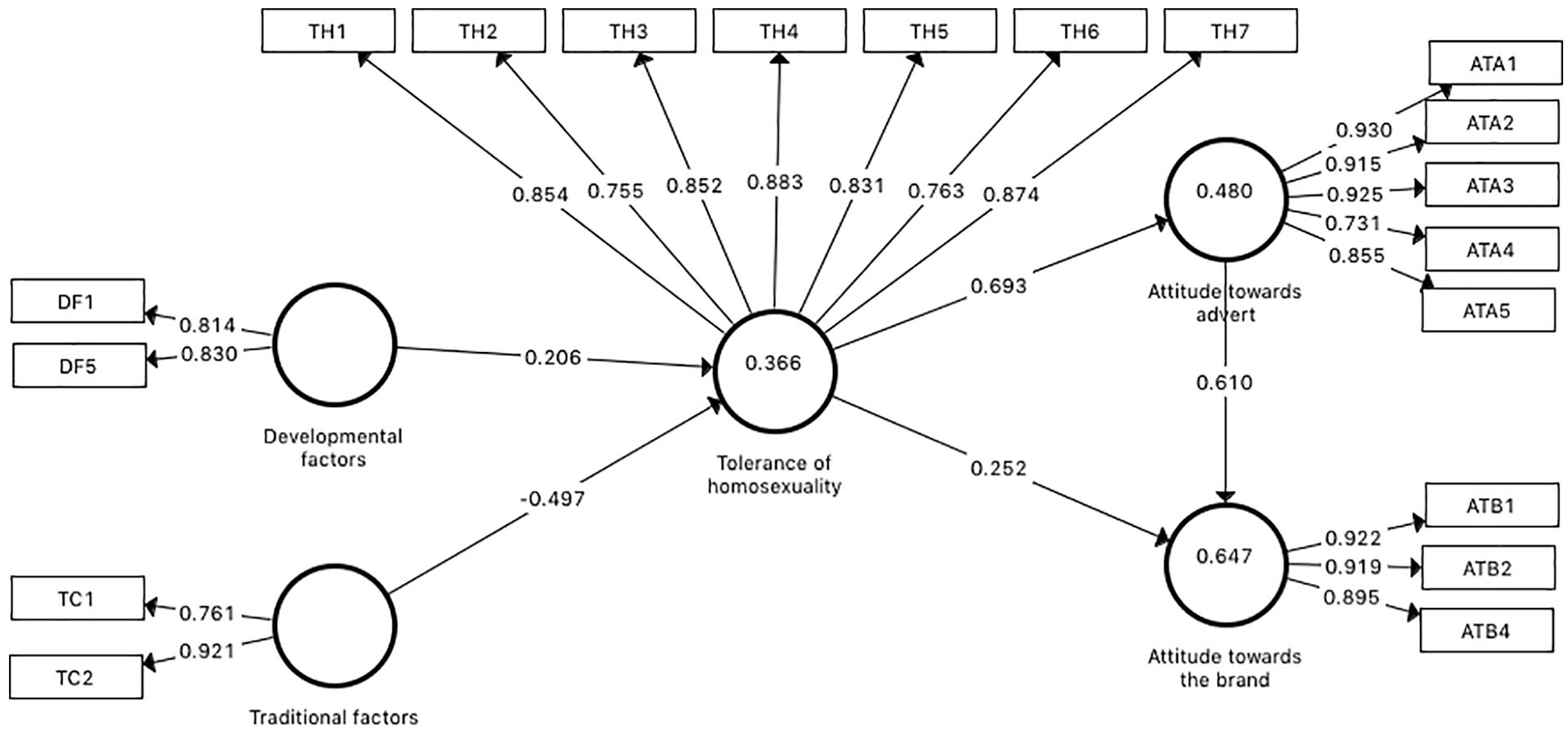
Results from structural modeling analysis.
The R2 value ranges from 0 to 1 indicating low and high explanatory power respectively. As shown in Figure 4, these values are .366 for tolerance of homosexuality, .480 for attitudes toward the advertisement, and .647 for attitudes toward the brand. This indicated that the model had high predictive power and was able to explain the variances of the dependent variables.
The β values found in Figure 4 represent the path coefficients that indicate the strength and direction of the variable relationships. The strongest relationship identified was between tolerance of homosexuality and attitudes toward the advertisement with a β value of .693. This means that respondents with higher tolerance levels of homosexuality would exhibit more positive attitudes toward a gay and/or lesbian-themed advertisement. Another noticeable relationship was that between attitudes toward the advertisement and attitudes toward the brand with a β value of .610. This suggested that consumers who held positive attitudes toward the gay and/or lesbian-themed advertisements would have positive views toward the representative brand.
Effect sizes (f2 values) of 0.02, 0.15, and 0.35 determine whether the predictor latent variable has a weak, moderate, or strong effect on a structural level (Henseler et al., 2009). The relationship between tolerance of homosexuality and attitudes toward the advertisement (1.117), as well as the relationship between attitudes toward the advertisement and attitudes toward the brand (0.517), had high ƒ2 values over the threshold of 0.35. The relationship between tolerance of homosexuality and attitudes toward the brand had a weak effect (ƒ2 = 0.035).
Hypothesis testing
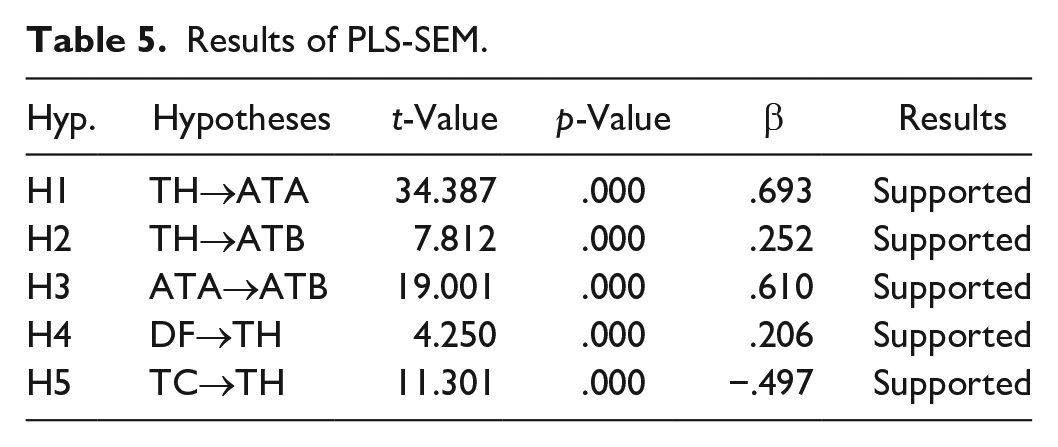
The analysis of the PLS-SEM allowed for the testing of this study’s hypotheses (Table 5). The first hypothesis (H1) tested the relationship between tolerance of homosexuality and attitudes toward the advertisement. It is suggested that consumers with higher tolerance levels will display more positive attitudes toward the advertisements that are gay and/or lesbian-themed (Um, 2016). With a β value of .693, and p = .000, it is established that tolerance of homosexuality has a significant positive relationship with attitudes toward the advertisement. Thus, H1 is supported. The second hypothesis (H2) tested the relationship between tolerance of homosexuality and attitudes toward the brand. Previous research has suggested that higher levels of tolerance relates to more positive attitudes toward brands that display gay and lesbian-themed advertisements (Frankel & Ha, 2020). The β value of .252 and p-value of .000 suggested that tolerance of homosexuality had a significant positive relationship with attitudes toward the brand. Accordingly, H2 is supported. The second strongest relationship was found between attitude toward gay and lesbian-themed adverts and attitude toward the brand (β = .610, p = .000). Thus, H3 is supported. The findings have suggested that positive attitudes toward gay and lesbian-themed advertisements will result in a positive attitude toward the brand. This finding is in line with previous literature (Åkestam et al., 2017). The hypothesis between developmental factors and tolerance of homosexuality (H4; β = .206, p = .000) was also supported. Lastly, the findings revealed that traditional culture negatively relates to tolerance of homosexuality (β = −.497, p = .000). Therefore, H5 is supported.
Results of PLS-SEM.
Difference Between Groups (Gay-Themed Advert vs. Lesbian-Themed Advert)
It was in the researcher’s interest to test whether the theme of the advertisement had an influence on consumer attitudes. An independent samples t-test was used to compare the means of these two constructs across the different measurement aid groups (Ross & Willson, 2017). With the assumption of equal variances, established using Levene’s test for homogeneity, the t-statistic for attitudes toward the advertisement was −1.846 (p = .065) and attitudes toward the brand was −1.457 (p = .146). This suggests there was no significant difference in means between the two groups (−.124 and −.098). This meant that the advertisement theme (gay or lesbian) had no significant effect on consumer attitudes toward the advertisement as well as toward the brand.
Managerial Implications
The results of this study provide advertisers with practical implications. It is advisable for brands to better account for the increased visibility of homosexual individuals in society, television, and consumer markets; as well as to acknowledge them as an important consumer segment by featuring homosexual individuals in their advertisements targeted at both the homosexual and heterosexual consumers. It is clear that brands can make use of lesbian and gay-themed advertisements without endangering the advertised brand in South Africa. It can be argued that, when lesbian and gay-themed advertisements become popular in the mainstream media, homosexual individuals would feel a greater sense of belonging in society.
In order to capitalize on the benefits associated with lesbian and gay-themed advertising, marketers should fully assess how their consumers’ attitudes are influenced by the factors affecting their tolerance of homosexuality. Firstly, it is crucial for advertisers targeting both homosexual and heterosexual consumers through mass media to take into consideration the development of their society before making use of an explicit lesbian or gay-themed advertisement. The development of the society has an influence on attitude toward gay and lesbian individuals. As development in a society progress, it tends to have a higher tolerance of other lifestyles, including homosexuality. Secondly, when making use of homosexual imagery in advertisement, advertisers need to understand the traditional culture of their society. Cultural ideologies and traditions (e.g., expectations about gender roles, law, and religion) provide the basis for heterosexual consumers’ negative attitudes toward lesbian and gay-themed advertisements.
Should there be pressure for brands to include homosexual characters in their advertising, as the world becomes more inclusive and accepting, brands should be encouraged to use lesbian and gay-themed advertisements as this will have profound positive effects on the attitudes of heterosexual consumers toward the brand. This could result in the brand gaining a strong competitive advantage should their target audience be tolerant of homosexuality. Marketers are urged to use these results with caution and careful consideration, bearing in mind that consumers from various cultures and backgrounds may respond differently to lesbian and gay-themed advertisements. Before using lesbian and gay-themed advertisements, marketers need to understand the social and demographic factors of their market. The findings of this study have shown that young, White, and highly educated individuals have positive attitude toward brands that feature homosexual imagery in their adverts.
Limitations and Future Research
This study, like most studies, has numerous limitations which opened windows for future studies. This study’s sample was predominantly young, White, and highly educated. Thus, it was predicted that the results would be skewed. The narrowed demographics of the sample may have led to partiality on some of the questions that would have given credibility to measurement items. Further insight is to be gained by collecting data from a more diverse sample as this will provide key insights into the consumer characteristics that influence attitudes toward lesbian and gay-themed advertising. Therefore, there is a call for the application of this study to a larger, more representative sample such that the assumptions of this study can be tested in a representative context.
It is suggested that more traditional societies are collectivist in their thinking (Um & Kim, 2019). Thus, a comparison between societies that exhibit collectivist ideologies and those that are more individualistic could perhaps be undertaken to assess the influence that these characteristics have on tolerance of homosexuality. Other factors such as religiosity could be examined as this could perhaps have a profound effect on an individual’s tolerance of homosexuality. It should also be noted that all factors that could potentially influence a consumer’s tolerance level, and subsequent attitudes, toward the advertisement and the brand should be assessed in isolation as these factors could be interdependent or explain similar variations.
This study also only focused on the influence of lesbian and gay-themed advertising on heterosexual consumer attitudes. Perhaps, further research could look into the different attitudes of individuals in the LGBT community and how they react to their representation, and the representation of other members, in advertising media. This will give brands a more in-depth understanding of how to market specifically to these different consumer groups as they are often considered to be part and parcel of one another. This analysis could also include how they react to their representation in terms of ethnicity, age, and body type, as well as other personal characteristics apart from sexual orientation.
Footnotes
Appendix
Acknowledgements
The authors would like to acknowledge the Editor and anonymous reviewers who will provide constructive comments to improve this research.
Declaration of Conflicting Interests
The author(s) declared the following potential conflicts of interest with respect to the research, authorship, and/or publication of this article: Authors certify that they have NO affiliations with or involvement in any organization or entity with any financial interest (such as honoraria; educational grants; participation in speakers’ bureaus; membership, employment, consultancies, stock ownership, or other equity interest; and expert testimony or patent-licensing arrangements), or non-financial interest (such as personal or professional relationships, affiliations, knowledge, or beliefs) in the subject matter or materials discussed in this manuscript.
Funding
The author(s) disclosed receipt of the following financial support for the research, authorship, and/or publication of this article: This publication is based on research that has been supported in part by the University of Cape Town’s Research Committee (URC), and this work is based on the research supported in part by the National Research Foundation of South Africa (Grant Numbers: 120619).
