




Abstract
The aim of this article is to carry out a sociocultural interpretation of the physical form, spatial configuration, and architectural design of the vernacular Ağaçbekler home in Edirne, Turkey. Based on case-study research, this article presents the relationship between social, cultural, and religious traditions and the architecture of traditional vernacular (rural) home. This current work is an examination of the relationship between cultural traditions and domestic space of the Ağaçbekler home along specific factors: extended family and the status of family within the community; relationships between men and women; neighbor relationships; the daily customs of the family; customs, beliefs, and rituals within the life of the community; hospitality; and religious beliefs and practices.
Introduction
This article focuses on a vernacular home of Edirne, Turkey, and examines the links between the sociocultural values (including those deriving from religious belief) and the domestic spaces of the home design. Its aim is to provide an understanding of the relationship between the structuring of space and the apparent correlation between the spatial patterns and systems of social, cultural, and religious relations within domestic space. We know that the formation of dwellings and architectural forms are affected by a wide spectrum of factors, and that the characteristics of dwellings are not only determined by physical influences and factors but are the results of all sociocultural factors. According to Rappaport, the design of the house is influenced by both cultural values and choices (Rapoport, 1969a, 1969b, 1985a); Mazumdar and Mazumdar suggest that houses reflect rules, norms, and social relationships (Mazumdar & Mazumdar, 1994b), while according to Lawrence (1985) and Low (1988), they are replete with symbolic meanings.
Some scholars have focused on the symbolic meanings and purpose of the house (Bourdieu, 1973; Cunningham, 1972; Errington, 1979; Rapoport, 1969a), while a handful of researchers have also investigated gender separation and its relationship to space (Donley-Reid, 1982, 1990; Duncan, 1981; Khatib-Chahidi, 1981; Pellow, 1988).
Many scholars have expressed an interest in the spatial surroundings of domestic life by focusing on how to achieve a better understanding of the use and meaning of the home environment. In Pierre Bourdieu’s (1973) famous study of the Berber house, he underlined the symbolic significance of domestic spatial patterns: “The house is a kind of microcosm organized by the same oppositions and homologies that order the whole universe and stands in a relation of homology to the rest of the universe” (p. 104).
Other scholars have also conducted extensive research into M’zabite (Berber) houses in Algeria. Bellal (2004) investigated the role of the “outsider/visitor/observer” in relation to the Berber house, and concluded that this role “is not only defined as formal or informal; it is defined foremost as male/female, Muhram/non-Muhram; and then as formal/non-formal” (pp. 118-119). Some researchers have studied the relevance of a certain space (e.g., kitchen) for each gender (Ahrentzen, Levine, & Michelson, 1989). Kazimee and McQuillan (2002) state that a pattern of “diurnal rotation” is key to the layout of domestic courtyards in Afghanistan, and that this pattern is also embodied in more monumental Afghan structures.
Of the many sociocultural factors that affect the design of the house, religion is a factor that is seen to both influence and organize human relationships. Several studies have demonstrated that religious beliefs influence the layouts of micro spaces, including those of the house (Eliade, 1959, 1985; Hardie, 1985; Pavlides & Hesser, 1989; Raglan, 1964; Saile, 1985; Sopher, 1967; Tuan, 1974). Rappaport agrees with this when he adds that religion is a factor that affects both the environment and individuals within that environment (Rapoport, 1969a). The hierarchical spatial design and the sacred spaces in Hindu households were explained by Mazumdar and Mazumdar (1993, 1994a).
In traditional cultures such as those found in Islamic countries, societal values are largely shaped by religious ideology. Some studies have examined domestic architecture in Iran. Memarian and Brown (2003) explained the impact of climate and of religious ideology (Shi’a Islam) on the spatial and formal organization of the traditional courtyard house in Iran. Mazumdar and Mazumdar (1997b, p. 185) noted that “Islamic principles served to create a sharp distinction between the men’s world and women’s world; the public world and the private world; the street and the home.” In their investigations into the domestic architecture of Iran, Mazumdar and Mazumdar (1997a, 1997b) also focused on the interrelationships between religious traditions and domestic vernacular architecture, and the relationships between religion, majority–minority intergroup relations, and vernacular domestic architecture.
The secluded and restricted spatial experience of women is believed to be common throughout Anatolia, and many scholars have assumed that women were confined to the private domestic sphere (Lewis, 2004), and cite as evidence the traditional architectural plan of a closed ground floor integrated with a courtyard (Kuban, 1995).
These prior studies have led us to on a search to precisely identify local Turkish cultural practices have made the Ağaçbekler home different and unique.
The Ağaçbekler home case study, unlike research methods, enables us to provide details about context, actions, and development that would not otherwise be possible (Becker, 1992; Feagin, Orum, & Sjoberg, 1991; Stake, 1995; Yin, 1994). Lincoln and Guba (1985) presented a case study of a single house, which displayed important methodological limitations in terms of credibility and transferability (Lincoln & Guba, 1985). An example of another case study is seen in Mazumdar’s work, which described “autocratic control” and pointed out how decisions, actions, and interventions by a person with near-unlimited power had transformed Tehran’s morphology (Mazumdar, 2000).
Bourdieu’s (1973) study of the Berber house represents an ethnographic work carried out within a theoretical framework, and formed an important reference for such studies. In this work, Bourdieu describes the Berber house as being a simple rectangular form divided into two parts, with each division of the space having its rituals according to a balanced division between binary opposites: inside/outside, private/public, dark/light. He maintains that these divisions reflect a division of the world into male and female spaces.
The article focuses on narrating the micro history of Ağaçbekler home and delivering a sociocultural interpretation of the physical form, spatial configuration, and architectural design.
Method
Based on case-study research methodology, this article presents the relationships between social, cultural, and religious traditions, and the architecture of the traditional vernacular (rural) Ağaçbekler home. Some social scientists claim that qualitative and quantitative approaches are actually based on distinct epistemological frameworks and that the scientific method implicit in a quantitative approach is incompatible with any qualitative study of society based on description and observation (Lincoln & Guba, 1985). On the other hand, Dandekar (2005) maintains that, “In planning, qualitative methods make as large a contribution to practice and to theory buildings as they do in the humanities and fields” (p. 134).
From this perspective, very few works have systematically identified and analyzed the relationship between cultural values and the architectural features of the Turkish house. Among those few studies, we have the analysis carried out by Atik and Erdoğan (2007) on the features of the traditional Turkish house in relationship to the prominent sociocultural factors of the country, and the investigation by Orhun (2010) into how spatial patterns and encounter patterns have emerged systematically in various traditional houses in Turkey. It was in this understanding that Erdoğan and Atik (2009) also analyzed the relationships between sociocultural values and architecture via a traditional Edirne house in which different ethnic and cultural groups live.
Because rural dwellings have not been adequately investigated in terms of these relationships, an important gap exists in the literature. This present work intends to fill some of that gap by testing the cultural continuity and disintegration of the Ağaçbekler home, a house that reflects the primary features of the yard/courtyard type house found in Turkey’s rural areas.
In this article, we present a case study of a traditional dwelling belonging to the Mehmet Ağaçbekler family, an ethnic Turkish family with Bulgarian roots. The house is located in the historic outskirts of Edirne in the Yıldırım neighborhood. Using this home as an example, we investigate the relationship of cultural and social values to architecture.
This study is also informed by the author’s data from systematic fieldwork. The purpose here is to present ethnography of a single case. Data from the Ağaçbekler family’s autobiographies and personal narratives, written from their perspectives and in their own words, are also incorporated. These sources provide rich insights into the family’s world. Most of the data were gathered from the Ağaçbekler dwelling, while the rest were obtained from other sources. 1 My first meeting with the Mehmet Ağaçbekler family was held on July 2, 1994. At that time, the extant buildings in the courtyard consisted of the original old house, the adjacent stable, the new house, the coal shed, a granary, and a toilet. These were all drawn at a ratio of 1:200 (see courtyard plan). Present at this meeting were both Mehmet Ağaçbekler and his wife Saniye, his son Ahmet and his wife Sevcan, and their 4-year old daughter Sinem. At this meeting we collected their responses to the written survey and also gathered additional information about the home and the family. “When on January 17, 2002, I again went to the neighborhood to gather both more information about the old, original home and deeper, sociocultural data, I was informed that Mehmet Ağaçbekler had died 3 months earlier, and that his wife had now moved to a different home. This house was pointed out to me. Despite the fact that she was still in mourning, Saniye Ağaçbekler opened the door, invited us in, and responded to our questions. She suggested that we also speak with her son Ahmet and his family members, who were now residing in the old house. When I went to that house, Ahmet’s wife Sevcan and their two children were at the home, but I was told that Ahmet was working in the fields. I then had the opportunity to study the house and to take photographs. On January 27, 2002, I met with Ahmet and his wife Sevcan, and we had a detailed, face-to-face meeting. On May 16, 2002, I finished carrying out a detailed and ratioed architectural drawing of the house. On July 22, 2002, I met with an elderly neighbor, Kaniye Kaya, who was very familiar with the family and who provided me with some new information. I again met with Ahmet and his family in both 2006 and 2007. I also spoke with Rifat Sineciklı, the son of the home’s builder Kazım Sinecikli. The son was able to provide me with information about the construction of the house and the traditions involved.
This study employs various research methods, including visual survey, participatory survey, interviews with local residents (neighbors and homeowners), and survey research methods. The relationship between the form of the dwelling and the sociocultural factors were analyzed by studying the immediate surroundings of the chosen dwelling and taking identification photographs, conducting building surveys, and creating drawn studies. In addition to written information on the social values and practices of the family chosen for the study, ethnographic and autobiographical narratives have also been used to support the various findings. Because an understanding of the history of a place is crucial to understanding the social practices, we focused on the period stretching from the traditional rural end of the 19th century and the beginning of the 20th century.
A Case Study: The Ağaçbekler House
While its settlement stretches back to the late 14th century, the Ottoman neighborhood of Yıldırım entered into a period of massive change in the waning days of the 19th century and the early days of the 20th, changes that were triggered by interactions of several political, social, and physical factors. This transformational process was further accelerated by the demise of the Empire and the establishment of the Turkish Republic in 1923. Today, the area remains in flux as it passes from a rural to an urban structure.
In the Republican era, all of Edirne’s districts and formerly demarcated neighborhoods were combined into new administrative neighborhoods. While some of the former elements in Yıldırım, such as its soup kitchen, mosque, bath house, charitable foundations, streets, and houses remain with their neighborhood identity, other neighborhoods have utterly disappeared (Erdogan & Dökmeci, 2011).
The old homes of Yıldırım are inhabited primarily by low-income and poorly educated families of rural backgrounds. Most of these people had migrated to the area from the Balkans one generation earlier, and many of these residents are today elderly. Those who work mostly engage in low-paying farm work. Some of the inhabitants work as field hands, workers, civil servants, or are unemployed. The women in Yıldırım who work outside their own homes or fields hold both white- and blue-collar jobs. Almost all the families are nuclear in structure, but one is an extended family. Despite this, almost all of the residents have relatives who live near-by, either in Yıldırım itself or in another close district of Edirne. Oftentimes, neighbors are also relatives. Some families build a home in their courtyard for a son when he marries. Neighborhood relationships are of utmost importance to both the social lives and interactions of the neighborhood. Neighbors tend to interact with each other several times during the day.
The homes in semirural/-urban districts Yıldırım; agricultural family’ (semirural family) home is built front of courtyard and back side house. Farmer family’s first house in Yildirim, which is a historical outer district of Edirne city, was built as part of avlu (courtyard) on the front side, with part of the house at the back side. House characteristics are cluster type building in avlu used for work and residential purpose-farm type cluster. Farm buildings are clustered in the courtyard along with the family house. A double-door gateway (porto kapı) provides street entry into the courtyard. Visitors first pass through this courtyard and then arrive at the house entrance. A second gate was built later. The courtyard itself is quite spacious as this is a farm setting.
The plans and arrangements of the old Anatolian Hilani and Megaron type Yıldırım homes (Figure 1) can be categorized into four basic groups according to their essential layouts: (a) house in yard, (b) house with courtyard, (c) cluster-type house located in courtyard-adjacent style cluster house, (d) cluster-type building in courtyard used for work and residential purposes/farm-type cluster (Erdoğan, 2011).

Old Anatolian Hilani and Megaron types are seen in Yıldırım.
The Story of the Ağaçbekler Family
Mehmet Ağaçbekler was 2 years old in 1924, during the period of mass population transfers, when he and his family emigrated from Bulgaria to settle in the historic and rural district of Yıldırım in the city of Edirne. 2 His father 3 and his mother, Rüküş, went on to have two daughters. Mehmet’s first wife, Fatma, died soon after their marriage, while still young. One of their two sons from this marriage also later passed away. In 1960, following the death of his first wife, Mehmet married Saniye, who herself was a widow. Saniye, who had had three daughters from her previous marriage, left one of her daughters with the family of her late husband, and joined this new family as a bride with two young daughters. Mehmet and Saniye had one child together, a son named Ahmet (Figure 2). In time, Mehmet’s stepdaughters married and moved away.
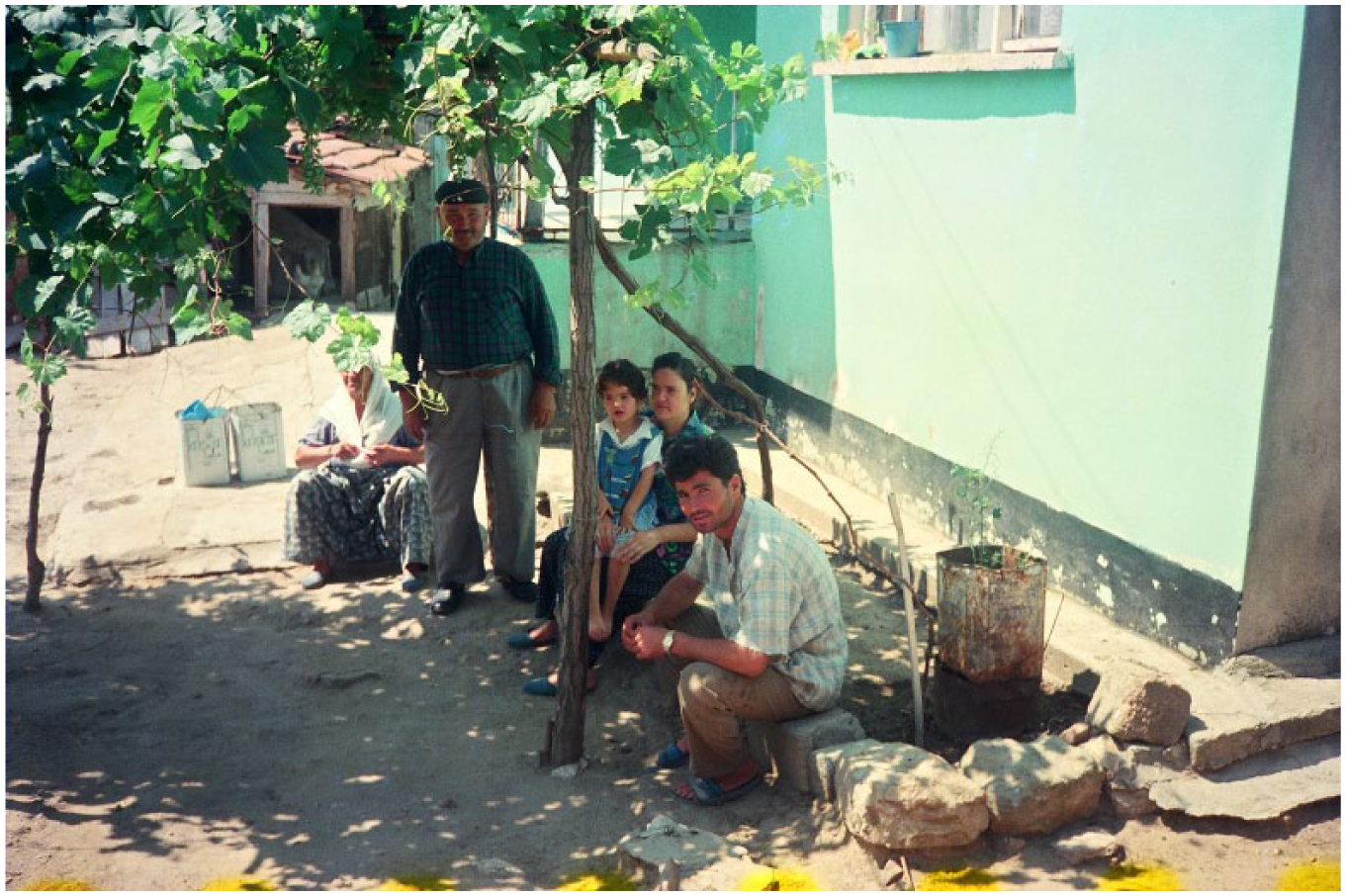
Family member of Ağaçbekler in courtyard.
His father died ın 1975, 6 months after returning from a pilgrimage to Mecca, and his mother died 19 years ago. Mehmet’s son Ahmet has a wife Sevcan, a daughter Sinem who is now 18 years old, and a 12-year-old son, Sinan. Mehmet died in October 2001, followed by his wife Saniye in 2005.
The Story of the Ağaçbekler House
The rooms of the original house were all built adjacent to each other, but at different times (Figure 3). Mehmet Ağaçbekler’s father first built Room 1 (Figure 8)and added the two other rooms at later dates. Mehmet grew up in this home.

Original house.
Mehmet Bey and his first wife lived in Room 1, while his parents lived in Room 3 (Figure 10. This couple always lived in Room 3 and only exclusively used this one room of the house. Mehmet’s son from his first marriage lived in the main bedroom of the house (guest room), Room 2 (Figure 4). Later, after completing his education in Ankara, this son moved to Belgium, where he lives to this day. Twelve years after marrying his second wife, Saniye, Mehmet and she moved into the new house in the courtyard, which had taken several years to build, while Mehmet’s parents continued to live in Room 1 of the original house.
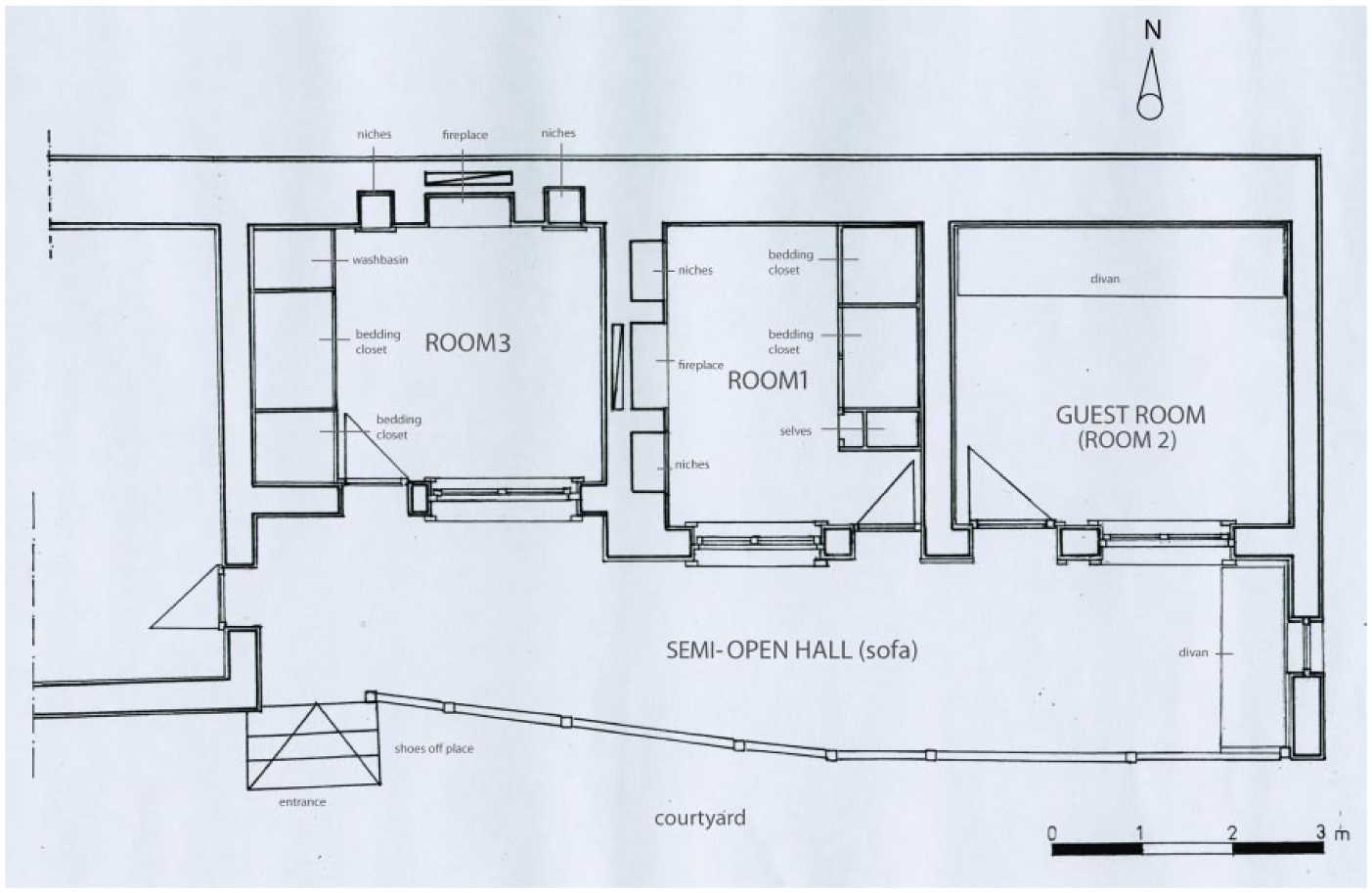
Total home (Room 1 + Room 2 (guest) + Room 3).
Beginning in 1994, Mehmet and Saniye lived in the new house in the courtyard (Figure 5). This new home was bigger than the original house and they lived in it with their son Ahmet, his wife Sevcan, and their 4-year-old daughter Sinem. When problems arose within the family, especially between the bride and mother-in-law, Mehmet and Saniye moved to a different house they had purchased 10 years previously in the same neighborhood, located at No. 8 Çukurbakkal Street. When Mehmet died in October 2001, his wife continued to live alone in the same house until she passed away in 2005.

Site plan.
The original house is currently unoccupied. The house is nearly falling down; the roof is sagging, and neither the fireplaces nor the niches work anymore. Despite extensive damage, all of the built-in cupboards are still present. At one time there was a kitchen in the courtyard, but that has since disappeared.
Architectural Features of the Ağaçbekler Home
The Ağacbekler’s home is based on historical “hilani” type house that is widespread in Anatolia (Figure 1). This type of house consists of a hall/vestibule opening outwards, which is flanked on two sides by lateral spaces. This characteristic hilani type building, with an opening in the middle and hall in front, is frequently seen in Turkey (Erdoğan, 2008). In addition, other such dwelling types developed from the addition of separate buildings with their own functions to a main, one-space room/house with a hearth in the Eastern Black Sea region of Turkey (Erdoğan, 1992). The two mentioned articles that show the similarities of this house and the changing process of this family are supported by the above research.
When we examine the Turkish traditional house per se, we see that there are several individual genotypes, each of which is either geographically or culturally confined to certain characteristics that need to be examined separately in their own right. From the point of view of the organization of spatial elements, the Turkish house 4 presents two fundamental features: the rooms; and the hall (sofa), which serves as a common area for circulation and other uses or services. The room is considered as an almost independent multifunctional unit and is designed and equipped accordingly. There are, therefore, a large number of various special features in each room (Kucukerman, 1985). Although some studies have attempted a generalized typological examination and classification according to the rooms (Kucukerman, 1978), the sofa (Aksoy, 1963) or both (Eldem, 1954), in terms of the overall plan arrangement, there exist exceptions that fall outside the common categories. Kuban (1982) explains that there is a mixed belt between the coastal regions and the interior within which dwellings are representative of Turkish housing culture. In an attempt to impose order and hierarchy on a vastly varied housing stock, writings on the Turkish house have devised broad typological classifications that are based generally on their physical characteristics. The most favored approach has included classifications based on the shape of the sofa on the uppermost floor (Eldem, 1984).
The original single-story home within a courtyard consisted of three rooms and a semiroofed porch-like hallway, called the sofa. 5 In the local dialect, these homes were called “Yerevi”/Kerpic ev,” (ground house or mud-brick house). Although this type of house was not particularly attractive from afar, upon entering the courtyard, one was faced with a small house in a very green garden with many flowers. This type of house accurately reflected the lifestyle and the work of the rural people. In the Ağacbekler home, just as in any other Turkish home, every section, from the front door to the roof, had a separate name.
The Ağacbekler house and its courtyard were situated in a rectangular arrangement on two corner plots (Figure 5). The courtyard could be entered from two separate doors leading from two different streets. On the western side, one would enter the courtyard through a porto door (a double door) from Kupeli Cami Street; on the south, the courtyard was accessed through a single door that would reach the house. A neighbor’s house was situated on the northern end of the original house and courtyard, while the house of the married son and the street were on the west. The granary, stable, chicken coop, coal shed, toilet, and the sheds where the farm equipment was kept were all arranged in a cluster against the courtyard wall. The auxiliary buildings were placed so as to create a wall for the courtyard; the wall of the courtyard was constructed from ballast and stone to a height of nearly 2 m, in such a way that one could not see into the neighbor’s courtyard. The courtyard, garden, well, arbor, toilet, field buildings (auxiliary buildings), closed spaces (Room 1/first home), Room 2/guest room, and Room 3 are in direct relation to the sofa. The house was oriented according to the climate; the original rectangular house had a blank wall on the north side, while the side with the windows and the doors faced south. The courtyard was placed on the south side of the house. The courtyard is spacious, allowing room for the family to include a new house for married sons. The home built here for the son also clusters in the courtyard.
The Sociocultural Traditions of the Ağaçbekler Home
The Mehmet Ağacbekler family was a large family comprised of himself and his wife, his parents, his unmarried daughters and sons, and his married son, the son’s wife, and their children. In the neighborhood, he was known as “Bull Mehmet,” and his family was one of the Yıldırım neighborhood families that enjoyed a high social and economic status.
The hierarchy of the home is reflected in the use of open space–semispace–closed space. This existing old house 6 has three rooms and a semiopen, ceilinged hall (açık sofa/sundurma), a one-story independent space within the courtyard that is locally referred to as the “sofa.” The courtyard also has direct relationships with its other units: the garden, well, pergola, toilet, farm buildings, enclosed spaces (Room 1, Room 2/guest room, Room 3), and the sofa.
Courtyard (Avlu)/Garden
Family life centers on the courtyard, an open space that functions as part of the house and has direct relationships with the other units of the house, for example, enclosed rooms, open hall (sofa), farm buildings, services area (toilet; Figure 6). These courtyard facilities and the open sofa all provide summer home utilizations, while the enclosed rooms provide conjoined winter space. The home—both its open and enclosed areas—provide for utmost family privacy. No element is transparent and all the spaces are closed to spaces out the building or courtyard proper. The gate provides the sole relationship with the nonhouse. The street is considered to be public space, but the courtyard and house are private. The street belongs to the city, while the home belongs solely to the family.

Order of Ağaçbekler house.
This courtyard has two doors that access the street (Figure 7).The porto double-winged door is large and wide enough to provide passage for a horse and carriage, for stock animals, and for loaded wagons. The other, smaller door placed in the south of the courtyard is used only be individuals. The frames of the courtyard doors intersect with the stone walls of the courtyard itself. “The courtyard gate did not have a lock or key. There is a thick oak lever behind the door wing that fits into a slip made out of wood and in this way the door is bolted” (Ahmet). This entrance gate symbolizes the meaning and status (social and economic) of the family residing therein. It also marks the transition between the street and the inner-world of the home. When one crosses this threshold, she/he moves from public to private, open to closed, individual to community, and from freedom to respect. When the new bride crosses this threshold for the first time as a new member to the family, she declares her promise to share her life here (bir ömrü bir eş ile paylaşmaktır[a life is shared forever more with a spouse]). The home belongs to whomever enters and has the right to bolt the gate. The outer face of the courtyard gate is part of the street, the community, while its inner face belongs to the individual and his or her private space.

The porto double-wing door.
Respect for the neighbors played as important a role in how the house and courtyard are laid out. To respect the privacy and the land boundaries of the adjacent neighbor, no window is cut into a shared wall or space that overlooks the neighbor’s courtyard. The wall that separates the courtyards is shared with the next-door neighbor, 7 and it is built high enough to give both sides privacy. 8 Despite this, the courtyard wall was not built so high that the Ağacbekler family would be completely isolated from their next-door neighbors. The close inter-neighbor relationships and their mutual respect was evident by the fact that the courtyard doors faced each other and that, even though the shared courtyard walls were high enough for privacy and not being seen, voices and sounds of life could still be heard. But, neighbors’ courtyards were never interconnected and neighboring courtyards were only accessed via the street. So, the Yıldırım neighborhood reflects certain definitive characteristics: neighboring courtyard gates are face-to-face, the wall is shared, and neighbors maintain indirect relationships based on sound—but not on sight.
Edirne experiences cold Balkan winters, and for this reason the homes are never oriented toward the north, and if there is a window to the north it will inevitably be small. The blank wall of the Ağaçbekler house is oriented toward the north, while all the doors and windows face the south. The courtyard also has a southern facing orientation.
There was a certain separation of men and women within society. In those spheres considered public, women protected and covered themselves for privacy. However, there were no sharp divisions between the gender roles of the two/three generations living together in the extended Ağacbekler household.
The neighbors and relatives would mostly come to the courtyard, and they all entered without needing an invitation, meaning it didn’t matter if the guest was a man or a woman. Women did not try to stay out of the sight of males. Everybody knew everyone else. (Ahmet)
However, when it came to males who were strangers, then it was important that the privacy of the family, in other words the privacy of the women, be protected. Due to the defined separation between men and women within the society, the women were protected and concealed from men considered to be strangers or outsiders. Outside the home, veils were widely used, and women’s bodies and heads were covered, leaving only their hands and feet uncovered.
It was important to the Ağaçbekler family that space in the courtyard be set aside for a garden, for it is the greenery of the courtyard that becomes its focal point, and greenery is considered essential to the life of the family members. The garden area started in the front of the house and extended from the middle of the courtyard to each corner. It was important that the garden, 9 which was composed of flowers, fruit trees, and vegetables plots, was visible from all of the rooms and from the sofa. The poultry and other small animals were not caged but were, rather, allowed to roam free in the gardens.
The courtyard gate is both an element of the street with its outer facade belonging to the communal areas of the city/town and an element of the home with its inner-face belonging to private life. Keeping the street clean in the front of the house and the outer door is almost a matter of religious faith.
There is an old maxim that the length of the street that fronts the house of a family should be allotted to that house as a personal domain and, therefore, it is the family’s responsibility to keep that part of the street clean and good repair. (Denel, 1989).
Especially in the morning, the woman is prayed to open gate then cleaned out face of it. A prayer is always recited before opening the gate in the morning and closing it at night, for it is considered that the kul (the believer) must appeal to God for mercy, both for this world and the next. The gate thus symbolizes the Gate of God/(tanrı kapısı) that separates temporal life from eternal life. If the area in front of the gate has not been swept clean, the neighbors will fear that something in the house is amiss and they will check up on them. If, however, it turns out that the street was not cleaned due to laziness, these same neighbors may grumble their discontent. Framing his belief in the sanctity of the gate, Ahmet told us, “We say bismillah (in the name of God) as we step over the threshold in the morning, thus beseeching God to help our day be fruitful.”
Farm tasks and other daily jobs are done in the courtyard. The daily customs of the Ağacbekler family coincided with the seasonal climate, the number of people, and the jobs at hand. The family would live either outside, inside, or both. Customs relative to how daily life was lived out, the spending of leisure time, family get-togethers, meals, greeting and hosting of guests, and so on, were all—to varying degrees—circumscribed by tradition. The members of the Ağaçbekler family all did their own share of the farm and fieldwork. 10 The married women of the family 11 would get up early in the morning between 5:30 and 6:00 a.m., waking with the call for the morning prayer.
The courtyard also constituted a safe play space for children. Grandchildren played freely but still under the eye of their grandmother or other female relatives. If there was a great deal of work to be done in the fields, the entire family would leave early in the morning, but one of the women would remain at home to look after all the children.
The courtyard was also the primary space for neighborly social interactions and was sometimes a place to hold parties or celebrations. The courtyard acted as a space where family and friendship ties could be supported. Just as this courtyard provides privacy and seclusion and encourages social support among the dwellers, it is also a place where the family enjoys its relationships with neighbors and relatives.
There is a Turkish expression that—roughly translated—says, “Don’t buy a house, buy neighbors,” meaning that it is the neighbors you will have that should most influence your decision to purchase a house. In fact, in those areas with limited socialization means, neighbors are vital as they share daily tasks and concerns and also serve as protection of both property and community. If a non-neighbor becomes a constant visitor to the home, he or she is said to have “made a neighbor’s gate.” Other sayings that underline the importance of neighbors are, “It may be cooked at the neighbors’ but we get our share” and “a neighbor also has need of his neighbor’s servant.” Neighbor relationships center around daily life. When neighboring women came to visit—generally at least a couple of times a day—they engage in activities like chatting, sharing difficult or complex food production jobs (like the making of tomato paste or tarhana). They may also just sit together in a parallel fashion as they complete their individual tasks, like knitting, patching, or crocheting. Of course while doing so, the conversation may deepen and gossip may be rife. This is also a time to ask each other for advice on family issues, as well as to share information. While men tended to congregate at the local tea or coffee house, they also gathered in the courtyard.
Our neighbors would come and go from our courtyard. Everyone knew everyone else. There were no strangers about and everybody knew everyone else’s business. Neighboring men would generally come to a courtyard if there was a task that needed doing, but would generally just meet at the coffeehouse if we were just going to sit around and talk. It was only in the courtyard, however, that neighbor men and women would sit and socialize together. If a man was not socially close with any woman of the house, than that man would meet her husband at the coffeehouse, not in their home. (Ahmet)
The courtyard is a semiprivate space. If the owner is at home during the day, the garden gate will not be locked.
The gate was not locked during the day, only at night. If a stranger came to the door, they would either have to knock and wait or call out. If a neighbor pointed out the house to a stranger who was trying to find it, then the neighbor would call out the owner’s name to tell him or her that someone had come calling. (Ahmet)
Other than night time hours, the courtyard is always a multifunctional space. Its uses depended on the season and the hour. Certain tasks were carried out according to the layout of the courtyard, and whether that area received sunlight or wind, and so on. In nice weather, the daily chores were carried out here in the morning and in the midday. Afternoons became a time generally devoted to meeting and chatting with neighbors. Neighbors and family members tended to gather under the arbor. Chores moved inside in inclement weather.
The home and the courtyard were not only spaces used for daily life. Customs, beliefs, and rituals are highly shaped, and important thresholds in life are marked by traditions organized within the social life of the community. Important events such as weddings, deaths, and other happy and sad events are celebrated or mourned in these domestic settings.
The Ağaçbekler home once had a fountain in the courtyard, but this was later removed. We didn’t have our own well; we only had a faucet in our courtyard” (Ahmet). When necessary, the family would draw water from their next-door neighbor’s well. In the olden days, the well also served as a kind of refrigerator. Food that needed to be kept cold was lowered in a basket into the well, but we made sure that the basket did not touch the water source. “Before I was born we built a fountain into the courtyard, but I don’t know the exact date. We used to draw water from a communal well in the neighborhood.”
Four years after we were married, we got piped-in water and a faucet. Even though the courtyard has been changed a lot since then, the fountain place is still there (see Figure 5). Before the neighborhood well dried up we would buy water from water carriers called sakalar. 12 They would carry and sell water from the Arda River, which is near Yildirim. The original house didn’t have its own water supply. (Saniye)
The water in the fountain was used for such household chores as cleaning, laundry, and bathing, and was also used for cooking and drinking. Water was also essential for such courtyard tasks as watering the fruits, vegetables, and flowers, and making sure that any animals also had drinking water.
The toilets in the courtyard home complex are always located in a corner of the courtyard and is accessed from the house through the courtyard. Toilets and personal bathing facilities—especially those used for ritual ablution—are never located in the same space. The person performing his or her prayers must be free from anything considered polluted if the prayers are to be acceptable in the eyes of God, so ablution could never be carried out in a space also used as a toilet. Toilets were also built at a distance from the house proper to keep unpleasant smells at bay. The person preparing for prayer would perform their ritual ablution either in a clean area in the courtyard or in the house. In the home a small basin is placed on the floor and either the prayer or someone assisting pours water over the area of the body being cleansed and into the basin.
One-Room House
A one-room space is termed a house when it has a cooking space and when all other living functions, other than toilet, are carried out within it. Some one-room houses, however, may have spaces, corners, or sides within them that are function-specific. Multiroom houses based on the one-room house conceptualization are composed of multifunctional rooms, in other words, rooms with flexible utilizations. The functions of these spaces may vary according to such variables as seasons, hour, and so on. Because these houses are multifunctional, they generally are devoid of pieces of heavy furniture, but rather depend on such “built-in” features as sitting or resting areas, washing areas, and so on. These built-in features are either built into the walls themselves or are placed against walls to ensure open spaces. Fewer pieces of independent furniture or equipment provide for greater functionality variance. This kind of house can easily adapt to the needs of different generations, in terms of special needs and ergonomics.
The original home—the EV (House)—was composed of one single space with an internal measurement of 265 × 340 cm (Figure 8). It includes a hearth for heat and cooking and provides for a multitude of functions, excluding toilet functions. The hearth is located in the middle of left wall, and is surrounded by shelves and niches and other storage areas.
My father Mehmet Ağaçbekler and my mother lived together in this room when they were married. There used to be a separate kitchen area in the courtyard, but this has long since disappeared (see plan). This kitchen was used for such tasks as washing dishes, preparing food, and washing the laundry. The room’s gusülhane (small cupboard space for personal hygiene) was used for light bathing, but the family also would regularly attend the neighborhood bathhouse/hamam for major baths. Room 1 was the room that my parents and I occupied. My parents moved into this room when they married. But even though this room functioned as their personal space and bedroom, during the day this space was also used by the entire family as a sitting room and for other activities. (Ahmet)

Room 1 (family house).
The other room (3) was used by the entire family. This one-room home was the first home (room) of the Ağaçbekler family. Through time, the house adapted to the family’s changing needs. “When the family’s sons begin to marry, second and third similar rooms were added on to the original house to accommodate their needs” (Ahmet). This extended family thus used each single, adjacent room as a kind of independent home for their married sons.
Each room is not, however, an independent entity. It is part of the entire complex that includes the courtyard, the open hall, and other units. Ağaçbekler family members led their lives in the courtyard or in the rooms, according to the seasons, the numbers of family members, and their needs. They did this as individuals or as a group. However, some activities were very communal, such as eating together as a family and hosting guests.
The traditional elements of the architecture of the home—courtyard gate, hearth, roof, home orientation, and threshold—are each imbued with meanings and symbols and reflect the community’s religious beliefs. Many of the activities carried out within the home also are replete with meanings and are based on deep traditions and customs, some of which may be directed by religion. These include the orientation of seating arrangements and the top–down hierarchy of personal and gender space within the room, the considerations relative to personal hygiene and ablution, the hosting of guests, and the needs for privacy (mahrem).
The word used for hearth—ocak—carries meanings that surpass that of a fireplace, for it is also used to refer to the “home of the father,” or even “fatherland.” An ocak/hearth that “continues to burn” signifies the continuation of the paternal line. It symbolizes the continuation of a family that extends from the past into the future, connecting this generation with the generations that preceded it. 13 Even though it was imbued with traditional meanings, the hearth was not given religious connotations. “The hearth could never be placed in the same orientation as the qibla (direction of prayer in a mosque)” (Ahmet). The hearth in the original house is quite simple in form. 14 Shaped like a vault, it is built into the thick wall behind it (Figure 9).
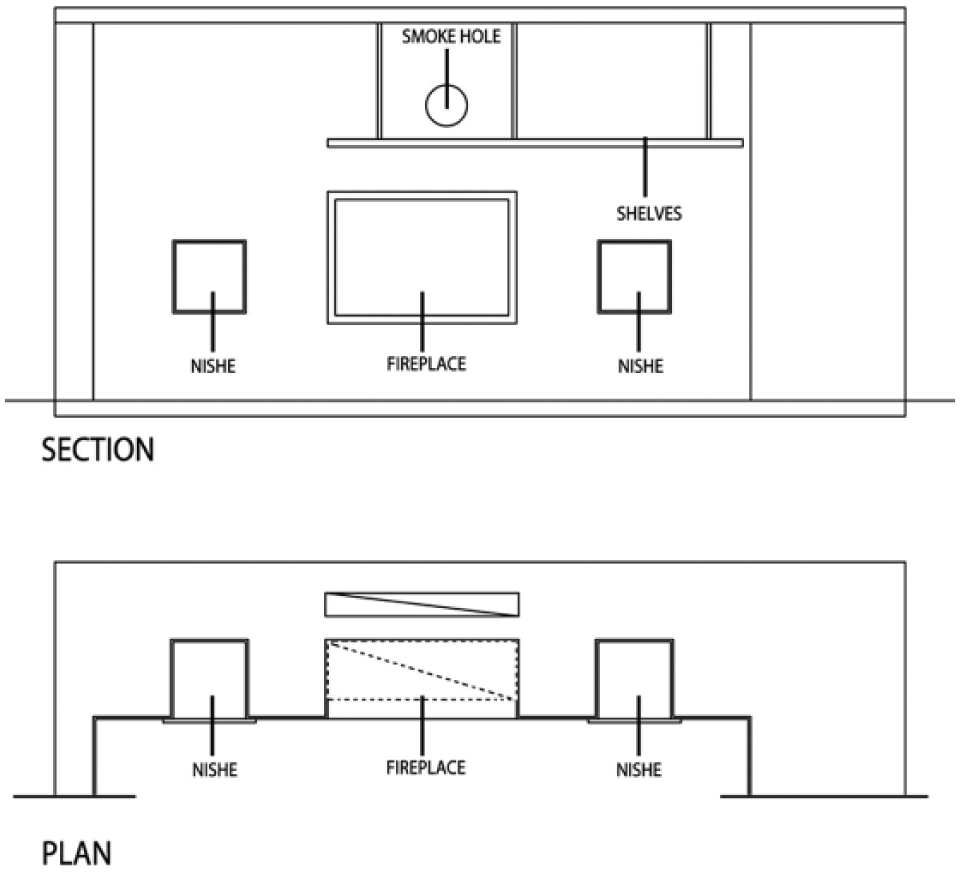
Fireplace (Ocak).
Tradition called for the family to eat its main meal together. “We usually ate in my mother-in-law’s room” (Saniye). First, a large cloth was spread onto the floor. In the middle of this cloth we placed a wooden ring that would support the large, round food tray. The tray of food would be placed onto the ring and then the family would sit cross-legged or with one knee up on cushions around this tray, drawing the cloth over our laps. A prayer was recited by a family elder before the family began eating. All members waited for the elders to leave the table/tray before rising themselves. When the meal was finished, we women would remove the tray and then carefully pick up the cloth, ensuring that no morsels of bread were defiled by falling onto the floor. Care was always taken to never step on a piece of bread, no matter how tiny. Any remaining bits of food that had fallen onto the cloth were fed to the domestic animals. This is the way we always ate, and we always made room for guests around the tray.
Many of the family members performed their ritual prayers in the home, thus requiring that the surroundings are clean, calm, and undefiled. After performing the necessary ablutions, the person who was to pray would spread the prayer rug so that he or she would be facing qibla 15 when praying. During the course of the prayer, the worshipper prostrates him or herself, drops to the knees, and stands.
Room 2 (Main Room)/Guest Room
This 350 × 340 cm room is a later addition to the original house. The room is separated from the sofa (open hall) by threshold. The room 16 is multifunctional and used for sitting, resting, sleeping, and hosting guests. Sometimes this space was also used for cooking. The room is devoid of such other traditional entities as a hearth, built-in cupboards, a personal hygiene washing cupboard, niches, shelves, and so on.
We called this room our main room and it was here that we would entertain our guests. If the guest spent the night, he or she would sleep in this room. When we were not entertaining a guest, the family used this room to sit in, to rest, to study, and to sleep. (Ahmet)
Tradition calls for the main room to be larger, better lit, and better-furnished than the home’s other rooms. Extending hospitality to its ranks is one of the most important values of a family. Guests are given great significance, and care is taken in how they are greeted, served, entertained, and then graciously sent on their way. This care in attending to guests is oftentimes a response to the oft-quoted saying, “Misafir giren eve bereket girer” [Prosperity enters a home that hosts guests]. The size and the decoration of the guest room are important indicators of a family’s status and position in society.
Room 3/(Grandparents’ Room)
This 302 × 285 cm room is located to the left side of the original room/house (Figure 10).This room was the room where my grandparents lived (Ahmet). The room has a hearth and is multipurpose/functional (other than providing toilet facilities). This room served the same functions as Room 1 (see Figure 8). Here, the hearth is built into the wall opposite the entry door and is sided on both sides by niches. The left wall is covered with floor-to-ceiling built-in cupboards. These cupboards are arranged in three main parts. The room was used for sleeping at night, and then the mattresses and bedding were picked up and stored away in the deep cupboards during the daytime hours. The deep cupboards stored bedding, while other cupboards were used as linen closets and for storing garments. Most clothes items and linens were wrapped in bundles (bohça/large and çıkın/small) according to kind—for example, underwear or towels, and so on—and these bundles were stored either in the dowry chest 17 or on shelves in the cupboards.
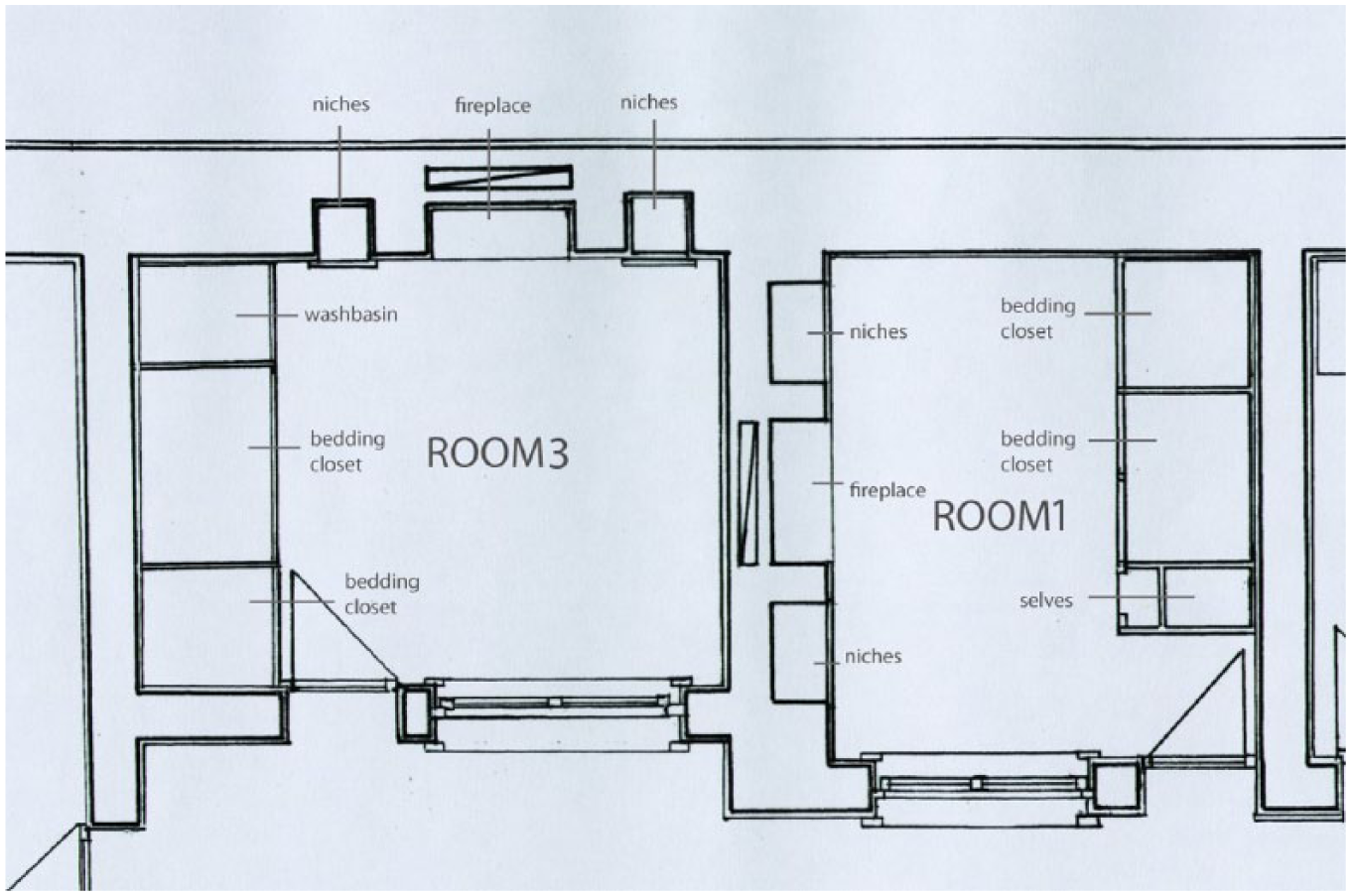
Room 1 and added Room 3 (family house).
Gulsülhane
One of these cupboards—the gulsülhane 18 —was used for personal hygiene, meaning that it was constructed in such a way that a full ritual ablution could be taken here.
We used to take our full baths in the bathroom. Cleanliness is a religious dictate. The gusülhane did not face the qibla, but when we used this area to wash we tried to conceal our private areas and try not to face qibla when doing so. (Sevcan)
Open Hall (Sofa Sundurma)
The semiopen hall (acik sofa/Sundurma), which fronts the rooms of the house functions both as a room and as a courtyard space, offering climatic protection in summer, with its shade, and an area shielded from winds in winter. It also offers easy access to the courtyard from the rooms. In changeable weather conditions, chores that would normally be carried out in the courtyard, are done here. In summer time, the sofa becomes the preferred spot for sitting, resting, and chatting. The sofa also gives the sitter more privacy than the courtyard. In hot summer months, a mattress may be spread on the sedir, and then the space could be used for sleeping.
Because it is considered an “interior” space, shoes are removed before entering the sofa. A small spot at the entrance to the sofa is allotted for the removal and donning of footwear. As the sofa may also be used as a space in which to perform the ritual prayer, it is important that it be kept very clean and free of anything that may defile the space.
Findings
The aim of this article has been to carry out a sociocultural interpretation of the physical form, spatial configuration, and architectural design of the vernacular Ağaçbekler home in Edirne, Turkey.
The Ağaçbekler house has a vernacular character and is a farmhouse with a house and auxiliary buildings placed in a courtyard and is a cluster house type with a courtyard and a large area of land. This one-story dwelling, also called a “ground house,” separated into three sections, is composed of separate, adjacent houses (rooms) connecting to a semienclosed, roofed hall, and is situated in a courtyard. The open spaces on the ground floor consist of a (a) courtyard, garden, (b) semienclosed hall/sofa, and (c) enclosed spaces: rooms, service areas. The courtyard and the sofa are used in the summer and the rooms in the winter. The rooms are not the only living spaces; they are also integral parts of the courtyard, sofa, and the other units.
The original one-room house (room) has grown with the family. Today, both the original house, with all the additions that have been appended during the years, and an adjacent, new reinforced concrete house with modern amenities continue to be lived in by family members.
The open, semienclosed, and enclosed spaces of the Ağaçbekler house provide settings for social, cultural, and religious uses. These settings include the courtyard, semienclosed hall, the main sections such as the rooms, the farm buildings (stable, granary, storage sheds) and fixed elements (the built-in bench, the hearth, the deep cupboard [yüklük], niche, and bathing closet [gusülhane], garden, courtyard walls, courtyard door, and windows). These architectural units and fixed furnishings have been situated in a manner that accords with Turkish culture and tradition.
The courtyard, sofa, rooms, and service elements are organized in a way that accords with the hierarchy of the family. The home provides flexible usage for both men and women, and for those of several generations.
The Relationships Between Social-Cultural Values and Domestic Spaces
The size and number of the courtyard doors and the ornamentation represent the best demonstration of a family’s social standing. Different doors were used for different purposes and people. The courtyard door was a passageway between the street—a communal space —and the home, which is both a private and a public space.
The house did not provide separate areas relative to have gender. The spaces could both be used by men and women separately at different times for the same celebration, or could be used by the two sexes at the same time. Since the male relatives and neighbors of the women were not “kaçgöçü” 19 (of a relationship where they had to be concealed from one another), the women of the house could use the same spaces with these men. The only men with whom women did not share the same space were those men who were considered to be strangers or outsiders. The extended family grew as the sons married and formed their own families. During this time, the family lived together under the same roof and also separately in houses sharing the same courtyard.
The family had very strong relationships with their neighbors. The house and the courtyard were designed in such a way that even though the neighbor relationships were very proximate, the shared courtyard wall was built high enough so that the neighbor’s privacy was protected and in such a way that each family would not bother the other one with their noise. In addition, the courtyard and the garden together formed an open space for socialization with relatives and neighbors.
The courtyard had a direct relationship with the other spaces in the house; the totality of the rooms, sofa, service elements, and auxiliary buildings, along with the garden, formed the main space used by the family during their daily lives. This space, according to season and climate (sun, wind, and shade), was used all day long for various activities. This rather introverted lifestyle made the garden a very important space and brought nature into the house.
All of the rooms were multipurpose and multifunctional, and room use could also vary according to seasonal and climatic needs. Each room was always constructed with built-in furnishings that provided a largish empty space in the middle of the room. The sitting arrangement in the room was circular in form and arranged according to family and guest hierarchies. The few pieces of furniture were multifunctional. Since the hosting of guests was a very important social activity, the guest room was the largest, most spacious, and the best decorated.
In addition, separate corners were created in each room for different uses. Social events (weddings, circumcision ceremonies, funerals, births, parties) were marked either in rooms or courtyards according to season and time. The clean spaces of the house were the rooms and the sofa; the semiclean spaces were the courtyard, garden, some auxiliary buildings; and the dirty spaces were the toilet and the stable. Ritual prayers could be performed in any clean part of the house.
Conclusion and Discussion
This paper represents an attempt to define the principle characteristics of the Turkish rural traditional house and to clarify some of the roles played by religious traditions, sociocultural values, and climatic factors in shaping these features.
The Ağaçbekler house is used to explain an artifact of culture that is a synthesis of the subcultures of Thrace. The daily living model of the Ağaçbekler house was determined by sets of social, religious, and cultural utilizations, and while the domestic spaces served the traditional relationships between the sexes and meet the social-religious-cultural needs of the extended family, they also served to strengthen family solidarity. It is thus that we find meaning in the open–semiopen–closed spaces, daily/diurnal, and seasonal cycles/rotation; in social, religious beliefs; and in the daily activities in the domestic life of an Edirne family. Courtyard, sofa, rooms, and service place were arranged hierarchically from open to closed. The case house provided flexible usage for men and women and for varying generations. Each room of the house served—or had the potential of serving—as an independent home. Families within the extended family could live in their own rooms/homes or in a separate house built in the shared courtyard. The house complex included enclosed, semiopen, and open living spaces, all of which responded to needs based on work, climate, and family needs. The open and semiopen areas were utilized more frequently in the warm summer months, while the enclosed areas protected the family during the harsh Edirne winter months. The rooms were flexible and multifunctional, and could be used by individual family members, groups of family members, and guests, both female and male. The daily life as lived out in the home was directed by a combination of social, cultural, and religious factors. These served to support an extended family system based on very close blood, and cultural and neighborly ties and relationships.
Cultural continuity is sustained when principles in modern settlements and dwelling designs reflect an understanding of cultural continuity from traditional dwelling design principles (Rapoport; 1985 b, 1969b,) (Mazumdar, 1985).
Methodologically, this means that we need to utilize techniques that provide a good understanding of the relationship between culture and its architecture. Professional planners and designers are often given the power to make decisions regarding environmental design features that affect these cultural traditions. It is undoubtedly true that these are the lessons that are learned by comparing the probability generalizations of traditional house-forming principles, while creating modern projects that carry cultural continuity in modern settlement and house planning. This study offers some general lessons, even though it is a particularistic study dealing with very specific subcultures in Turkey.
Footnotes
Declaration of Conflicting Interests
The author(s) declared no potential conflicts of interest with respect to the research, authorship, and/or publication of this article.
Funding
The author(s) received no financial support for the research, authorship, and/or publication of this article.