




Abstract
Notwithstanding the body of research on the characteristics and benefits of content marketing as a digital marketing strategy, evidence of how online consumer behavior is affected by digital brand content remains inconclusive. The current state results from the scattered and fragmented literature about content marketing which impedes a full understanding of scientific results that confirm the effect of content marketing activities on online consumer behavior. The purpose of this scoping review was therefore to provide a broad synopsis of pertinent studies in a structured and comprehensive way over 12 years. The scoping review upheld the five-stage framework of Arksey and O’Malley and was guided by the principles of PRISMA-ScR and the JBI Methodological guidelines. In doing so, the findings from 32 studies conducted in 21 different countries were analyzed and suggestions made for future research. The results not only synthesize existing empirical evidence of the causal linkage between content marketing and online consumer behavior but also identify some knowledge gaps in the literature to guide future studies.
Keywords
Introduction
Brands that act as publishers and marketers of their brand content represent a major shift in how brands have approached their marketing activities in recent times (Basney, 2014; Pulizzi, 2013; Schram, 2020). Content marketing is still a young but dynamic field with many definitions and perspectives among scholars and practitioners about what its practice requires; and is often also referred to as branded content marketing, digital content marketing, or social media content marketing (Ahmad et al., 2017; Holliman & Rowley, 2014; Lou & Xie, 2021). As a result, some of the earlier scholarly work on content marketing focused on the unique characteristics and tactics of content marketing while attempting to situate it in the marketing communication or branding literature within either a business-to-consumer (B2C) or business-to-business (B2B) context (Du Plessis, 2015; Holliman & Rowley, 2014; Pulizzi, 2012; Vinerean, 2017). However, because of all the different perspectives, much of the earlier literature confused rather than clarified the meaning of content marketing (Ho et al., 2020). Collectively, this body of earlier work culminated in a better understanding of content marketing as a digital marketing strategy with a strategic marketing approach to foster consumers’ brand engagement and trust. Marketers enhance brand engagement and trust with different valuable digital brand content on digital platforms which will have long-term benefits for the brand, such as developing relationships and brand loyalty (Hollebeek & Mackey, 2019; Mathew & Soliman, 2020). This study also supported this view of content marketing.
The digital brand content, among others, include the blog posts, website content, white papers, eBooks, e-newsletters, testimonials, infographics, and multimedia content (owned media) of brands. Consumers can also generate brand content (user-generated) via their comments, feedback, and social media posts (earned media). Finally, brand content can also be used as paid content promotion and social network advertising (paid media). Brands use a content strategy to guide their decisions on the type of brand content to publish; the digital platforms on which it could be published and the most suitable times at which it could be published (Basney, 2014; Pulizzi, 2013). Before the era of mobile internet, digital content was distributed mainly via desktop computers or laptops, but nowadays it includes mobile devices and applications (Bu et al., 2021; Hollebeek & Macky, 2019).
While not a mature field yet, the body of knowledge of content marketing has grown over the last 12 years since the first scholarly paper about content marketing by Rowley (2008). Although some confusion about content marketing remains, more recent studies across different disciplines have focused on how content marketing influences online consumer behavior and the mechanisms used to achieve this, often from the perspectives of consumers. The scholarly interest in consumer behavior can be ascribed to the fact that the primary intention of content marketing is to change or enhance consumer behavior by attracting and retaining consumers (Pulizzi, 2012, 2013). In this regard, Schram (2020) refers to a creator economy driven by consumer responses in which content marketing plays an important role in attracting consumer attention and engagement by providing solutions to consumers’ problems with brand content. Because brands invest so much in their content marketing efforts, they must understand how and why brand content drives consumer behavior aligned with organizational goals (Ho et al., 2020).
Mostly, this stream of studies recognizes the critical role played by content marketing to change consumers’ online behavior with the distribution and accessibility of digital brand content on different digital platforms. However, this literature is scattered and fragmented and impedes a full understanding of conclusive evidence of the effect of content marketing on online consumer behavior. Also, the nature of the field of content marketing makes it difficult to understand all the evidence from different scholarly positions. The interpretation of the influence of content marketing on consumer behavior is further impeded because of scholars interchangeably using terminologies. For example, several studies refer to content marketing and social media marketing in the same manner. Although content marketing also heavily involves the use of social media, there are some distinctions. For example, Baer (n.d.) explained that the foremost purpose of content marketing is brand content consumption, followed by a desired change in consumer behavior. On the other hand, social media marketing first focuses on consumer brand participation and then on consumer behavior. Murdock (2012) also points out that with social media marketing, the “center of gravity” is social media networking sites, while for content marketing it is branded content on the organization’s website or blog (owned media).
The purpose of this study, therefore, was to record existing literature on the effect of content marketing on online consumer behavior in a structured and comprehensive way and to provide a future research agenda on the topic.
The ensuing part of this paper explains content marketing’s interest in online consumer behavior in greater detail.
Online Consumer Behavior and Content Marketing
Consumer behavior (or buyer behavior) is a popular field of study on how consumers decide to buy products or services (Solomon & Lowrey, 2018). However, consumer behavior is never constant, it changes over time, and depends on products and/or services. Also, not all consumers behave in the same manner since various factors can influence their buyer behavior such as personal, psychological, social, cultural, lifestyle, and geographical amongst others (Hopper, 2020). The study of online consumer behavior (e-consumer behavior) on how consumers make purchasing decisions online became more prominent in the early 2000s because of the advent of online shopping (Cummins et al., 2014; Dennis et al., 2009). How and why online consumers make purchasing decisions is well-documented in literature across disciplines through different scholarly lenses. These decisions constitute complex, interdependent stages starting with information collection, evaluation of other options, making a purchase, and post-purchase assessment (Close, 2017; Dennis et al., 2009; Kumar, 2015; Lombart et al., 2020).
With content marketing, digital brand content is often deliberately and strategically produced or curated for consumers not merely to consume, but also to share on social media and other digital platforms. Online consumer behavior in the context of content marketing thus refers to how consumers respond to digital brand content (Weiger et al., 2019). Consumers nowadays want brand experiences and not merely products or services; and brands must therefore attempt to create a maximum impact with digital brand content by involving consumers (Viltard, 2016). While the concept of consumer engagement has been widely studied and reported on in the literature, this study adopted the definition of Hollebeek et al. (2014, p. 152) who define consumer engagement as “a consumer’s cognitive, emotional, behavioral, co-creative brand-related activities related to specific interactions.” Brands largely provide consumer experiences through consumer brand engagement in a pull environment, where consumers are attracted to digital brand content based on interest and relevance (Taiminen et al., 2015). As Berger (2016) notes, sharing content on social media, is, among others, driven by a need to be perceived specifically by being emotionally connected to the content and how public and useful the content is on which content marketing is drawn (Weiger et al., 2019). Kardes et al. (2011, p. 8) provide a detailed definition of consumer behavior which is relevant to the field of content marketing.
“Consumer behavior entails all consumer activities associated with the purchase, use, and disposal of goods and services, including the consumer’s emotional, mental, and behavioral responses that precede, determine, or follow these activities.”
Content marketing precedes the consumer’s purchasing decision and requires creating useful and relevant digital brand content without actively seeking to sell products and/or services (non-hard-sell content). Collectively the digital brand content leads consumers to a purchase decision after building relationships, credibility, and trust (Wall & Spinuzzi, 2018). It could thus be argued that content marketing’s interest in online consumer behavior is therefore anchored in how consumers react to digital brand content which builds relationships, loyalty, and trust that leads to making a purchase decision.
This exercise of synthesizing diverse perspectives on the topic allows a description of cutting-edge knowledge on online consumer behavior in the context of content marketing and identifies useful paths for future research. It is of particular interest to understand how topics about the effect of content marketing on online consumer behavior have been structured and organized in the literature. While it is true that the effects of content marketing on online consumer behavior, as illustrated by the results, are interdependent, it is important to study them separately to understand the different antecedents of the apparent connection between content marketing activities and online consumer behavior.
Method
This study employed a scoping review as a method to map the existing literature on content marketing and its effect on online consumer behavior in a structured and comprehensive way. Scholars often use a scoping review to identify a gap in knowledge, clarify concepts, review a body of literature, or review a complex topic that has not yet been comprehensively reviewed (Munn et al., 2018). This approach to evidence synthesis was thus appropriate to understand the extent of knowledge on the topic. Also, it was important to identify and summarize empirical evidence on the causal connection between content marketing and online consumer behavior, which is often hard to find in the complex and heterogeneous literature (Peters et al., 2021). The scoping review was guided by the principles of the JBI Methodological Guidelines (Peters et al., 2021) which are also congruent with the PRISMA-ScR guidelines (Tricco et al., 2018).
In doing so, three areas were investigated, namely (a) main characteristics of these studies; (b) how the evidence of the causal connection between content marketing and online consumer behavior has been structured and organized; and (c) the characteristics and range of methodologies used.
The review is reported as per Arksey and O’Malley’s (2005) five phases, as explained below.
Phase 1: Formulating the Research Question
The central research question that guided the review is: What do we know about the effect of content marketing on online consumer behavior?
This question led to several sub-questions:
Phase 2: Identifying the Relevant Studies
The key concepts of content marketing and online consumer behavior guided the search strategy. The following databases were used to find the relevant studies: ScienceDirect, Mendeley, JSTOR, Web of Science, ABI Inform/ProQuest, EBSCO/Business Source Ultimate, Scopus, and SpringerLink. These databases were selected because they cover business and management studies, including marketing topics and represent academic journals that would consider publishing studies on content marketing. Several databases were also searched to cover most articles, as put forward by Bramer et al. (2017).
An advanced search mode was firstly used to query these databases with the following Boolean search commands:
Content marketing AND online consumer OR online customer behavior Content marketing AND attracting online consumers OR customers Content marketing AND retaining online consumers OR customers Content marketing AND influences online consumer OR online customer behavior Content marketing AND affects online consumer OR online customer behavior Impact AND content marketing AND online consumer OR online customer behavior
Following the Boolean search commands, the keywords were further refined to focus on content marketing AND trust; content marketing AND loyalty; content marketing AND engagement; content marketing AND traffic; content marketing AND brand advocates; content marketing AND brand awareness; AND content marketing AND building relationships.
Google Scholar was also used to manually search for publications but was only used as an additional basis for some cross-checks, as advised by Haddaway et al. (2015). They warned that prior search engine searches could lead to the exclusion of studies because of personalized searches and biased algorithms.
Phase 3: Inclusion and Exclusion Criteria
A methodological protocol guided the study’s inclusion and exclusion criteria. The publications had to adhere to the following inclusion criteria to be selected:
Since content marketing is not a mature field yet publications from 2008 to 2020, including studies which were first published online in 2020 before being allocated to a future journal volume and issue
A research or conceptual study
Peer-reviewed academic journal articles
Peer-reviewed conference proceedings
Scientific research with any research design
Published in English
Addressed the effect on online consumer behavior
Referred to content marketing in the title and/or abstract and/or body of the paper
In addition, it was also important that the studies had a clear and focused research question/hypothesis, appropriate use of methods, and a clear description of results to ensure the credibility of the empirical evidence reported on.
Grey literature such as working papers, theses/dissertations, reports, books, book chapters, and white papers were excluded from the study since the focus was on traditional academic peer-reviewed research on the topic and more conclusive evidence on the topic was required (Adams et al., 2017).
As depicted in Figure 1, out of 488 studies screened by title and abstract, 32 were included in this review. Each study was independently evaluated by two reviewers, using a dichotomous scale to determine the presence or absence of each criterion. A decision was made to either include or exclude papers based on the above criteria by using the study title and abstract. It was important to be over-inclusive at this stage to prevent the incorrect removal of relevant papers. As indicated in Figure 1, studies that made it through the first stage, or cases where a definite decision could not be made, were screened to assess whether they qualified for inclusion. Full papers were obtained at this stage to make a more detailed assessment and were automatically retrieved with the Mendeley reference management software. Subsequently, all duplicate citations were manually removed, including those only discovered in the process. A total of 96 full papers were assessed for suitability with the assistance of Atlas.ti software. The 64 excluded studies failed on one or more of the inclusion criteria. The final sample comprised 29 journal articles and 3 conference proceedings.

PRISMA flow diagram for the scoping review process to identify relevant studies.
Phase 4: Extracting and Analyzing the Relevant Data
The content of the documents in the final sample was extracted systematically in accordance with a summary table that covered the authors, year of publication, journal, objectives, research questions/hypotheses, theoretical approach, method, B2B or B2C context, country, and effect of content marketing on online consumer behavior. The data was then grouped according to the sub-questions of this study. The trustworthiness of the findings was enhanced by following well-known scoping review reporting guidelines and a methodological protocol. It was also necessary to hand search the literature to ensure the credibility of the process (Sucharew & Macaluso, 2019).
Phase 5: Compiling, Summarizing, and Reporting
Phase 5 first comprised a quantitative process to quantify and categorize the raw data. Second, the data was qualitatively interpreted, using a deductive approach to provide meaning in accordance with the sub-questions of this study (Azungah, 2018). In this regard, it was important to map what we currently know about the effect of content marketing on online consumer behavior and then to report on the insights gained for future studies.
Results
In this scoping review 32 primary studies (n = 32) dealt with content marketing and online consumer behavior research from a variety of epistemological researcher dispositions and lenses. After an initial scholarly focus on what content marketing is and entails, the results show that there has recently been a gradual shift to studies that also investigate the outcome of content marketing in the context of online consumer behavior to provide more conclusive evidence of their causal connection.
For analysis, the studies were grouped in accordance with the sub-questions of this study to answer the central question of what we currently know about the effect of content marketing on online consumer behavior. The results are now explained in terms of the key characteristics of the selected studies around which evidence the causal connection between content marketing and online consumer behavior have been structured and organized; and lastly the range and characteristics of the different methodologies were used. The results can be further explained as follows:
Key Characteristics of Studies on the Topic
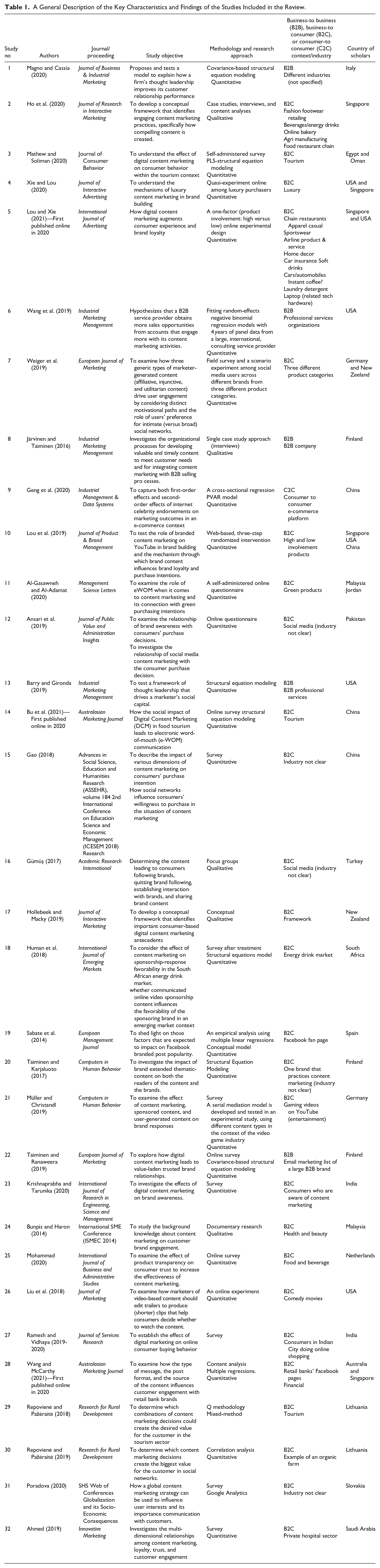
Table 1 shows a general description of the key characteristics and findings of the 32 studies included in the review. The number of studies were conducted by scholars from 21 countries, namely Italy, Singapore (n = 5), Egypt, Oman, United States of America (n = 5), Germany (n = 2), Spain, Finland (n = 2), Netherlands (n = 2), India (n = 2), China (n = 5), Turkey, South Africa, New Zealand (n = 2), Malaysia (n = 2), Australia, Lithuania (n = 2), Saudi Arabia, Slovakia, Pakistan, and Jordan.
A General Description of the Key Characteristics and Findings of the Studies Included in the Review.
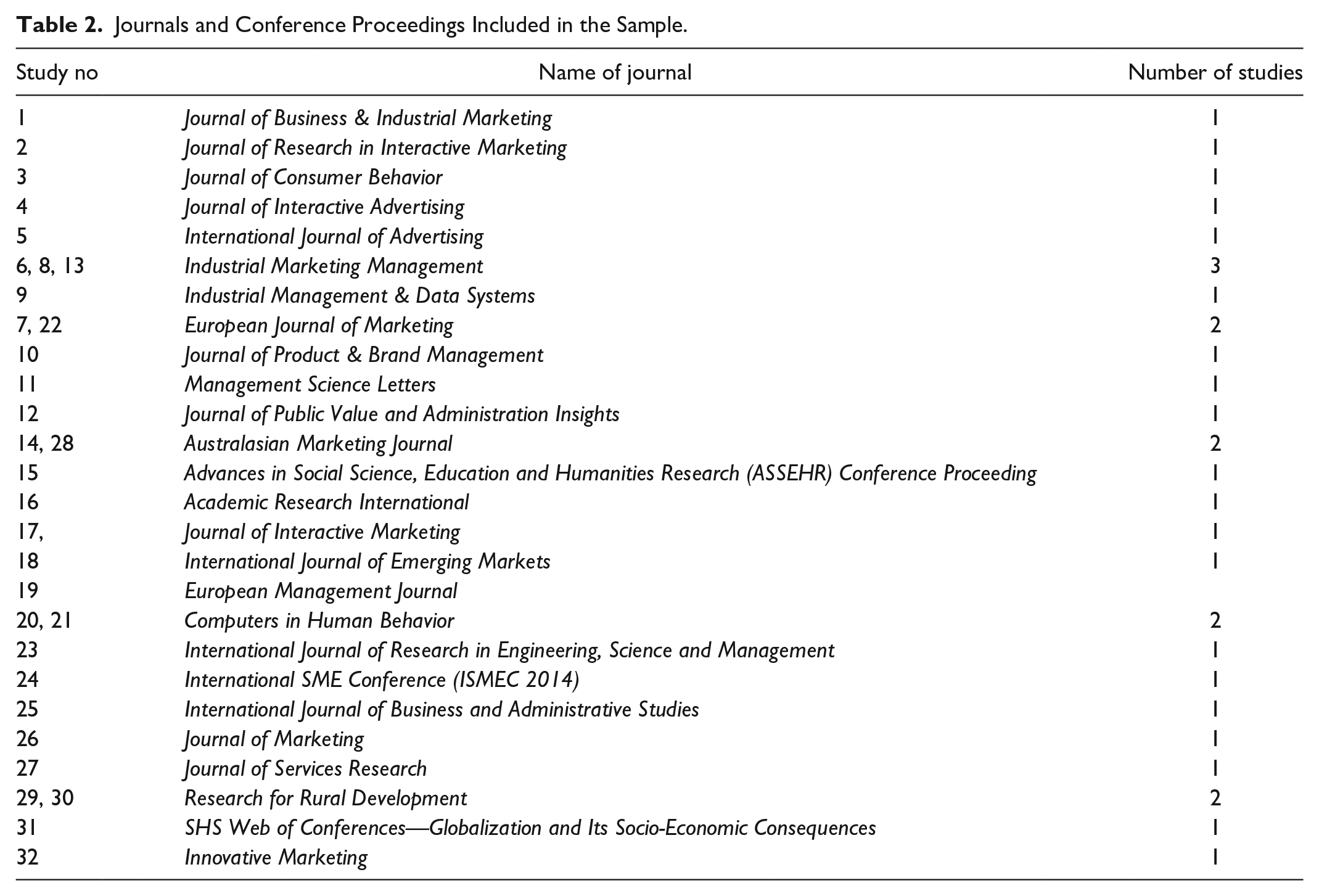
Furthermore, the studies were published in 23 academic journals and 3 conference proceedings (Table 2). Of these studies a total of three were published in the Industrial Marketing Management, two in the European Journal of Marketing, two in the Australasian Marketing Journal, two in the Computers in Human Behavior, and two in the Research for Rural Development journals.
Journals and Conference Proceedings Included in the Sample.
Collectively, the selected studies that were conducted by scholars from 21 countries illustrate an attempt from 2014 onwards to clarify the effect of content marketing on online consumer behavior with more conclusive evidence. This was done by focusing on the role of digital brand content in online consumer behavior in different contexts and settings, and specifically on how content marketing can meet consumer needs to elicit a meaningful and beneficial response to branded content. The results show that while the literature up to 2017 on this topic is still scant, the growth of studies since 2018 was noticeable.
Interestingly, only 5 studies dealt with online consumer behavior within the context of business-to-business (B2B) content marketing, while 27 considered a business-to-consumer (B2C), and 1 a consumer-to-consumer (C2C) content marketing context (Table 1). This illustrates that, since the late 2000s and early 2010s scholarly focus on content marketing within a B2C context has become more prominent because of the increased focus on the effect of content marketing on consumers.
Evidence on Which the Causal Connection Between Content Marketing and Online Consumer Behavior Has Been Structured and Organized
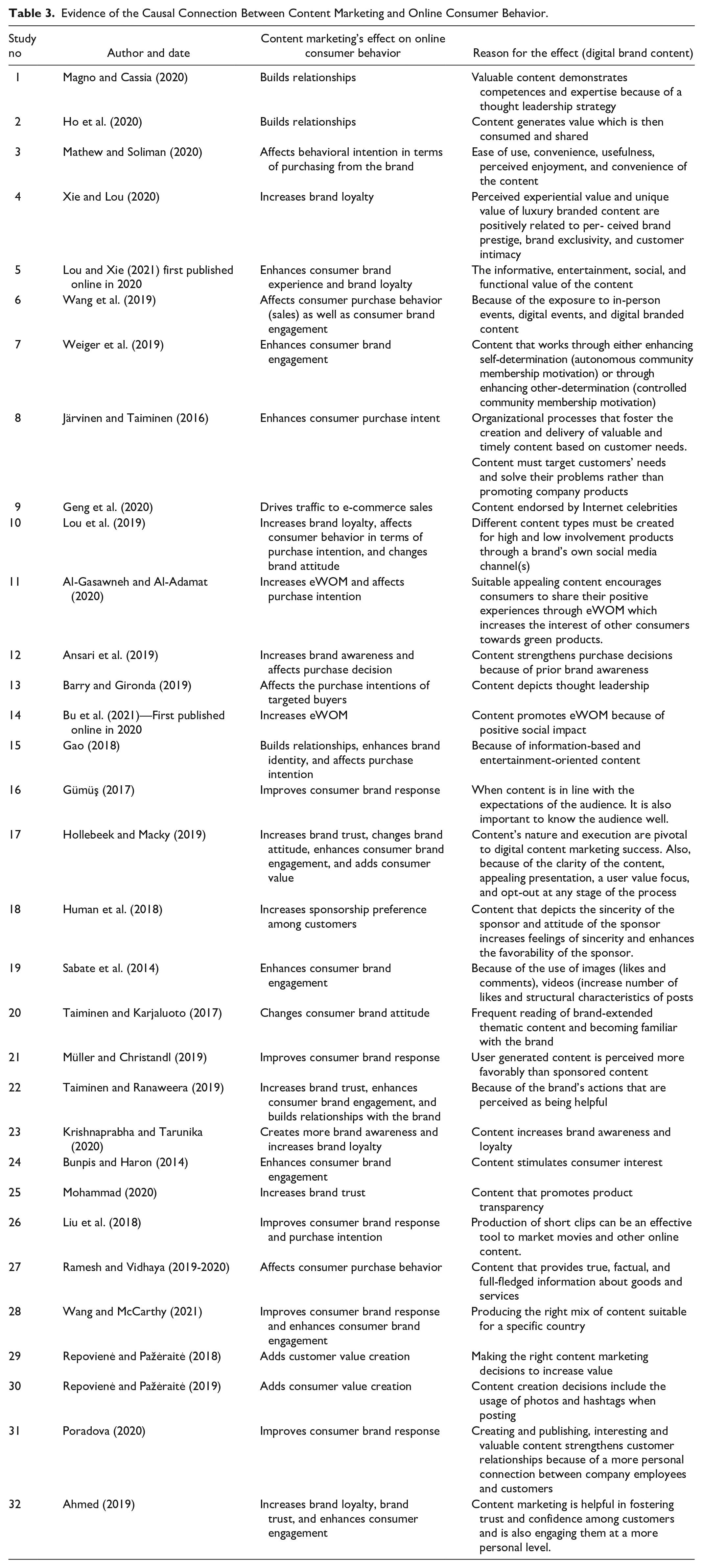
Table 3 and Figure 2 depict on which evidence the causal connection between content marketing and online consumer behavior has been structured and organized. The results do not only clarify what content resonates with consumers, but also how the content affects online consumer behavior when brands meet the expectations of consumer brand content. As depicted in Table 3 and Figure 2, evidence relates to building better relationships (1, 2, 15, 22); creating brand awareness (12, 23); ensuring deeper consumer brand engagement (6, 7, 17, 19, 22, 24, 28, 32); enhancing brand identity (15); increases brand loyalty (4, 5, 10, 23, 32); and more trust in the brand (17, 22, 25, 32); enhancing consumer purchase behavior, intentions, and sales (3, 6, 8, 10, 11, 13, 16, 26, 28, 31); driving traffic to e-commerce sales channels (9); providing more brand value to consumers (17, 29, 30); increasing consumer brand responses on digital media (16, 21, 28, 31); positively changing consumer attitudes towards brands (10, 17, 20); increasing sponsorship opportunities (18); and enhancing eWOM opportunities (11, 14).
Evidence of the Causal Connection Between Content Marketing and Online Consumer Behavior.

How evidence of the causal connection between content marketing and online consumer behavior has been structured in the literature.
The results furthermore show that the effect of content marketing on online consumer behavior is due to being helpful by providing relevant, useful, valuable, and timely brand content shared on social media to address consumers’ needs. Because consumers’ needs are met, they not only become more aware of and attracted to the brand but are also more inclined to purchase from the brand because of a trusting relationship that was formed with the brand through their content (Ho et al., 2020; Järvinen & Taiminen, 2016; Magno & Cassia, 2020; Mathew & Soliman, 2020; Weiger et al., 2019).
While many studies since 2008 discussed the effects of content marketing activities and benefits for a brand, the studies in this sample confirm that strong branded content will persuade online consumers towards the desired content marketing results.
Characteristics of the Range of Methodologies Used
Table 1 also depicts the characteristics of the range of methodologies and research approaches adopted by the studies in the sample. The results show that 26 studies adopted a quantitative research approach to determine the effect of digital brand content on online consumer behavior. Advanced statistical methods were used to test proposed models; experiments were conducted with consumers, while online surveys and content analyses were also administered. The quantitative studies also show the evidence of rigorous statistical analysis, which can be attributed to the complexity of the topic. The six qualitative studies used interviews, case studies, and focus groups, while one mixed-method study adopted Q methodology. Although one study in the sample was conceptual, the study dealt with the effect of content marketing on online consumer behavior with recommendations for future research and thus contributed to the investigation.
Discussion
Contrary to the scholarly belief about the paucity of research about content marketing in the extant literature, this scoping review established that many studies about content marketing exist. However, fewer studies are available with evidence on the effect of content marketing on online consumer behavior which has become an important lens to further investigate this digital marketing strategy (Figure 1). It is evident from the process followed for this study that the body of literature on content marketing has grown substantially since 2008. While still not a mature field yet, the idea of sharing digital brand content on social media with content marketing has become more viable and understood than 12 years ago when Rowley (2008) published the first scholarly paper on digital content marketing. Also, authors of studies in the final sample represent most continents, showing the growth of global scholarly interest in the topic (Table 1).
This scoping review synthesizes the fragmented evidence about what we know about the effect of content marketing in the context of online consumer behavior over 12 years. In doing so, the study provides more insights about the extent of the current body of knowledge on this topic, as depicted in Table 1. Although the causal connection between content marketing (digital brand content) and online consumer behavior has been acknowledged in earlier literature (Holliman & Rowley, 2014; Rowley, 2008), the studies included in the final sample verified this connection with empirical data, using a wide range of methodologies. Moreover, the included studies clearly support earlier scholarly and practitioner arguments to the effect that digital brand content must influence online consumer behavior when solutions to consumers’ problems are provided with digital brand content (Schram, 2020). By strategically focusing on relevant content that consumers need, a brand builds an audience with content marketing because the content adds meaningful value to their lives (Lou et al., 2019).
As depicted in Tables 1 and 2, the studies were conducted in different contexts. However, considered together, the present findings confirm the effect of content marketing (digital brand content) on online consumer behavior in several areas. For example, for building relationships with online consumers, the results of Magno and Cassia’s (2020) study confirmed that thought leadership plays a significant role in that it provides valuable content that demonstrates competence and expertise. Similarly, the study of Ho et al.’s (2020) found that building relationships with online consumers is possible with digital brand content that generates value to their lives. Digital brand content which deals with perceived experiential value and unique value also enhances brand loyalty (Xie & Lou, 2020), in that it provides informative, entertainment, social, and functional value (Lou & Xie, 2021) and at the same time also increases brand awareness because of exposure to digital brand content (Krishnaprabha & Tarunika, 2020).
Online consumers trust a brand more when the digital brand content demonstrates helpful actions that assist with their daily lives (Taiminen & Ranaweera, 2019). When the digital brand content is clear, presented appealingly, and focuses on user value while consumers can opt out any time, brand trust is enhanced (Hollebeek & Macky, 2019). On the other hand, Mohammad (2020) found that brand trust is enhanced with digital brand content that promotes product transparency.
The investigation into how and whether consumers engaged with digital brand content was of much interest to scholars. In this regard, Sabate et al. (2014) found that structural characteristics, such as including videos and images, play a role in how engaged consumers are with the digital brand content. Also, Bunpis and Haron (2014) clarified that digital brand content must stimulate consumers’ interest for them to become engaged. Hollebeek and Macky (2019) later confirm that the nature of digital brand content’ and the way in which it is implemented must be important considerations to engage consumers. However, Wang and McCarthy (2021) point out that the extent of consumers’ engagement with digital brand content will differ among consumers in different countries.
Although content marketing precedes the online consumer’s purchasing decision, whether digital brand content will eventually lead consumers to a purchase decision was also important to scholars. A total of 10 studies confirmed that consumers’ purchase behavior was affected because of their exposure to digital brand content. In this regard, consumers indicated a purchase intent because of, for example, ease of use, convenience, usefulness, perceived enjoyment, perceived convenience, valuable, timely, and alluring content (Al-Gasawneh & Al-Adamat, 2020; Barry & Gironda, 2019; Gao, 2018; Järvinen & Taiminen, 2016; Liu et al., 2018; Lou et al., 2019; Mathew & Soliman, 2020). When celebrities endorsed digital brand content, e-sales increased (Geng et al., 2020). Prior awareness of a brand because of digital brand content also played a role in the purchase intentions of consumers (Ansari et al., 2019). However, consumers will not purchase from brands, unless digital brand content provides true and factual information about products (Ramesh & Vidhaya, 2019-2020).
Digital brand content shared on social media also resulted in consumers reacting favorably towards the brand when the digital content dealt with consumers’ needs (Gümüş, 2017); was not sponsored (Müller & Christandl, 2019); and elicited a personal connection between employees and consumers (Poradova, 2020). Also, the brand responses of consumers in the form of eWOM were enhanced with digital brand content that attracted consumers’ interest in specific products (Al-Gasawneh & Al-Adamat, 2020) or could have a social impact (Bu et al., 2021).
Furthermore, the work of Repovienė and Pažėraitė (2018) highlights that content marketers must make the right decisions to increase value for consumers with digital brand content.
Research Implications
The study also allowed the identification of knowledge gaps that can guide the future research agenda in this area. This study therefore has several research implications for further studies.
While studies on the effect of content marketing on online consumer behavior seem to mount, some knowledge gaps in this area remain. For example, further research is needed into the effect of content marketing on online consumer behavior in the education and financial industries and from countries in Africa and South America. Also, the novel areas of consumer sponsorship preferences and enhanced brand identity because of digital brand content deserve some further exploration (Gao, 2018; Human et al., 2018). Because of the complexity of the topic, scholars are encouraged to cross disciplinary boundaries to put forward more effective digital brand content solutions for brands. More interdisciplinary research will also generate new knowledge and innovative research (Duerr & Herkommer, 2019). The idea put forward by Wang et al. (2019, p. 167) that content marketing must be viewed as an “integrative component of the overall marketing and sales effort,” not only for products but also for services, must also be further explored and tested.
Because literature from different scholarly angles on this topic continues to expand, there is now an urgent need to clarify the differences between content marketing and social media marketing. When scholars refer to content marketing and social media marketing interchangeably, it hinders the theoretical development of content marketing as a rightful sub-field of digital marketing (Bai & Yan, 2020). Studies that clarify these differences will eliminate the persistent confusion about these two concepts and further advance the extant literature on content marketing (Baer, n.d.; Murdock, 2012).
In addition, the growth of the body of literature is also impeded because of the many studies that deal with issues related to content marketing but do not acknowledge the concept of content marketing in their work (Cheung et al., 2020). By not explicitly referring to content marketing in studies can perhaps still be ascribed to the diverse views of content marketing in the literature (Ho et al., 2020). More studies on the effect of content marketing on online consumer behavior will, therefore, situate content marketing more prominently in the literature.
While the results have shown that B2C content marketing has expanded since the earlier literature, there is now also a gap in the C2C content marketing context on digital platforms where consumers interact with one another. In this regard, Geng et al., (2020) have paved the way for more studies that investigate how consumers talk to one another about branded content to identify more content needs. By gaining consumers’ perspectives on digital platforms where they are present, can provide further insights into the digital brand content that resonates with them. Further studies are also necessary to clarify the effect of content marketing on the B2B content marketing context.
In addition, there is also a gap in the literature to conduct more qualitative research on content marketing and online consumer behavior. Qualitative studies will allow for richer and more in-depth data about how online consumers experience and respond to a brand because of their branded content. Qualitative studies can also provide more insights specific into an industry when incorporating consumer brand experiences.
Practical Implications
This study also has some practical implications. A greater awareness of more conclusive evidence of the effect of content marketing on online consumer behavior can guide marketers to produce and share digital brand content on social media that will resonate more with consumers. In this regard, the results provide more insights into what content online consumers expect from brands with which they interact on digital platforms; and how brands can benefit when these consumer expectations are met (Hollebeek & Macky, 2019; Mathew & Soliman, 2020). This study also shows the different areas in which content marketing can influence online consumer behavior, as depicted in Table 3. In addition, the results also confirm that content marketing is a valuable long-term investment for brands because consumers will eventually make a purchase because of a trusting relationship that was formed with resonating digital brand content (Ho et al., 2020).
Conclusion
The purpose of this scoping review was to summarize empirical evidence of the effect of content marketing on online consumer behavior in a structured and comprehensive way and to identify some knowledge gaps for future studies on the topic. The study thus provides more insights into the extent of verified knowledge and which areas to still pay attention to. These knowledge gaps include more studies into the education and financial industries and from countries in Africa and South America. Scholars are also encouraged to further explore consumer sponsorship preferences and enhanced brand identity because of digital brand content. Also, there is a need to clarify how content marketing differs from social media marketing, while more studies on C2C and B2B content marketing and more qualitative research on this topic are needed.
This scoping review had some limitations. The main limitation was the few studies that could be included and analyzed. It is acknowledged that the inclusion of grey literature and other databases could have contributed to a larger sample. Also, studies that did not refer to content marketing but discussed activities related to content marketing and studies that referred to social media marketing instead of content marketing also limited the number of studies in the final sample.
Content marketing remains a vibrant new field with increased scholarly interest. This scoping study, therefore, provides some clarification of the important role of content marketing when it comes to online consumer behavior. However, there is a need for further studies to advance content marketing’s effect in the literature.
Footnotes
Acknowledgements
The author would like to thank the reviewers for their valuable comments that helped to improve the article.
Declaration of Conflicting Interests
The author declared no potential conflicts of interest with respect to the research, authorship, and/or publication of this article.
Funding
The author received no financial support for the research, authorship, and/or publication of this article.
