



Abstract
The objective of this article is to analyze the contents and unconventional advertising narratives of the eight most important women in the world of fashion in Spain and Ecuador in relation to the number of followers and points of view, in order to identify the discursive and esthetic strategies and narratives that may reflect the keys to their experience as prescribers, through a content analysis based on the interpretation of the five most viewed videos between 2018 and 2019 from four Spanish to four Ecuadorian YouTube channels (ME = 40) based on a three-round Delphi analysis sheet with a validity of W = 0.828 and α = .947. The content is analyzed from a qualitative perspective, which allows an in-depth exploration of the dimensions and indicators of impact and influence on YouTube channels. The research presents the findings that the influencers reviewed use crutches, idioms, and set phrases to identify with their audience. The audiovisual narrative is simple, maintaining its amateur style. Advertising positioning in the channels analyzed is given by identifying the brand in the spoken discourse, the presence of brand logos, advertisements and promotions, and the presence of products of the sponsoring brands.
Keywords
Introduction
The opportunities offered by the Internet for the development of economic activity, in general, are encouraging competition between companies and leading to strategic changes in distribution channels (Clemente Ricolfe & Escribá Pérez, 2003; Romero-Rodríguez et al., 2021). The possibility that a brand generates the largest share of its income through digital channels is now a reality, making room for new relationships between producers and consumers, where the interaction mediated by computers and algorithms is evidence of a «mediamorphosis of trade» (Castillo-Abdul, Romero-Rodríguez, & Larrea-Ayala, 2020).
In this sense, in the current communication ecosystem, technological mediation is cardinal and undoubtedly becomes a factor that determines the social relations of individuals. Thanks to this progress and the emergence of new media, fashion brands facilitate interaction with consumers, reducing engagement efficiency to conventional channels (Lavalle Amaya & Atamara Rojas, 2016). Technological innovations, therefore, encourage companies to promote their image on digital platforms or social networks, forming «online communities», which invest in resources to make them dynamic and interactive in which users participate and interact more (Malik & Choi, 2021), achieving an expansion of their business model (Janiques de Carvalho, 2019). This allows executing digital strategies to massify messages and information rapidly, immediately, and at a low cost and achieve a channel of exchange that allows permanent feedback (SanMiguel & Sádaba, 2019).
González-Romo and Plaza-Romero (2017) researched identifying the digital marketing strategies applied by brands in the fashion industry and knowing the most significant aspects of brand communication with their target audiences (stakeholders) in virtual scenarios. They resorted to using qualitative techniques, such as content analysis and in-depth interviews, to achieve their objectives. The results of the study above showed that, among others, storytelling is one of the critical strategies in digital marketing, a format found in video strategies, social media, events, and exhibitions open to the public, in the search for interaction with the public and to show its story.
Likewise, in other developing countries, it is also agreed that the application of social media strategies are essential to reach brand stakeholders (Eze et al., 2021), even understanding the difficulty of all people to access ICT. However, because the digital divide remains a reality in many territories, in the case of Ecuador, for example, although the trend in Internet access is positive, currently standing at 37.2% population coverage, Google—YouTube’s matrix—has no subsidiary in that Latin American country, generating as a consequence the lack of interest of both national and international investors in attracting investment in this type of marketing strategy.
Consequently, the management of the influencers and the contents on the YouTube platform is different concerning the economic returns between Spain and Ecuador, despite the similarity in the production of the audiovisual contents, in which a specific style of editing, the personification, and originality of the characters when exhibiting the fashion products stand out.
Influencers as Content Creators
One of the leading platforms currently targeted by online marketing and communication strategies is YouTube, which makes it possible to generate content, segment customers, provide feedback on campaigns and advertise well-known brands that have an impact on the potential consumer, giving space to the figure of the vlogger, YouTuber or influencer, who goes from being a brand intermediary to an advertising vehicle of vital significance and impact on consumer behavior (Brown Sánchez, 2016).
This marketing distribution channel exceeds expectations by generating communities with high levels of interactivity and engagement, hosting «digital prescriptors» who have an online reputation and the ability to recommend or publish content to 1,000s of followers (Castelló & Martínez, 2016).
Certainly, it is not unreasonable to think how difficult it is for a well-positioned firm to entrust its intangible assets (such as reputation, image, perception, identity, among others) to influencers who make videos from home, with an ambiguous knowledge of audiovisual production—compared to conventional advertising—whose primary focus is mainly aimed at the younger generations.
At the same time, consumers can no longer be easily convinced (Fernández, 2018) because they are now more informed and consequently more demanding when making purchase decisions, relying on the advice of other consumers. Social networking and user-generated content are increasingly relevant to fashion brand investigation because of the ability to use the Internet for both research and marketing purposes, generating quantitative information (e.g., data mining, predictive learning, predictive sentiment analysis), qualitative (e.g., listening to customers and direct interaction through forums, etc.) (Crawford Camiciottoli et al., 2014), and cultural concerning networking and «trans», provided that the term is used in all three dimensions proposed by Raun (2015): (1) as a category of identity: trans; (2) as a movement of becoming: transition and; (3) as a characterization of the blog medium: transmedia.
Firms also place their interest in digital marketing based on a potential market niche that represents economic gains and brand loyalty, an activity to which they pay attention and allocate resources and time so as not to neglect their online customers. This is what Bennett (2013) states, showing that 93% of companies in the world have chosen to implement digital tools for customer service and product distribution through digital channels.
A social media marketing strategy creates two-way communication (P2P) between organizations and current or potential consumers to improve CRM (Customer Relationship Management) (Castillo-Abdul et al., 2021).
According to Statista’s (2021) report, by 2021, the global influencer marketing market value has doubled since 2019, positioning it close to $13.8 billion. This growth and maturation of the influencer marketing trend were significantly augmented by the COVID-19 pandemic, causing the market size of digital platforms such as Instagram, YouTube, and TikTok to also increase, as evidenced in Table 1.
Social Media Platforms and Market Size 2021.

The Participatory Culture in the User Experience (UX)
Platforms such as Facebook, YouTube, Instagram, Tik Tok, Twitter, and Pinterest are part of the daily habits of the new generations (millennials and centennials) thanks to their affinity with terms such as «fashion», «connection», and «images» (Nelson et al., 2019), understanding that the use of technology and mobile connectivity is accessible to children under 10 years old, while adolescents between 13 and 14 years old, who perceive the weight of their peers, tend to isolate themselves from their parents and take refuge in video games, videos, and social networks, becoming consumers of leisure.
Millennials are primarily fond of trendy digital media and choose to use it as their primary source of information-driven by six principal reasons: search autonomy, virtual storage, instant gratification, visual inspiration, accessible information, and authenticity (Gil-Quintana et al., 2020). A study by Jones and Kang (2020) revealed that they preferred to get information from bloggers rather than journalists because they felt that bloggers were more similar to them and thus considered it more trustworthy. In this way, fashion digital media meet the authenticity requirement demanded by this population. They trust the voice of digital fashion media more than that of a professional, valuing those opinions as authentic and trustworthy.
YouTube has become the most widely used platform for watching videos by an emerging and growing participatory culture (Cánovas et al., 2014), similar to what is happening with Instagram and more specifically in the InstaStories, since recent research cites it as the most suitable for displaying fashion products employing visual illustrations that easily arouse user interest in the products, meeting the objective of network marketing, especially when there is a more direct connection with the audience and narrative continuity throughout a series of videos, as is the case with YouTube channels (Burguess & Gren, 2019).
YouTube presents two figures of producers: one is the «standard YouTuber», who make and share the videos with friends and family, and the «special YouTuber», who can communicate and interact with the fans, receive and answer comments on each video and also make recommendations and suggestions to the public on the acquisition of a specific product or service (Ramos-Serrano & Errero-Diz, 2016). This connection places them before their social followers as their equals, generating empathy by sharing similar traits, such as age, culture, language, nationality, among others (Westenberg, 2016).
Kiss and Bichler (2008) even pointed out that the impact of these «social influencers» is continuously increasing and that the attachment to the trends they generate in consumers gradually transforms social reactions at the time of purchase, a situation that is increasingly evident in our media reality. In this regard, Baella (2017) mentions the three moments of a traditional purchase and creates the «zero moment of truth» or ZMOT, which occurs when the user, feeling stimulated by an object, goes to the Internet to consult and make a final purchase decision.
As the digital consumer decides to adopt the role of a shopper, companies should not neglect their image on social platforms. Mardon et al. (2018) consider it necessary to apply the theories of emotions in commercial contexts within the content marketing strategy framework.
Most YouTubers share branded product content through original narrative and language in exchange for financial compensation or certain product or service exchanges. In this sense, the relationship between users of social networks shifts from vertical to horizontal because the consumer has the power to be the one who issues or receives the information (Caldevilla Dominguez, 2010). In this regard, it is necessary to note the «knowledge gaps», according to Nasr (2019), in the complex mix between the motives of the consumer (background), to behave in some way concerning an issue and the impacts (consequences) that these originate in attitudes.
According to a study developed by Wiedmann et al. (2010), cited by Martínez-Sanz & Gónzález Fernández, 2018), the determining characteristics of profiles with aspirations to achieve social influence in the field of fashion are: attunement (in terms of age, gender, and location), linkage to fashion, experience and specific knowledge, innovative character and a risk-taking personality, lover of change, with the willingness to try to narrate what is experienced in the first person.
Meanwhile, SanMiguel and Sádaba (2018) confirm that the commitment to be “fashionable” is a crucial element in determining influences in the field of fashion since in a study with Fashion Bloggers (FB), it was determined that Influencers Fashion Bloggers (IFB) give twice as much importance to fashion and trends and exhibit in 100% of cases changes of look in the last fortnight.
Something similar happens in the purchase process. According to Cortiñas et al. (2019), in a comparison made to customers and users omnichannel, concludes that the latter, despite having the possibility of buying clothes and accessories in physical establishments, prefer to do so by online channels by the option of returning the product if it does not meet expectations and shorten distances. At the same time, Aragoncillo and Orus (2018) explain that this triggers impulse buying regardless of the channel, being the stimuli and personal factors that affect the purchase.
In this sense, YouTubers have the facility to generate purchase incentives in their audiovisual content. Mañas-Viniegra et al. (2020) explain that the attention given to a brand promoted by influencers varies according to its position in the video frame. Therefore, some narratives are ignored and others that appear strategically in prominent places near the point of maximum attention accompanied, for example, by closed shots, capturing the viewer’s eye attention for a longer time, thus allowing the advertising objective to be fulfilled by strengthening the public and making it loyal to the emblem shown. Likewise, Duffy (2017) concludes that YouTubers try to show themselves as natural introverts, when in fact, they are incited to show off monetizable brands.
Also important is Abidin’s (2019), in which it is demonstrated through home vlogs made in East Asia that productions often minimize the video discourse with identifiable product sounds visually supported by images of young women whose faces are dark showing movements captured from the neck down.
Behind the Business Model: The Monetization of Influence
The process of hiring a YouTuber within an advertising campaign is relatively easy and virtual in many countries (Shiryaeva et al., 2019). However, in Ecuador, the situation is different because it does not have a monetized partner program since Google (YouTube’s matrix) does not have a branch where the influencers can directly charge the items that generate the visualizations of the videos but have chosen to partner with Colombian companies for the geographical and cultural proximity.
Influencers use charisma to attract followers. However, as explained in reference, in Ecuador, the economic factor is the one that does not allow them to stand out internationally, which decreases the interest of brands to sponsor their channels, which has led them to work through intermediary companies that keep a large percentage of profits generated by the videos.
Ecuadorian influencers produce videos from their homes with non-professional and affordable equipment. They also record in public spaces outside their homes in order to emphasize, in their way, the use of techniques for entertainment and humor by making videos of beauty, fashion, meeting challenges, song covers, tutorials, exercise routines, among other activities. However, these limitations do not influence the willingness to continue generating the content, as they perceive incentives such as fame and social acceptance in return (Törhönen et al., 2019).
The protagonism of influencers in marketing strategies for women’s apparel brands is considered an efficient tool to improve the status and reputation of companies. Martini (2018) affirms that at the end of the 19th century and beginning of the 20th century, the image of famous and recognized characters (brand ambassadors) was already used as a reference of the products so that they could increase sales rates, generate comments, and reactions around the world of fashion.
In the perspective that is adopted in this research, the term «social media influencer» is underpinned in identifying opinion leaders who help connect a brand naturally with the target audience amid advertising saturation is an invaluable tool (Castelló Martínez & del Pino Romero, 2015).
According to the Interactive Advertising Bureau (2019), it is not enough for a brand to create native advertising occasionally; it is necessary to invest and execute digital fields that allow for higher visual retention than traditional banners. Depending on the format used, the benefits are various when resources are correctly allocated. In addition to generating consumer’s emotional involvement with the brand, this type of marketing content transforms consumers’ aspiration to buy a product into inspiration to imitate them, such as garments and accessories that use and mention the influencers (IAB 2019, p.21).
Although there must be some condition within the advantages of influence marketing as it is mainly focused on social networks, the trend seems not to change to stabilize the market, play with prices, and build consumer loyalty (Pérez & Luque, 2018).
Companies need these figures to represent the brand image and give it a voice through digital media (Castillo-Abdul, Romero-Rodríguez, & González-Carrión, 2020).
Arbaiza and Huertas (2018) claim that brands today are paying more attention to executing advertising strategies for digital media in combined entertainment formats that allow consumers to feel faithfully linked to the trend imposed by the company.
In this sense, trust is a relevant factor that impacts eWOM in social networks. The higher the level of user familiarity in their contacts, the greater the likelihood that consumers will engage in searching, issuing, and transmitting opinions about products (Chu & Kim, 2011).
The designers create other connections by introducing clothing that can be displayed on 2.0 screens to capture the attention of digital customers (Fatás & Díaz, 2016). In this sense, individual clothing items have become an authorized reference for consumer trends because they seem increasingly dictated by customers and less by the company or the designers themselves (Soloaga & Paloma y García Guerrero, 2016). Evidence of this is reflected in the evolution and empowerment of «prosumer customers» due to their critical capacity to value and/or recommend a product of a particular brand.
In order to analyze the influencers, also called digital prescribers, according to the production characteristics of their contents (scenery, lighting, editing) and advertising narratives that appeal to the emotions of those who follow the; eight Latin American influencers will be analyzed in a comparative perspective whose channels are in Spanish, four from Spain and four from Ecuador. This study will have a qualitative design based on the analysis of interpretative-based content in each of the styles and themes of the YouTubers to code them as advertising strategies and obtain a comparison between the two contexts mentioned above.
In light of the above, the main research question of this research (RQ0) arises: What are the consistent characteristics in the YouTube publications of fashion influencers from Spain and Ecuador with more significant effective influence and engagement among audiences?
This primary research question is operationalized through a system of subsidiary questions that delve into the different components of the object of study:
- RQ1: What are the discursive strategies employed by YouTubers in Spain and Ecuador?
- RQ2: What are the main esthetic and narrative techniques used by YouTubers to generate engagement with their audiences?
- RQ3: What are the differences in the production and commercialization of content concerning each country under analysis?
In this respect, it is of interest to know the contents used and the results that these can generate, both in the receivers of advertising messages, by encouraging the purchase action behind emotional connectivity.
Materials and Method
This cross-sectional study is proposed with a mixed method, both quantitative and qualitative design of descriptive nature, based on the data obtained in a unique moment that allows the analysis of incidence and interrelation (Hernandez et al., 1997) of a series of items established a priori and validated by experts in marketing and communication. The study is exploratory due to the absence of previous studies coding the emerging elements. The research follows a deductive process, containing the following phases: (1) collection of information on influencers to identify the most prominent ones in Spain and Ecuador by the number of followers and views; (2) proposal of indicators and design of the content evaluation model of the audiovisual material; (3) validation of the data collection instrument; (4) viewing of the YouTube videos of the selected influencers, through the non-participating observation method, and finally; (5) analysis of the information in order to obtain results that allow for comparison by analysis sheet between the contents that generate influence in Spain and Ecuador.
As explained above, the initial configuration of the analysis instrument proposes an interpretative content analysis to fulfill the qualitative exploration of this research. This technique, according to Igartua (2006), is appropriate and is used in those studies that require a scientific approach to the analysis of messages in order to achieve an understanding of their origin or purpose, a detailed description of their characteristics, structure, and components, as well as obtaining data about their flow and the inference of their evolution and impact. It can also be used to determine the difference between media, verify the fulfillment of objectives, demonstrate promotional techniques, and measure the clarity of messages (Guix Oliver, 2008).
Participants
The sample is non-probabilistic since the procedure is not mechanical; it is not based on assumption formulas but arises from the researchers’ decision-making process (Hernandez et al., 1997). In fact, for the analysis it has been extracted within the universe of influencers in the women’s fashion sector, following the criteria of non-probabilistic and intentional selection: (1) four cases of Spanish nationality and four of Ecuadorian nationality; (2) who are influencers whose videos are primarily about women’s clothing and accessories and; (3) the number of subscribers and views, with a minimum classification line of more than 363,000 subscribers. With these considerations, the influencers selected are (Table 2):
Influencers of the Category (on YouTube) of the Sample Under Study.

Note. Data obtained in January 18, 2020.
Specifically, the Effective Sample (ES) of this study focuses on viewing the five recent and most popular videos of each of the YouTube influencers (40 videos in total) in order to identify the resources used in their discourse and the elements of audiovisual production that contribute to the success and impact of these productions.
Instrument
In order to carry out this research, an ad hoc qualitative analysis sheet was designed (Table 3) with different pre-established items to carry out the evaluation and analysis of the videos of the influencers, to highlight the aspects related to the interactive resources, the content, and characteristics of audiovisual production, the emerging codes (discursive and pictorial/video-graphic) used by the YouTubers to generate an impact on their followers and on the community of users who access their channels in the search for information on women’s clothing and fashion.
Validated Instrument for Content Analysis.

This analysis sheet is based on a Delphi technique of three rounds of panel discussions with 10 renowned experts in relationship marketing, YouTubers, influencers, fashion marketing, and branded content research.
The criteria necessary to obtain the validity of this instrument, according to Hernandez et al. (1997), include the judgments of experts outside the research considering the predisposition, impartiality, and adaptability in the processes that affect the decision making when validating it. In addition to the academic and professional curriculum of the panelists, the first question of the initial round asked for self-evaluation of the degree of knowledge by the expert himself on the object of this research.
In summary, the following phases are fulfilled for validity: (1) Defining the objective of the trial that the experts will provide, (2) Selecting the anonymous judges, (3) Socializing the items to be evaluated, (4) Specifying the objective of the test, (5) Establishing values for the test indexes, (6) Designing templates to contain the qualitative data, (7) Measuring agreement with the judges and finally the conclusions of the validation of the instrument to apply it to the sample.
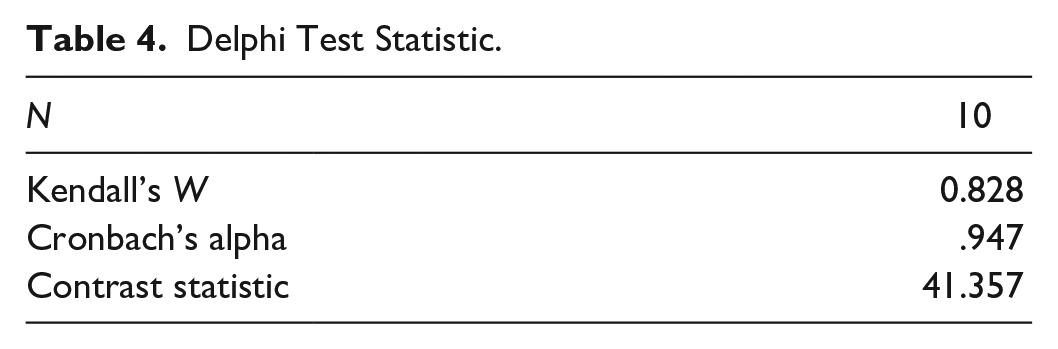
In order to verify the agreement in the judges’ answers, Kendall’s W test is performed as an agreement coefficient for ordinal data, based on the degree of variance of the sum of the ranks obtained from the different judges. A Kendall’s W of 0.828 is estimated for the results of the third round of the expert consultation, which represents a significant level of agreement in the ranks assigned by the consulted jurors. Similarly, a Cronbach’s alpha of .947 is calculated for the third round of the expert panel, which is interpreted as a high level of reliability of the panel’s responses (Table 4).
Delphi Test Statistic.
After the validation of the instrument with the previously described criteria and applied to the sample, the qualitative data of each item is obtained and structured in tables (Table 5) that allow the comparison and counting of the productions involved in the research.
Advertising Dimension of Spanish YouTubers.

Note. Data obtained in January 15, 2020.
Data Analysis
Once the analysis sheet is constructed and validated, each of the influencers’ five most popular videos (40 videos in total) are extracted. The videos are downloaded to the computers of the three authors of this research—who also serve as coders—with all analysts sharing Spanish as their native language, having prior training on the indicators and dimensions of the analysis tool so that all studies are homogeneous and consistent. The analyses were conducted from December 15, 2019, to January 18, 2020, from Ecuador and Spain.
The interactivity variable is eminently quantitative and was measured by counting the number of likes, the number of comments, the number of times the content had been shared, the number of reproductions, and the number of subscribers to the channel. This information appears in the statistics of each video and YouTube channel.
The following variables (content, images characters, advertising, and production) were analyzed with the video analysis tool of the NVivo v.11 software. For this purpose, a transcription of the linguistic content of each video was made, as well as the hermeneutic classification of each indicator of the analysis sheet (see Table 3).
Research Context
As this is a multiple case study, in which a phenomenon is investigated in two distinctive contexts, where the boundaries between the phenomenon and the context are not shown precisely and in which multiple sources of information are used (Yin, 1993, 1994, 1998), it is necessary to understand that the exploratory approach of this research depends precisely on the understanding that both contexts, despite sharing a common language and some cultural aspects, are dissimilar in terms of Internet access, content consumption habits, and economy (Yin, 1993, 1994, 1998).
In Spain, the National Statistics Institute [Instituto Nacional de Estadística] noted that by 2018, 86.4% of Spanish households had access to the Internet, compared with 83.4% the previous year. The population aged 16 to 74 years old accounted for 81.6% of the total number of regular Internet users, with browsing activities including searching for goods and services (84%), e-mail (80.2%), and viewing video content and places to share (75.8%) (Instituto Nacional de Estadstica [INE], 2018).
The reality of Spain and the EU-28 is very different from the Ecuadorian case. According to the multipurpose ICT-2018 survey, Internet access in Ecuador’s households is 37.2%, the same as in 2017. Of the population between 15 and 45 years of age, 55.9% use the Internet regularly, 95.3% use search engines, 35.1% use e-mails and websites, and 58.5% use social networks (Ministerio de Telecomunicaciones y de la Sociedad de la Información, 2019).
In order to justify the growing impact that YouTube has as a social platform in the world, a linear regression 2013 to 2019 of the leading social networks by active users is carried out, data that was obtained from We Are Social Digital Report (2013), demonstrating that Facebook is the social network with the highest number of active users, positioning YouTube in second place (Figure 1).

Linear regression of the main social networks by active users.
In the economic sphere, Ecuador and Spain are also very different, and this is precisely one of the characteristics that make the multiple case study interesting. Spain is the 14th largest economy in the world, while Ecuador is the 61st by GDP volume for 2020 (World Bank, 2021). Spain’s GDP per capita for 2020 amounted to US$ 28,736.68, while in Ecuador, it is US$ 6,783.26, a disparity also explained by the minimum wage that stood for 2020 in Spain at US$ 1,152.38, while in Ecuador it barely reached US$ 400.00.
Results
Interactivity
Aida Doménech is the YouTuber with the highest number of subscribers in Spain, while Cristina Huera is in Ecuador, the latter surpassing the Spanish YouTubers under analysis by three million followers.
In this sense, the Ecuadorian Cristina Huera is the one who generates more interactivity by the number of comments and likes average of the last five videos posted on her channel until August 15, 2019, when the quantitative data of this study is obtained, followed by the Spanish Aida Domenech (second), Inma Serrano (third); Grace Villareal (fourth); and the other influencers whose scope ranges between 20,000 likes.
Content
From the previous evidence, when carrying out a content analysis focused on the fashion theme in the productions of the YouTubers regarding the use of crutches, it is observed that Aida Doménech and Grace Villareal (Spanish YouTubers) frequently use the words “flipar” [Wao!] and “vale” [OK!]. Marta Riumbau, on the other hand, uses the expression “mucha ilusión” [a lot of illusion], and Aida Doménech mentions “hola preciosos” [hello precious ones]. The words they use are intended to position the channel and give it its own identity. Such is the case of Grace Villareal with the phrase “Happy sunny Flowers” and words in English that refer to fashion marketing.
To the previous generalizations, in the Spanish context, the original ideas stand out. Aida advises on fashion, beauty, style, and some ideas for enjoying free time. Marta Riumbau provides detailed recommendations to improve personal outfits, makeup tips, and behavior in social environments. Grace Villareal presents several sections in her channel, «Sunday Funday», with tips that can be applied daily under a family atmosphere. She also adapts video clips of famous singers, in which she is the protagonist, using her sympathy as an anchor point for her speech. Finally, Inma Serrano makes several contents in her channel: recycling, fashion tips, decoration, outfits, hairstyles, makeup, clothing, and lifestyle.
There is a similarity in the contents of Ecuadorian productions since it is frequent to use crutches and own phrases to transmit original ideas. In the case of Cristina Huera, we repeatedly hear the words “OK” and “muy rico” [very rich] when showing humoristic content. The video with the highest number of views is precisely one in which the YouTuber changes its look and uses words characteristic of fashion marketing, in addition to the phrase when saying goodbye: “Crister, yo a ustedes los amo” [Cristers, I love you], referring to her personal brand to position it and generate more followers. Something similar happens with Pavlova Charpentier, who starts with her greeting “Hola mis Pavlovers” [Hello my Pavlovers], “mis bebés” [my babies], “me encanta” [I love it], and “perfect.” In this sense, the one who stands out when talking about fashion is the Ecuadorian Maylin Rodriguez, because, in all her videos, she shows the latest trends in makeup, outfits, and beauty, using her own expressions like “miren qué espectáculo” [look at that show] and crutches like “I love it” and “piti” [no translation].
Advertising
Aida Domenech does not use brands in her discourse, while Marta Riumbau presents her personal brand Mush&Bombon. As she presents in her speech, different brands sponsor Grace Villareal, such as Hugo Boss and Zara. She also presents some gifts sent by sponsors. Finally, Inma Serrano refers to the brands by casualty as part of the content. As for the use of logos, there is little presence. Aida Doménech and Grace Villareal occasionally show promotions, although they present sponsors and brands such as Top Shop, Clues, Zara, Pull & Bear, and Desigual in specific sections to mention and recommend them (Table 5).
The presence of sponsors in social platforms affirms that brands did not allow themselves to be devastated by the revolution in economic models and business practices in the face of the arrival of globalization but slightly adapted to them through ICTs.
To achieve this balance, digital marketing plays an essential role since companies must rely not only on economic investment in advertising but also on the loyalty and business image of those in charge of the strategy and those who are part of it. In fact, van Riel and Balmer (1997) coined the term «corporate identity mix», which represents the self-representation of an organization developed in three aspects: behavior, diffusion, and symbolism, all focused on the current prosumer nested in social platforms.
In this sense, companies and commercial networks should efficiently articulate the image and positioning to build brand loyalty without neglecting the competition, managing to transfer knowledge of successful products through benchmarking (Mendoza, 2017).
Maylin Rodriguez stands out among Ecuadorian influencers because she has sponsors and supporters of recognized brands in the United States such as Forever21, Rockfeld, House of CB, Tobi, Evolve Maybelline, Tatcha, Kylie, and Mac. This is possible because she constantly travels outside of Ecuador. The productions are made in different scenarios but published on the Ecuadorian channel, which stands out in her audience because it generates confidence and empathy by carrying the name of Ecuador throughout the world (Table 6).
Advertising Dimension of Ecuadorian YouTubers.

Note. Data obtained in January 15, 2020.
Images and Production
The video editing indicator reflects similar results in Spanish productions because, in the videos, they use general shots, close-ups, and American shots. Grace Villarreal and Inma Serrano frequently use close-ups, and Marta Riumbau sporadically uses other shots in outdoor settings. Following the analysis of the parasocial theory by Ferchaud et al. (2018) to the most subscribed YouTube channels, mention that the camera angles in these productions are used to cultivate an interpersonal sense that is sometimes unilateral. The lighting in all of them is natural, without any production, although sometimes a dimmer light is used in the case of the first two.
Among the Ecuadorian influencers, Vanesa Calero “Vane” stands out, who uses lighting with warm filter tones and bi-close up in her recordings. In this line, Maylin Rodriguez considers playing with shots to expose the outfits and the camera movement for a better perception of the colors and textures of the outfits. The setting or scenery of the eight cases is done in the homes or places where they travel and recording in stores they visit (especially in the case of Grace Villarreal and Inma Serrano).
It is also observed that the images used by YouTubers in the videos, both in Spain and Ecuador, are generally still images with presentation covers and simple animations, not making use of special effects in the productions.
Spontaneity and naturalness
Considering parasocial interaction theory, we find latent self-revelation in YouTubers by stimulating a relationship that includes negative revelations of themselves to generate greater authenticity in the videos. For Ferchaud et al. (2018), in this sense, self-disclosure is key to developing relationships by sharing personal information.
Characters
In both contexts (Spain and Ecuador), the protagonists are the YouTubers, although the contents count on the occasional participation of friends or family as guests. In both geographical contexts, these collaborations mean that the videos are accepted when they meet challenges or when they need help on the screen to carry out a specific activity during the production of the audiovisual material.
Discussion and Conclusion
Both the fashion sector and the technology applied in the field have evolved, not only by updating tools but also in response to consumer needs. These changes have given rise to the emergence of new brand prescribers, who act as intermediaries for the firm and in a vitally important advertising channel with the capacity for segmentation, feedback, credibility, and influence.
This research identified, through mixed parameters, the most outstanding brand prescribers in Spain and Ecuador, who play the role of mediators between brands and stakeholders and execute non-conventional discursive advertising strategies on the platform. The factors that influence the success of these new narratives are based on entertainment and personalization (DeZoysa, 2002), which reduces the level of public irritation with advertising (Eighmey & McCord, 1998). For this reason, many advertisers bet on these formats to merge ads and entertainment, taking advantage of the «amateur» audiovisual productions and narratives of many of these influencers.
Concerning advertising personalization, Rao and Minakakis (2003) found that customers were more accommodating in ads when personalized and relevant to their lifestyle, with this influence being widely linked to consumers’ hedonic needs (Rodgers & Thorson, 2000). Not surprisingly, the number of advertisers posting videos has grown by 40% each year, and advertising investment by companies has increased by 60%. With these statements, the identification of brands, logos, sponsors, or patrons in the YouTubers speech was a valuable resource to analyze (Castillo-Abdul et al., 2019).
Furthermore, the authority that an influencer has in the consumer’s purchase decision is affirmed, based on the imitation of the figure of the one he admires, in addition to feeling identified with the personality of the celebrity, especially in the young audience, because they are considered to be at the age of identity formation (Lópes et al., 2020).
On the other hand, the fact that the videos with the highest number of plays have humor themes can support the conclusion that those who lead the percentages of use of technologies are the adolescents (NSF, 2018) since they are the ones which overlap the use of the Internet because they find in it an entertainment resource in their leisure hours, leaving the strategic content of the brands in a superficial level. In effect, as it is demonstrated in this research, the influence of the YouTubers in Spain as well as in Ecuador lies in the symbolic closeness with their followers, either by the empathy they show in each of the productions through communicative resources such as the license of humor or by the discourse they use, that is to say, by how they reach their followers with their message (see Table 7).
Contrast Analysis.
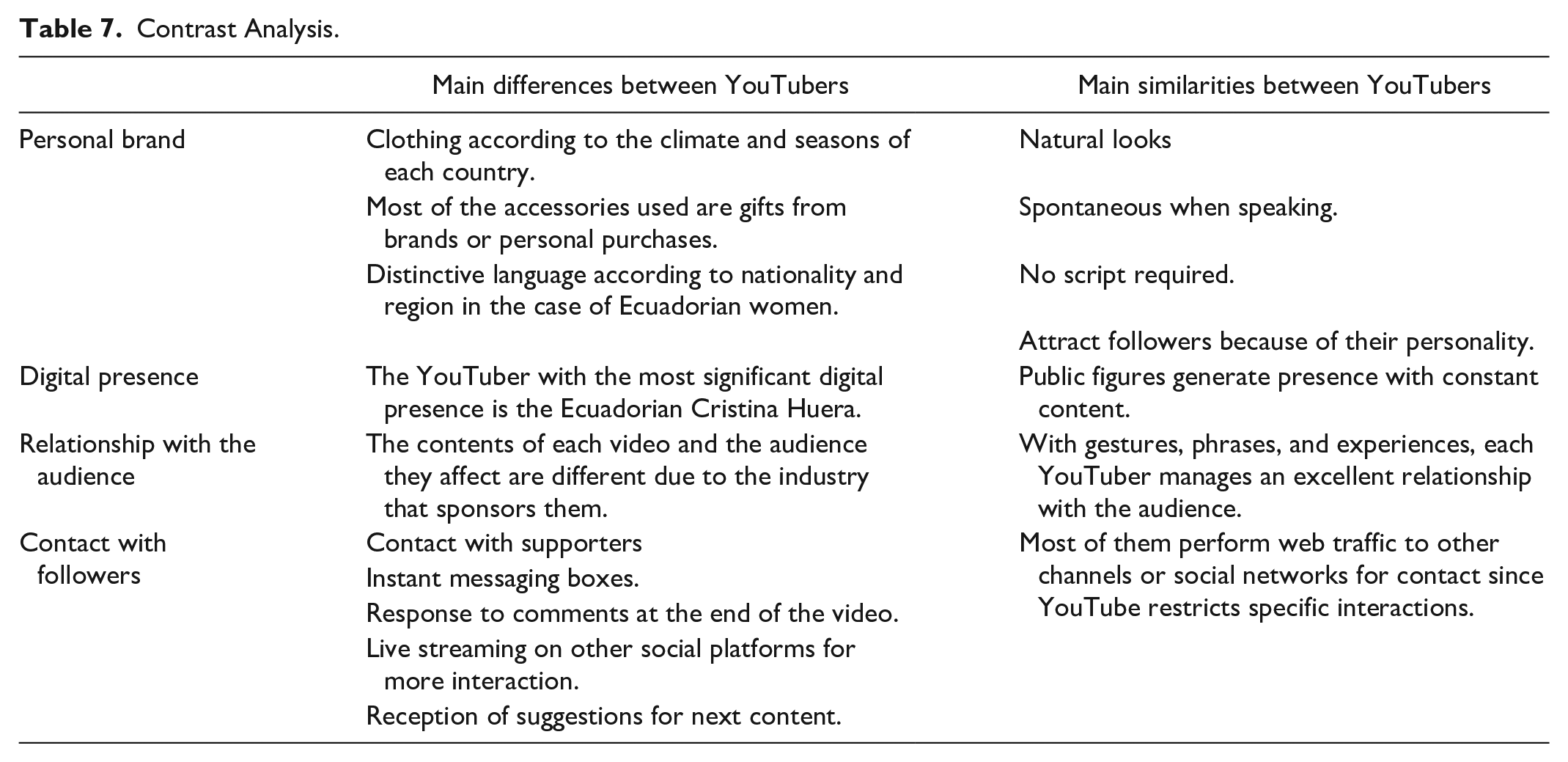
With Table 7, and the information obtained from the visualization of innovative and creative videos that capture the followers’ attention, to strengthen the trust in the brands’ products with which they collaborate, the YouTubers generate transparency and trust with the users.
It is worth noting that the tactics used by the influencers analyzed do not differ much between the two countries, as they somehow standardize their discourse and staging concerning the global trend and style of fashion influencers, especially those who transmit the haul and unboxing genre. Not only the forms of expression but also the structure and content of the videos follow standardized parameters, with catch-phrases, soundbites, and amateur editing, in which regionalisms are abandoned for a more transnational culture, perhaps because of the breadth and geographic diversity of the audiences on the platforms.
An essential characteristic possessed by the influencers in the study is socializing and communicating a message or promotion and increasing followers. Another of the traits that the audience appreciates is their similarity; because they identify with them, they seek to feel that their lives are not different from theirs.
Therefore, they consider it an excellent option to avoid advertising because it is invasive to the target audience and gives more attention to sponsorship through its narrative in a graphic, native or intentional way.
Welbourne and Grant (2016) consider that a YouTuber using a faster speech achieves to convince and attract attention, while using a slower level increases understanding, affecting the time and rate of delivery of the videos to increase visits.
This research has shown the success of the commercial strategy of fashion brands that use the recommendations of YouTubers to gain proximity to their consumers. Although the opinion of friends or family has traditionally been recognized as one of the factors of influence in the consumer’s purchase process, with technological progress, fashion prescribers are emerging as an effective means to achieve sales and even customer loyalty.
Of course, even though using influencers is on the rise, brands are considered to be putting resources at risk by adopting them. There are videos or images analyzed where logos, isotypes, isologues, and imagotypes go unnoticed (Mañas-Viniegra et al., 2020), except when they are explicitly shown in close-ups or when a call for direct buying action is made.
The research has also led to the conclusion that the productions on YouTube are assimilated to the strategy of fashion films by sharing objectives, originating a new advertising genre that invades the fashion sector, showing a new vision of clothing and accessories that tell stories (storytelling) or experiences and at the same time adhere by their content to the public. Besides, it finds the indisputable difference in the level of production, which implies each one, on the one hand, a careful production versus a natural and spontaneous one.
In this sense, the advertising broadcasted in the productions by the YouTubers allows to emphasize that the Spanish influencer Grace Villareal has recognition by distinguished companies of the fashion sector that make use of the previously mentioned resources, followed by Aida Doménech, who presents the logos of the products to which she refers in her audiovisual productions in an informal way, focusing mainly on her personal brand as Marta Riumbau does; while in Ecuador Maylin Rodríguez is the pioneer in this type of advertising.
In short, after the analysis carried out, it can be concluded that the impact of the YouTubers comes both from the closeness created by them in their discourse and from the original ideas of useful content for the female audience.
The limitations found in the research have been the scarcity of previous studies that proposed a methodology for analyzing the discourse from the perspective of influencers in the women’s fashion sector.
For future lines of research, it is important to consider extending the study and evaluate the presence of influencers in other social networks to impact consumers, as is the case of TikTok.
Footnotes
Declaration of Conflicting Interests
The author(s) declared no potential conflicts of interest with respect to the research, authorship, and/or publication of this article.
Funding
The author(s) disclosed receipt of the following financial support for the research, authorship, and/or publication of this article: This study is supported by the R+D+I Project (2019-2021), entitled “Youtubers and Instagrammers: Media competence in emerging prosumers” under code RTI2018-093303-B-I00, financed by the Spanish Ministry of Science, Innovation and Universities and the European Regional Development Fund (ERDF) and the R+D+I project (2020-2022) entitled “Instagramers and youtubers for the transmedia empowerment of the Andalusian citizenry. Media literacy of the instatubers”, with code P18-RT-756, financed by the Government of Andalusia, in the 2018 call for tenders (Andalusian Plan for Research, Development and Innovation, 2020) and the European Regional Development Fund (ERDF). This work is conducted within the framework of ‘Alfamed’ (Euro-American Network of Researchers), with the support of the R+D Project “YouTubers and Instagrammers: Media competence in emerging prosumers” (RTI2018-093303-B-I00), financed by the State Research Agency of the Spanish Ministry of Science, Innovation and Universities and the European Regional Development Fund (ERDF).
This work is conducted within the framework of ‘Alfamed’ (Euro-American Network of Researchers), with the support of the R+D Project “YouTubers and Instagrammers: Media competence in emerging prosumers” (RTI2018-093303-B-I00), financed by the State Research Agency of the Spanish Ministry of Science, Innovation and Universities and the European Regional Development Fund (ERDF).
