




Abstract
The global trend of rapid urbanization raises concerning issues related to the living standards of the urban poor, many of whom live in dense informal settlements. Residents of informal urban settlements can face significant insecurity, with men and women experiencing different threats. While space and socioeconomic status have specific consequences on the hazard of violence that urban residents face, gender modifies the impact of that violence. In an attempt to understand the drivers of insecurity within a social ecological framework, this study investigated underdeveloped neighborhoods in Addis Ababa, Ethiopia; Dhaka, Bangladesh; and Port-au-Prince, Haiti. The qualitative approach employed focus group discussions using various probing techniques and key informant interviews followed by a thematic analysis of the data. The direct quotes and experiences of young and older women compared to those of young and older men highlight how the combination of factors - gender and poverty - drive differential risk for women compared to men among the urban poor in these cities.
Background
The percentage of the world’s population living in cities is predicted to reach almost 70 percent by 2050 (United Nations Department of Economic and Social Affairs, 2018). With this trend of rapid urbanization comes concerning issues related to the living standards of the urban poor, many of whom live in dense informal settlements with extremely limited access to basic services. Residents of these communities are particularly vulnerable to violence and experience insecurity on a routine basis. Urban violence is seen as a norm and result of the development process, including the conflict of economic growth and concentration of people in cities, with nuances in the variations and manifestations of violence requiring innovative responses (Moser & McIlwaine, 2014). Residents of informal urban settlements can face significant insecurity, with men characteristically experiencing more lethal violence, while women and girls experience higher rates of sexual violence (Amnesty International, 2008; Feuerschütz & Salahub, 2013; Taylor, 2011; World Bank, 2010). Further, women are more likely to report feeling unsafe or be fearful (Feuerschütz & Salahub, 2013; Riger & Gordon, 1983; Rivas, 2010). This is largely informed by the two main types of violence women and girls experience in urban settings: sexual harassment and sexual assault (Women in Cities International, 2015).
The intersection of urbanization and gender has been examined through a number of vantage points. These treatments have often interrogated the right to the city that women and girls have. Authors have pointed out the underlying cultural norms that may persist in cities - and the inherent patriarchy that shapes those norms - impacts how inclusive the city actually is for women (Fenster, 2005). Similar critiques have noted the significant contributions that women make to urban prosperity while unequal distribution of the benefits of urban life and economic growth disadvantages women (Chant, 2013). More concretely, analyses have pointed out that cities provide many avenues for women’s empowerment, however, the livelihoods they occupy and living in urban poverty results in exposure to violence (McIlwaine, 2013). Simply navigating urban landscapes can present logistical challenges that make the built environment unsafe and unsettling for women and girls (Plan International, 2013). In response to the investigations above and the reflections noted here, multiple efforts at both programmatic and policy levels are aimed at addressing these issues. As a result of these perspectives, further work to characterize the violence women and girls face in urban environments has been undertaken (Chant et al., 2017; Taylor, 2011; Travers et al., 2012; UN Women, 2017).
Gender-based violence (GBV) mostly affects women and girls and presents a pressing health and human rights concern (Abrahams et al., 2014; UNFPA, 2009). Accordingly, most studies on GBV focus exclusively on women and draw lessons about the inequality they face that leads to violence (Hughe et al., 2016). But GBV can refer to violence against men and boys as well. This study’s conceptualization of GBV is defined as violence directed at an individual based on gender norms, biological sex, and/or gender identity, and is inclusive of all people (Carpenter, 2006; ; UNHCR, 2019; UNHCR, 2019; USAID, n.d.).
Additionally, one must be able to tease out the violence driven by other forms of inequality, specifically income and economic inequality relevant to urban poor populations living in informal settlements, that can itself drive violence against women and girls (Standing et al., 2016). Gender becomes an exacerbating driver of violence against women and girls specifically in poorly developed urban areas due to the stress induced from poverty that can highlight gender inequality (Hindin & Adair, 2002). Similarly, while space and socioeconomic status have specific consequences on the hazard of violence that urban residents face, gender modifies the impact of that violence (Rodríguez et al., 2014).
This study seeks to add to the growing evidence base on violence among residents of rapidly growing cities, focusing specifically on the very poor in urban informal settlements and the drivers of insecurity inclusive of both men and women to draw out subtle, yet important, insights. Often investigations and the resulting analyses only focus on one gender. While the violence against women and girls is a significant concern in cities, an inclusive gender lens allows another approach to discern how each gender experiences insecurity in growing urban informal settlements and compare the two.
In order to gain a comparative perspective across settings epitomizing the issues concomitant with rapid urbanization, this study investigated underdeveloped neighborhoods in three cities on three different continents: Addis Ababa in Ethiopia, Dhaka in Bangladesh, and Port-au-Prince in Haiti. While much has been written about women and girls’ vulnerability within these communities and others like them, this study examines the drivers of violence in this context through the social ecological model. This enables the authors to holistically explore the intersection of gender and poverty as a driver of insecurity across the multiple contextual levels of these communities.
Methods
Participant Selection and Recruitment
A two-stage process was employed to recruit Focus Group participants. First, Concern Worldwide, the operational NGO partner and funder, identified appropriate communities representative of the target study population in each city. These communities have long-standing relationships with Concern Worldwide, ensuring that participants would feel comfortable participating in the study. The local operational partner recruited a convenience sample of community members during the second stage using an IRB-approved recruitment letter in the relevant local language. Inclusion criteria were any person residing within selected communities who was above the age of 18 years. Individuals who were living in a non-selected community, under the age of 18 years, or unable to consent were not eligible for participation in the study. One participant who showed high levels of engagement during each focus group was identified and invited for a in-depth interview. A total of 110 community members participated in the focus groups discussions. Demographics of the focus group participants are displayed in Table 1, organized by city.
Demographics of Focus Groups Participants (by City).

Key informants were identified using pre-selected categories, such as community leaders, journalists, and community healthcare workers, and recruited by the local operational partner. They were consented using an IRB-approved recruitment letter and oral consent script. A total of 13 key informants participated in interviews. Table 2 details the categories of key informants interviewed in each city.
Types of Key Informants Interviewed (by City).

Study Sites
Data collection took place in informal settlements of Port-au-Prince, Haiti; Dhaka, Bangladesh; and Addis Ababa, Ethiopia. In collaboration with the NGO partner Concern Worldwide, study sites were selected based on communities where Concern Worldwide has established and integrated longstanding programs among the urban poor. By collecting data from three cities in distinct sociocultural contexts, we were able to recognize different and common factors impacting communities’ experiences of GBV.
In 2020, 21.7 percent of Ethiopia’s population was urban, with 64.3 percent of the urban population living in slums (World Bank, 2021a, 2021b). Ethiopia’s capital, Addis Ababa, was estimated to have among the highest proportion of people residing in informal settlements in the world, with as many as 80 percent of Ethiopia’s urban population living in these settlements nationwide (UN Habitat, 2007). Limited data exists on GBV in Addis Ababa, but country-wide estimates suggest that life-time prevalence of violence against women is between 28 percent (UN Women, 2016) and 46.93 percent (Kassa & Abajobir, 2018).
Recent estimates suggest that more than half of Haiti’s population (57.1%) is urban (World Bank, 2021a, 2021b). With the highest proportion in the Caribbean, 74 percent of Haiti’s urban population lives in slums (UN Habitat, 2016). In Haiti’s capital, a majority of Port-au-Prince’s approximate three million inhabitants - 2.2 million people - live in slums and struggle with the issues of a rapidly growing city - lack of basic services, urban violence, and vulnerability to natural disasters (D’Informatique IHDSE, 2015; McNairy et al., 2019). While GBV existed as a problem before the devastating earthquake in 2010, it became increasingly prevalent after the natural disaster; sexual assault increased by nearly three-fold after more than one million people were forced to move into temporary camps (Gabriel et al., 2016).
Finally, 38.2 percent of Bangladesh’s population is urban, with 47.2 percent of the urban population living in slums (World Bank, 2021a, 2021b). Many of them reside in Dhaka, the densely populated capital city, where violence against women and girls is a significant issue (World Bank, 2021; Independent Chief Inspector of Borders and Immigration (UK), 2018).
Interview Methods
Focus Group Discussions
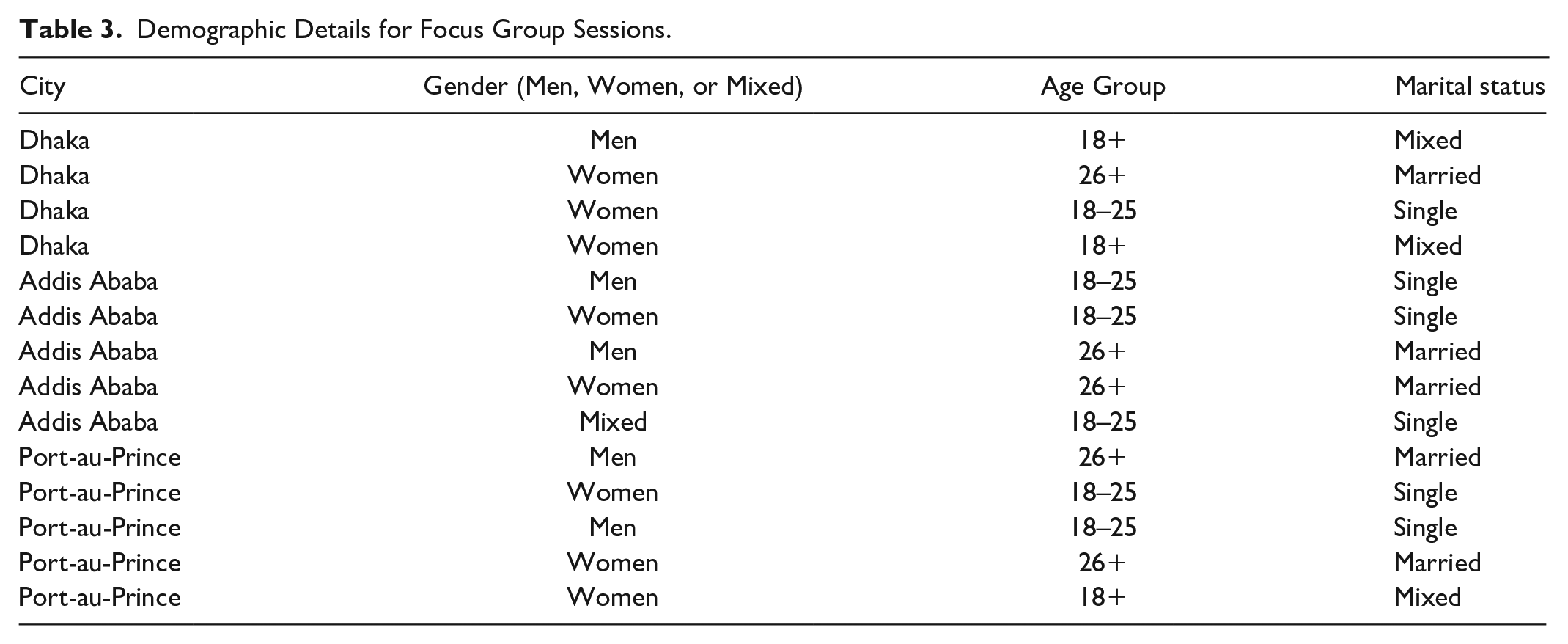
Focus groups were designed around a mix of demographic characteristics, including age (18-25 years or 26+ years), gender (men alone, women alone, or mixed gender), and marital status (single or married). The sessions are presented in Table 3. Twenty-five years of age was used to distinguish between age tiers as this represented a natural transition point out of young adulthood for men and women, particularly for women as they were expected to be married by this age in these communities. Four focus groups were conducted in Dhaka, and five were conducted in both Addis Ababa and Port-au-Prince. One mixed-gender session was conducted in Ethiopia with young, single community members. One mixed-marital status session was conducted in Haiti with women.
Demographic Details for Focus Group Sessions.
A variety of approaches were used to probe the ways in which participants perceived their neighborhoods, and to understand how they assess and mitigate risk while moving around the city. Listing exercises had participants identify places of violence and insecurity, and then rank them based on how concerned they felt and the impact of their concern. During the map analysis exercise, participants color-coded areas of relative safety and high risk on a printed map of their city. For conceptual mapping, participants drew their community or neighborhood on a blank canvas, including locations, people, and activities. All of the methods were accompanied with dialogue so that participants could elaborate on their work while interacting with each other and members of the research team. Through these techniques, participants identified important places within their realm of mobility, the fears and risks they face while moving from one location to another, and how they try to mitigate those risks. Finally, the moderator asked broad questions rather than asking explicitly about personal experiences; participants only shared personal experiences if they chose to and felt comfortable doing so.
Key Informant Interviews
In order to gain more detailed insight into specific issues around the prevalence and effects of GBV in each community, key informants from across key sectors were interviewed. Interviews were conducted using a semi-structured guide, and held in a private location familiar to the interviewee.
Data Collection
Data collection occurred between August-December 2017. Data collection was conducted in each location by two members of the research team; for each interview session, one served as the moderator and the other was a note taker. Focus group discussions were facilitated by two local translators; they also participated in the key informant and in-depth interviews as needed. Interviews were conducted in the participant-preferred language. Translation and transcription was done in real time.
All study participants received a copy of the consent script in the appropriate language; a translator also read it aloud at the beginning of each interview session. Time was provided before each interview began for participants to ask any questions regarding the study. Further, they were informed that they could remove themselves at any point from the study. Interviews took place in a secluded, private space. Sessions were audio recorded if all participants consented to this. Only members of the research team had access to the audio files, which were saved to a password-protected online database. No personal identifiable information was collected.
Data Analysis
The research team conducted a thematic analysis. Three members of the research team developed a codebook through an iterative and collaborative process. First, members were assigned a set of transcripts to review, with each transcript being read by two people. Each team member then drafted a codebook based on the transcripts they reviewed with clearly defined parent and child codes. The three team members then reviewed and discussed their respective codebooks as a group in order to create a final document to apply to all of the transcripts. A single codebook was developed and applied to all of them transcripts, regardless of the location or gender of the participants, since the study considered the research question through a gender-inclusive and global lens. Additionally, the codebook was based only on the transcripts; the visual material was not included due to issues with comparability across study sites. Two researchers coded all transcripts using Dedoose, version 7, SocioCultural Research Consultants, Manhattan Beach, CA, USA. The coded data was then analyzed and sorted into relevant themes, some of which are presented here.
Ethical Approval
Solutions IRB granted ethical approval of the study and all related recruitment and consent documents (Protocol #2017/10/9). Community advisory boards also granted approval in Dhaka and Addis Ababa; the NGO partner team in Port-au-Prince deemed this was unnecessary.
Results
This section will first present the drivers of violence within these cities followed by examples of how these drivers manifest in the day-to-day lives of community members. Table 4 summarizes themes presented here with supporting quotes.
Summary of Major Themes With Supporting Quotes Across Cities.

Sources of Insecurity
The drivers of violence and insecurity are visualized across multiple levels of the social ecological model in Figure 1. The sources of insecurity, as described by participants, generally fit into three categories: economic status across all four levels; gender roles and norms at the individual, interpersonal, and community/social levels; and government structures at the structural/institutional level. One consistent finding across these three categories was that hierarchies of power place people living in informal settlements, in particular women, at greater risk of violence because they have fewer means and ways to respond to perpetrators – both wealthier city residents and men.

Drivers of violence and insecurity in urban slums across the social ecological model.
Economic Status
In each city, economic dynamics are drivers of violence as well as inform informal settlement residents’ vulnerability to violence. Money was frequently identified as a major factor determining how participants travel and where they could go, particularly for women. In Bangladesh, most of the women said that they choose to walk to the places they visit because the cost of public transportation is prohibitive, increasing the total travel time and their exposure to potential danger. Similarly, young Ethiopian women said that the safest mode of transportation, which are the new yellow taxis regulated by the government, is also the most expensive. They often must weigh the cost of transportation against their own safety, especially when traveling at night.
Similarly, socioeconomic status can dictate livelihood opportunities, some of which place individuals at greater risk of violence or harassment. Women who work in other people’s homes, such as maids in Dhaka, face harassment and assault in these private spaces and have limited leverage to protect themselves given their dire need for income and limited access to systems of redress. Similarly, individuals who work as street vendors, especially in neighborhoods with limited police presence, are vulnerable to robbery and abuse. As one married Bangladeshi man who works as a food vendor described, “We are poor. If I had a lot of money I could start a business nearby and feel safe. If I have money, I can stay nearby and avoid all of the unsafe stuff.” Another man in the same focus group reinforced this feeling, saying “Because I am poor, it doesn’t matter if it is unsafe or safe. I have to go to earn my bread. I have to go whether it’s safe or unsafe.”
Community members also identified unemployment, specifically that of young men, as a significant source of neighborhood insecurity and in their cities overall. They describe these young men as idle, often drinking alcohol or using drugs, resulting in them harassing women passing by and inciting fights with one another. A young Ethiopian woman described what she experiences in her city, saying “Sometimes they [men] don’t have work. They just stand in the corner in a group, just laughing and talking. And when the women walk through, they are teasing and touching. It’s normal touching in the street, in the taxi.” Older men in Ethiopia also tied this issue of unemployment and security concerns to rural-to-urban migration; they felt that some of the individuals responsible for increased levels of insecurity in their neighborhoods are those who come to the city looking for work and are disappointed and stranded when they cannot find any. In both Haiti and Ethiopia, participants suggested that job creation would reduce the safety issues because these individuals would then be busy, and therefore less likely to use drugs and/or become involved in organized crime.
In other cases, “the impact of economic status on vulnerability speaks to the broader issue of people in power being able to abuse those without power” (Patel et al., 2017, p. 10). A man in Dhaka explained how his customers can abuse him because he belongs to a lower class; he said, “I witnessed a rickshaw puller was asking for more money, and the passenger was hitting the rickshaw puller. I am a rickshaw puller, so I am lower level.” In Ethiopia and Haiti, several participants spoke about state actors, including the police and politicians, taking advantage of these cities’ poorest residents. In Bangladesh, this meant that wealthy people are able to abuse the poor because the latter are unable to challenge them, particularly against sexual assault of women and girls; the former can bribe the police if a case is brought against them.
Gender Norms and Roles
The culture and norms that surround gender in all three study cities had a significant impact on the level of daily baseline harassment that women and girls face from men and in some cases boys. Female respondents in Dhaka also reported occasions of abuse by women in the setting of employment inside private residence, however, this seemed to reflect abuse based exploitation of labor rather than gender and is mixed with norms surrounding class and relationships between employers and employees.
There was a sense of normalized male aggression and even entitlement to women’s bodies at various levels of severity, which means that women and girls are vulnerable to harassment and violence in all spaces and at all times of the day. One woman in Dhaka described the mentality of men, “They think, ‘I am a male, I have a right to harass a girl. She is a woman, she is a girl, she is a lady. She doesn’t have any other choice.’” This was exemplified through various acts from pulling at their clothes all the way up to groping and assault. The overarching sense of male entitlement was almost as if women’s and girls’ bodies are not their own regardless of how they behave or dress and that they can do nothing to stop the harassment. One young Ethiopian woman noted:
“It is normal, it is a usual activity – touching the women here. . . It’s not because you are laughing or serious, or dressing well or not. It’s just because you are a woman. They are assaulting you and teasing you and harassing you. Because you are a woman, they think you are weak.”
There was also a complexity to how people explained “appropriate” vs “inappropriate” behavior by men towards women, and justified men’s behavior in often contradictory language. In Addis Ababa, for example, an older man described some verbal and even mild physical harassment as “proper,” while more violent attacks were not. Another male interviewee in Haiti, who had been educated on GBV by a local NGO, described courting women with respect, but also suggested that some women may be rightfully abused because they do not “correctly respond” to a man’s advances.
These norms are not only internalized by men, but women as well. One female healthcare provider in Dhaka stated,
“Some people blame the girls, that they didn’t behave proper. I don’t agree with this. Because we don’t wear clothes like in movies, we wear good dresses. It is in their [society’s] mentality, though, that it is the girls who did not dress proper.”
This comment reflects the same contradictory beliefs that lay some blame with men but also with women if they do not dress appropriately.
The specific roles that women play in their families and communities also places them in harm’s way because they often are required to take more trips and travel longer distances from home. In both Port-au-Prince and Addis Ababa, women’s roles in going to the market for food and other household items made them targets for theft because others know they likely carry money for shopping, and generally for “proper” harassment just for stepping outside the relative safety of their homes. In all three study cities, the role of caregiving by women – escorting children to and from school, bringing elderly family members to and from clinics, and assisting other family households with domestic work – demands more travel outside the home and immediate community.
Government Structures
The role government and authority can play in the security of informal settlements came through interviews on issues of infrastructure, maintenance, and services. For the latter, participants offered mixed reviews of police as agents of safety as well as perpetuating violence. Women in Dhaka felt that police presence can be a deterrent for harassment and crime they face. In Addis Ababa, some older men described the cooperation among the community and police in addressing security issues as a positive dynamic.
Yet many men, especially young men, described police as corrupt and self-serving. In Addis Ababa, young men described police who abused their authority by beating civilians as a show of dominance. In Port-au-Prince, young men described being targeted by police for simply being from informal settlements or neighborhoods known for violence. They further noted that various political factions within Haiti use police violence as a political tool against those with opposing political views and align themselves with armed groups to acquire or maintain power, which contributes to the violence and insecurity they face. As one community leader said, “The key people in the government who would be able to solve the problem are part of the problem because some of them are feeding the guns [into the community].”
With regards to the physical structure of their neighborhoods and cities, participants in all three cities highlighted the government’s failure to develop adequate infrastructure as a source of insecurity and vulnerability, citing poor lighting, limited public transportation, and limited access to public services such as toilets. As a young woman in Dhaka described,
“In the informal settlements there are only 3-4 public toilets. They have to pay 5-10 taka and there is a long queue and they have to wait. Sometimes males are trying to observe them, why they are making so late in the bathroom, what they are doing. Sometimes they have to go to the pond; the water is not clear. They cannot afford sanitary napkins, so they have to use old clothes and wash them in the pond. So men go and tease them there, so this is a difficult moment for them there.”
In Addis Ababa, lack of sufficient, affordable, and safe means of transportation was highlighted by the younger participants as a major safety concern impacting mobility in the city for everyone, but manifested in gender-specific ways. Men described conflict over limited seating and minimbuses during high traffic periods, while women described a wide range of harassment in public transportation options. Women and girls in Addis Ababa prefer safer yellow cabs but are often forced to use less safe private blue cabs and public buses given their scarcity. A young Ethiopian woman explained:
“Most of the blue cabs are private cars. When you take a ride by the blue cab, you don’t have any guarantee because it’s private. You don’t know where they will take you. . . We heard in the news that we are facing a problem with the blue cab. The men are being robbed for their money, but the women are raped. They take them to unknown places and rape them. . . It’s been a year since the yellow cabs came to Ethiopia. It’s difficult to get them. Their number is not as many as the blue cab. So you can find the blue cab everywhere, but not the yellow.”
Manifestations of Insecurity
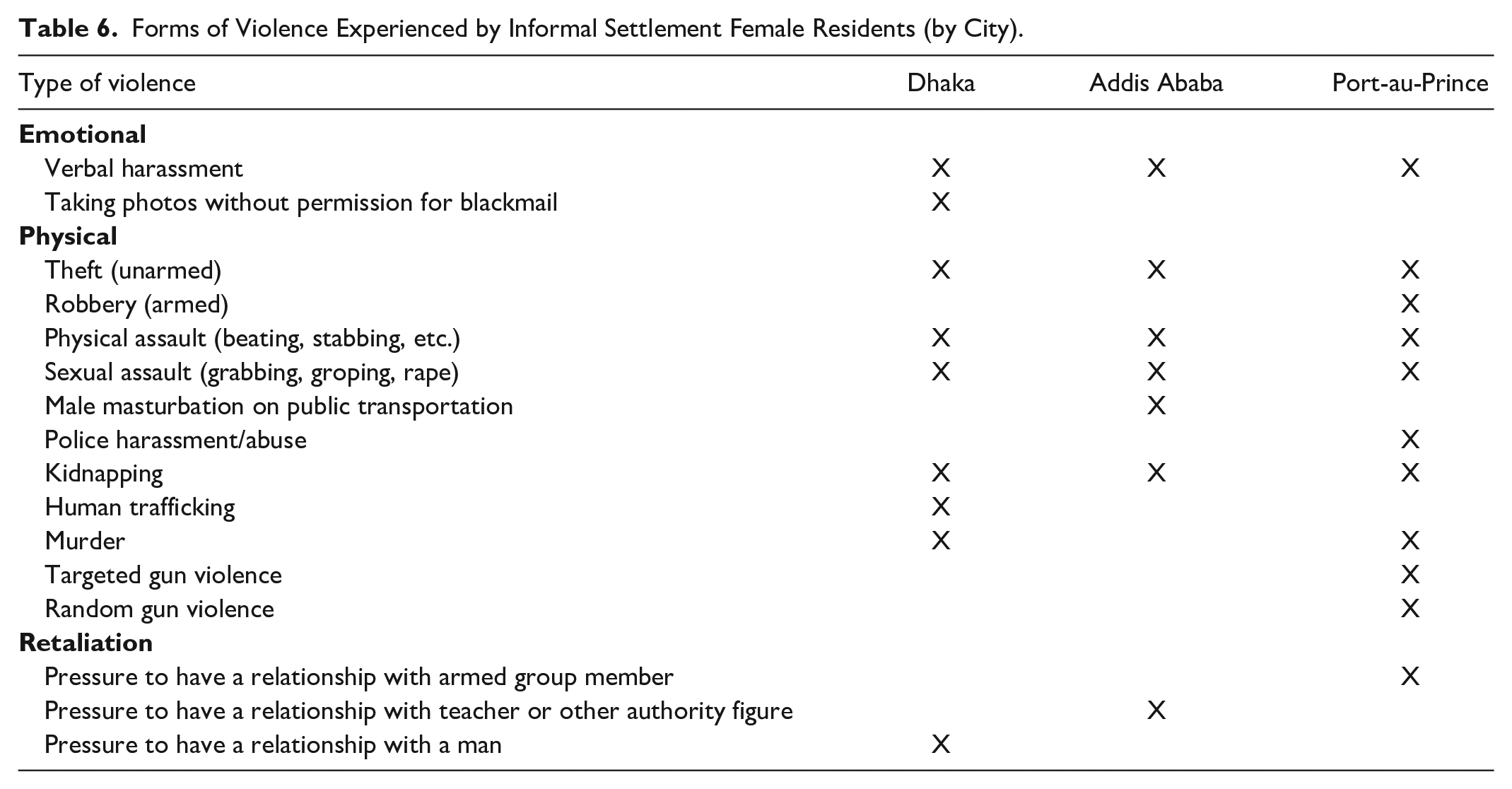
Based on these drivers, participants detailed a wide variety of types of violence they see or experience in their communities, many of which were repeated across cities. Tables 5 and 6 present the acts that make participants, separated by gender, feel unsafe. As can be seen by the differences in the number of rows included in each gender-specific table, participants named more forms of violence faced by women than by men, which highlights how gender more than poverty alone drives experiences of violence in these three cities. Further, these tables show how violence manifests differently for women and men across the three cities; there are multiple rows where only one or two cities are marked as reporting a type of violence, highlighting the importance of context.
Forms of Violence Experienced by Informal Settlement Male Residents (by City).
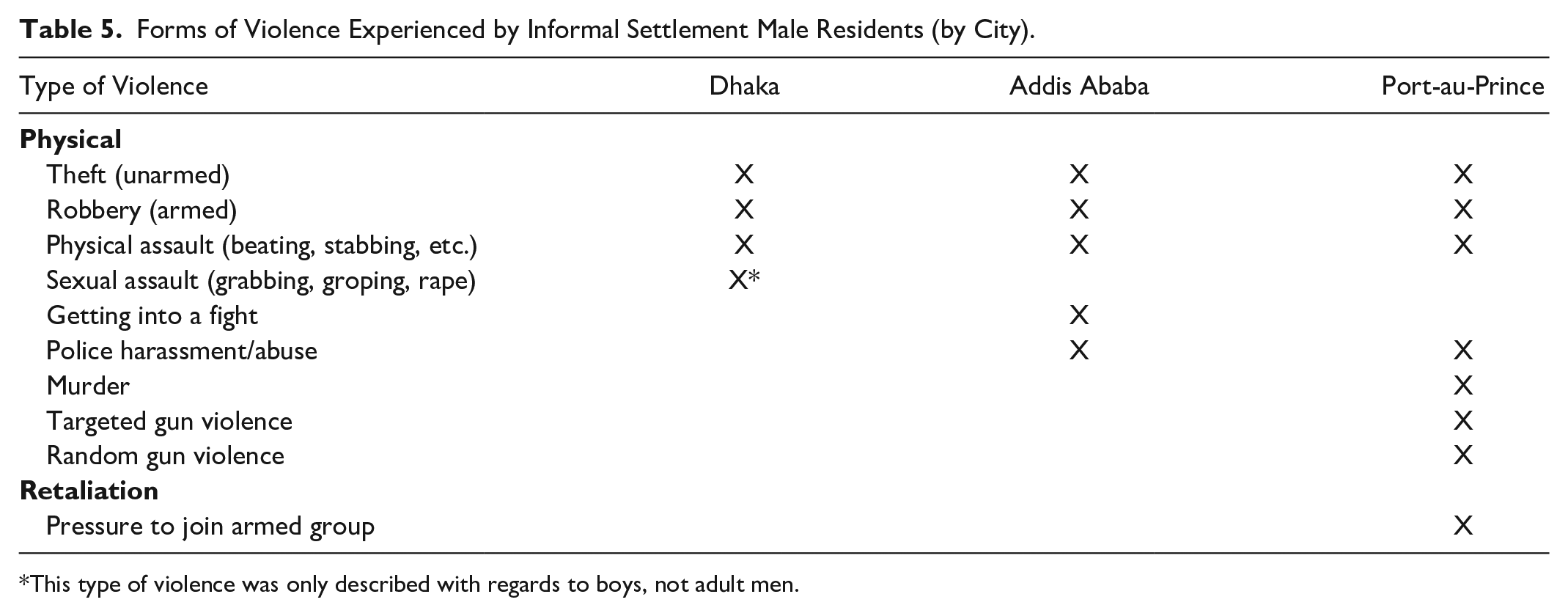
This type of violence was only described with regards to boys, not adult men.
Forms of Violence Experienced by Informal Settlement Female Residents (by City).
Emotional
The issue of emotional violence was unique to women and girls, and was without exception identified as being perpetrated by men and boys. Female participants said men and boys verbally harass them with rude statements in public spaces, while walking on the street, or while riding public transportation. This included comments on their appearance as well as propositions for sex. A young woman in Dhaka described the harassment she faces while walking to and from school and around the neighborhood in general. She said,
“[I am] going to school every day. [I] used to take public transport, so [I have faced] a lot of teasing, you know. Bad people are disturbing me - on the transport, in my neighborhood. Sometimes when I walk, bad guys are … teasing me, call me by my name.”
This highlights the findings around Gender Roles and Norms, where men’s perceived ownership over women’s bodies is both literal (i.e. physical) and emotional.
Physical
Participants detailed a variety of physical violence they experienced or observed in their communities, ranging from milder acts, such as unarmed theft, to severe acts, such as rape and murder. While all participants described having experienced the threat of physical assault, the circumstances differed across sites and genders.
Men predominantly faced random, opportunistic acts of violence, including armed robbery and fights, perpetrated both with and without weapons. For some, it seemed that experiencing or perpetrating violence was expected and considered normal for men, particularly young men. A young Ethiopian man said, “Of course we [men] face conflicts and problems in bars and other social gatherings, but we give it solution right there. If we fight then we will solve it right there.” Young women in Addis Ababa also spoke about how they and their families worry often when their brothers are out at night because of the fear that they are either hurt or hurting someone.
As noted under Government Structures, young men in both Addis Ababa and Port-au-Prince also described abuse by state actors, especially the police. In Port-au-Prince, it seems that police violence is largely random and the result of being in the wrong place at the wrong time. A young Haitian man shared a story of how he was assaulted by police in his neighborhood when he went out to purchase bread for his mother early in the morning simply for being out at the wrong time.
In contrast to the violence experienced by men and boys, women and girls reported being targeted with distinct types of physical violence based on their gender. A woman in Port-au-Prince noted the differences in the types of violence they experience; she said, “From my view point, more men are killed, but as for rape, harassment, unwanted touching? These things happen more to women.” Across sites, women and girls experienced vulnerability to violence in private and public places, leaving many female participants with limited, if any, settings they felt safe. While there was some discussion of beatings, women and girls largely discussed violence escalating from emotional abuse, like verbal harassment, to non-invasive assault, such as groping, to invasive assault, including rape.
Sexual abuse was almost exclusively discussed as a problem faced by women and girls, though two key informants in Dhaka mentioned that boys also experience this type of violence. Across sites, participants described different types of sexual assault, including coerced sex, random attacks in poorly lit isolated areas, abuse by family members within the home, and gang rape. A young woman in Dhaka explained the danger she faces living with her mother in a squatter area, which is where men will come to proposition sex from women. She said, “Men come at night and propose to have us go have sex. If I say no, they will beat me. So I cannot protest them because they will do more damage.”
Participants from all three sites reported that certain types of violence occur during different times of day, but that the level of violence escalates as day turns to night. An older man in Addis Ababa had particular concerns about the risks associated with women moving at night, saying, “As a parent, I may not send my children, my daughter, during the nighttime because she may face drunk people on the road and an assault [verbal or minimal touching] that we have said earlier that may grow into physical attack.”
Retaliation
The threat of retaliatory violence bears relevance to both emotional and physical violence and can link the progression from the former to the latter. Study participants reported that perpetrators use the fear of physical violence in order to manipulate their victim: if the mere threat of violence does not work, then physical violence may be employed. Male and female participants across study sites described their fears of retaliatory violence. This type of violence reinforces the findings from the Economic Status section, where people living in these communities have little or no power to protest abuse because of their weak social standing.
Men across cities reported ubiquitous acceptance of violence in many situations. In Dhaka, men reported that when threatened by armed robbers, they felt it was better to survive without money than to fight back and be killed. Similarly, some men in Port-au-Prince reported being pressured to join armed groups, and felt that it was better to submit to this coercion and take up weapons themselves than to be murdered for refusing. In Addis Ababa, one young man spoke about not helping friends or family if they were being targeted by state actors because of the threat they will then turn on him. He said, “Morally we don’t feel comfortable to keep quiet while seeing friends, neighbors, mistreated by anybody, including security officials, but you cannot involve yourself or help because if you do, you yourself will face similar disaster.”
Women at all three study sites reported that men used the threat of retaliation to coerce them into sexual acts. In Dhaka, women described that men and boys whose advances are rebuffed attempt to force women to have sex with them by taking their photograph and threatening to post it online, or threatening to assault their families or destroy their homes. A Bangladeshi woman said, “We don’t say anything [in response to the men] because sometimes if we do, they come with a lot of people, like a group of men together, and they harass us and hit us.” In Ethiopia, some women described similar situations, which guided how they respond to harassment in order to avoid violence in the future. One young woman said, “I don’t scream or push him. I just ask, ‘What do you want from me?’ If I insult him, he may revenge me the next day, so I don’t want to insult that man. Because I will pass that road the next day, so I don’t want any issue, so I talk to him properly.” Several young women in Addis Ababa also reported that some male teachers attempted to pressure female students into sexual relationships, threatening to fail them in their coursework if they refused. Women and girls in Port-au-Prince reported that armed men sometimes pressure women into relationships under the threat of being shot, raped, or murdered.
Discussion
This study examines the drivers of insecurity in rapidly growing cities as they exist across the levels of the social ecological model and the ways those drivers manifest into types of violence faced by informal settlement residents. The perspective employed goes beyond the typical understanding of violence and insecurity in cities and its link with poverty, informality, and underdevelopment.
The direct quotes and experiences of young and older women compared to those of young and older men highlight how the combination of factors - gender and poverty - drive differential risk for women among the urban poor in these cities. As others have noted, poverty is both a cause and consequence of violence experienced by women and girls in these communities (Amnesty International, 2009; United Nations Human Settlements Programme, 2003). Yet one cannot separate economic status from gender when considering the drivers of violence in the context of these three urban communities. This research illuminates the ways in which gender and economic status intersect in inextricable ways to drive vulnerability to violence, and must be considered collectively rather than partitioned. In fact, the data hint at future lines of research to understand how other identities inform an individual’s experience with insecurity, including religion, age, marital status, and occupation.
The specific types of violence and where they occur found in these study sites mirror findings in other growing cities. Women and girls tend to face a wider range of violence than men, confronting insecurity in almost all arenas of their daily lives because harassment and physical violence happens in both private and public spaces, during the day and at night (Jagori, 2011). They face threats and experience violence when accessing public transportation (Anwar et al., 2016; Jagori, 2010, 2011; Nakafeero, 2016; Nandy, 2016; Sangiuliano, 2015; UN Habitat, 2013; Women Refugee Commission & Asylum Access Ecuador, 2015); education (Amnesty International, 2009; Beyene et al., 2019); health care (Amnesty International, 2008); and employment (Amnesty International, 2009).
The research highlights the overwhelming influence that socio-cultural forces exert to shape how women experience fear in these urban environments. The commonality of verbal harassment and unwanted touching, its commonplace normalization, and the lack of recourse for poor women speaks to the impunity with which men often behave towards women and girls. Women’s own families, friends, and communities may not be of much help in these extremely poor environments and in some settings may in fact exacerbate the problem. Prevailing beliefs regarding gender roles, masculinity, and what is considered appropriate behavior towards women can be a dominant factor in how women experience fear and violence in their cities. Even within their communities and homes, women reported that their gender roles and responsibilities as well as control by family and parents inherently reinforced their vulnerability. Furthermore, the social stigma that accompanies victimization becomes a secondary stressor to the insecurity they face. Past research highlights the powerful ways in which culture and social norms inform the violence experienced by women and girls in these city spaces (Asencio, 1999; Taylor, 2011; Women in Cities International, 2015). Specifically within the urban context, Women in Cities International (2015) notes that cultural norms justify and normalize violence against women in the setting of poverty and poorly planned, rapidly developed urban spaces intersect in a way that increases women’s vulnerability to insecurity, reducing their access to public services and avenues for redress.
The lack of effective police and other public safety mechanisms contributes to this insecurity and impunity as noted in previous research that cite deficits in police and judicial mechanisms as drivers of urban violence, specifically in informal settlements (Amnesty International, 2008). Further, criminal elements can exert authority over spaces with limited governance, effectively limiting or deterring policing (Amnesty International, 2008). Ghatak and Abraham (2013) found that the problems resulting from “…the violence and harassment [women] face are compounded by non-existent or very poor public services.” While many respondents highlighted the positive or at least deterrent role that police presence can play, this study revealed that even when present, women and men among the urban poor also describe the overwhelmingly male police presence as either inadequate, ineffective, or corrupt and sometimes a source of harassment or abuse as well.
The very structure, layout and underdevelopment of rapidly growing urban settlements also contribute to violence and insecurity. Rapid urban growth leads to dense informal settlements that do not necessarily support or guarantee the safety of all residents. Infrastructural deficits in these communities such as a lack of safe public latrines, safe public transportation, and adequate lighting (Jagori, 2010, 2011; Muggah, 2012; Nakafeero, 2016), lead to an overall sense of environmental disorder and insecurity (Kondo et al., 2015; Mijanovich & Weitzman, 2003; Molnar et al., 2005).
The drivers of violence traverse the various levels of the social ecological model, showing that they cannot be examined alone. The data here reinforces the seminal work by Heise (1998), which shows how the risk of experiencing GBV is the result of the interplay between individual, sociocultural, and situational factors within an ecological model. Heise (1998) pushed researchers to think beyond patriarchal culture to understand why GBV happens. Rather than the different drivers in the social ecological model presented in this paper being distinct, they reinforce each other to create intersectional factors that result in violence and insecurity in these three cities. For example, women in Dhaka who work in wealthier families’ homes face abuse because they are not valued based on their gender or socio-economic status, because of the employer/employee power dynamics, and because the criminal system is susceptible to choosing money over justice. Further, in Port-au-Prince, young women are targeted by male gang members because they are women, because norms justify the harassment of women by men, and because people in power have placed guns in these communities that then enable coercive survival romantic relationships. In neither of these examples can one driver be separated to entirely explain the vulnerability of poor women in these cities.
While this study reinforces earlier findings, this study uniquely illustrates the interplay of these factors on women and girls that live in rapidly growing cities. Their victimization is driven by a calculation of factors made by potential assailants, from being seen as weak and having lack of recourse options to even the money they carry and child care they must provide to fulfill their household roles. This interplay of factors weighs far greater on the security of women and girls than men and boys in informal settlements, who also suffer the consequences of poverty, underdevelopment and state harassment. These results show that while these factors can also drive insecurity for men and boys, they are modulated and amplified for women and girls. For women and girls, the compounding and interacting drivers of violence collude to produce an environment of near constant insecurity. Women and girls must similarly perform a risk benefit calculation in daily decisions about moving around the city and accessing basic goods and services.
Future research should investigate how the combination of these unique drivers of violence and insecurity across the social ecological model lead to violence against women and girls, and identify potential leverage points to intervene. Further, research should explore the context-specific experiences of individuals living in these types of communities in order to guide solutions and develop basic standard metrics to assess GBV in rapidly growing cities and its consequences for women and girls.
Limitations
This research seeks to identify and draw common themes across multiple cities on different continents with varied sociocultural contexts (cultural norms, religious practices, values, etc.), but includes a limited sample. The cities and specific communities were selected based on where Concern Worldwide was able to facilitate data collection. Further, the use of purposive and convenience sampling approaches mean that both the settlements and participants included in this study represent a non-random sample. Despite these issues, the included cities are representative of their respective regions and highlight large rapidly growing urban centers in East Africa, South Asia, and the Caribbean; therefore, this approach was appropriate and valid for this formative stage of inquiry.
The act of translation is always accompanied by a risk of misunderstandings or misinterpretations. However, multiple approaches were taken in order to minimize these risks. Multiple native-speaking translators were involved in each interview session. Further, the moderator asked multiple questions on a given topic in order to confirm the accuracy of the information being conveyed by the translators. Finally, the researchers debriefed with the translators after each interview to ensure any contextual knowledge that was needed to understand the discussions was captured.
Asking participants about the burden of insecurity in their neighborhoods and cities was difficult. Many struggled to conceive of life in an environment void of danger. It was not obvious to most how they routinely accounted for insecurity because of how deeply normalized their coping strategies were. To work around this challenge, multiple methods were employed during the interview process, questions were asked multiple times in various formats, and in-depth interviews were used to probe these domains further, which allowed the research team to collect as much data as possible on the impacts of insecurity and the corresponding coping strategies.
Conclusion
Overall, this study reinforces and advances the findings of previous studies with a multi-city investigation revealing strong socio-cultural forces driving insecurity, and providing vivid examples of how this violence and fear play out for the extremely poor in rapidly growing cities. Analyzing the various drivers of insecurity identified here at the intersection of gender and economic status, rather than focusing on poverty alone, could lead to new avenues to improve the right to the city for women and girls and protection for vulnerable populations.
Footnotes
Declaration of Conflicting Interests
The author(s) declared no potential conflicts of interest with respect to the research, authorship, and/or publication of this article
Funding
The author(s) disclosed receipt of the following financial support for the research, authorship, and/or publication of this article: This research was funded by Concern Worldwide.
Ethical Approval
Solutions IRB granted ethical approval (Protocol #2017/10/9) and approved all recruitment documents and consent scripts. Local approval was also given in Dhaka and Addis Ababa by community advisory boards; this was not deemed necessary in Port-au-Prince by the NGO partner.