



Abstract
Despite the growing attention being paid to the use of Automated Writing Evaluation (AWE) in China, it is still uncertain what factors lie behind EFL (English-as-a-foreign-language) learners’ continuance intention to use it. To this end, by adding two external factors (i.e., computer self-efficacy and perceived ease of use) to the expectation confirmation model (ECM), we surveyed 345 Chinese EFL learners and tested a number of proposed hypotheses using their response data. Data were analyzed using descriptive statistics and structural equation modeling (SEM). Results demonstrated that four factors directly influenced EFL learners’ continuance intention to use AWE, of which perceived ease of use was the most significant factor. Furthermore, confirmation was the most important factor impacting on EFL learners’ satisfaction and perceived ease of use of AWE. Perceived ease of use of AWE played an important role in influencing EFL learners’ perceived usefulness of AWE. Implications regarding the findings were also discussed.
Keywords
Introduction
Automated Writing Evaluation (AWE) is increasingly recognized as an effective tool in the field of computer assisted language learning (CALL) as it can support learners’ drafting and revising process in writing (Chen & Cheng, 2008; Cotos, 2014). Realizing the great supportive benefits, researchers have paid much attention to investigating learners’ perceptions of AWE’s technological potentials (Chukharev-Hudilainen & Saricaoglu, 2016; Saricaoglu, 2019) and their attitudes after using it (Roscoe et al., 2017; Wilson & Czik, 2016). Notwithstanding the extensive research regarding the use of AWE, little research has been done to investigate factors affecting leaners’ continuance intention to use AWE in the future, because they may discontinue using AWE even if they have initially accepted it (Li, Meng, Tian, Zhang, Ni, & Xiao, 2019; Huang, 2016), or if they do not perceive any long-term benefits (Liu et al., 2010).
In exploring factors that may impact learners’ continuance intention, researchers normally adopted a modified fusion of several models under the extended ECM (Expectation Confirmation Model; Hong et al., 2006; Hsieh & Wang, 2007) for a more comprehensive analysis. The extended ECM was originated from the ECM (Bhattacherjee, 2001; Bhattacherjee et al., 2008) for post-use behavior and the TAM (Technology Acceptance Model; Davis, 1989; Davis et al., 1989) for initial-use behavior. The theoretical robustness of the extended ECM has been validated in the continuance of MOOCs (Alraimi et al., 2015), information systems (Bhattacherjee & Lin, 2015; Bhattacherjee et al., 2008), teaching blogs (Chen et al., 2015), and cloud services (Huang, 2016), while its explanatory power remains underexplored in the continuance of CALL in general and AWE in specific. As such, drawing on the modified fusion of several models, an extended ECM approach was adopted to identify the determinant variables that might impact Chinese EFL (English as a foreign language) learners’ continuance intention to use AWE. The research model is shown in Figure 1.
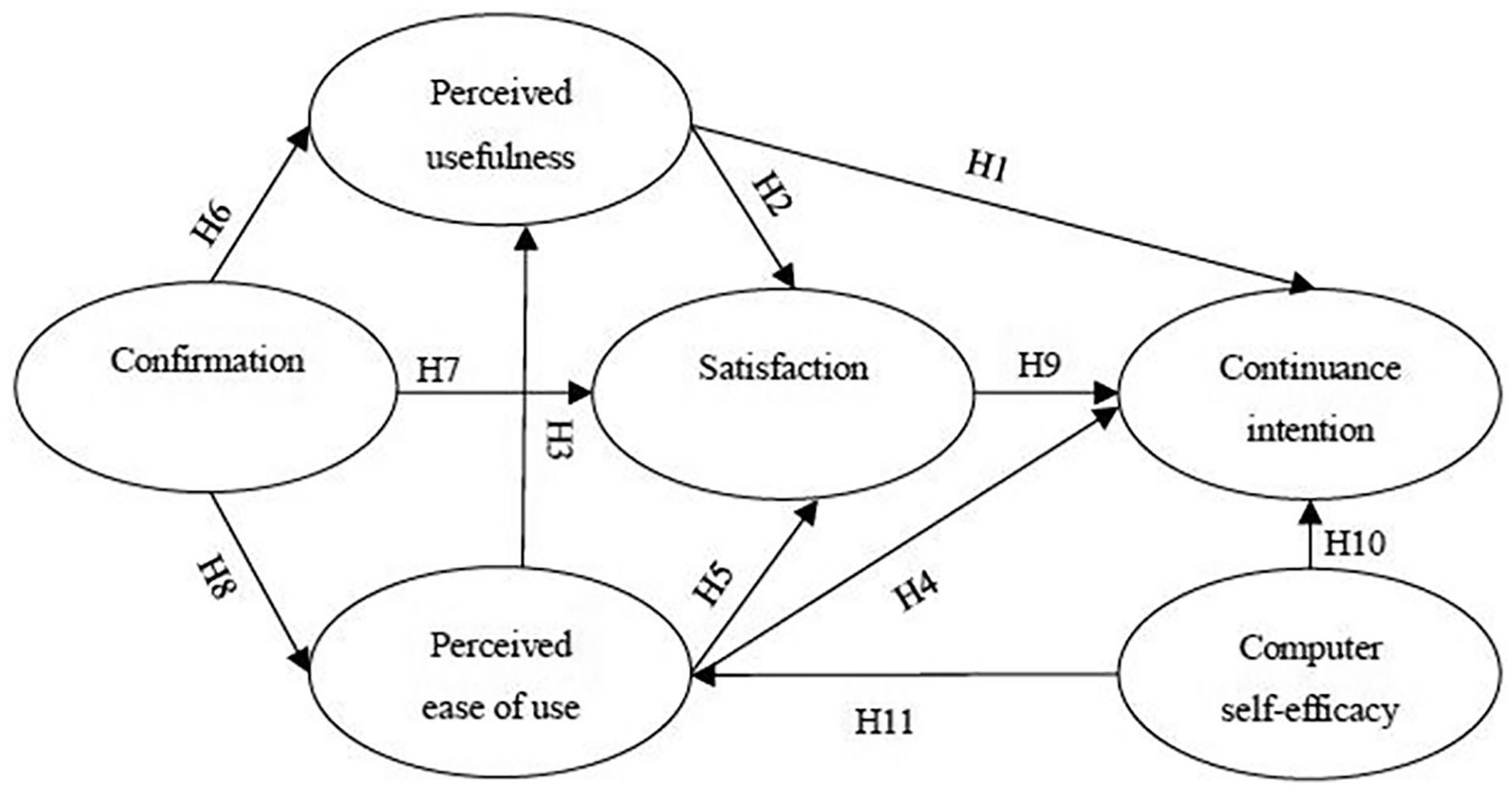
The schematic research model for AWE continuance use.
Given the purposes, the remainder of the paper is organized as follows. Literature review was guided with the research statement and questions regarding the use of AWE, CALL technologies, and the continuance intention of information systems. Then, research model and hypotheses were developed. The next two sections described the research methods and research results, respectively. Discussion followed by the theoretical and practical implications were made. Finally, conclusion along with limitations were presented as well.
Literature Review
EFL Learners’ Use of Automated Writing Evaluation
In the literature, AWE has been discussed in various disciplines. For instance, issues of AWE feedback in educational psychology (Bai & Hu, 2017), technological affordances in educational technology (Chen & Cheng, 2008; Chukharev-Hudilainen & Saricaoglu, 2016; Jiang, 2015; Roscoe et al., 2017), and pedagogical applications in applied linguistics (Cotos, 2014; Liao, 2016; Li et al., 2015; Shermis & Burstein, 2003). Generally speaking, existing studies on EFL learners’ AWE use were along two main strands, viz. learners’ perceptions of technological factors related to AWE and learners’ attitudes after using AWE.
The first strand of studies (Chukharev-Hudilainen & Saricaoglu, 2016; Dikli, 2006; Dikli & Bleyle, 2014; Saricaoglu, 2019; Shermis & Burstein, 2003) focuses on learners’ perceptions of technological potentials of AWE, such as, perceived usefulness and perceived ease of use, in evaluating the functionalities of AWE. The results regarding the technological potentials of AWE remain largely unsettled thus far. It was reported that AWE is pedagogically effective and enables to provide learners with instant corrective feedback (i.e., perceived usefulness) and easy-to-use functionalities (i.e., perceived ease of use) in some studies (Chen & Cheng, 2008; Liao, 2016). However, there are studies that reported otherwise (Bai & Hu, 2017; Zhang & Hyland, 2018).
The second strand of studies deals with learners’ attitudes after using AWE, such as satisfaction (i.e., feelings toward their prior use experience, Wang, 2015), computer self-efficacy (i.e., confidence in computer use, Wilson & Czik, 2016) and confirmation (i.e., gaps between expectations and experiences of actual use, Roscoe et al., 2017). Results of those studies reported that the continued use of AWE depends on learners’ level of satisfaction, degree of computer self-efficacy, and the confirmation that is highly associated with the gap between the actual performances and users’ expectations (Wang, 2015).
In general, studies on EFL learners’ use of AWE have provided insights into the importance of learners’ perceptions on technological factors of AWE and perceptions after using AWE. However, most of these studies did not combine the two themes to provide a comprehensive account of AWE use. Although many studies have discussed the positive roles of learners’ perceptions of technological factors related to AWE and learners’ perceptions after using AWE, little is known to date about the casual relationship among perceived ease of use, perceived usefulness, satisfaction, computer self-efficacy, and confirmation when using AWE, especially concerning the continued use of AWE.
EFL Learners’ Use of CALL Technologies
Compared with abundant literature that examined users’ continuance intention of the post-use behavior reviewed above, a limited number of recent studies have begun to investigate learners’ initial-use of CALL technologies under the TAM (Barrette, 2015; Chang & Hsu, 2011; Fatemi Jahromi & Salimi, 2013; Hsieh et al., 2017; Hsu, 2016; Liu et al., 2017). In earlier studies, for example, Barrette (2015) adopted an integration of three acceptance models (i.e., Diffusion of Innovations, Unified Theory of Acceptance and Use of Technology, and TAM) to investigate the possible factors of online workbook use that could provide some theoretical implications to CALL technology use in general. Apart from theoretical attempts, there were also several studies endeavoring to construct the CALL technology use empirically. For instance, Hsu (2016) proposed a seven-construct model by combining the TAM with other three direct antecedents of learners’ learning style and found that perceived usefulness is a determinant of EFL learners’ continuing use of computer-assisted pronunciation training system. Similarly, Liu et al. (2017) proposed a research model based on the TAM with six constructs and found that teachers’ pedagogical beliefs were more constructivist-oriented than transmissive-oriented. The theoretical power of TAM has also been validated in other studies by Chang and Hsu (2011) and Hsieh et al. (2017) that analyzed the effectiveness of specific CALL technology such as mobile-assisted synchronously collaborative translation-annotation system and the flipped classroom in teaching practices.
From the literature reviewed, most of the CALL studies were based on the TAM and focused on EFL learners’ initial-use behavior. However, learners may discontinue using a specific technology even if they have initially accepted it (Huang, 2016, p. 86). As such, this study will give rise to the extended ECM that comprises of perceived usefulness, confirmation, satisfaction, continuance intention, perceived ease of use and computer self-efficacy to examine factors affecting the continuance intention to use AWE.
Users’ Continuance Intention to Use Information System
Oliver (1980) first proposed the Expectation Confirmation Theory (ECT) to examine the effects of consumers’ satisfaction on their purchase intention. Later, to distinguish the initial- and post-use behaviors, Bhattacherjee (2001), motivated by the TAM (Davis, 1989), the Innovation Diffusion Theory (Rogers, 1995), and the Theory of Planned Behavior (Ajzen, 1991), extended Oliver’s (1980) ECT and proposed the ECM in the information system context. The ECM includes four constructs, that is, perceived usefulness, confirmation, satisfaction, and information system continuance intention. Perceived usefulness refers to the usefulness of a particular information system to improve users’ performance (Li et al, 2019), confirmation is understood as the gap between the actual performances and users’ expectations, satisfaction is defined as users’ satisfied feelings toward the information system, and continuance intention refers to users’ intention to use the information system in the future (Bhattacherjee, 2001). The causal relations among them indicate that users’ continuance intention is jointly determined by satisfaction and perceived usefulness, and users’ satisfaction is jointly determined by perceived usefulness and confirmation. In addition, perceived usefulness is positively influenced by confirmation (Bhattacherjee, 2001).
To date, the model has evolved in two ways. One way has extended the ECM by adding novel variables (Chen et al., 2015; Terzis et al., 2013; Zhang, Yin, Luo, & Yan, 2017). For instance, Limayem and Cheung (2008), adding habit and prior behavior to the ECM, examined the factors of continuance intention to use Internet-based learning technologies, providing that users’ responses to the Internet-based learning technologies might be determined by habit and prior behavior that were commonly understood as “the learned sequences of acts that become automatic responses to specific situations” and the previous acts or behaviors (Limayem & Cheung, 2008, p. 228). And the influence of habit on the continuance intention to use Internet-based learning technologies was also well-attested in a subsequent study (Limayem & Cheung, 2011). Similarly, Hung et al. (2011) investigated the continuance intention to use a web-based learning system by adding causal attributions that were related to factors influencing the causes of event. The other way is to integrate the ECM with other theoretical models, so that all variables from the models were added together (e.g., Chen et al., 2015; Terzis et al., 2013). For example, Sørebø et al. (2009) incorporated the ECM and the self-determination theory to examine teachers’ continued use of e-learning technology. Other researchers (Hong et al., 2006; Hsieh & Wang, 2007; Lee, 2010) integrated the TAM with the ECM to enhance the explanatory power of models under a general term “the extended ECM.”
In addition, considering computer self-efficacy is closely related to the Internet-based learning technologies, it has frequently been investigated as a crucial factor explaining users’ continuance intention to use information systems (Liao et al., 2015; Mohammadi, 2015; Padilla-Meléndez et al., 2008) under the extended ECM, which symbolizes learners’ confidence about general computer skills. In existing studies on continuance intention to use information systems, computer self-efficacy has been shown to be a significant factor that directly affects not only perceived ease of use (Padilla-Meléndez et al., 2008; Terzis & Economides, 2011) but also continuance intention (Mohammadi, 2015; Padilla-Meléndez et al., 2008).
In this study, a popular locally designed AWE is pigaiwang (www.pigai.org), which was created to facilitate Chinese EFL learners’ writing performance with diagnostic feedback (Bai & Hu, 2017). The current study attempted to examine factors affecting continued use of AWE (pigaiwang) by adopting an extended ECM combined with computer self-efficacy and perceived ease of use for two reasons. On one hand, past studies on employees’ use of complex information systems (Hsieh & Wang, 2007), and users’ continuance intention toward e-learning (Cidral et al., 2018) and toward information technology (Hong et al., 2006) have found that an extended ECM outperformed the original ECM in relation to the explanatory power. What remains unclear is whether the extended ECM by incorporating computer self-efficacy and perceived ease of use into ECM can be applied in the current study to predict learners’ continuance use of AWE. In this sense, the results of this study might also contribute to validating the theoretical affordances of the extended ECM in turn. On the other, the inclusion of computer self-efficacy and perceived ease of use to account for learners’ continued use of AWE is essential, since those of low computer self-efficacy who used the less easy-to-use functionalities tend to refuse using CALL technologies (e.g., Padilla-Meléndez et al., 2008).
Research Statement and Questions
Research into the continued use of AWE is still very much in its infancy. There is little research that looks at how factors, such as learners’ perceptions of technological factors related to AWE and learners’ perceptions after using AWE, influence learners’ continuance intention to use it, and the degree to which those factors interact with each other. To fill the gaps, this study integrates computer self-efficacy and perceived ease of use into the ECM to put forward a research model, viz. the extended ECM, along with several research hypotheses to thoroughly examine factors of learners’ continuance intention to use AWE. Two major research questions were to be addressed as follows.
Research Model and Hypotheses
Figure 1 shows the proposed research model, an extended ECM by adding computer self-efficacy and perceived ease of use to construct the extended model of AWE continued use. The hypotheses associated with each factor are elaborated accordingly in the remainder of this section.
Perceived Usefulness
According to Davis (1989, p. 320), perceived usefulness refers to “the degree to which a person believes that using a particular system would enhance his or her job performance.” In this study, perceived usefulness is defined as the degree to which a language learner believes the use of AWE enhances his or her writing performance. Prior research (Bhattacherjee, 2001; Chen et al., 2015; Lee, 2010; Shin et al., 2011) suggested perceived usefulness is positively associated with the continuance intention. After using pigaiwang, a Chinese EFL learner might believe it would enhance his or her writing performance and would generate the continuance intention. It thus led to the first hypothesis (H1).
H1. Perceived usefulness of AWE has a positive effect on EFL learners’ continuance intention.
Bhattacherjee (2001) also pointed out, perceived usefulness is positively related to satisfaction with information systems. Huang (2016) found a positive relation between perceived usefulness and satisfaction with continued cloud services. Similarly, other studies consistently observed a causal link between perceived usefulness and satisfaction (Alraimi et al., 2015; Chen et al., 2015). Therefore, in this study, it was posited that Chinese EFL learners might be satisfied with using pigaiwang if he or she felt that the AWE is useful. Accordingly, the second hypothesis (H2) was formulated.
H2. Perceived usefulness of AWE has a positive effect on EFL learners’ satisfaction.
Perceived Ease of Use
Perceived ease of use refers to “the degree to which a person believes that using a particular system would be free of effort” (Davis, 1989, p. 320). In the present study, perceived ease of use of AWE was defined as the degree to which a Chinese EFL learner believes using AWE would be free of effort and easy. Perceived ease of use was not included in Bhattacherjee’s (2001) original ECM. However, its importance has been acknowledged in the extended ECM (Hong et al., 2006; Hsieh & Wang, 2007; Lee, 2010), suggesting that perceived ease of use positively predicts perceived usefulness, continuance intention, and satisfaction. Thus, this study proposed the third (H3), fourth (H4), and fifth (H5) hypothesis, respectively.
H3. Perceived ease of use of AWE has a positive effect on perceived usefulness of AWE.
H4. Perceived ease of use of AWE has a positive effect on EFL learners’ continuance intention.
H5. Perceived ease of use of AWE has a positive effect on EFL learners’ satisfaction.
Confirmation
Confirmation, also interchangeably labeled as “disconfirmation” in some later literature (Bhattacherjee & Lin, 2015; Bhattacherjee et al., 2008), is defined as “the gap between perceived performance and their original expectation” (Bhattacherjee, 2001, p. 353). In the present study, EFL learners’ confirmation referred to the gap between perceived performance of AWE and learners’ original expectation. A number of studies empirically found that confirmation has a causal association with perceived usefulness (Alraimi et al., 2015; Chen et al., 2015; Shin et al., 2011), satisfaction (Bhattacherjee, 2001; Chen et al., 2015), and perceived ease of use (Hong et al., 2006; Hsieh & Wang, 2007). Therefore, this study assumed that confirmation has a positive effect on perceived usefulness, satisfaction, and perceived ease of use, leading to the following three hypotheses (H6, H7, and H8), respectively.
H6. EFL learners’ confirmation has a positive effect on perceived usefulness of AWE.
H7. EFL learners’ confirmation has a positive effect on their satisfaction.
H8. EFL learners’ confirmation has a positive effect on perceived ease of use of AWE.
Satisfaction
Satisfaction in this study referred to Chinese EFL learners’ affects or feelings toward their prior use experience of pigaiwang. According to Bhattacherjee (2001), continuance intention is primarily determined by satisfaction with prior information system use. A large number of subsequent studies (Bhattacherjee & Lin, 2015; Bhattacherjee et al., 2008; Chen et al., 2015; Hsieh & Wang, 2007) also obtained the positive link between satisfaction and continuance intention, resulting in the ninth hypothesis (H9).
H9. EFL learners’ satisfaction has a positive effect on their continuance intention.
Computer Self-Efficacy
Self-efficacy is first defined as “people’s beliefs about their capabilities to produce designated levels of performance that exercise influence over events that affect their lives” (Bandura, 1994, p. 71). Its scope has been extended in the educational technology under the term of “computer (Internet) self-efficacy” that assumed to “examine learners’ confidence in their general skills of operating Internet functions or applications in the Internet-based learning condition” (Tsai et al., 2011, p. 222). Previous results demonstrated that a causal link exists between computer self-efficacy and perceived ease of use (Padilla-Meléndez et al., 2008; Terzis & Economides, 2011), and between computer self-efficacy and continuance intention (Padilla-Meléndez et al., 2008). Based on these past findings, this study proposed the following two hypotheses (H10 and H11), respectively.
H10. EFL learners’ computer self-efficacy has a positive effect on their continuance intention.
H11. EFL learners’ computer self-efficacy has a positive effect on perceived ease of use of AWE.
Methodology
Participants and Pigaiwang
A total of 345 EFL learners from a Chinese Double First-Class (viz. world class universities and disciplines) university volunteered to take part in the present study. This university was chosen for the following three considerations. First, as a prestigious university, CALL facilities (e.g., computers, multimedia classrooms, and related software) were well-equipped, which has laid a solid foundation for the implementation of CALL activities. Second, the use of CALL in pedagogical activities also has a long tradition in the university, and pigaiwang was adopted as a supplementary tool for writing practice in college English course since its very initial creation in 2011. Third and importantly, EFL learners in the university are digital natives who have high levels of digital literacy (Li, 2021a, 2021b), which ensured their active participation in the CALL activities. For the data collection, there was neither incentive for completing the survey, nor was there any penalty for not completing the questionnaire. As a result, 21 invalid questionnaires were eliminated, resulting in 324 valid questionnaires. Among the valid questionnaires from 324 Chinese EFL learners, 132 were first-year and 192 were second-year college students recruited in a required English language course. There were 113 boys (34.9%) and 211 girls (65.1%) with the average age of 18.52 ± 0.697 years old.
The basic aim of this English language course is to improve Chinese EFL learners’ overall skills such as listening, speaking, reading, and writing, among which writing is one of the major concerns. In order to improve their writing skill, pigaiwang (see Figure 2) was used as a typical representative of AWE to automatically evaluate learners’ writing performance. Under teacher’s guidelines, learners are required to first register pigaiwang account and login the account to submit their writing practice assigned by their teachers. Pigaiwang could provide EFL learners with the instant rating reports, comments and correction feedback, which means they not only know what are the ongoing writing deficiencies, but they also receive instant correction feedback sentence by sentence that they could edit and revise their writing practice time and again after checking each suggested feedback with pigaiwang.

The pigaiwang interface of writing evaluation feedback.
Instruments
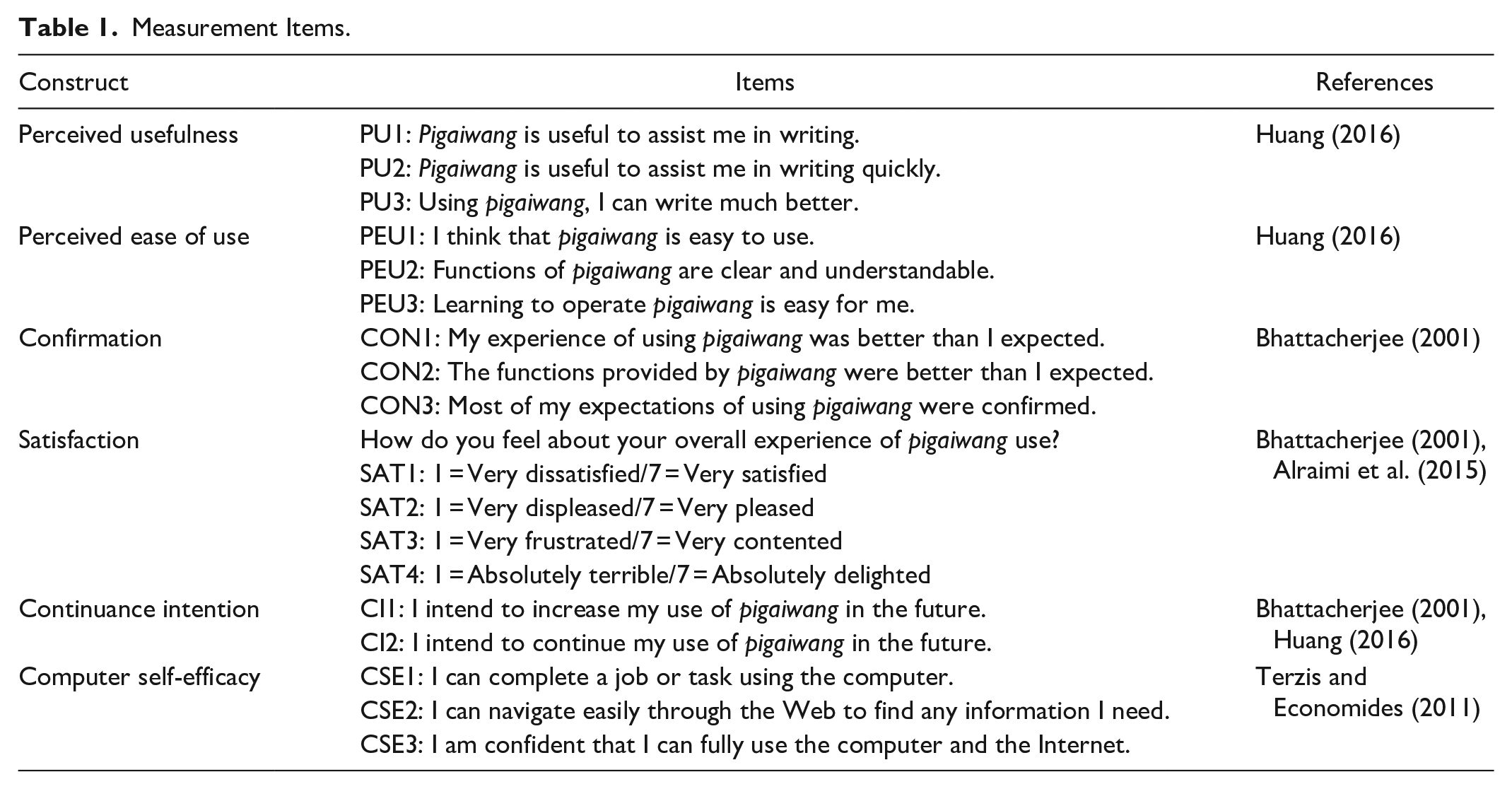
The questionnaire consisted of two parts. The first part obtained data on the participants’ demographic information, such as grade and gender. The second part measured variables in the proposed model. The questionnaire was developed based on the literature (Alraimi et al., 2015; Bhattacherjee, 2001; Davis, 1989; Davis et al., 1989; Hong et al., 2006; Huang, 2016; Padilla-Meléndez et al., 2008; Terzis & Economides, 2011), resulting in a total of 18 items, that is, three items for perceived ease of use (PU), three items for perceived ease of use (PEU), three items for confirmation (CON), four items for satisfaction (SAT), two items for continuance intention (CI), and three items for computer self-efficacy (CSE). The procedures of questionnaire development were as follows. Questionnaire items were first translated into simplified Chinese. Then, Chinese version of the items was translated back to English by an English translation teacher. The high similarity between two versions confirmed its accuracy. Minor adjustments to wording and formatting were made accordingly. The content validity of all the scales in the questionnaire and the items were reviewed and confirmed by five experts, including two researchers in educational technology and three language teachers. Eighteen items had a 7-point Likert scale survey anchored on “1 = strongly disagree” and “7 = strongly agree.” A detailed summary of the items and references of each scale was presented in Table 1 below.
Measurement Items.
Data Collection Procedure
Before data collection, participants were first asked to fill the consent forms for ethical approvals under which the data was collected and reported. Then, they were invited to respond to the questionnaire in the classroom. The appearance of items was randomized. Since the data were collected at the end of the academic semester in 2016, learners could make a comprehensive and first-hand judgment in terms of the post-use behavior after they had used pigaiwang for at least one semester.
Data Analysis
As Anderson and Gerbing (1988) suggested, a two-step SEM approach was adopted. Confirmatory factor analysis (CFA) of the measurement model assessed the reliability and validity of the scale in the questionnaire surveys; while SEM of the structural model empirically examined the proposed hypotheses.
Results
Descriptive Statistics and Preliminary Analyses
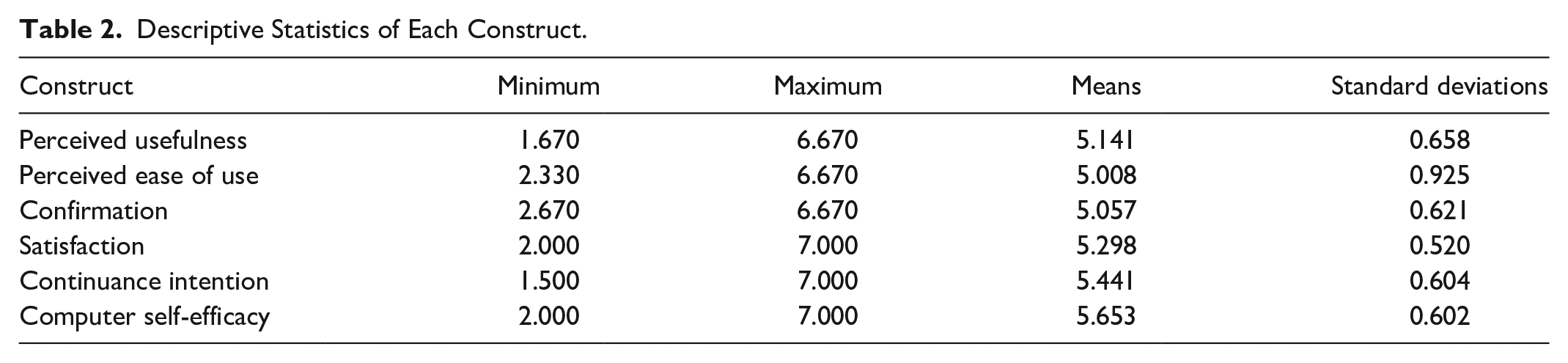
The minimum, maximum, means (M) and standard deviations (SD) of each construct were calculated with SPSS 20.0, ranged between 5.008 (SD = 0.925) and 5.653 (SD = 0.602) within a 7-point scale, all scored above 4 (see Table 2). More specifically, computer self-efficacy has the highest rating (5.653 ± 0.602), followed by continuance intention (5.441 ± 0.604), satisfaction (5.298 ± 0.520), perceived usefulness (5.141 ± 0.658), confirmation (5.141 ± 0.568), and perceived ease of use (5.008 ± 0.925), respectively. The descriptive results suggested that, learners who used AWE might be skillful in computer use and have a rather positive continuance intention. The finding that both the technological aspects (i.e., perceived ease of use and perceived usefulness) and learners’ aspects (i.e., confirmation, satisfaction, continuance intention, and computer self-efficacy) of AWE use rated high likely illustrated factors were equally important in the use of AWE.
Descriptive Statistics of Each Construct.
Measurement Model
The measurement model was reported concerning the reliability, convergent validity, and discriminant validity. Specifically, for the reliability of the questionnaire, Cronbach’s α and the composite reliability were presented. For the convergent validity of the questionnaire, the score of average variance extracted (AVE) was reported. For discriminant validity of the questionnaire, a thorough comparison was made between the score of square root of AVE and the results of latent variable correlations. Results of reliability and validity were summarized in Table 3. Specifically, the overall reliability was indexed by Cronbach’s α and Composite reliability and the overall validity was indexed by convergent validity and discriminant validity.
The Overall Reliability and Validity Analysis of the Measurement Model.

Note. The values of square root of the AVE of each construct were presented in bold. PU = perceived usefulness; PEU = perceived ease of use; CON = confirmation; SAT = satisfaction; CI = continuance intention; CSE = computer self-efficacy.
Table 3 showed that reliability of measurements was confirmed as all values of Cronbach’s α are more than .70, and the values of composite reliability were over the minimum value of .60, indicating that the data-driven measurement model was statistically reliable (Hair et al., 2006). When it comes to the validity analysis, results of convergent and discriminant validity were reported. Table 3 showed that the convergent validity was also confirmed in that AVE for each construct exceeded the threshold value of .50 (Fornell & Larcker, 1981). Moreover, the values of square root of the AVE of each construct exceeded its Pearson correlation coefficient with the other constructs in the measurement model (Fornell & Larcker, 1981), suggesting both the convergent and discriminant validity was statistically acceptable. Taken together, Table 3 indicated that the overall results of reliability and validity of the measurement model were confirmed, since all the values in this study met the required criteria.
Structural Model
According to Hair et al. (2006), SEM analysis should follow the minimum sample size of 150 with seven constructs or less. Since the sample size of this study was 324 and there were six constructs proposed, the structural model could then be further tested with AMOS 20.0. By using the maximum likelihood, the overall goodness-of-fit, the relative strengths of each cause-effect path as well as the explanatory power of the proposed model were analyzed.
A six model-fit measures, as suggested by the recommendations of previous studies (Kline, 2011; Lin, 2011), were selected for the overall goodness-of-fit indices in the structural model. Results of the six model-fit measures indicated that χ2/df was 3.004 (lower than 5), root-mean-square error of approximation (RMSEA) was .079 (lower than .08), goodness-of-fit index (GFI) was .892 (higher than .8), adjusted goodness-of-fit index (AGFI) was .847 (higher than .8), normed fit index (NFI) was .879 (close to the recommended value of .9) and comparative fit index (CFI) was .915 (higher than .9), implying that the structural model has a good model fit (Li et al, 2019).
The structural model of EFL learners’ AWE continuance use was validated and presented in Figure 3. As shown in Figure 3, 11 paths are closely related to the 11 hypotheses proposed (i.e., H1–H11), and both the significant and/or non-significant paths of AWE are summarized. It could be noted that, 10 out of 11 paths exhibited a p-value of <.05 significance, while the remaining one (H5: perceived ease of use has a positive effect on satisfaction) was not significant at a p-value of .05, indicating that 10 hypotheses were finally supported, apart from H5.

Structural model for AWE continuance use.
Discussion
This study modified Bhattacherjee’s (2001) original ECM and extended the ECM by integrating computer self-efficacy and perceived ease of use to explore Chinese EFL learners’ continuance intention to use AWE (i.e., pigaiwang), as shown in Figure 1. The impacts of perceived usefulness, perceived ease of use, confirmation, satisfaction, and computer self-efficacy were examined. Ten hypotheses were supported except for H5 in that perceived ease of use was not found to have a significant effect on satisfaction.
The findings indicated that four factors had positive effects on learners’ continuance intention to use AWE with perceived ease of use as the strongest predictor (β = .31, p < .001). This result was consistent with those reported in some earlier studies (Hong et al., 2006; Hsieh & Wang, 2007) and one recent study (Huang, 2016), which is often terminologically labeled as “the dominant effect of perceived ease of use” (Hsieh & Wang, 2007, p. 222). This finding, however, contradicted findings of some studies (Davis, 1989; Fatemi Jahromi & Salimi, 2013; Lai, 2013) that regarded perceived usefulness as a determinant of learners’ continuance intention to use CALL technologies. For instance, Lai (2013) investigated Hong Kong university students’ use of technology outside the classroom and found that awareness of the useful technologies is a major concern in CALL. Fatemi Jahromi and Salimi (2013) also found that perceived usefulness could primarily predicted Iranian teachers’ and students’ use intention of CALL technologies. A plausible explanation is that participants were recruited from a Chinese Double First-Class who were skillful in computer use and had a high level of digital literacy (Li, 2021a, 2021b), resonating the highest ratings of computer self-efficacy in the descriptive statistics. When using CALL tools to facilitate the development of their writing skill, whether the tools are functionally useful might be not their top concern, rather they were prone to concern more about whether AWE’s functionalities and interface were clear and understandable. Another possible explanation lies in that the usefulness of AWE (pigaiwang) has also been confirmed by teachers, and learners thus need not to pass any judgment on its usefulness, rather, they tended to use it under teachers’ guidelines and focus more on whether the functions of pigaiwang were clear, understandable and easy to use. Figure 3 also shows that, besides the determinant role of perceived ease of use, perceived usefulness (β = .23, p < .01), satisfaction (β = .20, p < .01), computer self-efficacy (β = .22, p < .001) also directly influence learners’ continuance intention to use AWE, that is to say, EFL learners’ continuance intention to use AWE was also influenced by usefulness of AWE (i.e., perceived usefulness), their satisfied feelings and confidence about computer use experiences (i.e., satisfaction and computer self-efficacy) as well. More specifically, AWE enabled its users to improve their writing performance and assisted them in writing quickly with the corrective feedback (i.e., perceived usefulness). By using AWE, they felt quite pleased, contented and satisfied with the overall experience of use (i.e., satisfaction). And since pigaiwang is a web-based AWE writing system, it was understandable that learners’ confidence about computer and Internet use directly determined their continuance intention to use AWE. Generally, all these might be the crucial factors that directly influence EFL learner’ continuance intention to use AWE, echoing a number of existing studies (Alraimi et al., 2015; Chen et al., 2015; Hong et al., 2006; Hsieh & Wang, 2007; Huang, 2016; Terzis & Economides, 2011).
The path coefficient of confirmation (β = .22, p < .01) on EFL learners’ satisfaction to use AWE was significantly higher than those of others, and perceived ease of use did not influence their satisfaction of AWE use, which means the expectation gap between the desired outcomes and the actual use experiences might directly influence language learners’ satisfied affects or feelings of use experiences. This result was consistent with findings from existing research (Hong et al., 2006) that supported the stronger causal relationships than others between confirmation and satisfaction. Meanwhile, satisfaction was also directly influenced by perceived usefulness, confirmation, but not perceived ease of use, which suggests that satisfaction was not a significant mediator for the causal relationship between perceived ease of use and continuance intention to use, rather, a direct causal relationship between them tends to occur. This outcome further lends support to “the dominant effect of perceived ease of use” (Hsieh & Wang, 2007), which implies that Chinese EFL learners’ satisfaction to use AWE might be directly determined by the usefulness and the difference between their expectation and after-use performance. It was supported by results reported in some studies (Alraimi et al., 2015; Bhattacherjee & Lin, 2015; Bhattacherjee et al., 2008; Chen et al., 2015; Huang, 2016; Shin et al., 2011), but contradicted Hong et al. (2006) claims that perceived ease of use positively predicted satisfaction. This inconsistency implies that easy-to-use feature of pigaiwang (AWE) might probably not be an influential factor for satisfaction, but determined learners’ continuance intention to use it. As long as the functionalities or experiences of using are better than their expectation, language learners’ will be satisfied, pleased and contented to use the CALL technologies provided. The inconsistent results might also be explained by the different institutional contexts. Unlike Hong et al. (2006) who examined information technology continuance use that highlights its usefulness, the current study employed pigaiwang whose usefulness was confirmed by teachers, and students are likely to pay attention to the easy-to-use features of AWE, leading to the direct association between perceived ease of use and continuance intention to use without the mediating effect of satisfaction.
The influence of perceived ease of use (β = .40, p < .001) on perceived usefulness was significantly higher than that of confirmation (β = .18, p < .05). This result implied that Chinese EFL learners’ perceived usefulness of pigaiwang (AWE) was primarily influenced by perceived ease of use rather than confirmation. In other words, both the easy-to-use feelings as well as the expectation between learners’ desired needs and actual outcomes directly influence the degree to which Chinese EFL learners believed AWE enhanced their writing performance, consistent with findings reported in existing studies (Davis, 1989; Hong et al., 2006; Hsieh & Wang, 2007). For instance, Hsieh and Wang (2007) tried to explain the factors of employees’ extended use in complex IS and found that perceived ease of use positively predicted perceived usefulness slightly higher than that of confirmation. Thus, perceived ease of use is a determinant of perceived usefulness as originally proposed by Davis (1989) TAM, while the effects of other construct (i.e., confirmation) on perceived usefulness are also confirmed.
Perceived ease of use was primarily determined by confirmation (β = .60, p < .001), and then by computer self-efficacy (β = .17, p < .01). This result was supported by findings from some studies (Hong et al., 2006; Hsieh & Wang, 2007) that obtained the causal links between confirmation and perceived ease of use; and others (Padilla-Meléndez et al., 2008; Terzis & Economides, 2011) that found the causal links between computer self-efficacy and perceived ease of use. A plausible explanation is that, as mentioned before, the Chinese EFL learners were skillful in computer use, that is, once their expectation for the AWE was satisfied and confirmed, they were prone to feel it quite easy to use. The same applied to the positive relation between perceived ease of use and computer self-efficacy. The more confident the language learners felt about their computer skills, the higher degree of easiness they tended to have.
Implications
This study incorporated computer self-efficacy into the continuance intention to use AWE. It has been reported in the existing e-learning studies (Tsai et al., 2011), computer self-efficacy has much to do with learners’ confidence about the general computer skills. As Chinese EFL learners in this study used pigaiwang, an AWE system in the web-based form, it is necessary to research the influence of computer self-efficacy on learners’ continuance intention to use AWE. The remainder of the section will elaborate on the theoretical and practical implications based on the results in the study.
Theoretical Implications
By integrating perceived ease of use and computer-self efficacy into the ECM, this study provided a comprehensive account on the continued use of AWE, including perceived usefulness, perceived ease of use, confirmation, satisfaction, and computer self-efficacy, respectively. The extended ECM proposed shed some light on the continuance intention to use AWE, given that the technological potentials and learners’ perceptions were taken into consideration. The robustness of the extended ECM was confirmed, which might provide some theoretical implications to the further studies in CALL. Given that “continuance intention has been gradually viewed as an important indicator” in CALL research (Huang, 2016, p. 86), future study can consider applying the extended ECM to analyze continuance use factors of other state-of-the-art CALL technologies, for example, RALL (robot-assisted language learning), head-mounted VR (virtual reality) techniques, and serious games in language learning (Li, 2021b).
Practical Implications
Several practical implications were made based on the empirical findings. First, as “the dominant effect of perceived ease of use” was obtained in this study (Hsieh & Wang, 2007), technology developers should take “the easy-to-use notion” as their primary strategic consideration in the promotion and marketing, because the user-friendly CALL technologies might be more favorable than others among the potential users. For instance, to produce easy-to-use educational technologies, developers of AWE can collect learners’ experiences from the web-based platform. Second, as confirmation was the most important factor impacting on EFL learners’ satisfaction and perceived ease of use of AWE, to ensure their rational expectations for the AWE products, developers can also nominate the opinion leaders among members to share their use experience via WeChat group regarding the use of a particular CALL technology, for example, pigaiwang. The educational practitioners (e.g., university executives, department heads and policy-makers), on the other hand, can first help learners choose the easy-to-use technology among the diverse CALL tools available that provide similar pedagogical functionalities, to increase learner efficiency. Third, according to the results, computer self-efficacy has a direct influence on learners’ continuance intention to use AWE, which serves as a reminder for both teachers and learners alike of the necessity to train and improve learners’ computer self-efficacy. In doing so, apart from introductory courses of computer skills, teachers should give learners constructive guidance on the selection and use of AWE when they have problems. Language learners, on the other hand, should enhance skills of computer use themselves.
Conclusion
This study proposed a research model based on the extended ECM, including perceived usefulness, perceived ease of use, confirmation, satisfaction, continuance intention and computer self-efficacy, to examine the factors of Chinese EFL learners’ continuance intention to use AWE. The research findings revealed that four factors were found to directly influence learners’ continuance intention to use AWE, among others, perceived ease of use was the most important factor behind language learners’ continuance intention to use AWE. Besides, confirmation was the most important factor on language learners’ satisfaction and perceived ease of use. In addition, perceived ease of use plays a more important role in influencing language learners’ perceived usefulness. Taken together, this study validated the extended ECM and contributed to the field of language learning and technology in higher education, Chinese EFL learners’ continuance intention to use AWE in particular.
Some limitations should be addressed in the further research. Firstly, this might be the first speculative study that adopted the extended ECM to discuss the factors of continuance intention to use a CALL technology, that is, AWE, with a typical case of pigaiwang. Despite the above findings, it remains largely unclear whether the extended ECM can be theoretically applicable to other institutional contexts or CALL technologies, since the findings that were limited to Chinese EFL learners using pigaiwang in a Double First-Class university. Future studies should adopt a more comprehensive examination of CALL technologies in various sorts to testify the generation of the extended ECM. Secondly, this study was only confined to the computer/web-based writing system. To meet the demand of ubiquitous learning, future studies should not only focus on the web-based CALL system, but also concentrate on the portable and mobile devices. Thirdly, this study did not take EFL learners’ demographic factors such as gender and grade into consideration. Consequently, future studies should examine the influences of demographic factors on EFL learners’ continuance intention to use AWE. Fourthly, as the study only concerns the continuance intention to use AWE among Chinese EFL learners, it might contribute little to the use of AWE in language learning and teaching, future research should consider including other pedagogical variables to gain a deeper understanding of how the use of AWE inform pedagogy. Lastly, the findings might be limited and feasible only to a certain group of EFL learners, that is, college students, since the data were collected from a small group of EFL learners in one Chinese university. In addition, as the data were collected in classroom settings with convenient samplings, it was also possible that they might feel obliged to take part in the study. Future study should improve the sampling methods and enlarge the population of participants.
Footnotes
Declaration of Conflicting Interests
The author declared no potential conflicts of interest with respect to the research, authorship, and/or publication of this article.
Funding
The author disclosed receipt of the following financial support for the research, authorship, and/or publication of this article: This research was supported by the Social Science Foundation of Hunan Province (grant number 20ZDB005).
