



Abstract
The current study empirically examines an integrative model linking multiple types of touch points in tourism experience, hedonic well-being, eudaimonic well-being, revisit intention, and online word of mouth, in response to the calls to revitalize tourism and achieve sustainable development. The research relied on “Nong Jia Le,” an important representative survey on leisure tourism. The questionnaire was developed based on prior studies, then translated into Chinese and set up in an online survey system. In total, 316 respondents were ultimately gathered for analysis. Principal component analysis was used to test the reliability and validity of each construct, and a structural equation model was used to test the hypotheses. The findings show that tourism experiences derived from partner-owned, customer-owned, and social touch points positively affect perceived hedonic and eudaimonic well-being, while experiences derived from destination-owned touch points only positively influence hedonic well-being. In addition, both hedonic and eudaimonic well-being significantly affect consumers’ intention to revisit the destination and to spread word of mouth online. This study fills in a gap in leisure tourism literature by proposing the merits of touch points in tourism experience and placing importance on conceptions of eudaimonia. More importantly, the current research offers important social and economic considerations that can contribute to the sustainable growth of leisure tourism.
Keywords
Introduction
Experiences are popular commodities in the tourism industry (Knobloch et al., 2017), as offerings in this domain are typically experiential. Creating a memorable tourism experience is a primary management objective (Lemon & Verhoef, 2016), particularly in the sustainable tourism domain. One important reason that tourism experience is valued is that it involves interactions with people, products, and services through various touch points spread across numerous channels and media (Lemon & Verhoef, 2016). Tourists gain their experiences about the destination through various interaction points from pre-purchase stage to post-purchase stage. Thus, touch point is considered as the interactional bridge linking tourism destination and tourists, which works not only through the single facet of destination, but also through destination-related partners, tourists themselves as well as social factors. With the rapid development of media and the fragmentation of channels, omni-channel management has become a good way for firms to interact with their customers (Verhoef et al., 2015). Moreover, social media interactions between customers represent great challenges and opportunities for firms. Specifically, peer customers can easily affect tourism experience because it is social. Overall, it is difficult for experiences to be predetermined and controlled by marketers, because they are the products of an individual’s perception (Godovykh & Tasci, 2020), and customers can interact with other people and events rather than being limited to simply receiving or absorbing (Mossberg, 2007). Further, remarkable experiences have been found to have an important influence on customer engagement behavior (Pansari & Kumar, 2017). Given the importance of tourism experience, the current study aims to explore customer experience from the perspective of touch points in an attempt to offer new insight through which firms can integrate brand marketing, partners, services, and information technology to produce and offer positive tourism experiences, in terms of the growth of multiple customer touch points and the decreased firm control of each individual’s travel experience.
Although many scholars have acknowledged the importance of individual experience in tourism, there are several outstanding problems requiring further research: One is that prior studies lack sufficient understanding of how to make an experience outstanding (Knobloch et al., 2017), particularly from the perspective of customer touch points. Specifically, previous studies have explored the dimensions of memorable tourism experiences (e.g., Tung & Ritchie, 2011), the scales used to measure these experiences (e.g., Luo et al., 2020), and even the psychological factors of positive experience (e.g., Chen et al., 2020). Further, some other research has been devoted to modeling tourism experience as an independent variable to determine the behavioral outcomes such as revisit intention (Hung et al., 2016) and place attachment (Vada et al., 2019). However, those studies have neither taken customer touch points into consideration nor further investigated the relationships between touch point-based tourism experience and behavioral outcomes. On the other hand, the current works have attached importance to the relationship between positive customer experience, satisfaction, and consumer loyalty, but most of these have ignored the role of emotion in the effect of customer experience on their subsequent behaviors. In reality, consumers are constantly subject to various emotions during a trip, and these have significant impacts on how they evaluate their experiences (Tung & Ritchie, 2011), meaning that emotions are important factors in the travel industry. As a result, many scholars have addressed that an emotion variable should be considered in modeling the antecedents of tourists’ revisit intention, satisfaction, and loyalty (Prayag et al., 2017). Further, the existing studies regarding tourism experience have mainly been restricted to separate feelings labeled “hedonism,” because they are believed to be crucial in affecting tourists’ evaluation and post behavior outcomes (Kim et al., 2010). However, individuals can experience specific emotions after perceiving personal growth or a sense of success from an experience (Andrews, 2009). Further, positive psychology has proposed the concept of “eudaimonia” and built links with tourism experience. However, studies concerning the subjective meaning or value of experiences are often neglected by academics. In fact, tourism research should place importance on the meaningful and functional aspect of an experience for a tourist, rather than narrowly focusing on hedonic influences.
Hence, as prior studies have not explored touch point-based tourism experience and the relationship between it and consumer behavior, it is necessary and important for the current study to identify customer experience from a touch-point perspective, and to elucidate the relationships between touch points, perceived hedonism, perceived eudaimonia, and consumer behavior outcomes. The current research makes two main contributions. First, this study responds to the recent call for research into how to create or provide customers with remarkable tourism experiences (Sharma & Nayak, 2019; Skavronskaya et al., 2020). This study extends the existing literature by presenting a new perspective of creating and measuring memorable tourism experiences. Specifically, this research introduces four types of touch points (i.e., brand-owned, partner-owned, customer-owned, and social/external touch points) that represent potential customer interactions during a tourism experience and which have been drawn from the theory of Lemon and Verhoef (Lemon & Verhoef, 2016), and this categorization provides a new method for measuring whether a tourism experience is remarkable from each of the destination, partner, customer, and society perspectives. Although prior research has developed a scale to evaluate whether tourism experiences are memorable (Kim et al., 2012), the present study provides the tourism industry with an organizing framework by introducing the perspective of touch points, which can help firms better understand tourists’ needs and facilitate the sustainable development of tourism.
Second, while the role of emotion in tourism experience has recently attracted substantial attention from researchers, those works have either focused on hedonic enjoyment during a trip (Tsai, 2016) or on the function of nostalgic emotion in destination images (Akgün et al., 2020). In consideration of the functional aspects of a positive tourism experience, such as achievability, this study newly focuses on perceived well-being, and it stresses the functional influences and subjective meanings of a tourism experience. In fact, tourism, as an activity focused on offering highly memorable services and experiences, presents ample opportunities for investigating well-being outcomes. Pearce (2009) has introduced the concept of well-being into the tourism domain, showing that an increasing number of people desire to gain positive well-being outcomes by traveling. This research extends current theories by proposing that tourism experience derived from the four types of touch points can positively contribute to both hedonic well-being (pursuing positive emotion) and eudaimonic well-being (pursuing personal functioning). The study further predicts positive roles of perceived well-being in customer destination engagement behaviors.
Altogether, the current work aims to explore the structural relationships among tourism touch points, perceived well-being, and customer engagement behaviors by developing a research model based on the structure equation model (SEM). The next section introduces the definition by Nong Jia Le, the four types of touch points, the relationship between touch point-focused tourism experience and hedonic/eudaimonic well-being, and the relationship between perceived well-being and customer outcome behaviors. Then, the study employs a quantitative approach relying on the leisure tourism experience that customers have experienced in the past by using the example of “Nong Jia Le.” Finally, the results are described, and the managerial implications are presented.
Theoretical Background, Research Hypotheses, and Model
Nong Jia Le
With increasing incomes and heavier workloads, a rising number of urban residents are turning their attention to leisure tourism, which focuses on a rural experience. Those people aim to feel nostalgia and relaxation by involving themselves in an agricultural landscape and simple folk customs. Their desires encourage local residents of rural areas to take advantage of the rural setting to attract city customers (Liu & Wong, 2019). As a result, Nong Jia Le, as a unique form of Chinese rural tourism, has been rapidly growing in recent years (Su et al., 2020). Nong Jia Le refers to a kind of leisure tourism that mainly focuses on presenting a rural idyllic environment and lifestyle (Liu, 2020). To attract urban guests, the operator of a Nong Jia Le tourist experience provides tourists with farm guesthouses, rustic food, and special activities near nature, thereby letting them experience quintessential countryside, authentic, and traditional rural life as well as friendly customs and a healthy and environmental lifestyle (Park, 2014). Nong Jia Le has become a nationwide phenomenon, particularly in big cities such as Beijing, Chengdu, and Shanghai (Liu & Wong, 2019). The popularity of Nong Jia Le has led local residents of rural areas to use tourism as a new way to earn a living, which has promoted the development of the rural economy and employment in these areas. Considering the popularity of leisure tourism and the rise of Nong Jia Le, the current research aims to explore how the tourism experience of Nong Jia Le can affect customer destination engagement behaviors from the perspective of customer touch points.
Types of Touch Points in Tourism Experiences
Experiences are considered to be the most indispensable offerings for tourists (Knobloch et al., 2017). An exceptional tourism experience is more likely to increase tourists’ intentions to revisit and recommend a destination, and ultimately facilitate the sustainable development of that destination. Given the importance of customer experience, many scholars have provided their own definitions of the term. For instance, Gentile et al. (2007, p.397) stated that “the customer experience originates from a set of interactions between a customer and a product, a company, or part of its organization, which provoke a reaction.” With the continuous improvement of the Internet and mobile technology, the interaction generated by the connection between the Internet and social media will inevitably be an increasingly important aspect of consumer experience. Baxendale et al. (2015) and de Haan et al. (2016) suggest that there are multiple customer touch points according to the different purchase phases throughout the entire customer experience. Lemon and Verhoef (2016) liken the stages of the entire customer experience, which covers the period from pre-purchase to post-purchase through a customer’s journey, and further point out “four categories of customer experience touch points: brand-owned, partner-owned, customer-owned, and social/external” (p.76). Finally, the current work adopts the holistic explanation of touch points proposed by Lemon and Verhoef (2016), applies it to tourism, and identifies tourist touch points in terms of destination-owned, partner-owned, tourist-owned, and social touch points.
Specifically, destination-owned touch points refer to tourist interaction points intentionally created or controlled by the destination party in the process of a tourism experience (Lemon & Verhoef, 2016). Concretely, the representative destination-owned touch points include various tourist interaction tools owned by the company (e.g., social media, public relations projects, consumer relationship projects, etc.) as well as all marketing mix factors (e.g., product attributes, price, promotion, and channel, service) (Baxendale et al., 2015). These touch points, such as destinations’ attributes and service quality, have been proven to positively influence customers’ satisfaction (Berry et al., 2002) as well as attitudes and preferences (Baxendale et al., 2015).
Partner-owned touchpoints are the interactions with customers that are planned, designed, controlled, and managed by the tourism firm and its partners (Lemon & Verhoef, 2016). Multi-transportation, accommodation services, and souvenir stores are typically provided to consumers by partners throughout the travel destination. Examples include the transportation provided by third-party car rental companies and the accommodation services provided by resorts, which are extremely important factors increasing consumers’ overall satisfaction of the travel experience.
Tourist-owned touch points refer to any actions initiated by tourists during the entire tourism experience that are out of the control of the destination parties, partners, or other people (Lemon & Verhoef, 2016). An example can be what tourists individually desire in their travel experiences. It is obvious that tourists are more inclined to be satisfied if their needs or desires are fulfilled. In addition, any material or spiritual acquisition gained by tourists during a trip can be called a tourist-owned touch point. Although this type of touch point has long been thought to be an important aspect in the process of traveling, it is becoming even more valuable and critical for destination managers, because tourists can co-create with firms in the post-purchase stage (Vargo & Lusch, 2004).
Social touch points typically occur in all stages of the tourist journey, as these are touch points that involve acknowledging the importance of others. During the tourism experience, tourists can easily be affected by external touch points (e.g., other tourists, peers, and social environments) at any time. Referrals to the destination provided by peers and evaluations made by other customers who have visited the destination have crucial effects on satisfaction and emotion among tourists. Further, the rise of review sites and social media have led to them playing increasingly significant roles in tourism experience (Lin & Liang, 2011).
Tourism Experience and Perceived Well-being
There is currently a trend in which tourists are increasingly pursuing well-being during their trips. In particular, consumers with high LOHAS awareness (i.e., those who are pursuing a healthier lifestyle) are more likely to be attracted by destinations which aim to create experiences that foster positive well-being (Pyke et al., 2016). It should be noted that well-being is not a single dimensional perception, but a multi-layered experience that refers to diverse aspects involving the physical, mental, social, and environmental domains (Pinto et al., 2017). Although maintaining a good relationship with the environment is considered to be a great way for individuals to gain well-being, other arguments state that how individuals feel and perceive the physical environment can also contribute to their acquisition of positive well-being and life quality (Uzzell & Moser, 2006). Well-being, which is a concept derived from positive psychology, was first introduced into the tourism domain by Pearce (2009), and it has subsequently attracted wide attention from many researchers examining sustainable tourism and travel.
Notably, well-being has long been divided into two philosophical traditions emphasizing hedonic well-being or eudaimonic well-being (Lambert et al., 2015). In early studies on this topic, philosophers and psychologists viewed the concept of well-being as equal to hedonic pleasure, and they argued that maximizing experiences of happiness was the first and foremost goal of life (Ryan & Deci, 2000). Subjective well-being, which attaches importance to life satisfaction, a high level of positive emotion experiences, and a low level of negative emotion experiences, is considered to be closely related to hedonic well-being, and it has been widely used to measure hedonic well-being in the prior literature (Diener, 2009). Hedonic well-being was initially developed from this proposition, but it places an increased emphasis on the presence of positive effects and current enjoyment regardless of life satisfaction, suggesting that people tend to pursue positive emotions and pleasant experiences that index happiness when participating in an event (Vada et al., 2019). However, in contrast to hedonic enjoyment, eudaimonic well-being places increased importance on psychological well-being and has a more broad definition in the field of personal functioning (Waterman, 1993). More concretely, people pursuing eudaimonic well-being focus on whether an event has meaning and value; whether the event is inspiring and functional; and whether the event makes them feel alive and authentic, completed and achieved, or a sense of competence and mastery (Sirgy et al., 2011). In addition, hedonic well-being is typically felt while individuals are participating in an event, while eudemonic well-being usually arises from completing an activity (Huta, 2013). For example, personal progress and improvement, such as finishing a goal or improving a skill, can result in a sense of eudaimonia.
Individuals’ perceptions typically result from external environmental stimuli. This is akin to the stimuli-organism-response (S-O-R) model in which external stimuli can affect an individual’s internal perception, and in turn affect his or her subsequent behaviors (Chen et al., 2020). Thus, the present study infers that the touch point-based tourism experience, which can be regarded as the external stimulus, will have important effects on tourists’ perceived well-being, which can be considered as the internal state. Specifically, consumers are more likely to perceive tourism experiences derived from destination-based touch points as enjoyable and meaningful if the destination attributes and service quality are well performed. For instance, Deci and Ryan (2008) demonstrate that a memorable tourism experience is more likely to elicit a tourist’s sense of well-being if that tourist can gain hedonic pleasure from the activities offered by the destination or learn something new from the trip and the cultural environment. Similarly, the pleasure in the tourism experience derived from partner-based touch points is found to affect tourists’ future spending behaviors. Customer experience also plays an important role in the emotion and satisfaction of tourists (Pansari & Kumar, 2017). One study found that people could feel eudaimonic well-being from flamenco music and dance workshops designed by the tourism firm and the partner because the customers could gain a sense of self-fulfillment and accomplishment from these experiences (Matteucci & Filep, 2017). Partner-based touch points tend to offer extra convenience to tourists, so the current study proposes that experiences derived from partner-owned touch points can positively influence tourists’ perceptions of well-being. Regarding tourist-based touch points, customers typically decide to plan trips based on their internal motives and needs, meaning that they tend to feel satisfied once their expectations have been met. For example, seeking novelty during a tour is an important motivation for a customer to take part in a trip, as it is positively related to hedonic pleasure and life satisfaction (Huta, 2013). Hence, tourism experiences derived from tourist-owned touch points have a significant effect on hedonic well-being. Additionally, Li and Chan (2017) showed that the experience of traveling to one’s hometown positively affected the eudaimonic well-being of Chinese customers living in a foreign country because it reminds them of their life meaning and purpose. Thus, the present study infers that experiences derived from tourist-based touch points can positively affect both hedonic and eudaimonic well-being. Finally, it is easy for customers to be influenced by social/external touch points because social networks are popular. Interacting with other tourists, peers, or social organization through diverse social media channels can be regarded as a kind of experience despite one not having previously visited the area. In addition, positive experiences gained from social touch points are more likely to positively affect one’s perceived well-being.
Therefore, the current research assumes that:
Perceived Well-being, Revisit Intention, and Online Word of Mouth
Customer engagement behavior is regarded as any direct or indirect activity customers contribute to a firm, and it typically results from customer satisfaction with and positive emotion from an experience (Pansari & Kumar, 2017). Pansari and Kumar (2017) state that buying is the typical direct contribution a customer makes to a firm, while offering referrals, social influence, and feedback are three common types of indirect contributions. In the tourism industry, revisiting a destination can be considered a direct contribution by a tourist just like buying, and creating positive word of mouth is the most common indirect contribution made by tourists. Revisit intention and word of mouth, which are two major considerations for tourism destination managers, are generally defined as customers’ behavior responses toward a place, and they are thought to be significant measurement indexes of tourist loyalty (Prayag et al., 2017). A rich body of literature models have revisit intention and word of mouth as dependent variables in their conceptual frameworks, and these have found that satisfaction and emotion are two important antecedents of tourists’ behavior intentions. Usually, based on a prior positive tourism experience with one destination, people tend to revisit that destination and refer their friends to it, as well as share their tourism experiences with friends around them or through social media. These direct or indirect behaviors by consumers are undoubtedly valuable and important to the destination party, because consumers’ engagements can help the firm better understand the needs of tourists so that the destination can provide differentiated and customized experiences to please their customers best.
Specifically, revisit intention stands for the likelihood that a customer is willing to visit a destination again. A strong intention to revisit a scenic spot typically implies the tourist’s loyalty to that destination (Li et al., 2018). Customers who tend to repeatedly visit the same destination are considered to be important sources for tourism firms to increase profits. The S-O-R model suggests that external stimuli can affect an individual’s internal organism, and that the organismic state can then affect his or her subsequent behavior outcomes (Chen et al., 2020). Revisit intention, as a customer’s possible behavior response, tends to be stronger if the customer has experienced organismic hedonism during the trip (Ryu et al., 2010). Chen et al. (2020) demonstrate that the perceived emotion of “fun” from a tourism experience positively influences tourist revisit intention. Hedonic well-being is a kind of positive and pleasant perception of an individual toward an experience. Thus, people are more likely to increase their revisit intention to the same place if they have perceived hedonic well-being during a trip. Similarly, having a meaningful feeling from an experience is also positively related to a tourist’s subsequent behavior response. An unforgettable tourism experience can not only provide customers with hedonic enjoyment, but also offer them a sense of growth and worth. It also seems plausible that this accomplishment of personal functioning, that is, eudaimonic well-being, will increase people’s revisit intention. Therefore, the current work assumes that,
Word of mouth (WOM), particularly positive word of mouth, is an important activity through which customers can indirectly contribute to a tourism firm. The traditional pattern of WOM refers to that by which customers recommend a destination to others face to face. It is a predominant factor used to measure tourist loyalty in the tourism industry. However, in the age of social networks, social media helps customers exchange information in a wider variety of ways. Customers can easily and rapidly post and share reviews of a destination through digital WOM. Godes and Mayzlin (2004) have proposed that customers’ experiences and reviews of destinations published online can be regarded as a form of WOM which can be called online word of mouth (OWOM). These instances of positive feedback can interact with each other, and they can be regarded as free advertising for tourism firms to increase their market profits. San-Martín et al. (2015) demonstrate that the more satisfaction and enjoyment tourists perceive, the more likely they will be willing to create positive WOM of the tourism destination for others. Further, Han et al. (2017) suggest that tourists are more likely to provide positive WOM if they can perceive significance or value in the attributes presented by tourism firms. These findings are consistent with the theory of S-O-R that individuals’ internal states can affect their behavior outcomes. That is, both perceived hedonic well-being and perceived eudaimonic well-being from a tourism experience can play significant roles in a tourist’s OWOM habits. On the other hand, relationship marketing suggests that customers not only serve as passive recipients of brand activity, but also have proactive interactions with brands (Moser, 2009). Social exchange theory (SET) (Uzzell & Moser, 2006) predicts that customers are more likely to contribute positive activities toward an object (e.g., a destination) after they have received positive benefits from the relationship. According to SET, partners in a relationship are motivated to achieve balance, and if one partner perceives an imbalance, (s)he will be driven to make restorative behaviors toward another. A customer tends to regard the given events as costs and tends to regard the received events as rewards, and the customer’s behavior is considered to be influenced by the perceived discrepancies between the two. Thus, if a tourist gains well-being outcomes, whether hedonic or eudaimonic, from a destination, (s)he is more likely to offer OWOM to the tourism destination. Accordingly, the current research assumes that:
In sum, all the hypotheses can be delineated as shown in Figure 1.
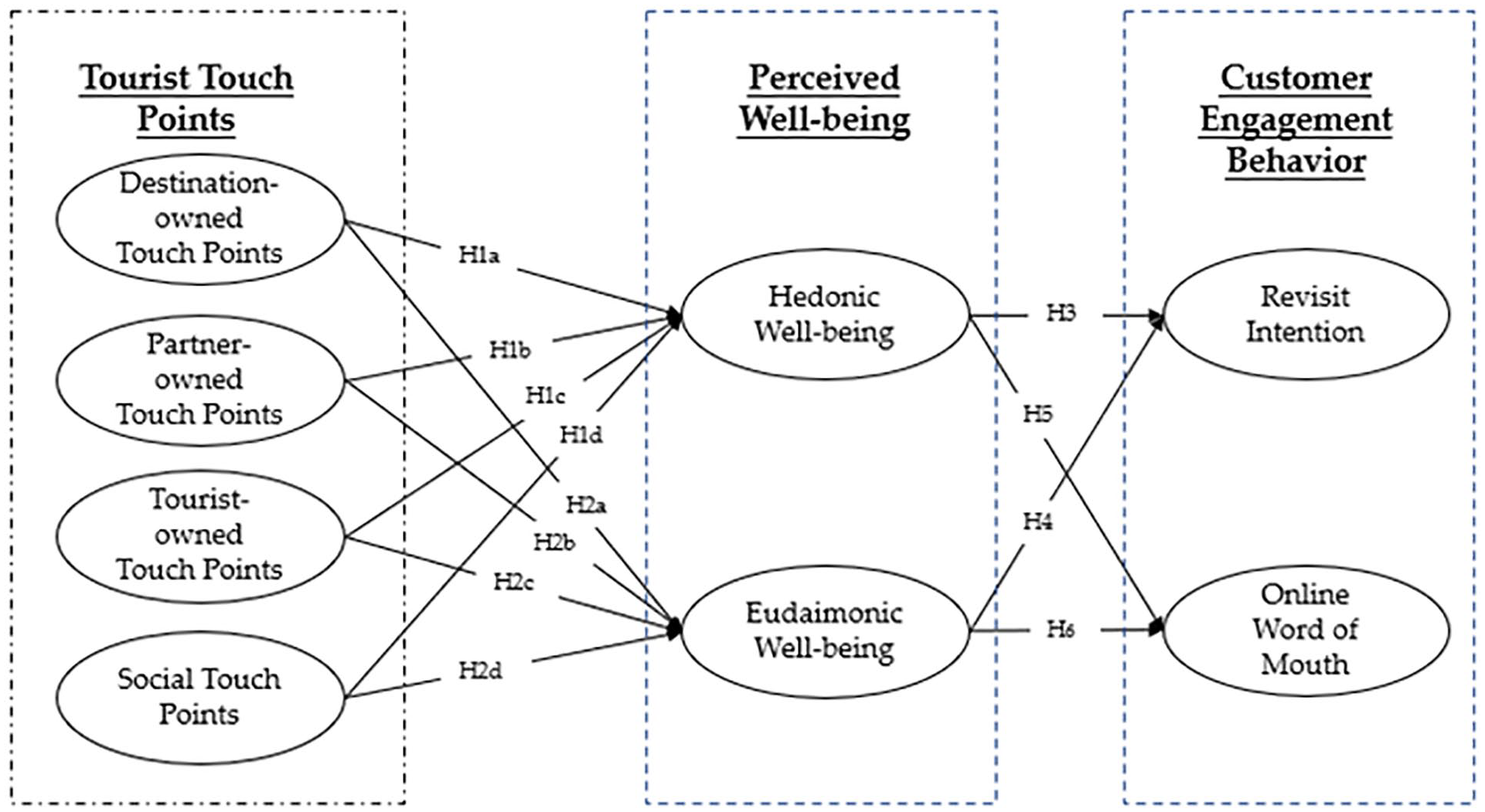
The conceptual model. The research model illustrates the structural relationships between tourists touch points, hedonic well-being, eudaimonic well-being, revisit intention, and online word of mouth.
Method
Measurement Development
All scales were developed based on the constructs mentioned in the literature review. Compared to the dimensions of memorable tourism experiences (i.e., hedonism, novelty, local culture, refreshment, meaningfulness, involvement, and knowledge) (Kim et al., 2012; Tung & Ritchie, 2011), tourism experiences derived from destination-based touch points, partner-based touch points, tourist-based touch points, and social touch points were each measured by five items, which were mainly developed based on the definition of touch points proposed by Lemon and Verhoef (2016) as well as the scales of Wang (2015). Perceived hedonic well-being and eudaimonic well-being were each measured by four items, which were developed based on the studies by Ahn et al. (2019), Diener (2009), and Vada et al. (2019). Revisit intention and Online Word of Mouth were each measured using four items, which referred to the scales of Meng and Han (2018).
Because all the referred scales were designed in English, the current work translated all the questionnaires into Chinese before conducting the survey. Next, a pretest was conducted on 50 Chinese students attending Jeonbuk National University who had previously experienced Nong Jia Le. Based on these participants’ responses to the questionnaires, we further revised and improved the questionnaires for improved clarity and fluency.
Survey Procedures and Data Collection
Chinese tourists who have experienced Nong Jia Le were the target subjects in our study. At the beginning of the questionnaire, participants were presented with a brief introduction to Nong Jia Le; Nong Jia Le is a unique form of Chinese rural tourism which is a kind of leisure tourism that is mainly focused on advocating a rural environment and lifestyle. Tourists can be provided with farm guesthouses, rustic food, and farm-related activities, and they can experience quintessential countryside activities, traditional rural life, friendly customs, and a healthy lifestyle. Then, to obtain valid questionnaires, the respondents were asked whether they had experienced Nong Jia Le in the past. If they answered “yes,” then they were required to recall this experience and further answer the questionnaire. After that, they were asked to complete the scales of the four touch points, scales of two types of perceived well-being, scales of revisit intention, and scales of online word of mouth. At the end, they were required to provide information about their gender, age, and income. The formal survey was conducted online using Wen Juan Xing, a special network platform for collecting questionnaires. The survey began on 10 May 2019 and ended on 20 May 2019. All the data can be downloaded directly and opened in Excel and SPSS. Finally, after deleting the useless questionnaires from 34 respondents that had not experienced Nong Jia Le, 316 valid questionnaires were finally obtained for further analysis.
Data Analysis
Principal component analysis in SPSS 22.0 was used to test the validity of all the developed scales. Structure equation modeling (SEM) was used to validate the research model. Amos 24.0 was used to test both the measurement and structural models.
Results
Demographic Results
In the main study survey, 350 questionnaires have been collected, and 34 participants have reported no “Nong Jia Le” tourism experiences; these responses have been deleted. Thus, 316 responses have ultimately been collected for analysis. The results show that all the respondents are from China, about 36.1% of the responders are men, 58.2% of them are in the range of 20 to 30 years old, and most of them have monthly incomes above 3,000 yuan. The specific demographic results are listed in Table 1.
Demographic Characteristics of the Research Participants.

Measurement Model
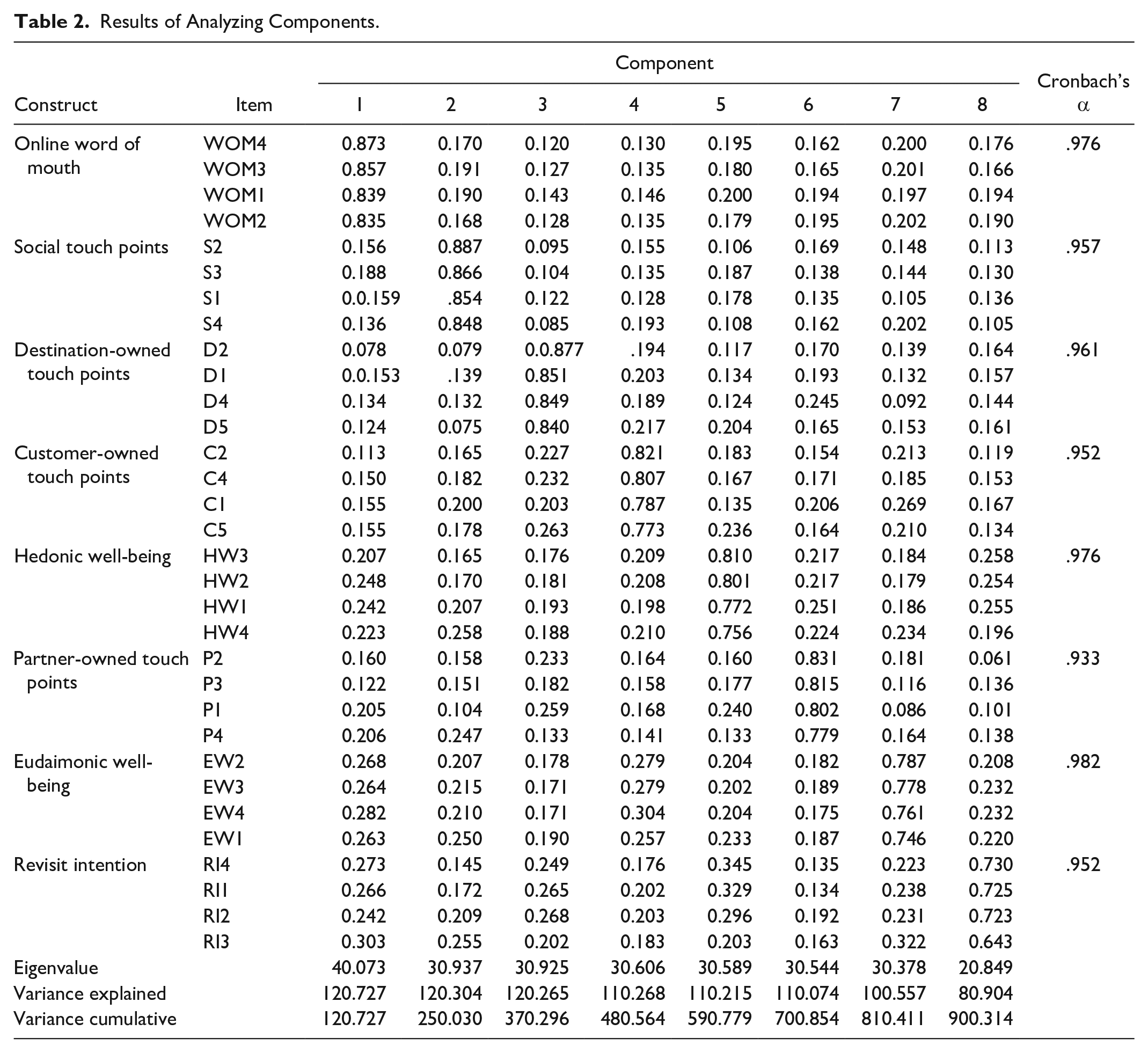
To verify the reliability and validity of the measurements, Cronbach’s α and principal component analysis were used in the first step. Based on the results of factor analysis, the item “the artificial landscape of ‘Nong Jia Le’ is full of local characteristics (D3)” measuring the destination-owned touch points, the item “the food provided by the restaurant around the ‘Nong Jia Le’ is fresh (P5)” measuring the partner-owned touch points, the item “I have acquired a lot of precious memories (C3)” measuring the tourist-owned touch points, and the item “I can learn about ‘Nong Jia Le’ through social media (S5)” measuring the social touch points were removed because of their lower factor loadings, to ensure better results. The results are listed in Table 2.
Results of Analyzing Components.
Then, structural equation modeling (SEM) was employed to analyze the research data using Amos 24. In the measurement model, all the constructs were modeled as correlated, and it showed a good model fit for the sample data, with the values of χ2 = 1001.937, df = 436, χ2/df = 2.296, p < .05, comparative fit index (CFI) = .961, normed fit index (NFI) = .934, Tucker–Lewis Index (TLI) = .956, root mean square error of approximation (RMSEA) = .064, and root mean residual (RMR) = .074.
The convergent validity and discriminant validity were used to measure the construct validity. All the items show convergent validity with statistically significant (p < .01) factor loadings (Anderson & Gerbing, 1988) and standardized factor loadings above 0.70 with critical ratios above 2.57 (Fornell & Larcker, 1981). The results of the measurement model are listed in Table 3.
Results of the Measurement Model.
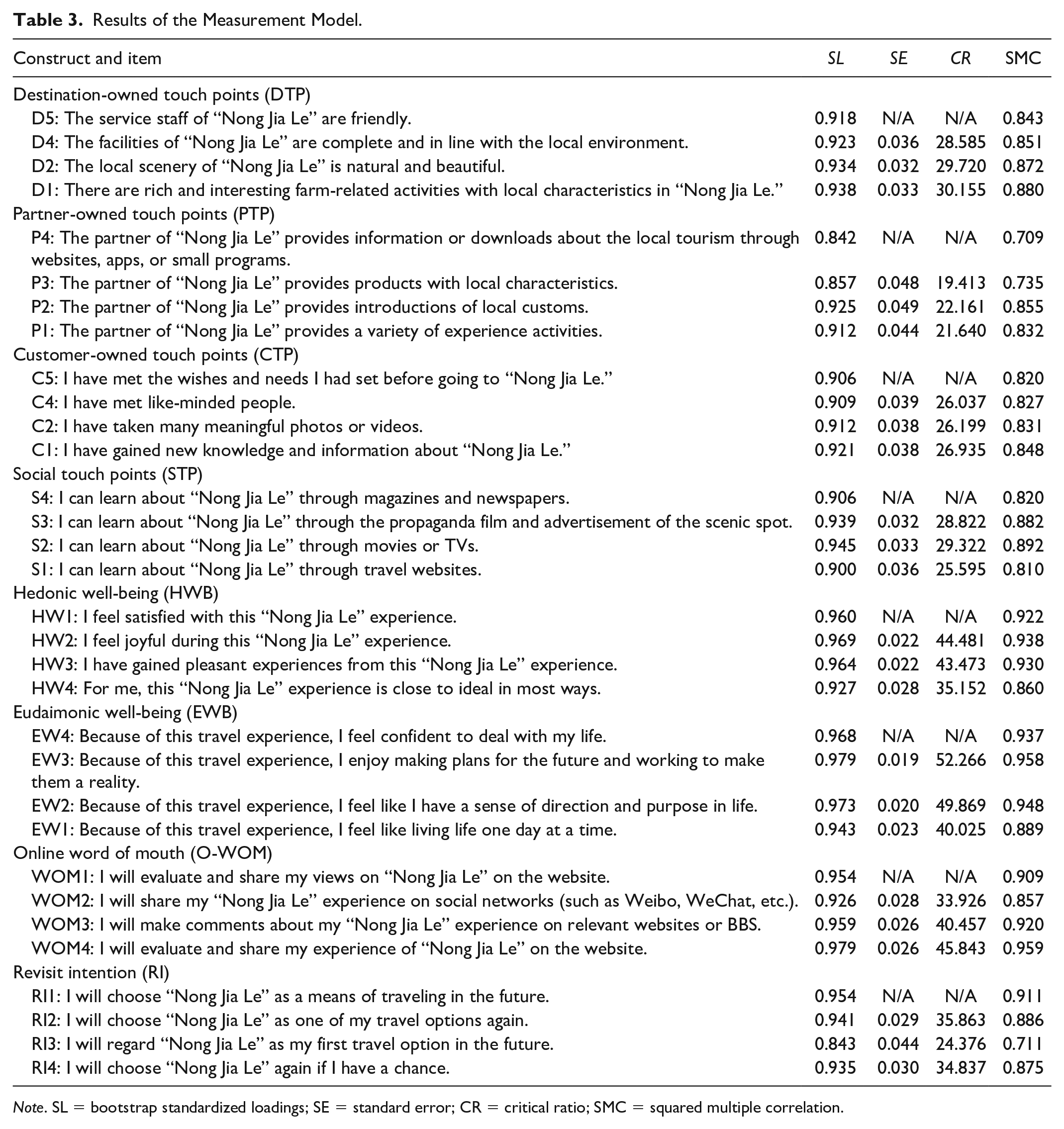
Note. SL = bootstrap standardized loadings; SE = standard error; CR = critical ratio; SMC = squared multiple correlation.
As suggested by Fornell and Larcker (1981), we assessed the discriminant validity of all the measured constructs. The results are presented in Table 4, which shows that the square root of the average variance extracted (AVE) for each factor was greater than its correlations with other factors. Therefore, the results supported the discriminant validity of all pairs of constructs.
Results of the Correlations and Discriminant Validity Assessment.

Note. The figures along the diagonal line mean AVE, and the figures in parentheses are the squares of the correlation coefficients. The abbreviations’ meanings are as follows: AVE = average variance extracted; DTP = destination-owned touch points; PTP = partner-owned touch points; CTP = customer-owned touch points; STP = social touch points; HWB = hedonic well-being; EWB = eudaimonic well-being; O-WOM = online word of mouth; RI = revisit intention.
Testing Hypotheses of Structure Model
The results of the test of the overall structural model are presented in Table 5 and Figure 2, and they indicate a good model fit with values of χ2 = 1071.734, df = 446, χ2/df = 2.403, p < .05, CFI = .957, NFI = .929, TLI = .9552, RMSEA = .067, and RMR = .137. The results of testing the hypotheses are as follows.
Results of Testing Hypotheses.
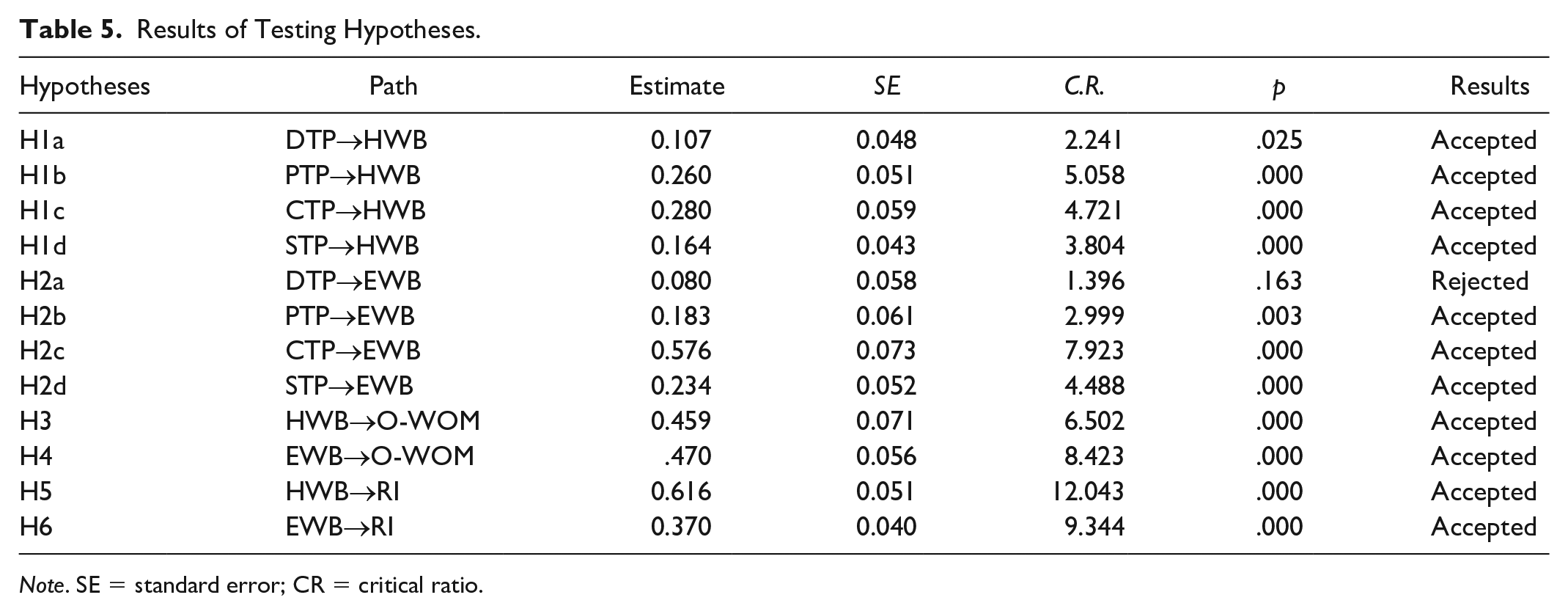
Note. SE = standard error; CR = critical ratio.

The path model. The numbers in the paths are the estimates of each path coefficient, and ***means p < .000, **means p < .01, and *means p < .05.
First, hypothesis 1, which explored whether tourism experiences positively contribute to hedonic well-being, is supported. As listed in Table 5, all the destination-owned touch points (H1a, C.R. = 2.241, p = .025), partner-owned touch points (H1b, C.R. = 5.058, p = .000), customer-owned touch points (H1c, C.R. = 4.721, p = .000), and social/external touch points (H1d, C.R. = 3.804, p = .000) show significant effects on hedonic well-being.
Second, the results show that tourism experiences including partner-owned touch points (H2b, C.R. = 1.369, p = .163), customer-owned touch points (H2c, C.R. = 7.923, p = .000), and social/external touch points (H2d, C.R. = 4.448, p = .000) all positively contribute to eudaimonic well-being, with only destination-owned touch points (H2a, C.R. = 1.396, p = .163) having no such effect.
Third, both hedonic well-being (H3, C.R. = 12.034, p = 0.000) and eudaimonic well-being (H4, C.R. = 9.344, p = .000) positively affect revisit intention. In addition, hedonic well-being (H5, C.R. = 6.502, p = .000) and eudaimonic well-being (H6, C.R. = 8.423, p = .000) show significant effects on online word of mouth.
Discussion and Implications
Discussion
In this study, a research model was developed to comprehensively explore the relationships between multiple tourism touch point-oriented experiences, well-being, and tourist behavior in China. In an attempt to bridge the research gaps in the tourism domain and follow the research in marketing (Ahn et al., 2019; Vada et al., 2019), the current study demonstrates the predictive power of multiple touch points during a tourism experience in both perceived well-being and tourist behavior intentions. Specifically, the developed conceptual framework explores the relationships between (1) four types of touch points in tourism experiences and perceived hedonic well-being; (2) four types of touch points in tourism experiences and perceived eudaimonic well-being; (3) hedonic well-being and tourist revisit intention; (4) hedonic well-being and tourist online word of mouth; (5) eudaimonic well-being and tourist revisit intention; and (6) eudaimonic well-being and tourist online word of mouth. The current study first confirms the positive effects of four types of touch points in tourism experiences on perceived well-being, and then presents the positive relationships between perceived well-being and behavioral outcomes.
In the tourism domain, there is still a lack of quantitative approaches referring to multiple touch points and well-being. Expanding the literature, the present findings demonstrate that four types of touch points, specifically destination-owned, partner-owned, tourist-owned, and social touch points, positively affect perceived hedonic well-being. The findings also show that partner-owned, tourist-owned, and social touch points positively affect perceived eudaimonic well-being. However, despite the core roles of multiple touch points (Lemon & Verhoef, 2016), destination-owned touch points did not show a significant effect on eudaimonic well-being. A plausible reason for this can be found in the definition of eudaimonia: Perceived eudaimonic well-being is a kind of psychological feeling of personal growth and functioning after a tourism experience (Lambert et al., 2015). That is, customers can either feel a sense of personal growth from the tourism experience or learn something valuable from the tourism experience. Thus, perceived eudaimonic well-being may be more related to the touch points reflecting customers’ subjective choices. Meanwhile, destination-owned touch points refer to interactions with tourists that are controlled by the firm (Lemon & Verhoef, 2016), which is the destination itself, such as destination attributions or performance. Thus, it seems reasonable that destination-owned touch points do not affect eudaimonic well-being.
Finally, the study finds that hedonic well-being positively affects tourists’ revisit intention and online word of mouth. Similarly, eudaimonic well-being also positively affects tourists’ revisit intention and online word of mouth. In other words, when tourists perceive high levels of hedonic and eudaimonic well-being, they are more likely to revisit the destination and provide positive word of mouth for that destination on social media. Therefore, to encourage tourists to exhibit destination engagement behaviors such as revisit and online word of mouth, tourism firms should focus more on enhancing customers’ perceived hedonic and eudaimonic well-being by improving customer experiences through appropriate positioning of the four types of touch points.
Academic Implications
This study mainly contributes to the literature in the fields of tourism experiences, well-being, and tourists’ engagement behaviors. First, from a methodological perspective, consistent with recent studies (Baxendale et al., 2015; de Haan et al., 2016), the present results exhibit the advantages of measuring multiple touch points in tourism experiences. The current study systematically explains the concepts of destination-owned, partner-owned, tourist-owned, and social touch points, then discusses the relationships of those factors with perceived well-being, which overcomes the limitations of the current studies in the tourism domain and provides a new perspective from which to measure tourism experience. The previous studies have focused more on the memorability of tourism experience using a scale of seven dimensions (i.e., hedonism, novelty, local culture, refreshment, meaningfulness, involvement, and knowledge) (Kim et al., 2012; Tung & Ritchie, 2011), thereby simultaneously increasing the complexity of the empirical measurement and ignoring the social nature of experience (Lemon & Verhoef, 2016); by contrast, this study adopts a touch point-based method and considers experiences from the perspectives of the brand, partner, customer, and social considerations, which decreases the measurement difficulty and expands the integrality of each of the scales. Moreover, the current work expands the current tourism literature by introducing customer touch points from the marketing domain into the tourism domain. Further, based on the S-O-R model, the findings that tourism experiences derived from multiple touch points based around the destination, partner, tourists, and society can positively affect perceived well-being demonstrate that customer touch points are important antecedents that influence tourists’ internal states. Hence, the current study provides theoretical support for clearly describing tourism motivation.
On the other hand, classical psychology findings indicate that individuals feel the need to self-actualize after having satisfied their physiological, safety, social, and egoistic needs (Yawson et al., 2009). In addition, the theory of self-determination (Ryan & Deci, 2000) implies that individuals can perceive a sense of eudaimonic well-being or self-realization if they fulfill their basic psychological needs of autonomy, competence, and relatedness. Ryff (1995) proposes that psychological well-being consists of six dimensions of autonomy, personal growth, self-acceptance, life purpose, mastery, and positive relatedness, and has demonstrated that the human need for actualization is distinct from subjective well-being. However, current research only puts weight into hedonic well-being, thereby dismissing eudaimonia (Pearce & Packer, 2013). The current study takes both hedonia and eudaimonia into account, defines and differentiates these two categories of well-being in detail, and further explores the relationships with tourism experience and with tourist engagement behaviors. Further, previous studies have mainly focused on the role of customer satisfaction in modifying the effect of tourism experience on tourists’ behavior outcomes (Chen et al., 2020), and few of them have placed importance on perceived well-being in this domain. This study extends the current tourism and marketing literature by introducing the concept of perceived well-being from the field of psychology, specifically by suggesting that perceived well-being is an important psychological motive that customers tend to pursue during a trip.
Finally, customer engagement behavior is regarded as customers’ direct or indirect activities toward firms, and these interactive activities usually provide firms with value. Except for customers’ direct contributions to a tourism firm (e.g., revisiting a destination), their indirect contributions (e.g., providing online word of mouth) also have an important effect on the sustainable development of the tourism industry. In the current era of social media, customers are able to directly interact with each other and with the organization through social networking (Harrigan et al., 2015). In addition, the massive amounts of content created by customers’ online interactions can not only help other customers know a brand (e.g., a tourist destination) better, but also help the tourism firm understand their customers’ appeals (Dolan et al., 2019). Thus, online word of mouth is a significant behavior variable to which researchers in both the tourism and marketing domains should attach more importance. Thus, our findings indicating that perceived hedonic well-being and eudaimonic well-being positively affect tourists’ online word of mouth provide a valuable supplement for tourism marketing literature.
Practical Implications
From a managerial point of view, the present findings offer valuable marketing implications for tourism destination management. Specifically, this research adopts a touch point-focused insight, and it finds a positive relationship between multiple types of touch points in tourism experience and perceived well-being. More concretely, the findings show that destination-owned touch points favorably affect perceived hedonic well-being, suggesting that destination managers should aim to make infrastructure improvements. Managers need to emphasize the design of landscape and entertainment programs so that visitors can easily be attracted and feel hedonic pleasure. Managers should have insight into customers’ motivations for visiting a tourist destination. Tourists typically want to relax during a trip, or they may want to experience a different lifestyle than their own. Thus, managers can add farm-related entertainment to the basic landscape. Regarding the accommodations, managers can add retro and nostalgic design touches while still ensuring comfort. The findings show that partner-owned touch points positively influence both hedonic and eudaimonic well-being. Thus, tourism providers and local businesses should more highly value the construction of supporting facilities such as convenient transportation, along with facilities that present local customs. In addition, it is essential to ensure that public service facilities are maintained well to create a comfortable travel environment. For example, to make tourists feel comfortable and valued, tourism providers and partners should make sure to provide clean public toilets, convenient parking areas, clear road signs aimed at tourists, and a tourist reception and information center. Meanwhile, tourist-owned touch points cannot be neglected, as they are favorably related to both hedonia and eudaimonia. Destination managers, marketers, travel agencies, and tour operators need to determine precisely what their customers want from a trip, because tourists weigh their own gains during a travel experience. Finally, as this is the era of information and the Internet, increasing numbers of tourists are searching for information on the Internet before planning their travel strategies. An individual can achieve hedonic and eudaimonic well-being when they search for useful tourism experiences and strategies through social touch points such as social media and websites. Improving the customer experience is an ideal way to make tourists identify and interact with a destination more. Marketing managers should present detailed information about the destination and take advantage of social media to help customers effectively design their tourism experiences. Even though it is not easy for tourism marketers or managers to control the online contents created by customers, they can actively create and manage social media posts, as well as use those posts to drive customer interaction. For example, marketers can provide entertaining and attractive information regarding their tourist destination to increase potential customers’ passive engagement, such as paying attention to and processing the contents. They can also provide remunerative contents to incentivize customers to actively like or share the contents.
In addition, the results demonstrate a positive relationship between perceived well-being and tourist behavioral intentions, implying that destination managers should take both hedonic well-being and eudaimonic well-being into consideration when designing their approaches. Even though most tourists participate in tourism in the pursuit of hedonic enjoyment, increasing numbers of tourists are aiming to feel a sense of personal growth and achievement after a tourism experience. Thus, to maximize tourist satisfaction, marketing campaigns should stress the benefits of their packages in terms of not only hedonic well-being but also eudaimonic well-being. Tourism marketers should think seriously about how to allow tourists to feel meaningful and valued during a trip, how to help tourists experience growth through a trip, and how to help them feel a sense of achievement.
Finally, the current study emphasizes the important role of online word of mouth for tourism firms, and identifies significant psychological drivers (i.e., perceived hedonic and eudaimonic well-being) of online word of mouth. Thus, in practice, tourism managers should attach more importance to and take full advantage of social media platforms, because they are important carriers through which customers can create online word of mouth. For example, marketers can encourage tourists to create and share posts about their tourism experiences wherein they describe the positive emotions and sense of growth they felt during the trip. Marketers can also encourage their customers to recommend the destination to others both offline and online through monetary incentives. Meanwhile, to maximize firms’ benefits, marketers should take negative word of mouth seriously, try to decrease the spread of negative online word of mouth, and improve the tourism experience by gathering and acting upon customer feedback.
Limitation and Future Research
Although the current study makes several important theoretical and managerial contributions, it still has some limitations. First, the sample size is relatively small, which confines the universality of the model. Further, this study only focuses on domestic tourists who have experienced leisure tourism, and foreign tourists may have different responses. Previous research shows that the behavioral intentions and senses of satisfaction of domestic customers are distinct from those of foreign visitors (Prayag et al., 2017). Therefore, future research should increase the sample size and include international tourists to improve the generalizability of the model.
Further, although current research into touch points provides new insights for academics and practitioners in the tourism domain, some researchers have further divided customer touch points into firm-originated and customer-originated touch points, according to the initiator (de Haan et al., 2016). To help tourists better identify and interact with the destination, future research should further explore these two kinds of touch points, apply them into the current model, and compare those results with the present results.
Finally, the current work sheds light on the roles of customer touch points and perceived well-being in the post-experience behavioral outcomes of tourists. Although revisit intention and word of mouth intention are significant references for improving destination management, future research could introduce other relevant constructs such as post-experience feedback (Pansari & Kumar, 2017), place attachment (George & George, 2012), and tourist co-creation (Dong et al., 2008). Feedback is a core tool for understanding precisely what consumers want (Pansari & Kumar, 2017). Customer feedback can help tourism experience providers better understand their targets’ preferences as well as improve their service quality by giving them access to comprehensive customer knowledge (Kumar et al., 2010). Place attachment, emotional attachment toward a tourism destination, has been proven to be affected by memorable tourism experiences through the mediation of well-being (de Haan et al., 2016), which suggests that place attachment may be a possible outcome after a multiple touch points-based tourism experience that enhances the perception of well-being. Another possible outcome that plays a significant role in sustainable tourism is customer co-creation, a kind of valuable behavior to service providers that customers actively provide. While most studies have focused on the situation of service recovery when discussing co-creation, it seems that it can be induced when the consumer perceives a high level of well-being. Therefore, future research should further explore the effects of multiple touch points-based tourism experience and well-being on feedback, place attachment, and customer co-creation.
Footnotes
Acknowledgements
Thanks for all contributions of authors toward current study.
Author Note
Chang Chen is now affiliated to Fujian University of Technology, Fuzhou, China.
Declaration of Conflicting Interests
The author(s) declared no potential conflicts of interest with respect to the research, authorship, and/or publication of this article.
Funding
The author(s) disclosed receipt of the following financial support for the research, authorship, and/or publication of this article: This research was funded by Chinese National Funding of Social Sciences, grant number 17BJY185 and the Research Start-up Foundation of Henan Finance University, grant number 2021BS009.
Ethics Statement
An ethics statement (including the committee approval number) for animal and human studies. If this is not applicable, please state this instead.
