




Abstract
The uses and management of capital is extremely important to the operation of any businesses. However, not all businesses have available capital, so the use of loans in many different forms is always an effective solution in managing corporate finance. Accompanying with businesses, many financial leasing companies have implemented products and programs to lend money to businesses with low interest rates. So, choosing the best financial leasing company is a primary concern of businesses. To increase competitiveness, financial leasing companies often offer preferential conditions to attract businesses. Choosing the best financial leasing service to leasing is important and necessary to those businesses. Thus, the selection of a financial leasing company by small and medium enterprises benefits from the application of Multicriteria Decision-Making (MCDM) methods which allows the decision maker to consider various qualitative and quantitative criteria. In this article, the author applied Fuzzy Analytical Network Process (FANP) to calculate the related criteria weights of the financial leasing company selection problem of businesses. Then, the Technique for Order of Preference by Similarity to Ideal Solution (TOPSIS) is applied to rank the potential decision-making units. This research establishes one complete and efficient model for financial leasing company selection using FANP and TOPSIS methods. The proposed model is then applied into a real-world case study to demonstrate its feasibility.
Introduction
According to the Vietnam Economic Census, there are more than 500,000 enterprises. The same source identifies an increase of 51.6% compared with previous years, of which small and medium-sized enterprises (SMEs) account for more than 98% of businesses in Vietnam (Vo et al., 2011). To operate effectively, any business needs to have cash to support its operations. SMEs are no exception, but due to characteristics of their size, SMEs have different levels of access to funds and a host of other financial characteristics which set them apart from large companies.
In the past decades, besides formal capital mobilization channels from banks, financial leasing companies have also contributed a lot to supporting businesses in Vietnam to solve capital difficulties. SMEs have taken advantage of the financial leasing to equip machines, equipment, and vehicles to serve production and business activities for their businesses. The construction, transport, and telecommunications industries are known to make the greatest use of these assets. At the same time, the cost of investing in these assets are high. Such investments in equipment may be beyond the financial capacity of SMEs. In addition, overinvestment in one area may limit cash flow causing the business to be less flexible and affecting business activities in return. This is the concern of many SMEs operating in the country.
Besides the internal difficulties, external obstacles are also causing problem. SMEs have difficulty accessing bank loans due to various reasons, namely, the lack of collateral assets, insufficient managerial experiences, micro size, and limited participation in production networks and value chains (Vo et al., 2011). Because of the difficulties faced by SMEs in accessing bank loans, to maintain their business operations, they had to change the capital mobilization channel, and financial leasing was one of the prioritized options (Vo et al., 2011). At the same time, industry production is a focus of the State in the current period of industrialization and modernization in Vietnam. Many manufacturing enterprises choose not to invest in the purchase price of facilities, but instead rent equipment and means of transport through financial leasing companies. This helps them easily update the latest technology for their business despite limited capital liquidity (Vo et al., 2011).
In this article, the author applied Fuzzy Analytical Network Process (FANP) to determine the weight of all criteria affecting bank loan decision making in the first stage of the process. In the second stage, the Technique for Order of Preference by Similarity to Ideal Solution (TOPSIS) is used for ranking all potential financial leasing service providers in the final stage. FANP and TOPSIS are selected to build the model due to their easy-to-understand nature and wide availability in different decision-making software. This will help with the applicability of the proposed model by the targeted SMEs.
The primary goal of this research is to propose an effective Multicriteria Decision-Making (MCDM) model and establish a single complete and efficient model for financial leasing company selection using FANP and TOPSIS methods and offer protection against high ratio of overdue loans. The proposed model is then applied into a real-world case study to demonstrate its feasibility.
Literature Review
MCDM methods have been widely applied to support decision-making processes in various disciplines and industry sectors (Wang et al., 2019; Wang, Nguyen, Thai, et al., 2018; Wang, Tsai, Ho, et al., 2020; Wang, Tsai, Nguyen, et al., 2020; Yılmaz & Kabak, 2020). Over the years, there also have been multiple literatures published in prestigious scientific journals studying the financial leasing company selection problem with MCDM-based approaches. Pukala and Petrova (2019) proposed a Analytic Hierarchy Process (AHP)–based approach to the process of financing innovation sources selection by companies. In the mining industry, Chalúpková & Franek (2014) introduced an AHP-based decision support system in a comparison of financial leasing and loans processes. The research employed AHP and sensitivity analyses to select the optimal form of asset acquisition based on clients’ selected criteria.
Che et al. (2010) approached the bank loan decision-making problem of SME in Taiwan with a fuzzy MCDM model. The proposed model employed fuzzy AHP method to identify important indices of the loan evaluation process. Visalakshmi et al. (2015) proposed a fuzzy MCDM model evaluate to India’s 14 GREENEX companies financial performance. The study addressed many different manufacturing sectors.
Lin (2014) applied MCDM methods to evaluate mobile banking system service. The study combines decision-making trial and evaluation laboratory (DEMATEL) and DEMATEL-based ANP (DANP) to create a network relationship map and calculate the weights of criteria. Kou et al. (2014) proposes an evaluation approach for bank loan default classification models based on MCDM methods. Mukerjee et al. (2002) proposed a novel multi-objective evolutionary model, to support bank-loan portfolio management process. Garcia-Bernabeu et al. (2015) introduced a decision support system to assist with the project finance management process in the renewable energy sector.
Podviezko and Podvezko (2014) proposed in their article a new application framework for existing MCDM models. This framework allows the evaluation of unique objects and processes which opens new use cases for known MCDM models. Gutiérrez-Nieto et al. (2016) proposed a credit score system based on the social and financial conditions of the loanee. Shaverdi et al. (2011) approach the evaluation of private banks based on MCDM methods. The proposed approach is built upon fuzzy AHP, TOPSIS, and ELECTRE methods in combination with Balanced Score Card (BSC) method.
Gavalas and Syriopoulos (2014) proposed a framework based on alternative business cycles condition to support the preferential collateral assets evaluation process of banks. Aye (2020) implemented the decision support system for selecting the bank’s loan by using TOPSIS. This system will be implemented using JAVA programming language with Microsoft SQL Server database. Steuer and Na (2003) composed a complete bibliography on the application of MCDM techniques in the finance sector. There have been many cases where MCDM techniques were employed to assist in decision-making processes with various approaches, from multiple objectives programming to AHP, in different areas of finance. Chin-Tsai and Yi-Shan (2008) introduces a Delphi-based framework using AHP and Gray Relational Analysis (GRA) to support the credit ability assessment of companies in the Taiwanese solar energy industry. Vitoria (2016) introduces a decision support framework for the financial management of renewable energy projects based on Moderate Pessimism Decision-Making (MPDM) model.
Aliakbarzadeh and Tabriz (2014) employ fuzzy AHP and TOPSIS method to solve the performance evaluation of banking branches. Zhao et al. (2019) proposed a hybrid MCDM model based on DEMATEL, DANP, and modified VIKOR model to evaluate the performance gaps in service innovation among the four main types of commercial banks in China. Wu et al. (2012) propose the application of AHP and TOPSIS to support the credit risk evaluation process of banks.
This article aims to propose an effective MCDM model and establish a single complete and efficient model for financial leasing company selection using FANP and TOPSIS methods.
Method
Research Process
The proposed financial leasing company selection model implementation process main stages are shown in Figure 1:
Stage 1: Analyzing the current financial situation of the SME and identifying critical criteria of the financial leasing service provider selection process through discussion with experts and consulting relevant literatures. A list of potential financial leasing service providers is also identified through the industry experts.
Stage 2: Applying FANP method to calculate the weights of the criteria and sub-criteria. A classical consistency ratio check of the FANP method’s result is also performed.
Stage 3: Employing TOPSIS method to obtain the final ranking of the potential financial leasing service providers.

Research graph.
Basic Theory
Fuzzy set
Fuzzy set is a useful tool that is commonly utilized to address issues within uncertain environments. A triangle fuzzy number (TFN)
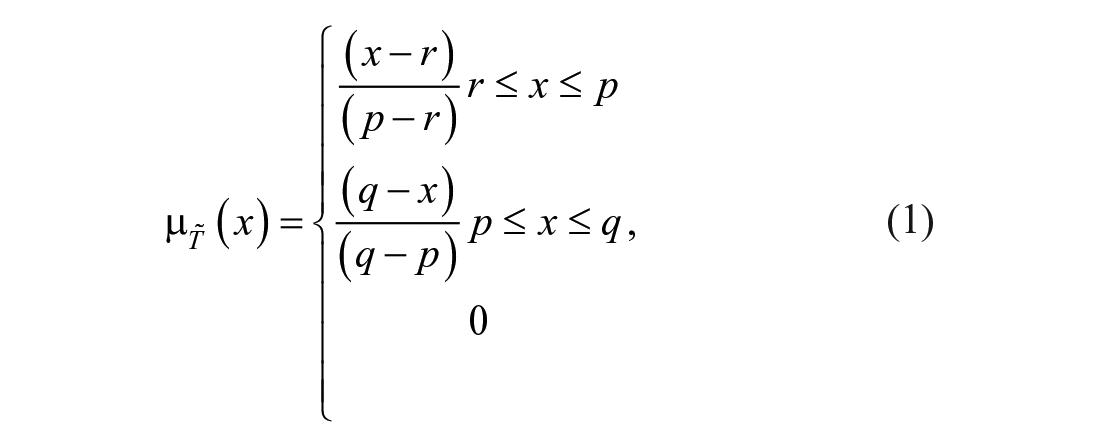
Each degree of membership consists of the left and right parts of the TFN:

A TFN can be described as in Figure 2.
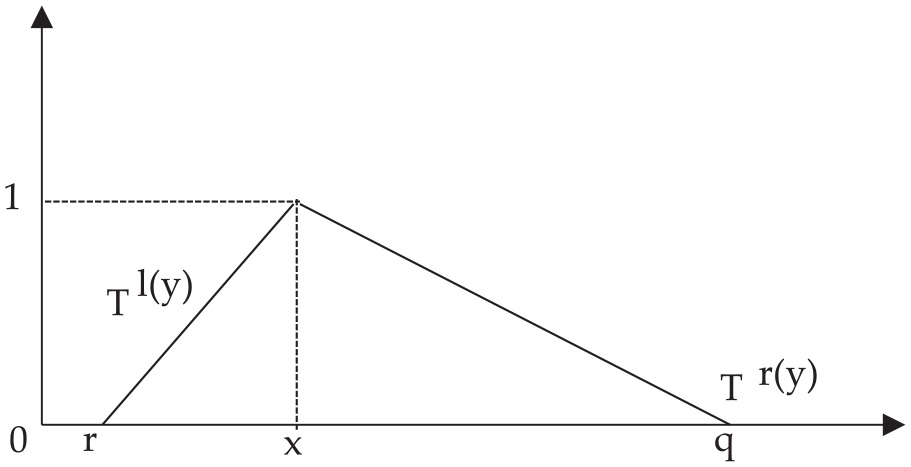
A triangular fuzzy number.
Fuzzy ANP model
FANP method
Due to FANP relative simplicity in comparison with fuzzy analytical hierarchy process (FAHP), FANP is frequently used as an alternative to FAHP in calculating priority weights from fuzzy comparison matrices (Wang, Nguyen, Duong, et al., 2018).
Let

where

With the fuzzy addition operation of m extent calculated values of the element matrix

The fuzzy additional operation of

Then, the inversion of the vector in Equation 5 is determined by,


which can also be shown as,

where d is the coordinate difference line of the greatest intersection at point D between

Assuming that

where


TOPSIS
Hwang and Yoon first proposed the TOPSIS method in 1981. A classic TOPSIS process includes five steps as follows (Hwang & Yoon, 1981):

where

where

The difference to PIS of each alternative is calculated as,

The difference to NIS of each alternative is calculated as,

with

Finally, the
Case Study
The use of equity capital in investment projects to expand production and business will face many limitations in terms of scale. Therefore, the issue of finding alternative sources of capital for investment projects to increase asset capacity and expand the scale of production activities of enterprises is always a difficult problem for managers. This becomes even more difficult when the market for funding the economy today has a lot of options, diverse forms of products, types of credit, and providing organizations. The choice of load products requires certain knowledge and is the basis for determining a method to effectively select capital resources.
In Vietnam, the financial industry has been dominated by traditional financial institutions—a system of banking credit institutions providing diverse lending products—and new financial institutions including credit institutions. Non-banks such as financial leasing companies have increasingly played significant roles in the contribution toward the diversity of this market.
Having been in Vietnam since the late 20th century, the form of financial leasing has gradually proved its important role in the capital market especially for SMEs as well as large enterprises which are in the process of rapid growth with rapidly increasing demand for capital. In fact, the business operations of enterprises show that the improvement of products in terms of quality and models is carried out regularly and continuously to meet the increasingly difficult-to-meet needs of consumers and to cut costs in today’s competitive business environment. This is important due to the fact that assets such as machinery, equipment, and business facilities of most Vietnamese enterprises tend to be out-dated or otherwise lacking. Finding funding sources for projects on procurement of machinery and equipment is often sought by enterprises through the traditional financing channel of commercial banks. However, not all businesses meet the requirements of the operational capability, governance, development potentials, and so on that banks offer. In such cases, financial leasing is a credit product that businesses can easily acquire.
For this study, the authors applied a MCDM methodology to select the optimal financial leasing company. There are 10 financial leasing companies as given in Table 1.
Financial Leasing Companies List.
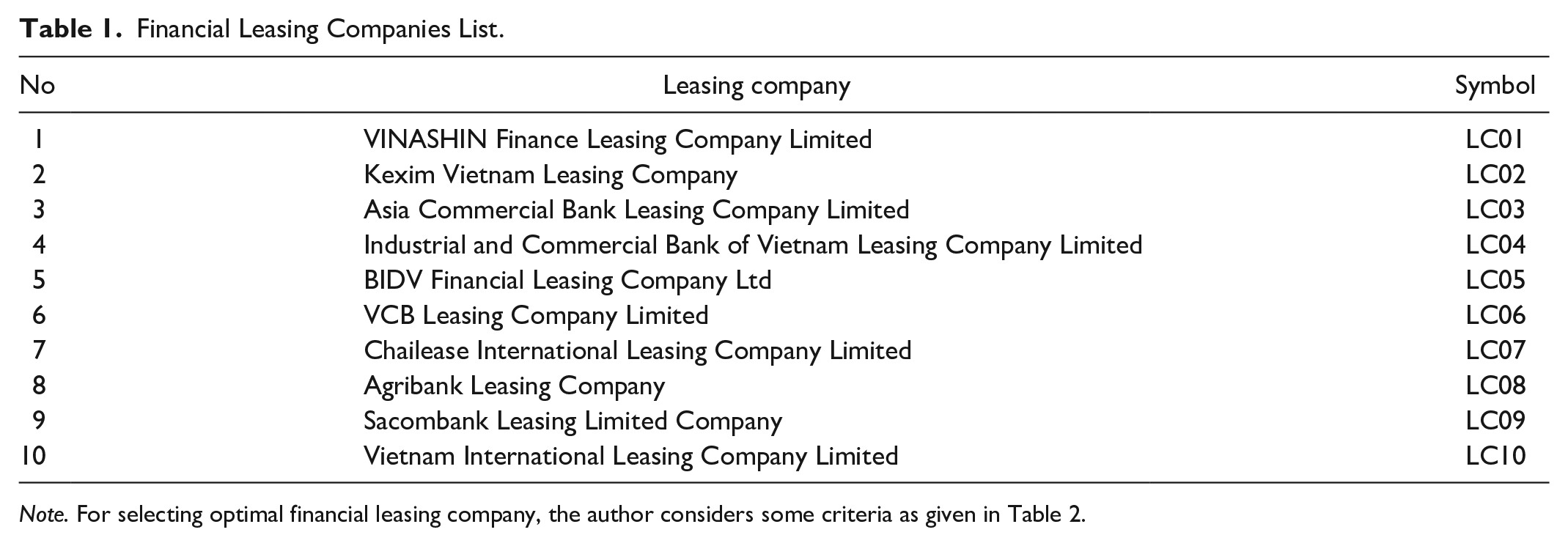
Note. For selecting optimal financial leasing company, the author considers some criteria as given in Table 2.
Criteria for Selecting Optimal Financial Leasing Company.
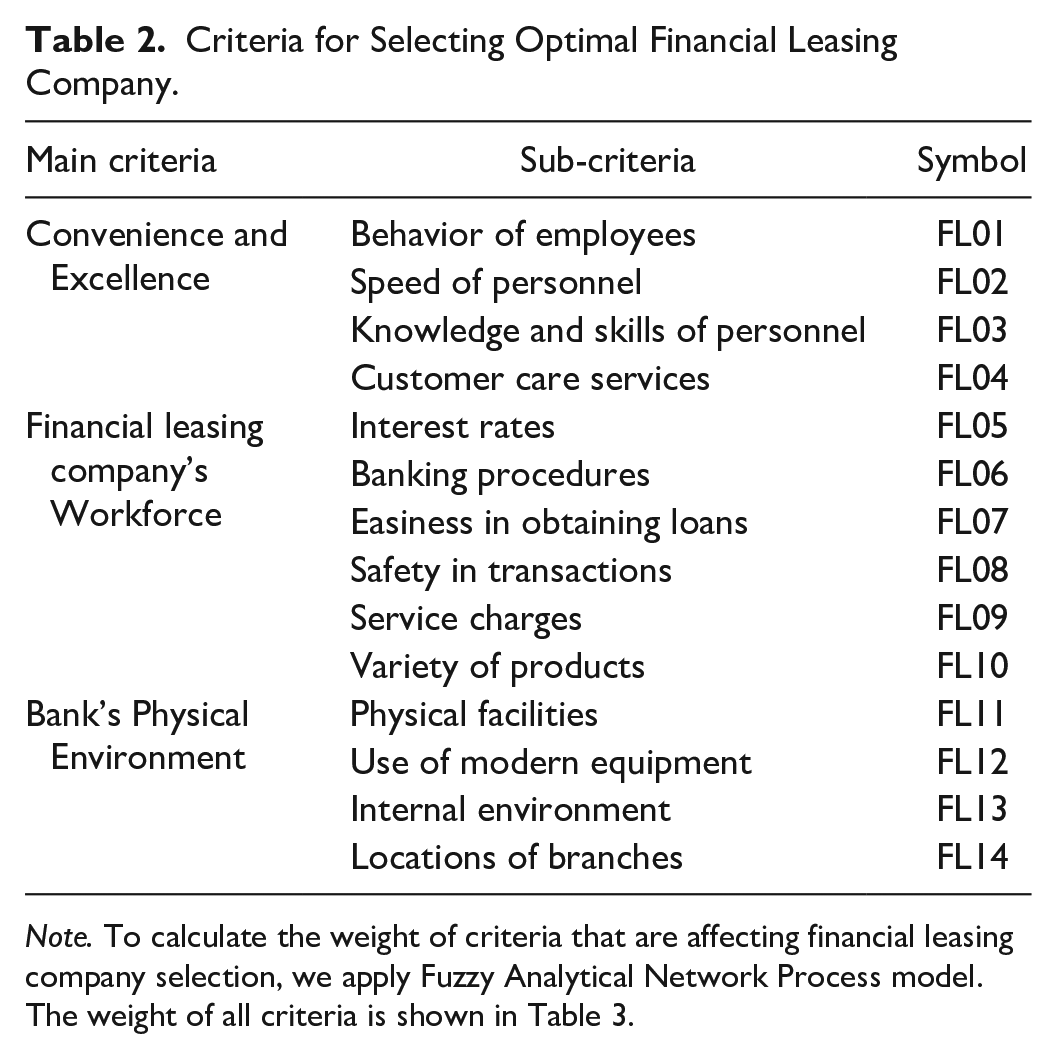
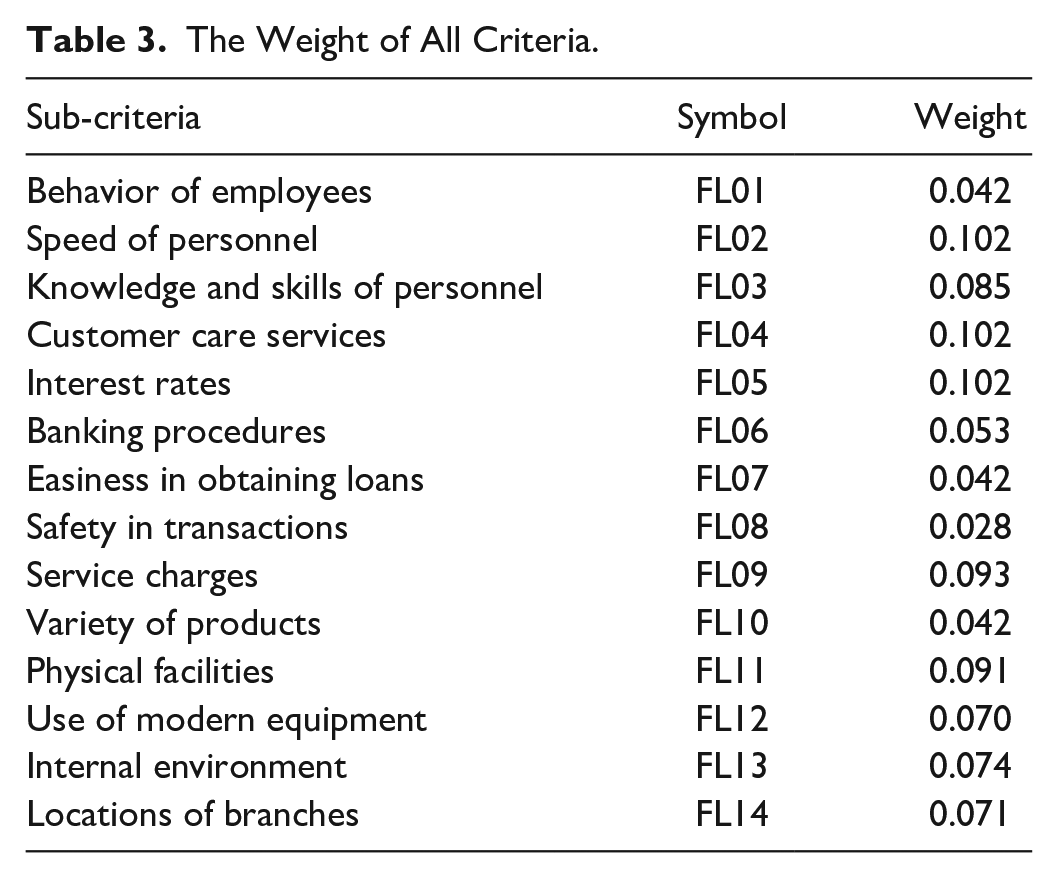
Note. To calculate the weight of criteria that are affecting financial leasing company selection, we apply Fuzzy Analytical Network Process model. The weight of all criteria is shown in Table 3.
The Weight of All Criteria.
For ranking potential leasing company, we apply a TOPSIS model in the final stage. The method was developed based on the concept that the chosen alternative should have the shortest geometric distance from the PIS and the longest geometric distance from the NIS. Our results are shown in Table 4, FL05 is optimal financial leasing company.
NIS and PIS Values.
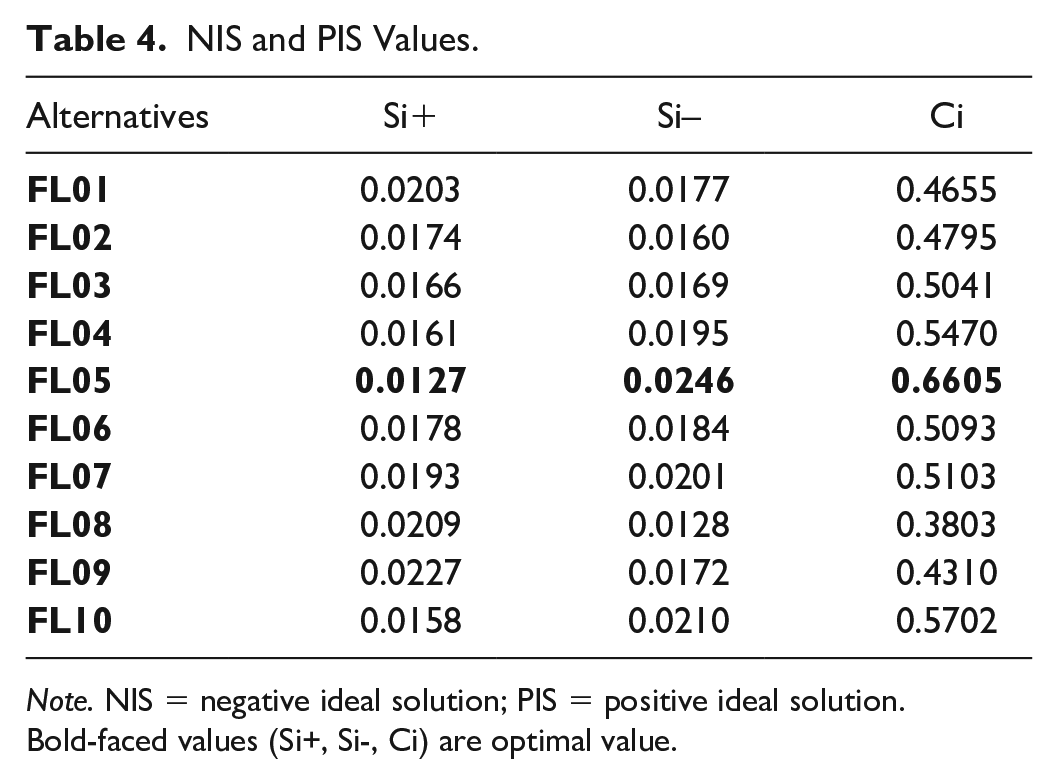
Note. NIS = negative ideal solution; PIS = positive ideal solution.
Bold-faced values (Si+, Si-, Ci) are optimal value.
Conclusion
MCDM techniques are very useful to decision makers, especially where the surrounded environment is highly complex. The goal of MCDM model building is to identify suitable approaches that are robust and effective in identifying the optimal alternatives among potential options. MCDM techniques and methods provide decision makers with a powerful tool which can identify the optimal option by analyzing the given criteria and their weights.
In this article, the authors proposed a MCDM model based on FANP and TOPSIS methods for financial leasing company selection by SMEs in Vietnam.
This research helps to establish a singular, complete, and efficient model for financial leasing company selection model with FANP and TOPSIS methods while protecting against high ratio of overdue loans. However, the proposed model has not considered the different criteria related to financial service selection processes in different industries. Therefore, future studies can modify the proposed approach using additional specific criteria to support financial service provider selection processes of different industries.
Footnotes
Acknowledgements
The authors appreciate the support from Taiwan National Kaohsiung University of Science and Technology, Fuzhou University of International Studies and Trade, and City University of Macau, Van Lang University.
Declaration of Conflicting Interests
The author(s) declared no potential conflicts of interest with respect to the research, authorship, and/or publication of this article.
Funding
The author(s) received no financial support for the research and/or authorship of this article.
