



Abstract
Social assistance is a cash transfer program targeting the poorest households. China has created the Dibao (DB), meaning minimum livelihood guarantee, the most extensive unconditional cash transfer program globally with over 70 million people covered, whereas in Albania, the Ndhime Ekonomike (NE) meaning financial help covers around 15% of the total working-age population. Both programs are means-tested, have strict requirements for eligibility, and have been enlarged and modified in time to improve targeting and tackling leakage. In this article, we will look at similarities and common issues first, and then calculate the cost of enlarging both programs to all working-age population with no means-testing. We argue that a UBI (universal basic income) can increase private expenditure in health and education while costing less than 1% of gross domestic product (GDP) in both countries’ rural areas. We will conclude by looking at how the COVID-19 outbreak is pushing developing countries toward a UBI by first adopting a temporary basic income (TBI).
Introduction
Social assistance programs played a key role in alleviating poverty ever since the establishment of the welfare state. According to Esping-Andersen (1990), countries belonging to the conservative model have implemented social assistance handouts since establishing a comprehensive welfare program. In Communist countries, the concept of social assistance was unknown as full employment made unemployment and social assistance programs unconceivable. During the transition to the market economy, social assistance programs were implemented to respond to the growing unemployment caused by the closure of state-owned factories (Gao, 2016).
This study will contribute to the growing scholarship on universal basic income (UBI) by looking at the Dibao (DB) in China and the Ndhime Ekonomike (NE) in Albania. Both programs are means-tested, have strict eligibility requirements, and have been enlarged and modified to improve targeting and tackling leakage. We argue that universalizing both programs will eliminate leakage while creating a multiplayer effect that would benefit the recipient’s communities and keep employment levels unaltered. The DB and the NE have substantial leakage (exclusion error rate) and mis-targeting rates (inclusion error rate), partially defeating the program’s goals as poorer households are excluded from the benefit while monetary resources are misallocated. However, leakage is inevitable in unconditional cash transfer and widely documented in comparative literature (Barrientos, 2013).
Finally, this study will calculate the cost of universalizing both programs at the rural and urban level for all the population between 16 and 65 years and analyze the share of benefit allocation on health and education among NE and DB receivers. The programs generosity, coverage, leakage, and mis-targeting rate will be used as comparative tools. Specifically, the term generosity refers to the benefit level as a percentage of the minimum wage. Coverage refers to the percentage of all eligible people effectively covered by the program. The leakage rate accounts those eligible for benefits but excluded due to errors, whereas mis-targeting refers to the opposite, the ineligible recipients who should be excluded.
The Current Global Trend on UBI
The scholarship on UBI has grown considerably in the last decades, from Thomas More’s Utopia of 1516 when the idea of basic income was first envisioned, and the support and research backing up the UBI has grown exponentially. Accordingly, in the 2 years between 2009 and 2010, 296 publications were reported having within the words “Universal Basic Income”—this trend grew to 600 between 2014 and 2015 and 1,760 between 2019 and 2020. Undoubtedly, the COVID-19 outbreak played a role in this growing trend together with improvement in automation and development in artificial intelligence (Birnbaum, 2016; Standing, 2020). Rising unemployment due to the COVID-19 pandemic accelerated support for UBI; indeed, in May 2020, 71% of Europeans supported the introduction of a UBI (Ash & Zimmermann, 2020)—this is a drastic shift when considering that in 2016 Swiss voters rejected a proposal to introduce a UBI, with 77% against and with only 23% backing it (Minder, 2016).
In this study, the UBI is defined as a monthly payment to all individuals, regardless of income status or contributions history (Van Parijs & Vanderborght, 2017). Among some of the arguments favoring a UBI, it could sustain individuals while earning new skills and better adapt to changes in the job market (Cato Institute, 2016). Meanwhile, it raises domestic demand and consumption, leading to higher output and economic growth (Standing, 2020). Arguments against the UBI often include the program’s cost or the risk of rising unemployment as people prefer to stop working, or a dangerous dependence between citizens and government (McDonough & Morales, 2019).
Although the UBI has been mostly analyzed from an economic perspective, in the last years, it has become part of the political debate as well, with growing support in countries with weak unemployment benefit like Italy and Spain (Vlandas, 2019). Indeed, the Italian government has introduced a “citizens’ income” for all unemployed citizens, currently the largest program with some UBI characteristics. Minor regional or local programs were introduced in the city of Utrecht in the Netherlands, with the program called Weten Wat Werkt–“Know What Works”; in Finland and Canada, similar programs were run with mixed results (Nagesh, 2019). In South Korea, Gyeonggi Province has implemented a program similar to UBI awarding US$500 per year to 13 million people. Overall, in 2020, due to the COVID-19 outbreak, around 132 developing countries have implemented a temporary basic income (TBI), a minimum guaranteed income above the poverty line for vulnerable people (United Nations Development Programme [UNDP], 2020). Other proponents have argued for a “rural basic income” (RBI) to be introduced within the European Union (EU) under the European Agricultural Fund for Rural Development (https://ec.europa.eu/regional_policy/en/policy/what/glossary/e/european-agricultural-fund-for-rural-development). The RBI would reduce economic pressure on rural residents by increasing spending capacity in local areas while keeping wealth within rural communities (Sellick, 2019).
This study aims at enriching the current scholarship on UBI by arguing in favor of a “rural UBI” by building upon previous studies on UBI and poverty trap (Abhijit et al., 2019; Jyotsna & Ravallion, 2002; McKenzie &Woodruff, 2006; Ravallion, 2008, 2009). Accordingly, in developing countries, targeting the poorest layers of societies (rural areas) with a fixed monetary amount might lower the poverty rate more effectively than targeting urban areas with the same amount as the poverty trap threshold is higher in urban areas than in rural areas. Therefore, in developing countries where a nationwide UBI is not economically sustainable, implementing a UBI at the rural level could be a first step in fighting poverty while reviving rural economies, thanks to the multiplier effect coming from growing income level.
In the next section, we will look upon the Albanian NE and the Chinese DB historical development and similarities between the programs. We will then move forward in the second part and consider the cost of universalizing both programs to all working-age population in rural and urban areas; as in postcommunist countries, the divide between urban and rural is still a significant factor influencing social mobility. The last section will consider both programs’ achievements within the broader scholarship of UBI and specifically the UBI impact on developing countries and rural areas.
Toward Market Economy and the Dismantlement of the Communist Welfare State
The choice to look upon Albania and China comes from the similarity in the program features, implementation timing, and traumatic reaction in the shift to the market economy. Indeed, as both countries moved out from a command economy toward a market economy, social assistance became the only safety net against nationwide unemployment. Countries members of the Eastern Bloc or Yugoslavia had a social assistance safety net already in place, which was transformed to convey toward the needs coming from the new economic model. In contrast, Albania and China had to invent social assistance from scratch, thus encountering similar issues in how they were implemented and run. Moreover, due to close historical links between the two countries (see Sino–Albania relations between the 1960s and 1970s), Marxist–Leninist doctrine was implemented with the same features. Indeed, Chinese scholars were sent to Albania to shape Albanian social policy development. However, the Sino–Albanian relationship had worsened considerably after Richard Nixon’s visit to China in 1972, thus prompting a strong reaction from the Secretary of the Party of Labour of Albania Enver Hoxha, calling Mao a revisionist abandoning the fight against American imperialism (Hoxha, 1979).
In China, despite more than a decade since the economic opening up in 1978, the socioeconomic side-effect of the opening up was felt only in the early 1990s. As privatization gains pace, most nonstrategic, state-run enterprises (SOEs) were systematically privatized or, after 1986, left in bankruptcy, and unemployment went up from around 3% in 1990 to almost 10% in 1999 (Zhai & Wang, 2002). Meanwhile, in Albania, Hoxha’s death left a power vacuum hard to fill, eventually pushing for market reforms and democratic election, with state-run industries closed or privatized.
In Albania, the economic transition brought unemployment to 23% in 1993 (World Bank 2018a), with a disruptive effect on the economy and society with the consequent risk of social unrest. To mitigate the rising poverty, while the economy was readjusting to the new economic model and eventually providing new jobs, the governments in Albania and China implemented a social assistance program able to sustain a minimum livelihood for unemployed citizens. Was in this scenario that the DB and the NE were envisioned, and although the programs were implemented as a response to the issues of the 1990s, they were kept in place, as discontinuing them would have been widely unpopular. Both programs were reviewed and enlarged throughout the years, and they score similar achievements in generosity, coverage, leakage, and mis-targeting rate while they remain essential programs in poverty alleviation.
DB, History and Evolution
The minimum livelihood guarantee or DB was first introduced in Shanghai in 1993, and in 2004 the central government called for the DB to expand and cover rural areas. By the end of 2006, roughly 80% of the provinces and counties in China had adopted some form of rural DB (RDB) program (World Bank, 2017). In 2007, the program was adopted nationwide in urban and rural areas with a different degree of success. By 2011, the DB participation reached 50 million individuals, equivalent to 8% of the rural population. Although the participation rate was kept at 50 million, spending on the program kept growing, from 466 yuan (US$60) per recipient in 2007 to 1,900 yuan (US$250) in 2015 (National Bureau Statistics [NBS], 2020).
The DB allows each municipality or county to set its own DB standard (essentially the poverty threshold under which awarding is granted). Anyone under that threshold is technically entitled to earn DB assistance (the DB total benefit will be DB threshold minus income). Eligibility for DB is based on individual income, not on family-based income, so a household member could qualify while another member may not (Gao, 2016). The definition of the DB poverty threshold plays a crucial role in defining the number of beneficiaries. The system works as a compensation adding to the individual income. For instance, in Beijing, where the DB threshold is set at 900 RMB per month, for a person whose personal income is 700 RMB per month, the DB benefit would add 200 RMB each month, enough to reach the Beijing DB threshold of 900 RMB per month.
The number of recipients differs dramatically across provinces, with Shaanxi having 41% urban household registered while recipients in Jilin were ranking the lowest at 11% (World Bank, 2017). When looking at rural household, the numbers changes once again. Tibet and Qinghai have 19% of rural household enjoying the DB benefit, whereas Xingjiang and Inner Mongolia ranked as the lowest, with 2% and 3%, respectively (World Bank, 2017). Regarding financing, the central government chips in a significant share in the poorer western provinces (100% in Tibet and 88% in Ningxia), whereas in coastline provinces, the burden is entirely up to the local government. Most provinces have set minimum urban DB (UDB) higher than the new national poverty line of RMB 2,300 (at 2010 prices) per person per year, whereas only nine provinces have set RDB threshold higher than the national poverty line (NBS, 2017). Indeed, the minimum living standards diverge widely from province to province, and between rural and urban areas, which is due to local development conditions and local government fiscal capacity. The RDB was equivalent to 37% of total rural consumption expenditure in 2018, whereas the UDB was 25% of total urban consumption expenditure in the same year (NBS, 2020).
An Investigation of DB Targeting and Efficiency
In China, a considerable distance and differences among provinces is an issue undermining policy effectiveness. Defining a universal register regarding income is a step needed to improve DB targeting, as municipal- or county-level officials do not have comprehensive income data such as those owned by the National Bureau of Statistic and local officials’ income data often comprehend a relevant degree of measurement error (World Bank, 2006). With that said, being local officials aware of the systematic lack of accountable measurement, they are likely to choose beneficiaries basing a final choice on observations or guesses (inherit a house could undermine DB benefit, even if the actual income is suitable for DB awarding) rather than wages or salaries. Despite this method’s questionable accuracy, China’s national policy entitles local officials to use observations to define income, especially in rural areas where wealth is easier to hide and harder to be defined. Furthermore, being aware of local officials’ current difficulties in defining DB beneficiaries, the policymaker explicitly mentions alternative benchmarks in income definition and measurement (World Bank, 2017).
A strategy adopted by local officials to improve targeting looks at family member health condition and age. By looking at family member health and age, local officials can have a clearer idea of household living conditions. In 2014, 20% of DB households had a family member above 60 years old, while 41% had a member in precarious health conditions and 35% had a member with some disability, whereas in not DB households, these numbers stand at 10%, 14%, and 12% respectively (Gao, 2016). On this issue, official statistics recorded an increase in DB expenditure between 2009 and 2013. In 2013, the total RDB budget was 2.4 times that of 4 years before. However, contrary to what most of the scholarship proposes, the higher rate of governmental expenditure on the program meant in most cases higher transfer amounts (increase in economic benefit) rather than widening coverage (increase in the number of beneficiaries). On this issue, Qin Gao (2016) concludes that increasing coverage is a more effective measure in diminishing poverty than rising transfer amounts, as rising coverage would reduce leakage and mis-targeting. Leakage has a minor impact in urban areas where income is tracked, whereas assess income in rural areas is harder with targeting accuracy becoming the main issue (Gao et al., 2009; Guan, 2019; World Bank, 2017). Accordingly, in rural areas, the poorest quintile receives 55% of the total DB expenditure, whereas this number is 80% in urban areas with the wealthier quintile receiving around 2% (Gao, 2016).
Mis-targeting and leakage are the primary sources of disruption in poverty reduction, with the impossibility to overcome errors entirely. Accordingly, on 10 RMB spent on the program, between 1 and 2.4 RMB reached the goal of reducing poverty, and with DB coverage rate standing now at 21% (Lu, 2013), the program efficiency is seriously undermined. According to Lu (2013), from 2009 to 2013, an average of 5% to 7% of households were defined as poor, with 265 of 4,273 households surveyed classified as poor, with mis-targeting standing at 79%. When looking at leakage (people who should not be assisted, but enjoy the DB due to errors in targeting), the program scores 55% in 2015 (Gao, 2016). Leakage is harder to define in rural areas, especially in counties where overall income is similar among households due to predominantly farming-oriented areas or lack of job opportunities allowing for a boost in household income.
In conclusion, errors in inclusion and exclusion are widely present in the program and in rural areas especially, and a coverage rate of 21% shows that the majority of poor qualifying for the benefit are excluded, whereas a leakage rate of 55% shows that the majority of the eligible families are excluded due to targeting errors. Therefore, the poorest quintile is awarded 55% of the benefit, with 45% of the benefit going to a richer quintile. Mis-targeting issues are clear in this regard, and Gao (2016) concludes that the DB has substantial leakage and mis-targeting rates, suggesting serious challenges in its population-targeting performance. Moreover, mis-targeting errors push DB receivers into a poverty trap, as they change expenditure behavior by cutting mainly on food and not necessary expenditure (Lu, 2013), potentially worsening household health conditions, thus decreasing chances of lifting themselves above the poverty line.
The Ndihma Ekonomike (NE), Albania’s Poverty Relief Program
In Albania, the NE was implemented during the transition to the market economy and is explicitly implemented as a poverty relief program. It was first enacted in 1993, due to growing poverty and unemployment in the aftermath of the dismantling of the communist command economy. The NE means-testing formula has been reviewed several times across the years with the most notable reform coming into force on January 1, 2018, resulting in a drop in the number of NE beneficiaries from about 80,000 households in December 2017 to 54,455 in May 2018. The considerable drop in beneficiaries is due to a sharp decline in financing; indeed, when the NE was launched, total expenditure was 1.4% of gross domestic product (GDP) down to 0.025% of GDP in 2018 (Ymeri, 2019).
The potential monthly benefit currently looks at the household composition, and it awards 2,600 Lek (US$22) for the household breadwinner and each member above 18 years old, and 700 Lek (US$6) for each member below the age of 18. Regardless of the household composition, monthly NE cannot exceed 7,000 Lek (US$55) for the entire household. Different from China, the program was meant to cover both urban and rural households since the beginning. For an urban resident, having no source of income was the only criteria required to be eligible, whereas in rural areas, the program was meant to help those rural resident owning a piece of land too small to feed themselves (Mangiavacchi & Verme, 2009).
The entitlement criteria are established by national law and apply unanimously at the national level, whereas local administration awards the benefit after checking whether entailment criteria are present. After years of communist overcentralization, the NE was the first public service scheme to be decentralized, with the municipalities/communes responsible for the awarding procedures. However, discretion in defining eligibility was reduced with reform in 2005, after years of abuses by corrupt local officers (Mangiavacchi & Verme, 2009) as bribes were often paid in exchange for eligibility (Alderman, 2002).
An Audit Upon NE Targeting Performance
Local authorities decide the applicant’s intake, eligibility determination, certification, and payments. However, serious flows have been evidenced when eligibility procedures (targeting) were studied (Mangiavacchi & Verme, 2009; National Centre for Community Services of Albania [NCCS Albania], 2019). While the program is managed reasonably well regarding targeting accuracy (low leakages to the nonpoor), especially in the 1990s, targeting was favorable compared with other cash transfer programs in postcommunist countries (World Bank, 2018). In 2018, the poorest 20% of the beneficiaries received 56% of all NE transfers, which stands as an average targeting considering the overall picture is similar to postcommunist countries, whereas the poorest 40% captures 82% and only 4.1% of the benefit goes to the wealthiest 20% (NCCS Albania, 2019).
The NE performs below the regional average on generosity (benefit as a percentage of the national minimum wage) and coverage (percentage of the total benefit going to household qualifying for the benefit). Indeed, NE generosity stands at 15%, whereas coverage is low and stands at 25% in 2008 (Mangiavacchi & Verme, 2009). Moreover, both generosity and coverage have experienced a steady fall in the last 10 years. Some of this new entitlement rule defines income indirectly and sometimes vaguely; for example, owning a smartphone or any other primary technologic device can potentially put at risk chances to benefit from the NE. Thus, a “poverty trap” is upon social assistance beneficiary as they shrink consumption in fear of losing the benefit, and the unclear methodology of awarding the NE makes the fear of losing it omnipresent. We can argue that most of the NE’s issues are due to the program’s architecture and means-testing design, as coverage stands at around 25%, leakage is 52%, with the poorest quintile earning 56% of the overall benefit. As the numbers are very similar to the DB in China, we can conclude that the effect of the NE program in diminishing poverty is not significant (Mangiavacchi & Verme, 2009), as the NE lifts out of poverty only 0.4% of the pretransfer poor (World Bank, 2018).
DB and NE, Are There Common Issues?
In both China and Albania, (Table 1), the DB and the NE play a minor role in poverty reduction. Difficulty and sometimes impossibility in determining applicant income results in widespread targeting errors, particularly in rural areas where the program is needed the most. In rural Albania and China (northern provinces in Albania and Inner provinces in China), income has been assumed rather than certified, with targeting particularly affected. Meanwhile, local governments have undergone steps toward discrimination of social assistance beneficiary. In China, DB beneficiaries have been publicly listed, whereas in Albania, owning a mobile phone can disqualify from the NE. The constant fear of losing the benefit while being continuously under scrutiny by other citizens puts a psychological stigmatization above social assistance beneficiaries, resulting in a poverty trap with consequences potentially worse than losing the benefit. We can argue that means-testing social assistance can hardly be effective in Albania and China, as the high rate of corruption, informal work, and payments make information on salaries and wages an unreliable source for defining household income. As Gao argues, DB’s coverage in urban and rural areas increased rapidly during the early stages of implementation when it was easier to distinguish poorer households from the richer ones. However, DB’s coverage has leveled off and even declined in recent years (Gao, 2016). The fall in coverage happened when the program reached a certain degree of maturity, and poverty severity decreased.
Summary of NE and DB Targeting.
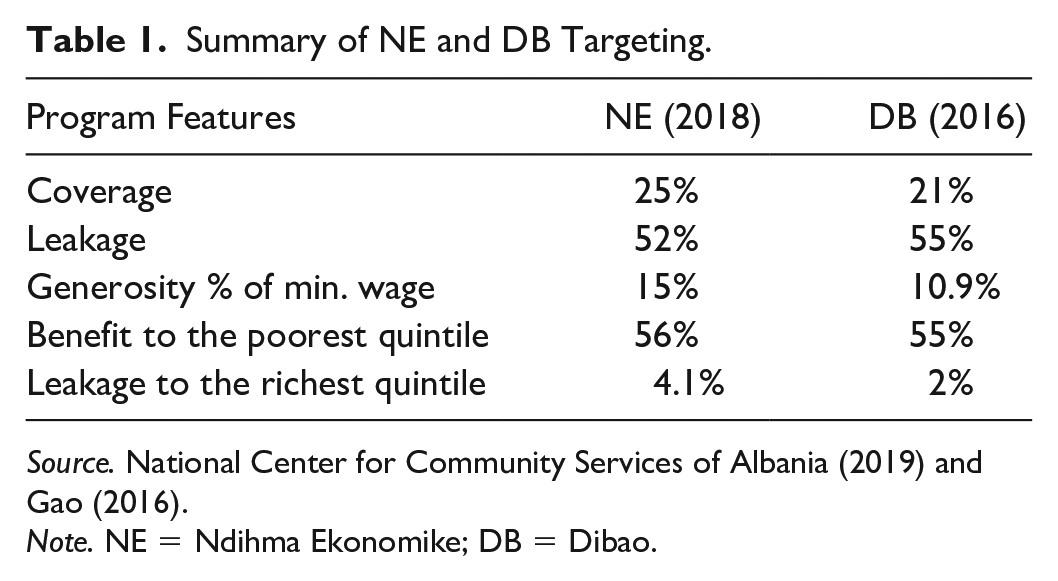
Source. National Center for Community Services of Albania (2019) and Gao (2016).
Note. NE = Ndihma Ekonomike; DB = Dibao.
Therefore, as Gao’s study of poverty shows, new policies should focus on the development of DB’s anti-poverty efficiency, acting toward better targeting, shrinking the benefit delta between benefit receiver and nonreceivers, and tackling not only the poverty rate intended as people below the poverty rate but also poverty severity affecting especially senior citizens (Gao et al., 2015).
Flows in the means-testing formula can be eliminated by granting universal benefit, which would eliminate targeting errors and achieve perfect coverage. Increasing benefits for urban areas would be more costly and politically less popular as it would exacerbate inequality. In contrast, a universal program at a rural level would avoid mis-targeting where it occurs the most, and it would cost considerably less while shrinking the urban–rural divide. In Chinese urban areas, social benefits comprised one quarter of poor urban families’ total household income in 2012, shrinking considerably from 44% in 1988, while is still significant for poor rural households, where the DB is equivalent to 37% of rural consumption expenditure in 2012 (Gao & Rickne, 2014).
Improving targeting should be the priority for policymakers; however, this can be done by increasing expenditure or improving the means-testing formula. Improving targeting would be costly and likely to increase pressure on beneficiaries, whereas increasing expenditure and universalizing both programs would be a feasible solution if only at the rural level. In the next part, we will show the costs and benefits of a universal program at both the rural and urban level.
DB and NE Universalization Cost and Total Benefit
Knowing the cost for a universal or semi-universal program covering only rural working-age populations or urban and rural working-age populations could reorient financing from programs like health and education. Moving forward, we will calculate the cost of universalizing the DB and the NE to the urban and rural populations and focus on which share of the benefit goes to health and education. A universal program lifts the burden of scrutinizing beneficiaries from public administration, and knowing the cost of implementing the program minus the administrative cost of the means-testing implementation could better define the real cost of universalizing these programs.
We will consider both the Chinese and Albanian 2020 populations, and by knowing the total rural and urban population, we can estimate the cost of guaranteeing the benefit to all the working-age population (16–65 age group). We will use the United Nations Population database to know the exact urban and rural population in both countries. To know the cost of the means-testing and household allocation on health and education, we will use Gao’s (2016) data for China, and Mangiavacchi and Verme (2009) and NCCS Albania (2019) data for Albania.
Universal DB Cost
China had a total working-age population (16–65 years) of around 1,000 million people in 2020, divided into 650 million urban and 350 million rural (NBS, 2020). Current expenditure on UDB is 0.11% of GDP spent on cash transfer to 22 million urban recipients, whereas 0.14% of GDP was spent on transfer to 50 million rural recipients (Gao, 2016), one every seven rural workers.
The administrative cost of running the program is somewhere between 7% and 9% of the program budget (Gao, 2016), of which 50% to 70% of the administrative cost covers means-testing expenses. Thus, the overall cost of implementing the testing goes somewhere between 0.009% and 0.011% of GDP. Corruption is an issue that deflates targeting or raises costs; however, we have no data to calculate this cost, so we will not include corruption in our variables.
UDB cost is the result of
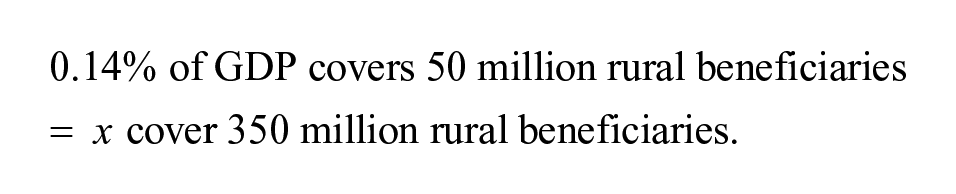
RDB cost is the result of
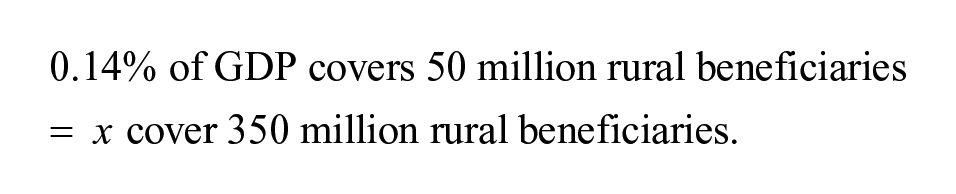
Total DB cost (TDB) is the result of UDB plus RDB minus urban means-testing (UMT), and rural means-testing (RMT) cost:

Therefore, the total cost of universalizing the DB in China would be 3.94% of GDP while eliminating the means-testing procedures would save 0.27% of GDP nationwide. Means-testing is a bigger burden in rural areas, where it is 1/13 of the all rural budget, whereas means-testing in urban areas is 1/15. The different weight of means-testing between urban and rural areas is due to higher benefit in urban areas, whereas the administrative cost is rather similar regardless of the location.
According to Gao (2016), the average national DB benefit is US$212,44 per year, and human capital consumption was prioritized among DB receiver in both urban and rural areas. In her findings, health expenditure among the DB receiver went up 33% in 2002 and 42% in 2007, whereas education expenditure went up 26% and 31% in 2001 and 2007, respectively.
In 2018, the national per capita health expenditure was 4,237 yuan or US$632 (Thomala, 2020). Taking Gao’s most recent value of 2007 as a benchmark would bring an increase of 42% in health care expenditure, summing up to
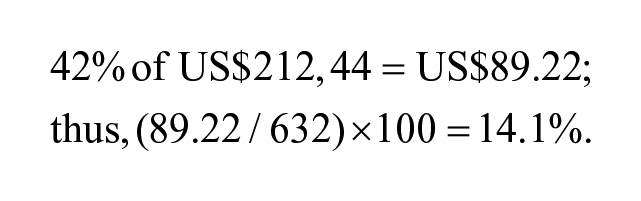
So 14.1% would be added privately to the total health care expenditure at the national level.
Doing the same equation for education by considering 31% of DB benefit going to education and as the national education expenditure was US$5,379 per student (Textor, 2020) would sum up to
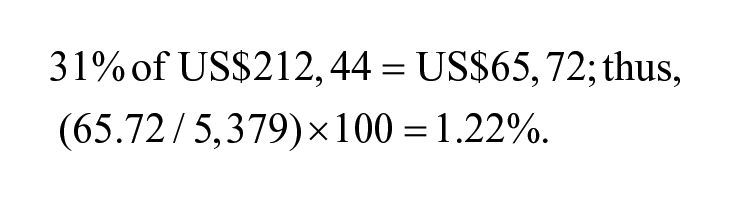
So 1.22% would be added to the national education expenditure by each beneficiary, whereas in the case of a family of two with one kid in school, would translate in twice the amount.
Universal NE Cost
Albania spent 0.025% of GDP on the NE in 2018 (NCCS Albania, 2019). In 2018, there were 232,893 NE receivers, of which 57% rural (132,749) and 43% urban (100,144). The government spent 0.011% of GDP awarding the NE to 100,144 urban citizens in 2018, whereas 132,749 citizens were awarded the NE in rural areas accounting for 0.016% of GDP (NCCS Albania, 2019). Albania had a working-age population of 1.9 million, divided into 1.1 million urban and 800 thousand rural.
Urban NE (UNE) cost is the result of
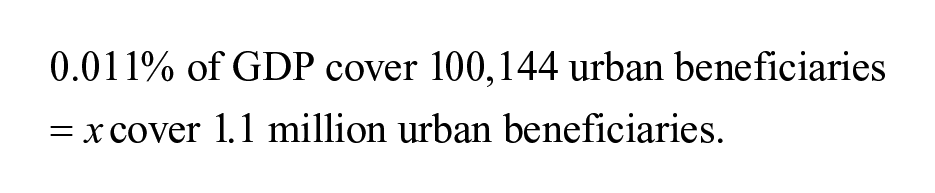
Rural NE (RNE) cost is the result of

Total NE (TNE) cost is the result of UNE plus RNE minus means-testing (MT) cost:

Running the NE at the national level while covering 1.9 million people would cost 0.2% of GDP, increasing the beneficiaries level almost eight folds. In monetary term, the average per person NE is 1,200 Lek or US$11.28, which translates in awarding US$135 yearly to each urban and rural resident. After looking at the governmental expenditure for a universal NE, we will look at the increase in average health care and education per capita after the cash transfer.
According to Tomini, Albanian national health care expenditure was US$515 per person, whereas the lowest quintile of the Albanian population spent 6.4% of their income on pocket health expenditure (Tomini et al., 2013). Therefore, knowing the total yearly benefit of US$135 and considering that 6.4% of the added income will go on health expenditure,

So 1.57% would be added privately to total health care expenditure.
The national expenditure on education was US$487 per student in 2018 (United Nations Educational, Scientific and Cultural Organization, 2017), whereas each household would add 22% of the total NE amount to their education expenditure. We can then calculate the total percentage added in the overall education expenditure:

Therefore, 6.1% would be added privately to total education expenditure.
Summing up, US$37.8 (8.1 from increased health expenditure and 29.7 from increased education expenditure) of the US$135 earned from the NE went in education and health. As we mentioned before, Albania’s total universalization would cost around 0.2% of GDP, whereas private health expenditure would go up by 1.57% and expenditure in education by 6.1%.
Comparative Remarks
Urban–rural inequality is a major issue in China, and the DB proportion of total disposable income shows that poverty in rural China is still a significant issue, with the DB adding almost 10% to each beneficiary income.
Universalizing the NE in Albania would cost around 0.2% of GDP, considerably lower than almost 4% of GDP for universalizing the DB in China. However, Albania and China are spending way below average on cash transfer programs at the present stage. Indeed, this number is 1.6% of GDP among developing countries, whereas among countries member of the Organisation for Economic Co-operation and Development (2017), it averages at 2.9%. In 2018, Albania awarded US$135 yearly to 232,893 people, 13% of the total population while per capita GDP in 2018 was US$5,268. On average, the DB awards US$212,44 yearly to 72 million people, which is 5% of the total population, while per capita GDP was US$9,770 in 2018. Both programs’ benefits account for 2.56% and 2.37% of each Albanian and Chinese citizen per capita GDP.
Although cash transfer amount is similar as a percentage of per capita GDP, we should not forget that a requirement to qualify for the NE is to be unemployed with no other source of income, whereas the DB is topping up income to reach the provincial threshold; therefore, DB receivers are better off than NE receivers, who are supposed to have no other income than the NE.
Cash transfer could better manage expenditure on health and education in areas where state presence is scarce, and entitling households of a monthly income could help address flows in a state-run program. In Table 2, we see an increase in health and education expenditure due to the cash transfer. In China, 72% of the total cash transfer goes toward health and education (Gao, 2016), whereas the bottom quintile of the Albanian population spent around 29% of the benefit on health and education (Tomini et al., 2013). Furthermore, Albania spent 6.8% of GDP on social security in 2018, whereas the cost of universalizing the NE would be around 0.2% of GDP. In China, social security benefits are much lower, thus universalizing the DB would double today’s expense on social protection. However, considering the increase in private expenditure on health and education, the added expense in social protection could be partially balanced by diminishing public expenditure on health and education. Overall, a universal rural benefit would keep social assistance expenditure way below social security expenditure while promoting rural economy and increasing health and education expenditure (Table 3).
Urban and Rural NE and Urban and Rural DB Overall Score.
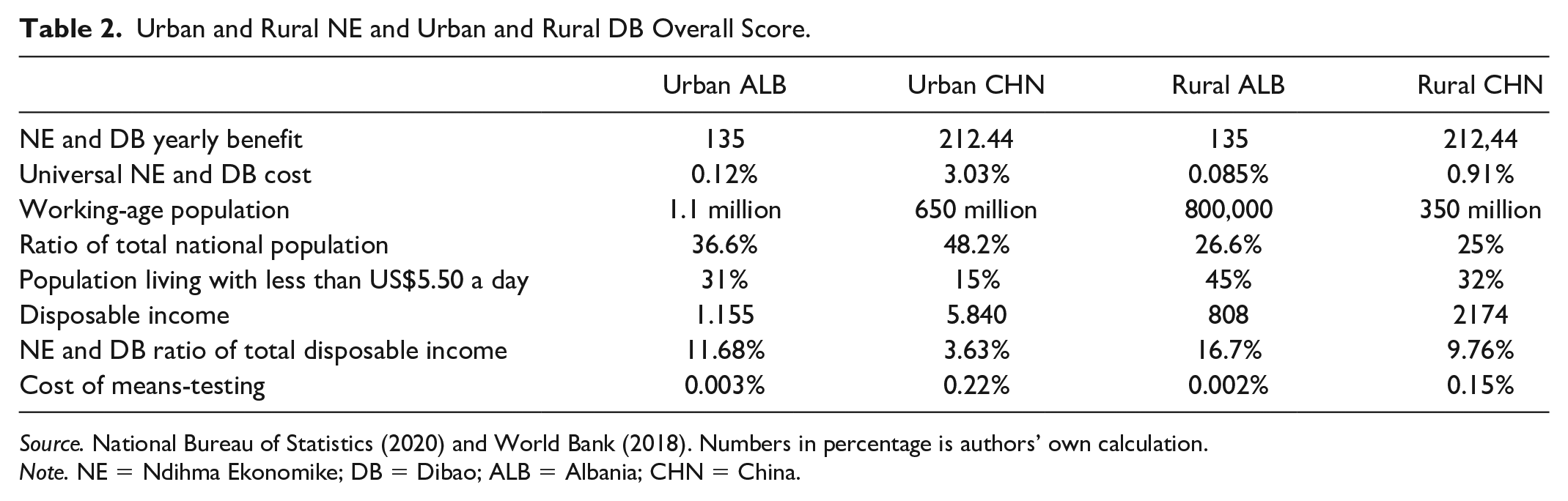
Source. National Bureau of Statistics (2020) and World Bank (2018). Numbers in percentage is authors’ own calculation.
Note. NE = Ndihma Ekonomike; DB = Dibao; ALB = Albania; CHN = China.
Benefit Level Going to Health and Education.

Source. Authors own calculations based on National Bureau Statistics (2020) and National Centre for Community Services of Albania (2019) for Albania.
Note. By social expenditure, we do not include health care and education. NE = Ndihma Ekonomike; DB = Dibao; GDP = gross domestic product.
Cash Transfer in the World: Toward a UBI?
The debate on UBI has been mainly focused on costs and financing sources, and especially in developing countries, income from taxation is low, and a growing debt might lead to a high inflation rate, thus doing more harm than good. Recent scholarship on UBI (Standing, 2017, 2020; Van Parijs & Vanderborght, 2017) has pointed out that developing countries have been already moving toward a TBI before the COVID-19 period, with the number of implemented programs significantly accelerating as a result of the virus (UNDP, 2020). Wealthier western nations have implemented a form of UBI already before COVID-19, with programs enlarged and spending increased as a result of the outbreak. Both China and Albania have implemented a form of cash transfer due to the COVID-19; however, universalizing the NE and the DB should overlook an extended period going beyond temporary virus-related contingencies.
Therefore, universalizing social assistance programs should overlook the economy in the long term with particular attention to rural areas. Universalizing the NE and DB in rural areas would cost less than 1% of GDP in both countries; on the contrary, Albania spends 1% of GDP on disability benefit alone (Ymeri, 2019). Financial support to rural workers would slow down the inflow of rural migrant workers to urban areas and alleviate the pressure from big urban agglomerate with an impact on climate change (Sterner et al., 2019). In China, where manufacturing value-added was reported to be at 27.17% of GDP in 2019 (NBS, 2020), an RDB would help the transition from manufacturing to the service sector, as RDB would give blue-collar workers the time and the financial means to gain new skills as automation threatens their job. Indeed, automation is a growing threat in low-skilled manufacturing-oriented countries like those in Southeast Asia; accordingly, by 2030, up to 375 million people in Association of Southeast Asian Nations (ASEAN) countries (around 70% of the total workforce) are at high risk of losing their jobs due to automation (Lloyd, 2020).
Contrary to manufacturing, service sector jobs are less likely to be automated in the short term; thus, guiding the labor force away from manufacturing is an investment in human capital that could balance lost income due to automation. In these regards, India seems already moving toward a stage of postindustrial economic growth or “premature deindustrialisation” with small UBI programs already in place and 50% of GDP already coming from the service sector (Rodrik, 2016). Moreover, NE and DB beneficiaries tend to increase private expenditure on education by 6.1% and 1.22%, respectively. As transfer amount constitutes a higher share of household income in rural areas, it is foreseeable that cash transfer benefit could increase education expenditure to up to a third more in rural areas. Increased expenditure on NE and DB should then be accounted as an investment in human capital from a low-skilled secondary sector at risk of automation, to a higher added value tertiary sector.
Furthermore, social assistance programs worldwide have shown to be affected by common issues beyond postcommunist or developing countries. Pfeiffer (2018) identifies common problematics among social assistance programs across developed countries, extreme poverty due to alcohol or drug addiction, the complexity of the welfare system, inconsistent treatment among programs, fear of losing benefit if working, to name a few. All these problematics are common among social assistance programs across all scenarios and can often exacerbate poverty while resources are wasted. A UBI would solve several of the issues identified by Pfeiffer, the system would be simplified, and the benefit would not be lost in any case; thus, the UBI could be applied indifferently across the globe.
A fear that a UBI would make people unwilling to seek employment has been often advanced in opposition to the program (McDonough & Morales, 2019). In this regard, Abhijit Banerjee, the 2019 Nobel Prize winner in Economic Sciences, has shown unaltered employment level among benefit beneficiaries (Abhijit et al., 2017, 2019). In the case of a universal NE and DB, even after transfer, income level remains below the national poverty line (Gao, 2016; NCCS Albania, 2019), thus making unconceivable stop seeking employment.
Overall, the UBI scholarship has been mostly focused on developed countries; however, this study has shown that a UBI could be applied in developing countries with particular attention to rural areas. The COVID-19 outbreak opened a window of opportunity in these regards by hasting the transition process.
However, the findings of this study have to be seen in the light of some limitations. Specifically, the lack of longitudinal data regarding the NE, and the inability to generalize the research findings to developed countries with no urban–rural inequality gap, could alter the findings in that scenario. Furthermore, issues with the study sample are unavoidable as Albania and China differ considerably when looking beyond their common postcommunist past. Finally, personal limitations due to the COVID-19 outbreak have made data collection significantly harder.
The scholarship on DB has experienced exponential growth in the last decade, whereas the NE’s scholarship is still in its infancy. The Albanian government has been mostly focused on recording national expenditure while failing to survey the spending pattern among NE beneficiaries. Hence, the lack of NE longitudinal data might fail to evidence variations in expenditure pattern among the NE population, with the potential to alter the data on private investment in health and education. This study has focused on rural areas, as the urban–rural divide is a heritage of the communist period; therefore, generalizing the research findings to countries where such a divide is not present should be carefully applied. Because rural areas in developed countries have an income level often similar to urban areas, a UBI for rural citizens in developed countries might lead to different findings from rural citizens in postcommunist countries or developing countries. Issues with the study sample are another key limitation, as Albania and China differ culturally with different share of the benefit going to education and health. Differences in financial capabilities are present as well, with the DB budget progressively growing while the NE budget has been shrinking over the years. Looking forward, as previous studies have mostly focused on a single country program, an evolution of this study should include a broader number of postcommunist countries and look at the spending pattern among social assistance beneficiaries. Moreover, keeping a record of the beneficiary’s behavior in terms of employment and benefit allocation over time would better indicate the right benefit threshold. Finally, an alternative approach to this study should look at UBI urban areas only, as urban areas tend to be economically more dynamic, and a UBI for urban citizens could create a multiplayer effect even higher than in rural areas.
Conclusion
Albania’s and China’s social assistance programs have significant leakage and mis-targeting, whereas the NE does not increase income level above the national poverty line as coverage and generosity are kept too low. At the same time, the DB brings income level above the national poverty line only in richer eastern provinces. Transforming today’s social assistance programs in Albania and China, from a means-testing cash transfer to a UBI, would solve leakage and mis-targeting-related issues while achieving full coverage as all the population between 16 and 65 years would qualify. Universalizing both programs while keeping benefit level unaltered would cost 0.2% of GDP in Albania (0.025% today) and 3.94% of GDP in China (0.25% today). However, as both programs’ benefit level is not enough to raise income level above the poverty line, universalizing the NE and the DB shall not abolish social security, as these programs benefit two different age groups. Meanwhile, 28.4% of the NE and 73% of the DB benefit go in private expenditure on health care and education; thus, increasing expenditure on the programs could eventually increase national expenditure on health and education, and possibly decreasing the public share of expenditure. Finally, social assistance programs could be reinterpreted as governmental expenditure on human capital than rather government transfer to poor households.
As social assistance programs worldwide face a vast set of challenges, a look at society before finance should become the priority, and the COVID-19 pandemic is putting people’s welfare at the center of the conversation back again. This study has shown that the NE and the DB as they stand today have little effect on alleviating poverty, as widespread leakage and mis-targeting are misallocating resources while keeping poverty and inequality unaltered. Moreover, due to the COVID-19 outbreak, unemployment and poverty rapidly increased across the globe, making UBI or TBI programs easier to be approved at the political level. The COVID-19 outbreak will play a significant role in promoting TBI programs first, and thanks to the window of opportunity opened by the virus, TBI could be transformed into UBI after, thus making these programs politically unpopular to be withdrawn in a second stage.
Footnotes
Declaration of Conflicting Interests
The author(s) declared no potential conflicts of interest with respect to the research, authorship, and/or publication of this article.
Funding
The author(s) received no financial support for the research, authorship, and/or publication of this article.
