



Abstract
Pension policy reform in post-communist countries received attention from most international organizations since the early 1990s. Accordingly, Albania has implemented comprehensive liberalization and privatization of the state sector since transitioning to a market economy. This study will look at the impact that the European Union (EU), the World Bank, and the International Monetary Fund had in guiding the Albanian state-run social security system toward principles of decentralization, liberalization and privatization. Specifically, social security reforms between 2009 to 2019 will be examined, along with a focus on the side-effect of the conditions imposed by the three organizations. A mixed-method including literature review and secondary data analysis will empirically evidence growing inequality, with senior citizens poverty rate sharply rising due to reforms in social security. Our conclusions will argue that closer ties with the EU will keep social security in its current form, as the EU does not push for a specific pension system, while the World Bank policy influence will lose ground, thus freeing Albania from periodic social security reforms.
Introduction
This paper will analyze the specific agenda and policy orientation of the European Union (EU), the World Bank (WB) and the International Monetary Fund (IMF) in the making of Albania’s pension system. Our research question will look into the difference between the three organization lending conditions and investigate whether the side-effects attached to these conditions defeated the reform goals. We will consider the financial and human dimension of the argument, as despite average GDP growth of 3% during the last 10 years, the poverty rate has remained constant among the overall population while increasing among those 65 years or older (65+). Indeed, as outside actors are primarily concerned with Albanian financial indicators, growing social exclusion and poverty rates are often not considered.
Relations between Albania and international financial institutions (IFIs) have mutated over time. During the early stages of transition from socialism to the market economy, poverty was rampant, and social policy required readjustment to the new system. In this early stage, the WB was the primary lender, with the IMF stepping in once economic institutions were established but lacked financial consolidation. Since 2007, the EU defined Albania as a potential candidate country for EU membership. The Instruments of Pre-Accession Assistance (IPA) were then implemented, effectively providing Albania with the financial assistance needed to undertake obligations toward the EU’s acquis Communautaire.
All three international actors (EU, WB, and IMF) have followed an agenda based on varying degrees of deregulation, privatization and decentralization. Both the WB and the IMF have directly stressed the necessity to reform the Pay-as-you-go (PAYG) system in Albania, as it turned financially unsustainable in the early 2000s. Furthermore, Albanian pensions have been underfunded since the initial transition, with government budget filling deficits created by the lack of contribution. As Orenstein (2013) argues, IFIs campaigns intended to reform aspects of post-communist welfare states as a whole, with reforms of social assistance, housing, and health care; however, pension policy was the field where most of this organization focused their efforts. Unlikely the WB and IMF, the EU lacks a specific agenda regarding pension policy; instead, EU membership is considered within a much broader approach. In contrast, the WB proposes privatization of pensions indiscriminately with little attention to each country’s features. The IMF does not have a specific social policy agenda like the WB; instead, it aims at broader financial sustainability with a growing political role in counterbalancing growing Chinese influence in the Western Balkan (Mardell, 2021).
Evidence of the means of influence and policy goals of each of the three IFIs were derived from primary publications targeting Albania between 2009 and 2019. In addition, IFIs data and publications have been compared with internal data coming from Institute of Statistics (INSTAT) the Albanian statistical institute, which provided insightful data on the effect of outside policies on poverty rate, social assistance coverage and trends in social protection expenditure.
Understanding the role played by IFIs in shaping the Albanian social security system is essential for two reasons. First, identifying which agenda was enacted by each institution might assist other developing countries in assessing the impact that pension reform might have in a similar stage of development. Second, as policy diffusion from outer institutions shapes Albanian social policy, previous socialist-style policies lose ground in favor of a regional trend in which the Western Balkans are part of a bigger picture. Evidencing IFIs’ means of influence by establishing the direct link between policy advice and borrowing obligations can help other countries better assess the hidden cost of seeking IFIs help. The literature regarding IFIs and developing countries will now be considered, with a focus on post-communist countries.
Literature Review on Social Policy in Developing Countries, the Hidden Role of International Financial Institutions
The literature on International Financial Institutions (IFIs) role in shaping developing countries social policy is broad, with scholarship produced by IFIs, academic bodies and private organizations. Among the main actors in terms of financial capabilities and global influence, the WB plays a pivotal role in developing countries. Money coming from the WB comes with conditions to be fulfilled, de facto setting national policy orientation in the long term. As the social expenditure is the largest share of the state budget expenditure, it often comes under scrutiny by the WB, which clearly stated its view on pensions in its 1994 publication “Averting the old age crisis,” where the World Bank (1994) advocated for a minimum pension organized on a multi-pillar system. The multi-pillar model has been systematically recommended to all developing countries seeking financial relief, with little to no overview of livelihood structures and socio-economic dynamics inherent to each country (Gough et al., 2004), with the WB even censuring a 2006 internal report on pension privatization, for pursuing reform in countries that lacked necessary preconditions (Kay & Sinha, 2008). Early effects of the new wave of pension privatization could be seen in Latin America where the system was first introduced; indeed, as the welfare regime began to shift to a liberal-informal system, employment protection withered, and with lack of incentives, social insurance began to be replaced by individual saving and market provision (Gill et al., 2005; Levy, 2006). Orenstein (2008) argues that high-income earners are usually big winners in the WB’s model, as in an individual accounts pension system, no redistribution is in place, whereas financial companies earn administrative fees from running pension funds. Especially in developing countries, global external pressures played a significant role in social policy shift (Yeates, 2002), with IFIs and transnational actors competing to influence the welfare reform trajectories of each government (Deacon, 2007), while the “one-size fits-all” mentality has reinforced dependency relations, inequality, and domination (Gough et al., 2004). A different scenario arose in East Asia and South-East Asian countries, which began establishing social policies in the 1960s when they experienced high economic growth. With social policies aimed at supporting economic development (Kühner, 2015), the WB influence was marginal as social expenditure was kept low, limiting the WB’s room for maneuver.
While the WB recommends particular policies to establish a common framework among developing countries, the IMF overlooks each country from a broader financial perspective. Indeed, the IMF advised borrowing countries to focus on job creation, economic growth or any other policies concerning employment and economic stability while avoiding specific social policy recommendations. In an IMF study of 50 borrower countries, in 48 out of 50 cases, the IMF standard recommendation was to engage in fiscal discipline, with expenditure restraint recommended in 24 countries and containment of public sector debt asked to 33 countries (IMF, 2010). Concerned with the fiscal deficit created by the transition to a funded system, the IMF did not directly recommend pension privatization, limiting its role in supporting the WB’s objectives from the mid-1990s to 2006 (Orenstein, 2011). However, IMF policy advice often resulted in the overall diminishing of health or education expenditure (Benton & Dionne, 2015; Ooms & Hammonds, 2009), while Albania was requested to keep pension expenditure balanced in 2008, de facto pushing for a new pension system (IMF, 2008). As the IMF primary focus is financial stability rather than economic growth, Albania’s rising public debt was cause for concern, thus pushing for the social security reform (IMF, 2010). Similar recommendations were made across all post-communist countries, indeed also in Romania and Ukraine, cuts in pension expenditure were identified as the solution to bring the budget deficit down (Orenstein, 2011).
Contrary to the WB well-defined pension advice or IMF policy directions, the European Union (EU) did not propose specific social policies to be implemented. Indeed, the European Commission (EC) promotes no specific social model since conservative, liberal, and socio democratic welfare states are all present within the EU. As the three types of the welfare state are characterized by a specific labor market regime (Esping-Andersen, 1990), the EU cannot promote a single model against the others. Furthermore, pension policy is a prerogative of national policy under the Lisbon Treaty, which significantly marginalizes EC interference on the issue (Schelkle, 2013). As a result, the EU has limited its role in promoting the portability of supplementary pension rights, proposed by the EC in 2014, to promote worker mobility and takedown cross-border requirements for occupational pension funds (European Commission, 2016).
Although direct EU interference on pensions is limited, the EU has cooperated with third parties to promote a sustainable social policy system indirectly. In this regard, the EU and the International Labor Organization (ILO) have cooperated in indirectly promoting a corporatist approach to social policy (Fornero & Ferraresi, 2007), in contrast with the liberal approach to social policy of the IMF and WB (Gough et al., 2004). Meanwhile, the EU, together with the Organization for Economic Co-operation and Development (OECD), have worked collaboratively on health care by identifying a common story, common problems and common objectives (Kaasch, 2015). As Kaasch (2013) argues, in health policy, there is no one dominant model among IFIs to promote as a beacon for others to aspire to; the same is valid for pension policy, with IFIs both in conflict and cooperation within and between organizations. However, although the EU has made indirect policy recommendations to member states through third party organizations, its ultimate goal has been fiscal consolidation and harmonization among member states (Schelkle, 2019).
Albanian’s Social Policy Reforms, a Historical Overview
During the Communist period, Albania had a young population with a birth rate of 42 per 1000 people in 1960, which was among the highest in the world and the highest in the region. The population went from 1,100,000 in 1945 to 3,255,900 in 1990 and brought Albania to a dependency rate of 4.54 workers per pensioner (Barr & Harbison, 1994). Accordingly, having a relatively young population was an asset during the transition period; nevertheless, in the immediate aftermath of the fall of the communist regime, a decade long outflow of young Albanians became a burden for the pension system, and the contribution rate fell sharply.
In the first years of the regime transition (The early 1990s), socialist institutions were overturned by mass demonstrations, with the Albanian welfare regulation deeply affected. In 1992, the Institution for Social Insurance was founded as an umbrella organization managing social policies. In 1993, a new law on pensions was passed, with law 7703/1993, stating “The person that for various reasons could not participate in the obligatory contribution scheme may contribute in the voluntary contribution scheme,” thus, introducing a self-funded option for Albanian contributors. Law 7703/1993 also differentiates the state budget from the pensions budget, thus creating different pools with no communication. However, the closure of State-Owned Enterprises (SOEs) and emigration brought pension expenditure to face a growing deficit in pensions funding in the early transition. In 1993, the number of pensioners reached 461,235, growing by 44,325 in a single year, whereas the number of contributors fell drastically, to 460,467 in 1994 (Hado, 2015).
In 1999, the pension contribution was 30% of gross earnings, where the employer paid 20%, and the employee paid the remaining 10%. The worsening economic situation led to civil unrest following the financial bubble of 1997, and increased unemployment pushed the young population to flee the country in bigger numbers. This outflow of workers brought the relation retirees and employed in 1999 to the astonishing rate of 100 employed paying contributes per 110 pensioners (Poteraj, 2012). As a result, the average monthly pension was reduced to Lek 5,124 (65US$) in urban areas; meanwhile, the urban-rural gap widened. In rural areas, an average pensioner received Lek 1,132 (16 US$), which was barely enough for self-subsistence, thereby pushing a growing number of rural dwellers toward urban areas, a trend fed by the construction industry in need for cheap labor force.
In 2002, the need to make the pension system affordable brought a gradual increase in pension age by six months per year, until reaching 65 for men and 60 for women. Furthermore, as promised during the electoral campaign by the Democratic Party of Albania, in 2005, a substantial rise in minimum pensions took place: urban pensions rose by 20% and rural by 5%. In addition, to tackle the growing unemployment and informal employment, the contribution level was reduced to 23.9% of gross remuneration. In 2005, Albania ratified Convention no. 102 of the International Labor Organization (ILO), thereby reducing the minimum contribution requirement period from 20 to 15 years (Robert, 2010). Although several waves of reforms were passed in less than a decade, the pension deficit kept rising, averaging at a deficit of 0.2 to 0.3% of the GDP in the late 90s, with peaks of 1.1 to 1.2 in the mid-2000s (Demi, 2015). Meanwhile, rising pension endowment was highlighted by all political parties when elections approached. In 2006, the average pension was Lek 11,13 (150 US$), a step that further worsened Albania’s pension system sustainability. For those unemployed that could not qualify for either social assistance or a pension, remittances from aboard became the only lifeline: constituting up to 15% of GDP in 2008, several times more than the whole social expenditure of Albania.
International Policy Influence in Albania
We will now look at each of the three international organizations named above, the EU, WB and the IMF, and will detail lending policy and conditions applied to Albania since 2010.
The European Union
Political parties in Albania have shown to have EU membership among their priorities; in 2019, 86% of Albanians viewed EU membership positively (Balkan Barometer, 2019). However, for the EU, the Western Balkans membership was not a priority, especially after the 2008 to 2009 financial crises, which brought further EU enlargement to a halt.
The EU adopts a conditionality process with candidate countries, where membership conditions are based upon each country’s progress toward the EU Acquis communautaire. Accordingly, EU funds in the form of Instruments of Pre-Accession Assistance (IPA) are allocated to each future member based on the meeting of the Acquis requirement. The EU has financed Albanian EU ambitions, especially after the Association and Stabilization Agreement (ASA) came into force in 2009. The EU has demanded that a specific share of the IPA must be spent on education, employment and social policies. As stated in the white paper, An Agenda for Adequate, Safe and Sustainable Pensions, released by the European Commission (EC), the EU has no powers to legislate on members states’ pension systems. Social policy affairs fall within the EC competence only on matters affecting the functioning of the internal market (That is, free movement of persons, freedom to provide services), or tackling discrimination and protecting workers’ rights (European Commission, 2012). The EC promotes best practice while leaving under exclusive state competence policy decisions like retirement age or contribution rate. In the Progress Report (European Commission, 2019) published by the EC annually, chapter 19 is dedicated to social policy and employment, and it promotes EU rules regarding minimum standards for labor law, equality, health and safety at work and non-discrimination. Therefore, specific regulation of pension management is not present in this chapter; meanwhile, it is indirectly present in the economic criteria where a functioning market economy, unemployment, account deficit and the public debt-to-GDP ratio are taken into account.
The EU has indirectly demanded further coordination of social security systems with other EU member states under the free movement of workers principle, and this criterion has further aligned the Albanian pension system with those present in other EU member states. Among the tools used to shape Albania’s social protection, the progress report has the power to set up the national agenda; as a result, all progress reports between 2014 to 2018 called for strengthening labor regulation, thereby indirectly influencing social policy (European & Commission, 2014, 2018a); In addition, the EC asked for the introduction of parental leave, unpaid leave, right to work part-time, and the right to have reduced working hours after the birth of a child (European Commission, 2016), and to implement Albania’s own Social Inclusion Policy Document for 2016–2020 (European Commission, 2018b). Therefore, the EU does not appear to enforce a specific social policy; instead, it suggests creating a clear social framework under the “four freedoms” umbrella that other EU citizens moving to Albania could follow.
However, the EU argued in favor of raising the retirement age, as the budget deficit was too high in the late “90s, a proposal to raise the retirement age by six months every year was introduced under the ‘Social Europe” framework (Bartlett & Xhumari, 2007). Contrary to the WB, the EC prioritized increasing the rights of vulnerable groups like people with disabilities and minorities, thus stressing the need to implement the 2015 to 2020 social protection strategy (European Commission, 2019), while Law 29/2019 established early retirement for those employed in a hazardous work environment with funding for social care services provided from the state budget.
Overall, upon evaluating Albania’s own stated 2015 to 2020 social protection strategy, the EU seems to be heading toward a general social goal with clear standards on labor law, equality, health and safety at work and non-discrimination. Overall, due to EU member states belonging to different welfare regimes, no distinct social model is prescribed for candidate countries; meanwhile financial consolidation seems considered to a greater extent (Appel & Orenstein, 2018). Indeed, the 3% deficit/GDP ratio is considered the higher end for state budget deficit as established in the Maastricht treaty; however, tighter budgetary requirement inevitably have an indirect impact on social policy and with the UK leaving the union, stricter financial regulation might be enforced.
The World Bank
The WB played a crucial role in the transition of post-communist countries to a market economy since the early ‘90s. Deacon (2000) recognized WB goals in encouraging a neoliberal social policy model in post-communist countries. Among the WB branches, the International Bank for Reconstruction and Development (IBRD), complemented by the International Development Association (IDA), have the stated goals of restoring macroeconomic balances, creating conditions for accelerated private sector growth, along with strengthening public sector management and service delivery (World Bank, 2015).
In post-communist countries, reducing the size of the welfare state has been an essential condition for loans to be granted, together with the privatization of large SOEs (Ravallion, 2016). In their study of the WB lending procedures over 21 years from 1984 to 2005, Holzmann and Hinz (2005) illustrate that $5.5 billion, or 16% of the aggregate dollar value of WB loans to developing countries, had some sort of pension reform demand within. The multi-pillar system was often strongly emphasized together with the reform of existing pay-as-you-go in favor of a funded second pillar (Holzmann & Hinz, 2005). Moreover, conditions attached to loans have grown from only 13% in 1986 to 59% in 1992, and when loans were targeting post-communist countries, they required privatization of key industries as a priority (Ravallion, 2016).
In Albania, the establishment of a three-pillar pension system was promoted by the IBRD (Figure 1) since its early transition to market economy (Holzmann et al., 2008). The WB supported the 2014 new pension law, which raised the retirement age for both males and females. According to the WB, the new pension system would introduce fairness to the system while reducing the deficit (World Bank, 2015). The new law also introduced a social pension, whereas the WB-funded Social Assistance Modernization Project (SAMP) supported the government in implementing pension reforms (World Bank, 2015). Among the SAMP goals, strengthening the supervision and regulation of the Ndihmë ekonomike (NE), Albania’s primary social assistance program, was the priority. However, although the WB had already argued in 2010 that social assistance programs could be expected to play a larger role in the future due to the current low coverage of the pension system (World Bank, 2013), the WB acted against enlarging the NE. Indeed, a review of the means-testing formula applied when awarding the NE, reveals that the number of beneficiaries went from 444,512 in 2013 to 232,893 in 2018, with significant consequences in rural areas, where dwellers owning a piece of land of any size were excluded from the benefit, while the NE’s benefits were kept low and not tied to a minimum living standard (Ymeri, 2019). Moreover, the WB argued that rural pensions had essentially become a social assistance benefit since the state budget mainly paid contributions (World Bank, 2015), in response to this trend, the WB suggested the NE reform, thus excluding mainly rural beneficiaries who could now only rely on the social pension after the age of 70.
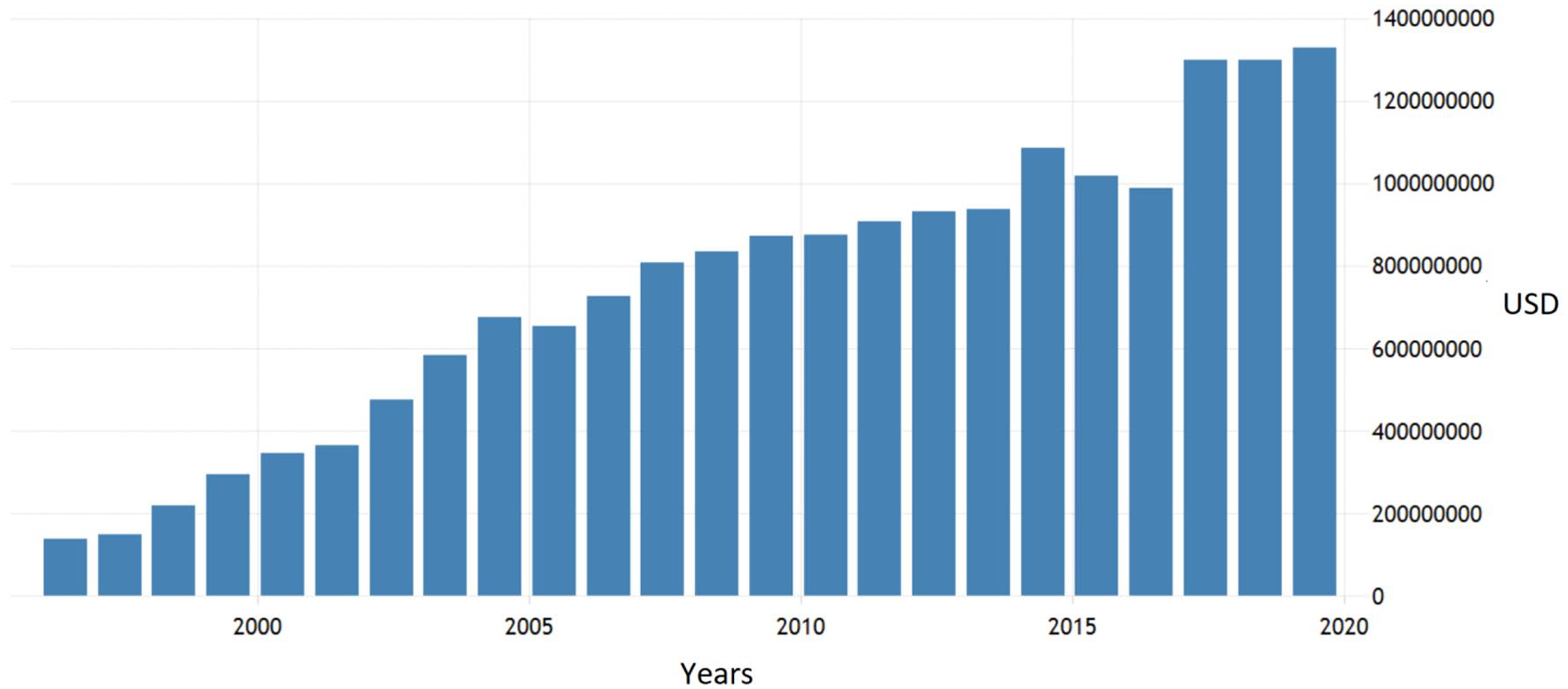
IBRD loans and IDA credits to Albania in USD.
Despite a decreasing social expenditure going from 8.4% of GDP in 2013 to 8.1% in 2018 and pension deficit down from 2.09% of GDP to 1.71%, the WB observed that the high public debt did not allow for any labor tax reduction (World Bank, 2015). In a series of policy advice named “Toward more, better and sustainable jobs for Albania,” the WB argued in favor of an innovative and simplified job market, with the introduction of a voucher-based remuneration and move to unpaid leave for health emergencies (Ungerer & Shijaku, 2018). The WB also argued that NE benefits were creating disincentives to work, thus pushing for the introduction of a performance-based contracting to simplify workers lay off procedures (World Bank, 2017). In contrast, Ymeri argued that as benefits paid by the NE are significantly below the poverty line, thus no disincentive is in place (Ymeri, 2019). Although the new pension reform brought the social protection deficit down, overall pension expenditure remained unchanged. In contrast, spending on disability benefit went from a share of 21.4% total social protection expenditure in 2014 to 18.5% in 2018. This downward trend is in line with the WB request to bring down the share of disability beneficiaries from a baseline of 14% to a target of 10%, with the WB also suggesting a system-based inspection and detection as a remedy for fraud in social assistance declarations (World Bank, 2015). The WB advice seems to favor moving toward a deregulated job market with a minimum social safety net and workers moving between jobs while contributing to a personal saving account, a model in line with the liberal welfare model (Esping-Andersen, 1990).
According to INSTAT (Albanian Institute of Statistics), the population over 65 years increased from 8% in 2001 to 13% in 2018, with this number predicted to be 17% in 2030 (INSTAT, 2018). However, the aging population is in the lower end of the regional average when compared with the rest of the Western Balkans, with Croatia and Bosnia and Herzegovina projected to have a population above 65 years old corresponding to 24 and 23%, respectively. Albania’s macro-economic data are also in line with the regional average (Table 1), with a public debt of 70% of GDP in 2018, with only Montenegro and Croatia higher, and with Bosnia and Herzegovina lowest with 35% in 2018 (Idrizi & Shahini, 2018). Therefore, the youngest population in the region, together with average public debt and solid economic growth, did not prevent Albania from raising the retirement age for the third time in 20 years.
Comparison of the Public Debt as % of GDP in 2018 for Selected Western Balkans Countries.

Note. GDP = gross domestic product.
WB lending strategies present similarly throughout the Balkans, with peak lending reached in 2010 and slowly decreasing in the coming years due to IPA funds arriving from the EU. In Albania, the highest amount of loans started peaking in 2009, growing throughout this period with a peak in 2014. During this time, an Albanian Parliament decision was made regarding the new pension law which would extend the retirement age for both men and women. In 2009, Law 10/197 “On voluntary pension funds,” thoroughly established a second and third pillar, with a personal pension fund, and then in 2012, the NE reform took place. The law was named “On the ratification of the agreement between Albania and the International Bank for Reconstruction and Development (IBRD),” therefore, establishing a clear link between WB proposed reform and Albania’s new law.
Similarly, other countries in the Western Balkans experienced a new wave of financial commitment coming from the WB. In the 2000s, Bosnia and Herzegovina and North Macedonia both engaged with substantial reform in their social security system, both by slowly rising retirement age as a response to the low contribution caused mainly by growing unemployment. Contrary to the rest of the region, WB loans to Serbia were a direct consequence of the 1999 conflict, with loans coming as a partial reparation with looser strings attached.
The International Monetary Fund
Albania moved toward market economy principles since privatization started in 1991, with Law no. 7512 passed on August 10, 1991. More than half of Albanian economic output was produced by private enterprises in 1996, and by 1999 around 90% of Albania’s GDP was created by the private sector. The IMF noted that substantial privatization and dismissal of underperforming industries proceeded as required in the yearly country report (IMF, 2010). The privatization program affected the national oil company ARMO which was sold to a Canadian oil firm; the insurance company INSIG was put on the market, although no buyer came ahead. In contrast, the electricity company KESH was successfully privatized (IMF, 2019). In line with this trend in 2009, Law 10/197 “On voluntary pension funds” follows the privatization trend, despite not being directly under IMF requirement.
The IMF has played a minor role in the early stages of Albanian democratic history, funding only four loans to Albania prior to 2014 for a total amount of 133 million USD. Then in 2014, a record loan of 457 million USD was earmarked to reform the pensions system, energy, local government finances, public administration, and business environment (IMF, 2014). As seen in Figure 2, the credits coming after 2014 grew considerably, and they increased Albanian public debt, together with loans coming in 2020 due to the COVID-19 outbreak.
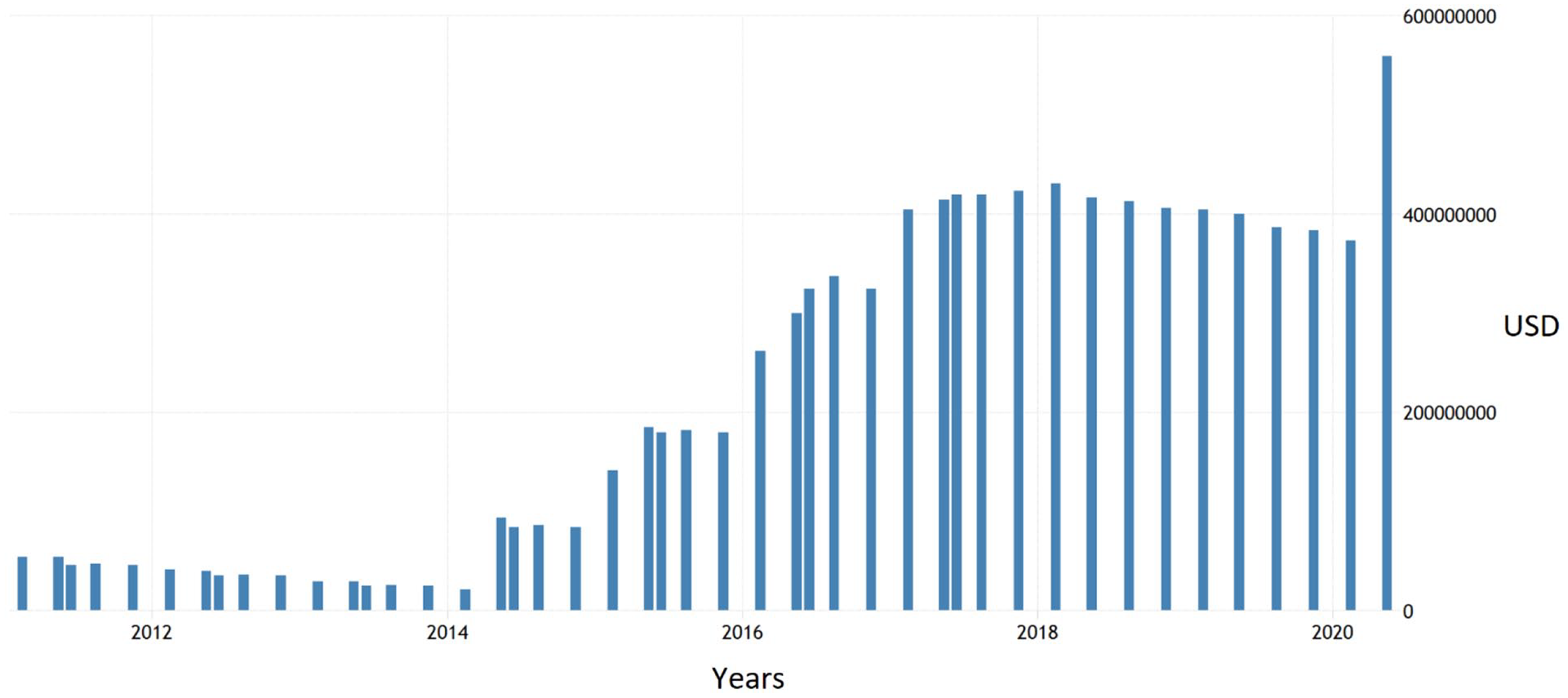
Use of IMF credit in Albania in USD.
The IMF did not have a direct role in the 2014 Law no. 150/2014, which led to slowly raising the retirement age to 67 for men and 63 for women; indeed, the pension reform was requested by the WB and backed up by the IMF. The IMF called for improved links between contributions and pensions with a pension scheme based on contributions while establishing modern pension fund investments (IMF, 2008). The IMF argued in favor of pension reform without directly naming it, leaving to the WB the task of setting up the new law. However, the IMF noticed that Albanians enjoy free public health care, together with an average life expectancy of 77 years old, making the health care system unsustainable without pension system reform (Stubbs et al., 2017). In 2017, the IMF noted that public debt was on a downward trend thanks to a bold pension reform (IMF, 2017), leaving no doubt about where the IMF stands regarding pension privatization and social protection as a whole. Indeed, fears of growing public debt due to the aging population and brain drain due to emigration, prompted the IMF to demand tighter regulation on health care and pensions (IMF country report, 2019).
As argued above, it emerges that IMF recommendations are not directly linked to specific issues affecting individual countries; indeed, in the Western Balkans, the IMF commitment has been more political than strictly economical, particularly as Russian and Chinese influence is gaining ground due to delay in EU membership, especially since 2008 due to Kosovo’s self-proclaimed independence causing a widespread outcry in the region. In the last 10 years, Russia and China also significantly stepped-up efforts to support Serbia against US-backed neighbors. IMF financial commitment has contrasted with Asian Infrastructure Investment Bank (AIIB) loans, which have been flowing in the region with little attention to social policy while financing major infrastructural projects (Miteva, 2021). Therefore, a containment policy is in place in the region with loans from both sides employed as tools to gain political consensus, with pension reform based on a one-size-fits-all model proposed indiscriminately to each country.
Social Security in Albania, the Current Trend
Albania’s macroeconomic indicators show robust economic growth together with a downtrend unemployment rate. However, in 2014, despite only 12% of the population was 65+, Albania increased the retirement age for men and women. As an EU candidate country, Albania must undergo tighter financial regulation than EU member states. Indeed, the EU encourages economic development within a precise membership framework, thereby an ever-closer relation with the EU will eventually substitute the need for WB or IMF loans. The transition to EU conditionality from the WB comes with a comprehensive approach overlooking national finances as a whole, with no specific pension provision. Broader conditions will allow Albania room for maneuver in managing social expenditure, in contrast with the WB’s one-size-fits-all approach, with no supervision over each country peculiarities.
Indeed, the WB and the IMF seek broader policies, mainly focused on budget sustainability. In Figure 3, the rising inequality trend overlaps the 2013 to 2014 period, when the 2014 new pension law and the social assistance reform came into effect, while in Figure 4, the national poverty rate (People living with less than 5.5 USD in 2005 prices) went from 35% in 2008 to 38% in 2017, while between 2017 and 2018, the population at risk of falling in poverty decreased for all age groups except 65+ (INSTAT, 2018). Senior citizens experienced a growing risk of poverty due to the pension and social assistance reform promoted by the WB; indeed, the reform in social assistance entitlement particularly affected the weakest layers of society, Roma people and 65+, with the side-effect of increasing Albania’s social inequality. For instance, the Ndihmë Ekonomike (Economic help, Albania’s primary social assistance program) new qualification criteria introduced the need for an ID card, registered home address and a sometimes complex online application.

Albania: Gini inequality index.

Poverty trend in Albania 1996 to 2017.
Retreating state assistance has been further worsened by the emigration of youth and adults since the regime transition, thus causing growing isolation among older layers of society. Indeed, approximately one fifth (18%) of 65+ are partially or totally isolated from social networks; thereby, little human contact or financial help could be provided in case of sickness or economic hardship. Moreover, 99.2% of 65+ residing in urban Tirana receive monthly pensions as compared to only 65.6% in rural areas (Ylli, 2010). As already seen in other majority muslin countries, retreating national institutions have been compensated by family ties and social networks (Alghafli et al., 2014). It seems that family networks are still playing a leading role in providing elderly care in Albanian society, especially since the rapid transition to market economy dismantled most social and community networks. The drastic cut in NE beneficiaries with the consequent rise in the poverty rate among 65+ was perceived negatively among the Albanian population, with most rural citizens cut out from their primary source of income. The rise in anti-WB sentiment is evident in the Albania country opinion survey report; where the WB social protection policy approval rate went from 8.2/10 in 2014 to 6.8/10 in 2017, a clear sign that the liberalization trend proposed by the WB, was blamed for the rapid growth in inequality (World Bank, 2017).
The EU engaged with Albania on a case-by-case scenario, promoting ad hoc policies to endemic socio-economic issues, for instance, lack of integration and marginalization of the Roma population prompted the EU to establish a Roma inclusion action plan. Therefore, the 2016 to 2020 national action plan for the integration of Roma and Egyptians was implemented in Albania. Furthermore, under EU advice, inclusive employment policies were further developed in March 2019, with the Albanian Employment Promotion law, which laid the groundwork for full integration of people with disabilities into the labor market, while providing social assistance beyond the previous 48 months. Contrary to the EU ad hoc policies approach, the WB requested broader policies; indeed, from 1984 to 2004, the WB made 204 loans to 68 countries, with advice regarding pension system reform present in all 204 cases, thus pushing for pension reform privatization with little care for the single country demographic peculiarities (Holzmann et al., 2008).
Finally, EU membership could provide Albania financial means while driving it away from the WB and IMF strict lending conditions, thus triggering a shift toward Brussels on the national agenda, against the early transition trend that brought post-communist countries to implement a model victim of political globalization (Deacon, 2000). In line with this model, the WB and the IMF have been pushing for political and economic reforms with welfare state miniaturization as a side effect. In contrast, the EU comprehensive approach allowed for broader policies, thus leaving each member states and candidate countries, freedom to adopt the regulation better suiting to their own socio-economic peculiarities.
Conclusion
This study has shown that key differences are present in the approach that IFIs have toward developing countries. The EU engages with candidate countries within a future membership perspective, with comprehensive reforms demanded on a case-by-case scenario; in contrast, the WB acts by integrating the single country in a regional framework, thereby promoting a regional liberalization trend. In the case of Albania, the haste deregulation implemented in the pension system halted pension budget deficit from growing, although it remains high, at 1.71% of GDP, while the WB backed social assistance reform halved the coverage rate at a time when universal basic income seemed to be gaining ground. Moreover, the 2018 and 2019 reform regarding the introduction of special funding for minorities and at-risk work categories was mainly pushed ahead by the EU, in open contrast with WB policy.
Overall, the EU seems preparing the ground for a fully functional membership. Being part of the single market demands a robust social safety net, with some member states spending up to four times more than Albania on social policy. Since the 2004 enlargement, the EU has shifted from membership with loose requirements to almost blocking all new memberships. This shift was partly due to financial austerity and growing anti-immigration sentiment, with the Council becoming more careful and agreeing on Albania’s EU membership only in 2020. On the other hand, the WB promotes standard tools and practices which often do not fit with single country peculiarities. For example, it is evident that a pension reform, encompassing financial sustainability as the only goal, halved social assistance beneficiaries and increased poverty rate in the 65+ range. Meanwhile, the IMF does not pursue any specific pension model: in a time of global challenges, the IMF appears to shift from its original goal of supervisor of financial sustainability to a more political task. As we have seen with the Greek and Irish bailout, the IMF lending seems more focused on the single country political orientation than its financial issues.
It could be argued that with the United Kingdom out of the EU, support for a larger welfare state might gain momentum, with a push for more generous and regulated social expenditure among member states. This is already happening across the Visegrád Groupe (Czechia, Hungary, Poland and Slovakia), where populist governments have pushed the EU agenda against the austerity measures implemented as a result of the 2008 to 2009 financial crisis, thereof we can expect the loosing of financial criteria for the Western Balkans together with higher social expenditure. In contrast, the WB retains a liberal view with low public expenditure and private companies providing welfare to curb costs; however, the WB’s agenda will be progressively undermined as the Western Balkans move toward the EU. In comparison, the IMF shares a similar goal with the WB, without pushing for deregulation in a specific field as more concerned with the overall economy and making sure that elements of the free market are not threatened. In the case of Albania, the WB and IMF role, is supposed to diminish as the EU financial capabilities move in with its comprehensive approach, thus keeping social expenditure and pension policy in its current form with no further reforms.
Footnotes
Declaration of Conflicting Interests
The author declared no potential conflicts of interest with respect to the research, authorship, and/or publication of this article.
Funding
The author received no financial support for the research, authorship, and/or publication of this article.
