



Abstract
Roma segregation in Albania has been causing growing concern since the fall of the communist regime. In this study, we analyze the effectiveness of the Albanian national action plan for Roma inclusion 2016–2020, in 2018, halfway in its implementation period. We gathered data on education and employment from the pre-implementation period (2015) and compared it with the latest available data in 2018. Interviews with local experts and surveys by the Balkan Barometer will provide background information to assess the current state of Roma integration in Albania. Moreover, descriptive statistics from national and international institutions and structured interviews will draw an independent narrative of Roma affairs. In our conclusion, we suggest moving beyond the “us and them” approach with programs run on inertia; our findings highlight that although encouraging achievements have been reached under the 2016–2020 action plan, real inclusion is still far, as statistical achievements do not say much about the quality of the education or job training provided under the 2016–2020 action plan.
Introduction
The study of minorities in Albania has received little attention from the scholarship, with Roma communities affected the most. The state of minorities integration in Albania has worsened after the regime transition in the early ’90s, with Roma segregation becoming an issue ever since. Nevertheless, although Roma segregation is an issue affecting countries across Europe, the Balkans have been the cradle of Roma communities in Europe, with 5% to 10% of the total population calling themselves Roma in Hungary, Romania, and Bulgaria. Albania counted a Roma population of 8,301 (0.3%, official 2011 census); however, the actual number is thought to be much higher, with other sources setting the total population at 120,000 (Regional Cooperation Council [RCC], 2020). Underreporting the absolute number of the Roma community could help governments downsize the problem’s entity, thus allocating a lower amount of funding, while especially for candidate EU membership countries like Albania, hasten the accession process. Indeed, pressure from regional organizations (European Union and Council of Europe) has prompted the Albanian governments to address Roma discrimination, with the first national action plan for Roma inclusion 2005–2015 implemented due to external pressure. Policies under the first 2005–2015 action plan took the shape of school tuition waiver, free textbooks, salary support, subsidized minimum wage, and social insurance contributions provided by the state budget.
Our study aims to investigate whether the 2016–2020 National Action Plan has effectively achieved its goals in terms of education and employment. We will expose issues and strengths of the national action plan compared with the 2005–2015 national action plan and finally suggesting why the 2016–2020 national action plan will have little effect on Roma integration in its current form.
Method
This study will focus on education and employment achievements under the national action plan for Roma inclusion 2016–2020. We choose to look at education and employment rather than all five categories of expenditure, because they well summarized the rate of inclusion of Roma people in the Albanian society, and thus most data are available. The National Action Plan 2016–2020 stated goal was to increase between 5% and 10% the number of students enjoying free textbooks, the total number of students using preschool transportation, number of teachers spiking Roma language trained, students with study assistance, the total number of school enrollment, unemployment rate, and persons in training; this number would then be evaluated in comparison with the 2005–2015 action plan baseline.
As an independent audit of the National Action Plan achievement has not been released, we will employ secondhand data from previous literature and institutional documents, to build a framework where both action plans can be compared. Official documents were provided by the International Labour Organisation (ILO), RCC, Ministry of Social Welfare and Youth of Albania, United Nations Children’s Emergency Fund (UNICEF), and various EU agencies. Moreover, two structured interviews with Daniel Hyseni from Roma Active Albania (RAA), an organization based in Tirana aiming at the mobilization and empowerment of Roma people, together with an interview with Manjola Veizi, a Legal Consultant at European Roma Rights Centre (ERRC), provided us with the detailed information regarding the effectiveness of the action plan. Meanwhile, data from the Balkan Barometer, a survey with questions on tolerance toward vulnerable groups made by the RCC, will help us visualize current trends in tolerance and acceptance toward Roma people. Thereby, as most of the data employed for this study are freely available in the public domain, no ethics committee’s approval was required.
Finally, to measure the achievements of the Action plan, we will proceed by empirically testing the actual effectiveness of the program outcome. We will then look at the difference between 2015 and 2018 to test the national action plan achievement rate. Our measurement might evidence growing Roma integration (higher degree of school enrollment and higher employment rate) or growing segregation (lower school enrollment and lower employment level) in comparison to 2015 levels.
An evaluation of the implemented policies on education and employment under the national action plan for Roma inclusion 2016–2020 will summarize our findings, followed by a discussion on the current trend on integration. We will move forward by providing the reader with some background information on Roma in Albania, followed by current dynamics in education and employment.
History of Roma in Albania
In the last century, nomadism was the subject of broad discrimination across Europe; Roma settlements were outlawed in several Eastern European countries, with extreme measures such as shooting horses, removing wheels from caravans, and prohibiting gatherings with government social workers often proposing Roma women to be sterilized in exchange for monetary bonuses (Silverman, 1995). In the Soviet countries, settlement or resettlement was enforced by tearing down the old ghettos and assigning state housing which dispersed extended families (Martsenyuk, 2015).
In contrast with the anti-Roma attitude experienced elsewhere in Europe, the Socialist regime of Enver Hoxha followed the homogeneous assimilation doctrine. Hoxha did not recognize the existence of a national minority, resulting in no official persecution against Roma people, who enjoined citizen status with benefits like employment and some degree of social security (Marsh, 2013). However, in 1990, the advent of democratic institutions caused a sharp fall in education and employment among Roma, going from employed during communism to quasi-total unemployment after 1990. According to Courtiades (1995), the lack of discrimination of Roma in Albania during the socialist period meant that no self-defense mechanism was in place, and once the socialist regime protection terminated, systematic discrimination started occurring, causing a segregation trend still lasting.
The worsening of Roma people condition in Albania prompted a reaction from European institutions, which resulted in the national action plan for Roma inclusion 2005–2015, with the goals to promote Roma education, employment, health, and housing (Directorate-General for Justice and Consumers [DG JUST], 2019). Thanks to a preschool tuitions waiver, enrollment in preschool went from 465 in 2009/2010 to 560 in 2011/2012 (ECRI Report, 2020); however, despite the number of enrolled students went up, the average years of schooling remained 5.6 years for boys and 5.3 years for girls, 3 years less than the national average (UNICEF, 2012).
Workshops and job training were provided to adults to boost formal employment, with financial support for job seekers among the most popular. Indeed, employers hiring a Roma for at least 1 year would receive up to 100% of the minimum wage for 4 months with social insurance contributions provided by the state budget. The state budget also provided up to 70% of the training for unemployed job seekers (Blazevski et al., 2018).
Building on the success of the previous action plan, the Albanian government alone allocated €7.4 million for the 2016–2020 action plan, representing 0.063% as a share of GDP, with 45% of the total budget going toward education (RCC, 2020). As education is among the most effective ways to drag Roma people out of poverty, we will move forward by focusing on current education achievements.
Improvement in Education Under the 2016–2020 National Action Plan
School dropout is considered a significant issue in Roma integration. The latest figure on preprimary enrollment from 2017 shows that enrollment among Roma kids aged 3 to 5 years is only 33% in Albania (RCC, 2020), a low worrying rate if we consider that preschool dropout or complete lack of any preschool enrollment brings Roma children to develop linguistic deficit when they enter primary school (Cernat, 2019). When this linguistic deficit is not dealt with in time, a language barrier could emerge between Roma and other groups, de facto further isolating Roma people. In contrast, parents who had some years of schooling are 3 times more likely to enroll their children in school than those who had no schooling at all (Cousin et al., 2020), while Roma people with some level of schooling can interact with public administrations resulting in the capacity to defend the community interest and enjoy social benefits. The leading cause for preschool misenrollment is early employment in begging or trafficking of children or lack of caregivers in childcare centers; meanwhile, according to the People’s Advocate, a justice-advising entity to the public, high dropout rate and irregular attendance is due to the failure to create a non-biased and accepting environment in the schools (Dauti, 2015).
In Albania, a third of Roma children aged 7 to 15 were outside the school systems in 2015 (Meçe, 2015), and considering that unofficial estimates set the total number of Roma at around 115,000, with a median age of 25.6 years, it is plausible that around 30,000 Roma are in schooling age in Albania (Dauti, 2015). The high dropout rate, together with irregular attendance or the failure to create a non-biased and accepting environment in the schools, bought to a situation where Roma kids are often forced to move in a school for Roma (Haxhiha, 2013). However, as argued by Daniel Hyseni, Youth Coordinator at RAA; Roma families have acknowledged the importance of education, and the current tendency is to move away from separate schools for Roma, as segregated schools have led to a widening education gap and higher dropout rate (D. Hyseni, personal communication, August 30, 2020). Nevertheless, this tendency was contrasted by the unwillingness to enroll Roma students in schools in Korca, Morava, Berat, and two schools in Elbasan (Avery & Hoxhallari, 2017), while the anti-discrimination law implemented back in 2010 was never fully effective, with most citizens unaware of its existence (D. Hyseni, personal communication, August 30, 2020).
Other reasons that could explain the high school dropout rate are the lack of financial means and the distance to the education facilities (ECRI Report, 2020). While the presence of a free meal is the determinant factor for the enrollment in preschool, 63% of Roma children attend a kindergarten without a meal provision, while only 37% of Roma children attend a kindergarten with a meal provision, where they receive at least one meal per day. Meals are provided mainly in Tirana, where Kindergarten fees are around 2,000 Lek (15 euros), a price too high for the vast majority of Roma families, which will need state subsidies or tuition waived together with free meals to attend kindergarten. As a result, 5% of Roma children in kindergartens with a meal provision do not regularly attend, while this number goes up to almost 11% when no meal is provided (Hazizaj et al., 2016).
In terms of education, Roma girls are particularly disadvantaged, as they have to take on the caring role for younger siblings, thereby interrupting their schooling earlier than Roma boys. Early marriage (girls on average marry between 13 and 15, while boys between 16 and 18) and early motherhood are the primary causes for school girls dropout. Early motherhood lowered the Roma community average age at 25.6 years; in comparison, Albanian national average age is 34.9 years, and a higher fertility rate among Roma citizens might lead to tensions when it comes to preschooling enrollment or family benefit (Hazizaj et al., 2016).
As shown in Figures 1 and 2, the number of students enrolled in compulsory education has tripled with the 2016–2020 action plan, indeed in absolute number, preschool and compulsory education went up to 13,310 in 2018 from a baseline of 4,437 in 2015, while enrollment of Roma children in schooling age grew from 48% to 66% (ECRI Report, 2020). However, due to shortcoming in the action plan funding, only 33 pupils enjoyed free school transportation in 2018, significantly shrinking from 1,500 in 2015. Free textbooks have been provided free of charge to 10,360 Roma students in 2018, up from 8,000 in 2015 (ECRI Report, 2020; Government of Albania, 2018).
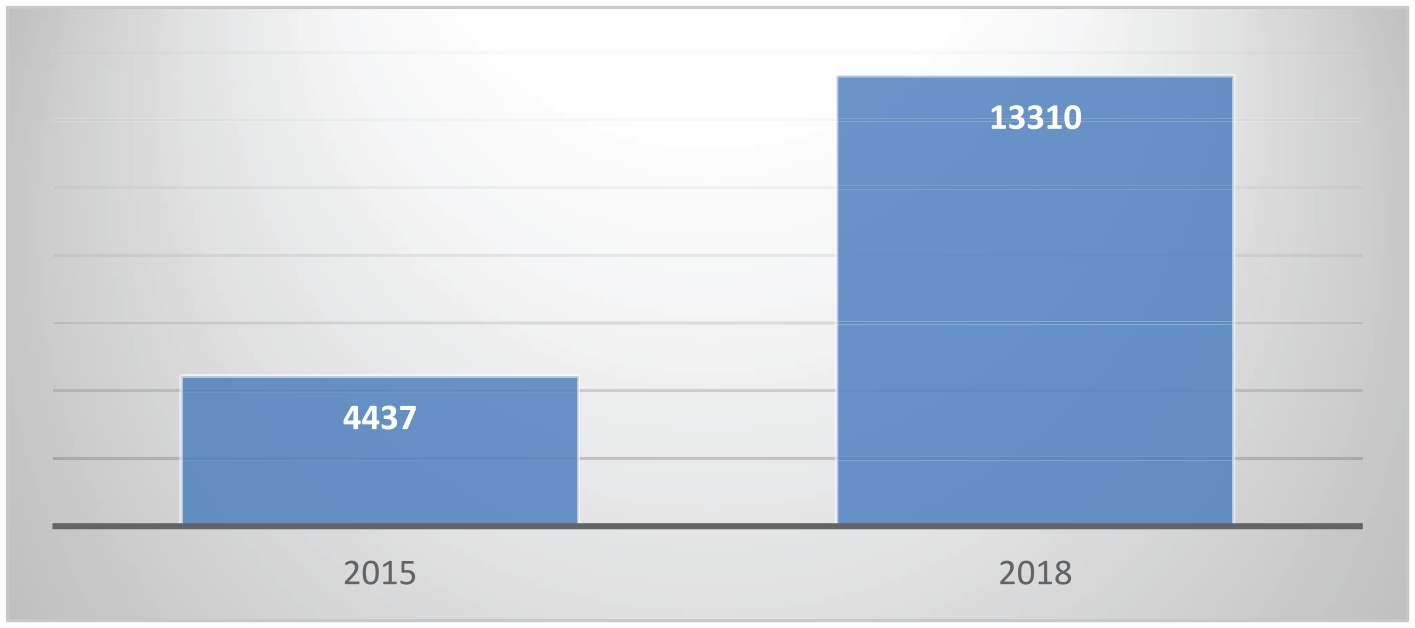
Roma in preschool and compulsory education in absolute number (ECRI Report, 2020).

Roma enrolled in compulsory education in percent of total Roma kids in compulsory education age (ECRI Report, 2020).
Attending university is rare among Roma people, with scholarships or other subsidies as the main discriminant in university enrollment; nevertheless, the new action plan did not allocate funding for high school fees waiver, with the consequent fall in the number of Roma students earning a diploma and consequent fall in university enrollment (D. Hyseni, personal communication, August 30, 2020). According to Hyseni, the government decided to focus on compulsory education as the faster way to increase school enrollment, with the side effect of defunding higher education with a decrease in both high school and university enrollment. At the same time, the training of teachers specialized in Roma language and culture went from 93 in 2015 to 96 in 2018.
Together with in-school programs, school support at home has been promoted as well; in Drizë village in Fier district, the project “Parents and children learning together” has promoted around 300 families to bring parents and children to attend school together, as the majority of adult Roma population in Drizë village are illiterate. Other example comes from Allias-Kinostudio near Tirana, where extracurricular support to Roma pupils resulted in 53 children from an expected 60 enrolling in public primary schools and all of them advancing to the next grade (Avery & Hoxhallari, 2017). Roma programs have also drawn attention from civil society, with the 2019 Balkan Barometer showing that 86% of Albanians favor public help for Roma when applying for a secondary school or university (Balkan Barometer, 2019).
Finally, it seems that both Roma people and civil society have understood the importance of state support for an educated and integrated Roma community. All stakeholders are aware that schooling is the most effective tool to break the cycle of segregation affecting Roma; indeed, by taking control of their situation, Roma people can develop solutions according to the community’s actual needs. Furthermore, it needs an educated population to develop the skills directly affecting the quality of jobs and life, and what is likewise essential, the self-esteem and the capacity for collective action.
The Situation in Employment Under the 2016–2020 Action Plan
Lack of education and skills makes Roma people hard to employ, resulting in over 50% of working-age Roma unemployed in 2018 (RCC, 2020). Employment is the biggest worry for Roma in Albania, with 84% of surveyed Roma considering it a significant problem, followed by housing 62% and education 46% (Tulumovic, 2018). With an average wage of 1,356 LEK (11 Euros at 2012 prices) per month, underemployment can be a lifelong handicap for Roma families. Although the national action plan 2016–2020 has set the goal of formal employment of Roma at 80% in 2020, in 2018, it was estimated that only 44% of Roma in working-age were employed (Figure 3), with informal employment accounting for 62% of total Roma economic activity. Only 148 persons completed some form of training courses in 2018, well under the expected 265 envisaged at the beginning of the action plan. Moreover, a significant discriminant in training enrollment is the requirement of a specific educational background with at least a few years of schooling, a criterion cutting off several Roma applicants.

Unemployment rate among Roma in 2012, 2014, and 2017.
Unemployment or inactivity can be explained through several factors; however, lack of jobs, followed by health problems, is the main reason for inactivity (Tulumovic, 2018). Lack of jobs can have an ambiguous meaning; on some occasions, an employer might prefer to keep a position vacant than hiring a Roma, while there is no evidence that preservation of Roma culture pushes young Roma toward isolation or unwillingness to work (M. Veizi, personal communication, August 26, 2020). In contrast with common thinking, receiving social benefits or some social assistance does not affect Roma labor force participation (Abril & Millán, 2019). However, reliance on remittance from abroad may have contributed to low labor force participation, as an increasing number of young Roma have fled Albania seeking better economic conditions abroad. Indeed, according to an assessment from the European Asylum Support Office (2016), 11% of the asylum applications in Germany in 2016 were Roma owning a Western Balkan passport, while the RCC estimates suggest that the Roma population in the Balkans is around 3.5 million, representing around 4% of the total population (RCC, 2020). Accordingly, it seems that Roma people are more likely to emigrate than other ethnic groups in the Balkans, likely due to the significant wage discrimination occurring when formal employment is found, as a non-Roma employee earns on average 45.5% an hour more than a Roma employee (Tulumovic, 2018).
In line with the hidden discrimination affecting Roma, a survey of 1,035 (50% man and 50% women of all ages) Albanians conducted in 2019 by the Balkan Barometer found that 91% of Albanians show support for facilitating access to education and employment of Albanians with disabilities, while only 75% support the same policies when applied to Albanian Roma or other minorities. When Roma people were asked if they experienced discrimination while seeking employment, 34% of Albanian Roma answered yes, often thinking, “Because I am Roma, nobody hires me” (Meçe, 2015). Far worst is that self-perceived discrimination might not consider hidden discrimination, meaning discrimination not evident to the job seeker, like automatically rejecting a job application with a Roma name on it; therefore, the numbers could be even higher. In line with the hidden discrimination hypothesis, 70% of Albanians show support for working with Roma, going to school with Roma kids, and buying from Roma; however, only 22% would support interethnic marriage (Balkan Barometer, 2019). Low support for interethnic marriage shows that Albanians support short and superficial interactions with Roma, like in school or at work, while deeply rooted stereotypes emerge when the relation becomes long-term and family-based.
Likewise, in education, also employment has female Roma particularly disadvantaged, with children in the household or early family responsibilities, as the main reasons behind female dropout from employment or education. In Table 1, we can see differences in labor force participation between Roma and non-Roma, with Roma female labor force participation standing at 29% against 36% for non-Roma female. As most Roma girls get married while still in secondary school, chances to earn a diploma are very slim, thereby getting stuck in precarious or unskilled employment like selling secondhand clothes or recycling garbage (De Soto & Gedeshi, 2002).
Albania Labor Markets Indicators 2017.

Source. Regional Roma Survey (2017).
Moreover, Roma people are often excluded from social assistance or unemployment benefit due to administrative issues, and especially the new qualification criteria for the Ndihmë Ekonomike (Economic help, Albania’s primary social assistance program) had the effect of diminishing the number of Roma household earning social assistance (D. Hyseni, personal communication, August 30, 2020). Have a registered address, provide a valid identity card (ID), or work for a minimum of 1 year with the same employer are some of the eligibility prerequisites for social assistance or unemployment benefits, conditions often hard to fulfill for Roma people. Accordingly, due to administrative barriers, only 1,215 Roma families out of 30,000 total families received economic assistance in 2016 (Ministry of Social Welfare and Youth, 2018).
The lack of ID makes Roma people not hirable, as they cannot be registered for social insurance, while 5.7% of Roma children aged 0 to 18 were not registered in 2011, making them “forgotten children” (Dauti, 2015). With the current price for an ID card at around 1600 Lek (12 Euro), applying for an ID constitute a significant expense for Roma families, a little nagging that often turns up to be a significant handicap when seeking health care, social assistance, education, and citizens rights in general.
All of the above contribute to demotivate Roma when looking for formal employment, as they will be discriminated against even before the job interview begins, paid on average half of non-Roma, and if later unemployed, social benefits may be delayed or denied altogether. With the above in mind, an unemployment trap is upon the Roma people, as salaries are delayed and notoriously low, meaning that often daily needs cannot be met. Ultimately, the cycle of job discrimination would turn them into demotivated job seeker, seeking only informal self-employment like trash collector or bagging.
National Action Plan 2016–2020: Comparative Remarks Halfway Through
Encouraging achievements have been reached under the 2016–2020 action plan, the number of students enrolled in preschool and compulsory education had a threefold increase, going from 4,437 in 2015 to 13,310 in 2018, while the unemployment rate has decreased from over 75% in 2014 to 55% in 2018. The goal of a 5% increase in 2018 compared with the 2015 baseline was also achieved regarding students enjoying free textbooks and people completing any form of job training. In contrast, the number of students enjoying study assistance and the number of teachers trained in Roma language has remained constant, while the number of students using preschool transportation has dropped sharply.
Evidence from the two previous chapters suggests that steps have been made toward the integration of Roma in compulsory education; thus, the short answer to our question on whether real inclusion has been delivered could be yes, but these data do not say much about the quality of the integration. Indeed, growing school enrollment has been noticeable only within compulsory education (comprising primary and lower secondary education). In contrast, upper secondary education (or simply secondary education in Albania) did not experience an increase in enrollment when compared with the 2015 baseline, while university enrollment fell (Meçe, 2015; D. Hyseni, personal communication, August 30, 2020). The proportion of Roma continuing education beyond compulsory school remains much lower than other non-Roma groups (Miskovic & Curcic, 2016), a trend aggravated by cuts in scholarship for higher education (Iulius & Adrienn, 2021). Amid these two contrasting policies, Roma students are stranded between subsidies beyond need in compulsory education, and cuts in subsidies in higher education, while university enrollment has been decreasing due to reforms in the social assistance program. Moreover, lack of resources and infrastructure makes segregation in education worse in rural areas, ultimately showing that without a comprehensive approach on Roma integration, improvements in education alone are unlikely to improve Roma livelihood.
By applying the same quantitative perspective, improvements in employment are undeniable, with 854 Roma employed through the Regional Employment offices in 2018 and the unemployment rate down from 75% to 56% in 2018. However, as unemployment went down, it is unclear which share of Roma people was employed due to subsidies and which share due to genuine employment opportunities (Tulumovic, 2018). Despite a drop in the unemployment rate, employment is not steady, with Roma often moving between jobs (ILO, 2019). Vocational education programs have been growing as a compensation for the diminishing number of scholarships in higher education, and the number of trainees has been mainly dependent on government funding, with 944 Roma trained in 2017 and only 157 trained in 2018, a clear sign of the tight dependency between Roma employment and state subsidies (Government of Albania, 2018). Indeed, employment suffers from long-lasting issues that cannot be resolved with increasing temporary funding; instead, it needs a systematic approach with a long-term goal in mind (O’Higgins & Brueggemann, 2014).
Table 2 shows the sharp contrast between programs where funding increased with the 2016–2020 Action plan (school enrollment or unemployment rate) and programs where funding shrank (pre-school transportation and training programs). Although increasing employment rate is one of the Action plan targets, structural issues like the chronic lack of ID cards, with the government showing no willingness to facilitate ID procedures, makes Roma citizens underrepresented at a political and economic level. If no ID cards are issued, that person does not exist, thus harder to hire while no funding shall be allocated to enroll that potential student or train that potential worker.
Compared Data in Six Fields of Education and Employment.
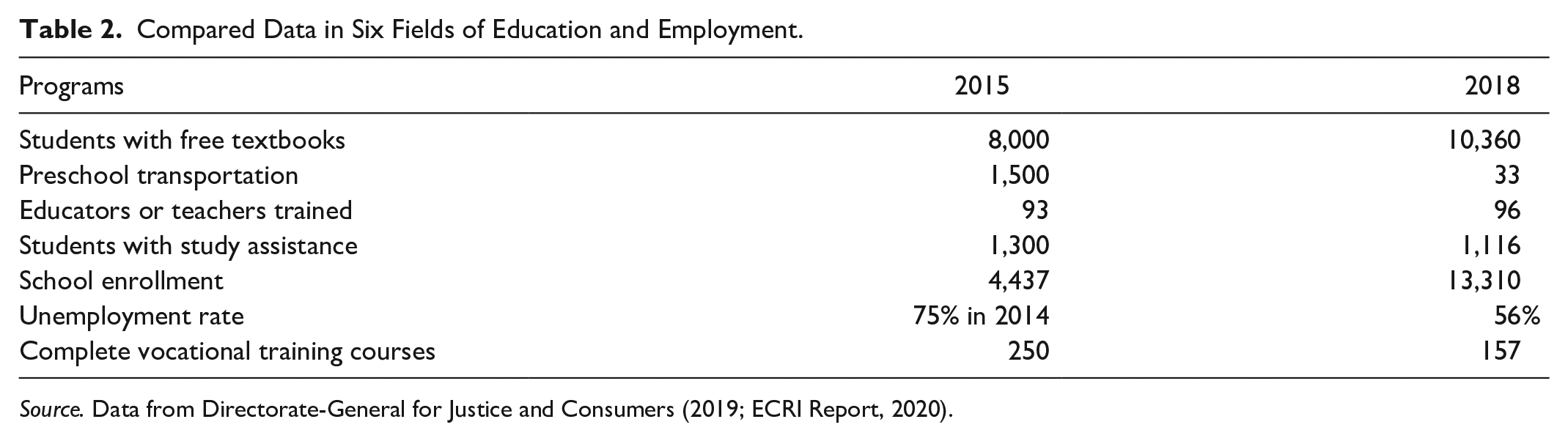
Source. Data from Directorate-General for Justice and Consumers (2019; ECRI Report, 2020).
Overall, the National Action Plan 2016–2020 seems successful at first sight by increasing employment and enrollment rates. However, as shown in this study, looking deep into the numbers, no long-lasting improvement has been reached. The action plan seems tangled by the three-I problems: ideology, ignorance, and inertia, a frequent issue among programs for weaker layers of society (Banerjee & Duflo, 2012). Ideology coming from European institution catalyzed governmental attention into minority issues, first with the 2010 anti-discrimination law, and after by recognizing Roma as an official minority in 2017. However, ignorance of the Roma people’s real issues kept the law only on paper with no actual implementation as governmental efforts cannot wipe out years of antigypsyism mentality. Therefore, at the halfway mark, the 2016–2020 action plan seems lead by inertia, with quantity over quality and no question asked in regard to what kind of education is being taught or what kind of employment is being offered, with funding focused on the economic and statistical side of the problem, forgetting the human side, which is likewise essential. A similar view is backed by the RCC progress report on Albania 2020, which concludes that inequality has not been reduced in Albania, except in health care coverage, while the marginalized Roma population did not enjoy growing rights in education or employment. The RCC also noticed a considerable expansion in the gaps between Roma and non-Roma neighbors, with Albania having the largest overall ethnic gaps in the Balkans (RCC, 2020). Growing school enrollment or temporary employment are short-term solutions, but providing Roma people with good schools and good job could be a practical long-term solution.
This study has attempted to bring Roma and minority issues back on the public agenda; as the COVID-19 outbreak has attracted attention from all sides of the public sphere, minorities issues have been downgraded to a secondary stage, despite minorities were hit the hardest by the outbreak, as social distancing was often not an available option. The national government has implemented economic packages targeting those who lost their job during the pandemic, while Roma communities were often excluded from this economic aid due to the informality of Roma employment. In terms of education, lack of internet connection or computers made remote schooling impossible for Roma students, while missing school meals aggravated malnutrition.
In line with what mentioned above, future studies should focus on COVID-19 impact on different minority groups within the same country, as the rapid development of policies responding to the pandemic made data availability and collection a limitation of this study. Therefore, given the data limitations, we could focus on education and employment only, as these data are released yearly, while other data on housing or health are incomplete or missing. Moreover, due to the COVID-19 outbreak, geographic limitations have occurred, as traveling to Albania was impossible due to border closure worldwide. As the collection of firsthand data was not possible, we had to overcome geographic limitations by conducting Skype interviews with local experts based in Albania. Finally, when a non-Roma studies Roma issues, bias will inevitably emerge, as stereotypes, prejudice, or behavioral tendencies will lead toward a particular set of solution for Roma problems. We have attempted to overcome our bias by looking at issues and solutions from an analytical perspective, with data analysis conducted on a quantitative approach leaving no room for qualitative assertions, while building our thesis above previous literature and with the help of members of the Roma community in Albania. Finally, we used data from official national and international institutions specialized on Roma affairs, therefore reducing the risk of bias in our bibliography.
Conclusions, Beyond “us and them”
At the halfway mark, the 2016–2020 action plan has reached its goals in education and employment. However, deep-rooted issues remain unsolved. Increasing the number of Roma students will have a little long-term effect if those students attend segregated schools with no exposure to the outer world. The same discourse is valid for employment, as much as for housing or health. EU institutions are ignorant of the single country peculiarities, and they provide a one-size-feat-all policy, resulting in programs having little effect in solving those deep-rooted problems at the base of Roma segregation. The 2016–2020 action plan provides solutions for Roma’s problems by implementing programs for Roma only, forgetting that programs for the poor are poor programs, whereby targeting Roma alone in their segregated neighborhood, with no effort in bringing Roma and non-Roma together could further worsen segregation. As Daniel Hyseni argued, the Albanian population has grown more sensible toward Roma integration by showing willingness for mutual engagement, and Manjola Veizi claimed that long-standing cultural dogmas among the Roma community are falling. Social media are providing a platform where young people from all ethnic groups can meet beyond ethnic barriers. Most of Albania’s intelligentsia is well-disposed toward the Roma, and the non-Roma working class are growing sympathetic toward Roma issues. However, the refusal of the majority to recognize their culture and traditions builds a wall of misunderstandings that progressively tears Roma and non-Roma apart and is within the task of policymakers to alleviate social tensions by promoting social cohesion.
The COVID-19 outbreak is setting back the Roma agenda, while Roma people suffer the most from COVID-19 restriction. With social distancing often impossible and unemployment rising nationwide, the risk to fall into extreme poverty is looming closer as Roma people are often cut out from economic subsidies. The new social assistance enrollment criteria ousted most Roma families from receiving the benefit, and governmental efforts have set new priorities, with Roma employment and education losing momentum, the risk of wiping out years of work and millions of Euro spent seems real. In conclusion, the 2016–2020 National Action Plan might achieve its goals on paper, but ultimately the short-sighted paternalistic approach typical of Roma policies is doing more harm than good. Despite the growing funding available, the action plan did not avoid falling university enrollment and provided mostly low-skilled job training; this is just the tip of the iceberg of an action plan, designed on an ideology at the top and run on inertia on the ground.
Footnotes
Declaration of Conflicting Interests
The author(s) declared no potential conflicts of interest with respect to the research, authorship, and/or publication of this article.
Funding
The author(s) received no financial support for the research, authorship, and/or publication of this article.
