Abstract
This study proposes a management model by business processes for science parks based on the premises and concept of enterprise architecture (EA). The model offers integrating business processes with activities and information that can be generated by adopting customized information systems to meet the science parks’ needs. The proposed model’s main contributions included EA as a means for shaping and enabling reconfiguration through descriptions of the structures of business processes and information systems that connect these structures, forming business and information architecture frameworks. In association with these frameworks, the managers need to define a coherent set of patterns, policies, procedures, and principles that sustain the business processes integrated with the information systems. As a result of the study, this model can help management execute and control activities related to business processes in the parks through interaction and alignment with the information system intended to facilitate the execution. The model will also lead to greater agility and efficiency in these business processes, considering their specific nature and the relationship with the parks’ actors. As a practical contribution, knowledge of these processes aids the management of the parks in their drive for a competitive advantage by maintaining and developing their management models.
Keywords
Introduction
In the current organizational context, characterized by high levels of dynamicity, competitiveness, capabilities, complexity, and permeated by uncertainty, there emerges a need for organizations to have their business processes duly documented, charted, and treated (Aydiner et al., 2019). Organizations need to ensure that any change in strategy is meticulously introduced at all the hierarchical levels and in all operational processes (Mandal & Sarkar, 2017). Enterprise architecture (EA) is defined as a highly strategic technique or model utilized to help managers address the complexity of the business environment (Jahani et al., 2010; Lankhorst, 2009). The essential concept of EA is to align information, technology, norms, processes, and policies with the objectives and strategies of the organization to promote the integration, consistency, and conformity of the organizational environment. EA focuses on the integrated analysis of business processes and the company’s information system, aligning the business architecture (BA) with the information architecture (IA).
The need to integrate business processes and information systems also involves organizations to provide support for the development of enterprises, such as science parks (Olszak et al., 2018). According to the Brazilian Association of Science Parks and Business Incubators (Anprotec, 2008), these parks are places of excellence for the transfer of technology, with an adequate infrastructure, easy access, and other factors. They are defined as an initiative intended to house innovative or knowledge intensive enterprises and encourage interaction with teaching and research institutions. The parks are innovation habitats.
Horácio (2009) claims that the definition of a management model should be the constant object of analysis for the managers of science parks who need to promote the convergence of expectations from the outset so that their strategic planning is not compromised in the future. Figlioli (2013) adds that the business model, that is, the way the organization structures its services and infrastructure to obtain results that enable it to continue to encourage and support micro and small technology-based enterprises, needs to adapt to the information system that will aid its continuation. To Osterwalder and Pigneur (2010), the business model is a description of the logic of how the organization creates, distributes, and captures value. It can also be viewed as the way the integrating structure of strategy, business processes, and information systems operate, facilitating communication between them as a source of resources and benefits for their actors.
In the context of science parks (Benny Ng et al., 2018), it is interesting and important to propose a management model with processes using the concept of EA due to the need and sense of opportunity associated with inadequate and insufficient management structures (Figlioli, 2013). The aim of this study is to propose a management model by processes, based on the premises of EA for science parks. The study seeks to understand studies on EA by proposing this model to integrate business processes and adapt them using information systems to make an effective future contribution in terms of gathering information and obtaining results, helping science parks to make new technological ventures feasible.
Scholars’ recent systematic search of Brazilian and international databases of articles (Web of Science, Scopus, Emerald), dissertations, and theses for information on Brazilian science parks shows that their studies are intended to create models for implementation and management (Wolfarth, 2004), financing, with a focus on investment funds (Gargione, 2011), and multiple criteria models (Oliveira Neto, 2008). They also seek to create models of the potentials and limits of science parks (Correia, 2010), governance models (Chiochetta, 2010; Giugliani, 2011), and a business model for economic and financial sustainability (Figlioli, 2013). However, none of these includes a proposal for management through processes using the concept of EA for science parks. It is this omission, or at least this theoretical gap in the literature on science parks, with a focus on EA, that justifies the present study. Another innovative aspect of the study is the research methodology, adopting the design science research (DSR) method.
In addition to this introduction, the article is divided into the following sections. Section “Literature Review” provides the literature review of previous studies on EA and their benefits for organizations and their relationship with science parks. Section “Methodological Procedures” describes in detail the method used in the case studies in Brazil. Section “Presentation and Analysis of the Case Studies” presents the main findings and interpretations of the reality of the science parks in question and, from this diagnosis, proposes the management model for parks based on the fundamentals of EA. Finally, Section “Final Considerations” presents the potential contributions of the proposed model and how it can help clarify the theory on EA and offer advantages to science parks. The section also addresses the limitations of the study and suggestions for future research.
Literature Review
Enterprise Architecture
EA proposes to direct the alignment of information systems, organizational processes, and company strategy. It also aims to integrate the company through coherent principles, methods, and models (Gong & Janssen, 2019). According to Iyamu and Mphahlele (2014), the implementation of EA provides holistic visions that are used to address the structure of the organization, its functionalities and structure of resources, business processes, information flow, information systems, and technological infrastructure. It can also address the dynamic interaction between the diverse components of the company (Dodaf, 2007). Furthermore, the use of the resource-based view (Barney, 1991) aligned with EA seeks to understand on which resources and capabilities companies should base their growth and strategy, and which resources should be developed and acquired, and in which sequence this should occur (Wernerfelt, 1984).
EA is based on the creation of an execution framework resulting from a careful selection of business processes that require a necessary level of standardization and integration for alignment with organizational resources, more specifically IT resources. According to Santos (2009), through EA it is possible to capture the essence and evolutions of the business and information systems of the organization. To Lankhorst (2009), EA aims to model, analyze, and communicate the organization.
The need to integrate business processes with organizations’ information systems also includes organizations that support business development, such as science and technology parks. This occurs because EA provides a clear view of how the different knowledge domains are connected. It is also possible to know the structure of the organization, the necessary activities in a business process and how information resources interact with this process (Santos, 2009). The development of EA must be supported by a governance process to ensure that the interests of the stakeholders are considered. EA is understood as an important discipline for promoting the alignment between businesses and IT (Strnadl, 2006).
The need to define EA is not only limited to the integration of business processes and IT, but rather the integration of these processes with the information system, which is the focus of this study. Tait (2000) claims that this proposal encompasses BA, which considers aspects of the business processes, with their goals, actions, performance indicators, the principles that govern their management models and their evolution, as well as other organizational aspects that guide the execution of these processes. These aspects include structure, the people involved, resources, mission, and culture. A business process may be defined as a series of interrelated activities that often involve several organizational functions and is operated by actors who work to create perceived value for customers and other stakeholders. The proposal of EA also encompasses aspects of the information system that is available, and the users involved in a context referred to in this study as IA. In this view, Tait (2000) states that the contribution of IA occurs precisely in the connection that it makes between all the elements involved in the development of the systems, treating, in a same degree of importance, all its components, not only focusing on technology or data. Thus, IA involves a number of components, such as business strategy, the information system strategy, business processing, the information processing architecture, information system planning, and the implementation of software design and development (Devlin & Murphy, 1988).
Developing BA is the first step in the creation of EA, as its role is to define how to achieve goals, objectives, actions, and indicators in business processes. BA creates the frameworks for EA. Bernard (2005) claims that BA is a management model and a documentation method that, together, provide a coordinated and actionable view of strategy, business processes, information flow, and use of the organization’s resources. IA is defined as a map of the enterprise’s needs for information and how these are met by IT. Thus, the information systems are the enablers of the business and need to be aligned with the real business goals (Azevedo Junior & de Campos, 2008).
The Benefits of EA
Almeida et al. (2015) and Bischof et al. (2017) claim that in EA, for the company to execute its strategy to obtain and maintain a competitive advantage, it first needs to construct its basic or foundation architecture to obtain and manage capabilities and resources including people, knowledge, business processes, information, and technology. In this base, business processes can be constructed correctly, duly standardized and digitalized safely, quickly, and effectively. EA provides a vision of the main resources of the organization, that is, people, processes, technology, information, and knowledge (Anaya & Ortiz, 2005). The benefits of the architecture are knowledge of the infrastructure for communication, analysis by all interested parties and the possibility of designing new adaptive conditions in an organized manner (Lankhorst, 2009). EA can aid the development of a network of relationships for the organization, supported by IT and influencing the internal and external relationships of the organization (Dreyfus & Iyer, 2006). EA represents a means for relating the resources and capabilities of the organization in a search for necessary adaptations and, thus, to secure a competitive advantage and achieve coherence and consistency in the BA and IA (Shanks, Gloet, Someh, Frampton, & Tamm, 2018).
Gartner, Inc (2014) claims that EA is the process of translating the strategic vision of business in entrepreneurial changes made by the creation, communication and improvement of key requirements, principles, and models that describe the current and future status of the company, thus enabling its evolution. Bernus and Nemes (2010) understand that this effort requires a clear operational structure to conceive and manage the continuous metamorphosis needed for the survival, growth, and success of enterprises. It is necessary to be aware of the current situation (as-is) of the company to desire its future status (to-be). Likewise, an analysis of the impact of changes is also of great importance (Dyer, 2009; Ross et al., 2006). The As-Is architecture is obtained by analyzing documents and acquiring a current snapshot of the organization in terms of its data, applications, technologies, business processes, and the relationships between its constituents. The To-Be model seeks to provide the image that the organization will be able to or need to have in the future (Silva, 2011).
EA seeks to identify and solve problems starting from the base of the organization, with an approach framed in business processes needing to be constructed (Limberger, 2010). According to Spewak (1992), by using EA, an organization can obtain the following benefits for its structure: (a) gaining a better understanding of the company, acquiring and registering knowledge for later use; (b) projecting and specifying a part of the company (functions, information, communication, etc.); (c) serving as a basis for analyzing business aspects and allowing the simulation of the enterprise’s operations; (d) determining a base for decision-making on operations and the organization of the company; (e) building an integrated structure for the development and implementation of software; (f) identifying the functionality and behavior of the company in terms of business processes, activities and operations; (g) obtaining a description of the processes, control flow and data flow, and decision points; (h) identifying the functional capabilities of the application; (i) describing the flow of documents and data and identifying the databases; and (j) recognizing the roles of employees in the organization.
Tamm et al. (2011) claim that EA facilitates greater levels of organizational alignment, improved decision-making, reduced costs, efficiency, agility, and operational flexibility. A good architectural practice helps a company to innovate and change, simultaneously affording it stability and flexibility, as it provides support for changes from a sectoral perspective. It also facilitates the measurement and evaluation of the benefits obtained from introducing technological innovation (Jonkers et al., 2006). Companies that adopt EA can anticipate and react quickly to new information, changes or new business demands. By using the foundations of EA, an organization is capable of preparing for change, ready to adapt, or innovate in its business. By being thus prepared, the organization will have a greater chance of remaining in its increasingly uncertain market, being sustainable, competitive, and up-to-date. EA can be used to facilitate the identification and solution of problems resulting from interoperability processes (Anaya & Ortiz, 2005), such as support for the development of information systems and the development of reengineering or adaptation of organizational processes (Zachman, 1987) and serve to instigate the need for innovation or improvement in management (Limberger, 2010).
Science Parks
Due to the drive to generate innovations, interaction between different actors and the importance of information and knowledge management in the globalized context, a demand emerges, mainly from technology-based companies, for differentiated innovation environments (Benny Ng et al., 2018; Korontai et al., 2016; Magalhães, 2009). This author highlights that in this scenario of new arrangements between companies, new types of organizations, and networks of organizations and institutions are emerging in the current socio-economic scenario. These environments, known as innovation habitats or more specifically as science parks, emerge as instruments to encourage the generation of innovations in the creation of environments with technological characteristics. Studies of these parks have provided greater insights and focuses on aspects related to the economic impact, job creation, the induction of start-ups, and the economic revitalization of surrounding areas.
Historically, the evolution of science and technology parks, since the early 1950s, was born from the attempt to reproduce one of the greatest phenomena of company-university interaction and regional technological development: Silicon Valley, located near Stanford University (Figlioli, 2013). Today Silicon Valley brings together more than 2000 technology companies, which hire 32% new employees per day (Mctic, 2019). Hora (2019) says that in the wake of the success of Silicon Valley, other parks emerged in the United States and Europe in the following decade, two notable examples being the Cambridge Science Park and Sophia Antipolis in France (Aslani et al., 2015; Hora, 2019).
In Asia, Hora (2019) states that according to Phan et al. (2005), the first park was built in 1970 in the Japanese city of Tsukuba. During the 1970s and 1980s, an expansion of the phenomenon occurred worldwide (Gaino & Pamplona, 2004), and a peak of growth during the 90s, with the appearance of several of the parks in operation today (Chan et al., 2011). In several countries, the motivation for creating science parks was the possibility of providing infrastructure and other resources and support needed by companies in the generation, development, and launch of innovative products and services (Brown & Mason, 2014; Hora 2019; McAdam & McAdam, 2008; Ratinho & Henriques, 2010). It is currently estimated that there are more than 500 science parks around the planet, with the largest concentration of these environments being in the United States (Hora, 2019).
In Brazil, originating in the 1980s, science parks have evolved both in quantitative terms and in terms of maturity. Park initiatives have multiplied over time, showing considerable growth, from 10 in 2000 to 103 in 2017, with 37 in the design phase, 23 in the implementation phase, and 43 in the operating phase, with more than 1,300 companies installed in the parks and more than 38,000 jobs across the country (Mctic, 2019). In this context, efforts to develop innovation environments that seek to integrate the private sector, academia, and the public sector have been reflected in a greater number of technological parks in the country. Besides, park management employs almost 700 professionals. Given the focus on ventures that exploit innovation, science parks have an important social and economic impact in their regions (Mctic, 2019).
Rosenblum (2004) identifies in science parks four well-defined interest groups due to their motivations: (a) universities (seeking business opportunities to create skills, training and job opportunities for students for opportunities to increase their efforts in technology transfer or intellectual property); (b) government (viewing parks as an instrument for economic development with a view to the competitiveness of innovative enterprises); (c) entrepreneurs (seeking to develop a cluster of businesses with similar interests). They are motivated by the probably increase in the capacity of their innovative activities through the transfer of scientific and technological knowledge and specialized human resources; and (d) financial agents (in addition to traditional financial agents, another source of funding has been encouraged to invest in new companies: venture capital, which has been treated as entrepreneurial capital. Venture capital markets have investors interested in taking great risks when there is a possibility of high returns).
A science park is an urban organization in a geographical area constructed and enclosed to house ventures in knowledge activities, as they include R&D for the production of goods and services based on science (Courson, 1997). Luger and Goldstein (1991) claim that a park emerges as a privileged space for the development of an innovation milieu that functions as an inductor to the concentration of technology-based companies in a city, region, or state. The technological competitive advantage of the location rather than its scientific quality constitutes the end purpose of a science park (Carvalho et al., 2016; Castells & Hall, 1994). These parks stimulate and generate a flow of knowledge and technology between universities, research institutions, companies, and markets. They promote the creation and growth of innovative companies through incubation mechanisms (Iasp, 2014).
Studies highlight that business models are more readily identified in contexts of technological innovation (Silva, 2011). Science parks are instruments of induction for sustainable and innovative development (Correia & Veiga, 2019). Due to the emergent nature of the technology industry in Brazil, science parks have become spaces of physical reference in the development of Brazilian technology. Figlioli (2013) emphasizes that the installation of a science park requires intense organizational work and the commitment of partners, a long-term view, and attention to local needs.
Horácio (2009) states that the definition of a management model should be a constant subject of analysis by the managers of the science and technology parks who need to promote the convergence of expectations from the beginning so that the strategic planning is not compromised in the future, due to the asymmetry of information and the disparity of objectives of the business processes and the information systems of the managing organization. Figlioli (2013) complements that the business model, that is, the way in which the organization structures its services and infrastructures, aiming at the results that allow the continuity of its activities in the incentive and the support to the generation of micro and small companies of base technological, needs to be adequate to the information system that will support its continuity. The definition of EA becomes necessary when it comes to configuring new control and support mechanisms for the management of these spaces.
Management models for these parks need to adapt to the business processes and information systems with the interaction of various factors, such as the business, knowledge creation, added value of services, quality infrastructure, and the creation of companies that add value and seek to increase their capacity to act as a unique instrument of economic development (Magalhães, 2009). Furthermore, to Silva (2011), these parks, as organizations, need to have a business model based on the principles of EA. By using this model, the parks could have a consolidated system for collecting and disseminating information to enable greater efficiency in technological maturation processes of their resident companies, remaining apart from the complex universe of the development of industrial competences.
Methodological Procedures
With the aid of the research method that will be outlined in this section, this study aims to achieve its research goal of proposing a management model by processes using the concept of EA to adapt the business processes and information systems of science parks. To achieve this goal, the methodological instruments used aided the detection of the BA and IA in the parks in question. The outline and design of this study were based on the DSR method, which is a rigorous process for projecting artifacts, evaluating what was projected or what is functioning and communicating the results obtained (Çağdaş & Stubkjær, 2011). Through its pragmatic bias, this method focuses on investigating practical problems. When used in studies of management, it is intended to aid the creation of organizational artifacts, offering as a result a prescription that helps to solve real problems, deliver a satisfactory solution, and generate knowledge. It must be possible to generalize the solutions that are generated for a certain class of problems, allowing other researchers, in different situations, to make use of the knowledge that is generated.
The working method used for this research is based on Vaishnavi and Kuechler (2004) and Manson (2006), who guide the sequence of logical steps to achieve the proposed objectives of the research, as shown in Figure 1. Dresch et al. (2015) state that this method is an improvement of the method proposed by Takeda et al. (1990) with the contributions proposed by Vaishnavi and Kuechler (2004) and Manson (2006), showing the steps of the process and its main solutions.

Design Science Research working method.
The process of the DSR method starts when the researcher seeks to solve a problem, it is the initial condition of research. For this, it is necessary to understand the nature of the problem, the context, the potentials, and the limitations, so that it is possible to understand the environment in which the problem is inserted. This phase is called awareness of the problem. After the problem awareness phase, the moment for suggestion or definition of objectives for the solution begins. Vaishnavi and Kuechler (2004) mention that this is a creative stage where the functionality is planned as a basis for a new configuration of existing or new elements.
In this, the abductive scientific method is used, as the researcher uses his creativity and previous knowledge to propose solutions that can be used to improve the current situation. Bortolaso (2009) explains that imperative propositions, fundamental to the state of the art of theory, are made to produce projects or reinvent existing projects.
The development stage is the effective construction of the artifact by the researcher, which can be one or a set of artifacts to solve the proposed problem, and, for this, it will depend on the use of various techniques, in accordance with the object being studied. For Vaishnavi and Kuechler (2004), the artifact is developed and implemented in this phase, based on the deductive method. Dresch et al. (2015) state that, in the interaction between the development stage and awareness, there is the circumscription process, as it allows other people, in addition to the researchers involved, to understand and learn from the construction process of the artifact.
In the evaluation phase of the artifact, Bortolaso (2009) and Vaishnavi and Kuechler (2004) explain that it must be analyzed and tested according to the conditions established for validation; this step contributes to the process of improving the constructed artifact. Manson (2006) points out that, once evaluated, it will be possible to generate performance measures, to compare them with the requirements that were defined in the stages prior to the development. Evaluation is defined as a rigorous process of verifying the behavior of the artifact, in the environment for which it was designed, in relation to the solutions it was proposed to achieve.
After the evaluation, the moment of conclusion follows, when the analysis and interpretation of the results occur, the artifact is consolidated. Vaishnavi and Kuechler (2004) mention that it is not only the results of the consolidation effort and the “writing” in this phase, but the knowledge acquired by the effort is often categorized as “firm” facts that have been learned. Dresch et al. (2015) point out that, eventually, according to what was found, it can be noticed that the awareness of the problem itself was incomplete or insufficient. In this case, the DSR cycle can start again, generating contributions regarding existing gaps in the theory and which, at the moment of awareness, can result in an inappropriate artifact to solve the problem under study.
The data analysis steps are described in Table 1, aligned with the steps of the DSR working method, already mentioned in Figure 1.
Data Analysis Steps.

The recent systematic search for academic studies on national and international bases of articles on works dealing with DSR, point to works by Hevner et al. (2004), Geerts (2011), Alles et al. (2013), Dresch (2013), Sordi et al. (2013), Lacerda et al. (2013), Bortolaso et al. (2013), Przeybilovicz (2014), and Myers and Venable (2014). However, none of the researched studies use DSR with EA. It is precisely the inexistence, or at least the scarcity of research on the application of DSR in science and technology parks, focusing on the EA theme, that this research is justified.
DSR was also chosen because it is associated with the case study method. As the purposes of this research is prescriptive, with the development of artifacts, the case study is useful for understanding existing artifacts and how they function in a certain context (Mendes et al., 2018). In addition to DSR, this study also uses the qualitative multiple case method (Yin, 2010) from an analysis of four science parks in the operation stage, according to Anprotec (2008), located in Paraná State, Brazil. According to Anprotec (2008), the parks are in their operational phase and were chosen irrespective of whether they have a defined management model. Considering the diverse incentives of the government and the leaderships in the universities and in the Brazilian business environment, the scientific and technological parks have presented a considerable growth in the last years. Since 2000, new incentives have been introduced for the implantation of science and technology parks in Brazil with more comprehensive development objectives—not only technological but also economic and social (Anprotec, 2008). Thus, with the creation of legal frameworks to support the innovation process, such as the Innovation Law in 2004, a new impetus was given to the development of national science and technology parks. In this context of growing importance of science and technology parks in the advancement of innovation and the interaction between university and company, this work performs an analysis of these enterprises in Brazil.
Regarding the primary data collection techniques, to measure and characterize the BA and IA analysis categories, it was necessary to conduct semi-structured interviews with four managers, one from each park, and non-participant observation on location, to become more familiar with the context and reality of the environment. The interviews were all recorded with the permission of the interviewees, transcribed and analyzed. An interview was conducted with each manager with the following durations: Pato Branco Technology Park: 1 hr and 2 min; Western Agro-industrial Technology Park: 58 min; Curitiba Software Park: 50 min and Tecnoparque Technological Park—PUCPR: 58 min.
From these primary and secondary data, this article was provided with information on the peculiarities of the business processes, which activities are executed in each process, who executes them, which resources and capabilities are required for each process and the organizational structure. The data also provided information on the details of the information systems and if and how these systems support the hardware, software, processes, people, and network. The use of these diverse sources served to perform the methodological triangulation of the data, seeking convergence of information with justifications from the sources of evidence. The data were collected and analyzed in 2015. In keeping with the purpose of the study, a longitudinal investigation was conducted.
The content analysis technique (Bardin, 2011) was used to interpret the data, aided by Atlas.ti version 7.0. This software offered benefits for the analysis, as it generated integration (all the interviews and documents were integrated into a single project or hermeneutic unit). It also provided casual insights, facilitated the filing and organization of the documents and a comparison of the diverse data collected. It also facilitated the construction of graphic networks, schematizing the relationships between the codes that were created (Rocha, 2015). Using this software, the fragments of text, or quotations, from the collected data that were considered relevant to the study were coded.
It was necessary to create 126 codes for the content analysis of all the material treated by the software. These codes were used in 715 quotations. The most frequently cited codes, that is, those most perceived in the perceptions of the interviewees or more frequent in the analyzed data were Challenges and Limitations, Competences of the Park, Management of the Science Park, Objectives and Idealization of the Park, Business Processes, Identified Needs, Technologies, and Deficiencies. It should be stressed that the model was proposed based on parks in operation. The science parks in this study are indeed active.
Presentation and Analysis of the Case Studies
In this section, the results are presented by characterizing the four science parks in question, analyzing the management and competences of the parks and their challenges and needs and briefly identifying their business processes and information systems. This identification of the strengths and weaknesses enabled the current diagnoses of the articles regarding the BA and IA, understanding the nature of the problem of these science parks, the contexts in which they are embedded, their potentials and limitations. This enabled the collection of inputs for this study to propose its management model, considered urgent and necessary for the reality of the parks in question.
Characterization and Management of the Science Parks
Four science parks were researched, all located in Paraná State in the south of Brazil: (a) Science Park of the city of Pato Branco, which is scientific, technological, educational, and cultural; (b) Western Agro-industrial Science Park (PTAO) in Cascavel, which seeks to develop cooperative processes to promote regional socio-economic development; (c) Software Park of the city of Curitiba, which was the first science park in Brazil, as a technology-based venture focusing on innovation and local development, with a specific infrastructure for software; and (d) TECNOPARQUE—PUCPR Science Park, which continually aims to strengthen cooperation with the business sector and increase its operations as an agent promoting socio-economic development.
The management of the four parks is linked to the strategic management of the venture and is handled by a person in charge or a team that is at the head of the venture and coordinates all its activities. The strategic management is based on the sustainability strategy of the park, which means operational and financial sustainability to enable the park to remain functional and develop its activities. Science parks need to be coordinated by managers who encourage and coordinate technology transfer and promote actions that focus on preparing their companies and other enterprises in the surrounding area. A necessary part of this management is a Management or Deliberative Council. This council is consultative in nature and works with the other entities related to the park. Its purpose is to provide incentives for scientific and technological development and innovation with a view to developing and supporting the planning and management of the park.
These councils act as entities that guide, inspect, aid, and evaluate the actions taken by the parks. All four parks have a Management Institution, which may be publicly or privately managed. It acts as an agent to promote innovation by encouraging knowledge transfer and offering sources of resources for the creation and development of the parks. Support, participation, and resources are also available from the cooperation network formed by the actors. This network includes municipal, state and federal governments, in addition to universities, research centers, institutions of development and risk capital, associations and support agencies offering national and international business development. Each of these has its own interest and distinct role to play to aid the operations and development of the park.
Regarding business processes, these are the axes of operations of the park as a whole. They guide its activities by position, function, or department. However, in none of the parks under study were these processes mapped, documented, or even clearly defined. This is one of the weak points in the parks. The managers informed that the park’s processes and axes were taking place according to demand, not being mapped in a formal document for analysis of this study. After this observation, it was necessary to make a thorough analysis in the interviews carried out and request relevant documents to assist in proposing this mapping as close to reality, in order to build the proposed model. This need to map all the processes caused a dedication of sufficient time, so that all the macroprocesses and subprocesses could be visualized and inserted in the study. The mapping of business processes would help to standardize and integrate the systems that are used. It would enable the identification and visualization of current processes and possible improvements in terms of expansion and adjustments.
The mapping carried out in the Bizagi Modeler® software (version 2.9.0.4), included, in addition to the interviews and observation, with the analysis of the supporting documents provided by the park managers, such as internal regulations, statutes, internal rules, manual of good practices, and activity records. These documents were essential to complement the composition of the four business processes fundamental to the operation of the activities of the parks: Administrative Process, Project Support, Space Management, and Mediation of strategic partnerships. The identification and mapping of these processes follows the line of execution of actions mentioned by Belloquim (2011) for proposing the process management model, the objective of this thesis. According to the author, to use the concepts of EA, it is necessary to map the entire organization: it starts with the strategy, continues with the mapping of the business processes and how these processes execute the strategy; it then moves on to information systems, which automate these business processes and end up identifying the technological infrastructure available for the execution of these systems.
The business processes identified in the study present the macroprocesses Administrative Process, Project Support, Space Management, and Mediation of strategic partnerships and the subprocesses with an overview of the activities that are performed, the people involved and the resources that are used, such as reports, documents, spreadsheets, among others. Activities involving legal bureaucratic processes could not be mapped, because managers informed that they do not have this information, as they are information related to the respective public and private management institutions, and these would not be available for research. Despite this, the activities related to business processes, which have been mapped, serve the purpose of the thesis in proposing the process management model and do not make this study unfeasible.
There are four processes considered critical to the business and provide guidance for actions at the parks in conjunction with the actors involved in their development and financial and operational sustainability. They are as follows: (a) Administrative Process (administrative actions related to monitoring and evaluating projects, planning and the management of the physical infrastructure and services, hiring and appointing staff, programming and attendance at events and the planning and execution of accounting and financial activities); (b) Support for Projects (promoting, coordinating and monitoring technological innovation projects available for development, planning and capturing resources, and monitoring research conducted in partnership with the university); (c) Space Management (real estate for the venture and planning and selecting new companies, monitoring and management of physical space and providing managerial support for incubated or installed companies); and (d) Mediation of Strategic Partnerships (promoting and conducting relationships with the actors involved and the parks’ partners.
Concerning the information systems, these do not integrate all the specific business processes of the parks because they are not specifically designed for park management. This is because they are designed to meet the primary needs of the managing institution that requires their use. Therefore, these systems are not wholly adapted to the idiosyncrasies of the parks. For the context of the parks, the use of information systems and their integration are linked to specific areas, such as project management and finance, aiding decision-making through reports and indicators generated by these areas. However, the aid from these two managements is insufficient, limiting the capture of public and private resources to invest in the physical and technological infrastructure and that of services. These are extremely important for the parks to remain operational. Factors that hinder the use of systems and difficulties in their development were found. These barriers showed a strong presence in the parks with links to a public managing institution, where these managers have no autonomy to acquire or implement systems that adapt to the processing of their activities. Having to use the managing institution’s management system is a problem, as this system does not adapt to the specific nature of the parks. Therefore, it does not allow the management team to integrate fiscal tools, for instance, into the financial system to conduct its activities.
Needs, Limitations, and Challenges of the Parks
With regard to the information systems, there are difficulties in terms of a lack of qualified personnel to meet the requirements of the incubated companies and even companies in the market when it comes to the development of new tools. The parks are also short of staff to use and develop information systems integrated with the parks’ business processes. These operational difficulties create needs, as identified in Figure 2.
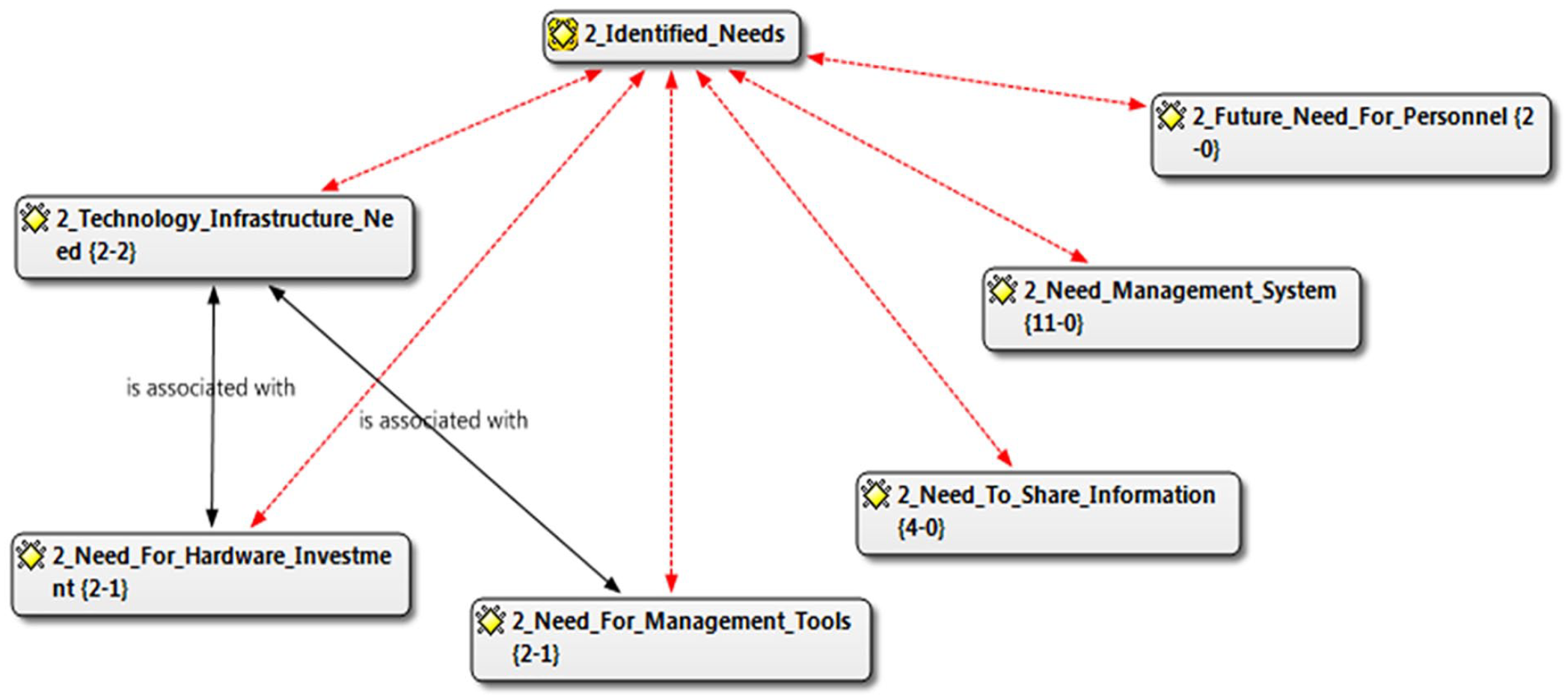
Identified needs in the parks concerning information systems.
Figure 2 also shows that there is a need for a technological infrastructure. This in turn is associated with the need for tools that operationalize the specific business processes of the parks and the need for investment in hardware to expand the devices that are used. An adequate technological infrastructure allows information systems to operate effectively, integrating the business processes of the parks and enabling a free and intense flow of information between processes. The need for management systems means the need for specific information systems that fully meet the specific needs of the parks’ business processes. These specific needs are the activities developed in the four business processes (administrative, support for projects, space management, and mediation of partnerships).
It is also necessary to adapt these systems that have already been used or invest in a system for the parks to integrate and share information with the actors involved and the parks’ partners, with the information being passed on to society. The systems should be adapted to facilitate the prospection of funding announcements, capturing resources, monitoring incubated or installed enterprises, and promoting the automation of physical infrastructure services and other necessary services. This sharing does not currently occur because the management system belongs to the municipality and is thus specifically designed for some operational and financial actions with no integration with other sectors of the park. The future need of personnel is linked to the need for an expansion process in some parks and thus the number of staff will be larger because of the companies that will be installed in the park. There is an urgent need for the parks in question to have an accessible and useful management system for its users. This will allow them to attract, process, and legitimize strategic information on business processes and society in a timely fashion.
Furthermore, the aspects where the parks have to succeed in developing are as follows: (a) need for investment for companies; (b) need for financial resources that will make the whole process feasible from the managing institutions of the parks, contributions from the government through funding and announcements of support for national and international partnerships, and contractual financial participation of the companies and laboratories installed in the park.
In some cases, the resources obtained only from the Managing Institution are insufficient, triggering a need for more actions in favor of scientific and technological development with actors involved in the drive for financial sustainability; (c) need for qualified personnel, meaning the talents required for research and development in connection with the park; and (d) need for infrastructure to expand the activities and space used so that the park can develop its activities and offer support to incubated or installed companies; (e) need to create a council; (f) need for mapping of the organizational structure; and (g) need to know the objectives of the park. To meet these needs, the maintenance of existing financial resources and new forms of attracting and capturing resources, be they public, private, or through partnerships, are required to make the planning, implementation, maintenance, and expansion of the entire structure of the park feasible.
The actions of the parks’ management, despite many advances and expansions, are hindered by Challenges and Limitations that reduce their potential performance. Some codes were found that characterize the “Challenges and Limitations” category: (a) oscillations in the Municipal Management of the Park; (b) non-strategic positions occupied by municipal administrative agents who are appointed to managerial roles in the park without the proper qualifications or even the necessary knowledge of the venture. This naturally delays the park’s development and activities; (c) unstable support from public services, in terms of strategic and operational support for the park, with instability of resources and investments, which is a cause for concern as they can lead to long periods without support and allocation of resources, making the whole venture untenable; (d) interruption of activities and restructuring or changes in personnel. Under the previous management, the personnel had been qualified and trained in the context of the parks. The changes were a step backward in relation to the advances that had been achieved. This political factor constituted a limitation for the parks that have a public managing institution; (e) lack of a management model, due to the high turnover of managers. Every four or eight years, the turnover leads to changes and reformulations of what was planned and agreed by the previous management; (f) barriers to the development of the park, such as the lack of synergy between the social actors involved and the lack of knowledge of how the parks operate, Loss of Competitiveness of the Region and comparison with other parks of the same size and operations, which are limiting factors in the development a park. There are also political, economic, social and operational barriers that interrupt the development of the parks and lead to delays in their operations; (g) insufficient resources, a difficulty that impedes he progress of activities and negatively affects encouragement and support for the creation of technology based companies and the scientific development of the region; (h) difficulties in supporting companies, both incubated and installed. This leads to companies moving to other environments that offer them more support or to the market itself.
Presentation and Description of the Proposed Model
After characterizing the parks, identifying their strengths, limitations and challenges to be overcome, the business processes and information systems, the proposed management model by processes will be presented. In the DSR method, this is the stage of development, in which the researcher constructs the artifact to solve the proposed problem.
At the top of the proposed model, outlined in Figure 3, the parks’ strategies are defined. The parks in question define their sustainability strategy to make decisions on the actions of the management in operations and the use of financial resources to maintain the parks’ activities and the feasibility of the ventures. This strategy assumes the operational sustainability when it comes to the development and maintenance of the operational procedures executed by the management, the internal administration of the park, interaction with the actors involved, partners and incubated and installed companies, attracting new companies, capturing resources and other aspects. Financial sustainability means the maintenance and development of the parks’ activities without solely depending on resources from the public and private administration.

Management model by processes for parks proposed in the study.
It is of fundamental importance for the managers to seek financial sustainability through resources from other sources of funding, adapted to the context of the parks. It is also necessary for a park to have its own resources to make the park operational. By defining these strategies, the participation and interaction of actors becomes indispensable, whether they are government, universities, the private sector, development institutions or external investors. This relationship aids diverse initiatives to stimulate innovation, facilitate knowledge transfer from academia to the market and promote the economic and social development of the region.
The construction of the model also comprises the business processes of the parks in question, which were identified and characterized in this study. The identification and mapping of these business processes constitute BA and help to shape the building blocks for the EA framework. This will help to understand how these business processes help to align strategic goals and tactical demands and thus achieve the expected results. The parks are divided by business processes, in which they have enablers and organizational capabilities related to the processes.
The capabilities are activated by a series of value flows, which require information. Enablers of processes and organizational capabilities create an extensive framework that enables a company to evaluate the maturity of its business processes and the organization’s receptiveness to changes based on processes. Thus, the park, its enablers, capability, value and information make up the foundations of BA. The constructed model also seeks to identify how information systems can execute activities and generate information to aid the integration and management of the parks’ business processes. In the parks in question, there is no specific information system to promote the management, produce managerial reports and aid the business processes.
In the proposed model, the components with the activities and the information that is generated can also be verified. This could aid each business process that was identified and mapped and facilitate their analysis and decision-making. The components are (a) planning, which contributes to what should be followed to achieve goals, tasks with the identification of actions for a given project or support; (b) productivity and monitoring in terms of R&D and patents; (c) operational, related to the space used in terms of expansion and maintenance; (d) services for the management of what is offered and what could be offered; and (e) actors, meaning all those involved in the parks. The information systems collect data extracted from real events that occur in the organizational environment, process them, transforming them into relevant information to be processed and transferred to people or activities and then be used.
These activities, which include the information systems, compose the IA and help to shape the building blocks of the data domain of the EA framework. This domain includes the information, processing, storage in a database and output, with documents and reports on what is generated. In the scope of IA, the Strategic Planning of Information Systems should be used to develop stages of study for the current situation of the information systems and business processes supported by it. It also includes monitoring the market and the technological evolution to identify opportunities, understanding the strategy and goals of the parks’ business, as well as resource planning, preparation and execution of plans of action. In this planning, the managers may prioritize systems that aid the management of their activities.
The proposed model also includes promoting the integration of the business processes with the activities and the information that is generated by the information systems. Figure 3 shows that the Administrative Planning acts jointly with the activities of the information systems related to planning what must be followed to achieve goals, and the tasks with the identification of actions for a certain project or support. Support for Projects acts in combination with productivity and monitoring in terms of R&D and the patents that are granted.
Space Management acts in combination with operational activity in relation to the space used in terms of expansion and maintenance, and the activity of services for the management of what is offered and can be offered. Mediation of Strategic Partnerships acts in combination with the activities related to the actors involved and their partnerships and companies, so that these can be monitored.
This integration identified in the proposed model views EA as a means to model and describe the structures of the business processes and information systems that connect these structures, forming the frameworks of BA and IA. In association with these frameworks, it is necessary to define a coherent set of patterns, procedures, and principles that support the business processes integrated with the information systems. The proposed model views EA as an organizational logic of the processes and information systems, reflecting the requirements for integration and standardization of the operational and strategic model of the parks, with a view to the organizational changes in the current status (As-Is) and the future status (To-Be) of the venture. In the case of the parks, the standardization of business processes occurred through the definition of activities that were mapped in the four processes in question (administrative, support for projects, space management, and mediation).
The concept of integration associates the coordination efforts between the business processes of the parks via shared data. This sharing of data between the processes can enable the processing of end-to-end transactions, or through the processes to allow the park to have a single interface with its incubated or installed companies and the actors involved.
EA proposes to facilitate the integration of processes with the information systems in times of change, in the inclusion of new forms of management, adaptation to new technologies and facility to adopt new innovation processes. Ross et al. (2006) add that in the same way that an analysis of the impact of changes is vitally important, it is first necessary to know the current situation of the company to aspire to its future status. Understanding EA in the management model by processes helps to determine the needs and priorities for change in the near future from a perspective of businesses and information systems, and in an evaluation of how the parks can benefit from the expansion and execution of the business processes that are developed.
The model defines the four processes considered critical for the parks. These processes need to be integrated with the parks’ activities and be aided by information generated or introduced by the information systems. These systems must support these processes with patterns, policies, procedures and principles for a better execution. EA seeks to promote the due levels of standardization and the integration of business processes and information systems aligned with strategy, preparing the parks to develop, and (re)configure competences in times of a necessary change.
Final Analysis of the Proposed Model
The critical assessment of the process management model was carried out by two specialists who are in the 2014/2015 management of Anprotec, as president and advisory adviser to the association. This evaluation was carried out with the experts so that they could perform a theoretical validation of the proposed model. The questions that guided this assessment are based on the identification of essential business processes; model components; adaptation of the model to the context of science and technology parks; contributions and limitations of the proposed model.
The critical evaluation of the proposed model was analyzed through four main points, obtained in the semi-structured interviews, which are as follows: influencing factors, business processes, suggestions in the processes, and general evaluation of the proposed model. All categories were analyzed by inspecting the network maps, available on Atlas.ti. From the identification of the analytical categories, the process of articulating these elements was initiated to interpret the results. The interpretation of these relationships between the categories occurred by combining the reading of the interviews and visualization of the graphic schemes of Atlas.ti.
With regard to the initial intervention, which determines the origin of the park’s implementation, it was considered in relation to the identification of the actors involved (government, university, development institutions, private companies, and investors) who exercise influence and determine the contribution of resources and investments enterprises. These actors involved assist in the strategic objective of operational and financial sustainability defined for the parks in operation.
The legal nature was considered for detailing the sub-processes of the administrative process, project support, space management, and mediation of strategic partnerships, since, for some activities, they are differentiated, depending on whether the management governance institution is public or private. The vocation of parks, as innovation environments in their areas of activity, defines the development of the project support process, which was mapped to support incubated and installed companies, in the search for projects to foster innovation, through public notices and calls. This vocation also takes into account the impact that these projects can provide for the region around the park.
The possible suggestions in the business processes, provided by the specialists, have been adjusted to the model for their best suitability. The concept of a scientific and technological park, as an environment that relates to the business base and the science, technology, and innovation base, is seen from the origin of the parks project to the current stage in which they are located, from the operationalization of the parks. This initial intervention is promoted through an instituted governance, with strong performance in the relationship with the actors involved, identified as government, universities, development institutions, private initiative, and investors for the development and evolution of the park processes. The relationship also with the international market, since the beginning, contributes to this evolution and promotes bilateral business cooperation with other countries.
In the administrative process, the suggestion of monitoring by means of indicators, to measure the local and national impact of the investments and contribution of each incubated and/or installed company, it is possible that it will be carried out in the planning process, if it is integrated into the management currently used, or in the use of a specific management system that provides this information for further analysis. It is up to the managers to visualize the need to measure the impact indicators related to the environment in which the parks are inserted, as well as to measure the internal indicators of each incubated and/or installed company, to analyze the contribution to the scientific development of the region. The suggestion in the space management process, as a much more complex process of real estate management, is pertinent and, to better adapt to the context of the researched environment, it becomes space management for the emphasis of parks as a real estate complex that should enable financial and productive returns for science, technology, and innovation in parks.
These adjustments allowed the process management model to be better suited to the context of the researched environment, to contribute to the literature, proposing a mapping of the business processes and subprocesses of the scientific and technological parks, through the administrative process, support to projects, space real estate management and mediation of strategic partnerships integrated with the support activities of information systems. This integration makes up EA based on BA and IA, to configure new control mechanisms and support to the management of these enterprises, in times of change, adaptation to new technologies, and in the ease of adopting new innovation processes. Thus, this management model for science and technology parks makes it possible to integrate business processes with information systems, from the perspective of the influencing factors: such as the legal nature; actors involved; strategic goals and targets; and physical infrastructure and quality services in the creation of incubated companies, and attraction of installed companies that add value and that seek to increase scientific and technological development in the region.
Final Considerations
Faced with the theoretical gap mentioned in the literature review of this article and the practical gap found in the results of the parks in question, this article proposed its own management model by processes, adapted to the scientific and technological competences of these contexts belonging to a public or private managing institution. As a result of the study, this model can aid management in the execution and control of activities related to business processes in the parks through interaction and alignment with the information system intended to facilitate the execution.
The model will also lead to greater agility and efficiency in these business processes, considering their specific nature and the relationship with the actors involved in the parks. For this purpose, the critical or strategic processes of the parks were identified to understand how the strategic activities of the parks’ managements are conducted to aid their development. Based on the design of the process, modeling introduces combinations of variables, such as costs, resource usage, and other restrictions that can affect the process, to determine how the process will operate under different scenarios, in an attempt to improve the way activities are done. As a practical contribution, knowledge of these processes aids the management of the parks in their drive for a competitive advantage by maintaining and developing their management models.
This article achieved its general goal by proposing and defining a management model by processes, using the concept and foundations of EA for science parks. As this is a conceptual proposition, the purpose of the article was not to study its implementation and (re)use. This study utilizes a multiple case method, of a qualitative and transversal nature, based on the analysis of four science and technology parks in the operation phase (Anprotec, 2008), located in Paraná State, Brazil. A limitation of this study lies with the investigation of only four science and technology parks in operation.
This model was proposed based on the theoretical and empirical discussion to provide directions regarding the business processes with the information systems of the park. There was no intention to implement and test the cases in question. Thus, this model is not intended to be definitive and applicable to all parks, as it was based on operational parks in Paraná State, Brazil, in a simplified situation of the reality in question. Nevertheless, this does not stymie the study, as it achieved its intended purpose of proposing a management model by processes for the parks.
Another limitation, regarding the analysis of the result, was due to the lack of formal mapping of the business processes of the parks under study. The managers claimed that the processes of the parks were executed or occurred according to demand. They were not mapped in a formal document for analysis in this study. Following this finding, it was necessary to conduct a meticulous analysis of the interviews and request pertinent documents to aid the proposition of this mapping and bring it as close as possible to reality to facilitate the construction of the proposed model. This need to map the processes required sufficient dedication and time so that all the macro and sub processes could be visualized and included in the study.
The mapping and management of processes that support competitive advantage, in which they recognize and respond to changes in their internal and external environment, through maintenance and development of management models. In this way, the managed and mapped processes do not directly create value for the external customer, but identify that more value can be created in the future, and direct the work to ensure that the appropriate and appropriate support processes are in progress (Correia & Veiga, 2019).
Regarding suggestions for future studies, further research on science parks should be conducted. These studies will be necessary to obtain greater knowledge of these innovation habitats. They will also address other theoretical and practical aspects involving issues of entrepreneurship, dynamic capabilities, internationalization of partnerships, competitiveness, technological cooperation, entrepreneurial strategy, and the definition and measurement of performance indicators of these contexts in the region where they are located. Another suggestion would be to study parks in the project and implementation phase to develop actions that help the ventures evolve to the next stage. The management model by processes proposed in this study could be applied to operational science parks in other regions, not only in Brazil but also in other countries to gauge its level of applicability and relevance in other contexts. Another suggestion would be to analyze this management model by processes in a quantitative approach with a larger number of cases, also associated with the theme of EA.
Footnotes
Declaration of Conflicting Interests
The author(s) declared no potential conflicts of interest with respect to the research, authorship, and/or publication of this article.
Funding
The author(s) received no financial support for the research, authorship, and/or publication of this article.