




Abstract
This study aims to investigate social media (hygiene factor), motivators (allow employees to share knowledge), and employee’s knowledge sharing motivation (KSM). For this purpose, the author introduces two-factor theory as its research framework to propose research hypotheses and construct the theoretical model. Then the model is tested and validated based on a survey of 278 enterprise employees in China, utilizing structural equation modeling through SPSS statistics and AMOS. It is found that first, the three states of knowledge sharing (lack of motivation, intermediate state, and with motivation) constitute two continuums. The satisfaction of motivators and hygiene factors respectively lead to changes in the state of motivation to share, and second, social media affects the staff’s motivation to share through both a direct and an indirect pathway. Directly, as the hygiene factor, the absence of social media will weaken the staff’s motivation to share. However, its usage doesn’t directly increase employees’ sharing motivation. Indirectly, through the mediating effect of self-efficacy social media can influence knowledge sharing motivation of employees.
Introduction
From the knowledge-based enterprise perspective (Grant, 1996; Spender, 1996), knowledge is the basis of enterprise competitiveness and the origin of power for enterprises creating values. Knowledge sharing can play significant roles in knowledge application and innovation. In the end, it will contribute to enterprise competitiveness going up (Wang et al., 2014). In practice, all best practice companies invariably consider knowledge sharing as an important route for solving business problems (McDermott & O’Dell, 2001). In academia, knowledge sharing is also the most studied factor within the knowledge management process (Al-Emran et al., 2018). Since staff’s intention for knowledge sharing is the most important predictive factor of knowledge sharing acts, many scholars have researched on the factor of knowledge sharing intention (Bock et al., 2005; Hau et al., 2013; Hwang et al., 2018; Lin, 2007a).
Motivation is the most important factor affecting the intention of knowledge sharing of employees (Hau et al., 2013). If there is no strong personal motivation, knowledge sharing virtually will not happen in enterprises (Stenmark, 2000). Through employing related theories such as social exchange theory, self-determination theory, and so on, scholars already obtained rich results regarding the motivation to share knowledge. Indeed, such research has reached a relatively mature stage (C. A. Chen & Hsieh, 2015). As social media (SM) develops in zest in recent years, important changes are also occurring within organizations. SM has connected organizational members, allowing them to share information and participate in the various processes of enterprise activities. Simultaneously, an increase in business usage of SM also forces managerial personnel to consider anew the mode of business operation in organizations (Ngai et al., 2015). Adoption and utilization of SM brings in new supports to knowledge sharing within organizations, which engenders corresponding studies. Although these studies are abundant, they are mostly limited to these two aspects—the usage of SM tools and the transition from traditional scenarios to SM scenarios (virtual communities). We still have only a small amount of literature in this regard to discuss the relationship between SM and motivation for knowledge sharing (Aboelmaged, 2018; Kaplan & Haenlein, 2010; Matschke et al., 2014; Razmerita et al., 2016; Rode, 2016). After comprehensive literature review related to SM and knowledge management, we found that there is very limited research focusing on hygiene and motivator factors, and no research has been conducted to discuss the SM (hygiene factor) and motivator use for knowledge sharing motivation (KSM). That is why we propose a model introducing hygiene and motivator factors influencing individual’s KSM. On such a footing, the main research purpose of this study is to explore the effects and modes of action of SM on employee’s KSM. The answer to this question would furnish new avenues of thought and perspectives to related research on the motivation for knowledge sharing. At the same time, SM can also be situated within the motivation for knowledge sharing, which would assist the practical developments of organizations. Furthermore, the study contributes to the literature of SM, knowledge management, and motivation by introducing two-factor theory.
In the second part of this paper is theoretical backgrounds and related literature is reviewed. The third part proposes the research model and hypotheses. In the fourth and fifth parts, the paper’s research method and data analysis are described respectively. The sixth part consists of the discussion. Following that the study’s research significance and limitations are pointed out. At the end, it is concluded with prospect for further research.
Related Research
KSM: Theory and Factors
Knowledge sharing is the process of individuals mutually exchanging knowledge (implicit or explicit) and creating new knowledge together (Van Den Hooff & De Ridder, 2004). The concept supposes there exist at least two subjects in the knowledge sharing process, namely “knowledge owners” and “knowledge demanders” (Hendriks, 1999), also termed “suppliers” and “demanders” (Ardichvili et al., 2003) or “knowledge contributors” and “knowledge collectors” (Van Den Hooff & De Ridder, 2004). This study emphasizes on the process of knowledge transit by an individual and comprehended, absorbed, and utilized by others. The term “sharing” implies the conscious behavior of individuals participating in knowledge exchange, not under external compulsion (Ipe, 2003). Studies have considered knowledge sharing to be a voluntary behavior (Gagné, 2009), with a nature of self-initiation (American Psychological Association, 2019b).
In prior research, the motivation for knowledge sharing could be the main content of research or part of the research, more commonly the latter. Scholar in different areas have adopted different theories to build their research frameworks. With respect to motivation for knowledge sharing, they include market theory, self-determination theory, and social exchange theory. Based on theories employed in the studies, Table 1 summarized research to date.
Summary of Studies Related to the Motivation for Knowledge Sharing.

Through Table 1, it can be seen that under dissimilar theoretical backgrounds, the classification of motivations for knowledge sharing varies. The knowledge market theory classifies according to economic factors and non-economic factors. The self-determination theory chiefly commences from internal motivations and external motivations. The social exchange theory conversely emphasizes expected personal benefits (internal benefits and external benefits). Although there are differences in the classification perspective of various theories, consistency is found across the actual influencing factors, for example, self-efficacy of knowledge, enjoyment in helping others, altruism, promotion, bonus, and reputation. In addition, there are also scholars paying special attention to a single factor, for example, considering the relationship between reward and knowledge contribution, in lieu of multiple inconsistencies in existing research Liu and Li (2017) conducted in-depth research of the effect of monetary reward to the motivation for contributing knowledge.
Contents of research on influences on motivations for knowledge sharing are quite rich. However, there are still some insufficiencies. Research to date considers the level of motivation for knowledge sharing to be a single continuum from lack of motivation to being motivated. Within this continuum, employees are in the neutral state, with no motivation to share or not to share. When a single factor (e.g., sense of recognition after sharing) is satisfied, the employees will have the motivation to share. Otherwise, the motivation to share will be lacking. The presence of this single continuum is the underlying prerequisite most studies tacitly admit. However, its reasonableness still awaits further investigation.
SM and KSM
In recent years, SM has extensively altered our modes of production and life. Simultaneously, it has received attention from multiple fields, especially in business production. SM platforms refer to enterprise SM to develop work practices and introduce new ways of knowledge sharing within the organization and increase organizational competitiveness (Razmerita et al., 2016).
Although SM is widely used and has profound influences, there is still a certain difficulty distinguishing SM from previous information communication technologies (Kane, 2017). Based on distinction and exploration of Web 2.0 and user-created contents, Kaplan & Haenlein defined SM as application programs permitting the creation and exchange of user-created contents built on Web 2.0 thinking and technology, based on the internet (Kaplan & Haenlein, 2010). Kane defined SM on a broader horizon, considering “social media is not a technology, but it is a set of affordances supported by a diverse and evolving technological infrastructure that enable people to communicate and collaborate in novel ways.” (Kane, 2017) On the other hand, commencing from the information and communications technology (ICT) concept, Jarrahi considers SM is a form of ICT, a platform for individuals to establish social interaction (Jarrahi, 2018).
Author of knowledge management argue that social software involved in knowledge management by providing open and inexpensive alternatives to traditional implementations. Whereas, social softwares raise important questions about the importance and value of organizational knowledge, knowledge protection, firm’s boundaries, and the resources of competitive advantage (Von Krogh, 2012).
Studies about SM and motivations for knowledge sharing can be divided into two kinds. The first type considers SM as a tool and explores the motivations of using them for knowledge sharing. This kind of research is fewer. The research of Aboelmaged (2018), on the motivational factors using enterprise social network systems (ESNS) for knowledge sharing indicates the use of ESNS to be more influenced by hedonistic motivations rather than utilitarian motivations.
The second group of research perceives SM as scenarios and explores knowledge sharing related contents in virtual communities or SM platforms. Hsu et al. explores knowledge sharing behaviors in professional virtual communities and proposed a model based on social cognition theory (Hsu et al., 2007). Similarly, Chiu et al. combined social cognition theory and social capital theory to construct the model of motivations for knowledge sharing in virtual communities (Chiu et al., 2006). Vuori and Okkonen studied the motivators of knowledge sharing through the use of SM platforms. Their results indicate that internal factors (such as the wish to help the organization achieve its objectives and to assist colleagues) are more effective than external factors (like economic rewards and job promotion). The research further believes the motivational factors of knowledge sharing through SM platforms are the same as those for knowledge sharing in general (Vuori & Okkonen, 2012). The study of Matschke et al highlight the barriers of active participation and motivational factors for information sharing. The authors argue that internal motivation is the strongest factor supporting participation whereas, time and effort requirements are the factors hindering participation (Matschke et al., 2014).
Rode (2016) studied the internal and external motivations for knowledge sharing on enterprise SM platforms. The results show that the expected augmentation of reputation and reciprocal benefits are the main factors for employees conducting knowledge sharing through SM platforms. Self-efficacy of knowledge also has a positive influence while a sense of joy of the subject has no significant influence.
It can be seen that the first type of research emphasizes more the motivations for using SM, with less attention to motivations for knowledge sharing. The second type is not different in nature from studies on motivations for knowledge sharing, that is (Hau et al., 2013; Lin, 2007a; Wang et al., 2014; Wasko et al., 2000). The distinction is the previous group of studies situating motivations for knowledge sharing in virtual communities or platforms for their investigation. Both types of research have not explored the effects of SM on the motivation for knowledge sharing. Thus, the effects of SM and its mode of action still lack interpretation from related research.
Based on the observation, the first research question of this study is—Does social media have influences on employees’ motivation for knowledge sharing and how does it influence?
Two-Factor Theory and KSM
The two-factor theory was proposed in the book The Motivation to Work by Herzberg, Mausner, and Synderman, published in 1959. Their research was based on the framework “factor-attitude-effect,” and it strove to answer the question: “What do workers want from their jobs?” The research indicated that factors engendering the sense of satisfaction in workers to be different from those causing dissatisfaction. Herzberg termed these as two groups, factors motivators and hygiene factors (Herzberg et al., 1959).
Motivators refer to aspects that can raise the sense of satisfaction and activeness in work. They include a sense of accomplishment, recognition, the work itself, responsibility, and promotion. Hygiene factors refer to company policies and administration, technical supervision, working conditions, and relations with superiors. When hygiene factors are lacking, or they can’t be fulfilled, dissatisfaction will result. However, when they are satisfied, they don’t motivate the workers to uplift their performance (American Psychological Association, 2019a; Herzberg, 1968; Herzberg et al., 1959).
Before the two-factor theory, the dominant theory hypothesis considered the degrees of satisfaction and dissatisfaction at work belonged to one single continuum. Within this continuum, the individual is in a neutral state, neither satisfied nor dissatisfied. When factors such as salary, supervision, and promotion prospects are improved, the degree of satisfaction will increase. Otherwise, dissatisfaction will result. However two-factor theory distinguishes two continuums—from dissatisfied to not dissatisfied then further to satisfied. Locations in the continuums are ascertained by whether the various attributes of work (hygiene factors and motivators) are fulfilled (Bassett-Jones & Lloyd, 2005; Sanjeev & Surya, 2016).
Studies employing the two-factor theory on motivations for knowledge sharing are few. The most representative one is the theoretical research from Hendriks in 1999 (Hendriks, 1999). The study made use of the two-factor theory as the theoretical framework and proposed the theoretical model about the relationship between ICT and KSM. The model delineated ICT’s influence on KSM into two aspects. The first concern is the direct influences of hygiene factors. When ICT support is lacking, employees’ KSM will weaken. But the presence of ICT will not heighten that motivation. Second indirect affect of ICT on KSM. In his study, other factors, for example, person, task, context, and so on influences on motivators.
When a question “Which factors encourage employees to undertake knowledge sharing?” is pondered, scholars often focuses on motivators. Whereas, hygiene factors are easily overlooked in the studies emphasizing on motivation. Personal satisfaction, enjoyment in helping others, and self-efficacy of knowledge often found in studies they all belong to the category of motivators. However, few studies discuss about the hygiene factors.
It can be seen that the two-factor theory furnishes new avenues of thought for research on the presence of continuums of employees’ KSM. Namely, there should exist three states in knowledge sharing: lack of motivation, neutral state, and having motivation. Indeed these three states constitute two continuums. On such a basis, this paper proposes the second and third research questions: State transitions of employees’ knowledge sharing motivation are affected by which factors? What kind of roles social media play in changes in the motivation of knowledge sharing in employees?
Research Model and Hypotheses
In the two-factor theory of Herzberg, motivators include achievement, recognition, responsibility, work itself, and advancement. Hygiene factors include company policies and administration, technical supervision, working conditions, interpersonal relationship with supervisors, and salary. Related studies employing two-factor theory would generally adjust the contents of motivators and hygiene factors to satisfy concrete requirements. After reviewing related research, we have discovered that motivators are commonly connected to events themselves and are mostly intrinsic factors, for example, responsibility, heterogeneity in work, recognition, sense of accomplishment, and so on. Conversely, hygiene factors are often connected to the external environment. Most of them are extrinsic factors, for example, working environment, status, interpersonal relationship, fairness, and so on (Balmer & Baum, 1993; DeShields et al., 2005; Lundberg et al., 2009; Parsons & Broadbridge, 2006; Sanjeev & Surya, 2016). This study attempts to explore the roles of SM in motivation for knowledge sharing through the two-factor theory. Thus the authors also need to make suitable adjustments on motivators and hygiene factors in the theory of Herzberg to satisfy requirements of the research context.
Motivators and KSM
Through a review of the literature to date, motivators pointing to the act of knowledge sharing itself and leaning toward internal motivations include altruistic behavior, enjoyment in helping others, and self-efficacy of knowledge. Among them, altruistic behavior means clear cut selfless acts with personal interest to provide benefits for others. Enjoyment in helping others is a concept derived from altruistic behavior. Thus, motivators in this study mainly include enjoyment in helping others and knowledge self-efficacy (KSE).
In research on knowledge sharing, a sense of joy in helping others means the personal internal sense of joy through practicing relatively selfless knowledge sharing. By undertaking knowledge sharing, employees can attain their internal rewards. Existing research indicates (1) through knowledge exchange to solve issues, it is full of challenge and fun and (2) being glad to help others, employees tend to be internally stimulated to contribute knowledge (Wasko & Faraj, 2000, 2005). Knowledge is always deeply embedded in inpersonal characteristics and status. Self-evaluation based on ability and degree of social acceptance is the important source of internal motivations, which propels people to participate in activities because of the activities themselves, not on account of external rewards (Bandura, 1986). From the perspective of internal motivation, the need for making one’s own decisions is engendered when the individual rendezvous with the environment which activates the formation of behavior. This also brings forth another important motivator: self-efficacy of knowledge, namely the subjective sensation of oneself possessing knowledge with value. A higher sense of self-efficacy of knowledge in employees illustrates stronger consciousness of themselves having abilities to provide knowledge with value. It would, therefore, be even more possible for the employees to share their knowledge. Based on the above discussion, this study proposes the two research hypotheses below:
Hygiene Factors and KSM
Herzberg’s research was based on analyzing interviews. It proposed the presence of motivators, hygiene factors, and their elements. Working condition is an important element of hygiene factors. Being a kind of ICT, SM provided more convenient conditions for internal exchange within organizations. Since SM is based on user-generated contents with Web 2.0 and can better connect various groups and members within the organization (Obar & Wildman, 2015), as SM is widely used in organizations, some of them have developed ESNS, especially in the companies. Considered from its factor characteristics, as an element of working condition, SM should be under hygiene factors in the Herzberg two-factor theory. According to the theory, fulfillment of hygiene factors is not sufficient to increase employees’ motivation to work or degree of satisfaction. In addition, the appearance of the SM is also not enough for staff to elicit motivations for knowledge sharing. Integrating concrete research scenarios, this study proposes the following hypothesis:
After the two-factor theory was proposed, its widely realized that insufficiency lies in both motivators and hygiene factors, which are not independent, rather, are related and undergo changes under different concrete scenarios (Sachau, 2007). As a component of ICT, the effects of SM on knowledge sharing mainly include (1) employee’s personal, organizational, and technical impediments in knowledge sharing; (2) facilitating employee’s obtaining knowledge on Intranet and internet; (3) improving the flows of knowledge management; and (4) being of help in positioning the related elements (metaknowledge) of knowledge sharing (Hendriks, 1999). At the same time, sources of personal self-efficacy mainly include (1) obtaining relevant experiences of success, (2) alternative learning, and (3) oral persuasion (Margolis & McCabe, 2006). In the realm of knowledge sharing, personal self-efficacy is exhibited as oneself has had successful experiences of knowledge sharing, as well as observing and emulating others’ knowledge sharing behaviors, together with evaluating and internalizing the knowledge sharing tactics of other organization members through observation.
SM enables organization members to locate knowledge related elements more easily. Such as, organization members can know of channels of alternative learning with more ease, namely able to observe others’ successful experiences of knowledge sharing. Settings for emulation of knowledge sharing within the members are provided. At the same time, SM also facilitates exchange among the members, and it further provides wider possibilities of “oral persuasion.” When organization members engage in a successful act of knowledge sharing, such an experience will further strengthen their self-efficacy in knowledge sharing, forming a positive cycle.
Based on the above discussion, this study proposes the hypothesis below:
Combining the above research hypotheses, the research model of this study is as shown in Figure 1.

Research model.
Methodology
In this study, we did a comprehensive literature review (Hwang et al., 2018; Kankanhalli et al., 2005; Lin, 2007a) to provide a strong theoretical background and relationship between proposed variables as shown in Figure 1. The model indicates that enjoyment of helping others (EN), KSE, and SM influence KSM. H1a predicts the positive influence of EN on KSM, H1b predicts the positive influence of KSE on KSM, H2 predicts no direct influence of SM on KSM, and H3 predicts the positive influence of SM on KSE. In this article, the questionnaire survey method is used for the collection of data and testing the research hypotheses. This method was used to enhance the generalizability of the results (Dooley, 2001). For this purpose we distribute the questionnaire in private companies both in manufacturing and services. We targeted these companies due to higher usage of SM for different purposes such as, online meeting, task based groups, and sharing daily information using SM. In this context, the study applied the idea of the two-factor theory to investigate KSM by introducing SM as hygiene factor and motivator, that is, enjoyment in helping others, and knowledge self efficacy. From current situation, we can see that SM is not limited to any specific gender, age, or the period of using SM under any particular situation. Therefore, the background information about gender, age, or period is not considered in this study. Second, we investigate the role of SM on empolyee’s motivation, therefore, the demographic information does not play a significant role which may affect the results in this study. To test the measurement tool and the structural model (Garver & Mentzer, 1999), we followed confirmatory techniques as in (Anderson & Gerbing, 1988). We used Analysis of Moment Structure (AMOS) V24.0 to further validate and support the predicted hypotheses. Figure 2 illustrates the overall research procedures and phases of the current study.
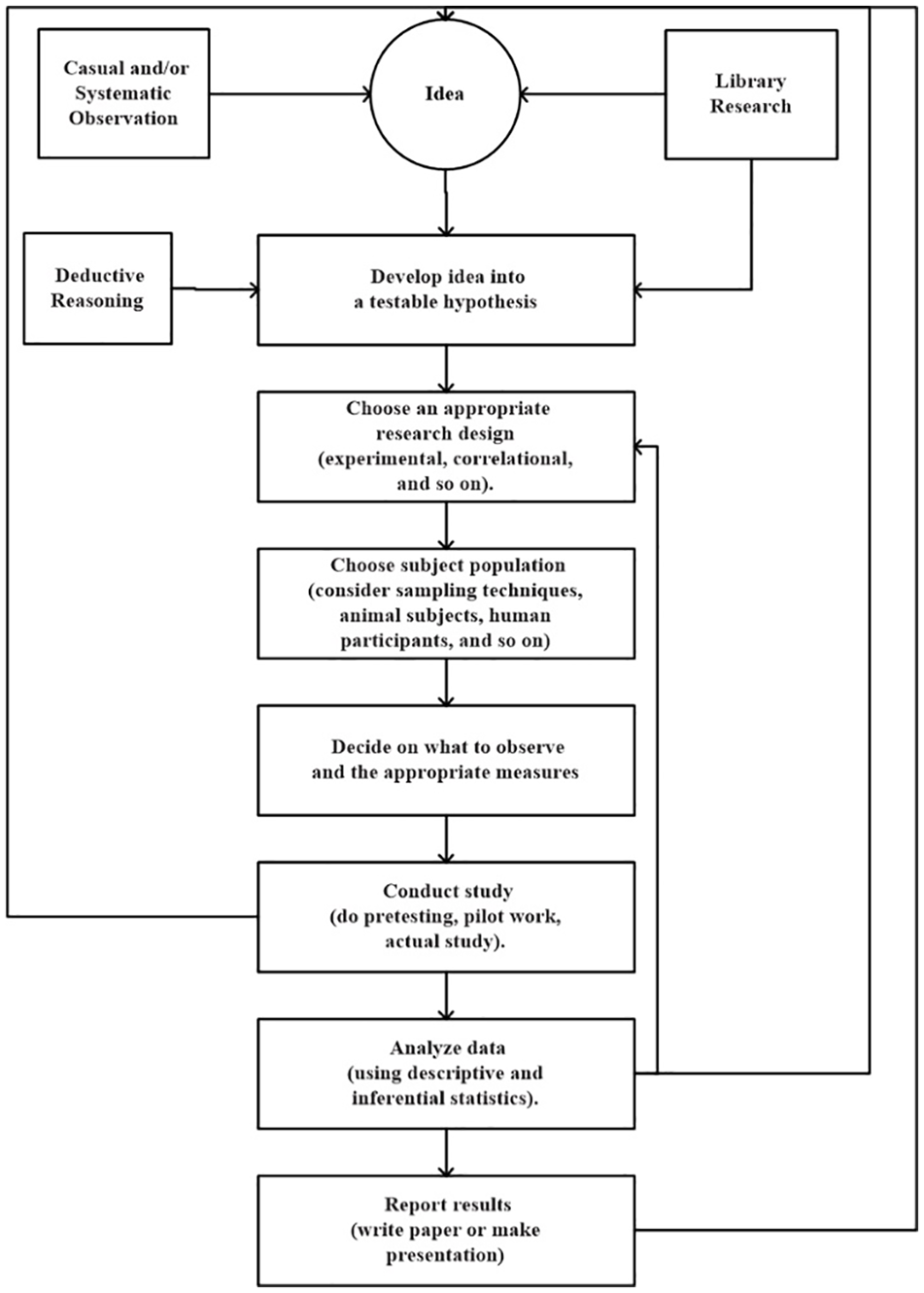
Research procedures and phases.
Process
The process of data collection was conducted in China in private enterprises of different sectors. In recent years Chinese companies are utilizing ICT on a large scale, especially SM. Therefore, researchers are stressing on them more and are encouraged to conduct studies here, to investigate Chinese private firms and collect more information regarding creating value with IT (Y. Chen et al., 2015). We made use of a structural questionnaire which was modeled on prior studies. First, we designed a questionnaire which could display a clear picture of the study. To ensure the questionnaire is of a high standard, we translated the questionnaire from English to Chinese with the help of native Chinese speakers who are professors in information technology area. All questions have to be answered to avoid any missing data. Second, we chose the target groups by contacting different firms in both services and manufacturing. Third, we sent them the questionnaire using SM applications (to avoid the paper cost and enable quick response) (Kaplowitz et al., 2004) to be distributed and completed in their organizations. For this purpose, we requested employees in those companies (whom we sent the questionnaire) to distribute the questionnaire among their colleagues to get higher number of responses.
Measurements for this study are scaled from 1—strongly disagree to 7—strongly agree. In total, 278 samples were collected. Being concerned with SM and motivation for knowledge sharing, we included and revised several times the constructs to get a better view from respondents.
Measures
We adopted measures from earlier studies and modified them according to the present study’s context. Depending variable: KSM is the dependent variable in the present study. We used three items to measure the KSM (Lin, 2007a). These three items describe the motivational level of an employee to share knowledge in the firm (α = .903)
Independent variables: the present study contains independent variables affecting KSM. First, items for enjoyment in helping others and knowledge sharing self-efficacy were adopted from (Kankanhalli et al., 2005). With α = .902 and α = .826 respectively, self-motivation to share knowledge is shown. Second, the items for SM were adopted from (Lin, 2007b). SM is predicted to have an insignificant direct effect on KSM, but a positive indirect effect on KSM is found (α = .846).
Data Analysis
Reliability and Validity
The constructs of the study were measured for reliability using Cronbach’s alpha (Cronbach, 1951). Prior studies have set the benchmark that the value of Cronbach’s alpha should be at least 0.70 to indicate adequate reliability (Nunnally, 1978a). To improve the reliability of the corresponding constructs, one question was omitted from the SM set. All the constructs have adequate reliability (see Table 2).
Constructs’ Reliability.

Source. Authors.
The questions were tested for validity using factor analysis with principle components analysis and Promax rotation. Convergent validity was assessed by checking loadings to see if items within the same construct correlate highly among themselves. Discriminant validity was measured by examining the factor loading to see if the questions loaded more highly on their intended constructs than on other constructs (Cook & Campbell, 1979). Early research has set benchmarks for construct loadings—loading from 0.25 to 0.54 are considered fair, 0.55 to 0.62 are good, 0.63 to 0.70 are very good, and more than 0.71 are considered excellent (Comrey, 1973). The factor loadings of the construct in this study are all above 0.71, showing the excellent factor loading.
For factor analysis, all the 13 components were above benchmarks. However, in the reliability test of SM, when SM3 was included the value was 0.488. To get excellent reliability results, we omitted the question SM3 from the SM construct, improving the reliability of SM to 0.846. Figure 3 represents the loading in AMOS, whereas Table 4 shows the t-values of each measure.
Factor Analysis.

Source. Authors.
Factor Loading in AMOS.

Note. AMOS = Analysis of Moment Structure.
Source. Authors.
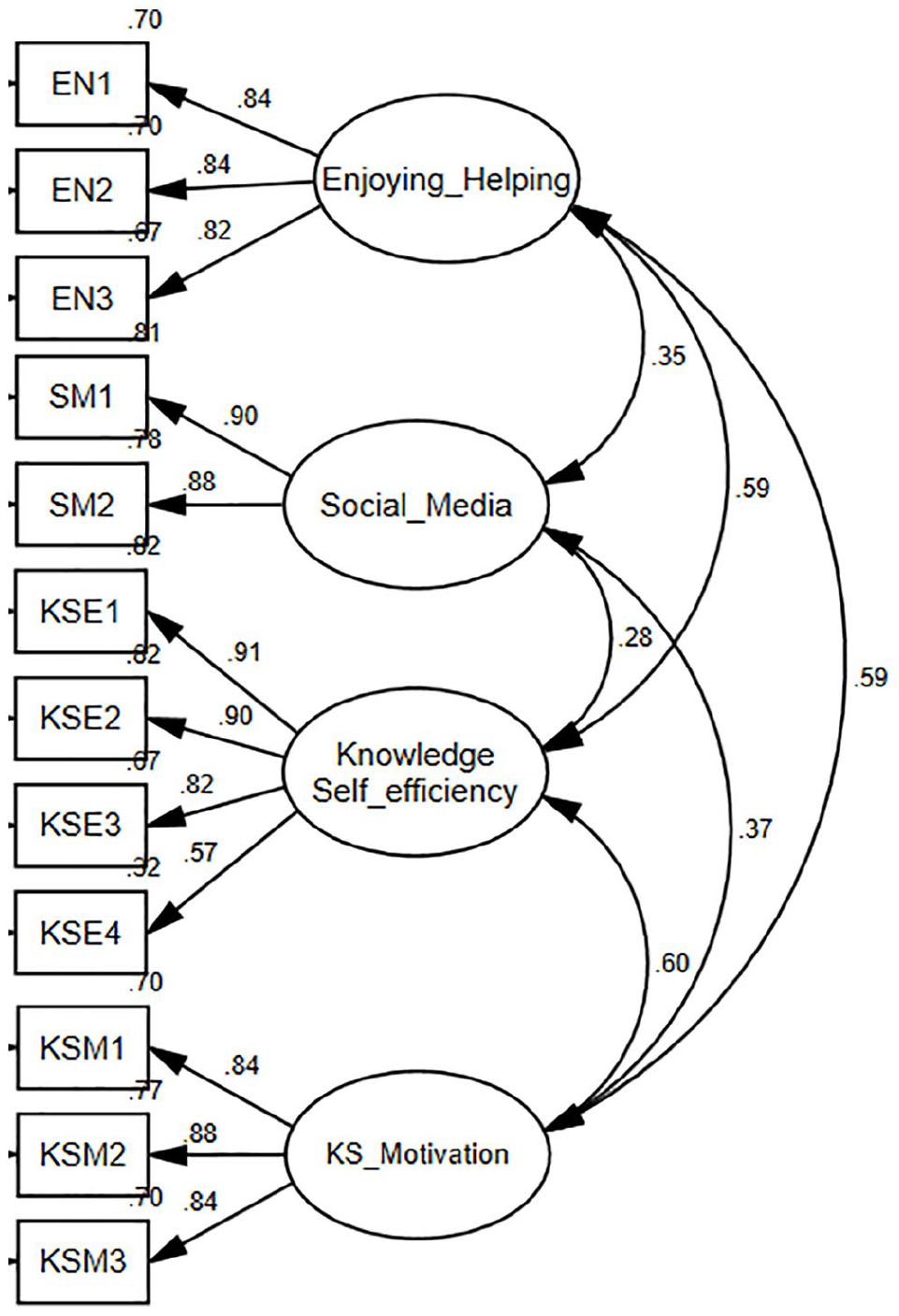
Amos loading.
We performed a multi-collinearity test due to multiple inter-constructs. Table 5 shows the values to be above the benchmark value of 0.60. The rule of thumb to judge for the existence of multicollinearity is whether the variance inflation factor (VIFs) are >10 or <0.10. The results show that the lowest VIF is 1.000 and the highest VIF is 1.436. Thus, multi-collinearity does not seem to be a problem in the current study.
Model Validity Measures.

Note. CNR = construct reliability; AVE = average variance extracted; EN = enjoyment in helping others; SM = social media; KSE = knowledge self-efficacy; KSM = knowledge sharing motivation.
Source. Authors.
***p < 0.001, **p < 0.01.
Results
Using AMOS, we assessed construct reliability (CNR) and average variance extracted (AVE). They represent the internal consistency of the indicators measured in the given construct (Fornell & Larcker, 1981). Table 4 indicates all the values for composite reliability (CR) is above the benchmark 0.70, showing adequate reliability (Nunnally & Bernstein, 1994). Furthermore, the AVE values are above the benchmark 0.5 (Huang et al., 2013) and maximum reliability (MaxR [H]) is above 0.70, presenting a significant correlation between the measurements.
Model fitness
Table 6 presents the overall model fitness between proposed variables SM, motivators and KSM. The results shows that chi-square normalization by degree of freedom (
Model Fit Indices.
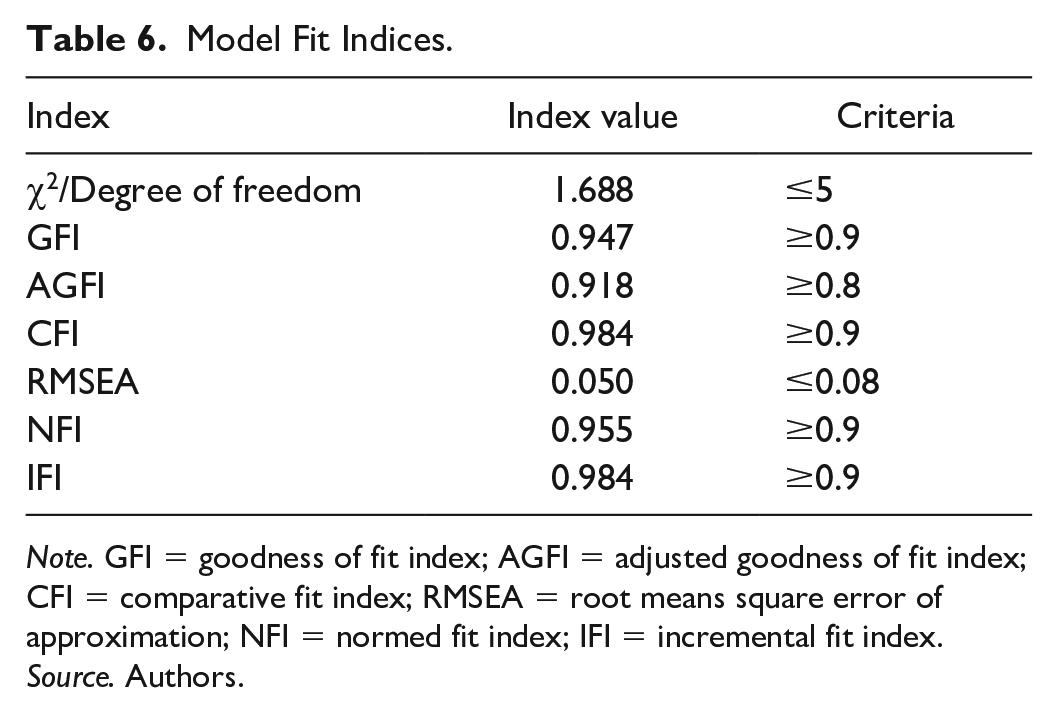
Note. GFI = goodness of fit index; AGFI = adjusted goodness of fit index; CFI = comparative fit index; RMSEA = root means square error of approximation; NFI = normed fit index; IFI = incremental fit index.
Source. Authors.
Common method bias
In this study, we self-reported the data by gathering information through questionnaire. Researchers from the field of business applied four post hoc statistical methods to check for common method variance (CMV) and/or common method bias (CMB). In such kind of data, there is a huge threat of CMB and/or CMV. CMV occurs when same scaling approach applied on a single data source. CMV bias occurs when the so-called method, as a causal factor, significantly distorts causal effects (Fuller et al., 2016). CMV even if exists, may not change the effect size or significance level, may change them trivially, or may change them in an amount that is practically meaningless. Thus, report addressing CMV is of limited utility. CMV biases data when it creates significant and nontrivial divergence between true and observed relationships (Ostroff et al., 2002). CMV is one of the errors source that lead to attenuated trustworthiness of reported results (Babin & Zikmund, 2016).
Method biases are main sources of measurement errors, as measurement errors threaten the validity of the conclusions while discussing the relationships between measures. Researchers link these errors with random and systematic components (Bagozzi & Yi, 1991; Nunnally, 1978b; Spector, 1987). These measurement errors are problematic, however, measurement errors tend to seem to be more problematic. The reason is that it provides an alternative explanation for the observed relationships between various constructs depending on hypothesis (Podsakoff et al., 2003).
For this reason, we follow the method suggested by Podsakoff and Organ (1986) and run the Harmon’s one-factor test, which is used to ensure that common method variance in this study. In Table 7, we can see that the percentage of variance is 42% which is less than 50% and concludes that there is no threat of CMB. Furthermore, we investigate that by performing CFA and looking for empirical evidence of CMB all the items loaded in one single factor. Studies suggested that of the one-factor model has poor model fitness, then there is no common method variance (Cheng et al., 2014; Handley & Benton, 2012). The CFA results of one-factor analysis shows poor model fitness of the data (
Harmon’s One-Factor Test.

Note. Extraction method: Principal axis factoring.
Source. Authors.

One-factor analysis.
Hypothesis testing
Table 8 presents the testing of the hypotheses. The first hypothesis predicts that enjoyment in helping others has a positive influence on KSM. As predicted, the results show that β = .336 and p < .001; therefore, H1a is supported. Next, the authors predict that knowledge self-efficacy has a positive influence on KSM. The results reveal β = .378 and p < .001. The positive relationship between these two constructs supports H1b.
Hypothesis Testing.

Source. Authors.
Furthermore, the authors predict that SM has no direct relationship with KSM. The results show β = .088 and p < .093. There is no direct relation between these two constructs, and H2 is supported. Finally, the authors predict that SM influences knowledge self-efficacy. The results β = .223 and p < .001 show a positive relationship between these constructs and support H3. All the results hypothesis are supported as the author predicted earlier in the text. Figure 5 shows the overall relationships of these variables using AMOS 24.0.

Results of the structural equation modeling.
Indirect effects
Table 5 presents a negative effect of SM on KSM. Therefore, knowledge self-efficacy (KSE) plays a fully mediating role between SM and KSM. We followed the recommendations of Zhao et al. (2010)) and conducted Sobel tests (Sobel, 1982) as well as the bootstrapping mediation test (Preacher & Hayes, 2008) to examine the mediating effect of KSE. The Sobel test results indicate a significant mediating role of KSE (t-stat = 3.584, p < .001).
Studies of Preacher and Hayes, 2008 and Zhao et al.(2010) questioned the proposed mediation test of Baron and Kenny (1986). Instead, they highlighted the superiority of statistical tests, such as bootstrapping procedures. In this study, to test the mediation more deeply, we followed (Preacher & Hayes, 2008) and performed bootstrapping. Furthermore, using AMOS with 500 bootstrapping samples, the indirect mediation effect is shown (Spiller, 2011; Zhao et al., 2010). The indirect path from SM to KSM from KSE is significant, p = .005, 95% (.089, .245) that does not include zero.
From the above results, we find that SM is a hygiene factor for KSM. It may not have a direct effect on KSM, but it has an effect on KSE. Whereas, enjoyment in helping others proves a significant impact on KSM. As SM and motivations are the key factors of the study to investigate KSM absence of any factor from hygiene and motivators may influence negatively on the KSM. Thus, the role of two-factor theory in KSM is very important. If we use one factor “motivation” it may raise more questions, that is, what may improve motivation for KSM?, by including the hygiene factor this study improves our understandings of the two-factor theory in companies and its role to develop motivational factors of an employee.
Discussion
The main concept to the contribution is to highlight the role of SM and the use of SM to share knowledge. This contribution will enhance the understanding of future researchers to investigate the significance of SM and motivational factors for knowledge sharing in the organization.
Earlier we have discussed that two-factor theory develops a new awareness about employee KSM and provides three states:
Lack of motivation;
Neutral state;
Having motivation.
Authors in this study emphasize on personal knowledge sharing which inlines with prior research of motivation (Ashford & Black, 1996). However, without motivation it is difficult to predict human behavior (Hwang et al., 2010). Therefore, motivation is very important for personal knowledge management. Focusing on prior research in which authors investigate intrinsic and extrinsic motivation (i.e., enjoyment in helping others) and how it influences knowledge sharing behavior both in organization and virtual communities. After an in-depth analysis of the role of motivation in knowledge sharing behavior on organizational level, we found that when people lack motivation, they tend not to share their personal knowledge. This may influence by different factors, that is, fear of misuse of knowledge, trust, and so on. Thus, lacking of motivation will affect knowledge sharing among employees.
Herzberg in 1959 proposed two-factor influencing motivation at work; first, hygiene factor that demotivate when they are inappropriate, second, motivators that sustain effort. On the basis of this theory he discussed the job satisfaction and dissatisfaction and represent it by a continuum in which a person would know that the neutral state is neither satisfied nor dissatisfied. Adding more factors such as prospects for compensation, supervision, and promotion, would lead to a movement in the opposite direction. In other words, dissatisfaction is the result of the absence of factors that led to satisfaction.
Keeping this view in mind, the authors focus on the satisfaction level of an employee and propose a factor “enjoyment in helping” and “knowledge self-efficacy” as a motivators for knowledge sharing behavior. These motivator factors enable employees to share their important knowledge with co-workers to improve the work efficiency.
Modes of Action of SM on Motivation for Knowledge Sharing
The action of SM on knowledge sharing is of two ways, indirect and direct. We first discuss the indirect effects. Research hypothesis 2 posits that SM has no direct positive influence on employee KSM. This hypothesis is supported by the results of data analysis (see Figure 5), namely usage of SM doesn’t directly raise the KSM of employees. Research of Vuori et al. also indicates that the motivational factors of knowledge sharing through SM are quite the same as those regarding knowledge sharing in general (Vuori & Okkonen, 2012). Usage of SM has not given extra encouraging effects on employee knowledge sharing. Hypothesis 3 points out that SM positively influence the self-efficacy of knowledge. This hypothesis is supported by data (β = 0.223, p < .001). Combining H3 with H1b, we can see that SM can make use of motivators as moderating variables. In this study, self-efficacy of knowledge acts as the moderating variable, and indeed, the moderating effect is obvious. So is the indirect role of SM on KSM.
Next, we move on to the discussion of direct effects. When combining results about hypothesis 1b, 2 and 3 (Figure 6), we can see that SM may work as a hygiene factor influencing employee KSM. First, according to the two-factor theory, influencing factors on employee work motivation and degree of satisfaction can be divided into motivators and hygiene factors. This theory is also applicable to the field of knowledge sharing. Second, SM can influence employee KSM. Third, SM cannot engender direct influence on employee knowledge sharing, but rather through the indirect influence of the mediation of other factors, such as self-efficacy of knowledge.

Social media as a hygiene factor.
As a hygiene factor, usage of SM cannot directly increase employees’ motivation for knowledge sharing. However, when SM is absent, its four effects (reduce impediments, provide knowledge, improve process flow, and locate knowledge) on knowledge sharing will then be voided, and thus consequentially lower employees’ motivation for knowledge sharing.
All in all, the influence of SM on employee knowledge sharing can be through two pathways. The first is the direct influences. As a hygiene factor, the usage of SM will not directly affect employees’ KSM. On the other hand, the absence of SM will result in a drop of motivation for knowledge sharing in the employees. The second is the indirect influences. Although usage of SM does not directly affect employee KSM, effects are produced through influencing the motivators, SM has moderating effect of motivators. This result is consistent with that of Hendriks’ theoretical research on ICT’s influence on KSM (Hendriks, 1999). In this study, through the mediating effect of self-efficacy of knowledge, SM influences employee KSM.
States of Employee KSM and Influencing Factors
Considered from the two-factor theory and research results in this study, perceiving employee KSM as a single continuum may not be accurate. There should be two continuums for the states of employee KSM. The first is from lack of motivation to the neutral state. The second is from a neutral state to having motivation. Transitions within these states are influenced by motivators and hygiene factors, respectively. On the one hand, when motivators are satisfied, employees will transit from a neutral state to that of having KSM. On the other hand, the satisfaction of hygiene factors will not lead to employees having sharing motivation, but the absence can cause the employees to enter the state of lacking sharing motivation from the neutral state.
Motivators in this study include enjoyment in helping others and self-efficacy of knowledge. Considered from the results of data analysis, both have obvious positive influences on employee KSM. In other words, when employees are feeling enjoyment while helping others, they tend to share more knowledge. This process of knowledge sharing enhance the knowledge capabilities of employees and their self-efficacy by getting knowledge from co-workers. Simultaneously, compared to enjoyment in helping others (β = 0.336, p < .001), self-efficacy of knowledge (β = 0.378, p < .001) has greater predictive power on employee KSM.
Negative Role of SM in KSM
A number of factors influencing positively and negatively on KSM, that is, trust social capital, reciprocity, rewards, and enjoyment elements (Zhang et al., 2019). Several researchers noted the limited use of information technology that does not allow users to acquire “soft” information (Mintzberg, 1975), “rich” information (Daft et al., 1987), or the “meaning” of information (Weick, 1985). Sarbaugh-Thompson and Feldman (1998) suggested two negative effects of the electronic communication. First, the reduction in casual conversation, and second, communication trustworthiness in social situations. More recently, in the advancement of information technology more information seekers search and retrieve information resulting data overload. Risk is also one of the factors influencing employee’s knowledge sharing behavior in negative manners (Harden, 2012).
The above studies have investigated the negative role of information technology. However, there is still a room for authors to study information technology in terms of SM and its effect on KSM. In this line, the authors in this study argued that SM has no direct effect on KSM. Furthermore, we propose the association of SM (hygiene factor) with motivator factor and their positive effect on KSM. This argument is statistically proved in our study as shown in Figure 5. Keeping two-factor theory as a theoretical background, the authors suggested that SM may not have the positive influence on KSM, but the absence of SM will influence in a negative manner on the individual’s KSM.
Significance and Limitations
Research Implications
Theoretical implications
First of all, on theoretical implications, this study initially clarified the mode of action of SM on knowledge sharing. Through the two pathways—direct and indirect—SM engenders influence on employee knowledge sharing. Combining these two pathways, SM as one of the influencing factors, its function on employee knowledge sharing received the support of empirical research, which enriching studies related to SM and knowledge sharing. At the same time, this study is also a successful application of the two-factor theory on motivations for knowledge sharing, demonstrating the two-factor theory still has quite strong theoretical guidance. In addition, the study has initially delineated the various states of employees’ motivations for knowledge sharing, confirming the presence of three states and two continuums. The study is also an empirical testing and expansion of Hendriks’ research in 1999 on ICT and KSM.
Practical implications
Findings of our study shows the indirect effect of SM on KSM, which is mediated by self-efficacy. Therefore, practical implications, according to the research results enterprises need to achieve at least these two states. First, to create an amicable environment for using SM. Second, when issues such as employee privacy are not involved, improve the transparency of knowledge sharing. Since the action of SM on employee KSM needs other factors as mediators, enterprises have to reasonably and/or more efficiently utilize the characteristic of visibility of SM to a certain degree. Early research discussed knowledge sharing is visible throughout the organization which shows the visibility of knowledge sharing activities using ICTs (Rode, 2016). Through various means, that is, international motivation (Skudiene & Auruskeviciene, 2012), participation in learning communities (Wasko & Faraj, 2000), individual confidence that increase self-motivational force for knowledge to share knowledge (Khankanhalli et al., 2005), individual’s believe that their knowledge can solve job related problems and enhance work efficacy (Lin, 2007b; Luthans, 2003); they uplift employees’ self-efficacy in knowledge sharing, strengthening the motivation, and streamlining the knowledge flow within the enterprise, thus raising its competitiveness.
Limitations
Although this study has quite strong theoretical and practical significance, there are also some limitations, which are mainly on these two aspects:
First, we have not distinguished employee types. In an enterprise, there are multiple types of workers. Considering ranking, there are general staff, middle management personnel, and senior management personnel. In terms of job nature, they include finance, human resources, marketing, products, and so on. Variegated needs or experiences on the factors of knowledge sharing may exist among employees of dissimilar types and ranks. Owing to considerations of the research focus and difficulty in implementation, this study has not made distinctions as mentioned here. Herzberg mainly selected two types of employees in the research, namely engineers and accountants. Although the results showed a certain difference in various types of employees, overall speaking, no difference in nature was found (Herzberg et al., 1959). Hence this study believes not distinguishing types of employees has no big influence on the results.
Second, since prior research rarely treats SM as the independent variable for measurement, the measures for gauging SM usage in this paper are modified from which Lin used in the related research on ICT usage (Lin, 2007a). During data analysis, to ensure the questionnaire’s reliability, we retained two measures among three for the related analysis. That indicates the measurement of the SM still has further room for optimization. However, in the final reliability and validity tests of the questionnaire, the required standards are reached. This demonstrates that the two retained questions possess consistency and reliability for measuring SM, and thus, the measurement for SM is also valid. Hence although there are rooms for improvement, the survey questionnaire used in this study can reliably reflect the research contents of this study. Data obtained through the questionnaire can also be employed for the related analysis. There is no actual influence on the analysis’ results.
Conclusion
This paper aims to explore the influence of SM usage on employee KSM. After reviewing existing research and related theories, we introduced the two-factor theory as the research framework of this study. Through constructing the theoretical model connecting the research hypotheses, receiving data via survey questionnaire, and conducting model testing with data analysis, in the end we gain insights from our analysis, which validated our research hypothesis. The main conclusion, as well as also the answer to the research question in this study, includes the following:
The two-factor theory is applicable to studying KSM. There are three main states of KSM: lack of motivation, neutral state, and motivated. Indeed, these three states constitute two continuums. Satisfying hygiene factors and motivators will lead to changes in the states of employee KSM respectively.
Motivators of employee KSM include at least enjoyment in helping others and self-efficacy of knowledge. The hygiene factors include at least SM.
As motivators, enjoyment in helping others and knowledge self-efficacy of employees can have positive roles in their knowledge sharing.
As a hygiene factor, SM can directly engender influence on employee KSM. Its usage will not directly increase the motivation. However, when SM usage is lacking in the organization, employee KSM will be weakened.
SM can indirectly affect employees’ KSM. Through affecting parts of the motivators, SM can then influence the motivation. In this study, knowledge self-efficacy can play the mediating role between SM and employee KSM. Usage of SM can impact the knowledge self-efficacy of employees and further act on their KSM.
Some queries in this research still await further studies for exposition. They include but are not limited to these aspects. First, in the realm of KSM, exactly what is included under motivators and hygiene factors are still not clear enough. Based on prior research, the authors selected some of the factors, but obviously we are not exhaustive, especially on the hygiene factors. Therefore, further empirical research such as, interviews and surveys are required for in-depth study. Second, this study expounded the mediating effect of knowledge self-efficacy between SM and KSM. However, it is not yet known whether there are also other factors playing the mediating role. Third, this study mainly explored the usage of SM on KSM. What we have measured was the subjective awareness of SM usage in the subjects. While, the influence on KSM from the level of SM usage has not been considered.
Footnotes
Appendix
Acknowledgements
We would like to thank the reviewers for their insightful comments on the paper.
Declaration of Conflicting Interests
The author(s) declared no potential conflicts of interest with respect to the research, authorship, and/or publication of this article.
Funding
The author(s) disclosed receipt of the following financial support for the research, authorship, and/or publication of this article: This work is also supported by the National Natural Science Foundation of China, grant 71473182, and grant 71420107026.
