




Abstract
Meat contamination during slaughter and sale affects 600 million people globally annually, leading to diseases and 420,000 deaths. However, evidence on hygienic practices in low-income countries, particularly in Ethiopia, limits the extent of this problem, highlighting the need for research on hygienic practices. The aim of this study was to assess the magnitude of meat hygiene practices and factors associated with poor practices among food handlers in Gambela town, Ethiopia. The study was an institution-based, cross-sectional study among food handlers. A total of 422 participants were chosen at random using systematic sampling. Data were collected using structured questions through interviews and observations. The study analyzed the prevalence of good hygiene practices and factors associated with meat hygiene practices using binary logistic regression. Statistical significance was determined using adjusted odds ratios, 95% confidence interval, and p-value of .05, and the model was checked using Hosmer and Lemeshow tests. The study result shows that good hygiene practices were only 40.6% (36.0–45.6) among meat handlers at butcher houses and restaurants in Gambela town. Low hygiene practices were significantly associated with the education level of food handlers (AOR: 2.5, 95%CI [1.17–5.41]) and meat hygiene training (AOR: 5.1, 95%CI [2.55–10.23]). Therefore, intensive food safety training for the workers, engaging educated professionals in food safety services, and mitigating the health risks and consequences of contamination demand intervention in the setting.
Introduction
Food hygiene is one of the important public health interventions that involves the systematic control of the environmental conditions during the production, packaging, transportation, storage, processing, preparation, selling, and serving of food (Nnebue et al., 2014). Food-borne diseases cause significant morbidity and mortality around the world. Globally, eating unsafe food is estimated to result in 33 million healthy lives lost (YLL) each year (Miner et al., 2020). In developing countries, food-borne diseases occur because of poor food handling and sanitation practices (Yenealem et al., 2020).
Contaminated foods, particularly perishable foods like meat and fish, can spread diseases if not properly handled (Bafanda et al., 2017). Meat, a perishable food, is susceptible to microorganism growth (Teshome et al., 2020), making it easy to be contaminated (Bersisa et al., 2019). Meat hygiene practices are crucial at all stages of the food value chain, from production to consumption, to prevent contamination (Kamboj et al., 2020). Factors contributing to meat contamination include animals themselves (Garedew et al., 2015), meat handlers, and the working environment (Abdullahi et al., 2016; Bersisa et al., 2019). Studies indicate that meat contamination in butchers’ houses can occur due to various factors (Abdi et al., 2020; Gebru et al., 2023; Nurye & Demlie, 2021; Nyokabi et al., 2023). The factors include unclean utensils, microbial growth, poor water quality, ungraded packaging materials, a lack of waste disposal facilities, and the personal hygiene of meat handlers (Bhattarai et al., 2017).
In Ethiopia, unhygienic meat handling practices are prevalent due to factors like lack of aprons, alcohol consumption, smoking, infrequent hand washing, and irregular medical check-ups (Gutema et al., 2021; Tegegne & Phyo, 2017). Factors such as age, gender, education, and working experience influence the level of hygienic practices in the meat industry (Zerabruk et al., 2019). Females with higher education and experience tend to have better hygiene practices (Miner et al., 2020). Food handlers with good knowledge about food safety are more engaged in good practices (Yenealem et al., 2020). Good personal habits, such as hand washing before and after handling meat, are crucial for meat hygiene (Bafanda et al., 2017). Supervised food handlers are more likely to practice good food safety (Azanaw et al., 2019a). Education and personal habits significantly influence food handlers’ knowledge and practices (Nyamakwere et al., 2017). However, the level of good meat hygiene practices and factors contributing to poor hygiene practices in less developed regions of Ethiopia are limited.
Recently, the demand for meat products in Ethiopia has increased significantly, but the burden of food-borne diseases (FBD) is growing (Zerabruk et al., 2019). Approximately 10% to 20% of FBD outbreaks occur due to contamination from poor food handling practices (Chekol et al., 2019). In hot areas like the Gambela region, where the mean annual temperature varies from 17.3°C to 28.3°C (Degife et al., 2021), there is limited evidence of hygienic practices among meat handlers. This study was aimed at determining the level of meat hygiene practices and associated factors among meat handlers in butcher houses and restaurants in Gambela town, southwest Ethiopia. Butcher houses and restaurants have different origins in their definition. Restaurants are food establishments that render food and drink services (Kumie et al., 2002). Commonly, in most parts of Ethiopian towns, the two establishments (butcher houses and restaurants) are mixed and attached together for their service. The evidence from this finding will help develop an intervention to reduce the burden of FBD associated with meat contamination and unsanitary practices.
Methods and Materials
The study was conducted in Gambella Town, Gambella Region, Ethiopia, located in the south-western Ethiopian lowlands. The region has a population of 498,671 and is home to 12 woredas, one city administration, one special woreda, and 261 kebeles. The region has one general hospital, four primary hospitals, 34 health centers, and 138 health posts. Gambella Town, the capital of the Gambella National Regional State, comprises five administrative kebeles (the smallest administrative unit) and three public health facilities. The study was conducted between May 15 and June 15, 2021, among meat handlers in Gambella butcher shops and restaurants. The region has a total of 52% female and 48% male population, with 66% living in rural areas and 34% in urban areas.
Study Design and Population
A cross-sectional study was conducted to assess hygiene practices and associated factors among meat handlers at butcher houses and restaurants in Gambella town. All the meat handlers working in butcher houses and restaurants in Gambella town were used as the source population, and the meat handlers in the selected butcher houses and restaurants in Gambella town were considered the study population. All meat handlers who had direct contact with meat and meat handling surfaces were included in the study. Those meat handlers who could not communicate well due to any disability or illness and seriously ill workers were excluded from the study.
Sample Size Determination
The proportion (p) of the problem was taken from a previous study at 49.0% (Azanaw et al., 2019a). The power of a 5% margin of error and the confidence interval level of 95% were used. For populations greater than 10,000, use the single population proportion formula.

Where n = sample size, Z = 1.96 at a CI of 95%, and d = margin of error: 0.05, the sample size was 384. By adding 38, which is 10% of the non-response rate, the final sample size of 422 was obtained.
Sampling Technique
Systematic sampling at random was used to select workers from butchers’ houses, meat-selling shops, and restaurants in Gambella. A sampling frame of 1,080 workers was obtained from the total number of restaurants, meat-selling shops, and restaurants in Gambella town. A sampling interval (Kth) was calculated by dividing 1,080 by 422 (the calculated sample size), which becomes 2. Finally, each of the two butcher shops was chosen as a participant, until a total of 422 people were sampled.
Operational Definitions
Bucher Houses and Restaurants
In the study area, butcher houses and restaurants were considered one entity for the purposes of providing services (i.e., butcher and restaurant too).
Good Meat Handling Practice
The respondents who scored less than 70% of the correct answers to their response to 18 meat handling-related practice questions were considered to have a “poor level of practice,” and those who scored higher than or equal to 70% were considered to have a “good practice level” (Yenealem et al., 2020).
Food Safety Measures
Food safety measures are all necessary interventions to control hazards and ensure the fitness of foodstuffs for human consumption, covering all conditions and measures necessary to ensure food safety and suitability at all stages of the food chain (Kamboj et al., 2020).
Data Collection Tools
Data were collected through an interview using structured questions and using observation checklists. The questionnaires consist of socio-demographic data, hygiene practices of butcher house workers, as well as factors associated with meat contamination at retail shops. The questionnaires were developed in English and translated into Amharic for easier understanding and filling. The Amharic version was also translated back to English for consistency. Language experts were involved in the process.
Data Collection Procedures
The study involved health professionals with diploma-level education who were trained and supervised in data collection. They used structured interviewing and observation to gather data from participants in Gambella town’s butcher houses and restaurants.
Data Quality Control
The research questionnaire was translated into Amharic and English to ensure accuracy and validity. Data collectors and supervisors underwent training for 2 days, and questionnaires were pre-tested at butcher houses outside the study area. Supervisors closely monitored the data collection process, double-checking for completeness and errors during field work. Corrective measures were taken as necessary to ensure the validity of the original version.
Data Processing and Analysis
Data were coded and entered in EPI Data Version 3.1 (Lauritsen, 2004) and analyzed using Statistical Package for the Social Sciences (SPSS) version 20.0 software (IBM Corp., 2011). Both descriptive and inferential analyses were performed. A bivariable logistic regression was used to analyze the association of predictors with the outcome variable: level of good meat safety practice. The variables that showed statistically significant associations in univariable logistic regression (p-value < .25) were included in multivariable logistic regression models for further analysis. The adjusted odds ratio with a 95% confidence interval was used to identify the factors associated with the outcome variables in the final model, and a p-value of less than .05 was the cutoff point for the declaration of statistical significance. The independent variables’ degree of multicollinearity was tested. The model’s fitness was checked using the Hosmer and Lemeshow goodness-of-fit tests.
Ethical Considerations
The study received ethical approval Institutional Ethical Review Committee (ERC) and permission from the town administrative-council. Informed written consent was obtained from respondents before data collection. Precautionary measures of infection prevention and control, such as wearing a face mask, physical distancing, and hand washing, were practiced to minimize the risk of COVID-19 transmission during data collection.
Results
Socio-Demographic Characteristics of Respondents
The study involved 397 meat handlers, with a response rate of 94%. The participants were mostly female (51.4%) and aged between 18 and 25. Most were single (57.2%), with only a small percentage (1.0%) divorced. The majority had informal educational status (42.1%), with only a small proportion (2.5%) having a college or higher education. The majority (31.2%) had 1 to 2 years of experience in selling meat, while 13.4% had less than 6 months of experience. The study found that most meat handlers were single and had a low level of education (Table 1).
Respondent Socio-Demographic Characteristics [Meat Handlers, N = 397], Gambella Town, Southwest Ethiopia, April 2021.

Housing Condition of the Bucher Houses and Restaurants
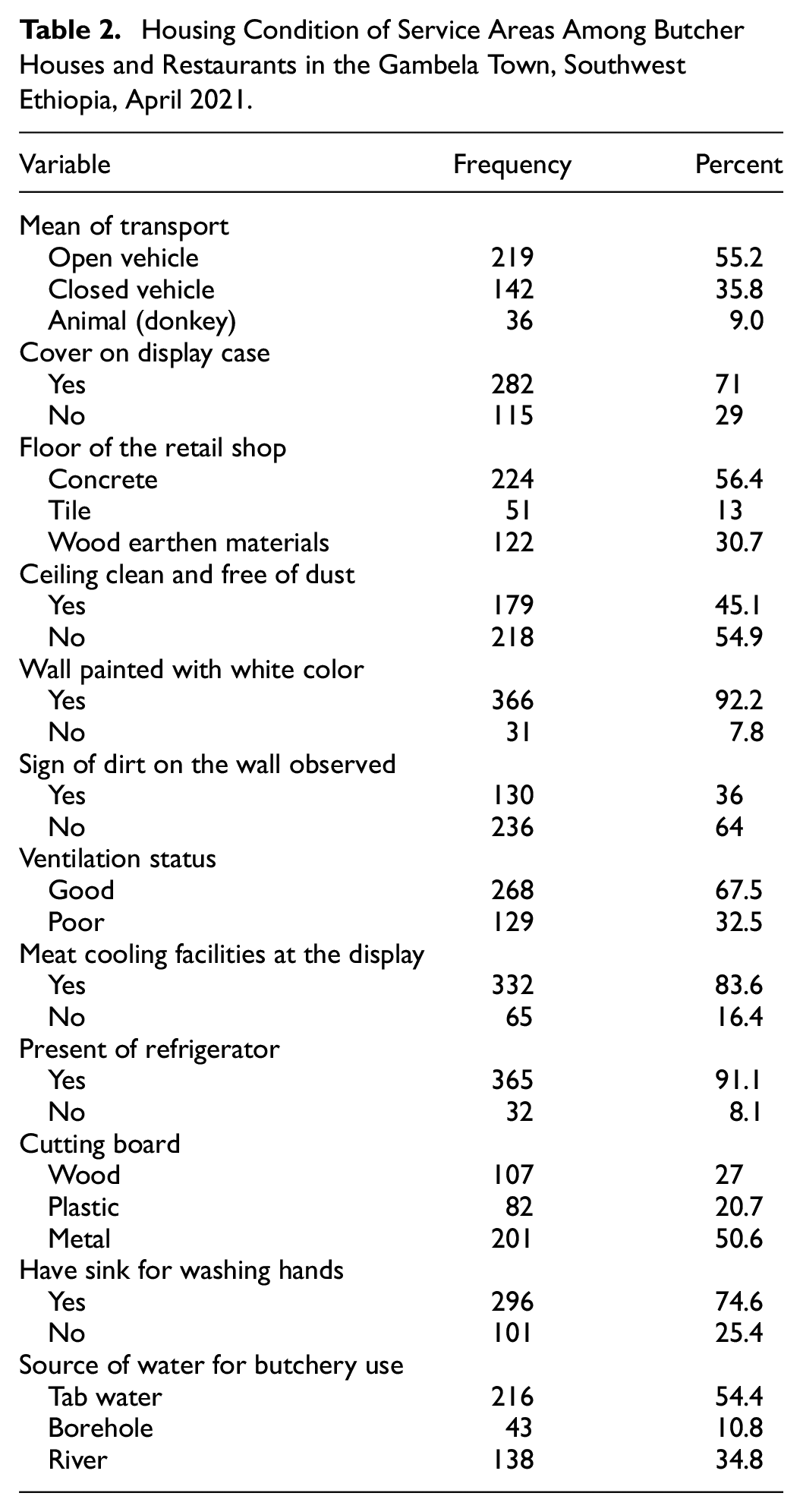
A total of 219 (55.2%) of the butcher houses and restaurants reported that they used open vehicles, and 142 (35.7%) of them used closed vehicles, while only 10 (2.5%) of them often used other means as the means of transporting meat from abattoirs to retail shops, with 282 (71.0%) having covers on display cases. The floor of 224 (56.4%) of the retail shops had been made with concrete, while the floor of a small proportion of retail shops (9) (2.3%) had been made with tiles, and 179 (45.1%) of the retail shops had clean or dust-free walls and ceilings, with 366 (92.2%) of them having a wall painted with white colors. About 268 (67.5%) of the display cases and butcheries had good ventilation, and the majority, 392 (98.7%), of the display cases had bulbs, and 332 (83.6%) of those display cases also had cooling facilities at the display cabinet. Moreover, 365 (91.1%) of the retail shops had refrigerators for storing meat (Table 2).
Housing Condition of Service Areas Among Butcher Houses and Restaurants in the Gambela Town, Southwest Ethiopia, April 2021.
Meat Hygiene Practice
The majority, 71.0% of the meat handlers, often wore aprons; 19.1% of the meat handlers usually had a head cover; and only 1.8% of them used gloves as protective materials when selling or handling the meat, with the majority using leather gloves. 90.2% of meat handlers washed their protective materials once every 2 days, and 4.3% of them washed their materials once within 2 weeks. The majority of the food handlers (86.4%) washed their hands before touching the meat, with 98.2% of them washing their hands with soap. Two-thirds of 61.7% butcheries washed their knives once a day in the morning, and three-fourths of 74.8% butcheries washed their cutting boards more than twice per day; moreover, 69.5% butcheries washed their display cabinets more than twice a day, and 82.1% of butcheries washed their display floors more than twice per day. The majority, 82.6% of the butcheries, had not used any detergents. Additionally, 54.9% of butcheries had only used cold water as a way of cleaning butchery equipment, with the majority (87.7%) having no routine means to control the flies.
Of the total respondents, 89.9% of butcheries had used newspaper as the material for wrapping meat for sale, while only 3.5% of them had provided plastic bags, and 83.9% of the meat handlers often collected money while selling or handling the meat. From the total respondents, only 36.6% of those meat handlers had received the essential training on hygienic handling practices, with the majority not receiving any training. Nearly four-fifths (77.0%) of the meat handlers responded that they had not gone for medical checkups in the last 6 months, and nearly two-thirds (58.4%) of the meat handlers reported having no experience with supervisory visits from health authorities. Overall hygiene practice was poor for 40.6% and good for 59.4% of the respondents (Table 3).
Meat Hygiene Practice Among Meat Handlers Working at Butcher Houses and Restaurants in Gambela Town, Southwest Ethiopia, April 2021.

Factors Associated With Meat Hygiene Practice
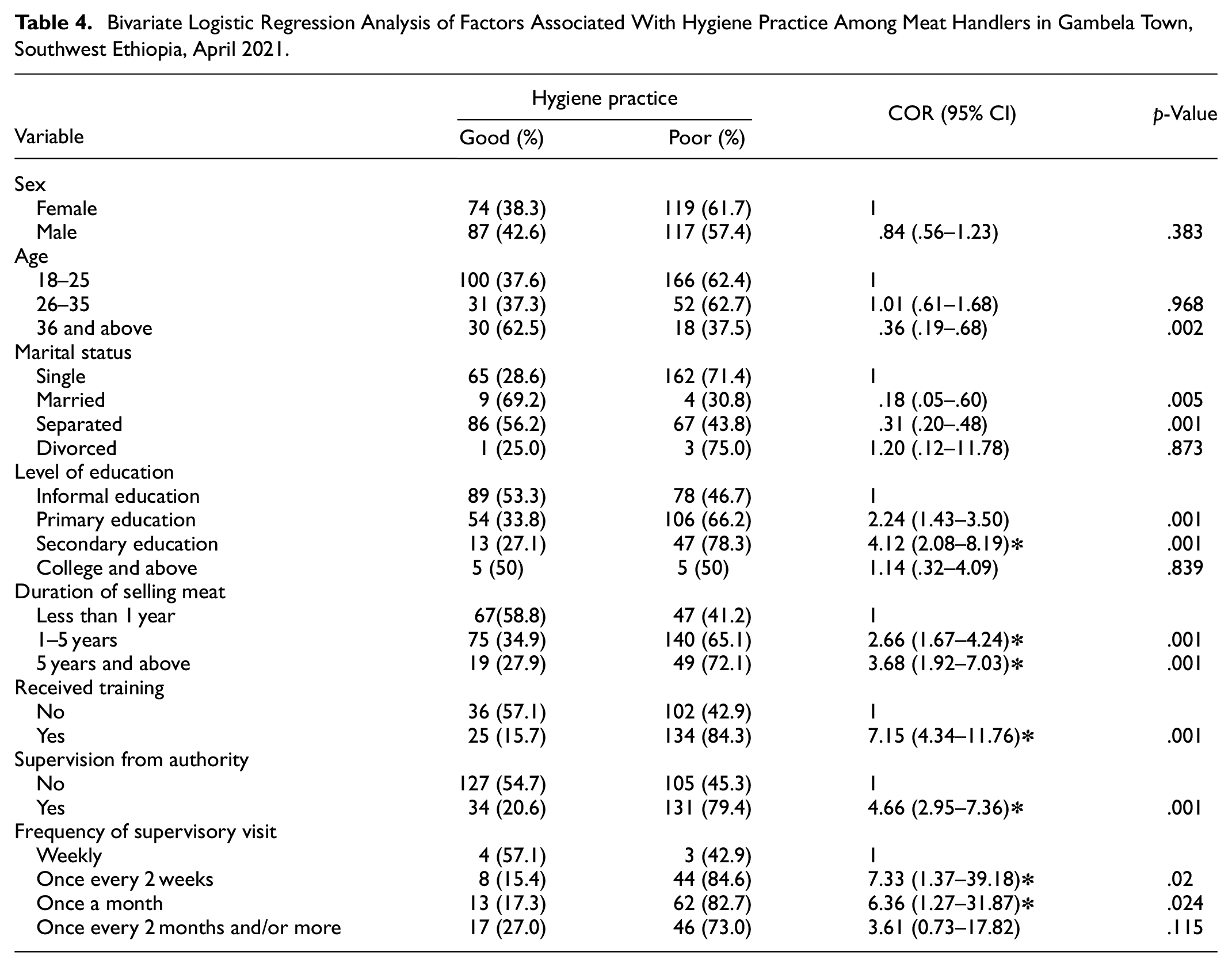
In the crude analysis using logistic regression analyses, the following variables were considered: sex, age, marital status, level of education of meat handlers, duration of selling meat, received training on hygienic handling, supervision from the health authority, and frequency of supervision visits. Of all independent variables included in the crude analysis: age, marital status, level of education of meat handlers, duration of selling meat, received training on the hygienic practice of meat handling, supervision from the health authority, and frequency of supervision visits were found to be significantly associated with hygiene practice at a p-value less than .25 (Table 4).
Bivariate Logistic Regression Analysis of Factors Associated With Hygiene Practice Among Meat Handlers in Gambela Town, Southwest Ethiopia, April 2021.
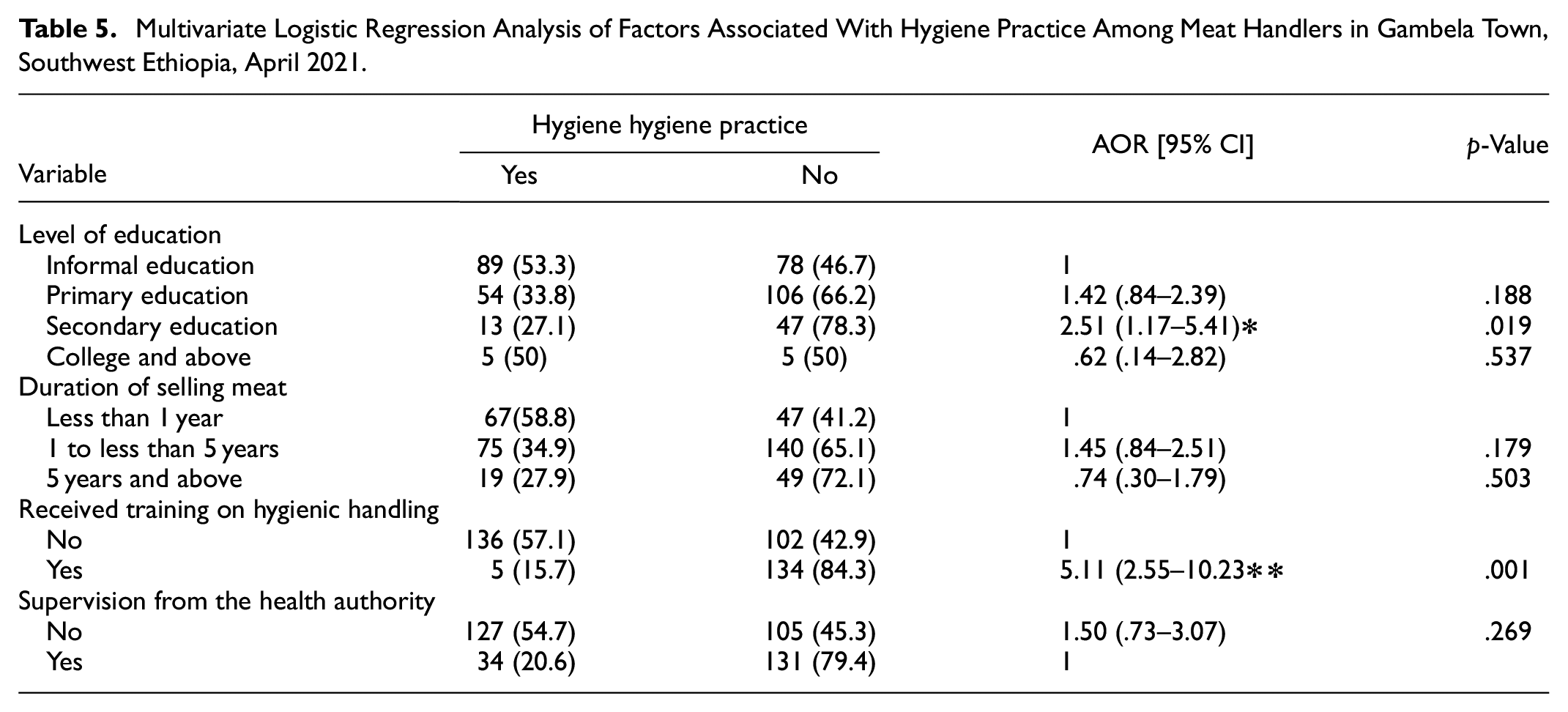
In the multivariate logistic regression analysis, variables significant at p-values less than .25 in the crude analyses were included. In multivariate logistic regression analysis, higher education and having received training on the hygienic handling of meat were significantly associated with hygiene practices regarding meat handling among meat handlers. The study found that meat handlers with higher educational levels were 2.5 times (AOR = 2.5; 95% CI [1.17–5.41]) more likely to practice hygiene practices in meat handling compared to their less educated counterparts. Food handlers who received training on the hygienic handling of meat were five times (AOR = 5.1; 95% CI [2.55–10.23]) more likely to practice good hygiene practices than their counterparts (Table 5).
Multivariate Logistic Regression Analysis of Factors Associated With Hygiene Practice Among Meat Handlers in Gambela Town, Southwest Ethiopia, April 2021.
Discussions
The current study identified the level of hygiene practices and factors associated with hygiene practices among meat handlers at butcher houses and restaurants in Gambela town. The result showed that the level of good hygienic practices among meat handlers in the setting was found to be 40.6% (95% CI [36.0%–45.6%]). This level of good hygiene practice was reported in a similar study from Mekele town in the Tigray region of Ethiopia that shows 43% (Haileselassie et al., 2013) and a finding from Nepal that shows 44.4% (Bhandari et al., 2022). This finding was lower than the study finding from Gondar town, which shows 66.4% good practice (Yenealem et al., 2020), and higher than the study finding from Addis Ababa, which shows 27.4% good practice (Abdi et al., 2020). The variation in hygiene practices can be attributed to socio-cultural factors, town size, and intervention variations, which impact food safety practices.
The low level of hygiene practice in the setting was significantly associated with the educational status of the study participants and safety training on the hygienic practice of meat handlers. The study indicates that the level of education and training food handlers receive on personal hygiene and its environment significantly impacts the safety of products for consumers, suggesting that regular training may provide updated knowledge. In this study, meat handlers with higher educational levels were 2.5 times more likely to practice good hygiene in meat handling. Accordingly, secondary education was significantly associated with better hygiene practices. The current finding is consistent with the results from Nigeria (Miner et al., 2020), Gedio, Ethiopia (Ashuro et al., 2023), Jigjiga Town, Ethiopia (Tegegne & Phyo, 2017), and Nepal (Bhandari et al., 2022), where individuals with higher education levels are more likely to achieve good practice levels. On the other hand, food handlers who received training on hygienic meat handling were five times more likely to practice good hygiene practices compared to their counterparts. This finding is consistent with a facility-based cross-sectional study done in Gondar city, which found that trained food handlers were more likely to have good food handling practices than non-trained food handlers (Azanaw et al., 2019b) and findings from Kenya (Wambui et al., 2017). Regular training of food handlers on personal hygiene and its environment is crucial for product safety, and those who receive regular training may have updated knowledge.
The study highlights the significant role of education in improving food hygiene practices among educated food handlers, emphasizing the importance of sustainable development interventions in education for health and quality of life, including improved practices in the food industry and households. Despite the importance of meat in terms of nutritional value for human development, the hygienic violation may lead to serious health risks. The handling of meat in the setting was very low; as much as 59.4% practiced unhygienic handling, and the low practice was due to an educational gap and a lack of health training on meat hygiene. Poor hygienic practices increase contamination risk (Bersisa et al., 2019), leading to disease outbreaks (Kamboj et al., 2020). Therefore, the local food and health authorities should prioritize interventions to minimize public health risks. More importantly, the finding calls for the policy framework to include pre-service training and set educational requirements for handling such perishable food in public services. Furthermore, because of its cross-sectional nature, this study is limited to showing cause-and-effect relationships, necessitating future longitudinal interventional studies.
Conclusion
The study reveals that about three in five of the participants’ had poor hygiene practices among meat handlers in Gambela, Ethiopia, which was associated with their education level and lack of meat hygiene training.
Footnotes
Acknowledgements
We would like to thank the survey participants as well as the field supervisors, data collectors for their contributions.
Author Contributions
RGB designed the survey, trained the research team, oversaw fieldwork, and participated in drafting the manuscript. SSS and DOD also participated in the survey design, approved it, and oversaw critical revision. Finally, all authors read and approved the final version.
Declaration of Conflicting Interests
The author(s) declared no potential conflicts of interest with respect to the research, authorship, and/or publication of this article.
Funding
The author(s) received no financial support for the research, authorship, and/or publication of this article.
Ethical Approval
Ethical clearance was obtained from the Institutional Research Ethics Review Committee (IRC). Before each interview, data collectors obtained informed consent from each respondent.

Data Availability Statement
The datasets used during current study are available in the manuscript.