




Abstract
The governance mechanism is examined as a mediator to the potential implementation of the public–private partnership (PPP) in the Sub-Saharan Africa region by using Tanzania as a reference case. There is an intricate relationship between the public and private sector in applying the complex PPP phenomenon on infrastructure development, a decision beyond the government functionality for performance is required to steer its implementation. A need for a network system with a positive mindset to what PPP can achieve in adjusting the efficiency and financial gap to infrastructure. In the mediation model, a mediator can partially or fully facilitate the relationship of the outcome variable. With the use of the bootstrapping method in SPSS, our result evidenced a full mediation through governance to PPP implementation.
Introduction
De-bureaucratization reforms of the early 1970s and then a new concept of public management gave birth to a popular theory of public–private partnership (PPP). The move encouraged public bureaucracy to hand over tasks to the private sector by privatizing completely or invite the private sector partnering as a way to bring efficiency and funding to public administration and facilities (Savas & Savas, 2000). Numerous developing countries were swept by this wave—influenced externally or internally (Prager, 1992)—including Tanzania, adopting privatization as a policy rather than a pragmatic and monitored mechanism to improve the management of public assets and functions to enhance efficiency. The results were not that positive as envisaged by the policymakers. Alongside this, de-bureaucratization optimism and infrastructure deficiencies were identified as crucial economic efficiency differentiators but were not addressed or encouraged by the privatization reforms. As a result, led to the formulation and separation of PPP concepts from main-scale privatization, then promoted and structured to close the financing gap in infrastructure, encourage technology transfer and efficiency in the management and maintenance of economic infrastructure in the delivery of social support. Thus, our study capitalizes on the alternatives to first-wave pitfalls in PPP implementation in the first decade and second initials by using governance theory for a new sustainable application.
PPP rate of failure was high during this period of early 1990s in sectors such as energy, water, and transport due to weaknesses in legal and financing clarity leading to the requirement of additional public resources, litigation, and many rounds of renegotiations (Basher & Mohsin, 2004; Jamali, 2004). The failure led to public allegations of corruption and incompetence in the public sector, causing government’s (Ménard, 2013) frequent intervention. Therefore, taking away one essential ingredient of PPP attractiveness, financial reasonableness, availability of efficiently run infrastructure, and impairing the creation of more capacity by the public to attract more private funding. Apart from that image, PPP has demonstrated many successes in delivering infrastructure and enabling sustainable growth (Li et al., 2005; Osei-Kyei & Chan, 2015). Experiences from other emerging markets, such as Korea, Indonesia, China, and the Philippines, where the number and value of PPP investment have been increasing can be cited. Therefore, there is a need to reevaluate the PPP concept by looking at its elements and pillars to redefine its structure and implementation, reflecting developing economies’ inability to leverage the projects.
PPP is a model by which the governments with public interest come together with the private sector blending their resources, and skills making infrastructure accessible to the people efficiently with faster project completion period (Osei-Kyei & Chan, 2015). PPP is aiming at reducing the finance gap and bringing innovation or efficiency concerning management representing a principal-agent relationship (Soomro & Zhang, 2015). Through skills and experience, PPP inflates the private sector’s ability to improve project efficiency concerning quality, cost, time, and facility maintenance (Boardman et al., 2016). The partnership provides a platform for both sides in PPP to bring resources and capacities that would not be at their disposal if they were to remain on their own (Delmon, 2017). The two parts come together with a clear dissimilar vision on what they contribute as well as return perspective. Through infrastructure facilities, the government wants to facilitate how better they can save the public or citizens in terms of fulfilling political promises and economic needs by making sure the long-term contractual agreement entered with the private sector brings value for money to construction and management (Grimsey & Lewis, 2002). They want to maximize the need for the country, regional, and global development goals as an option. The private sector became the elucidation to demands and finance gaps advocated with multilateral organizations such as the World Bank, African Development Bank, Asia Development Bank, and European Investment Bank. The principally private part is profit-oriented in the quest for return or represents institutional development agencies that are business-oriented, expressing domicile governments’ interest. Energy is the sector that has attracted more private investment in comparison with other areas as they have lower construction risk as well as a shorter gestation period by energy projects (Eberhard et al., 2014; Soni et al., 2016). With purchasing-power agreements, energy project tends to have higher revenue visibility which is typically contracted thus attracting more investors.
We aim to examine the causal relationship between government and PPP implementation by testing the impact of governance’s indirect effect on the outcome of PPP implementation. Our study is motivated by constraints of PPP in developing countries, so addressing the issue, our study investigated from the core of the PPP implementation process. Sub-Saharan Africa (SSA) has a deficient number of projects reaching financial closure the same as the amount of investment in comparison with other regions, which is irrelevant to population growth and size. We identified that PPP is facing many challenges in its implementation stage in SSA as the government is the project sponsor in most cases in PPP engagement. Hence, we considered the importance of the central government’s ability to influence the program set up. Thus, the study analyses the PPP implementation system in Tanzania to identify requirements to make this modality an active catalyst for infrastructure development so forth economic growth. Our study aims to assess the effect of governance principles in implementing PPP. The assumption based on the use of governance theory’s ability to influence PPP project performance leading to more capital investment from the private sector, monitoring aspect, and performance in general.
Governance Theory
A study by Liu et al. (2015) elaborated that good governance in institutions and organizations that are involved in the project is vital for the successful life cycle of PPP. The concept of governance has gained exposure recently for the quality, efficiency, and proper guidance of the government designated on its intervention in a new globalized world form of governing. The two terms governance and government are interchangeably used. Defining government as a formal and institutional process operating at the state level to facilitate and maintain the public order in a collective action generally characterized by its ability to make the decision and enforce them with legitimate coercive power (summarized in Table 1). The interdependency of the PPP model allows developing countries to open up for the new public management called governance. In Bevir (2008), governance was defined as a specific term describing how the nature and role of the public sector reformed in the 1980s and 1990s were due to different factors raised an inclusion of private sector in public-derived services.
Governance Theory Five Propositions (Stoker, 1998) With Own Modified PPP Relationship.
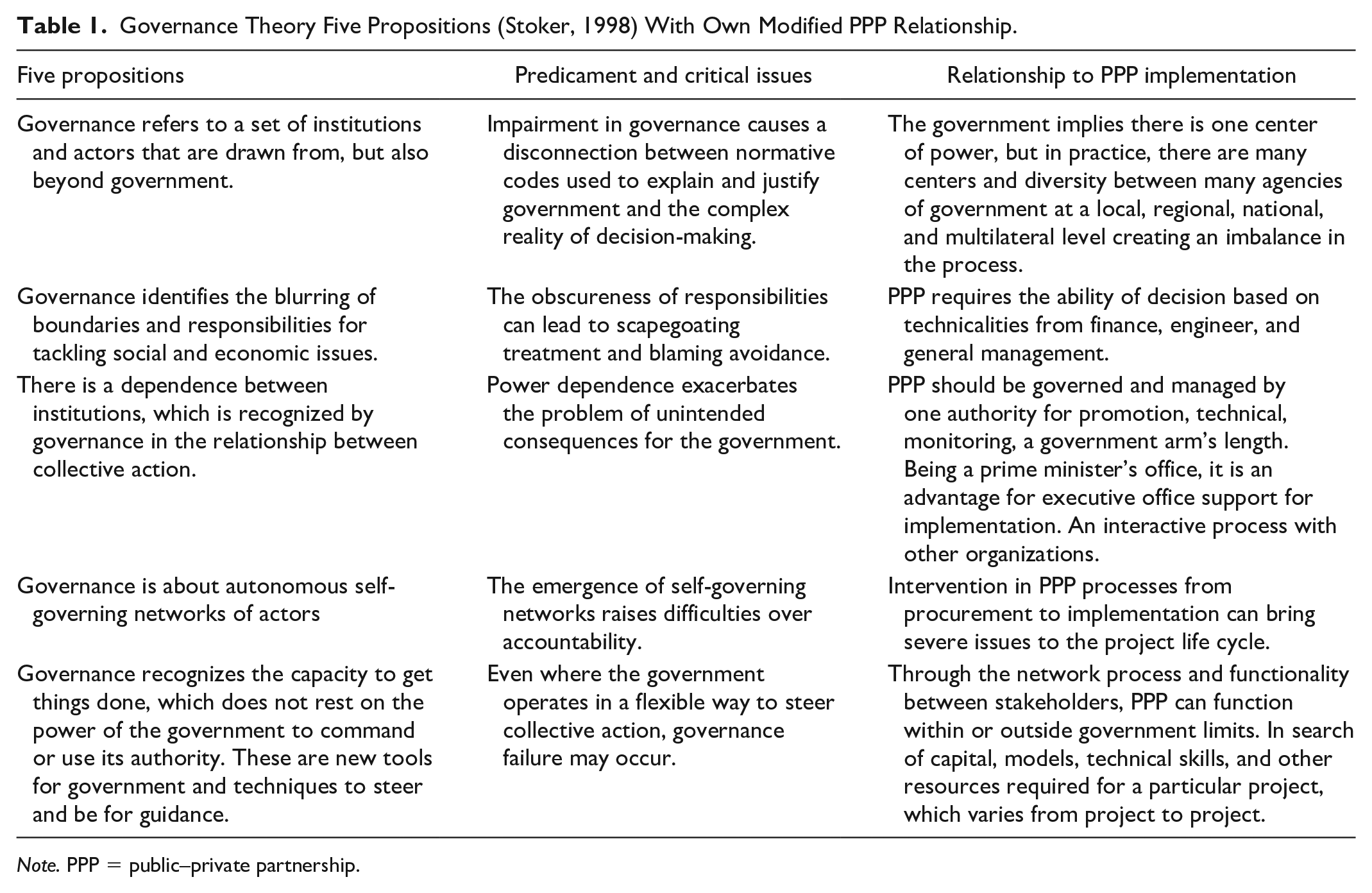
Note. PPP = public–private partnership.
Governance has managed to develop a new management style to blur the boundaries between and within the public and private sector, incorporating the two sectors’ synergy. The mechanism in which the government operates is not restricted to the authority bureaucracy that limits the enhancement corporation between public and private sector engagement. It recognizes the interdependency of other stakeholders drawing attention to their involvement for strategic decisions for the corporation, hence, sanctioning the public sector as a baseline recourse then strengthening the relationship (Kooiman & van Vliet, 1993). Currently, worldwide, many activities that were exclusively performed by the government have been contracted out to PPPs, making them a significant reality in state decision making.
PPP’s typical model effectiveness can be affected, involving governance network risen from organizational network structures delivered from governance mechanism (Sørensen & Torfing, 2016). Network coordination has the benefit of addressing complicated issues, as well as efficient use of resources in public and private sectors in more considerable ways, including improving services for both customers and clients, increasing capacity to plan, enhancing knowledge, and more competition (Provan & Kenis, 2008). Given the structure of many developing countries in Sub-Saharan region, political and government systems, a turn in governance system will attribute to more opportunities in PPP projects in terms of investment and perception from investors. Accountability and Governance cannot be separated, which also includes issues of public participation as well as government performance assessment (Callahan, 2006). Corporate governance, as part of governance elements, is associated with the structure concerned with the production, monitoring, decision making, evaluation, and organizing strategic decisions aspects that have close links to PPP concert. Being one of the essential subsets of governance, accountability embroils the assessment of processes, monitoring, and control of organization agents to ensure that they behave according to the interest and demands of the shareholders as well as other stakeholders representing (Keasey & Wright, 1993). Therefore, there is an excellent connection between the PPP implementation process, development, and its sustainability to the governance system, a need for governments in developing countries to use governance mechanisms to steer PPP implementation.
Relationship Between PPP and Governance
PPP implementation requires system management or forces that involve thinking and acting beyond the individual sub-systems; this is to avoid unwanted side effects and creating mechanisms for effective coordination (Bandura, 1997; Ismail, 2014). In early 1990 SSA responded well to PPP program establishment, and most of the current contracts existing are during the same beginning era. Due to mixed issues ranging from a desire to behave in a manner that would not attribute to better contracting, lack of good governance and government’s capacity accounted for the failure for most PPP projects (Osei-Kyei & Chan, 2016). The complexity of the government system as a whole with its ministries, department, and agencies can be a problem if it is generalized without a center for action regarding PPP implementation. Otherwise, the interdependency of those institutions with the PPP diversity in different sectors can be a crucial factor to its achievement, provided there is a stable governing authority to guide and govern PPP. As explained in the governance theory (Stoker, 1998) that in the government, there is a strong tendency for political leaderships seeking to impose order and issue directives the impact is either the government not to embark on PPP or wrong projects with wrong financing model. The issue of governance becomes more challenging to projects under PPP, a large number of these projects under normal circumstances do not meet their objectives, and only 40% are aligned with organization strategy reported by KPMG (ul Musawir et al., 2017).
The World Bank review in developing countries based on the experience of PPPs infrastructure (Clive, 2003) suggests that to make sustainable private provision in infrastructure, issues that were overlooked during the initial rush have to be addressed by governments toward the private participation initiation process. In the five propositions about governance in a project-based organization (PBOs) (Pemsel & Müller, 2012), the results show that structural and situational factors are the main impact on knowledge governance practices to PBOs whether a subsidiary or standalone project–based organization. Taking into account that the PPP model or program is likely to be project-based, there is a high need to create an institution with the same high level as corporate governance in the private sector system to support the implementation of PPP and mediation. Further available (Pemsel & Müller, 2012) in their literature review.
The Government has a role in establishing a strong institution that will work as its arm’s length as a governance mechanism and accountability to save government interest and let the networking system take its cause. To truck PPP practice, the value for money and performance, various countries have put strong measures to make sure the PPP investment is increasing and is supported. So a different framework has been established for promotion, implementation, and monitoring of PPP programs and projects. South Korea is cited as one example where PPP authority and management involves different levels, including private institution as a network approach. This achievement level went through many revolutions to be attained. Public expenditure policy was reviewed in South Korea, and new systems were created for managing public spending investment PIMAC (public and private infrastructure management center). In the 10th plan in Malaysia also, they analyzed different strategic decisions to use private finance through PPP, including initiatives to promote PPP by establishing facilitation funds to achieve an appropriate link between government companies and the private sector. Stimulating investment from the private sector, so different efforts have been made by the government naming it as a new wave to increase private investment expecting investment return to the economy. The government believes that private investment will relieve the financial burden to the government and improve service delivery efficiency. In China, the local authority synergy shows how it is using a mediated role between various players’ entities. In case the government uses the local authority as an implementer of government’s network suppliers, a gatekeeper for the government and entities beyond government as well as a buyer of local services provided but also as an administrator of the activities (Shah & Shah, 2009).
Mechanisms for PPP Enhancement and Promotion
Referring to six uses of governance such as self-organizing networks, corporate governance, minimal state, new public management, social cybernetic systems, and good governance itself (Rhodes, 1996) is a crucial concept to our instruments. For our research, we have identified specific tools concerning the level of government concerned or technology to promote, implement, and improve PPP. In the literature of Block & Paredis (2013), they have recognized the interplay of PPP projects demonstrated by sophisticated network settings of different types of development in projects. Politicians, top government officials, local government, financial institutions, and investment companies and more in special purpose vehicle (SPV) come together collaborating in one project. So decision making in the same critical level of complexity requires skills and systems as a critical instrument on facing PPP implementation in developing countries particularly in SSA.
PPP policy, legal framework, and regulatory systems are the critical aspects to developing, implementing, and promoting PPPs either solicited or unsolicited as financing modality to building infrastructure (Kim et al., 2018). The legal and regulatory framework sets out the indicator for the private sector on how confident they can be with the business environment, thus, being able to decide on their investment and risk measurements. In action to resolve PPP issues, the Tanzanian government amended the policy for PPP by moving the PPP unit to the prime minister’s office from a ministry of finance to improve assessment processes and procedures for PPP. Furthermore, giving the unit executable authority and account them for PPP procurement, maintenance (promotion), linking from central to local government with total accountability to its quality performance either way value for money. It will enable the unit to use executive power and influence to promote PPP better and steer most of the decision to better and sustainable PPP implementation. Recognizing advantages and the opportunity provided by the private sector, the Philippines government and the president was a key player in advocating PPP implementation signifying to the government’s interest a green light for other stakeholders. But the government must allow the network system to perform its duties as a technical part by decentralizing.
Making PPP center as an authority will create another useful governance instrument, a formal procurement system top-down with its mechanism for control and management system regarding completion, output, and transactions patterning private procurement (Hueskes et al., 2017). The top-down command interdependent network system will flow to local government, ministry departments, and agencies that will be required to merge projects in the jurisdiction with a specific budget percent amount of private financing. They will identify solicited and unsolicited PPP projects at their level, such as from health, water, and road, especially with the user payee element. Then will be submitted to the PPP center for analysis, screening, and further procedures and assessment for approval. The PPP center will be the technical center for PPP implementation and promotion supported by the central government for financial support, evaluation as well as tracking the inclusive PPP marketing and procurement for check and balance with the parliament. A center where the project gets the final screening before further approval for crucial elements to meet requirements and providing assistance to local government in project development plus control facilities.
They are creating a system where the countries budget with their elements from the local governments, ministries, government agencies, and all institutions linked with government budget with executive commitment. It will be an additional element that prescribes their private sector contribution or private finance and management utilization. An item to show a quantified amount in percentage on how much they expect from the private sector in terms of solicited and unsolicited PPP projects or private investment and these could be turned to targets. Through their committees (region wise) that can be formed and used to screen, identify, and engage stakeholders from their prime areas for commercial projects. Water supply and services in a country like Tanzania, which in each region has a water authority with proper management, can be turned to projects in PPP with good traffic of a population of about 50 million as user payee. In the health sector, the public hospital still clouded, a new health center built by the government, this is an opportunity for brownfield projects for the private sector would like to get engaged with many projects like in street lighting or electrification. Given there is an institutional framework as Figure 1 shows, to govern and manage the whole system countrywide, the government could even set a target of 10% private sector contribution to national budget by identifying areas for private sector partnering.
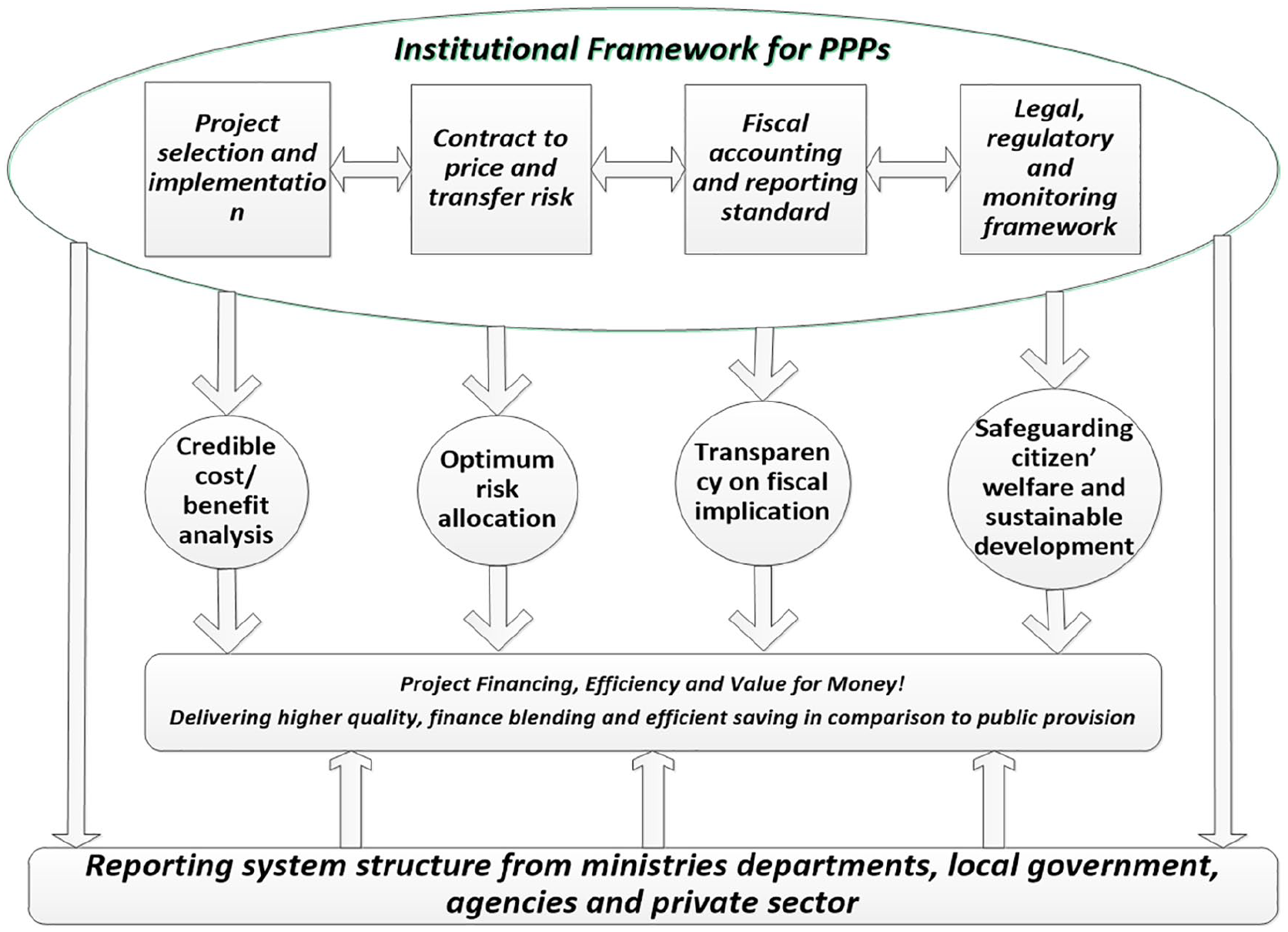
A modified institutional framework for a proper governance system.
Improving the stock market or the capital market will promote commercial banks as one of the essential investors in infrastructure projects to take a leading role in syndication instead of being junior due to lack of capital or regulation on deposits in inverse to loan tenor. Projects in PPP range from 5 years up to above 20 years, meaning these investments or plans take time further. Due to PPP complexity, adverse, many local banks in SSA are unwilling or due to the absence of technical capacities, to enter into these projects. Commercial banks can use the capital market through issuing bonds; for example, for the first time, a local bank NMB has issued a warrant approximating to generate 25 billion Shillings. However, with the bank’s report, 83.349 shillings was raised above-expected amount. Encouraging this arena for capital banks can use the proceeds to finance more projects. The sign for growth of a funded project thus, more developing countries can use these type of investor market to acquire more financing for infrastructure projects with further efforts from the government to create measures for boosting the financial market. Local commercial banks or international can be a good source for the senior loan and other instruments like a letter of credit and bank guarantees to infrastructure projects. It is harder for an individual project to raise money in the financial market than a reputable organization or institution like banks and other similar.
Development finance institutions (DFI) can play an essential role in developing financing mechanisms for PPP by ensuring even where the commercial market cannot invest, they can be one of their principal purpose (Yaron, 1992). DFI in specific national development bank, is a government-owned financial institution, aligning with them for infrastructure and technical support due to their experience in project monitoring and management, can provide a useful tool to PPP implementation and development. The study acknowledges the bilateral and multilateral or regional DFIs. However, for this research, we aim to strengthen the internal mechanism to lay a structure for even international investors to be attracted, such as institutional investors which can use national development banks as the fund manager and invest in infrastructure with low rates than commercial banks. The role of a national development bank should be to provide investment to the private sector that catalyzes development. Tanzania has a development bank; the issue is how the portfolio aligned to the economic demands. Furthermore, a tool for the investor to mitigate risk, project development, or creating bankability of project, but this is highly influenced by government, governance, and management-creative in product creation meetings in the middle with private sector funding restriction.
Theoretical Framework and Hypothesis
Theoretical Framework
A modified three-layer conceptual framework is adopted in our research, which we used to analyze PPP. Italian and Australia PPP governance case was used (Carbonara et al., 2013; Johnston & Gudergan, 2007). However, with the use of governance theory (Stoker, 1998), we modified our model to separate between country and governance. We identified that there is no specific sectoral categorization in PPP priorities in Tanzania or SSA by reviewing their sectoral policies in either investment or project undertaking. The article used interchangeably country and government, giving a broad meaning to the central government in few cases to complement the public. PPP phenomenon has a prominent character to differ in each country and environment where it is applied. Causing different dimension measurements in addressing issues constraining PPP implementation. Our study concentrated on examining why PPP implementation and performance in developing countries do not appear in terms of the number of projects and the amount invested. Valuation of why there is a high level of project failure in terms of performance should have been a result of the initiation stage where all critical issues could have been handled. Although we had government concern about the question of contracts not reaching financial closure, which we associated with the whole implementation process. Several studies show that there are many centers and diverse links between many agencies of government, such as local, regional, national, and sub-national levels (Krahmann, 2003), so the question is how do they impact PPP implementation.
The virtual of good governance needs improvement by touching many aspects of public sector–related organs and beginning with the institutions where the rules of the game are set for economic and political interaction. Then to the structure where decisions are made, that determines the importance of governance problems of the public and resource allocation. Finally, responding them to the organizations that manage administrative systems and deliver goods and services to peoples. Furthermore, to human resources, which create the government bureaucratic staffing system extending to the interface of officials and citizens in political and bureaucratic arenas. We also attribute governance theory in a sense that much of international focus has put in addressing the election of democratic governments in developing countries. Opposition taking power is not a new thing to Africa, but the impact on sustainable development is still questionable where they vary policy to policy. There is a great need to put the focus on reforming the public sector to accommodate a rapid world-changing environment where multilevel governance can be used. Hooghe & Marks (2003), provide evidence that the developing world bears directly in multilevel, polycentric governance systems.
PPP Hard Facts and Experience
Stakeholders in PPP transactions need a clear understanding of the grounds to remove barriers of trust and different concepts about PPP, which will increase confidence leading to better dealing for both parts involved. The PPP contract is a business engagement transaction, not a free lunch. There is no one helping the other, so it should be a win-win situation through negotiations, and risk allocation to the public sector should build capacity led to engage with the private sector whose erythematic information gives an advantage for the engagement. Since the 1990s, PPP experience and earlier experience of privatization created some skepticism, misconception, and mistrust for the public sector lead by political factors (Cook & Minogue, 1990) against contracts with the private sector. That leads to projects failure and losses to the public sector in developing countries due to a lack of PPP experience (Leigland, 2018). Let it be known that PPP is not a magic bullet; laying grounds are needed to create environment and promotion to attract private investors. As they assume a high level of responsibilities and risk to enhance PPP implementation to bring positive results (Ke et al., 2010). There are opportunities provided by PPP to public sector engagement private, reciprocating the private relationship sector wants the investment opportunities, traffic, and market available in the various public sector utilities with an excellent example from Singapore achievement (Hwang et al., 2013). Many suitable and sustainable projects are disqualified in developing countries due to their size, severe conditions, or small economies of scale, which in terms of cost-profit analysis they are not suitable for the large skillful international private sector (Mwakapala & Sun, 2018). Therefore, there is a need to create a model that will incorporate these types of projects from local government, departments, agencies, or districts in many developing countries either by using domestic finance or enabling instruments.
Apart from being popularized for efficiency and reducing government budget burden, the PPP system of off-balance sheet items for government payee projects practically is unaccounted transactions in government books of accounting. So they are carried forward in the future generation or prolonged perhaps a coming debt crisis in Africa. Due to mismanagement of funds and over credits of some countries such as Mozambique and Zambia (refer World Bank debt statistics report 2018). More attention should be paid when the project is a government payee where in some cases can be used as a political tool in elections to respond to infrastructure shortfall due to budget constraints by moving the expenditure off the balance sheet. Without additional private sector finance incentives, the problem is postponed by transferring the cost to future government or taxpayers instead of reducing the finance constraint (Linder, 1999; Winch, 2000). The case for developing countries’ inability to leverage the projects could be a debt trap with massive private investment increase in many SSA with profound knowledge or experience in handling them or corruption in bidding, resulting in wrong financing and projects. This gap is where the importance of good governance in implementing and managing PPP is vital by building an institutional framework.
Project failure, skepticism, cost issues, and historical privatization background are some of the critical issues related to the slow growth trend of PPP projects in Tanzania. However, generally, there are other macro-level issues reflected on PPP finance, such as risk allocation, accounting treatment, and policy concerns (Roehrich et al., 2014). Despite the challenges, countries in SSA are well attracted to PPP, and many efforts are made. A good example, Tanzania amended the PPP policy in 2018 with a good intention to protect the country from issues related to contract litigation, at the same time, provide investors’ confidence by providing a legal framework that assures fair treatment and articulates both sides’ rights and obligations. The literature in macro shows that an improvement in infrastructure may lead to improved productivity, stimulate private investment as well as facilitate domestic and international trade (Gurara et al., 2017), therefore promoting sustainable growth (Osborn et al., 2015). The finance gap for infrastructure puts engagement with the private sector a top agenda to reduce the financing gap, hence growing importance for sustainable PPP implementation by addressing its constraint through governance mechanisms.

Primary sector ranked by several project and investments from 1990–2018.
Hypothesis Development
PPP management involves an intricate relationship between private and public as well as complex financing issues that necessitate a well-structured institutional framework with skilled personal. Most measurable items in PPP are advisory issues regarding legal, financial, and technical matters, organizing and participating in bidding processes, negotiating the concession contracts, monitoring, and contract management throughout the project life cycle (Ho & Tsui, 2009). These issues are not directly related to the political or centralized government, so a need to create governance instruments that go beyond the government. Creating a structure that is institutionally based, if possible, one not affected by political stress, a structure to mitigate political risk, causes most projects in SSA to be unattractive. Consequently, a governance hypothesis with a simple mediation model will be used to prove the theory:
As there is an excellent correlation between government and PPP growth in terms of the support and policy marking or guarantees for risk purpose (Wibowo et al., 2012), we anticipated contribution to outcome variable PPP implementation proportionately as to direct effect arising to a partial mediation. Based on the Chinese PPP model, there is much work done by the government to ensure a pleasant business environment and well establishment of PPP, such as adopting the international practice and risk-sharing mechanism, which attracts more private investors (Ke et al., 2011). So we consider that the direct government impact on influencing PPP implementation or development that leads to our second hypothesis:
Model Development and Procedure to Analyze Mediation Effects
From our theoretical framework of PPP three-layer applied in Italy, we developed a three-layer model by adopting selected variables using the mediation model effect a conceptual diagram as shown in Figure 3. The model used governance to mediate the government or country’s indirect effect on PPP project implementation. Considering the importance of mediating variable nature, scholars have done many types of research, such as Baron & Kenny (1986) conditions, further assessment in conceptual, strategic, as well as statistical consideration with SPSS (Preacher & Hayes, 2004) which we applied. The mediation hypothesis is based on the fact that it recognizes an active object between the input and output that intervene in the response results.

Conceptual model diagram.
As suggested by governance theory for the government to use governance mechanisms and instruments to improve the PPP implementation process, we opt to use the mediation model. A variable may be said to function as a mediator if it accounts for the relation between the predictor and criterion where governance meets the general precondition drawn from the governance theory. Then the country as an independent variable keeping PPP outcomes as dependent variables and governance as a mediator for the indirect effect. In the work of Baron & Kenny (1986), they suggested a variable to qualify as a mediator needs to qualify three conditions. For our case, we used SPSS methods advantages. Researchers have developed different methods to test the empirical shreds of evidence for mediation effect 30 years after Baron and Kenny (1986). In an approach of Iacobucci et al. (2007) they challenged Baron and Kenny also Hayes( 2009) with evidence that the structural equation model (SEM) performs better than regression on assessing multiconstruct mediation effects as well as a different approach in determining the path. In Figure 4A path chain showing a significant causal relationship involved in mediation with three constructs used to elaborate path conditional testing. With the SEM, we will be able to test all path conditions and demonstrate in the analysis.

Constructs multi-items.
Furthermore, in the study of Preacher & Hayes (2004), they discussed analysis methods for mediation effects and explain that from Baron and Kenny’s method, there are Type I and II errors that are only left to be used with regression analysis. Following Baron and Kenny’s procedure approach observed, Preacher and Hayes, suggest that Sobel’s test has high statistical power than those of Baron and Kenny the same suggestion in a study of MacKinnon et al. (2002). The comparison of the method for testing mediation effect giving more advantages for SPSS test abilities especially bootstrapping approach in analysis of moment structure (AMOS; Arbuckle & Wothke, 1999) that we will be using for our study.
Method
Our research objective was to assess why the PPP program is making slow progress in developing countries or significant project failure. Our study concentrated specifically in SSA, where, despite high-level demand for infrastructure, project financing, and project efficiency still PPP is truncated. Farnam (2005) shows that there are mixed records for PPP in Africa as well as other parts of developing countries else as the process is complicated. There is no way governments expect to use PPP as a magic bullet rather a gradual process that needs research in discovering its patterns. Our motivation lies in the truth that there is an excellent shift of private provision from the year 1990 (Clive, 2003) backed up with most of the development partners, financial institutions, MDGs, and multilateral organizations.
Further regional financial or development representatives urge developing countries to use the private sector to bridge the infrastructure financing gap and efficiency, delivering to public services. The World Bank international debt statistics report 2019 proves the evidence of how much private finance has been widely used in the world, and Africa is not exceptional. The rise of financing from private creditors and nontraditional bilateral, which include syndicated commercial bank loans, institutional investors, and bond insurance, signifies the change in borrowing patterns that ought to include the developing countries to be prepared and be ready.
Data Collection and Sample
A simple random sampling was used, which in structural modeling assumption is based on a concept that each case in the population has an equal probability of being included in the sample of a given study (Bentler & Chou, 1987). Survey respondents were stakeholders involved or actively in PPP projects or programs at different levels and sectors. We used the Tanzania case to represent Sub-Saharan Countries. Careful selection for our social demographic was made, education level was given weight to exclude below diploma or bachelor education background and adding working experience in PPP projects to qualified ones. Other demographic elements were set constant such as sex, marital status, and age. The survey was distributed to the categories of the identified sample who are professions dealing or practically are into PPP projects. The sample contained PPP experts, government officials, bankers, and nonfinancial institutions staff such as pension funds and insurance companies, project managers, private investors, and other stakeholders to capture a wide range of populations with inclusive viewpoints. Our study utilized five different sectors, from the government which included local government and agencies officials (39.47%), financial intermediaries (28.95%), private sector (23.68%), consultancy (5.26%), and other group representing (2.63%) which accounted for the 99.9% of the sample. With the help of the survey monkey report, initial data were generated from May 2018 to April 2019 for the last additional response collection to meet some analysis requirements in AMOS, making a total of almost one including questioner design and testing. The low number of respondents was due to two factors resulted from screening, the critical selection was made to have accurate results, and PPP is a very technical field which lacks much expertise in the least developing countries.
We used survey monkey to send our survey to specially selected sample (Stake, 1995), the identified sample population of 44 people were recognized for information accuracy as PPP knowledge was vital to receiving appropriate responses hence meaningful results. At a confidence level of 95% and a marginal error of 5%, we got 40 valid responses, which concede with our formula calculation on the confidence level (Israel, 1992). The selected sample was based on the information required by our study. This was done to maximize information utility for small samples and expectations about single cases for the information context-based in their expectation as elaborated by (Flyvbjerg, 2006).
Construct Validity and Reliability
Some studies (Anderson & Gerbing, 1984) recommended a range of sample sizes of n = 100 to about n = 200 and the robustness of small sample elaborated by (Boomsma, 1983) for confirmatory factor analysis (CFA) models. Regarding our sample size, we based on a study of Gagne & Hancock (2006), where the discussion is about the shift of position of CFA from observation per variables or parameters toward model quality guided by research design with population type. Proving this, a simulation method was used by Gagne & Hancock (2006) proceeded from Marsh et al. (1998) to measure the extent of properties of sample size function. Factor loading magnitude number of indicators per factor and interactions among these characteristics with further previous studies (Arrindell & Van der Ende, 1985; Guadagnoli & Velicer, 1988).
To measure the extent for our result consistency, the accuracy of population representation in the research, and whether it measures what it truly intended to achieve, reliability and validity test were deployed to measure the tendency (Carmines & Zeller, 1979; Golafshani, 2003). For the threshold, Cronbach’s alpha should be higher than .70 due to heterogeneous constructs and population sample the alpha value is a minimum of .700 and .771, an acceptable range as explained by (Tavakol & Dennick, 2011). The average variance extracted (AVE) supposed to be higher than .50; composite reliability (CR) should be greater than .70. In contrast, maximum shared variance (MSV) should be less than the AVE obtained (Cronbach & Meehl, 1955; Farrell, 2010; Field, 2013; Harville, 1977). Our research test results for validity and reliability are shown in Table 2.
Research Instrument for Validity and Reliability.

Note. CR = composite reliability; AVE = average variance extracted; MSV = maximum shared variance.
Furthermore, the discriminant validity shows the square root of the AVE for Governance is less than its correlation country. So to improve it, we were required to remove a construct relationship between public and private stakeholders considering the importance of the variable to our model was not removed. Regarding (Malhotra et al., 2006) explanation about AVE, that is habitually too strict, so in a similar case, CR can be used to establish reliability alone. Therefore, as both CR and Cronbach’s alpha for governance exceeded the threshold, they were accepted with other scales being valid and reliable for the research, as shown in Table 3 extracted from AMOS master validity test.
Model Validity Measure Master Validity Test.

Note. CR = composite reliability; AVE = average variance extracted; MSV = maximum shared variance; PPPI = public–private partnership implementation.
Data Analysis and Results
To verify the structure and measurement of constructs, CFA was used as a powerful statistical tool (Keith, 2005). Nature and relationship among latent constructs were examined as well as the validity of the conceptual model. Considering the acceptable minimum threshold, all assessed fit indices exceeded the threshold point show fit indices (CFI), root means square error (RMSEA), p close of fit (PClose), and the chi-square divided by degree of freedom (CMIN/DF). CFA and EFA form part of a larger family of methods used for data analysis known as SEM which plays a vital role in measurement model validation in structural or path studies (Marsh et al., 2009; Paas et al., 2003; Schreiber et al., 2006). IBM SPSS AMOS 23 was used to conduct the CFA to check the fit indices (Blunch, 2012). The reporting varies but drawing from recent studies, there is a measure fit that tends to perform well for detecting model misspecification and lack of dependence on sample size the same reason they were chosen.
CFA
The SEM was used to analyze the empirical data for our research study to assess the causal factor between a variable that was included in the model (Bollen & Long, 1993; Joreskog & Sorbom, 1979). Through research, question variables were tested by SPSS AMOS to identify the relationship between them. Guided with our theoretical framework by Carbonara et al. (2013), and a model we developed, factor analysis was performed. So exploratory factor analysis (EFA) was used to discover the construct’s nature, which was influencing our latent factors and minimize the amount of variance. Three factors were extracted as per our model through a fixed number of factors in AMOS under maximum likelihood, as shown in Figure 5. Further CFA was used to our hypothesis on how they are influenced by a specified set of the construct in general (DeCoster, 1998) concerning our theory, as shown in Figure 6.

Exploratory factor loading (EFA).

Validated model.
Modeling Analysis for the Structural Path
We validated the model through model fit indices, and all conceptualized moderation results proved a good model fit (Hu & Bentler, 1999) shown in Table 4, only constructs essential or related to this study were reported (Lomax & Schumacker, 2004). Abiding with common international reporting standards, Table 4 shows observed results and threshold points for model fit (Gaskin & Lim, 2016).
Model Fit Measures.
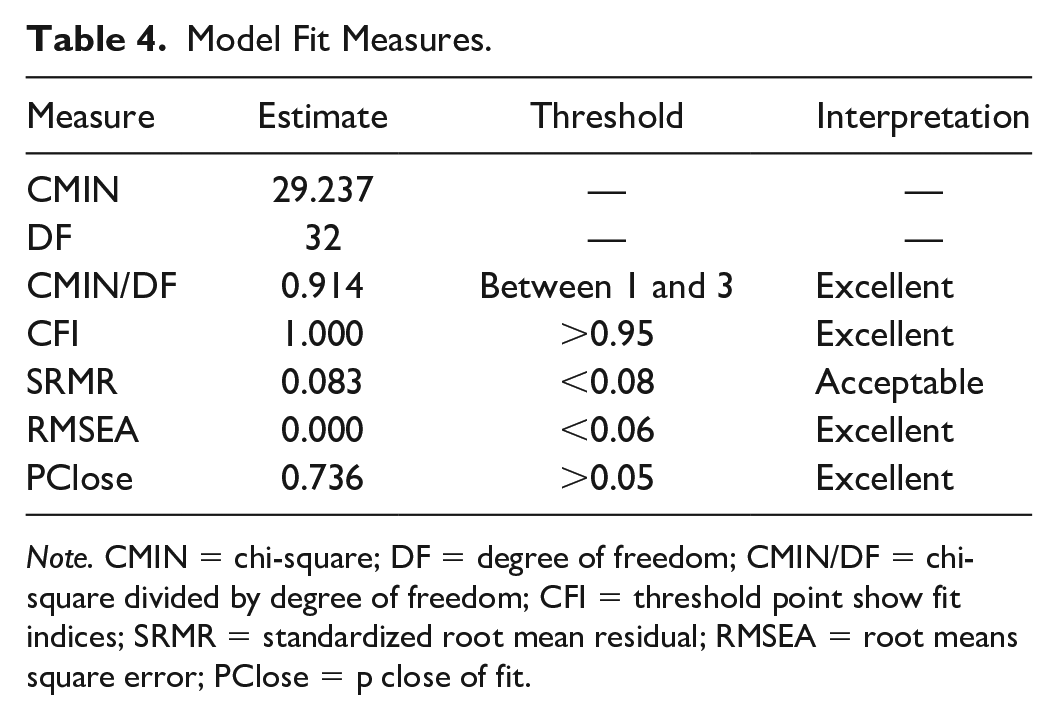
Note. CMIN = chi-square; DF = degree of freedom; CMIN/DF = chi-square divided by degree of freedom; CFI = threshold point show fit indices; SRMR = standardized root mean residual; RMSEA = root means square error; PClose = p close of fit.
Mediation Effects
We utilized the Bootstrapping approach in AMOS to generate standard errors at 95% confidence intervals to test the indirect effects for statistical significance. The result shows that the entire amount of variance government is explained through the governance mediate variable. With our specified model, Figure 6 showing path and effect direction, where the indirect government pass goes through governance and then to PPP implementation. In the presence of a mediator, the direct government effect becomes insignificant as Table 5 shows, and Table 6 shows the results of the standardized indirect effect. The results show a potential full mediation with the presence of a mediator; the direct path becomes insignificant. It should be noted that if both paths were direct and indirect effect was significant, that means there would have been partial mediation.
Mediation Outcome.

Note. ns = not significant; s = significant.
Standardized Indirect Effect.

Note. PPPI = public–private partnership implementation.
Discussion
Our result adds essential knowledge to government intervention to PPP implementation. Good governance enhances better results in the relationship between public and private in modern society with government political interaction, which cannot be avoided, same as our study showed consistency with our theory and other researches (Kooiman, 1993; Stoker, 1998). The results also prove the mediated indirect effect of governance in association with the relationship between PPP implementation and government objective in demand to reduce the financing gap in the infrastructure. The result shows that improving governance mechanisms will lead to the sustainable execution of PPP, avoiding many pit holes associated with politics and the impact of the undiversified central government. The factor loading constructs show governance can absorb the interaction between the public and private sector, and it facilitates networking the complex system attributed to PPP implementation, use, and monitoring. Thus, the result provides support of the mediation effect between government and PPP implementation, a relationship mediated through governance mechanisms.
Although we expected a partial mediation effect, our supported results show a full mediation deviating a little bit to our theory expectation. From a different perspective, empirical studies are explaining similar phenomena such as in governance without government order and change in world politics. Furthermore, in governance without government, extensive research about rethinking public administration (Peters & Pierre, 1998; Rosenau & Czempiel, 1992) good incite has been given resembling full mediation effect. Expounded with a growing body of literature in Europe, which explains the familiar scenario for network coordination and inclusiveness of governance instruments. They emphasize operations without the interference of the government. The same should be applied in many developing countries like SSA.
The significance of our hypothesis, as shown in Table 5, is that full mediation implies the causal effect of government is mediated through the mediator to outcome variable PPP implementation. The repercussion of a mediator between the causal variable and outcome variable being called indirect impact can either be significant or nonsignificant. When it is significant given X → Y nonsignificance, this suggests that the results are full mediation. Still, when direct effect X → Y is significant and indirect effect X → M → Y is substantial, then impartial mediation, signifying that some of the effects come directly from the independent variable. When paths a and b as demonstrated in our model diagram were to be nonsignificant, then that will imply there is no mediation.
The nonsignificance in our result between government and PPP implementation with a significant result with the mediator path suggests that the governance fully mediates the outcome of government on PPP implementation. It implies that the effect of PPP implementation is mediated with governance processes meaning that the government will have better results in PPP implementation through the initiative and facilitative activities into governance. The insignificance of “a” direct path between government and PPP implementation suggests that there will be less impact where the government will have to act directly on PPP implementation. Instead should serve as a monitor of the process and use governance arm-length to represent government interest and the public in general.
Conclusion
Our research evidence signifies that governance mediates the impact of PPP project implementation. The networking system as some form of governance was acknowledged to compliment with corporate governance tools in PPP as innovative public management. Governance does not undermine the government’s position, but rather it uplifts to a higher level of overseeing the whole process as a sponsor and initiator, demanding output. The separation will also improve the stakeholder’s relationship by reducing government intervention giving a chance to technical and professional charging.
The results from the construct show that PPP implementation has more than a direct effect on general government return rather than impact positively to the financial system through an increase of project, thus more market for lending and other banking activities. However, concerning many developing countries, political and government networks, some elements on factors loaded to governance are highly related to direct government activities. Where the firm guideline is required, with the available management system, the framework should be created, showing strategies and guidelines picked up by governance mechanism reflecting regulatory and legal aspects for implementation. The policy specifies duties and responsibilities and how functional the top-down up system will be governed with the interrelation between government departments and agencies. The linkage system monitored by a powered PPP authority center, unit, or agency will manage the PPP portfolio supported by the executive branch in financial and policy-regulatory transformation or improvement for better performance of the PPP program. The program will be on the check and balance monitoring overall PPP performance guided like any other government agencies, with practicality as per country as PPP application varies.
Prospect studies can explore more in the model types appropriate to developing countries due to the size of economies and traffic or business risk. The current builds and designs (Bs and Ds) do not apply to all economies due to their complexity and capital requirements (leverage). Most countries in SSA need simple and marginal capital investment, especially for income-generating projects with user payee unleveraged. Different risk factors or issues are supposed to be addressed to eliminate the notion of political risk, and the project being rated riskier than other parts of the world. There is a need to study the drivers of PPP distribution in its aggregate, taking into account of Africa population. Further infrastructure demands, project life cycle, and contribution of domestic finance in stimulating more investors from international finance or how the stock market can be used in terms of bound and other derivatives to stimulate the process.
The study faced some critical limitations, especially on the use of primary data for our sample survey due to profound experience in PPP, lack of expertise, and data confidentiality. We had to go layers of analysis with the help of bootstrapping and dropping some loading factor, which could result in substantial feedback. Larger sample size could have generated more accurate results. Lack of previous research for many Sub-Saharan countries in the area of PPP implementation limited our literature review adversely to challenge previous PPP experience. That include archive and statistics for specific states in the region. Further studies to understand a model to modify the PPP model to countries with less leveraging ability and creation of user payee PPP in public sectors with high traffic such as the health sector.
Footnotes
Declaration of Conflicting Interests
The author(s) declared no potential conflicts of interest with respect to the research, authorship, and/or publication of this article.
Funding
The author(s) received no financial support for the research, authorship, and/or publication of this article.
