




Abstract
Visualization and expression of health-related experiences and conditions by young migrants from five different countries residing in Sweden were examined in this study. Using photovoice, the participants were invited to describe and discuss their experiences in three stages: (a) document and portray their everyday lives by taking pictures, (b) discuss their findings, and (c) present their views on health to the adults who are present in their everyday life and that are important for improving young migrants’ health conditions. The overall findings indicate that temporal, spatial, and social conditions are important for the well-being of these young migrants. Thus, in order for the young migrants to feel well in a new cultural context, a search for meaning and meaningfulness in relation to time, place, and other people was important. These findings are discussed in light of social, mental, and existential health dimensions and in relation to the selected study methods.
Introduction
The point of departure for this research project was to collaborate with a group of young migrants who are seldom asked to share their experiences of health (Spencer et al., 2019). According to the United Nations Children’s Fund (UNICEF; 2016), there are around 11 million child refugees and asylum seekers in the world, and more than 30 million children do not live in their country of birth. Over the past two decades, approximately 170,000 children and young refugees have settled in Nordic countries (Borsch et al., 2019). In Sweden, the number of incoming children and youth migrants has risen over the past several years with more than 160,000 people seeking asylum in Sweden during 2015. Of these, 22% were refugee children who were unaccompanied by parents or other relatives (Swedish Migration Agency, 2016). Many of the young refugees coming to Nordic countries face pre- and post-migration-related mental health problems, including discrimination and poor social support. Generally, young refugees in Nordic countries have poorer mental health than ethnic minorities and their native-born peers (Borsch et al., 2019). In addition, international research has reported increased health problems and the exclusion of refugees (Manesis, 2014; Viruell-Fuentes et al., 2012). Promoting health in this population, including refugees and new arrivals, is of high priority in Sweden (Swedish Migration Agency, 2016).
Still, only recently has young people’s firsthand experiences concerning international migration received attention in research (Hertz & Lalander, 2017; Tanyas, 2012). According to Spencer et al. (2019), in addition to the absence of young migrants’ voices in research, studies in the field of youth, health, and migration have unilaterally focused on health problems without accounting for young people’s perspectives on what creates health. As stated by the United Nations High Commissioner for Refugees (UNHCR; 2006), it is, therefore, essential to place refugees at the center of decision-making processes concerning their well-being. Furthermore, young people’s active participation in research can contribute with valuable knowledge on how to promote young people’s health (Lögdberg et al., 2018).
From a Nordic perspective, some studies have focused on educational provision for newly arrived migrants. As an example, Nilsson Folke (2017) described the experiences of newly arrived migrants with respect to feelings of exclusion in the Swedish school context in addition to their discontinued pasts and postponed futures. Besides, the Swedish National Agency for Education (2016) highlighted that only one in three students from a language introduction course goes on to the national secondary school program after 3 years of language introduction. This agency stressed that the paths to further studies and inclusion of these students in society need to be strengthened. However, these studies did not include this group’s health-related perspectives. Health is important for learning (Ahonen, 2010; Fröjd et al., 2008), and education is a central key to young people’s future health and well-being (Marmot, 2005). In fact, according to the Swedish Public Health Agency (2018), among young people who did not complete upper secondary education, unemployment is about twice as high in this group as compared with young people who completed their education. A relationship between unemployment and poor mental health has also been shown. Therefore, more research focusing on health and the methods for promoting the health of young migrants inside and outside the school context is needed.
To involve young migrants in the research process and highlight their health experiences, photovoice, a participatory research method well-suited for youth participation (Wang, 2006) was used in this study. Through photovoice, young people are given the opportunity to document and discuss their lives via the use of photography (Wang & Burris, 1997). Photovoice was first developed by Wang and Burris in the 1990s as a method to advocate social change. Thereafter, the method has been used globally as a method to improve youth participation in issues concerning their health (Mmari et al., 2014; Vélez-Grau, 2018; Warne, 2013). However, besides Warne (2013), who used photovoice in the Swedish school context, there are a lack of studies in the Nordic countries in which photovoice is used to involve young people, especially young migrants, in the research process. With its focus on social change and empowerment, it is a suitable method to use with young migrants as they are invited to share and discuss their health-related experiences based on their own life pictures. Wang and Burris (1997) pointed out that the main intention of photovoice is “to enable people to record and reflect their community’s strengths and concerns, to promote critical dialogue and knowledge about important community issues through large and small group discussion of photographs, and to reach policymakers” (p. 370). Furthermore, photovoice appears to contribute to a greater understanding of community resources and needs with respect to a certain specific issue and to increase participant empowerment (Catalani & Minkler, 2010). Photovoice can also give voice to people (such as minority groups) who are seldom heard (Mamary et al., 2009). According to E. Green and Kloos (2009), photovoice is a method that enables a group “to gain ‘access to and control over’ the creation of their individual and collective narratives” (p. 462). Using an arts-informed research method can also offer alternative forms of communication for participants facing communication barriers (Guruge et al., 2015).
Photovoice has its theoretical roots in critical pedagogy, feminist theory, and community photography (Wang & Burris, 1997). According to Freire (1972) and his view on critical pedagogy, an individual’s awareness of an oppressive situation can be created through dialogue, and dialogue can arise through photography. Freire defined critical consciousness as a higher level of consciousness in which the individual is aware of how social structures can suppress an individual and how an individual’s assumptions and behaviors can contribute to the maintenance or change in these oppressive systems. To achieve critical consciousness, collaboration within the collective or community is required (Liebenberg, 2018). Freire’s work aimed at challenging power imbalance and positioning people as equals. He referred especially to the relationship between a teacher and a student, which provided a stimulus for photovoice development. The collaborative and inclusive approach underlining the photovoice method also originated from feminist theory (Liebenberg, 2018). Hence, the individuals who are the most suitable to understand the needs and conditions of a group are the individuals within that group on the basis of a common approach (Strack et al., 2004). This approach also aligns with the foundations of health promotion by stressing the importance of participation and empowerment to reach change.
Health promotion, used in this study as a framework combined with the photovoice methodology, is defined as “the process of enabling people to increase control over, and to improve, their health” (World Health Organization [WHO], 1986, p. 1). According to Guruge et al. (2015), the use of a strength-based approach focusing on ways to promote health may add new perspectives to previous studies focusing on poor health among immigrant youths. Health is a central concept for understanding health promotion (Jerdén, 2007). The WHO (1946) has defined health as “a state of complete physical, mental and social well-being and not merely the absence of disease or infirmity” (p. 100). Melder (2011) argued for widening the definition of health by adding existential well-being, in which, for example, the meaning and purpose of health in life are highlighted. According to WHO (2002), existential health concerns can be addressed with eight aspects: (a) spiritual connection, (b) meaning and purpose in life, (c) experiences of awe and wonder, (d) wholeness and integration, (e) spiritual strength, (f) inner peace, (g) hope and optimism, and (h) faith. In this study, health is understood based on this broad definition of health that includes physical, mental, social, and existential well-being.
Finally, as mentioned above, participation and empowerment are basic principles in health promotion efforts (WHO, 1986). Empowerment is defined as “a process through which people gain greater control over decisions and actions affecting their health” (Nutbeam, 1998, p. 6). As described by Liebenberg (2018), photovoice gained popularity as a result of the benefits it provides to all involved actors, such as participants, researchers, and policymakers. However, Liebenberg (2018) highlighted comprehensive criticism about the rigor in the use of the method, and she raised concerns that the use of the method does not automatically lead to increased empowerment among the participants or social change. To use photovoice to achieve social change, the methods for facilitating social change needs to be carefully planned, for example, by involving policymakers from the beginning of the project (Liebenberg, 2018). Therefore, when planning the photovoice project in this study, relationships with the school (students, teachers, school nurses, and the principals) were developed to enable a successful project in terms of promoting the health of young migrants.
To summarize, this study used photovoice as a method for examining health promotion with the intention of filling the previously described knowledge gap, which addresses the absence of young migrants’ voices in research and their experiences of health and well-being rather than solely focusing on health problems. Therefore, using photovoice to capture young migrants’ health experiences, the study aimed to explore the ways by which young migrants visualize and voice health-related experiences and conditions.
Method
Participants, Setting, and Preparation
Based on research by Wang and Burris (1997) and Warne (2012, 2013), a photovoice project was developed by the first author in the spring of 2016 to fit the group of young migrants in Sweden. Data, including the adaption of photovoice as a method for achieving the actual study objective (the health experiences of young migrants at an upper secondary school in a municipality in Sweden with about 75,000 inhabitants), were collected between February and April 2016. The participants in this study consisted of 28 newly arrived young people, some of them came together with their families and some were unaccompanied refugee children and youths, from Afghanistan, Syria, Somalia, Thailand, and Palestine. The children and youths were aged 16 to 20 years, of whom 14 were males and 14 were females. The participants were enlisted in a Swedish language introduction course that is offered to young people who have recently arrived in Sweden. The language introduction course is part of the introductory program in Sweden intended for students who are not qualified for the national program in upper secondary school (The Swedish National Agency for Education, 2016). After the principal and teachers at the program agreed to collaborate with our study, the students in one introductory language course were invited to participate. All 28 enrolled young people agreed to participate.
According to Warne (2012), for young people to find a photovoice project meaningful, it is important to make sure that they understand the aim of the project; therefore, the researchers must adjust the method to fit the group’s abilities. Therefore, the first author spent time in the classroom to get to know the students prior to the project start. This gave the first author knowledge that allowed the method to be adapted to this particular group, for example, awareness of their language skills and the group dynamics. Based on the interactions and discussions with the students and the school staff, we decided to use Swedish during the project as Swedish was the common language among the participants, and the participants preferred to speak Swedish as they saw it as a learning opportunity. However, it also required us to pay more attention to the fact that the students did indeed understand what their participation in the research study meant. Student understanding was achieved by repeating the purpose of the research and the conditions for their participation in both small and large groups, for example, before recordings were made in the smaller groups. The fact that their teachers, who are experts in Swedish as a second language and with whom the students felt comfortable, participated in the project provided a sense of security for the students. The teachers could also help clarify the language when needed and clarify any questions.
Furthermore, the SHOWeD questions were modified to fit the group. To promote critical conversations with participants in photovoice projects, the SHOWeD technique (Shaffer, 1983) based on Freire’s work was used as a framework (Catalani & Minkler, 2010). SHOWeD stands for the five questions: (a) “What do you See here?”; (b) “What is really Happening here?”; (c) “How does this relate to Our lives?”; (d) “Why does this problem, concern, or strength exist?”; and (e) “What can we Do about it?” (Catalani & Minkler, 2010; Shaffer, 1983). We modified the SHOWeD questions to fit the participants (compare with Warne et al., 2013). Accordingly, the following questions were posed to the young migrants by the first author in the group discussions: (a) What does the picture show? (b) What does the picture signify to me/us? (c) What do these pictures have to do with our lives? and (d) Can we identify similarities or group pictures together? Finally, the time spent at the school at the beginning of the project enabled us to form relationships not only with the students but also with the school staff, which is a prerequisite for the success of a photovoice project (Liebenberg, 2018).
Ethical Considerations
The study was conducted with the approval of the Research Ethics Committee in Umeå, Sweden (Dnr 2013-462-31Ö). Prior to participation, information about the photovoice study was given to the young migrants in writing, and oral and written consents were obtained. The young migrants were informed that their participation in the study was voluntary, indicating they had the freedom to withdraw their participation at any time without explanation. As the project took place during the school day at the upper secondary school, the participants were informed that they could participate in the project but not in the research if they wished. Hence, the participants decided whether or not their pictures could be used in the research, whether they wanted to participate in discussions that were recorded, and whether they wanted to participate in the final presentation. The first author observed the participants’ interest and was careful to make sure that the students would not feel compelled to participate but instead clarified that the project could give them something of value, which was an important goal of the project.
They also received information that no photographs identifying individuals would be published without consent from the photographer and the individual in the picture (Wang, 2006). In accordance with Wang and Redwood-Jones (2001), an additional consent was obtained after the pictures were developed, documenting that the participants allowed their pictures to be published and used in the research and for educational purposes. One picture was removed from the project database because one participant asked for it to be omitted.
The group consisted of young people with protected identities, so discussion about confidentiality became extra important for the young people’s feelings of safety during the photovoice process. Therefore, we did not reveal any personal information in connection with the quotes. Inspired by Wang (2006), the following questions concerning the specific photovoice process, including the taking of and handling pictures, guided the discussions with the participants prior to their photo-taking sessions: (1) What is an acceptable way to approach someone to take their picture; (2) Whether you ought to take pictures of other people without their knowledge; (3) When would you not want to have your picture taken; (4) To whom might you wish to give photographs; and (5) what might be the implications? (p. 150)
The Photovoice Procedure
In accordance with Wang and Burris (1997), the participants were invited to participate in several processes: (a) document and portray their everyday lives through picture taking, (b) discuss the pictures, and (c) present their views on health for the adults present in their everyday life who are important for improving young migrants’ health conditions. Based on Warne (2012, 2013), the photovoice process started with an introduction followed by a photography session, three workshops, and a final presentation of the participants’ work with the pictures. In total, the project consisted of five meetings that occurred over a month.
Besides an explanation of the photovoice methodology and what it meant to be a part of a research project, the introduction included a discussion about ethical principles regarding photography (see “Ethical Considerations” section). In order for the participants to feel comfortable with the group discussions and the modified SHOWeD questions, they were invited to discuss selected pictures taken by the first author. Finally, at the introductory session, the participants were introduced to the research question. To capture their well-being in everyday life, the participants were invited to use their cell phones to take pictures at home, in their spare time, and in school over a one-week period. Inspired by Warne et al. (2012), the first author asked the young migrants to answer the following question by taking pictures: “What is important for me to feel well?” The research question was open without a predefinition of health to give the young migrants an opportunity to visualize and voice their own health-related experiences and conditions (Spencer, 2014).
To ensure that everyone could participate, a photography session at school was organized the day after the introductory period, and cameras were offered to anyone who did not have a cell phone. However, those not having cell phones borrowed them from friends. The participants also brought photographs that had been previously taken. One week after the introduction, the photography session was followed by three workshops. During the workshops, the participants were divided into four groups with seven people in each group. The participants were already in existing study groups that had been formed by the course teacher. Groups were based on the comfort level of the young migrants while working with other students and were most functional for facilitating students’ school attendance.
During the first workshop, “My Five Pictures,” the participants were asked to select five pictures and write a text corresponding to at least two of them guided by two questions: (a) What does the picture show? and (b) What does the picture signify to me? They were asked to upload their pictures into an IT-learning system used by the school. This workshop was led by the teacher in collaboration with an IT-developer working in the municipality. During the second workshop, one week after the first workshop, the young migrants discussed each of their five selected photos within their peer groups. First, with the first author as a facilitator leading the discussion, the participants continued in their peer groups. The focus group sessions with the first author were digitally recorded. This workshop was mainly guided by the following questions: (a) What does the picture show? (b) What does the picture signify to me/to us? (c) What do these pictures have to do with our lives? and (d) Can we identify similarities or group pictures together?
During the third workshop, the participants continued the discussions in their peer groups. They were asked to prepare a presentation by picking three pictures that best represented the question (Mitchell, 2011): What is important for me/us to feel well? Altogether, the interpretations and discussions concerning the pictures were both written and oral, and the participants were given the opportunity to reflect both individually and collectively, which enabled all voices to be heard and reduced the risk of one participant dominating the group discussion.
At the end of the project, the final presentation was held for the vice headmaster of the school, two of the school nurses, a couple of the young migrants’ teachers at the school, the first and the third authors, a PhD student, and a professor from the Department of Health Sciences at the local university. During the final presentations, the participants were given the opportunity to present their thoughts collectively in groups and then individually if they wanted to do so. The discussions during the presentation centered on ways to promote health and how to make a positive change within the thematic areas chosen by the participants. Moreover, the presentation aimed to deepen the understanding of the conditions for health within this group of young people. This understanding was obtained by the researchers asking questions relating to the students’ presented content, for example, “what can you do to feel this way more often?” or “what makes you able to do things that make you feel good?” The first and the third authors recorded field notes of these conversations.
Analysis
The data for analysis were generated through the photovoice procedure described in detail above. Data consisted of 86 pictures with accompanying descriptions made by the participants individually, four recorded focus group discussions of 64 min in total, four PowerPoint presentations representing what the four groups considered to best represent the “What is important for me/us to feel well?” question, and the authors’ notes from the final presentation. The data were analyzed by using a thematic analysis (Braun & Clarke, 2006) with an abductive approach, which means that the analysis fluctuated between induction and deduction, and in relation to the participants’ work with the pictures over time. Drawing on the photovoice method, the participants were a part of the analysis as they were involved in the process of selecting pictures and contextualizing the data (Wang & Burris, 1997). Leaving the field, the analysis continued between the three authors with the six phases of a thematic analysis as described by Braun and Clarke (2006, p. 87). Phase 1 consisted of familiarizing yourself with your data. The first author initiated the analysis process by transcribing the focus group sessions and gathering all of the empirical data in a document, reading the data document several times, and noting initial ideas. All of the authors read the data document to obtain an initial sense of the data, which was followed by a discussion between them. Phase 2 consisted of generating initial codes. This phase was done by the first author condensing and then labeling the text. Codes, such as “Having someone to talk to” and “Feeling important to others,” formed an understanding of the importance of relationships that the participating young people needed to feel well and thus formed the theme: “Building on health-inducing relationships.” Forming themes was done through the Phases 3 to 5 consisting of searching for themes, reviewing themes, and defining and naming themes, respectively. The themes were created, understood, and expanded upon by all authors in relation to previous findings. The last (sixth) phase, producing the report, included the first author revisiting the research question, reading literature and re-reading the data. Hence, the analysis was not linear and reading previous findings and theories regarding examples of migration and time initiated a new reading of the findings and new pattern development.
Before the final result was obtained, the codes and preliminary themes were discussed by the three authors on several occasions. To ensure the quality of the analysis in addition to the study’s credibility, the discussions continued until a consensus was reached (Downe-Wamboldt, 1992). To further enhance the study’s credibility, the first author visited the young migrants participating in the study to discuss the preliminary findings, described by Lincoln and Guba (1985) as a “member checking” (Nowell et al., 2017, p. 3). No data were added because the preliminary findings were confirmed by the participants. In addition, the article was “peer debriefed” in discussions with senior researchers and PhD candidates in an open seminar that “provided an external check on the research process” (Nowell et al., 2017, p. 3).
Findings
The thematic analysis revealed three themes capturing the young migrants’ health-related experiences and conditions and the way in which health could be promoted: (a) managing everyday life with the past as a health resource, (b) building on health-inducing relationships, and (c) searching for health-promoting places. The themes are presented below.
Managing Everyday Life With the Past as a Health Resource
Their past experiences, childhood, and the life they had before coming to Sweden were presented in the young migrants’ photographs and narrations, and understood as a necessary condition for their health. The participants described different ways of using their past experiences to feel well. An example was given in which one young migrant commented on a picture in a toy store: I took this picture because when I go to the stores with my best friends, and we joke and laugh a lot, and when I went to the toy store, I felt as a child again, and I remembered my childhood; that makes me happy and it makes me feel better.
As illustrated in this example, a toy from a store could trigger a positive childhood memory.
They further described using the past as a resource to address and handle hardships in the present. For example, the moon illustrated in a number of photographs was explained by the participants as a symbol for the light in the dark (Figure 1). The participants described how they could look at the moon when they felt unhappy and think of positive memories, which made them feel better. One young migrant, who took a photograph of the moon, explained her picture with these words: “Well, there is a Persian saying that at the end of each night is a bright day.” Similar to this quote, the participants described sayings from their cultures and advice from their mothers and explained ways that they used the messages in the sayings to guide them when dealing with difficulties in everyday life.

According to the young migrants, the moon symbolized the light in the dark and one young migrant explained: “I took this photo because I wanted to tell (you) about how grief has an important role in making happiness visible.”
Another example of how their past was present was through photographs of their favorite foods, which led to stories about how their mothers and grandmothers used to cook these foods for them. One participant said, “I also live alone so I have to cook. I mostly think about my mom. Yes. Because when I was in Afghanistan, she was the one who cooked, we only ate.” This quote led to laughter among the participants, and they expressed gratitude over their childhood. This subject also led to reflections among the participants about new responsibilities and managing life on their own. Another participant reflected on this situation: I like to cook, and it’s my favorite food, that’s why I took that picture. It is made in a special way. It’s hard, it’s not just mixing. It takes two hours. But it is very good. Right now, I do not care so much about food or if it’s good. Because when I’m here, I eat a certain type of food I have for exercise and it’s not good food. But when I’m with my family, I eat like this maklouba . . . But, otherwise, I only eat cooked rice or pasta and stuff that are not tasty. So I do not care much about food or tastes.
As illustrated in this quote, an uncertain attitude toward everyday habits was identified in the participants’ discussions. Hence, managing everyday life was also about dealing with new challenges. Newly formed habits and circumstances could challenge previous assumptions. These new challenges were also visible in the way in which their stories of food led to discussions about gender differences and the distribution of household tasks between the men and the women in the household depending on the countries from which the participants came. Gender-related issues involving culturally accepted ways for men and women to act formed an area in which the habits and values of the participants were challenged. Another topic of discussion was religion. One young participant, who took a photograph of the sky and described the importance of God for his well-being, expressed disappointment over the lack of room for thoughts about God at school because there was only room for science. Similar to this quote, the participants discussed and compared cultural aspects and differences while trying to manage everyday life in relation to their past experiences.
Thus, managing everyday life included figuring out cultural rules and the practicalities of everyday life. The young migrants described the means by which they navigated through everyday habits (such as how to behave on the bus) and adjusted to the climate in Sweden. These unwritten rules also led to reflections about cultural differences. For example, the participants described that they were used to having more people around and being able to talk to people in public spaces. However, the young people explained techniques that younger people could use to adapt to a new culture, unlike their parents, and at the same time, they could see what was advantageous from their cultures and use this knowledge in their everyday life. One young migrant explained: When I first came to Sweden I did not know about the rules. When I got on the bus I did not know if I can sit next to someone. Now when I get on the bus I usually ask, “Is it OK if I sit here?” Many people respond happy and say: Please go ahead.
Recognizing their past experiences, including a positive childhood, was an important condition for the young migrants’ well-being. However, as described above, new circumstances could also challenge previous assumptions, and managing everyday life also included addressing and dealing with opposing feelings about new phenomena.
Building on Health-Inducing Relationships
Having someone in whom to trust and someone to whom to be close and by whom to feel appreciated was an important condition for the well-being of the young migrants. These needs were communicated through stories of having and not having friendships in the new country and by using photos to illustrate the way in which receiving a gift made them feel acknowledged. Positive affirmations and being noticed by others were illustrated in a number of pictures with people smiling. They described, for example, that meeting someone nice on the bus, being noticed by a construction worker on the streets, or the way in which a smile from a family member gave them a sense of well-being and hope for the future.
The importance of relationships for the young migrants’ well-being also emerged in the young migrants’ reflections on the situation of not having any contact with their families or relatives from their home countries and that this lack of family contact provided motivated them to search for new relationships. One young migrant said, In the picture, I see my best friends, and Elsa, who is like a mom to me. I chose this picture because when I did not have them (close) I felt alone, but now I have those who are the best friends in my life. Elsa, who is like my mom, when I see her, I feel calm and she gives us unconditional love that is like the one parents give to their real children. Now I’m not alone because all the people standing next to me are company to me.
As illustrated in this example, the young migrants describe how they sought comfort in relationships with others, and to deal with hardships, they turned to significant others in their close vicinity. As examples, this significant person could be the school nurse, the staff at the home for unaccompanied refugee children, or a volunteer who once a week came to read with the young migrants. These adults provided support and were individuals to whom the young people could turn when they needed to talk or to be comforted when feeling sad.
Establishing new relationships also helped overcome obstacles in the new country and create a sense of belonging as demonstrated in this quote by one participant: “When I first came here, I thought snow and cold I’m out of here, but then I met nice people so now I want to stay here.” The importance of having relationships also appeared in the way in which the young people were seeking compensation for missing relationships, for example, by keeping a diary. Furthermore, they explained not wanting to confide in others for the fear of being perceived as different. Another young migrant explained as follows: “. . . maybe I’m looking a little strange and you can understand if someone looks at me a bit like abnormal. You are always afraid to look strange.” Besides their experiences of poor treatment, the young migrants’ stories included reflections on the ways to treat others. A prerequisite for being able to seek support from others was to treat these people well. This concept was illustrated by a picture of two hands with a watch holding a heart made of snow (Figure 2). The participants discussed this photograph in terms of respect for others, and one of the young migrants said, “Time is important so you should use your heart and treat others fair. If you do not have respect for the others, the heart will melt.” Similarly, a photograph illustrating flowers in different colors made them reflect on different skin colors found in humans, and the discussion focused on not letting the color of your skin define who you are. One young person said, “What matters is not the color of your skin it’s the color of your heart.”
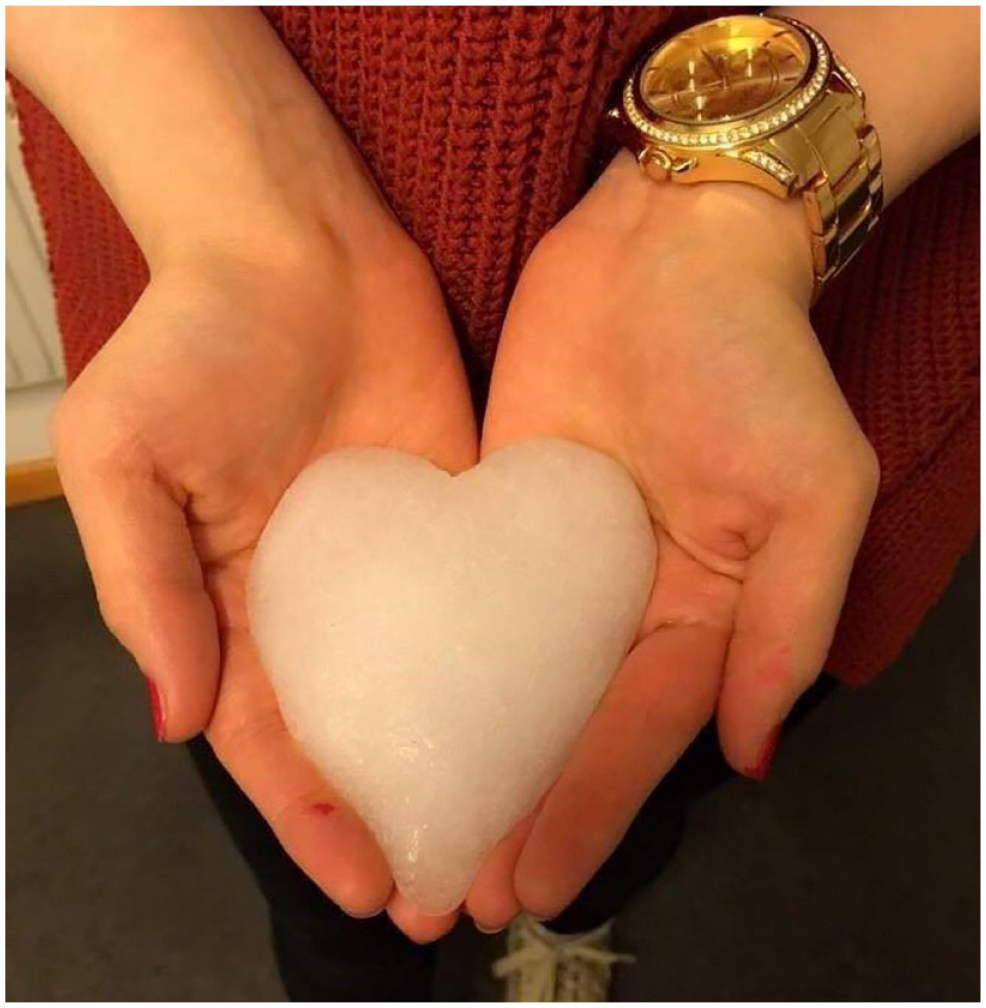
According to the young migrants, in order for them to feel well, treating others fairly was important, which is symbolized in this picture.
Searching for Health-Promoting Places
The participants described different places, such as sports arenas and schools, and why these places gave them a sense of security, calm, and hope for the future. To deal with hardship and to feel meaning for the future, it was important for the young migrants to feel safe. However, to feel connected to a place and to feel safe were something the young migrants did not take for granted, and a struggle for security could also be identified in their narrations. Photographs picturing places related to physical activity, such as a local gym or the soccer field, were explained by the young migrants as a source of happiness. A photograph illustrating children playing soccer started as a conversation about how good physical activity was for their health and ended up in reflections about which kind of society in which they wanted to live. They described a good society as a place in which children were allowed to be free, which, for example, included playing soccer in the streets.
Another important place was the library because it was regarded as a place where they felt at home as it had books in all languages, which made them feel welcome. One young migrant said, “All people are important. The library contains books in all languages, we can read in all languages. The whole world is there.” Language was an important key feature for the future and for their sense of belonging. This sentiment was, for example, communicated through photographs of books and a translating function on a cell phone and explained by the young migrants as methods that could help them become a part of society. This feeling indicated that these methods were also seen as a prerequisite for inclusion within the community. Furthermore, school was a recurring motif and was explained by the young migrants as an important place for their well-being. School was described as a place in which to develop, learn, and meet friends. The young migrants expressed gratitude for being able to attend school as being educated was seen as an asset. Finishing school was seen as a way to move forward, and it was expressed as something they had to work hard to obtain.
The watch of the school was an important symbol, illustrated in a number of pictures. This symbol led to reflections on the way in which the school was divided and that the building across the secondary school’s courtyard symbolized the future. According to the young migrants, not everyone would have the chance to attend upper secondary school. Thus, the school was experienced by the young migrants as an arena helping them become a part of the society and leading to a positive future. However, their stories also showed that the future was seen as conditional and was not for everyone.
Besides pictures of their school environment, there were several photographs taken by the participants portraying nature in different shapes. Young migrants explained that nature was a place to visit when struggling to handle problems in life, and a place that they used as a source to regain strength and find energy. They described how they turned to nature in a number of ways to feel a sense of peace, for example, by sitting next to the river, looking across the ocean, or gazing at the skyline. One young person explained, In the photo, I see the sea, the environment, winter, the park, a pavilion, and loneliness. I took the picture because I wanted to tell you that I like to be alone sometimes to think about who I am and what I should do, and I picture myself as a happy human being, the environment gives me energy.
Nature, as a place, was experienced by the young migrants both as something familiar and as a new way to contribute to their well-being. The participants described, for example, how walking home from school through the woods gave one the opportunity for reflection, and the way in which winter activities contributed to their well-being (Figure 3). They explained that winter activities were unique to them and that nature was something not to take for granted as it was not as easily accessible in all countries as it was in Sweden. Thus, the combination of activities and their experiences of being outside in nature contributed to their well-being.

One young migrant gave an example in this picture in which performing activities together in nature contributed to well-being.
Besides contributing to their well-being, there were also places identified in the young migrants’ photographs that exposed feelings of loneliness, and a sense of safety was something with which the young migrants struggled (such as described in the conversation below). In this conversation, it appears that home is an important place for the young migrants. At the same time, however, the importance of home for their well-being is conditional as it can be a source of both security and loneliness. Furthermore, the discussion of home revealed doubts among the participants about where to live in the future and whether they could stay in Sweden. A subject the young migrants addressed carefully with respect to each other was the resident permit. As explained by the participants, it was painful knowledge that everyone was not guaranteed a place in the country.
When I saw this (picture) it feels a little bad . . . pictures I took of my room you know it reminds me of my family and the room I had there when I was with them in my home country and for me, it does not feel good.
It reminds you of. . .
Yes because I don’t feel safe.
Here?
Yes, because I think . . . mmm . . . home means something. It’s not just four walls or four walls and a roof. It means a lot of things. If you have someone you love. If you have a family, then it’s a real home . . . for me, it’s family that makes me feel safe.
P2: But if you don’t have that what shall you do?
Discussion
The overall findings indicate that temporal, spatial, and social conditions are important for the well-being of these young migrants. Thus, in order for the young migrants to feel well in a new cultural context, a search for meaning and meaningfulness in relation to time, place, and others was important. Our comprehensive understanding of these themes was that the young migrants in the study were trying to create a meaningful existence in a new cultural context. This attempt indicated a balance between handling past experiences and hardships in addition to the good times in everyday life and, at the same time, nurturing future hopes and dreams in an unknown country and culture. Their stories of hardships included reflections on conditions for the process of handling difficulties focusing on whom they could trust and where they could feel safe. To be able to handle everyday life, they needed to feel physically, mentally, and socially safe. These findings could be understood in the light of social, mental, and existential dimensions of health (further discussed below) and in relation to the study methods.
Discussion of Findings
As described initially, the research question administered to the participants was open and did not contain a predefinition of health so as to give the young migrants an opportunity to visualize and voice their own health-related experiences and conditions (Spencer, 2014). This study did not specifically aim to capture experiences of migration; nevertheless, the focus of the study was to capture everyday health experiences among young migrants. However, the findings show that their experiences of health in everyday life could be understood to a great extent in the light of migration. Cwerner (2001) explained migration as “a set of particular experiences, however central to the life course of the individuals concerned, not as a totalising social condition that crucially determines every aspect of social and cultural life” (p. 15). This statement is in line with the results of this study in which migration was an important, but not complete, prerequisite for health.
The overall findings were characterized by ambivalence and a movement that can be understood in the light of transition (Bridges, 2004), indicating that the young people were undergoing a change in life that influenced their experiences and understanding of the health-related conditions and the way in which health can be promoted. For example, the participating young migrants described the process of adapting to life in Sweden included looking after themselves, for example, handling household tasks, which are expected with a general view on the transition from childhood to adult life (Arnett, 2000). In addition, they described how adapting to a life in Sweden included figuring out cultural rules and practicalities of everyday life and adjusting to circumstances different from what they were used to in their home countries. In line with Cwerner (2001), this finding could be understood as the transition processes of young migrants, which is both related to the fact that they are young and also are young migrants. In other words, their migration experiences may affect their perceptions of health in everyday life.
Furthermore, the ambivalence characterizing the empirical material was visible in the young migrants’ reflections on the way in which everyday habits and previous cultural values were challenged. This ambivalence, centered on how to interpret everyday habits and values, also triggered questions of identity and origin. According to Gerber (2011), in displacements such as migration, the origin of an individual can become more visible and significant, which is in agreement with this study’s result. According to Gerber (2011), our identity is defined in relation to others. The discussions among the young migrants in this study raised questions of origin both in relation to the different countries represented in the study and also to a Swedish identity. These discussions also raised questions about skin tone and exposed fears about not fitting in with society. These findings align with those findings from previous studies highlighting aspects of exclusion in relation to discrimination in migrant groups (Borsch et al., 2019); hence, working with inclusion is an important area for health promotion efforts.
Furthermore, according to Brekke (2010), identity is also linked to time, and to engage in questions of identity, an individual requires a sense of the future. The young migrants stories of future ambitions highlighted a wish to be a part of the community. However, a positive future was not something the young migrants took for granted. These statements by the young people could also be further understood in the light of the social determinates of health and ways that health experiences depend on your position in relation to others (Marmot, 2004). In their stories and illustrations related to this theme, the young migrants often position themselves on the outside looking in, which can be communicated, for example, through language barriers and methods to overcome these barriers. This finding is in line with Nilsson Folke’s (2016) critical view on the way in which intentions of inclusion in the everyday school context instead evoke the opposite, which are experiences of exclusion. The author describes that newly arrived students felt excluded when efforts were made by the school to include them in the main classroom.
Overall, relationships with others were central in order for the young migrants to feel well and adjust to a life in a new cultural context and included a search by the young migrants for a sense of belonging through relationships with others and in relation to place. According to Henderson (2007), belonging “is linked with a sense of place, of feeling part of a larger entity, whether family, national or even global forms of community” (p. 112). As described by the participating young migrants, it was relationships to others that gave meaning to places. They described how a home was something more than just four walls and a roof; it was synonymous with family. In general, to settle down and feel a connection to a place was something with which the young migrants struggled and did not take for granted. This feeling was revealed in their reflections on resident permits. In addition, the young migrants highlighted places, such as schools and sports arenas, that gave them a sense of purpose and hope for the future. This finding agrees with previous research highlighting the importance of health-promoting arenas, such as sport activities, for this group of young people’s sense of inclusion (Whitley et al., 2016).
The movement underlining the empirical findings can also be understood in relation to time. To feel well in their everyday life, the participating young migrants were struggling to obtain a balance between past experiences and future hopes and dreams. These sentiments can also be understood through the theory of sense of coherence (SOC) by Antonovsky (1987). To manage and feel well in their everyday life, it is important for these young people to comprehend their past experiences and experience meaningfulness in different life situations and when thinking and planning for the future.
Finally, in contrast to previous findings indicating that young people’s understanding of health focuses on lifestyle factors, for example, eating habits and physical activity (Woodgate & Leach, 2010), the findings in this study show that the young migrants health concerns mainly centered around the social, mental, and existential dimensions of health. The narratives of the young people did not comprise all eight aspects defined by WHO (2002) as existential health concerns, but there were connections to meaning and purpose in life, inner peace, hope and optimism, and faith. Based on the findings from this study, we underscore that health promotion efforts targeting young migrants should consider social, mental, and existential well-being identified in this study as managing everyday life with the past as a health resource, building on health-inducing relationships, and the importance of health-promoting places for security and well-being. Furthermore, it has been a tendency in research addressing migrant (health) issues and to focus on problems in addition to what young migrants are lacking (Nilsson Folke, 2017; Spencer et al., 2019). Starting from a health promotion perspective and including the young participants’ perspectives, their previous health experiences in addition to “new found” promotion experiences in the new country, such as the availability of nature, can be both identified and used as resources in health-promoting work.
Overall, instead of only focusing on negative aspects of migration, promoting such aspects as a wider definition of health could be helpful. Moreover, the participants’ different interpretations and associations with the pictures (e.g., one participant associates an image of an aircraft with holidays and joy while others associate it with flight and discomfort) show the heterogeneity of this group and their varied experiences of migration and health, which should be considered in health promotion efforts. Also, in line with J. Green et al. (2015), it is important to remember that health is more than an individual responsibility; it is also a matter of social justice. Therefore, as stated in a previous study (Lögdberg et al., 2018), listening to and involving young people in research and health promotion efforts can contribute with valuable perspectives on ways to promote health; however, these efforts must also be made in relation to policymakers and other adults present in young migrants everyday life who are important for improving young migrants’ health conditions. The significance of the adult support for the well-being of the young participants was evident in this study. As shown in this study, one way to collaborate with both young migrants and policymakers on a community level is through an interactive method such as photovoice. However, to reach social change, long-term work needs to be done, more discussed below.
Discussion of Methods
In agreement with previous studies using photovoice with young people (Vecchio et al., 2017; Vélez-Grau, 2018), we would recommend using this method with young migrants as it has been proven to be an excellent tool for promoting critical thinking and self-reflection. The combination of a health promotion framework and photovoice allowed the participants to visualize and voice their health experiences, which in turn resulted in a broad understanding of health-related experiences and conditions among young migrants in Sweden. The use of photography enabled insights into several aspects of the participants’ everyday life inside and outside the school context, which might not have been exposed by only using a focus group as a method for probing these migrants’ thoughts (compare with Darbyshire et al., 2005). Thus, the participants could identify health promotion factors and also the challenges involved in achieving health in their everyday life. More important, the use of photography enabled conversations based on the participants’ pictures of their lives rather than questions posed by only the researcher, which often occurs in focus groups (Morgan, 1997). Thus, using photovoice is one way for the group of migrants “to gain ‘access to and control over’ the creation of their individual and collective narratives” (E. Green & Kloos, 2009, p. 462).
However, many qualitative methods use photography to obtain robust data. The unique feature of photovoice is the call to action through critical dialogue and shared experiences among the participants (Liebenberg, 2018; Strack et al., 2004). Aligning with Freire’s (1972) critical pedagogy, it was through the dialogue among the participants that one individual’s experience represented in a picture could become a shared experience that could be further discussed and, as described by Liebenberg (2018), located “within larger social, political, and historical structures” (p. 7). Furthermore, to achieve social change, the actual presentation of the pictures is important and should be understood by policymakers and others who can promote change (Mitchell, 2015). To engage policymakers in the knowledge mobilization process is crucial for the research to produce an impact; otherwise, as argued by Liebenberg (2018), the findings lead to no change or can even further stigmatize or silence a particular group. Hence, one important intention of using the photovoice methodology was to advocate social change. This study took place in a language introduction course, and the young migrants’ final presentation enabled an exchange of knowledge, which both the young participants and the adults appreciated and mentioned after the project ended.
However, in line with the photovoice method, long-term work needs to be done to truly change this group’s precarious position in society. This study illustrated feelings of not having a place, a lack of a sense of belonging, and feelings of loneliness and powerlessness. As stated by Wang and Burris (1994), to become empowered, participants need to have access to networks, to decisions, to gain knowledge, and to have access to resources. According to the participants’ wishes, this research has been presented to decision-makers and researchers at community and regional levels, thereby contributing to the development of knowledge in the area of young migrant-related health and health promotion. In addition, based on the participants’ voices and the results from this study, networks have been established within the municipality, and continued research projects have been implemented to continue to advocate for young migrants’ health, which is one way to take responsibility for participants and community expectations for social change (Liebenberg, 2018).
To summarize, based on the experiences from this study, photovoice enabled the participants to identify challenges and health-promoting factors to achieve everyday health. Moreover, it is a beneficial method for uncovering unfair social situations and the “taken-for-granted” lived experiences of a group, for creating a dialogue based on participants’ pictures of their life, and for collaborating with participants, policymakers, and researchers to promote social change. However, it requires thoughtful planning of the method, including ethical considerations and long-term work in which relationships within the community are established and maintained to achieve change. This particular study can be viewed as an example of the effectiveness of photovoice at the community level to visualize and voice experiences of health among newly arrived young migrants. This knowledge can be used in health promotion efforts on a municipality level (Spencer et al., 2019).
Footnotes
Acknowledgements
We would like to express a sincere thanks to the young people who participated in the study, and to the school staff for their collaboration. We would also like to thank Luleå University of Technology, Umeå University and Riksbankens Jubileumsfond – the Swedish Foundations for Humanities and Social Science – for their support.
Declaration of Conflicting Interests
The author(s) declared no potential conflicts of interest with respect to the research, authorship, and/or publication of this article.
Funding
The author(s) received no financial support for the research, authorship, and/or publication of this article.
