




Abstract
This article examined the problems and challenges of managing cassava processing in Nigeria. Based on the findings of our study, agricultural policy framework, level of mechanization, infrastructure, agricultural technical experts, and access to capital are the major factors that affect cassava processing in Nigeria, while the challenges are policy inconsistency, high cost of mechanization and inadequate capital investment in infrastructure, inadequate extension agents, as well as stringent credit facility conditions. This study, therefore, concludes that for cassava to play a major role in Nigeria’s national development government must ensure that there is a full exploration of all opportunities that have the potential to yield strong advantage. This could be achieved through a holistic assessment of the cassava process that is geared toward improving the quality of life and well-being of citizens based on Nigeria’s comparative advantage in cassava production and processing.
Introduction
Since the dawn of civilization, human societies and governments have made frantic efforts to harness available resources to improve the well-being and security of her citizens. One of the ways to guarantee this well-being and security is through the creation of a conducive environment for wealth creation and the provision of necessities of life such as clothing, shelter, and food. Food is a fundamental requirement for a healthy population, which is required for the survival of a country. The strategic and fundamental importance of food to human existence makes it an essential component of national planning that nations seek to attain and preserve. In this regard, the government’s desire to meet the food needs of her citizens through food production is initiated through policies and processes that would enhance national development particularly in the real sectors of the economy (agriculture and manufacturing).
Traditionally, food production entails the cultivation, processing of raw food ingredients into varieties of food products, and the provision of services to increase food supply to achieve food security. Food security enhances national productivity that contributes to national development of a country. Mostly, food production is seen as one of the pathways for developing countries that are abundantly endowed with natural resources, to attain national development (Cuberes & Jerzmanowski, 2013). The goal of national development is to promote the overall well-being of citizens. A nation is developed when it meets the food needs of its citizenry (Norton et al., 2016). Consequently, national development requires that governments focus on production in which they have comparative advantage to boost external trade. This implies that such extractive resources are assumed to be in abundance, cater for both the domestic and external needs of the country. Substantially, this would reduce poverty level, boost the competitiveness of industries, and encourage food production and processing among others.
Emphasis on increased food production as an essential ingredient for national development has assisted most developing economies to grow. For instance in the 1950s, food production played a vital role in the economy of Indonesia contributing about 35% of gross domestic product (GDP) and employing over 65% of the labor force (Food and Agriculture Organization of the United Nations, 2011). However, it was relegated when Indonesia experienced two oil booms from 1974 to 1981 which dominated the economy. By 1998, the economy had a −13.1% economic contraction leading to endemic poverty (Wee, 2012). Accordingly, the country experienced a decline in food production, and this led to a reliance on food importation. The need to reverse the decline in food production forced the Government in 2012, to focus on food production in key crops such as rice and cassava by providing special interests on loans for agricultural inputs (Wee, 2012). This resulted in Indonesia increasing processing from an average of 24.3 million tons of cassava in 2010 to 25.23 million tons in 2015 (The Economist, 2016). This led to increased food production increased by about 3.8%. Furthermore, GDP increased from US$755.1 to US$861.9 billion over the period and represented about 14.14% GDP growth (The Economist, 2016). It further reduced the unemployment rate from 6.88% to 5.81% as well as reduced the poverty index from 13.3% to 11.15% over the same period (International Labour Organization, 2016). Consequently, food production through cassava processing in Indonesia led to job creation, poverty reduction, and economic development, which positively contributed to national development.
In Angola, crude oil is the mainstay of its economy and contributed about 60% of GDP in 2002, whereas agriculture’s contribution was below 4.5% (Food and Agriculture Organization of the United Nations, 2017b). However, in 2005, the Government, as part of its renewed economic diversification drive and the need to shield the country from the volatility in crude oil sales, embarked on food production by increasing cassava processing at the subsistence level where over 80% of farmers were engaged (Abayomi, 2015). This led to an increase in cassava processing from 8.5 million tons in 2005 to 16.4 million tons in 2013 representing a 94% increase over the period (Food and Agriculture Organization of the United Nations, 2017a). It also generated revenue of about US$2.40 billion in 2005 which increased to about US$12.44 billion in 2013, representing a rise of approximately 418% (African Development Bank, 2015). Hence, food production through cassava processing in Angola led to economic development and positively contributed to her national development.
It is against the need for an enhanced national development as witnessed in Indonesia and Angola that the Federal government of Nigeria had in recent years been emphasizing diversification of the nation’s economy and reduction on her reliance on oil as Nigeria’s major source of revenue. The fluctuation in oil prices and its attendant consequences of revenue shortfall has thus reinforces the need for diversification of the nation’s economy from the oil sector to the agricultural sector. Government policies such as the Economic Growth Recovery Plan (EGRP) and Agricultural Transformation Agenda (ATA) and Anchor Borrowers Scheme are among several policies reforms measures put in place to achieve Nigeria’s diversification objective.
Although Nigeria is blessed with abundant natural resources, among several agricultural produce that are been produced in the country, cassava stands out as one of the major food crops that if fully harnessed, it has the potential to be a major revenue earner for the country. The production and processing of cassava are important in the agricultural value chain. Therefore, for an enhanced food security for national development, our article examines the challenges and problems associated with its production in Nigeria for national development. The subsequent sections of this article are divided into four sections. In the next section, we reviewed extant literature on food production, national development, as well as the relationship between food production and national development. Also, in section “Review of Literature,” we laid the theoretical underpinning of the study. In section “Method,” we present the methodology adopted for the study. In section “Results and Discussion,” we present and discussed the results with emphasis on challenges and problems associated with cassava production in Nigeria. Finally, in section “Conclusion/Policy Recommendations,” the article concludes.
Review of Literature
Concept of Food Production
Essentially, effective food production entails a well-defined policy framework that articulates intensive mechanization, processing methods, availability of technical expertise and resources, as well as supporting infrastructure to meet targets. Derek and Wimberley (2008) see food production as the cultivation of land to produce plants and rear animals of direct value to man This assertion rightly underscores the cultivation of land and animal husbandry. Their opinion brings out the basic import of food production, which is plant and animal produce of value to man. However, it might not be possible to embark on food production without the aspects of demand and supply which also ensures price stability. Furthermore, the view does not specify the benefits of food production; hence, it is not comprehensive enough for this study.
The Food and Agriculture Organization of the United Nations viewed food production as activities that could ensure availability and price stability of basic food stuff at the international and national levels (Shenggen, 2010). This position pinpoints major ingredients of food production, which are food supply and price stability. However, this view is vague on the specific nature of activities involved. It also does not specify processing, preservation, and storage as critical components of food production to enhance food availability. Hence, it is not inclusive enough for this study.
The Australian Food Production Safety Act 2000 considers food production as a process of growing, cultivating, harvesting, animal rearing, plants and other organisms as well as transportation, and storage of primary produce (Government of Australia, 2000). This opinion recognizes food production as a process. It also captured clearly several activities involved in food production. This position however did not consider to what end the activities are. Indeed, the definition is considered unsuitable for the study because it did not also consider processing, marketers, and financial services as being an integral part of the process of food production.
Kurt regards food production as a complex network of farmers and industries including makers of farm equipment and chemicals as well as firms that provide services to agribusinesses such as providers of transportation and financial services. It includes using value chain addition, sustainable processing methods and techniques of technology, mechanization and availability of basic infrastructure to transform agricultural raw materials into food for human consumption. It also includes the food marketing industries through the availability of capital to essentially link farmers to consumers as well as food and fiber processors, wholesalers, retailers, and food service providers (Kurt, 2007). Kurt’s position recognizes major players in the food production chain such as farmers, food marketing industries, food and fiber processors, wholesalers, retailers, and food service establishments as being involved in food production. He further brought out the requirement for infrastructure, the use of sustainable processing methods and techniques through mechanization, and research and development in the course of food production. In addition, Kurt explicitly noted the importance of availability of capital to enable food marketing industries which result in food production. This is needed to provide services to agrobusinesses and meet human consumption. Kurt’s view meets the requirement for this study and is therefore adopted.
Concept of National Development
Several scholars have given different views of national development. Basically, national development is evidenced by socioeconomic transformation through improvements in food security, job creation, poverty reduction, per capita income, GDP, and general quality of life. Abdulkareem (2002) views national development as the capacity of political systems to initiate positive changes and social justice as well as becoming increasingly less dependent on international capitalism. The view relevantly focuses on national development bringing about positive changes and less dependence on international influences. However, it did not emphasize that it brings increase in per capita output and volume of trade as well as its impact on citizens.
Jhingan (2008) sees national development as an increase in the countries per capital output accompanied by expansion in its labor force, capital, and volume of trade. Jhingan’s position underpins the importance of increase in per capita output, capital, and volume of trade as prerequisites for national development. However, it does not reflect the improvement in socioeconomic life of citizens which is key to national development. Gerarh (2011) views national development as “the ability of a country to improve the socio-economic life of its citizens, by providing social amenities like quality education, infrastructure and security.” Gerarh’s assertion underpins the improvement in socioeconomic life of the citizens as a prerequisite for national development. However, Gerarh’s view neglected technological advancement, higher per capita income, and improvement in natural environment to improve citizens’ well-being.
The World Bank considers national development as the process of transformation of socioeconomic and environmental conditions through human and technological advancement to produce higher per capita income, improvement in education, health, food security and general quality of life. It also involves an integrated approach to realizing sustainable development through enhanced food security (The World Bank, 2009). This view underscores that national development is measured by improvement in food security, job creation, poverty reduction, and increase in GDP, as well as increases in food exports which lead to socioeconomic transformation. Furthermore, it is adopted because it distinctly identifies food production through food security as a prerequisite to achieving national development, which is the thrust of this study.
Relationship Between Food Production and National Development
The attributes of food production involve value chain addition, sustainable processing methods and techniques, and marketing industries that link farmers to consumers through wholesalers, retailers, and food service providers. The attributes of national development entail human and technological advancement, improved education, improved health, improved quality of life, enhanced food security, and socioeconomic transformation.
Value chain addition through sustainable processing methods and techniques as well as marketing industries that link farmers to consumers could lead to human and technological advancement and improved quality of life. Consequently, food production would lead to enhanced national development. This would be evidenced by improved education, improved health conditions, as well as enhanced food security and socioeconomic transformation. Conversely, lack of value chain addition occasioned by poor processing methods and techniques as well as lack of marketing industries to link farmers to consumers could lead to low quality of life. Hence, poor or lack of food production would lead to poor socioeconomic conditions and hindered national development. Therefore, there is a direct relationship between food production and national development.
Empirical Review
A number of studies have been conducted over the years on food production and national development. Ukwu (2004) assessed Nigerian farmers on their ability to progress into large-scale farming. Using a combination of qualitative and quantitative methodologies, the study established that farming in Nigeria is seasonal, unskilled, ill-equipped, and suffers from inadequacy in research, fabrication, and development of modern agricultural equipment. The study further identified that food production processes do not meet set targets due to inadequate agricultural machinery. Thus, he suggested that efforts could be made to provide adequate machinery to farmers to boost food production. Ukwu’s work centered mainly on the role of agricultural equipment in food production toward national development. However, Ukwu did not sufficiently examine farmers’ difficulty in securing loans for agricultural purposes which has hampered food production and national development in Nigeria.
Onwualu as cited in Adegboye (2013) examined the inability of Nigerian farmers and the private sector to witness high food production and traced it to lack of processing facilities and absence of agroprocessing as well as allied industries in the country. He averred that this has reduced productivity and increased unemployment in the downstream subsector like packaging, marketing, retail, and export among others. However, he did not state that attaining food security in Nigeria is difficult because food processing in Nigeria is still crude and mainly at subsistence levels as against technology-driven agriculture witnessed in other climes. Similarly, he did not emphasize that tool fabrication and farm management are also critical to food production for enhanced national development.
Takeshima and Salau as cited in Adegboye (2013) described mechanized agriculture in Nigeria as uncommon among farming households and undeveloped such that owning and renting of plows were rare. The study applied quantitative methodology to emphasize the need for mechanized agriculture and observed that most Nigerian farmers are too poor to purchase modern agricultural machines. However, the study did not suggest local fabrication of machinery to support farmers toward full and industrial large-scale mechanization.
Mellor (2015) discussed the contributions of agriculture to national development through increased food production and employment generation. The study applied quantitative methodology to clear the ambiguities associated with secondary and distributive aspects of food production, but did not discuss the effects of inadequate food production on national development. Etuka (2015) used descriptive methodology to ascertain the implications of inadequate food production on national development in Nigeria. He recommended an increase in funding to cassava-related agencies to boost food production for enhanced national development. However, he did not emphasize on cassava value chain processing which the country could leverage on to boost domestic food production for enhanced national development in Nigeria.
All the works reviewed have no doubt made significant contributions and added value to the body of knowledge on aspects of cassava production, food production, and national development. Some of the works focused on how food production could be used to enhance Nigeria’s national development while some of the works considered how cassava production could be used to enhance Nigeria’s national development. However, attention was not directed to cassava processing as a strategy to boost food production for enhanced national development in Nigeria in these studies. This study, therefore, seeks to fill the observed gaps in these earlier studies by examining how cassava production could be used to boost food production for enhanced national development in Nigeria. To achieve this, it is necessary to present the theoretical framework upon which the study was situated.
Theoretical Framework
There are several theories that could be used to situate this study. These include the Modernization Theory, Structural Change Theory, and Agriculture Development Theory (ADT) among several others. However, considering the focus of this study, which is food production particularly cassava production and its relationship with national development, the most suitable theory is the ADT as postulated by George Norton, Jeffrey Alwang, and William Masters. The ADT shows how the interaction between the factors of production with good government policies supervised by effective agencies could boost food production and lead to national development (Norton et al., 2016). The ADT is diagrammatically illustrated in Figure 1.

Diagram of Agricultural Development Theory.
Figure 1 indicates that institutions use policies directly to influence the management of natural endowments such as land and coordinate the utilization of resource endowments such as funding and human capital. Furthermore, it guides and promotes the use of technology to enhance agriculture in a country. These are connected through interactive lines “E,” “C,” and “B,” respectively. Similarly, the benefits of natural endowments are maximized when resource endowments and technology are applied through interactive lines “F” and “D,” respectively. Finally, the availability of resource endowments provides options for technology through interactive line “A,” which is key for enhanced agricultural production and processing which multiplies the potential for agricultural development.
The ADT is a fusion of five models which are the resource exploitation, conservation, urban impact, diffusion, and the high payoff input models. The ADT is an agriculture-centric economic development theory that explains the forces in a society and economy that lead to agricultural change. It looks at existing agricultural systems in developing nations and means of improving the systems to increase agriculture’s contribution to national development in countries. It posits that the basic sources of growth such as labor, increase in specialization, and technological progress could be stimulated and combined to increase agricultural growth for national development (Norton et al., 2016). It further states that a good policy combined with financial incentives, expertise, and modern technology would boost food production and enhance national development in third-world countries (Norton et al., 2016). The policy coordinates all the elements of production to achieve the desired goals.
The Theory assumes that the process of agricultural development can be accelerated through the introduction of good policies, comprehensive institutional framework, and provision of adequate funding toward enhanced national development (Norton et al., 2016). It also includes the provision of improved mechanization, machinery, and technologies, improved infrastructure, and availability of technical innovations through technical experts (Norton et al., 2016). It is based on the assumption that farmers in traditional agricultural systems are rational, efficient, and if given new incentives and technologies, they would boost food production thereby enhancing national development of their country.
However, Ruttan and Hayami (1971) criticized the Agricultural Development Theory for not incorporating the mechanism by which resources are allocated among education, research, and other alternative public and private sector economic activities (Ruttan & Hayami 1971). They also criticized the Theory for failing to explain how economic conditions could stimulate the development and adaptation of an efficient set of technologies for a particular society (Ruttan & Hayami, 1971). Finally, it was criticized for failing to identify the processes by which the factor and product price relationships induce investment in research in a particular direction.
In spite of these criticisms, the ADT is relevant to this study based on the successes it achieved in developing high productivity root and tuber crop varieties for the tropics (Black, 2012). The ADT predicts that food production would contribute to national development in Nigeria if the Federal Government of Nigeria (FGN) utilizes developmental elements for the enhancement of food production in Nigeria (Ogbeh, 2016a). It is expected that improvement in cassava processing through effective implementation of the Agricultural Promotion Policy and mechanization for cassava processing among others would enhance national development thus validating the ADT. This is with the belief that the resultant effects of cassava processing on food production would have a corresponding positive effect on national development. The ADT led to a rapid diffusion of the new improvements among farmers in several countries in Asia, Africa, and Latin America, thereby enhancing national development in those countries (Norton et al., 2016).
Method
The survey was to appraise the practical relationship between food production in Nigeria and national development. Given the multiplicity and diversity of agricultural produce in Nigeria, the study focused on cassava processing. The value chain for cassava production includes processing, storage, and marketing. However, the survey for this study focused on the processing of cassava.
Sources of Data
Data for the research were obtained from both primary and secondary sources as follows: Primary sources of data included structured and unstructured interviews. Some of those interviewed include Deputy Director Roots and Tuber Division at the Federal Ministry of Agriculture and Rural Development (FMARD), National Secretary of Nigerian Association of Cassava Processors and Marketers Association (NCPMA), and Deputy Director Engineering at National Center for Agricultural Mechanization (NCAM) among others.
Secondary sources of data included historical and public records such as books, journals, official publications, newspapers, conference papers, lecture notes, policy documents, the internet, and libraries. Secondary data were obtained from the National Bureau of Statistics (NBS) and FMARD among others. The internet was also used to access recent data relating to cassava processing, food production, and national development in Nigeria.
Area/Population for the Study
The population of the study was estimated to be about 2,100,000 based on the profile obtained from the FMARD and the NCPMA. These include cassava farmers, cassava processors, agricultural technical experts, those involved in the value chain of processed cassava products and some members of the public in the study states. Others were drawn from the study states ministries of agriculture, local government departments of agriculture, lecturers, and researchers.
Sampling Technique/Sample Size for the Study
The study adopted the purposive non-probabilistic sampling technique to generate the sample for the study. This technique was used to target at specific individuals that were involved in cassava processing. The technique also ensured that only the opinions of these persons in the field of cassava processing and food production were considered. In addition, the study also used random sampling to select other persons involved in cassava processing to add value to the sample size. The inherent weakness in the random sampling technique was that some officials of the same organization tended to develop similar opinions about the subject matter. However, this was not significant enough to bias the outcome of the research and was discarded.
The samples of persons whose views could represent the larger population were utilized for the study. The sample size was calculated using the Taro Yamane formula:

where n is the sample size, N is the population size, and e is the error margin. The confidence level required was 95% with an error margin of 5%. The distribution of the questionnaire is depicted in Table 1. The survey was to appraise the practical relationship between management of food production in Nigeria and national development with bias for cassava processing. The value chain for cassava production includes processing, storage, and marketing.
Distribution of Questionnaire.

Source. Adapted from Researchers’ Survey (2019).
Note. NCAM = National Center for Agricultural Mechanization; IITA = International Institute for Tropical Agriculture.
From the 450 copies of questionnaire distributed, 435 filled questionnaires were returned, representing a return rate of 96.7%. The returned questionnaires were sorted and 420 or 96.55% were found to be valid for further analysis. The high return rate indicated the diligence of the research effort while the number of valid returns above the required sample size of 400 indicated the validity of the process.
Method of Data Collection
A combination of two field methods was adopted for this study. These were the interview and the questionnaire methods. In the interview method, the researchers used a combination of face-to-face, oral, and telephone interviews. The structured interviews were administered using a questionnaire with close-ended questions. Questionnaires were used to obtain the opinions of respondents on various aspects of cassava processing, food production, and national development. The copies of questionnaires were directed to persons affiliated with relevant institutions within Nigeria. The scale of the survey questions was categorical, and reliability was established by pretesting. Data were also collected through the unstructured interview from persons involved in cassava processing. The results from the data were presented to show the relationship between the variables.
Results and Discussion
Challenges of Cassava Processing in Nigeria
An examination of literature reveals that agricultural policy framework, level of mechanization, infrastructure, agricultural technical experts, and access to capital are the major factors that affect cassava processing in Nigeria. Hence, the subsequent paragraphs of this article examine responses of respondents on these major impediments to cassava processing in Nigeria.
Agricultural policy framework and cassava processing in Nigeria
Figure 2 shows that 71.7% of the respondents believe that agricultural policy framework on cassava processing is inconsistent, 23.2% were of the opinion that agricultural policy framework on cassava processing is consistent, while 5.1% were indifferent. The survey result reinforces the fact that the agricultural policy framework on cassava processing is inconsistent. This finding is in agreement with Ayeni, who posited that agricultural policy framework on cassava processing in Nigeria has been unpredictable and inconsistent and has adversely affected food production in Nigeria (Ayeni, 2016). A consistent agricultural policy framework would ensure increased levels of cassava processing which would boost food production toward socioeconomic development in Nigeria. Thus, the agricultural policy framework is a significant consideration in cassava processing for improved food production with attendant positive ramifications for socioeconomic transformation toward enhanced national development in Nigeria.
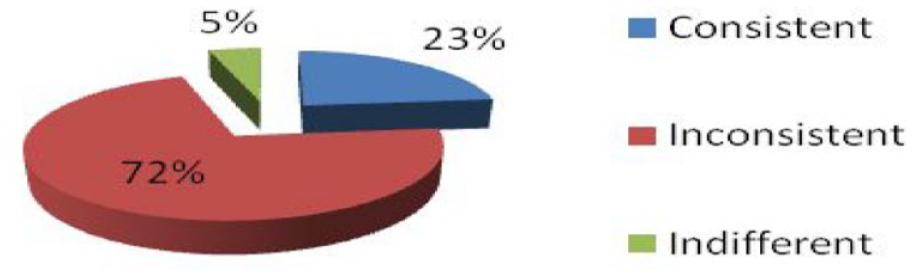
Agricultural policy framework and cassava processing in Nigeria.
Level of mechanization affecting cassava processing in Nigeria
Mechanization is critical to improving cassava processing beyond the capacity of human labor. Mechanization for cassava processing includes the use of powered graters, cassava washing machines, peelers, and chippers among others (Food and Agricultural Organization of the United Nation, 2008). In 1972, due to the inherent advantages of mechanization, the FGN established the NCAM Nigerian Institution of Agricultural Engineers, in 2013. This was aimed at fast-tracking mechanization with the intent to boost processing to ensure food production in Nigeria. The FGN also ensured a duty-free importation of spares for processing machinery in Nigeria (Kienzle et al., 2013). Despite these efforts, mechanization has not boosted cassava processing in Nigeria due to the high cost of mechanization. For instance, from 2012 to 2016, the average cost of powered graters and cassava peelers increased by about 35% (Ozumba, 2017). The result of the research survey conducted on the perception of the respondents view on the level of mechanization affecting cassava processing in Nigeria is contained in Figure 3.

Level of mechanization affecting cassava processing in Nigeria.
Figure 3 shows that 73.6% of the respondents believed that the level of mechanization affects cassava processing, 21.8% were of the opinion that the level of mechanization does not affect cassava processing while the remaining 4.6% were indifferent. This buttresses the fact that mechanization is critical to cassava processing and food production. The finding was corroborated by Ozumba, who averred that mechanization is essential to boosting the efficiency, quality, and quantity of cassava processing in Nigeria (Ozumba, 2017). Availability of mechanization would increase cassava processing and boost food production toward socioeconomic development in Nigeria. Thus, agricultural mechanization is a significant consideration in cassava processing to boost food production with attendant positive implications on socioeconomic transformation and enhanced national development in Nigeria.
Infrastructure and cassava processing in Nigeria
Infrastructure is critical to enabling, sustaining, and enhancing conditions necessary for cassava processing to thrive to improve food production and enhance national development. The availability of good infrastructure is essential to boost cassava processing and food production for socioeconomic transformation leading to national development in Nigeria. Infrastructure such as good roads and electricity are critical to cassava processing. The FGN has made efforts at improving the level of infrastructure in the country. For instance, from 2011 to 2016, it expended about N685 million on 12 rural road projects in some cassava producing States across the country, covering about 232 km (Federal Road Maintenance Agency, 2017). Similarly, the FGN also embarked on a Power Sector Reform Roadmap by unbundling the Power Holding Company of Nigeria to achieve better service delivery. However, Nigeria’s rural electrification remains well below the international benchmark of 70% coverage, with over 60% of the populace not connected to the national grid for power supply (Eke, 2014). These low levels of infrastructural development have been adduced to inadequate capital investment in infrastructure (Ayeni, 2016). For instance, from 2012 to 2015, the actual capital investment in road infrastructure was below the appropriated amounts by 48% (Federal Road Maintenance Agency, 2017). The result of the research survey conducted on the perception of the respondents view on the state of infrastructure affecting cassava processing is indicated in Figure 4.

State of infrastructure affecting cassava processing in Nigeria.
Figure 4 reveals that about 74.01% of the respondents opined that the state of infrastructure affects cassava processing, 19.03% opined that the state of infrastructure does not affect cassava processing, while 6.96% were indifferent. This buttresses the fact that infrastructure is key to cassava processing in Nigeria. The finding is also in agreement with Affiku, who asserts that infrastructure is critical to the improvement of cassava processing in Nigeria (Affiku, 2017). Adequate infrastructure would ensure increased cassava processing and boost food production toward socioeconomic transformation. Therefore, infrastructure is a critical consideration in cassava processing toward food production with attendant positive implications for socioeconomic transformation and enhanced national development in Nigeria.
Agricultural technical experts and cassava processing in Nigeria
Agricultural Technical Experts (ATE) are essential to the application of technological innovations to improve cassava processing. The availability of ATE would provide the multiplier effect required in cassava processing to ensure increased food production toward national development. In Nigeria, the Federal Institute of Industrial Research, Oshodi (FIIRO) was mandated to conduct and coordinate national research efforts on cassava processing, whereas the NCAM was to develop machinery for agricultural mechanization for cassava. Both FIIRO and NCAM have produced varieties of cassava processing equipment as well as provide ATE to support cassava processors on the proper utilization of such equipment (Integrated Cassava Project, 2017). Due to the availability of locally fabricated cassava processing equipment, about 3,000 individuals have taken to cassava processing and cassava value chain in Nasarawa State (Daramola, 2017). However, despite the availability of cassava processing equipment, cassava processing in Nigeria is still low due to inadequate extension agents for cassava processing (Okechukwu, 2017). For instance, from 2012 to 2016, there was a shortfall of over 200% in the ratio of ATE to farmers in Nigeria (Ayeni, 2016). The result of the research survey conducted on the perception of the respondents on the availability and accessibility to ATE affecting cassava processing is indicated in Figure 5.

Agricultural technical experts and cassava processing in Nigeria.
Figure 5 reveals that an overwhelming 72.85% believed that availability and accessibility to ATE affect cassava processing in Nigeria, 19.03% were of the opinion that availability and accessibility to ATE are of no importance, while 8.12% were indifferent. This reinforces the fact that the availability and accessibility to ATE are key to cassava processing in Nigeria. The finding is in tandem with Okechukwu, who posits that ATE is vital to improving cassava processing levels in Nigeria (Ayeni, 2016). Thus, the availability of adequate ATE would boost cassava processing and food production in Nigeria. Therefore, ATE is a major consideration in cassava processing toward food production with attendant positive implications on socioeconomic transformation and enhanced national development in Nigeria.
Access to capital and cassava processing in Nigeria
Access to capital is essential to boosting cassava processing and food production toward national development. Improved access to capital would leverage cassava processing as a means of food production. The FGN provided capital with different modalities for cassava processing through several schemes. For instance, in 2009, it allocated about N200 billion for the Commercial Agricultural Credit Scheme with one of the objectives to promote cassava processing ventures at a maximum interest rate of 9% credit facility (Guidelines for Commercial Agriculture Credit Scheme, 2014). As of 2016, due to the revolving nature of the credit scheme, the sum of N336 billion has been accessed (Abdulaziz, 2017). Due to the availability of capital, many individuals have shown interest in cassava processing and value chain. This Scheme has contributed to food production, generated employment, and marginally reduced poverty level. Despite these laudable efforts, access to capital by cassava processors has been low. This has been attributed to stringent credit facility conditions (Momoh, 2017). For instance, from 2012 to 2015, the total credit facilities accessed by small- and large-scale cassava processors was less than 50% of the total credit available (Abdulaziz, 2017). The result of the research survey conducted on the perception of the respondents view on access to capital affecting cassava processing is indicated in Figure 6.

Access to capital affecting cassava processing in Nigeria.
Figure 6 indicates that 74.71% of respondents opined that access to capital affects cassava processing in Nigeria, 16.71% were of the opinion that access to capital is not relevant, while 8.58% were indifferent. This reinforces the fact that access to capital is crucial to cassava processing and food production in Nigeria. The finding is in agreement with Chibueze, who posits that access to capital is essential to boosting cassava processing and food production in Nigeria (Chibueze, 2016). Thus, access to capital is a critical consideration in cassava processing and food production with attendant positive implications on socioeconomic transformation and enhanced national development.
Challenges Militating Against Cassava Processing in Food Production for Enhanced National Development in Nigeria
Some challenges are militating against cassava processing for enhanced national development in Nigeria. The challenges include policy inconsistency, the high cost of mechanization, and inadequate capital investment in infrastructure. Others are inadequate extension agents as well as stringent credit facility conditions. The responses of respondents are discussed in subsequent paragraphs.
Policy inconsistency
Policy inconsistency is a hindrance to cassava processing which negatively impacts on food production with negative consequences for Nigeria’s national development. Policy inconsistency on cassava processing has resulted in poor use of resources and slow achievement of specified objectives. For instance, the President Obasanjo’s government backed up a 10% HQCF inclusion in flour policy, President Yar’Adua reduced the ratio to 5%, and President Jonathan’s government pursued a 40% High Quality Cassava Flour (HQCF) inclusion policy (Orji, 2016). Currently, President Buhari is advocating for 16% HQCF inclusion policy (Orji, 2016). These inconsistent cassava policies discourage cassava processors and reduce the market viability of cassava investments resulting in low level of cassava processing in Nigeria (Chibueze, 2016). This policy inconsistency on cassava has been adduced to the absence of an institutional capacity to formulate and implement effective cassava policies. The result of the research survey conducted on the perception of the respondents on policy inconsistency limiting cassava processing in Nigeria is indicated in Figure 7.

Access to policy inconsistency limiting cassava processing in Nigeria.
Figure 7 indicates that 74.01% of respondents opined that policy inconsistency limits cassava processing in Nigeria, 19.03% were of the opinion that it does not matter, while 6.96% were indifferent. This indicates that policy inconsistency on cassava is detrimental to cassava processing and food production in Nigeria. This view was corroborated by Bankole, who posits that policy inconsistency is the bane of cassava processing in Nigeria (Bankole, 2016). The policy inconsistencies on cassava processing have resulted in considerable losses to cassava processors and limited food production with adverse consequences on national development. Thus, policy inconsistencies on cassava have hampered cassava processing, reduced food production with an attendant negative impact on the socioeconomic transformation, and national development in Nigeria.
High cost of mechanization
The high cost of mechanization has led to low level of cassava processing. This has negatively impacted on food production level and hindered national development. The exorbitant cost of mechanization has resulted in reduced patronage in the purchase of cassava processing equipment. For instance, the average cost of a locally fabricated 5-hp self-action grater is about N98,000 and a locally fabricated peeler costs about N2,864,097.00 (Integrated Cassava Project, 2017). The high cost of purchasing this equipment has been adduced to the absence of a subsidy scheme on cassava processing equipment. The result of the research survey conducted on the perception of the respondents view on the high cost of mechanization limiting cassava processing in Nigeria is indicated in Figure 8.

High cost of mechanization limiting cassava processing in Nigeria.
Figure 8 indicates that 82% of respondents opined that high cost of mechanization limits cassava processing in Nigeria, 10.5% opined that it does not limit cassava processing, while 7.5% were indifferent. This indicates that high cost of mechanization hinders cassava processing and food production in Nigeria. This view was corroborated by Ayotunde, who posits that the high cost of mechanization has adversely affected cassava processing and food production in Nigeria (Ayotunde, 2016). This shows that high cost of mechanization has hampered cassava processing and limited food production with an attendant negative implication on national development in Nigeria. Thus, the high cost of mechanization is an impediment that hampers cassava processing and food production with a negative impact on the socioeconomic transformation, and national development in Nigeria.
Inadequate capital investment in infrastructure
Nigeria’s inadequate capital investment in infrastructure undermines the quality and availability of infrastructural facilities required to improve cassava processing in Nigeria. Inadequate capital investment in infrastructure has led to bad roads and inadequate electricity supply. These bad roads which connect most cassava farms make it difficult for harvested cassava tubers to be quickly transported from the farms to the processing factories or markets. Nigeria has a road network of over 200,000 km, of which the rural roads account for over 83% (Compendium Report on Road Infrastructure and Related Development in Nigeria, 2017). In 2014, out of the N163 billion budgetary allocations for rural road infrastructure development in Nasarawa, Edo, Enugu, and Oyo, only N132 billion was released with a shortfall of N31 billion unimplemented (Compendium Report on Road Infrastructure and Related Development in Nigeria, 2017). These financial shortfalls have proven to have dire negative consequences on the development of rural road infrastructure. Similarly, it is estimated that the cost of providing electricity to about 28.5 million rural households in Nigeria is about N13.11 trillion (Ohiare, 2015). The inadequate capital investment in infrastructure has been attributed to a lack of private sector participation in infrastructure development in Nigeria. The result of the research survey conducted on the perception of the respondents view on inadequate capital investment in infrastructure limiting cassava processing is indicated in Figure 9.

Inadequate capital investment in infrastructure limiting cassava processing in Nigeria.
Figure 9 indicates that 85% of respondents opined that inadequate capital investment in infrastructure limits cassava processing, 12% opined that inadequate capital investment does not limit cassava processing, while 3% were indifferent. This indicates that inadequate capital investment in infrastructure deters cassava processing and food production in Nigeria. This view was corroborated by Orji, who posits that the inadequate capital investment in infrastructure has limited cassava processing and food production in Nigeria (Orji, 2016). This has further hampered cassava processing and limited food production with an attendant negative implication on national development in Nigeria. Thus, inadequate capital investment in infrastructure impairs cassava processing and food production with an attendant negative impact on the socioeconomic transformation, and national development in Nigeria.
Inadequate extension agents
Cassava processing efforts often suffer from inadequate extension agents. This has hampered food production and hindered national development in Nigeria. The ratio of extension workers to farmers in Nigeria is 1:3,011 as against the 1:1,000 recommended by Food and Agriculture Organization of the United Nations, thus indicating a shortfall of over 200% (The Food and Agricultural Organization of the United Nations, 2017b). Nigeria’s ratio worsened from 1:2,132 in 2009 to 1:3,011 in 2015 due to inadequate recruitment thus resulting in about 67.2% of the extension agents averaging 49 years of age (Haruna & Abdullahi, 2013). This situation has negatively affected the availability of cassava processing innovations to the farmers. Inadequate extension agents have been adduced to the absence of extension service centers for cassava processors. The result of the research survey conducted on the perception of the respondents view on inadequate extension agents limiting cassava processing is indicated in Figure 10.

Inadequate extension agents limiting cassava processing in Nigeria.
Figure 10 indicates that 82% of respondents opined that inadequate extension agents limits cassava processing, 12% opined that it does not, while 6% were indifferent. This indicates that inadequate extension agents hinder cassava processing and food production in Nigeria. This view was corroborated by Bankole, who posits that the inadequate extension agents have negatively affected cassava processing and food production in Nigeria (Bankole, 2016). This has further hampered cassava processing and limited food production with attendant negative implications on national development in Nigeria. Thus, inadequate extension agents impair cassava processing and food production with an attendant negative impact on the socioeconomic transformation, and national development in Nigeria.
Stringent credit facility conditions
Stringent credit facility conditions result in low access to capital, which limits cassava processing efforts and food production levels in Nigeria. The unwillingness of formal financial institutions to grant loan facilities to the agricultural subsector of the economy, which it considers a high investment risk area, hinders cassava processing. This unwillingness is often associated with stringent demands from agroprocessors. For instance, in 2015 the cost of borrowing varied from about 12% to 22% among the commercial banks including the Bank of Agriculture (BOA) (Obasi, 2015). Micro-agricultural projects attracted an interest rate of 12%, macro-agricultural projects were granted loans at a rate of 14%, and nonagricultural projects paid interest of 20% (Obasi, 2015). This implies that a cassava processor who is borrowing the sum of N500,000.00 for 1 year, for instance, would have to pay the N70,000.00 as interest on the loan. This interest is quite high and discourages cassava processors. The stringent credit facility conditions have been attributed to the absence of a loans revolving scheme for cassava processors and farmers. The result of the research survey conducted on the perception of the respondents view on the impact of stringent credit facility conditions on cassava processing is indicated in Figure 11.

Stringent credit facility conditions limiting cassava processing in Nigeria.
Figure 11 indicates that 87% of respondents opined that stringent credit facility limits cassava processing, 10% opined that it does not, while 3% were indifferent. This indicates that high interest rates and stringent credit facility conditions limit cassava processing and food production in Nigeria. This view was supported by Chibueze, who posits that the stringent credit facility conditions offered by banks and financial institutions have discouraged cassava processors from accessing such credit facilities, which limits cassava processing and food production (Chibueze, 2016). Thus, stringent credit facility conditions have inhibited cassava processing and limited food production with attendant negative implications on national development in Nigeria.
Conclusion/Policy Recommendations
Essentially, effective food production entails a clear policy framework that articulates intensive mechanization, processing methods, availability of technical expertise and resources, as well as supporting infrastructure to meet targets. Based on the findings of our study, agricultural policy framework, level of mechanization, infrastructure, agricultural technical experts, and access to capital are the major factors that affect cassava processing in Nigeria, while the challenges are policy inconsistency, high cost of mechanization and inadequate capital investment in infrastructure, inadequate extension agents, as well as stringent credit facility conditions. This study, therefore, concludes that for cassava to play a major role in Nigeria’s national development, government must ensure that there is a full exploration of all opportunities that have the potential to yield strong advantage. This could be achieved through a holistic assessment of the cassava process that is geared toward improving the quality of life and well-being of citizens based on Nigeria’s comparative advantage in cassava production and processing.
Despite formulating several agricultural policies over the years to boost food production through cassava processing, policy inconsistency has been the bane to actualizing this objective. In as much as these previous policies and the ATA have provided for mechanization as integral to increasing food production, these efforts have been hampered by the limited access to cassava processing equipment occasioned by high cost of these equipment. For instance, from 2012 to 2016, the average cost of powered graters and cassava peelers increased by about 35%. Similarly, the cassava processing and food production have been hindered due to the low level of infrastructural development in Nigeria. For instance, from 2012 to 2015, actual capital investment in road infrastructure was below the appropriated amounts by 48% in Nigeria.
In addition, the availability of agricultural technical experts has equally been stalled by low ratio of extension agents to cassava processors which have impacted negatively on cassava processing, reduced food production levels, and hindered national development. For instance, from 2012 to 2016, there was a shortfall of over 200% in the ratio of agricultural technical experts to farmers in Nigeria. Furthermore, low access to capital by cassava processors has negatively affected cassava processing and food production for national development. From 2012 to 2015, the total credit facilities accessed by small- and large-scale cassava processors in Nigeria was less than 50% of the total credit available.
Nevertheless, cassava production in food production has contributed to national development. It has improved food security and elicited employment generation. For instance, in 2016, the contribution of cassava processing to job creation from the study states was estimated to be over 850,000 jobs. Furthermore, cassava processing in food production has enhanced socioeconomic development by reducing poverty levels in Nigeria while GDP has also increased substantially as a result of cassava processing in food production for national development. The FGN interventions have assisted cassava farmers to increase their level of processing and the earnings have helped to reduce rural poverty from 67% to 62%. Since 2010, it has also enabled agriculture through increased food production to account for over 75% of nonoil aggregate GDP. Strategies such as setting up of a national cassava flour development and implementation agency, establishment of cassava processing equipment subsidy scheme, and establishment of cassava processing extension service centers are recommended for effective enhanced food production in Nigeria which thus improve national development.
Footnotes
Declaration of Conflicting Interests
The author(s) declared no potential conflicts of interest with respect to the research, authorship, and/or publication of this article.
Funding
The author(s) received no financial support for the research, authorship, and/or publication of this article.
