




Abstract
An overwhelming majority of inhabitants in Ho Chi Minh City use motorbike as their primary means of transport, causing severe urban traffic congestion. As an effort to combat congestion, the local and central government started constructing the first urban railway line (metro) in 2009. In this study, travel demand for different modes of transport was investigated using discrete choice experiment. In addition to conventional choices such as motorbike and bus, we included new technology-assisted taxi service and the first urban railway (Ben Thanh–Suoi Tien) as a hypothetical choice. The data set contains 267 respondents spanning 19 communes across the railway. The results pointed out that mode choice is influenced by both total travel time and total travel cost. The findings also highlighted the importance of transiting time and transiting cost in public transports. In terms of welfare, metro users are willing to pay 976 and 667 VND for a minute reduction of transiting time and transporting time, respectively. When a motorbike user switches to metro mode, monetary welfare of that individual rises by approximately 56,000 VND.
Keywords
Introduction
Urban traffic congestion is a major concern in Vietnam. As major cities develop, the number of private vehicles, comprising motorbikes mostly, rises rapidly. Reportedly, the volume of registered vehicles in Ho Chi Minh City (HCMC), one of the largest cities in Vietnam, witnessed an approximately fivefold increase from 1.1 to 5.43 million in the period of 2000 to 2011 and is expected to rise by 2 million, reaching 7.43 million by the end of 2015 (Department of Transport HCMC, 2016). Given that HCMC hosted 8.22 million inhabitants in 2015 (HCMC Statistical Office, 2016), private vehicle ownership reached 900 vehicles per 1,000 persons. This figure is comparable with that of Bangkok, which was at around 1,000 vehicles per 1,000 persons in 2016 according to the work by Attavanich (2017), and is only surpassed by Malaysia, which experienced a car boom recently with around 1,300 private cars per 1,000 inhabitants in 2014 (World Bank, 2015). In addition, the space allocated for transportation in HCMC, in comparison with that of other cities worldwide, on average (20%-25%), is approximately 7.8% lower and is expected to expand very slowly. Evidently, growth of motorbike seems to outpace the development of infrastructure, resulting in the inability of transportation system to satisfy the need for the transportation space. On the contrary, the subsidized public transport service has suffered from low utilization rate and its quality is insufficient for comfortable travel every day. Barely 5% of the city population utilizes this service and most citizens choose motorbike as their main transportation mode (Vu & Phuong, 2013). This number is quite low in comparison with a peer city characterized by high volume of two-wheelers, Jakarta, Indonesia, where 27% of trips have already been handled by public transportation (Amin et al., 2017).
The Ho Chi Minh City Urban Railway project (Metro HCMC) proposed in 2002 has been expected to be a key solution in resolving the traffic congestion issue. The project comprises six lines covering the whole city and neighboring regions and will be implemented based on build–operate–transfer (BOT) and public–private partnership (PPP) basis. Currently, two first metro lines are in construction, since 2009, and the first line was originally planned to be in operation in 2015 (Asian Development Bank, 2010). However, arising financial and administrative difficulties, namely, cost elevations and slow disbursement from the national budget, had delayed the estimated project completion date to 2020. Initially, the line was estimated to cost around 17,388 billion VND. However, subsequent adjustments have pushed the figure to 57,829 billion VND, which is approximately US$2.491 billion (Management Authority for Urban Railways, 2019). This first metro line consists of 14 stations with the total length of 19.7 km, spanning from the center of the city to the river-separated northeast side of the city, where an inter-province bus station (Suoi Tien) is located. The superiority of this new transport mode is undeniable. Apart from time-saving functionality, the metro serves as stimuli to assist the expansion to the suburb of the city. This role is especially important in the current situation of the inundated downtown. According to the Technical Assistance Consultant’s Report issued by Asian Development Bank (2010), provided that all six metro lines are successfully implemented in 2025; the total daily ridership for the whole system at that time is expected to reach 2,808,000, of which the first line occupies 286,000, with the total peak loading of 108,300 passengers. In addition, the railway utilization percentage will massively shift from 0% to 30.7% in 2025. However, given that the majority of HCMC inhabitants is utilizing motorbike as the primary mode, the feasibility, modal shifting capability, and economic benefits of the railway project should be assessed. This raises the need for studies investigating the behavior of urban commuters from the demand side and welfare of time saving of the new service (Román, Martín, Espino, Cherchi et al., 2014). Therefore, this study aims to model choice of travel modes in HCMC, which include traditional modes, metro, and the newly emerged technology-assisted taxi service, using discrete choice experiment (DCE) method. In addition, willingness to pay (WTP) for mode attributes and welfare gained when shifting to metro will also be calculated. The result is expected to assist policy makers, urban planners, and administrators of the railway project in terms of forecasting demand, setting the price for the metro service, and planning for public transportation for the city in the future.
Review of Some Studies Related to Mode Choice
Modeling public sector transport choice is a long-established and variedly approached topic in the literature with various methods of analysis. Despite that most research in this topic agreed that service quality of the public transport is crucial in determining passengers’ satisfaction and intention to utilize. One of the typical studies that deal with the intention to utilize public transport is the work by Sánchez, Gázquez, Marín, and Sánchez (2007) in which a traditional SERVPERF scale was adopted to examine the relationship between service quality dimensions and intention to use public transport in Spain. The intention was measured using a 3-item scale and an ordered logit model was then employed to analyze the empirical data. Overall, the results gave the insight that all service quality dimensions of the SERVPERF scale were significant in predicting the public transport behaviors of customers. Although the study was only limited to analysis of behavior concerning the public bus, it did suggest that service qualities such as vehicle availability and punctuality are important when it comes to modeling public transport choices.
To overcome the inherent weaknesses of the traditional SERVQUAL and SERVPERF scales, Eboli and Mazzulla (2009) devised a new scale for determining the overall satisfaction of customers using public transit services. The scale comprises 11 service aspects (such as comfortability, perceived safety, and fare) and identifies important aspects that influence customer satisfaction, which is crucial for transportation operators and policy makers to improve the existing public transport system. In addition, an aggregated index could be calculated, which could be used to compare service qualities of different transits and public transport modes. del Castillo and Benitez (2013) further elucidated the relationship between the customers’ satisfaction and rating of individual items in evaluation scales by proposing procedures of inferring the global satisfaction in public transport using different types of models. The study also revealed that indicators influencing satisfactions include line reliability, adequacy of bus stop, punctuality, line connectability, and bus frequency.
Such quality-related attributes of public transport were incorporated in later studies. Román, Martín, and Espino (2014) conducted a choice experiment consisting of different public bus line choices in Spain with the choice sets assembled based on different dimensions of quality such as travel time, travel cost frequency, comfort, and cleanliness. Although customers’ demographic characteristics were not controlled in this study, public buses’ attributes, especially total travel time and comfort, were discovered to be significantly influential to global satisfactions, reflected by very high WTP for 1 hr of delay time and service improvement. In addition, it is also suggested that customers may perceive services differently. For example, while interurban bus commuters may deem transportation comfort important, urban customers may not and consider service frequency decisive factor for their choice.
Adopting a different method from Román, Martín, and Espino (2014), Guirao, García-Pastor, and López-Lambas (2016) proposed the use of ranking of quality attributes to determine the attribute importance and incorporated personal characteristics such as age, gender, travel frequency, and purpose into the study. The scenario in the study is an urban bus route in Madrid, Spain. To explore the relationship between ranking items, person-specific characteristics, and quality factors, a SEM model was employed. In general, the proposed approach showed good suitability in identifying the most and the least important item determining service quality while being easily incorporable into surveys administered by bus operators. In addition, the ranking method could also significantly reduce the questionnaire length.
In HCMC, there are several mode choice studies involving urban transportation. The latest study investigating the metro choice behavior of inhabitants in HCMC is the work by Chinh and Son (2017). By employing a choice experiment, the study pointed out that seat availability on metro, time, and cost reduction are important predictors of metro utilization probability. Welfare of a minute reduction of travel time and seat availability are 0.606 and 4.106 thousand VND, respectively. In addition, welfare of an individual will be improved by 64.3 thousand VND/trip when he or she switches to metro instead of using motorbike. The study also gives some metro demand estimates with respect to ticket price. To be specific, at the cost of 1,350 VND/km, approximately 50% of motorbike users will shift to metro. However, at the cost of 2,250 VND/km, the price level at which the ticket revenue will be maximized, the utilization percentage reaches 31%.
Some limitations are recognized for this study. First, the study was conducted with the hypothetical scenario that the six-line metro system had been completed. This assumption is rather strong considering the fact that apart from first two lines, other lines are quite unclear regarding starting and completion date, and this issue might potentially lead to hypothetical bias in survey responses. Second, owing to the large scope of the survey area and difficulties in calculating travel time and cost, the study excluded a measurement for transport flexibility and eliminated the possibility of transiting to the metro or bus station, effectively making metro transportation “ideal.” In other words, it was assumed that metro transportation directly transports passengers from home to the destination. This contradicts the fact that majority of public transport users often transit and thus transit availability plays a crucial role in mode choice. Third, the sample was chosen non-probabilistically and restricted to only five small regions in HCMC.
Nguyen (1999) first studied transport mode choice in HCMC using a multinomial logit model to infer the time value of commuters. This result is one of the components used to compute the possible congestion tolls for HCMC. Although the specification of the model was quite simple, it was capable of incorporating both mode-related and individual-related characteristics because of its approach of taking trips as units of analysis. However, the model excluded public transport as possible choices.
Public modes of transport were first added in the work by Ho and Yamamoto (2011). To be specific, in this study, a generalized nested logit was constructed with 10 different combinations of private mode choice as dependent variables and bus availability as an independent variable. The results indicated that apart from income, perceived bus characteristics, such as convenience and bus coverage, influenced vehicle owning behavior of households. Although this study did not examine mode choice behavior of individual per trip traveled, but behavior of vehicle purchasing, it provided an insight that perceived public transport, in terms of quality, could affect households’ moving preference and in turn incite them to own vehicle selectively.
Some other interesting conclusions could also be drawn from another study of Tuong (2014) regarding moving behavior. To be specific, this study examined determinants of mode choice using descriptive statistics on a small sample in HCMC. The study suggested that inhabitants’ motorbike preference is irrelevant to environmental and social concern, but is responsive to cost and time measurements. In addition, perceived instrumental value of public bus was not highly valued. Therefore, a more developed and convenient public transport system is essential for the city in the future. The importance of time and cost in mode choice selection is also emphasized in a study by Nguyen, Zhou, and Yu (2015). The study employed a binary logit model to analyze mode choice of HCMC inhabitants with private mode and public mode choice as dependent variables. In addition, the study also conducted sensitivity analysis to find out how changes in travel cost and parking cost affect choice probability. The results exhibited a high-magnitude impact of travel cost and a moderate impact of travel time on public transport choice.
Hoai and Tuan (2015) examined determinants of private mode choice (walking, motorbike, and bicycle) in HCMC and Can Tho City using a multinomial logit model with a sample of 339 respondents (200 in HCMC and 139 in Can Tho City). In this study, perception regarding environment, policy response was included alongside demographic variables, income, and vehicle ownership. Similar to other studies, the results found significant impacts of time and cost on mode choice. In addition, perception variables were found to be important predictors. The study suggested that motorbike-contracting policies might incite regular commuters to change into “green” modes such as walking or bicycle.
Method and Sampling
The main method employed in this study is DCE. This method is selected for following reasons. First, DCE is the popular method when it comes to estimating demand and valuing goods and services, many of which could be inaccessible or hypothetical, such as metro (Lancsar & Louviere, 2008). Second, DCE allows for choice repetition for each respondent to generate a larger data set and, in turn, more robust estimates (Román, Martín, Espino, Cherchi et al., 2014). To be specific, while nonexperimental method only collects data for one choice each respondent, DCE, on the contrary, elicits multiple choices to a respondent and effectively creates a larger data set. This is especially useful considering the difficulty of sampling in a very large population of HCMC. Third, DCE has the ability to draw forth monetary benefit (WTP) for individual characteristics and the hypothetical scenario as a whole, which could be potentially used as inputs in project appraisals and policy-making process (Bateman et al., 2002; McIntosh, 2006).
DCE method rooted in the attribute theory of consumers (Lancaster, 1966) and random utility theory (RUT). Assuming the travel mode choice follows utility maximization rule of RUT economic framework; in other words, when faced with J modes of travel, decision makers will choose the mode yielding the higher utility U compared with that of other alternatives, the probability that an nth individual will choose mode i instead of mode j, according to Train (2009), will be

where V represents the deterministic part V, or indirect utility, of the utility U and is a linear function of coefficient vector β and travel mode attribute vector S. Mathematically,

where ASC stands for alternative-specific constant representing effects unrelated to alternative attributes, but are impactful to the indirect utility function. S and β both vary by travel mode and β is an individual constant.
The aforementioned conventional conditional logit specification is unable to accommodate individual characteristics owing to invariance of mode attributes across choices. Therefore, this model could be extended by adding linear terms of individual specifics as follows:

where xi is the vector of individual specifics. To allow estimation of this model, a dummy which equals to 1, if the observation chooses the mode i, will be generated which interacted with xi. This procedure is to disallow xi to vary across alternatives. Both models could be estimated with the maximum log-likelihood procedure. From the model results, WTP for each attribute could be calculated following utility difference theory by dividing utility gained/lost of that attribute by marginal utility of income (Haab & McConnell, 2002). To be specific, gained/lost welfare of attribute k equals to

where β k and βincome are the coefficients of the attribute k and income variable, respectively.
Regarding sampling strategy, this study employed stratified random sampling method and defined inhabitants living nearby the first metro line as the population, as opposed to a previous study (Chinh & Son, 2017) where the whole city is considered for surveying. Advantage of this definition is twofold. First, it could limit hypothetical bias as inhabitants in this restricted area are likely to benefit from the implementation of the first metro line. Second, such respondents are close to metro stations and will seriously consider this mode when facing with choices consisting of it, rather than promptly rule it out as with respondents who live very far from the metro line. This is to resemble a situation of a city covered with metro lines in the future.
For stratified random sampling, the area surrounding the first metro line is broken down into 19 different strata. Each stratum is defined as an administrative commune. This separation is to simplify the process of determining the number of respondents and allows for random household selection from the household list of Communal People’s Council in each stratum. In each household, either one or two members who have the highest travel frequency will be selected for surveying. To limit sample selection bias, the sample will include individuals with different education, income, and, most importantly, diversified transportation demands.
Number of respondents in a stratum is determined in proportion to the population and metro accessibility ratio over those of 19 strata. In other words, communes which are more populous and/or more geographically open to metro will have greater numbers of sampled respondents compared with those of other communes. This strategy is to correspond to the fact that less populated and/or remote areas, such as District 9, are expected to have few metro users. In this study, geographical proximity from the commune to the nearest metro station is chosen as a proxy for metro accessibility. To be specific, Figure 1 shows the map of the surveyed area and calculation of the number of respondents for each commune (Tables 1 and 2).

Map of the Railway No. 1 (locations of 14 stations are numbered from 1 to 14).
The Sampled Communes and Corresponding Determinations of the Number of Respondents.

Note. Due to the lack of communal population data, P of a commune is estimated by multiplying its population density by district (HCMC Statistical Office, 2017) and area of the commune. D, measured in meters, for each commune is calculated by averaging distances of 100 randomly-generated positions in that commune to their nearest metro stations using Google Maps.
Population and Land Use Characteristics of Districts in the Sampling Area.

Source. Obtained from HCMC Statistical Office (2017).
Experiment Design and the Survey
When it comes to commuting in a city with many travel alternatives, such as HCMC, styles vary. An office worker may directly travel to the workplace using motorbike without transit. On the contrary, an impoverished student will need to utilize multiple transportation means to reach the destination. Such means could be bus, which has low cost but takes long to travel, or walking, which often acts as the transit from home to bus station and from station to destination. Furthermore, consideration of new transport means, such as metro or technology-assisted taxi service (commonly referred to as Grab or Uber services—hereinafter Grabbike), may add variety to the existing moving choices and, owing to newly arisen attributes, complicate the modeling process. For example, parking cost attribute cannot be present when considering a Grabbike trip, or metro railway, thanks to its high level of mechanization, virtually could not cause any delay in delivering transportation service. Therefore, before attempting experiment design, generalization of urban transportation is necessary. Arentze and Molin (2013) classified urban transportation into three main types and disaggregated them into phases with associated attributes. Given the context-specific characteristics of HCMC, this study adapts this framework and adds technology-assisted taxi service as a new type of transport (Figure 2).

Categorization of transportation modes in Ho Chi Minh City.
Given the aforementioned notion, this study establishes and elaborates the interview process as follows. The direct interview process comprises three main stages and is adapted from a previous study (Chinh & Son, 2017). The first part is devoted to survey moving habit of the respondent. The second part focuses on describing the metro railway project and eliciting predetermined hypothetical choice sets and the third part is to collect demographic characteristics (see the appendix for the questionnaire).
The first part mainly asks questions regarding moving habit as habit is an important element in forming a travel choice of an individual. If one develops strong habit to a particular mode of transport, he or she could make the moving decision without going through the situation assessment and information seeking processes. On the contrary, if an individual has weak habit to virtually every available mode, that person often undergoes psychological intermediate processes before making final decision on mode of travel. Let us take an individual who has weak habit and confronts a modal choice for going to supermarket as an example. First, that individual needs to consider characteristics of the task, for example, the distance to the supermarket, weather condition, or urgency. In the next step, that person considers modal attributes of available modes, such as relative velocity, comfortability, convenience, to make a final choice.
To measure habit, self-reported frequency of past modal choice could be used. However, it is suggested that this approach is ineffective for two reasons (Verplanken, Aarts, & Van Knippenberg, 1997). First, bias may arise because of difficulties in retrieving accurate information from the respondent’s memories. Second, the number of modal use may be biased by availability and representativeness. For that reason, this study adopted a habit measurement approach suggested by Verplanken et al. (1997). To be specific, in the first stage of the interview, respondents will be presented with various general travel purposes (e.g., go to work, go to coffee shop, meet friends) and are requested to quickly select the mode which will be utilized for that particular purpose. The frequency of selection of a mode across these quick questions represents the “strength” of that mode. If a mode was not chosen at all, that mode would not be considered as a mode of habit of that respondent.
The second stage of the survey involves in conducting choice experiments with the respondent. First, the description of the first metro line including specific metro characteristics, images of train carts, and a detailed map of metro lines will be given to the respondent. Subsequently, the respondent will be requested to make choices of transportation in a hypothetical trip from home to an actual destination on the map. To be specific, 12 choice sets, with each choice set comprising two choices, will be elicited and the respondent will choose one modal choice in each set. The hypothetical trip will be an actual path from home to one of four prespecified destinations on the maps (Thu Duc Market in Linh Chieu commune, Hang Xanh Circus in Commune 21, Suoi Tien Park in Tan Phu commune, and Turtle Lake in Ben Nghe commune). In each interview, a destination will be chosen so that the need of using a travel mode when travel on the hypothetical trip and the distance variation in the sample are ensured. Choice sets are generated using random design technique. In total, there are six possible combinations of two modes from four available modes. Each combination is repeated once resulting in 12 choice sets in one survey session. Each combination (or choice set) will have its attributes randomly selected from Table 3 (see the appendix for details of the survey and choice sets).
Means of Transport Attributes and Associated Levels Forming Choice Sets.

Note. US$1 = 22,895 VND as of February 2019.
To assemble related modal attributes for the questionnaire, this study defines modal attributes based on the proposed moving frameworks and constructs their associated levels (average velocity of various modes, costs of moving) using results from a prior study and a focus group (Nguyen, 1999). In the focus group discussion, modal attributes and inflation-adjusted costs are proposed and discussed to produce three levels of cost, which will be subsequently combined to form choice sets. Detailed attribute levels are summarized in Table 3.
Clearly, the described elicitation procedure causes every interview session to be changeable and different depending on the geographical location of the respondent; therefore, it would be impossible to conduct the survey with paper questionnaire instrument. Instead, to facilitate the survey process, distance calculation, choice set generation process, and data inputting will be preprogrammed with MS Excel and administered on a portable device.
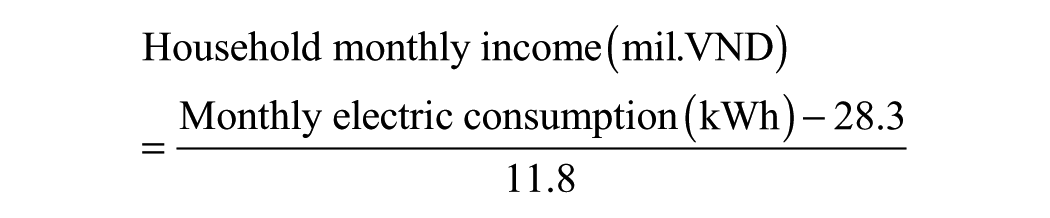
The third and final step aims to collect demographic characteristics of the respondent including age, education, income, and motorbike license ownership. In addition, to confirm the sensibility of income, a question regarding electric bill is also included. Accordingly, the observed relative relationship between household electric consumption and income could be described as follows (Ha-Duong & Nguyen, 2017):
Analysis Results
After filtering out inappropriate responses, the final data set consists of 267 respondents. Regarding modal choice, with four travel modes forming 12 choice sets, a particular mode will appear 6 × 267 = 1,602 times in the sample. The frequency of modal choice is exhibited in Table 4.
Summary of Responses to the Mode Choice Question.

Note. Percentages are with respect to total number of appearance of that mode in the sample (1,602).
Visually, frequency of motorbike choice surpasses that of the other modes, implying that motorbike is the transport mode of priority of HCMC inhabitants. Furthermore, the technology-assisted moving services, despite their early appearance in Vietnam, have been utilized extensively compared with public transports. Especially, in trips shorter than 5 km, 85% of respondents have made the service as their choice when it is included in the choice set. In longer trips, the Grabbike utilization ratio declines. To justify, for travel purposes associated with short trips, people often prefer convenience to cost to avoid physical exhaustion and annoyance of parking. On the contrary, in longer trips, customers might consider public transport as a mode, provided that it suffices in terms of both quality and expense, as represented by high choice frequency of bus and metro.
To examine impacts of individual and transport characteristics to the model choice, the general conditional logit model is estimated with motorbike as the base alternative. Corresponding to transport mode of analysis, a dummy ASC = 1 will be generated and interacted with person-specific variables. Subsequently, the model attempts to calculate WTP for each attribute and ASC. The model results are presented in Table 5.
Utility Estimates for Travel Mode Choices.

Note. WTPs are in 1,000 VND and within 95% confidence interval of Krinsky–Robb bootstrap. WTP = willingness to pay; ASC = alternative-specific constant.
At first glance, signs of transportation attributes are statistically significant and consistent with expectations. To be specifc, as time and cost of a particular travel mode rise, its utility decreases, leading to lowered choice probabilities. In addition, seat availability also positively influences mode choice. This coheres with economic theories and the reality where commuters always want to reach the destination as quickly, conveniently, and inexpensively as possible. However, the impacts of traveling time and transiting time on modal choice are different. To be specific, a minute reduction of traveling time has greater impact than that of transiting time on modal choice. The implication of this is that if two travel modes are identical in terms of attributes (cost, seat availability, total time), the mode having shorter transiting time is more likely to be selected than the mode with longer transiting time. This could be explained by the actual habit of commuters. Specifically, when utilizing a mode that requires transiting, oftentimes, the transit has low comfortability, resulting in a lower utility level compared with that of the main transport mode in a given period. The same results could also be concluded for cost attribute, whereas users will prefer the mode with inexpensive transiting cost rather than traveling cost.
In terms of welfare, users of different modes have different WTP for attributes. For a minute reduction of transiting, bus users are willing to pay 1.2 thousand VND, whereas metro users are willing to pay 976 VND. For a minute reduction of travel time, WTPs of bus, Grabbike, and metro users are 824, 778, and 667 VND, respectively. Welfare also increases by 5.897 thousand VND by ensuring seat availability in the bus during the travel period. Meanwhile, the number for metro users is 4.774 thousand VND.
Furthermore, when shifting from motorbike to Grabbike or metro service, the welfare rises by 62.7 and 56.1 thousand VND, respectively. These numbers represent monetary benefits of riding efforts, time saving, and convenience of the services. On the contrary, welfare reduces by 34.4 thousand VND when switching from motorbike to bus, implying that the service is not the preferential mode of daily users, even if its travel time and cost are identical to that of motorbike. The lost welfare stemmed mostly from the inconvenience of the bus compared with the motorbike and lost time on the bus.
Impacts of person-specific variables on utility vary across modes. For Grabbike service, income is the significant factor affecting choice probability. People who have high income tend to choose Grabbike, rather than motorbike, more than low-income counterparts. Clearly, Grabbike service is more costly to use than regular motorbike and favored by those who want convenience in parking and riding. For bus, except for motorbike habit, all other person specifics exhibit insignificant effects on this choice. For metro, consistent with a previous study, school year and income are two important predictors (Román, Martín, Espino, Cherchi et al., 2014). The effect of education on metro choice could be explained by the notion that with higher education level, customers become more receptive to benefits of the metro, instigating them to turn to metro when the system is implemented. It is also worth noting that effect of income on metro choice is larger than that of Grabbike service. In other words, holding the two modes’ paired attributes identical, decision makers tend to choose metro rather than Grabbike services.
Regarding the effects of habits, there was no clear adverse preference of motorbike users to public transport as bias to motorbike was found to be insignificant in the three alternatives, even in bus choice in which the effect magnitude was marginal. Therefore, it is difficult to conclude whether or not motorbike users favor buses. This is probably due to unfamiliarity and behavioral resistance of motorcycle users to public transport. As pointed out by Chen and Chao (2011), the habit of using private vehicles could deter the switching intention to public transport of users. In addition, compared with car users, motorbike users are more reluctant to switch to public transit. Indeed, by consulting the data set and re-running the result with different base alternatives, we found that motorbike habit was moderately associated with motorbike choice, reaffirming the Verplanken theory and suggesting that motorbike is still the preferred means of transport even with the implementation of the metro railway.
Conclusions and Policy Implications
The study attempted to model choice of different travel modes including conventional means of transport and metro, which is not yet accessible for HCMC inhabitants, using DCE method. The results pointed out that choice of transportation is significantly influenced by modal attributes including total cost, total time, and seat availability. Particularly, the study also emphasized the importance of transiting time and transiting cost of public transports, which have stronger impact than traveling time and traveling cost of the main mode. Regarding impacts of personal characteristics, choice of metro was found to be favored by individuals with higher income and school years. Influence of habitual motorbike usage seems to be profound in motorbike choice only and unnoticeable in public transports and technology-assisted motorcycle service.
The main limitation in the present study is the absence of a measure for service reliability (such as traffic congestion probability and waiting time), which is important when considering a public over private mode. To be specific, different from metro service, bus and Grabbike service both have some degree of unreliability. Buses may take very long to catch depending on the traffic conditions and users of technology-assisted motorcycle service may not be served timely due to unavailability of nearby riders. As the traffic in HCMC largely depends on location and time period of the day, quantification of the reliability measure is therefore difficult. On the contrary, elicitation of titular or qualitative indicators might be inconsequential for policy makers and confusing for respondents. Other limitations may include the occurrence of sample selection bias as this study only includes long-term residents surrounding the metro line and neglects inhabitants who often travel to workplaces in the sampling area. Based on the research results, with the purpose of reducing private transportation and promoting public transport, several measures are suggested.
First, for the metro project to be fully utilized in the future, as highlighted by the model, accessibility improvement is crucial. To be specific, the most practicable solution is to implement parking facilities near metro stations with sufficient capacity and reasonable pricing. In reality, the most convenient and cheapest transit to metro is motorbike. Without parking, motorbike is easily ruled out from transit choices, making travel by metro not possible and inciting users to revert to private vehicles. In addition, the authorities might consider opening several bus rapid transit routes to metro stations. However, in-depth coverage of this transit may be expensive and impose a further burden on the traffic. Therefore, only certain routes to important transportation centers should be considered.
Second, similar to other modes, an increase in moving cost should encourage users to turn to other public transport. The results suggested that with a higher cost of a mode of transport, passengers resort to other inexpensive modes. Therefore, when the metro system fully develops and be able to satisfy the travel need sufficiently, local authorities could consider imposing policies to discourage private vehicle transportation by rising register, parking, and infrastructure fees.
Finally, regarding promoting and targeting of the metro service, the service should cater to customers who are educated and have steady income as they are generally more open to modern technologies and are increasingly aware of benefits of new types of transport (Carlucci, Cirà, & Lanza, 2018) such as metro. As their income increases, this group, when properly incited, is more willing to utilize metro instead of motorbike, as reflected by increased income responsiveness of the metro mode. In addition, this group is usually not ticket-exempted and is willing to bear a higher cost to be provided with improved service quality such as convenience, reduced travel time, and assured seat availability.
Footnotes
Appendix
Declaration of Conflicting Interests
The author(s) declared no potential conflicts of interest with respect to the research, authorship, and/or publication of this article.
Funding
The author(s) disclosed receipt of the following financial support for the research, authorship, and/or publication of this article: The study was supported by Science and Technology Incubator Youth Program, managed by the Center for Science and Technology Development, Ho Chi Minh Communist Youth Union, the contract number is 18/2017/HĐ-KHCN-VU.
