




Abstract
This study explores the key factors that shape Vietnamese consumers' intentions to purchase organic fruits and vegetables, with a particular focus on the role of consumer trust. Analysis of data collected from 330 randomly sampled individuals in Ho Chi Minh City reveals a distinct connection between unsafe food storage and handling practices and heightened consumer caution. As a result, this increased consumer caution has contributed to a rise in the consumption of organic foods identified as ‘rau an toan’ (RAT), meaning safe produce. Structural equation modelling shows that consumers’ intention to buy RAT products is influenced by their product knowledge and, importantly, their trust in both the products and distributors like corner stores. Other significant factors include cost perceptions, feelings of convenience and concerns about health and the environment. The empirical analysis validates the salience of consumer trust in their purchase intentions towards organic products. This finding is supported using regression, pairwise and non-parametric tests, confirmatory factor analysis and structural equation modelling. Overall, this study offers valuable insights for managers on how to cultivate consumer trust and, in turn, enhance their commitment to purchasing organic fruits and vegetables through targeted marketing. In conclusion, initiatives like the RAT scheme are vital for making sustainable and organic food consumption more accessible.
Introduction
Consumer purchasing decisions are influenced by product characteristics such as brand image, quality, economical pricing and packaging (Sharma et al., 2009; Shukla et al., 2016; Suman, 2021). However, consumers are increasingly conscious of the safety aspects of food production, especially the impact of agricultural inputs (pesticides and fertilisers) on their health (Phan & Pham, 2023; Salokhe, 2019). Growing research indicates that traditional food markets are often high-risk locations for the spread of foodborne diseases, especially in developing economies (Dzudzor & Gerber, 2023). Indeed, Vietnam reported 81 occurrences of food poisoning in 2021, primarily attributed to the chemical contamination of food, inappropriate handling and processing, and inadequate preventive measures and storage (A. Nguyen, 2022). This has led to an increase in the consumption of safe fruits and vegetables (Erler et al., 2022; V. D. Nguyen, 2007).
However, traditional marketing approaches, particularly international consumer studies, have not adequately addressed consumers’ preferences for organic foods driven by their perceived added value (Essoussi & Zahaf, 2008). Authors establish that consumers in emerging economies welcome safe and sustainable food products for the same underlying reasons as consumers in developed economies (Chang & Chang, 2017; Thøgersen et al., 2015). Indeed, de Konging et al. (2015) found that the new middle class in Vietnam are beginning to engage with sustainable consumption lifestyles, moving beyond their basic needs. However, there have been few studies on organic food consumption conducted in Asian countries. Notably, despite growth in Vietnam’s organic foods sector, research has not adequately addressed the factors influencing consumers’ purchase intentions. Thus, this work theoretically examines multiple factors influencing consumer purchase behaviours to establish the importance of trust in determining the purchase of organic food products. It should also be noted that contemporary food systems in Vietnam, mirroring trends in other developing economies, often prioritise economic efficiency over outcomes related to nutrition, health and equity (Even et al., 2024). Furthermore, the increasing decline in crop diversity poses a threat to food and nutrition security in Vietnam by reducing dietary diversity and the availability of essential micronutrients to consumers (Hernandez et al., 2020). These challenges impact the affordability and accessibility of organic foods, underscoring the need for food environments that address these complexities and promote healthy consumption behaviours (Blake et al., 2021).
Studies indicate that consumers in Vietnam are increasingly willing to pay a premium for safer food. This is reportedly the primary concern for locals, a priority that even outweighs issues such as corruption and the rising cost of living (H. Nguyen, 2018; Vo & Nguyen, 2015). In response, in 2007, the Ministry of Agriculture and Rural Development (Decision No. 106/2007/QD-BNN) launched a new scheme to certify vegetables and fruits as safe for consumption. The scheme coined the term ‘rau an toan’ (RAT), or safe produce, and applies to a wide range of produce including leaves, stems, tubers, flowers, fruits, seeds, sprouts and mushrooms. RAT products are grown, harvested and processed following stringent safety procedures and are classified into three main groups (Rosen, 2014):
In recent years, the promotion of RAT products has been undertaken in cooperation with local authorities, utilising annual fairs and advertising programmes to reach farmers, retailers, and consumers (Mergenthaler et al., 2009). Specifically, an initiative implemented in Ho Chi Minh City (HCMC) between 2016 and 2020 to develop safe vegetable products positively influenced consumers’ purchase decisions regarding such products (Department of Agriculture and Rural Development, 2020).
Ho Chi Minh City was considered the ideal location for this study. As Vietnam’s crucial economic hub, it boasts a population of approximately 9.2 million people with high disposable incomes and a growing demand for fresh fruit and vegetables (General Statistics Office, 2020). Driven by residents' strong desire to control their food consumption amidst widespread safety concerns in Vietnam, Ho Chi Minh City has experienced a significant surge in urban gardening, encompassing everything from small home plots to commercial ventures (Faltmann, 2023). Also, fruits and vegetables with traceability markers, such as barcode systems and labelling, and environmentally friendly packaging are gaining popularity (Dang, 2017). However, the limited number of shops with traceability systems like the RAT scheme significantly impacts consumers’ trust and, consequently, their purchase intentions. Against this backdrop, we aim to answer the following research question: What are the fundamental reasons that determine consumers’ purchase intentions towards RAT products in Ho Chi Minh City, Vietnam? Our study offers two important contributions to existing research. First, it focuses on an under-researched consumer segment: individuals interested in organic foods within a developing economy like Vietnam. Second, it examines how consumers’ trust in retail stores and labels translates into the purchase of organic products such as RAT. Theoretically, the discussion draws upon research on consumer trust in organic foods that translates into their purchase intentions. Studies indicate that the nutritional value of food, health concerns, taste, environmental consequences and accurate labelling are key motivations for green consumers (Hansmann et al., 2020; T. T. M. Nguyen et al., 2019). The absence of these and other such attributes deters consumers who are unwilling to commit to products they cannot trust. This study addresses a significant gap in the growing research on healthier food choices by being among the first to examine the key factors that contribute to the development of consumer trust and the subsequent purchase of RAT products (Howe et al., 2022).
Literature Review and Hypotheses
A review of research on consumer purchase intentions towards green products in Asian contexts reveals the extensive use of models such as the Stimuli-Organism-Response (SOR) model, the Theory of Consumption Values, the Theory of Reasoned Action and the Theory of Planned Behaviour (Table 1). The S-O-R model has been used to explain how green marketing stimuli can influence environmental attitude, green consumption values, personal norms and environmental self-identity, which in turn can result in the adoption of innovative green products (Rivas et al., 2022). Authors who adopt the Theory of Consumption Values establish that functional, emotional, social, epistemic and conditional tenets influence consumers’ environmental buying choices (Bahoo et al., 2024). The Theory of Reasoned Action (TRA), a model widely used in consumer behaviour studies, is applied to examine organic food consumption. Authors often combine elements of the TRA with environmental concerns for this purpose (Irianto, 2015; Kumar et al., 2023; A. Singh & Verma, 2017). Similarly, the Theory of Planned Behaviour (TPB) is used by authors to examine consumers’ purchase intentions towards organic foods (Al-Swidi et al., 2014; Irianto, 2015). Kriwy and Mecking (2012) applied the TPB to demonstrate that consumers purchase organic products even when it requires travelling further than their usual shopping locations. This behaviour is attributed to altruistic motivations such as concern for animal welfare and environmental protection.
Key Theories on Consumer Purchase Intentions Towards Green Products.

Source. Collated by authors.
Furthermore, authors combine environmental psychology theories, specifically the Value-Belief-Norm (VBN) and the Theory of Planned Behaviour (TPB), to explain consumers’ trust in and intentions to consume locally produced organic foods (Chen, 2020; Moore, 2006). Few studies specifically focus on the key role of retailer trust in the organic foods purchasing process (Guenzi et al., 2009; Khare & Pandey, 2017). Moore (2006) investigated the crucial role of trust between consumers and vendors of organic fresh fruits and vegetables in farmers’ markets in Ireland. This trust, according to Moore, is key to the emergence of new consumption spaces. These spaces are defined by the interplay of moral, ethical, and environmental discourses, created through the interactions of networks of producers, consumers and institutions. Similarly, other studies on organic food consumption establish the critical role of consumers’ trust and ethical mindsets (e.g., Anisimova & Vrontis, 2024; Tandon et al., 2020; Thanki et al., 2022). While trust is recognised as an antecedent of attitudes towards purchasing behaviour (Canova et al., 2020; Teng & Wang, 2015), there are limited studies that specifically connect consumers’ trust in retailers to their organic foods’ consumption. Significantly, there is limited discussion in the research on the role of trust in examining Vietnamese consumers’ purchase intentions towards organic food products.
Trust is defined as the readiness to rely on information about products and services from a trusted source (Macready et al., 2020; Morgan & Hunt, 1994; Saxena, 2005). This translates into consumers developing a long-term and consistent attitude towards a product or brand (Chou & Chen, 2018). This attitude is based on both an emotional bond, where consumers feel a connection to the product or brand, and a cognitive aspect, which convinces consumers that maintaining the relationship offers greater and longer-term benefits than ending it. Thus, consumers’ enduring desire to maintain a valued relationship with trusted brands or products evokes a higher degree of attitudinal commitment (Abid et al., 2023; Akrout & Nagy, 2018). Authors point out that novel hedonic experiences, such as the consumption of organic products, necessitate a significant degree of consumer trust before long-term loyalty to the brand is established (Morgan & Hunt, 1994).
We apply this lens in our study as consumers’ trust in organic fruits and vegetables is linked to their quest for ‘authenticity’– the quality of being trustworthy, believable, and genuine – in their lives, and their subsequent willingness to pay for it (T. D. Nguyen et al., 2008). Awareness and knowledge significantly influence consumers’ attitudes and behaviours regarding organic foods (Freeland-Graves & Nitzke, 2002). Recent research in developing economies suggests that consumers’ willingness to buy organic foods is influenced by factors like taste, freshness, the colour of fruits and vegetables and the perceived high nutritional value (Pacho, 2020; Shrestha & Baral, 2019).
Studies also point out that socio-psychological factors underpin the purchase of organic foods, including concerns about health, environmental benefits and animal wellbeing (Asif et al., 2018; Pearson et al., 2011; Rana & Paul, 2017). However, these studies have primarily focused on developed economies. Research on Asian consumers’ mindsets in this area is limited, and notably, no work specifically examines consumers’ preferences for RAT products in Vietnam. Consequently, our work makes a significant contribution by addressing this research gap.
In general, organic food products are perceived to possess a higher nutritional value compared to conventional foods, thereby contributing to consumers’ trust and their purchase decisions (Hobbs & Goddard, 2015). Authors point out that in developed countries, the most significant factors for consumers include ethical responsibility, quality, safety, knowledge and health (Kushwah et al., 2019; Rana & Paul, 2017). In contrast, for consumers’ preference for organic fruits and vegetables in developing countries, availability, education, health, marital status, and family size figure prominently (Kushwah et al., 2019; Rana & Paul, 2017). Pedersen et al.’s (2023) mixed methods study on consumers in China and Germany reveals contrasting trust patterns: while Chinese consumers place greater trust in the organic standards of developed countries, German consumers trust domestic products and imports from geographically close countries. Furthermore, Eden’s (2011) qualitative study highlights the importance of labelling in assisting consumers’ understanding of organic and functional foods. Indeed, Gilding and Glezos (2021) work in Australia highlights the crucial role of wholesalers’ certification schemes in the creation of the organic foods market. These schemes are key in conveying ethical and aesthetic values to consumers, a particularly significant function given that organic and non-organic produce are visually indistinguishable. Within the context of this study, labelling emerged as crucial in building consumer trust regarding the quality of RAT products, consequently influencing their purchase decisions (Chalamon & Nabec, 2016; Janssen & Hamm, 2012). Accordingly, we propose:
Furthermore, given that consumers of organic fruits and vegetables often have larger household incomes, the convenience and quality assurance associated with these products correlate with their purchase intentions (Lin et al., 2008). However, consumers tend to avoid organic products because they are typically more costly than conventional alternatives and are even perceived as a symbolic means of marking class boundaries (Beagan et al., 2015). Hence,
It should be noted that while the perception of cost negatively correlates with organic consumption, the behaviour itself is widely considered to be prosocial and beneficial for growers (Gorissen & Weijters, 2016). Basha and Lal (2019) point out that support for local farmers, safety and trust significantly influence consumers’ purchase intentions. This translates into a feeling of convenience for consumers, which in turn results in customer loyalty and overall attachment due to easy accessibility (Falah et al., 2024). Berry et al. (2002) consider consumers’ perceptions of service convenience to be a key determinant of their consumption choices. In Vietnam, mini supermarkets are gaining popularity among consumers not only because of their convenient locations but also due to perceptions of higher quality products on offer compared to traditional supermarkets (Vuong et al., 2023). Other aspects of convenience, such as the in-store display of products (Castro et al., 2018) and their packaging (Vilnai-Yavetz & Koren, 2013), significantly influence consumers’ buying intentions. Accordingly, we propose:
Besides, the opinions of reference groups positively impact consumers’ trust and their intention to purchase organic products. The information shared by these groups serves as a source of trust and an indicator of the quality of food products (Lassoued & Hobbs, 2015). The perception of naturalness, as shared by other consumers, supports the intention to purchase organic food products (Asioli et al., 2014; Hasselbach & Roosen, 2015). Studies indicate that the quality of organic foods is a subject of public debate, primarily due to consumers’ insufficient awareness and knowledge (Bazhan et al., 2024; H. V. Nguyen et al., 2021; Sultan et al., 2021). Consequently, consumers may rely more on the opinions of others, particularly celebrities, when purchasing organic products. Hence,
Furthermore, authors clearly establish that consumers’ concern for their own health and the environment are key factors guiding their trust in organic food products. These products are often perceived to be higher in nutrients and free from chemical residues, which is believed to contribute to their improved taste and flavour (Ngui et al., 2011). Greater awareness and knowledge of these attributes are major factors that not only influence the attitudes and behaviours of consumers in developing economies but also enhance their long-term commitment to the consumption of organic food products (Gokalp Goktolga & Esengun, 2009; Zayed et al., 2022). According to Squires et al. (2001) people who prefer organic foods are more environmentally conscious. Hence, we propose:
Moreover, previous studies indicate that trust reflects credibility, and this credibility, in turn, affects the long-term orientation towards certain products (Medeiros et al., 2001; Roy & Eshghi, 2013). Specifically, trust reduces uncertainty in an environment by making consumers feel that they can rely on the trusted brand. Trust is viewed as an essential ingredient for a successful relationship with products due to expected long-term benefits (Rather et al., 2019). Within the context of this study, trust enhances consumer loyalty towards certain products, preventing them from adopting other brands of equally good quality and value (Anisimova, 2016). Hence,
According to Vermeir & Verbeke (2006), consumers’ intention to purchase organic food products increases with a positive societal perception of their attributes. Muñoz et al.’s (2019) work on Spanish women consumers points out that they utilise different criteria when deciding whether to trust or distrust products. This aligns with Bezbaruah et al.’s (2022) work, which reveals a positive association between consumers’ intent to purchase organic foods and their perception of product attributes. To summarise, consumers’ trust in organic products, as suggested by the existing literature and the factors examined in this study, is influenced by a combination of factors including trust in labelling and retailers, cost and product perceptions, a feeling of convenience, reference groups’ opinions, and health and environmental concerns. These factors, combined with Vietnam’s diverse and abundant natural resources, are contributing to a growing demand for organic agricultural produce. A study by Delteil et al. (2021) on Vietnamese consumers indicates that brands with a ‘conscience and a local vibe’ attract their attention. This is attributed to these consumers’ increasing engagement in conscious consumption and their willingness to pay more for products that are sustainable and celebrate local heritage. Do (2024) argues that the Vietnamese consumer products market is expanding in depth due to consumers’ preference for quality, durability and pricing, but primarily due to the healthiness of the products. Thus, items that have achieved ‘green’ and ‘clean’ quality certifications are likely to capture consumers’ attention. Within this context, a better understanding of Vietnam’s dynamic consumer markets is crucial for developing improved marketing strategies and production processes (Phan & Pham, 2023). We now present our methodology.
Methodology
This quantitative study was conducted in accordance with the ethical guidelines of Nong Lam University. Participants were randomly approached for inclusion in the surveys between November and December 2021. To select consumers, field researchers in Vietnam positioned themselves in and around retail stores stocking RAT products. They included individuals who identified themselves as 18 years and above and invited them to voluntarily participate in the study. The purpose of the study was fully explained to all potential participants after which those who volunteered were asked to sign an informed ethical consent form before they completed the questionnaire. This exercise was repeated until we obtained a robust sample. For participants, the survey encouraged reflection on their food choices and provided an opportunity to express their preferences and concerns, potentially empowering them as more informed consumers. Given that the study did not involve any intervention or the collection of sensitive personal data, the risk of harm to participants was non-existent. Furthermore, this study posed no physical, psychological, or social risk to participants, as no individuals were asked to consume any fruits or vegetables as part of the research. Instead, data were collected through a voluntary, anonymous survey that focused solely on participants’ opinions, perceptions, and self-reported behaviours related to their organic food consumption. As such, the study design ensured that participants were not subjected to any interventions or exposure that could cause discomfort, distress, or harm. At the beginning of each individual face-to-face interface, participants were fully informed about the purpose of the study, the voluntary nature of their participation and their right to withdraw at any time without any consequence. They were also assured of the anonymity and confidentiality of their responses.
The team comprised of two local researchers proficient in Vietnamese which eliminated problems caused by inaccurate translations or cultural differences. Together, we discussed and revised all the items until a consensus was reached. The iterative nature of this process effectively minimised semantic deviations and errors that commonly arise during translations. The collected data were tabulated and analysed, with a specific focus on the criteria influencing consumers’ buying behaviour of RAT products in Ho Chi Minh City.
To test our hypotheses, we began by employing statistical and regression analysis on the purchase data for RAT products, gathered from a survey of 330 individual consumers in Ho Chi Minh City. Following this, we applied a pairwise non-parametric test to identify any significant differences in the variance among the variables in our model. Subsequently, we utilised structural equation modelling to explain the observed covariances within our survey data and to estimate the relationships between trust and various structural attributes of fruit and vegetable retail units. These attributes included cost and quality perceptions, as well as convenience, environmental factors and the local economy. We utilised SPSS-27 and SPSS-AMOS-29 Graphics to analyse the data and assessed for common method bias using a model comparison test (see Appendices A1–A4).
Our analysis also incorporated publicly available online reports from the Department of Agriculture and Rural Development and the General Statistics Office (2020). Table 2 outlines the seven variable categories examined in this study. It shows how trust in RAT products and distributors (TT) affects consumers’ cost perceptions (CP). These perceptions, together with perceived convenience (TL), reference group opinions (YK), health and environmental concerns (SK) and attribute perception (CN), ultimately determine consumers’ intentions to buy RAT products (YD), the study’s dependent variable.
Variables for Statistical and Regression Analysis and the Structural Equation Model.

Source. Authors.
We used Cronbach’s alpha, a widely accepted measure of data reliability, to assess the internal consistency and reliability of the variables used to measure consumers’ trust in and commitment to purchasing RAT products. The correlation between observed variables in the same group of factors were used to compute Cronbach’s alpha (α) as:
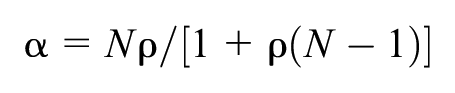
In which:
ρ: The average covariance coefficient between the components
N: Number of observed variables.
The Cronbach’s alpha values showed consistency in the structure of the data used in this study (Figure 1).
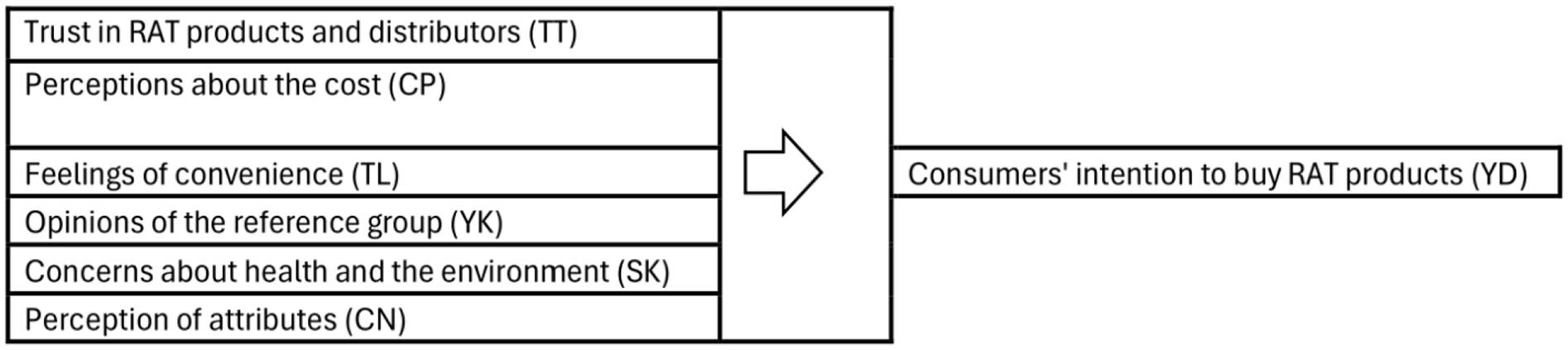
Research model created after testing Cronbach’s alpha.
Our model includes three types of variables (see Tables 2 and 3): observed variables (TT, CP, YD, TL, CN, SK), latent variables (CRAT, CRAT1 and CRAT2), and random exogenous error terms (e1 through e6). These error terms represent missing components in the relationships between the latent and observed variables (further details in Appendices A1–A4). We conducted non-parametric tests to gain a comprehensive understanding of the interrelationships between the variables. Following the data reliability assessment, we first calculated the weighted mean for each of the seven factor categories. Then, to test our hypotheses, we formulated the regression model.
Profile of Participants.

Source. Authors.
Multiple Regression Model for Testing Hypotheses
We used multiple regression to establish the causal relationships between six factors and individuals’ purchase decisions, specifically:

In which:
YD.: Consumers’ intention to buy RAT products
TT: Trust in RAT products and distributors
CP: Cost perception
TL: Feeling of convenience
YK.: Reference group’s opinion
SK: Concern for own health and the environment
CN.: Perception of RAT products’ attributes
e: error term to represent the missing elements
Results
Profile of Participants
Table 2 shows that our sample consisted of 63.3% female and 36.7% male respondents. This gender distribution is plausible, considering the significant role Vietnamese women often play in purchasing food and consumer goods. As shown in Table 2, the majority of our survey respondents were relatively young, with 60% aged 36 to 45 years and 32.7% aged 26 to 35 years. Prior research suggests that these two age groups (36–45 and 26–35) typically hold permanent employment and exhibit both health consciousness and environmental awareness (Pham et al., 2019; Tewari et al., 2022). A small minority of the survey participants, representing 5.8%, were in the age category of over 45 years. Respondents under 25 constituted a small fraction (under 2%) of our sample (Table 2). This demographic is generally characterised by modern lifestyles, single status and a pronounced interest in exploring green and healthier product options. The survey revealed that a relatively large portion of respondents reported a reasonably high income, which likely accounts for their preference for RAT products. However, it is to be noted that in the organic foods’ market, trust is crucial as most consumers do not have the expertise and/ or knowledge to understand the true attributes associated with them (Nuttavuthisit & Thøgersen, 2017). While the majority had income between 10 and 15 million VND (45.2%) and over 15 million VND (38.2%), around 16.7% had income under 10 million VND (Table 2). For them trust in the label RAT along with affordability acted as a key driver for consumers’ purchase intentions.
Notably, almost 90% of survey participants had consumed RAT products within the last 7 days, while only a small minority (10.9%) had not purchased them in the same period (Table 3). Specifically, over 66.7% of respondents had purchased RAT products 3 to 4 times, 16.7% had bought them 5 to 7 times, and almost 6% had bought them seven times (Table 3). The findings indicate that consumers primarily purchased RAT products at corner stores, with the most common spending range being 100,000 VND to 200,000 VND (32.7%). The lowest spending amount, less than 100,000 VND, accounted for 28.2% of purchases (Table 3). This finding aligns with previous research on the geography of organic foods, which suggests that proximity and easy accessibility increase consumers’ purchase intentions (Jarosz, 2008). Thus, the easy accessibility of RAT products motivates nearly 40% of consumers to purchase them, accounting for 16.7% of spending in the 200,000 VND to 300,000 VND range. The highest spending on RAT products, representing 11.5% of purchases, was over 400,000 VND (Table 3).
As Figure 2 illustrates, consumers’ connectivity with and trust in organic foods, particularly RAT products, appears to be linked to geographical location, given that most purchases are made at corner stores. These favoured places of purchase, exemplified by corner stores, are significant because they both redefine the boundaries of market and non-market interactions and cultivate genuinely valued social ties between sellers and consumers, thereby contributing importantly to consumers’ commitment towards organic and other goods (Marsden & Smith, 2005). This suggests that sellers’ strategies for building trust-based relationships with consumers are equally important in understanding consumers’ intentions to purchase organic products.
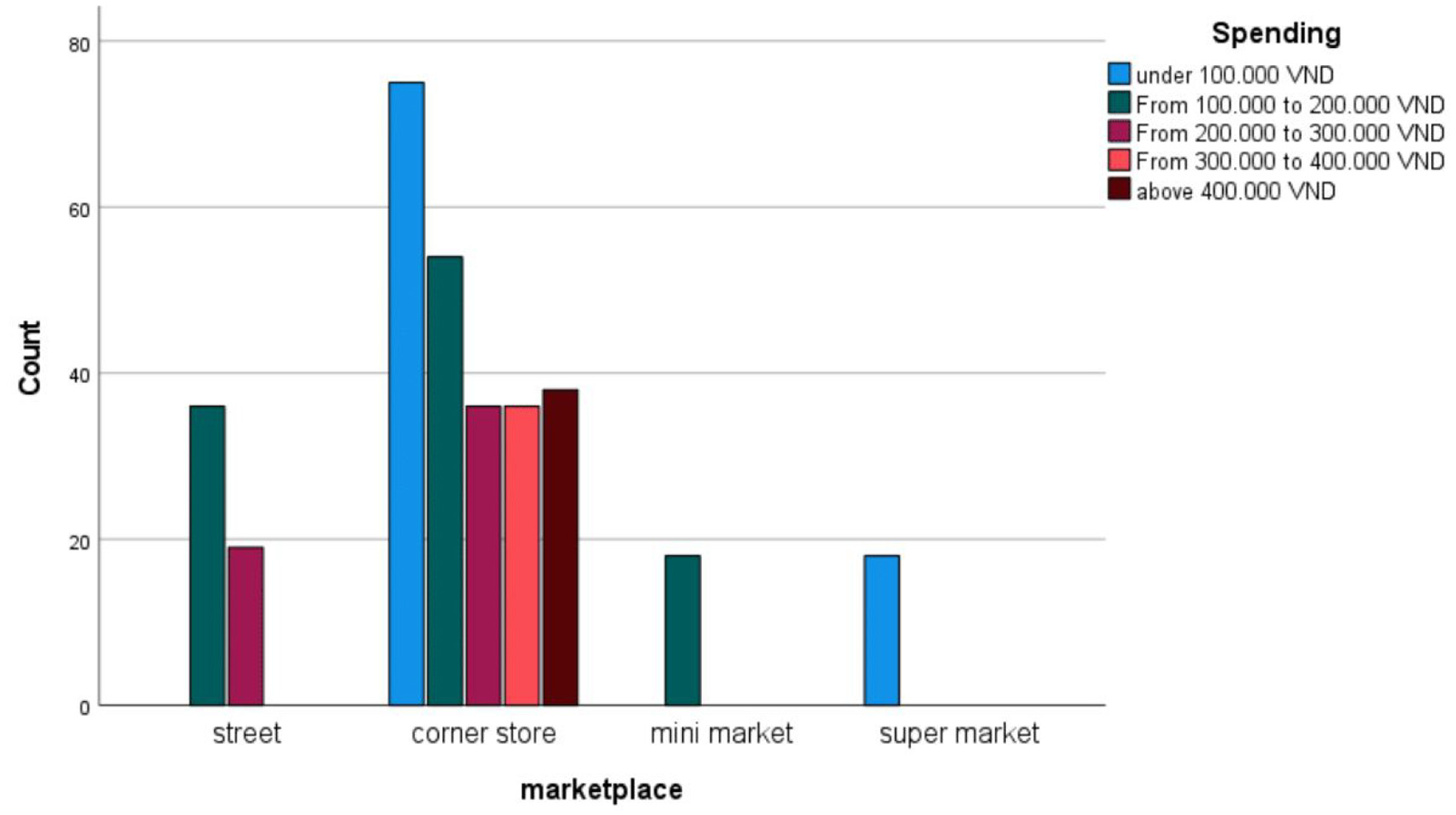
Spending level by the marketplace.
The analysis also revealed a significant impact of consumers’ age on their intentions to purchase. Therefore, Figure 3 indicates that the willingness to pay more for RAT products was concentrated among consumers aged 26 and above. The greater willingness of consumers aged 26 and above to pay more for RAT products is supported by Park et al.’s (2021) research, which suggests that older individuals feel a stronger sense of responsibility towards the greater good, making them more likely to buy organic options.

Spending levels of consumers based on age.
Furthermore, as presented in Table 4, Cronbach’s Alpha analysis revealed that six of the original seven scales were statistically reliable. Despite the reference group’s opinion scale’s reliability coefficient (0.293) falling below the recommended 0.6, it remains valid for our analysis. Additionally, we adjusted two scales: Concerns about health and environment (8 observed variables, down from 9) and Consumer buying behaviour of vegetables (4 observed variables, down from 5). Finally, four scales remained unchanged because their confidence coefficients were above 0.6 and their total variable correlations were above 0.3. Thus, the Cronbach’s Alpha testing confirmed that the scale components meet the necessary reliability standards and represent good scales.
Cronbach’s Alpha Results for Reliability and Data Consistency.

Source. Authors.
This suggests that consumers’ purchase intentions and commitment to RAT products are influenced by cost, convenience, food safety and quality attributes. This aligns with existing literature indicating that food consumption patterns are rapidly evolving due to environmental, nutritional, and health concerns, a key factor in the purchase of RAT products in Ho Chi Minh City (Yamoah & Yawson, 2014). Following the reliability assessment, the ‘Opinion of the reference group’ factor was removed, leaving six scales for further analysis. Additionally, the observed variables SK01 and HV05 were excluded to further enhance the reliability of the remaining scales. Consequently, the research model incorporated four independent variables for testing: cost perceptions (CP), feeling of convenience (TL), product attributes (CN) and health perceptions (SK).
Multivariate Regression: Results
We used a multiple regression model to identify the significant causal factors influencing consumers’ purchase decisions. First, we assessed the correlation between the linear and independent variables, and then we estimated the variance inflation factor (VIF) for each factor. Since the significance level of the variable TT (0.85) exceeded 0.05, this variable was considered statistically insignificant. Following the removal of this factor, we re-estimated the regression model using the remaining four factors: CP, TL, CN and SK. Table 4 shows that the Variance Inflation Factor (VIF) for these factors was below 10, confirming the absence of multicollinearity. Additionally, all variables in the model met the inclusion criterion of statistical significance at the 5% confidence level and were therefore included in the regression model. Consequently, the hypotheses H1 to H6 were tested using the following model:

Thus, consumers’ purchase intentions (YD) for RAT products are positively influenced by three factors – CN, SK and TL – and negatively influenced by one factor – CP. Assuming all other variables remain constant, a one-unit increase in consumers’ concerns for their own health and the environment (SK) leads to a 0.449% increase in the likelihood of purchasing RAT products. Also, with all other factors held constant, a one-unit rise in consumers’ perception of RAT attributes (CN) is associated with a 0.816-unit increase in purchase intention. Assuming all other factors remain constant, a one-unit increase in cost perception (CP) leads to a 0.198-unit decrease in consumers’ likelihood of buying RAT products (Table 5). Finally, assuming all other factors remain constant, a one-unit increase in consumers’ perception of convenience (TL) leads to a 0.069-unit increase in their intention to purchase RAT products.
Multiple Regression Model Results.
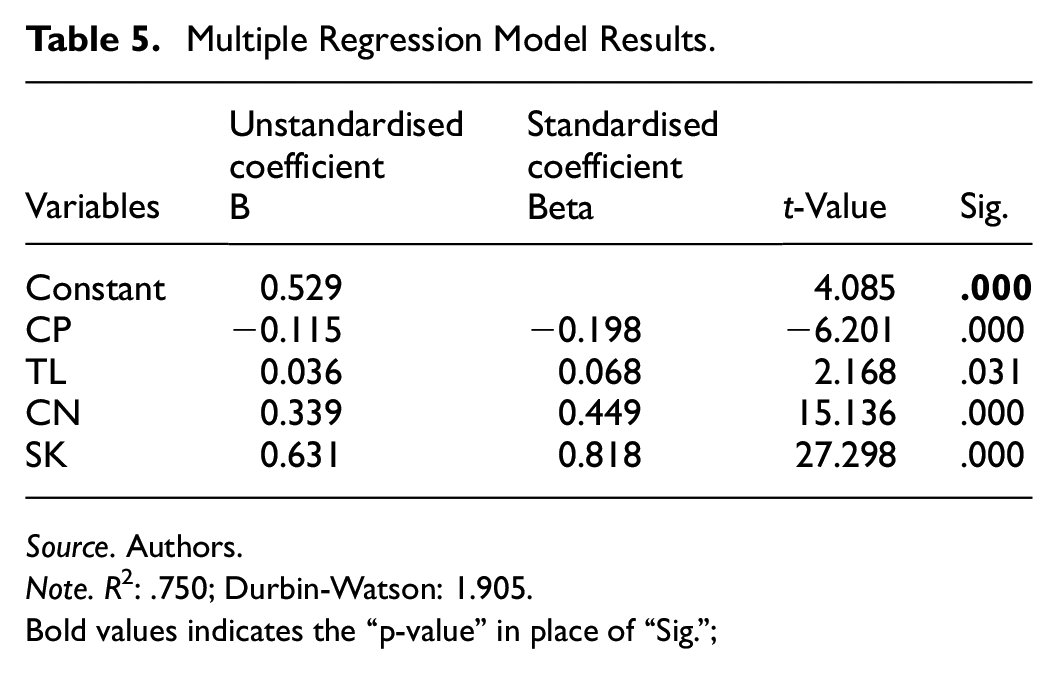
Source. Authors.
Note. R 2: .750; Durbin-Watson: 1.905.
Bold values indicates the “p-value” in place of “Sig.”;
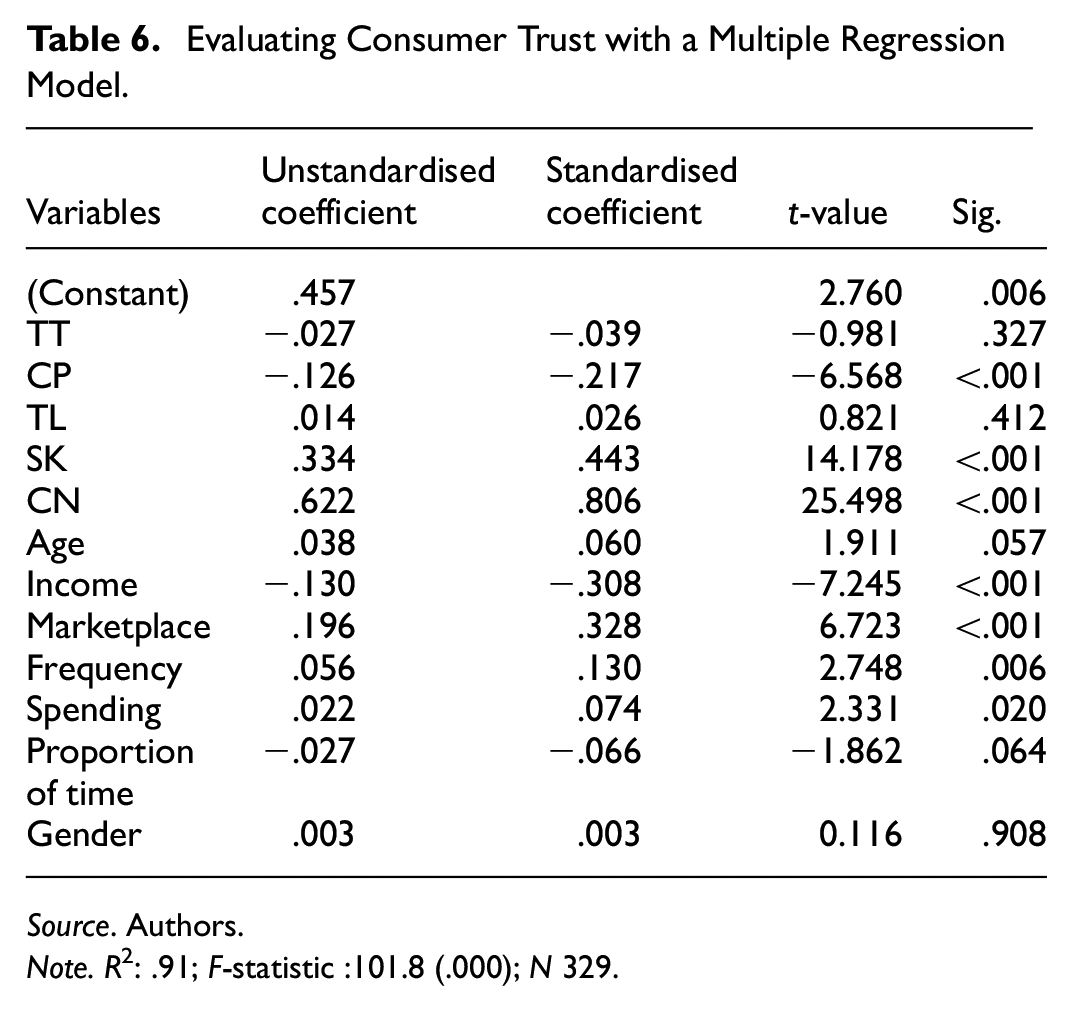
Thus, the results (as shown in Table 5) are valid. However, in response to reviewers’ comments, we expanded this basic model by including seven additional variables: age, income, marketplace, frequency, spending, proportion of time and gender (Table 6).
Evaluating Consumer Trust with a Multiple Regression Model.
Source. Authors.
Note. R 2: .91; F-statistic :101.8 (.000); N 329.
Table 6 clearly demonstrates strong quantitative relationships between consumer trust in RAT products and the key factors influencing purchase decisions, as indicated by the coefficients. While the statistically significant nature of the relationships is generally inferred from p-values associated with the coefficients (typically p < .05), confidence intervals provide a range of plausible values for the coefficients. If a confidence interval for a coefficient does not include zero, then the relationship between that independent variable and the dependent variable is considered statistically significant at the corresponding confidence level. Beyond establishing robustness and comprehensive relationships, non-parametric tests and pairwise comparisons highlight that significant differences observed among variables are attributable to each variable capturing a unique aspect or characteristic of the market (as detailed in Figure 4 and Table 7). Confidence intervals provide a range of plausible values for the coefficients (Imbens, 2021).

Pairwise comparisons of model variables.
Pairwise Comparisons Using Friedman’s Two-Way Analysis of Variance by ranks.

Source. Authors.
Note. Each row tests the null hypothesis that the Sample 1 and Sample 2 distributions are the same. Asymptotic significances (two-sided tests) are displayed. The significance level is .050.
Significance values have been adjusted using the Bonferroni correction for multiple tests.
Pairwise Comparison
Non-parametric Tests
Belief in benefits and trust in certification, labelling and marketing drive consumers’ likelihood to purchase organic foods (Nuttavuthisit & Thøgersen, 2017). Consequently, Friedman’s Two-Way analysis of variance demonstrates that the distributions of the variables TT, CP, TL, SK, CN and YD are meaningful measures for understanding the complex relationships within our analysis. These tests help in understanding the interrelationships between consumers’ trust, cost perceptions, feeling of convenience, health perceptions and their purchase decisions. The non-parametric tests demonstrate statistically significant co-variances among the variables at the 0.05 significance level, thus validating our theoretical framework (Table 7).
Consistent bilateral connections between variables imply each meaningfully explains consumers’ RAT product purchase intentions. The inter-relatedness of these variables explains consumers’ trust in RAT products. Factor analysis (Figure 4) shows a strong relationship between consumer trust and RAT product purchase intentions. The factor analysis produced two significant Eigenvalues (as seen in Figure 5). Consequently, trust in both RAT products and retailers are identified as key factors influencing consumers’ purchase intentions.

Eigenvalues for key factors determining purchase decisions.
Building a market for RAT products requires consumer trust in distributors and positive perceptions of their attributes. These results, informed by a validated trust model for organic food, highlight the growing importance of organic products like RAT in Vietnam’s burgeoning consuming class (Delteil et al., 2021). Specifically, this research documents that purchase intentions and commitment in Vietnam’s organic food market are limited by both consumer affordability and their trust in the RAT label and distributors (corner stores).
Structural Equation Model
To construct a structural equation model, we used confirmatory factor analysis on our survey data to determine important latent factors (Nye, 2023). Two important latent factors for this dataset are evident in the scree plot (Figure 5). Consistent with our theory, consumer trust in RAT products positively correlated with their commitment to buying. This aligns with Konuk’s (2019) research, which demonstrates that brand trust has a positive influence on consumer commitment.
Consequently, we employed a two-latent factor model within a structural equation framework to analyse cause and effect (Kline, 2016). Consumers’ intention to buy RAT products (CIRAT, YD) was constructed from trust in RAT products and distributors (TT), cost (CP), convenience (TL), reference group opinion (YK), health/environment concerns (SK) and RAT attribute perceptions (CN). Together, these factors determine consumers’ trust in RAT products. Exogenous factors affecting these relations are reflected in the error terms e1 to e6 (Beaujean, 2014; Flora, 2017).
In summary, η and ξ commonly denote latent variable vectors and their corresponding errors in structural models. In this structural model notation: B is a (K × K) coefficient matrix, Γ is a (1 × K) vector of coefficients for exogenous errors (ξ) and ς is a (K × 1) vector of errors for the (K × 1) latent variables (η):

In the measurement model, these latent variables η and ξ are linked to the observed variables X and Y:


X and Y are the observed indicators, with covariance matrices Φξ for ξ, Ψς for ς, Φδ for the errors of X, and Φε for the errors of Y. Parameters to estimate in this model are:

Confirmatory factor analysis (CFA) tested if our chosen variables supported our theory of consumer trust in organic food products. The study involved analysing regression coefficients, covariances and correlations between variables and error terms (Appelbaum et al., 2018; Lai et al., 2021). The estimated scalar and matrix coefficients for the main model are summarised in Appendices A1 and A2. We assessed the fit of three alternative models using various criteria, including chi-square, CFI, TLI, CMIN, NCP, FMIN, RMSEA, AIC, ECVI and the Hoelter criteria (Hu & Bentler, 1999). Identification was achieved by equating the number of parameters with the number of variables in the model. We used constrained and unconstrained estimation techniques to capture direct and indirect effects on consumers’ purchase decisions. Appendix A3 contains the results of the most suitable model, while Appendix A4 presents model comparison tests. These tests ascertain the robustness of the comprehensive relationships between variables.
The primary objective of our SEM was to assess the similarity between the model’s parameter estimates and those derived from the survey data. The path diagram (Figure 6) presents estimated model parameters, featuring three endogenous nests (CRAT, CRAT2, CRAT3) for consumer trust (TT, CP, TL, YK, SK, CN) affecting purchase intention (YD), and exogenous errors e1-e8 (detailed in Appendices A1–A4). The structural equation model, as shown in the path diagram (Figure 6), reveals direct and indirect relationships leading to consumer trust in RAT products (coeffects indicated).
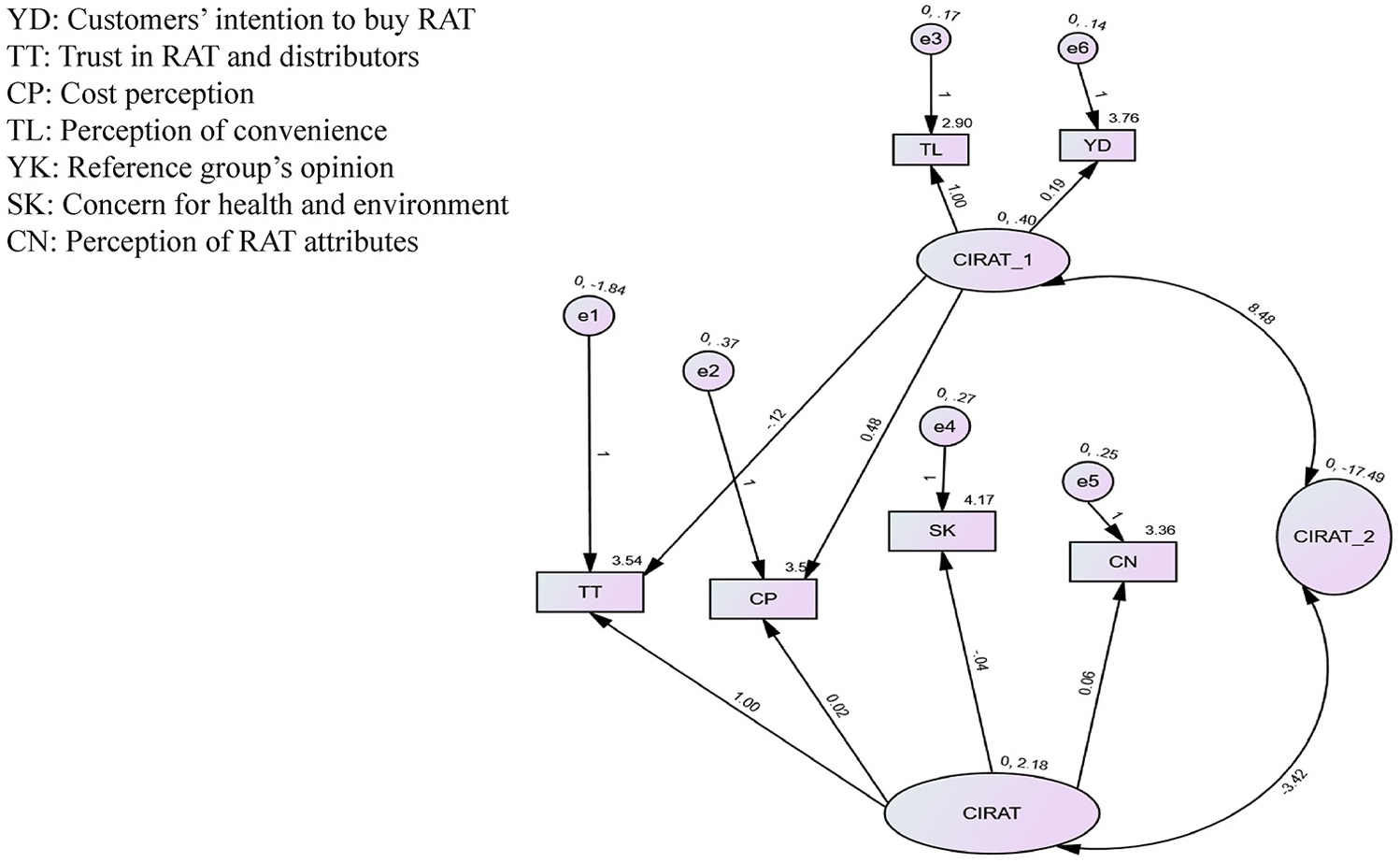
Consumers’ intention to purchase RAT products.
Our study is among the first to apply this model for an in-depth analysis of consumer behaviour regarding trust in RAT products. Our work is significant because it contributes to the increasing research on consumer trust in organic foods, which are seen as a path to healthy living and environmental benefits (Carfagna et al., 2014; Erler et al., 2022).
Measuring key influences is necessary to properly quantify how consumer trust affects organic food decision-making and behaviour. We achieved this by analysing how consumers’ trust impacts their purchase intentions. Studies on organic food purchases have underapplied this method to determine how trust shapes commitment to RAT products (CRAT). Importantly, the findings indicate that trust in RAT products and corner stores plays a mediating role in consumers’ commitment, which then affects their perceived quality and purchase intentions. This aligns with previous research showing consumers buy organic foods from trusted retailers even with limited grower knowledge (Ladwein et al., 2021). This implies that consistent quality in trusted retail stores is crucial for maintaining consumer trust and commitment to RAT products.
Discussion
The six proposed hypotheses were tested, and the results validated consumers’ trust in RAT products. Results clearly show that establishing customer trust can benefit RAT providers by increasing consumers’ willingness to spend more. Greater communication between RAT customers and providers (via email, targeted mobile messages, websites, newsletters, brochures, surveys, and personalised dialogue) is needed to improve customers’ willingness to invest in RAT products. Authors suggest signalling and risk-sharing as effective ways to boost consumer trust and commitment (Singh & Sirdeshmukh, 2000). Signalling involves clearly communicating a provider’s commitment to quality through consistent, tangible means like taste and pricing. Risk-sharing implies providers demonstrating a willingness to share the purchase risk customers face with organic foods (e.g., RAT products) via service guarantees and price incentives. The enhanced trust stemming from these actions makes customers feel at ease in developing a committed relationship with organic food providers.
The results indicate a strong link between customer trust in RAT product quality and their commitment to a long-term relationship. According to Morgan & Hunt (1994), customers feel a diminished sense of agency when faced with high costs and uncertain decision-making. Therefore, most customers are only willing to commit long-term to products they trust. This requires increased investment in information sharing and transparency. The results indicate a positive impact of health and environmental concerns on consumers’ RAT product purchases. While others highlight product quality for producer-consumer trust (Hamzaoui-Essoussi et al., 2013; Rana & Paul, 2017), our study is among the first to examine how the RAT label influences consumer trust. This finding is consistent with previous studies on the significance of trust in organic food purchases (Khare & Pandey, 2017; Konuk, 2018).
According to Table 4, Vietnamese consumers’ purchase intentions for organic foods are primarily driven by perceived benefits, health/environmental concerns, convenience, and trust in retailers. Additionally, premium pricing plays a role in building consumer trust within Vietnam. This finding is consistent with prior research establishing consumers’ willingness to pay premium prices for organic foods (Kledal et al., 2011; A. Singh & Verma, 2017). This implies that marketers can enhance their market share by combining premium pricing strategies with clear communication of organic food value and quality (Phan & Pham, 2023). In short, HCMC consumers highly value the RAT label, perceiving it as healthier, safer, and more environmentally sustainable. This finding is supported by prior research showing that modern consumers in developing economies are increasingly conscious of their purchasing behaviour and favour healthy and environmentally friendly food products (V. H. Hoang & Nguyen, 2013; Leonidou et al., 2022).
Interestingly, in Vietnam, most vendors are literate (27% with at least high school education) and use storytelling to build consumer loyalty (Even et al., 2024). Thus, besides labelling and consumer preference for healthy, eco-friendly products, bottom-up co-creation can drive sustainable food system transformations. This highlights the key role of knowledgeable vendors in encouraging consumers to choose organic fruits and vegetables (Pitt et al., 2017). Identifying barriers and enablers is crucial because combining bottom-up and top-down approaches can create adaptive policies that support community-driven organic food systems.
Conclusions
Theoretical Contribution
This study has significant theoretical implications for research on how labelling impacts consumer behaviour when purchasing organic products. Based on statistical and structural model analyses, our empirical findings show that Vietnamese consumers’ intention to buy organic foods positively correlates with their trust in the RAT label and distributors, consistent with prior research (Phan & Pham, 2023; Teixeira et al., 2021; Wang et al., 2020). Consumers seek relevant information on organic product labels to build trust, especially in developing economies where the sector is less organised (Ayyub et al., 2021).
Specifically, product perceptions and health/environmental concerns are key drivers of purchase intent, like findings on organic food buyers in Iran (Bagher et al., 2018), Malaysia (Shaharudin et al., 2010), and Taiwan (Chen, 2009). Studies highlight that food consumption practices in HCMC are deeply embedded in intricate cultural relations that encompass family, community, social stratifications and identity (Stiff & Vodeb, 2024). However, the emotional and symbolic associations with organic products and their impact on the city’s food cultures remain unstudied. Thus, our work on trust in organic foods expands existing literature by showing how the RAT label reassures consumers about safe food consumption in a developing country like Vietnam.
Managerial and Policy Implications
From a business standpoint, the rising demand for safe and environmentally friendly production methods highlights a growing market opportunity for RAT products. Our study offers marketers and managers insights on how to market organic food products within this newly identified RAT emerging market. It emerges that organic food consumers have specific needs and place a higher value on trust with retailers when purchasing RAT products. Our research makes a significant contribution by deepening the understanding of organic food consumers’ perceptions, attitudes and purchase intentions, which will enable marketers to define a more targeted strategy for positioning, communication, pricing, and distribution of RAT products.
It is important for the local government to pay close attention to the impact of reference groups on consumer purchase decisions and develop policies that facilitate a shift towards sustainable consumption. For instance, Vu et al.’s (2020) work highlights the salience of recommendations from peers on consumers’ purchase decisions in Vietnam. This implies that by influencing the values of consumers’ reference groups (e.g., family and friends) to build trust in RAT products, organic food producers can extend their market reach.
However, clean, safe foods in Vietnam are typically more expensive due to the increased effort and time in their production and distribution (Anh et al., 2024). This price difference is considered the primary obstacle to developing a robust market and stimulating domestic demand for these products. Within this context, our findings indicate that product labelling can alleviate consumers’ health and environmental concerns and encourage them to purchase RAT products. Additionally, it is important to note that the strong emotional ties within Vietnamese society mean consumers are receptive to emotive messages embedded in products (Anh et al., 2024). This emotional connection between retailers and consumers can be successfully leveraged by marketers when promoting RAT products and conveying their chemical-free health benefits. Studies show that consumers are more likely to buy products aligning with their green lifestyles, values and beliefs, and with which they feel an emotional connection, even if prices are higher (Laroche et al., 2021).
Furthermore, the average monthly shopping frequency at mini supermarkets has significantly risen among Vietnamese consumers, a setting that facilitates direct interaction between suppliers and consumers (Vuong et al., 2021). This has important implications for marketers, who can leverage positive retail experiences to increase RAT product market share and co-create business solutions for sustainable, healthier consumption (Duc & Do Ba, 2017). In the long run, the growth of consumer trust in both retailers and product labelling will play a critical role in shaping the consumption of RAT products.
In conclusion, this research provides valuable insights into the factors that shape Vietnamese consumers’ trust and purchase intentions concerning certified organic products, particularly RAT. The findings can help policymakers, retailers and producers improve access to and communication about safe, eco-friendly food, supporting public health and sustainable food systems.
Limitations and Areas for Further Research
This study does have some limitations. The first limitation is that our investigation was limited to RAT products. Consequently, future studies should examine other organic brands, particularly those marketed as premium and exotic products. This will allow for comparisons of Vietnamese consumers’ perceptions of RAT versus general organic and premium/exotic foods. The second limitation is that this study’s data was collected solely in Ho Chi Minh City, which is recognised as one of the most prosperous regions in Vietnam (T. D. Nguyen et al., 2008). It is possible that consumers in Vietnam’s rural areas hold different attitudes regarding the consumption of organic products. The generalisability of these findings will only be possible if future research incorporates samples from other major cities to determine the spectrum of consumer perceptions towards organic products across Vietnam.
To conclude, it is accurate to say that consumers’ intentions to purchase RAT products are multifaceted. Several studies suggest that organic consumption can also have reputational costs, as consumers often want to seem more moral than they truly are (Noppers et al., 2014; Zane et al., 2016). This can lead other consumers to dislike those who appear overly moral and ethical – a phenomenon known as ‘do-gooder’ derogation (Monin et al., 2008; van de Grint et al., 2021). It is unclear if this phenomenon discourages Vietnamese consumers from buying RAT products, which requires more research. It is significant that the consumer trust model presented in this paper should be analysed in relation to the intricate price mechanisms and equilibrium settings within the Vietnamese economy.
Footnotes
Appendix A1
Appendix A2
Appendix A3
Appendix A4
Acknowledgements
This research was jointly undertaken by the four authors. Dr. Nguyen Ngoc Thuy and Dr. Hoang Ha Anh collected consumer data in Ho Chi Minh city and prepared the first draft. Professor Gunjan Saxena contributed to refining the conceptual framework, while Dr. Keshab Bhattarai provided valuable input to strengthen the analysis.

Ethical Considerations
The Research Ethics Review Committee at Nong Lam University approved our survey-based study in October 2021 (approval: NLU-Thuy2021). The purpose of the study was fully explained to all potential participants after which those who volunteered were asked to sign an informed ethical consent form before they completed the questionnaire.
Funding
The author(s) disclosed receipt of the following financial support for the research, authorship, and/or publication of this article: Our collaboration resulted from our work funded by the EU project H2020-EU.1.3.3. (2018-2023) under the EC-Asia Research Network on Integration of Global and Local Agri-Food Supply Chains Towards Sustainable Food Security (GOLF)—Grant Agreement number 777742.
Declaration of Conflicting Interests
The author(s) declared no potential conflicts of interest with respect to the research, authorship, and/or publication of this article.
Data Availability Statement
Data sharing not applicable to this article as no datasets were generated or analysed during the current study.