




Abstract
A study on the dynamics of the defect liability period (DLP) in Ghana is lacking, notwithstanding the fact that it is a common practice in the real estate industry. This study examines the practice of the DLP in Ghana’s real estate industry. The study adopts a combination of simple random and stratified sampling techniques to select 29 members of the Ghana Real Estate Developers Association (GREDA) and 58 homeowners in Accra. We employ binary and multiple linear regression models to analyze the data gathered from the study respondents. Findings revealed that the DLP in Accra ranges from 6 to 24 months for defects to fittings and fixtures as well as to the structure. While private developers are divided on the adequacy of the DLP, homeowners believe that it is inadequate. Private developers suggest a longer DLP for the structure than for fittings and fixtures, whereas homeowners suggested longer DLP for both structure and fittings and fixtures. The implication of the findings is that longer DLP could be a strategy for attracting prospective homeowners. It is recommended, among others, that GREDA develop a manual to standardize the practice of the DLP in Ghana.
Introduction
The real estate industry in Ghana has grown rapidly. From only a few in the 1980s, private real estate developers (henceforth referred to as private developer), in good standing, now number over 400 in the country (Ghana Real Estate Developers Association [GREDA], 2014). The real estate industry has been largely responsible for the growth of the construction industry in Ghana, which contributes between 5% and 10% of gross domestic product (GDP), about 25% of budget revenue; employs up to 10% of the working population; and is responsible for about half of the gross fixed capital formation (Chileshe & Yirenkyi-Fianko, 2011; Ofori, 2012). Notwithstanding the rapid expansion, the real estate industry remains characterized by the high cost of rental units and exorbitant house prices (Arku, 2009; Awanyo, McCarron, & Attua, 2014; Obeng-Odoom, 2010). Private developers have often been criticized for providing three- and four-bedroom detached or semi-detached houses, luxurious apartments, and penthouses in gated communities that can “only” be afforded by high-income Ghanaians, expatriates, and other nationals (Gough & Yankson, 2011).
Nevertheless, the contribution of these private developers to housing supply in Ghana cannot be overemphasized as they provide an estimated 2,500 housing units annually (Ametefe, Aboagye, & Sarpong-Kumankoma, 2011). The modus operandi of these private developers has been to acquire leases of large tract of lands (mostly in urban and periurban areas), obtain the necessary title and building permit, build a number of residential properties on the lands acquired, and eventually offer them for sale. In the event that any of the properties is purchased, it is common practice to find the private developer and homeowner, at the point of handover, signing a sales agreement, which spells out the terms and conditions of the sale. Among other clauses in this agreement is a warranty by the private developer that the property will be free from all defects (fittings, fixtures, and structural) for a stated period of time after completion and handover. In other words, the private developer shall be responsible for repairing or rectifying all the defects that appear in the building for a specified time frame (DLA Piper, 2012). This time frame is what is technically referred to as the “defect liability period” (DLP) in construction contracts.
The DLP is a common practice in many countries around the world. These include European countries such as England, France, Romania, Portugal, and Greece (European Union, 2010) as well as countries in the Asia-Pacific region such as Singapore, Malaysia, and Australia (Baker McKenzie, 2014; Oluwole, Razak, & Oluwole, 2012; Urban Redevelopment Authority, 2015), among others. Research has also shown that the DLP is practiced in African countries such as Botswana and Nigeria (Gofhamodimo, 1999; Oluwole et al., 2012). Although the DLP is practiced in the wider construction industry in Ghana, especially with large-scale projects, it is an everyday practice in Ghana’s real estate industry. Homeowners, who purchase their properties from members of the GREDA, are guaranteed a warranty that all major or minor defects that manifest in the building, within a stipulated duration, will be fully repaired and funded by the private estate developer. This practice is in line with one of GREDA’s objectives to have a responsibility to the consumer [homeowner] by avoiding shoddily erected buildings and to provide a quality service conforming to agreed professional standards. We also support the establishment of a warranty scheme to protect the consumer [homeowner] from defects and shoddy work. (GREDA, 2014)
Even though the DLP is a common practice in the real estate industry in Ghana, there is no publication on the practice and associated challenges. Existing literature on the DLP concerns other countries. Gofhamodimo (1999) found that in Botswana, the DLP varies depending on the size, nature, and scope of work involved as well as the nature of the contract signed by the architect and the owner of the property. Oluwole et al. (2012) compared the practice of DLP in Nigeria and Malaysia. Their findings indicated that a 6-month DLP in Nigeria was inadequate for all building defects to occur, while a 12-month duration in Malaysia was found to be adequate. In the United Kingdom, Wong (2009) revealed that the duration of the DLP is typically 12 to 24 months. However, in the absence of an agreed DLP, the aggrieved party may commence legal proceedings, under the Limitations Act, 1980, to recover any damages or losses occurring after the handover of property. A European Union study also found that the practice of the DLP is legally regulated in most European countries, except in Cyprus and Ireland where there is no specific liability regime applicable to construction (European Union, 2010). It is also captured in Glover (2008) that the occurrence of defects during the DLP is one of the major causes of dispute and construction litigation. Generally, these studies enable an understanding of the duration and scope of the defect liability, the statutory backing behind the practice of the DLP in these countries as well as the problems that arise between real estate developers and homeowners during the DLP.
While many of these studies have largely been country-level documentation on the practice and legislative instruments of regulating defect liability, no such research has been conducted in Ghana. This study is relevant in the context of the West African region where there is unprecedented urbanization and where the real estate industry is witnessing huge revolution. In a study on the attractiveness of the West African real estate market as a viable investment opportunity, Ghana was adjudged the most attractive real estate investment opportunity in the region and is expected to deliver the highest level of profit over the short term (2 to 3 years) and outperform the regional average over the next 5 years (Business World, 2012). In line with the research problem, this study seeks to examine the practice of the DLP in Accra. The rest of the article is organized as follows. The section “The General Practice in the Real Estate Industry in Ghana” reviews literature on the general practice in the real estate industry in Ghana as well as the international perspective on the practice of the DLP. The section “Study Area and Methods” explores the study area and methods. In the section “Findings and Discussions,” the findings are presented, analyzed, and discussed. The final section “Conclusion and Recommendations” concludes the study and offers some proposals for improving the practice of the DLP in Ghana.
The General Practice in the Real Estate Industry in Ghana
According to Boamah, Gyimah, and Nelson (2012), land remains a significant factor in the real estate industry. Land acquisition has been the first major commitment of every private developer (Cadman & Topping, 2002; Wilkinson & Reed, 2008). In Ghana, it is typical of private developers to acquire an interest in customary land, state land, or individual land for the development of real estate. It is also characteristic of private developers in Ghana to acquire land in either an urban or periurban area (Blocher, 2006). There are many different interests in land, but the one that most private developers acquire is the leasehold interest of 99 years (Gough & Yankson, 2011). It must be stressed that acquiring an interest in any piece of land in Ghana does not give private developers the permission to start building. In addition to acquiring land, private developers must acquire a building permit before they begin development. Section 49(1) of the Local Government Act, 1993 (Act 462) states, “A physical development shall not be carried out in a district without prior approval in the form of a written permit granted by the district planning authority.” In other words, no private developer shall build any property on any land in Ghana unless he or she has been granted building permit by the Metropolitan/Municipal/District Assembly (MMDA) in whose jurisdiction the land is located.
Typically, private developers in Ghana specialize in the construction of residential properties for private ownership, the bulk of which comprises two-, three- and four-bedroom houses (Arku, Luginaah, & Mkandawire, 2012). The most common types of houses they build are detached and semidetached, which are enclosed in gated communities. More so, the concept of condominium is gaining some popularity among private developers in Ghana. A notable example is the Villaggio Project of Trasacco Estates Company Limited located close to the Tetteh Quarshie Interchange in Accra. Mindful of the taste and preference of the up-market clientele who purchase their properties, private developers adopt foreign building designs and import some building materials, finishes, fittings, and fixtures (Arku et al., 2012). Nowadays, a few private developers manufacture some of the building materials they use in the construction of their properties.
Once the buildings are completed and a certificate of completion for habitation is obtained from the MMDA, they are offered for sale to the public. Private developers have different payment options for prospective homeowners. For the most part, private developers partner with mortgage and financial institutions to enable homeowners to pay the purchase price of the property in installment under a mortgage arrangement. Another arrangement is where a homeowner makes down a payment of about 50% before construction commences and pays the remaining 50% upon completion of the property (Asiedu & Arku, 2009). Whichever is the case, when a private developer and a homeowner agree on the sale of a building, both parties sign a sale agreement. Some of the clauses in the agreement include the purchase price of the property, timelines for payment, period of the lease, homeowner’s liability to pay all forms of tax, rates and assessments, and the DLP.
International Perspective on the Practice of the DLP
Construction contracts, generally, include a DLP during which the private developer is contractually obliged to return to the building to repair or rectify defects which have appeared in his works (Baker McKenzie, 2014). Typically, the DLP commences from the date of handover of the property (or upon practical or substantial completion) or the date that the property becomes available for use by the occupant (Shaban, 2008) and extends for a specified duration. It must be noted, however, that the end of the DLP is not the end of the private developer’s liability to the homeowner for defects; it is merely the end of the period during which the private developer is contractually bound to return to the building and make good defects (Baker McKenzie, 2014). Every DLP clause in a construction contract need not be same, but it must have some fundamental elements. According to DLA Piper (2012), a DLP clause must set out the length of the DLP, the scope of the defect the private developer is obliged to remedy, the procedure for notifying the private developer of the defect, and the circumstances under which the DLP may be extended, if it becomes necessary. Wong (2009) has argued that the DLP is more of an international best practice or an implied contractual agreement than a statutory requirement binding on developers (Wong, 2009). This may be true in the case of African countries such as Botswana and Nigeria, where the practice of DLP is not regulated. In these countries, the duration and scope of the DLP captured in the construction contract depends on the agreement between the private developer and homeowner. In Botswana, Gofhamodimo (1999) found that the DLP is generally 6 months, but this could vary depending on the size, nature, and scope of work as well as the type of contract signed by the parties. He added that, during the DLP, the private developer shall repair all defective works at his own expense and is liable for any defect which is traceable to poor workmanship, usage of poor quality materials, and failure to comply with plans and specifications. Similarly, Oluwole et al. (2012) found that private developers in Nigeria practice a 6-month DLP for all defects, which he argued is insufficient for all defects to manifest and be rectified. Literature on the practice of DLP in African countries is scarce, hence the need for this study in Ghana.
In Europe, however, a European Union study on its member states revealed that the practice of the DLP is regulated in most European countries (European Union, 2010). Table 1 shows the duration and scope of DLP, as determined by law, in some selected European countries. According to the study, the duration of the DLP varies among these countries. From Table 1, the civil codes of countries such as France, Hungary, Lithuania, and Germany impose a DLP of 10 years or more, starting from the date of handover to the homeowner. In Portugal and the United Kingdom, the duration of the DLP is 5 and 6 years, respectively. Countries such as Poland, Cyprus, Austria, Estonia, Czech Republic, and Latvia impose a minimum duration of 2 to 3 years. In Romania, the European Union study indicated that the DLP for structural defects is the longest, as it lasts for the whole useful life of the building, implying that the DLP could be as long as 75 to 88 years (Gyamfi-Yeboah & Ayitey, 2009). Irrespective of the duration, the scope of the DLP in most of these countries has to do with patent and latent defects, structural defects, partial or total destruction of the building as well as defects to finishes, fittings, and fixtures. From Table 1, it can be observed that some European countries (Germany and Hungary) imposed an extended DLP of 10 to 20 years for defects intentionally concealed. Although countries such as Cyprus and Ireland do not have a specific provision regulating DLP, they share some common characteristics (in terms of duration and scope) with other European countries that regulate DLP.
Defect Liability Period in Selected European Countries.
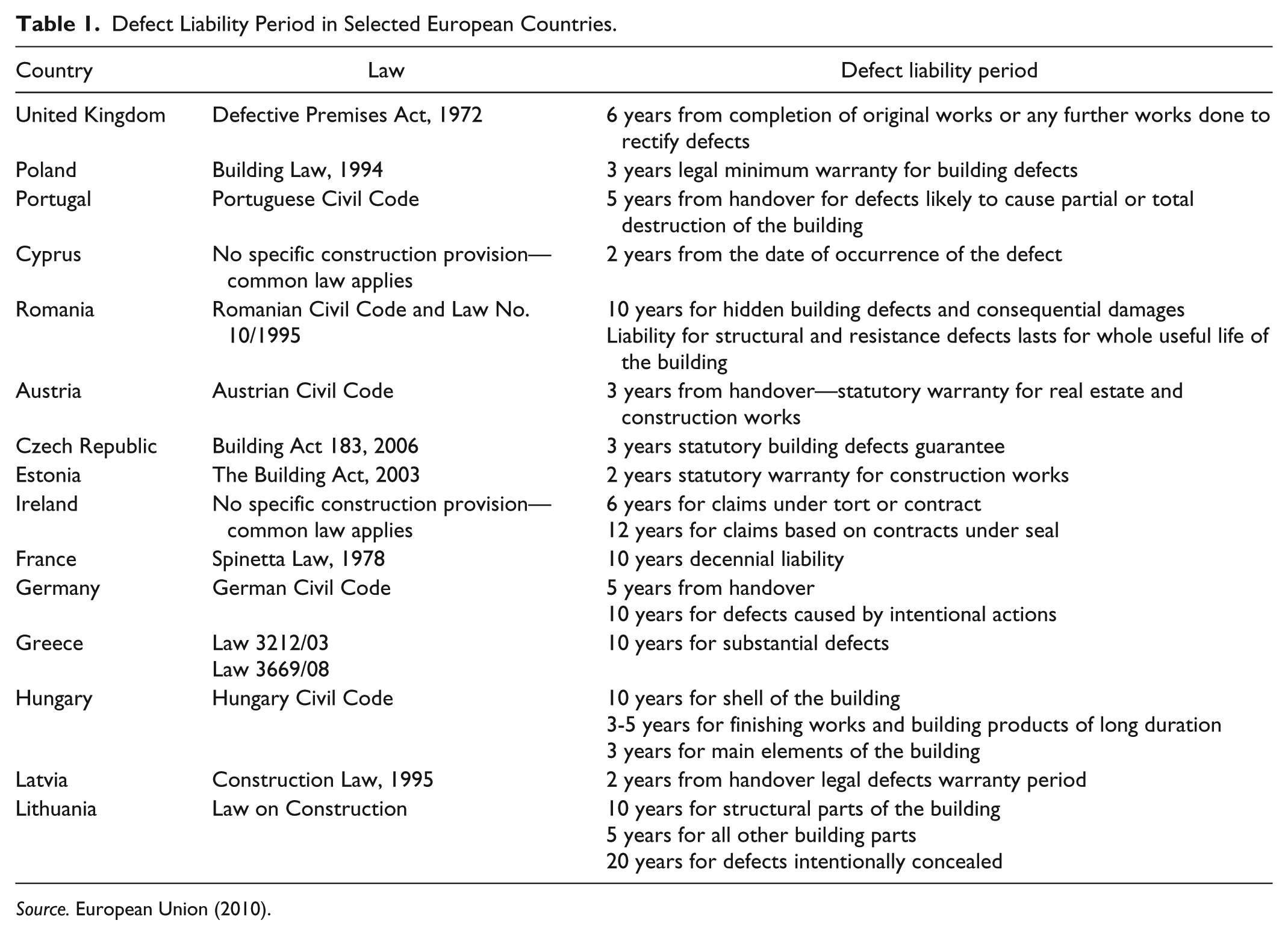
Source. European Union (2010).
Furthermore, the literature indicates that countries in the Asia-Pacific region practice DLP. According to the Urban Redevelopment Authority (2015), the duration of the DLP in Singapore is 12 months from the date the private developer delivers vacant possession of the building to the owner. It further states that if the homeowner discovers any defect during the DLP, he or she should follow the procedure set out in the sales agreement to get the private developer to repair the defects. As shown in Table 2, private developers in Singapore observe a common procedure for rectifying defects that occur during the DLP. In Australia, Levi (2016) found that the duration of the DLP depends on the nature of the defect. Defects are categorized into Category 1 and 2 defects. Category 2 defects are minor or cosmetic defects, whereas Category 1 defects are the more serious defects such as those that adversely affect the structural performance of the building, adversely affect the health and safety of persons residing in the building, or adversely affect the functional use of the building. The duration for Categories 2 and 1 is up to 6 months and 6 years 3 months after practical completion, respectively.
Procedure for Rectifying Defects During the DLP in Singapore.
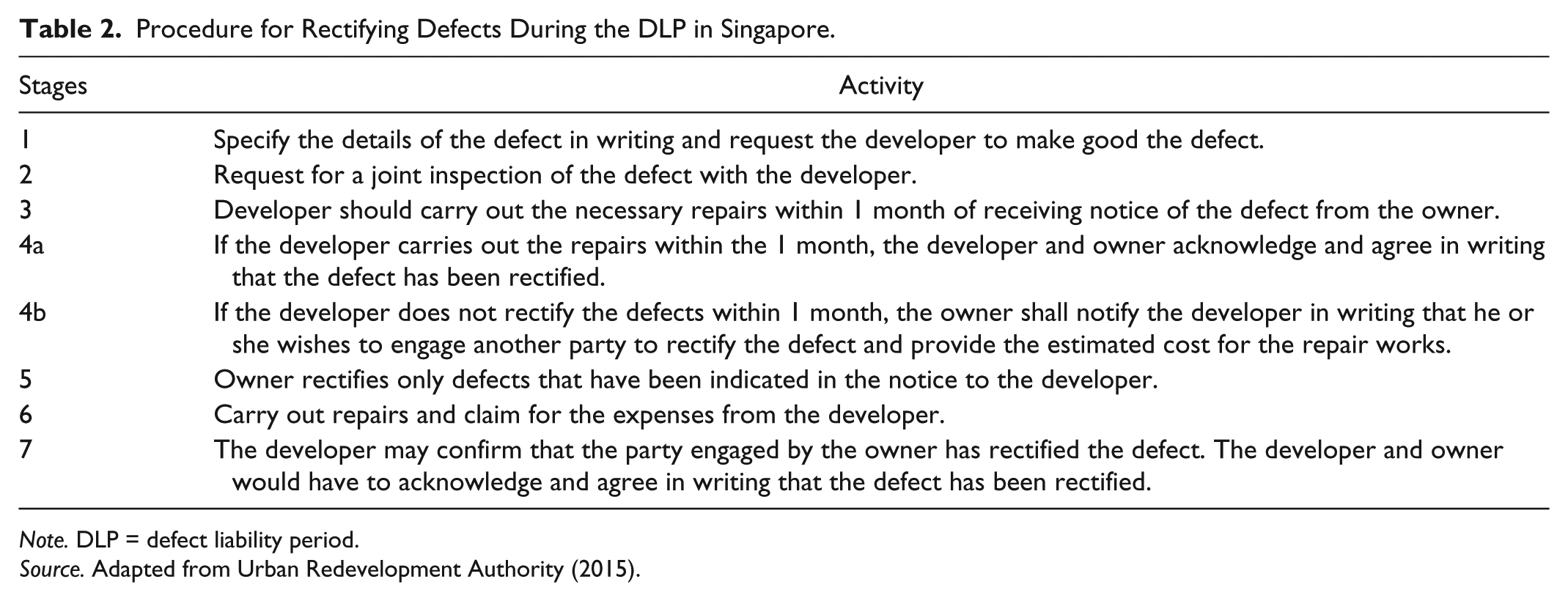
Note. DLP = defect liability period.
Source. Adapted from Urban Redevelopment Authority (2015).
Common to all countries is the issue of whether the right to remedy defect is the preserve of the private developer or not. In most cases, private developers reserve the exclusive right to remedy all structural and installation defects that arise during the DLP. From the developer’s perspective, having such exclusive right to repair all defects is beneficial because the cost of remedying the defects, using his employees, will be cheaper than paying the homeowner the cost of another artisan repairing the defects (DLA Piper, 2012). In addition, Baker McKenzie (2014) believe that it would make practical sense for a homeowner to have the private developer (or his agent) who performed the original work in which a defect has appeared return to rectify that defect. They further stated that there is the likelihood that an artisan who is unfamiliar with the original work would incur greater cost rectifying the same defect than the private developer. However, from the homeowner’s point of view, leaving all defects to the private developer to remedy may not be beneficial because his priority may be to minimise costs; therefore, an independent artisan might provide better service.
Study Area and Methods
Accra is the capital of Ghana and hence the economic, political, and administrative hub of the country. The latest housing and population census in Ghana revealed that the population of Accra was 1,848,614 with an average household size of 3.5 (Ghana Statistical Service, 2012). The mean annual per capita expenditure and income in Accra are GH¢4,875 (US$1,260) 1 and GH¢5,428.5 (US$1,403), respectively (Ghana Statistical Service, 2014). Accra was selected for this study for some key reasons. Almost all houses constructed by members of the GREDA can be found in cities, particularly in Accra (Yankson, 2012). More so, according to Arku (2006), there is the general belief among private developers that property must be sited in economically viable areas such as Accra for it to attract prospective homeowners. This is the reason approximately 85% of all new buildings are situated in Accra and other cities in Ghana (Arku, 2006). Therefore, Accra is a good study area for this kind of research. Figure 1 shows the map of Ghana with Accra indicated by a red mark on the coast. In Figure 2, all the red points on the map indicate the location of housing development sites of some private developers in Ghana.
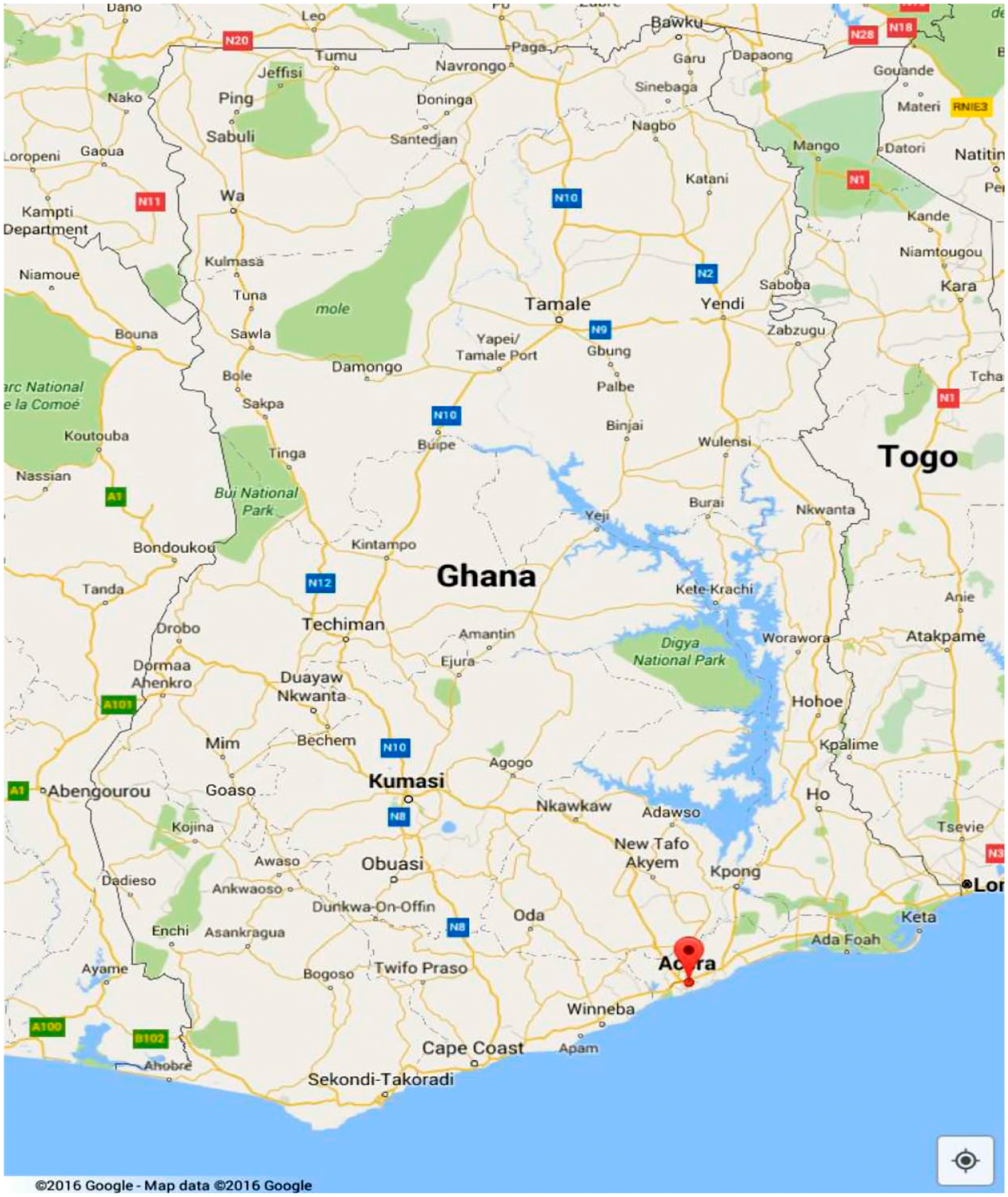
Map of Ghana showing Accra.
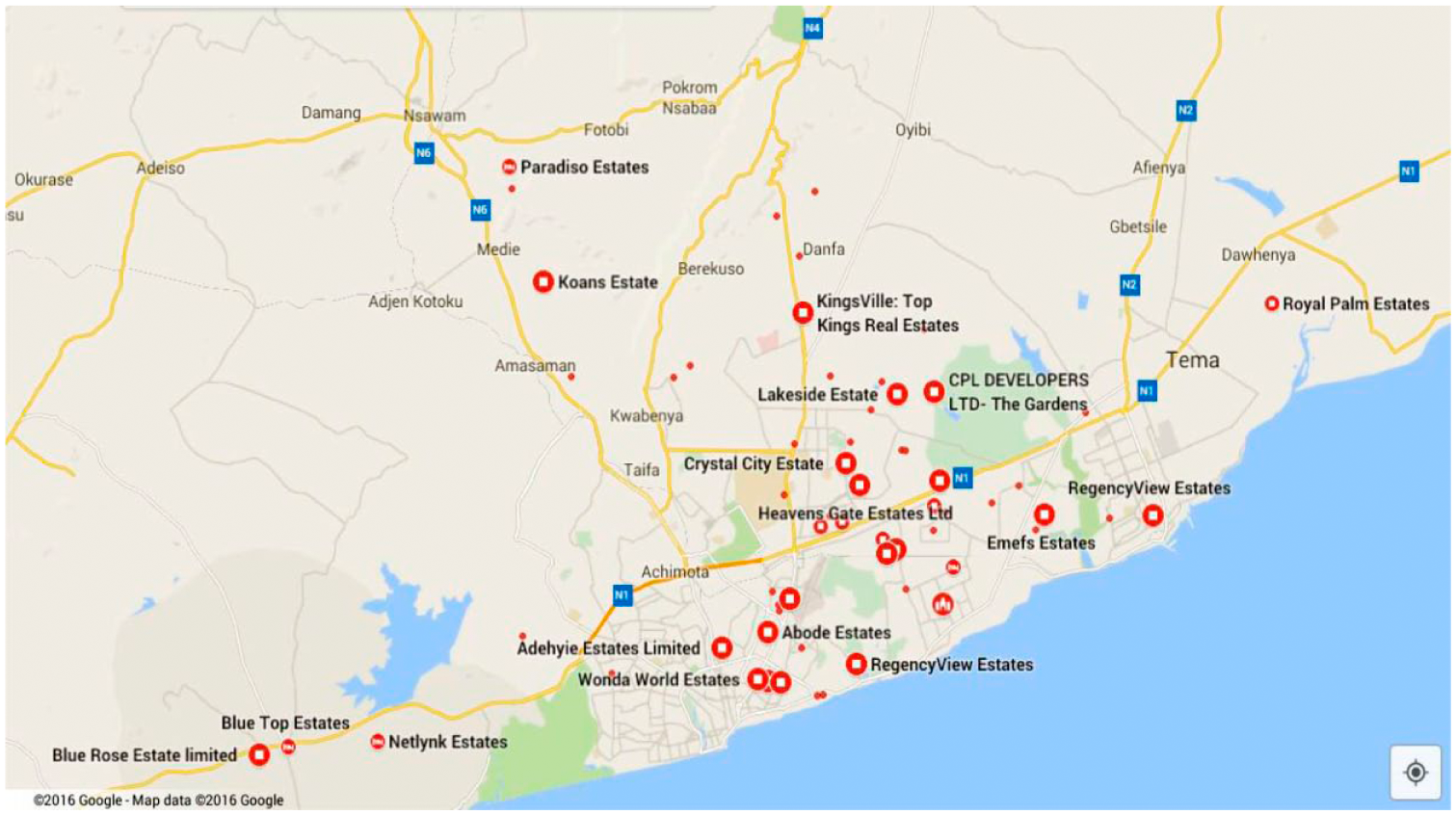
An extended map of Accra showing housing development sites of private developers in Accra, Ghana.
Data for study were collected between August 2015 and February 2016 in Accra, Ghana. Respondents for this study constituted private developers and homeowners in Accra. The study employed a quantitative approach to understand the practice of the DLP in the real estate industry of Accra, Ghana. Questionnaires were used to gather data from private developers and homeowners in the study area. The objective of this study was to understand how the operational characteristics of private developers and homeowners relate with the DLP, the adequacy of DLP, and suggested DLP. Generally, in representing relationships between dependent variables and a set of independent variables, regression analysis is often employed to explain the causal effect relationships between these variables. Several regression representations in explaining such relationships exist, but the appropriateness of each of these depends on a number of statistical properties and the nature of the dependent variable. In this study, the latter is very relevant. The dependent variables of note (DLP, adequacy of DLP, and suggested DLP) are continuous and binary. The DLP is a continuous variable and which makes its representation in a linear relationship with other set of variables feasible. To achieve the best linear approximation requires the use of a model that minimizes the squared deviations of the regression model, and the approach used in such instances is the ordinary least squares (OLS) (Hill, Griffiths, & Lim, 2008; Woodridge, 2009). Given that the explanatory variables consist of a set of more than one variable, the specification of the model is done within a multiple regression framework as in Equation 1. The theoretical representation of the multiple regression is expressed in Equation 1 where the dependent variable is the actual DLP and suggested DLP (

where
The other variable of interest is the views of respondents about the adequacy or otherwise of the DLP. Analysis of this also seeks to relate this variable to a set of explanatory variables. However, the dependent variable (adequacy of the DLP) was measured as a binary variable which makes its representation in a linear regression model problematic because of the nonlinear nature of such variables and hence the inappropriateness of the application of the OLS. In such instances, there is the need to employ models that are also nonlinear to appropriately handle the nature and behavior of such binary variables (Hill et al., 2008). Typically, the linear probability, logit, and/or probit models have been used in these cases. However, the limitations of the linear probability model in respect of nonnormality of the error terms, heteroscedasticity, and unbound predicted probabilities (see Woodridge, 2009) make it inappropriate in this application, and this leaves us with the Probit and Logit models. These two models have always been used, and the only difference is in the assumption of the distribution of the error. The logit assumes a logistic distribution and the probit assumes a normal distribution. The probability of response is the prime motive in binary response models such as

where x consist of a set of explanatory variables that explain the probability of suggesting the duration is adequate.
Given a class of binary response model where F is a function that assumes the values strictly between 0 and 1 (0 < F(g) < 1) for all real numbers g,

This circumvents the limitation of the linear probability model by ensuring that the estimated probabilities of response are largely between 0 and 1. We assume that the function F is normally distributed and as such applies the Probit model. The Probit model defines the function as a standard normal cumulative distribution function (CDF) and expresses it as an integral:

where

The Probit model is developed based on the following regression model where

However, what is observed is

Given that the magnitudes of each α
j
’s are not in themselves very useful, it is expedient to estimate the marginal effects of

The maximum likelihood method was used in the estimation of this.


where
Definitions and Measurements of Variables.

Note. DLP = defect liability period.
A case study research design was adopted for the study to enable us to gain a rich understanding of the issue of DLP from a Ghanaian perspective (Hyett, Kenny, & Dickson-Swift, 2014; Saunders, Lewis, & Thornhill, 2009). Secondary data were gathered from existing literature such as published materials in libraries, journal articles, research papers, unpublished theses as well as Internet information that hinge upon the theme of this study. For this study, housing development sites in Accra were divided into two zones: the high-income zone and the middle- and low-income zone. The high-income zone constitutes Cantonment, East Legon, Dzorwulu, Ridge, and Airport Residential Area, whereas the middle- and low-income zone include Oyibi, Oyarifa, Dome, Amasaman, Spintex, and Kasoa. This was done to ensure a good mix of high-income and middle- and low-income housing in the sampled housing development sites. In numbering the sites, we used single numbers for the high-income areas and double numbers for the middle- and low-income areas. We then randomly selected 6 areas constituting Cantonment, East Legon, Airport Residential, Oyibi, Oyarifa, and Spintex. Counting revealed 54 housing development sites in these areas of Accra, with a total of 270 housing units.
The sample size calculator of SurveyMonkey Incorporated was adopted to calculate the sample size of this study (see formula below). With a confidence level of 90% and 10% margin of error, the formula gave a sample size of 31 private developers and 54 homeowners. Simple random sampling was used to select the private developers, whereas the homeowners were selected with the stratified random sampling. In using the simple random sampling technique, all 54 housing development sites captured in the study area were allocated numbers and put into a container. A sample of 33 private developers were then selected, and questionnaires were administered accordingly.Simple random sampling was used to avoid bias as to which private developer got to be part of this study (Saunders et al., 2009). Stratified random sampling was also helpful in selecting the homeowners who live in properties in the study area. For each housing development site, every fifth house was randomly selected and questionnaires were delivered to 33 private developers and 67 homeowners, of which 29 from private developers and 58 from homeowners were retrieved. The main limitation of the study was the reluctance on the part of private developers and homeowners to provide data. The responses from private developers fell just 2 short ofthe adequate sample of 31, but this did not affect the quality of the conclusion. However, the required number of homeowners was exceeded by four.

where N is population size, e is margin of error, p is the level of significance, and z score is the number of standard deviations a given proportion is away from the mean. We adopted pseudonym to maintain confidentiality of respondents. For the private developers, we used PD in addition to how long they have operated in Ghana. With respect to the homeowners, we used either MH (male homeowner) or FH (female homeowner) in addition to their ages.
Findings and Discussions
General Characteristics of Respondents
Table 4 provides a summary of the general information obtained from a total of 87 respondents. Questions posed to private developers included the period of operation in Ghana, the number of residential properties built, the prices of residential properties, target market, and whether they conduct an inspection prior to handover of property to homeowner. Table 4 shows that more than 60% of the respondents have operated in Ghana for 10 years or moreand that 59% of private developers have built more than 100 residential properties in Accra. It is also obvious from Table 4 that 90% of private developers sell residential properties for at least US$50,000. In a country where the minimum wage is US$1.81, such residential properties can only be bought by the richest few in society (Awanyo et al., 2014). Table 4 also confirms the finding of Awanyo et al. (2014) that the target market of private developers, representing 83%, are high- and middle-income earners. The remaining 17% of developers who claim their target is low-income earners eventually end up selling to the middle-income group. For the purpose of this study, information was also gathered from homeowners regarding their employment status, length of stay in the property, and the price at which they acquired the property. From the study data, it was revealed that 41% of the respondents were either working with a private or a foreign organization, while 36% work with public institutions in Ghana. The study found that only 14% of the respondents purchased their properties at a price below US$50,000. Last, all the respondents confirmed that joint inspections of the residential properties were carried out before handover. The purpose of the inspection is to ensure that the property acquired by homeowner is free of any serious physical or structural defect in any part of the property.
General Information About Respondents.

Source. Field Survey (2015).
The Practice of the DLP in Ghana’s Real Estate Industry
Ghana, like most countries around the world, has adopted the practice of the DLP. However, the DLP in Ghana is not regulated by any specific legal provision, just like in other African countries. This is inconsistent with the practice in most European countries, where the duration and scope of DLP is determined by civil codes. Therefore, as earlier argued by Wong (2009), the DLP in Ghana is more of a best practice and depends on what the private developer considers sufficient for the property in question. The importance of the DLP clause in the sales agreement was well established by the respondents. Every one of the respondents (both private developers and homeowners) confirmed that the DLP clause was in their sales agreement. Majority of the homeowners representing 81% said they ensured the DLP clause was captured in their sales agreement. Figure 3 shows an extract of the DLP clause of one of the private developers understudy. In expressing his view on why he was particular about the DLP clause, one homeowner commented, There are bound to be defects and it is good to know that the developer acknowledges that and is ready to assist in fixing it. (MH, 5 years)
In the same vein, another homeowner was of the opinion that the DLP signifies a guarantee that the developer cares and understands his client’s needs and is a way of providing good customer service to entice more clients. (MH, 8 years)

An extract of defect liability period from a sample contract of sale.
Similar to the views shared by one of the homeowners, 44% of private developers believe the rationale for having a DLP clause in a sales agreement is an acknowledgment that defects in a building are inevitable. This is followed by 30% of private developers who have adopted the DLP as a marketing strategy to attract homeowners to their residential property developments. The remaining 26% were of the view that the DLP signifies their exclusive right to rectify all defects that arose in the building during the period indicated in the sales agreement. The study also found out that private developers have the exclusive right to repair all the defects that occur in the property during the DLP. This is clearly captured in Figure 3. It is believed that as the private developer built the property, he is in the best position to be able to detect the cause(s) of defects that may arise. Homeowners were particularly happy knowing that the private developer would return to rectify defects that occurred during the DLP. It is in this regard that one homeowner remarked, The building was built by the developer and it is expected that the developer knows what went into the construction of every part of the building and thus understand the defects when they manifest. (FH, 4 years)
To appreciate the practice of the DLP, it is important to understand what private developers are contractually bound by the DLP clause to rectify. Defects constitute structural and fixtures and fittings. The structural defects mentioned by respondents are very much the same as Australia’s Category 1 defects. In Australia, Category 1 defects include defects such as those that adversely affect the structural performance of the building, adversely affect the health and safety of person residing in the building, and adversely affect the functional use of the building, among others (Levi, 2016). Category 2 defects such as the F&F defects had to do with those that affect bathtubs, water closets, sinks, and any other item that is affixed to the building. To attend to the defects that arise during the DLP, it was found that the majority of private developers have set up a property management/facilities management unit to take defect complaints from homeowners and ensure that such defects are repaired. In the event of any defect, private developers expect homeowners to notify this unit. Nevertheless, unlike in Singapore where the private developers’ association (locally called the REDAS) has laid down a procedure for reporting defects to the private developer, as shown in Table 2, no such procedure was found with respect to GREDA in Ghana. Also, while in Singapore, private developers have a maximum of 1 month to respond to notice of defects from homeowners, private developers in Ghana have no such set period within which to respond to the notice from homeowners (Urban Redevelopment Authority, 2015). Therefore, in the event that the private developer delays in repairing the defect, some homeowners are compelled to engage an artisan to rectify the defect and subsequently send the bill to the private developer for payment.
The DLP in Accra
As earlier indicated in the methodology, the multiple regression model (OLS) was adopted to understand the relationship between the characteristics of respondents and the DLP for fittings and fixtures and structure. Using a multiple regression model, the results of the analysis of responses from private developers are presented in Table 5. The regression (R2) suggests that up to 56.1% and 41.2% of variations in the DLP for fitting and fixtures and structure, respectively, are explained length of operation of a private developer, number of properties sold by a private developer, and the average selling price of a property by a private developer. Also, the probabilities of the F statistic for both models are significant at 5%, suggesting that both models are statistically significant. This implies that the independent variables (length of operation by a private developer, number of structures developed, and the average price of a facility) jointly explain the DLP given for both fixtures and fittings and structure.
Effect of Private Developers’ Length of Operation, Number of Properties Sold, and Average Price of Property on the DLP.
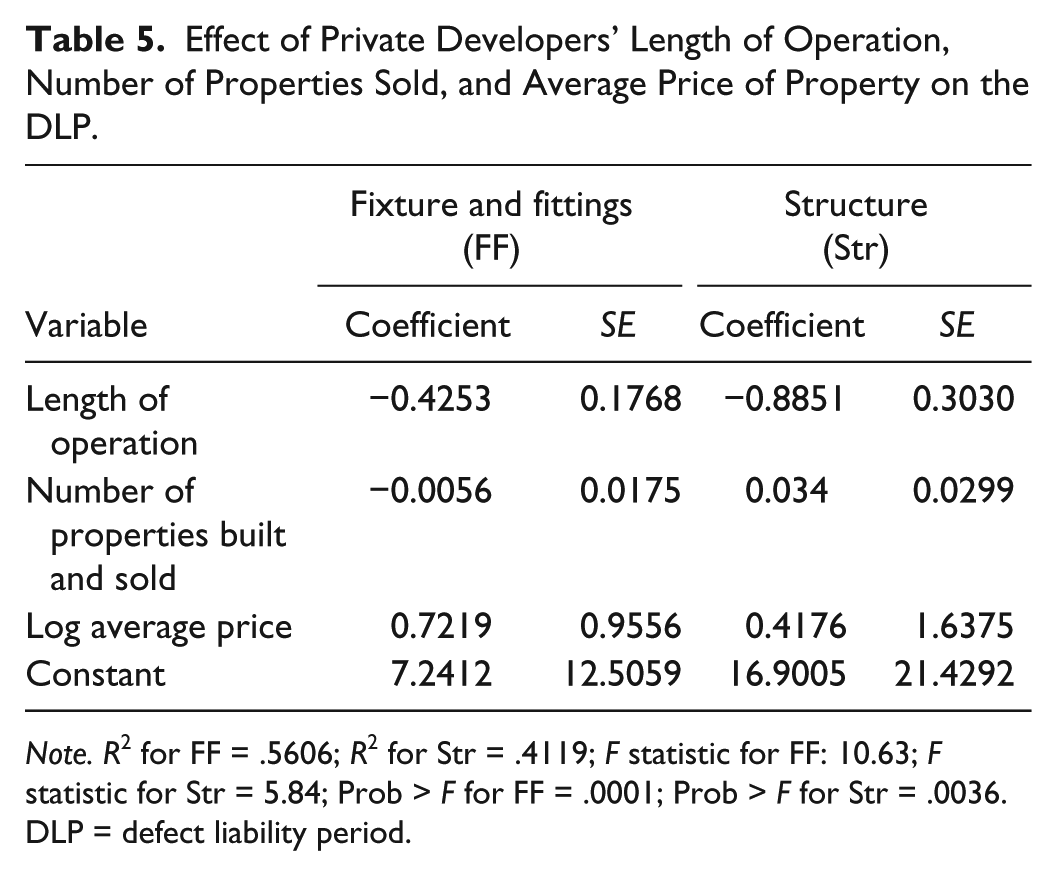
Note. R2 for FF = .5606; R2 for Str = .4119; F statistic for FF: 10.63; F statistic for Str = 5.84; Prob > F for FF = .0001; Prob > F for Str = .0036. DLP = defect liability period.
The coefficient of the length of operation of a private developer is inversely related to the DLP for fittings and fixtures and structure. This suggests that an additional year obtained by a private developer in the real estate industry reduces the given DLP for fittings and fixtures by 0.425 months, or approximately 13 days, and for structure by 0.885 months or approximately 27 days. The conclusion is that while newer private developers are willing to give out longer DLP to entice prospective homeowners, the older ones with well-established reputation in the real estate business give out shorter DLP. More so, the coefficient of the number of properties sold by a private developer is inversely related to the DLP for fittings and fixtures, meaning that an additional property sold by a private developer reduces the given DLP for fitting and fixtures by 0.0056 months. Findings also revealed that the coefficient of the number of properties sold by a private developer is directly related to the DLP for structure. This implies that an additional property sold increases the given DLP for structure by 0.0334 months. Private developers are more mindful of the defects to the structure than to fitting and fixtures. It is notable that a private developer would usually give out longer DLP for structural than fittings and fixtures and not the other way around. Lastly, the coefficient of the average selling price of a property is directly related to the DLP for fittings and fixtures and structure. This means that a percentage increase in the average selling price of a property increases the DLP for fittings and fixtures by 0.722 months, or approximately 22 days, and for structure by 0.418 months or approximately 13 days. Price is a major determinant for the DLP. Properties with high price tags have longer DLP, typically between 12 and 24 months, while the lower-priced properties would usually have a shorter DLP, of about 6 months, for all defects.
With respect to homeowners, regression analysis irrelevant because they do not determine the DLP; for the most part, the private developer does. For this reason,their responses were analysed descriptively. It must be noted that homeowners’ responses on the DLP were gathered to triangulate with the responses from the private developers. A majority (30%) of homeowners said that the DLP in their sales agreement is 12 months for all defects, which is consistent with the responses of private developers, a majority (37%) of whom indicated that they give homeowners a duration of 12 months for all defects. However, generally, findings revealed that the DLP in Accra ranges between 6 and 24 months for fittings and fixtures as well as for structure. Analyzing Accra’s case within the broader international perspective indicates that it shares some similarity with countries such as Singapore, Nigeria, Botswana, and Australia as well as a few European countries (Cyprus, Estonia, and Latvia), where the duration of the DLP is within the range of 6 to 24 months (European Union, 2010; Gofhamodimo, 1999; Oluwole et al., 2012; Urban Redevelopment Authority, 2015). Nevertheless, compared with the likes of Romania, Lithuania, United Kingdom, Greece, and Australia, among others, the DLP for structural defects seems rather short (European Union, 2010). Several factors may account for this, including the type of constructional material used, the specific DLP provided in the civil code, the climate, and the nature of competition among private developers in these countries.
Adequacy of the DLP
To recall, Oluwole et al. (2012) raised the insufficiency of the DLP in the case of Nigeria. We, therefore, decided to find out what both private developers and homeowners in Accra think about the adequacy of the DLP. Beginning with the private developers, the Probit regression model was employed as seen in Table 6. This model predicted the probability of adequacy of the DLP quite well because up to 62.07% of the model is correctly classified or predicted. The length of operation has a negative relationship with the probability of a private developer suggesting that the DLP is adequate. This implies that an additional year obtained by the private developer in the real estate industry reduces the probability of the private developer settling on the DLP as being adequate by 0.01. In the case of the number of properties built and sold, it has positive relationship with the probability of a private developer indicating that the DLP is adequate. This connotes that an additional property developed and sold by a private developer increases the probability of the private developer settling on the DLP as being adequate by 0.00095. The average selling price of a property has a positive relationship with the probability of a private developer suggesting that the DLP is adequate. This means that a percentage increase in the average selling price of a property increases the probability of the private developer settling on the DLP as adequate by 0.028.
Effect of Private Developers’ Length of Operation, Number of Properties Sold, and Average Price of Property on the Adequacy of the DLP.
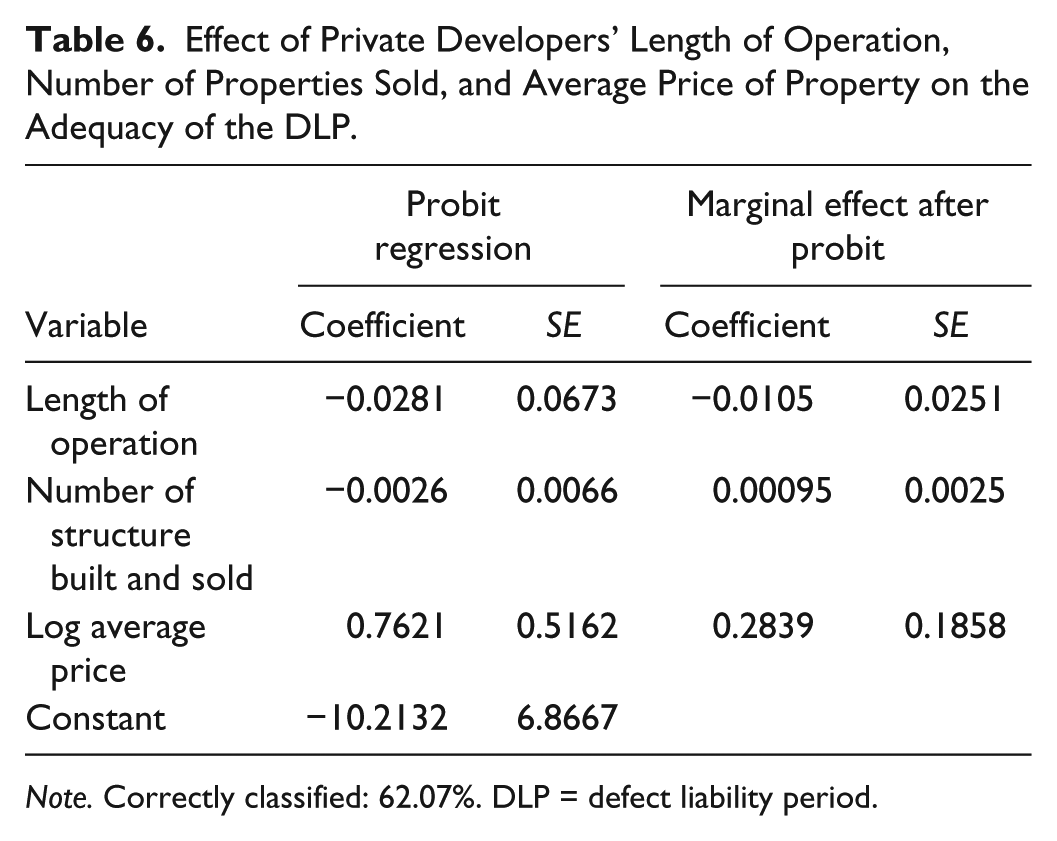
Note. Correctly classified: 62.07%. DLP = defect liability period.
It should not come as a surprise that both the length of operation and number of properties sold and average selling price of the property are revealing contradictory relationships with the adequacy of the DLP. What this means is that private developers in Accra are divided on this particular issue. They found the question of adequacy a relative one because the majority (76%) of them confirmed that they carry out repairs on some defects (especially those that are structural in nature) when it occurs within a reasonable period of time afterthe DLP has expired. One of the private developers commented, The ceiling in one of the bathrooms in a building, which was handed over to a homeowner 3 years ago, caved in; management considered such defect as unusual and decided to take liability for the repair of the ceiling. (PD, 9 years)
By way of triangulation, post-DLP repairs by private developers were confirmed by the majority (48%) of the homeowners. At this juncture, it is understandable why there may be differences in response on the adequacy of the DLP, as reflected in the results of the multiple regression model.
Homeowners also shared their thought on the adequacy of the DLP. As seen in Table 7, probit regression model was also used to analyze the responses of the homeowners. This Probit model was able to predict the probability of adequacy of the DLP quite well because up to 72.41% of the model is correctly classified. The length of stay of a homeowner in a property has a negative relationship with the adequacy of the DLP. This means that an additional month obtained by a homeowner in a property reduces the probability of the homeowner settling on the DLP as being adequate by 0.000059. This suggests that as time elapses, all the hidden defects in the building manifest and a longer DLP is required by homeowners to get repairs done. The price at which a homeowner acquired a property has a negative relationship with the adequacy of the DLP, implying that a percentage increase in the price of a property reduces the probability of the homeowner settling on the DLP as adequate by 0.0865. This means that as properties become expensive, a homeowner would require more assurance (in this case a longer DLP) on their property.
Effect of Homeowners’ Length of Stay and Price of Property on the Adequacy of the DLP.

Note. Correctly classified: 72.41%. DLP = defect liability period.
Suggested DLP
Once private developers’ and homeowners’ responses on adequacy of the DLP, their suggestions on the DLP were sought. A multiple linear regression was adopted to analyze their responses. In Table 8, the regression (R2) suggests that up to 37.5% and 52.2% of variations in the suggested DLP for fittings and fixtures and structure, respectively, are explained by the length of operation of a private developer, number of properties sold by a private developer, and the average selling price of a property by a private developer. More so, the probabilities of the F statistic for both models are significant at 10% suggesting that both models are statistically significant. This implies that the independent variables (length of operation by a private developer, number of structures developed, and the average price of a facility) jointly explain the DLP given for both fixture and fitting and structure. The coefficient of the length of operation of a private developer is negatively related to the suggested DLP for fittings and fixtures and structure. This suggests that an additional year obtained by a private developer in the real estate industry reduces the suggested DLP for fittings and fixtures by 0.0195 months and structure by 0.994 months. Not only does the an older private developer give shorter, they also suggested DLP that was shorter compared with the newer private developers. The coefficient of the number of properties built and sold by a private developer is inversely related to the suggested DLP for fittings and fixtures. This implies that an additional property built and sold by a private developer reduces the suggested DLP for fitting and fixtures by 0.0249 months.
Effect of Private Developers’ Length of Operation, Number of Properties Sold, and Average Price of Property on Suggested the DLP.

Note. R2 for FF = .3748; R2 for Str = .5216; F statistic for FF = 5; F statistic for Str = 9.09; Prob > F for FF = .0075; Prob > F for Str = .0003. DLP = defect liability period.
However, the coefficient of the number of properties built and sold by a private developer is positively related with the suggested DLP for structure, which means that an additional property built and sold by a private developer increases the suggested DLP for structure by 0.0285 months. In almost all instances where a private developers were suggested a longer DLP, it applied to structural defect rather than to fittings and fixtures. The coefficient of the average selling price of a property is negatively related with the suggested DLP for fittings and fixtures. This means that a percentage increase in the average selling price of a property reduces the suggested DLP for fittings and fixtures by 1.322 months or approximately 40 days. Nevertheless, the coefficient of the average price of a property is positively related to the suggested DLP for structure. This means that a percentage increase in the average selling price of a property increases the suggested DLP for structure by 1.5639 months or approximately 47 days. This meets our prior expectation because private developers are more flexible in giving out longer duration for structural defects than fitting and fixtures for high priced properties.
From the perspective of the homeowners in Accra, all two independent variables—length of stay and price of property—significantly explain the suggested DLP for fittings and fixtures and structure. As shown in Table 9, the coefficient of the length of stay is positively related to the suggested DLP for fittings and fixtures and structure. This suggests that an additional month obtained by a homeowner in a property increases the suggested DLP for fittings and fixtures by 0.0566 months and structure by 0.0334 months. The coefficient of the price of a property is positively related to the suggested DLP for fittings and fixtures and for structure. This means that a percentage increase in the average selling price of a property increases the suggested DLP for fittings and fixtures by 2.1132 months, or approximately 63 days, and the structure by 6.0672 months, or approximately 182 days. Almost all homeowners, irrespective of how long they had lived in their property or the price at which they purchased the building, suggested a longer DLPs. However, homeowners demand longer DLPs from private developers, especially when they are acquiring high priced properties. In appreciating the minute details of suggestions, we found that majority (45%) of the private developers and homeowners (48%) indicated that a duration of 12 months for fixtures and fittings defects and 24 months for structural defects would be ideal to rectify all defects in the building, all other things being equal. However, some 11% of the homeowners believed that a duration of 5 to 10 years for structural defects would be more appropriate. Further checks revealed that this group of homeowners are either foreign nationals or Ghanaians who have lived abroad. Their suggestion is consistent with the practice in most European countries (see Table 1).
Effect of Homeowners’ Length of Stay and Price of Property on the Suggested DLP.
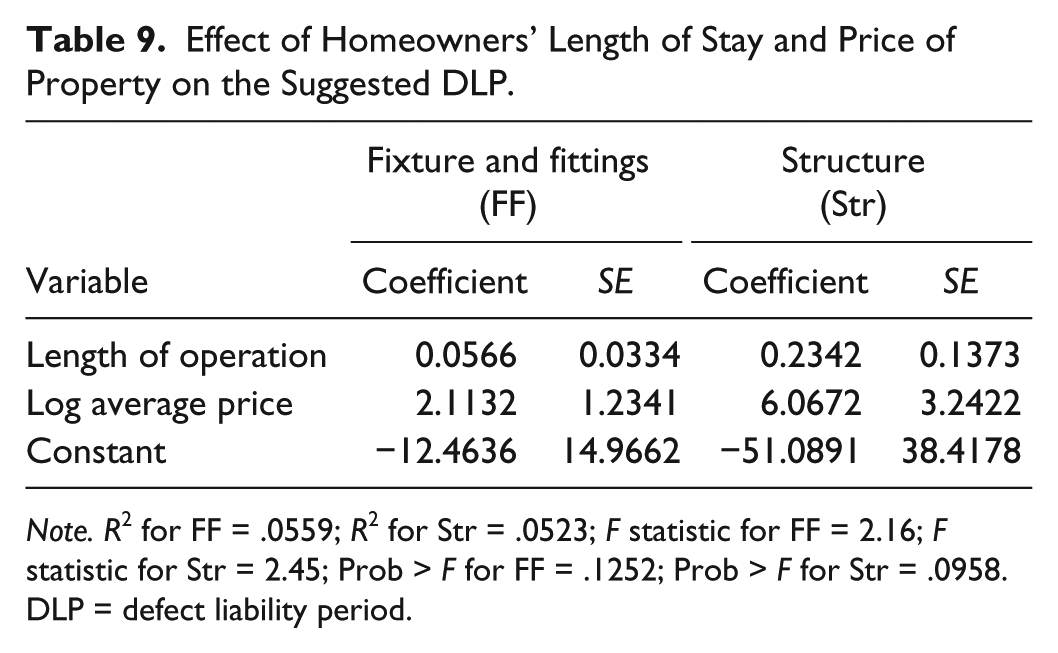
Note. R2 for FF = .0559; R2 for Str = .0523; F statistic for FF = 2.16; F statistic for Str = 2.45; Prob > F for FF = .1252; Prob > F for Str = .0958. DLP = defect liability period.
Conclusion and Recommendations
Ghana, like most countries around the world, has adopted the practice of the DLP. Nevertheless, unlike in Europe, there is no specific legal provision regulating the practice. Therefore, how the DLP operates depends on the clause in the Sales and Purchase Agreement. This study revealed that the duration of the DLP in Accra ranges from 6 to 24 months for all defects. This duration is standard as per the practice in countries such as Singapore, Nigeria, and Botswana, among others. However, it is relatively short when compared with the practice in Romania, Lithuania, and the United Kingdom, where the duration is at least 6 years for structural defects. Findings revealed that newer private developers give longer DLP than the older one. Private developers would usually give a longer DLP for structural defects than fittings and fixtures. High-priced properties had longer DLPs than low-priced properties. We also conclude that, as private developers gain more grounds in the real estate industry, they tend to believe that the DLP is adequate and hence are reluctant to extend it . In cases where a private developers suggested a longer DLP, it was associated more with structural defects than with fittings and fixtures. Notwithstanding the price at which they bought their property or how long they had lived in a building, the majority of homeowners were of the opinion that the DLP given to them was inadequate. Therefore, almost all homeowners suggested a longer DLP than currently exist in the industry. We find the following recommendations necessary.
To start with, it is recommended that GREDA develop a manual that will standardize the practice of DLP in Ghana’s real estate industry. This manual should clearly state the duration and scope of the DLP. Drawing from the findings of this study, a DLP of 12 and 24 months for fittings and fixtures and structural defects, respectively, is considered fair for private developers and homeowners. The manual should also provide a minimum benchmark of DLP required of every private developer. This manual could also specify the procedure for rectifying defects. We particularly recommend the Singapore model for homeowners to report defects to the private developers. Disciplinary measures should be spelt out for private developers who go contrary to the provisions of this manual. This will enable strict monitoring of the activities of private developers and allow aggrieved homeowners to seek equitable redress. It will put an end to the current situation where private developers have the freewill to set a DLP based on their own whims and prejudices. Such a manual will in the long run create some confidence in the real estate industry because it will assure prospective homeowners of the durability of their investments. Second, private developers in Ghana can save themselves some costs of rectifying defects by ensuring greater supervision during the construction process. Strict supervision of artisans and subcontractors at the construction stage will ensure that the appropriate construction and installation procedures are adhered to. Supervision will also enable the private developer to detect certain mistakes and omissions by artisans and subcontractors which may have dire consequences on the completed property. This will, in the long term, minimize the amount of rectification works required during the DLP. This study contributes to existing research on the DLP around the world and on private developers in Ghana. Future research could attempt to understand the types and causes of defects that arise during the DLP in Ghana.
Footnotes
Acknowledgements
We are also grateful to Ama Derban for reviewing the entire manuscript for all errors prior to publication.
Declaration of Conflicting Interests
The author(s) declared no potential conflicts of interest with respect to the research, authorship, and/or publication of this article.
Funding
The author(s) received no financial support for the research, authorship, and/or publication of this article.