




Abstract
The present study sought to investigate the relationship between cultural capital of senior high school English teachers and their self-efficacy in Iran’s English language classrooms using a mixed methods approach. To this end, all senior high school English teachers in seven districts of Mashhad city in Iran were selected as the study population, out of whom 242 cases were chosen as the sample population using Morgan Sample Size Table. This is an applied research in which a descriptive survey method has been adopted. Self-efficacy and cultural capital questionnaires were used for collecting data. To verify the quantitative findings and to assess the accuracy of their results, interviews were used. Accordingly, a group of English teachers and high school students were invited for interviews. The qualitative data derived from interviews were analyzed using NVivo software. The results indicated a significant relationship between cultural capital of senior high school English teachers and their self-efficacy in Iran’s English language classrooms which was confirmed by the findings of both quantitative and qualitative methods. In other words, teachers with higher cultural capital had greater self-efficacy and therefore were more successful in teaching English to students.
Introduction
One issue that has been the subject of growing attention in applied linguistics is language learning. In this regard, learning English as a foreign language requires several factors among which cultural capital is of paramount importance. The cultural capital is related to personal tendencies, activities, and information derived from literary, artistic, and musical sources (DiMaggio & Mohr, 1985). As Hottinger and Rose (2006) pointed out, cultural capital refers to the dominant culture in the society and whether or not a person is ideally situated in that culture.
Bourdieu (1986) defined cultural capital as the “instruments for the appropriation of symbolic wealth socially designated as worthy of being sought and possessed” (p 73), including social roles, language competency and refinement, general cultural background, knowledge, and skills (DeMarrais & LeCompte, 1998). A distinguishing feature of the cultural capital propounded by Bourdieu (1986) is analyzing the mechanisms of academic achievements in terms of the extent to which groups and social classes are in possession of this capital. Students with greater cultural capital (students coming from families who have dominant cultural skills and distinction) are better at nurturing cultural skills and superiorities that are rewarded at schools, and therefore more successful at achieving high levels of academic achievement. As such, high social classes have a larger share of the cultural capital compared with other classes, and therefore more capable at fostering this capital in their descendants. With the increase of the cultural capital in the middle classes, the academic achievement of these children has improved (Aschaffenburg & Mass, 1997).
DiMaggio (1982) viewed Bourdieu’s concept of cultural capital as an institutionalized way of widely shared, high status cultural signals including dispositions, choices and preferences, formal knowledge, behaviors, goods, and credentials used for social inclusion and exclusion. Thus, the notion of culture as a capital shows that it can be saved, invested, and used to obtain other resources (Kingston, 2001). Cultural capital, as Luftig (2000) believed, is helpful in the development of skills and competencies which increase creative thinking and imagination.
Self-efficacy, which is derived from social cognition of Albert Bandura (1997), the psychologist, is related to an individual’s judgments or beliefs about their abilities in performing tasks and responsibilities. In other words, self-efficacy is related to one’s beliefs in issues like needs, motives, attitudes, abilities, knowledge, and awareness that constitute behavioral patterns.
Self-efficacy is a key factor in the system that constitutes human competency. The performance of tasks by different people with similar skills under various situations, which could be weak, moderate, or strong, or by an individual under different circumstances, is related to the change of self-efficacy beliefs. Skills can be easily affected by self-hesitation, so that even exceptionally talented people, having weak belief in their abilities, would be unable to fully utilize their capabilities and potential (Bandura, 1997). For this reason, a sense of self-efficacy enables people to carry out extraordinary tasks by utilizing their skills in dealing with obstacles (White, 1982). Therefore, self-efficacy is an important factor for successful implementation of an action and basic skills necessary for its execution.
In recent years, special attention has been paid to use the proper methods of English language teaching in schools and the factors that influence the academic achievements of students in learning English. In this context, an important factor is the effect of cultural capital of teachers on their self-efficacy, which has not been investigated from the perspective of applied linguistics. Therefore, the main goal of this study was to explore the relationship between the cultural capital of the senior high school English teachers and their self-efficacy in Iran’s English language classrooms using a mixed methods approach. Mixed methods research represents research that involves collecting, analyzing and interpreting quantitative and qualitative data in a single study that that investigate the same underlying phenomenon (Leech & Onwuegbuzie, 2008).
Research Question
To achieve the objectives of the study, the following research question was posed by the researcher:
Is there any relationship between cultural capital of senior high school English teachers and their self-efficacy in Iran’s English language classrooms using a mixed methods approach?
Review of Literature
Malik and Mohamed (2014) in their study looked into the ways in which English language has come to be viewed as associated with symbolic values that can be considered as a form of cultural capital. It was found that English language was used to reproduce social inequality and this was largely due to the fact that it has been fetishized.
The relationship between cultural capital of English language teachers and their self-efficacy is a new subject in the field of applied linguistics. and studies have not addressed this issue. Researches in this field are primarily focused on the effect of cultural capital of parents or students on the academic achievement of students or the impact of teacher’s self-efficacy on their professional development and academic achievements of students. In this section, a brief review of these studies has been presented. More studies have attempted to explore the effect of cultural capital in terms of psychological and sociological features. In this regard, several studies have been undertaken, the most relevant of which are listed here.
DiMaggio (1982) concluded that the level of cultural capital influenced the scores of high school students. In another study, DiMaggio and Mohr (1985) found that cultural capital could leave a significant impact on the chance of success in higher education.
De Graaf, De Graff and Kraaykamp (2000) in a study on the cultural capital of parents and the academic achievement of students investigated those dimensions of cultural capital that affected academic achievement of students, finding that parents who had a reading habit not only acquired greater teaching skills but also created a cultural atmosphere at home that resembled that of schools. As such, students who were accustomed to reading at home were less likely to encounter troubles at school.
Sullivan (2001) in a study on U.K. senior high school students concluded that upper-class parents transferred cultural capital to students. He observed that the cultural capital of parents was to a large extent correlated with their social class and competencies. In these studies, gender did not play any role in the cultural capital of students.
Bourdieu (1997) posited that children, before school and within the family, acquired a variety of cultural abilities including information and skills. In this context, children of upper classes of society, influenced by the cultural capital of their parents, were more likely than children of lower classes of society to experience success opportunities. In fact, in the view of Bourdieu, modern education system were more effective in the accreditation and promotion of the cultural capital in children who were already in possession of such capital in comparison to children who were less endowed with such attributes and skills. However, the educational system was not blatant in its discrimination between children of upper and lower classes, claiming that children were evaluated based on unbiased and identical criteria of excellence, but the important point was that these yardsticks of excellence were derived from the upper-class culture.
Lareau and Weininger (2003) in an article on the role of cultural capital in the educational research examined the relationship between cultural capital and English language teaching. They noted that the concept of cultural capital, referring to cultural activities, was different from technical abilities and skills.
Jæger (2009) analyzed the data derived from 2234 Danish student aged 15 years and reported a significant relationship between the reading ability of students and the cultural capital of their parents including educational resources and cultural relations. For example, students with higher reading skills stated that their parents often discussed sociocultural issues, books, films, and television programs with them.
Khodadady and Natanzi (2012) argued that social and cultural capital and underlying factors influenced the success of English language students in Iran. They found that social capital was related to the grade point average (GPA) of students. Of 10 variables proposed by Khodadady as the underlying social capital factors, four variables of encouragement and engagement of parents in the educational affair of children at school, parental consultation, family ties, and family support played a pivotal role in the academic achievement of students. In a similar study, Khodadady and Mokhtary (2013) investigated the relationship between cultural capital and academic achievement of senior high school students. There was a significant positive relationship between the literacy level of parents and the academic achievement of students.
Based on the aforementioned studies, it can be concluded that the cultural capital of parents has a significant impact on their children’s academic performance in school.
There has been a host of studies on the impact of the teacher’s self-efficacy on the academic achievement of students as well.
Hoy and Spero (2005) examined variation in the self-efficacy level of teachers during the first years of their teaching career. Bandura’s theory of self-efficacy maintained that efficacy could be highly flexible in early learning stages, so the early teaching years were highly influential in the long-term growth of efficacy in teachers. The results signified a remarkable hike in efficacy of teachers as they taught materials to students, though this value followed a declining trend during the early teaching years.
Caprara, Barbaranelli, Steca, and Malone (2006) believed that self-efficacy ideas of teachers were an indicator of their job satisfaction and academic achievement of students. The results of structural equation modeling verified a conceptual model in which the teachers’ personal self-efficacy ideas had a significant effect on their career satisfaction and academic success of students.
Akbari and Moradkhani (2010) examined the relations between experience, university degree, and efficacy of English teachers in Iran, finding that experienced teachers (with over 3 years of experience in teaching English), in comparison to less experienced teachers, had significantly higher self-efficacy in areas such as student participation, class management, and educational strategies. In contrast, teachers who had a degree in English language, except in the case of student participation, had higher self-efficacy compared with teachers with an irrelevant degree.
Ghanizadeh and Moafian (2010) explored the relationship between self-efficacy and success of English language teachers in language teaching institutes of Iran. The results demonstrated a significant relationship between the self-efficacy and success of these teachers.
Ghonsooly and Golparvar (2012) studied the effect of self-efficacy on the performance of students in General English courses between students of Humanities and Sciences in Iran, reporting a significant positive relationship between self-efficacy of the university students and their success in General English course. In similar context, the role of English teacher’s self-efficacy and cognitive development as a predictor of job performance was investigated by Ghonsooly, Khajavy and Mohaghegh Mahjoobi (2014). The findings revealed both self-efficacy and cognitive development influenced job performance irrespective of the gender.
Samadi (2013) studied the effect of professional knowledge and self-efficacy of female middle school teachers on their positive and negative communication practices with students. The results showed that self-efficacy and professional knowledge of teachers were key factors in teaching process.
Safa and Ghonsooly (2015) explored the relationship between self-efficacy and class management of Iranian English teachers, reporting a significant positive relationship between self-efficacy and class management methods of teachers.
Based on the findings of the aforementioned studies, it can be concluded that cultural capital has a significant effect on performance and academic achievement of students. Considering that self-efficacy is involved in improving the performance of individuals, the rest of this article attempts to examine the impact of cultural capital on self-efficacy of teachers.
Method
Participants and Setting
This is an applied research in which a descriptive survey method has been adopted. English language teachers, who taught at all grades of senior high schools in various districts of Mashhad in Iran, constituted the study population. Total population was 607 senior high school English teachers in Khorasan Razavi province, Iran (2014-2015), according to a list provided by heads of English departments. Using Morgan Sample Size Table, a sample including 242 teachers was chosen through a simple random sampling. Teaching experiences ranged from 10 to 30 years. Seventy percent of teachers in the sample were male and the rest were female with at least 10 years of work experience. With regard to the level of education, 66% of participants had BA degree, 33% had an MA degree, and 1% had an associate degree. Of the seven educational districts of Mashhad, 22% of participants worked in District 4, 17% in District 6, and 10% in Districts 2 and 3. The mean age of the teachers was 43 years with an SD = 4 years, and their average work experience was 21.2 years with SD = 4.2.
Instrumentations
To collect the required data, two questionnaires were administered to the participants. To measure cultural capital, a translated copy adopted from Khodadady and Natanzi’s (2012) study was used. It was composed of eight subscales (Cultured Family, Cultural Commitment, Cultural Investment, Religious Commitment, Cultural Visits, Interest in Art and Music, Cultural Curiosity, and Literate Family). Cultural capital scale (CCS) consisted of 31 items that were evaluated on a 5-point Likert-type scale (never, rarely, sometimes, often, and always). The results obtained by Khodadady and Natanzi showed that not only the CCS itself but also its eight factors were reliable.
The self-efficacy questionnaire used was based on the version of Woolfolk and Hoy (1990) adapted from the model of Gibson and Dembo (1984), which has been translated into Persian by the researcher. The validity of this questionnaire has been evaluated using back-translation method. It was composed of two subscales including teaching efficacy and personal teaching efficacy, but after the statistical analysis (explanatory factor analysis) done by the researcher, three extracted subscales were reported as follows: efficacy for instructional strategies, efficacy for class management, and efficacy for environmental factors. This questionnaire was composed of 22 items which were evaluated on a 6-point Likert-type scale (strongly disagree, disagree, partly disagree, partly agree, agree, and strongly agree). In the statistical analysis, total measurement model and structural model were adopted.
To investigate the internal reliability of cultural capital and self-efficacy scales based on an ordinal scaling method, Cronbach’s alpha was used. To make sure that the instruments were reliable, they were piloted among 20 English teachers in Iran prior to the study, and Cronbach’s alpha was computed for subscales and the whole questionnaire. The reliability index of cultural capital and self-efficacy questionnaires estimated through Cronbach’s alphas were 0.930 and 0.934, respectively.
Interview
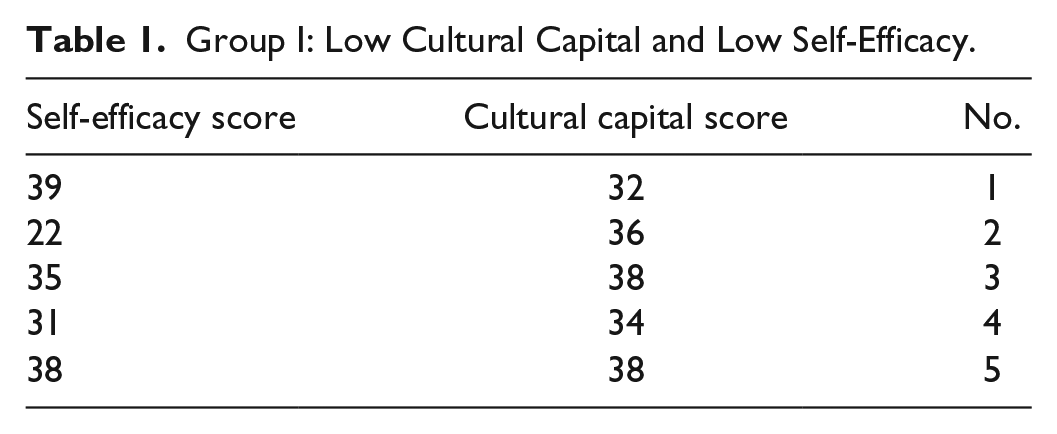
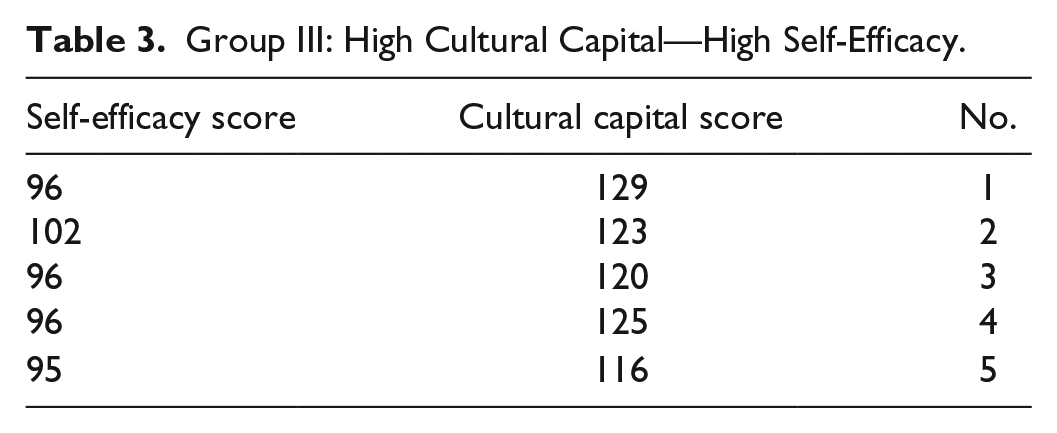
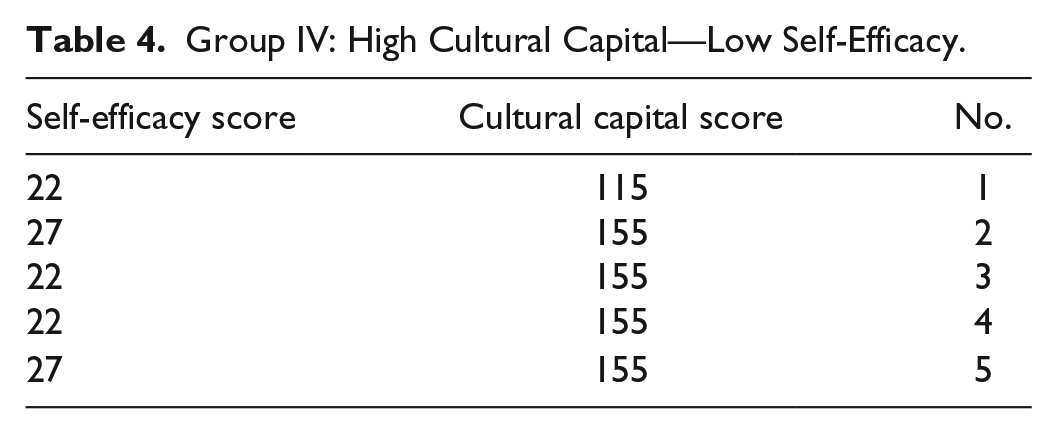
In addition to the quantitative analysis of research data, the results of interviews were also used for further elaboration of the subject and to assess the accuracy of the quantitative results. Accordingly, a group of English language teachers and their students were interviewed. To do so, a population including 20 teachers and 40 students were selected. In teacher’s interviews, eight questions were asked from 20 high school teachers. In student’s interviews, five questions were asked from 40 students (two students from the teacher who was interviewed). Questions were based on the comments and insights of the supervisor and the review of theoretical backgrounds and participants. Each interview lasted about 20 minutes. In the next step, the interview data were keyed and analyzed by NVivo 8 software. The candidates for the interview were selected based on their answers to the cultural capital and self-efficacy questionnaires. To this end, the total score of each participant in cultural capital questionnaire was calculated. This questionnaire consisted of 31 items, which were scored on a range from 1 to 5. Therefore, the total score of cultural capital questionnaire for each individual could be a number between 31 and 155. Then, the scores were divided into three categories of low (31-72), medium (73-114), and high (115-155). The same procedure was applied to the self-efficacy questionnaire as well. This questionnaire consisted of 22 items which were scored on a range from 1 to 6. Thus, the scores were divided into three categories of low (22-58), medium (58-94), and high (95-132). Now, by taking into account the level of cultural capital and self-efficacy, individuals were selected from five categories. The first group included participants with high self-efficacy and low cultural capital. The second group included participants with medium cultural capital and medium self-efficacy. The third group consisted of participants with high self-efficacy and high cultural capital. The fourth group included participants with high cultural capital and low self-efficacy. The fifth group included individuals with high self-efficacy and low cultural capital. Finally, a number of participants were randomly selected from each group for interviews.
Group I: Low Cultural Capital and Low Self-Efficacy.
Group II: Medium Cultural Capital—Medium Self-Efficacy.

Group III: High Cultural Capital—High Self-Efficacy.
Group IV: High Cultural Capital—Low Self-Efficacy.
Group V: Low Cultural Capital Down—High Self-Efficacy.

Findings
Total Measurement Model
In this section, the fitness of total measurement model consisting of the variables (mentioned in Figure 1) is examined. If verified, the results of this model can be applied to construct the structural model of study.

Total measurement model in standard estimating mode.
Because the variable of cultured family and the variable of efficacy for environmental factors were not sufficiently significant in explaining cultural capital and self-efficacy, based on the results of the total measurement model, they were excluded from the model. In Figure 1, the total measurement model has been shown.
The results of fitting in the above model with data are presented in Table 6.
Results of Total Measurement Model.
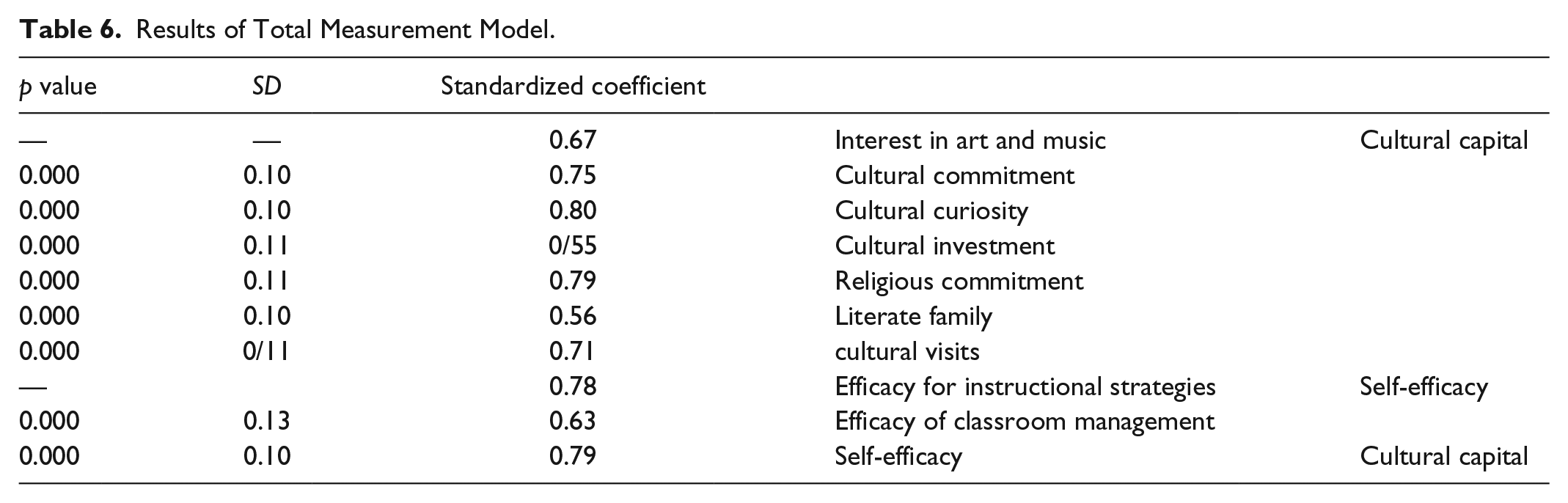
As shown in Table 6, for all variables, p value <0.5, and therefore, all estimated variables are significant for measuring the relevant factors. Therefore, the general confirmatory factor analysis is confirmed in relation to fitting the research data.
In Table 7, reliability and validity indices of the total measurement model are presented.
Reliability and Validity Indices of the Total Measurement Model.

Note. AVE = average variance extracted; CR = Cronbach’s reliability coefficient.
In the above model, the Cronbach’s reliability coefficient is greater than0.7. Also, the reliability values are greater than 0.5 and the root square of average variance extracted for each construct is greater than the correlation of other constructs. As such, the divergent and convergent validity and reliability of total measurement model are confirmed. However, the correlation coefficient between two factors of cultural capital and self-efficacy is less than0.85, thus eliminating the colinearity problem. Also, because all factor loads are greater than 0.6, this construct is one dimensional.
Structural Research Model
In this section, drawing on the results of the previous section, the structural model of the study is examined. In Figure 2, this model is presented along with the results.

The structural model of study in standard estimation mode.
For the structural model above, the fitness indices are χ2/df = 2/82, χ2 = 73/36, df = 26, comparative fit index (CFI) = 0/95, Tucker–Lewis index (TLI) = 0/92, root mean square error of approximation (RMSEA) = 0/079, and standardized root mean square residual (SRMR) = 0/04.
This model fits the collected data well. In this mode, squared multiple correlation for self-efficacy was 0.6, meaning that 62% of self-efficacy variations can be explained by the cultural capital.
In the total measurement model, it was confirmed that the variables for cultural capital included an interest in music and arts, cultural commitment, cultural curiosity, cultural investment, religious commitment, cultured family, literate family, and cultural visits. With regard to the self-efficacy, these variables involved efficacy for instructional strategies, efficacy for classroom management, and efficacy for environmental factors. According to the results of the total measurement model, the variable of cultured family and efficacy for environmental factors were not significant in explaining cultural capital and self-efficiency, and therefore were excluded from the model. Finally, the structural model fitness was evaluated in which the cultural capital acted as the independent variable and the teacher’s self-efficacy served as the dependent variable. The fitness indices of the final research model showed that this model had good fitness with the collected data, but an elevation of p value for the cultural capital and self-efficacy coefficient in Table 6 revealed that this coefficient was significant (p = 0.79). Therefore, in response to the research question, it can be said that there is a significant positive relationship between the cultural capital and self-efficacy of high school English teachers quantitatively.
Qualitative Data Analysis
In this study, besides using a questionnaire and quantitative analysis of data, a number of interviews were used to increase the accuracy of data and quantitative results. Accordingly, a group of English language teachers and their students were interviewed. The results were then keyed in computer and analyzed by NVivo 8. In this section, the results of interviews with both students and teachers are presented.
Results of interviews with students
In interviews with students, five questions were asked from 40 students. It must be noted that students had different teachers and interviews were conducted with students from different schools. The results were then keyed in computer and analyzed by NVivo 8. At first, each interview was encoded by NVivo software. After encoding, the results of data analysis derived from interviews with students are presented in Table 8.
Codes Identified in Interviews With Students Using NVivo Software.

As the table shows some identified codes are repeated in some main themes, for example, establishing a friendly relationship is repeated in all five main themes. Making subjects attractive to students is repeated in the second and third themes.
The results of interviews with teachers
In interviews with teachers, eight questions were asked from 20 high school English teachers. In the following section, the results analyzing interviews with teachers are presented for each question.
Results of response to the first question
The first question in the interview with teachers is as follows:
How can you help students develop critical thinking?
To answer this question, responses of all interviewees to the first question of teachers’ interview were keyed in the software and a special code was assigned to each response. Similar answers received an identical code. Finally, six codes were extracted from responses to the first question. Figure 3 shows the results of this section.
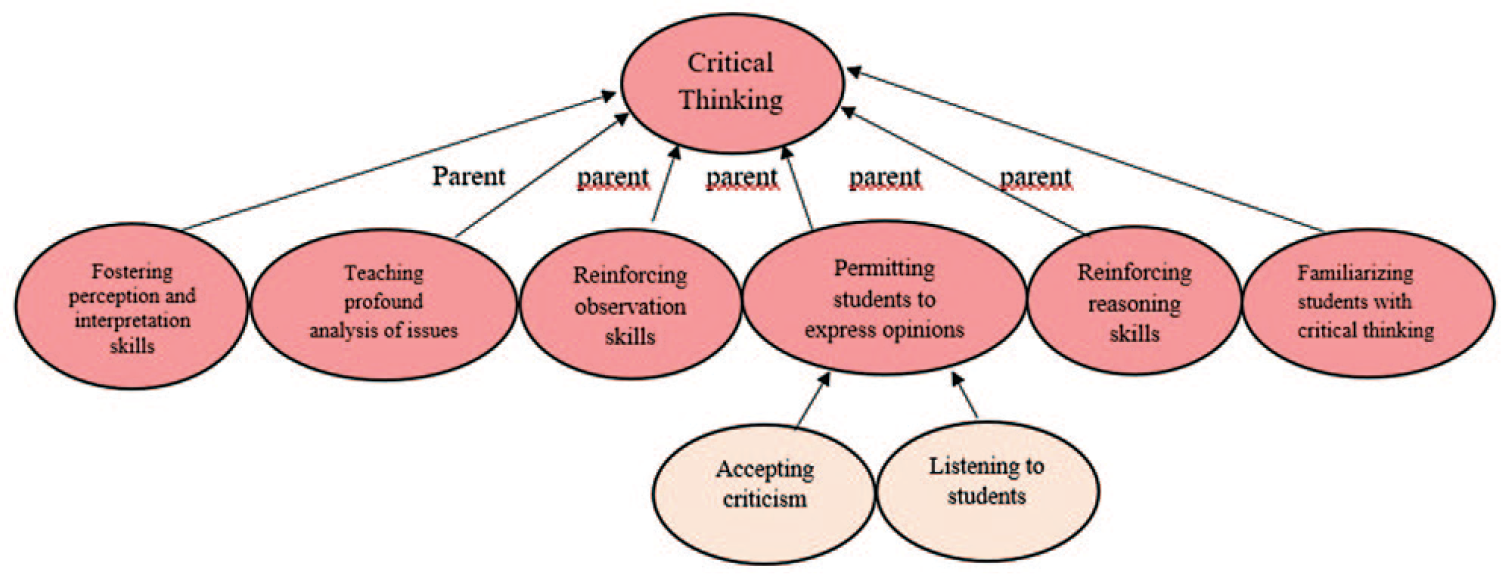
Themes derived from analyzing responses to the first question in teachers’ interviews.
The figure shows that teachers referred to six factors in developing critical thinking of students. The factor of permitting students to express themselves which was divided to two subscales, listening to students and accepting criticism had the highest frequency. After that reinforcing, the reasoning skill had the highest frequency.
The results of responses to the second question
The second question asked in teacher’s interview is as follows:
How can you encourage uninterested students to participate actively in class activities?
Figure 4 shows that teachers have referred to six factors to encourage uninterested students to participate actively in class activities. The factor of motivating students which was divided to two subscales “assigning a score” and “rewarding before other students” had the highest frequency. Then, participation and responsibility delegation had the highest frequency.

Themes derived from analyzing responses to the second question in teachers’ interviews.
Results obtained from responses to the third question
The third question asked in teacher’s interview is as follows:
How can you foster students’ creativity?
As Figure 5 shows, the teachers have referred to six factors for fostering creativity of students. Among these factors, the factor of extracurricular activities divided to four subscales had the highest frequency.

Themes derived from analyzing responses to the third question in teachers’ interviews.
Results of the responses to the fourth question
The fourth question asked in teachers’ interview is as follows:
How can you convince students that they can succeed in learning the English language?
As Figure 6 shows, teachers have referred to 10 factors for inducing learning success of students. Two factors of encouraging and facilitating assessment and simplifying materials had the highest frequency.

Themes derived from analyzing responses to the fourth question in teachers’ interviews.
Results of the responses to the fifth questions
The fifth question asked in teachers’ interview is as follows:
How many hours do you spend on studying and watching English film per week and what types of films do you often watch?
To answer this question, all responses given by participants (n = 20) were examined and coded. The following section provides statistical tables and pie chart that display the results (Figure 7).

Pie chart representing the hours of studying and watching TV by participants.
This figure shows most teachers (33%) watched educational films between 1 and 2hour. Then 28% of teachers studied between 1 and 2hour. The least percent (15%) is related to teachers who studied a little and watched more documentaries.
Results of responses to the sixth question
The sixth question asked in teachers’ interview is as follows:
How many artworks such as painting and sculptures do you have at home?
To answer this question, all responses given by participants (n = 20) were examined and coded. The following section provides statistical tables and pie chart that display the results (Figure 8).

Bar charts representing the number of artworks that participants had at home.
This chart shows that most teachers (40%) had between two and four artworks at home, 30% of teachers have less than two artworks, and the least percent was related to persons who had between four and six or more than six artworks at home.
Results of responses to seventh question
The seventh question asked in teachers’ interview is as follows:
How much are you interested in writing, painting, and calligraphy?
As Figure 9 shows, most teachers (25%) indicated that they were very interested in writing, painting, and calligraphy. The least percent (10%) was related to persons who were not interested in such activities.

Bar chart representing interest in artistic activities of the participants.
Results of responses to the last question
The last question asked in teachers’ interview is as follows:
What is the level of education of your parents?
The last interview question was about the level of education of students’ parents. In the following section, the frequency table of parental education for father has been shown along with their related bar charts (Figure 10).
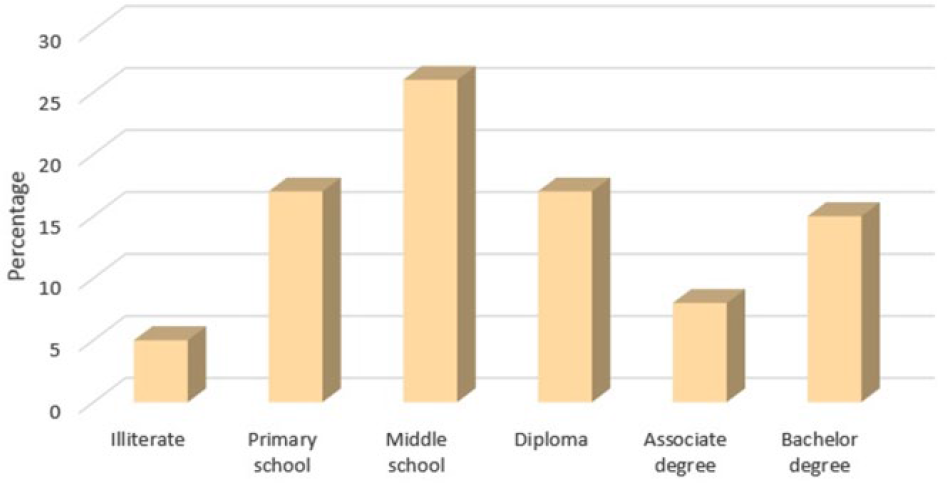
Bar chart representing the level of education of parents.
This chart shows that the education level of the father of most teachers (25%) was middle school. The least percent (1%) was related to persons whose fathers were illiterates.
Comparison of the results of interview with two groups of teachers and students
After discussing the viewpoints and opinions of both groups, this section explores the cultural capital of teachers with respect to the viewpoints of two students (for each teacher). The results are reported in the following table.
Table 9 reveals that teachers with high cultural capital have high self-efficacy as well. For example, Teacher 3, who believed in the encouragement and participation of students and had extensive reading and large collection of artworks, was able to gain the satisfaction of students. In other words, it can be said that he has high level of self-efficacy. This applies to Teachers 5 to 7 and Teachers 11 to 20. Moreover, teachers with low cultural capital suffered from low self-efficacy as well. For example, Teacher 2 spent little time on studying and collecting artworks, and students were not satisfied with his performance. In other words, it can be said that the teacher in the question has low self-efficacy. Teachers with limited study and little artistic works, who spent less time watching TV, also had medium self-efficacy. For example, Teachers 1 and 4 both had limited study and little works of art with a medium self-efficacy. Thus, it can be concluded that preserving works of art, studying extensively, and watching TV can have a positive effect on self-efficacy of teachers.
A Study of the Cultural Capital and Self-Efficacy of Teachers in the View of Students.

As can be seen, there are a number of exceptions. For example, Teachers 2 and 9 claimed to have high cultural capital, studied extensively, and be fascinated with artistic activities, but students were not content with their teaching methods, maintaining that they did not have any motivation for teaching.
According to the results of qualitative section of the research (excluding the exceptions), in response to the main research question, it can be concluded that there is significant relationship between the cultural capital of English teachers and their self-efficacy qualitatively.
Discussion
The major purpose of the present study was to investigate any significant correlation between cultural capital of senior high school English teachers and their self-efficacy. To this end, the following research question was posed by the researcher:
Is there any relationship between the cultural capital of senior high school English teachers and their self-efficacy in Iran’s English language classrooms by using mixed methods approach (quantitative and qualitative research method)?
Findings obtained from quantitative and qualitative data indicated a significant positive correlation between the two variables, in other words as the cultural capital of senior high school English teachers increased, their self-efficacy would increase too. This seems logical, in that the setting from which the participants were chosen is a multicultural and multiethnic society in which different groups of people live. Exposure to various cultures can result in one’s high cultural capital which in turn can boost his or her self-efficacy. Bourdieu (1977, 1979) considered cultural capital as an access to cultural resources and activities, as well as, familiarity with, and, knowledge of the dominant culture. This contained knowledge and proficiency of the formalized language, involvement in creative arts (such as music, art, and literary expression), access to libraries and reading materials, and access to and knowledge about technology (Bourdieu, 1989; Fritzlen, 2006). Consistent with the findings of DiMaggio and Mohr (1985) that the cultural capital of parents influenced children’s academic performance in school, in this article we found that increasing the cultural capital of teachers improved their self-efficacy, which in turn resulted in the adoption of new teaching methods by teachers and thereby improved the academic performance of students. In this regard, De Graff, et al. (2000) found that parents who dedicated more hours to study not only acquired broader educational skills but also created a cultural environment in the family, which resembled that of the school. Therefore, children who were accustomed to the study at home were less likely to encounter any problem at school. In addition, the results of the present study suggested that reading newspapers, books, and magazines and doing puzzles had a significant effect on the cultural capital of teachers. This motivated teachers to foster a reading habit in their students and they were inclined to encourage students to dedicate hours to the study of scientific books besides their textbooks in the school. Bourdieu (1997) concluded that children coming from upper classes of the society were affected by the cultural capital of their parents and were more likely to achieve opportunities compared to children from lower social strata. The results of this research also indicated that teachers with greater cultural capital had higher self-efficacy and were more successful in teaching, class management, and interaction with students. Lareau and Weininger (2003) reported a positive relationship between cultural capital and English language teaching. This article also confirmed the existence of a significant relationship between the cultural capital of high school English teachers and their self-efficacy. Khodadadi and Mokhtary (2013) concluded that there was a significant positive relationship between the level of education of parents and the academic achievement of students in school. In this article, the statistical analysis of results showed that an literate family was the sixth important factor among the seven indices affecting the cultural capital of teachers, which could improve self-efficacy and consequently academic achievement of students at school. A review of the literature suggests that cultural capital of parents has a significant effect on the academic performance of their children at school. Therefore, as teachers, like parents, establish a close and long-term interactions with children, the cultural capital of teachers can also play an integral role in increasing self-efficacy of teachers and consequently the academic success of students.
Conclusion
Based on the findings of this study, it can be concluded that reading newspapers, magazines, and books; doing puzzles; watching scientific and documentary programs on television; visiting news websites; participating in Quran and Hadith classes; visiting the Museums of art and historical places; and attending sports, art, and cultural classes have a remarkable effect on increasing the cultural capital of teachers and can significantly improve their self-efficacy.
Studies have shown that in the community of teachers, the study of teaching resources has not increased significantly for multiple reasons. As such, attempts should be made to increase reading time in people. By organizing scientific festivals and adopting proper strategies by education policy makers, the study motivation can be increased in teachers. Under current circumstances, in which a teacher teaches a textbook for 20 years, there is little requirement for updating knowledge and studying new publications in their major. Thus, by revising and updating textbooks and teaching resources and administering teaching competency tests, the reading motivation can be stimulated in teachers. In additionorganizing in-service courses like Quran recitation and Hadith interpretation can also increase the participation of teachers in these classes. Furthermore, arranging for the group visits of students and teachers from historical and cultural sites can also help raise the cultural capital of teachers. Participation in sport events has also followed a declining trend in recent years. Organizing sports competitions and contests among teachers can enhance their participation in such activities. Overall, improving the above factors can significantly increase the cultural capital and self-efficacy of teachers.
Some teachers still use traditional methods, such as reading and translation, for teaching English, which makes classes boring for students. They are also unable to manage classes properly and establish a positive relationship with students who have learning problems. As such, increased self-efficacy can help the adoption of modern teaching methods and effective class management strategies and enhance communication with students, which in turn contribute to the success of students in learning English language.
Moreover, in line with the results of the research, the interaction between less experienced and experienced teachers should be nurtured. This helps to identify factors affecting the cultural capital and self-efficacy of teachers and transfer them to less experienced teachers. As discussed earlier, cultural capital is a developing indicator, which is reflective of its complex nature.
Further researches are required to determine factors that can affect self-efficacy and cultural capital of teachers in the long term. Educational system can capitalize on the findings of this study and educational policy makers can utilize these findings to provide optimal services to teachers and students.
Footnotes
Appendixes
Declaration of Conflicting Interests
The author(s) declared no potential conflicts of interest with respect to the research, authorship, and/or publication of this article.
Funding
The author(s) received no financial support for the research, authorship, and/or publication of this article.