




Abstract
The perception of job insecurity is known to be a stressful condition for employees. Less is known about employment insecurity and the ways employees and their families deal with it. This study investigates whether participation in further training is a strategy that employees adopt to reduce perceived employment insecurity. As participation in further training is often costly and time-consuming, we assume that the family context is of importance for the decision to take part in further training. To take account of possible self-selection, we apply a propensity score matching procedure on longitudinal data from the Swiss Household Panel (2004-2013). Three main findings can be emphasized: first, participation in further training is not a strategy adopted particularly by employees who perceive high employment insecurity as they are less likely to train than their secure counterparts. Second, even though further training is not a strategy that is actively adopted, employees who train subsequently report lower levels of perceived employment insecurity. Third, the family context indeed influences the likelihood to train: partnered employees are more likely to train and preschool-aged children act as a constraint on women’s but enhance men’s participation in further training. Yet, in the context of high perceived employment insecurity, children generally reduce their parents’ likelihood to train as the parents may turn to other strategies that reduce perceived employment insecurity.
Introduction
As a consequence of economic crises, increasing unemployment rates, and the growing flexibility of labor markets, many employees see a threat to their employment, which provides them with income, social networks, privileges, and status (Castel, 1994; Hobfoll, 1989; Sverke, Hellgren, & Näswall, 2002), and feel powerless about their employment situation (Greenhalgh & Rosenblatt, 1984). Hence, they experience a lack of controllability and predictability leading to a high burden as they are in the dark about their future (De Witte, 2005). The sources of job insecurity are multiple (Greenhalgh & Rosenblatt, 1984), and at the outset there are often objective triggers such as mergers, downsizings, or the implementation of new technologies (Ashford, Lee, & Bobko, 1989). Yet job insecurity also comprises a subjective dimension that is based on the employee’s interpretation of the situation. Some circumstances may be unstable, but an employee can still feel secure. Vice versa, the circumstances may be stable according to some objective criteria but the employee feels insecure as a result of his/her interpretation of the situation (De Witte, 2005). It is common to distinguish between cognitive and affective job insecurity. The former concerns the perception of the risk of losing one’s job (Huang, Lee, Ashford, Chen, & Ren, 2010). The latter refers to the emotional reaction to the perceived risk such as being worried or anxious (Pienaar, De Witte, Hellgren, & Sverke, 2013). Although high affective job insecurity often is a consequence of high cognitive job insecurity (Huang et al., 2010), some employees are only little worried because they perceive good labor market prospects (Chung & van Oorschot, 2011). Therefore, some scholars use the concept of employment insecurity: Even though an employee may perceive high job insecurity (i.e., a high risk of losing the current job), he or she may be confident to remain in paid work but with another job and/or employer (Chung & van Oorschot, 2011; Dixon, Fullerton, & Robertson, 2013; Green, 2011). In this case, the employee perceives a low level of employment insecurity despite high perceived job insecurity.
Throughout this study we refer to the subjective dimension of insecurity unless otherwise indicated. When using the term of perceived job insecurity, we mean the perceived risk of losing the current job. In contrast we use the term of employment insecurity when referring to employees who perceive a high risk of becoming unemployed which means that they not only perceive a threat to their current job but also lack confidence to find other (equivalent) employment.
Research on job and employment insecurity has shown that the insecurity reduces physical and mental well-being (Sverke et al., 2002; Virtanen, Vahtera, Kivimäki, Pentti, & Ferrie, 2002). For job insecurity it has also been demonstrated that it influences work attitudes and performance (Staufenbiel & König, 2010; Sverke et al., 2002). Although some strands of research have considered coping strategies in psychological terms such as cognitive reappraisal or self-blame (e.g., Jordan, Ashkanasy, & Hartel, 2002; Mantler, Matejicek, Matheson, & Anisman, 2005), little attention has been paid to the practical actions that individuals may take to reduce insecurity (Cheng, Mauno, & Lee, 2014; Kalleberg, 2009). We aim to fill this gap by examining one strategy that employees may adopt: participation in further training. We assume that through investment in one’s human capital job and employment, insecurity can be reduced. On the one hand, further training helps keeping one’s skills up to date and therefore protects from dismissal (Lang, 2012). Hence, further training is supposed to reduce perceived job insecurity. On the other hand, it also helps in the case of job loss as it may increase the individual’s employability and avoid experiencing unemployment (Smith, 2010). Thus, we assume that participation in further training also decreases perceived employment insecurity. In the present study, we approach further training as training and learning activities that take place on or off the job (Fleischhauer, 2007) but do not lead to an officially recognized diploma (Swiss Federal Statistical Office [FSO], 2010). These activities (e.g., IT, management, or language courses [FSO, 2010]) can be supported by the employer (financially, time-based, or by allowing flexibility) or born entirely by the employee (FSO, 2014).
Previous research has shown that participation in further training is highly selective and widely depends on individual and work-related factors (see, for example, Albert, García-Serrano, & Hernanz, 2010; Kyndt & Baert, 2013). Although less explored, also family-related factors such as the presence of a partner, children, or economic hardship can be assumed to influence the individual’s probability to train (Chan & Auster, 2003; Sussman, 2002): further training can be expensive and time-consuming and therefore less attractive to some employees because of their family responsibilities. The present study takes this selectivity into account by considering the family context and applying a propensity score matching (PSM) procedure. We answer three questions: First, do employees who perceive high employment insecurity increase their participation in further training? Second, does the family context (i.e., the presence of a partner, preschool-aged children, and economic hardship) influence the employee’s likelihood to train, and third, does participation in further training lead to a subsequent decrease in perceived employment insecurity?
State of the Research
The Influence of Further Training on Perceived Job Insecurity and Unemployment
A few studies have investigated whether participation in further training decreases job insecurity. Further training is expected to increase the employee’s human capital and therefore his/her employability which subsequently reduces feelings of job insecurity (Kohlrausch & Rasner, 2014; Lang, 2012). In a cross-sectional study of Bassanini (2006), further training was indeed related to lower levels of perceived job insecurity. In contrast, Elman and O’Rand (2002) did not find such an effect. However, in longitudinal studies, further training was identified as reducing perceived job insecurity (Dieckhoff, 2007; Kohlrausch & Rasner, 2014; Lang, 2012). In a study from Germany, older employees benefited most from further training to decrease their perceived job insecurity (Lang, 2012). However, the effect was only found for employees who irregularly participated in further training and employees who indicated that they participated in further training to adjust their skills to new demands in the current job (Lang, 2012). In general, older as well as low-skilled employees seem to benefit most from further training (Bassanini, 2006; Kohlrausch & Rasner, 2014), and there is not only a short-term but also a long-term effect from further training in reducing perceived job insecurity (Kohlrausch & Rasner, 2014).
Concerning unemployment, Dieckhoff (2007) showed that further training reduced the risk of unemployment and increased the probability of exiting from unemployment in Germany. In Switzerland, further training is one measure of its active labor market policy. However, it had a modest impact on pushing individuals out of unemployment (Gerfin & Lechner, 2002; Lalive, Van Ours, & Zweimüller, 2008).
Most of the studies that evaluated the impact of further training focused on objective states such as unemployment (e.g., Dieckhoff, 2007; Lalive et al., 2008) or on perceived job (in)security (e.g., Kohlrausch & Rasner, 2014; Lang, 2012). Hardly anything is known about the effect of further training on perceived employment insecurity (Chung & van Oorschot, 2011).
Empirical Evidence for Determinants of Participation in Further Training
As it will become apparent in this section, participation in further training is not randomly distributed in the population but highly selective. Individual, work-, and family-related factors influence an individual’s likelihood to train.
Concerning the influence of perceived job and employment insecurity on participation in further training, only little evidence is available. Whereas some studies did not find an association between perceived job insecurity and the probability to train (Blau et al., 2008; Cavanaugh & Noe, 1999), Lang (2012) found reduced and Elman and O’Rand (2002) increased participation of employees perceiving high job insecurity. Furthermore, employees with a fixed-term contract were less likely to participate compared with permanent employees (Arulampalam, Booth, & Bryan, 2004; Kyndt & Baert, 2013). Presumably, those with a fixed-term contract got less support from their employers as the payback period was limited in time (Forrier & Sels, 2003; Hansson, 2008). Supervisors were more likely to participate than operators (FSO, 2014; Green, 1993; Harris, 1999) as higher status jobs require more skills: not only did supervisors need sound expertise, but they also had to acquire leader skills (Green, 1993). Concerning employees who recently joined an organization, one would expect that they had higher probabilities to train as they may have to acquire new skills to accomplish their new tasks (Green, 1993). However, mixed findings were reported, with some indicating lower probabilities for employees with low tenure, while others finding higher probabilities or no significant results (Albert et al., 2010; Garavan, Carbery, O’Malley, & O’Donnell, 2010; Green, 1993; Kyndt & Baert, 2013). Conflicting results are also reported for workload. Arulampalam et al. (2004) did not find lower probabilities for part-time workers in a series of European countries. However, Swiss (FSO, 2014) and Dutch (Nelen & de Grip, 2009) data showed that employees with higher workload were also more likely to participate in further training. The higher the involvement in paid work, the higher the payback time and the more profitable the training (Leuven & Oosterbeek, 1999). In addition, employees working for companies that were undergoing downsizing or mergers were more likely to participate in further training (Carbery & Garavan, 2005; Xiao & Tsang, 2004). On the one hand, in case of such restructuring processes, insecurity is high so employees engage in strategies to increase their employability (Cavanaugh & Noe, 1999). On the other hand, in the process of restructuring, employees may take over new tasks and responsibilities that they need to be trained for (Parker, Chmiel, & Wall, 1997). Findings also indicated that further training was more likely in large firms (FSO, 2014; Knoke & Kalleberg, 1994). In comparison with small firms, they tend to take a greater risk to train employees who have a lower probability of recouping investment outlays (Harris, 1999). Large companies also have a wider time horizon and a larger internal market with better chances to benefit from training investments, and they have more possibilities to internally organize further training (Harris, 1999). Participation in further training was also more likely in the public sector (Arulampalam et al., 2004; FSO, 2014). While public organizations do not have the primary aim of profit-maximization, private organizations widely do. Fearing poaching, private organizations may refrain more from investing in the further training of their employees (Green, 1993). Employees working in occupations with continuing advancement (e.g., information technology or media) have a high risk of skill obsolescence (Smith, 2010). Therefore, these employees are constantly urged to train to keep up with technological changes. Employees in occupations in the banking and insurance sector or in health and social care were also identified as having higher probabilities to train (FSO, 2010, 2014; Kyndt & Baert, 2013).
Along with these work-related factors, business cycles presumably also influence individuals’ behavior on the labor market. When unemployment rates are high, competition for jobs increases (Dieckhoff, 2007). To stay competitive, employees need to develop and keep their skills up to date. However, to our knowledge nothing is known about the influence of unemployment rates on the likelihood to train.
The literature has also documented the influence of individual factors on the employees’ likelihood to train. According to the human capital approach, women are less likely to participate in further training as they have more disruptive careers and higher turnover rates which reduce the payback period and make further training less attractive to both the women and employers (Simpson & Stroh, 2002). However, empirical results about gender differences in participation rates were mixed (Kyndt & Baert, 2013). Whereas for instance Lang (2012) did not find a difference between men and women, Elman and O’Rand (2002) found women to be somewhat more likely to train. Swiss data showed that, due to their higher rates of participation in paid work, men were also more likely than women to participate in further training (FSO, 2010).
The payback period is also shorter for older employees. Age indeed tended to be negatively related to participation in further training (FSO, 2010). Taylor and Urwin (2001) found that the lower participation rate of older workers was not the result of individual preferences but of employer decisions. Moreover, employees with a low educational level had the lowest probability of participating in further training (Albert et al., 2010; Fouarge, Schils, & de Grip, 2010; FSO, 2010). Yet, due to their weak position on the labor market, employees with a low education level are most in need of further training to increase their competitiveness (Dieckhoff, 2007).
Among the individual factors that influence participation in further training, impaired health was identified as a constraint for further training as training requires high personal investment and energy levels (Sussman, 2002).
Some studies did also consider family factors for the employee’s likelihood to train. The presence of a partner is supposed to positively impact on the employee’s probability to train due to his/her support and children may function as both, a resource or a constraint, depending on the employee’s family role (Greenhaus & Powell, 2012; Maurer, Weiss, & Barbeite, 2003). Previous research found evidence for the presence of young children to reduce participation in further training (Green, 1993; Harris, 1999; Sussman, 2002). In contrast, findings for partner status were less clear: Elman and O’Rand (2002) did not find an influence of marital status on participation rates. In contrast, Harris (1999) identified single men, and Green (1993) married women, as less likely to participate. Furthermore, the economic situation of the household turned out to influence an individual’s likelihood to train: Sussman (2002) showed that financial issues came into account for 40% of Canadian employees reporting that they did not participate in further training because of the high expense. In the case of Switzerland, the training costs may be an issue as only around 30% of employees received training that was financially supported by their employer (FSO, 2014).
However, these studies did not show whether the family-related factors functioned as a resource or a constraint in the context of high perceived employment insecurity. Therefore, we will address this issue in the present study.
An Unresolved Issue
The literature review demonstrated that participation in further training is highly selective, and it becomes apparent that there are conflicting results concerning the determinants of participation in further training (i.e., the perceived level of job insecurity, tenure, workload, partner status, and gender). The self-selection into further training may lead to biased estimates for the effect of further training on perceived job insecurity. Although less investigated, family-related factors such as children, the partner, or the financial situation of the household were identified as important predictors of an individual’s probability to train. Yet the family context may not only contribute to the observed selectivity for participation in further training but also moderate the relationship between perceived employment insecurity and participation in further training. In the next chapter we will discuss our expectations in detail.
Furthermore, we have shown that previous research mainly focused on unemployment and perceived job insecurity, and little is known about the impact of further training on perceived employment insecurity. It should be considered that participation in further training may not prevent the loss of the current job, but it may nevertheless increase employability which is assumed to reduce perceived employment insecurity. Chung and van Oorschot (2011) have shown that employees in countries with high expenditure on active labor market policies (such as further training) perceive lower levels of employment insecurity. However, it is not possible to deduce from this study whether participation in further training measured on the individual level impacts on perceived employment insecurity.
Moreover, nothing is known about the effect of further training on the perception of insecurity in Switzerland. Presumably, due to comparatively low levels of unemployment and high productivity (Organization for Economic Co-operation and Development [OECD], 2013), employees in Switzerland report comparatively low levels of employment insecurity (Mau, Mewes, & Schöneck, 2012). However, Switzerland has a weak employment protection (Straubhaar & Werner, 2003): Every employee can be dismissed with a notice of 1 to 3 months (depending on the duration of service). Therefore, every employment has some degree of inherent insecurity and every employee may suddenly have to compete on the labor market to find new employment. In the context of weak employment protection, keeping one’s skills up to date is crucial. The share of companies based in Switzerland that support their employees’ training activities is one of the highest among the European countries (FSO, 2014). Yet, on an individual level, participation rates within these supporting companies are below average which emphasizes the selectivity of participation (FSO, 2014). Furthermore, Gerfin and Lechner (2002) and Lalive et al. (2008) have shown that further training has a rather weak impact on the individuals’ chances to find a way out of unemployment. Therefore, it may be of interest to policy makers to understand whether further training has an impact on the subjective dimension of insecurity.
To address the mentioned shortcomings, we use Swiss longitudinal data from the Swiss Household Panel (SHP) and apply a PSM procedure to investigate whether participation in further training subsequently decreases perceived employment insecurity when accounting for the family context.
Theoretical Perspectives
Participation in Further Training as a Strategy to Reduce Perceived Employment Insecurity
In what follows, we will focus on perceived employment insecurity, that is employees who do not only see their current job as insecure but also evaluate their labor market prospects as weak and therefore perceive a high risk of becoming unemployed in the near future (Anderson & Pontusson, 2007; Dixon et al., 2013).
An individual who experiences a discrepancy between the desired and the actual level of employment security engages in behavior aimed at a reduction of the perceived insecurity. One possible strategy is investment in human capital by participating in further training (Kyndt & Baert, 2013). According to Schwarzer and Taubert (2002), this strategy can be considered anticipatory or preventive. If the occurrence of job loss is a fairly certain event, participation in further training is anticipatory and directed toward better coping with the impending event. If the threat of job loss is less acute and its occurrence less likely, participation in further training can be considered a preventive strategy that mainly aims at reducing the risk of the event actually occurring. According to the human capital approach, further training is a means to embed resources in employees (Becker, 1962). Therefore, we assume that participation in further training is one strategy that employees who feel insecure adopt: keeping one’s skills up to date offers protection from dismissal and increases employability (FSO, 2010; Lang, 2012; Smith, 2010).
Family-Related Factors Influencing Participation in Further Training
In this study, we put particular stress on family-related factors as they often receive little attention although they influence decisions in the work domain. Greenhaus and Powell (2012) refer to this as the family-relatedness of work decisions, that is the extent to which demands and responsibilities in the family domain affect decisions in the work domain.
We consider three family-related factors as influencing an employee’s probability of engaging in further training. First is the partner status, second the presence of preschool-aged children, and third the economic situation of the household.
On the one hand, singles (if they do not have children or other important family responsibilities) are free in their use of time as they do not have to conciliate their own activities with those of a partner (Burchardt, 2010). On the other hand, they are restricted in sharing duties such as securing an income, keeping house, or organizational and administrative tasks. In contrast, individuals with a partner are less free in their time use because they need to consider their partner’s activities (Burchardt, 2010). However, Burchardt (2010) has shown that partnered individuals nevertheless have more time at their free disposal when income (i.e., the possibility to purchase goods and services) is considered. Partnered individuals generally also have higher social capital (Burchardt, 2010; Verbakel & de Graaf, 2009) and can share duties and provide support for each other. For participation in further training, this can mean that the partner provides emotional support by encouraging participation, and practical support by making some time available to the other partner to invest in further training (e.g., by taking over household chores, taking care of the children) or providing information and assistance (Maurer et al., 2003; Verbakel & de Graaf, 2009). Therefore, we consider a partner to be a resource, and formulate the following hypothesis:
We furthermore expect that the partner is particularly likely to function as a resource if support is de facto needed (Cohen & McKay, 1984), that is if an employee perceives high employment insecurity. In that case, the partner can be supportive and actively help engaging in strategies such as further training. Therefore, we assume partnered employees to be even more likely to participate in further training if they perceive high levels of employment insecurity:
Preschool-aged children are assumed to inhibit the probability of an individual to participate in further training when he or she has high responsibilities in family work. Individuals highly involved in family work have less time available, are dependent on external child care provision, and therefore less flexible in their time management (Burchardt, 2010; Crouter, 1984). Paid and unpaid work—and it is particularly the case in Switzerland—are usually not equally distributed in couples (Baumgartner, 2008): In most households, women take over the lion’s share of childcare activities whereas men have the main responsibility for the financial well-being of the family. According to Greenhaus and Powell (2012), work decisions are highly influenced by the individual’s work and family roles. Accordingly, women are expected to take decisions that ensure the care and emotional well-being of the children, whereas men tend to take decisions that increase their employability and ultimately the family’s financial resources. As a consequence of lower time resources and their family role, women are expected to be less likely to train when they have preschool-aged children. In contrast, men are expected to be more likely to train when they have preschool-aged children, as further training increases their employability and subsequently may enhance the family’s financial resources (Chan & Auster, 2003):
In the face of perceived employment insecurity, we believe children to function as an incentive for their parents to secure a stable financial situation for the family. Nolan (2009) has demonstrated that parents would accept scaling down their standard of living in case of job loss if it was only for them, but they do not want it for their children. Therefore, we expect insecure individuals with children to be more likely to participate in further training as a strategy to reduce perceived employment insecurity. The constraint of preschool-aged children on their mothers’ participation in further training is expected to disappear in the context of high perceived employment insecurity.
Furthermore, employees who experience economic hardship are assumed to be less likely to participate in further training because they cannot afford the tuition fees, additional arising expenses, and opportunity costs (Sussman, 2002). In Switzerland, individuals pay 1,376 CHF on average for their participation in further training (tuition fees and travel costs; FSO, 2014).
Employees who perceive high levels of employment insecurity are most in need of strategies to increase their employability, even more so if they already face economic hardship. However, we assume that these employees cannot afford the expenses related to further training (Sussman, 2002). Therefore, employees who experience both employment insecurity and economic hardship may turn to other strategies and be less likely to participate in further training compared with individuals who perceive high employment insecurity but do not experience economic hardship.
The Consequences of Further Training for Perceived Employment Insecurity
Summing up, we have argued that participation in further training is a strategy that employees who feel insecure adopt to reduce their employment insecurity and that the decision to train is influenced by the family context. Yet, research has shown that participation in further training is also highly influenced by the support of the employer (Kyndt & Baert, 2013): If the training activities of the employees are beneficial for the company, employers may support them (Mincer, 1989). A high share of companies encourage and support employees in their training activities by bearing (part of) the costs and/or time investments (FSO, 2010) or by valuing and encouraging participation and offering flexibility for training activities (Kyndt & Baert, 2013). Although employer-supported further training may be firm-specific and therefore not necessarily relevant for a future job with a new employer (Mincer, 1989), the employee who received support of the employer for his/her training activities can derive some degree of job security as the investment is only cost-effective for the employer if the trained employee is retained in the company after the acquisition of the new skills and knowledge (Fleischhauer, 2007). If further training (whether employer-supported or not) is transferable to other companies, it is assumed to increase employability and reduce perceived employment insecurity (Mincer, 1989). On the one hand, the employee may protect his/her current job through the increased skills and knowledge, and on the other hand, he/she may gain in competitiveness and confidence in finding new (equivalent) employment if job loss occurs (Becker, 1962; Smith, 2010).
The perception of employment insecurity does not only depend on one’s employability and training activities but on a series of individual, work-, and family-related factors. For this we refer to the existing literature. The following factors are concerned and will be considered in the empirical section: type of contract and size of the company, position within a company and recent change of employer, workload, public versus private sector, industrial sector as well as unemployment rates (Anderson & Pontusson, 2007; Chung & van Oorschot, 2011; Dixon et al., 2013; Green, 2009).
In addition to the work-related factors, some family-related and individual factors are concerned: being partnered, having children and experiencing economic hardship, health status, gender, age, and educational level (Anderson & Pontusson, 2007; Chung & van Oorschot, 2011; Dixon et al., 2013; Green, 2009).
Data and Method
Data
We used data from 2004 to 2013 from the SHP. The SHP is a longitudinal household study that repeatedly surveys a general sample of the Swiss population by means of standardized computer-assisted telephone interviews. In 1999, the Swiss Federal Statistical Office drew a random sample of which 7,799 individuals in 5,074 households participated. All household members of 14 years of age or more were interviewed annually on a multitude of topics, including employment, training, family life, and so on. It is common for household panel studies to face attrition, and so does the SHP. In 2004, 3,076 original sample members remained in the sample. Therefore, in 2004, a refreshment sample of 2,538 participating households with 3,654 individuals was taken by the Swiss Federal Statistical Office. In 2013 a second refreshment sample of 4,369 household was taken, but as it started with a retrospective life calendar, the necessary information was not available. Therefore, the analyses are based on the first and second sample only. The combined sample consisted of 6,730 individuals in 2004. As new household members joined the existing households and participated in the study, a total of 12,906 individuals filled out the questionnaire at least once between 2004 and 2013.
Our analyses included all individuals who participated in the survey in at least two consecutive waves from 2004 to 2013 and were in paid work at each time point of those observations (7,576 individuals, i.e., 59% of the initial sample). We further restricted our sample to individuals of 18 years of age and more but younger than the official age of retirement (64 years for women and 65 for men; 7,206 individuals kept). To rule out young individuals who were taken care of by their parents, respondents younger than 25 years, living with at least one parent, and currently in formal training were excluded from the analyses (6,787 individuals kept). The restriction of having at least two consecutive observations had to be reapplied after the selection on age. This led to a drop of further 357 individuals. We took account of time by using lagged information for all the independent variables: as participation in further training was measured at time t0, the included independent variables were measured at time t-1. Moreover, the respondents needed to provide valid information for all the variables included in the empirical models. Therefore, 581 individuals were excluded due to partial non-response. The final sample consisted of 3,016 women with 12,435 observations and 2,833 men with 12,381 observations.
Measures
Participation in further training
Respondents were asked whether they had undertaken training courses for professional reasons such as looking for a new employment. No information is available on the type of further training or the employer’s support. Participation in further training was dummy coded, 1 indicating that the respondent had taken part in further training since the previous interview, which was the case for 43.7% of respondents between 2004 and 2013.
Perceived employment insecurity
As no information on affective employment insecurity was available, we measured cognitive perceived employment insecurity only, which was measured with the question, “How do you evaluate the risk of becoming unemployed in the next 12 months, if 0 means no risk at all and 10 a real risk?” For descriptive statistics see Table 1 below.
Descriptive Statistics Based on Observations and Separated for Men and Women With and Without Further Training (Data Not Weighted).

Note. ISCO = International Standard Classification of Occupations.
For dummy variables, the share of value 1 is reported; for continuous variables, means and standard deviations are reported.
Type of contract
To control for the type of contract, we distinguished between employees with a permanent, a fixed-term, and an unspecified type of contract.
Position
To determine the individual’s position within the company, the respondents were asked whether the supervision of other employees was an official part of their job. If this was the case, the respondents were coded 1, and 0 otherwise.
Change of employer
As the change of employer was measured at time t-1, it was assured that the change of employer took place before the potential participation in further training.
Workload
According to the Swiss Federal Statistical Office (FSO, 2013), the respondents were regrouped into three categories: low workload with a percentage below 50 (in reference to a full-time job in the concerned company), medium workload with 50% to 89%, and full-time with 90% to 100%.
Ongoing reorganization
The respondents were asked whether their company was currently undergoing some form of reorganization, restructuring, or privatization. As for a relatively high share of respondents the information was not collected, an unknown category was added to avoid further dropout due to partial non-response.
Firm size
The size of the firm was measured with three categories: small firms with 1 to 24 employees, medium firms with 25 to 99 employees, and large firms with 100 employees or more.
Sector
Respondents who worked for a public organization were coded 0, respondents working for a private organization were coded 1.
Occupation
To assess the employee’s occupation, the International Standard Classification of Occupations (ISCO) was used (Ganzeboom & Treiman, 1996). As only few observations were in the armed forces, these respondents were regrouped together with a residual group for whom no ISCO code was available.
Regional unemployment rates
We used the regional unemployment rates for the major regions of Switzerland (Lake Geneva, Middleland, North-west Switzerland, Zurich, East Switzerland, Central Switzerland and Ticino) provided by the Swiss Federal Statistical Office. Unemployment rates were assessed for the region of residence of the respondents.
Partner
The partner status was measured with a dummy variable coded 1 for respondents with a partner.
Preschool-aged children
We distinguished between individuals living with preschool-aged children (younger than 7 years of age) in the household (coded 1) and individuals without preschool-aged children coded 0.
Economic hardship
It was based on a subjective evaluation of the household’s financial situation and measured with the following question: “How do you manage on your household’s current income, 0 means with great difficulty and 10 very easily?” As the variable was reverse coded, a high value stands for great difficulties.
Educational level
For the educational level, three categories were used: low level, which corresponded to lower secondary education; medium level for upper secondary education; and high level for tertiary education.
Health status
Respondents were asked about their current health. Those who responded that they felt “well” or “very well” were considered to be in good health and coded 0; otherwise they were coded 1 (“so, so,” “not very well,” or “not well at all”).
We further included age, gender as well as year-dummies to control for period effects.
Methods
We used a PSM procedure developed by Rosenbaum and Rubin (1983). This method is employed to estimate causal treatment effects, and especially to evaluate labor market policies. As one of the foci of this study is the evaluation of the effect of participation in further training on the level of perceived employment insecurity, the PSM is a well-adapted method. An important strength of the PSM is its ability to account for the self-selection into treatment and therefore to reduce a potential bias due to unobserved heterogeneity (Caliendo & Kopeinig, 2008). Furthermore, the PSM does not require functional assumptions.
Ideally, a change of perceived employment insecurity should be measured on the same individual when he/she has participated in training versus when he/she has not:

eff i is the theoretical change for person i, Yi(1) is the level of perceived employment insecurity of person i when he/she has participated in further training and Yi(0) when he/she has not. As these outcomes cannot be observed both on the same individual at the same time, the unobserved values (counterfactual outcomes) are approximated by the mean value of non-participants. As participants and non-participants differ also in other characteristics (X variables), this approximation may cause a selection bias. The basic idea of the matching approach is to find the individuals among non-participants (control group) who are the most similar to the participants (treatment group) in all relevant pre-treatment characteristics. To achieve this goal, balancing scores (functions of relevant X variables so that the conditional distributions of these variables are independent of the assignment into treatment) are applied. These balancing scores (propensity scores) are the probabilities of participation in further training given observed X variables (Caliendo & Kopeinig, 2008). In a usual procedure of estimation applying the PSM, first the propensity scores are computed and then the matching procedure is based on these scores. Finally, the estimation of the treatment effect is evaluated on the so-called common support (overlap of the propensity scores of the treatment and the control group). The structure of the PSM is the following (Caliendo & Kopeinig, 2008): the parameter to be estimated is
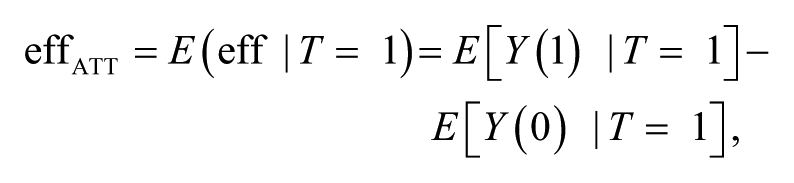
using the propensity scores P(X)
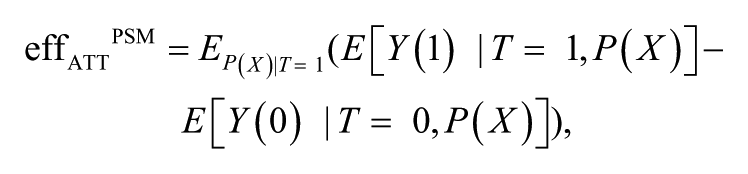
where eff is the effect to be estimated, T is the binary variable for the treatment (T = 1 if the person has participated in further training and T = 0 if not) and ATT is the average treatment effect on the treated, that is the effect of participation in further training on the level of perceived employment insecurity for the persons who effectively participated in the training.
As the treatment variable is binary, a logit model with relevant independent variables was adequate for estimating the propensity scores. Concerning the matching method applied, we tested several methods such as the nearest neighbor, caliper, radius, kernel, and local linear regression methods. For a comprehensive introduction to the PSM see Caliendo and Kopeinig (2008). After comparing the matching qualities of these algorithms applied on our data set, we opted to use the kernel algorithm. This choice was not only based on the analytical results but also on the theoretical properties: the kernel algorithm is a non-parametric matching method that can be seen as a weighted regression (Smith & Todd, 2005), as it uses weighted averages of all individuals in the control group to construct the counterfactual outcome. The main advantage of this method is that more information is used and as a consequence the variance is reduced and the results are more robust (Caliendo & Kopeinig, 2008).
The estimation of the effect of participation in further training on the level of perceived employment insecurity was then evaluated on the matched sample using ordinary least squares (OLS) regression. The variable of interest was the difference in the level of perceived employment insecurity measured on the same individual at time t0 and t-1. Concerning the included independent variables, the same variables as for the estimation of the propensity scores were used for time t-1 (lagged variables). To test the presence of moderating effects as assumed with Hypotheses 3, 4, 5, and 7, we constructed interaction terms by multiplying the concerned variables (Male × Preschool-Aged Child; Employment Insecurity (EI) × Partner; EI × Preschool-Aged Child; EI × Economic Hardship; EI × Male; EI × Male × Preschool-Aged Child).
As only the values of two consecutive years were concerned, we used cross-sectional individual weights. Finally, to deal with problems about normality, heteroscedasticity, large residuals, and high leverage points, we computed robust standard errors of the coefficients.
Results
We started with the logistic regression to calculate the propensity scores. In a first step, we included all the relevant variables and the interaction term Male × Preschool-Aged Child to test Hypotheses 1, 2, 4, and 6 (Model 1 in Table 2). In a second step, all the interaction terms were included (Model 2 in Table 2). As EI × Partner and EI × Economic Hardship were not statistically significant and for reasons of parsimony of the model, we removed them in a stepwise elimination procedure based on the size of the p values. In a third step, we defined the final model used for the estimation of the propensity scores (Model 3 in Table 2). It contained a three-way interaction to test Hypothesis 5 (i.e., the interactions Male × Preschool-Aged Child; EI × Preschool-Aged Child; EI × Male; EI × Male × Preschool-Aged Child).
Logistic Regression Estimating the Probability for Participation in Further Training With Model 3 as the Final Model Used for the Propensity Score Matching (Odds Ratios Are Reported, Data Not Weighted).

Note. Standard errors in parentheses. ISCO = International Standard Classification of Occupations.
Reference categories are permanent contract, no supervisory tasks, no change of employer, low workload, no ongoing reorganization, ISCO Cat. 2 (professionals), firm size: 1 to 24 employees, no partner, no child, female, low educational level, good health.
Year dummies are included but not reported.
p < .05. **p < .01. ***p < .001.
Although the most relevant variables explaining participation in further training discussed in the literature have been included, the pseudo R2 of .076 remained relatively low. However, the PSM performed well (Table A1 in the Appendix). The PSM reduced the bias on all but one variable (ISCO Cat. 1), but the difference between participants and non-participants remained non-significant on this variable. One treated observation was off the common support and therefore excluded from the analyses.
Hypothesis 1 assumed that employees perceiving high employment insecurity were more likely to train. Yet the results in Model 1 in Table 2 showed that the opposite was the case: the higher the perceived level of employment insecurity at t-1, the lower the odds of participation at t0. Therefore, no support was found for Hypothesis 1. This unexpected result will be discussed in detail in the discussion section.
Regarding the family-related factors, Model 1 in Table 2 showed that they indeed matter for an employee’s odds to participate in further training. We found evidence for Hypothesis 2 that expected employees with a partner to be more likely to participate in further training: The odds of participation at t0 were 19.5% (OR > 1: %Δ = (OR-1)*100; OR < 1: %Δ= [(1/OR)-1]*100 [Pampel, 2000]) higher for those with a partner compared with singles. With Hypothesis 3, we assumed a moderating effect of the partner on the relationship between perceived employment insecurity and the probability to participate in further training. Model 2 in Table 2 showed that the interaction term for EI × Partner was not statistically significant. From this we deduced that in the context of high perceived employment insecurity, there was no additional impact of the partner on the probability to train. Hypothesis 3 did not find empirical support.
Turning to the presence of preschool-aged children, we found support for Hypothesis 4 assuming that preschool-aged children constrained their mother’s but not their father’s participation in further training. In fact, women’s likelihood to train was influenced by the presence of preschool-aged children in the household: Women not living with preschool-aged children at t-1 had 44.0% higher odds of participation at t0 compared with women who lived with preschool-aged children. The inclusion of the interaction term revealed that men not living with preschool-aged children had 21.8% (= 44% − 65.8%) lower odds of participation compared with men who lived with preschool-aged children. From these results, we deduced that women were indeed constrained by their children when further training was concerned. In contrast, for men preschool-aged children were even an incentive to participate in further training.
With Hypothesis 5, we expected children to function as an incentive in that they increase their parents’ participation in further training when the parents perceive high levels of employment insecurity. The gender differences were expected to disappear. Model 3 in Table 2 showed that when including the three-way interaction, the effect of the presence of preschool-aged children on the probability to train remained as in Model 1: women with at least one preschool-aged child at t-1 were less likely, men with at least one preschool-aged child more likely to train at t0. Yet as the interaction term EI × Male × Preschool-Aged Child was not statistically significant, we could deduce that there was no additional difference between men and women. What was new was the finding that preschool-aged children moderated the relationship between perceived employment insecurity and further training. However, the direction of the effect was unexpected: In the context of employment insecurity, the presence of preschool-aged children did not increase but decrease the parents’ probability of participation in further training. Gender did not moderate the relationship between perceived employment insecurity and participation in further training. Although Hypothesis 5 was mainly not supported by the data, we could indeed observe that in the context of employment insecurity men and women showed a more similar behavior related to participation in further training.
Furthermore, we did not find statistically significant evidence for employees experiencing economic hardship in their household to be less likely to train (Hypothesis 6). Yet a tendency in this direction could be observed with odds ratio (OR) = 0.987 and p = .062 (Model 1 in Table 2).
Hypothesis 7 expected employees who experienced economic hardship to moderate the relationship between perceived employment insecurity and participation in further training. As the interaction term EI × Economic Hardship was not statistically significant, we rejected Hypothesis 7 and concluded that the experience of economic hardship did not further reduce the employees’ probability to train.
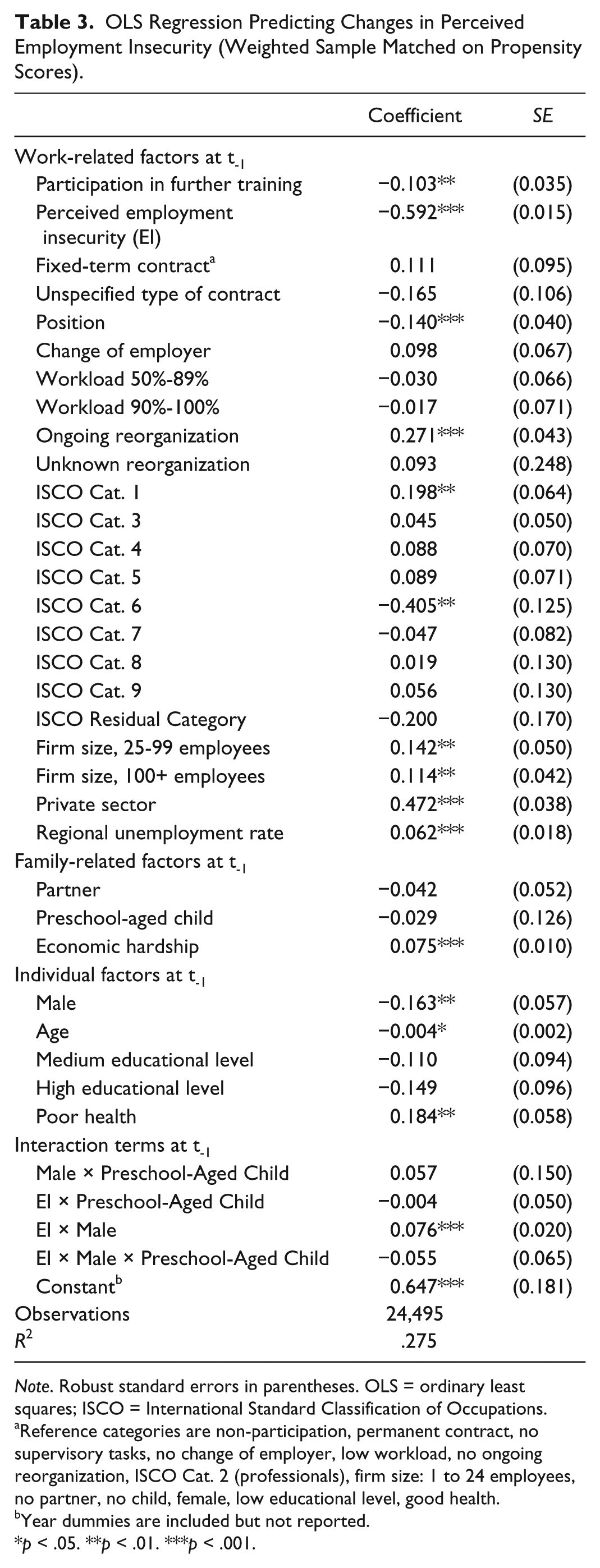
Table 3 depicts an OLS regression based on the matched sample, explaining changes in perceived employment insecurity. With Hypothesis 8, we expected employees who participated in further training to perceive reduced levels of employment insecurity. Controlling for the individual, work-, and family-related factors, the results showed that the average treatment effect on the treated ATT is about 0.103 units, which means that participants indeed reduced their levels of perceived employment insecurity. Therefore, we maintain Hypothesis 8. Although N = 24,816 is relatively large (what may influence significance), all the discussed coefficients were important in size.
OLS Regression Predicting Changes in Perceived Employment Insecurity (Weighted Sample Matched on Propensity Scores).
Note. Robust standard errors in parentheses. OLS = ordinary least squares; ISCO = International Standard Classification of Occupations.
Reference categories are non-participation, permanent contract, no supervisory tasks, no change of employer, low workload, no ongoing reorganization, ISCO Cat. 2 (professionals), firm size: 1 to 24 employees, no partner, no child, female, low educational level, good health.
Year dummies are included but not reported.
p < .05. **p < .01. ***p < .001.
Furthermore, Table 3 showed what other factors influenced perceived employment insecurity. The strongest predictor of a change in perceived employment insecurity was the level of employment insecurity at time t-1: Those who perceived high employment insecurity experienced a decline. Agricultural and fishery workers (ISCO Cat. 6) as well as supervisors reported reduced levels of employment insecurity. In contrast, perceived employment insecurity tended to increase among legislators, senior officials, and managers (ISCO Cat. 1) as well as for employees who worked for a company that was undergoing some form of reorganization, for employees in medium and large firms and for those working in the private sector. Results also revealed that high regional unemployment rates translated into increasing levels of perceived employment insecurity.
Among the family-related factors, only economic hardship turned out to significantly contribute to explaining changes in perceived employment insecurity: Employees who experienced economic hardship in their household tended to report increasing levels of perceived employment insecurity. Furthermore, we could observe that older employees tended to report slightly decreasing, and employees in poor health increasing levels of perceived employment insecurity. Compared with women, men tended to report reduced levels of employment insecurity—but only if they perceived a low level of employment insecurity at t-1 as indicated by the significant interaction term.
Discussion
In this study, we addressed the question of whether employees perceiving high levels of employment insecurity participated in further training and whether this participation subsequently reduced perceived employment insecurity. By applying a PSM procedure, we took account of the fact that participation in further training is not randomly distributed in the population but dependent on individual, work-, and family-related factors. We also drew particular attention to the family context. Three main findings can be highlighted.
First, our study shows that participation in further training is not a strategy that employees actively adopt to reduce perceived employment insecurity, as those perceiving high levels of employment insecurity are least likely to train. This result is unexpected but can be explained by the employer’s support. Participation in further training is highest when it is employer-supported (Kyndt & Baert, 2013). According to the human capital approach, employers invest in training when chances are high that their investment becomes profitable (Becker, 1962; Mincer, 1989). If employees perceive high employment insecurity as a result of objective circumstances, they may indeed not be the ones employers invest in if it is uncertain whether they will remain in the company. In addition, employees who perceive high employment insecurity may invest their energy in other strategies such as finding new employment (Blau et al., 2008).
Second, our study shows that although further training is not an active strategy to reduce employment insecurity, it still achieves this: Employees who participated in further training experience a decrease of perceived employment insecurity. This finding is in line with a study that demonstrated that employees who received adequate on-the-job training felt positive about their job proficiency (Truitt, 2011). This, in turn, may increase the employee’s confidence to be a valuable member of the labor force and finally reduce the level of perceived employment insecurity. Though we applied a different methodological approach and focused on perceived employment insecurity, our results are in line with previous research that shows that further training increases employability and reduces perceived job insecurity (Bassanini, 2006; Chung & van Oorschot, 2011; Kohlrausch & Rasner, 2014; Lang, 2012).
Third, we demonstrated that the family context impacts employees’ chances to train. The partner is a resource: Compared with employees without a partner, partnered employees are more likely to participate in further training. This result is in line with research that has demonstrated that support in the family domain positively affects behavior in the work domain and the ways individuals deal with conflicting demands from both domains (Adams, King, & King, 1996; Van Daalen, Willemsen, & Sanders, 2006; Wayne, Randel, & Stevens, 2006). However, in the context of high perceived employment insecurity, when employees actively have to deal with their insecure condition, the partner does not further increase the chances of participation in training. From this we deduce that the benefit of having a partner is of more general nature and not related to his/her support for dealing with perceived employment insecurity, at least as far as further training is concerned.
Our study also shows that the presence of preschool-aged children constrains women’s participation in further training whereas it increases men’s participation. This finding is in accordance with the predominant work and family roles of men and women in Switzerland. For women, who in Switzerland usually have the main responsibility for childcare and family work (Baumgartner, 2008), their restricted flexibility due to the presence of preschool-aged children is reflected by reduced investments in their employability. In contrast, preschool-aged children are an incentive for the often breadwinning men in Switzerland (Baumgartner, 2008). As they usually have high responsibilities for the financial well-being of the family, they take career decisions that increase their employability and the financial resources of the family (Greenhaus, Peng, & Allen, 2012). However, when the employees’ level of perceived employment insecurity is considered, it cannot be observed that gender differences increase. Neither could we find empirical evidence for the assumption that children function as an incentive and enhance their parents’ chances to train to increase their employability. The opposite is true: Employees who perceive high levels of employment insecurity and have at least one preschool-aged child are less likely to train than insecure employees without a preschool-aged child. As there is no reason to believe that insecure parents fall into inertia, we deduce from this result that insecure parents may turn to other strategies such as finding employment with a new employer (Blau et al., 2008; Cavanaugh & Noe, 1999; Lebert & Voorpostel, 2016).
Finally, we show that economic hardship is of subordinate relevance when participation in further training is concerned. Although there is a tendency for those who experience economic hardship to be somewhat less likely to train, no additional constraint for further training is observed when economic hardship and employment insecurity cumulate. This finding may be explained by the fact that some employees receive financial support from their employers (FSO, 2014).
This study reveals some practical implications and points to issues that future research should address. Obviously there are ways to compensate for perceived employment insecurity: Participation in further training reduces feelings of employment insecurity. Consequently, as a practical measure to reduce their employees’ employment insecurity, employers could support their employees’ training efforts through financial or time-based support. Women with preschool-aged children should receive particular support, as they are the most constrained by their family context. Future research should also consider other strategies that employees may adopt to reduce perceived employment insecurity. Our study demonstrates that it is important to take the family context into account.
The results contribute to a better understanding of how individuals deal with perceived employment insecurity and the ways their family context influences their decisions. Nevertheless, the study has some shortcomings. First, it measures perceived employment insecurity using a single-item measure. Although it has been shown that single-item measures perform acceptably well (Wanous, Reichers, & Hudy, 1997), the validity of results could increase if more elaborate measurements are applied. Second, the SHP does not include additional questions concerning the type of further training or the support received by the employer. Therefore, it is not possible to analyze more detailed aspects of further training. Third, for lack of space, not all the control variables could be discussed in detail. Therefore, we mainly focused on the variables of interest that were related to the hypotheses. Fourth, pseudo R2 for the estimation of the propensity score is relatively low. Future research should particularly address the methodological issues that have arisen in this study. However, our study shows that PSM reduces the bias caused by self-selection into further training, and the inclusion of family factors has proven useful to draw a more precise picture of how individuals deal with employment insecurity.
Footnotes
Appendix
Predictor Variables for Participation in Further Training at t-1.

| Variable at time t-1 | Mean treated | Mean control | Mean matched | Standardized bias before matching | Standardized bias after matching | Reduction in standardized bias |
|---|---|---|---|---|---|---|
| Perceived employment insecurity | 1.85 | 2.17 | 1.91 | −13.7 | −2.5 | 81.7 |
| Fixed-term contract | 0.06 | 0.06 | 0.06 | −0.9 | 0.0 | 99.8 |
| Unspecified type of contract | 0.06 | 0.07 | 0.06 | −2.1 | 0.2 | 98.9 |
| Position | 0.59 | 0.51 | 0.59 | 17.4 | 0.2 | 98.9 |
| Change of employer | 0.09 | 0.10 | 0.09 | −2.1 | −0.3 | 87.9 |
| Workload 50%-89% | 0.30 | 0.26 | 0.29 | 10.1 | 3.6 | 64.6 |
| Workload 90%-100% | 0.58 | 0.60 | 0.60 | −3.9 | −3.6 | 6.0 |
| Ongoing reorganization | 0.37 | 0.29 | 0.36 | 16.3 | 2.6 | 84.2 |
| Unknown reorganization | 0.01 | 0.02 | 0.01 | −6.1 | −0.1 | 98.9 |
| ISCO Cat. 1 | 0.10 | 0.10 | 0.11 | 0.1 | −2.2 | −3,431.0 |
| ISCO Cat. 3 | 0.33 | 0.22 | 0.32 | 24.4 | 3.4 | 86.0 |
| ISCO Cat. 4 | 0.08 | 0.15 | 0.09 | −22.7 | −1.4 | 93.7 |
| ISCO Cat. 5 | 0.10 | 0.12 | 0.10 | −6.2 | −1.5 | 75.3 |
| ISCO Cat. 6 | 0.01 | 0.02 | 0.01 | −6.6 | −0.4 | 94.5 |
| ISCO Cat. 7 | 0.05 | 0.11 | 0.05 | −22.6 | −1.1 | 95.3 |
| ISCO Cat. 8 | 0.02 | 0.03 | 0.02 | −3.4 | −0.4 | 87.5 |
| ISCO Cat. 9 | 0.02 | 0.05 | 0.02 | −18.0 | −0.5 | 97.5 |
| ISCO residual cat. | 0.02 | 0.01 | 0.01 | 8.1 | 2.7 | 66.1 |
| Firm size, 25-99 employees | 0.23 | 0.21 | 0.22 | 5.5 | 2.6 | 52.5 |
| Firm size, 100+ employees | 0.43 | 0.38 | 0.44 | 9.9 | −2.1 | 78.5 |
| Private sector | 0.54 | 0.72 | 0.57 | −38.0 | −6.9 | 81.9 |
| Regional unemployment rate | 4.10 | 4.14 | 4.12 | −3.1 | −1.4 | 54.0 |
| Partner | 0.86 | 0.83 | 0.85 | 8.3 | 1.4 | 83.4 |
| Preschool-aged child | 0.16 | 0.16 | 0.16 | 0.7 | −0.1 | 87.6 |
| Economic hardship | 2.38 | 2.67 | 2.43 | −14.5 | −2.2 | 84.9 |
| Male | 0.48 | 0.51 | 0.51 | −5.4 | −4.3 | 20.3 |
| Age | 44.33 | 43.86 | 44.21 | 4.5 | 1.2 | 74.3 |
| Medium educational level | 0.46 | 0.54 | 0.47 | −16.8 | −1.5 | 90.8 |
| High educational level | 0.50 | 0.36 | 0.49 | 29.5 | 1.9 | 93.4 |
| Poor health | 0.10 | 0.12 | 0.10 | −5.7 | −0.8 | 85.7 |
| Male × Preschool-Aged Child | 0.10 | 0.08 | 0.10 | 4.5 | −0.1 | 98.7 |
| EI × Preschool-Aged Child | 0.26 | 0.35 | 0.27 | −8.0 | −1.1 | 86.9 |
| EI × Male | 0.89 | 1.12 | 0.96 | −12.1 | −3.3 | 72.5 |
| EI × Male × Preschool-Aged Child | 0.16 | 0.18 | 0.17 | −2.8 | −1.2 | 57.0 |
| y05 | 0.10 | 0.11 | 0.10 | −0.9 | 0.2 | 73.1 |
| y06 | 0.09 | 0.10 | 0.09 | −0.7 | 0.0 | 98.2 |
| y07 | 0.09 | 0.08 | 0.09 | 2.9 | 1.1 | 60.3 |
| y08 | 0.08 | 0.08 | 0.08 | 0.7 | 0.0 | 98.0 |
| y09 | 0.12 | 0.12 | 0.12 | −0.7 | 0.2 | 77.2 |
| y10 | 0.13 | 0.13 | 0.13 | 0.5 | 0.1 | 79.0 |
| y11 | 0.13 | 0.14 | 0.13 | −1.9 | −0.6 | 71.2 |
| y12 | 0.13 | 0.13 | 0.13 | −0.5 | -0.3 | 48.5 |
Acknowledgements
Special thanks go to Prof. Dr. Monica Budowski and the participants and experts from the doctoral program Prowel: Social Problems and Welfare for their valuable advice.
Authors’ Note
This study has been realized using the data collected by the Swiss Household Panel (SHP), which is based at the Swiss Centre of Expertise in the Social Sciences FORS. The project is financed by the Swiss National Science Foundation.
Declaration of Conflicting Interests
The author(s) received no financial support for the research and/or authorship of this article.
Funding
The author(s) received no financial support for the research, authorship, and/or publication of this article.