




Abstract
RDX is an explosive that is also a neurotoxin and implicated in adverse health outcomes. Because of its widespread use in military and civilian operations, there is growing concern about potential environmental and health implications. One promising method of bioremediation involves genomic studies of soil microbes. These health concerns and technological issues intersect with social and political dimensions raising questions about public responses to genomic technologies and the degree of environmental accounting expected from the military. In cases of novel technologies entering into contested social spaces, public engagement can be useful to inform broader policy debates. Building on previous work, in this article, we outline the rationale, methods, and results of a public deliberation on these issues. To our knowledge, this is the first study of its kind on the issues of RDX pollution and microbial genomics, and thus provides an important baseline on public sentiment on these issues.
Introduction
Recognition of the intersection of social policy and science and technology has long been associated with calls for and attempts at various forms of public engagement. In this context, what precisely is meant by public participation and how processes for engagement are envisaged vary quite dramatically (Fung, 2006; O’Doherty & Einsiedel, 2012; Rowe & Frewer, 2005). A tension in these discussions has been whether public engagement is seen as a largely unidirectional effort at educating lay publics in particular areas of science, versus more dialogic processes in which lay publics are informed about particular issues, and given opportunities to provide input in associated social policy (Castle & Culver, 2006). This tension is particularly salient in areas where scientific questions and technological solutions are intertwined with broader social issues. In such cases, public deliberation as a specific form of public engagement seems to offer valuable pathways for involving publics in the governance of science and technology and the particular controversies in which they are embedded.
In this article, we present a case study of an engagement event “Explosives, Genomics, and the Environment: A Public Deliberation” (or RDX Talk, for short). RDX is an explosive used in mining, avalanche control, and by the military. The compound is relatively inexpensive and easy to handle, which makes it a preferred choice compared with alternatives. However, RDX is also a neurotoxin and implicated in various adverse health outcomes. Owing to the large amounts of RDX that have been used across the globe in the past few decades, concern is growing about the potential environmental and human health implications. To this end, different approaches for the remediation of RDX are being investigated and developed. One such method involves the use of naturally occurring microorganisms (Gordonia and Rhodococcus) in the bioremediation of RDX. Little is known about the precise mechanisms by which RDX is degraded by these bacteria, and current efforts are underway to understand this process of bioremediation of RDX.
Together, these scientific, technological, and environmental problems intersect with the social and political sphere on a number of dimensions. For instance, as has been found in the case of food and livestock, there is conflation in public understandings of genomics and transgenic technologies (Tansey & Burgess, 2008). Would this conflation carry over to public understandings of microbial genomics, and what might a public response to the use of genetically modified (GM) microbes look like? The Canadian military (along with other armed forces around the world) rely heavily on the use of RDX. Given that their primary mandate is one of defence, should these institutions be held to the same environmental standards as civilian organizations, or should special dispensations be made? Given the widespread use of RDX, how should trade-offs between its utility to society and the potential damage to health and the environment be managed?
These questions suggest that policy surrounding pollutants like RDX and technologies involving microbial genomics should at least take into consideration public perspectives on the issue. However, the relatively obscure nature of both the social issues (RDX pollution) and the science (microbial genomics and bioremediation) suggests that typical social scientific methods of surveys, polls, or focus groups will not work in this case. As argued elsewhere (MacKenzie & O’Doherty, 2011), low public awareness of the issues as well as lack of understanding of relevant technical information limit the usefulness of traditional methods of engagement. However, a deliberative forum tailored to the issues at hand offers a robust mechanism for developing meaningful public input on these issues.
In this article, we outline the rationale, methods, and results of RDX Talk. To our knowledge, this is the first study of its kind on the issues of RDX pollution and microbial genomics, and thus provides an important baseline on public sentiment on these issues. The methods used in our study build on previous work on public deliberation on other areas of science and technology (see Burgess, O’Doherty, & Secko, 2008; O’Doherty, Hawkins, & Burgess, 2012, on human tissue biobanking; and O’Doherty, Burgess, & Secko, 2010, on salmon genomics), though we also present several methodological refinements. In particular, RDX Talk involved issues that required participants themselves to play a substantive role in setting the agenda and structuring their own deliberations on this issue. We thus illustrate a methodological refinement that allows members of the public to provide input not only on their preferences in the context of a range of preformulated policy options but also in identifying those areas of concern they most want to provide input on.
The primary goals of this article are to (a) gain understanding of how a diverse sample of the public responds to novel and potentially controversial uses of science and technology; (b) report on the deliberative conclusions of a public forum on social, ethical, and political concerns related to RDX contamination and the use of microbial genomics in bioremediation; (c) extend and further evaluate a model of public deliberation; and (d) illustrate the effectiveness of certain methodological refinements in conducting public deliberation.
RDX: Health, Environmental, and Regulatory Concerns
RDX is a cheap, powerful explosive compound (Maleh, Carvalho-Knighton, & Martin, 2009). Unlike more unstable explosives, RDX does not react to low levels of heat, shock, or friction, which makes it relatively safe to handle (Global Security, 2006). RDX is used in demolition, mining, road construction, avalanche prevention, as well as military applications in both combat and training operations (U.S. Department of Health and Human Services, Agency for Toxic Substances and Disease Registry, 2010). It has been stated that “RDX is currently the most important military explosive in the world” (Global Security, 2006; Maleh et al., 2009, p. 254). However, detailed information about the precise volume and nature of usage within the military is not available.
By its very nature RDX is associated with violent consequences. However, RDX is also associated with less obvious forms of damage. RDX is a neurotoxin that interferes with the brain and nervous system, causing seizures and disorientation if exposed to in high doses (Maleh et al., 2009; Williams et al., 2011). Frequent and long-term exposure through inhalation has produced convulsions, headaches, nausea and vomiting, loss of consciousness, disorientation, and temporary loss of memory. Ingestion of RDX produces similar symptoms (Kucukavdalt et al., 2003). Recovery appears to be complete when exposure to RDX is discontinued (Hoek, 2004; Kucukavdalt et al., 2003; Maleh et al., 2009; Williams et al., 2011). Experiments with rats and mice indicate other negative effects that result from exposure, including decreased offspring weight, genital and urinary tract sores, liver and kidney damage, reduced fertility, and mortality (e.g., Bannon, Dillman, Hable, Phillips, & Perkins, 2009; Card & Autenrieth, 1998). Although there is no conclusive evidence that RDX causes cancer in humans, research has suggested a link between exposure and cancer in lab animals (Hoek, 2004; Maleh et al., 2009; Munch & National Exposure Research Laboratory, 2002; Ryu, Han, Jung, Bae, & Nam, 2007). As a result, the U.S. Environmental Protection Agency (USEPA) has identified RDX as a possible carcinogen, and placed it on a list of Emerging Chemicals of Concern (ECC) and the 2009 Contaminant Candidate List (CCL; USEPA, 2011).
Remediation procedures for RDX have included: removing contaminated soil and dumping it in approved sites, incineration in furnaces or open-air kilns, and the introduction of additional chemicals to neutralize pollutants (U.S. Department of Health and Human Services, Agency for Toxic Substances and Disease Registry, 2010). Because many of these methods are themselves associated with environmental damage, researchers are pursing alternative technologies that use plants and microbes for remediation (bioremediation; Card & Autenrieth, 1998; Maleh et al., 2009). Grains, such as rice (Vila, Mehier, Lorber-Pascal, & Laurent, 2007), and several other plants (Rylott et al., 2006) have been tested and shown to remediate soils effectively. Researchers are also using GM plants to assist in the removal of RDX from contaminated soil (Van Aken, 2009). Certain microbes have been identified that have natural capabilities that could help with cleaning up pollution, including RDX. Specifically, naturally occurring microbes called Gordonia (Indest et al., 2010) and Rhodococcus (Andeer, Stahl, Bruce, & Strand, 2009) have the capability to degrade RDX (K. T. Thompson, Crocker, & Fredrickson, 2005). Because these methods are still being evaluated, they are not yet approved for extensive use.
In Canada, the regulation of RDX use and cleanup falls under the responsibility of a variety of agencies and is subject to multiple pieces of legislation. The primary regulation pertaining to RDX is the Canadian Environmental Protection Act (CEPA; Department of Justice Canada, 2011). CEPA regulations apply broadly to private industry and government agencies. However, the legislation does not limit powers granted under the National Defence Act or any other piece of legislation relating to national defence and security. It is accepted that National Defence training has to occur under realistic conditions, but still comply with environmental regulations. However, the Department of National Defence is not required to conduct environmental impact assessments each time explosives are used, which would be the norm for any other industrial or government agency in Canada.
Substances introduced in Canada after 1994 are considered “new chemicals” and need to be assessed for environmental safety through the submission of toxicological information. RDX was used before 1994 when environmental protection was not the norm. It is classified as an “existing substance,” and any related health or environmental impacts of the chemical have not been thoroughly examined. RDX appears as a low risk compound on the Domestic Substances List (DSL) of Environment Canada (2010), which is the sole basis for determining whether a substance should be evaluated.
Method
The present study involved engaging participants in a process of deliberation, in which they were informed of the issues and given an opportunity to discuss, form opinions, and challenge each other’s positions in a respectful manner. A specific goal was to achieve legitimate public input that could be useful from a social policy perspective in addressing the problems of RDX pollution and the costs and potential risks of bioremediation. The design of the RDX deliberation was based on previous work on human tissue biobanking (Burgess et al., 2008; O’Doherty et al., 2012) and salmon genomics (O’Doherty et al., 2010). This body of work asserts that the particular format of a public engagement must be tailored to the type of issue to be discussed. As a refinement on this previous work, RDX Talk involved engaging participants not only in deliberation about different preformulated policy options but also in identifying issues that are of primary concern and in working toward collectively formulating policy recommendations on those issues.
Public Deliberation
Deliberative democratic theory centers on the notion that for some issues, at certain times, a simple vote for a political representative is insufficient to provide for meaningful democratic decision making. When an issue is particularly politicized or contentious, or when a policy decision requires input from a large range of perspectives, opening the subject to meaningful public debate, and drawing on the outcomes of this debate in the formulation of policy, may be warranted (Dryzek, 1990; Fishkin & Laslett, 2003; Gastil, 2008; Warren, 1996). Public debates of this sort can be fostered in town hall meetings, on Internet forums, or in publicized media debates. More recently, carefully designed participatory governance processes have been applied to issues involving science and technology (Burgess & Tansey, 2008; Hamlett, 2003). In this context, it has been argued that early or “upstream” development is likely to be most beneficial, such that broader inputs can be taken into account in the ways in which a technology is developed, the forms it takes when introduced into society, and the ways in which it interfaces with various institutional interests and value systems (Wynne, 2001). Once a technology or contentious issue has been fully developed, once it has become embedded in institutional practices and the day-to-day living of large numbers of people, once interest groups and political commitments have formed, it is far more difficult to act on the input from deliberative democratic forums.
Recruitment
The aim of recruitment was to assemble a sample that was sufficiently diverse to represent the views and interests of individuals and groups residing in the province, while being small enough to be financially and logistically feasible and enable meaningful dialogue between participants. To achieve these goals, we relied on the theoretical construct of a mini-public (Brown, 2006; Goodin & Dryzek, 2006), a small forum of members of the public that is chosen strategically to provide a legitimate public voice on some question of public policy. While it is not possible in a small sample to achieve statistically significant representation across all demographically relevant variables, it is possible to construct a small sample in such a way as to maximize diversity and minimize selection bias (Longstaff & Burgess, 2010). To this end, we aimed to achieve a randomly selected demographically stratified sample of 25 participants, with minimum selection filters to ensure representation of particular perspectives relevant to the topic.
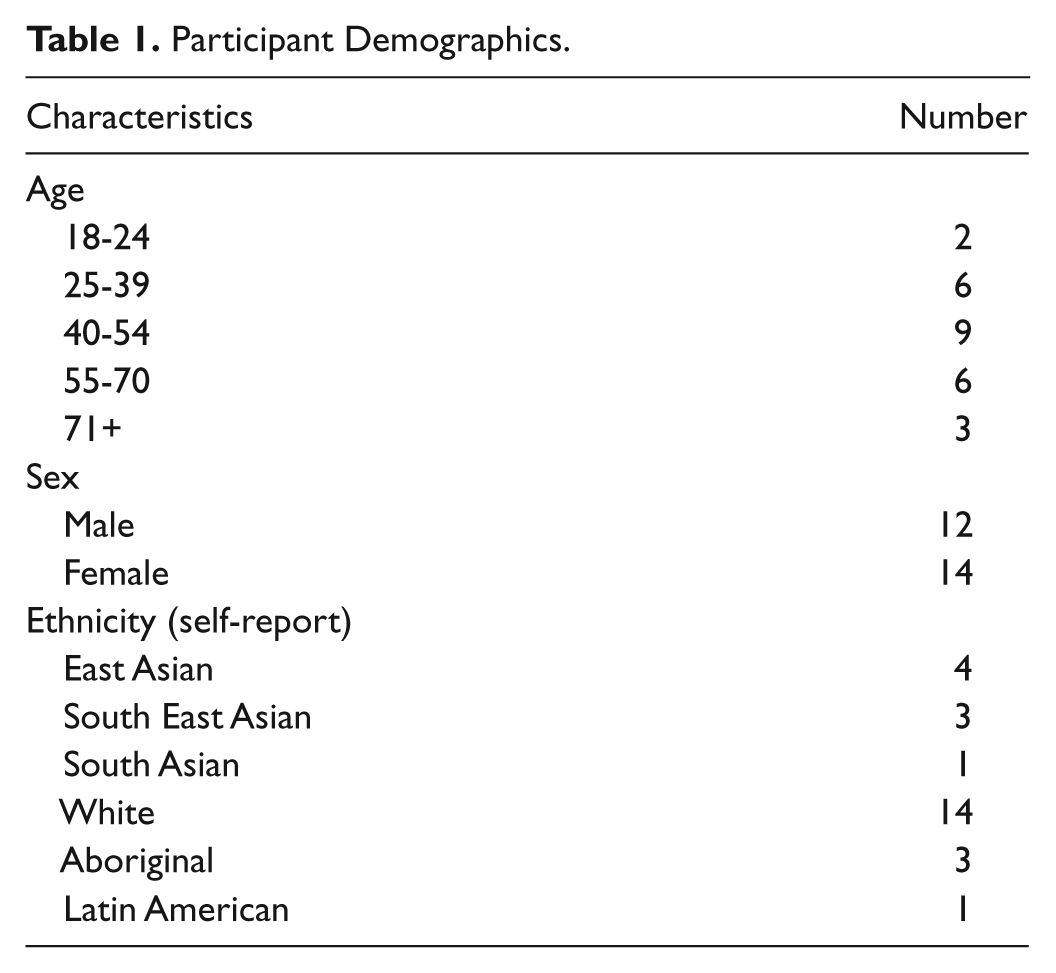
A recruitment firm assisted in randomly selecting 5,000 households, stratified across various regions in the greater Vancouver area via publicly accessible postal codes. Each household was sent a letter inviting one household member to enter a “civic lottery” draw, as well as a list of “frequently asked questions” regarding RDX, public deliberation, and the reasons behind organizing the event. Interested individuals then mailed a response postcard, containing basic demographic information, to the recruitment firm. In total, 138 positive responses were received. The final group was selected from these responses using stratified random selection to obtain a sample approximately proportional to the population of British Columbia in terms of age, sex, ethnicity, and geographical area (see Table 1). The sample was also constructed to include individuals who (a) have had some training in explosives or toxic materials, (b) have a personal or familial connection to the armed forces, and/or (c) consider themselves indigenous Canadian.
Participant Demographics.
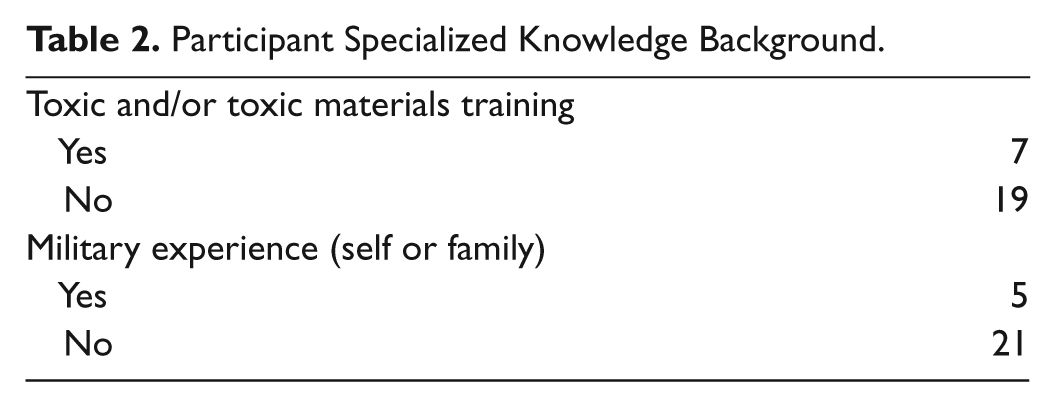
Given the topic of the deliberation, it was deemed that individuals from these backgrounds would provide important perspectives (see Table 2). If recruitment had relied only on random selection, it would have been unlikely that individuals with these perspectives would have been included. Including those with connections to the military was thought necessary to ensure that the deliberation was not biased from the start against military perspectives. It was also deemed important to include First Nations’ voices given the complex relationship between Aboriginal governance and the Canadian state in issues of land stewardship.
Participant Specialized Knowledge Background.
To account for attrition, 30 individuals were invited to the deliberation. In all, 26 registered on the 1st day. Of these, 25 attended and contributed substantively throughout the event and toward the final recommendations of the forum.
Information Materials
The complexity and relative obscurity of the many issues related to RDX required that participants be given access to balanced and comprehensive, yet succinct, information. Importantly, however, information provision was not an aim in and of itself. Rather, the aim was to provide sufficient and unbiased 1 information as a foundation for meaningful deliberation to be able to take place. Information was provided through a booklet, by expert speakers at the event, and through a dedicated website.
The booklet (“Explosives and the Environment: A Public Deliberation”) was written specifically for the event and included information on the following topics: the nature, history, and uses of RDX; the consequences of RDX pollution and its effect on human health; the range of cleanup and remediation techniques; and the current regulatory context for use of RDX in Canada. The booklet was written at a Grade 10 reading level but based on information sourced from the peer-reviewed literature, and it was checked for scientific accuracy by experts in the field. The booklet was mailed to each participant before the event and an electronic copy was made available on the website (www.rdxtalk.org).
Four speakers with relevant expertise were invited to the event. During the 1st day of the event, each speaker gave a presentation, and participants had the opportunity to ask questions immediately after the presentation and during a panel discussion with all speakers. After the 1st day, the research team acted as liaison between participants and the expert speakers when new questions emerged or additional information was requested. Expert speakers did not participate in the actual deliberations as mixing lay and expert voices in deliberation has been shown to potentially marginalize the views of nonexperts (Kerr, Cunningham-Burley, & Tutton, 2007; see also O’Doherty & Davidson, 2010). The four speakers provided information and perspectives on
why RDX is an environmental problem, and the currently available remediation strategies, including the advantages and disadvantages of each strategy;
the (Canadian) provincial and federal regulations that might come to bear on RDX use and remediation, focusing on the complexity of various interdependent sets of legislation and the lack of clarity regarding precisely which regulations might be the most relevant to the use of RDX and responsibilities for cleanup;
the science behind understanding the role of soil microbes responsible for biodegrading RDX; and
source water protection, the relative impact of various human activities on water quality, and avenues for managing water pollution.
A website was constructed specifically for this project (www.rdxtalk.org). Potential participants were directed to the website in the initial recruitment letter. The site provided information about the planned deliberation, the topic, and the research team. A private section of the website, accessible only to confirmed participants, included detailed information about the speakers and their presentations, additional readings, event schedules, and an electronic copy of the booklet. It was also used during the deliberation to post notes or thoughts of individual participants.
Event Design
RDX Talk was staged over two weekends in April 2010 with an intervening weekend to allow participants to further reflect on the issues and to discuss them with friends and family before the second weekend of deliberation. Overall, the event can be roughly divided into three phases: (1) information provision, (2) agenda setting, and (3) formulation of policy recommendations. The 1st day of the event was geared toward information provision (Phase 1), and allowing participants to get used to the practice of deliberation. All speaker presentations and the expert panel took place on this day. Day 2 was dedicated to participants collectively identifying the most important issues for which they wanted to develop recommendations (Phase 2: agenda setting). The second weekend (Days 3 and 4) was dedicated to deliberation and developing group recommendations on the items identified on Day 2 (Phase 3: policy recommendations). Participants also completed a pre- and postdeliberation survey immediately prior to and after the event, and a final one-on-one telephone interview was conducted with each participant between 4 and 6 weeks after the event.
Discussions were conducted in small breakaway groups and the large group consisting of all 25 participants. All discussions were moderated by members of the research team who had prior experience in group facilitation and in conducting public deliberation. Based on principles from deliberative democracy (see, for example, Gastil & Levine, 2005), the practice of deliberation involves participants working together to become informed on an issue, and working toward collective positions while providing reasoned arguments for their own positions and being open to considering others’ positions. Ideally, good deliberative practices will ensure that participants are respectful toward each other and treated as equals. Participants should justify their own positions and be open to having their positions challenged by others. Finally, any conclusions that are reached should be a reflection of the deliberating groups’ efforts to find common ground (Chambers, 2003; Hamlett & Cobb, 2006). In contrast to simply exchanging views, deliberation involves justifying positions in an effort to work toward a collective resolution of issues. Background materials and responses to technical questions were intended to enhance participants’ technical knowledge as well as their confidence in engaging with the subject matter and arriving at policy advice. Furthermore, recruiting for diversity of life experience and facilitating the discussions to ensure that all participants felt comfortable contributing helped ensure that a broad range of considerations and perspectives was reflected in the deliberative conclusions of the group.
In a refinement of previous deliberations, participants in RDX Talk were themselves engaged in setting the agenda for issues they wanted to discuss. This approach is different from many other mini-public processes. In many cases, those who convene mini-publics decide which issues (and subtopics) will be addressed before the deliberation takes place (Abelson et al., 2007). The British Columbia Citizen Assembly’s mandate, for example, was restricted to examining the mechanics of elections and excluded other related topics, such as redistricting, election finance, and the size of the legislature (Warren & Pearse, 2008). Similarly, Fishkin’s (1995) Deliberative Polls often have quite specific (and restricted) mandates (as, for example, the deliberative poll [DP] on whether Australia should become a republic, 1999). In most cases, such constraints are appropriate as public deliberations are arguably most productive when they are focused. Constraints also help ensure that the results of deliberation can be acted on by policy makers (O’Doherty & Hawkins, 2010).
In other cases, however, it can be problematic to constrain deliberation to preidentified issues and concerns. This is most likely to be the case where
policy-making bodies are fragmented, with uncertainty about where initiatives for new policy or policy changes should be located;
there is little or no social scientific research, such that there are no analyses that can be drawn on to evaluate the impact of these issues on public welfare and values; and
there is little or no public discourse on an issue. Consequently, no assumptions can be made about the relative salience of aspects of an issue that might need to be reflected in policy options.
In such cases, public deliberations themselves can help determine which issues require more attention. For example, in the case of biobanking, the results of an initial unstructured public deliberation (O’Doherty & Burgess, 2009) were used to inform and constrain the specific issues that were addressed in a subsequent mini-public deliberation (O’Doherty et al., 2012). At RDX Talk, the first weekend was dedicated to participants themselves identifying those topics that they felt were most important to address, setting the agenda for the second weekend of deliberation. RDX Talk was therefore designed with separate phases for agenda setting and formulation of policy recommendations (see above). In the agenda-setting phase (Phase 2), participants collectively worked toward identifying the issues they deemed most important and listing them as items for which they wanted to make recommendations. The items tabled for deliberation in Phase 3 (policy recommendations) were thus not imposed by the research team, government agendas, or other vested interests. Rather, they were developed in the public forum itself in consideration of the opinions and positions of all participants.
In Phase 3 (formulation of policy recommendations), each agenda item was discussed in small group sessions before being deliberated in the larger group. The aim of the small group discussions was for all participants to be able to express their opinions and explore the issue being considered in depth and to provide a foundation from which the large group discussion could proceed; the small groups were not expected to make collective decisions during this phase of the process. In contrast, the aim of the large group was to work toward collective statements endorsed by the group itself. The nominal goal of the large group discussion was to reach agreement on each item but facilitators did not push for consensus when persistent disagreements emerged. Rather, the aim was to explore disagreements and, when they could not be resolved through deliberation, articulate and document clearly the nature of the disagreement. Deliberation of each issue was concluded with a vote that was recorded together with a collective statement of the group. The vote helped ensure that the facilitator would not assume a consensus had been formed owing to the absence of voices raised against a particular proposition. This allowed the facilitator to draw out detailed reasoning on both the proposition being considered and any alternate views still held by participants at this point in time (Moore & O’Doherty, 2012). Each vote also provided an explicit transition from one issue to the next.
After the event, the research team produced a report of all collectively forged recommendations and articulated disagreements. This document represents the official conclusions of this public deliberation. The report was sent out to participants for review and ratification.
Survey
Participants were asked to complete a 20-item survey before and after the deliberation. The survey had two purposes. First, it provides a quantitative record of individual opinions independent of the collective statements developed in the deliberation. Second, there is a recognized need for empirical evaluation of deliberative processes (De Vries et al., 2010; Rowe, Horlick-Jones, Walls, Poortinga, & Pidgeon, 2008; D. F. Thompson, 2008).
The items in the survey were developed by the research team to represent the possible range of social and ethical issues pertaining to RDX use, pollution, and remediation. Each item had five response categories: strongly agree, somewhat agree, somewhat disagree, strongly disagree, and don’t know (a copy of the survey is available from the authors on request).
Results
There is no one immediately obvious way of presenting the results of a deliberation. In particular, there is a tension between analysts’ attempts at synthesizing the main themes of discussion after the deliberation has taken place and allowing the statements of deliberants to stand as they are without analytical synthesis. Individual deliberants are actively encouraged to reconsider their positions in light of new information and other perspectives, and may consequently change their opinions. Analyses therefore need to differentiate between individual opinions expressed in discussion, themes emerging from analyses of the entire deliberation, and collective statements ratified by the group. We term these collective statements deliberative outputs (O’Doherty & Burgess, 2009). Although post hoc analyses conducted on transcripts of a public engagement may provide important insights, deliberative outputs arguably have more political legitimacy because they represent collective positions arrived at and ratified through democratic deliberation. In this section, we report these collectively forged and ratified “deliberative outputs” as well as a range of selected survey results.
Deliberative Outputs
During the agenda-setting phase of the deliberation, participants collectively decided on the following seven topics that would be placed on the agenda for discussion and for which policy recommendations would be developed:
The Costs Associated With RDX Use
Research and Development Priorities
Potential Reduction or Elimination of RDX
Remediation of RDX
The Military As a Special User of RDX
Regulation of RDX Use and Remediation
Public Education and Information Pertaining to RDX
Discussion on the second weekend was aimed at developing specific policy recommendations for each of these issues. In total, 25 members of the public contributed to the discussion, although 2 members were unable to attend all the sessions of the second weekend. As such, the totals recorded below vary between 23 and 25. Some of the recommendations were unanimous and therefore represent the opinion of the group as a whole. Where full consensus was not achieved, disagreements were articulated and recorded. Last, a vote was taken as a measure of support for each recommendation.
The Costs Associated With RDX Use
Policy Recommendation:
In general, the direct costs of RDX use seem to be well recognized. We recommend that when formulating policy on RDX, the following indirect/intangible costs should be considered:
Health and safety costs
Health care system costs
Environmental costs
Costs of not using RDX/using alternatives (alternatives may be worse)
Costs to the military of not using RDX (effectiveness of alternatives)
Regulatory costs
Research costs (cost of researching alternatives to RDX or cleanup costs)
Assessments of costs should depend in part on situation-specific environmental assessments and budgetary constraints.
All 25 participants supported this as a recommendation of the group. However, there was disagreement as to whether the military should be included in the recommendation. In all, 9 participants felt that the military should be excluded from the recommendation, whereas 16 participants felt that the military should be included. In addition, 23 participants felt that this recommendation should also apply to other neurotoxins, whereas 2 participants did not. Those who did not were concerned that the recommendations would have limited policy impact if they were too broad and not specific to RDX.
2. Research and Development Priorities
Policy Recommendation:
Research into RDX remediation, RDX alternatives, and RDX effects are each important. With that in mind, the research priorities should be in the following order:
Research into the current uses and effects of RDX to establish the extent and impact of RDX use in terms of environmental pollution and human health effects
Research into remediation of RDX pollution
Research into alternatives to RDX
These research priorities should be amended over time once the major backlog of remediation and RDX cleanup has taken place. At that point, priorities should change, so that the primary focus of research is into alternatives for RDX (in particular, alternatives that are cost-effective and green/environmentally friendly).
All 25 participants agreed on this recommendation.
3. Potential Reduction or Elimination of RDX
No policy recommendation emerged on this issue owing to a split in the eventual positions adopted by participants. A vote was held on each position with the following results:
Position 1: (support for Position 9 of 25)
There is currently not sufficient evidence that the harms of RDX justify a mandated reduction or ban.
Qualification:
Remediation of RDX pollution should still take place.
Position 2: (support for Position 14 of 25)
Based on current information, we should aim for a phased reduction of RDX.
Qualifications:
Mechanisms to encourage reduction could include mechanisms, such as taxes or tariffs.
Remediation of RDX should still take place.
Nine of 25 participants supported Position 1, and 14 supported Position 2. One participant abstained from the vote due to a belief that a new coordinating governance body was needed to make this decision.
4. Remediation of RDX
Policy Recommendation A (regarding remediation):
Situation-specific assessments are required to determine the most appropriate remediation technique. Remediation should be timely and subject to regulatory approval.
Given constraints identified in situation-specific assessments, natural solutions to remediation are preferred, including microbes, plants, photoreaction, and composting.
Qualifications:
If less preferred options are used, such as chemicals or incineration, a careful justification must be provided.
An important consideration in choosing a remediation method is to avoid the production of other harmful substances.
Use of preferred remediation methods over other options may justify higher financial costs and longer remediation completion time.
This position was supported by 24 of 24 participants.
Policy Recommendation B (regarding bioremediation utilizing genetically modified organisms [GMOs]):
It is necessary to conduct further research into the usefulness and safety of GM microbes and GM plants for the bioremediation of RDX. This needs to occur prior to the development of regulations, followed by carefully managed field trials and possible general use.
Qualifications:
There is a preference for cross-breeding over genetic modification.
In terms of GM, there is a preference for methods in which plants are unable to reproduce and organisms that are noninvasive.
There was contention regarding the inclusion of the term carefully managed field trials in this recommendation. In all, 18 participants supported inclusion of this phrase, whereas 5participants did not think field trials would be appropriate because of the risk of GM organisms being released into the environment. One individual abstained.
Once the option to include or exclude the term carefully managed field trials had been documented, 21 of 24 participants supported the above statement regarding bioremediation. The 3 participants who did not support the recommendation expressed the concerns that bioremediation was not necessarily acceptable and that “preference” was not a strong enough statement.
5.The Military As a Special User of RDX
Policy Recommendation A:
The military has an obligation to conform to regulations in terms of remediation of RDX.
Eighteen of 23 participants supported Recommendation A. Those who did not did so on the grounds that they did not believe this recommendation was feasible for implementation outside of Canada.
Policy Recommendation B:
The military has an obligation to conform to regulations in terms of remediation of RDX in Canada.
Twenty-two of 23 participants supported Recommendation B. The participant who did not support it thought that the recommendation should be strengthened by stipulating that the military should provide justifications as to why they would not need to remediate in other countries.
Policy Recommendation C:
In general, the military’s use of RDX should be subject to the same regulations as nonmilitary users. There are exceptional circumstances where there should be some flexibility such as when the military is in conflict.
Twenty of 23 participants supported Recommendation C. Of the 3 participants who did not, 2 felt that the term exceptional circumstances should be removed as it is subjective and weakens the statement and 1 felt that the statement could not be made as the military cannot be regulated.
6. Regulation of RDX Use and Remediation
Policy Recommendation:
Recognizing that there are some existing regulations in place, we want regulations on RDX to address the following:
A lack of transparency
Accountability
Enforcement of regulations
Oversight
Competency on both a provincial and federal level
Recognizing RDX as a hazardous substance
User responsibility (including fiscally) for total remediation
Human and environmental risks
Control of RDX use/distribution (so that it does not fall into the wrong hands, for example, terrorists)
Twenty-three of 23 participants supported this recommendation.
7. Public Education and Information Pertaining to RDX
Specific recommendations on the issues of public education and information could not be made due to time constraints. However, general discussion regarding this topic did occur and the following points were considered. Note that as no consensus-oriented discussion or voting took place for this issue, some items may be in disagreement with others.
The overall objective of informing the public is good. However, public resources for education are already stretched, and should not be used for RDX information. Moreover, governmental bodies may not be the best people to do this.
Information should be limited, and issues should be kept in perspective.
News broadcasts and local newspaper articles could help foster discussion and education.
A website containing information would be helpful.
Public discussion should be targeted toward RDX and RDX remediation.
Politicians are supposed to act as our representatives, so if we are concerned as citizens then politicians should act on our behalf.
RDX discussion should be incorporated into broader issues, such as the environment and health, which are on the political agenda.
A more public focus on RDX is justified and is unlikely to detract from other, more important issues that are on the political agenda.
Survey
The conclusions listed above represent the product of a dynamic and deliberative process. As such, they are a collective achievement that is emergent from the process of deliberation. In contrast, the survey contained questions that were determined prior to the deliberation taking place. Analyses of predeliberation responses provide some insight into the views of a lay public on issues relevant to RDX use and remediation. These responses should have some similarity to the views of the general public, at least in comparison with the deliberative conclusions of the forum, which are purposefully informed and deliberative in nature. Analyses of pre- and postevent responses provide some insight into patterns of opinion change and formation over the course of the event.
Although the survey was developed before the event, many of the survey questions are closely associated with the list of topics identified in the agenda-setting phase and addressed in the group’s deliberations. In particular, the survey included items related to the following deliberative conclusions:
The Costs Associated With RDX Use (Issue No. 1)
Potential Reduction or Elimination of RDX (Issue No. 3)
Remediation of RDX (Issue No. 4)
The Military As a Special User of RDX (Issue No. 5)
Regulation of RDX Use and Remediation (Issue No. 6)
For each issue, we examine responses from the pre- and postevent surveys. For the purposes of this article, we provide descriptive statistics only.
The Costs Associated With RDX Use
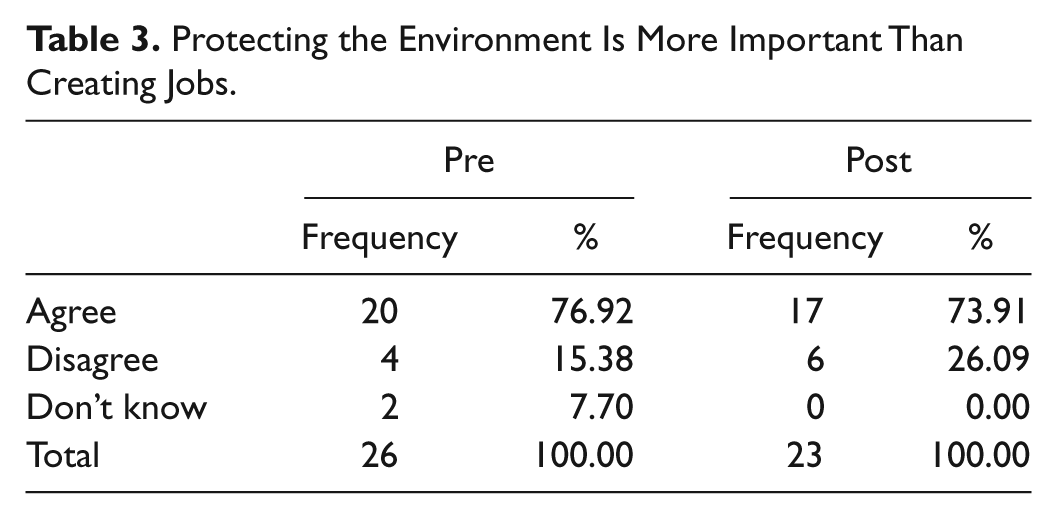
One of the strongest recommendations called for an accounting of the intangible costs of using pollutants like RDX. The group agreed that, in the future, all associated costs, including those related to health and environmental concerns, should be considered and that financial considerations alone do not adequately reflect the impacts the chemical has, or might have, on humans, animals, and nature more generally. Two survey items are closely related to this deliberative conclusion (see Tables 3 and 4).
Protecting the Environment Is More Important Than Creating Jobs.
I Am Worried About the Potential Health Risks Associated With RDX Pollution.

Table 3 shows that the group was strongly committed to environmental values. Given the choice between creating jobs and protecting the environment, 76.9% chose in favor of the environment in the first wave of the survey, whereas 73.9% chose the environment in the second wave of the survey. This result contrasts to data from the 2008 Canadian Election Study in which respondents were asked the same question. In that survey, 46.8% of respondents in British Columbia agreed or strongly agreed with that statement. 2 It appears that participants in RDX Talk were strongly committed to environmental objectives and this is reflected in their decision to recommend a broad-based accounting of both financial and “intangible” costs associated with the use and remediation of RDX.
As shown in Table 4, a majority of participants before and after the deliberation were worried about the potential health risks of RDX. This, again, is reflected in the group’s recommendation to account for health costs as well as any financial costs that may be associated with the use and remediation of RDX.
Potential Reduction or Elimination of RDX
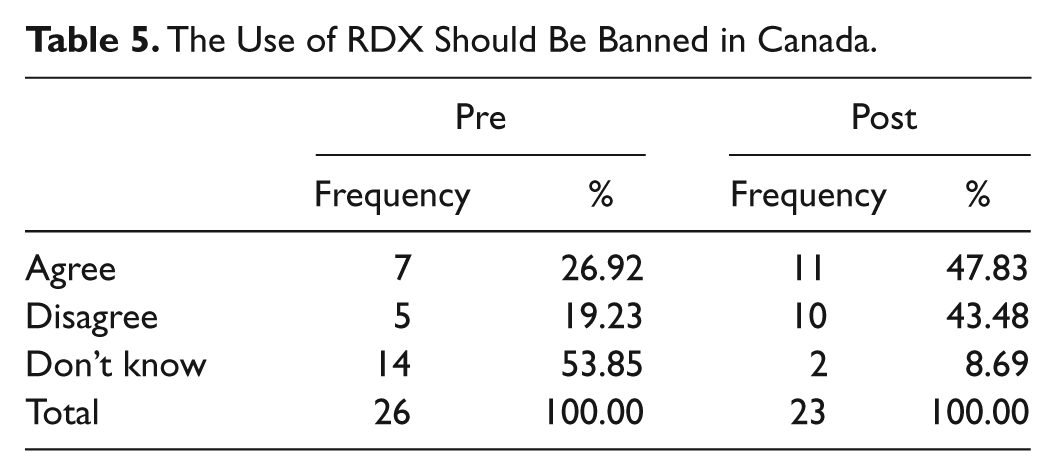
A majority of participants in the deliberative forum recommended that the use of RDX should be reduced and eventually phased out; however, the recommendation was not supported unanimously, and in fact, had a relatively large minority in opposition. Importantly, the recommendation does not include a stipulation of a complete (immediate or eventual) ban on the use of RDX in Canada. Despite recommending new, clear, and comprehensive regulations of RDX, the group did not view an outright ban as desirable or feasible. This division of opinion is also reflected in the survey responses, and in particular in postdeliberation responses. As shown in Table 5, before the deliberation, 26.9% of participants supported banning RDX in Canada. However, 19.2% either disagreed or strongly disagreed with this option. It is interesting that a majority entered the deliberation unsure whether banning RDX would be an appropriate policy response. In contrast, after the deliberation, all but two participants expressed an opinion on whether RDX should be banned. The rest were split on this issue with 47.8% in general agreement that it should be banned and 43.5% saying that it should not be banned.
The Use of RDX Should Be Banned in Canada.
Remediation of RDX
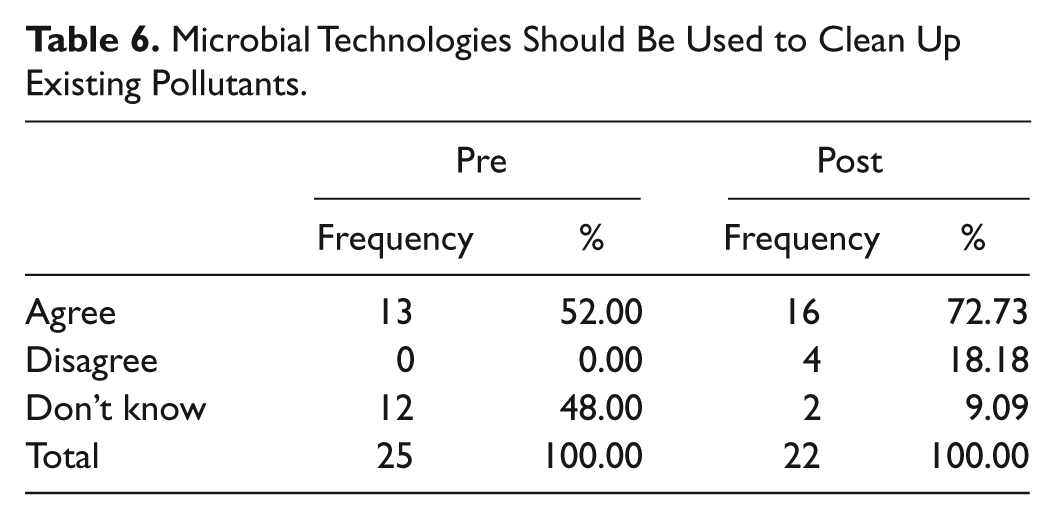
The survey contained one item pertaining to the use of microbial technologies for remediation. As shown in Table 6, 52% of participants agreed or strongly agreed with this statement before the deliberation compared with 72.7% in the postdeliberation survey. Importantly, the number of “don’t know” responses fell from an initial 48.0% to only 9.09% in the postdeliberation wave.
Microbial Technologies Should Be Used to Clean Up Existing Pollutants.
In addition to the question on microbial remediation, the survey also measured sentiment toward GMO technologies, and GM microbes specifically. Although targeted genetic modification of microbes for the purposes of remediation of RDX is (to our knowledge) currently not being considered, the possibility of using GM microbes for remediation does exist and has been trialed previously for other pollutants (Brazil et al., 1995). Items pertaining to GMOs were included in the survey to assess the general sentiment of the group toward these technologies.
Even though the public forum as a whole endorsed the use of GM microbes for remediation purposes with certain precautions (see deliberative conclusion above), it is noteworthy that individual participants were much more divided in their orientation toward GMO technologies. As shown in Table 7, in the predeliberation survey, 42.3% agreed that, in general, GMO technologies cause more problems than they solve. After deliberation—and in spite of developing a collective statement that genomic technologies and microbes should be developed and used, but only after extensive (and safe) testing—40.9% remained committed in their general opposition to these technologies. Again, the number of “don’t know” responses fell from an initial 34.6% to only 9.09% in the post-deliberation.
In General, GMO Technologies Cause More Problems Than They Solve.

Note: GMO = genetically modified organism.
Finally, participants were asked to respond to the statement: “Genetically modified microbes are unnatural organisms” (Table 8). The notion of “natural” is of course vague and problematic theoretically, and we use it here not to imply that a neat line can be drawn between “natural” and “unnatural” organisms. The point of the question, rather, was to gauge participants’ general disposition toward the idea of GM microbes. The results are revealing in that a majority of responses indicated agreement with the statement that GM organisms are unnatural, pre-deliberation (52%) and post-deliberation (59%), indicating a substantive degree of opposition to the idea of using GM microbes independent of the knowledge and insights gained during deliberation.
Genetically Modified Microbes Are Unnatural Organisms.

The Military As a Special User of RDX
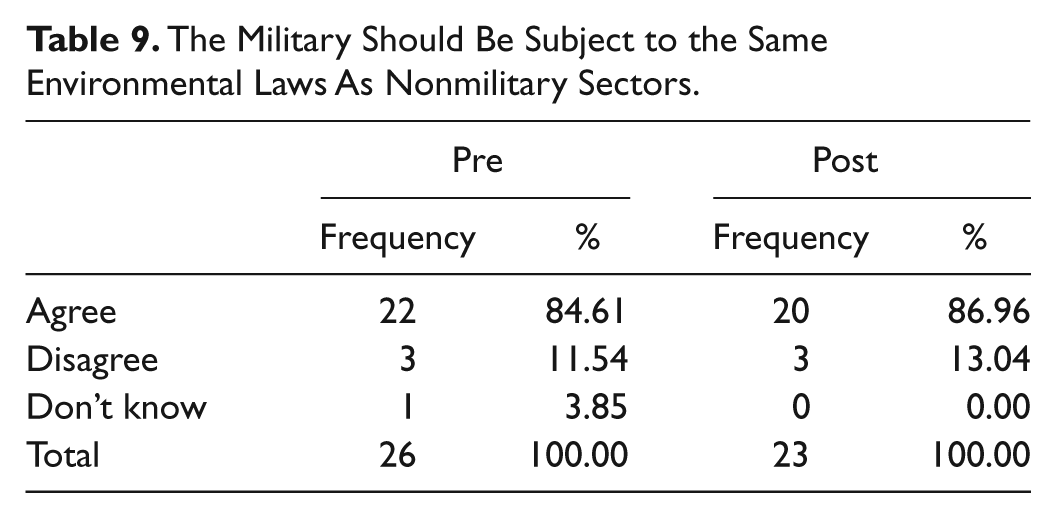
Given that national defence is considered by many to be an overriding mandate for the operations of military forces, questions arise as to whether the military should be expected to adhere to the same guidelines as civilian organizations in the use and remediation of RDX. A strong majority of participants in the public forum expressed strong agreement before and after deliberation with the following statement: “The military should be subject to the same environmental laws as nonmilitary sectors” (Table 9). In the preevent survey, 84.6% of participants agreed or strongly agreed with this statement compared with 86.9% in the postevent survey.
The Military Should Be Subject to the Same Environmental Laws As Nonmilitary Sectors.
The survey also contained four items to measure overall dispositions toward the military. Responses to these items confirm that the group was not clearly antimilitary, but rather reflected a range of different perspectives on this topic. These four survey items were designed to test responses against increasingly higher levels of military mandate and intervention. The first item measured support for the military in a relatively noncontroversial role: “The military has an important role to play in peacekeeping.” The second item measured support for the military with respect to its role in providing national security: “The military has an important role to play in protecting Canada and its citizens from potential threats.” The third item measured willingness to have Canada participate in potentially dangerous international military campaigns: “It is sometimes necessary to put Canadian soldiers at risk for the sake of international security.” The last item measured support for involving the Canadian military in a more controversial international role: “The military has an important role to play in policing the rest of the world.”
As expected, support for each of these statements declined as the proposed level of intervention of the military increased (see Figures 1 and 2 for pre- and postdeliberation responses, respectively; the numbers 1-4 on the x-axis represent the four different levels of military intervention). That is, progressively controversial roles for the military found progressively lower support from participants. Importantly, responses to all four items demonstrated a range of opinions, indicating a good balance of attitudes toward the military in the sample of participants. Based on these results, it is clear that the RDX Talk participants were not characterized by unusually strong antimilitary sentiment. To the contrary, a majority expressed agreement that the military has important roles to play domestically and internationally. One might speculate here that the focus on antiterrorism in at least one of the forum’s recommendations could be associated with an increase in positive attitudes toward the role of the military, and therefore tolerance of military authority or autonomy. In summary, however, in spite of the group demonstrating support for the military in various roles, there is a clear statement from this group, both in the deliberative conclusions as well as in the pre- and postsurvey responses, that the military should be subject to the same environmental regulations as civilian users of RDX.

Perceived role of the military (pre).

Perceived role of the military (post).
Regulation of RDX Use and Remediation
One conclusion of the forum was that regulations regarding RDX use should be clear and comprehensive, and clearly recognize RDX as dangerous material. A survey item that relates to this issue asked participants to respond to the statement: “New regulations are needed to reduce the use of RDX in Canada.” Table 10 shows that 69.2% of participants agreed or strongly agreed with this statement in the predeliberation survey compared with only 3.9% who disagreed or strongly disagreed. At this time, over a quarter of participants gave a “don’t know” response to this statement.
New Regulations Are Needed to Reduce the Use of RDX in Canada.
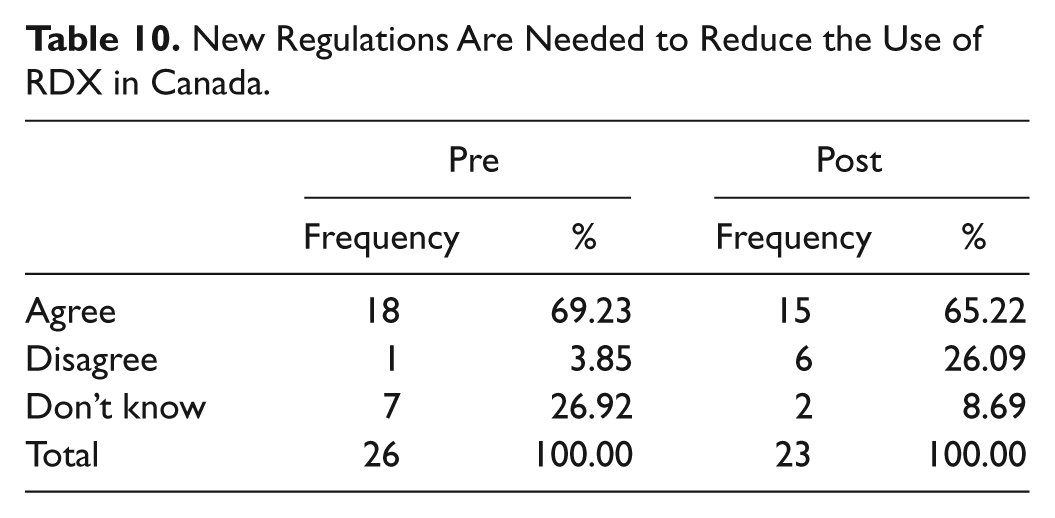
In the postdeliberation survey, the percentage of those in agreement with this statement was somewhat lower at 65.2%. In the postdeliberation survey, there were also far fewer “don’t know” responses to this item, with a strong increase in disagreement with the statement. This suggests that deliberation had some impact in helping participants form opinions on this issue and that the group was more divided on the issue after the deliberation. Nevertheless, a majority of participants indicated support for introducing new regulations to reduce the use of RDX in Canada before and after deliberating this topic.
Additional Characteristics of the Sample
Selection of individuals for participation in RDX Talk was geared mainly toward representing diversity across certain demographic filters. Although the purpose was to represent a diversity of values, opinions, backgrounds, and interests, difficulties in assessing these characteristics in the recruitment phase generally mean that demographic variables need to be used as proxies. However, responses to some survey items allow us to gain a more nuanced understanding of our sample of deliberants. Below, we briefly consider participants’ responses to survey items that illustrate diversity in some important opinions. Variation across the sample from pre- to postsurvey responses on these items was negligible, and we consider here only predeliberation responses.
Four (of 26) participants (15.4%) indicated that they had heard of RDX prior to the event. We infer from this that while the majority of participants had not heard of RDX, and therefore reflected the broader population well in this regard, there were voices present in the deliberation potentially capable of drawing on broader experiences with RDX.
Seventeen (of 26) participants (65.4%) indicated general agreement that there are technological solutions to most of our environmental problems; 6 participants disagreed (23.1%). We infer from this that the sample was overall inclined positively toward science and technology, but that a recognizable minority was potentially opposed to this position.
To the question whether, in general, environmental problems can be addressed by experts without input from citizens, only 5 (of 26) respondents agreed (19.2%). Similarly, for the question of whether RDX pollution, specifically, can be addressed by experts without input from citizens, 5 (of 26) agreed. Twenty of 26 (76.9%) disagreed with the general question, and 19 of 26 (73.1%) disagreed with the RDX-specific question. We infer from this that the majority of participants were inclined to feel empowered by their participation in this deliberation, and felt entitled to hold and voice an opinion on the issue. Nevertheless, a recognizable minority likely felt that decisions on the issues discussed in the forum did not require their input.
Discussion and Conclusion
The problem of RDX pollution and use of emerging technologies for its remediation reflects a particular example of societal issues that require governance solutions to be implemented in conditions of considerable uncertainty. In developing appropriate public input for these kinds of problems, it is thus important that such public opinion is appropriately informed. Both the transcripts of the deliberation as well as the deliberative outputs show evidence that the individuals who took part in this public deliberation understood much of the technical information well enough to formulate meaningful conclusions. This is significant for a number of reasons. First, it provides further supporting evidence that lay publics are capable of engaging meaningfully in policy debates on issues involving complex science or technology. Second, although informing a lay public on matters relating to RDX and bioremediation was not the primary aim of the project, the legitimacy of the forum’s conclusions arguably relies in part on evidence of at least a foundational understanding of relevant technical information. And third, although many experts tend to lament having to work with uninformed publics and cite publics’ lack of technical knowledge as a stumbling block to including lay publics in policy decision-making processes, the fact is that most experts themselves constitute a “lay public” in most areas outside of their own field of specialization. In the context of the present study, for instance, relevant technical knowledge came from the areas of microbial genomics, environmental law, remediation of toxic materials, and environmental science. Experts in any one of these areas are likely not experts in any of the others. The participants in RDX Talk, however, were expected to take into account information from all of these fields, and place them into the context of even wider public interests, such as considering the role of the military in contemporary society, considering long-term costs to the health care system, and how to balance the issues being discussed in this forum relative to other societal problems. Given these constraints, the conclusions of the public forum reflect breadth of consideration of issues as well as relatively high awareness of relevant technical information.
A frequent challenge to the use of mini-publics is that it is unclear how representative the views of the forum are relative to the rest of the population. It needs to be acknowledged here that this question of representativeness of views cannot be answered, because it is the wrong question to ask. The (post-deliberation) views of the forum are not representative of the general public, simply because the general public has not been exposed to the relevant information on the subject that was presented to the forum participants, nor have other members of the public undergone an intense period of deliberation in which they have been exposed to a range of different perspectives and had to defend their own positions against alternative views. In other words, the legitimacy of the conclusions of this public forum should not rely on criteria of representativeness relative to the broader population, but on criteria of whether relevant technical information was understood and taken into account, whether there was undue bias in the constitution of the group, and whether there is evidence that the deliberations of the group took into account a sufficient diversity of perspectives.
The results of RDX Talk allow us to reflect further both on the substantive issues discussed by members of the public as well as methodological questions pertaining to conducting deliberative forums. Regarding the legitimacy of the forum’s conclusions, it can be noted that the diversity of views expressed over the course of the deliberation suggests that an appropriately wide range of concerns and perspectives was considered and incorporated into the conclusions when deemed relevant. With regard to potential bias, it is possible that the group was more environmentally minded than average (given that individuals with an interest in environmental matters might have been more likely to volunteer for participation in the project in the first place). However, if this was the case, the conclusions do not indicate that such a bias unduly overemphasized environmental over other concerns (such as human health concerns or considerations of the current usefulness of RDX in different sectors). Given that the military is such a prominent user of RDX, a particularly salient bias might have been undue pro- or antimilitary sentiment. As outlined in the “Method” section, care was taken to manage potential antimilitary bias in the public forum through special recruitment filters. The results of the survey validate that the group was balanced in terms of their sentiment toward the military. We have reason to be confident, therefore, that the conclusions of the forum represent the outcomes of considered civic deliberation, and not negative (or positive) sentiment toward the military.
In recent years, the Canadian military has been the subject of controversy surrounding the issue of trichloroethylene (TCE), with claims that this solvent, used extensively by the military, has caused cancer in surrounding communities (Stephen, 2009). Understandably, decision makers within the military are cautious about raising public concerns about yet another potential environmental crisis. The conclusions from this public forum suggest that an informed public is not likely to underestimate the difficulties faced by the military in balancing responsibilities of national defence with those of environmentally sustainable practices. Nevertheless, even this informed public forum (in which care was taken to ensure the presence of promilitary voices) came to the majority conclusion that the military should not be exempt from the societal laws governing environmental practices. What we infer from this is that the military is likely to gain far more favorable reviews from the public if they conduct their activities relating to RDX and similarly hazardous substances with a certain transparency in engaging with public concerns. Although large-scale attempts of broadcasting problems relating to RDX and other pollutants are not warranted, attempts to hide the nature and extent of the problem are likely to result in increased public outrage should these issues ever be faced with a high degree of publicity. Although this public forum was convened to consider the particular case of RDX, one might cautiously speculate that the forum’s conclusions with regard to not providing special dispensation for military use of RDX might be generalizable for other pollutants (see also Santos & Chess, 2003, on citizen Restoration Advisory Boards consultations with the U.S. Army).
Somewhat independent of the issue of RDX is that of public responses to microbial genomics and the use of GM microbes. Given public sentiment on GM crops, GM livestock, and GM salmon (Tansey & Burgess, 2008), greater resistance to the idea of GM microbes might have been expected in this sample. In contrast to public sentiment on these other issues, this public forum expressed relatively low concern with the (hypothetical) use of GM microbes for bioremediation in their deliberations (even though more than 50% of the participants did express in the survey that they felt GM microbes to be “unnatural” organisms). For reasons outlined above, it is not appropriate to generalize these views to the general population, but it seems worth speculating at this point that public perceptions around GM microbes may be fundamentally different than perceptions of other GMOs.
Finally, on a methodological note, we argue that the design feature of allowing deliberants to both set the agenda for deliberation as well as work toward collective policy recommendations illustrates an innovative approach to conducting public deliberation. In particular, we argue that it is an approach that is particularly well suited to addressing complex and unfamiliar issues like RDX and many other issues where science and society intersect.
Footnotes
Acknowledgements
We would like to thank Shannon Cunningham for fact and reference checking and the science teams of Lindsay Eltis (project principal investigator [PI]), William Mohn, and Steven Hallam for their support throughout the project. Finally, our gratitude goes to the event speakers, Paul Cassidy, Rick Arnseth, Lindsay Eltis, and Hans Schreier, for sharing their time and expertise so generously and, most importantly, to the public participants at RDX Talk who made all this possible.
Authors’ Notes
Research team members who provided essential theoretical and logistical support for the public engagement: Alfred Moore, Alice Hawkins, Aubin Calvert, Cory Fairly, Dan Badulescu, Geoff Salomons, Jayme Taylor, Kieran O’Doherty, Michael Burgess, Michael MacKenzie, Shauna Nep, and Tamara Ibrahim.
Declaration of Conflicting Interests
The author(s) declared no potential conflicts of interest with respect to the research, authorship, and/or publication of this article.
Funding
The author(s) disclosed receipt of the following financial support for the research and/or authorship of this article: This research was supported by Genome BC under the Applied Genomics Innovation Program.